

The ketogenic diet influences taxonomic and functional composition of the gut microbiota in children with severe epilepsy
Open accessThe DOI matches its Crossref record; 72 of the 72 references it cites were found in a registry or an index.
Abstract
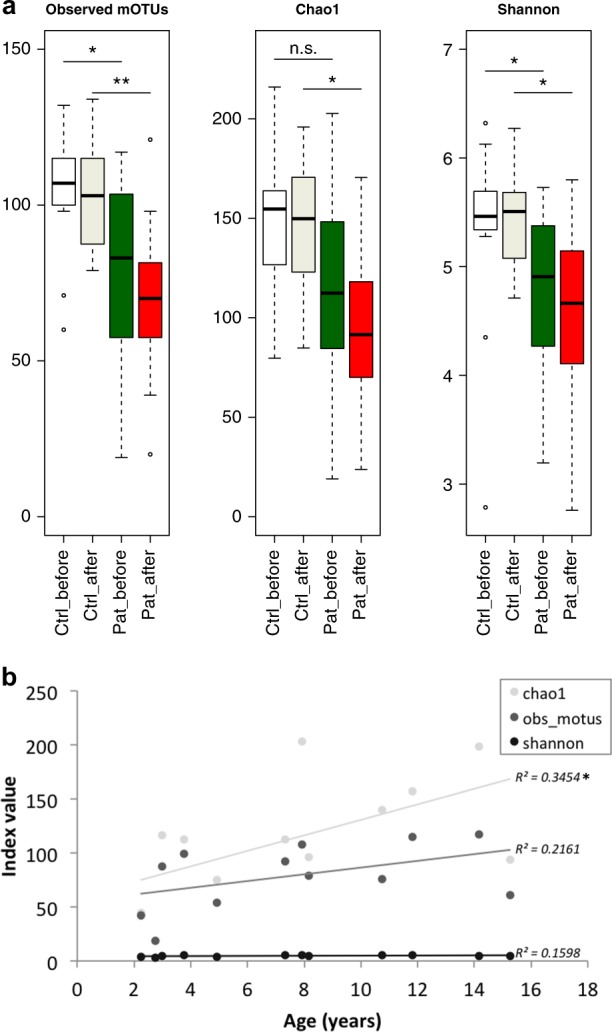
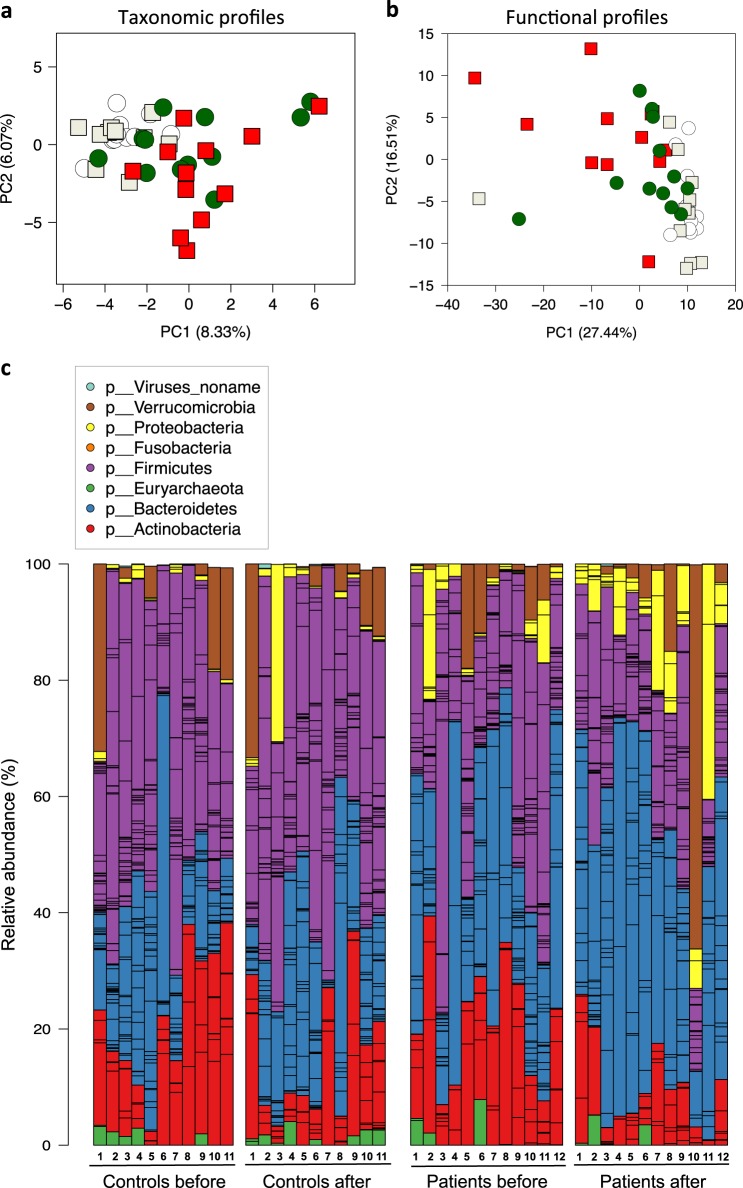
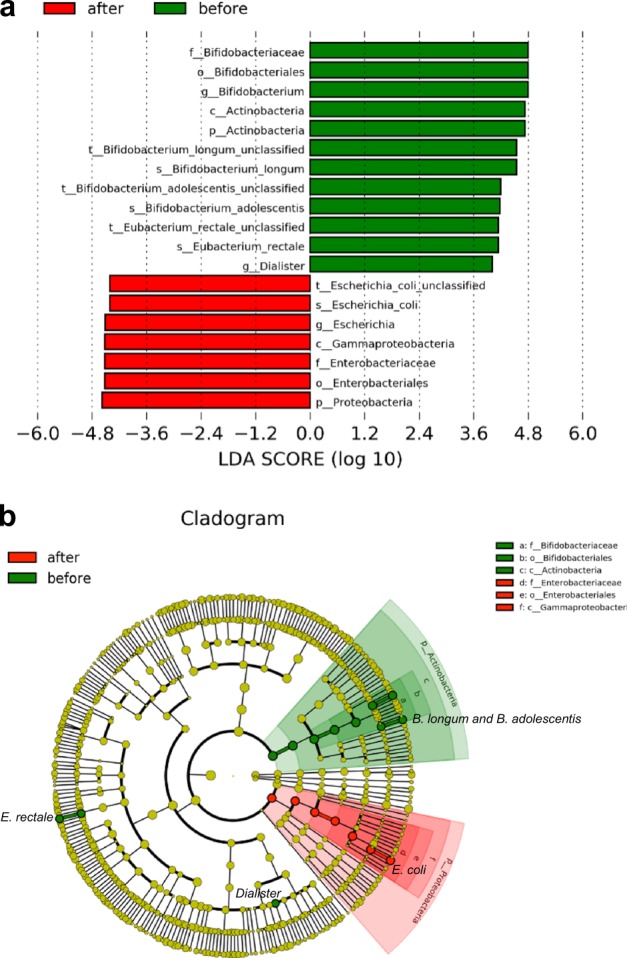
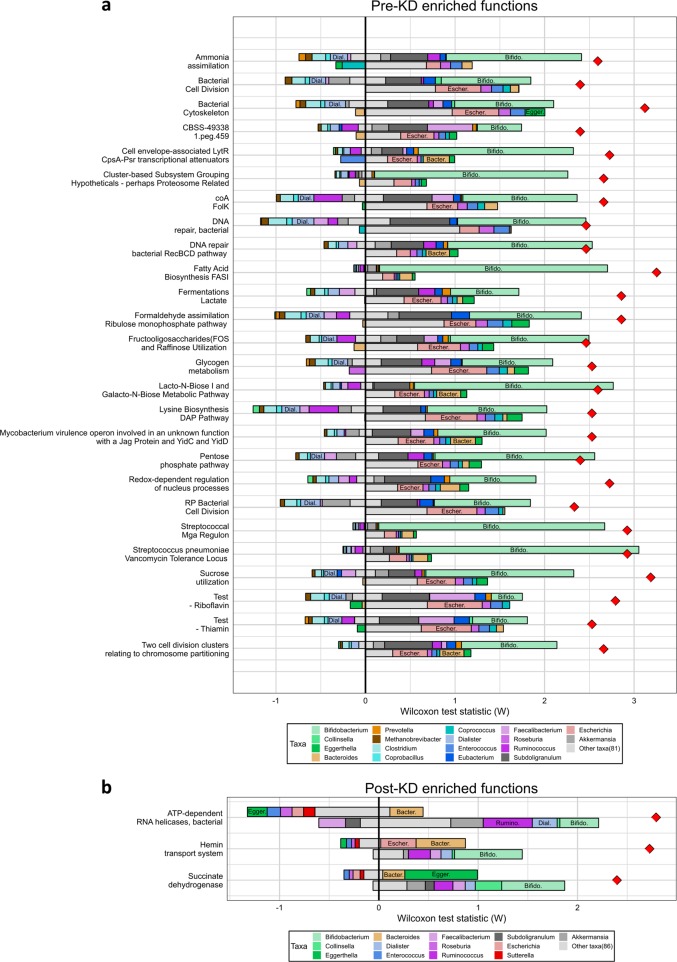
The gut microbiota has been linked to various neurological disorders via the gut–brain axis. Diet influences the composition of the gut microbiota. The ketogenic diet (KD) is a high-fat, adequate-protein, low-carbohydrate diet established for treatment of therapy-resistant epilepsy in children. Its efficacy in reducing seizures has been confirmed, but the mechanisms remain elusive. The diet has also shown positive effects in a wide range of other diseases, including Alzheimer’s, depression, autism, cancer, and type 2 diabetes. We collected fecal samples from 12 children with therapy-resistant epilepsy before starting KD and after 3 months on the diet. Parents did not start KD and served as diet controls. Applying shotgun metagenomic DNA sequencing, both taxonomic and functional profiles were established. Here we report that alpha diversity is not changed significantly during the diet, but differences in both taxonomic and functional composition are detected. Relative abundance of bifidobacteria as well as E. rectale and Dialister is significantly diminished during the intervention. An increase in relative abundance of E. coli is observed on KD. Functional analysis revealed changes in 29 SEED subsystems including the reduction of seven pathways involved in carbohydrate metabolism. Decomposition of these shifts indicates that bifidobacteria and Escherichia are important contributors to the observed functional shifts. As relative abundance of health-promoting, fiber-consuming bacteria becomes less abundant during KD, we raise concern about the effects of the diet on the gut microbiota and overall health. Further studies need to investigate whether these changes are necessary for the therapeutic effect of KD.
Overview
The claims and statistics of this paper haven’t been checked yet.
Free: it reads the open-access text and checks the first 5 claims that cite a source we can check. Create a free account to check every claim.
Integrity signals
Registry
Cites
Statistics
Figures
Verification
Claims the paper makes
The claims and statistics of this paper haven’t been checked yet.
Free: it reads the open-access text and checks the first 5 claims that cite a source we can check. Create a free account to check every claim.
Claims other papers make about this one
Each is checked against this paper’s own text: does it say what the citing paper says it does?
The cited source says what the claim attributes to it.
In the citing paper
“An increase in relative abundance of Escherichia coli was also observed after ketogenic diet [350].”
From The Role of Microbiota-Gut-Brain Axis in Neuropsychiatric and Neurological Disorders (2021) · cites this paper as [350]
In the citing paper
“The alpha diversity was not changed after 3 months of the ketogenic diet in 12 children with drug-resistant epilepsy, compared to their parents, who did not start the ketogenic diet.”
From The Role of Microbiota-Gut-Brain Axis in Neuropsychiatric and Neurological Disorders (2021) · cites this paper as [350]
In the citing paper
“Relative abundance of Bifidobacteria as well as Eubacterium rectale and Dialister was diminished during the intervention.”
From The Role of Microbiota-Gut-Brain Axis in Neuropsychiatric and Neurological Disorders (2021) · cites this paper as [350]
In the citing paper
“Moreover, in clinical studies the control groups were either from the same household (family members [358], parents of children [350]) or from different households, which might also have an impact on microbiota profile, thus affecting the results.”
From The Role of Microbiota-Gut-Brain Axis in Neuropsychiatric and Neurological Disorders (2021) · cites this paper as [350]
In the citing paper
“While taxonomic and functional profiles were altered, alpha diversity did not change significantly during the dietary intervention. Relative abundance of the butyrate producing taxa bifidobacteria, E. rectale, and Dialister were significantly diminished during the intervention, while E. coli was increased [128].”
From Role of diet and its effects on the gut microbiome in the pathophysiology of mental disorders (2022) · cites this paper as [128]
Self-check
Percentages, sums and reported differences re-computed from the paper’s own numbers.
The self-check needs the paper’s full text.
Citations
Cites
The Sequence Alignment/Map format and SAMtools
Li, H., Handsaker, B., Wysoker, A., Fennell, T., Ruan, J., Homer, N., Marth, G., Abecasis, G., Durbin, R., & 1000 Genome Project Data Processing Subgroup (2009) · Bioinformatics · doi:10.1093/bioinformatics/btp352 · Cited by 62,041
Metagenomic biomarker discovery and explanation
Segata, N., Izard, J., Waldron, L., Gevers, D., Miropolsky, L., Garrett, W. S., & Huttenhower, C. (2011) · Genome Biology · doi:10.1186/gb-2011-12-6-r60 · Cited by 16,192 · cited 2×
“Next, we applied the linear discriminant analysis (LDA) effect size (LEfSe) method by Segata et al.(12) for statistical analysis at all taxonomic levels.”
MethodFast and sensitive protein alignment using DIAMOND
Buchfink, B., Xie, C., & Huson, D. H. (2015) · Nature Methods · doi:10.1038/nmeth.3176 · Cited by 14,201
MultiQC: summarize analysis results for multiple tools and samples in a single report
Ewels, P., Magnusson, M., Lundin, S., & Käller, M. (2016) · Bioinformatics · doi:10.1093/bioinformatics/btw354 · Cited by 10,143
Diet rapidly and reproducibly alters the human gut microbiome
David, L. A., Maurice, C. F., Carmody, R. N., Gootenberg, D. B., Button, J. E., Wolfe, B. E., Ling, A. V., Devlin, A. S., Varma, Y., Fischbach, M. A., et al. (2014) · Nature · doi:10.1038/nature12820 · Cited by 10,100 · cited 1×
“Diet influences the composition of the human gut microbiome.(6) Based on the anti-seizure effect of fasting, the ketogenic diet (KD), a high-fat, adequate-protein, very low-carbohydrate diet, was developed in the early 1920s(7) to mirror the key metabolic effects of fasting.”
BackgroundKEGG as a reference resource for gene and protein annotation
Kanehisa, M., Sato, Y., Kawashima, M., Furumichi, M., & Tanabe, M. (2016) · Nucleic Acids Research · doi:10.1093/nar/gkv1070 · Cited by 7,387
De Filippo, C., Cavalieri, D., Di Paola, M., Ramazzotti, M., Poullet, J. B., Massart, S., Collini, S., Pieraccini, G., & Lionetti, P. (2010) · Proceedings of the National Academy of Sciences · doi:10.1073/pnas.1005963107 · Cited by 5,579
Mind-altering microorganisms: the impact of the gut microbiota on brain and behaviour
Cryan, J. F., & Dinan, T. G. (2012) · Nature Reviews Neuroscience · doi:10.1038/nrn3346 · Cited by 4,572
Berg, A. T., Berkovic, S. F., Brodie, M. J., Buchhalter, J., Cross, J. H., Van Emde Boas, W., Engel, J., French, J., Glauser, T. A., Mathern, G. W., et al. (2010) · Epilepsia · doi:10.1111/j.1528-1167.2010.02522.x · Cited by 4,363 · cited 1×
“The types of seizures were classified according to the revised terminology of the International League Against Epilepsy classifications.(60) The majority of children had more than one seizure type.”
MethodRegulation of inflammatory responses by gut microbiota and chemoattractant receptor GPR43
Maslowski, K. M., Vieira, A. T., Ng, A., Kranich, J., Sierro, F., Yu, D., Schilter, H. C., Rolph, M. S., Mackay, F., Artis, D., et al. (2009) · Nature · doi:10.1038/nature08530 · Cited by 3,241
Normal gut microbiota modulates brain development and behavior
Heijtz, R. D., Wang, S., Anuar, F., Qian, Y., Björkholm, B., Samuelsson, A., Hibberd, M. L., Forssberg, H., & Pettersson, S. (2011) · Proceedings of the National Academy of Sciences · doi:10.1073/pnas.1010529108 · Cited by 3,228
Desai, M. S., Seekatz, A. M., Koropatkin, N. M., Kamada, N., Hickey, C. A., Wolter, M., Pudlo, N. A., Kitamoto, S., Terrapon, N., Muller, A., et al. (2016) · Cell · doi:10.1016/j.cell.2016.10.043 · Cited by 2,805
Gut–brain axis: How the microbiome influences anxiety and depression
Foster, J. A., & McVey Neufeld, K.-A. (2013) · Trends in Neurosciences · doi:10.1016/j.tins.2013.01.005 · Cited by 2,460
Bifidobacteria can protect from enteropathogenic infection through production of acetate
Fukuda, S., Toh, H., Hase, K., Oshima, K., Nakanishi, Y., Yoshimura, K., Tobe, T., Clarke, J. M., Topping, D. L., Suzuki, T., et al. (2011) · Nature · doi:10.1038/nature09646 · Cited by 2,387 · cited 1×
“coli O157:H7 through production of acetate.(28) In our study, we show that bifidobacteria relative abundance decreases during KD and E.”
BackgroundSingh, N., Gurav, A., Sivaprakasam, S., Brady, E., Padia, R., Shi, H., Thangaraju, M., Prasad, P. D., Manicassamy, S., Munn, D. H., et al. (2014) · Immunity · doi:10.1016/j.immuni.2013.12.007 · Cited by 2,368
MetaPhlAn2 for enhanced metagenomic taxonomic profiling
Truong, D. T., Franzosa, E. A., Tickle, T. L., Scholz, M., Weingart, G., Pasolli, E., Tett, A., Huttenhower, C., & Segata, N. (2015) · Nature Methods · doi:10.1038/nmeth.3589 · Cited by 2,185
Fast and sensitive taxonomic classification for metagenomics with Kaiju
Menzel, P., Ng, K. L., & Krogh, A. (2016) · Nature Communications · doi:10.1038/ncomms11257 · Cited by 2,118
The Subsystems Approach to Genome Annotation and its Use in the Project to Annotate 1000 Genomes
Overbeek, R. (2005) · Nucleic Acids Research · doi:10.1093/nar/gki866 · Cited by 2,012
Kelly, C. J., Zheng, L., Campbell, E. L., Saeedi, B., Scholz, C. C., Bayless, A. J., Wilson, K. E., Glover, L. E., Kominsky, D. J., Magnuson, A., et al. (2015) · Cell Host & Microbe · doi:10.1016/j.chom.2015.03.005 · Cited by 1,716 · cited 1×
“In addition, butyrate has a direct effect on gut health, being an essential energy source for colonocytes and increasing the intestinal barrier function.(43,44) In our dataset, the relative abundance of E.”
BackgroundMacia, L., Tan, J., Vieira, A. T., Leach, K., Stanley, D., Luong, S., Maruya, M., Ian McKenzie, C., Hijikata, A., Wong, C., et al. (2015) · Nature Communications · doi:10.1038/ncomms7734 · Cited by 1,439
Butyrate inhibits inflammatory responses through NFκB inhibition: implications for Crohn's disease
Segain, J.-P., de la Blétière, D. R., Bourreille, A., Leray, V, Gervois, N., Rosales, C., Ferrier, L., Bonnet, C., Blottière, H. M., & Galmiche, J.-P. (2000) · Gut · doi:10.1136/gut.47.3.397 · Cited by 1,321
Revealing the Bacterial Butyrate Synthesis Pathways by Analyzing (Meta)genomic Data
Vital, M., Howe, A. C., & Tiedje, J. M. (2014) · mBio · doi:10.1128/mbio.00889-14 · Cited by 1,173
The Gut Microbiota Mediates the Anti-Seizure Effects of the Ketogenic Diet
Olson, C. A., Vuong, H. E., Yano, J. M., Liang, Q. Y., Nusbaum, D. J., & Hsiao, E. Y. (2018) · Cell · doi:10.1016/j.cell.2018.04.027 · Cited by 1,057 · cited 3×
“Olson et al.22 elegantly showed that a gut microbiota was necessary for the anti-seizure effect of KD in mice.”
BackgroundInfluentialThe microbiome-gut-brain axis: from bowel to behavior
Cryan, J. F., & O’Mahony, S. M. (2011) · Neurogastroenterology & Motility · doi:10.1111/j.1365-2982.2010.01664.x · Cited by 990
Duncan, S. H., Belenguer, A., Holtrop, G., Johnstone, A. M., Flint, H. J., & Lobley, G. E. (2007) · Applied and Environmental Microbiology · doi:10.1128/aem.02340-06 · Cited by 941 · cited 2×
“These facts may explain the concomitant proportional decrease of bifidobacteria and genes involved in carbohydrate metabolism during KD. Duncan et al.27 supports our findings of diminished relative abundance of bifidobacteria and E. rectale in a low carbohydrate diet as well as our hypothesis that this may result in l…”
ResultSchroeder, B. O., Birchenough, G. M. H., Ståhlman, M., Arike, L., Johansson, M. E. V., Hansson, G. C., & Bäckhed, F. (2018) · Cell Host & Microbe · doi:10.1016/j.chom.2017.11.004 · Cited by 713
The Efficacy of the Ketogenic Diet—1998: A Prospective Evaluation of Intervention in 150 Children
Freeman, J. M., Vining, E. P. G., Pillas, D. J., Pyzik, P. L., Casey, J. C., & Kelly, L. A. M. T. (1998) · Pediatrics · doi:10.1542/peds.102.6.1358 · Cited by 612
Metagenomic species profiling using universal phylogenetic marker genes
Sunagawa, S., Mende, D. R., Zeller, G., Izquierdo-Carrasco, F., Berger, S. A., Kultima, J. R., Coelho, L. P., Arumugam, M., Tap, J., Nielsen, H. B., et al. (2013) · Nature Methods · doi:10.1038/nmeth.2693 · Cited by 516
Colonic Butyrate-Producing Communities in Humans: an Overview Using Omics Data
Vital, M., Karch, A., & Pieper, D. H. (2017) · mSystems · doi:10.1128/msystems.00130-17 · Cited by 483
Agus, A., Denizot, J., Thévenot, J., Martinez-Medina, M., Massier, S., Sauvanet, P., Bernalier-Donadille, A., Denis, S., Hofman, P., Bonnet, R., et al. (2016) · Scientific Reports · doi:10.1038/srep19032 · Cited by 477
Butyrate Inhibits NF-κB Activation in Lamina Propria Macrophages of Patients with Ulcerative Colitis
Lührs, H., Gerke, T., Müller, J. G., Melcher, R., Schauber, J., Boxberger, F., Scheppach, W., & Menzel, T. (2002) · Scandinavian Journal of Gastroenterology · doi:10.1080/003655202317316105 · Cited by 464
Neal, E. G., Chaffe, H., Schwartz, R. H., Lawson, M. S., Edwards, N., Fitzsimmons, G., Whitney, A., & Cross, J. H. (2009) · Epilepsia · doi:10.1111/j.1528-1167.2008.01870.x · Cited by 436
The Ketogenic Diet: One Decade Later
Freeman, J. M., Kossoff, E. H., & Hartman, A. L. (2007) · Pediatrics · doi:10.1542/peds.2006-2447 · Cited by 364
Huda-Faujan, N., Abdulamir, A. S., Fatimah, A. B., Anas, O. M., Shuhaimi, M., Yazid, A. M., & Loong, Y. Y. (2010) · The Open Biochemistry Journal · doi:10.2174/1874091x01004010053 · Cited by 359
Mechanisms of Action of Antiseizure Drugs and the Ketogenic Diet
Rogawski, M. A., Löscher, W., & Rho, J. M. (2016) · Cold Spring Harbor Perspectives in Medicine · doi:10.1101/cshperspect.a022780 · Cited by 336
Chen, H.-M., Yu, Y.-N., Wang, J.-L., Lin, Y.-W., Kong, X., Yang, C.-Q., Yang, L., Liu, Z.-J., Yuan, Y.-Z., Liu, F., et al. (2013) · The American Journal of Clinical Nutrition · doi:10.3945/ajcn.112.046607 · Cited by 321
Ketogenic diets as an adjuvant cancer therapy: History and potential mechanism
Allen, B. G., Bhatia, S. K., Anderson, C. M., Eichenberger-Gilmore, J. M., Sibenaller, Z. A., Mapuskar, K. A., Schoenfeld, J. D., Buatti, J. M., Spitz, D. R., & Fath, M. A. (2014) · Redox Biology · doi:10.1016/j.redox.2014.08.002 · Cited by 312
Commensal and Pathogenic Escherichia coli Metabolism in the Gut
Conway, T., & Cohen, P. S. (2015) · Microbiology Spectrum · doi:10.1128/microbiolspec.mbp-0006-2014 · Cited by 303
Ketogenic diet enhances neurovascular function with altered gut microbiome in young healthy mice
Ma, D., Wang, A. C., Parikh, I., Green, S. J., Hoffman, J. D., Chlipala, G., Murphy, M. P., Sokola, B. S., Bauer, B., Hartz, A. M. S., et al. (2018) · Scientific Reports · doi:10.1038/s41598-018-25190-5 · Cited by 299
Xie, G., Zhou, Q., Qiu, C.-Z., Dai, W.-K., Wang, H.-P., Li, Y.-H., Liao, J.-X., Lu, X.-G., Lin, S.-F., Ye, J.-H., et al. (2017) · World Journal of Gastroenterology · doi:10.3748/wjg.v23.i33.6164 · Cited by 291
Altered gut microbiome composition in children with refractory epilepsy after ketogenic diet
Zhang, Y., Zhou, S., Zhou, Y., Yu, L., Zhang, L., & Wang, Y. (2018) · Epilepsy Research · doi:10.1016/j.eplepsyres.2018.06.015 · Cited by 269
Glycan Utilization and Cross-Feeding Activities by Bifidobacteria
Turroni, F., Milani, C., Duranti, S., Mahony, J., van Sinderen, D., & Ventura, M. (2018) · Trends in Microbiology · doi:10.1016/j.tim.2017.10.001 · Cited by 263
The Gut Microbiome: A New Frontier in Autism Research
Mulle, J. G., Sharp, W. G., & Cubells, J. F. (2013) · Current Psychiatry Reports · doi:10.1007/s11920-012-0337-0 · Cited by 262
Clinical Aspects of the Ketogenic Diet
Hartman, A. L., & Vining, E. P. G. (2007) · Epilepsia · doi:10.1111/j.1528-1167.2007.00914.x · Cited by 246
Sinha, S. R., & Kossoff, E. H. (2005) · The Neurologist · doi:10.1097/01.nrl.0000160818.58821.d2 · Cited by 245
Swink, T. D., Vining, E. P. G., & Freeman, J. M. (1997) · Advances in Pediatrics · doi:10.1016/s0065-3101(24)00055-0 · Cited by 242
Gibbons, R. J., & Macdonald, J. B. (1960) · Journal of Bacteriology · doi:10.1128/jb.80.2.164-170.1960 · Cited by 239
The ketogenic diet: Uses in epilepsy and other neurologic illnesses
Barañano, K. W., & Hartman, A. L. (2008) · Current Treatment Options in Neurology · doi:10.1007/s11940-008-0043-8 · Cited by 239
Fecal microbiota transplantation cured epilepsy in a case with Crohn’s disease: The first report
He, Z., Cui, B.-T., Zhang, T., Li, P., Long, C.-Y., Ji, G.-Z., & Zhang, F.-M. (2017) · World Journal of Gastroenterology · doi:10.3748/wjg.v23.i19.3565 · Cited by 225
Ketogenic Diet in Neuromuscular and Neurodegenerative Diseases
Paoli, A., Bianco, A., Damiani, E., & Bosco, G. (2014) · BioMed Research International · doi:10.1155/2014/474296 · Cited by 220
Rivière, A., Gagnon, M., Weckx, S., Roy, D., & De Vuyst, L. (2015) · Applied and Environmental Microbiology · doi:10.1128/aem.02089-15 · Cited by 219
The human gut microbiome in health: Establishment and resilience of microbiota over a lifetime
Greenhalgh, K., Meyer, K. M., Aagaard, K. M., & Wilmes, P. (2016) · Environmental Microbiology · doi:10.1111/1462-2920.13318 · Cited by 218 · cited 1×
“2c), which are typically found in the human gut.(11) Here intraindividual changes were detected in both groups.”
BackgroundButyrate reduces colonic paracellular permeability by enhancing PPARγ activation
Kinoshita, M., Suzuki, Y., & Saito, Y. (2002) · Biochemical and Biophysical Research Communications · doi:10.1016/s0006-291x(02)00294-2 · Cited by 194
SUPER-FOCUS: a tool for agile functional analysis of shotgun metagenomic data
Silva, G. G. Z., Green, K. T., Dutilh, B. E., & Edwards, R. A. (2016) · Bioinformatics · doi:10.1093/bioinformatics/btv584 · Cited by 191
Gómez-Eguílaz, M., Ramón-Trapero, J. L., Pérez-Martínez, L., & Blanco, J. R. (2018) · Beneficial Microbes · doi:10.3920/bm2018.0018 · Cited by 177
Tributyrin attenuates obesity-associated inflammation and insulin resistance in high-fat-fed mice
Vinolo, M. A. R., Rodrigues, H. G., Festuccia, W. T., Crisma, A. R., Alves, V. S., Martins, A. R., Amaral, C. L., Fiamoncini, J., Hirabara, S. M., Sato, F. T., et al. (2012) · American Journal of Physiology-Endocrinology and Metabolism · doi:10.1152/ajpendo.00053.2012 · Cited by 167
Duncan, S. H., Russell, W. R., Quartieri, A., Rossi, M., Parkhill, J., Walker, A. W., & Flint, H. J. (2016) · Environmental Microbiology · doi:10.1111/1462-2920.13158 · Cited by 166
Létoffé, S., Delepelaire, P., & Wandersman, C. (2006) · Proceedings of the National Academy of Sciences · doi:10.1073/pnas.0605440103 · Cited by 145
Manor, O., & Borenstein, E. (2017) · Cell Host & Microbe · doi:10.1016/j.chom.2016.12.014 · Cited by 131
Self-citationTagliabue, A., Ferraris, C., Uggeri, F., Trentani, C., Bertoli, S., de Giorgis, V., Veggiotti, P., & Elli, M. (2017) · Clinical Nutrition ESPEN · doi:10.1016/j.clnesp.2016.11.003 · Cited by 126
Role and regulation of heme iron acquisition in gram-negative pathogens
Runyen-Janecky, L. J. (2013) · Frontiers in Cellular and Infection Microbiology · doi:10.3389/fcimb.2013.00055 · Cited by 117
Singh, V., Yeoh, B. S., Xiao, X., Kumar, M., Bachman, M., Borregaard, N., Joe, B., & Vijay-Kumar, M. (2015) · Nature Communications · doi:10.1038/ncomms8113 · Cited by 112
Facilitation of kindling epileptogenesis by chronic stress may be mediated by intestinal microbiome
Medel‐Matus, J., Shin, D., Dorfman, E., Sankar, R., & Mazarati, A. (2018) · Epilepsia Open · doi:10.1002/epi4.12114 · Cited by 106
Cockburn, D. W., Suh, C. E., Medina, K. M. P., Duvall, R., Wawrzak, Z., Henrissat, B., & Koropatkin, N. M. (2017) · Molecular Microbiology · doi:10.1111/mmi.13881 · Cited by 82
The Therapeutic Potential of the Ketogenic Diet in Treating Progressive Multiple Sclerosis
Storoni, M., & Plant, G. T. (2015) · Multiple Sclerosis International · doi:10.1155/2015/681289 · Cited by 80
Joint Variant and De Novo Mutation Identification on Pedigrees from High-Throughput Sequencing Data
Cleary, J. G., Braithwaite, R., Gaastra, K., Hilbush, B. S., Inglis, S., Irvine, S. A., Jackson, A., Littin, R., Nohzadeh-Malakshah, S., Rathod, M., et al. (2014) · Journal of Computational Biology · doi:10.1089/cmb.2014.0029 · Cited by 77
The ketogenic diet for the treatment of glioma: Insights from genetic profiling
Scheck, A. C., Abdelwahab, M. G., Fenton, K. E., & Stafford, P. (2011) · Epilepsy Research · doi:10.1016/j.eplepsyres.2011.09.022 · Cited by 67
Kouse, A. B., Righetti, F., Kortmann, J., Narberhaus, F., & Murphy, E. R. (2013) · PLoS ONE · doi:10.1371/journal.pone.0063781 · Cited by 63
Iron-regulated outer membrane proteins in the periodontopathic bacterium, Bacteroides gingivalis
Bramanti, T. E., & Holt, S. C. (1990) · Biochemical and Biophysical Research Communications · doi:10.1016/0006-291x(90)90986-w · Cited by 63
Editorial: Bifidobacteria and Their Role in the Human Gut Microbiota
Turroni, F., Berry, D., & Ventura, M. (2017) · Frontiers in Microbiology · doi:10.3389/fmicb.2016.02148 · Cited by 36
Bramanti, T. E., & Holt, S. C. (1992) · Microbial Pathogenesis · doi:10.1016/0882-4010(92)90032-j · Cited by 30
Enterocyte-Associated Microbiome of the Hadza Hunter-Gatherers
Turroni, S., Rampelli, S., Centanni, M., Schnorr, S. L., Consolandi, C., Severgnini, M., Peano, C., Soverini, M., Falconi, M., Crittenden, A. N., et al. (2016) · Frontiers in Microbiology · doi:10.3389/fmicb.2016.00865 · Cited by 20
Research works printed but not linked: 1
- Scardovi V Trovatelli LD The fructose-6-phosphate shunt as a peculiar pattern of hexose degradation in the genus Bifidobacterium Ann. Microbiol. Enzimol. 1965 15 19 29
Cited by
The gut microbiome in neurological disorders
Cryan, J. F., O'Riordan, K. J., Sandhu, K., Peterson, V., & Dinan, T. G. (2020) · The Lancet Neurology · doi:10.1016/s1474-4422(19)30356-4 · Cited by 1,336
The Role of Microbiota-Gut-Brain Axis in Neuropsychiatric and Neurological Disorders
Socała, K., Doboszewska, U., Szopa, A., Serefko, A., Włodarczyk, M., Zielińska, A., Poleszak, E., Fichna, J., & Wlaź, P. (2021) · Pharmacological Research · doi:10.1016/j.phrs.2021.105840 · Cited by 857
Food Components and Dietary Habits: Keys for a Healthy Gut Microbiota Composition
Rinninella, E., Cintoni, M., Raoul, P., Lopetuso, L. R., Scaldaferri, F., Pulcini, G., Miggiano, G. A. D., Gasbarrini, A., & Mele, M. C. (2019) · Nutrients · doi:10.3390/nu11102393 · Cited by 673
The interplay between diet and the gut microbiome: implications for health and disease
Ross, F. C., Patangia, D., Grimaud, G., Lavelle, A., Dempsey, E. M., Ross, R. P., & Stanton, C. (2024) · Nature Reviews Microbiology · doi:10.1038/s41579-024-01068-4 · Cited by 638
A Comprehensive Review on the Role of the Gut Microbiome in Human Neurological Disorders
Sorboni, S. G., Moghaddam, H. S., Jafarzadeh-Esfehani, R., & Soleimanpour, S. (2022) · Clinical Microbiology Reviews · doi:10.1128/cmr.00338-20 · Cited by 522
Metadata
- Authors
- Lindefeldt, M., Eng, A., Darban, H., Bjerkner, A., Zetterström, C. K., Allander, T., Andersson, B., Borenstein, E., Dahlin, M., & Prast-Nielsen, S.
- Affiliations
- Karolinska University Hospital (SE)
- University of Washington (US)
- Karolinska Institutet (SE)
- Santa Fe Institute (US)
- ORCID
- Venue
- npj Biofilms and Microbiomes
- Published
- 2019-01-23
- Volume
- 5
- Issue
- 1
- Pages
- 5-5
- ISSN
- 2055-5008 (ISSN-L)
- PMC
- PMC6344533
- OpenAlex
- W2911984893
- Cited by
- 310
- References
- 72
- Citations by year
- 2026: 34 · 2025: 58 · 2024: 45 · 2023: 34 · 2022: 55 · 2021: 41 · 2020: 24 · 2019: 18
- FWCI
- 11.41
- Type
- journal article
- Language
- en
- Open access
- gold
- doi.org
- Licence
- cc-by
- creativecommons.org/licenses/by/4.0 (tdm)
- creativecommons.org/licenses/by/4.0 (vor)
- Locations
- npj Biofilms and Microbiomes (publishedVersion, cc-by)
- Europe PMC (PubMed Central) (publishedVersion, cc-by)
- PubMed Central (publishedVersion, cc-by)
- PubMed (publishedVersion)
- DOAJ (DOAJ: Directory of Open Access Journals) (submittedVersion)
- Funders
- Stockholms Läns Landsting
- Stiftelsen Sunnerdahls Handikappfond
- Science for Life Laboratory
- National Institutes of Health
- National Institute of General Medical Sciences (R01GM124312)
- Topics
- Life Sciences › Biochemistry, Genetics and Molecular Biology › Molecular Biology › Gut microbiota and health
- Health Sciences › Medicine › Physiology (medical) › Diet and metabolism studies
- Health Sciences › Medicine › Gastroenterology › Gastrointestinal motility and disorders
- Keywords
- ketogenic diet, gut microbiota, drug-resistant epilepsy, pediatric epilepsy, gut-brain axis, Bifidobacterium, Escherichia coli, Dialister, carbohydrate metabolism, dietary intervention
- MeSH terms
- Gastrointestinal Microbiome, Adolescent, Bacteria, Child, Child, Preschool, Epilepsy, Feces, Female, Humans, Infant, Male, Diet, Ketogenic, Metagenomics, Microbiota
About these checks
Registry, retraction, Cites and statistics results are computed, not judged, with one exception: a printed reference that no index lists is read once by a model before it counts as a citation error. Claims are extracted by a model and kept only when their quote appears verbatim in the text; each cited source is then checked, with a model’s help, for whether it says what the claim relies on. Those verdicts can be wrong — read the claim’s quote and the cited source before relying on one.
Statistics and arithmetic are recomputed, not judged.
Confidence bands are shown only for fields calibrated on our annotated test set. None is calibrated yet, so no band is shown.
What counts as a claim ›How we measure confidence ›How we check this ›
Are you an author, or do you see a problem with this page? Request a review
Data sources
Bibliographic data: Semantic Scholar, OpenAlex, Crossref.
Contains information from the Semantic Scholar Academic Graph Datasets, made available under the ODC Attribution License (ODC-BY 1.0).
Semantic Scholar’s data is described in: Kinney, R., et al. (2023). The Semantic Scholar Open Data Platform. arXiv:2301.10140.
