

Recent advances and applications of deep learning methods in materials science
Open accessThe DOI matches its Crossref record; 404 of the 404 references it cites were found in a registry or an index.
Abstract
Deep learning (DL) is one of the fastest-growing topics in materials data science, with rapidly emerging applications spanning atomistic, image-based, spectral, and textual data modalities. DL allows analysis of unstructured data and automated identification of features. The recent development of large materials databases has fueled the application of DL methods in atomistic prediction in particular. In contrast, advances in image and spectral data have largely leveraged synthetic data enabled by high-quality forward models as well as by generative unsupervised DL methods. In this article, we present a high-level overview of deep learning methods followed by a detailed discussion of recent developments of deep learning in atomistic simulation, materials imaging, spectral analysis, and natural language processing. For each modality we discuss applications involving both theoretical and experimental data, typical modeling approaches with their strengths and limitations, and relevant publicly available software and datasets. We conclude the review with a discussion of recent cross-cutting work related to uncertainty quantification in this field and a brief perspective on limitations, challenges, and potential growth areas for DL methods in materials science.
Overview
The claims and statistics of this paper haven’t been checked yet.
Free: it reads the open-access text and checks the first 5 claims that cite a source we can check. Create a free account to check every claim.
Integrity signals
Registry
Cites
Statistics
Figures
Verification
Claims the paper makes
The claims and statistics of this paper haven’t been checked yet.
Free: it reads the open-access text and checks the first 5 claims that cite a source we can check. Create a free account to check every claim.
Self-check
Percentages, sums and reported differences re-computed from the paper’s own numbers.
The self-check needs the paper’s full text.
Citations
Cites
ImageNet classification with deep convolutional neural networks
Krizhevsky, A., Sutskever, I., & Hinton, G. E. (2017) · Communications of the ACM · doi:10.1145/3065386 · Cited by 112,155
LeCun, Y., Bengio, Y., & Hinton, G. (2015) · Nature · doi:10.1038/nature14539 · Cited by 84,126
BERT: Pre-training of Deep Bidirectional Transformers for Language Understanding
Devlin, J., Chang, M.-W., Lee, K., & Toutanova, K. (2018) · arXiv · doi:10.48550/arxiv.1810.04805 · Cited by 73,173 · cited 1×
“More recently, sequence-to-sequence models based on a “transformer” architecture, such as Google’s Bidirectional Encoder Representations from Transformers (BERT) model [53, 70], have helped address some of the issues of traditional RNNs.”
BERT: Pre-training of Deep Bidirectional Transformers for Language Understanding
Devlin, J., Chang, M.-W., Lee, K., & Toutanova, K. (2019) · Proceedings of the 2019 Conference of the North American Chapter of the Association for Computational Linguistics: Human Language Technologies, Volume 1 (Long and Short Papers) · doi:10.18653/v1/n19-1423 · Cited by 54,325 · cited 1×
“More recently, sequence-to-sequence models based on a “transformer” architecture, such as Google’s Bidirectional Encoder Representations from Transformers (BERT) model [53, 70], have helped address some of the issues of traditional RNNs.”
PyTorch: An Imperative Style, High-Performance Deep Learning Library
Paszke, A., Gross, S., Massa, F., Lerer, A., Bradbury, J., Chanan, G., Killeen, T., Lin, Z., Gimelshein, N., Antiga, L., et al. (2019) · arXiv · doi:10.48550/arxiv.1912.01703 · Cited by 31,473
Semi-supervised classification with graph convolutional networks
Kipf, T. N., & Welling, M. (2016) · arXiv · doi:10.48550/arxiv.1609.02907 · Cited by 24,853 · cited 6×
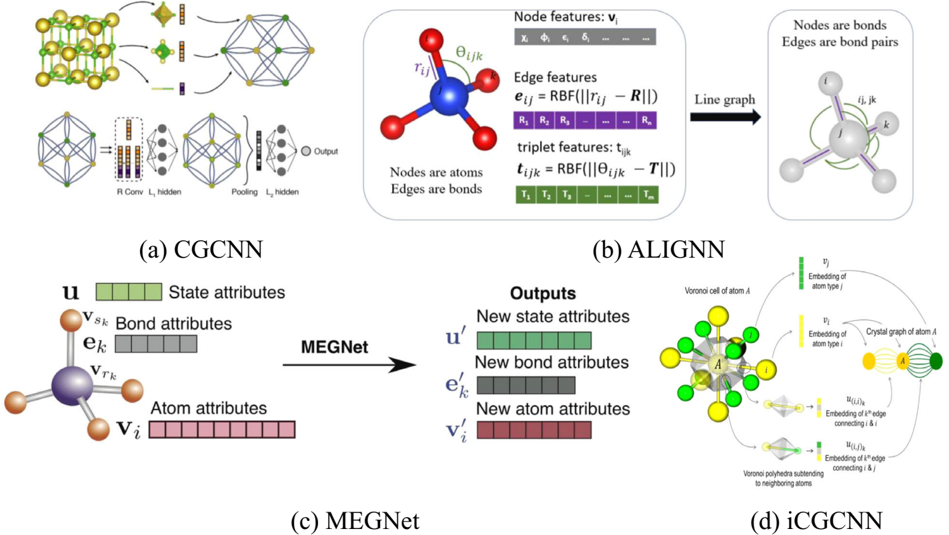
“Models such as SchNet, crystal graph convolutional neural network (CGCNN), improved crystal graph convolutional neural network (iCGCNN), directional message passing neural network (DimeNet), atomistic line graph neural network (ALIGNN) and materials graph neural network (MEGNet) shown in Table 1 have been used to pred…”
MethodInfluentialThe Elements of Statistical Learning
Hastie, T., Friedman, J., & Tibshirani, R. (2001) · Springer Series in Statistics · doi:10.1007/978-0-387-21606-5 · Cited by 24,162
A logical calculus of the ideas immanent in nervous activity
McCulloch, W. S., & Pitts, W. (1943) · The Bulletin of Mathematical Biophysics · doi:10.1007/bf02478259 · Cited by 18,566
The FAIR Guiding Principles for scientific data management and stewardship
Wilkinson, M. D., Dumontier, M., Aalbersberg, I. J., Appleton, G., Axton, M., Baak, A., Blomberg, N., Boiten, J.-W., da Silva Santos, L. B., Bourne, P. E., et al. (2016) · Scientific Data · doi:10.1038/sdata.2016.18 · Cited by 18,423 · cited 2×
“Through the Materials Genome Initiative (MGI) [3] and the increasing adoption of Findable, Accessible, Interoperable, Reusable (FAIR) [4] principles, several large experimental and computational datasets have been developed [5–12].”
Breiman, L. (1996) · Machine Learning · doi:10.1007/bf00058655 · Cited by 16,325 · cited 1×
“Similar to bagging 60 , the use of dropout brings about the same effect of training a collection of randomly chosen models which prevents the co-adaptations among the neurons, consequently reducing the likelihood of the model from over fi tting.”
Background
Research works printed but not linked: 12
- 61. LeCun, Y. et al. The Handbook of Brain Theory and Neural Networks vol. 3361 (MIT press Cambridge, MA, USA 1995).
- 83. Onken, D. et al. A neural network approach for high-dimensional optimal control. arXiv. https://arxiv.org/abs/2104.03270 (2021). · arXiv
- 85. Chen, L., Zhang, W., Nie, Z., Li, S. & Pan, F. Generative models for inverse design of inorganic solid materials. J. Mater. Inform. 1, 4 (2021).
- 104. Artrith, N. & Urban, A. An implementation of artificial neural-network potentials for atomistic materials simulations: Performance for tio2. Comput. Mater. Sci. 114, 135-150 (2016). · DOI · Paper page
- 140. Liu, R. et al. Deep learning for chemical compound stability prediction. In Pro- ceedings of ACM SIGKDD workshop on large-scale deep learning for data mining (DL-KDD), 1-7. https://rosanneliu.com/publication/kdd/ (ACM SIGKDD, 2016).
- 179. Rakita, Y. et al. Studying heterogeneities in local nanostructure with scanning nanostructure electron microscopy (snem). arXiv https://arxiv.org/abs/ 2110.03589 (2021).
- 198. Kong, S. et al. Density of states prediction for materials discovery via contrastive learning from probabilistic embeddings. arXiv. https://arxiv.org/abs/2110.11444 (2021). · arXiv
- 206. Choudhary, A. et al. Graph neural network predictions of metal organic framework co2 adsorption properties. arXiv. https://arxiv.org/abs/2112.10231 (2021). · arXiv
- 282. Haque, E. Effect of electron-phonon scattering, pressure and alloying on the thermoelectric performance of tmcu _3 ch _4(tm= v, nb, ta; ch= s, se, te). arXiv. https://arxiv.org/abs/2010.08461 (2020). · arXiv
- 300. Wilson, A. G., Hu, Z., Salakhutdinov, R. & Xing, E. P. Deep kernel learning. in Artificial intelligence and statistics, 370-378 (PMLR, 2016).
- 348. Fung, V., Hu, G., Ganesh, P. & Sumpter, B. G. Machine learned features from density of states for accurate adsorption energy prediction. Nat. Commun. 12, 1-11 (2021). · DOI · Paper page
- 357. Ede, J. M. & Beanland, R. Partial scanning transmission electron microscopy with deep learning. Sci. Rep. 10, 1-10 (2020). 358. 116. Somnath, S., Smith, C. R., Laanait, N., Vasudevan, R. K. & Jesse, S. Usid and pycroscopy-open source frameworks for storing and analyzing imaging and spectroscopy data. Microsc. Microanal. 25, 220-221 (2019). · DOI
Cited by
Items 401–500 of 1,001
de Paula, A. J., Petry, R., Almeida, J. M., Caetano, A., Sales, J., Ferreira, O. P., Martinez, D. S. T., Kobs, H. J., & de Faria, A. F. (2025) · ACS Applied Nano Materials · doi:10.1021/acsanm.5c05119 · Cited by 11
Huang, H., Xue, G., Dong, Z., Jia, B., Guo, D., Wang, Y., & Zhou, J. (2026) · Virtual and Physical Prototyping · doi:10.1080/17452759.2026.2668249 · Cited by 12
Chtchelkatchev, N. M., Ryltsev, R. E., Magnitskaya, M. V., Gorbunov, S. M., Cherednichenko, K. A., Solozhenko, V. L., & Бражкин, В. В. (2023) · The Journal of Chemical Physics · doi:10.1063/5.0165948 · Cited by 10
郭, Y. 亚. G., 曹, X. 小. C., 宋, J. 君. S., & Leng, H. (2023) · Chinese Physics B · doi:10.1088/1674-1056/ad0bf4 · Cited by 9
Askanazi, E., Lazar, E. A., & Grinberg, I. (2023) · Journal of Chemical Information and Modeling · doi:10.1021/acs.jcim.3c01684 · Cited by 10
CS-UNet: A generalizable and flexible segmentation algorithm
Alrfou, K., Zhao, T., & Kordijazi, A. (2024) · Multimedia Tools and Applications · doi:10.1007/s11042-024-19242-4 · Cited by 15
“Swin-T consists of two types of architectures: the original Swin-T with [2,2,6,2] transformer blocks and the intermediate network with [2,2,2,2] transformer blocks.”
MethodWang, Y., Kazemi, A., Jing, T., Ding, Z., Li, L., & Yang, S. (2024) · Extreme Mechanics Letters · doi:10.1016/j.eml.2024.102172 · Cited by 11
Zhang, J., Cao, G., Gu, Z., Wang, Z., Jin, Y., & Liu, J. (2024) · Engineering Fracture Mechanics · doi:10.1016/j.engfracmech.2024.110336 · Cited by 9
Exploration of Na-based NaXO3 (X = Ge, Si) oxide-perovskites: A density functional theory study
Bibi, N., Usman, M. H., & Ruyhan (2024) · Computational and Theoretical Chemistry · doi:10.1016/j.comptc.2024.114842 · Cited by 9
Kaushik, L., Park, K.-S., Kim, J., Lee, J., Jeong, Y., & Choi, S.-H. (2022) · International Journal of Plasticity · doi:10.1016/j.ijplas.2022.103467 · Cited by 12
Anker, A. S., Kjær, E. T. S., Juelsholt, M., & Jensen, K. M. Ø. (2023) · Journal of Applied Crystallography · doi:10.1107/s1600576723010014 · Cited by 9
Graph neural networks for predicting structural stability of Cd- and Zn-doped γ -CsPbI3
Eremin, R. A., Humonen, I. S., Kazakov, A. A., Lazarev, V. D., Pushkarev, A. P., & Budennyy, S. (2023) · Computational Materials Science · doi:10.1016/j.commatsci.2023.112672 · Cited by 14
Unraveling medium‐range order and melting mechanism of ZIF‐4 under high temperature
Shi, Z., Liu, B., Yue, Y., Arramel, A., & Li, N. (2024) · Journal of the American Ceramic Society · doi:10.1111/jace.19741 · Cited by 9
Kim, Y., Lim, M., Kim, S., Kim, T. U., Lee, S. J., Bok, S., Park, S., Han, Y., Jung, H.-Y., & Hyun, J. K. (2024) · Journal of Clinical Medicine · doi:10.3390/jcm13040990 · Cited by 8
“GNN-GCN analyzes data structured in graphs, while DNN processes data through interconnected layers [28].”
MethodMa, M., Wang, Z., Li, T., & Zhang, Z. (2024) · Measurement Science and Technology · doi:10.1088/1361-6501/ad4ab3 · Cited by 10
Critical Application Feasibility of Predictive Learning in Autonomous Vehicles
Pradhan, S. R., Mishra, S., Tripathy, H. K., Brahma, B., Ravindran, G., & Sobti, R. (2024) · Lecture notes in networks and systems · doi:10.1007/978-981-97-3588-4_31 · Cited by 8
Exploring active learning strategies for predictive models in mechanics of materials
Chen, Y., Deierling, P. E., & Xiao, S. (2024) · Applied Physics A · doi:10.1007/s00339-024-07728-9 · Cited by 9
“Recent reviews such as [12, 13] offered comprehensive insights into these advancements.”
Zare, M., Sahsah, D., Saleheen, M., Behler, J., & Heyden, A. (2024) · Journal of Chemical Theory and Computation · doi:10.1021/acs.jctc.4c00869 · Cited by 10
Sun, S., Guo, L.-D., Shu, X., Wang, Y.-T., Xie, Y.-Z., Xiao, Q., & Shi, X. (2024) · Applied Surface Science · doi:10.1016/j.apsusc.2024.161276 · Cited by 10
Improving Crystal Property Prediction from a Multiplex Graph Perspective
Feng, H., & Tian, H. (2024) · Journal of Chemical Information and Modeling · doi:10.1021/acs.jcim.4c01200 · Cited by 8
Isobe, N., Ishii, S., & Nomaki, H. (2025) · Current Opinion in Chemical Engineering · doi:10.1016/j.coche.2024.101089 · Cited by 11
Conrad, F., Wiemer, H., & Ihlenfeldt, S. (2025) · Machine Learning Science and Technology · doi:10.1088/2632-2153/adae53 · Cited by 11
“To maintain a direct comparison between STL and MTL, featurization methods were excluded, especially given the wide range of available featurization methods [16], which are beyond the scope of this study.”
Machine learning inverse design of high-strength mid-temperature Ag-based solders
Jin, C., Xiong, K., Wang, Y., Zhang, S., Ye, Y., Fang, H., Zhang, A., Dai, H., & Mao, Y. (2025) · Materials & Design · doi:10.1016/j.matdes.2025.113736 · Cited by 8
Takahara, W., Baba, R., Harashima, Y., Takayama, T., Takasuka, S., Yamaguchi, Y., Kudo, A., & Fujii, M. (2025) · ACS Omega · doi:10.1021/acsomega.4c06997 · Cited by 11
Large-Scale Characterization of Chemical Bonding and Topology in the Materials Project Database
Zoubritzky, L., & Coudert, F. (2025) · Chemistry of Materials · doi:10.1021/acs.chemmater.4c03172 · Cited by 8
Chen, J., Lu, J., Tan, S., Yang, J., Li, Z., Bai, C., Zhang, X., Li, R., Xie, Y., Liu, M., et al. (2025) · Journal of Materials Chemistry A · doi:10.1039/d5ta04197j · Cited by 8
Research Progress on Process Optimization of Metal Materials in Wire Electrical Discharge Machining
Zhao, X., Dong, B., Dong, S., & Ming, W. (2025) · Metals · doi:10.3390/met15070706 · Cited by 10
Abbasi-Vineh, M. A., Rouzbahani, S., Kavousi, K., & Emadpour, M. (2025) · Scientific Reports · doi:10.1038/s41598-025-12796-9 · Cited by 9
Leveraging unlabeled SEM datasets with self-supervised learning for enhanced particle segmentation
Rettenberger, L., Szymanski, N. J., Giunto, A., Dartsi, O., Jain, A., Ceder, G., Hagenmeyer, V., & Reischl, M. (2025) · npj Computational Materials · doi:10.1038/s41524-025-01802-3 · Cited by 9
“Inrecentyears, MachineLearning(ML)approaches,particularlyConvolutionalNeural Networks(CNNs),haveemergedasthedefactostandardforcomputer visiontasks 8,9 , including SEM image segmentation 10 .”
Self-citationTransformer-based prediction of dispersion relation and transmittance in phononic crystals
Lee, D., Kim, T., Han, J. H., Kim, S.-H., Youn, B. D., & Jo, S.-H. (2025) · International Journal of Mechanical Sciences · doi:10.1016/j.ijmecsci.2025.110880 · Cited by 9
Kumar, L., Dash, S. G., Malińska, M., Cinčić, D., & Arhangelskis, M. (2025) · Journal of the American Chemical Society · doi:10.1021/jacs.5c16985 · Cited by 8
Guduru, S. P. R., Kekung, M. O., Ott, R. T., Roy, S., & Singh, P. K. (2025) · Acta Materialia · doi:10.1016/j.actamat.2025.121763 · Cited by 8
Su, Y., Wang, K., Guan, X., Wu, Y., Zhang, H., Xie, F., & Chu, J. (2025) · Advanced Energy Materials · doi:10.1002/aenm.202505294 · Cited by 11
AI in Atomic Force Microscopy: Advancing Biological Nanoscale Imaging and Autonomous Discovery
Lee, S., Roh, S., Woo, H., Lee, G., Jung, H. G., Lee, K. A., Lee, H., Yoon, D. S., & Lee, J. H. (2026) · ACS Nano · doi:10.1021/acsnano.6c02895 · Cited by 9
Data-Driven Engineering of Antimicrobial Nanomaterials for Food Safety and Biomedical Systems
Nguyen, H. L., Nguyen, T. B. N., & Nguyen, T. B. N. (2026) · Nanomaterials · doi:10.3390/nano16120764 · Cited by 10
“Deep learning methods are especially useful for multimodal analysis because they can process high-dimensional imaging and spectral datasets [213].”
Deep Learning-Based Layer Identification of 2D Nanomaterials
Zhang, Y., Zhang, H., Zhou, S., Liu, G., & Zhu, J. (2022) · Coatings · doi:10.3390/coatings12101551 · Cited by 10
“At the same time, many methods have emerged in the field of materials science to explore the properties of materials through deep learning techniques [26], which have played a crucial role in promoting the development of this discipline.”
BackgroundMethodInfluentialAutomated real-space lattice extraction for atomic force microscopy images
Corrias, M., Papa, L., Sokolović, I., Birschitzky, V. C., Gorfer, A., Setvín, M., Schmid, M., Diebold, U., Reticcioli, M., & Franchini, C. (2023) · Machine Learning Science and Technology · doi:10.1088/2632-2153/acb5e0 · Cited by 8
Shaikh, M., Arain, Q. A., Siddiqui, I. F., & Shaikh, H. A. (2022) · International Conference on Mathematics, Actuarial Science, Computer Science and Statistics (MACS) · doi:10.1109/macs56771.2022.10022700 · Cited by 8
“Recent advancements in deep learning, particularly in the area of convolution neural networks (CNN), have seen great success in tasks including object detection, classification, segmentation, and natural language processing in medical images [8].”
BackgroundMachine Learning in Unmanned Systems for Chemical Synthesis
Wang, G., Wu, X., Xin, B., Gu, X., Wang, G., Zhang, Y., Zhao, J., Cheng, X., Chen, C., & Ma, J. (2023) · Molecules · doi:10.3390/molecules28052232 · Cited by 12
“Deep learning is a specialized branch of machine learning and one of its major strengths is its potential to extract higher-level features from the raw input data [89].”
BackgroundSelf-citationCNN-RNN Deep Learning Networks for Pattern Recognition Problems
Imran, I. I. (2023) · International Conference on Business Analytics for Technology and Security (ICBATS) · doi:10.1109/icbats57792.2023.10111363 · Cited by 9
“Applications of DL are rapidly replacing several traditional systems in our lives, such as in image and speech recognition and web search [4].”
Arndt, C. M., Crusenberry, C., Heng, B., Butler, R. A., & TerMaath, S. C. (2023) · Modelling—International Open Access Journal of Modelling in Engineering Science · doi:10.3390/modelling4040028 · Cited by 12
Slautin, B. N., Liu, Y., Funakubo, H., & Kalinin, S. V. (2024) · Journal of Applied Physics · doi:10.1063/5.0198316 · Cited by 12
Graph Neural Networks for Carbon Dioxide Adsorption Prediction in Aluminum-Substituted Zeolites
Petković, M., Vicent‐Luna, J. M., Menkovski, V., & Calero, S. (2024) · ACS Applied Materials & Interfaces · doi:10.1021/acsami.4c12198 · Cited by 21
Classification Analysis of Transition Metal Compounds Using Quantum Machine Learning
Vedavyasa, K. V., & Kumar, A. (2024) · Advanced Quantum Technologies · doi:10.1002/qute.202400081 · Cited by 13
Mohammadi, S., Ghaderi, S., Ghaderi, K., Mohammadi, M., & Pourasl, M. H. (2023) · International Journal of Surgery Case Reports · doi:10.1016/j.ijscr.2023.108818 · Cited by 11
The hidden engine of AI in electrocatalysis: Databases and knowledge graphs at work
Zhang, D., & Li, H. (2025) · Molecular Chemistry & Engineering · doi:10.1016/j.mochem.2025.100003 · Cited by 11
A Deep Learning Labeling Method for Material Microstructure Image Segmentation
Wang, X., Su, H., Li, N., Chen, Y., Yang, Y., & Meng, H. (2023) · Processes · doi:10.3390/pr11123272 · Cited by 12
Automating selective area electron diffraction phase identification using machine learning
Mika, M., Tomczak, N., Finney, C., Carter, J. L. W., & Aitkaliyeva, A. (2024) · Journal of Materiomics · doi:10.1016/j.jmat.2023.12.010 · Cited by 8
AnisoGNN: Graph neural networks generalizing to anisotropic properties of polycrystals
Hu, G., & Latypov, M. I. (2024) · Computational Materials Science · doi:10.1016/j.commatsci.2024.113121 · Cited by 11
Benchmarking machine learning strategies for phase-field problems
Dingreville, R., Roberston, A. E., Attari, V., Greenwood, M., Ofori-Opoku, N., Ramesh, M., Voorhees, P. W., & Zhang, Q. (2024) · Modelling and Simulation in Materials Science and Engineering · doi:10.1088/1361-651x/ad5f4a · Cited by 14
Daemei, A. B., Bradecki, T., Pancewicz, A., Razzaghipour, A., Darvish, A., Jamali, A., Abbaszadegan, S. M., Askarizad, R., Kazemi, M., & Sharifi, A. (2024) · Frontiers in Energy Research · doi:10.3389/fenrg.2024.1447655 · Cited by 9
Pan, L., Liang, Q., Zeng, W., Peng, Y., Zhao, Z., Liang, Y., Luo, J., Wang, X., & Peng, S. (2024) · npj Precision Oncology · doi:10.1038/s41698-024-00771-y · Cited by 12
“Benefiting from the rapid development of artificial intelligence, deep learning has been widely applied to tasks in image analysis, providing state-of-the-art (SOTA) performance for various image classification tasks [23], [24].”
Zheng, J., Hu, Z., Hua, L., & Sun, Q. (2025) · Materials Characterization · doi:10.1016/j.matchar.2025.114778 · Cited by 8
Uncertainty quantification of geochemical data imputation using Monte Carlo dropout
Puzyrev, V., & Duuring, P. (2025) · Journal of Geochemical Exploration · doi:10.1016/j.gexplo.2025.107695 · Cited by 9
Asadi, B., Shah, V., Vyas, A., Golparvar‐Fard, M., & Hajj, R. (2025) · Computer-Aided Civil and Infrastructure Engineering · doi:10.1111/mice.13447 · Cited by 8
“From discovery to design, progress in materials science has been greatly accelerated by recent advances in machine learning (ML) (Choudhary et al., 2022; Ghafarollahi & Buehler, 2024; Rafiei et al., 2017).”
Deep learning-based LDL-C level prediction and explainable AI interpretation
Öter, A. (2025) · Computers in Biology and Medicine · doi:10.1016/j.compbiomed.2025.109905 · Cited by 7
Examining proton conductivity of metal–organic frameworks by means of machine learning
Dudakov, I. V., Savelev, S. A., Nevolin, I. M., Mitrofanov, A. A., Korolev, V., & Gorbunova, Y. G. (2025) · Physical Chemistry Chemical Physics · doi:10.1039/d5cp00090d · Cited by 8
Shokor, F., Croiseau, P., Gangloff, H., Saintilan, R., Tribout, T., Mary‐Huard, T., & Cuyabano, B. C. D. (2025) · Journal of Dairy Science · doi:10.3168/jds.2024-26057 · Cited by 15
Solout, M. V., & Ghasemi, J. B. (2025) · Scientific Reports · doi:10.1038/s41598-025-04220-z · Cited by 12
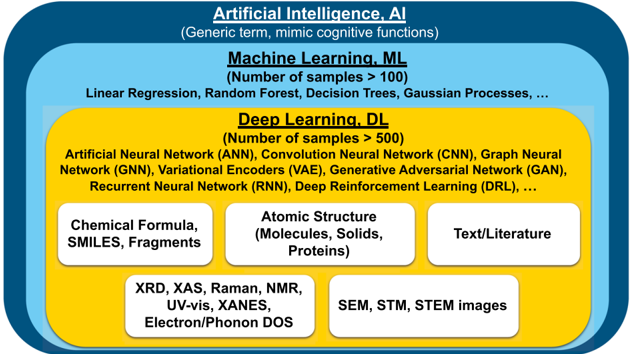
“A hierarchical classification of these methods, based on statistical, mathematical, and computer science approaches, categorizes them by scope and importance into artificial intelligence, machine learning, and deep learning 22 .”
Direct band gap prediction of single and double perovskite using cost-sensitive ensemble learning
Kusuma, F. J., Widianto, E., Wahyono, W., Santoso, I., Sholihun, S., Absor, M. A. U., Sakti, S. P., & Trıyana, K. (2025) · Journal of Alloys and Compounds · doi:10.1016/j.jallcom.2025.182102 · Cited by 11
Leelaprachakul, T., Shima, H., Sumigawa, T., & Umeno, Y. (2025) · Computational Materials Science · doi:10.1016/j.commatsci.2025.114200 · Cited by 6
Habitat mapping of coastal dunes with deep learning
Lansu, E. M., Reijers, V. C., Daniels, F. M. J., James, R. K., Christianen, M. J. A., & van der Heide, T. (2025) · Ecological Informatics · doi:10.1016/j.ecoinf.2025.103444 · Cited by 7
Babu, A., Šutka, A., & Mandal, D. (2025) · Advanced Materials Technologies · doi:10.1002/admt.202501635 · Cited by 10
A survey of AI-supported materials informatics
Chakraborty, S., Björk, J., Dahlqvist, M., Rosen, J., & Heintz, F. (2025) · Computer Science Review · doi:10.1016/j.cosrev.2025.100845 · Cited by 17
“…data distributions from raw data (like spectra or images), without explicit human labelling, enables the exploration of relationships and patterns that might be too subtle or complex for human intuition or simpler models based on ‘‘general materials science principles’’ alone [54,195].”
Jiang, X., Sun, H., Choudhary, K. K., Zhuang, H. L., & Nian, Q. (2025) · npj Computational Materials · doi:10.1038/s41524-024-01468-3 · Cited by 13
“To solve the limitations of KSDFT and MD, machine learning (ML) models [17, 18] such as neural network potential (NNP) [19, 20], Gaussian approximation potential (GAP) [21], spectral neighbor analysis potential (SNAP) [22, 23], and moment tensor potential (MTP) [24] have been proposed to accurately predict energy and…”
Self-citationYu, D., Griesemer, S. D., Liu, T., Wolverton, C. M., & Zhu, Y. (2025) · npj Computational Materials · doi:10.1038/s41524-025-01837-6 · Cited by 10
“However, these data-sets are considered “ small datasets ” in the machine learning fi eld, making it dif fi cult to apply cutting-edge large models 18 .”
Self-citationSenjaliya, H., Gajjar, P., Dodia, V., Shah, P., Bardhan, K., & Shukla, M. (2023) · IEEE IAS Global Conference on Emerging Technologies (GlobConET) · doi:10.1109/globconet56651.2023.10149936 · Cited by 7
Artificial Intelligence in the Prevention and Detection of Cardiovascular Disease
Whiteson, H. Z., & Frishman, W. H. (2023) · Cardiology in Review · doi:10.1097/crd.0000000000000606 · Cited by 15
Quantum-Inspired Tensor Network for Earth Science
Otgonbaatar, S., & Kranzlmüller, D. A. (2023) · IEEE International Geoscience and Remote Sensing Symposium (IGARSS) · doi:10.1109/igarss52108.2023.10282577 · Cited by 14
“DL models currently have been outperforming conventional techniques and meth-ods in science and engineering, even in remote sensing and Earth science [2, 3, 4].”
Khan, M. P., Mukhtar, R., Chang, C., Chaudhary, N. I., Shoaib, M., & Raja, M. A. Z. (2024) · The European Physical Journal Plus · doi:10.1140/epjp/s13360-023-04847-9 · Cited by 7
“Machine learning methodologies including neural networks are proposed for solving optimization problems in different domains, such as material sciences [40–42], biomedical signal processing [43], brain sciences [44], forecasting [45], and fluid problems [45–48].”
Machine learning in solid state additive manufacturing: state-of-the-art and future perspectives
Yadav, A., Srivastava, M., Jain, P. K., & Rathee, S. (2024) · International Journal on Interactive Design and Manufacturing (IJIDeM) · doi:10.1007/s12008-024-01858-3 · Cited by 9
“However, machine learning overcomes these issues [56–58].”
Machine learning-based longitudinal prediction for GJB2-related sensorineural hearing loss
Chen, P., Yang, T.-W., Tseng, Y.-S., Tsai, C., Yeh, C.-S., Lee, Y., Lin, P., Lin, T.-C., Wu, Y., Yang, T., et al. (2024) · Computers in Biology and Medicine · doi:10.1016/j.compbiomed.2024.108597 · Cited by 9
Jin, L., Wang, Z., Jiao, P., Zhou, P., & Wu, T. (2024) · Materials Today Communications · doi:10.1016/j.mtcomm.2024.109549 · Cited by 7
Physics-based reward driven image analysis in microscopy
Barakati, K., Yuan, H., Goyal, A. K., & Kalinin, S. V. (2024) · Digital Discovery · doi:10.1039/d4dd00132j · Cited by 13
Machine-Learned Models for Power Magnetic Material Characteristics
Leszczyński, P., Kutorasiński, K., Szewczyk, M., & Pawłowski, J. (2024) · IEEE Transactions on Power Electronics · doi:10.1109/tpel.2024.3463744 · Cited by 10
“With the advent of big data, deep learning, i.e. paradigm that uses deep neural networks (NNs), revolutionary break-throughs in many conventional machine learning and pattern recognition tasks are a fact, such as computer vision or signal processing [10], [11].”
Identifying crystal structures beyond known prototypes from x-ray powder diffraction spectra
Parackal, A. S., Goodall, R. E. A., Faber, F. A., & Armiento, R. (2024) · Physical Review Materials · doi:10.1103/physrevmaterials.8.103801 · Cited by 20
Predicting Crystalline Material Properties with AI: Bridging Molecular to Particle Scales
Chen, W., Li, M., Yao, T., Liu, J., Jia, S., Gao, Z., & Gong, J. (2024) · Industrial & Engineering Chemistry Research · doi:10.1021/acs.iecr.4c03224 · Cited by 10
Machine Learning Application for Functional Properties Prediction in Magnetic Materials
Milyutin, V. A., & Никульченков, Н. Н. (2024) · The Physics of Metals and Metallography · doi:10.1134/s0031918x24601471 · Cited by 8
“…experts believe that the minimum dataset size required to train classical ML algorithms (those not based on artificial neural networks (ANNs)) in materials science is about 100 samples [24, 25], whereas for deep learning algorithms based on neural networks, at least 500 samples are required [25].”
Predicting Lattice Vibrational Frequencies Using Deep Graph Neural Networks
Nguyen, N. T., Louis, S.-Y., Wei, L., Choudhary, K. K., Hu, M., & Hu, J. (2022) · ACS Omega · doi:10.1021/acsomega.2c02765 · Cited by 8
Self-citationUsing Generative Adversarial Networks to Validate Discrete Event Simulation Models
Montevechi, J. A. B., Gabriel, G. T., Campos, A. T., dos Santos, C. H., Leal, F., & Machado, M. E. F. H. S. (2022) · Winter Simulation Conference · doi:10.1109/wsc57314.2022.10015375 · Cited by 8
“Moreover, we observe DL applications in several areas, such as image and speech recognition, web search, fraud detection, email filtering, and financial risk modeling (Choudhary et al. 2022).”
MethodPre-Activation based Representation Learning to Enhance Predictive Analytics on Small Materials Data
Gupta, V., Liao, W., Choudhary, A., & Agrawal, A. (2023) · International Joint Conference on Neural Networks (IJCNN) · doi:10.1109/ijcnn54540.2023.10191086 · Cited by 7
“As envisioned by the Materials Genome Initiative (MGI) [1], machine learning (ML) has revolutionized materials science by accelerating materials discovery and design [2]– [6], leading to the data-driven paradigm of materials informatics [5], [7]–[10].”
BackgroundSelf-citationDeep Learning-Based Patch-Wise Illumination Estimation for Enhanced Multi-Exposure Fusion
AlZamili, Z., Danach, K. M., & Frikha, M. (2023) · IEEE Access · doi:10.1109/access.2023.3328579 · Cited by 11
“5.”
Prediction of glass-forming ability based on multi-model fusion
Zeng, Y., Tian, Z., Zheng, Q., Jiang, M., & Peng, Y. (2023) · Journal of Non-Crystalline Solids · doi:10.1016/j.jnoncrysol.2023.122693 · Cited by 6
Jacobs, R. M., Goins, P. E., & Morgan, D. D. (2023) · Machine Learning Science and Technology · doi:10.1088/2632-2153/ad1627 · Cited by 12
Index gases generation law of different rank coal molecules based on ReaxFF molecular dynamics
Zhang, J., Li, Z., Li, X., Song, G., Ren, X., & Zhou, C. (2024) · Materials Today Communications · doi:10.1016/j.mtcomm.2024.109760 · Cited by 7
Neural networks for rapid phase quantification of cultural heritage X-ray powder diffraction data
Poline, V., Purohit, R. R. P. P. R., Bordet, P., Blanc, N., & Martinetto, P. (2024) · Journal of Applied Crystallography · doi:10.1107/s1600576724003704 · Cited by 11
A hybrid predictive modeling approach for catalyzed polymerization reactors
Sobhani, O., Toliati, H., Elmaz, F., Gerdposhteh, S. P., Carius, B., Mets, K., & Mercelis, S. (2024) · Chemical Engineering Journal Advances · doi:10.1016/j.ceja.2024.100662 · Cited by 7
A data-driven strategy for phase field nucleation modeling
Hu, Y., Wang, K., & Spatschek, R. (2024) · npj Materials Degradation · doi:10.1038/s41529-024-00529-8 · Cited by 8
Automatic detection of grains in partially recrystallized microstructures using deep learning
Lin, F., Fang, H., Liu, H., Zhang, Y., Jensen, D. J., & Hovad, E. (2024) · Materials Characterization · doi:10.1016/j.matchar.2024.114576 · Cited by 6
Synthesis of Carbon Nanomaterials from Agro-Industrial Wastes and Their Extensive Applications
Padhan, S. R., Rathore, S. S., JAT, S. L., Saini, S., Mohanty, A., Panigrahi, P., Ranjan, S., Sow, S., Mishra, P., Baral, K., et al. (2025) · Nanostructure science and technology · doi:10.1007/978-3-031-75247-6_3 · Cited by 11
Advanced deep learning-based strategy for optical inversion engineering of optical coatings
Dai, J., Ji, X., Niu, X., Jiao, H., Cheng, X., Wang, Z., & Zhang, J. (2025) · Optics Express · doi:10.1364/oe.551923 · Cited by 6
Long, W., Peng, L., Li, J., Yu, Y., & Zhang, W. (2025) · Collagen and Leather · doi:10.1186/s42825-024-00184-4 · Cited by 6
“The processing–structure–property–performance framework is a crucial design methodology in materials science and engineering [1].”
A grain boundary embrittlement genome for substitutional cubic alloys
Tuchinda, N., Olson, G. B., & Schuh, C. A. (2025) · Applied Physics Letters · doi:10.1063/5.0264543 · Cited by 8
Deep Learning Approaches for Predicting the Surface Tension of Ionic Liquids
Gugulothu, N., Mohan, M., Marland, M., Smith, J. C., & Kidder, M. K. (2025) · Journal of Chemical Information and Modeling · doi:10.1021/acs.jcim.5c00158 · Cited by 7
Quantum graph learning and algorithms applied in quantum computer sciences and image classification
Shayeganfar, F., Ramazani, A., Sundararaghavan, V., & Duan, Y. (2025) · Applied Physics Reviews · doi:10.1063/5.0237599 · Cited by 11
ACES-GNN: can graph neural network learn to explain activity cliffs?
Chen, X., Yu, D., Zhao, L., & Liu, F. (2025) · Digital Discovery · doi:10.1039/d5dd00012b · Cited by 13
Ojha, A., Tiwari, A., Vambaravelli, S. A. T., Sahu, K. K., & Bathula, S. (2025) · ACS Applied Energy Materials · doi:10.1021/acsaem.5c01456 · Cited by 6
Xing, R., Yao, H., Xi, Z., Sun, M., Li, Q., Tian, J., Wang, H., Xu, D., Ma, Z., & Zhao, L. (2025) · npj Computational Materials · doi:10.1038/s41524-025-01743-x · Cited by 10
Jeevanandam, J., Tsenov, G., Danquah, M. K., Ruiz‐Molina, D., Boussios, S., & Ovsepian, S. V. (2025) · Molecular Diagnosis & Therapy · doi:10.1007/s40291-025-00813-6 · Cited by 10
“The increasing use of these tools has shown that the research of NDDs would greatly benefit from deep learning, as ML algorithms can work effectively with various structured imaging datasets [204], whereas deep learning can achieve high performance with large unstructured data volume [205].”
Bandgap prediction and design of halide double perovskites via ensemble machine learning
Yang, D., Luo, S., Zhong, F., Wang, L., Wang, S., Zhang, W., Niu, C., Li, C., & Wang, F. (2025) · Chemical Engineering Journal · doi:10.1016/j.cej.2025.169979 · Cited by 9
Metadata
- Authors
- Choudhary, K., DeCost, B., Chen, C., Jain, A., Tavazza, F., Cohn, R., Park, C. W., Choudhary, A., Agrawal, A., Billinge, S. J. L., Holm, E., Ong, S. P., & Wolverton, C.
- Affiliations
- National Institute of Standards and Technology (US)
- University of California San Diego (US)
- Lawrence Berkeley National Laboratory (US)
- Carnegie Mellon University (US)
- Northwestern University (US)
- Columbia University (US)
- ORCID
- Venue
- npj Computational Materials
- Published
- 2022-04-05
- Volume
- 8
- Issue
- 1
- ISSN
- 2057-3960 (ISSN-L)
- OpenAlex
- W3208687975
- Semantic Scholar
- 5aaeb50d8051890e9fbb9b9b8f34d9f3f2d85c1a
- Cited by
- 1,172
- References
- 401
- Citations by year
- 2026: 248 · 2025: 386 · 2024: 316 · 2023: 187 · 2022: 35
- FWCI
- 64.93
- Type
- journal article
- Language
- en
- Open access
- gold
- doi.org
- Licence
- cc-by
- creativecommons.org/licenses/by/4.0 (tdm)
- creativecommons.org/licenses/by/4.0 (vor)
- Locations
- npj Computational Materials (publishedVersion, cc-by)
- arXiv (Cornell University) (submittedVersion)
- eScholarship (California Digital Library) (submittedVersion, cc-by)
- OSTI OAI (U.S. Department of Energy Office of Scientific and Technical Information) (submittedVersion, cc-by)
- DOAJ (DOAJ: Directory of Open Access Journals) (submittedVersion)
- arXiv (Cornell University) (cc-by)
- Funders
- National Science Foundation (DEAC02-05CH11231, 2053929, 70NANB19H005, 1826218, 1922234)
- U.S. Department of Energy (-AC02-05CH11231, DE-AC02-05-CH11231: Materials Project program KC23MP, 70NANB19H005, KC23MP, DE AC02 05CH11231, DE-AC02-)
- U.S. Department of Commerce (70NANB19H005, 70NANB19H117)
- Northwestern University (70NANB19H005)
- University of Warwick
- National Institute of Standards and Technology (70NANB19H117, 70NANB19H005)
- Office of Science (DEAC02–05CH11231, DE-AC02, DE-AC02-05-CH11231: Materials Project Program KC23MP)
- Division of Civil, Mechanical and Manufacturing Innovation (CMMI-2053929)
- Basic Energy Sciences (DE-AC02, DE-AC02-05CH11231., KC23MP, DE-AC02-05-, AC02–05CH11231)
- Topics
- Physical Sciences › Materials Science › Materials Chemistry › Machine Learning in Materials Science
- Physical Sciences › Physics and Astronomy › Atomic and Molecular Physics, and Optics › Advanced Chemical Physics Studies
- Physical Sciences › Physics and Astronomy › Statistical and Nonlinear Physics › Model Reduction and Neural Networks
- Keywords
- deep learning, atomistic simulation, materials imaging, spectral analysis, natural language processing, synthetic data, generative models, uncertainty quantification, materials database, spectral data
About these checks
Registry, retraction, Cites and statistics results are computed, not judged, with one exception: a printed reference that no index lists is read once by a model before it counts as a citation error. Claims are extracted by a model and kept only when their quote appears verbatim in the text; each cited source is then checked, with a model’s help, for whether it says what the claim relies on. Those verdicts can be wrong — read the claim’s quote and the cited source before relying on one.
Statistics and arithmetic are recomputed, not judged.
Confidence bands are shown only for fields calibrated on our annotated test set. None is calibrated yet, so no band is shown.
What counts as a claim ›How we measure confidence ›How we check this ›
Are you an author, or do you see a problem with this page? Request a review
Data sources
Bibliographic data: Semantic Scholar, OpenAlex, Crossref.
Contains information from the Semantic Scholar Academic Graph Datasets, made available under the ODC Attribution License (ODC-BY 1.0).
Semantic Scholar’s data is described in: Kinney, R., et al. (2023). The Semantic Scholar Open Data Platform. arXiv:2301.10140.
