

Recent advances and applications of deep learning methods in materials science
Open accessThe DOI matches its Crossref record; 404 of the 404 references it cites were found in a registry or an index.
Abstract
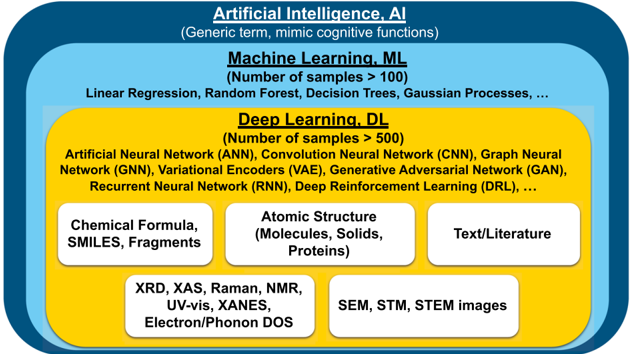
Deep learning (DL) is one of the fastest-growing topics in materials data science, with rapidly emerging applications spanning atomistic, image-based, spectral, and textual data modalities. DL allows analysis of unstructured data and automated identification of features. The recent development of large materials databases has fueled the application of DL methods in atomistic prediction in particular. In contrast, advances in image and spectral data have largely leveraged synthetic data enabled by high-quality forward models as well as by generative unsupervised DL methods. In this article, we present a high-level overview of deep learning methods followed by a detailed discussion of recent developments of deep learning in atomistic simulation, materials imaging, spectral analysis, and natural language processing. For each modality we discuss applications involving both theoretical and experimental data, typical modeling approaches with their strengths and limitations, and relevant publicly available software and datasets. We conclude the review with a discussion of recent cross-cutting work related to uncertainty quantification in this field and a brief perspective on limitations, challenges, and potential growth areas for DL methods in materials science.
Overview
The claims and statistics of this paper haven’t been checked yet.
Free: it reads the open-access text and checks the first 5 claims that cite a source we can check. Create a free account to check every claim.
Integrity signals
Registry
Cites
Statistics
Figures
Verification
Claims the paper makes
The claims and statistics of this paper haven’t been checked yet.
Free: it reads the open-access text and checks the first 5 claims that cite a source we can check. Create a free account to check every claim.
Self-check
Percentages, sums and reported differences re-computed from the paper’s own numbers.
The self-check needs the paper’s full text.
Citations
Cites
ImageNet classification with deep convolutional neural networks
Krizhevsky, A., Sutskever, I., & Hinton, G. E. (2017) · Communications of the ACM · doi:10.1145/3065386 · Cited by 112,155
LeCun, Y., Bengio, Y., & Hinton, G. (2015) · Nature · doi:10.1038/nature14539 · Cited by 84,126
BERT: Pre-training of Deep Bidirectional Transformers for Language Understanding
Devlin, J., Chang, M.-W., Lee, K., & Toutanova, K. (2018) · arXiv · doi:10.48550/arxiv.1810.04805 · Cited by 73,173 · cited 1×
“More recently, sequence-to-sequence models based on a “transformer” architecture, such as Google’s Bidirectional Encoder Representations from Transformers (BERT) model [53, 70], have helped address some of the issues of traditional RNNs.”
BERT: Pre-training of Deep Bidirectional Transformers for Language Understanding
Devlin, J., Chang, M.-W., Lee, K., & Toutanova, K. (2019) · Proceedings of the 2019 Conference of the North American Chapter of the Association for Computational Linguistics: Human Language Technologies, Volume 1 (Long and Short Papers) · doi:10.18653/v1/n19-1423 · Cited by 54,325 · cited 1×
“More recently, sequence-to-sequence models based on a “transformer” architecture, such as Google’s Bidirectional Encoder Representations from Transformers (BERT) model [53, 70], have helped address some of the issues of traditional RNNs.”
PyTorch: An Imperative Style, High-Performance Deep Learning Library
Paszke, A., Gross, S., Massa, F., Lerer, A., Bradbury, J., Chanan, G., Killeen, T., Lin, Z., Gimelshein, N., Antiga, L., et al. (2019) · arXiv · doi:10.48550/arxiv.1912.01703 · Cited by 31,473
Semi-supervised classification with graph convolutional networks
Kipf, T. N., & Welling, M. (2016) · arXiv · doi:10.48550/arxiv.1609.02907 · Cited by 24,853 · cited 6×
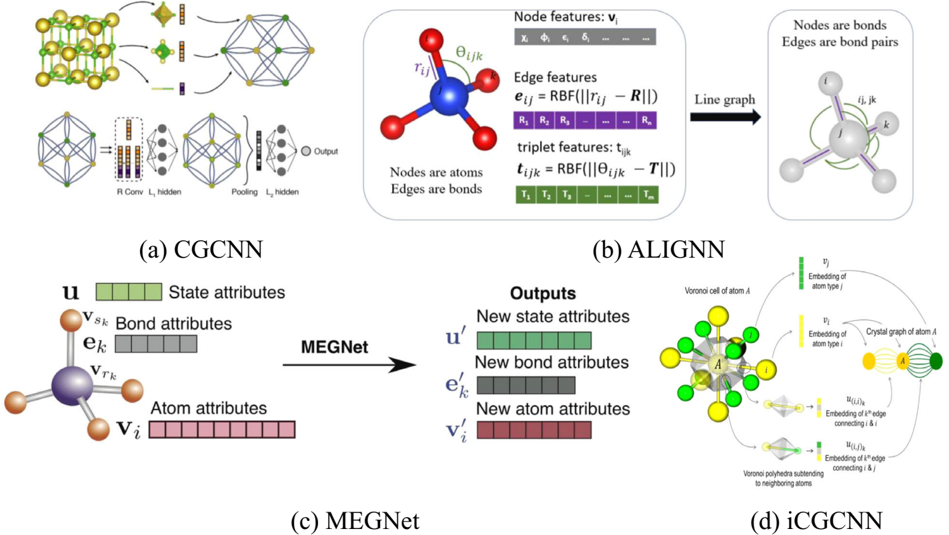
“Models such as SchNet, crystal graph convolutional neural network (CGCNN), improved crystal graph convolutional neural network (iCGCNN), directional message passing neural network (DimeNet), atomistic line graph neural network (ALIGNN) and materials graph neural network (MEGNet) shown in Table 1 have been used to pred…”
MethodInfluentialThe Elements of Statistical Learning
Hastie, T., Friedman, J., & Tibshirani, R. (2001) · Springer Series in Statistics · doi:10.1007/978-0-387-21606-5 · Cited by 24,162
A logical calculus of the ideas immanent in nervous activity
McCulloch, W. S., & Pitts, W. (1943) · The Bulletin of Mathematical Biophysics · doi:10.1007/bf02478259 · Cited by 18,566
The FAIR Guiding Principles for scientific data management and stewardship
Wilkinson, M. D., Dumontier, M., Aalbersberg, I. J., Appleton, G., Axton, M., Baak, A., Blomberg, N., Boiten, J.-W., da Silva Santos, L. B., Bourne, P. E., et al. (2016) · Scientific Data · doi:10.1038/sdata.2016.18 · Cited by 18,423 · cited 2×
“Through the Materials Genome Initiative (MGI) [3] and the increasing adoption of Findable, Accessible, Interoperable, Reusable (FAIR) [4] principles, several large experimental and computational datasets have been developed [5–12].”
Breiman, L. (1996) · Machine Learning · doi:10.1007/bf00058655 · Cited by 16,325 · cited 1×
“Similar to bagging 60 , the use of dropout brings about the same effect of training a collection of randomly chosen models which prevents the co-adaptations among the neurons, consequently reducing the likelihood of the model from over fi tting.”
Background
Research works printed but not linked: 12
- 61. LeCun, Y. et al. The Handbook of Brain Theory and Neural Networks vol. 3361 (MIT press Cambridge, MA, USA 1995).
- 83. Onken, D. et al. A neural network approach for high-dimensional optimal control. arXiv. https://arxiv.org/abs/2104.03270 (2021). · arXiv
- 85. Chen, L., Zhang, W., Nie, Z., Li, S. & Pan, F. Generative models for inverse design of inorganic solid materials. J. Mater. Inform. 1, 4 (2021).
- 104. Artrith, N. & Urban, A. An implementation of artificial neural-network potentials for atomistic materials simulations: Performance for tio2. Comput. Mater. Sci. 114, 135-150 (2016). · DOI · Paper page
- 140. Liu, R. et al. Deep learning for chemical compound stability prediction. In Pro- ceedings of ACM SIGKDD workshop on large-scale deep learning for data mining (DL-KDD), 1-7. https://rosanneliu.com/publication/kdd/ (ACM SIGKDD, 2016).
- 179. Rakita, Y. et al. Studying heterogeneities in local nanostructure with scanning nanostructure electron microscopy (snem). arXiv https://arxiv.org/abs/ 2110.03589 (2021).
- 198. Kong, S. et al. Density of states prediction for materials discovery via contrastive learning from probabilistic embeddings. arXiv. https://arxiv.org/abs/2110.11444 (2021). · arXiv
- 206. Choudhary, A. et al. Graph neural network predictions of metal organic framework co2 adsorption properties. arXiv. https://arxiv.org/abs/2112.10231 (2021). · arXiv
- 282. Haque, E. Effect of electron-phonon scattering, pressure and alloying on the thermoelectric performance of tmcu _3 ch _4(tm= v, nb, ta; ch= s, se, te). arXiv. https://arxiv.org/abs/2010.08461 (2020). · arXiv
- 300. Wilson, A. G., Hu, Z., Salakhutdinov, R. & Xing, E. P. Deep kernel learning. in Artificial intelligence and statistics, 370-378 (PMLR, 2016).
- 348. Fung, V., Hu, G., Ganesh, P. & Sumpter, B. G. Machine learned features from density of states for accurate adsorption energy prediction. Nat. Commun. 12, 1-11 (2021). · DOI · Paper page
- 357. Ede, J. M. & Beanland, R. Partial scanning transmission electron microscopy with deep learning. Sci. Rep. 10, 1-10 (2020). 358. 116. Somnath, S., Smith, C. R., Laanait, N., Vasudevan, R. K. & Jesse, S. Usid and pycroscopy-open source frameworks for storing and analyzing imaging and spectroscopy data. Microsc. Microanal. 25, 220-221 (2019). · DOI
Cited by
Items 101–200 of 1,001
Application of deep learning in laser-induced breakdown spectroscopy: a review
Zhang, C., Zhou, L., Liu, F., Huang, J., & Peng, J. (2023) · Artificial Intelligence Review · doi:10.1007/s10462-023-10590-5 · Cited by 41
“In many cases, DL has demonstrated superior performance compared to traditional ML techniques (Aggarwal et al. 2021b; Choudhary et al. 2022; Kamilaris and Prenafeta-Boldú 2018; Ma et al. 2019; Miotto et al. 2018; Sorin et al.”
MethodAI‐Driven Defect Engineering for Advanced Thermoelectric Materials
Fu, C., Cheng, M., Hung, N. T., Rha, E., Chen, Z., Okabe, R., Carrizales, D. C., Mandal, M., Cheng, Y. Q., & Li, M. (2025) · Advanced Materials · doi:10.1002/adma.202505642 · Cited by 47
Zhang, X., Hu, M., Zhang, Y., Zhai, G., & Zhang, X.-P. S. (2023) · Advanced Intelligent Systems · doi:10.1002/aisy.202200345 · Cited by 39
Overview: Machine Learning for Segmentation and Classification of Complex Steel Microstructures
Müller, M. J., Stiefel, M., Bachmann, B.-I., Britz, D., & Mücklich, F. (2024) · Metals · doi:10.3390/met14050553 · Cited by 49
“However, most of the work explores the “chemical space”, i.e., the possible chemical combinations of novel materials, with (so far) li tt le emphasis on their microstructure [10,11].”
BackgroundGurunathan, R. L., Choudhary, K. K., & Tavazza, F. (2023) · Physical Review Materials · doi:10.1103/physrevmaterials.7.023803 · Cited by 45
“An attractive route to rapid predictions of phonon DOS and vibrational properties, directly from the crystal structure, is through deep learning [10].”
BackgroundSelf-citationGupta, V., Choudhary, K. K., Mao, Y., Wang, K., Tavazza, F., Campbell, C. E., Liao, W., Choudhary, A., & Agrawal, A. (2023) · Journal of Chemical Information and Modeling · doi:10.1021/acs.jcim.3c00307 · Cited by 42
Self-citationDai, M., Demirel, M. F., Liu, X., Liang, Y., & Hu, J. (2023) · Computational Materials Science · doi:10.1016/j.commatsci.2023.112461 · Cited by 43
Peivaste, I., Belouettar, S., Mercuri, F., Fantuzzi, N., Dehghani, H., Izadi, R., Ibrahim, H., Lengiewicz, J., Belouettar-Mathis, M., Bendine, K., et al. (2025) · Composite Structures · doi:10.1016/j.compstruct.2025.119419 · Cited by 54
Song, Y., Miret, S., & Liu, B. (2023) · Proceedings of the conference - Association for Computational Linguistics. Meeting · doi:10.18653/v1/2023.acl-long.201 · Cited by 83
Can a deep-learning model make fast predictions of vacancy formation in diverse materials?
Choudhary, K. K., & Sumpter, B. G. (2023) · AIP Advances · doi:10.1063/5.0135382 · Cited by 35
Self-citationMaterial discovery and modeling acceleration via machine learning
Zuccarini, C., Ramachandran, K., & Jayaseelan, D. D. (2024) · APL Materials · doi:10.1063/5.0230677 · Cited by 41
Field scale wheat yield prediction using ensemble machine learning techniques
Gawdiya, S., Kumar, D., Ahmed, B., Sharma, R. K., Das, P., Choudhary, M., & Mattar, M. A. (2024) · Smart Agricultural Technology · doi:10.1016/j.atech.2024.100543 · Cited by 40
AlabOS: a Python-based reconfigurable workflow management framework for autonomous laboratories
Fei, Y., Rendy, B., Kumar, R. E., Dartsi, O., Sahasrabuddhe, H. P., McDermott, M. J., Wang, Z., Szymanski, N. J., Walters, L. N., Milsted, D., et al. (2024) · Digital Discovery · doi:10.1039/d4dd00129j · Cited by 76
Self-citationWang, X., Feng, Y., Wang, Y. J., Zhu, H., Song, D., Shen, C., & Luo, Y. (2025) · Journal of Agriculture and Food Research · doi:10.1016/j.jafr.2025.101734 · Cited by 56
Adekunle, A. A., Fofana, I., Picher, P., Rodriguez-Celis, E. M., Arroyo-Fernàndez, O. H., & Zemouri, R. M. (2025) · Applied Soft Computing · doi:10.1016/j.asoc.2025.114015 · Cited by 44
Artificial intelligence-enabled hydrogels: innovations and applications
Zhang, S., Wang, H., Liu, F., Su, Y., Han, K., Liu, Y., Guan, F., Liu, H., & Ma, S. (2025) · Journal of Materials Chemistry B · doi:10.1039/d5tb01944c · Cited by 40
Validating neural networks for spectroscopic classification on a universal synthetic dataset
Schuetzke, J., Szymanski, N. J., & Reischl, M. (2023) · npj Computational Materials · doi:10.1038/s41524-023-01055-y · Cited by 51
“To automate this process, machine learning has recently emerged as an effective tool that can map experimental spectra onto known structures, with reported accuracies exceeding standard similarity-based metrics 6,7 .”
MethodRestuccia, P., Losi, G., Chehaimi, O., Marsili, M., & Righi, M. C. (2023) · ACS Applied Materials & Interfaces · doi:10.1021/acsami.3c00662 · Cited by 37
Learning to inversely design acoustic metamaterials for enhanced performance
Zhang, H., Liu, J., Ma, W., Yang, H., Wang, Y., Yang, H., Zhao, H., Yu, D., & Wen, J. (2023) · Acta Mechanica Sinica · doi:10.1007/s10409-023-22426-x · Cited by 33
“To this end, machine learning is under the spotlight and is expected to empower the design of metamaterials as a new paradigm [7] with the advantages in data-driven learning of hidden complex non-linear linkage between structure and properties [8-11].”
Babu, A., & Mandal, D. (2024) · ACS Applied Energy Materials · doi:10.1021/acsaem.3c02642 · Cited by 36
Safari, M. M., & Pourrostam, J. (2024) · Signal Processing · doi:10.1016/j.sigpro.2024.109446 · Cited by 36
Predicting and Accelerating Nanomaterial Synthesis Using Machine Learning Featurization
Price, C. C., Li, Y., Zhou, G., Younas, R., Zeng, S. S., Scanlon, T. H., Munro, J. M., & Hinkle, C. L. (2024) · Nano Letters · doi:10.1021/acs.nanolett.4c04500 · Cited by 39
Neuromorphic devices assisted by machine learning algorithms
Huo, Z., Sun, Q., Yu, J., Wei, Y., Wang, Y., Cho, J. H., & Wang, Z. L. (2025) · International Journal of Extreme Manufacturing · doi:10.1088/2631-7990/adba1e · Cited by 43
Quantum Graph Neural Network Models for Materials Search
Ryu, J.-Y., Elala, E., & Rhee, J. K. (2023) · Materials · doi:10.3390/ma16124300 · Cited by 48
“For more information, the authors suggest a recent review article by Reiser et al. (2022) [6] and another review by Choudhary et al. (2022) [7].”
BackgroundMethodJia, X., Wang, T., Zhang, D., Wang, X., Liu, H., Zhang, L., & Li, H. (2025) · Journal of Catalysis · doi:10.1016/j.jcat.2025.116162 · Cited by 40
Machine learning-enabled optoelectronic material discovery: a comprehensive review
Shu, Y., Miao, N., Li, R., Lin, Y., Han, S., Zhou, J., & Sun, Z. (2025) · Journal of Materials Informatics · doi:10.20517/jmi.2025.13 · Cited by 41
Venetos, M. C., Wen, M., & Persson, K. A. (2023) · The Journal of Physical Chemistry A · doi:10.1021/acs.jpca.2c07530 · Cited by 38
“Despite advances in computational power and algorithmic efficiencies, the NMR calculation is still expensive and time-consuming.”
Lee, B. D., Lee, J.-W., Ahn, J., Kim, S., Park, W. B., & Sohn, K. (2023) · Advanced Intelligent Systems · doi:10.1002/aisy.202300140 · Cited by 48
Advancing materials science through next-generation machine learning
Unni, R., Zhou, M., Wiecha, P. R., & Zheng, Y. (2024) · Current Opinion in Solid State and Materials Science · doi:10.1016/j.cossms.2024.101157 · Cited by 37
A prospective on machine learning challenges, progress, and potential in polymer science
Struble, D. C., Lamb, B. G., & Ma, B. (2024) · MRS Communications · doi:10.1557/s43579-024-00587-8 · Cited by 48
Empowering Generalist Material Intelligence with Large Language Models
Yuan, W., Chen, G., Wang, Z., & You, F. (2025) · Advanced Materials · doi:10.1002/adma.202502771 · Cited by 54
Bai, R., Yao, Y., Lin, Q., Wu, L., Li, Z., Wang, H., Ma, M., Mu, D., Hu, L., Yang, H., et al. (2025) · Nature Communications · doi:10.1038/s41467-025-60931-x · Cited by 54
“…(NLP), as a specialized branch of deep learning, can extract valuable knowledge from literature and integrate it into high-dimensional vectors through computer training, which enables regression analysis and analogically reasoning to obtain the target information for scienti fi c research 16 .”
Artificial intelligence-powered nanomedicine
Luo, G., 蒋显超, Hu, C., Li, L., Yan, L., Xiao, G., Duo, Y., & Zhang, X. (2026) · Chemical Society Reviews · doi:10.1039/d5cs01406a · Cited by 40
Mahato, K. D., Das, S., Azad, C., & Kumar, U. (2024) · APL Machine Learning · doi:10.1063/5.0181294 · Cited by 42
Omidvar, M., Zhang, H., Ihalage, A. A., Saunders, T., Giddens, H., Forrester, D. M., Haq, S., & Hao, Y. (2024) · Nature Communications · doi:10.1038/s41467-024-50884-y · Cited by 49
AI in single-atom catalysts: a review of design and applications
Yu, Q., Ma, N., Leung, C., Liu, H., Ren, Y., & Wei, Z. (2025) · Journal of Materials Informatics · doi:10.20517/jmi.2024.78 · Cited by 44
AI and Machine Learning in Biology: From Genes to Proteins
Hein, Z. M., Guruparan, D., Okunsai, B., Nassir, C. M. N. C. M., Ramli, M. D. C., & Kumar, S. (2025) · Biology · doi:10.3390/biology14101453 · Cited by 46
“By integrating CNNs for local pattern detection with transformers for global dependencies, DL bridges the gap between genomic insights and actionable drug design, ultimately streamlining pipelines that once relied on labor-intensive wet-lab validation [91].”
A review on computational intelligence methods for modeling of light weight composite materials
Amor, N., Noman, M. T., Petrů, M., Sebastian, N., & Balram, D. (2023) · Applied Soft Computing · doi:10.1016/j.asoc.2023.110812 · Cited by 32
AI-enabled materials discovery for advanced ceramic electrochemical cells
Bello, I. T., Taiwo, R., Esan, O. C., Adegoke, A. H., Ijaola, A. O., Li, Z., Zhao, S., Wang, C., Shao, Z., & Ni, M. (2023) · Energy and AI · doi:10.1016/j.egyai.2023.100317 · Cited by 36
“These guidelines emphasize the importance of carefully considering the problem, data type, and task complexity when selecting and utilizing DL methods in CEC research [303,304].”
Current trends on the use of deep learning methods for image analysis in energy applications
Casini, M., Angelis, P. D., Chiavazzo, E., & Bergamasco, L. (2023) · Energy and AI · doi:10.1016/j.egyai.2023.100330 · Cited by 31
Alnaasan, M., Zoubi, W. A., Alhammadi, S., Kang, J., Kim, S., & Ko, Y. G. (2024) · Journal of Energy Chemistry · doi:10.1016/j.jechem.2024.06.038 · Cited by 29
Khajeh, A., Schweigert, D., Torrisi, S. B., Hung, L., Storey, B. D., & Kwon, H.-K. (2023) · Macromolecules · doi:10.1021/acs.macromol.3c00416 · Cited by 31
Alloy synthesis and processing by semi-supervised text mining
Wang, W., Jiang, X. F., Tian, S., Liu, P., Lookman, T., Su, Y., & Xie, J. (2023) · npj Computational Materials · doi:10.1038/s41524-023-01138-w · Cited by 38
Robust Machine Learning Inference from X-ray Absorption Near Edge Spectra through Featurization
Chen, Y., Chen, C., Hwang, I., Davis, M. J., Yang, W., Sun, C., Lee, G., McReynolds, D., Allan, D., Arias, J. M., et al. (2024) · Chemistry of Materials · doi:10.1021/acs.chemmater.3c02584 · Cited by 28
“5,6 Nevertheless, advances in operando measurements, computational approaches 7–9 and computing power in recent years have greatly alleviated such data scarcity.”
Self-citationStatistical analysis of metastable pitting behavior of 2024 aluminum alloy based on deep learning
Xu, Z., Cai, B., Yan, L., Pang, X., & Gao, K. (2024) · Corrosion Science · doi:10.1016/j.corsci.2024.112077 · Cited by 30
Armaković, S. J., Armaković, S., Bilić, A., & Savanović, M. M. (2025) · Catalysts · doi:10.3390/catal15080793 · Cited by 38
Pasini, M. L., Zhang, P., Reeve, S. T., & Choi, J. Y. (2022) · Machine Learning Science and Technology · doi:10.1088/2632-2153/ac6a51 · Cited by 36
“material science is most often small in volume due to expensive experiments and time-consuming numerical simulations, which challenges, but does not preclude, the use of DL models in the field [11].”
Li, H., Tian, H., Chen, Y., Xiao, S., Zhao, X., Gao, Y., & Zhang, L. (2023) · The Journal of Physical Chemistry B · doi:10.1021/acs.jpcb.3c01697 · Cited by 28
InterMat: accelerating band offset prediction in semiconductor interfaces with DFT and deep learning
Choudhary, K. K., & Garrity, K. F. (2024) · Digital Discovery · doi:10.1039/d4dd00031e · Cited by 30
Self-citationMachine Learning Tools to Assist the Synthesis of Antibacterial Carbon Dots
Bian, Z., Bao, T., Sun, X., Wang, N., Mu, Q., Jiang, T., Yu, Z., Ding, J., Wang, T., & Zhou, Q. (2024) · International Journal of Nanomedicine · doi:10.2147/ijn.s451680 · Cited by 27
Deep learning in CO2 geological utilization and storage: Recent advances and perspectives
Wang, Y., Chu, H., & Lyu, X. (2024) · ADVANCES IN GEO-ENERGY RESEARCH · doi:10.46690/ager.2024.09.01 · Cited by 27
“…improved in their ability to handle the type and amount of data in geological resources applications, including the following algorithms and their variants: convolutional neural network (CNN), recurrent neural network (RNN), long short-term memory (LSTM), encoder-decoder (Choudhary et al., 2022).”
A Review of Hydraulic Cylinder Faults, Diagnostics, and Prognostics
Kumar, P., Park, S., Zhang, Y., Jo, S.-H., Kim, H. S., & Kim, T. (2024) · International Journal of Precision Engineering and Manufacturing-Green Technology · doi:10.1007/s40684-024-00639-3 · Cited by 33
“The data representations used by DL models are automatically learned from the raw inputs [106–108].”
Ab initio structure solutions from nanocrystalline powder diffraction data via diffusion models
Guo, G., Saidi, T. L., Terban, M. W., Valsecchi, M., Billinge, S. J. L., & Lipson, H. (2025) · Nature Materials · doi:10.1038/s41563-025-02220-y · Cited by 73
“Although there are a number of works applying machine learning (ML) to problems in structure solution, we are not aware of any on par with our approach in the breadth of applicability 12,13 .”
Self-citationKong, X., Wen, W., Guan, Y., Lin, Z., Zheng, J., Xie, B., Li, S., Xue, J., & Hu, Q. (2025) · ACS Applied Materials & Interfaces · doi:10.1021/acsami.5c06453 · Cited by 31
Lu, B., Lin, W., Yang, H., Pei, J., Ye, P., Liu, Y., Jiang, F., Lu, Z., & Xu, Z. (2025) · Chemical Engineering Journal · doi:10.1016/j.cej.2025.169829 · Cited by 34
Sharma, P. K., & Chen, C. (2025) · Biosensors · doi:10.3390/bios15120793 · Cited by 35
“By leveraging advanced computational frameworks including ML, DL, and reinforcement learning (RL), researchers can now design micro/nano systems that are not only responsive but also adaptive, predictive, and increasingly autonomous [58,197].”
Self-citationDeshpande, S., Sosa, R. I., Bordas, S., & Lengiewicz, J. (2023) · Frontiers in Materials · doi:10.3389/fmats.2023.1128954 · Cited by 32
“DL models have been successfully employed for a range of tasks in diverse fields such as computational physics and chemistry, material science, computational mechanics, computer vision, natural language processing, and many others (Oishi and Yagawa, 2017; Schütt et al., 2017; Jha et al., 2018; Voulodimos et al., 2018;…”
MethodEvolution of artificial intelligence for application in contemporary materials science
Gupta, V., Liao, W., Choudhary, A., & Agrawal, A. (2023) · MRS Communications · doi:10.1557/s43579-023-00433-3 · Cited by 35
Self-citationPersaud, D., Ward, L. T., & Hattrick-Simpers, J. R. (2024) · Digital Discovery · doi:10.1039/d3dd00199g · Cited by 37
“MI represents a paradigm shift in materials science research, shifting from the expert-driven empirical approach, towards data-driven techniques to understand the PSPP relationship [6]–[13].”
Text‐to‐Microstructure Generation Using Generative Deep Learning
Zheng, X., Watanabe, I., Paik, J. K., Li, J., Guo, X., & Naito, M. (2024) · Small · doi:10.1002/smll.202402685 · Cited by 31
Machine learning for discrimination of phase‐change chalcogenide glasses
Xu, Q., Xu, M. K., Tang, S., Yuan, S., Xu, M., Zhang, W., Li, X., Wang, Z., Miao, X., Wang, C., et al. (2025) · InfoMat · doi:10.1002/inf2.70006 · Cited by 30
The Role of Artificial Intelligence in Monitoring Inflammatory Bowel Disease—The Future Is Now
Diaconu, C., State, M., Birligea, M., Ifrim, M., Bajdechi, G. E., Georgescu, T., Mateescu, B. R., & Voiosu, T. A. (2023) · Diagnostics · doi:10.3390/diagnostics13040735 · Cited by 31
“Convolutional neural networks (CNNs), inspired by the neural network of the human brain, can enable a fast and accurate image discrimination and video analysis [8].”
BackgroundMahato, K. D., Das, S., Azad, C., & Kumar, U. (2023) · Dyes and Pigments · doi:10.1016/j.dyepig.2023.111918 · Cited by 26
A deep learning-based crystal plasticity finite element model
Mao, Y., Keshavarz, S., Kilic, M. N. T., Wang, K., Li, Y., Reid, A. C. E., Liao, W., Choudhary, A., & Agrawal, A. (2024) · Scripta Materialia · doi:10.1016/j.scriptamat.2024.116315 · Cited by 27
Self-citationMachine learning for analyzing atomic force microscopy (AFM) images generated from polymer blends
Paruchuri, A., Wang, Y., Gu, X., & Jayaraman, A. (2024) · Digital Discovery · doi:10.1039/d4dd00215f · Cited by 39
Mejía-Méndez, J. L., Reza-Zaldívar, E. E., Sanchez-Martinez, A., Ceballos-Sanchez, O., Navarro-López, D. E., Lozano, L. M., Armendáriz‐Borunda, J., Tiwari, N., Jacobo‐Velázquez, D. A., Sanchez‐Ante, G., et al. (2024) · Journal of Nanobiotechnology · doi:10.1186/s12951-024-02957-9 · Cited by 25
AI4Materials: Transforming the landscape of materials science and engineering
Jiang, X. F., Xue, D., Bai, Y., Wang, W. Y., Liu, J., Yang, M., & Su, Y. (2025) · Review of Materials Research · doi:10.1016/j.revmat.2025.100010 · Cited by 48
CHIPS-FF: Evaluating Universal Machine Learning Force Fields for Material Properties
Wines, D., & Choudhary, K. K. (2025) · ACS Materials Letters · doi:10.1021/acsmaterialslett.5c00093 · Cited by 55
Self-citationRadiomics in Abdominopelvic Solid-Organ Oncologic Imaging: Current Status
Liu, X., Elbanan, M., Luna, A., Haider, M. A., Smith, A. D., Sabottke, C. F., Spieler, B. M., Türkbey, B., Fuentes, D., Moawad, A. W., et al. (2022) · American Journal of Roentgenology · doi:10.2214/ajr.22.27695 · Cited by 32
Machine-learning approach for discovery of conventional superconductors
Huan, T. D., & Tuoc, V. N. (2023) · Physical Review Materials · doi:10.1103/physrevmaterials.7.054805 · Cited by 35
Guo, Y., Cao, X., Song, J., Leng, H., & Peng, K. (2023) · Physics of Fluids · doi:10.1063/5.0168390 · Cited by 28
Recent Advances in Toxicity Prediction: Applications of Deep Graph Learning
Miao, Y., Ma, H., & Huang, J. (2023) · Chemical Research in Toxicology · doi:10.1021/acs.chemrestox.2c00384 · Cited by 31
Li, K., Choudhary, K. K., DeCost, B., Greenwood, M., & Hattrick-Simpers, J. R. (2024) · Journal of Materials Chemistry A · doi:10.1039/d4ta00982g · Cited by 32
“In contrast, many ML methods provide general representations of crystal structures independent of chemical order, which offer greater flexibility and potentially higher accuracy and efficiency [36–42].”
Self-citationA data-driven inverse design framework for tunable phononic crystals
Zhou, H., Chen, N., Xia, B., Man, X., & Liu, J. (2025) · Engineering Structures · doi:10.1016/j.engstruct.2024.119599 · Cited by 27
Thanh, H. V., Dai, Z., & Rahimi, M. (2025) · Journal of Alloys and Compounds · doi:10.1016/j.jallcom.2025.180709 · Cited by 25
Das, H., & Sharma, M. (2025) · ACS Applied Electronic Materials · doi:10.1021/acsaelm.5c00842 · Cited by 27
The impact of AI on modern oncology from early detection to personalized cancer treatment
Li, J., Zhang, L., Yu, Z., Bao, Z., Li, D., & Wang, L. (2026) · npj Precision Oncology · doi:10.1038/s41698-026-01276-6 · Cited by 24
A two-stage feature aggregation network for multi-category soybean leaf disease identification
Pan, R., Lin, J., Cai, J., Zhang, L., Liu, J., Wen, X., Chen, X., & Zhang, X. (2023) · Journal of King Saud University - Computer and Information Sciences · doi:10.1016/j.jksuci.2023.101669 · Cited by 24
Data-driven enhanced FDEM for simulating the rock mechanical behavior
Wu, Z., Zhao, R., Xu, X., Liu, Q., & Liu, M. (2023) · International Journal of Mechanical Sciences · doi:10.1016/j.ijmecsci.2023.108709 · Cited by 24
Carter, J. T., Feddema, J., Kothe, D. B., Neely, R., Pruet, J., Stevens, R. L., Balaprakash, P., Beckman, P., Foster, I. T., Iskra, K. A., et al. (2023) · OSTI OAI (U.S. Department of Energy Office of Scientific and Technical Information) · doi:10.2172/1986455 · Cited by 41
Jung, S. G., Jung, G., & Cole, J. M. (2024) · Journal of Chemical Information and Modeling · doi:10.1021/acs.jcim.4c00947 · Cited by 30
Kruglov, I. A., Bereznikova, L. A., Xie, C., Chu, D., Li, K., Tikhonov, E., Tudi, A., Mazitov, A., Zhang, M., Pan, S., et al. (2024) · Science China Materials · doi:10.1007/s40843-024-3114-4 · Cited by 29
Song, Y., Ju, J., Wang, J., Li, K., Wang, X., Gao, R., Lu, H., Chao, D., & Wang, Y. (2025) · Advanced Materials · doi:10.1002/adma.202500941 · Cited by 23
The Role of Artificial Intelligence in Biomaterials Science: A Review
Martelli, A., Bellucci, D., & Cannillo, V. (2025) · Polymers · doi:10.3390/polym17192668 · Cited by 24
“In contrast, material design tasks often rely on deep learning approaches, which are typically data-hungry and require large, high-quality datasets [32].”
Uncovering battery electrochemical mechanisms by artificial intelligence
Han, Z., Zhou, J., Lu, G., Piao, Z., Tao, S., Gao, R., Li, C., Zhang, X., & Zhou, G. (2025) · National Science Review · doi:10.1093/nsr/nwaf442 · Cited by 26
The Open Materials 2024 (OMat24) inorganic materials dataset and models
Barroso-Luque, L., Shuaibi, M., Fu, X., Wood, B. M., Dzamba, M., Meng, G. A. O., Rizvi, A., Uyttendaele, M., Zitnick, C. L., & Ulissi, Z. W. (2026) · Nature Computational Science · doi:10.1038/s43588-026-00996-w · Cited by 586
A Machine Learning Enabled Ultra-Fine Grain Design Strategy of Mg-Mn-Based Alloys
Mi, X., Jing, X., Wang, H., Xu, J., She, J., Tang, A., Holmedal, B., & Pan, F. (2022) · Journal of Materials Research and Technology · doi:10.1016/j.jmrt.2023.02.091 · Cited by 23
Shao, S., Yan, L., Zhang, L., Zhang, J., Li, Z., Kim, H. W., & Kim, S. S. (2024) · ACS Applied Materials & Interfaces · doi:10.1021/acsami.3c16021 · Cited by 23
Speeding up the development of solid state electrolyte by machine learning
Hu, Q., Chen, K., Li, J., Zhao, T., Liang, F., & Xue, D. (2024) · Next Energy · doi:10.1016/j.nxener.2024.100159 · Cited by 25
Advancements and prospects of deep learning in biomaterials evolution
You, S., Fan, Y., Chen, Y., Jiang, X., Liu, W., Zhou, X.-Y., Zhang, J., Zheng, J., Yang, H., & Hou, X. (2024) · Cell Reports Physical Science · doi:10.1016/j.xcrp.2024.102116 · Cited by 33
Data-driven optimization of nose profiles for water entry impact load reduction
Lv, K., Lin, E., Liu, Y.-Z., Chen, Z., Wang, Y., He, M. Y., Yan, J., Lv, P., Yang, Y., Li, H., et al. (2024) · Ocean Engineering · doi:10.1016/j.oceaneng.2024.119851 · Cited by 22
Multimodal Machine Learning for Materials Science: Discovery of Novel Li-Ion Solid Electrolytes
Wang, S., Gong, S., Böger, T., Newnham, J. A., Vivona, D., Muy, S., Gordiz, K., Aggarwal, A., Zhu, T., Zeier, W. G., et al. (2024) · Chemistry of Materials · doi:10.1021/acs.chemmater.4c02257 · Cited by 30
Akande, O., Okolie, J. A., Kimera, R., & Ogbaga, C. C. (2025) · Green Energy and Intelligent Transportation · doi:10.1016/j.geits.2025.100260 · Cited by 27
Topology in Biological Piezoelectric Materials
Chen, C., Zhang, Y., Zheng, Y., Zhang, Y., Liu, H., Wu, J., Yang, L., & Yang, Z. (2025) · Advanced Materials · doi:10.1002/adma.202500466 · Cited by 36
Self-citationAnalysis of food safety based on machine learning: A comprehensive review and future prospects
Li, J., Wu, A., Liu, L., Qu, A., Xu, C., Kuang, H., & Xu, L. (2025) · Food Chemistry · doi:10.1016/j.foodchem.2025.145170 · Cited by 28
Kareem, S. A., Ibrahim, M. A., Anaele, J. U., Olanrewaju, O. F., Aikulola, E. O., & Bodunrin, M. O. (2025) · Next Materials · doi:10.1016/j.nxmate.2025.100864 · Cited by 35
Zhao, S., Mine, S., Wang, G., Zhang, W., Fakir, A. A. E., Yang, B., Qin, Z., Dostagir, N. H. M., Matsushita, K., Takigawa, I., et al. (2025) · Journal of the American Chemical Society · doi:10.1021/jacs.5c09727 · Cited by 27
A versatile multimodal learning framework bridging multiscale knowledge for material design
Wu, Y., Ding, M., He, H., Wu, Q., Jiang, S., Zhang, P., & Ji, J. (2025) · npj Computational Materials · doi:10.1038/s41524-025-01767-3 · Cited by 37
“Despite these advancements, AI still faces signi fi cant obstacles when tackling complex problems in materials science 19 .”
Barua, N. K., Golabek, A., Oliynyk, A. O., & Kleinke, H. (2023) · Journal of Materials Chemistry C · doi:10.1039/d3tc01450a · Cited by 23
Gui, C., Zhang, Z., Li, Z., Luo, C., Xia, J., Wu, X. Y., & Chu, J. (2023) · iScience · doi:10.1016/j.isci.2023.107982 · Cited by 26
Metadata
- Authors
- Choudhary, K., DeCost, B., Chen, C., Jain, A., Tavazza, F., Cohn, R., Park, C. W., Choudhary, A., Agrawal, A., Billinge, S. J. L., Holm, E., Ong, S. P., & Wolverton, C.
- Affiliations
- National Institute of Standards and Technology (US)
- University of California San Diego (US)
- Lawrence Berkeley National Laboratory (US)
- Carnegie Mellon University (US)
- Northwestern University (US)
- Columbia University (US)
- ORCID
- Venue
- npj Computational Materials
- Published
- 2022-04-05
- Volume
- 8
- Issue
- 1
- ISSN
- 2057-3960 (ISSN-L)
- OpenAlex
- W3208687975
- Semantic Scholar
- 5aaeb50d8051890e9fbb9b9b8f34d9f3f2d85c1a
- Cited by
- 1,172
- References
- 401
- Citations by year
- 2026: 248 · 2025: 386 · 2024: 316 · 2023: 187 · 2022: 35
- FWCI
- 64.93
- Type
- journal article
- Language
- en
- Open access
- gold
- doi.org
- Licence
- cc-by
- creativecommons.org/licenses/by/4.0 (tdm)
- creativecommons.org/licenses/by/4.0 (vor)
- Locations
- npj Computational Materials (publishedVersion, cc-by)
- arXiv (Cornell University) (submittedVersion)
- eScholarship (California Digital Library) (submittedVersion, cc-by)
- OSTI OAI (U.S. Department of Energy Office of Scientific and Technical Information) (submittedVersion, cc-by)
- DOAJ (DOAJ: Directory of Open Access Journals) (submittedVersion)
- arXiv (Cornell University) (cc-by)
- Funders
- National Science Foundation (DEAC02-05CH11231, 2053929, 70NANB19H005, 1826218, 1922234)
- U.S. Department of Energy (-AC02-05CH11231, DE-AC02-05-CH11231: Materials Project program KC23MP, 70NANB19H005, KC23MP, DE AC02 05CH11231, DE-AC02-)
- U.S. Department of Commerce (70NANB19H005, 70NANB19H117)
- Northwestern University (70NANB19H005)
- University of Warwick
- National Institute of Standards and Technology (70NANB19H117, 70NANB19H005)
- Office of Science (DEAC02–05CH11231, DE-AC02, DE-AC02-05-CH11231: Materials Project Program KC23MP)
- Division of Civil, Mechanical and Manufacturing Innovation (CMMI-2053929)
- Basic Energy Sciences (DE-AC02, DE-AC02-05CH11231., KC23MP, DE-AC02-05-, AC02–05CH11231)
- Topics
- Physical Sciences › Materials Science › Materials Chemistry › Machine Learning in Materials Science
- Physical Sciences › Physics and Astronomy › Atomic and Molecular Physics, and Optics › Advanced Chemical Physics Studies
- Physical Sciences › Physics and Astronomy › Statistical and Nonlinear Physics › Model Reduction and Neural Networks
- Keywords
- deep learning, atomistic simulation, materials imaging, spectral analysis, natural language processing, synthetic data, generative models, uncertainty quantification, materials database, spectral data
About these checks
Registry, retraction, Cites and statistics results are computed, not judged, with one exception: a printed reference that no index lists is read once by a model before it counts as a citation error. Claims are extracted by a model and kept only when their quote appears verbatim in the text; each cited source is then checked, with a model’s help, for whether it says what the claim relies on. Those verdicts can be wrong — read the claim’s quote and the cited source before relying on one.
Statistics and arithmetic are recomputed, not judged.
Confidence bands are shown only for fields calibrated on our annotated test set. None is calibrated yet, so no band is shown.
What counts as a claim ›How we measure confidence ›How we check this ›
Are you an author, or do you see a problem with this page? Request a review
Data sources
Bibliographic data: Semantic Scholar, OpenAlex, Crossref.
Contains information from the Semantic Scholar Academic Graph Datasets, made available under the ODC Attribution License (ODC-BY 1.0).
Semantic Scholar’s data is described in: Kinney, R., et al. (2023). The Semantic Scholar Open Data Platform. arXiv:2301.10140.
