

Spatial and temporal boundaries of NMDA receptor hypofunction leading to schizophrenia
Open accessThe DOI matches its Crossref record; 147 of the 147 references it cites were found in a registry or an index.
Abstract
The N -methyl- d -aspartate receptor hypofunction is one of the most prevalent models of schizophrenia. For example, healthy subjects treated with uncompetitive N -methyl- d -aspartate receptor antagonists elicit positive, negative, and cognitive-like symptoms of schizophrenia. Patients with anti- N -methyl- d -aspartate receptor encephalitis, which is likely caused by autoantibody-mediated down-regulation of cell surface N -methyl- d -aspartate receptors, often experience psychiatric symptoms similar to schizophrenia initially. However, where and when N -methyl- d -aspartate receptor hypofunction occurs in the brain of schizophrenic patients is poorly understood. Here we review the findings from N -methyl- d- aspartate receptor antagonist and autoantibody models, postmortem studies on N -methyl- d -aspartate receptor subunits, as well as the global and cell-type-specific knockout mouse models of subunit GluN1. We compare various conditional GluN1 knockout mouse strains, focusing on the onset of N -methyl- d -aspartate receptor deletion and on the cortical cell-types. Based on these results, we hypothesize that N -methyl- d -aspartate receptor hypofunction initially occurs in cortical GABAergic neurons during early postnatal development. The resulting GABA neuron maturation deficit may cause reduction of intrinsic excitability and GABA release, leading to disinhibition of pyramidal neurons. The cortical disinhibition in turn could elicit glutamate spillover and subsequent homeostatic down regulation of N -methyl- d -aspartate receptor function in pyramidal neurons in prodromal stage. These two temporally-distinct N -methyl- d -aspartate receptor hypofunctions may be complimentary, as neither alone may not be able to fully explain the entire schizophrenia pathophysiology. Potential underlying mechanisms for N -methyl- d -aspartate receptor hypofunction in cortical GABA neurons are also discussed, based on studies of naturally-occurring N -methyl- d -aspartate receptor antagonists, neuregulin/ErbB4 signaling pathway, and theoretical analysis of excitatory/inhibitory balance.
Overview
The claims and statistics of this paper haven’t been checked yet.
Free: it reads the open-access text and checks the first 5 claims that cite a source we can check. Create a free account to check every claim.
Integrity signals
Registry
Cites
Statistics
Figures
Verification
Claims the paper makes
The claims and statistics of this paper haven’t been checked yet.
Free: it reads the open-access text and checks the first 5 claims that cite a source we can check. Create a free account to check every claim.
Claims other papers make about this one
Each is checked against this paper’s own text: does it say what the citing paper says it does?
The source backs part of the claim, not all of it — or backs it for a different population, condition or comparison.
In the citing paper
“It has thus been postulated that the NMDA hypofunction in SZ mainly occurs in cortical GABAergic interneurons 165.”
From Mechanisms of synaptic transmission dysregulation in the prefrontal cortex: pathophysiological implications (2022) · cites this paper as [165]
Experimental — accuracy not yet measuredIn the citing paper
“There is strong support for NMDA hypofunction in SZ, as treatment with NMDAR antagonists, such as MK-801 or phencyclidine, can induce SZ-like symptoms in both human subjects 165 and in animals 166.”
From Mechanisms of synaptic transmission dysregulation in the prefrontal cortex: pathophysiological implications (2022) · cites this paper as [165]
Self-check
Percentages, sums and reported differences re-computed from the paper’s own numbers.
The self-check needs the paper’s full text.
Citations
Cites
Biological insights from 108 schizophrenia-associated genetic loci
Schizophrenia Working Group of the Psychiatric Genomics Consortium (2014) · Nature · doi:10.1038/nature13595 · Cited by 7,577
Anti-NMDA-receptor encephalitis: case series and analysis of the effects of antibodies
Dalmau, J., Gleichman, A. J., Hughes, E. G., Rossi, J. E., Peng, X., Lai, M., Dessain, S. K., Rosenfeld, M. R., Balice-Gordon, R., & Lynch, D. R. (2008) · The Lancet Neurology · doi:10.1016/s1474-4422(08)70224-2 · Cited by 3,488
Titulaer, M. J., McCracken, L., Gabilondo, I., Armangué, T., Glaser, C., Iizuka, T., Honig, L. S., Benseler, S. M., Kawachi, I., Martinez-Hernandez, E., et al. (2013) · The Lancet Neurology · doi:10.1016/s1474-4422(12)70310-1 · Cited by 3,165
The Dopamine Hypothesis of Schizophrenia: Version III--The Final Common Pathway
Howes, O. D., & Kapur, S. (2009) · Schizophrenia Bulletin · doi:10.1093/schbul/sbp006 · Cited by 2,693
Parvalbumin neurons and gamma rhythms enhance cortical circuit performance
Sohal, V. S., Zhang, F., Yizhar, O., & Deisseroth, K. (2009) · Nature · doi:10.1038/nature07991 · Cited by 2,606 · cited 1×
“More importantly, induction of gamma oscillation driven by PV neuron-selective optogenetic activation was impaired in the mutants,(112) which strongly supports the idea that PV neuron is necessary for generation of gamma-band oscillations.(113,114) Notably, baseline gamma power increase and sensory-evoked gamma oscill…”
Driving fast-spiking cells induces gamma rhythm and controls sensory responses
Cardin, J. A., Carlén, M., Meletis, K., Knoblich, U., Zhang, F., Deisseroth, K., Tsai, L.-H., & Moore, C. I. (2009) · Nature · doi:10.1038/nature08002 · Cited by 2,603 · cited 1×
“More importantly, induction of gamma oscillation driven by PV neuron-selective optogenetic activation was impaired in the mutants,(112) which strongly supports the idea that PV neuron is necessary for generation of gamma-band oscillations.(113,114) Notably, baseline gamma power increase and sensory-evoked gamma oscill…”
Clinical experience and laboratory investigations in patients with anti-NMDAR encephalitis
Dalmau, J., Lancaster, E., Martinez-Hernandez, E., Rosenfeld, M. R., & Balice-Gordon, R. (2011) · The Lancet Neurology · doi:10.1016/s1474-4422(10)70253-2 · Cited by 2,435 · cited 1×
“Clinical expression of this disease consists of a variable presentation of psychiatric symptoms such as hallucinations, delusions, mania, catatonia, and insomnia days after the prodromal phase.(38) About 65% of adults first present with psychiatric symptoms and the majority are initially assessed by the psychiatric se…”
BackgroundThe essential role of hippocampal CA1 NMDA receptor-dependent synaptic plasticity in spatial memory.
Tsien, J. Z., Huerta, P. T., & Tonegawa, S. (1996) · Cell · doi:10.1016/s0092-8674(00)81827-9 · Cited by 1,782 · cited 2×
“Spatial reference memory in Morris water maze test is intact in PV-cre/GluN1 KO mice(112) but is severely impaired in αCaMKII promoter-driven GluN1 knockout mice.(101) It is plausible that cognitive decline observed in a subtype of chronic patients may be explained by NMDAR hypofunction in cortical pyramidal neurons.”
BackgroundMethodJentsch, J. (1999) · Neuropsychopharmacology · doi:10.1016/s0893-133x(98)00060-8 · Cited by 1,314
Gresa-Arribas, N., Titulaer, M. J., Torrents, A., Aguilar, E., McCracken, L., Leypoldt, F., Gleichman, A. J., Balice-Gordon, R., Rosenfeld, M. R., Lynch, D., et al. (2014) · The Lancet Neurology · doi:10.1016/s1474-4422(13)70282-5 · Cited by 1,306
Prenatal Infection and Schizophrenia: A Review of Epidemiologic and Translational Studies
Brown, A. S., & Derkits, E. J. (2010) · American Journal of Psychiatry · doi:10.1176/appi.ajp.2009.09030361 · Cited by 1,269
Homayoun, H., & Moghaddam, B. (2007) · The Journal of Neuroscience · doi:10.1523/jneurosci.2213-07.2007 · Cited by 1,231 · cited 2×
“Acute systemic treatment with MK-801 in rats has been shown to preferentially block NMDARs on the medial prefrontal cortex (mPFC) GABAergic interneurons, leading to a reduction of GABAergic network function and a subsequent increase in pyramidal cell firing due to disinhibition.(11,12) Curiously, a local infusion of P…”
BackgroundMice with Reduced NMDA Receptor Expression Display Behaviors Related to Schizophrenia
Mohn, A. R., Gainetdinov, R. R., Caron, M. G., & Koller, B. H. (1999) · Cell · doi:10.1016/s0092-8674(00)81972-8 · Cited by 1,075
Modulation of Neuronal Migration by NMDA Receptors
Komuro, H., & Rakic, P. (1993) · Science · doi:10.1126/science.8096653 · Cited by 1,041 · cited 1×
“During this period, NMDAR activation is essential for neuronal survival, differentiation, migration and synaptogenesis.(60) For example, at PND 2 in rodents, many immature neurons positive for NMDARs are still migrating in the cortex, and MK-801 acts as a caspase-3 activator, thereby inducing massive apoptosis in thos…”
BackgroundNMDA receptor hypofunction model of schizophrenia
Olney, J. W., Newcomer, J. W., & Farber, N. B. (1999) · Journal of Psychiatric Research · doi:10.1016/s0022-3956(99)00029-1 · Cited by 1,020
Lisman, J. E., Coyle, J. T., Green, R. W., Javitt, D. C., Benes, F. M., Heckers, S., & Grace, A. A. (2008) · Trends in Neurosciences · doi:10.1016/j.tins.2008.02.005 · Cited by 1,010
Subanesthetic Doses of Ketamine Stimulate Psychosis in Schizophrenia
Lahti, A. (1995) · Neuropsychopharmacology · doi:10.1016/0893-133x(94)00131-i · Cited by 921
Postnatal NMDA receptor ablation in corticolimbic interneurons confers schizophrenia-like phenotypes
Belforte, J. E., Zsiros, V., Sklar, E. R., Jiang, Z., Yu, G., Li, Y., Quinlan, E. M., & Nakazawa, K. (2010) · Nature Neuroscience · doi:10.1038/nn.2447 · Cited by 752 · cited 2×
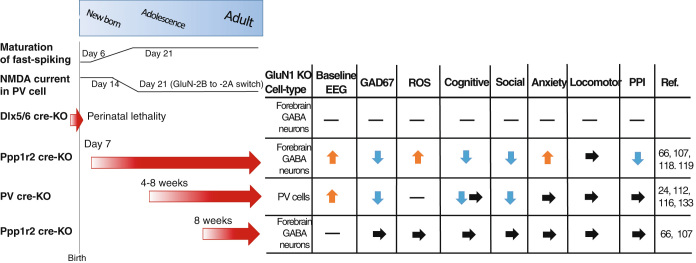
“Interestingly, most behavioral abnormalities appeared after young adulthood (8 weeks old), some of which were exacerbated by the social isolation stress.(66,118) Furthermore, in vivo awake LFP/unit recordings showed not only an increased pyramidal cell firing and their action-potential spike synchrony deficits in S1 c…”
BackgroundSelf-citationThe Endocannabinoid System Controls Key Epileptogenic Circuits in the Hippocampus
Monory, K., Massa, F., Egertová, M., Eder, M., Blaudzun, H., Westenbroek, R., Kelsch, W., Jacob, W., Marsch, R., Ekker, M., et al. (2006) · Neuron · doi:10.1016/j.neuron.2006.07.006 · Cited by 706 · cited 1×
“To target the GluN1 ablation into GABA neurons in development, we crossed the floxed-GluN1 mice to a Dlx5/6-cre line, in which Cre recombination occurs in migrating forebrain GABA neurons of the embryonic brain.(117) However, we found that no homozygously-floxed mutant mice survived, suggesting that NMDAR function in…”
MethodCarlén, M., Meletis, K., Siegle, J. H., Cardin, J. A., Futai, K., Vierling-Claassen, D., Rühlmann, C., Jones, S. R., Deisseroth, K., Sheng, M., et al. (2012) · Molecular Psychiatry · doi:10.1038/mp.2011.31 · Cited by 669 · cited 1×
“Furthermore, in vivo MK-801 action on PV neurons was supported by the finding that MK801–induced stereotypies are undetectable in the PV-cre/GluN1 KO mutant mice.(112) The mutants also showed selective impairments in habituation, short-term memory, sociability and vocalizations, although they displayed normal PPI for…”
BackgroundNMDA receptors, place cells and hippocampal spatial memory
Nakazawa, K., McHugh, T. J., Wilson, M. A., & Tonegawa, S. (2004) · Nature Reviews Neuroscience · doi:10.1038/nrn1385 · Cited by 619
Self-citationKetamine-Induced Loss of Phenotype of Fast-Spiking Interneurons Is Mediated by NADPH-Oxidase
Behrens, M. M., Ali, S. S., Dao, D. N., Lucero, J., Shekhtman, G., Quick, K. L., & Dugan, L. L. (2007) · Science · doi:10.1126/science.1148045 · Cited by 585
Paule, M. G., Li, M., Allen, R. R., Liu, F., Zou, X., Hotchkiss, C., Hanig, J. P., Patterson, T. A., Slikker, & Wang, C. (2011) · Neurotoxicology and Teratology · doi:10.1016/j.ntt.2011.01.001 · Cited by 574 · cited 1×
“Similarly, ketamine anesthesia during the first week of life also results in long-lasting cognitive deficits in rhesus monkeys.(48) And a number of studies in rodents have already demonstrated that NMDAR blockade in early postnatal development resulted in the behavioral, neurochemical, and electrophysiological changes…”
BackgroundAltered neuregulin 1–erbB4 signaling contributes to NMDA> receptor hypofunction in schizophrenia
Hahn, C.-G., Wang, H.-Y., Cho, D.-S., Talbot, K., Gur, R. E., Berrettini, W. H., Bakshi, K., Kamins, J., Borgmann-Winter, K. E., Siegel, S. J., et al. (2006) · Nature Medicine · doi:10.1038/nm1418 · Cited by 563
Developmental regulation of NMDA receptor-mediated synaptic currents at a central synapse
Hestrin, S. (1992) · Nature · doi:10.1038/357686a0 · Cited by 517
GABAergic interneuron origin of schizophrenia pathophysiology
Nakazawa, K., Zsiros, V., Jiang, Z., Nakao, K., Kolata, S., Zhang, S., & Belforte, J. E. (2012) · Neuropharmacology · doi:10.1016/j.neuropharm.2011.01.022 · Cited by 498
Self-citationCortex-restricted disruption of NMDAR1 impairs neuronal patterns in the barrel cortex
Iwasato, T., Datwani, A., Wolf, A. M., Nishiyama, H., Taguchi, Y., Tonegawa, S., Knöpfel, T., Erzurumlu, R. S., & Itohara, S. (2000) · Nature · doi:10.1038/35021059 · Cited by 495
Targeted disruption of NMDA receptor 1 gene abolishes NMDA response and results in neonatal death
Forrest, D., Yuzaki, M., Soares, H. D., Ng, L., Luk, D. C., Sheng, M., Stewart, C. L., Morgan, J. I., Connor, J. A., & Curran, T. (1994) · Neuron · doi:10.1016/0896-6273(94)90350-6 · Cited by 491 · cited 1×
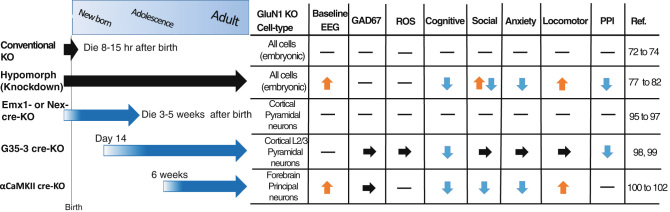
“Conventional GluN1 knockout mice are not viable, dying 8–15 h after the birth.(72) However, careful analyses revealed severe disruption of somatosensory barrel cortex formation,(73) which appears more sensitive than that of schizophrenia pathology.”
BackgroundWang, M., Yang, Y., Wang, C.-J., Gamo, N. J., Jin, L. E., Mazer, J. A., Morrison, J. H., Wang, X.-J., & Arnsten, A. F. T. (2013) · Neuron · doi:10.1016/j.neuron.2012.12.032 · Cited by 489
Korotkova, T., Fuchs, E. C., Ponomarenko, A., von Engelhardt, J., & Monyer, H. (2010) · Neuron · doi:10.1016/j.neuron.2010.09.017 · Cited by 480 · cited 1×
“GluN1 ablation in PV neurons also resulted in exactly the same phenotypes; a disruption of type I theta oscillations and an increase in spontaneous gamma oscillations in the hippocampus.(24) These results strongly suggest that PCP acts at NMDARs of the feed-back synapses on PV neurons in adulthood.”
ResultNMDA Receptor-Dependent Ocular Dominance Plasticity in Adult Visual Cortex
Sawtell, N. B., Frenkel, M. Y., Philpot, B. D., Nakazawa, K., Tonegawa, S., & Bear, M. F. (2003) · Neuron · doi:10.1016/s0896-6273(03)00323-4 · Cited by 478
Self-citationGonzalez-Burgos, G., & Lewis, D. A. (2012) · Schizophrenia Bulletin · doi:10.1093/schbul/sbs010 · Cited by 478
Li, Y., Erzurumlu, R. S., Chen, C., Jhaveri, S., & Tonegawa, S. (1994) · Cell · doi:10.1016/0092-8674(94)90108-2 · Cited by 469
NMDA-dependent modulation of CA1 local circuit inhibition
Grunze, H., Rainnie, D., Hasselmo, M., Barkai, E., Hearn, E., McCarley, R., & Greene, R. (1996) · The Journal of Neuroscience · doi:10.1523/jneurosci.16-06-02034.1996 · Cited by 467 · cited 2×
“It has also been shown ex vivo that hippocampal GABAergic interneurons are disproportionally more sensitive to NMDAR antagonists than pyramidal neurons.(26) Although the reason why uncompetitive NMDAR antagonists preferentially impact GABA neurons is not completely understood, at least two mechanisms are suggested.”
BackgroundAkbarian, S., Sucher, N., Bradley, D., Tafazzoli, A., Trinh, D., Hetrick, W., Potkin, S., Sandman, C., Bunney, W., & Jones, E. (1996) · The Journal of Neuroscience · doi:10.1523/jneurosci.16-01-00019.1996 · Cited by 441
Jackson, M. E., Homayoun, H., & Moghaddam, B. (2004) · Proceedings of the National Academy of Sciences · doi:10.1073/pnas.0308455101 · Cited by 430 · cited 1×
“Acute systemic treatment with MK-801 in rats has been shown to preferentially block NMDARs on the medial prefrontal cortex (mPFC) GABAergic interneurons, leading to a reduction of GABAergic network function and a subsequent increase in pyramidal cell firing due to disinhibition.(11,12) Curiously, a local infusion of P…”
BackgroundZweifel, L. S., Parker, J. G., Lobb, C. J., Rainwater, A., Wall, V. Z., Fadok, J. P., Darvas, M., Kim, M. J., Mizumori, S. J. Y., Paladini, C. A., et al. (2009) · Proceedings of the National Academy of Sciences · doi:10.1073/pnas.0813415106 · Cited by 426 · cited 1×
“Selective deletion of NMDARs from dopamine neurons resulted in an impairment in phasic dopamine release and in instrumental learning.(134) Notably, GluN2C-containing receptors are highly expressed in the reticular nuclei as well as the relay nuclei in thalamus.”
BackgroundNMDA Receptor and Schizophrenia: A Brief History
Coyle, J. T. (2012) · Schizophrenia Bulletin · doi:10.1093/schbul/sbs076 · Cited by 410
Kynurenines in CNS disease: regulation by inflammatory cytokines.
Campbell, B. M., Charych, E., Lee, A. W., & Möller, T. (2014) · Frontiers in Neuroscience · doi:10.3389/fnins.2014.00012 · Cited by 409
Slifstein, M., van de Giessen, E., Van Snellenberg, J., Thompson, J. L., Narendran, R., Gil, R., Hackett, E., Girgis, R., Ojeil, N., Moore, H., et al. (2015) · JAMA Psychiatry · doi:10.1001/jamapsychiatry.2014.2414 · Cited by 398
Jentsch, J. D., Redmond, D. E., Elsworth, J. D., Taylor, J. R., Youngren, K. D., & Roth, R. H. (1997) · Science · doi:10.1126/science.277.5328.953 · Cited by 398 · cited 1×
“For example, acute administration of NMDAR antagonists increases dopamine level in mPFC, while their long-term treatment results in the reduction of dopamine release in the prefrontal cortex in rats and monkeys.(33) Since amphetamine-induced dopamine release in prefrontal cortex appears to be compromised in patients w…”
BackgroundGao, X.-M., Sakai, K., Roberts, R. C., Conley, R. R., Dean, B., & Tamminga, C. A. (2000) · American Journal of Psychiatry · doi:10.1176/appi.ajp.157.7.1141 · Cited by 372
Acute mechanisms underlying antibody effects in anti–N‐methyl‐D‐aspartate receptor encephalitis
Moscato, E. H., Peng, X., Jain, A., Parsons, T. D., Dalmau, J., & Balice‐Gordon, R. J. (2014) · Annals of Neurology · doi:10.1002/ana.24195 · Cited by 367
Merritt, K., Egerton, A., Kempton, M. J., Taylor, M. J., & McGuire, P. K. (2016) · JAMA Psychiatry · doi:10.1001/jamapsychiatry.2016.0442 · Cited by 367
Homeostatic plasticity and NMDA receptor trafficking
Pérez-Otaño, I., & Ehlers, M. D. (2005) · Trends in Neurosciences · doi:10.1016/j.tins.2005.03.004 · Cited by 356 · cited 1×
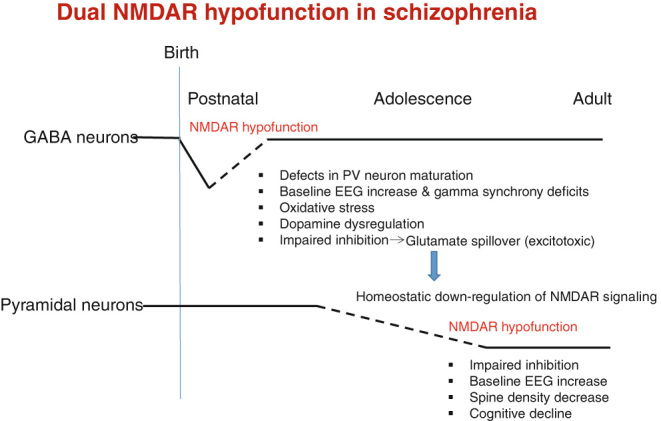
“This glutamatergic spillover could explain the subsequent induction of NMDAR hypofunction in cortical pyramidal neurons, because over-activation of NMDARs by glutamate and glycine elicits a homeostatic internalization of NMDARs from neuronal cell surface.(138,139) Therefore, we speculate that there are two spatially a…”
BackgroundRoles of NMDA receptor activity and nitric oxide production in brain development
Contestabile, A. (2000) · Brain Research Reviews · doi:10.1016/s0165-0173(00)00018-7 · Cited by 338 · cited 1×
“Robust effects of NMDAR antagonists during early postnatal period are explained by crucial role of NMDARs in brain development.(59,49) During this period, NMDAR activation is essential for neuronal survival, differentiation, migration and synaptogenesis.”
BackgroundPlace cells and silent cells in the hippocampus of freely-behaving rats
Thompson, L., & Best, P. (1989) · The Journal of Neuroscience · doi:10.1523/jneurosci.09-07-02382.1989 · Cited by 337 · cited 1×
“Moreover, it has been reported that over 60 % of the hippocampal complex-spike cells are silent during the exploration of spatial environment and do not display place cell activity.(20) It is plausible that these “silent” hippocampal principal cells are less sensitive to uncompetitive NMDAR antagonists.”
BackgroundModels of schizophrenia in humans and animals based on inhibition of NMDA receptors
Bubeníková-Valešová, V., Horáček, J., Vrajová, M., & Höschl, C. (2008) · Neuroscience & Biobehavioral Reviews · doi:10.1016/j.neubiorev.2008.03.012 · Cited by 336
Linking early-life NMDAR hypofunction and oxidative stress in schizophrenia pathogenesis
Hardingham, G. E., & Do, K. Q. (2016) · Nature Reviews Neuroscience · doi:10.1038/nrn.2015.19 · Cited by 304 · cited 1×
“The glutathione (GSH) system dysfunction is also seen in schizophrenia.(144) Since NMDAR is required for GSH biosynthesis, MK-801 treatment at PND 7 in rats was shown to reduce GSH levels, which in turn may trigger redox imbalance and further suppression of NMDA currents as a negative spiral.”
Stone, J. M., Dietrich, C., Edden, R., Mehta, M. A., De Simoni, S., Reed, L. J., Krystal, J. H., Nutt, D., & Barker, G. J. (2012) · Molecular Psychiatry · doi:10.1038/mp.2011.171 · Cited by 295
Mg2+Imparts NMDA Receptor Subtype Selectivity to the Alzheimer's Drug Memantine
Kotermanski, S. E., & Johnson, J. W. (2009) · The Journal of Neuroscience · doi:10.1523/jneurosci.3703-08.2009 · Cited by 271
Lisman, J. (2012) · Current Opinion in Neurobiology · doi:10.1016/j.conb.2011.10.018 · Cited by 270
Beneyto, M., & Meador-Woodruff, J. H. (2008) · Neuropsychopharmacology · doi:10.1038/sj.npp.1301604 · Cited by 259
Murray, J. D., Anticevic, A., Gancsos, M., Ichinose, M., Corlett, P. R., Krystal, J. H., & Wang, X.-J. (2014) · Cerebral Cortex · doi:10.1093/cercor/bhs370 · Cited by 255 · cited 1×
“A spiking neural network model of spatial working memory, consisting of interconnected excitatory pyramidal cells and inhibitory interneurons in prefrontal cortex, postulated a preferential down-regulation of NMDAR conductance on interneurons, but not simultaneously in both excitatory and inhibitory neurons, in order…”
BackgroundMeta-analysis of corpus callosum size in schizophrenia.
Woodruff, P. W., McManus, I. C., & David, A. S. (1995) · Journal of Neurology, Neurosurgery & Psychiatry · doi:10.1136/jnnp.58.4.457 · Cited by 255
The kynurenine pathway in schizophrenia and bipolar disorder
Erhardt, S., Schwieler, L., Imbeault, S., & Engberg, G. (2017) · Neuropharmacology · doi:10.1016/j.neuropharm.2016.05.020 · Cited by 255 · cited 2×
“Notably, the brain levels of KYNA are elevated in schizophrenia and by the neuroinflammatory stress, which exists in schizophrenia as well.(121) Mounting preclinical evidence also suggest that KAT II-selective inhibitors produce a pro-cognitive effect in schizophrenia-relevant behavioral assays.”
BackgroundPostnatal Differentiation of Basket Cells from Slow to Fast Signaling Devices
Doischer, D., Aurel Hosp, J., Yanagawa, Y., Obata, K., Jonas, P., Vida, I., & Bartos, M. (2008) · The Journal of Neuroscience · doi:10.1523/jneurosci.2890-08.2008 · Cited by 248 · cited 1×
“Immunocytochemistry data suggest that the onset of GluN1 knockout is within 4–8 weeks of age for both mutants,(112,116) which is much later than the maturation period of the fast-spiking property of PV neurons (PND 6–21.(68,69)).”
BackgroundGABA Neuron Alterations, Cortical Circuit Dysfunction and Cognitive Deficits in Schizophrenia
Gonzalez-Burgos, G., Fish, K. N., & Lewis, D. A. (2011) · Neural Plasticity · doi:10.1155/2011/723184 · Cited by 246 · cited 2×
“In this study, however, NMDAR knockout in pyramidal neurons did not recapitulate a dysfunction of local GABAergic neurons, such as a reduction of GAD67 and PV mRNAs, which is consistently reported in the postmortem brain of schizophrenia.(8) Together with our previous report,(99) pyramidal neuron-NMDAR hypofunction in…”
ResultNMDA receptors and schizophrenia
KRISTIANSEN, L., HUERTA, I., BENEYTO, M., & MEADORWOODRUFF, J. (2007) · Current Opinion in Pharmacology · doi:10.1016/j.coph.2006.08.013 · Cited by 246 · cited 1×
“On the other hand, NMDAR hypofunction in cortical pyramidal neurons is also strongly suggested, mainly because the levels of GluN1 mRNA/protein are reduced in prefrontal cortex of patients with schizophrenia in postmortem tissue studies.(92,93) How do we reconcile these results each other? Recent clinical studies sugg…”
ResultOn the Plausibility of “The Neurodevelopmental Hypothesis” of Schizophrenia
Weinberger, D. (1996) · Neuropsychopharmacology · doi:10.1016/0893-133x(95)00199-n · Cited by 245 · cited 1×
“Schizophrenia is a neurodevelopmental disorder and insults to the developing brain can contribute significantly to the manifestation of the disorder in young adulthood.(45) Therefore, the above models are unlikely to be able to replicate the neurobiological changes that occur over time in the schizophrenic brain.”
BackgroundRujescu, D., Bender, A., Keck, M., Hartmann, A. M., Ohl, F., Raeder, H., Giegling, I., Genius, J., McCarley, R. W., Möller, H.-J., et al. (2006) · Biological Psychiatry · doi:10.1016/j.biopsych.2005.08.029 · Cited by 239
Molecular evidence of N-methyl-D-aspartate receptor hypofunction in schizophrenia
Weickert, C. S., Fung, S. J., Catts, V. S., Schofield, P. R., Allen, K. M., Moore, L. T., Newell, K. A., Pellen, D., Huang, X.-F., Catts, S. V., et al. (2013) · Molecular Psychiatry · doi:10.1038/mp.2012.137 · Cited by 236
Ibrahim, H. M., Hogg, A. J., Healy, D. J., Haroutunian, V., Davis, K. L., & Meador-Woodruff, J. H. (2000) · American Journal of Psychiatry · doi:10.1176/appi.ajp.157.11.1811 · Cited by 233
Cohen, S. M., Tsien, R. W., Goff, D. C., & Halassa, M. M. (2015) · Schizophrenia Research · doi:10.1016/j.schres.2014.12.026 · Cited by 232
Cabungcal, J.-H., Steullet, P., Kraftsik, R., Cuenod, M., & Do, K. Q. (2013) · Biological Psychiatry · doi:10.1016/j.biopsych.2012.09.020 · Cited by 232
Asymmetrical reductions of hippocampal NMDAR1 glutamate receptor mRNA in the psychoses
Law, A. J., & Deakin, J. F. W. (2001) · Neuroreport · doi:10.1097/00001756-200109170-00043 · Cited by 227
Driesen, N. R., McCarthy, G., Bhagwagar, Z., Bloch, M., Calhoun, V, D'Souza, D. C., Gueorguieva, R., He, G., Ramachandran, R., Suckow, R. F., et al. (2013) · Molecular Psychiatry · doi:10.1038/mp.2012.194 · Cited by 224 · cited 1×
“Indeed, both NMDAR antagonists lead to increase the power of cortical gamma oscillations(6) and in functional connectivity.(7) The antagonists also induce disturbance in the GABAergic system such as a loss of glutamic acid decarboxylase-67 (GAD67) and parvalbumin (PV), which are consistently reported in postmortem bra…”
BackgroundCell Type-Specific Development of NMDA Receptors in the Interneurons of Rat Prefrontal Cortex
Wang, H.-X., & Gao, W.-J. (2009) · Neuropsychopharmacology · doi:10.1038/npp.2009.20 · Cited by 203
Genetic animal models: focus on schizophrenia
Gainetdinov, R. R., Mohn, A. R., & Caron, M. G. (2001) · Trends in Neurosciences · doi:10.1016/s0166-2236(00)01886-5 · Cited by 201
Dracheva, S., Marras, S. A. E., Elhakem, S. L., Kramer, F. R., Davis, K. L., & Haroutunian, V. (2001) · American Journal of Psychiatry · doi:10.1176/appi.ajp.158.9.1400 · Cited by 190 · cited 1×
“Alteration of NMDAR subunit GluN1 mRNA has been often reported to decrease by 15–30% in the post-mortem brains with schizophrenia patients, while some reports showed no change(90) or an increase.(91) Although the findings are conflicting, one may speculate that GluN1 expression may be down-regulated in the cortex and…”
BackgroundRegulation of spine morphology and spine density by NMDA receptor signaling in vivo
Ultanir, S. K., Kim, J.-E., Hall, B. J., Deerinck, T., Ellisman, M., & Ghosh, A. (2007) · Proceedings of the National Academy of Sciences · doi:10.1073/pnas.0704031104 · Cited by 187 · cited 1×
“On the other hand, spine density reduction is induced by GluN1 knockdown in the pyramidal neurons.(96,140,141) Spatial reference memory in Morris water maze test is intact in PV-cre/GluN1 KO mice(112) but is severely impaired in αCaMKII promoter-driven GluN1 knockout mice.”
BackgroundSokolov, B. P. (1998) · Journal of Neurochemistry · doi:10.1046/j.1471-4159.1998.71062454.x · Cited by 185
Ketamine and phencyclidine: the good, the bad and the unexpected
Lodge, D., & Mercier, M. S. (2015) · British Journal of Pharmacology · doi:10.1111/bph.13222 · Cited by 184
Fukaya, M., Kato, A., Lovett, C., Tonegawa, S., & Watanabe, M. (2003) · Proceedings of the National Academy of Sciences · doi:10.1073/pnas.0830996100 · Cited by 182 · cited 1×
“GluN1 knockout begins in area CA1 at 6 weeks of age and spreads out into other telencephalic regions including area CA3 and entorhinal cortex by 4 months of age, but not in local GABA neurons.(102,100) Physiological analysis in 3–5 month-old slices revealed an increase in CA1 pyramidal neuron excitability with spontan…”
BackgroundMalayev, A., Gibbs, T. T., & Farb, D. H. (2002) · British Journal of Pharmacology · doi:10.1038/sj.bjp.0704543 · Cited by 176 · cited 2×
“Interestingly, it has been reported that these sulfated neurosteroids preferentially bind to tonic NMDARs containing GluN2C and/or GluN2D.(127) Unexpectedly, however, systemic infusion of the neurosteroid did not elicit psychotomimetic-like behavior in rats and it rather ameliorated MK-801-induced behavioral deficits.”
BackgroundSteullet, P., Neijt, H. C., Cuénod, M., & Do, K. Q. (2006) · Neuroscience · doi:10.1016/j.neuroscience.2005.10.014 · Cited by 173
Standaert, D. G., Bernhard Landwehrmeyer, G., Kerner, J. A., Penney, J. B., & Young, A. B. (1996) · Molecular Brain Research · doi:10.1016/s0169-328x(96)00117-9 · Cited by 171 · cited 1×
“somatostatin-positive interneurons of the cortex and hippocampus in adulthood.(110,111,27) Therefore, a specific deficit in NMDAR signaling in fast-spiking PV neurons may explain certain aspects of NMDAR hypofunction-mediated schizophrenia-related phenotypes.”
BackgroundNeske, G. T., Patrick, S. L., & Connors, B. W. (2015) · The Journal of Neuroscience · doi:10.1523/jneurosci.2279-14.2015 · Cited by 170 · cited 1×
“First, local GABA neurons, in particular, fast-spiking neurons containing PV, are known to fire action potentials at much higher frequency than pyramidal neurons and the interneurons positive for somatostatin, vasoactive-intestinal-polypeptide or neuropeptide Y.(109) Therefore, the channel pore Mg occlusion may be rel…”
BackgroundMeta-analysis of magnetic resonance imaging studies of the corpus callosum in schizophrenia
Arnone, D., McIntosh, A. M., Tan, G. M. Y., & Ebmeier, K. P. (2008) · Schizophrenia Research · doi:10.1016/j.schres.2008.01.005 · Cited by 161 · cited 1×
“central corpus callosum is known to be significantly decreased in schizophrenia,(75) with effects more detectable in first-episode than chronic schizophrenia.(76) In this context, global NMDAR hypofunction in the late gestation period is unlikely to take place in schizophrenia pathogenesis.”
BackgroundWang, C. Z., Yang, S. F., Xia, Y., & Johnson, K. M. (2008) · Neuropsychopharmacology · doi:10.1038/sj.npp.1301647 · Cited by 161
Rotaru, D. C., Yoshino, H., Lewis, D. A., Ermentrout, G. B., & Gonzalez-Burgos, G. (2011) · The Journal of Neuroscience · doi:10.1523/jneurosci.1970-10.2011 · Cited by 151
Catts, V. S., Lai, Y. L., Weickert, C. S., Weickert, T. W., & Catts, S. V. (2016) · Biological Psychology · doi:10.1016/j.biopsycho.2015.10.013 · Cited by 151
Chung, D. W., Fish, K. N., & Lewis, D. A. (2016) · American Journal of Psychiatry · doi:10.1176/appi.ajp.2016.16010025 · Cited by 148 · cited 1×
“Another postmortem study demonstrated a lower density of excitatory synapses on PVpositive interneurons in PFC of patients with schizophrenia, while the glutamate receptor subtypes were unidentified.(120) This could be due to a deficit in excitatory synapse formation on PV neurons, or due to reduced synaptic input fro…”
BackgroundNyíri, G., Stephenson, F. A., Freund, T. F., & Somogyi, P. (2003) · Neuroscience · doi:10.1016/s0306-4522(03)00157-x · Cited by 144
Synaptic NMDA receptor activity is coupled to the transcriptional control of the glutathione system
Baxter, P. S., Bell, K. F. S., Hasel, P., Kaindl, A. M., Fricker, M., Thomson, D., Cregan, S. P., Gillingwater, T. H., & Hardingham, G. E. (2015) · Nature Communications · doi:10.1038/ncomms7761 · Cited by 139 · cited 1×
“Since NMDAR is required for GSH biosynthesis, MK-801 treatment at PND 7 in rats was shown to reduce GSH levels, which in turn may trigger redox imbalance and further suppression of NMDA currents as a negative spiral.(145,146) Notably, PV-positive fast-spiking neurons are highly vulnerable to early lifeoxidative stress…”
Rapid Developmental Maturation of Neocortical FS Cell Intrinsic Excitability
Goldberg, E. M., Jeong, H.-Y., Kruglikov, I., Tremblay, R., Lazarenko, R. M., & Rudy, B. (2011) · Cerebral Cortex · doi:10.1093/cercor/bhq138 · Cited by 135 · cited 1×
“Immunocytochemistry data suggest that the onset of GluN1 knockout is within 4–8 weeks of age for both mutants,(112,116) which is much later than the maturation period of the fast-spiking property of PV neurons (PND 6–21.(68,69)).”
BackgroundExcitatory amino acid involvement in dendritic spine formation, maintenance and remodelling
McKinney, R. A. (2010) · The Journal of Physiology · doi:10.1113/jphysiol.2009.178905 · Cited by 133 · cited 1×
“On the other hand, spine density reduction is induced by GluN1 knockdown in the pyramidal neurons.(96,140,141) Spatial reference memory in Morris water maze test is intact in PV-cre/GluN1 KO mice(112) but is severely impaired in αCaMKII promoter-driven GluN1 knockout mice.”
BackgroundAlvarez, V. A., Ridenour, D. A., & Sabatini, B. L. (2007) · The Journal of Neuroscience · doi:10.1523/jneurosci.0956-07.2007 · Cited by 132 · cited 1×
“On the other hand, spine density reduction is induced by GluN1 knockdown in the pyramidal neurons.(96,140,141) Spatial reference memory in Morris water maze test is intact in PV-cre/GluN1 KO mice(112) but is severely impaired in αCaMKII promoter-driven GluN1 knockout mice.”
BackgroundJiang, Z., Rompala, G. R., Zhang, S., Cowell, R. M., & Nakazawa, K. (2013) · Biological Psychiatry · doi:10.1016/j.biopsych.2012.12.004 · Cited by 128 · cited 1×
“Interestingly, most behavioral abnormalities appeared after young adulthood (8 weeks old), some of which were exacerbated by the social isolation stress.(66,118) Furthermore, in vivo awake LFP/unit recordings showed not only an increased pyramidal cell firing and their action-potential spike synchrony deficits in S1 c…”
BackgroundSelf-citationSuzuki, Y., Jodo, E., Takeuchi, S., Niwa, S., & Kayama, Y. (2002) · Neuroscience · doi:10.1016/s0306-4522(02)00298-1 · Cited by 127
Early brain development disruption from NMDA receptor hypofunction: Relevance to schizophrenia
du Bois, T. M., & Huang, X. (2006) · Brain Research Reviews · doi:10.1016/j.brainresrev.2006.09.001 · Cited by 124
Mice with reduced NMDA receptor expression: more consistent with autism than schizophrenia?
Gandal, M. J., Anderson, R. L., Billingslea, E. N., Carlson, G. C., Roberts, T. P. L., & Siegel, S. J. (2012) · Genes, Brain and Behavior · doi:10.1111/j.1601-183x.2012.00816.x · Cited by 121
Abekawa, T., Ito, K., Nakagawa, S., & Koyama, T. (2007) · Psychopharmacology · doi:10.1007/s00213-007-0729-8 · Cited by 118
Jodo, E., Suzuki, Y., Katayama, T., Hoshino, K.-Y., Takeuchi, S., Niwa, S.-I., & Kayama, Y. (2005) · Cerebral Cortex · doi:10.1093/cercor/bhh168 · Cited by 116
Clinical studies of neuroinflammatory mechanisms in schizophrenia
Watkins, C. C., & Andrews, S. R. (2015) · Schizophrenia Research · doi:10.1016/j.schres.2015.07.018 · Cited by 111 · cited 1×
“Genome-wide association studies of schizophrenia also uncover genetic polymorphisms in several immune-related genes,(142) which may affect the levels of proinflammatory cytokines, leading to activation of kynurenine pathway.(143) The discovery of abundant expression of KYNA synthesizing enzyme in cortical GABA neurons…”
BackgroundBygrave, A. M., Masiulis, S., Nicholson, E., Berkemann, M., Barkus, C., Sprengel, R., Harrison, P. J., Kullmann, D. M., Bannerman, D. M., & Kätzel, D. (2016) · Translational Psychiatry · doi:10.1038/tp.2016.44 · Cited by 109 · cited 2×
“However, this hypothesis has recently been challenged by a preclinical finding that systemic administration of MK-801 to the PV-cre/GluN1 KO mice leads to the increased stereotypies, catalepsy, and motor discoordination that are not observed in the absence of MK-801.(133) These results led the authors to conclude that…”
ResultDevelopmental origin dictates interneuron AMPA and NMDA receptor subunit composition and plasticity
Matta, J. A., Pelkey, K. A., Craig, M. T., Chittajallu, R., Jeffries, B. W., & McBain, C. J. (2013) · Nature Neuroscience · doi:10.1038/nn.3459 · Cited by 108 · cited 3×
“Then, during adolescence synaptic NMDA inputs to intrinsically mature fast-spiking neurons became smaller in mPFC (after PND 28;(64) 6 weeks of age(65)) and in hippocampal CA1 in juvenile period (PND 14–21), at least partly due to the GluN2B-GluN2A switch.(22) Interestingly, GluN1 mRNAs are detected after adolescence(…”
InfluentialEngelhardt, J. V., Bocklisch, C., Tönges, L., Herb, A., Mishina, M., & Monyer, H. (2015) · Frontiers in Cellular Neuroscience · doi:10.3389/fncel.2015.00095 · Cited by 103 · cited 3×
“Another recent study showed that low concentrations of the NMDAR antagonists PCP and memantine preferentially inhibit tonically-active extrasynaptic NMDARs on the CA1 interneurons containing GluN2D in adult mice.25 Interestingly, tonic NMDARs have a more prominent contribution to the intrinsic excitation in GABA neuro…”
BackgroundNMDA receptor mRNA correlation with antemortem cognitive impairment in schizophrenia
Humphries, C., Mortimer, A., Hirsch, S., & de Belleroche, J. (1996) · NeuroReport · doi:10.1097/00001756-199608120-00040 · Cited by 102
Tatard-Leitman, V. M., Jutzeler, C. R., Suh, J., Saunders, J. A., Billingslea, E. N., Morita, S., White, R., Featherstone, R. E., Ray, R., Ortinski, P. I., et al. (2015) · Biological Psychiatry · doi:10.1016/j.biopsych.2014.06.026 · Cited by 99
Knockout of NMDA Receptors in Parvalbumin Interneurons Recreates Autism‐Like Phenotypes
Saunders, J. A., Tatard‐Leitman, V. M., Suh, J., Billingslea, E. N., Roberts, T. P., & Siegel, S. J. (2013) · Autism Research · doi:10.1002/aur.1264 · Cited by 96
Nong, Y., Huang, Y., & Salter, M. W. (2004) · Current Opinion in Neurobiology · doi:10.1016/j.conb.2004.05.001 · Cited by 93 · cited 1×
“This glutamatergic spillover could explain the subsequent induction of NMDAR hypofunction in cortical pyramidal neurons, because over-activation of NMDARs by glutamate and glycine elicits a homeostatic internalization of NMDARs from neuronal cell surface.(138,139) Therefore, we speculate that there are two spatially a…”
BackgroundMonaco, S. A., Gulchina, Y., & Gao, W.-J. (2015) · Neuroscience & Biobehavioral Reviews · doi:10.1016/j.neubiorev.2015.06.022 · Cited by 92
NMDA Receptor Internalization by Autoantibodies: A Reversible Mechanism Underlying Psychosis?
Masdeu, J. C., Dalmau, J., & Berman, K. F. (2016) · Trends in Neurosciences · doi:10.1016/j.tins.2016.02.006 · Cited by 91
Dysregulated ErbB4 Splicing in Schizophrenia: Selective Effects on Parvalbumin Expression
Chung, D. W., Volk, D. W., Arion, D., Zhang, Y., Sampson, A. R., & Lewis, D. A. (2016) · American Journal of Psychiatry · doi:10.1176/appi.ajp.2015.15020150 · Cited by 86
Ma, J., & Leung, L.-W. S. (2000) · Behavioural Brain Research · doi:10.1016/s0166-4328(00)00138-8 · Cited by 85
Jeevakumar, V., Driskill, C., Paine, A., Sobhanian, M., Vakil, H., Morris, B., Ramos, J., & Kroener, S. (2015) · Behavioural Brain Research · doi:10.1016/j.bbr.2015.01.010 · Cited by 84
Self-citationLim, A. L., TAYLOR, D. A. H. B., & Malone, D. T. (2011) · Behavioural Brain Research · doi:10.1016/j.bbr.2011.10.052 · Cited by 84
Hunt, M. J., & Kasicki, S. (2013) · Journal of Psychopharmacology · doi:10.1177/0269881113495117 · Cited by 83
Pratt, J. A., & Morris, B. J. (2015) · Journal of Psychopharmacology · doi:10.1177/0269881114565805 · Cited by 81 · cited 1×
“Delta oscillations in the thalamocortical system are generated through an interaction of the thalamic relay nuclei and GABAergic reticular nuclei, depending on the T-type Ca channels.(135,136) Since the tonic activation of reticular nuclei is NMDAR-dependent, their NMDAR blockade produces hyperpolarization, thereby ac…”
BackgroundKořínek, M., Kapras, V., Vyklický, V., Adamusová, E., Borovská, J., Valeš, K., Stuchlík, A., Hořák, M., Chodounská, H., & Vyklický, L. (2011) · Steroids · doi:10.1016/j.steroids.2011.09.002 · Cited by 73
Brain state-dependent abnormal LFP activity in the auditory cortex of a schizophrenia mouse model
Nakao, K., & Nakazawa, K. (2014) · Frontiers in Neuroscience · doi:10.3389/fnins.2014.00168 · Cited by 72 · cited 1×
“locking in primary auditory cortex.(119) These physiological phenotypes are shared with PV-cre/GluN1 KO mutants, suggesting that these gamma synchrony deficits are attributed to GluN1 deletion in PV neurons.”
BackgroundSelf-citationSapkota, K., Mao, Z., Synowicki, P., Lieber, D., Liu, M., Ikezu, T., Gautam, V., & Monaghan, D. T. (2015) · Journal of Pharmacology and Experimental Therapeutics · doi:10.1124/jpet.115.230391 · Cited by 70
Neuroactive Pregnanolone Isomers during Pregnancy
Pařízek, A., Hill, M., Kancheva, R., Havlíková, H., Kancheva, L., Cindr, J., Pašková, A., Pouzar, V., Černý, I., Drbohlav, P., et al. (2005) · The Journal of Clinical Endocrinology & Metabolism · doi:10.1210/jc.2004-0444 · Cited by 67
Vullhorst, D., Mitchell, R. M., Keating, C. E., Roychowdhury, S., Karavanova, I. D., Tao-Cheng, J.-H., & Buonanno, A. (2015) · Nature Communications · doi:10.1038/ncomms8222 · Cited by 67 · cited 2×
“Indeed, many NMDAR-associated genes are listed as a schizophrenia risk gene,(142) such as NRG2/ErbB4 signaling pathway, which causes NMDAR downregulation selectively in PV neurons.(129) Genome-wide association studies of schizophrenia also uncover genetic polymorphisms in several immune-related genes,(142) which may a…”
BackgroundBanerjee, A., Wang, H.-Y., Borgmann-Winter, K. E., MacDonald, M. L., Kaprielian, H., Stucky, A., Kvasic, J., Egbujo, C., Ray, R., Talbot, K., et al. (2015) · Molecular Psychiatry · doi:10.1038/mp.2014.115 · Cited by 66 · cited 1×
“Additionally, even if the receptor levels were not lowered, postsynaptic NMDA signaling, such as Src kinase, may still be down-regulated in schizophrenia.(94) However, it is unclear regarding which developmental stage such NMDAR hypofunction takes place in pyramidal neurons in patients with schizophrenia.”
BackgroundPovysheva, N. V., & Johnson, J. W. (2012) · Journal of Neurophysiology · doi:10.1152/jn.01017.2011 · Cited by 62
Neurodevelopmental consequences of early exposure to phencyclidine and related drugs.
Deutsch, S. I., Mastropaolo, J. P., & Rosse, R. B. (1998) · PubMed · Cited by 62
Jodo, E. (2013) · Journal of Physiology-Paris · doi:10.1016/j.jphysparis.2013.06.002 · Cited by 60
Le Roux, N., Cabezas, C., Böhm, U. L., & Poncer, J. C. (2013) · The Journal of Physiology · doi:10.1113/jphysiol.2012.245852 · Cited by 57
Desfeux, A., Ghazi, F. E., Jégou, S., Legros, H., Marret, S., Laudenbach, V., & Gonzalez, B. J. (2009) · Cerebral Cortex · doi:10.1093/cercor/bhp181 · Cited by 55
Jeevakumar, V., & Kroener, S. (2016) · Cerebral Cortex · doi:10.1093/cercor/bhu293 · Cited by 55
Self-citationHagino, Y., Kasai, S., Han, W., Yamamoto, H., Nabeshima, T., Mishina, M., & Ikeda, K. (2010) · PLoS ONE · doi:10.1371/journal.pone.0013722 · Cited by 53
Opposing Role of NMDA Receptor GluN2B and GluN2D in Somatosensory Development and Maturation
Yamasaki, M., Okada, R., Takasaki, C., Toki, S., Fukaya, M., Natsume, R., Sakimura, K., Mishina, M., Shirakawa, T., & Watanabe, M. (2014) · The Journal of Neuroscience · doi:10.1523/jneurosci.1811-14.2014 · Cited by 52 · cited 1×
“somatostatin-positive interneurons of the cortex and hippocampus in adulthood.(110,111,27) Therefore, a specific deficit in NMDAR signaling in fast-spiking PV neurons may explain certain aspects of NMDAR hypofunction-mediated schizophrenia-related phenotypes.”
BackgroundElectrophysiological Endophenotypes for Schizophrenia
Owens, E. M., Bachman, P., Glahn, D. C., & Bearden, C. E. (2016) · Harvard Review of Psychiatry · doi:10.1097/hrp.0000000000000110 · Cited by 46 · cited 1×
“Notably, baseline gamma power increase and sensory-evoked gamma oscillation deficits are consistently demonstrated by NMDAR antagonist exposure to animals(6) and in EEG/MEG studies in patient with schizophrenia.(115) Furthermore, in vivo MK-801 action on PV neurons was supported by the finding that MK801–induced stere…”
BackgroundJanhunen, S. K., Svärd, H., Talpos, J., Kumar, G., Steckler, T., Plath, N., Lerdrup, L., Ruby, T., Haman, M., Wyler, R., et al. (2015) · Psychopharmacology · doi:10.1007/s00213-015-3954-6 · Cited by 43
Coleman, L. G., Jarskog, L. F., Moy, S. S., & Crews, F. T. (2009) · Pharmacology Biochemistry and Behavior · doi:10.1016/j.pbb.2009.04.017 · Cited by 43
Rompala, G. R., Zsiros, V., Zhang, S., Kolata, S. M., & Nakazawa, K. (2013) · PLoS ONE · doi:10.1371/journal.pone.0061278 · Cited by 41 · cited 1×
“1), in which postnatal GluN1 deletion is largely confined to the excitatory neurons in layer II/III of mPFC and sensory cortical areas, but not in the hippocampus or any GABA neurons.(99) These mutant mice showed cognitive deficits in PPI and object-based attention tasks, suggesting that NMDAR hypofunction in cortical…”
BackgroundSelf-citationRiebe, I., Seth, H., Culley, G., Dósa, Z., Radi, S., Strand, K., Fröjd, V., & Hanse, E. (2016) · European Journal of Neuroscience · doi:10.1111/ejn.13128 · Cited by 40 · cited 2×
“Interestingly, GluN1 mRNAs are detected after adolescence(66) and tonic (extra-synaptic) NMDA currents largely remain until adolescence in PV neurons(67) or even in adulthood.(25) Importantly, spike timing of cortical fast-spiking neurons and the maturation of their intrinsic properties, which is normally completed by…”
BackgroundYamamoto, T., Nakayama, T., Yamaguchi, J., Matsuzawa, M., Mishina, M., Ikeda, K., & Yamamoto, H. (2015) · Neuroscience Letters · doi:10.1016/j.neulet.2015.10.049 · Cited by 39
GluN1 hypomorph mice exhibit wide‐ranging behavioral alterations
Barkus, C., Dawson, L. A., Sharp, T., & Bannerman, D. M. (2012) · Genes Brain & Behavior · doi:10.1111/j.1601-183x.2012.00767.x · Cited by 38 · cited 1×
“However, behavioral anomalies began to appear before the weaning,(79) and the adult mutants displayed robust impairments in short and long-term memory, on both spatial and non-spatial tasks, which made it difficult to dissociate a mnemonic phenotype from a more general performance deficit.(80) Siegel and colleagues al…”
BackgroundTamminga, C. A., & Zukin, R. S. (2015) · Neuroscience · doi:10.1016/j.neuroscience.2015.07.038 · Cited by 37
NMDA receptor hypofunction and the thalamus in schizophrenia
Vukadinovic, Z. (2014) · Physiology & Behavior · doi:10.1016/j.physbeh.2014.04.038 · Cited by 36 · cited 1×
“GluN2C-containing NMDARs in the relay nuclei, such as nucleus reuniens (negative for PV), might also be a candidate cell-type for NMDAR hypofunction.(137) Cell-type specific deletion of NMDAR subunit in such cell-types would be a powerful approach to explore whether NMDA receptor hypofunction in the thalamic neurons l…”
BackgroundN-Methyl D-Aspartate Receptor Antagonist Kynurenic Acid Affects Human Cortical Development
Bagasrawala, I., Zecevic, N., & Radonjić, N. V. (2016) · Frontiers in Neuroscience · doi:10.3389/fnins.2016.00435 · Cited by 35 · cited 1×
“Another study also reported that the effect of KYNA-induced NMDAR blockade on the neuronal differentiation in vitro is more prominent on GABAergic neuron lineage compared to glutamatergic neurons, although the underlying mechanisms of the preferential action to GABA neurons is unclear.(124) Another endogenous NMDAR an…”
BackgroundElectrophysiological effects of phencyclidine in the medial prefrontal cortex of the rat
Gratton, A. P., Hoffer, B. J., & Freedman, R. (1987) · Neuropharmacology · doi:10.1016/0028-3908(87)90087-6 · Cited by 32
Astrocytic and neuronal localization of kynurenine aminotransferase-2 in the adult mouse brain
Herédi, J., Berkó, A. M., Jankovics, F., Iwamori, T., Iwamori, N., Ono, E., Horváth, S., Kis, Z., Toldi, J., Vécsei, L., et al. (2016) · Brain Structure and Function · doi:10.1007/s00429-016-1299-5 · Cited by 32 · cited 1×
“Interestingly, a recent immunocytochemical study in mice demonstrated that KAT II is expressed predominantly in GABAergic neurons as well as in astrocytes, but much less in the pyramidal cells in the cortex and hippocampus, raising a possibility that locally-secreted KYNAs preferentially inhibits NMDARs in GABA neuron…”
BackgroundYamamoto, H., Kamegaya, E., Sawada, W., Hasegawa, R., Yamamoto, T., Hagino, Y., Takamatsu, Y., Imai, K., Koga, H., Mishina, M., et al. (2013) · Molecular Brain · doi:10.1186/1756-6606-6-56 · Cited by 31
Kjærby, C., Broberg, B. V., Kristiansen, U., & Dalby, N. O. (2013) · Cerebral Cortex · doi:10.1093/cercor/bht109 · Cited by 30
Preweaning Sensorimotor Deficits and Adolescent Hypersociability in Grin1 Knockdown Mice
Moy, S. S., Nikolova, V. D., Riddick, N. V., Baker, L. K., & Koller, B. H. (2012) · Developmental Neuroscience · doi:10.1159/000337984 · Cited by 28
Translationally distinct populations of NMDA receptor subunit NR1 mRNA in the developing rat brain
Awobuluyi, M., Lipton, S. A., & Sucher, N. J. (2003) · Journal of Neurochemistry · doi:10.1046/j.1471-4159.2003.02048.x · Cited by 22
Lack of kainic acid‐induced gamma oscillations predicts subsequent CA1 excitotoxic cell death
Jinde, S., Belforte, J. E., Yamamoto, J., Wilson, M. A., Tonegawa, S., & Nakazawa, K. (2009) · European Journal of Neuroscience · doi:10.1111/j.1460-9568.2009.06896.x · Cited by 18 · cited 1×
“Alternatively, a diminished feed-forward inhibition from GluN1-deleted CA3 and/ or entorhinal pyramidal neurons may occur, since selective GluN1 ablation in CA3 pyramidal neurons results in CA1 disinhibition, leading to kainate-induced excitotoxicity.(103) Moreover, the network disinhibition may cause the increase in…”
BackgroundSelf-citationBodarky, C. L., Halene, T. B., Ehrlichman, R. S., Banerjee, A., Ray, R., Hahn, C.-G., Jonak, G. J., & Siegel, S. J. (2009) · Journal of Pharmacology and Experimental Therapeutics · doi:10.1124/jpet.109.150938 · Cited by 18
Jones, K. S., Corbin, J. G., & Huntsman, M. M. (2014) · PLoS ONE · doi:10.1371/journal.pone.0109303 · Cited by 16 · cited 2×
“Importantly, spike timing of cortical fast-spiking neurons and the maturation of their intrinsic properties, which is normally completed by PND 21,(68,69) are impaired in mice treated with MK-801 at PND 6–8.(70) Disturbance of GluN2B-GluN2A switch in fast-spiking neurons also occurs following transient treatment at PN…”
BackgroundValeš, K., Rambousek, L., Holubová, K., Svoboda, J., Bubeníková‐Valešová, V., Chodounská, H., Vyklický, L., & Stuchlík, A. (2012) · Behavioural Brain Research · doi:10.1016/j.bbr.2012.07.020 · Cited by 15 · cited 1×
“Unexpectedly, however, systemic infusion of the neurosteroid did not elicit psychotomimetic-like behavior in rats and it rather ameliorated MK-801-induced behavioral deficits.(128) Therefore, further study is warranted to determine the action of these steroids and to what extent they inhibit tonic NMDARs in GABA neuro…”
BackgroundOwczarek, S., Hou, J. C.-T., Secher, T., & Kristiansen, L. V. (2011) · Neuroreport · doi:10.1097/wnr.0b013e32834d2ef7 · Cited by 12
Elberger, A. J., & Deng, J. (2003) · Developmental Brain Research · doi:10.1016/s0165-3806(03)00156-1 · Cited by 11
Garzola, G. C. Q., Erzurumlu, R. S., & Vaccarino, A. L. (2008) · Neuroscience Letters · doi:10.1016/j.neulet.2008.03.077 · Cited by 9
Cited by
Yan, Z., & Rein, B. (2022) · Molecular Psychiatry · doi:10.1038/s41380-021-01092-3 · Cited by 300
“There is strong support for NMDA hypofunction in SZ, as treatment with NMDAR antagonists, such as MK-801 or phencyclidine, can induce SZ-like symptoms in both human subjects [165] and in animals [166].”
BackgroundThe origin of NMDA receptor hypofunction in schizophrenia
Nakazawa, K., & Sapkota, K. (2020) · Pharmacology & Therapeutics · doi:10.1016/j.pharmthera.2019.107426 · Cited by 275
Self-citationNMDA receptor functions in health and disease: Old actor, new dimensions
Dupuis, J. P., Nicole, O., & Groc, L. (2023) · Neuron · doi:10.1016/j.neuron.2023.05.002 · Cited by 172
NMDAR Hypofunction Animal Models of Schizophrenia
Lee, G., & Zhou, Y. (2019) · Frontiers in Molecular Neuroscience · doi:10.3389/fnmol.2019.00185 · Cited by 160
“, 2005), suggesting that hyper-glutamatergia in the PFC may require MK-801’s effects in other brain regions such as the hippocampus (Jodo, 2013; Nakazawa et al., 2017).”
BackgroundStructural insights into the functional roles of 14-3-3 proteins
Obsilova, V., & Obsil, T. (2022) · Frontiers in Molecular Biosciences · doi:10.3389/fmolb.2022.1016071 · Cited by 126
“These studies have suggested that stabilizing the interaction between NMDARs and 14-3-3 proteins may be an efficient therapeutic approach because NMDAR hypofunction triggers symptoms of schizophrenia and its associated behaviors (reviewed in (Nakazawa et al., 2017)).”
Background
Metadata
- Authors
- Nakazawa, K., Jeevakumar, V., & Nakao, K.
- Affiliations
- University of Alabama at Birmingham (US)
- Corresponding author
- Nakazawa, Kazu
- Venue
- npj Schizophrenia
- Published
- 2017-02-03
- Volume
- 3
- Issue
- 1
- Pages
- 7-7
- ISSN
- 2334-265X (ISSN-L)
- PMC
- PMC5441533
- OpenAlex
- W2580207551
- Cited by
- 110
- References
- 147
- Citations by year
- 2026: 6 · 2025: 13 · 2024: 9 · 2023: 15 · 2022: 10 · 2021: 14 · 2020: 13 · 2019: 12 · 2018: 14 · 2017: 4
- FWCI
- 9.65
- Type
- journal article
- Language
- en
- Open access
- gold
- doi.org
- Licence
- cc-by
- creativecommons.org/licenses/by/4.0 (tdm)
- creativecommons.org/licenses/by/4.0 (vor)
- Locations
- Schizophrenia (publishedVersion, cc-by)
- Europe PMC (PubMed Central) (publishedVersion, cc-by)
- PubMed Central (publishedVersion, cc-by)
- PubMed (publishedVersion)
- DOAJ (DOAJ: Directory of Open Access Journals) (submittedVersion, cc-by-sa)
- Funders
- National Institutes of Health
- National Institute of Mental Health (R01MH110681, K22MH099164)
- Topics
- Health Sciences › Medicine › Psychiatry and Mental health › Schizophrenia research and treatment
- Life Sciences › Neuroscience › Cellular and Molecular Neuroscience › Neuroscience and Neuropharmacology Research
- Life Sciences › Neuroscience › Cellular and Molecular Neuroscience › Neurotransmitter Receptor Influence on Behavior
- Keywords
- NMDA receptor hypofunction, anti-NMDA receptor encephalitis, glutamate spillover, excitation-inhibition balance, postnatal development, prodromal schizophrenia
About these checks
Registry, retraction, Cites and statistics results are computed, not judged, with one exception: a printed reference that no index lists is read once by a model before it counts as a citation error. Claims are extracted by a model and kept only when their quote appears verbatim in the text; each cited source is then checked, with a model’s help, for whether it says what the claim relies on. Those verdicts can be wrong — read the claim’s quote and the cited source before relying on one.
Statistics and arithmetic are recomputed, not judged.
Confidence bands are shown only for fields calibrated on our annotated test set. None is calibrated yet, so no band is shown.
What counts as a claim ›How we measure confidence ›How we check this ›
Are you an author, or do you see a problem with this page? Request a review
Data sources
Bibliographic data: Semantic Scholar, OpenAlex, Crossref.
Contains information from the Semantic Scholar Academic Graph Datasets, made available under the ODC Attribution License (ODC-BY 1.0).
Semantic Scholar’s data is described in: Kinney, R., et al. (2023). The Semantic Scholar Open Data Platform. arXiv:2301.10140.
