

Bile salt hydrolases shape the bile acid landscape and restrict Clostridioides difficile growth in the murine gut
Open accessThe DOI matches its Crossref record; 83 of the 88 references it cites were found in a registry or an index; 27 of the 30 sources its claims cite were checked for support.
Abstract
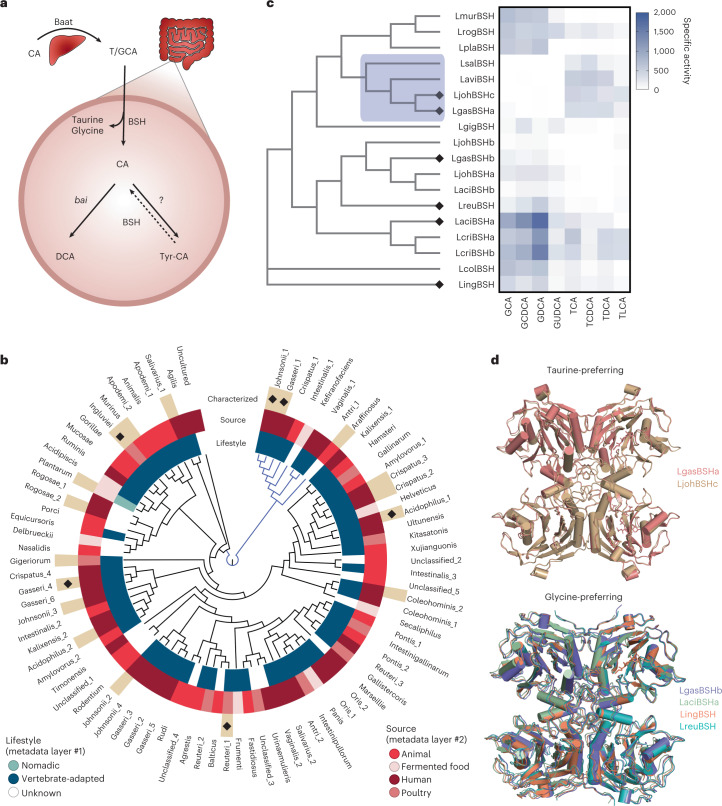
Bile acids (BAs) mediate the crosstalk between human and microbial cells and influence diseases including Clostridioides difficile infection (CDI). While bile salt hydrolases (BSHs) shape the BA pool by deconjugating conjugated BAs, the basis for their substrate selectivity and impact on C. difficile remain elusive. Here we survey the diversity of BSHs in the gut commensals Lactobacillaceae, which are commonly used as probiotics, and other members of the human gut microbiome. We structurally pinpoint a loop that predicts BSH preferences for either glycine or taurine substrates. BSHs with varying specificities were shown to restrict C. difficile spore germination and growth in vitro and colonization in pre-clinical in vivo models of CDI. Furthermore, BSHs reshape the pool of microbial conjugated bile acids (MCBAs) in the murine gut, and these MCBAs can further restrict C. difficile virulence in vitro. The recognition of conjugated BAs by BSHs defines the resulting BA pool, including the expansive MCBAs. This work provides insights into the structural basis of BSH mechanisms that shape the BA landscape and promote colonization resistance against C. difficile.
Overview
CoChat Summary
## TL;DR
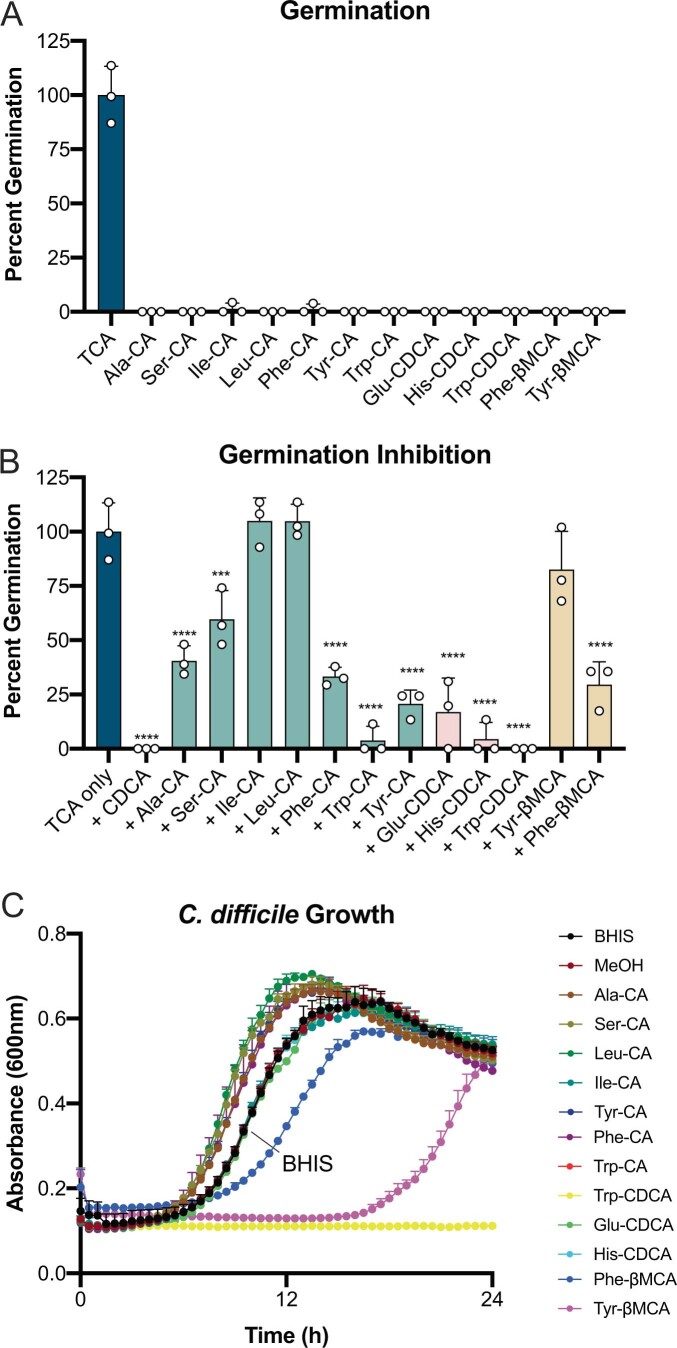
This paper shows that a 3-residue “selectivity loop” in bile salt hydrolases (BSHs) predicts whether enzymes prefer glycine or taurine conjugates, and that these enzymes can reshape bile acid pools in ways that restrict *Clostridioides difficile*. In mouse and ex vivo models, BSH cocktails reduced *C. difficile* spore germination and growth, and also increased microbial conjugated bile acids (MCBAs) that themselves affected *C. difficile* biology.
## Key findings
- The authors surveyed 3,712 genomes from 274 Lactobacillaceae and grouped highly similar BSH sequences into 84 clusters; nearly all clusters were from vertebrate-adapted species and about 40% were human-associated.
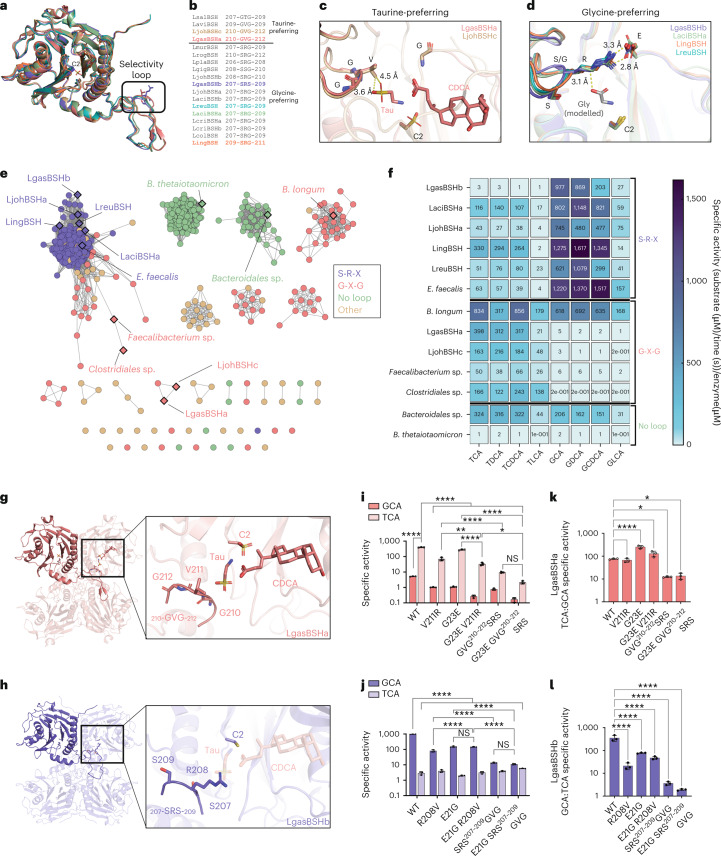
- Across the gut microbiome, they identified 654 unique BSH sequences from the Integrated Gene Catalog; 350 encoded the S-R-X loop, 87 encoded G-X-G, 141 lacked the loop, and the remainder were “Other,” with the loop present in about 67% of BSH proteins.
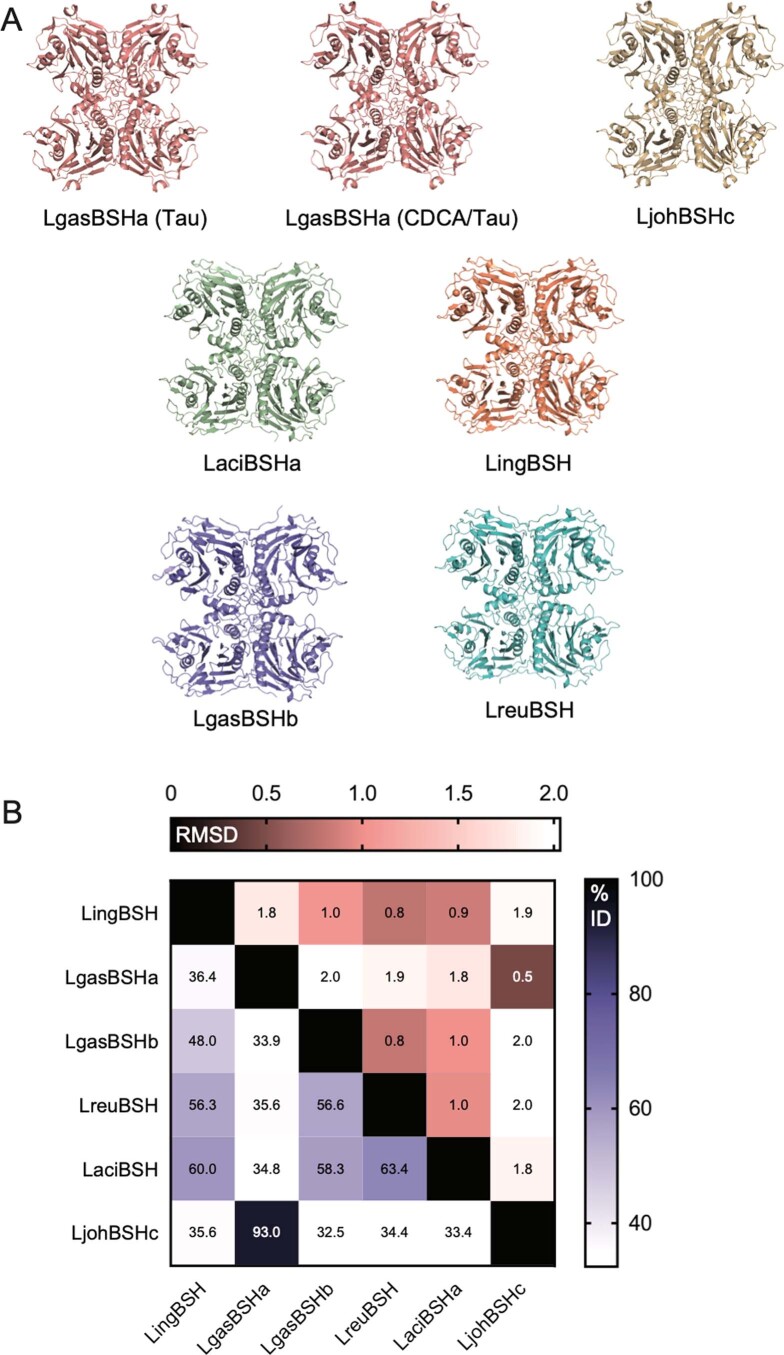
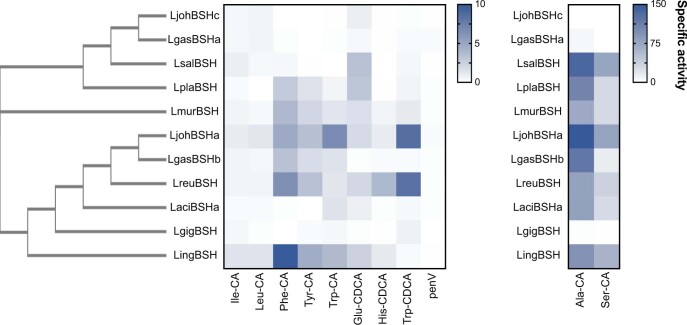
- Structural and mutational work showed that the selectivity loop predicts substrate preference: taurine-preferring enzymes had G-X-G motifs, glycine-preferring enzymes had S-R-X motifs, and loop-swapping mutations reduced selectivity from 76-fold to 14-fold for LgasBSHa and from 353-fold to 2-fold for LgasBSHb.
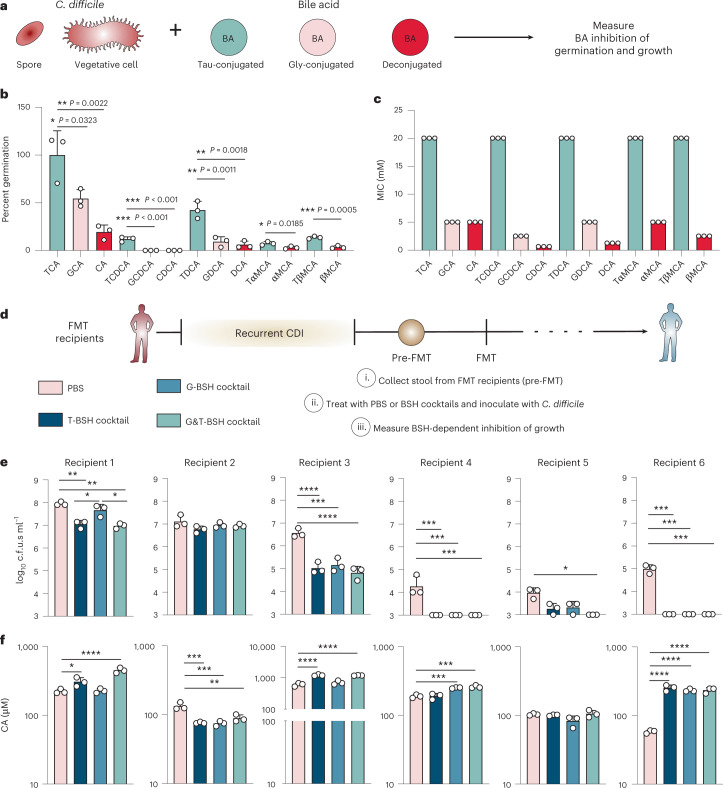
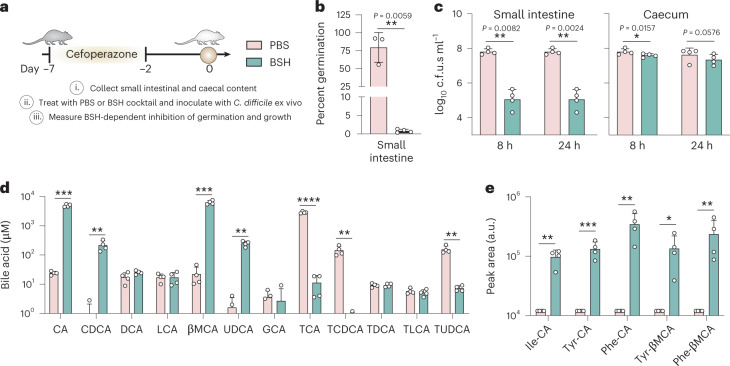
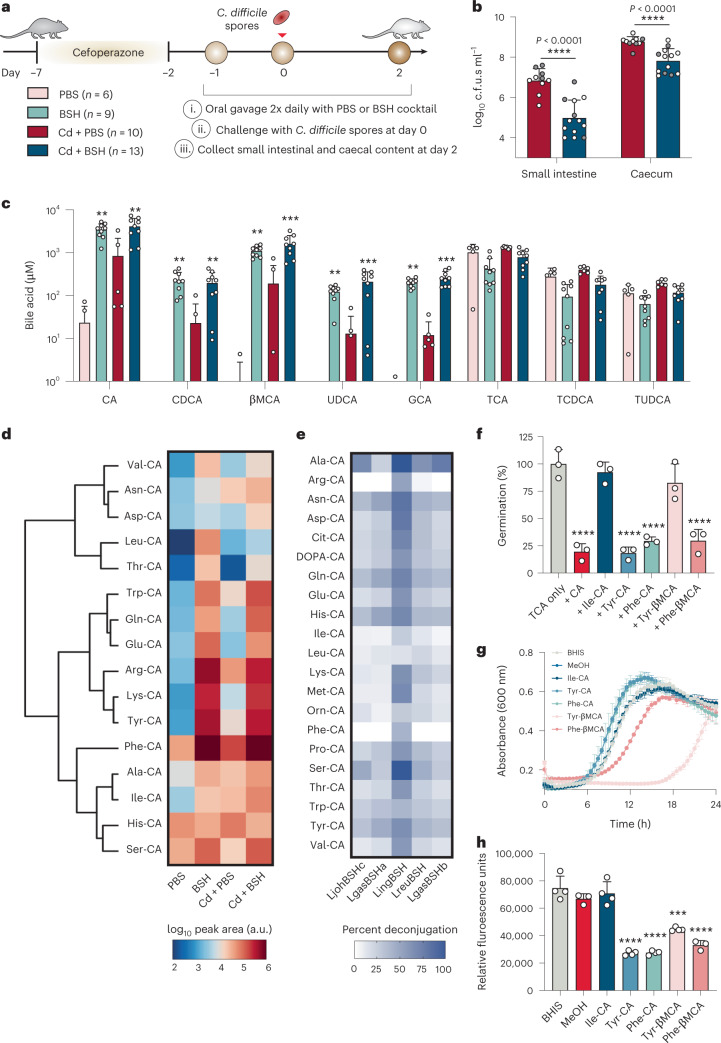
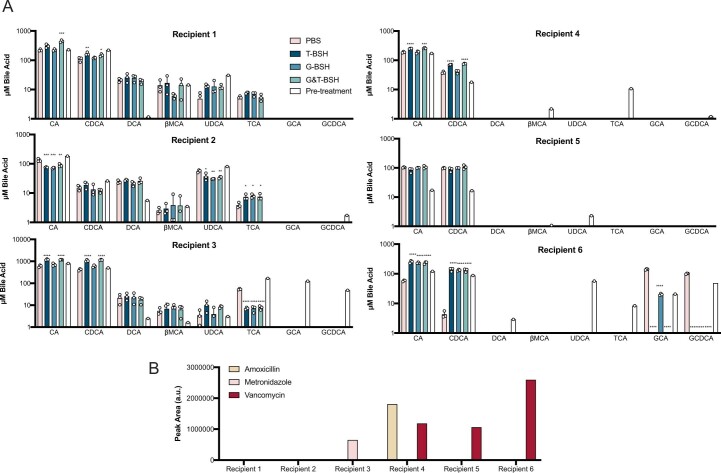
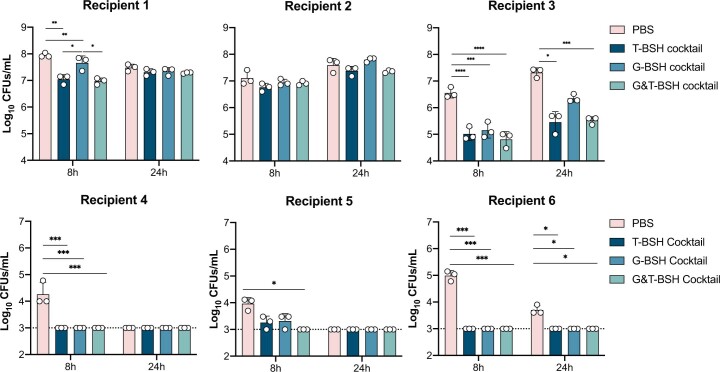
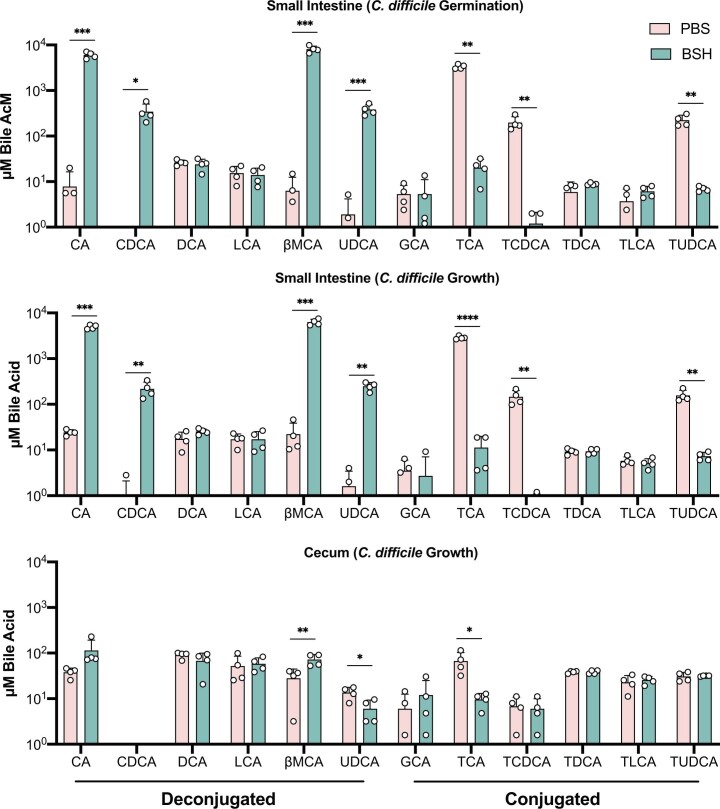
- In human pre-FMT stool samples from 6 rCDI recipients, BSH cocktails inhibited *C. difficile* growth in 4 of 6 samples at 8 h and/or 24 h; in mice, a BSH cocktail significantly inhibited *C. difficile* in the small intestine and caecum, though it did not alter clinical signs of disease or weight loss.
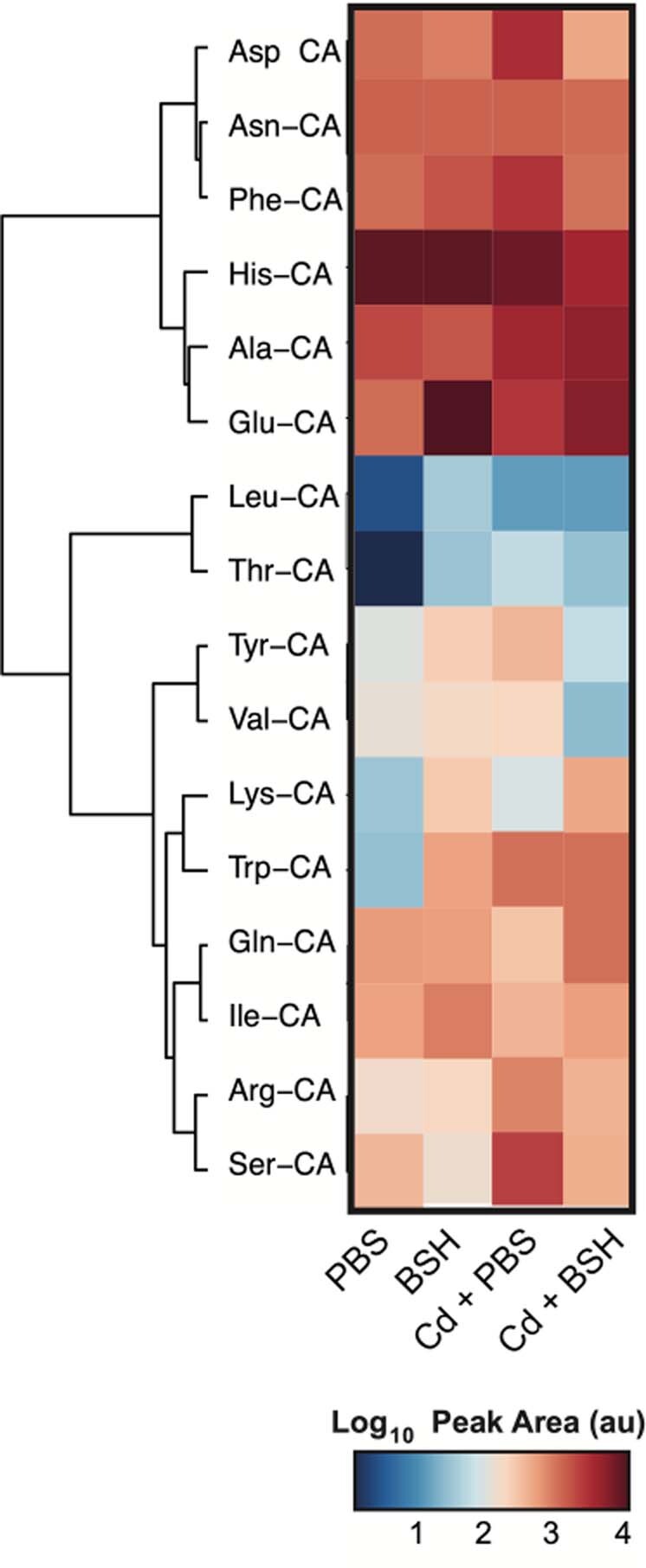
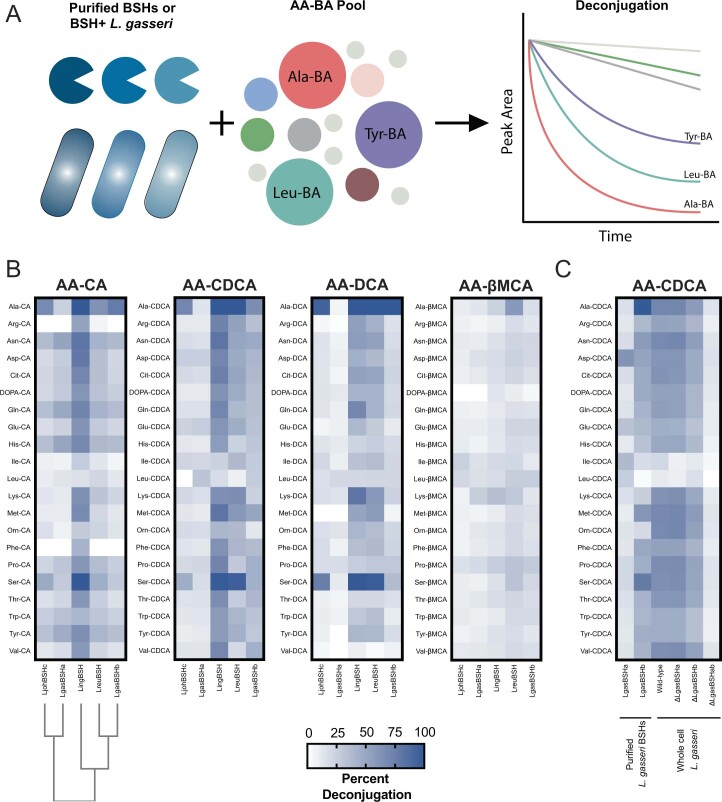
- In cefoperazone-treated mice, the BSH cocktail increased deconjugated BAs and generated a diverse MCBA pool, with Ile-CA, Tyr-CA, Phe-CA, Arg-CA, and Lys-CA being most prominent.
## Methods
- The study combined comparative genomics and phylogenetics, X-ray crystallography of six Lactobacillaceae BSHs, site-directed mutagenesis, and in vitro enzyme assays to link BSH sequence features to substrate specificity.
- Functional testing used ex vivo stool and mouse intestinal content assays, C. difficile spore germination/growth assays, membrane integrity and reporter assays, plus targeted LC–IMS–MS bile acid metabolomics.
- In vivo work used male C57BL/6J mice in a cefoperazone-treated CDI model; mice received a taurine-preferring BSH cocktail (LgasBSHa, LjohBSHc, LsalBSH), were challenged with 10^5 C. difficile spores, and were analyzed at day 2.
## Limitations
- The paper states that BSHs were neither shown to impact clinical signs of disease in vivo nor tested as a treatment for CDI; this limits therapeutic claims.
- The authors note that data collection was not randomized and analysis was not blinded, and that no statistical methods were used to pre-determine sample sizes.
- The text makes evident that mouse bile acid biology is taurine-biased, which the authors say can limit translation to humans; this is an evident limitation from the study design.
Model-written summary. Check it against the paper before relying on it.
Integrity signals
Registry
Cites
Statistics
Figures
Verification
Claims the paper makes
14 Valid · 0 Not valid · 2 Not checked · 113 Own results and interpretations
Every source the paper cites for this claim was checked and supports it.
In the paper
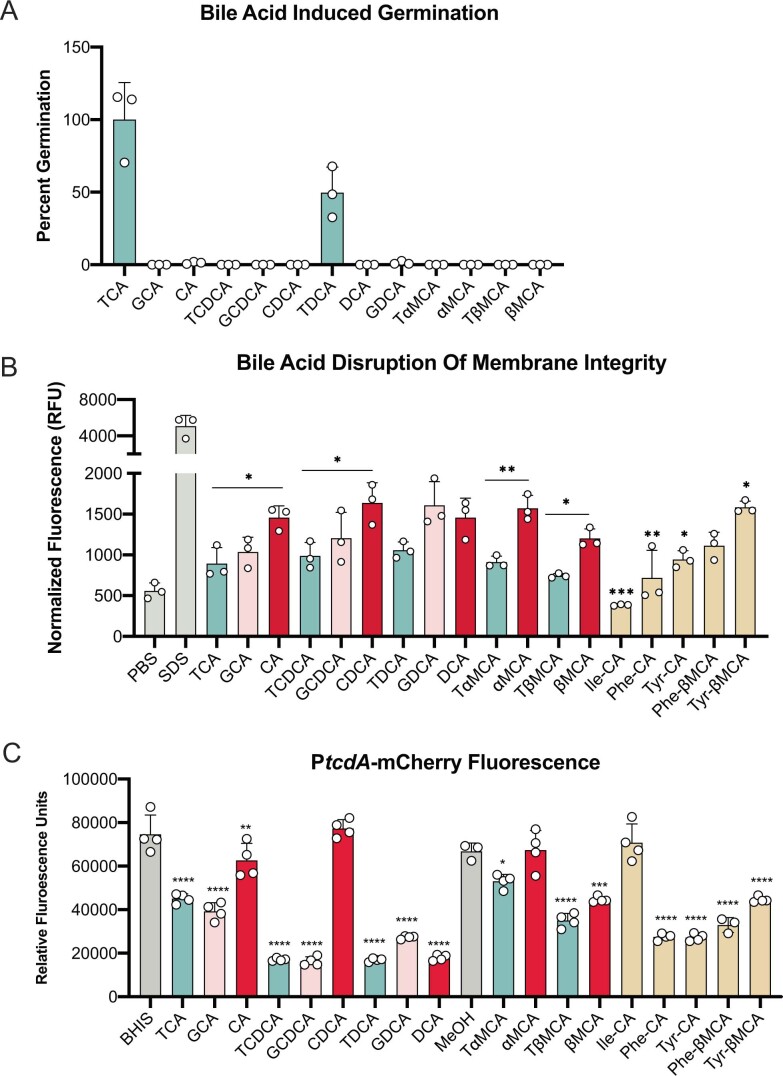
“chenodeoxycholic acid (CDCA) can inhibit germination and growth”
§ Bile salt hydrolases shape the bile acid landscape and restrict Clostridioides difficile growth in the murine gut > Main
What the sources say
- Supportedcites [27] Sorg JA Sonenshein AL Chenodeoxycholate is an inhibitor of Clostridium difficile spore germination J. Bacteriol. 2009 191 1115 1117 10.1128/JB.01260-08 19060152 PMC2632082 source
The paper explicitly states that CDCA inhibits both germination and growth (passage 4, labeled Abstract). Its germination assay also shows that CDCA blocked taurocholate-mediated germination (passage 2). (LLM, conf=0.94)
plainstates a cause- Asserted: passes — The authors put it forward as true.
- Checkable: passes — It can be checked against evidence.
- Load-bearing: passes — The paper’s conclusions depend on it.
- Based: passes — The paper gives a reason why it holds.
- Supported
Every source the paper cites for this claim was checked and supports it.
In the paper
“microbial BA metabolism is an important mechanism of colonization resistance against C. difficile”
§ Bile salt hydrolases shape the bile acid landscape and restrict Clostridioides difficile growth in the murine gut > Main
What the sources say
- Supportedcites [25] Reed AD Theriot CM Contribution of inhibitory metabolites and competition for nutrients to colonization resistance against Clostridioides difficile by commensal Clostridium Microorganisms 2021 9 371 10.3390/microorganisms9020371 33673352 PMC7918557 source
The Introduction identifies commensal bacteria that produce secondary bile acids inhibitory to C. difficile as playing a key role in colonization resistance. The Conclusions likewise list secondary bile acids among the inhibitory metabolites through which gut microbiota provide that resistance. (LLM, conf=0.94)
boostedstates a cause- Asserted: passes — The authors put it forward as true.
- Checkable: passes — It can be checked against evidence.
- Load-bearing: passes — The paper’s conclusions depend on it.
- Based: passes — The paper gives a reason why it holds.
- Supported
Every source the paper cites for this claim was checked and supports it.
In the paper
“This vanguard reaction acts as a ‘gatekeeper’ for subsequent BA transformations that turn primary BAs into secondary BAs”
§ Bile salt hydrolases shape the bile acid landscape and restrict Clostridioides difficile growth in the murine gut > Main
What the sources say
- Supportedcites [1] Foley MH O’Flaherty S Barrangou R Theriot CM Bile salt hydrolases: gatekeepers of bile acid metabolism and host-microbiome crosstalk in the gastrointestinal tract PLoS Pathog. 2019 15 e1007581 10.1371/journal.ppat.1007581 30845232 PMC6405046 source
The Introduction says bile salt hydrolases initiate bile acid metabolism by deconjugating primary bile acids. It then says deconjugated bile acids can undergo transformations that generate secondary bile acids, and explicitly calls BSH activity a gatekeeper to those transformations. (LLM, conf=0.95)
- Supportedcites [11] Ridlon JM Kang DJ Hylemon PB Bile salt biotransformations by human intestinal bacteria J. Lipid Res. 2006 47 241 259 10.1194/jlr.R500013-JLR200 16299351 source
The Introduction states that, unlike oxidation and epimerization, 7α/b-dehydroxylation 'appears restricted to free bile acids,' so 'Removal of glycine/taurine bile acid conjugates via BSH enzymes is thus a prerequisite for 7α/b-dehydroxylation by intestinal bacteria' — and 7α-dehydroxylation is the pathway that converts primary BAs (CA, CDCA) into the secondary BAs DCA and LCA, which the same section calls the most quantitatively important bacterial biotransformation in the colon. The 'Characteristics of bile salt hydrolase(s)' section reinforces the gatekeeper idea, calling deconjugation 'substrate-limiting' and noting it goes to completion in the large bowel, and the 7α-dehydroxylation pathway section notes BaiG transports unconjugated CA/CDCA and that CoA ligation is the first intracellular step. 'Gatekeeper'/'vanguard' is the citing authors' metaphor, but the substance attributed to this source is stated in it. (LLM, conf=0.85)
plainstates a cause- Asserted: passes — The authors put it forward as true.
- Checkable: passes — It can be checked against evidence.
- Load-bearing: passes — The paper’s conclusions depend on it.
- Based: passes — The paper gives a reason why it holds.
- Supported
The sources with a verdict support this claim; the rest weren’t checked yet, have no full text we could read, or their verdicts aren’t rated yet.
In the paper
“Susceptibility to CDI is predominantly driven by antibiotic-induced perturbations to the intestinal microbiota resulting in a loss of colonization resistance”
§ Bile salt hydrolases shape the bile acid landscape and restrict Clostridioides difficile growth in the murine gut > Main
What the sources say
- Not checked — no full text of the sourcecites [23] Owens RC Jr. Donskey CJ Gaynes RP Loo VG Muto CA Antimicrobial-associated risk factors for Clostridium difficile infection Clin. Infect. Dis. 2008 46 S19 S31 10.1086/521859 18177218 source
- Supportedcites [24] Britton RA Young VB Role of the intestinal microbiota in resistance to colonization by Clostridium difficile Gastroenterology 2014 146 1547 1553 10.1053/j.gastro.2014.01.059 24503131 PMC3995857 source
The Abstract (page not provided) states that CDI follows antibiotic disruption of the indigenous gut microbiota. “The Microbiota Affects C difficile Invasion” (page not provided) reports that antibiotics can cause a loss of resistance to C difficile colonization, supporting the claimed link between microbiota perturbation and susceptibility. (LLM, conf=0.90)
plainstates a cause- Asserted: passes — The authors put it forward as true.
- Checkable: passes — It can be checked against evidence.
- Load-bearing: passes — The paper’s conclusions depend on it.
- Based: passes — The paper gives a reason why it holds.
Every source the paper cites for this claim was checked and supports it.
In the paper
“Moreover, fully restricting C. difficile may require sequestering key nutrients or amino acids in addition to producing inhibitory BAs48.”
§ Bile salt hydrolases shape the bile acid landscape and restrict Clostridioides difficile growth in the murine gut > Discussion
What the sources say
- Supportedcites [48] Girinathan BP In vivo commensal control of Clostridioides difficile virulence Cell Host Microbe 2021 29 1693 1708.e7 10.1016/j.chom.2021.09.007 34637781 PMC8651146 source
The Discussion reports that P. bifermentans depleted nutrients preferred by C. difficile, including fructose and amino acids, and reduced its growth and toxin production. It also describes inhibitory bile acids as mediating aspects of protection by another commensal, while emphasizing nutrient changes as an additional way commensals control virulence. The claim's cautious “may require” is consistent with that account; the paper does not test whether both mechanisms are necessary together. (LLM, conf=0.86)
hedgedstates a possible cause- Asserted: passes — The authors put it forward as true.
- Checkable: passes — It can be checked against evidence.
- Load-bearing: unclear — It is unclear whether the paper’s conclusions depend on it.
- Based: passes — The paper gives a reason why it holds.
- Supported
61 more claims · 2 with their cited sources checked
Create a free account to see all 129 claims and to verify the 1 reference still open.
- It may state two separate claims as one. 36
- Probably not a substantial claim. 32
- The quote only partly states this claim. 2
Citations
Cites
Features and development of Coot
Emsley, P., Lohkamp, B., Scott, W. G., & Cowtan, K. (2010) · Acta Crystallographica Section D Biological Crystallography · doi:10.1107/s0907444910007493 · Cited by 29,915
BLAST+: architecture and applications
Camacho, C., Coulouris, G., Avagyan, V., Ma, N., Papadopoulos, J., Bealer, K., & Madden, T. L. (2009) · BMC Bioinformatics · doi:10.1186/1471-2105-10-421 · Cited by 22,074
Kabsch, W. (2010) · Acta Crystallographica Section D Biological Crystallography · doi:10.1107/s0907444909047337 · Cited by 16,463
Cd-hit: a fast program for clustering and comparing large sets of protein or nucleotide sequences
Li, W., & Godzik, A. (2006) · Bioinformatics · doi:10.1093/bioinformatics/btl158 · Cited by 11,410
Cd-hit: Accelerated for clustering the next-generation sequencing data
Fu, L., Niu, B., Zhu, Z., Wu, S., & Li, W. (2012) · Bioinformatics · doi:10.1093/bioinformatics/bts565 · Cited by 11,175
MUSCLE: a multiple sequence alignment method with reduced time and space complexity
Edgar, R. C. (2004) · BMC Bioinformatics · doi:10.1186/1471-2105-5-113 · Cited by 8,970
Liebschner, D., Afonine, P. V., Baker, M. L., Bunkóczi, G., Chen, V. B., Croll, T. I., Hintze, B., Hung, L.-W., Jain, S., McCoy, A. J., et al. (2019) · Acta Crystallographica Section D Structural Biology · doi:10.1107/s2059798319011471 · Cited by 7,953
Protein production by auto-induction in high-density shaking cultures
Studier, F. W. (2005) · Protein Expression and Purification · doi:10.1016/j.pep.2005.01.016 · Cited by 5,931
Eddy, S. R. (1998) · Bioinformatics · doi:10.1093/bioinformatics/14.9.755 · Cited by 5,515
The EMBL-EBI search and sequence analysis tools APIs in 2019
Madeira, F., Park, Y. M., Lee, J., Buso, N., Gur, T., Madhusoodanan, N., Basutkar, P., Tivey, A. R. N., Potter, S. C., Finn, R. D., et al. (2019) · Nucleic Acids Research · doi:10.1093/nar/gkz268 · Cited by 4,167
Cited by
Items 101–176 of 176
Bracken, A. K., Malarney, K. P., & Chang, P. V. (2026) · Journal of the American Chemical Society · doi:10.1021/jacs.5c18912 · Cited by 5
Yang, P., Xiao, C.-Y., Wang, J., Yan, C.-H., Li, Q.-Y., Li, S.-Y., Li, J., Zhang, L.-J., & Dai, C. (2026) · World Journal of Gastroenterology · doi:10.3748/wjg.v32.i6.113010 · Cited by 4
Gut microbial bile salt hydrolase as a metabolic gatekeeper in digestive homeostasis and disease
Chu, H., Song, X., Liu, C., Ma, T., & Cui, W. (2026) · Frontiers in Immunology · doi:10.3389/fimmu.2026.1870619 · Cited by 7
“In the liver, FXR further regulates lipid transport and glucose metabolic pathways through transcriptional networks (12, 28).”
InfluentialBeyond Random Fecal Microbial Transplants
Sartor, R. B. (2024) · Gastroenterology Clinics of North America · doi:10.1016/j.gtc.2024.11.002 · Cited by 7
Exposure and resistance to lantibiotics impact microbiota composition and functionPreprint
Zhang, Z. J., Cole, C. G., Lin, H., Wu, C., Haro, F., McSpadden, E., van der Donk, W. A., & Pamer, E. G. (2023) · bioRxiv (Cold Spring Harbor Laboratory) · doi:10.1101/2023.12.30.573728 · Cited by 4
“We hypothesized that taurine-preferring bile salt hydrolases (BSH) 34 encoded in the gut metagenome were diminished upon exposure to dietary Nisin.”
InfluentialBifidobacteria antagonize the life cycle of Clostridioides difficile
Pelichotti, P. C. S., Martinefski, M., Boscolo, O., et al. (2024) · Microbial Pathogenesis · doi:10.1016/j.micpath.2024.107250 · Cited by 3
Advances in Understanding the Pathogenesis of Clostridioides difficile Infection
Seekatz, A. M., & Abt, M. C. (2025) · Infectious Disease Clinics of North America · doi:10.1016/j.idc.2025.07.001 · Cited by 3
Gut microbial metabolites and immune-related diseases
Guo, J., Yin, X., Wang, K., & Jiang, C. (2026) · Immunity & Inflammation · doi:10.1007/s44466-026-00031-7 · Cited by 6
Cholestasis in Alcohol-Associated Liver Disease
Yan, S., & Yin, X. (2025) · American Journal Of Pathology · doi:10.1016/j.ajpath.2025.04.015 · Cited by 5
Glowacki, R. W. P., Engelhart, M. J., Till, J. M., Kadam, A., Nemet, I., Sangwan, N., & Ahern, P. P. (2025) · Microbiology Spectrum · doi:10.1128/spectrum.03419-24 · Cited by 7
XueZhang, Li, C., Zhu, G.-H., Song, L.-L., Zhao, Y., Ma, Y., Tian, P., Chen, W., & Ge, G. (2024) · Journal of Agricultural and Food Chemistry · doi:10.1021/acs.jafc.4c03617 · Cited by 4
Wang, D., Yao, J., Li, L., & Chen, Y. (2024) · Food Chemistry · doi:10.1016/j.foodchem.2024.141943 · Cited by 8
McMillan, A. S., Zhang, G., Dougherty, M., et al. (2024) · bioRxiv (Cold Spring Harbor Laboratory) · doi:10.1101/2024.02.07.579219 · Cited by 3
Self-citationPan, M., O’Flaherty, S., Hibberd, A. A., Gerdes, S., Morovic, W., & Barrangou, R. (2025) · BMC Genomics · doi:10.1186/s12864-024-11177-2 · Cited by 4
Self-citationZvonareva, T., Courson, D. S., & Purcell, E. B. (2025) · Journal of Bacteriology · doi:10.1128/jb.00407-24 · Cited by 5
Cooper, A., Powers, A., Battaile, K. P., Mohsen, A.-W. A., Johnson, D. K., Lovell, S., & Ghaloul‐Gonzalez, L. (2025) · Proteins Structure Function and Bioinformatics · doi:10.1002/prot.70023 · Cited by 2
“…N-acyltransferase (AT) from Penicillium chrysogenum [47] (PDB 2X1E, 2.3 Å, 187 residues, Figure 5B), a bile salt hydrolase B from Lactobacillus gasseri [48] (PDB 7SVG, 3.1 Å, 195 residues, Figure 5C) and human N-acylethanolamine acid amidase [49] (PDB 6DXX, 2.7 Å, 186 residues, Figure 5D).”
InfluentialSpatiotemporal coordination between local flux and systemic homeostasis in the small intestine
Zhang, J., Zhang, S., Du, L., Zhao, Y., & Wang, D. (2025) · Trends in Endocrinology and Metabolism · doi:10.1016/j.tem.2025.07.009 · Cited by 4
Lipidomics, Microbiota, and Intestinal Clostridioides difficile Infection Outcome
Branković, M., Kraišnik, M., Zdravković, D., Kraišnik, N., Jelić, F., Nikolić, N., Djurasevic, S. F., Tosti, T. B., Gmizić, T., & Todorović, Z. (2025) · International Journal of Molecular Sciences · doi:10.3390/ijms26178214 · Cited by 2
“Secondary bile acids produced by the microbiota can also inhibit the growth of the vegetative form and reduce toxin activity [134,135].”
Spigaglia, P. (2025) · Toxins · doi:10.3390/toxins17100513 · Cited by 3
“The conjugated primary bile taurocholic acid acts as a strong germinant of CD spores, while the secondary bile deoxycholic acid acts as an inhibitor of CD growth [148,174,175].”
Drew, G., Kraft, C. S., & Mehta, N. (2025) · Clinical Chemistry · doi:10.1093/clinchem/hvaf156 · Cited by 2
Li, Y., Zhang, Y., Liu, T., Tuo, Y., Zhang, Y., You, H., Peng, S., Wu, T., Cai, T., Lin, Z., et al. (2026) · Journal of Advanced Research · doi:10.1016/j.jare.2026.02.040 · Cited by 4
Systemic rhythmicity of host and bacterial bile acid amidates in the mouse
Reilly, E. R., Charron‐Lamoureux, V., Mannochio-Russo, H., Morgan, E. W., Boyle, N. R., Koo, I., Coudriet, E., Hao, F., Mohanty, I., Perdew, G. H., et al. (2026) · Cell Systems · doi:10.1016/j.cels.2026.101541 · Cited by 4
Self-citationChemical dialogues at the crossroads of host–bacteria interactions
Diab, E., Thome, N. U., Elsayed, S. S., Raaijmakers, J. M., & van Wezel, G. P. (2026) · Trends in Microbiology · doi:10.1016/j.tim.2026.03.013 · Cited by 3
Mehta, N., Guzzetta, V. S., Liu, K., Webster, A. S., Adelman, M. W., Fitts, E. C., Jones, D. P., Kraft, C. S., Woodworth, M. H., & Collins, J. M. (2026) · Microbiology Spectrum · doi:10.1128/spectrum.02826-25 · Cited by 2
“Cholate-based primary bile acids trigger C. difficile germination (39, 40).”
Epidemiological characteristics of infections caused by bacteria Clostridioides difficile toxins
Koprivica, M., & Malbaša, J. D. (2024) · Srpski arhiv za celokupno lekarstvo · doi:10.2298/sarh240625077k · Cited by 2
Feng, J., He, L., Ma, X., Yin, X., Mueller, E. G., Zhou, Z., Feng, W., McClain, C. J., & Zhang, X. (2025) · Journal of Chromatography B · doi:10.1016/j.jchromb.2025.124650 · Cited by 3
Microbially-catalyzed conjugation of GABA and tyramine to bile acidsPreprint
Mullowney, M. W., Fiebig, A., Schnizlein, M. K., et al. (2023) · bioRxiv (Cold Spring Harbor Laboratory) · doi:10.1101/2023.09.25.559407 · Cited by 2
“[23], it is likely that structural differences in the active site or other regions of the conjugating enzyme [25] will determine whether primary amine groups, such as those on GABA and tyramine, form amide bonds with bile acid(s).”
Lo, K., Kavarian, P., Wang, B., Parsana, R., Durazo-Arvizú, R., Sun, F., & Michail, S. K. (2024) · Gut Microbes Reports · doi:10.1080/29933935.2024.2393219 · Cited by 5
“38 Another significant reaction in BA metabolism is 7α-dehydroxylation, which is driven by enzymes encoded by the bai operon genes ( BaiA through BaiH ).”
Shi, K., Wang, L., Zheng, X., Zhang, Z., Zhang, Z., Sun, Z., Mohany, M., Haihui, H., Li, J., Li, S., et al. (2025) · European Journal of Medicinal Chemistry · doi:10.1016/j.ejmech.2025.117631 · Cited by 3
Lu, W., Liu, Z., Song, Z., Wang, C., Yu, Z., Peng, S., Tian, Z., Lü, A., & Ning, Z. (2025) · Journal of Ethnopharmacology · doi:10.1016/j.jep.2025.119845 · Cited by 6
Chen, W., Niu, X., Liang, X., Zhu, G., Zhang, X., Gong, Q., Xie, C., Ge, G., Wang, P., & He, Y. (2025) · Chinese Chemical Letters · doi:10.1016/j.cclet.2025.111320 · Cited by 2
Infection Prevention Approaches for Clostridioides difficile
Vance, J., & Turner, N. (2025) · Infectious Disease Clinics of North America · doi:10.1016/j.idc.2025.07.004 · Cited by 1
Intestinal Dysbiosis Caused by Epithelial Fabp6 Gene Disruption Exacerbates Gut Inflammatory Disease
Kwon, K., Kim, M., Jung, Y., Yoon, M. Y., Lee, J., Yoon, S. S., Rho, M., Chung, Y. W., & Ryu, J.-H. (2025) · Immune Network · doi:10.4110/in.2025.25.e35 · Cited by 3
“The concentrations were selected to approximate physiological levels found in the gut lumen, based on previously published studies (30,31).”
Li, S., Ma, C., Yang, Y., Xu, X., Wang, J., Li, L., Xu, Y., & Zhang, N. (2026) · Trends in Food Science & Technology · doi:10.1016/j.tifs.2026.105732 · Cited by 1
Hu, Z., Yan, J., Wang, X., & Liu, Z. (2026) · Antonie van Leeuwenhoek · doi:10.1007/s10482-026-02353-3 · Cited by 1
“…microbial Trp metabolic activity may subsequently influence indole-derived metabolite production and aryl hydrocarbon receptor (AhR)-related signaling pathways, thereby participating in intestinal homeostasis, host–microbiota interactions, and downstream inflammatory regulation (Zhao et al. 2025).”
Zhao, M., Wen, B., Ouyang, Z., Yang, J. X., Yang, H., Jiafeng, Z., 强翠欣, Wang, W., Qin, P., Niu, Y., et al. (2026) · Virulence · doi:10.1080/21505594.2026.2697574 · Cited by 1
Bile acid metabolism and signaling in human and animal health: A One Health perspective
Li, L., Liu, S., Cao, Z., Cao, Y., Wu, S., Deng, L., Yao, J., & Zhang, J. (2026) · iMetaOmics. · doi:10.1002/imo2.70123 · Cited by 1
“More mechanistic studies indicate that the efficacy of fecal microbiota transplantation is closely linked to restoration of BSH function; engineered or naturally BSH ‐ positive bacteria can reduce TCA ‐ mediated spore germination and lower C. difficile burden in mice [171, 172].”
Oral probiotic delivery-based therapeutic strategies for inflammatory bowel disease
Li, S., Deng, H., Fu, S., Li, J., Luo, X., Chen, Z., Wang, P., Feng, X., Chen, Y., Fu, C., et al. (2026) · Asian Journal of Pharmaceutical Sciences · doi:10.1016/j.ajps.2026.101187 · Cited by 2
“Second, the altered BAs profile selectively inhibits pathogenic colonization by microorganisms such as C. difficile , thereby preserving microbial equilibrium [ 114 ,115 ].”
The Role of Lachnospiraceae in Liver Diseases: Recent Advances and Clinical Application Prospects
Feng, J., Wang, X., Cao, H., Zhang, Y., Xu, J., Wang, G., Zhu, X., & Deng, S. (2026) · International Journal of Molecular Sciences · doi:10.3390/ijms27167175 · Cited by 2
“Through this action, free bile acids are liberated [47].”
Lu, Y., Du, J., Peng, S., Wang, Y., & Xiao, Y. (2024) · The Journal of Antibiotics · doi:10.1038/s41429-024-00800-9 · Cited by 1
“Speci fi cally, DCA, LCA, and isoLithocholic acid (iso-LCA) have been implicated in inhibiting the growth of C. dif fi cile [17, 32 – 34].”
Zhou, Y., Li, W., Niu, X., Cao, Y. W., Wang, M., He, H., Cao, Z., Hong, Q., Tu, P., & Song, Y. (2025) · Analytica Chimica Acta · doi:10.1016/j.aca.2025.344314 · Cited by 1
Huang, Y., Xu, W., Chen, G., Sun, Y., & Zeng, X. (2024) · Research Square · doi:10.21203/rs.3.rs-3875238/v1 · Cited by 1
Trang, K., Gulick, D. A., Truell, J. C., Tian, J., Bodkhe, R., Hiseni, P., Gravdal, K., Kirubakaran, T. G., Casèn, C., Singh, R. K. R., et al. (2026) · bioRxiv (Cold Spring Harbor Laboratory) · doi:10.64898/2026.02.17.706416 · Cited by 1
“Intestinal microbiota can transform primary bile acids into secondary bile acids, shifting the bile acid pool to impact survival and virulence of intestinal pathogens such as Clostridium difficile 9–11 and Vibrio cholera 12 .”
Kisthardt, S. C., Thanissery, R., Pike, C. M., et al. (2023) · bioRxiv (Cold Spring Harbor Laboratory) · doi:10.1101/2023.06.06.543867
Self-citationLiu, J., Macnaughtan, J., Jin, Y., Clasen, F., Habtesion, A., Phillips, A., Chiara, F. D., Ingavle, G. C., Cordero, P., Soeda, J., et al. (2023) · bioRxiv (Cold Spring Harbor Laboratory) · doi:10.1101/2023.08.15.553396
Evaluating the Probiotic Potential of Lactic Acid Bacteria Isolated from Nipponia nippon FecesPreprint
Yang, L., Luo, J., Zeng, Y., et al. (2024) · Research Square · doi:10.21203/rs.3.rs-4984548/v1
Moreau, G. B., Young, M., Behm, B. W., Tanyüksel, M., Ramakrishnan, G., & Petri, W. A. (2024) · medRxiv · doi:10.1101/2024.11.28.24318101 · Cited by 1
Yang, L., Luo, J., Zeng, Y., Baoyue, Z., Wang, Y., Zhao, X., Juchun, L. I. N., Li, H., Xu, F., Zhang, W., et al. (2025) · Frontiers in Microbiology · doi:10.3389/fmicb.2025.1552264 · Cited by 1
Xu, F., Zhang, C., Yu, L., Tian, F., Chen, W., & Zhai, Q. (2025) · Food Nutrition · doi:10.1016/j.fnutr.2025.100002
Exploring Microbial Utilization of Iron via Mass Spectrometry
Kostenko, A. (2025) · Digital Commons - DU (University of Denver) · doi:10.56902/etdcrp.2025.22
Leveraging chemical synthesis to discover metabolites from the gut microbiome
Keys, A. J., Nandwana, N. K., Alnasser, E., & Gentry, E. C. (2025) · Annals of the New York Academy of Sciences · doi:10.1111/nyas.70004
“22 Organic synthesis was used to confirm its chemical structure and yielded undesirable 8:92 selectivity favoring the wrong epimer, but authentic standards were accessed nonetheless to compare with native metabolites.”
Self-citationUnravelling three-way interactions between Clostridioides difficile, microbiota and the host
Bywater-Brenna, K. K., & Unnikrishnan, M. (2025) · Journal of Medical Microbiology · doi:10.1099/jmm.0.002067
“A recent study reported that a diverse range of BSHs encoded by gut commensals within Lactobacillaceae contribute to shaping the pool of conjugated bile salts and prevent C. difficile spore germination and virulence [63].”
New investigational agents for the treatment of Clostridioides difficile infections
Tran, M.-C. N., Eubank, T. A., Kullar, R., McFarland, L. V., Garey, K. W., & Goldstein, E. J. C. (2025) · Expert Opinion on Investigational Drugs · doi:10.1080/13543784.2025.2579016 · Cited by 1
Zeng, X., Lin, J., Liu, B., Su, Z. Z., Yu, Y., Li, X., Duan, W., Liu, C., Hou, Q., Zhang, J., et al. (2025) · Pain · doi:10.1097/j.pain.0000000000003830 · Cited by 1
“13,14 The gut microbiota regulates bile acid metabolism by increasing the diversity of the bile acid pool through various modifications, such as dehydroxylation, oxidation, desulfurization, and esterification.”
Çetin, O., Darilmaz, D. Ö., & YILDIZ, G. G. (2025) · International Journal of Food Science & Technology · doi:10.1093/ijfood/vvaf225
Yang, H. J., Zhu, H., Zhu, Z., Man, L., Pang, Q., Lu, T., Xu, K., Wang, Z., & Lu, P. (2026) · Vaccines · doi:10.3390/vaccines14040310
“Bile salt hydrolases (BSHs) expressed by gut microbiota catalyze the cleavage of amide bonds in conjugated bile acids (CBAs), producing unconjugated bile acids (UBAs) [36].”
Zhou, D., Chen, L., Rose, J., & Wang, B.-C. (2026) · Acta Crystallographica Section D Structural Biology · doi:10.1107/s2059798326001968
Cui, Z., Meng, C. J., Irwin, S. M., Augustijn, H. E., Papageorgiou, P. P., Nguyen, A. T. P., Yu, R., Ramos, M. A. A., Kulik, H. J., & Balskus, E. P. (2026) · bioRxiv (Cold Spring Harbor Laboratory) · doi:10.64898/2026.04.05.716592 · Cited by 1
Li, Y., Lv, C., Bai, H., Li, J., Leng, A., Chen, X., Zhang, G., & Qu, J. (2026) · Phytomedicine · doi:10.1016/j.phymed.2026.158177 · Cited by 1
Chen, M., Liu, S., Xu, C., Wang, B., Zhang, S., Xie, W., Yu, W., & Jiang, X. (2026) · Poultry Science · doi:10.1016/j.psj.2026.107023 · Cited by 1
Zhang, C., Wang, Z., Kadier, D., Shen, Y., Hao, Z., Zhu, Y., Wu, Q., Li, L., & Jiang, P. (2026) · Journal of Biomedical Research · doi:10.7555/jbr.40.20260064
From gut to heart: Probiotics-driven cholesterol metabolism, mechanisms and health benefits
Umapathi, P., Siva, N., Balakrishnan, S., Vincent, S., Govindarajan, R. K., Nagdalian, A. A., Evdokimov, I., Kurchenko, V., Lodygin, A., & Duraisamy, S. (2026) · PharmaNutrition · doi:10.1016/j.phanu.2026.100518 · Cited by 1
Ecological and dietary strategies to constrain Clostridioides difficile
Engevik, M. A., Hecht, A. L., Allegretti, J. R., & Kashyap, P. (2026) · Cell Host & Microbe · doi:10.1016/j.chom.2026.05.023 · Cited by 1
BileActome reveals community-assembled bile acid metabolism in the rumen microbiome
Zhang, B., Jiang, X., Zhao, H., & Wang, B. (2026) · ISME Communications · doi:10.1093/ismeco/ycag205
“In particular, BSH and HSDH are widespread bile acid–modifying enzymes [ 12, 13, 15], yet each family comprises distinct subtypes with different biochemical consequences; treating them as undifferentiated groups obscures mechanistic variation [ 14, 16].”
A programmed reset mechanism primes Clostridioides difficile virulence at the onset of infection
Gadda, N. C., Santos-Santiago, J. A., Sellers, R. S., & Tamayo, R. (2026) · Science Advances · doi:10.1126/sciadv.aeg1542
“…the abundance of bacterial species capable of this conversion and skewing the bile acid landscape away from secondary bile acids (inhibitory to C. difficile spore germination and vegetative cell growth) to mostly primary bile acids (conducive to C. difficile spore germination) ( 5 , 8 – 10 ).”
Probiotics in Autoimmune Disease: Strain-specific Mechanisms and Therapeutic Perspectives
Zhou, J., Cao, J., Dong, S., Li, H., Yang, S., Yan, Z., Wang, C., Pei, Y., Su, Y., Wen, B., et al. (2026) · Clinical Reviews in Allergy & Immunology · doi:10.1007/s12016-026-09190-2
The LiaFSR-SpxA2 regulatory axis governs bile salt resistance and virulence in Group B Streptococcus
Wang, L., Li, R., Lin, J., Li, F., Wu, Y., Zhang, Y., & Zeng, H. (2026) · Virulence · doi:10.1080/21505594.2026.2721814
“…mechanisms involved in the bile salt resistance can be categorized into the active transport of bile salts from the bacterial cytoplasm via efflux pumps [16], changes in the physicochemical characteristics of the cell wall and membranes [17] and the activity of bile salt hydrolases [18,19].”
Oka, A., Bongers, G., Mishima, Y., Baltus, A. E., Gray, S. M., Liu, B., Herzog, J., Benedetto, J. R., Fan, T.-J., Jang, J., et al. (2026) · Cell Host & Microbe · doi:10.1016/j.chom.2026.08.003 · Cited by 2
Cristian, R.-E., Vrâncianu, C. O., Constantin, M., Păun, M., Milea, E. C., Malaescu, D., & Chifiriuc, M. C. (2026) · Gut Microbes · doi:10.1080/19490976.2026.2722482
The Bile Acid–Diet–Microbiome Axis in Clostridioides difficile Infection
Trofin, F., Buzilă, E. R., Iancu, I. R., Tuchiluş, C., Temneanu, O. R., Iancu, L. S., Vlad, M. A., Anton-Păduraru, D.-T., Armașu, I., Bădescu, A. C., et al. (2026) · Nutrients · doi:10.3390/nu18172872
“In murine models, antibiotic treatment consistently disrupts the gut microbiota, leading to depletion of bile acid–transforming bacteria, reduced concentrations of secondary bile acids, and accumulation of primary bile acids that promote spore germination and vegetative outgrowth [35,43].”
Dietary flavonoids target the gut–liver axis for the management of cholestatic liver injury
白冬松, Fan, S.-Q., Mu, Y., Zheng, D., Huang, X., Ma, H., & Li, L. (2026) · Food & Function · doi:10.1039/d6fo03181a
Decoding the Biological Function of Bile Acids for Drug Discovery
Yang, J., & Lei, X. (2026) · Accounts of Chemical Research · doi:10.1021/acs.accounts.6c00477
Lin, X., Tong, Y., Luo, Z., Wen, M., Luo, J., Xuan, G., Tan, Y., Xu, S., Li, P., Song, A., et al. (2026) · Phytomedicine · doi:10.1016/j.phymed.2026.158802
Expanding bile acid diversity via host and microbial conjugation pathways
Won, T. H., & Schroeder, F. C. (2026) · Natural Product Reports · doi:10.1039/d6np00058d
Li, M., Mao, J., Liu, S., Yu, H., Qin, H., Liu, X., Tu, R., Chen, S., Liu, Z., Zhang, S., et al. (2026) · Gut Microbes · doi:10.1080/19490976.2026.2734657
“These two microor ganisms are potential bile acid-metabolizing/tolerant lactobacilli 30,31 (Figure 2C).”
Metadata
- Authors
- Foley, M. H., Walker, M. E., Stewart, A. K., O’Flaherty, S., Gentry, E. C., Patel, S., Beaty, V. V., Allen, G., Pan, M., Simpson, J. B., Perkins, C., Vanhoy, M. E., Dougherty, M. K., McGill, S. K., Gulati, A. S., Dorrestein, P. C., Baker, E. S., Redinbo, M. R., Barrangou, R., & Theriot, C. M.
- Affiliations
- North Carolina State University (US)
- University of North Carolina at Chapel Hill (US)
- University of California San Diego (US)
- Corresponding author
- Redinbo, Matthew R.
- Barrangou, Rodolphe
- Theriot, Casey M.
- ORCID
- Foley, Matthew H.
- Walker, Morgan E.
- Stewart, Allison K.
- O’Flaherty, Sarah
- Gentry, Emily C.
- Patel, Shakshi
- Beaty, Violet V.
- Pan, Meichen
- Simpson, Joshua B.
- Vanhoy, Molly E.
- Dougherty, Michael K.
- McGill, Sarah K.
- Gulati, Ajay S.
- Dorrestein, Pieter C.
- Baker, Erin S.
- Redinbo, Matthew R.
- Barrangou, Rodolphe
- Theriot, Casey M.
- Venue
- Nature Microbiology
- Published
- 2023-03-13
- Volume
- 8
- Issue
- 4
- Pages
- 611-628
- ISSN
- 2058-5276 (ISSN-L)
- PMC
- PMC10066039
- OpenAlex
- W4324129924
- Semantic Scholar
- 465f82cbb68c60e03d893d24129497c5044c345d
- Cited by
- 181
- References
- 88
- Citations by year
- 2026: 50 · 2025: 56 · 2024: 56 · 2023: 19
- FWCI
- 37.25
- Type
- journal article
- Language
- en
- Open access
- hybrid
- doi.org
- Licence
- cc-by
- creativecommons.org/licenses/by/4.0 (tdm)
- creativecommons.org/licenses/by/4.0 (vor)
- Locations
- Nature Microbiology (publishedVersion, cc-by)
- PubMed Central (publishedVersion, cc-by)
- PubMed (publishedVersion)
- Carolina Digital Repository (University of North Carolina at Chapel Hill) (submittedVersion)
- UNC Libraries
- Funders
- NCTraCS Translational and Clinical Sciences Institute Pilot Award UNCSUR11609 and Funding from IFF.
- U.S. Department of Health & Human Services | NIH | National Institute of General Medical Sciences (T32GM008570)
- U.S. Department of Health & Human Services | NIH | National Institute of Environmental Health Sciences (P42 ES027704)
- Topics
- Health Sciences › Medicine › Infectious Diseases › Clostridium difficile and Clostridium perfringens research
- Life Sciences › Biochemistry, Genetics and Molecular Biology › Molecular Biology › Gut microbiota and health
- Health Sciences › Medicine › Oncology › Drug Transport and Resistance Mechanisms
- Keywords
- bile salt hydrolase, bile acids, Clostridium difficile infection, bile acid conjugates, Lactobacillaceae, substrate specificity, spore germination, colonization resistance, gut microbiota, probiotics, virulence
- MeSH terms
- Clostridioides, Amidohydrolases, Animals, Bile Acids and Salts, Clostridium Infections, Humans, Clostridioides difficile, Mice
About these checks
Registry, retraction, Cites and statistics results are computed, not judged, with one exception: a printed reference that no index lists is read once by a model before it counts as a citation error. Claims are extracted by a model and kept only when their quote appears verbatim in the text; each cited source is then checked, with a model’s help, for whether it says what the claim relies on. Those verdicts can be wrong — read the claim’s quote and the cited source before relying on one.
The claim verdicts this report counts are experimental: their accuracy is not yet measured.
A language model drew the claims from the paper on 2026-10-11, under version 3 of the claim definition (model deepseek-v4.1-flash, prompt extract-v3).
A second model labelled each claim on 2026-10-11 (model jev-1.13-20260917, definition revision gold-guideline-v0.2).
Cited sources are checked with a language model’s help (gpt-6-sol and qwen3.8-omni-flash).
Statistics and arithmetic are recomputed, not judged.
Confidence bands are shown only for fields calibrated on our annotated test set. None is calibrated yet, so no band is shown.
What counts as a claim ›How we measure confidence ›How we check this ›
Are you an author, or do you see a problem with this page? Request a review
Data sources
Bibliographic data: Semantic Scholar, OpenAlex, Crossref.
Contains information from the Semantic Scholar Academic Graph Datasets, made available under the ODC Attribution License (ODC-BY 1.0).
Semantic Scholar’s data is described in: Kinney, R., et al. (2023). The Semantic Scholar Open Data Platform. arXiv:2301.10140.
