

The International Scientific Association for Probiotics and Prebiotics (ISAPP) consensus statement on fermented foods
Open accessThe DOI matches its Crossref record; 182 of the 182 references it cites were found in a registry or an index.
Abstract
An expert panel was convened in September 2019 by The International Scientific Association for Probiotics and Prebiotics (ISAPP) to develop a definition for fermented foods and to describe their role in the human diet. Although these foods have been consumed for thousands of years, they are receiving increased attention among biologists, nutritionists, technologists, clinicians and consumers. Despite this interest, inconsistencies related to the use of the term ‘fermented’ led the panel to define fermented foods and beverages as “foods made through desired microbial growth and enzymatic conversions of food components”. This definition, encompassing the many varieties of fermented foods, is intended to clarify what is (and is not) a fermented food. The distinction between fermented foods and probiotics is further clarified. The panel also addressed the current state of knowledge on the safety, risks and health benefits, including an assessment of the nutritional attributes and a mechanistic rationale for how fermented foods could improve gastrointestinal and general health. The latest advancements in our understanding of the microbial ecology and systems biology of these foods were discussed. Finally, the panel reviewed how fermented foods are regulated and discussed efforts to include them as a separate category in national dietary guidelines.
Overview
The claims and statistics of this paper haven’t been checked yet.
Free: it reads the open-access text and checks the first 5 claims that cite a source we can check. Create a free account to check every claim.
Integrity signals
Registry
Cites
Statistics
Figures
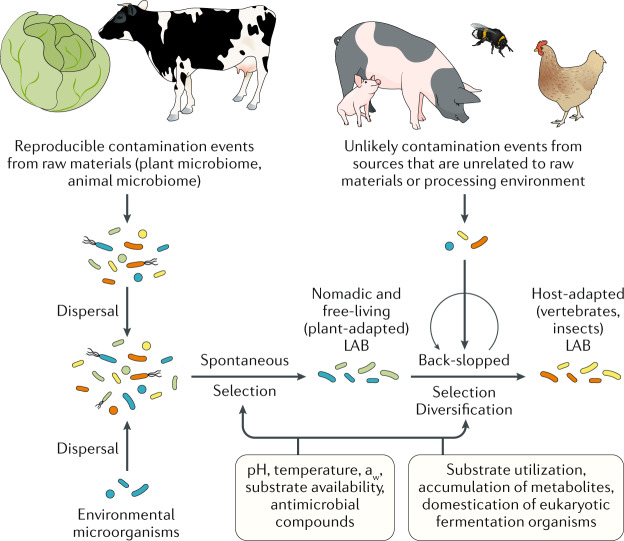
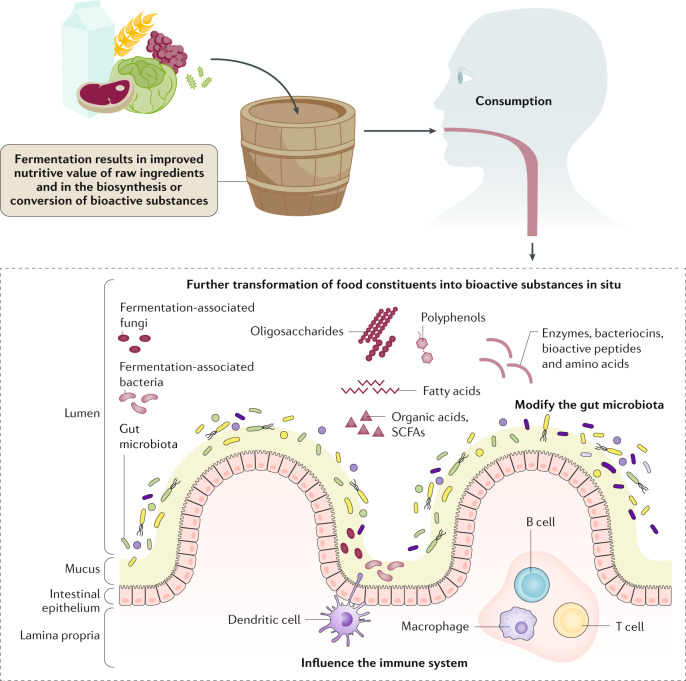
Verification
Claims the paper makes
The claims and statistics of this paper haven’t been checked yet.
Free: it reads the open-access text and checks the first 5 claims that cite a source we can check. Create a free account to check every claim.
Claims other papers make about this one
Each is checked against this paper’s own text: does it say what the citing paper says it does?
The source backs part of the claim, not all of it — or backs it for a different population, condition or comparison.
In the citing paper
“While probiotics are selected to fulfill safety, functional, and technological criteria (Zommiti et al., 2020), starter cultures are selected to ensure the consistency of the fermentation process, improve efficiency, and achieve the desired sen sory properties of the final product (Marco et al., 2021).”
From Exploring the resistome of probiotics, starter cultures, and cheeses via metagenomic analysis (2025) · cites this paper as Marco et al., 2021
Experimental — accuracy not yet measuredIn the citing paper
“Yoghurt and cultured milk products are other examples of fermented foods and have been shown to reduce postprandial glycemic responses in both healthy individuals, and subjects with prediabetes or overt T2DM [384], beyond the milk from which these products are made [408].”
From Effects of diet, lifestyle, Chrononutrition and alternative dietary interventions on postprandial Glycemia and insulin resistance (2022) · cites this paper as [384]
Self-check
Percentages, sums and reported differences re-computed from the paper’s own numbers.
The self-check needs the paper’s full text.
Citations
Cites
Writing Group for the Women's Health Initiative Investigators (2002) · JAMA: The Journal of the American Medical Association · doi:10.1001/jama.288.3.321 · Cited by 15,889
Diet rapidly and reproducibly alters the human gut microbiome
David, L. A., Maurice, C. F., Carmody, R. N., Gootenberg, D. B., Button, J. E., Wolfe, B. E., Ling, A. V., Devlin, A. S., Varma, Y., Fischbach, M. A., et al. (2014) · Nature · doi:10.1038/nature12820 · Cited by 10,100
Self-citationHill (2014) · doi:10.1038/nrgastro.2014.66 · Cited by 9,592
The environment and disease: association or causation?
Hill, A. B. (2015) · Journal of the Royal Society of Medicine · doi:10.1177/0141076814562718 · Cited by 7,285
The Environment and Disease: Association or Causation?
Hill, A. B. (1965) · Proceedings of the Royal Society of Medicine · doi:10.1177/003591576505800503 · Cited by 6,974
CRISPR Provides Acquired Resistance Against Viruses in Prokaryotes
Barrangou, R., Fremaux, C., Deveau, H., Richards, M., Boyaval, P., Moineau, S., Romero, D. A., & Horvath, P. (2007) · Science · doi:10.1126/science.1138140 · Cited by 5,947
Gibson, G. R., Hutkins, R., Sanders, M. E., Prescott, S. L., Reimer, R. A., Salminen, S. J., Scott, K., Stanton, C., Swanson, K. S., Cani, P. D., et al. (2017) · Nature Reviews Gastroenterology & Hepatology · doi:10.1038/nrgastro.2017.75 · Cited by 5,634
Self-citationRevised Estimates for the Number of Human and Bacteria Cells in the Body
Sender, R., Fuchs, S., & Milo, R. (2016) · PLOS Biology · doi:10.1371/journal.pbio.1002533 · Cited by 5,425
Zheng, J., Wittouck, S., Salvetti, E., Franz, C. M. A. P., Harris, H. M. B., Mattarelli, P., O’Toole, P. W., Pot, B., Vandamme, P., Walter, J., et al. (2020) · International Journal of Systematic and Evolutionary Microbiology · doi:10.1099/ijsem.0.004107 · Cited by 3,313
Self-citationPopulation-level analysis of gut microbiome variation
Falony, G., Joossens, M., Vieira-Silva, S., Wang, J., Darzi, Y., Faust, K., Kurilshikov, A., Bonder, M. J., Valles-Colomer, M., Vandeputte, D., et al. (2016) · Science · doi:10.1126/science.aad3503 · Cited by 2,400
Research works printed but not linked: 2
- 4. Steinkraus, K. H. In Fermented Food Beverages in Nutrition (ed Gastineau C. F., Darby W. J., Turner T. B.) 36–50 (Academic Press, 1979).
- 32. Lister JB. On the lactic fermentation and its bearings on pathology. Trans. Pathol. Soc. Lond. 1878;29:425–467.
Cited by
Items 701–800 of 934
What Brazilian students think and how they act in the face of evidence-based practice
de Andrade, F. D. S. D. S. D., Mascarenhas, L. R., Teixeira, R. D. C., de Menezes, P. D. G., de Oliveira, C. B. D. S. P., de Sousa, F. D. J. D., Barbosa, T. R., Gresik, K. R. C., da SIlva, N. F., Fernandes, C. A., et al. (2021) · International Physical Medicine & Rehabilitation Journal · doi:10.15406/ipmrj.2021.06.00276
Can Eating Bacteria In Dairy Products Support Your Health?
Röder, T., Pimentel, G., Bär, C., von Ah, U., Bruggmann, R., & Vergères, G. (2022) · Frontiers for Young Minds · doi:10.3389/frym.2022.721939
“Yes, there are bad guys—but there are also good guys! In fact, most bacterial species do notmake us sick, and some even help us stay healthy [1, 2].”
Backgroundde Medeiros, I. U. D. (2022) · Digital Library of Theses and Dissertations (Universidade de São Paulo) · doi:10.11606/t.9.2022.tde-29072022-204218
Pot, B., & Wolters, M. (2022) · Wageningen Academic Publishers eBooks · doi:10.3920/978-90-8686-933-6_11 · Cited by 1
Posbióticos: ¿qué son y qué evidencia existe en trastornos intestino-cerebro?
Bustos-Fernández, L. M., Hanna-Jairala, I., & Vinderola, G. (2022) · NeuroGastroLATAM Reviews · doi:10.24875/ngl.22000007 · Cited by 1
(2020) · British Journal of Gastroenterology · doi:10.31488/bjg.1000123 · Cited by 1
Saavedra, J. M. (2022) · Elsevier eBooks · doi:10.1016/b978-0-12-821848-8.00168-2
Fermente Bir İçecek Olan Bozanın Dondurmanın Bazı Kalite Özelliklerine Etkisi
Betül Büşra, A. Y. A. R., Gümüş, T., Kamer, D. D. A., & KARADAŞ, Ö. (2023) · European Journal of Science and Technology · doi:10.31590/ejosat.1222857 · Cited by 1
Probiotic Identity from Spore: Focus on Bacillus Probiotics
Bhanuramanand, K., Veena, P. V. S., Haritha Rani, B., Mehta, D. S., DeSouza, A., & Nalam, M. R. (2023) · Springer eBooks · doi:10.1007/978-981-99-1463-0_26
Avaliação de compostos biogênicos redutores de fadiga em bebida funcional
de Souza, R. (2023) · Digital Library of Theses and Dissertations (Universidade de São Paulo) · doi:10.11606/d.9.2023.tde-15052023-150238
Reid, G. (2023) · doi:10.1036/1097-8542.546233
Self-citationAlav, A., & Meral, R. (2023) · Yüzüncü Yıl Üniversitesi Fen Bilimleri Enstitüsü Dergisi · doi:10.53433/yyufbed.1261980
Pharmacologic reactions to foods
Upton, J. E. M. (2023) · Elsevier eBooks · doi:10.1016/b978-0-323-96018-2.00050-x
Ressignificando histórias vivenciadas sobre a morte familiar na vida adulta
Siqueira, S. M. D. C. B., & Diefenbach, M. D. S. (2023) · Editora Poisson eBooks · doi:10.36229/978-65-5866-292-1.cap.09
Siqueira, K. T. D., & Amorim, L. C. (2023) · Editora Poisson eBooks · doi:10.36229/978-65-5866-292-1.cap.06
Maia, B. C., Noronha, C. M., de Souza, M. D. G. F., de Oliveira, N. S., Gonçalves, P. L. F. M. H., Primavera, Y. D. S. L., & Amorim, L. C. (2023) · Editora Poisson eBooks · doi:10.36229/978-65-5866-292-1.cap.07
Costa, C. D. S., de Sales, E. V., Azevedo, G. K. F., Vieira, J. A., de Almeida, J. N. C., da Silva, R. L. H., de Souza, P. A., da Silva, Y. G. M., & Vaz, G. L. D. O. (2023) · Editora Poisson eBooks · doi:10.36229/978-65-5866-292-1.cap.05
A importância da alimentação no tratamento da ansiedade
de Oliveira, N. S., da Silva, T. B., Primavera, Y. D. S. L., & Amorim, L. C. (2023) · Editora Poisson eBooks · doi:10.36229/978-65-5866-292-1.cap.01
Perversão: A condição da humanidade negada em suas variadas formas de gozar
Lemes, J. D. S., Tavares, D. R. L., & Diefenbach, M. D. S. (2023) · Editora Poisson eBooks · doi:10.36229/978-65-5866-292-1.cap.08
Diálogos interdisciplinares: Uma ferramenta importante na produção do conhecimento - Volume 1
Ferreira, M. A. B., Vaz, G. L. D. O., Amorim, L. C., Farias, M. S., Diefenbach, M. D. S., & Fernandes, T. D. S. (2023) · Editora Poisson eBooks · doi:10.36229/978-65-5866-292-1
Atuação fisioterapêutica na estimulação precoce em crianças com síndrome de down: Método Bobath
Escóssio, D. D. S., Castelo, E. A. M., Maciel, E. D. C., da Costa, E. L., Penteado, E. P., Araújo, L. A., Correia, N. S., & Farias, M. S. (2023) · Editora Poisson eBooks · doi:10.36229/978-65-5866-292-1.cap.03
Applications and Implications of Gut Microbiota and Nutrition Science
Ishiguro, E. E., Haskey, N., & Campbell, K. (2023) · Elsevier eBooks · doi:10.1016/b978-0-323-91387-4.00007-7
Introduction to Cheese Chemistry
Tunick, M. H., & Park, Y. W. (2023) · Royal Society of Chemistry eBooks · doi:10.1039/bk9781839169908-00001 · Cited by 1
Is dietary therapy for acute intestinal infections necessary? A review
Бехтерева, М. К. (2023) · Pediatrics Consilium Medicum · doi:10.26442/26586630.2023.3.202404
Aplicação de fibras funcionais no desenvolvimento de salsichas: uma breve revisão
Romão, K. R., Oliveira, C. C., Nunes, T. P., da Silva, A. G., dos Santos, J. A. B., Fanchiotti, F. E., Constant, P. B. L., & Borges, Â. D. S. (2023) · OBSERVATÓRIO DE LA ECONOMÍA LATINOAMERICANA · doi:10.55905/oelv21n10-028
Alvarado, D. A., Ibarra-Sánchez, L. A., Mysonhimer, A. R., Khan, T. A., Cao, R., Miller, M. J., & Holscher, H. D. (2023) · bioRxiv (Cold Spring Harbor Laboratory) · doi:10.1101/2023.10.23.563627
iLABdb: A milestone database for lactic acid bacteria research and industrial development
Chen, W. (2023) · Chinese Science Bulletin (Chinese Version) · doi:10.1360/tb-2023-1082
Aulesa, C., & Góngora, C. (2023) · Functional Foods in Health and Disease · doi:10.31989/ffhd.v13i12.1236
Quality of New Dairy and Plant-Based Bioproducts
Boyarineva, I. V., Подволоцкая, А. Б., Стёпочкина, В. Д., & Рочин, Е. О. (2023) · Dairy Industry · doi:10.21603/1019-8946-2023-6-14
Foster, J. A., & Clarke, G. A. (2024) · Elsevier eBooks · doi:10.1016/b978-0-12-814800-6.00006-6
abdullah, M., Elbarbary, H. A., Mohamed, H., & Nassif, M. (2023) · Benha Veterinary Medical Journal · doi:10.21608/bvmj.2023.245514.1743
Boyd, C. (2023) · San José State University ScholarWorks (San Jose State University) · doi:10.31979/etd.a3sr-e84v
Moiseenko, K. V., Shabaev, A. V., Glazunova, O. A., Savinova, О. S., & Федорова, Т. В. (2023) · Прикладная биохимия и микробиология · doi:10.31857/s0555109923050136 · Cited by 1
Probiyotiklerin Türleri, Etki Mekanizmaları ve Metabolik Etkileri: Güncel Bir Bakış
İDUĞ, T., & Güldemir, H. H. (2024) · İzmir Katip Çelebi Üniversitesi Sağlık Bilimleri Fakültesi Dergisi · doi:10.61399/ikcusbfd.1366834
Mitsou, E. K., Katsagoni, C. N., & Janiszewska, K. (2024) · Nutrients · doi:10.3390/nu16152452 · Cited by 1
Naranjo, D. R. (2023) · doi:10.34719/igxr3970 · Cited by 1
ВИБІР ПРОБІОТИЧНИХ КУЛЬТУР LACTOBACILLUS ACIDOPHILUS ДЛЯ ВИРОБНИЦТВА ПРОБІОТИЧНИХ СИРІВ
Клименко, О. Г., & Ткаченко, Н. А. (2023) · Scientific Works · doi:10.15673/swonaft.v87i2.2859
Microbiota-Based Therapeutics for COVID-19 and Sequelae
de Oliveira, G. L. V. (2024) · Springer eBooks · doi:10.1007/978-981-97-3790-1_22 · Cited by 1
Ağagündüz, D., & Keskin, F. N. (2024) · Elsevier eBooks · doi:10.1016/b978-0-443-18622-6.00009-8
Labneh, Ayran, Amasi, and Tarag
Khan, U. M., Latif, A., & Aadil, R. M. (2024) · Methods and protocols in food science · doi:10.1007/978-1-0716-4144-6_16
Singh, B., Mal, G., Kalra, R. S., & Marotta, F. (2024) · Springer eBooks · doi:10.1007/978-3-031-65455-8_22
Health Claims and Probiotic Recommendations
Singh, B., Mal, G., Kalra, R. S., & Marotta, F. (2024) · Springer eBooks · doi:10.1007/978-3-031-65459-6_35
Unconventional fermented beverages from Latin American
Miranda, J. P. M., Boettcher, D. L., Cham, A. C., de Araújo, N. K., Anschau, A., Couto, G. H., & Pagnoncelli, M. G. B. (2024) · Elsevier eBooks · doi:10.1016/b978-0-443-13966-6.00004-x
Practical applications for diet and lifestyle to improve microbial and epigenetic health
Habibian, J. S. (2024) · Elsevier eBooks · doi:10.1016/b978-0-443-18979-1.00015-0
Cruz, M. C. P. D., & Medina, P. M. B. (2024) · Biomedical and Biotechnology Research Journal (BBRJ) · doi:10.4103/bbrj.bbrj_323_24
Nicolotti, C., Cirlini, M., Vecchio, L. D., Saadoun, J. H., Bottari, B., Bernini, V., Gatti, M., & Martelli, F. (2024) · SSRN Electronic Journal · doi:10.2139/ssrn.5059165
Jamhari, M., Agni, R., Zainal, S., & Sabran, M. (2024) · Indonesian Journal of Education Research (IJoER) · doi:10.37251/ijoer.v5i6.1266
“Regarding the relationship between humans and the natural environment, several understandings have developed that have become the characteristics of scientific views at a certain time [10], [11].”
Abdulhasan, R. S. (2024) · European journal of ecology, biology and agriculture. · doi:10.59324/ejeba.2024.1(5).05
“Organic acids produced by the ingested probiotic were found in the fecal samples of the supplementing study subjects, indicating a possible mechanism for the observed positive metabolic effects (Swanson, et al., 2020; Marco, et al., 2021).”
Hafeez, S. H., Khalid, A., Ahmed, S., Umrani, F. A., Qureshi, A. K., Ahmed, K., Shaheen, F., Hotwani, A., Kabir, F., Moore, S. R., et al. (2025) · medRxiv · doi:10.1101/2025.01.10.25320071
Inovasi Pemasaran dan Pemanfaatan Potensi Profitabilitas pada Minuman Fermentasi Tepache
Rasmikayati, E., Suminartika, E., & Saefudin, B. R. (2025) · JURPIKAT (Jurnal Pengabdian Kepada Masyarakat) · doi:10.37339/jurpikat.v6i1.2270
Bibliometric Analysis of Studies on “Probiotics and Prebiotics” With VOSviewer
Can, S., & Can, H. (2025) · IGI Global eBooks · doi:10.4018/979-8-3693-8699-6.ch007 · Cited by 1
Probiotics Potentials of Fermented Rice for Sustainable Health and Well-being
Nwinyi, O. C., & Dango, Z. G. (2025) · IOP Conference Series Earth and Environmental Science · doi:10.1088/1755-1315/1492/1/012003 · Cited by 1
Yang, Q., Cui, L., Yang, Y., Yang, Y., Dai, Z., & Wu, Z. (2025) · Animals · doi:10.3390/ani15101367
“Fermented foods, produced through controlled microbial growth and enzymatic conversions of food components, confer gastrointestinal and systemic benefits via increased nutritional value and the production of bioactive compounds [13].”
Dhital, A., Teng, X. M., Payne, J., & Jadeja, R. (2025) · Applied Microbiology · doi:10.3390/applmicrobiol5020047 · Cited by 1
Antibody-based Sensor Technologies for Food Quality and Safety
Patel, P. D., Vedarethinam, V., Cole, E. C., Jeevanandam, J., & Danquah, M. K. (2025) · Royal Society of Chemistry eBooks · doi:10.1039/9781837674787-00115 · Cited by 1
Lamdari, E. Y. R., & Agustini, R. (2025) · JURNAL PIJAR MIPA · doi:10.29303/jpm.v20i4.9156
MODERN POSSIBILITIES OF USING CHAMERION ANGUSTIFOLIUM L. (REVIEW)
Beloshapkina, O., Качалина, Т. В., & Malysheva, N. A. (2025) · Problems of Biological Medical and Pharmaceutical Chemistry · doi:10.29296/25877313-2025-07-02
The future of food is fermented
Gänzle, M. G. (2025) · Fermented Foods · doi:10.1016/j.ferfo.2025.100001
Self-citationBasic Characteristics and Establishment of Fermented Plant Extract (Enzyme Beverage)
Hase-Tamaru, S., Sakaguchi, Y., & 井元樹里 (2025) · Nippon Eiyo Shokuryo Gakkaishi · doi:10.4327/jsnfs.78.213
Deng, W., Lu, Z., Wang, Z., Jiang, S.-Q., Li, X., Fan, Z., Zhang, X.-J., Chai, L., Zhang, Q., Shi, J., et al. (2025) · SSRN Electronic Journal · doi:10.2139/ssrn.5400263
Mubarak, S. M., EL-Roos, N. A. A., Hussein, M. N. A., & Shaltout, F. A. E. (2025) · Bulletin of the National Research Centre/Bulletin of the National Research Center · doi:10.1186/s42269-025-01356-w
“The majority of fermented foods are inherently acidic and are defined as "foods made through desired microbial growth and enzymatic conversions of food components" (Marco et al. 2021).”
Hafeez, S. H., Khalid, A., Ahmed, S., Umrani, F. A., Qureshi, A. K., Ahmed, K., Shaheen, F., Hotwani, A., Kabir, F., Moore, S. R., et al. (2025) · Scientific Reports · doi:10.1038/s41598-025-17721-8 · Cited by 2
Nandi, S., & Mandal, S. (2025) · Pharmacological Research - Natural Products · doi:10.1016/j.prenap.2025.100404
In Vitro Characterization of Veillonella atypica ATCC 17744 Regarding Its Functional Properties
Fernandes, J. C., Bordini, F. W., Chandel, A. K., & MANCILHA, I. M. D. (2025) · Fermentation · doi:10.3390/fermentation11110612 · Cited by 1
Iftikhar, A., Nazir, R., Dar, S. N., Fatima, D., & Tariq, H. (2025) · Futuristic Biotechnology · doi:10.54393/fbt.v5i3.203
Assessment of enzyme diversity in the fermented food microbiome
Li, P., Sun, J., Geng, Y., Jiang, Y., Li, Y., & Zhang, Z. (2025) · Cell Systems · doi:10.1016/j.cels.2025.101430 · Cited by 6
Alternative parts and offcuts: discovering flavor in overlooked portions
Bebartta, R. P., Chauhan, D. S., Choudhury, D. B., Umar, M., & Mohanty, N. (2025) · Elsevier eBooks · doi:10.1016/b978-0-443-33345-3.00039-0
FUNCTIONAL FOODS AS NATURAL THERAPEUTICS: A HOME SCIENCE PERSPECTIVE ON PREVENTIVE HEALTH
Ahirwar, S. (2025) · International Journal of Research -GRANTHAALAYAH · doi:10.29121/granthaalayah.v13.i5.2025.6440
Fermented fish: A deep dive into tradition, innovation, and health benefits
Dewi, F. R., Zaman, M. Z., Irianto, H. E., Odeyemi, O. A., Ikasari, D., Handayani, R., Sulistiani, Anggadhania, L., Yusuf, D., & Fathoni, A. (2025) · Advances in food and nutrition research · doi:10.1016/bs.afnr.2025.10.004
Avuk, H. S., Aydın, Ö., KOCATEPE, N., Sahin, S. M., Akdogan, I., & Cavus, E. (2025) · PeerJ · doi:10.7717/peerj.20479 · Cited by 1
“The selection of foods for the questionnaire was based on two primary criteria: their high consumption prevalence in Turkish society and their alignment with the scientific definition of FFs as established by the ISAPP consensus panel ( Marco et al., 2021 ).”
InfluentialKilic Yildirim, G., Dinleyici, M., Vandenplas, Y., & Dinleyici, E. C. (2024) · Figshare · doi:10.6084/m9.figshare.26605561
Gu, Y., Li, T., Qian, H., Fan, M., Wang, Y., Wang, L., & Li, Y. (2025) · Food Bioscience · doi:10.1016/j.fbio.2025.108160
Gao, M., Yang, X., Chen, F., Ge, L., Yang, L., Li, L., Li, Q., Pan, X., Luo, F., Tang, L., et al. (2025) · Journal of Future Foods · doi:10.1016/j.jfutfo.2025.10.016
Li, E., Qin, J., Zou, Y., Liu, F., Pang, D., Li, Q., Hong, Z., & Wang, S. (2026) · Journal of Functional Foods · doi:10.1016/j.jff.2025.107146
Roland, N., Spatz, M., Le-Loir, Y., Steyer, J.-P., Schbath, S., Beney, L., Jeantet, R., Lindley, N. D., Champomier‐Vergès, M., & Paineau, D. (2026) · Cahiers de Nutrition et de Diététique · doi:10.1016/j.cnd.2025.12.004
Wiraswati, H. L., Hidayati, N. A., Ma’ruf, I. F., Ramadhanti, J., Rohmawaty, E., Yarlina, V. P., Purwita, A. A., Suzuki, K., & Mochida, K. (2026) · Journal of Functional Foods · doi:10.1016/j.jff.2026.107158
Probiotics for managing non-alcoholic fatty liver disease: efficacy and mechanistic insights
Ghosh, S., Ghosh, A. J., Adhikari, M. D., Tiwary, B. K., & Saha, T. (2026) · Journal of Diabetes & Metabolic Disorders · doi:10.1007/s40200-026-01861-3
Suna, G., Ermumcu, M. Ş. K., Kürklü, N. S., & Danışman, S. (2026) · Nutritional Neuroscience · doi:10.1080/1028415x.2025.2612120
“Fermented foods are defined as: ‘foods produced by controlled microbial growth and enzymatic action of food components’ [1].”
Traoré, S., Kamagaté, T., TOURÉ, A., Zoro, A. F., Fofana, B., & Zoue, L. T. (2026) · International Journal of Microbiology and Biotechnology · doi:10.11648/j.ijmb.20261101.11
Lactococcus lactis enhances the flavor of fermented milk by producing 4-hydroxy-2-butanonePreprint
Zhang, C., Shi, H., Tian, F., Lyu, X., Wang, G., Yang, B., Cui, S., Lu, W., Chen, W., & Zhai, Q. (2026) · Research Square · doi:10.21203/rs.3.rs-8656461/v1
Escobar, A. J. G., Astorga‐Zaragoza, C. M., Tavira, J. V., Sanchez, Y. T., & Sabino, S. P. P. (2026) · Tendencias en energías renovables y sustentabilidad . · doi:10.56845/terys.v5i2.447
Associations between Live Dietary Microbe Intake and Cardiometabolic Health in Korean Adults
Zhao, N., Zhan, Y., Choi, J., Lee, H.-J., & Chung, M. (2026) · Journal of Nutrition · doi:10.1016/j.tjnut.2026.101459
Ruelas, M. G., Gomez-Herrera, G. P., Albornoz-Pinedo, A., Romero-Robles, M. A., Rojas-Limache, G., Noa-Peralta, K. F., Regalado-Palacios, G., & Rojas-Armas, J. P. (2026) · The Journal of Nutritional Biochemistry · doi:10.1016/j.jnutbio.2026.110346
Ahmed, N., Prajapati, H., Chauhan, M. R., Raval, V. H., Sehrawat, N., & Singh, N. A. (2025) · De Gruyter eBooks · doi:10.1515/9783112205150-007
El-Moez, S. I. A., Seadawy, M. G., El-Hosseny, M. F., Ghareeb, D. A., & Elbatawy, O. (2026) · Advances in computational intelligence and robotics book series · doi:10.4018/979-8-3373-3121-8.ch008
ADVANCES IN PROBIOTIC DEVELOPMENT AND PARAMETERS FOR PHASE II CLINICAL TRIALS
ШОРАБАЕВ, Е. Ж., RATNIKOVA, I. A., ORAZYMBET, S. E., MIRALIMOVA, S. M., & Tleubekova, D. (2026) · МИКРОБИОЛОГИЯ ЖӘНЕ ВИРУСОЛОГИЯ · doi:10.53729/mv-as.2026.01.03
Impact of microbiota related foods on mental health in young adults
Ucar, M. A., & Falakacılar, Ç. P. (2026) · British Food Journal · doi:10.1108/bfj-09-2025-1194
Tang, S. G. H., Salehhuddin, N. A. S., & Tang, H. C. (2026) · Springer eBooks · doi:10.1007/978-981-95-2385-6_44
Doan, N. T., Nguyen, H. V., Bui, D. H., Nguyen, V. T., Bui, L. N. H., Hoang, L. A. T., & Trinh, T. T. (2026) · International Journal of Microbiology · doi:10.1155/ijm/5122062
Microbial metabolites: Bridging the gut-brain divide in ischemic stroke
Dang, W., Li, W., Dong, F., Huang, Y., He, S., & Zhu, Y. (2026) · Microbiological Research · doi:10.1016/j.micres.2026.128510
Probiotic Intervention in the Management of Urolithiasis: A Pathway to Gut Microbiome Modulation
Roopa Shri, B., Anthony, J., & Sekar, A. K. (2026) · Advanced Gut & Microbiome Research · doi:10.1155/agm3/7334897
The role of nutrition on thyroid health and disease: myths and facts
Ruggeri, R. M., Virili, C., Mocini, E., Campennì, A., Centanni, M., Rotondi, M., Cannavò, S., Croce, L., & Migliaccio, S. (2026) · Journal of Endocrinological Investigation · doi:10.1007/s40618-026-02852-0 · Cited by 5
“Several hypotheses were made about the health effects of fermented foods such as nutritive alteration of food ingredi-ents and the biosynthesis of different compounds, variations of the gut microbiota, and the immune system modulation [152].”
von Gastrow, L. (2021) · theses.fr (ABES) · doi:10.70675/abbbd107z1718z4d18z8c4ez7b855c3d6de1 · Cited by 2
Rumahorbo, H., Syagita, M., Saleky, Y. W., & Pasaribu, K. (2026) · Journal of Food and Nutrition Sciences · doi:10.11648/j.jfns.20261402.14
Comprehensive study of the microbiome of fermented vegetables using integrative approaches
Junker, R. (2024) · theses.fr (ABES) · doi:10.70675/26164caeze8c2z4baaz9744z98cbc2b9a7c8
Gendre, J. C. (2025) · theses.fr (ABES) · doi:10.70675/0a78eaf7z2f9fz4957zb2c7z720f77ad63e0
Blajman, J. E., Lingua, M. S., Tarchini, M. E., Scarafia, P. M., Pavón, Y. L., Puntillo, M. A., & Zbrun, M. V. (2026) · Journal of Food Measurement & Characterization · doi:10.1007/s11694-026-04366-y
“However, the majority of these products either do not exhibit or lose the expected properties of fermented foods that include live microorganisms [12].”
Metadata
- Authors
- Marco, M. L., Sanders, M. E., Gänzle, M., Arrieta, M. C., Cotter, P. D., De Vuyst, L., Hill, C., Holzapfel, W., Lebeer, S., Merenstein, D., Reid, G., Wolfe, B. E., & Hutkins, R.
- Affiliations
- University of California, Davis (US)
- University of Alberta (CA)
- University of Calgary (CA)
- Teagasc - The Irish Agriculture and Food Development Authority (IE)
- University College Cork (IE)
- Handong Global University (KR)
- University of Antwerp (BE)
- Georgetown University (US)
- Western University (CA)
- Tufts University (US)
- University of Nebraska–Lincoln (US)
- Corresponding author
- Hutkins, Robert
- ORCID
- Venue
- Nature Reviews Gastroenterology & Hepatology
- Published
- 2021-01-04
- Volume
- 18
- Issue
- 3
- Pages
- 196-208
- ISSN
- 1759-5045 (ISSN-L)
- 1759-5053
- PMC
- PMC7925329
- OpenAlex
- W3119286420
- Cited by
- 937
- References
- 181
- Citations by year
- 2026: 256 · 2025: 180 · 2024: 162 · 2023: 154 · 2022: 125 · 2021: 58
- FWCI
- 11.39
- Type
- journal article
- Language
- en
- Open access
- hybrid
- doi.org
- Licence
- cc-by
- creativecommons.org/licenses/by/4.0 (tdm)
- creativecommons.org/licenses/by/4.0 (vor)
- Locations
- Nature Reviews Gastroenterology & Hepatology (publishedVersion, cc-by)
- PubMed Central (publishedVersion, cc-by)
- PubMed (publishedVersion)
- Scholarship@Western (Western University) (submittedVersion)
- Lincoln (University of Nebraska) (submittedVersion, cc-by)
- T-Stór (Teagasc) (submittedVersion, cc-by-nc-sa)
- VUBIR (Vrije Universiteit Brussel) (submittedVersion)
- Funders
- Pfizer
- GlaxoSmithKline
- PepsiCo
- General Mills
- Mead Johnson Nutrition
- Pharmavite
- Danone
- California Dairy Research Foundation
- Topics
- Life Sciences › Agricultural and Biological Sciences › Food Science › Probiotics and Fermented Foods
- Life Sciences › Biochemistry, Genetics and Molecular Biology › Molecular Biology › Gut microbiota and health
- Health Sciences › Medicine › Public Health, Environmental and Occupational Health › Consumer Attitudes and Food Labeling
- Keywords
- fermented foods, fermented beverages, probiotics, food safety, health benefits, gut health, microbial ecology, food regulation, dietary guidelines, nutritional properties
- MeSH terms
- Fermented Foods, Humans, Nutrition Policy, Probiotics, Consensus, Prebiotics
About these checks
Registry, retraction, Cites and statistics results are computed, not judged, with one exception: a printed reference that no index lists is read once by a model before it counts as a citation error. Claims are extracted by a model and kept only when their quote appears verbatim in the text; each cited source is then checked, with a model’s help, for whether it says what the claim relies on. Those verdicts can be wrong — read the claim’s quote and the cited source before relying on one.
Statistics and arithmetic are recomputed, not judged.
Confidence bands are shown only for fields calibrated on our annotated test set. None is calibrated yet, so no band is shown.
What counts as a claim ›How we measure confidence ›How we check this ›
Are you an author, or do you see a problem with this page? Request a review
Data sources
Bibliographic data: Semantic Scholar, OpenAlex, Crossref.
Contains information from the Semantic Scholar Academic Graph Datasets, made available under the ODC Attribution License (ODC-BY 1.0).
Semantic Scholar’s data is described in: Kinney, R., et al. (2023). The Semantic Scholar Open Data Platform. arXiv:2301.10140.
