

The DOI matches its Crossref record; 74 of the 74 references it cites were found in a registry or an index; 1 of the 59 sources its claims cite were checked for support.
Phenotypic variation of transcriptomic cell types in mouse motor cortex
Open accessPublished version of a preprint
Abstract
Cortical neurons exhibit extreme diversity in gene expression as well as in morphological and electrophysiological properties 1,2 . Most existing neural taxonomies are based on either transcriptomic 3,4 or morpho-electric 5,6 criteria, as it has been technically challenging to study both aspects of neuronal diversity in the same set of cells 7 . Here we used Patch-seq 8 to combine patch-clamp recording, biocytin staining, and single-cell RNA sequencing of more than 1,300 neurons in adult mouse primary motor cortex, providing a morpho-electric annotation of almost all transcriptomically defined neural cell types. We found that, although broad families of transcriptomic types (those expressing Vip , Pvalb , Sst and so on) had distinct and essentially non-overlapping morpho-electric phenotypes, individual transcriptomic types within the same family were not well separated in the morpho-electric space. Instead, there was a continuum of variability in morphology and electrophysiology, with neighbouring transcriptomic cell types showing similar morpho-electric features, often without clear boundaries between them. Our results suggest that neuronal types in the neocortex do not always form discrete entities. Instead, neurons form a hierarchy that consists of distinct non-overlapping branches at the level of families, but can form continuous and correlated transcriptomic and morpho-electrical landscapes within families.
Overview
AI snapshot
Written from the paper’s full text.
TL;DR
Patch-seq in adult mouse primary motor cortex linked transcriptomic cell types to morpho-electric phenotypes for 1,227 neurons, covering 77 of 90 neuronal t-types. Broad transcriptomic families were morpho-electrically distinct, but within families phenotypes varied continuously rather than forming discrete clusters.
Key findings
- Broad transcriptomic families (Pvalb, Sst, Vip, Lamp5, and excitatory classes) had largely distinct morpho-electric phenotypes; kNN classification was mostly diagonal, with only IT and ET subclasses strongly overlapping.
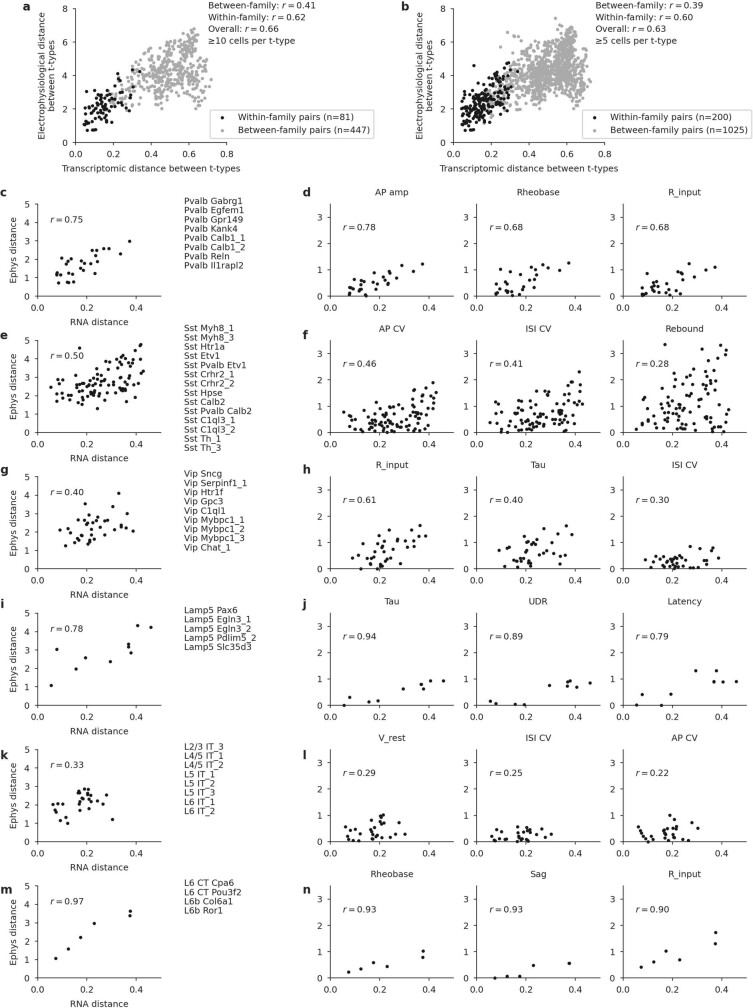
- Within families, morpho-electric phenotypes varied continuously: transcriptomic distance correlated with electrophysiological distance across 200 t-type pairs (r = 0.60), and IT transcriptomic distance correlated with soma depth (r = 0.70).
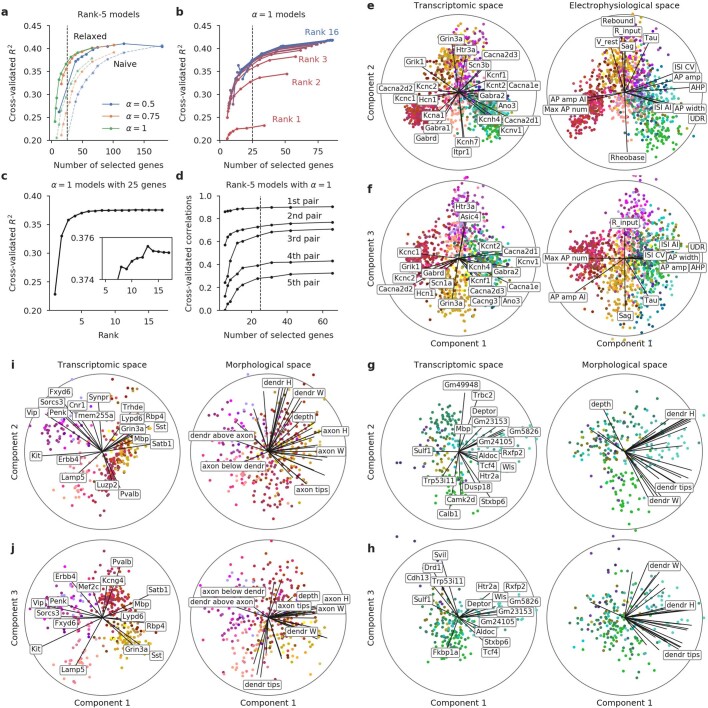
- Sparse reduced-rank regression predicted electrophysiological features from gene expression using 25 genes and a 5-dimensional latent space, with cross-validated R² = 0.38; the first three projection correlations were 0.90, 0.74, and 0.67. An ion-channel-only model performed similarly (R² = 0.33).
- Many individual t-types showed non-trivial phenotypic variability above k-means cluster baselines; for example, Vip Mybpc1_2 had high electrophysiological variability, whereas Pvalb Vipr2_2 (chandelier cells) appeared morpho-electrically homogeneous.
Methods
- Patch-seq combined patch-clamp recording, biocytin staining, and Smart-seq2 single-cell RNA sequencing in acute slices from adult mouse primary motor cortex (MOp); >2,000 cells were recorded, 1,329 passed initial QC, and 1,227 received final t-type assignments (817 inhibitory, 410 excitatory; 369 and 269 with morphological reconstructions, respectively).
- t-types were assigned by nearest-centroid/Pearson-correlation mapping to seven BICCN reference datasets, with consensus assignment; analyses extracted 29 electrophysiological and about 50 morphological features and used sparse reduced-rank regression, t-SNE, kNN classification, within-family distance correlations, and variance/Leiden clustering.
- Recordings were mostly at room temperature (25 °C), with follow-up experiments at 34 °C; layer boundaries were measured by Nissl staining, and morphologies were reconstructed and normalized by cortical thickness.
Limitations
- The paper states that some t-types were covered only sparsely or not at all, and that some very rare putative t-types might not be amenable to Patch-seq.
- The paper states that RNA extraction may have interfered with biocytin diffusion and that MOp thickness made complete morphology recovery difficult for some groups, such as deep L5 Martinotti cells with thin long axons.
- The paper states that technical challenges of Patch-seq or exact spatial location cannot be fully excluded as sources of within-type variability; evident from the Methods, experiments were not randomized or blinded, recordings were mostly at room temperature, and tissue shrinkage of about 10–20% was not compensated.
Model-written summary. Check it against the paper before relying on it.
Integrity signals
Registry
Cites
Statistics
Figures
Verification
Claims the paper makes
49 Own result · 40 Own method · 32 Not checked yet · 7 Own interpretation · 2 No basis given · 1 Partly supported · accuracy not yet measured
In the paper
“Here we used Patch-seq8 to combine patch-clamp recording, biocytin staining, and single-cell RNA sequencing of more than 1,300 neurons in adult mouse primary motor cortex, providing a morpho-electric annotation of almost all transcriptomically defined neural cell types.”
§ Phenotypic variation of transcriptomic cell types in mouse motor cortex > Abstract
What the sources say
- Not checked yetcites [8] Cadwell, C. R. et al. Electrophysiological, transcriptomic and morphologic profiling of single neurons using Patch-seq. Nat. Biotechnol. 34, 199–203 (2016). source
plainn = 1,300- Asserted: passes — The authors put it forward as true.
- Checkable: passes — It can be checked against evidence.
- Load-bearing: passes — The paper’s conclusions depend on it.
- Based: passes — The paper gives a reason why it holds.
None of the sources cited for this claim have been checked yet.
In the paper
“We used the Patch-seq technique8,17–19 to describe the morpho-electric phenotypes for most of the t-types in MOp20.”
§ Phenotypic variation of transcriptomic cell types in mouse motor cortex > Main
What the sources say
- Not checked yetcites [8] Cadwell, C. R. et al. Electrophysiological, transcriptomic and morphologic profiling of single neurons using Patch-seq. Nat. Biotechnol. 34, 199–203 (2016). source
- Not checked yetcites [17] Cadwell, C. R. et al. Multimodal profiling of single-cell morphology, electrophysiology, and gene expression using Patch-seq. Nat. Protocols 12, 2531 (2017). source
- Not checked yetcites [18] Fuzik, J. et al. Integration of electrophysiological recordings with single-cell RNA-seq data identifies neuronal subtypes. Nat. Biotechnol. 34, 175–183 (2016). source
- Not checked yetcites [19] Földy, C. et al. Single-cell RNAseq reveals cell adhesion molecule profiles in electrophysiologically defined neurons. Proc. Natl Acad. Sci. USA 113, E5222–E5231 (2016). source
- Not checked yetcites [20] Yao, Z. et al. A transcriptomic and epigenomic cell atlas of the mouse primary motor cortex. Nature https://doi.org/10.1038/s41586-021-03500-8 (2021). source
plain- Asserted: passes — The authors put it forward as true.
- Checkable: passes — It can be checked against evidence.
- Load-bearing: passes — The paper’s conclusions depend on it.
- Based: passes — The paper gives a reason why it holds.
A result the paper reports from its own data — it cites no other source for it, so there is none to check. The quote shows it is in the paper.
In the paper
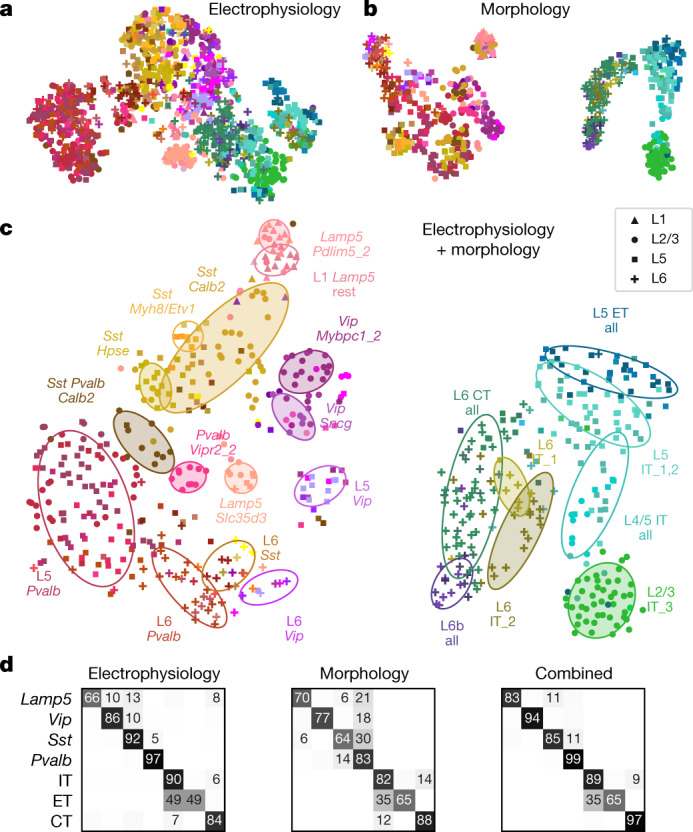
“We found that, although broad families of transcriptomic types (those expressing Vip, Pvalb, Sst and so on) had distinct and essentially non-overlapping morpho-electric phenotypes, individual transcriptomic types within the same family were not well separated in the morpho-electric space.”
- Also stated in: § Continuous phenotypic variation · plain
“Within individual transcriptomic families, morpho-electric phenotypes rarely formed isolated clusters (Fig. 3).”
§ Phenotypic variation of transcriptomic cell types in mouse motor cortex > Abstract
plainn = 1,300- Asserted: passes — The authors put it forward as true.
- Checkable: passes — It can be checked against evidence.
- Load-bearing: passes — The paper’s conclusions depend on it.
- Based: passes — The paper gives a reason why it holds.
- Also stated in: § Continuous phenotypic variation · plain
In the paper
“Here we used Patch-seq8 to combine patch-clamp recording, biocytin staining, and single-cell RNA sequencing of more than 1,300 neurons in adult mouse primary motor cortex, providing a morpho-electric annotation of almost all transcriptomically defined neural cell types.”
§ Phenotypic variation of transcriptomic cell types in mouse motor cortex > Abstract
What the sources say
- Not checked yetcites [8] Cadwell, C. R. et al. Electrophysiological, transcriptomic and morphologic profiling of single neurons using Patch-seq. Nat. Biotechnol. 34, 199–203 (2016). source
plainn = 1,300- Asserted: passes — The authors put it forward as true.
- Checkable: passes — It can be checked against evidence.
- Load-bearing: passes — The paper’s conclusions depend on it.
- Based: passes — The paper gives a reason why it holds.
A result the paper reports from its own data — it cites no other source for it, so there is none to check. The quote shows it is in the paper.
In the paper
“We found that, although broad families of transcriptomic types (those expressing Vip, Pvalb, Sst and so on) had distinct and essentially non-overlapping morpho-electric phenotypes, individual transcriptomic types within the same family were not well separated in the morpho-electric space.”
- Also stated in: § Distinct phenotypes of major families · hedged
“In summary, different transcriptomic families had largely distinct morpho-electric phenotypes, in agreement with them being well separated in the transcriptomic space4.”
- Also stated in: § Discussion · hedged
“Broad transcriptomic families were mostly well separated in their morpho-electric properties.”
§ Phenotypic variation of transcriptomic cell types in mouse motor cortex > Abstract
plaincorrelationaln = 1,300- Asserted: passes — The authors put it forward as true.
- Checkable: passes — It can be checked against evidence.
- Load-bearing: passes — The paper’s conclusions depend on it.
- Based: passes — The paper gives a reason why it holds.
- Also stated in: § Distinct phenotypes of major families · hedged
A result the paper reports from its own data — it cites no other source for it, so there is none to check. The quote shows it is in the paper.
In the paper
“Instead, there was a continuum of variability in morphology and electrophysiology, with neighbouring transcriptomic cell types showing similar morpho-electric features, often without clear boundaries between them.”
- Also stated in: § Continuous phenotypic variation · plain
“Moreover, we often found that morpho-electric phenotypes varied continuously from one t-type to another (Fig. 4).”
§ Phenotypic variation of transcriptomic cell types in mouse motor cortex > Abstract
plaincorrelationaln = 1,300- Asserted: passes — The authors put it forward as true.
- Checkable: passes — It can be checked against evidence.
- Load-bearing: passes — The paper’s conclusions depend on it.
- Based: passes — The paper gives a reason why it holds.
- Also stated in: § Continuous phenotypic variation · plain
A result the paper reports from its own data — it cites no other source for it, so there is none to check. The quote shows it is in the paper.
In the paper
“We found that Patch-seq expression profiles were most similar to the single-nucleus Smart-seq2 data (Extended Data Fig. 2g, h).”
§ Phenotypic variation of transcriptomic cell types in mouse motor cortex > Patch-seq of mouse primary motor cortex
plaincorrelational- Asserted: passes — The authors put it forward as true.
- Checkable: passes — It can be checked against evidence.
- Load-bearing: unclear — It is unclear whether the paper’s conclusions depend on it.
- Based: passes — The paper gives a reason why it holds.
A result the paper reports from its own data — it cites no other source for it, so there is none to check. The quote shows it is in the paper.
In the paper
“At the same time, there was good agreement between t-type assignments based on Smart-seq2 and those based on 10x reference data (Extended Data Fig. 2i), so consensus t-type assignment over all seven reference data sets was used for all subsequent analysis.”
§ Phenotypic variation of transcriptomic cell types in mouse motor cortex > Patch-seq of mouse primary motor cortex
plaincorrelational- Asserted: passes — The authors put it forward as true.
- Checkable: passes — It can be checked against evidence.
- Load-bearing: passes — The paper’s conclusions depend on it.
- Based: passes — The paper gives a reason why it holds.
None of the sources cited for this claim have been checked yet.
In the paper
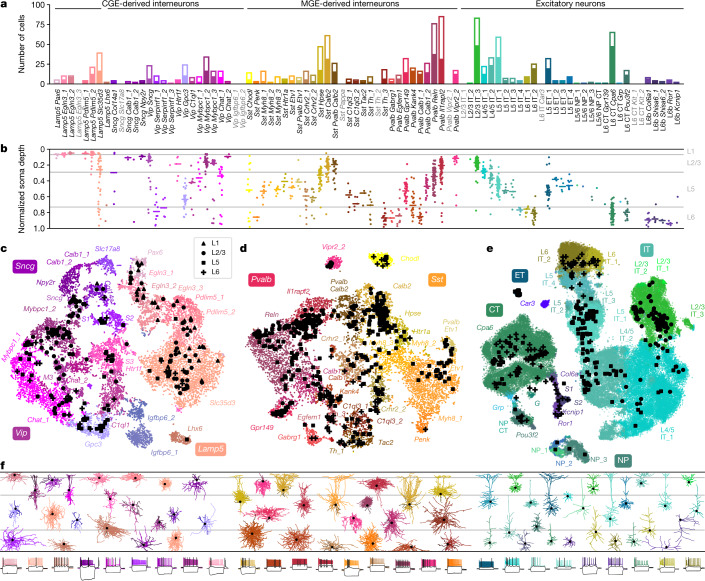
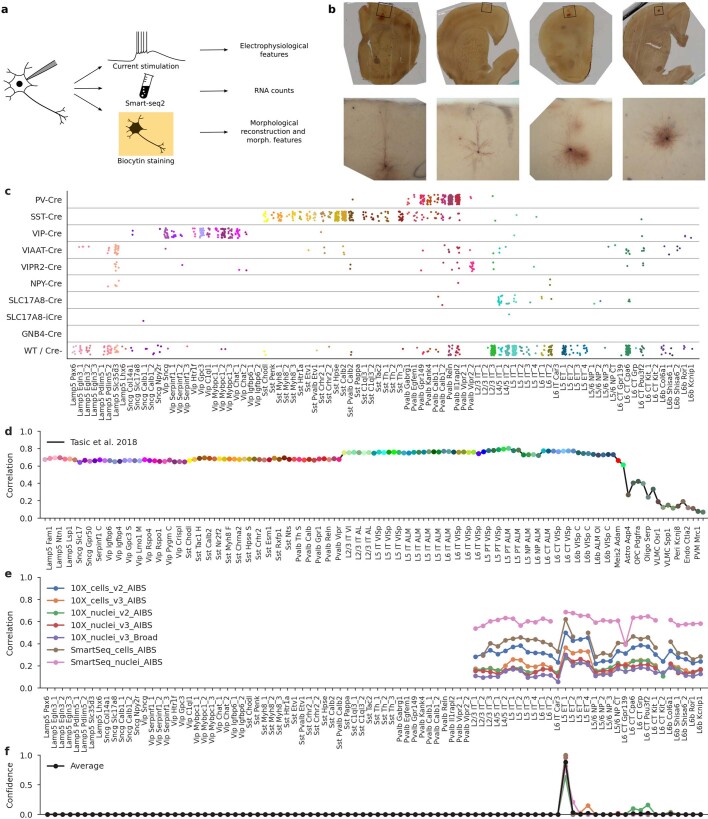
“Positioning all cells on reference maps made with t-distributed stochastic neighbour embedding (t-SNE)22,23 also showed good overall coverage (Fig. 1c–e) with only few uncovered regions.”
§ Phenotypic variation of transcriptomic cell types in mouse motor cortex > Patch-seq of mouse primary motor cortex
What the sources say
- Not checked yetcites [22] van der Maaten, L. & Hinton, G. Visualizing data using t-SNE. J. Mach. Learn. Res. 9, 2579–2605 (2008).
- Not checked yetcites [23] Kobak, D. & Berens, P. The art of using t-SNE for single-cell transcriptomics. Nat. Commun. 5416, 10 (2019).
plain- Asserted: passes — The authors put it forward as true.
- Checkable: passes — It can be checked against evidence.
- Load-bearing: unclear — It is unclear whether the paper’s conclusions depend on it.
- Based: passes — The paper gives a reason why it holds.
In the paper
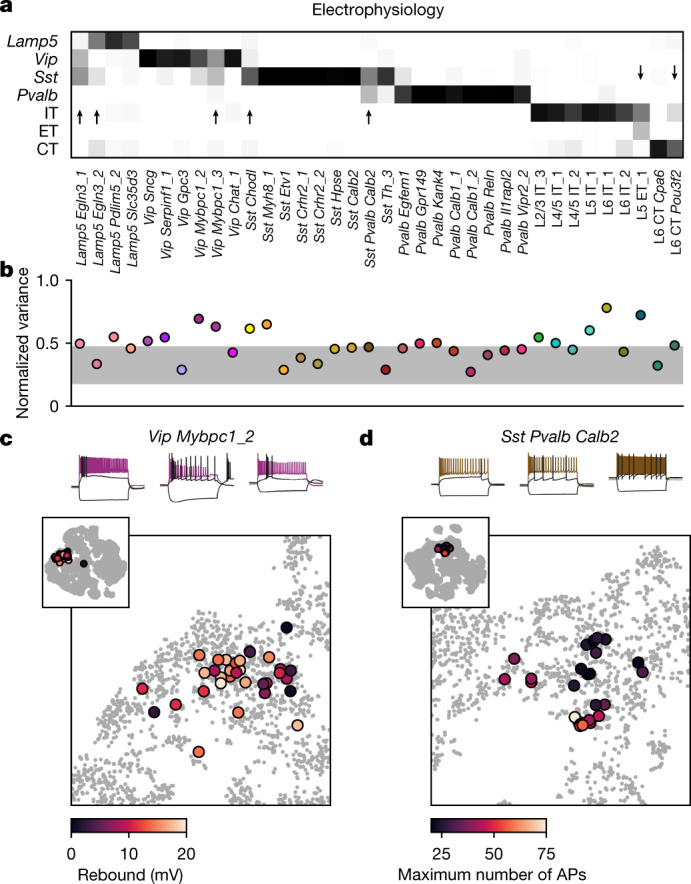
“Another finding was that the Sst Pvalb Calb2 type, which is transcriptomically in between the Sst and Pvalb subclasses, was also in between these subclasses in terms of its morpho-electric phenotype28.”
§ Phenotypic variation of transcriptomic cell types in mouse motor cortex > Patch-seq of mouse primary motor cortex
What the sources say
- Not checked yetcites [28] Scala, F. et al. Layer 4 of mouse neocortex differs in cell types and circuit organization between sensory areas. Nat. Commun. 10, 4174 (2019). source
plaincorrelational- Asserted: passes — The authors put it forward as true.
- Checkable: passes — It can be checked against evidence.
- Load-bearing: passes — The paper’s conclusions depend on it.
- Based: passes — The paper gives a reason why it holds.
- It may state two separate claims as one. 48
- Probably not a substantial claim. 49
The cited sources support only part of this claim — read each source’s verdict below.
In the paper
“While we found that different t-types had different preferred morphologies (Extended Data Table 1), they showed substantial overlap, in agreement with the L5 Pvalb t-types themselves not having clear boundaries4 (Fig. 1d).”
§ Phenotypic variation of transcriptomic cell types in mouse motor cortex > Continuous phenotypic variation
What the sources say
- Partly supportedcites [4] Tasic, B. et al. Shared and distinct transcriptomic cell types across neocortical areas. Nature 563, 72–78 (2018). sourceExperimental — accuracy not yet measured
Extended Data Fig. 3 reports pronounced co-clustering among certain Pvalb transcriptomic types, supporting the cited point that their boundaries can be unclear. It does not identify those types as L5 Pvalb types. The preferred morphologies and their overlap are presented as the citing authors’ own findings, not as findings attributed to this source. (LLM, conf=0.83)
plaincorrelational- Asserted: passes — The authors put it forward as true.
- Checkable: passes — It can be checked against evidence.
- Load-bearing: passes — The paper’s conclusions depend on it.
- Based: passes — The paper gives a reason why it holds.
It may state two separate claims as one.
- Partly supported
A result the paper reports from its own data — it cites no other source for it, so there is none to check. The quote shows it is in the paper.
In the paper
“The resulting data set covered 77 out of the 90 neuronal t-types (Fig. 1a), with 73 t-types having at least one morphologically reconstructed neuron.”
§ Phenotypic variation of transcriptomic cell types in mouse motor cortex > Patch-seq of mouse primary motor cortex
plain- Asserted: passes — The authors put it forward as true.
- Checkable: passes — It can be checked against evidence.
- Load-bearing: passes — The paper’s conclusions depend on it.
- Based: passes — The paper gives a reason why it holds.
It may state two separate claims as one.
A result the paper reports from its own data — it cites no other source for it, so there is none to check. The quote shows it is in the paper.
In the paper
“The coverage was good for interneurons derived from the caudal and medial ganglionic eminences (CGE and MGE) and for excitatory neurons.”
§ Phenotypic variation of transcriptomic cell types in mouse motor cortex > Patch-seq of mouse primary motor cortex
plain- Asserted: passes — The authors put it forward as true.
- Checkable: passes — It can be checked against evidence.
- Load-bearing: passes — The paper’s conclusions depend on it.
- Based: passes — The paper gives a reason why it holds.
It may state two separate claims as one.
None of the sources cited for this claim have been checked yet.
In the paper
“We also showed that three previously described morphological types of L5 Pvalb cells5, as well as two morphological types of L5 Martinotti cells29,30, corresponded to different t-types.”
§ Phenotypic variation of transcriptomic cell types in mouse motor cortex > Patch-seq of mouse primary motor cortex
What the sources say
- Not checked yetcites [5] Jiang, X. et al. Principles of connectivity among morphologically defined cell types in adult neocortex. Science 350, aac9462 (2015). source
- Not checked yetcites [29] Muñoz, W., Tremblay, R., Levenstein, D. & Rudy, B. Layer-specific modulation of neocortical dendritic inhibition during active wakefulness. Science 355, 954–959 (2017). source
- Not checked yetcites [30] Nigro, M. J., Hashikawa-Yamasaki, Y. & Rudy, B. Diversity and connectivity of layer 5 somatostatin-expressing interneurons in the mouse barrel cortex. J. Neurosci. 38, 1622–1633 (2018). source
boostedcorrelational- Asserted: passes — The authors put it forward as true.
- Checkable: passes — It can be checked against evidence.
- Load-bearing: passes — The paper’s conclusions depend on it.
- Based: passes — The paper gives a reason why it holds.
It may state two separate claims as one.
A result the paper reports from its own data — it cites no other source for it, so there is none to check. The quote shows it is in the paper.
In the paper
“Similarly, Lamp5 Egln3_1 neurons had rather Vip- and Sst-like firing instead of the typical Lamp5 electrophysiology, and Vip Mybpc1 neurons often had Sst-like firing.”
§ Phenotypic variation of transcriptomic cell types in mouse motor cortex > Variability in individual t-types
plaincorrelational- Asserted: passes — The authors put it forward as true.
- Checkable: passes — It can be checked against evidence.
- Load-bearing: passes — The paper’s conclusions depend on it.
- Based: passes — The paper gives a reason why it holds.
It may state two separate claims as one.
In the paper
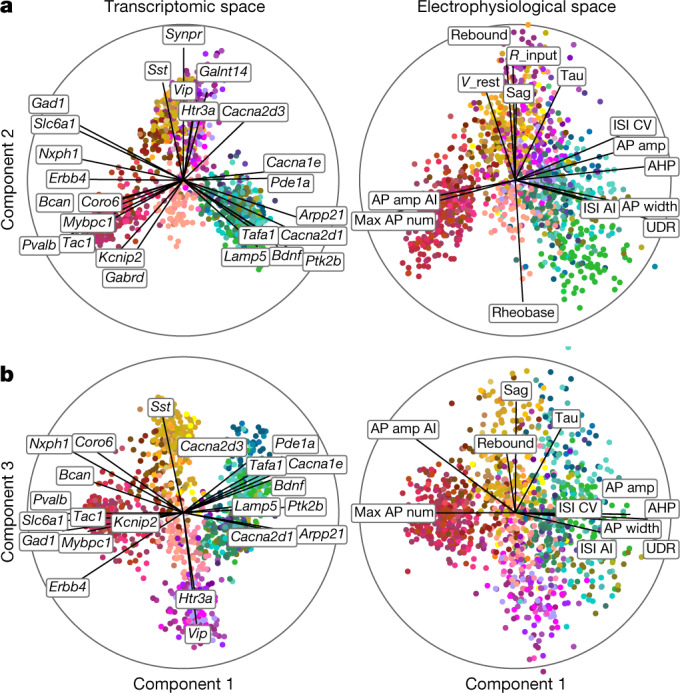
“The selected model used 25 genes with a 5-dimensional latent space and achieved a cross-validated R2 of 0.38.”
§ Phenotypic variation of transcriptomic cell types in mouse motor cortex > Distinct phenotypes of major families
What the sources say
- Not checked yetcites [32] Kobak, D. et al. Sparse reduced-rank regression for exploratory visualization of paired multivariate data sets. R. Stat. Soc. 70, 980–1000 (2021). source
plaincorrelational- Asserted: passes — The authors put it forward as true.
- Checkable: passes — It can be checked against evidence.
- Load-bearing: passes — The paper’s conclusions depend on it.
- Based: passes — The paper gives a reason why it holds.
It may state two separate claims as one.
None of the sources cited for this claim have been checked yet.
In the paper
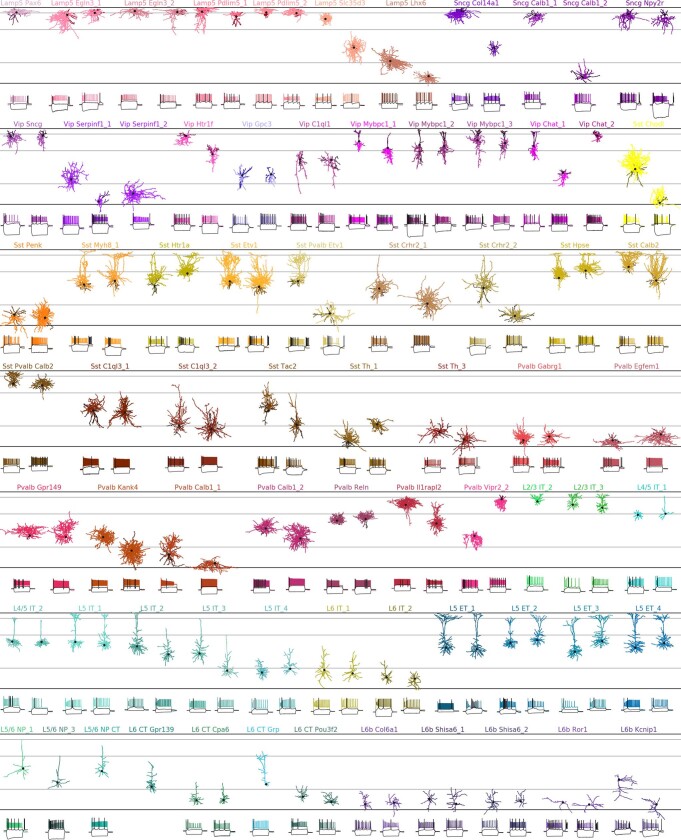
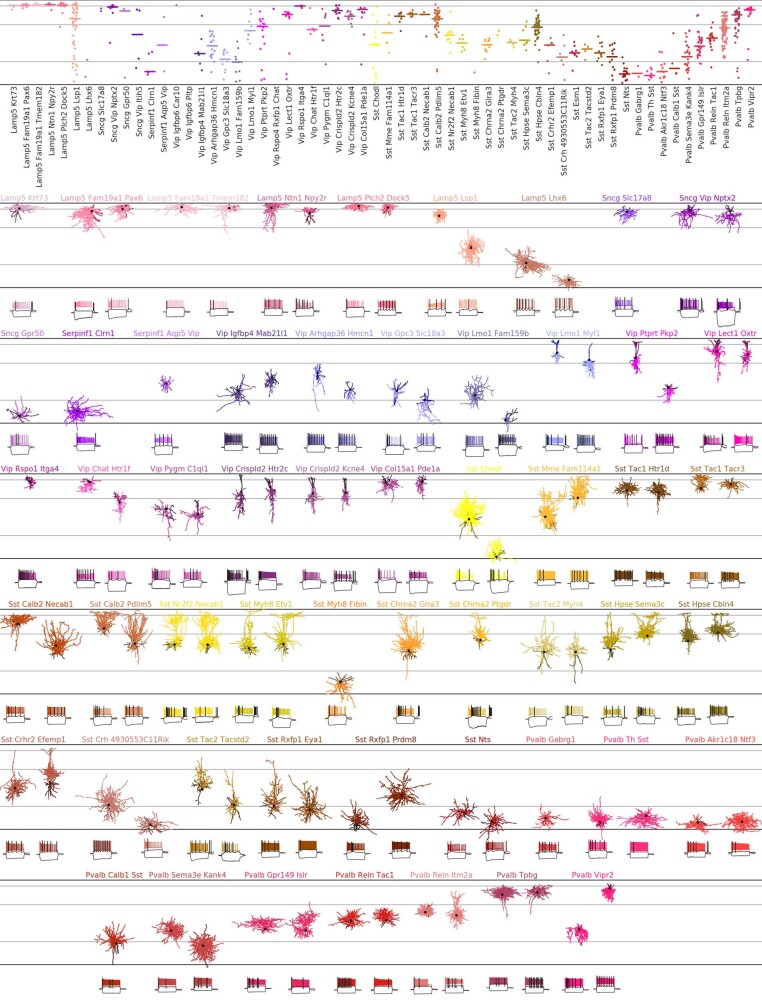
“The observed phenotypes included most of the morphological and electrophysiological types of cortical neurons that have been described previously in mice and rats5,6,24, allowing us to link transcriptomic and morpho-electric descriptions (Extended Data Fig. 3, Supplementary File 1).”
§ Phenotypic variation of transcriptomic cell types in mouse motor cortex > Patch-seq of mouse primary motor cortex
What the sources say
- Not checked yetcites [5] Jiang, X. et al. Principles of connectivity among morphologically defined cell types in adult neocortex. Science 350, aac9462 (2015). source
- Not checked yetcites [6] Markram, H. et al. Reconstruction and simulation of neocortical microcircuitry. Cell 163, 456–492 (2015). source
- Not checked yetcites [24] Gouwens, N. W. et al. Classification of electrophysiological and morphological neuron types in the mouse visual cortex. Nat. Neurosci. 22, 1182–1195 (2019). source
plaincorrelational- Asserted: passes — The authors put it forward as true.
- Checkable: passes — It can be checked against evidence.
- Load-bearing: passes — The paper’s conclusions depend on it.
- Based: passes — The paper gives a reason why it holds.
It may state two separate claims as one.
A result the paper reports from its own data — it cites no other source for it, so there is none to check. The quote shows it is in the paper.
In the paper
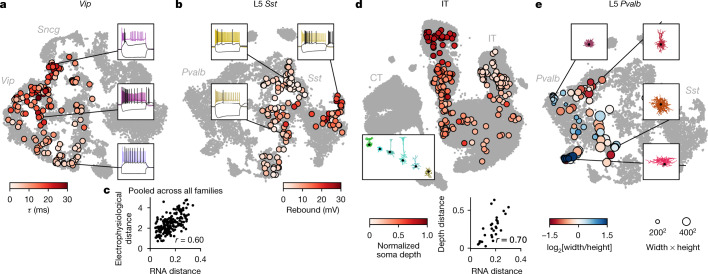
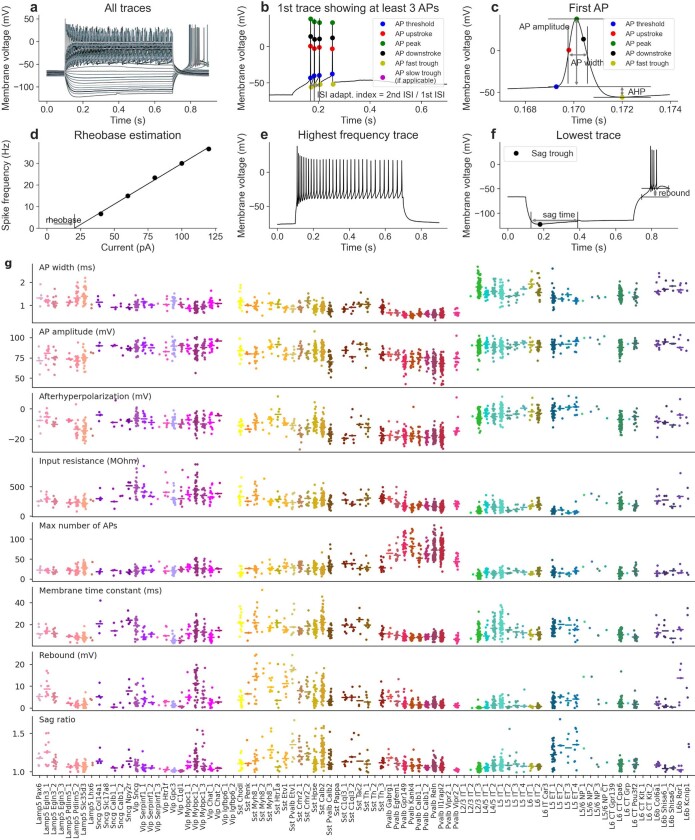
“For example, electrophysiological properties of the t-types within the Vip subclass varied continuously across the transcriptomic landscape; the membrane time constant, for instance, had its largest values close to the Sncg subclass and gradually decreased towards Vip Gpc3 (Fig. 4a).”
§ Phenotypic variation of transcriptomic cell types in mouse motor cortex > Continuous phenotypic variation
plaincorrelational- Asserted: passes — The authors put it forward as true.
- Checkable: passes — It can be checked against evidence.
- Load-bearing: passes — The paper’s conclusions depend on it.
- Based: passes — The paper gives a reason why it holds.
It may state two separate claims as one.
In the paper
“In summary, different transcriptomic families had largely distinct morpho-electric phenotypes, in agreement with them being well separated in the transcriptomic space4.”
§ Phenotypic variation of transcriptomic cell types in mouse motor cortex > Distinct phenotypes of major families
What the sources say
- Not checked yetcites [4] Tasic, B. et al. Shared and distinct transcriptomic cell types across neocortical areas. Nature 563, 72–78 (2018). source
plaincorrelational- Asserted: passes — The authors put it forward as true.
- Checkable: passes — It can be checked against evidence.
- Load-bearing: passes — The paper’s conclusions depend on it.
- Based: passes — The paper gives a reason why it holds.
It may state two separate claims as one.
A result the paper reports from its own data — it cites no other source for it, so there is none to check. The quote shows it is in the paper.
In the paper
“For example, L4/5 and L5 IT t-types that were transcriptomically close to the L2/3 IT t-types were located at the top of L5 close to the border between L2/3 and L5, whereas L5 IT t-types that were transcriptomically close to L6 IT t-types were located at the bottom of L5 close to the border with L6.”
§ Phenotypic variation of transcriptomic cell types in mouse motor cortex > Continuous phenotypic variation
plaincorrelational- Asserted: passes — The authors put it forward as true.
- Checkable: passes — It can be checked against evidence.
- Load-bearing: passes — The paper’s conclusions depend on it.
- Based: passes — The paper gives a reason why it holds.
It may state two separate claims as one.
A result the paper reports from its own data — it cites no other source for it, so there is none to check. The quote shows it is in the paper.
In the paper
“The between-family separability was strongest when we had combined electrophysiological and morphological features into a joint representation (Fig. 3c, d), showing that these sets of properties are not redundant.”
§ Phenotypic variation of transcriptomic cell types in mouse motor cortex > Distinct phenotypes of major families
boostedcorrelational- Asserted: passes — The authors put it forward as true.
- Checkable: passes — It can be checked against evidence.
- Load-bearing: passes — The paper’s conclusions depend on it.
- Based: passes — The paper gives a reason why it holds.
It may state two separate claims as one.
A result the paper reports from its own data — it cites no other source for it, so there is none to check. The quote shows it is in the paper.
In the paper
“These groups had distinct electrophysiological properties: for example, as expected, Pvalb neurons were characterized by high firing rates while Sst neurons had high values of the hyperpolarization sag and rebound (Fig. 2, right).”
§ Phenotypic variation of transcriptomic cell types in mouse motor cortex > Distinct phenotypes of major families
plaincorrelational- Asserted: passes — The authors put it forward as true.
- Checkable: passes — It can be checked against evidence.
- Load-bearing: passes — The paper’s conclusions depend on it.
- Based: passes — The paper gives a reason why it holds.
It may state two separate claims as one.
In the paper
“However, we found that IT t-types did not form distinct groups for each cortical layer; instead, the soma depth and RNA expression varied continuously along a one-dimensional manifold (Fig. 4d), in agreement with parallel findings based on a spatial transcriptomics approach34.”
§ Phenotypic variation of transcriptomic cell types in mouse motor cortex > Continuous phenotypic variation
What the sources say
- Not checked yetcites [34] Zhang, M. et al. Spatially resolved cell atlas of the mouse primary motor cortex by MERFISH. Nature https://doi.org/10.1038/s41586-021-03705-x (2021). source
plain- Asserted: passes — The authors put it forward as true.
- Checkable: passes — It can be checked against evidence.
- Load-bearing: passes — The paper’s conclusions depend on it.
- Based: passes — The paper gives a reason why it holds.
It may state two separate claims as one.
In the paper
“We were also able to identify a t-type, L4/5 IT_1, that was located on the boundary between L2/3 and L5 and probably corresponds to the quasi-L4 neurons described previously in motor cortex31.”
§ Phenotypic variation of transcriptomic cell types in mouse motor cortex > Patch-seq of mouse primary motor cortex
What the sources say
- Not checked yetcites [31] Yamawaki, N., Borges, K., Suter, B. A., Harris, K. D. & Shepherd, G. M. A genuine layer 4 in motor cortex with prototypical synaptic circuit connectivity. eLife 3, e05422 (2014). source
hedgedcorrelationalSingle case- Asserted: passes — The authors put it forward as true.
- Checkable: passes — It can be checked against evidence.
- Load-bearing: unclear — It is unclear whether the paper’s conclusions depend on it.
- Based: passes — The paper gives a reason why it holds.
It may state two separate claims as one.
A result the paper reports from its own data — it cites no other source for it, so there is none to check. The quote shows it is in the paper.
In the paper
“The correlation was also observed within multiple individual families and for many individual electrophysiological features (Extended Data Fig. 7).”
§ Phenotypic variation of transcriptomic cell types in mouse motor cortex > Continuous phenotypic variation
plaincorrelational- Asserted: passes — The authors put it forward as true.
- Checkable: passes — It can be checked against evidence.
- Load-bearing: passes — The paper’s conclusions depend on it.
- Based: passes — The paper gives a reason why it holds.
It may state two separate claims as one.
A result the paper reports from its own data — it cites no other source for it, so there is none to check. The quote shows it is in the paper.
In the paper
“Our data sets are overall in good agreement (Extended Data Fig. 9) and together offer an unprecedented view of cell type variability in the neocortex.”
§ Phenotypic variation of transcriptomic cell types in mouse motor cortex > Discussion
boostedcorrelational- Asserted: passes — The authors put it forward as true.
- Checkable: passes — It can be checked against evidence.
- Load-bearing: passes — The paper’s conclusions depend on it.
- Based: passes — The paper gives a reason why it holds.
It may state two separate claims as one.
A result the paper reports from its own data — it cites no other source for it, so there is none to check. The quote shows it is in the paper.
In the paper
“The shape of the axonal arbor showed continuous changes across the transcriptomic landscape (Fig. 4e): small shrub-like basket cells, horizontally elongated basket cells, and vertically elongated classical basket cells were located in different corners of the t-SNE embedding, with intermediate morphologies in between.”
§ Phenotypic variation of transcriptomic cell types in mouse motor cortex > Continuous phenotypic variation
plaincorrelational- Asserted: passes — The authors put it forward as true.
- Checkable: passes — It can be checked against evidence.
- Load-bearing: passes — The paper’s conclusions depend on it.
- Based: passes — The paper gives a reason why it holds.
It may state two separate claims as one.
A result the paper reports from its own data — it cites no other source for it, so there is none to check. The quote shows it is in the paper.
In the paper
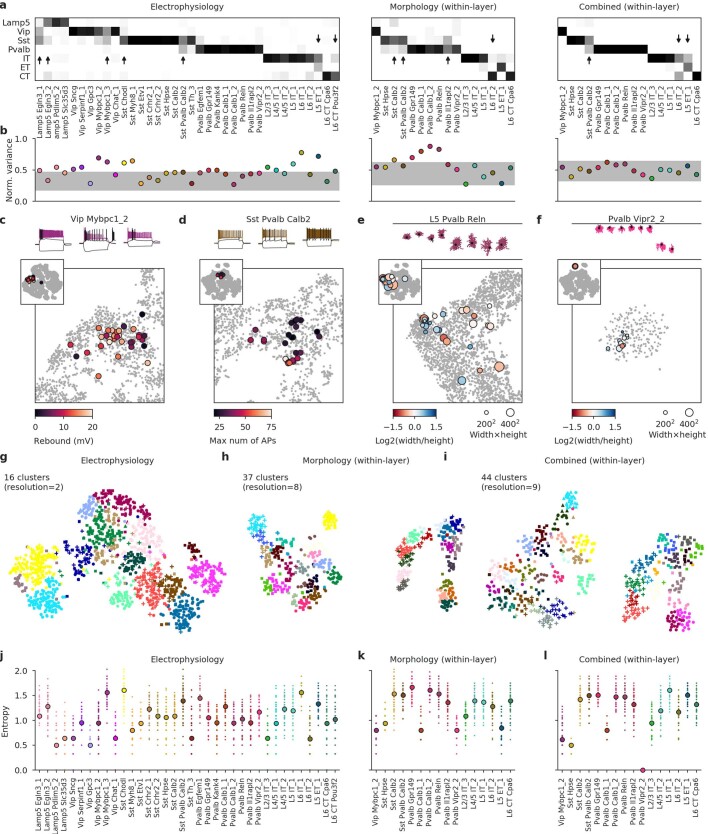
“Most t-types could be unambiguously placed into the correct family (Fig. 5a), but some t-types were in between two families.”
§ Phenotypic variation of transcriptomic cell types in mouse motor cortex > Variability in individual t-types
plaincorrelational- Asserted: passes — The authors put it forward as true.
- Checkable: passes — It can be checked against evidence.
- Load-bearing: passes — The paper’s conclusions depend on it.
- Based: passes — The paper gives a reason why it holds.
It may state two separate claims as one.
A result the paper reports from its own data — it cites no other source for it, so there is none to check. The quote shows it is in the paper.
In the paper
“By contrast, Vip Mybpc1_2 was marked as having high electrophysiological variability and indeed had high variance in input resistance, membrane time constant, and rebound (Extended Data Fig. 4).”
§ Phenotypic variation of transcriptomic cell types in mouse motor cortex > Variability in individual t-types
plaincorrelational- Asserted: passes — The authors put it forward as true.
- Checkable: passes — It can be checked against evidence.
- Load-bearing: unclear — It is unclear whether the paper’s conclusions depend on it.
- Based: passes — The paper gives a reason why it holds.
It may state two separate claims as one.
A result the paper reports from its own data — it cites no other source for it, so there is none to check. The quote shows it is in the paper.
In the paper
“Similarly, Sst Pvalb Calb2 cells had high variability in terms of the maximum firing rate, but high-firing cells were mostly grouped in one part of the transcriptomic landscape (Fig. 5d).”
§ Phenotypic variation of transcriptomic cell types in mouse motor cortex > Variability in individual t-types
plaincorrelational- Asserted: passes — The authors put it forward as true.
- Checkable: passes — It can be checked against evidence.
- Load-bearing: passes — The paper’s conclusions depend on it.
- Based: passes — The paper gives a reason why it holds.
It may state two separate claims as one.
None of the sources cited for this claim have been checked yet.
In the paper
“We observed the same in the Sst subclass, which is known to be transcriptomically4 and morpho-electrically29,30,33 diverse in L5. Here we also found that morpho-electric properties varied continuously across the transcriptomic landscape, with neighbouring t-types consistently showing similar morphologies and similar rebound values (Fig. 4b).”
§ Phenotypic variation of transcriptomic cell types in mouse motor cortex > Continuous phenotypic variation
What the sources say
- Not checked yetcites [4] Tasic, B. et al. Shared and distinct transcriptomic cell types across neocortical areas. Nature 563, 72–78 (2018). source
- Not checked yetcites [29] Muñoz, W., Tremblay, R., Levenstein, D. & Rudy, B. Layer-specific modulation of neocortical dendritic inhibition during active wakefulness. Science 355, 954–959 (2017). source
- Not checked yetcites [30] Nigro, M. J., Hashikawa-Yamasaki, Y. & Rudy, B. Diversity and connectivity of layer 5 somatostatin-expressing interneurons in the mouse barrel cortex. J. Neurosci. 38, 1622–1633 (2018). source
- Not checked yetcites [33] Naka, A. et al. Complementary networks of cortical somatostatin interneurons enforce layer specific control. eLife 8, e43696 (2019). source
plaincorrelational- Asserted: passes — The authors put it forward as true.
- Checkable: passes — It can be checked against evidence.
- Load-bearing: passes — The paper’s conclusions depend on it.
- Based: passes — The paper gives a reason why it holds.
It may state two separate claims as one.
A result the paper reports from its own data — it cites no other source for it, so there is none to check. The quote shows it is in the paper.
In the paper
“Within each class, cells were strongly segregated by the soma depth, with excitatory cells forming mostly a one-dimensional manifold.”
§ Phenotypic variation of transcriptomic cell types in mouse motor cortex > Distinct phenotypes of major families
boostedcorrelational- Asserted: passes — The authors put it forward as true.
- Checkable: passes — It can be checked against evidence.
- Load-bearing: unclear — It is unclear whether the paper’s conclusions depend on it.
- Based: passes — The paper gives a reason why it holds.
It may state two separate claims as one.
A result the paper reports from its own data — it cites no other source for it, so there is none to check. The quote shows it is in the paper.
In the paper
“The resulting cDNA yield was not correlated with the hold time (Spearman correlation −0.01).”
§ Phenotypic variation of transcriptomic cell types in mouse motor cortex > Methods > Patch-seq recording procedures
plain- Asserted: passes — The authors put it forward as true.
- Checkable: passes — It can be checked against evidence.
- Load-bearing: fails — The paper’s conclusions may not depend on it.
- Based: passes — The paper gives a reason why it holds.
Probably not a substantial claim. The paper’s conclusions may not depend on it.
In the paper
“We were unable to find any labelled cells in MOp in the Gnb4-Cre mice: all labelled cells were far outside of MOp and close to the claustrum46.”
§ Phenotypic variation of transcriptomic cell types in mouse motor cortex > Methods > Animals
What the sources say
- Not checked yetcites [46] Peng, H. et al. Morphological diversity of single neurons in molecularly defined cell types. Nature https://doi.org/10.1038/s41586-021-03941-1 (2021). source
plain- Asserted: passes — The authors put it forward as true.
- Checkable: passes — It can be checked against evidence.
- Load-bearing: passes — The paper’s conclusions depend on it.
- Based: passes — The paper gives a reason why it holds.
It may state two separate claims as one.
In the paper
“The addition of the inhibitor resulted in an increase in osmolarity to the desired value of 315–320 mOSM without a further dilution17.”
§ Phenotypic variation of transcriptomic cell types in mouse motor cortex > Methods > Patch-seq recording procedures
What the sources say
- Not checked yetcites [17] Cadwell, C. R. et al. Multimodal profiling of single-cell morphology, electrophysiology, and gene expression using Patch-seq. Nat. Protocols 12, 2531 (2017). source
plaindirect- Asserted: passes — The authors put it forward as true.
- Checkable: passes — It can be checked against evidence.
- Load-bearing: fails — The paper’s conclusions may not depend on it.
- Based: passes — The paper gives a reason why it holds.
Probably not a substantial claim. The paper’s conclusions may not depend on it.
The paper states this without a source or data behind it here, so there is nothing to check it against. The quote shows it is in the paper.
In the paper
“A substantial portion of the RNA extracted from the neurons was nascent and contained intronic sequences.”
§ Phenotypic variation of transcriptomic cell types in mouse motor cortex > Methods > RNA sequencing of patched cells
plain- Asserted: passes — The authors put it forward as true.
- Checkable: passes — It can be checked against evidence.
- Load-bearing: passes — The paper’s conclusions depend on it.
- Based: passes — The paper gives a reason why it holds.
It may state two separate claims as one.
A result the paper reports from its own data — it cites no other source for it, so there is none to check. The quote shows it is in the paper.
In the paper
“We detected 42,466 genes, including pseudogenes and annotated non-coding segments, in at least one cell.”
§ Phenotypic variation of transcriptomic cell types in mouse motor cortex > Methods > RNA sequencing of patched cells
plain- Asserted: passes — The authors put it forward as true.
- Checkable: passes — It can be checked against evidence.
- Load-bearing: fails — The paper’s conclusions may not depend on it.
- Based: passes — The paper gives a reason why it holds.
Probably not a substantial claim. The paper’s conclusions may not depend on it.
A result the paper reports from its own data — it cites no other source for it, so there is none to check. The quote shows it is in the paper.
In the paper
“One hundred and ten cells mapped to the Sst subclass, 43 to IT, 12 to ET, 10 to Pvalb, and 2 to NP.”
§ Phenotypic variation of transcriptomic cell types in mouse motor cortex > Methods > Experiments at physiological temperature
plainn = 8- Asserted: passes — The authors put it forward as true.
- Checkable: passes — It can be checked against evidence.
- Load-bearing: fails — The paper’s conclusions may not depend on it.
- Based: passes — The paper gives a reason why it holds.
Probably not a substantial claim. The paper’s conclusions may not depend on it. It may state two separate claims as one.
A result the paper reports from its own data — it cites no other source for it, so there is none to check. The quote shows it is in the paper.
In the paper
“175 cells were assigned to L5 in the post hoc analysis (see below).”
§ Phenotypic variation of transcriptomic cell types in mouse motor cortex > Methods > Experiments at physiological temperature
plain- Asserted: passes — The authors put it forward as true.
- Checkable: passes — It can be checked against evidence.
- Load-bearing: fails — The paper’s conclusions may not depend on it.
- Based: passes — The paper gives a reason why it holds.
Probably not a substantial claim. The paper’s conclusions may not depend on it.
A conclusion the paper draws from its own results — it cites no other source for it, so there is none to check. The quote shows it is in the paper.
In the paper
“Instead, neurons form a hierarchy that consists of distinct non-overlapping branches at the level of families, but can form continuous and correlated transcriptomic and morpho-electrical landscapes within families.”
- Also stated in: § Discussion · plain
“In this metaphor, neurons follow a hierarchy consisting of distinct, non-overlapping branches at the level of families (large leaves), but with a spectrum of cells forming continuous and correlated transcriptomic and morpho-electrical landscapes within each leaf.”
§ Phenotypic variation of transcriptomic cell types in mouse motor cortex > Abstract
plaincorrelationaln = 1,300- Asserted: passes — The authors put it forward as true.
- Checkable: passes — It can be checked against evidence.
- Load-bearing: passes — The paper’s conclusions depend on it.
- Based: passes — The paper gives a reason why it holds.
It may state two separate claims as one.
- Also stated in: § Discussion · plain
What the paper did — it cites no source for this, so there is none to check. The quote shows it is in the paper.
In the paper
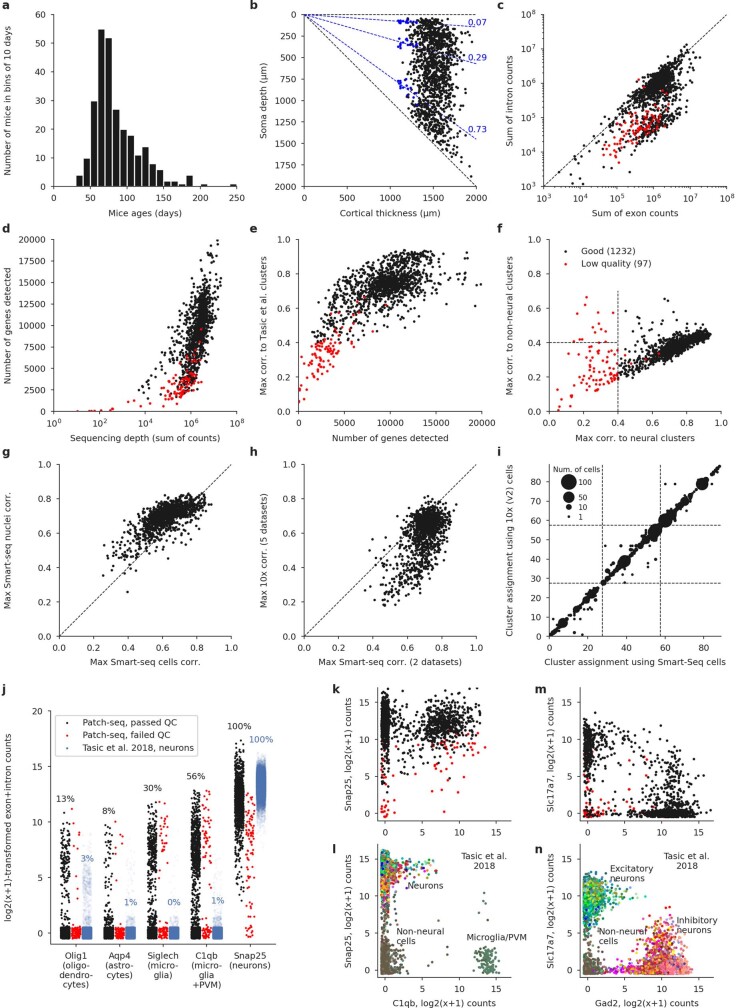
“Cells that showed poor mapping (owing to a low read count or excessive RNA contamination) were excluded (Extended Data Fig. 2), leaving 1,227 neurons for further analysis (817 inhibitory, 410 excitatory; 369 and 269 with morphological reconstructions, respectively).”
§ Phenotypic variation of transcriptomic cell types in mouse motor cortex > Patch-seq of mouse primary motor cortex
plain- Asserted: passes — The authors put it forward as true.
- Checkable: passes — It can be checked against evidence.
- Load-bearing: passes — The paper’s conclusions depend on it.
- Based: passes — The paper gives a reason why it holds.
It may state two separate claims as one.
In the paper
“However, to understand the roles of t-types in cortical computations, it is necessary to know their anatomy, connectivity, and electrophysiology7.”
§ Phenotypic variation of transcriptomic cell types in mouse motor cortex > Main
What the sources say
- Not checked yetcites [7] Zeng, H. & Sanes, J. R. Neuronal cell-type classification: challenges, opportunities and the path forward. Nat. Rev. Neurosci. 18, 530–546 (2017). source
plain- Asserted: passes — The authors put it forward as true.
- Checkable: fails — It may be too vague to check against evidence.
- Load-bearing: passes — The paper’s conclusions depend on it.
- Based: passes — The paper gives a reason why it holds.
Probably not a substantial claim. It may be too vague to check against evidence.
What the paper did — it cites no source for this, so there is none to check. The quote shows it is in the paper.
In the paper
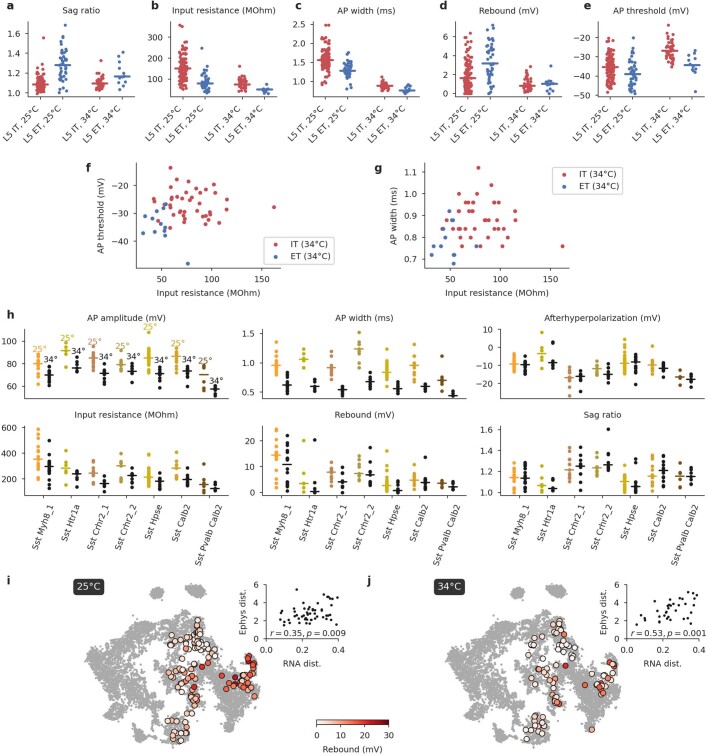
“In total, we performed whole-cell recordings from more than 2,000 cells, of which 1,329 cells (from 266 mice) passed initial quality control.”
§ Phenotypic variation of transcriptomic cell types in mouse motor cortex > Patch-seq of mouse primary motor cortex
plainn = 1,329- Asserted: passes — The authors put it forward as true.
- Checkable: passes — It can be checked against evidence.
- Load-bearing: passes — The paper’s conclusions depend on it.
- Based: passes — The paper gives a reason why it holds.
Probably not a substantial claim. It may state two separate claims as one.
What the paper did — it cites no source for this, so there is none to check. The quote shows it is in the paper.
In the paper
“The mRNA of these 1,329 cells was sequenced, yielding on average 1.3 million exonic and 0.7 million intronic reads (medians; mean ± s.d. on a log10 scale: 6.0 ± 0.6 and 5.6 ± 0.8, respectively) and 9,100 ± 3,500 (mean ± s.d.) detected genes per cell (Extended Data Fig. 2).”
§ Phenotypic variation of transcriptomic cell types in mouse motor cortex > Patch-seq of mouse primary motor cortex
plain- Asserted: passes — The authors put it forward as true.
- Checkable: passes — It can be checked against evidence.
- Load-bearing: unclear — It is unclear whether the paper’s conclusions depend on it.
- Based: passes — The paper gives a reason why it holds.
It may state two separate claims as one.
In the paper
“High-throughput single-cell sequencing techniques have identified dozens of types of neuron on the basis of their transcriptional profiles3,4,14,15, but linking transcriptomically defined cell types (t-types) to their phenotypes has remained a major challenge16.”
§ Phenotypic variation of transcriptomic cell types in mouse motor cortex > Main
What the sources say
- Not checked yetcites [16] Huang, Z. J. & Paul, A. The diversity of GABAergic neurons and neural communication elements. Nat. Rev. Neurosci. 20, 563–572 (2019). source
plaincorrelational- Asserted: passes — The authors put it forward as true.
- Checkable: passes — It can be checked against evidence.
- Load-bearing: passes — The paper’s conclusions depend on it.
- Based: passes — The paper gives a reason why it holds.
Probably not a substantial claim.
None of the sources cited for this claim have been checked yet.
In the paper
“The current view is that a neuronal cell type is characterized by a common genetic profile that gives rise to distinct physiological and anatomical properties, including patterns of connectivity7,9.”
§ Phenotypic variation of transcriptomic cell types in mouse motor cortex > Main
What the sources say
plaindirect- Asserted: fails — The authors may not put it forward as true.
- Checkable: passes — It can be checked against evidence.
- Load-bearing: passes — The paper’s conclusions depend on it.
- Based: passes — The paper gives a reason why it holds.
Probably not a substantial claim. The authors may not put it forward as true.
What the paper did — it cites no source for this, so there is none to check. The quote shows it is in the paper.
In the paper
“Of these neurons, 646 had sufficient staining for their morphologies to be reconstructed.”
§ Phenotypic variation of transcriptomic cell types in mouse motor cortex > Patch-seq of mouse primary motor cortex
plainn = 266- Asserted: passes — The authors put it forward as true.
- Checkable: passes — It can be checked against evidence.
- Load-bearing: fails — The paper’s conclusions may not depend on it.
- Based: passes — The paper gives a reason why it holds.
Probably not a substantial claim. The paper’s conclusions may not depend on it.
None of the sources cited for this claim have been checked yet.
In the paper
“Cortical neurons exhibit extreme diversity in gene expression as well as in morphological and electrophysiological properties1,2.”
§ Phenotypic variation of transcriptomic cell types in mouse motor cortex > Abstract
What the sources say
- Not checked yetcites [1] Harris, K. D. & Shepherd, G. M. The neocortical circuit: themes and variations. Nat. Neurosci. 18, 170–181 (2015). source
- Not checked yetcites [2] Tremblay, R., Lee, S. & Rudy, B. GABAergic interneurons in the neocortex: from cellular properties to circuits. Neuron 91, 260–292 (2016). source
plain- Asserted: passes — The authors put it forward as true.
- Checkable: passes — It can be checked against evidence.
- Load-bearing: passes — The paper’s conclusions depend on it.
- Based: passes — The paper gives a reason why it holds.
Probably not a substantial claim. It may state two separate claims as one.
None of the sources cited for this claim have been checked yet.
In the paper
“High-throughput single-cell sequencing techniques have identified dozens of types of neuron on the basis of their transcriptional profiles3,4,14,15, but linking transcriptomically defined cell types (t-types) to their phenotypes has remained a major challenge16.”
§ Phenotypic variation of transcriptomic cell types in mouse motor cortex > Main
What the sources say
- Not checked yetcites [3] Tasic, B. et al. Adult mouse cortical cell taxonomy revealed by single cell transcriptomics. Nat. Neurosci. 19, 335–346 (2016). source
- Not checked yetcites [4] Tasic, B. et al. Shared and distinct transcriptomic cell types across neocortical areas. Nature 563, 72–78 (2018). source
- Not checked yetcites [14] Zeisel, A. et al. Cell types in the mouse cortex and hippocampus revealed by single-cell RNA-seq. Science 347, 1138–1142 (2015). source
- Not checked yetcites [15] Zeisel, A. et al. Molecular architecture of the mouse nervous system. Cell 174, 999–1014.e22 (2018). source
plaindirect- Asserted: passes — The authors put it forward as true.
- Checkable: passes — It can be checked against evidence.
- Load-bearing: passes — The paper’s conclusions depend on it.
- Based: passes — The paper gives a reason why it holds.
Probably not a substantial claim.
None of the sources cited for this claim have been checked yet.
In the paper
“Our results suggest that although all deep NGCs belong to the Lamp5 subclass, some are derived from the CGE and some from the MGE, as in the hippocampus25–27.”
§ Phenotypic variation of transcriptomic cell types in mouse motor cortex > Patch-seq of mouse primary motor cortex
What the sources say
- Not checked yetcites [25] Tricoire, L. et al. Common origins of hippocampal Ivy and nitric oxide synthase expressing neurogliaform cells. J. Neurosci. 30, 2165–2176 (2010). source
- Not checked yetcites [26] Pelkey, K. A. et al. Hippocampal GABAergic inhibitory interneurons. Physiol. Rev. 97, 1619–1747 (2017). source
- Not checked yetcites [27] Harris, K. D. et al. Classes and continua of hippocampal CA1 inhibitory neurons revealed by single-cell transcriptomics. PLoS Biol. 16, e2006387 (2018). source
hedgedcorrelational- Asserted: passes — The authors put it forward as true.
- Checkable: passes — It can be checked against evidence.
- Load-bearing: passes — The paper’s conclusions depend on it.
- Based: passes — The paper gives a reason why it holds.
It may state two separate claims as one.
None of the sources cited for this claim have been checked yet.
In the paper
“Consistent with our interpretation, recent transcriptomic and anatomical studies have argued that neurons in hippocampus, striatum, and cerebellum can be better described as forming partially continuous manifolds27,37–39.”
§ Phenotypic variation of transcriptomic cell types in mouse motor cortex > Discussion
What the sources say
- Not checked yetcites [27] Harris, K. D. et al. Classes and continua of hippocampal CA1 inhibitory neurons revealed by single-cell transcriptomics. PLoS Biol. 16, e2006387 (2018). source
- Not checked yetcites [37] Muñoz-Manchado, A. B. et al. Diversity of interneurons in the dorsal striatum revealed by single-cell RNA sequencing and PatchSeq. Cell Rep. 24, 2179–2190.e7 (2018). source
- Not checked yetcites [38] Stanley, G. et al. Continuous and discrete neuron types of the adult murine striatum. Neuron 105, 688–699.e8 (2019). source
- Not checked yetcites [39] Wang, W. X. & Lefebvre, J. L. Morphological pseudotime ordering and fate mapping reveals diversification of cerebellar inhibitory interneurons. Preprint at https://doi.org/10.1101/2020.02.29.971366 (2020). source
plain- Asserted: passes — The authors put it forward as true.
- Checkable: passes — It can be checked against evidence.
- Load-bearing: fails — The paper’s conclusions may not depend on it.
- Based: passes — The paper gives a reason why it holds.
Probably not a substantial claim. The paper’s conclusions may not depend on it.
In the paper
“Although we cannot fully exclude the possibility that some of this variability can be attributed to technical challenges of Patch-seq or to factors such as the exact spatial location of the cell within motor cortex36, there are clear cases in our data that suggest that within-type morpho-electric variability is related to within-type transcriptomic variability.”
§ Phenotypic variation of transcriptomic cell types in mouse motor cortex > Discussion
What the sources say
- Not checked yetcites [36] Cembrowski, M. S. et al. Spatial gene-expression gradients underlie prominent heterogeneity of ca1 pyramidal neurons. Neuron 89, 351–368 (2016). source
hedgedcorrelational- Asserted: passes — The authors put it forward as true.
- Checkable: passes — It can be checked against evidence.
- Load-bearing: passes — The paper’s conclusions depend on it.
- Based: passes — The paper gives a reason why it holds.
It may state two separate claims as one.
A conclusion the paper draws from its own results — it cites no other source for it, so there is none to check. The quote shows it is in the paper.
In the paper
“Thus, while overall transcriptomic family was highly predictive of the cell phenotype, some t-types exhibited properties similar to those of another transcriptomic family.”
§ Phenotypic variation of transcriptomic cell types in mouse motor cortex > Variability in individual t-types
plaincorrelational- Asserted: passes — The authors put it forward as true.
- Checkable: passes — It can be checked against evidence.
- Load-bearing: passes — The paper’s conclusions depend on it.
- Based: passes — The paper gives a reason why it holds.
It may state two separate claims as one.
None of the sources cited for this claim have been checked yet.
In the paper
“Previous studies using transgenic lines had shown that morpho-electric properties within these families can be highly variable5,24.”
§ Phenotypic variation of transcriptomic cell types in mouse motor cortex > Discussion
What the sources say
- Not checked yetcites [5] Jiang, X. et al. Principles of connectivity among morphologically defined cell types in adult neocortex. Science 350, aac9462 (2015). source
- Not checked yetcites [24] Gouwens, N. W. et al. Classification of electrophysiological and morphological neuron types in the mouse visual cortex. Nat. Neurosci. 22, 1182–1195 (2019). source
plain- Asserted: passes — The authors put it forward as true.
- Checkable: passes — It can be checked against evidence.
- Load-bearing: passes — The paper’s conclusions depend on it.
- Based: passes — The paper gives a reason why it holds.
Probably not a substantial claim.
In the paper
“A parallel Patch-seq study of the inhibitory neurons in the mouse visual cortex45 focused on isolating multimodal neural types (‘met-types’) but also often observed continuous variation.”
§ Phenotypic variation of transcriptomic cell types in mouse motor cortex > Discussion
What the sources say
- Not checked yetcites [45] Gouwens, N. W. et al. Integrated morphoelectric and transcriptomic classification of cortical GABAergic cells. Cell 183, 1–19 (2020). source
plain- Asserted: passes — The authors put it forward as true.
- Checkable: passes — It can be checked against evidence.
- Load-bearing: fails — The paper’s conclusions may not depend on it.
- Based: passes — The paper gives a reason why it holds.
Probably not a substantial claim. The paper’s conclusions may not depend on it. It may state two separate claims as one.
What the paper did — it cites no source for this, so there is none to check. The quote shows it is in the paper.
In the paper
“No statistical methods were used to predetermine sample size.”
§ Phenotypic variation of transcriptomic cell types in mouse motor cortex > Methods
plain- Asserted: passes — The authors put it forward as true.
- Checkable: passes — It can be checked against evidence.
- Load-bearing: fails — The paper’s conclusions may not depend on it.
- Based: passes — The paper gives a reason why it holds.
Probably not a substantial claim. The paper’s conclusions may not depend on it.
In the paper
“Within-type distributions of soma depths (Fig. 1b) agreed well with previous data4 and with the layer-specific nomenclature of excitatory t-types, confirming the validity of our t-type assignment.”
§ Phenotypic variation of transcriptomic cell types in mouse motor cortex > Patch-seq of mouse primary motor cortex
What the sources say
- Not checked yetcites [4] Tasic, B. et al. Shared and distinct transcriptomic cell types across neocortical areas. Nature 563, 72–78 (2018). source
boostedcorrelational- Asserted: passes — The authors put it forward as true.
- Checkable: passes — It can be checked against evidence.
- Load-bearing: passes — The paper’s conclusions depend on it.
- Based: passes — The paper gives a reason why it holds.
It may state two separate claims as one.
None of the sources cited for this claim have been checked yet.
In the paper
“Similarly, cortical studies have identified many intermediate cells with uncertain t-type assignments3,4.”
§ Phenotypic variation of transcriptomic cell types in mouse motor cortex > Discussion
What the sources say
- Not checked yetcites [3] Tasic, B. et al. Adult mouse cortical cell taxonomy revealed by single cell transcriptomics. Nat. Neurosci. 19, 335–346 (2016). source
- Not checked yetcites [4] Tasic, B. et al. Shared and distinct transcriptomic cell types across neocortical areas. Nature 563, 72–78 (2018). source
plain- Asserted: passes — The authors put it forward as true.
- Checkable: passes — It can be checked against evidence.
- Load-bearing: passes — The paper’s conclusions depend on it.
- Based: passes — The paper gives a reason why it holds.
Probably not a substantial claim.
In the paper
“Second, as the RNA extraction process may have interfered with biocytin diffusion17 and as MOp is quite thick, it was difficult to recover complete morphologies of some groups of neurons, such as deep L5 Martinotti cells with thin long axons that reach all the way to L1.”
§ Phenotypic variation of transcriptomic cell types in mouse motor cortex > Discussion
What the sources say
- Not checked yetcites [17] Cadwell, C. R. et al. Multimodal profiling of single-cell morphology, electrophysiology, and gene expression using Patch-seq. Nat. Protocols 12, 2531 (2017). source
hedgedconditional- Asserted: passes — The authors put it forward as true.
- Checkable: passes — It can be checked against evidence.
- Load-bearing: unclear — It is unclear whether the paper’s conclusions depend on it.
- Based: passes — The paper gives a reason why it holds.
It may state two separate claims as one.
What the paper did — it cites no source for this, so there is none to check. The quote shows it is in the paper.
In the paper
“The experiments were not randomized and investigators were not blinded to allocation during experiments and outcome assessment, unless otherwise stated.”
§ Phenotypic variation of transcriptomic cell types in mouse motor cortex > Methods
plain- Asserted: passes — The authors put it forward as true.
- Checkable: passes — It can be checked against evidence.
- Load-bearing: fails — The paper’s conclusions may not depend on it.
- Based: passes — The paper gives a reason why it holds.
Probably not a substantial claim. The paper’s conclusions may not depend on it. It may state two separate claims as one.
A conclusion the paper draws from its own results — it cites no other source for it, so there is none to check. The quote shows it is in the paper.
In the paper
“This is in agreement with the idea that on a fine within-family scale, both transcriptomic and morpho-electric landscapes are continuous rather than discrete.”
§ Phenotypic variation of transcriptomic cell types in mouse motor cortex > Variability in individual t-types
plain- Asserted: passes — The authors put it forward as true.
- Checkable: passes — It can be checked against evidence.
- Load-bearing: passes — The paper’s conclusions depend on it.
- Based: passes — The paper gives a reason why it holds.
It may state two separate claims as one.
What the paper did — it cites no source for this, so there is none to check. The quote shows it is in the paper.
In the paper
“We obtained high-quality electrophysiological recordings and extracted electrophysiological features of 184 cells.”
§ Phenotypic variation of transcriptomic cell types in mouse motor cortex > Methods > Experiments at physiological temperature
plain- Asserted: passes — The authors put it forward as true.
- Checkable: passes — It can be checked against evidence.
- Load-bearing: passes — The paper’s conclusions depend on it.
- Based: passes — The paper gives a reason why it holds.
Probably not a substantial claim. It may state two separate claims as one.
What the paper did — it cites no source for this, so there is none to check. The quote shows it is in the paper.
In the paper
“The investigators were blinded to the cell type of each sample during library construction and sequencing.”
§ Phenotypic variation of transcriptomic cell types in mouse motor cortex > Methods > RNA sequencing of patched cells
plain- Asserted: passes — The authors put it forward as true.
- Checkable: passes — It can be checked against evidence.
- Load-bearing: fails — The paper’s conclusions may not depend on it.
- Based: passes — The paper gives a reason why it holds.
Probably not a substantial claim. The paper’s conclusions may not depend on it.
What the paper did — it cites no source for this, so there is none to check. The quote shows it is in the paper.
In the paper
“Two inhibitory neurons were left out because some of the morphometric statistics could not be extracted owing to insufficient dendritic recovery; this left 367 inhibitory neurons (with 50 morphometric features) and 269 excitatory neurons (with 35 morphometric features).”
§ Phenotypic variation of transcriptomic cell types in mouse motor cortex > Methods > t-SNE visualization of the morpho-electric phenotypes
plaindirect- Asserted: passes — The authors put it forward as true.
- Checkable: passes — It can be checked against evidence.
- Load-bearing: fails — The paper’s conclusions may not depend on it.
- Based: passes — The paper gives a reason why it holds.
Probably not a substantial claim. The paper’s conclusions may not depend on it. It may state two separate claims as one.
What the paper did — it cites no source for this, so there is none to check. The quote shows it is in the paper.
In the paper
“We obtained soma depth information for 1,284 neurons out of 1,329 (45 neurons were mistakenly recorded using a solution with insufficient biocytin concentration, and we could measure soma depths for only 2 of those; for 2 other neurons the measurements could not be carried out because the slices were lost).”
§ Phenotypic variation of transcriptomic cell types in mouse motor cortex > Methods > Cortical thickness normalization and layer assignment
plain- Asserted: passes — The authors put it forward as true.
- Checkable: passes — It can be checked against evidence.
- Load-bearing: fails — The paper’s conclusions may not depend on it.
- Based: passes — The paper gives a reason why it holds.
Probably not a substantial claim. The paper’s conclusions may not depend on it.
What the paper did — it cites no source for this, so there is none to check. The quote shows it is in the paper.
In the paper
“Samples containing less than around 1 ng total cDNA (in the 15 μl final volume) or with an average size less than 1,500 bp were typically not sequenced (with some occasional exceptions).”
§ Phenotypic variation of transcriptomic cell types in mouse motor cortex > Methods > RNA sequencing of patched cells
hedged- Asserted: passes — The authors put it forward as true.
- Checkable: passes — It can be checked against evidence.
- Load-bearing: fails — The paper’s conclusions may not depend on it.
- Based: passes — The paper gives a reason why it holds.
Probably not a substantial claim. The paper’s conclusions may not depend on it.
What the paper did — it cites no source for this, so there is none to check. The quote shows it is in the paper.
In the paper
“We did not use any axonal features for the excitatory cells because only a small part of the axon could typically be reconstructed.”
§ Phenotypic variation of transcriptomic cell types in mouse motor cortex > Methods > Extraction of morphological features
plaindirect- Asserted: passes — The authors put it forward as true.
- Checkable: passes — It can be checked against evidence.
- Load-bearing: fails — The paper’s conclusions may not depend on it.
- Based: passes — The paper gives a reason why it holds.
Probably not a substantial claim. The paper’s conclusions may not depend on it. It may state two separate claims as one.
What the paper did — it cites no source for this, so there is none to check. The quote shows it is in the paper.
In the paper
“We sequenced in total 185 neurons, obtained from 8 adult mice (7 Sst-Cre/Ai9 and 1 Pvalb-Cre/Ai9), of which 177 neurons passed the transcriptomic quality control and got a t-type assignment (see below).”
§ Phenotypic variation of transcriptomic cell types in mouse motor cortex > Methods > Experiments at physiological temperature
plainn = 8- Asserted: passes — The authors put it forward as true.
- Checkable: passes — It can be checked against evidence.
- Load-bearing: passes — The paper’s conclusions depend on it.
- Based: passes — The paper gives a reason why it holds.
It may state two separate claims as one.
What the paper did — it cites no source for this, so there is none to check. The quote shows it is in the paper.
In the paper
“We took special care to exclude reconstructions of all neurons that showed any signs of damage, lack of contrast, or poor overall staining.”
§ Phenotypic variation of transcriptomic cell types in mouse motor cortex > Methods > Biocytin staining and morphological reconstructions
plain- Asserted: passes — The authors put it forward as true.
- Checkable: passes — It can be checked against evidence.
- Load-bearing: fails — The paper’s conclusions may not depend on it.
- Based: passes — The paper gives a reason why it holds.
Probably not a substantial claim. The paper’s conclusions may not depend on it.
What the paper did — it cites no source for this, so there is none to check. The quote shows it is in the paper.
In the paper
“In addition, one cell was probably located outside MOp, based on the slice anatomy, and was excluded as well.”
§ Phenotypic variation of transcriptomic cell types in mouse motor cortex > Methods > t-Type assignment
hedgedSingle case- Asserted: passes — The authors put it forward as true.
- Checkable: passes — It can be checked against evidence.
- Load-bearing: fails — The paper’s conclusions may not depend on it.
- Based: passes — The paper gives a reason why it holds.
Probably not a substantial claim. The paper’s conclusions may not depend on it.
What the paper did — it cites no source for this, so there is none to check. The quote shows it is in the paper.
In the paper
“For all statistical analysis we used 17 features out of the extracted 29, excluding features that were equal to zero for many cells (afterdepolarization, burstiness, rebound number of APs, sag area, sag time, wildness), two Fano factor features that were highly correlated with the corresponding coefficient of variation features (AP Fano factor, ISI Fano factor) and another measure of latency that”
§ Phenotypic variation of transcriptomic cell types in mouse motor cortex > Methods > Extraction of electrophysiological features
plain- Asserted: passes — The authors put it forward as true.
- Checkable: passes — It can be checked against evidence.
- Load-bearing: passes — The paper’s conclusions depend on it.
- Based: passes — The paper gives a reason why it holds.
Probably not a substantial claim.
What the paper did — it cites no source for this, so there is none to check. The quote shows it is in the paper.
In the paper
“This is effectively a leave-one-out cross-validation procedure.”
§ Phenotypic variation of transcriptomic cell types in mouse motor cortex > Methods > kNN classification of transcriptomic families
plain- Asserted: passes — The authors put it forward as true.
- Checkable: passes — It can be checked against evidence.
- Load-bearing: fails — The paper’s conclusions may not depend on it.
- Based: passes — The paper gives a reason why it holds.
Probably not a substantial claim. The paper’s conclusions may not depend on it.
What the paper did — it cites no source for this, so there is none to check. The quote shows it is in the paper.
In the paper
“To prevent overlap between these two populations, we added a small constant value of 0.25 to the excitatory block-diagonal block, leading to the strong excitatory–inhibitory separation in Fig. 3b.”
§ Phenotypic variation of transcriptomic cell types in mouse motor cortex > Methods > t-SNE visualization of the morpho-electric phenotypes
boosteddirect- Asserted: passes — The authors put it forward as true.
- Checkable: passes — It can be checked against evidence.
- Load-bearing: fails — The paper’s conclusions may not depend on it.
- Based: passes — The paper gives a reason why it holds.
Probably not a substantial claim. The paper’s conclusions may not depend on it. It may state two separate claims as one.
In the paper
“We used the entropies of a Leiden clustering35 as an alternative way to approach the same question.”
§ Phenotypic variation of transcriptomic cell types in mouse motor cortex > Methods > T-type variability analysis
What the sources say
- Not checked yetcites [35] Traag, V. A., Waltman, L. & van Eck, N. J. From Louvain to Leiden: guaranteeing well-connected communities. Sci. Rep. 9, 5233 (2019). source
plain- Asserted: passes — The authors put it forward as true.
- Checkable: passes — It can be checked against evidence.
- Load-bearing: fails — The paper’s conclusions may not depend on it.
- Based: passes — The paper gives a reason why it holds.
Probably not a substantial claim. The paper’s conclusions may not depend on it.
What the paper did — it cites no source for this, so there is none to check. The quote shows it is in the paper.
In the paper
“We did not use any features measuring morphological properties in the slice depth (y) direction because of possible slice shrinkage artefacts.”
§ Phenotypic variation of transcriptomic cell types in mouse motor cortex > Methods > Extraction of morphological features
hedged- Asserted: passes — The authors put it forward as true.
- Checkable: passes — It can be checked against evidence.
- Load-bearing: fails — The paper’s conclusions may not depend on it.
- Based: passes — The paper gives a reason why it holds.
Probably not a substantial claim. The paper’s conclusions may not depend on it.
What the paper did — it cites no source for this, so there is none to check. The quote shows it is in the paper.
In the paper
“Forty-five sequenced cells were mistakenly recorded using a solution with a much smaller concentration of biocytin, and their morphologies could not be recovered.”
§ Phenotypic variation of transcriptomic cell types in mouse motor cortex > Methods > Biocytin staining and morphological reconstructions
plaindirect- Asserted: passes — The authors put it forward as true.
- Checkable: passes — It can be checked against evidence.
- Load-bearing: fails — The paper’s conclusions may not depend on it.
- Based: passes — The paper gives a reason why it holds.
Probably not a substantial claim. The paper’s conclusions may not depend on it. It may state two separate claims as one.
What the paper did — it cites no source for this, so there is none to check. The quote shows it is in the paper.
In the paper
“We used bootstrapping over genes to assess the confidence of each t-type assignment.”
§ Phenotypic variation of transcriptomic cell types in mouse motor cortex > Methods > t-Type assignment
plain- Asserted: passes — The authors put it forward as true.
- Checkable: passes — It can be checked against evidence.
- Load-bearing: passes — The paper’s conclusions depend on it.
- Based: passes — The paper gives a reason why it holds.
Probably not a substantial claim.
What the paper did — it cites no source for this, so there is none to check. The quote shows it is in the paper.
In the paper
“To provide a sensible baseline for the range of possible normalized total variances in a population of morpho-electrically homogeneous types, we used a clustering analysis.”
§ Phenotypic variation of transcriptomic cell types in mouse motor cortex > Methods > T-type variability analysis
plain- Asserted: passes — The authors put it forward as true.
- Checkable: passes — It can be checked against evidence.
- Load-bearing: passes — The paper’s conclusions depend on it.
- Based: passes — The paper gives a reason why it holds.
Probably not a substantial claim.
- The authors state this as an assumption: The k-means clusters represent morpho-electrically homogeneous types.
What the paper did — it cites no source for this, so there is none to check. The quote shows it is in the paper.
In the paper
“The remaining 1,232 cells passed quality control and entered the second round.”
§ Phenotypic variation of transcriptomic cell types in mouse motor cortex > Methods > t-Type assignment
plainn = 1,232- Asserted: passes — The authors put it forward as true.
- Checkable: passes — It can be checked against evidence.
- Load-bearing: fails — The paper’s conclusions may not depend on it.
- Based: passes — The paper gives a reason why it holds.
Probably not a substantial claim. The paper’s conclusions may not depend on it.
What the paper did — it cites no source for this, so there is none to check. The quote shows it is in the paper.
In the paper
“The distributions of the remaining features were visually checked for outliers and for meaningful variation between transcriptomic types, leading to a further exclusion of three features for the inhibitory cells.”
§ Phenotypic variation of transcriptomic cell types in mouse motor cortex > Methods > Extraction of morphological features
plaindirect- Asserted: passes — The authors put it forward as true.
- Checkable: passes — It can be checked against evidence.
- Load-bearing: fails — The paper’s conclusions may not depend on it.
- Based: passes — The paper gives a reason why it holds.
Probably not a substantial claim. The paper’s conclusions may not depend on it.
What the paper did — it cites no source for this, so there is none to check. The quote shows it is in the paper.
In the paper
“Special care was taken to ensure that the seal between the pipette and the cell membrane remained intact to reduce contamination from the extracellular environment.”
§ Phenotypic variation of transcriptomic cell types in mouse motor cortex > Methods > RNA sequencing of patched cells
plaindirect- Asserted: passes — The authors put it forward as true.
- Checkable: passes — It can be checked against evidence.
- Load-bearing: fails — The paper’s conclusions may not depend on it.
- Based: passes — The paper gives a reason why it holds.
Probably not a substantial claim. The paper’s conclusions may not depend on it.
What the paper did — it cites no source for this, so there is none to check. The quote shows it is in the paper.
In the paper
“We did not use the Sncg and NP families owing to insufficient coverage in our data set (Fig. 1).”
§ Phenotypic variation of transcriptomic cell types in mouse motor cortex > Methods > kNN classification of transcriptomic families
plaindirect- Asserted: passes — The authors put it forward as true.
- Checkable: passes — It can be checked against evidence.
- Load-bearing: fails — The paper’s conclusions may not depend on it.
- Based: passes — The paper gives a reason why it holds.
Probably not a substantial claim. The paper’s conclusions may not depend on it.
What the paper did — it cites no source for this, so there is none to check. The quote shows it is in the paper.
In the paper
“We used the following quality control criteria: (1) seal resistance value >1 GΩ before achieving whole-cell configuration; (2) access resistance <30 MΩ.”
§ Phenotypic variation of transcriptomic cell types in mouse motor cortex > Methods > Patch-seq recording procedures
plain- Asserted: passes — The authors put it forward as true.
- Checkable: passes — It can be checked against evidence.
- Load-bearing: passes — The paper’s conclusions depend on it.
- Based: passes — The paper gives a reason why it holds.
Probably not a substantial claim. It may state two separate claims as one.
What the paper did — it cites no source for this, so there is none to check. The quote shows it is in the paper.
In the paper
“In each case, we excluded features with coefficient of variation below 0.25 (among the features with only positive values).”
§ Phenotypic variation of transcriptomic cell types in mouse motor cortex > Methods > Extraction of morphological features
plain- Asserted: passes — The authors put it forward as true.
- Checkable: passes — It can be checked against evidence.
- Load-bearing: passes — The paper’s conclusions depend on it.
- Based: passes — The paper gives a reason why it holds.
Probably not a substantial claim.
What the paper did — it cites no source for this, so there is none to check. The quote shows it is in the paper.
In the paper
“The final number of cells with t-type assignment was 1,227.”
§ Phenotypic variation of transcriptomic cell types in mouse motor cortex > Methods > t-Type assignment
plain- Asserted: passes — The authors put it forward as true.
- Checkable: passes — It can be checked against evidence.
- Load-bearing: fails — The paper’s conclusions may not depend on it.
- Based: passes — The paper gives a reason why it holds.
Probably not a substantial claim. The paper’s conclusions may not depend on it.
What the paper did — it cites no source for this, so there is none to check. The quote shows it is in the paper.
In the paper
“We reduced each set to five PCs, discarded PC1 (it was strongly correlated with the normalized soma depth and made the resulting embedding strongly influenced by the soma depth), and scaled the PCs by the standard deviation of the respective PC2.”
§ Phenotypic variation of transcriptomic cell types in mouse motor cortex > Methods > t-SNE visualization of the morpho-electric phenotypes
plaindirect- Asserted: passes — The authors put it forward as true.
- Checkable: passes — It can be checked against evidence.
- Load-bearing: passes — The paper’s conclusions depend on it.
- Based: passes — The paper gives a reason why it holds.
Probably not a substantial claim. It may state two separate claims as one.
In the paper
“the three large transcriptomic groups (CGE-derived interneurons, MGE-derived interneurons, and excitatory neurons) that are perfectly separated from each other with no transcriptomically intermediate cells4.”
§ Phenotypic variation of transcriptomic cell types in mouse motor cortex > Methods > t-Type assignment
What the sources say
- Not checked yetcites [4] Tasic, B. et al. Shared and distinct transcriptomic cell types across neocortical areas. Nature 563, 72–78 (2018). source
plain- Asserted: passes — The authors put it forward as true.
- Checkable: passes — It can be checked against evidence.
- Load-bearing: unclear — It is unclear whether the paper’s conclusions depend on it.
- Based: passes — The paper gives a reason why it holds.
It may state two separate claims as one.
What the paper did — it cites no source for this, so there is none to check. The quote shows it is in the paper.
In the paper
“This shrinkage was not compensated for in our analysis.”
§ Phenotypic variation of transcriptomic cell types in mouse motor cortex > Methods > Biocytin staining and morphological reconstructions
plain- Asserted: passes — The authors put it forward as true.
- Checkable: passes — It can be checked against evidence.
- Load-bearing: fails — The paper’s conclusions may not depend on it.
- Based: passes — The paper gives a reason why it holds.
Probably not a substantial claim. The paper’s conclusions may not depend on it.
None of the sources cited for this claim have been checked yet.
In the paper
“Consistently with previous studies, tissue shrinkage due to the fixation and staining procedures was about 10–20%5,28,49.”
§ Phenotypic variation of transcriptomic cell types in mouse motor cortex > Methods > Biocytin staining and morphological reconstructions
What the sources say
- Not checked yetcites [5] Jiang, X. et al. Principles of connectivity among morphologically defined cell types in adult neocortex. Science 350, aac9462 (2015). source
- Not checked yetcites [28] Scala, F. et al. Layer 4 of mouse neocortex differs in cell types and circuit organization between sensory areas. Nat. Commun. 10, 4174 (2019). source
- Not checked yetcites [49] Markram, H., Lübke, J., Frotscher, M., Roth, A. & Sakmann, B. Physiology and anatomy of synaptic connections between thick tufted pyramidal neurones in the developing rat neocortex. J. Physiol. (Lond.) 500, 409–440 (1997). source
plaindirect- Asserted: passes — The authors put it forward as true.
- Checkable: passes — It can be checked against evidence.
- Load-bearing: fails — The paper’s conclusions may not depend on it.
- Based: passes — The paper gives a reason why it holds.
Probably not a substantial claim. The paper’s conclusions may not depend on it.
What the paper did — it cites no source for this, so there is none to check. The quote shows it is in the paper.
In the paper
“We made sure that the measured electrophysiological properties of these cells were not systematically different from those of the the other sequenced cells.”
§ Phenotypic variation of transcriptomic cell types in mouse motor cortex > Methods > Biocytin staining and morphological reconstructions
plain- Asserted: passes — The authors put it forward as true.
- Checkable: passes — It can be checked against evidence.
- Load-bearing: fails — The paper’s conclusions may not depend on it.
- Based: fails — The paper may give no reason why it holds.
Probably not a substantial claim. The paper’s conclusions may not depend on it. The paper may give no reason why it holds.
What the paper did — it cites no source for this, so there is none to check. The quote shows it is in the paper.
In the paper
“Four features were log-transformed to make their distribution more Gaussian-like: AP coefficient of variation, ISI coefficient of variation, ISI adaptation index, and latency.”
§ Phenotypic variation of transcriptomic cell types in mouse motor cortex > Methods > Extraction of electrophysiological features
plaindirect- Asserted: passes — The authors put it forward as true.
- Checkable: passes — It can be checked against evidence.
- Load-bearing: fails — The paper’s conclusions may not depend on it.
- Based: passes — The paper gives a reason why it holds.
Probably not a substantial claim. The paper’s conclusions may not depend on it.
What the paper did — it cites no source for this, so there is none to check. The quote shows it is in the paper.
In the paper
“Cells meeting any of the following exclusion criteria were declared low quality and did not get a t-type assignment (Extended Data Fig. 2e): cells with the highest correlation below 0.4 (78 cells); cells that would be assigned to non-neural t-types, presumably owing to RNA contamination51 (14 cells; see also Extended Data Fig. 2j–n); cells with the highest correlation less than 0.02 above the max”
§ Phenotypic variation of transcriptomic cell types in mouse motor cortex > Methods > t-Type assignment
plaindirect- Asserted: passes — The authors put it forward as true.
- Checkable: passes — It can be checked against evidence.
- Load-bearing: passes — The paper’s conclusions depend on it.
- Based: passes — The paper gives a reason why it holds.
Probably not a substantial claim.
What the paper did — it cites no source for this, so there is none to check. The quote shows it is in the paper.
In the paper
“These four cells were excluded from all analyses and visualizations (as if they did not pass the transcriptomic quality control).”
§ Phenotypic variation of transcriptomic cell types in mouse motor cortex > Methods > t-Type assignment
plain- Asserted: passes — The authors put it forward as true.
- Checkable: passes — It can be checked against evidence.
- Load-bearing: passes — The paper’s conclusions depend on it.
- Based: passes — The paper gives a reason why it holds.
Probably not a substantial claim.
What the paper did — it cites no source for this, so there is none to check. The quote shows it is in the paper.
In the paper
“The confidences obtained with seven reference data sets agreed well with each other (Extended Data Fig. 2i) and were averaged to obtain the consensus confidence.”
§ Phenotypic variation of transcriptomic cell types in mouse motor cortex > Methods > t-Type assignment
boostedcorrelational- Asserted: passes — The authors put it forward as true.
- Checkable: passes — It can be checked against evidence.
- Load-bearing: passes — The paper’s conclusions depend on it.
- Based: passes — The paper gives a reason why it holds.
It may state two separate claims as one.
What the paper did — it cites no source for this, so there is none to check. The quote shows it is in the paper.
In the paper
“Subsampling was done to eliminate a possible bias due to the t-type abundance.”
§ Phenotypic variation of transcriptomic cell types in mouse motor cortex > Methods > T-type variability analysis
plaindirect- Asserted: passes — The authors put it forward as true.
- Checkable: passes — It can be checked against evidence.
- Load-bearing: passes — The paper’s conclusions depend on it.
- Based: passes — The paper gives a reason why it holds.
Probably not a substantial claim.
The authors state this as an assumption.
The variance of k-means clusters (with k set to the number of t-types) reflects the minimal possible phenotypic variance obtainable in the data set.
“The rationale here was that the variance of the k-means clusters would reflect the minimal possible variance obtainable in our data set.”
The authors state this as an assumption.
The k-means clusters represent morpho-electrically homogeneous types.
“reasoning that these clusters should be as homogeneous as possible given the variability in our data set.”
Claims other papers make about this one
Each is checked against this paper’s own text: does it say what the citing paper says it does?
The cited source says what the claim attributes to it.
In the citing paper
“Transcriptomically defined cell types have been shown to exhibit concordant morphological and physiological properties10,11.”
From A high-resolution transcriptomic and spatial atlas of cell types in the whole mouse brain (2023) · cites this paper as [11]
In the citing paper
“Within each subclass the morpho-electrical properties vary continuously along with the transcriptomic types.”
From What is a cell type and how to define it? (2022) · cites this paper as Scala et al., 2021
In the citing paper
“There is also additional heterogeneity of morpho-electrical properties within some transcriptomic types, indicating a more complex picture.”
From What is a cell type and how to define it? (2022) · cites this paper as Scala et al., 2021
In the citing paper
“Integration of transcriptomic, electrophysiological and morphological properties by Patch-seq reveals multimodal corresponding distinctions of mouse motor cortex cell types at subclass level (Scala et al., 2021).”
From What is a cell type and how to define it? (2022) · cites this paper as Scala et al., 2021
In the citing paper
“For example, excitatory t-types from the IT subclasses with more similar transcriptomes were also located at adjacent cortical depths, suggesting that distance in t-space co-varied with anatomical distance42, even within a layer (Fig. 3g), in line with the above MERFISH results (Fig. 2c).”
From A multimodal cell census and atlas of the mammalian primary motor cortex (2021) · cites this paper as [42]
In the citing paper
“Similarly, electrophysiological properties of Sst interneurons varied continuously across the transcriptomic landscape42.”
From A multimodal cell census and atlas of the mammalian primary motor cortex (2021) · cites this paper as [42]
In the citing paper
“In Patch-seq42, cells from the L4/5 IT_1 type had no or minimal apical dendrites without tufts in L1, in contrast to cells from the L2/3 IT, L4/5 IT_2 and L5 IT types, which had tufted apical dendrites (Fig. 7f).”
From A multimodal cell census and atlas of the mammalian primary motor cortex (2021) · cites this paper as [42]
In the citing paper
“Both groups of cells had thick-tufted dendrites that were similar to each other (Fig. 8e), consistent with the Patch-seq study42.”
From A multimodal cell census and atlas of the mammalian primary motor cortex (2021) · cites this paper as [42]
In the citing paper
“Through integrative approaches such as Patch-seq42, Epi-retro-seq45 and axon projection mapping44,46, we related many t-types or subclasses to cortical neuron types traditionally defined by electrophysiological, morphological and connectional properties (Fig. 9a, b, f), thus bridging the cell-type taxonomy with historical knowledge.”
From A multimodal cell census and atlas of the mammalian primary motor cortex (2021) · cites this paper as [42]
Self-check
Percentages, sums and reported differences re-computed from the paper’s own numbers.
Each contradiction between two passages listed here was confirmed by an independent check.
Rated minor: it would not touch a result — a value no result rests on, a p-value that stays on the same side of the significance level, or a conflict that is clerical, resolved elsewhere in the paper, or outside its own findings.
In the paper
§ Phenotypic variation of transcriptomic cell types in mouse motor cortex > Methods > t-SNE visualization of the morpho-electric phenotypes
“All features were standardized across this set of cells and transformed with PCA into a set of 17 PCs.”
§ Phenotypic variation of transcriptomic cell types in mouse motor cortex > Methods > t-SNE visualization of the morpho-electric phenotypes
“For the t-SNE visualization of the morpho-electrical landscape, we stacked together the 48-dimensional morphological representation and the 16-dimensional electrophysiological representation obtained above, using only cells that had all morphological and all electrophysiologcal features (n = 628).”
Citations
Cites
STAR: ultrafast universal RNA-seq aligner
Dobin, A., Davis, C. A., Schlesinger, F., Drenkow, J., Zaleski, C., Jha, S., Batut, P., Chaisson, M., & Gingeras, T. R. (2013) · Bioinformatics · doi:10.1093/bioinformatics/bts635 · Cited by 51,709 · cited 1×
“Sequencing reads were aligned to the mm10 mouse reference genome using STAR version 2.5.4b 48 and transcript assignment performed with Gencode transcript annotations, version M23.”
Influential(2008) · Journal of Machine Learning Research · Cited by 33,051
From Louvain to Leiden: guaranteeing well-connected communities
Traag, V. A., Waltman, L., & van Eck, N. J. (2019) · Scientific Reports · doi:10.1038/s41598-019-41695-z · Cited by 5,635
Cell types in the mouse cortex and hippocampus revealed by single-cell RNA-seq
Zeisel, A., Muñoz-Manchado, A. B., Codeluppi, S., Lönnerberg, P., La Manno, G., Juréus, A., Marques, S., Munguba, H., He, L., Betsholtz, C., et al. (2015) · Science · doi:10.1126/science.aaa1934 · Cited by 3,124 · cited 1×
“High-throughput single-cell sequencing techniques have identified dozens of types of neuron on the basis of their transcriptional profiles 3,4,14,15 , but linking transcriptomically defined cell types (t-types) to their phenotypes has remained a major challenge 16 .”
Molecular Architecture of the Mouse Nervous System
Zeisel, A., Hochgerner, H., Lönnerberg, P., Johnsson, A., Memic, F., van der Zwan, J., Häring, M., Braun, E., Borm, L. E., La Manno, G., et al. (2018) · Cell · doi:10.1016/j.cell.2018.06.021 · Cited by 2,552
Smart-seq2 for sensitive full-length transcriptome profiling in single cells
Picelli, S., Björklund, Å. K., Faridani, O. R., Sagasser, S., Winberg, G., & Sandberg, R. (2013) · Nature Methods · doi:10.1038/nmeth.2639 · Cited by 2,358 · cited 3×
“After aspiration, the contents of the pipette were immediately ejected into a 0.2-ml PCR tube containing 4 μl lysis buffer (with ERCC spike-ins), and RNA was subsequently converted into cDNA using a Smart-seq2-based protocol 21 as described previously 17 .”
InfluentialSelf-citationGABAergic Interneurons in the Neocortex: From Cellular Properties to Circuits
Tremblay, R., Lee, S., & Rudy, B. (2016) · Neuron · doi:10.1016/j.neuron.2016.06.033 · Cited by 2,033 · cited 2×
“For decades, neurons have been classified into types by their anatomical and physiological characteristics, and more recently by molecular markers 1,2,12,13 .”
Shared and distinct transcriptomic cell types across neocortical areas
Tasic, B., Yao, Z., Graybuck, L. T., Smith, K. A., Nguyen, T. N., Bertagnolli, D., Goldy, J., Garren, E., Economo, M. N., Viswanathan, S., et al. (2018) · Nature · doi:10.1038/s41586-018-0654-5 · Cited by 1,746 · cited 7×
“1b) agreed well with previous data 4 and with the layer-specific nomenclature of excitatory t-types, confirming the validity of our t-type assignment.”
InfluentialSelf-citationAdult mouse cortical cell taxonomy revealed by single cell transcriptomics
Tasic, B., Menon, V., Nguyen, T. N., Kim, T. K., Jarsky, T., Yao, Z., Levi, B., Gray, L. T., Sorensen, S. A., Dolbeare, T., et al. (2016) · Nature Neuroscience · doi:10.1038/nn.4216 · Cited by 1,714 · cited 3×
“High-throughput single-cell sequencing techniques have identified dozens of types of neuron on the basis of their transcriptional profiles 3,4,14,15 , but linking transcriptomically defined cell types (t-types) to their phenotypes has remained a major challenge 16 .”
InfluentialSelf-citationReconstruction and Simulation of Neocortical Microcircuitry
Markram, H., Muller, E., Ramaswamy, S., Reimann, M. W., Abdellah, M., Sanchez, C. A., Ailamaki, A., Alonso-Nanclares, L., Antille, N., Arsever, S., et al. (2015) · Cell · doi:10.1016/j.cell.2015.09.029 · Cited by 1,557 · cited 1×
“The observed phenotypes included most of the morphological and electrophysiological types of cortical neurons that have been described previously in mice and rats 5,6,24 , allowing us to link transcriptomic and morpho-electric descriptions (Extended Data Fig.”
Cited by
Sorted by citations
A taxonomy of transcriptomic cell types across the isocortex and hippocampal formation
Yao, Z., van Velthoven, C. T. J., Nguyen, T. N., Goldy, J., Sedeno-Cortes, A. E., Baftizadeh, F., Bertagnolli, D., Casper, T., Chiang, M., Crichton, K., et al. (2021) · Cell · doi:10.1016/j.cell.2021.04.021 · Cited by 1,065
Self-citationA high-resolution transcriptomic and spatial atlas of cell types in the whole mouse brain
Yao, Z., van Velthoven, C. T. J., Kunst, M., Zhang, M., McMillen, D., Lee, C., Jung, W., Goldy, J., Abdelhak, A., Aitken, M., et al. (2023) · Nature · doi:10.1038/s41586-023-06812-z · Cited by 1,203
Self-citationA multimodal cell census and atlas of the mammalian primary motor cortex
BRAIN Initiative Cell Census Network (BICCN), BRAIN Initiative Cell Census Network (BICCN) Corresponding authors, Callaway, E. M., Dong, H.-W., Ecker, J. R., Hawrylycz, M. J., Huang, Z. J., Lein, E. S., Ngai, J., Osten, P., et al. (2021) · Nature · doi:10.1038/s41586-021-03950-0 · Cited by 522
Self-citationIntegrated Morphoelectric and Transcriptomic Classification of Cortical GABAergic Cells
Gouwens, N. W., Sorensen, S. A., Baftizadeh, F., Budzillo, A., Lee, B. R., Jarsky, T., Alfiler, L., Baker, K., Barkan, E., Berry, K., et al. (2020) · Cell · doi:10.1016/j.cell.2020.09.057 · Cited by 538
What is a cell type and how to define it?
Zeng, H. (2022) · Cell · doi:10.1016/j.cell.2022.06.031 · Cited by 439
Self-citationMorphological diversity of single neurons in molecularly defined cell types
Peng, H., Xie, P., Liu, L., Kuang, X., Wang, Y., Qu, L., Gong, H., Jiang, S., Li, A., Ruan, Z., et al. (2021) · Nature · doi:10.1038/s41586-021-03941-1 · Cited by 417
Self-citationLocal connectivity and synaptic dynamics in mouse and human neocortex
Campagnola, L., Seeman, S. C., Chartrand, T., Kim, L., Hoggarth, A., Gamlin, C., Ito, S., Trinh, J., Davoudian, P., Radaelli, C., et al. (2022) · Science · doi:10.1126/science.abj5861 · Cited by 363
“Could laminar differences in connectivity indicate cell type divisions within subclasses? Two recent studies investigated the correspondence among morphological, electrophysiological, and transcriptomic (MET) features of inhibitory neurons in primary visual cortex and motor cortex (63, 69).”
BackgroundSelf-citationUntangling the cortico-thalamo-cortical loop: cellular pieces of a knotty circuit puzzle
Shepherd, G. M., & Yamawaki, N. (2021) · Nature reviews. Neuroscience · doi:10.1038/s41583-021-00459-3 · Cited by 263
“part a adapted with permission from reF.(197), CC BY 4.”
BackgroundSingle-Cell Sequencing of Brain Cell Transcriptomes and Epigenomes
Armand, E. J., Li, J., Xie, F., Luo, C., & Mukamel, E. A. (2021) · Neuron · doi:10.1016/j.neuron.2020.12.010 · Cited by 241
Goetz, J. J., Jessen, Z. F., Jacobi, A., Mani, A., Cooler, S., Greer, D., Kadri, S., Segal, J. P., Shekhar, K., Sanes, J. R., et al. (2021) · Cell Reports · doi:10.1016/j.celrep.2022.111040 · Cited by 224
“It has become increasingly clear that different classification methods offer complementary information and that a comprehensive classification of cell types needs to unify all three modalities (BRAIN Initiative Cell Census Network, 2021; Scala et al., 2020; Zeng and Sanes, 2017).”
BackgroundSingle-cell spatial transcriptome reveals cell-type organization in the macaque cortex
Chen, A., Sun, Y., Lei, Y., Li, C., Liao, S., Meng, J., Bai, Y., Liu, Z., Liang, Z., Zhu, Z., et al. (2023) · Cell · doi:10.1016/j.cell.2023.06.009 · Cited by 232
“58 The integration of cell types defined by various approaches represents an important issue to be addressed, 58 as illustrated by recent studies in mice 51,54,59,60 and humans.”
Transcriptomic cytoarchitecture reveals principles of human neocortex organization
Jorstad, N. L., Close, J., Johansen, N., Yanny, A. M., Barkan, E. R., Travaglini, K. J., Bertagnolli, D., Campos, J., Casper, T., Crichton, K., et al. (2023) · Science · doi:10.1126/science.adf6812 · Cited by 209
“…and their relationships to transcriptomic astrocyte types. concordance of a transcriptomic cellular classification with other cellular properties in a way that integrates prior literature while identifying greater cellular diversity than previously appreciated ( 12 , 13 , 16 , 18 , 19 , 47 ).”
BackgroundA transcriptomic axis predicts state modulation of cortical interneurons
Bugeon, S., Duffield, J. A. M., Dipoppa, M., Ritoux, A., Prankerd, I., Nicoloutsopoulos, D., Orme, D., Shinn, M., Peng, H., Forrest, H., et al. (2022) · Nature · doi:10.1038/s41586-022-04915-7 · Cited by 185
Vision-dependent specification of cell types and function in the developing cortex
Cheng, S., Butrus, S., Tan, L., Xu, R., Sagireddy, S., Trachtenberg, J. T., Shekhar, K., & Zipursky, S. L. (2022) · Cell · doi:10.1016/j.cell.2021.12.022 · Cited by 136
Cortical Somatostatin Interneuron Subtypes Form Cell-Type Specific Circuits
Wu, S. J., Sevier, E., Dwivedi, D., Saldi, G.-A., Hairston, A., Yu, S. Q., Abbott, L., Choi, D. H., Sherer, M., Qiu, Y., et al. (2022) · Neuron · doi:10.1016/j.neuron.2023.05.032 · Cited by 139
Direct neuronal reprogramming: Fast forward from new concepts toward therapeutic approaches
Bocchi, R., Masserdotti, G., & Götz, M. (2021) · Neuron · doi:10.1016/j.neuron.2021.11.023 · Cited by 135
Signature morphoelectric properties of diverse GABAergic interneurons in the human neocortex
Lee, B. R., Dalley, R., Miller, J. A., Chartrand, T., Close, J., Mann, R., Mukora, A., Ng, L., Alfiler, L., Baker, K., et al. (2023) · Science · doi:10.1126/science.adf6484 · Cited by 125
“Mouse Patch-seq studies of cortical GABAergic neurons have shown discrete morphological and electrophysiological properties between the subclasses, yet a continuum within each subclass (16, 17).”
BackgroundResultSelf-citationKalmbach, B. E., Hodge, R. D., Jorstad, N. L., Owen, S. F., de Frates, R. A., Yanny, A. M., Dalley, R. A., Mallory, M., Graybuck, L. T., Radaelli, C., et al. (2021) · Neuron · doi:10.1016/j.neuron.2021.08.030 · Cited by 106
Self-citationPatch-seq: Past, Present, and Future
Lipovsek, M., Bardy, C., Cadwell, C. R., Hadley, K., Kobak, D., & Tripathy, S. J. (2021) · Journal of Neuroscience · doi:10.1523/jneurosci.1653-20.2020 · Cited by 104
“…to originate from the cell nucleus; Cadwell et al., 2017; Scala et al., 2020), similar to single-nucleus RNA-seq (Bakken et al., 2018), and so it can be beneficial to use both exonic and intronic read counts to quantify gene expression (Gouwens et al., 2020; Lee et al., 2020; Scala et al., 2020).”
BackgroundMethodInfluentialSelf-citationSingle-cell analysis of chromatin accessibility in the adult mouse brain
Zu, S., Li, Y. E., Wang, K., Armand, E. J., Mamde, S., Amaral, M. L., Wang, Y., Chu, A., Xie, Y., Miller, M., et al. (2023) · Nature · doi:10.1038/s41586-023-06824-9 · Cited by 107
Self-citationSpatially resolved transcriptomics in neuroscience
Close, J. L., Long, B. R., & Zeng, H. (2021) · Nature Methods · doi:10.1038/s41592-020-01040-z · Cited by 94
Self-citationEstablishing a conceptual framework for holistic cell states and state transitions
Rafelski, S. M., & Theriot, J. A. (2024) · Cell · doi:10.1016/j.cell.2024.04.035 · Cited by 96
A transcriptional rheostat couples past activity to future sensory responses
Tsukahara, T., Brann, D. H., Pashkovski, S. L., Guitchounts, G., Bozza, T. C., & Datta, S. R. (2021) · Cell · doi:10.1016/j.cell.2021.11.022 · Cited by 77
“It remains unclear whether these transcriptional differences reflect an occult diversity of neural subtypes or whether they instead reflect the ongoing activity-dependent modulation of a single underlying cell type (Gouwens et al., 2020; Kim et al., 2020; Scala et al., 2021).”
BackgroundBakken, T. E., van Velthoven, C. T. J., Menon, V., Hodge, R. D., Yao, Z., Nguyen, T. N., Graybuck, L. T., Horwitz, G. D., Bertagnolli, D., Goldy, J., et al. (2021) · eLife · doi:10.7554/elife.64875 · Cited by 84
Self-citationNeural heterogeneity controls computations in spiking neural networks
Gast, R., Solla, S. A., & Kennedy, A. (2024) · Proceedings of the National Academy of Sciences · doi:10.1073/pnas.2311885121 · Cited by 105
Neuronal parts list and wiring diagram for a visual system
Matsliah, A., Yu, S.-C., Kruk, K., Bland, D., Burke, A. T., Gager, J., Hebditch, J., Silverman, B., Willie, K. P., Willie, R., et al. (2024) · Nature · doi:10.1038/s41586-024-07981-1 · Cited by 85
Common cell type nomenclature for the mammalian brain
Miller, J. A., Gouwens, N. W., Tasic, B., Collman, F., van Velthoven, C. T. J., Bakken, T. E., Hawrylycz, M., Zeng, H., Lein, E. S., & Bernard, A. (2020) · eLife · doi:10.7554/elife.59928 · Cited by 75
“…the retina, neurons with shared morphology also have consistentconnectivity (Jonas and Kording, 2015), spacing, arbor density, arbor stratification (Seung and Sümbül, 2014), and gene expression signatures (Macosko et al., 2015), often with one-to-one correspondences between phenotype and…”
BackgroundSelf-citationMicrofluidics for Neuronal Cell and Circuit Engineering
Habibey, R., Arias, J. E. R., Striebel, J., & Busskamp, V. (2022) · Chemical Reviews · doi:10.1021/acs.chemrev.2c00212 · Cited by 88
Joint variational autoencoders for multimodal imputation and embedding
Kalafut, N. C., Huang, X. L., & Wang, D. (2023) · Nature Machine Intelligence · doi:10.1038/s42256-023-00663-z · Cited by 83
“Raw Patch-seq datasets are avail508 able at [30,2].”
BackgroundMethodCell-type-specific inhibitory circuitry from a connectomic census of mouse visual cortexPreprint
Schneider-Mizell, C. M., Bodor, Á. L., Brittain, D., Buchanan, J., Bumbarger, D. J., Elabbady, L., Gamlin, C. R., Kapner, D., Kinn, S., Mahalingam, G., et al. (2023) · bioRxiv (Cold Spring Harbor Laboratory) · doi:10.1101/2023.01.23.525290 · Cited by 70
“Recent surveys aimed at discovering excitatory cell types have used morphology alone 88 , morphology and electrophysiology 13 , transcriptomics 19,89 , or all three together using Patch-seq 16 .”
InfluentialSelf-citationWhat Does the Frontopolar Cortex Contribute to Goal-Directed Cognition and Action?
Hogeveen, J., Medalla, M., Ainsworth, M., Galeazzi, J. M., Hanlon, C. A., Mansouri, F. A., & Costa, V. D. (2022) · Journal of Neuroscience · doi:10.1523/jneurosci.1143-22.2022 · Cited by 67
Inhibitory specificity from a connectomic census of mouse visual cortex
Schneider-Mizell, C. M., Bodor, Á. L., Brittain, D., Buchanan, J., Bumbarger, D. J., Elabbady, L., Gamlin, C. R., Kapner, D., Kinn, S., Mahalingam, G., et al. (2025) · Nature · doi:10.1038/s41586-024-07780-8 · Cited by 154
Self-citationWarm, D., Schroer, J., & Sinning, A. (2022) · Frontiers in Molecular Neuroscience · doi:10.3389/fnmol.2021.807969 · Cited by 65
“, 2017), which have now been resolved with increasing depth (Joglekar et al., 2021; Scala et al., 2021).”
BackgroundBi, Q., Wang, C., Cheng, G., Chen, N., Wei, B., Liu, X., Li, L., Lu, C. C., He, J., Weng, Y., et al. (2022) · Immunity · doi:10.1016/j.immuni.2022.06.018 · Cited by 66
Identification of visual cortex cell types and species differences using single-cell RNA sequencing
Wei, J.-R., Hao, Z.-Z., Xu, C., Huang, M., Tang, L., Xu, N., Liu, R., Shen, Y., Teichmann, S. A., Miao, Z., et al. (2022) · Nature Communications · doi:10.1038/s41467-022-34590-1 · Cited by 61
Ru, Q., Lu, Y., Saifullah, A. B., Blanco, F. A., Yao, C., Cata, J. P., Li, D., Tolias, K. F., & Li, L. (2022) · Journal of Clinical Investigation · doi:10.1172/jci158545 · Cited by 67
“The brain slices containing the ACC were obtained following a previous protocol (82) with some modification.”
Que, L., Lukacsovich, D., Luo, W., & Földy, C. (2021) · Nature Communications · doi:10.1038/s41467-020-20328-4 · Cited by 62
Scaled, high fidelity electrophysiological, morphological, and transcriptomic cell characterization
Lee, B., Budzillo, A., Hadley, K., Miller, J. A., Jarsky, T., Baker, K. S., Hill, D. D., Kim, L., Mann, R., Ng, L., et al. (2021) · eLife · doi:10.7554/elife.65482 · Cited by 57
Self-citationGao, L., Liu, S., Wang, Y., Wu, Q., Gou, L., & Yan, J. (2023) · Nature Neuroscience · doi:10.1038/s41593-023-01339-y · Cited by 53
A guide to the BRAIN Initiative Cell Census Network data ecosystem
Hawrylycz, M., Martone, M. E., Ascoli, G. A., Bjaalie, J. G., Dong, H., Ghosh, S., Gillis, J., Hertzano, R. P., Haynor, D. R., Hof, P. R., et al. (2023) · PLoS Biology · doi:10.1371/journal.pbio.3002133 · Cited by 59
“…analyses of single-cell transcriptomes [8,9], chromatin accessibility [10], DNA methylomes [11], spatially resolved single-cell transcriptomes [12], anatomic characterization with morphological and electrophysiological properties [13,14], and cellular resolution input– output mapping [10,15].”
BackgroundMethodSelf-citationThe cell-type underpinnings of the human functional cortical connectome
Zhang, X.-H., Anderson, K. M., Dong, H.-M., Chopra, S., Dhamala, E., Emani, P. S., Gerstein, M., Margulies, D. S., & Holmes, A. J. (2024) · Nature Neuroscience · doi:10.1038/s41593-024-01812-2 · Cited by 67
“…IT in cluster 4 are preferentially distributed in the dorsal attention and frontoparietal networks involved in top–down attentional orienting and executive processes 56 53,59 , the regular-spiking Chandelier preferentially innervates the initial axon segment, strengthening output control 60,61 .”
Huang, W., Xu, Q., Su, J., Tang, L., Hao, Z.-Z., Xu, C., Liu, R., Shen, Y., Sang, X., Xu, N., et al. (2022) · Cell Reports · doi:10.1016/j.celrep.2022.111322 · Cited by 46
Cousineau, J., Plateau, V., Baufreton, J., & Bon-Jégo, M. L. (2022) · Neurobiology of Disease · doi:10.1016/j.nbd.2022.105674 · Cited by 48
“The GABAergic cortical neurons can be classified into different classes depending on their morphology, intrinsic properties, and expression of specific transcription and molecular factors (Bouzas et al., 2008; Scala et al., 2021).”
Transcriptomic neuron types vary topographically in function and morphology
Shainer, I., Kappel, J. M., Laurell, E., Donovan, J. C., Schneider, M., Kuehn, E., Arnold-Ammer, I., Stemmer, M., Larsch, J., & Baier, H. (2025) · Nature · doi:10.1038/s41586-024-08518-2 · Cited by 56
“Moreover, mouse cortical neurons of the same t-type may vary strongly in their functional tuning 17 , as well as in their m-type, exhibiting divergent long range projections and local connectivity 18 .”
Peng, H., Xie, P., Liu, L., Kuang, X., Wang, Y., Qu, L., Gong, H., Jiang, S., Li, A., Ruan, Z., et al. (2019) · doi:10.1101/675280 · Cited by 47
Self-citationUnderstanding the molecular diversity of synapses
van Oostrum, M., & Schuman, E. M. (2025) · Nature Reviews Neuroscience · doi:10.1038/s41583-024-00888-w · Cited by 49
Cellular composition and circuit organization of the locus coeruleus of adult mice
McKinney, A., Hu, M., Hoskins, A., Mohammadyar, A., Naeem, N., Jing, J., Patel, S. S., Sheth, B. R., & Jiang, X. (2023) · eLife · doi:10.7554/elife.80100 · Cited by 58
Self-citationAn update to Hippocampome.org by integrating single-cell phenotypes with circuit function in vivo
Sánchez-Aguilera, A., Wheeler, D. W., Jurado-Parras, T., Valero, M., Nokia, M. S., Cid, E., Fernández‐Lamo, I., Sutton, N. M., García-Rincón, D., de la Prida, L. M., et al. (2021) · PLoS Biology · doi:10.1371/journal.pbio.3001213 · Cited by 34
“Even under this controlled condition, phenotypic variations in the morphoelectrical space are largely independent of transcriptomic variability within specific cell types, suggesting that the concept of cellular identity is more complex than originally thought [21].”
BackgroundMultimodal Charting of Molecular and Functional Cell States via in situ Electro-Seq
Li, Q., Lin, Z., Liu, R., Tang, X., Huang, J., He, Y., Sui, X., Tian, W., Shen, H., Zhou, H., et al. (2022) · Cell · doi:10.1016/j.cell.2023.03.023 · Cited by 53
Li, L., Ru, Q., Lu, Y., Fang, X., Chen, G., Saifullah, A. B., Yao, C., & Tolias, K. F. (2023) · Neuron · doi:10.1016/j.neuron.2023.04.010 · Cited by 44
Making Ramón y Cajal proud: Development of cell identity and diversity in the cerebral cortex
Bella, D. J. D., Domıńguez-Iturza, N., Brown, J. R., & Arlotta, P. (2024) · Neuron · doi:10.1016/j.neuron.2024.04.021 · Cited by 40
Curry, R. N., Ma, Q., McDonald, M. F., Ko, Y., Srivastava, S., Chin, P.-S., He, P., Lozzi, B., Athukuri, P., Jing, J., et al. (2024) · Cancer Cell · doi:10.1016/j.ccell.2024.08.009 · Cited by 54
Self-citationConsistent cross-modal identification of cortical neurons with coupled autoencoders
Gala, R., Budzillo, A., Baftizadeh, F., Miller, J. A., Gouwens, N. W., Arkhipov, A. S., Murphy, G. J., Tasic, B., Zeng, H., Hawrylycz, M., et al. (2021) · Nature Computational Science · doi:10.1038/s43588-021-00030-1 · Cited by 38
“…that the cell type diversity of inhibitory neurons is essentially conserved across brain areas 8 ; thus, although both the Scala et al. 2019 and the Scala et al. 2020 datasets profile neurons from mouse motor cortex, we can hope to use the mouse visual cortex Patch-seq dataset used in this study…”
BackgroundMethodSelf-citationSaunders, A. B., Huang, K. W., Vondrak, C., Hughes, C., Smolyar, K., Sen, H., Philson, A. C., Nemesh, J. C., Wysoker, A., Kashin, S., et al. (2022) · Nature Communications · doi:10.1038/s41467-022-34334-1 · Cited by 37
Predictive and robust gene selection for spatial transcriptomics
Covert, I., Gala, R., Wang, T., Svoboda, K., Sümbül, U., & Lee, S. (2023) · Nature Communications · doi:10.1038/s41467-023-37392-1 · Cited by 42
Functional specialization of hippocampal somatostatin-expressing interneurons
Chamberland, S., Grant, G., Machold, R. P., Nebet, E. R., Tian, G., Stich, J. L., Hanani, M., Kullander, K., & Tsien, R. W. (2024) · Proceedings of the National Academy of Sciences · doi:10.1073/pnas.2306382121 · Cited by 42
“Large - scale efforts in the cortex have shown that morpho - electrophysiological and transcrip tomics (MET) parameters converge to describe interneuronal cat egories (51–53), with the advantage that each cell is individually sampled for MET features.”
Sabbagh, U., Govindaiah, G., Somaiya, R. D., Ha, R. V., Wei, J., Guido, W., & Fox, M. A. (2020) · Journal of Neurochemistry · doi:10.1111/jnc.15101 · Cited by 35
How many markers are needed to robustly determine a cell's type?
Fischer, S., & Gillis, J. (2021) · iScience · doi:10.1016/j.isci.2021.103292 · Cited by 44
“Cell types and markers were defined based on transcriptional data, which only captures a facet of the true underlying biological types (Kim et al., 2020; Scala et al., 2020).”
BackgroundClonally heritable gene expression imparts a layer of diversity within cell types
Mold, J. E., Weissman, M. H., Ratz, M., Hagemann-Jensen, M., Hård, J., Eriksson, C., Toosi, H., Berghenstråhle, J., Ziegenhain, C., von Berlin, L., et al. (2024) · Cell Systems · doi:10.1016/j.cels.2024.01.004 · Cited by 47
Self-citationParvalbumin neurons enhance temporal coding and reduce cortical noise in complex auditory scenes
Nocon, J. C., Gritton, H. J., James, N. M., Mount, R. A., Qu, Z., Han, X., & Sen, K. (2023) · Communications Biology · doi:10.1038/s42003-023-05126-0 · Cited by 30
“One of the most striking features of the cerebral cortex is the tremendous diversity of its cell types 37 .”
Wang, W. X., & Lefebvre, J. L. (2022) · Nature Communications · doi:10.1038/s41467-022-30977-2 · Cited by 35
“Developmental axonal reconstructions for the 732 MLIs were compiled from 32 mouse pups, which included the following injection to collection timelines: (1) P0 to P5; (2) P0 to P7; (3) P0 to P8; (4) P0 to P10; (5) P0 to P13; (6) P0 to P16; (7) P0 to P25; (8) P1 to P13; (9) P1 to P16; (10) P1 to P25; (11) P2 to P13; (12…”
NMDA receptor function in inhibitory neurons
Booker, S. A., & Wyllie, D. J. A. (2021) · Neuropharmacology · doi:10.1016/j.neuropharm.2021.108609 · Cited by 36
Jedlička, P., Bird, A. D., & Cuntz, H. (2022) · Open Biology · doi:10.1098/rsob.220073 · Cited by 31
Intrinsic neural diversity quenches the dynamic volatility of neural networks
Hutt, A., Rich, S., Valiante, T. A., & Lefebvre, J. (2023) · Proceedings of the National Academy of Sciences · doi:10.1073/pnas.2218841120 · Cited by 36
A Role for Vasoactive Intestinal Peptide Interneurons in Neurodevelopmental Disorders
Goff, K. M., & Goldberg, E. M. (2021) · Developmental Neuroscience · doi:10.1159/000515264 · Cited by 37
Advancements in the Quest to Map, Monitor, and Manipulate Neural Circuitry
Swanson, J., Chin, P.-S., Romero, J. M., Srivastava, S., Ortiz‐Guzman, J., Hunt, P. J., & Arenkiel, B. R. (2022) · Frontiers in Neural Circuits · doi:10.3389/fncir.2022.886302 · Cited by 32
“Such recombinases can be utilized to excise, invert, or conditionally express genes of interest via the “Lox-Stop-Lox” (LSL), “FRT-Stop-FRT” (Kuhlman and Huang, 2008), or “double-inverted orientation” [DIO; FLEx or FLEx (FRT)] methods (Atasoy et al., 2008; Schwarz et al., 2015).”
BackgroundA subpopulation of cortical VIP-expressing interneurons with highly dynamic spines
Georgiou, C., Kehayas, V., Lee, K. S., Brandalise, F., Sahlender, D. A., Blanc, J., Knott, G. W., & Holtmaat, A. J. D. G. (2022) · Communications Biology · doi:10.1038/s42003-022-03278-z · Cited by 26
Genetically Defined Subtypes of Somatostatin-Containing Cortical Interneurons
Hostetler, R. E., Hu, H., & Agmon, A. (2023) · eNeuro · doi:10.1523/eneuro.0204-23.2023 · Cited by 31
“A genetic and epigenetic basis for such a continuum was recently suggested by large-scale transcriptomic studies (Tasic et al., 2016; Gouwens et al., 2020; Scala et al., 2021; Yao et al., 2021b).”
Multimodal cortical neuronal cell type classification
Mao, X., & Staiger, J. F. (2024) · Pflügers Archiv - European Journal of Physiology · doi:10.1007/s00424-024-02923-2 · Cited by 36
“Results from Patch-seq indicate that properties can exhibit significant variations even within a specific electrophysiological type (e-type) or morphological type (m-type) [9, 26].”
BackgroundInfluentialNeuronal replacement: Concepts, achievements, and call for caution
Götz, M., & Bocchi, R. (2021) · Current Opinion in Neurobiology · doi:10.1016/j.conb.2021.03.014 · Cited by 27
“…combining single-cell patching (i.e. electrophysiological properties), filling to examine morphology, and RNA sequencing came to the conclusion that only 3 major subtypes of projection neurons are discernible [6] d even fewer than sub-types classically associated with different cortical layers [27].”
Harris, N., Bates, S. G., Zhuang, Z., Bernstein, M., Stonemetz, J. M., Hill, T. J., Yu, Y. V., Calarco, J. A., & Sengupta, P. (2023) · Current Biology · doi:10.1016/j.cub.2023.02.073 · Cited by 30
CAJAL enables analysis and integration of single-cell morphological data using metric geometry
Govek, K. W., Nicodemus, P., Lin, Y., Crawford, J., Saturnino, A. B., Cui, H., Zoga, K., Hart, M. P., & Cámara, P. G. (2023) · Nature Communications · doi:10.1038/s41467-023-39424-2 · Cited by 28
“We used the same process described above (subheading “ Processing of Patch-seq and patch-clamp morphological reconstructions ” ) to compute the GW distance between the morphological reconstructions of the dendrites of 644 neurons pro fi led by Scala et al. 38 .”
InfluentialContinuous cell-type diversification in mouse visual cortex development
Gao, Y., van Velthoven, C. T. J., Lee, C., Thomas, E. D., Mathieu, R., Ayala, A. P., Barta, S., Bertagnolli, D., Campos, J., Cardenas, T., et al. (2025) · Nature · doi:10.1038/s41586-025-09644-1 · Cited by 51
Self-citationGoetz, J. J., Jessen, Z. F., Jacobi, A., et al. (2021) · bioRxiv (Cold Spring Harbor Laboratory) · doi:10.1101/2021.06.10.447922 · Cited by 30
NEURD offers automated proofreading and feature extraction for connectomics
Celii, B., Papadopoulos, S., Ding, Z., Fahey, P. G., Wang, E. Y., Papadopoulos, C., Kunin, A. B., Patel, S. S., Bae, J. A., Bodor, Á. L., et al. (2025) · Nature · doi:10.1038/s41586-025-08660-5 · Cited by 41
“The relationship with molecularly defined cell classes can sometimes be inferred from extensive previous work relating morphological features to transcriptomic classes 33–35 , including from our consortium 36 .”
Self-citationSparse Reduced-Rank Regression for Exploratory Visualisation of Paired Multivariate Data
Kobak, D., Bernaerts, Y., Weis, M. A., Scala, F., Tolias, A. S., & Berens, P. (2021) · Journal of the Royal Statistical Society Series C: Applied Statistics · doi:10.1111/rssc.12494 · Cited by 24
“To illustrate the structure of such datasets and motivate the development of sparse RRR for exploratory visualisation, we use principal component analysis (PCA) on the M1 dataset, one of the largest existing Patch-seq datasets (Scala et al., 2020).”
BackgroundMethodInfluentialSelf-citationTranscriptional regulation of neuronal identity
Sousa, E., & Flames, N. (2021) · European Journal of Neuroscience · doi:10.1111/ejn.15551 · Cited by 19
“In general, there is a good correlation between classical classifications of neuron types based on morphology or electrophysiological properties and their transcriptional profiles, both in mice and in C. elegans (Gouwens et al., 2020; Hobert et al., 2016; Scala et al., 2021).”
BackgroundOptimizing interneuron circuits for compartment-specific feedback inhibition
Keijser, J., & Sprekeler, H. (2022) · PLoS Computational Biology · doi:10.1371/journal.pcbi.1009933 · Cited by 28
Transcriptomic cell type structures in vivo neuronal activity across multiple timescales
Schneider, A. M., Azabou, M., McDougall-Vigier, L., Parks, D. F., Ensley, S., Bhaskaran‐Nair, K., Nowakowski, T. J., Dyer, E. L., & Hengen, K. B. (2023) · Cell Reports · doi:10.1016/j.celrep.2023.112318 · Cited by 27
“Currently, neural taxonomies rely on either transcriptomic or morpho-electric parameters (Ecker et al., 2017; Mukamel and Ngai, 2019; Scala et al., 2021; Gouwens et al., 2020).”
InfluentialKim, J. M., Saikia, J. M., Monte, K. M. A., Ha, E., Romaus‐Sanjurjo, D., Sanchez, J. J., Moore, A. X., Hernaiz-Llorens, M., Chavez‐Martinez, C. L., Agba, C. K., et al. (2023) · Neuron · doi:10.1016/j.neuron.2023.09.019 · Cited by 26
“17,18 To this end, we have applied patch-based scRNA-seq to inter-rogatethetranscriptomicprofilesofregeneratingvs.non-regener-ating CST neurons following PTEN and SOCS3 deletion.”
Simon, F., & Konstantinides, N. (2021) · Developmental Biology · doi:10.1016/j.ydbio.2021.08.001 · Cited by 19
Cellular and Synaptic Diversity of Layer 2-3 Pyramidal Neurons in Human IndividualsPreprint
Planert, H., Mittermaier, F. X., Grosser, S., Fidzinski, P., Schneider, U. C., Radbruch, H., Onken, J., Holtkamp, M., Schmitz, D., Alle, H., et al. (2021) · bioRxiv (Cold Spring Harbor Laboratory) · doi:10.1101/2021.11.08.467668 · Cited by 21
The vertebrate retina: a window into the evolution of computation in the brain
Baden, T. (2024) · Current Opinion in Behavioral Sciences · doi:10.1016/j.cobeha.2024.101391 · Cited by 20
“For example, in mouse, the retina houses in the order of 140 types of neurons [12,31–33] — compared with ∼ 90 neuron types that are thought to make up its primary visual cortex [34].”
A transcriptomic axis predicts state modulation of cortical interneuronsPreprint
Bugeon, S., Duffield, J. A. M., Dipoppa, M., Ritoux, A., Prankerd, I., Nicoloutsopoulos, D., Orme, D., Shinn, M., Peng, H., Forrest, H., et al. (2021) · bioRxiv (Cold Spring Harbor Laboratory) · doi:10.1101/2021.10.24.465600 · Cited by 24
Perisomatic ultrastructure efficiently classifies cells in mouse cortex
Elabbady, L., Seshamani, S., Mu, S., Mahalingam, G., Schneider-Mizell, C. M., Bodor, Á. L., Bae, J. A., Brittain, D., Buchanan, J., Bumbarger, D. J., et al. (2025) · Nature · doi:10.1038/s41586-024-07765-7 · Cited by 45
“Many studies of anatomical diversity of cortical cells have focused on the diversity of dendritic and somatic morphologies, axonal projection patterns and synaptic connectivity patterns 3,4,21,43 .”
Juxtacellular opto-tagging of hippocampal CA1 neurons in freely moving mice
Ding, L., Balsamo, G., Chen, H., Blanco-Hernández, E., Zouridis, I. S., Naumann, R. K., Preston‐Ferrer, P., & Burgalossi, A. (2022) · eLife · doi:10.7554/elife.71720 · Cited by 20
“71720 2 of 19 advances have been made toward the systematic classification of neuronal cell types (Ascoli et al., 2008; Scala et al., 2020; Tasic et al., 2016; Zeisel et al., 2015).”
BackgroundSyConn2: dense synaptic connectivity inference for volume electron microscopy
Schubert, P. J., Dorkenwald, S., Januszewski, M., Klimesch, J., Svara, F., Mancu, A., Ahmad, H., Fee, M. S., Jain, V., & Kornfeld, J. M. R. (2022) · Nature Methods · doi:10.1038/s41592-022-01624-x · Cited by 22
“We next explored whether the point-based morphology neural network could also be used for unsupervised (without requiring handcrafted training data) cell type discovery 17 through dimensionality reduction of a learned latent space.”
BackgroundNewmaster, K. T., Kronman, F. N., Wu, Y.-T., & Kim, Y. (2022) · Frontiers in Neuroanatomy · doi:10.3389/fnana.2021.787601 · Cited by 21
“…Zeng et al., 2012; Fuzik et al., 2016; Tasic et al., 2016, 2018; Tremblay et al., 2016; Zeng and Sanes, 2017; Lim et al., 2018; Saunders et al., 2018; Zeisel et al., 2018; Kanari et al., 2019; Winnubst et al., 2019; Gouwens et al., 2020; Ortiz et al., 2020; Scala et al., 2020; Yao et al., 2021).”
Elabbady, L., Seshamani, S., Mu, S., Mahalingam, G., Schneider-Mizell, C. M., Bodor, Á. L., Bae, J. A., Brittain, D., Buchanan, J., Bumbarger, D. J., et al. (2022) · bioRxiv (Cold Spring Harbor Laboratory) · doi:10.1101/2022.07.20.499976 · Cited by 19
Neuronal “parts list” and wiring diagram for a visual systemPreprint
Matsliah, A., Yu, S.-C., Kruk, K., Bland, D., Burke, A., Gager, J., Hebditch, J., Silverman, B., Willie, K. P., Willie, R., et al. (2023) · bioRxiv (Cold Spring Harbor Laboratory) · doi:10.1101/2023.10.12.562119 · Cited by 21
“But proponents are coming around to a more nuanced view, because neurons of the same transcriptomic type can have highly variable morphological and electrical properties (Scala et al. 2020; Gouwens et al. 2020) .”
BackgroundMolecular logic for cellular specializations that initiate the auditory parallel processing pathways
Jing, J., Hu, M., Ngodup, T., Ma, Q., Lau, S.-N. N., Ljungberg, M. C., McGinley, M. J., Trussell, L. O., & Jiang, X. (2025) · Nature Communications · doi:10.1038/s41467-024-55257-z · Cited by 32
“Sparse reduced-rank regression (RRR) was performed as previously reported 96 .”
InfluentialSelf-citationMaking sense of mRNA landscapes: Translation control in neurodevelopment
Park, Y., Page, N. F., Salamon, I., Li, D., & Rašin, M. (2021) · Wiley Interdisciplinary Reviews - RNA · doi:10.1002/wrna.1674 · Cited by 22
Weiler, S., Guggiana-Nilo, D., Bonhoeffer, T., Hübener, M., Rose, T., & Scheuß, V. (2022) · Cerebral Cortex · doi:10.1093/cercor/bhac303 · Cited by 24
Signature morpho-electric properties of diverse GABAergic interneurons in the human neocortexPreprint
Lee, B., Dalley, R. A., Miller, J. A., et al. (2022) · bioRxiv (Cold Spring Harbor Laboratory) · doi:10.1101/2022.11.08.515739 · Cited by 22
Self-citationZhang, S.-R., Wu, D., Luo, R., Wu, J., Chen, H., Li, Z.-M., Zhuang, J.-P., Hu, N.-Y., Li, X., Yang, J., et al. (2024) · Journal of Neuroscience · doi:10.1523/jneurosci.2103-23.2024 · Cited by 24
Neocortical somatostatin neuron diversity in cognition and learning
Park, E., Mosso, M. B., & Barth, A. L. (2025) · Trends in Neurosciences · doi:10.1016/j.tins.2024.12.004 · Cited by 24
“Furthermore, marked electrophysiological and morphological variability within some SST clusters challenge the idea that current, transcriptomically-de fi ned subclasses represent discrete entities [17,41,50].”
Integrating multimodal data to understand cortical circuit architecture and function
Arkhipov, A. S., da Costa, N. M., de Vries, S. E. J., Bakken, T. E., Bennett, C., Bernard, A., Berg, J., Buice, M. A., Collman, F., Daigle, T. L., et al. (2025) · Nature Neuroscience · doi:10.1038/s41593-025-01904-7 · Cited by 27
“Scala et al. 38 profiled >1,300 neurons in the primary motor cortex.”
Self-citationYang, D., Qi, G., Ding, C., & Feldmeyer, D. (2021) · Cerebral Cortex · doi:10.1093/cercor/bhab340 · Cited by 19
Manuel, M. N., Tan, K. B., Kozić, Z., Molinek, M., Marcos, T. S., Razak, F. M. A., Dobolyi, D., Dobie, R., Henderson, B. E. P., Henderson, N. C., et al. (2022) · PLoS Biology · doi:10.1371/journal.pbio.3001563 · Cited by 20
“7I) (Connors and Gutnick, 1990; Markram et al., 2004; Scala et al., 2021).”
Purkinje cell microzones mediate distinct kinematics of a single movement
Blot, F. G. C., White, J. J., van Hattem, A., Scotti, L., Balaji, V., Adolfs, Y., Pasterkamp, R. J., Zeeuw, C. I. D., & Schonewille, M. (2023) · Nature Communications · doi:10.1038/s41467-023-40111-5 · Cited by 23
“Such a continuum in protein levels and electro-physiological properties has also been observed in interneurons of cerebral cortex 62 , striatum 63 and hippocampus 64 .”
Metadata
- Authors
- Scala, F., Kobak, D., Bernabucci, M., Bernaerts, Y., Cadwell, C. R., Castro, J. R., Hartmanis, L., Jiang, X., Laturnus, S., Miranda, E., Mulherkar, S., Tan, Z. H., Yao, Z., Zeng, H., Sandberg, R., Berens, P., & Tolias, A. S.
- Affiliations
- Baylor College of Medicine (US)
- University of Tübingen (DE)
- University of California, San Francisco (US)
- Karolinska Institutet (SE)
- Allen Institute for Brain Science (US)
- Bernstein Center for Computational Neuroscience Tübingen (DE)
- Corresponding author
- Berens, Philipp
- Tolias, Andreas S.
- ORCID
- Venue
- Nature
- Published
- 2020-11-12
- Volume
- 598
- Issue
- 7879
- Pages
- 144-150
- ISSN
- 0028-0836 (ISSN-L)
- 1476-4687
- PMC
- PMC8113357
- OpenAlex
- W3106117005
- Semantic Scholar
- 2f9abad9f229707d2db8168508f8ddf4337690f9
- Cited by
- 398
- References
- 74
- Citations by year
- 2026: 52 · 2025: 83 · 2024: 62 · 2023: 74 · 2022: 63 · 2021: 47 · 2020: 14
- FWCI
- 15.99
- Type
- journal article
- Language
- en
- Open access
- hybrid
- doi.org
- Locations
- Nature (publishedVersion, cc-by)
- bioRxiv (Cold Spring Harbor Laboratory) (acceptedVersion, cc-by-nc-nd)
- Europe PMC (PubMed Central) (publishedVersion, other-oa)
- PubMed Central (publishedVersion, cc-by)
- PubMed (publishedVersion)
- RePEc: Research Papers in Economics (submittedVersion)
- eScholarship (California Digital Library) (submittedVersion, cc-by)
- Funders
- Deutsche Forschungsgemeinschaft (EXC2064, (BE5601/4-1, 276693517, 390727645)
- Bundesministerium für Bildung und Forschung (FKZ 01GQ1601, FKZ 01GQ1601 and 01IS18039A, 01IS18039A, 01GQ1601)
- National Institutes of Health (EY002520)
- Intelligence Advanced Research Projects Activity (D16PC00003)
- Interior Business Center
- National Institute of Mental Health (R01MH109556, R01MH120404, R01MH122169, U19MH114830)
- National Eye Institute (P30EY002520, EY002520, T32EY007001, R01EY033492)
- Topics
- Life Sciences › Biochemistry, Genetics and Molecular Biology › Molecular Biology › Single-cell and spatial transcriptomics
- Life Sciences › Neuroscience › Cellular and Molecular Neuroscience › Neuroscience and Neuropharmacology Research
- Life Sciences › Neuroscience › Cognitive Neuroscience › Neural dynamics and brain function
- Keywords
- neuronal cell types, primary motor cortex, Patch-seq, single-cell RNA sequencing, patch-clamp recording, neocortical neurons, neuronal heterogeneity, VIP, parvalbumin, SST
- MeSH terms
- Animals, Atlases as Topic, Female, Glutamates, Lysine, Male, Motor Cortex, Neurons, Organ Specificity, Phenotype, Staining and Labeling, Sequence Analysis, RNA, Patch-Clamp Techniques, Gene Expression Profiling, Mice, Single-Cell Analysis, GABAergic Neurons, Transcriptome
About these checks
Registry, retraction, Cites and statistics results are computed, not judged, with one exception: a printed reference that no index lists is read once by a model before it counts as a citation error. Claims are extracted by a model and kept only when their quote appears verbatim in the text; each cited source is then checked, with a model’s help, for whether it says what the claim relies on. Those verdicts can be wrong — read the claim’s quote and the cited source before relying on one.
A language model drew the claims from the paper on 2026-10-07, under version 3 of the claim definition (model deepseek-v4.1-flash, prompt extract-v3).
A second model labelled each claim on 2026-10-07 (model jev-1.13-20260917, definition revision gold-guideline-v0.2).
Cited sources are checked with a language model’s help (gpt-6-sol).
Statistics and arithmetic are recomputed, not judged.
Confidence bands are shown only for fields calibrated on our annotated test set. None is calibrated yet, so no band is shown.
What counts as a claim ›How we measure confidence ›How we check this ›
Are you an author, or do you see a problem with this page? Request a review
