

A draft human pangenome reference.
Open accessPublished version of a preprint
The DOI matches its Crossref record; 139 of the 150 references it cites were found in a registry or an index; 59 of the 67 sources its claims cite were checked for support.
Abstract
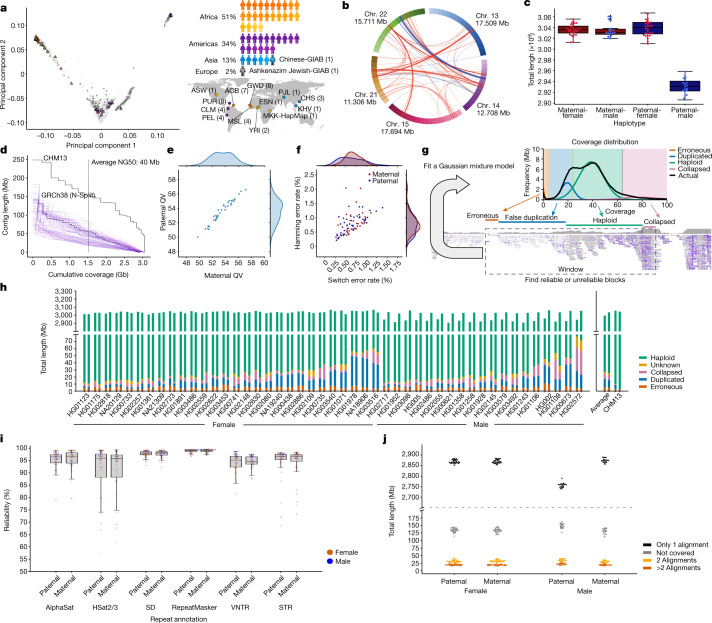
Here the Human Pangenome Reference Consortium presents a first draft of the human pangenome reference. The pangenome contains 47 phased, diploid assemblies from a cohort of genetically diverse individuals. These assemblies cover more than 99% of the expected sequence in each genome and are more than 99% accurate at the structural and base pair levels.
Overview
CoChat Summary
TL;DR
The paper presents a first draft human pangenome reference built from 47 phased, diploid assemblies from genetically diverse individuals, plus graph-based representations and annotations. The draft pangenome improves downstream analyses versus GRCh38, including reducing small-variant discovery errors by 34% and increasing detected structural variants per haplotype by 104%.
Key findings
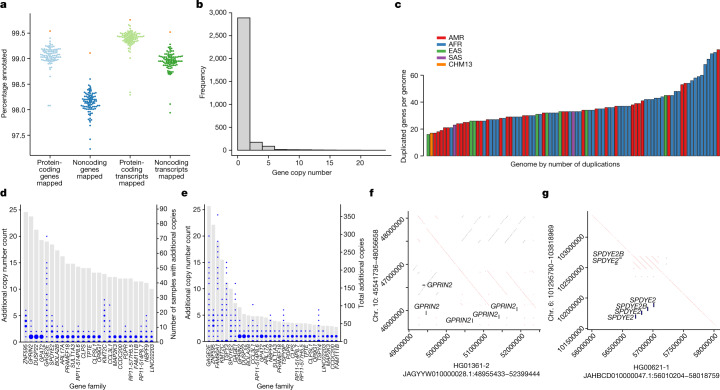
- The draft pangenome was built from 47 phased, diploid assemblies and adds 119 million base pairs of euchromatic polymorphic sequence plus 1,115 gene duplications relative to GRCh38; about 90 million of the added bases came from structural variation.
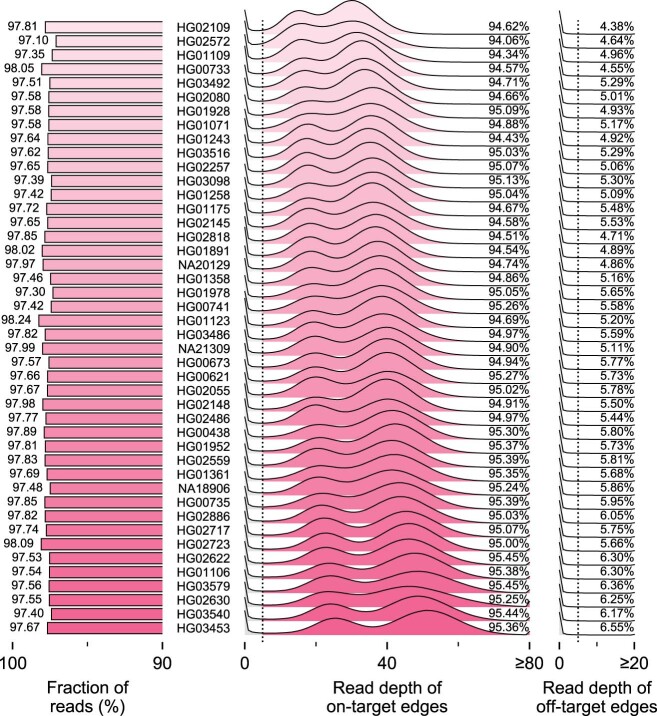
- Assemblies were reported as >99% complete and >99% accurate at structural and base-pair levels; the assembly reliability pipeline marked only 0.88% (26.4 Mb) of each assembly as unreliable.
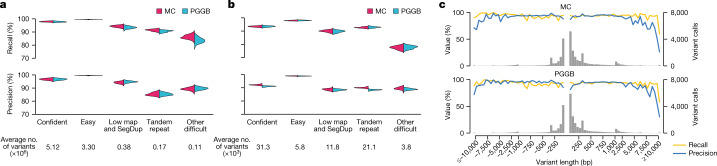
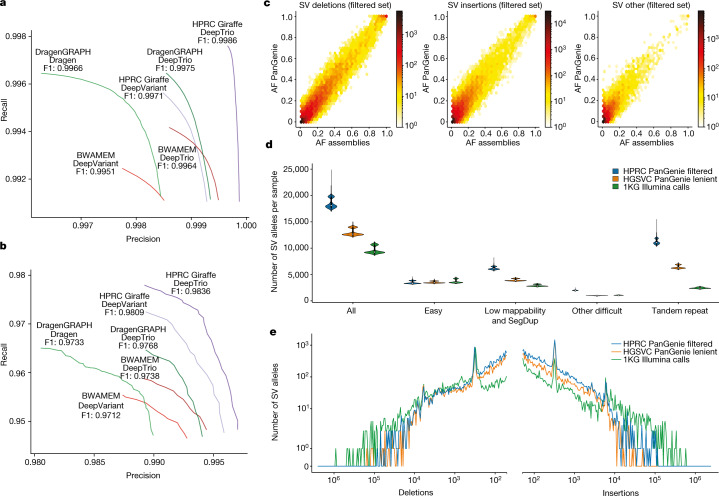
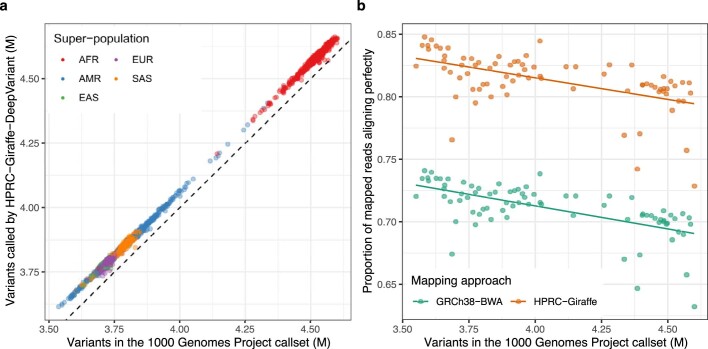
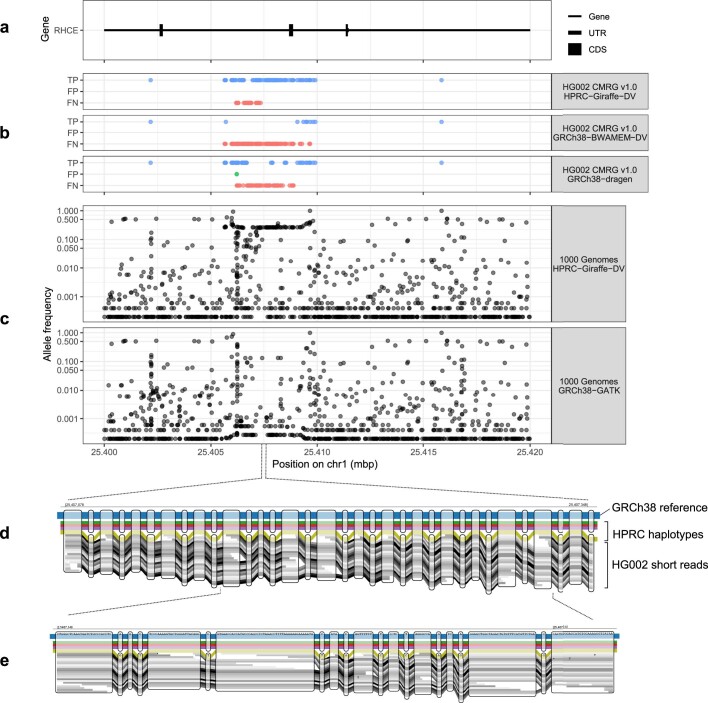
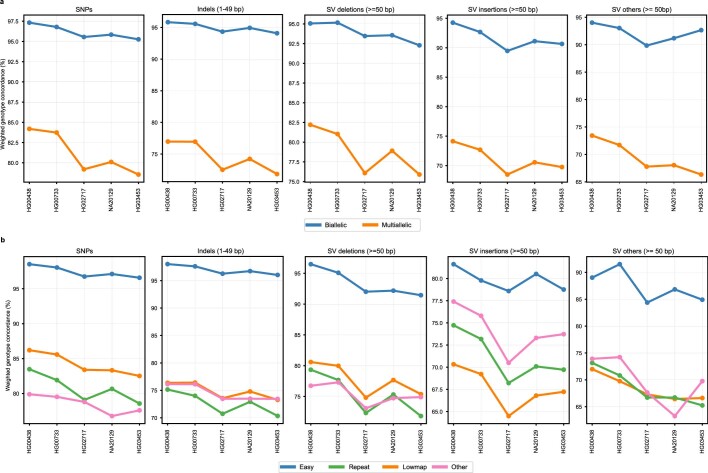
- In short-read analysis, the pangenome workflow reduced small-variant discovery errors by 34% and increased the number of structural variants detected per haplotype by 104% compared with GRCh38-based workflows.
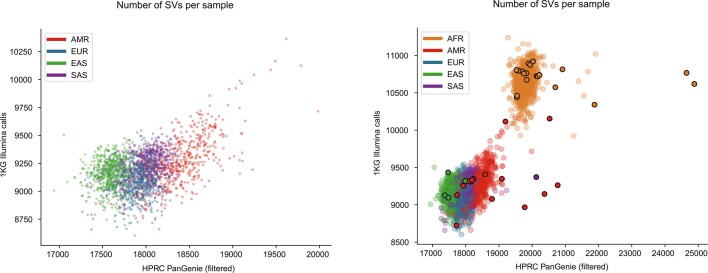
- For 1KG short-read genotyping, the pangenome-based call set gave on average 64,000 more small variants per sample than the 1KG catalogue; for SV genotyping it produced 18,483 SVs per sample versus 9,596 in the short-read 1KG call set.
Methods
- The study assembled 47 fully phased diploid genomes from globally diverse individuals, using PacBio HiFi, Oxford Nanopore, Hi-C, Bionano, and parental Illumina data; assemblies were phased with Trio-Hifiasm and manually/automatically curated.
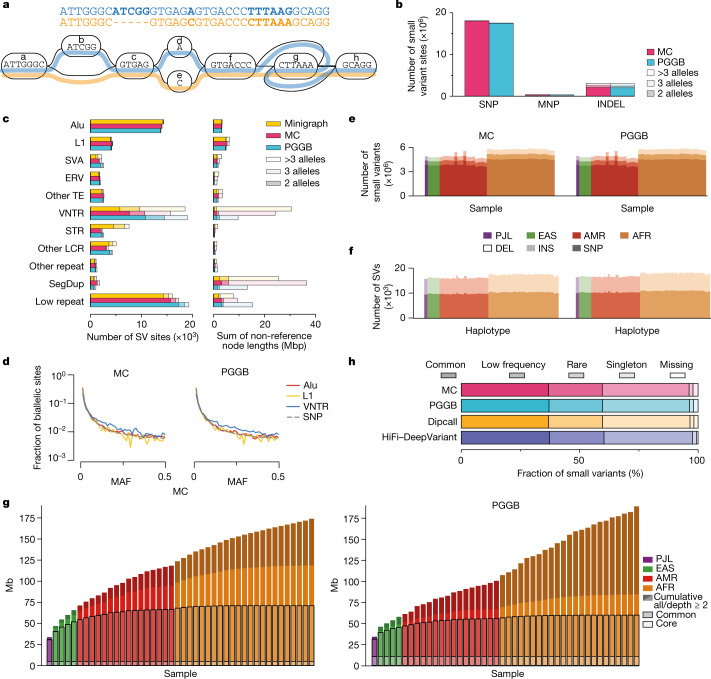
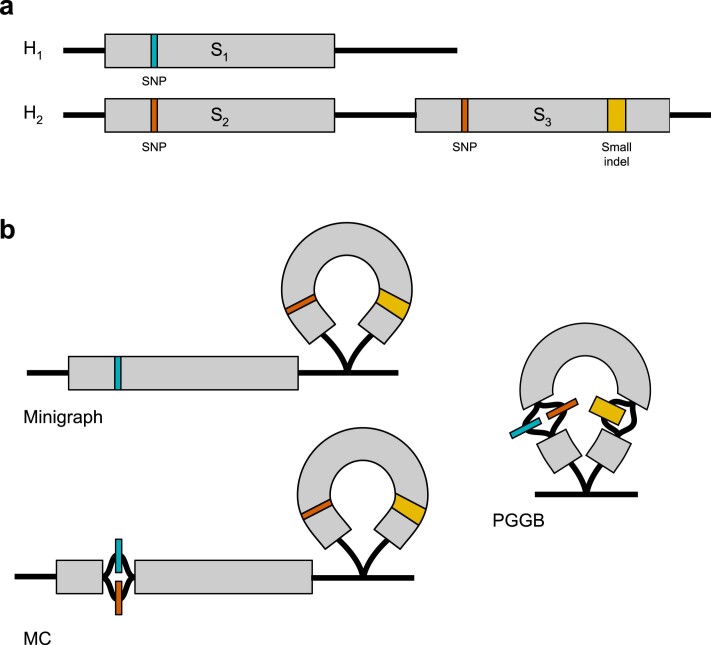
- The authors constructed pangenomes with three graph approaches: Minigraph, Minigraph-Cactus (MC), and PGGB, then evaluated variant representation, graph support, and downstream utility.
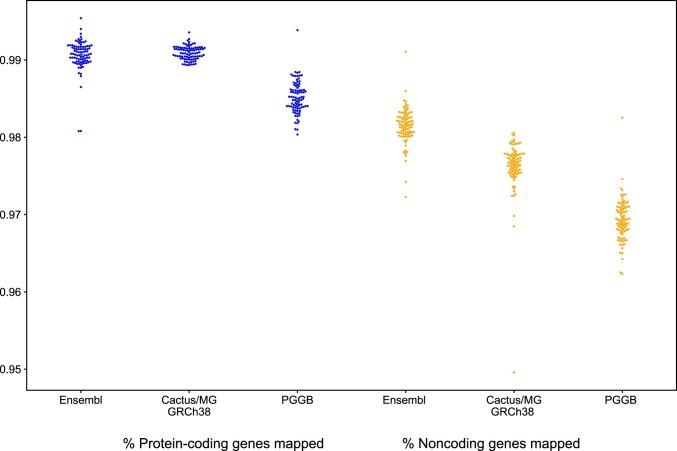
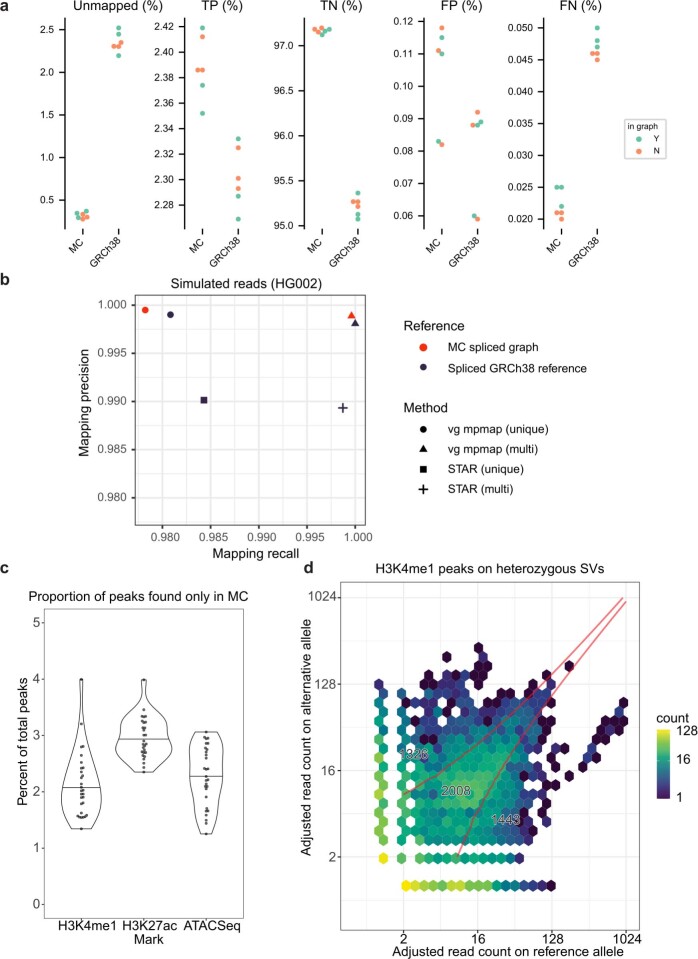
- They benchmarked pangenome-based analyses against GRCh38-based workflows using GIAB, 1KG short reads, and assembly-based comparisons for small variants, SVs, gene annotations, RNA-seq, ChIP-seq/ATAC-seq, VNTRs, and population analyses.
Limitations
- The paper states the cohort is relatively small and that the assembly reliability analysis found roughly an order of magnitude more erroneously assembled sequences in the HPRC assemblies than in T2T-CHM13.
- It explicitly notes remaining issues in highly repetitive regions and complex loci, where variant calling performance was lower and further work is needed; this is a stated limitation.
- The text also makes evident that some analyses are constrained by reference gaps, alignment ambiguity, and incomplete benchmarking truth sets; this is the paper’s implication, stated in the discussion around repetitive regions and underestimation of errors.
Model-written summary. Check it against the paper before relying on it.
Integrity signals
Registry
Cites
Statistics
Figures
Verification
Claims the paper makes
38 Valid · 5 Not valid · 2 Not checked · 206 Own results and interpretations
At least one cited source doesn’t support this claim or points to a different paper, and none confirmed it — see the verdicts below.
In the paper
“The pangenome contains 47 phased, diploid assemblies from a cohort of genetically diverse individuals1.”
§ A draft human pangenome reference > Abstract
What the sources say
- Disputedcites [1] 1000 Genomes Project Consortium. A global reference for human genetic variation Nature 2015 526 68 74 10.1038/nature15393 26432245 PMC4750478 sourceExperimental — accuracy not yet measured
The Abstract (page unavailable) describes a 1000 Genomes resource based on 2,504 individuals from 26 populations, with variants phased onto haplotypes. The Data set overview describes phasing variant sites, not a pangenome containing 47 phased, diploid assemblies. (LLM, conf=0.86)
Checked by a reasoning model — may be wrong.
plain- Asserted: passes — The authors put it forward as true.
- Checkable: passes — It can be checked against evidence.
- Load-bearing: passes — The paper’s conclusions depend on it.
- Based: passes — The paper gives a reason why it holds.
- Rests on an assumption not shown here.
- Disputed
The cited sources support only part of this claim — read each source’s verdict below.
In the paper
“Previous studies have identified tens of megabases of sequence contained within structural variants (SVs) that are polymorphic within the population5.”
§ A draft human pangenome reference > Main
What the sources say
- Partly supportedcites [5] Ebert P Haplotype-resolved diverse human genomes and integrated analysis of structural variation Science 2021 372 eabf7117 10.1126/science.abf7117 33632895 PMC8026704 sourceExperimental — accuracy not yet measured
The Results sections on structural variant distribution and complex structural variation document SVs and distinct structural haplotypes in human populations. But the reported ~279 Mbp is the genomic span of SV hotspots, not the amount of sequence contained within polymorphic SVs; the passages do not establish the claimed tens-of-megabases total. (LLM, conf=0.82)
plain- Asserted: passes — The authors put it forward as true.
- Checkable: passes — It can be checked against evidence.
- Load-bearing: passes — The paper’s conclusions depend on it.
- Based: passes — The paper gives a reason why it holds.
- Partly supported
Every source the paper cites for this claim was checked and supports it.
In the paper
“Recently, the Telomere-to-Telomere (T2T) consortium finished the first complete sequence of a haploid human genome, T2T-CHM13, which provides a contiguous representation of each autosome and of chromosome X, with the exception of some ribosomal DNA arrays that remain to be fully resolved3.”
§ A draft human pangenome reference > Main
What the sources say
- Supportedcites [3] Nurk S The complete sequence of a human genome Science 2022 376 44 53 10.1126/science.abj6987 35357919 PMC9186530 source
“A truly complete genome” states that T2T-CHM13 has gapless telomere-to-telomere assemblies for all 22 autosomes and chromosome X. “rDNA assembly” explains that the ordering of repeats in three rDNA arrays could not be fully resolved, so those arrays are represented by model sequences. (LLM, conf=0.93)
plainSingle case- Asserted: passes — The authors put it forward as true.
- Checkable: passes — It can be checked against evidence.
- Load-bearing: passes — The paper’s conclusions depend on it.
- Based: passes — The paper gives a reason why it holds.
- Supported
The cited sources support only part of this claim — read each source’s verdict below.
In the paper
“despite individual SVs being more likely to affect gene function than either individual SNPs or short insertions and deletions (indels)9,10.”
§ A draft human pangenome reference > Main
What the sources say
- Partly supportedcites [9] Chiang C The impact of structural variation on human gene expression Nat. Genet. 2017 49 692 699 10.1038/ng.3834 28369037 PMC5406250 sourceExperimental — accuracy not yet measured
The Results (Fine-mapping causal variants) state that, per variant, an SV is 28–54 times more likely to modulate gene expression than an SNV or indel. That supports the comparison for gene expression, but the cited analysis does not establish the broader claim about gene function generally. (LLM, conf=0.86)
- Partly supportedcites [10] Sudmant PH An integrated map of structural variation in 2,504 human genomes Nature 2015 526 75 81 10.1038/nature15394 26432246 PMC4617611 sourceExperimental — accuracy not yet measured
The Functional impact of SVs section reports that SV classes were enriched for expression-associated variants relative to the number tested, supporting a greater per-variant effect on gene expression. It uses eQTL associations as a surrogate for functional impact and groups SNPs with indels in the comparison; it does not establish the broader claim about gene function separately against each variant type. (LLM, conf=0.82)
hedgedstates an association- Asserted: passes — The authors put it forward as true.
- Checkable: passes — It can be checked against evidence.
- Load-bearing: passes — The paper’s conclusions depend on it.
- Based: passes — The paper gives a reason why it holds.
- Partly supported
Every source the paper cites for this claim was checked and supports it.
In the paper
“For the core assembler, we chose Trio-Hifiasm20 after detailed benchmarking of several alternatives21.”
§ A draft human pangenome reference > Assembling 47 diverse human genomes
What the sources say
- Supportedcites [20] Cheng H Concepcion GT Feng X Zhang H Li H Haplotype-resolved de novo assembly using phased assembly graphs with hifiasm Nat. Methods 2021 18 170 175 10.1038/s41592-020-01056-5 33526886 PMC7961889 source
Citation 20 identifies Trio-Hifiasm as the assembler the citing authors chose. The Results section (‘Overview of the hifiasm algorithm’) describes hifiasm’s graph-based trio binning, supporting that identification. The separate benchmarking claim is attached to citation 21, not this source. (LLM, conf=0.93)
- Supportedcites [21] Jarvis, E. D. et al. Semi-automated assembly of high-quality diploid human reference genomes. Nature611, 519–531 (2022). PMC9668749 36261518 source
The cited paper’s ‘Trios and higher phasing accuracy’ section compares several assembly algorithms and data types. Its ‘Graph phasing is more complete and accurate’ section reports that Trio hifiasm had the strongest combination of quality metrics among the diploid assemblies. The citing authors’ choice of core assembler is their own decision; this source supports the benchmarking offered as its rationale. Page numbers were not available in our copy. (LLM, conf=0.91)
plain- Asserted: passes — The authors put it forward as true.
- Checkable: passes — It can be checked against evidence.
- Load-bearing: unclear — It is unclear whether the paper’s conclusions depend on it.
- Based: passes — The paper gives a reason why it holds.
- Supported
135 more claims · 15 with their cited sources checked
Create a free account to see all 251 claims and to verify the 1 reference still open.
- It may state two separate claims as one. 80
- Probably not a substantial claim. 40
- The quote only partly states this claim. 1
Claims other papers make about this one
Each is checked against this paper’s own text: does it say what the citing paper says it does?
The cited source doesn’t support the claim as written.
In the citing paper
“In addition, the DRAGEN multigenome mapper is already incorporated for SV and CNV calling, something that is not currently possible with any other graph genome implementations because they focus primarily on genotyping variants14,73.”
From Comprehensive genome analysis and variant detection at scale using DRAGEN (2025) · cites this paper as [73]
Checked by a reasoning model — may be wrong.
Experimental — accuracy not yet measuredThe source backs part of the claim, not all of it — or backs it for a different population, condition or comparison.
In the citing paper
“Other biases, for example, in terms of sex, specific diseases, or human ancestral populations could also reduce the impact of AIVC models.115”
From How to build the virtual cell with artificial intelligence: Priorities and opportunities (2024) · cites this paper as [115]
Experimental — accuracy not yet measuredThe source backs part of the claim, not all of it — or backs it for a different population, condition or comparison.
In the citing paper
“For example, population-specific genes may provide insights into local adaptation, while structural variants may contribute to disease susceptibility or resistance in ways that were previously invisible to reference-based analyses [112,113].”
From Origin and Evolution of Genes in Eukaryotes: Mechanisms, Dynamics, and Functional Implications (2025) · cites this paper as [113]
Experimental — accuracy not yet measuredThe source backs part of the claim, not all of it — or backs it for a different population, condition or comparison.
In the citing paper
“These values were chosen after empirical experimentation specifically to filter out spurious mappings as determined by VCF-based comparison with Hi-Fi-based DeepVariant calls 25 .”
From Pangenome graph construction from genome alignments with Minigraph-Cactus (2024) · cites this paper as [25]
Experimental — accuracy not yet measuredThe cited source says what the claim attributes to it.
In the citing paper
“Notably, the first draft of a human pangenome reference has been released by the Human Pangenome Reference Consortium just last year as of the time of writing [19].”
From <tt>SAFARI</tt> : pangenome alignment of ancient DNA using purine/pyrimidine encodings (2025) · cites this paper as [19]
2 more claims about this paper
Create a free account to see every claim other papers make about this one.
Citations
Cites
The Sequence Alignment/Map format and SAMtools
Li, H., Handsaker, B., Wysoker, A., Fennell, T., Ruan, J., Homer, N., Marth, G., Abecasis, G., Durbin, R., & 1000 Genome Project Data Processing Subgroup (2009) · Bioinformatics · doi:10.1093/bioinformatics/btp352 · Cited by 62,041 · cited 1×
“3.1), (Li et al., 2009).”
InfluentialFast gapped-read alignment with Bowtie 2
Langmead, B., & Salzberg, S. L. (2012) · Nature Methods · doi:10.1038/nmeth.1923 · Cited by 56,400
STAR: ultrafast universal RNA-seq aligner
Dobin, A., Davis, C. A., Schlesinger, F., Drenkow, J., Zaleski, C., Jha, S., Batut, P., Chaisson, M., & Gingeras, T. R. (2013) · Bioinformatics · doi:10.1093/bioinformatics/bts635 · Cited by 51,709
BEDTools: a flexible suite of utilities for comparing genomic features
Quinlan, A. R., & Hall, I. M. (2010) · Bioinformatics · doi:10.1093/bioinformatics/btq033 · Cited by 27,437
Initial sequencing and analysis of the human genome
International Human Genome Sequencing Consortium, Whitehead Institute for Biomedical Research, C. F. G. R., Lander, E. S., Linton, L. M., Birren, B., Nusbaum, C., Zody, M. C., Baldwin, J., Devon, K., Dewar, K., et al. (2001) · Nature · doi:10.1038/35057062 · Cited by 24,216
Self-citationRSEM: accurate transcript quantification from RNA-Seq data with or without a reference genome
Li, B., & Dewey, C. N. (2011) · BMC Bioinformatics · doi:10.1186/1471-2105-12-323 · Cited by 22,179
A global reference for human genetic variation
The 1000 Genomes Project Consortium, authors, C., Auton, A., Abecasis, G. R., Steering committee, Altshuler, D. M., Durbin, R. M., Abecasis, G. R., Bentley, D. R., Chakravarti, A., et al. (2015) · Nature · doi:10.1038/nature15393 · Cited by 18,247
Self-citationAn integrated encyclopedia of DNA elements in the human genome
The ENCODE Project Consortium (2012) · Nature · doi:10.1038/nature11247 · Cited by 18,072
Twelve years of SAMtools and BCFtools
Danecek, P., Bonfield, J. K., Liddle, J., Marshall, J., Ohan, V., Pollard, M. O., Whitwham, A., Keane, T., McCarthy, S. A., Davies, R. M., et al. (2021) · GigaScience · doi:10.1093/gigascience/giab008 · Cited by 15,343 · cited 2×
“9 was used for filtering the variant sets (Danecek et al., 2021).”
MethodSelf-citationMinimap2: Pairwise alignment for nucleotide sequences
Li, H. (2018) · Bioinformatics · doi:10.1093/bioinformatics/bty191 · Cited by 14,807 · cited 8×
“The sequences of these anchors were them mapped against the target genome with minimap2 (Li, 2018b) using the following command:”
MethodInfluential
Cited by
Items 901–1,000 of 1,147
Environmental and Maternal Imprints on Infant Gut Metabolic ProgrammingPreprint
Kvitne, K. E., Allaband, C., Onuora, J. C., Perry, D. S., Zuffa, S., Patel, L., Charron‐Lamoureux, V., Mohanty, I., Sejane, K., Patan, A., et al. (2025) · bioRxiv (Cold Spring Harbor Laboratory) · doi:10.1101/2025.07.24.666662
Xia, X., Wu, J., Gao, Z., Yuan, P., & Ye, S. (2025) · bioRxiv (Cold Spring Harbor Laboratory) · doi:10.1101/2025.08.07.669060
“Conventional read mapping against a single linear reference genome introduces reference bias, impairing accurate variant detection, especially for non-reference alleles 12 .”
RAGA: a reference-assisted genome assembly tool for efficient population-scale assembly
Zhao, R.-P., Luo, Y., Xie, W., Zhou, Z.-W., Qian, Y.-Q., Yuan, S.-L., Li, D., Li, J., Lu, K., Zhang, X., et al. (2025) · Horticulture Research · doi:10.1093/hr/uhaf207 · Cited by 1
“While high-quality genome assemblies are recognized as foundational for pan-genomic research,as demonstrated in human pan-genome studies [3],only a limited number of plant species, such as the Citrullus genus, have achieved telomere-to-telomere (T2T) super pan-genomes, exemplified by the…”
Dynamic Programming Alignments With Skips
Mwaniki, M. N., & Pisanti, N. (2025) · IEEE Access · doi:10.1109/access.2025.3597547 · Cited by 1
“1 A pangenome is ‘‘any collection of genomic sequences to be analyzed jointly or to be used as a reference’’ [1]. growing awareness of genomic variants, many in silico biomedical analysis tasks using pangenomes can heavily improve the accuracy of significant variants detection [2].”
Self-citationHousehold Environmental Characteristics Influence House Dust MetagenomePreprint
Gamez, I., Fouladi, F., González, A., Ward, J. M., Wang, Z., Freeman, L. B., Motsinger‐Reif, A. A., Peddada, S. D., Knight, R. D., Lee, M. K., et al. (2025) · SSRN Electronic Journal · doi:10.2139/ssrn.5396665
Martini, R. N., Tijjani, A., Founta, K., Cha, D., Awai, A., Maurice, S., White, J. A., Mason, C. E., Cortés‐Ciriano, I., Robine, N., et al. (2025) · bioRxiv (Cold Spring Harbor Laboratory) · doi:10.1101/2025.08.15.670543
Mantena, S., Akbari, A., & Raychaudhuri, S. (2026) · The Journal of Immunology · doi:10.1093/jimmun/vkag141.104
Panaln: indexing pangenome for read alignment
Guo, L., He, Z., & Huo, H. (2025) · Bioinformatics · doi:10.1093/bioinformatics/btaf476 · Cited by 1
“Pangenome indexing is a core supporting tool in many sequence analysis tasks like read alignment (Eizenga et al. 2020, Liao et al. 2023).”
Loegler, V., Friedrich, A., & Schacherer, J. (2026) · Science Advances · doi:10.1101/2025.08.26.672342 · Cited by 1
Denti, L., Krannich, T., Vinař, T., Chikhi, R., Bonizzoni, P., Brejová, B., & Hormozdiari, F. (2025) · bioRxiv (Cold Spring Harbor Laboratory) · doi:10.1101/2025.08.28.672546 · Cited by 2
“…the HG002 PacBio HiFi dataset (Sequel II System with Chemistry 2.0, 15kb Library, 36x coverage) provided by the Human Pangenome Reference Consortium (HPRC) [31] and ran seven long reads-based SV prediction callers: cuteSV , SVDSS , sniffles2 , debreak , SVision-pro , Severus , and sawfish .”
InfluentialEarth BioGenome Project: the beginning of the end or the end of the beginning?
Wong, G. K. (2025) · Frontiers in Science · doi:10.3389/fsci.2025.1671650
Knight, R. D., Din, M. O., Salido, R. A., Wright, G., Brennan, C., Ambre, M., Hansen, L., Boyer, T., Cao, J. H., Oles, R. E., et al. (2025) · Research Square · doi:10.21203/rs.3.rs-7492978/v1 · Cited by 2
Cevallos, C., Auwerx, C., Hofmeister, R. J., Cavinato, T., Schoeler, T., Kutalik, Z., & Reymond, A. (2025) · medRxiv · doi:10.1101/2025.09.08.25335316 · Cited by 1
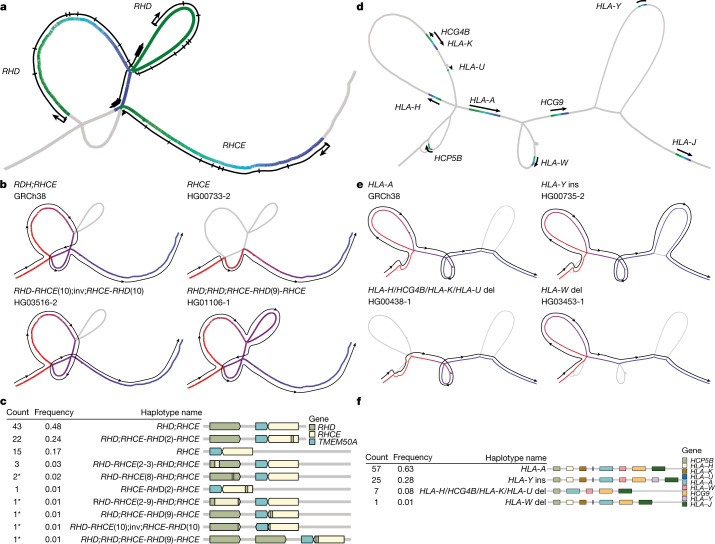
“The region has been described as highly complex by the human pangenome, which reports a frequency of 17% for the haplotype with a full RHD deletion [79], suggesting that our CNV calls underestimate the true deletion frequency.”
TypeAssembly: Copy number estimation and allele typing for haplotype assembliesPreprint
Lai, H.-S., Liu, Y., Chiu, H.-C., Chang, T.-Y., Lin, H.-F., Tseng, Y.-H., Hung, T.-K., Lai, S.-K., Hsu, J. S., Hsu, C., et al. (2025) · bioRxiv (Cold Spring Harbor Laboratory) · doi:10.1101/2025.09.13.675996
Santis, D. D., Kichula, K. M., & Norman, P. J. (2025) · Wiley eBooks · doi:10.1002/9783527847617.ch23
Long-read sequencing unearths overlooked autism-linked variants
Mesa, N. (2025) · The Transmitter · doi:10.53053/yynv6015
Pangenomics for developing salinity stress-tolerant plants
Shaikh, A., Toppo, V., Al-Khayri, J. M., & Nagella, P. (2025) · Elsevier eBooks · doi:10.1016/b978-0-443-26791-8.00012-1
Pangenomics-assisted breeding of biotic stress-resilient crops
Kamalesh, M., Manoj, M., Balasubramanian, B., Rajagopal, R., Alfarhan, A., Sampathkumar, P., Begam, A. K. U., Anand, A., & Arthi, G. (2025) · Elsevier eBooks · doi:10.1016/b978-0-443-26791-8.00021-2
Choose your human genome reference wisely
Marx, V. (2025) · Nature Methods · doi:10.1038/s41592-025-02850-9
The Great Genotyper: a graph-based method for population genotyping of small and structural variants
Shokrof, M., Abuelanin, M., Brown, C. T., & Mansour, T. A. (2025) · GigaScience · doi:10.1093/gigascience/giaf112 · Cited by 2
Agafonova, E. Y. (2025) · Problems of Particularly Dangerous Infections · doi:10.21055/0370-1069-2025-3-18-27
Long-read sequencing reveals telomere inheritance patterns from human trios
Zhou, Y., Lougheed, D. R., Cheung, W., Thiffault, I., Pastinen, T., & Bourque, G. (2026) · Nature Communications · doi:10.1101/2025.10.07.680721 · Cited by 1
Self-citationThe Emirati pangenome featuring a diploid chromosome-level reference
Olbrich, M., Mousa, M., Wohlers, I., Al-Aamri, A., Alnaqbi, H., Alsuwaidi, A. H., Manoharan, H. V., Marzouka, N., Bartels, L., Ramachandran, S. E., et al. (2026) · Nature Communications · doi:10.21203/rs.3.rs-7649659/v1 · Cited by 1
The Primate Major Histocompatibility Complex: A Case Study of Gene Family EvolutionPreprint
Fortier, A. L., & Pritchard, J. K. (2025) · eLife · doi:10.7554/elife.103545.2
Chang, T.-Y., Liu, Y., Lai, H.-S., Hung, T.-K., Lin, H.-F., Lin, Y.-H., Hsu, C., Yang, Y., Chen, C.-Y., Chen, P., et al. (2025) · bioRxiv (Cold Spring Harbor Laboratory) · doi:10.1101/2025.10.13.681303 · Cited by 1
FuFiHLA: a tool for full-field HLA typing from long-read data
Hu, J., Qin, Q., Li, H., et al. (2026) · Bioinformatics · doi:10.1093/bioinformatics/btag231
“The error rate of HiFi long reads is < 1% (Liao et al. 2023).”
Self-citationLi, S., Gozashti, L., Connelly, C., Goubert, C., Aston, K., Gleeson, J. G., Quinlan, A. R., Yang, X., & Sudmant, P. H. (2025) · bioRxiv (Cold Spring Harbor Laboratory) · doi:10.1101/2025.10.25.684559 · Cited by 1
Hensen, T., Khatib, L. A., Patel, L., McDonald, D. T., González, A., MahmoudianDehkordi, S., Blach, C., Knight, R. D., Kaddurah-Daouk, R. F., & Thiele, I. (2025) · bioRxiv (Cold Spring Harbor Laboratory) · doi:10.1101/2025.10.28.685084
“0, viral Phi X 174, and the Human Pangenome Reference assemblies 102 .”
Beyond reference bias: Making pangenomes accessible with PangyPlotPreprint
Mastromatteo, S., Chirmade, S., Roshandel, D., Thiruvahindrapuram, B., Wang, Z., Patel, R. V., Sung, W. W. L., Hajianpour, A., Wang, C., Fan, L., et al. (2025) · bioRxiv (Cold Spring Harbor Laboratory) · doi:10.1101/2025.10.31.684064
“The Human Pangenome Reference Consortium (HPRC) has generated human reference pangenomes [8] constructed by combining ancestrally diverse de novo assemblies into variation graphs.”
InfluentialLiang, Q., Uchiyama, Y., Seyama, R., Kuki, I., Haginoya, K., Shinozaki, T., Kato, M., Sakamoto, M., Tsuchida, N., Koshimizu, E., et al. (2025) · Journal of Human Genetics · doi:10.1038/s10038-025-01419-w
Schweickart, A., Batra, R., Huynh, K., Blach, C., Kueider‐Paisley, A., Reddy, J. S., Klein, G., Bennett, D. A., Meikle, P. J., Zhang, B., et al. (2025) · medRxiv · doi:10.1101/2025.11.04.25339489
“The limitations of purely genetic definitions are underscored by recent advances in genomics, demonstrating that our existing genomic references, and by extension ancestry-based frameworks built upon them, are incomplete and biased against underrepresented populations 67 .”
Advanced Technologies in Pre- and Postnatal Diagnosis
Laberge, A., & Samuels, M. E. (2025) · Elsevier eBooks · doi:10.1016/b978-0-443-23940-3.00023-5
Transposable Elements and Gene Duplication
Makałowska, I., & Ryczek, N. (2025) · Epigenetics and human health · doi:10.1007/978-3-032-04125-8_2 · Cited by 1
Human genome project and current status
Chaudhary, A., Kritika, Bharmaik, A., & Mittal, S. (2025) · Elsevier eBooks · doi:10.1016/b978-0-443-21980-1.00019-x
Benchmarking Framework to Catalyze Individual Human Genome ProjectsPreprint
Kalpande, M., Ganesh, A., & Srinivasan, S. (2025) · bioRxiv (Cold Spring Harbor Laboratory) · doi:10.1101/2025.11.12.688148
miniGiraffe: A Pangenomic Mapping Proxy App
Dagostini, J. I., Manzano, J., Sorensen, T., & Beamer, S. (2025) · IEEE International Symposium on Workload Characterization · doi:10.1109/iiswc66894.2025.00036 · Cited by 1
“This is especially true for the human pangenome, which accurately captures critical genetic variations; its first draft was only released in 2021 [20].”
Temiz, K. O., Aubrey, W., & Hegarty, M. (2025) · Applied Animal Science · doi:10.15232/aas.2025-02692
Frolova, M. S., Maguire, B., Düßmann, H., Rayan, M., Burke, C., Korashy, H. M., Raman, A., Gallagher, W. M., Burke, J. P., Furney, S. J., et al. (2025) · bioRxiv (Cold Spring Harbor Laboratory) · doi:10.1101/2025.11.24.690231
“1 pangenome [25] (Minimap2 [26]), retaining only pairs unmapped at each stage.”
Sequence-to-graph alignment based copy number calling using a network flow formulationPreprint
Magalhães, H., Weber, J., Klau, G. W., Marschall, T., & Prodanov, T. (2025) · bioRxiv (Cold Spring Harbor Laboratory) · doi:10.1101/2025.11.21.689771
“CHM13 was used as a backbone when constructing the HPRC graph [15] and mapping CHM13 reads to the HPRC graph (CHM13-pang) hence constitutes an in-sample setting.”
Self-citationHaplotype-resolved diploid genome inference on pangenome graphsPreprint
Chandra, G., Doan, W. T., & Gibney, D. (2025) · bioRxiv (Cold Spring Harbor Laboratory) · doi:10.1101/2025.11.26.690754 · Cited by 2
“They can accurately capture genetic variation, including SNPs, indels, and structural variants, while still leveraging similarity between references to reduce the required storage space [31].”
Comparative metagenomics using pan-metagenomic graphsPreprint
Coleman, I., Mametyarova, N., Zaznaev, A., Cai, P., Yu, L. X., Meydan, Y., Litman, A., Sharma, A., He, L., Simkhovich, A., et al. (2025) · bioRxiv (Cold Spring Harbor Laboratory) · doi:10.1101/2025.11.24.690211
GraTools, a user-friendly tool for exploring and manipulating pangenome variation graphsPreprint
Ravel, S., Marthe, N., Carrette, C., et al. (2025) · bioRxiv (Cold Spring Harbor Laboratory) · doi:10.64898/2025.12.01.691558
“…from a MSA-like approach [6, 7], are directed graphs, in which nodes (or segments or fragments) rep-57 resent sequences of varying lengths from at least one individual, and edges (or links) indicate adjacency between two sequences along at least one haplotype (or path or walk) in the PVG[8, 9].”
Scaling the PBWT for Long-Range Shared Ancestry Detection in Large Haplotype PanelsPreprint
Islam, U. I., Cozzi, D., Gagie, T., Varki, R., Colonna, V., Garrison, E. P., Bonizzoni, P., & Boucher, C. A. (2025) · bioRxiv (Cold Spring Harbor Laboratory) · doi:10.64898/2025.12.01.691644
“By preserving phase at the chromosome scale, haplotype-resolved assemblies allow for precise mapping of admixture tracts [24, 7], elucidation of disease genetics [22, 13], estimation of homozygosity [23], and inference of local ancestry [36].”
Self-citationLekka, E., Ambrodji, A., Nater, A., Ballah, A., Amstutz, U., Ramette, A., & Largiadèr, C. R. (2025) · bioRxiv (Cold Spring Harbor Laboratory) · doi:10.64898/2025.12.03.692062
Battlay, P., Bieker, V. C., Wu, T., Martin, M. D., & Hodgins, K. A. (2025) · CABI eBooks · doi:10.1079/9781800626263.0008 · Cited by 2
A Benchmarking Framework to Catalyze Individual Human Genome ProjectsPreprint
Kalpande, M., Ganesh, A., & Srinivasan, S. (2025) · Research Square · doi:10.21203/rs.3.rs-8225271/v1
GFAKaleidos: a tool for computing and comparing pangenome graph statistics
Xiang, Y., Liu, K., Wang, L., & Zhou, J. (2025) · Frontiers of Computer Science · doi:10.1007/s11704-025-50324-0
Cherchi, I., Orlando, F., Quaini, O., et al. (2025) · bioRxiv (Cold Spring Harbor Laboratory) · doi:10.64898/2025.12.17.694618
Ehrenhofer‐Murray, A. E. (2025) · Springer eBooks · doi:10.1007/978-3-662-70328-1_15
Leveraging human pangenome for improved somatic variant detection
Fu, Q., Xin, Z., Miao, B., Zhang, W., Kong, N., Tang, Z., Ruttenberg, A., Albracht, D., Belter, E. A., Garza, J. E., et al. (2026) · Cell Genomics · doi:10.64898/2026.01.04.697580 · Cited by 3
Self-citationSala, A., Caputo, M., Schatz, C., Corach, D., Egeland, T., & Marsico, F. L. (2026) · Forensic Science International Genetics · doi:10.1016/j.fsigen.2026.103425 · Cited by 1
Ma, K., Yang, Z., Li, Z., Guo, J., Lian, D., Wang, Z., Ma, H., Zhang, S., Fu, L., Lyu, H., et al. (2026) · bioRxiv (Cold Spring Harbor Laboratory) · doi:10.64898/2026.01.14.699191
Deep meta-analysis of human pangenome data reveals triplication of the IGH constant gene locus
D’Addabbo, P., Cianci, R., & Frezza, D. (2026) · Discover Immunity. · doi:10.1007/s44368-026-00018-x
Adam, C. D. L., Rocha, J. L., Sudmant, P. H., & Rohlfs, R. V. (2026) · bioRxiv (Cold Spring Harbor Laboratory) · doi:10.64898/2026.01.20.700717 · Cited by 2
“TRs were genotyped using PacBio HiFi data from 46 humans in the Human Pangenome Research Consortium (HPRC) 95 and 23 near-T2T chimpanzee genomes, described in a companion paper 23 , with Tandem Repeat Genotyping Tool v.3.0 (TRGT) 96 .”
InfluentialRLBWT-Based LCP Computation in Compressed Space for Terabase-Scale Pangenome AnalysisPreprint
Sanaullah, A., Brown, N. K., Shakya, P., Deegutla, A., Naseri, A., Langmead, B., Zhi, D., & Zhang, S.-J. (2026) · bioRxiv · doi:10.64898/2026.01.23.701410 · Cited by 5
“Large-scale sequencing initiatives such as the Human Pangenome Reference Consortium [Liao et al., 2023], the All of Us Research Program [The All of Us Research Program Genomics Investigators, 2024], the UK Biobank [The UK Biobank Whole-Genome Sequencing Consortium, 2025], the Darwin Tree of Life…”
Special Issue “Molecular Progression in Genome-Related Diseases”
Saccone, S., & Calì, F. (2026) · International Journal of Molecular Sciences · doi:10.3390/ijms27031184 · Cited by 1
Peng, C., Yang, C., Guo, Y., Xia, Z., Tang, T., & Cui, Y. (2025) · IEEE International Conference on Bioinformatics and Biomedicine (BIBM) · doi:10.1109/bibm66473.2025.11356569
“Such bias may result in misinterpretation of genetic variations [6].”
Pangenome-Informed Language Models for Synthetic Genome Sequence Generation
Huang, P., Charton, F., Schmelzle, J.-N., Darnell, S. S., Prins, P., Garrison, E. P., & Suh, G. E. (2025) · IEEE International Conference on Bioinformatics and Biomedicine (BIBM) · doi:10.1109/bibm66473.2025.11356310 · Cited by 4
“…datasets, such as the Human Genome Project (HGP) [1], the 1000 Genomes Project [2], The Cancer Genome Atlas (TCGA) [3], GenBank [4], the International HapMap Project [5], the Human Pangenome Project [6], and the Telomere-to-Telomere project [7], has been instrumental in advancing genomic research.”
Self-citationSimPG: A Pangenome-Guided Population-Specific Human Genome Simulation Tool
Yu, H., Wang, H., Liu, Y., Wang, Y., & Jiang, T. (2025) · IEEE International Conference on Bioinformatics and Biomedicine (BIBM) · doi:10.1109/bibm66473.2025.11356531
Neretva: Neural Variational Inference for Allele-level Genotyping of Highly Polymorphic GenesPreprint
Zhou, Q., Ahmadi, S. P., & Numanagić, I. (2026) · bioRxiv (Cold Spring Harbor Laboratory) · doi:10.64898/2026.02.03.703582
“Neretva was also benchmarked against the following KIR genotypers: Geny, Locityper, T1K, kir-mapper and PING on 40 Human Pangenome Reference Consortium (HPRC) samples [28].”
Recent advances in understanding the spectrum of genetic determinants of lipoprotein(a) levels
Stefan, C. (2026) · Current Opinion in Lipidology · doi:10.1097/mol.0000000000001030 · Cited by 3
Chantzi, N., Mouratidis, I., & Georgakopoulos-Soares, I. (2026) · PLoS Comput. Biol. · doi:10.1371/journal.pcbi.1013909
Sørensen, E. E., Frydendahl, A., Rasmussen, M. H., Nordentoft, I., Knudsen, M., Henriksen, T. V., Lindskrog, S. V., Dyrskjøt, L., Andersen, C. L., & Bramsen, J. B. (2026) · Journal of Translational Medicine · doi:10.1186/s12967-026-07762-6 · Cited by 1
Manna, T., & Das, S. P. (2026) · Research Square · doi:10.21203/rs.3.rs-8814520/v1
Chromosome-level genome assembly of the striped venus clam Chamelea gallina
Bortoletto, E., Rosani, U., Profico, C., Giacinto, F. D., & Venier, P. (2026) · Scientific Data · doi:10.1038/s41597-026-06726-1
“These specific regions may represent peri/centromeric satellite sequences, which are known to exhibit coverage biases 58 .”
InfluentialBenchmarking HLA genotyping from whole genome sequencing across multiple sequencing technologiesPreprint
Cremin, C. J., Elavalli, S., Paulin, L. F., et al. (2026) · medRxiv · doi:10.64898/2026.02.10.26345621
Theseus: Fast and Optimal Affine-Gap Sequence-to-Graph AlignmentPreprint
Jiménez-Blanco, A., López‐Villellas, L., Moure, J. C., et al. (2026) · bioRxiv (Cold Spring Harbor Laboratory) · doi:10.64898/2026.02.12.705572
Self-citationFrom genomes to precision medicine: 25 years of breakthroughs in genetics and genomics
Hailu, S. G. (2026) · The Nucleus · doi:10.1007/s13237-025-00632-4 · Cited by 1
Dong, S., Xing, X., Čechová, M., Loucks, H., Vijayalingam, S., Neilson, A., Sentmanat, M. F., Macias-Velasco, J. F., Liu, T. C., Dong, Z., et al. (2026) · bioRxiv (Cold Spring Harbor Laboratory) · doi:10.64898/2026.02.14.705860 · Cited by 2
“…high-quality genome assemblies from additional individuals from population-scale efforts such as the Human Pangenome Reference Consortium (HPRC) 11,12 and Human Genome Structural Variation Consortium (HGSVC) 13 have made it possible to compare centromeres across genomes and begin to quantify the…”
Self-citationPrivacy-Preserving Pangenome GraphsPreprint
Blindenbach, J. A., Soni, S., & Gürsoy, G. (2026) · bioRxiv (Cold Spring Harbor Laboratory) · doi:10.64898/2026.02.16.706152
“Unlike the current linear reference genome, which is derived predominantly from a limited number of individuals of European ancestry [35], the pangenome incorporates structural variants, insertions, deletions, and population-specific haplotypes that were previously underrepresented or absent [27].”
InfluentialLeonard, A. S., & Pausch, H. (2026) · bioRxiv (Cold Spring Harbor Laboratory) · doi:10.64898/2026.02.20.706955
Australian giant kelp genome assemblies show distinct Southern Hemisphere geneticsPreprint
Scharfenstein, H. J., Carroll, A. W., Iha, C., Schwoerbel, J., Jordan, R., & Willis, A. (2026) · bioRxiv (Cold Spring Harbor Laboratory) · doi:10.64898/2026.02.20.707121
“Further reinforcing the need for a local reference genome is the notion that no single genome can account for all the genetic diversity within a species (Liao et al., 2023).”
Self-citationPangenome-guided sequence assembly via binary optimization
Cudby, J., Bonfield, J., Zhou, C., Durbin, R. M., & Strelchuk, S. (2026) · Briefings in Bioinformatics · doi:10.1093/bib/bbag084 · Cited by 4
Labbancz, J., Tarlyn, N. M., Evans, K. M., & Dhingra, A. (2026) · bioRxiv (Cold Spring Harbor Laboratory) · doi:10.64898/2026.03.02.709077
It’s a colorful pangenome world
Marx, V. (2026) · Nature Methods · doi:10.1038/s41592-026-03021-0
DPGT: A spark based high-performance joint variant calling tool for large cohort sequencingPreprint
Gong, C., Yang, Q., Wan, R., Li, S., Zhang, Y., & Li, Y. (2026) · bioRxiv (Cold Spring Harbor Laboratory) · doi:10.64898/2026.03.02.709184 · Cited by 1
Diversity and Genomic Organization of Non-B DNA Motifs in Haplotype-Resolved Human Genome AssembliesPreprint
Turco, A. J., Boev, N. B., & Kumar, S. (2026) · bioRxiv (Cold Spring Harbor Laboratory) · doi:10.64898/2026.03.05.709836
Wall, B. P. G., Ogata, J. D., Nguyen, M. T., Olex, A. L., Floros, K. V., Faber, A. C., McClay, J. L., Harrell, J. C., & Dozmorov, M. G. (2026) · Bioinformatics · doi:10.1093/bioinformatics/btag110
“Furthermore, the growing amount of whole genome data and the development of pangenome graph assembly methods has been shown to improve genomic variant discovery, RNA-seq and chromatin immunoprecipitation read mapping (Liao et al. 2023).”
From data to diagnosis: harnessing personal genomics for precision healthcare
Tripathi, G., Faiyaz, M., Husain, A., Khanam, A., Hasan, Z., Haque, S., Kumar, P., & Farooqui, A. (2026) · Health and Technology · doi:10.1007/s12553-026-01059-w · Cited by 1
A decade of research in review
Despang, A., Bishop, A., Doerr, A., Li, R., Cheifet, B., & Aschheim, K. (2026) · Nature Biotechnology · doi:10.1038/s41587-026-03030-6
Kim, N., Oh, C.-M., Kim, Y., & Kim, J. H. (2026) · Genes & Genomics · doi:10.1007/s13258-026-01738-y · Cited by 2
Kim, K., Pfennig, A., Syed, S. A., Moskwa, N. L., Oliveira, N. A. D. J., Pham, Q.-M., Hallast, P., Yilmaz, F., McDonough, J. A., Norton, H., et al. (2026) · bioRxiv (Cold Spring Harbor Laboratory) · doi:10.64898/2026.03.18.712481
Paleogenomic insights into the evolution of human complex traits
Gao, Y., ZHANG, C., Qi, Y., Zi, Y. I. N., & Ke, W. A. N. G. (2026) · Scientia Sinica Vitae · doi:10.1360/ssv-2025-0268
Self-citationBony fish genomes: Status and gaps
Pérez‐Pereira, N., Bouza, C., Martínez, P., & Robledo, D. (2026) · Journal of Fish Biology · doi:10.1111/jfb.70402
“So far, pangenomes are available for some plant species (Bayer et al., 2020), humans (Liao et al., 2023), some domestic animals (Gong et al., 2023) and, especially, for bacteria (more than 4000 pangen-omes), including some fish pathogens (Luan & Thi, 2020).”
Erözden, A. A., Tavşanlı, N., Çalışkan, M., & Arıkan, M. (2026) · Progress in molecular and subcellular biology · doi:10.1007/978-3-032-11438-9_10
Panmap: Scalable phylogeny-guided alignment, genotyping, and placement on pangenomesPreprint
Kramer, A., Zhang, A., Ayala, N., Sanctis, B. D., Karim, L., Hinrichs, A. S., Walia, S., Turakhia, Y., & Corbett-Detig, R. B. (2026) · bioRxiv (Cold Spring Harbor Laboratory) · doi:10.64898/2026.03.29.711974
Epigenomic methylome landscape of promoters in vertebrate genomesPreprint
Lee, Y. H., Lee, C. M., Jarvis, E. D., & Kim, H. (2026) · bioRxiv (Cold Spring Harbor Laboratory) · doi:10.64898/2026.03.29.715150 · Cited by 2
Self-citationThe pangenome of Acanthopagrus provides genomic variation evidence for genetic diversity
Hu, Y., Wang, W., Wang, H., Gao, Z., Zhu, X., Yang, Y., & Lü, J. (2026) · iScience · doi:10.1016/j.isci.2026.115539
Scalable computation of ultrabubbles in pangenomes by orienting bidirected graphsPreprint
Harviainen, J., Sena, F., Moumard, C., et al. (2026) · bioRxiv (Cold Spring Harbor Laboratory) · doi:10.64898/2026.03.28.714704
Chromosomal Fusions Promote Speciation in Subterranean Blind Mole Rats
Kuang, Z., Yang, X., Gompert, Z., Duan, Q., Liu, W., Liu, S., Chen, J., Liang, X., Mao, L., Wan, N., et al. (2026) · Molecular Ecology · doi:10.1111/mec.70331
Analysis of human pangenome graphs : and other k-mer based applications
Andreace, F. (2025) · theses.fr (ABES) · doi:10.70675/4ea0d4daz806cz4c49z9bd9z66ce042dc6bd
Minno, G. D. (2026) · European Journal of Internal Medicine · doi:10.1016/j.ejim.2026.106867 · Cited by 1
Kuster, R. D., Sisler, P., Singh, K., Yin, L., Niece, S., Krueger, R. R., Dardick, C. D., Keremane, M. L., Ramadugu, C., & Staton, M. E. (2026) · bioRxiv (Cold Spring Harbor Laboratory) · doi:10.64898/2026.04.07.716967
Chen, X., Lemmers, R. J. L. F., Kronenberg, Z. N., Devaney, J. M., Noya, J., Berlyoung, A. S., Yusuff, S., Lynch, S., Nykamp, K., Lindy, A. S., et al. (2026) · bioRxiv (Cold Spring Harbor Laboratory) · doi:10.64898/2026.04.10.717730 · Cited by 1
Schuch, V., Mukherjee, I., de Carvalho, A. R. N., Olanrewaju, R. A., Davis, J., Thomas, S., Chakraborty, R., & Johnson, E. L. (2026) · Frontiers in Reproductive Health · doi:10.3389/frph.2026.1783837 · Cited by 1
“At the reference level, GRCh38, a linear composite assembled from a limited donor set, left approximately 8% of the genome unresolved, particularly in repetitive and centromeric regions, and encoded a single haplotype per locus (48).”
Genetic Modulators of Disease Penetrance
Kang, Y., & Drivas, T. G. (2026) · Annual Review of Biomedical Data Science · doi:10.1146/annurev-biodatasci-103123-094547 · Cited by 1
Pan1c : a pipeline to easily build chromosome-level pangenome graphsPreprint
Mergez, A., Racoupeau, M., Bardou, P., Linard, B., Legeai, F., Choulet, F., Gaspin, C., & Klopp, C. (2026) · bioRxiv (Cold Spring Harbor Laboratory) · doi:10.64898/2026.04.17.719212
“Optionally, VG deconstruct [15] can be used to call variants using the reference assembly, producing a standard Variant Call Format (VCF) file.”
Imoto, S., Yamamoto, T., Nakamura, Y., Takahama, S., Kiyotani, K., Katagiri, T., Urano, E., Shimozawa, N., Ageyama, N., Yasutomi, Y., et al. (2026) · Research Square · doi:10.21203/rs.3.rs-9105354/v1
Unraveling the potential of short and long read sequencing for human genome profilingPreprint
Leduc, A., Bachr, A., Sandron, F., Délepine, M., Delafoy, D., Fund, C., Daviaud, C., Meslage, S., Turon, V., Bacq‐Daian, D., et al. (2026) · bioRxiv (Cold Spring Harbor Laboratory) · doi:10.64898/2026.04.20.719568
Sex-aware genome-wide assessment of de novo variants in autism across coding and noncoding regions
Turner, T. N. (2026) · Human Genomics · doi:10.1186/s40246-026-00961-8 · Cited by 2
“The DNVs called in the ASD cohorts described above were annotated for their presence in the Human Pange-nome Reference Consortium (HPRC) [25, 26].”
Metadata
- Authors
- Liao, W.-W., Asri, M., Ebler, J., Doerr, D., Haukness, M., Hickey, G., Lu, S., Lucas, J. K., Monlong, J., Abel, H. J., Buonaiuto, S., Chang, X. H., Cheng, H., Chu, J., Colonna, V., Eizenga, J. M., Feng, X., Fischer, C., Fulton, R. S., Garg, S., Groza, C., Guarracino, A., Harvey, W. T., Heumos, S., Howe, K., Jain, M., Lu, T.-Y., Markello, C., Martin, F. J., Mitchell, M. W., Munson, K. M., Mwaniki, M. N., Novak, A. M., Olsen, H. E., Pesout, T., Porubsky, D., Prins, P., Sibbesen, J. A., Sirén, J., Tomlinson, C., Villani, F., Vollger, M. R., Antonacci-Fulton, L. L., Baid, G., Baker, C. A., Belyaeva, A., Billis, K., Carroll, A., Chang, P.-C., Cody, S., Cook, D. E., Cook-Deegan, R. M., Cornejo, O. E., Diekhans, M., Ebert, P., Fairley, S., Fedrigo, O., Felsenfeld, A. L., Formenti, G., Frankish, A., Gao, Y., Garrison, N. A., Giron, C. G., Green, R. E., Haggerty, L., Hoekzema, K., Hourlier, T., Ji, H. P., Kenny, E. E., Koenig, B. A., Kolesnikov, A., Korbel, J. O., Kordosky, J., Koren, S., Lee, H., Lewis, A. P., Magalhães, H., Marco-Sola, S., Marijon, P., McCartney, A., McDaniel, J., Mountcastle, J., Nattestad, M., Nurk, S., Olson, N. D., Popejoy, A. B., Puiu, D., Rautiainen, M., Regier, A. A., Rhie, A., Sacco, S., Sanders, A. D., Schneider, V. A., Schultz, B. I., Shafin, K., Smith, M. W., Sofia, H. J., Abou Tayoun, A. N., Thibaud-Nissen, F., Tricomi, F. F., Wagner, J., Walenz, B., Wood, J. M. D., Zimin, A. V., Bourque, G., Chaisson, M. J. P., Flicek, P., Phillippy, A. M., Zook, J. M., Eichler, E. E., Haussler, D., Wang, T., Jarvis, E. D., Miga, K. H., Garrison, E., Marschall, T., Hall, I. M., Li, H., & Paten, B.
- Affiliations
- Washington University in St. Louis (US)
- University of California, Santa Cruz (US)
- Heinrich Heine University Düsseldorf (DE)
- Yale University (US)
- Institute of Genetics and Biophysics (IT)
- Harvard University (US)
- Dana-Farber Cancer Institute (US)
- University of Tennessee Health Science Center (US)
- Novo Nordisk Foundation (DK)
- McGill University (CA)
- University of Washington (US)
- Quantitative Biology Center (DE)
- Wellcome Sanger Institute (GB)
- Northeastern University (US)
- University of Southern California (US)
- European Bioinformatics Institute (GB)
- Coriell Institute For Medical Research (US)
- University of Pisa (IT)
- University of Copenhagen (DK)
- Google (United States) (US)
- Washington Center (US)
- Rockefeller University (US)
- National Institutes of Health (US)
- Children's Hospital of Philadelphia (US)
- University of California, Los Angeles (US)
- Stanford Medicine (US)
- Icahn School of Medicine at Mount Sinai (US)
- University of California, San Francisco (US)
- National Institute of Standards and Technology (US)
- University of California, Davis (US)
- Johns Hopkins University (US)
- Max Delbrück Center (DE)
- Kyoto University (JP)
- Howard Hughes Medical Institute (US)
- Corresponding author
- Garrison, Erik
- Marschall, Tobias
- Hall, Ira M.
- Li, Heng
- Paten, Benedict
- ORCID
- Liao, Wen-Wei
- Asri, Mobin
- Ebler, Jana
- Doerr, Daniel
- Haukness, Marina
- Hickey, Glenn
- Lu, Shuangjia
- Lucas, Julian K.
- Monlong, Jean
- Abel, Haley J.
- Buonaiuto, Silvia
- Chang, Xian H.
- Cheng, Haoyu
- Chu, Justin
- Colonna, Vincenza
- Eizenga, Jordan M.
- Feng, Xiaowen
- Fulton, Robert S.
- Garg, Shilpa
- Groza, Cristian
- Guarracino, Andrea
- Harvey, William T.
- Heumos, Simon
- Howe, Kerstin
- Jain, Miten
- Lu, Tsung-Yu
- Markello, Charles
- Martin, Fergal J.
- Mitchell, Matthew W.
- Munson, Katherine M.
- Mwaniki, Moses Njagi
- Novak, Adam M.
- Olsen, Hugh E.
- Pesout, Trevor
- Porubsky, David
- Prins, Pjotr
- Sibbesen, Jonas A.
- Sirén, Jouni
- Tomlinson, Chad
- Villani, Flavia
- Vollger, Mitchell R.
- Baid, Gunjan
- Belyaeva, Anastasiya
- Billis, Konstantinos
- Carroll, Andrew
- Chang, Pi-Chuan
- Cook, Daniel E.
- Cook-Deegan, Robert M.
- Cornejo, Omar E.
- Diekhans, Mark
- Ebert, Peter
- Fairley, Susan
- Fedrigo, Olivier
- Formenti, Giulio
- Frankish, Adam
- Gao, Yan
- Garrison, Nanibaa’ A.
- Green, Richard E.
- Haggerty, Leanne
- Hoekzema, Kendra
- Hourlier, Thibaut
- Ji, Hanlee P.
- Kenny, Eimear E.
- Koenig, Barbara A.
- Kolesnikov, Alexey
- Korbel, Jan O.
- Koren, Sergey
- Lee, HoJoon
- Lewis, Alexandra P.
- Magalhães, Hugo
- Marco-Sola, Santiago
- Marijon, Pierre
- McDaniel, Jennifer
- Mountcastle, Jacquelyn
- Nattestad, Maria
- Nurk, Sergey
- Olson, Nathan D.
- Popejoy, Alice B.
- Puiu, Daniela
- Rautiainen, Mikko
- Regier, Allison A.
- Rhie, Arang
- Sacco, Samuel
- Sanders, Ashley D.
- Shafin, Kishwar
- Smith, Michael W.
- Sofia, Heidi J.
- Thibaud-Nissen, Françoise
- Tricomi, Francesca Floriana
- Wagner, Justin
- Walenz, Brian
- Wood, Jonathan M. D.
- Zimin, Aleksey V.
- Bourque, Guillaume
- Chaisson, Mark J. P.
- Flicek, Paul
- Phillippy, Adam M.
- Zook, Justin M.
- Eichler, Evan E.
- Haussler, David
- Wang, Ting
- Jarvis, Erich D.
- Miga, Karen H.
- Garrison, Erik
- Marschall, Tobias
- Hall, Ira M.
- Li, Heng
- Paten, Benedict
- Venue
- Nature
- Published
- 2023-05-10
- Volume
- 617
- Issue
- 7960
- Pages
- 312-324
- ISSN
- 0028-0836 (ISSN-L)
- 1476-4687
- PMC
- PMC10172123
- OpenAlex
- W4376133202
- Semantic Scholar
- 30c5780eccdbc66a26c4f4b744e35df1a2817bea
- Cited by
- 1,129
- References
- 150
- Citations by year
- 2026: 300 · 2025: 374 · 2024: 315 · 2023: 132
- FWCI
- 101.10
- Type
- journal article
- Language
- en
- Open access
- hybrid
- doi.org
- Licence
- cc-by
- creativecommons.org/licenses/by/4.0 (tdm)
- creativecommons.org/licenses/by/4.0 (vor)
- Locations
- Nature (publishedVersion, cc-by)
- PubMed Central (publishedVersion, cc-by)
- PubMed (publishedVersion)
- Digital Commons@Becker (Washington University School of Medicine) (submittedVersion, cc-by)
- HAL (submittedVersion)
- Dipòsit Digital de Documents de la UAB (Universitat Autònoma de Barcelona) (submittedVersion, cc-by)
- eScholarship (California Digital Library) (submittedVersion, cc-by)
- UPCommons institutional repository (Universitat Politècnica de Catalunya) (submittedVersion, cc-by-nc-nd)
- Funders
- Wellcome Trust (WT104947/Z/14/Z, WT222155/Z/20/Z, WT108749/Z/15/Z)
- Nederlandse Organisatie voor Wetenschappelijk Onderzoek (2021.040)
- Novo Nordisk Fonden (NNF10CC1016517, NNF21OC0069089)
- National Institutes of Health (OT2OD033761)
- National Human Genome Research Institute (R01HG010485, U24HG009081, U01HG010973, U01HG010963, U01HG010971, U41HG007234, R01HG011274, U01HG010961, R01HG002385, U24HG011853, U24HG007234, R01HG010169, ZIAHG200398, U24HG007497, U24HG010262, U41HG010972, R01HG011649, R01HG006677)
- National Institute of General Medical Sciences (R01GM123489, R35GM130151)
- Topics
- Life Sciences › Biochemistry, Genetics and Molecular Biology › Molecular Biology › Genomics and Phylogenetic Studies
- Life Sciences › Biochemistry, Genetics and Molecular Biology › Genetics › Genomic variations and chromosomal abnormalities
- Life Sciences › Biochemistry, Genetics and Molecular Biology › Genetics › Genetic Associations and Epidemiology
- Keywords
- human pangenome, structural variants, gene duplication, haplotypes, GRCh38, genetic diversity
- MeSH terms
- Alleles, Diploidy, Haplotypes, Humans, Reference Standards, Genetic Variation, Cohort Studies, Genome, Human, Sequence Analysis, DNA, Genomics
About these checks
Registry, retraction, Cites and statistics results are computed, not judged, with one exception: a printed reference that no index lists is read once by a model before it counts as a citation error. Claims are extracted by a model and kept only when their quote appears verbatim in the text; each cited source is then checked, with a model’s help, for whether it says what the claim relies on. Those verdicts can be wrong — read the claim’s quote and the cited source before relying on one.
The claim verdicts this report counts are experimental: their accuracy is not yet measured.
A language model drew the claims from the paper on 2026-10-11, under version 3 of the claim definition (model deepseek-v4.1-flash, prompt extract-v3).
A second model labelled each claim on 2026-10-11 (model jev-1.13-20260917, definition revision gold-guideline-v0.2).
Cited sources are checked with a language model’s help (gpt-6-sol).
Statistics and arithmetic are recomputed, not judged.
Confidence bands are shown only for fields calibrated on our annotated test set. None is calibrated yet, so no band is shown.
What counts as a claim ›How we measure confidence ›How we check this ›
Are you an author, or do you see a problem with this page? Request a review
Data sources
Bibliographic data: Semantic Scholar, OpenAlex, Crossref.
Contains information from the Semantic Scholar Academic Graph Datasets, made available under the ODC Attribution License (ODC-BY 1.0).
Semantic Scholar’s data is described in: Kinney, R., et al. (2023). The Semantic Scholar Open Data Platform. arXiv:2301.10140.
