

A draft human pangenome reference.
Open accessPublished version of a preprint
The DOI matches its Crossref record; 139 of the 150 references it cites were found in a registry or an index; 59 of the 67 sources its claims cite were checked for support.
Abstract
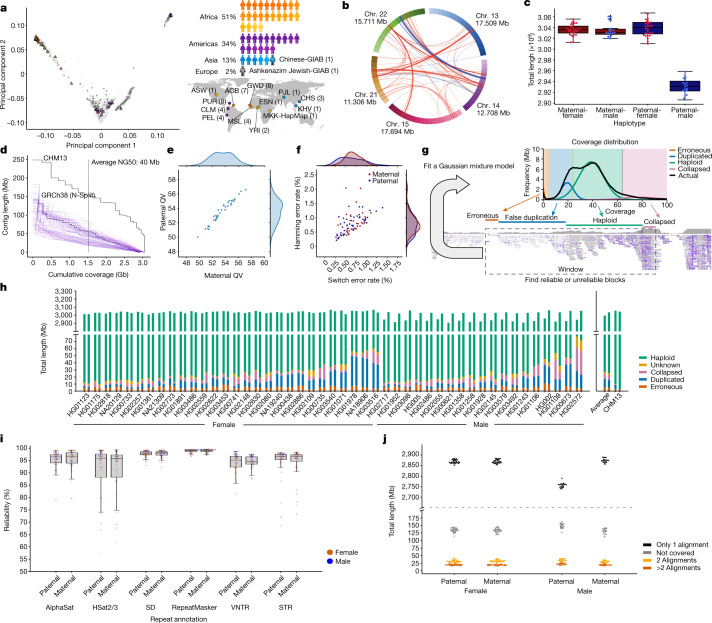
Here the Human Pangenome Reference Consortium presents a first draft of the human pangenome reference. The pangenome contains 47 phased, diploid assemblies from a cohort of genetically diverse individuals. These assemblies cover more than 99% of the expected sequence in each genome and are more than 99% accurate at the structural and base pair levels.
Overview
CoChat Summary
TL;DR
The paper presents a first draft human pangenome reference built from 47 phased, diploid assemblies from genetically diverse individuals, plus graph-based representations and annotations. The draft pangenome improves downstream analyses versus GRCh38, including reducing small-variant discovery errors by 34% and increasing detected structural variants per haplotype by 104%.
Key findings
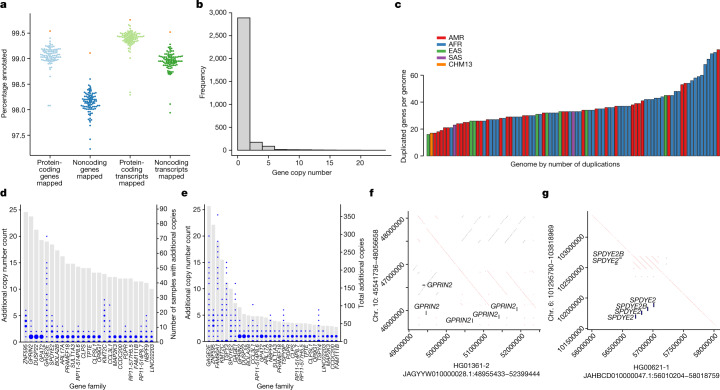
- The draft pangenome was built from 47 phased, diploid assemblies and adds 119 million base pairs of euchromatic polymorphic sequence plus 1,115 gene duplications relative to GRCh38; about 90 million of the added bases came from structural variation.
- Assemblies were reported as >99% complete and >99% accurate at structural and base-pair levels; the assembly reliability pipeline marked only 0.88% (26.4 Mb) of each assembly as unreliable.
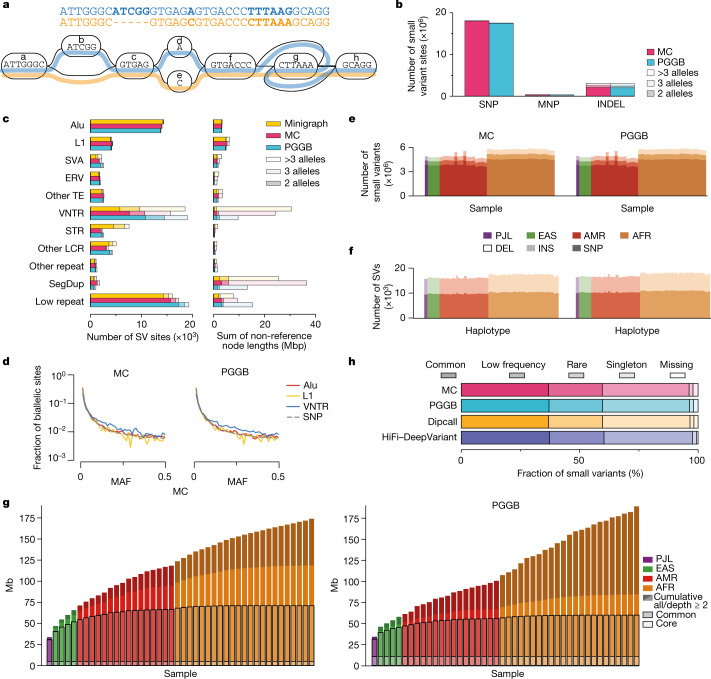
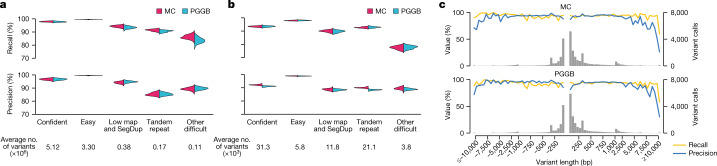
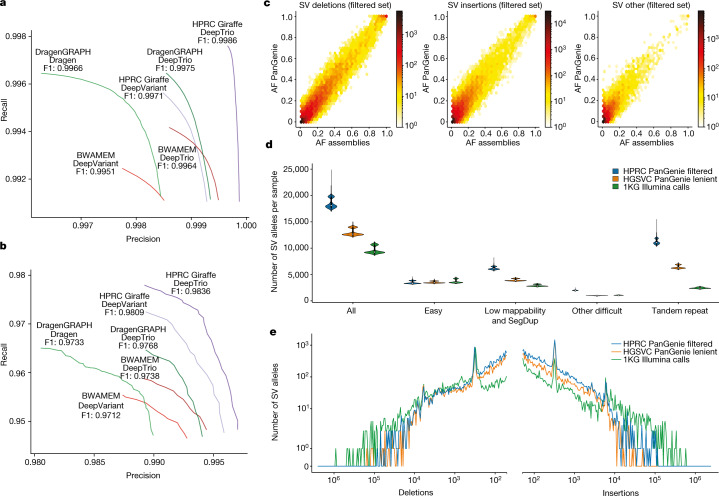
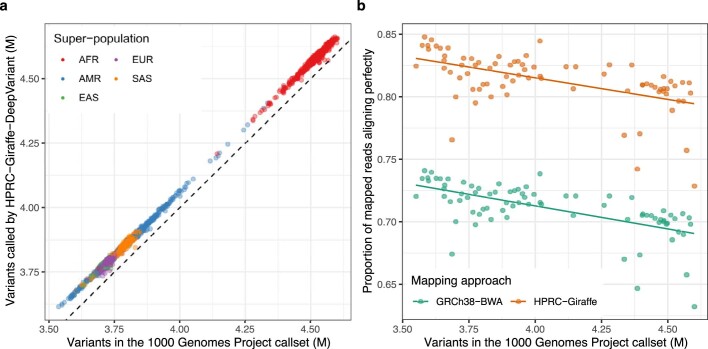
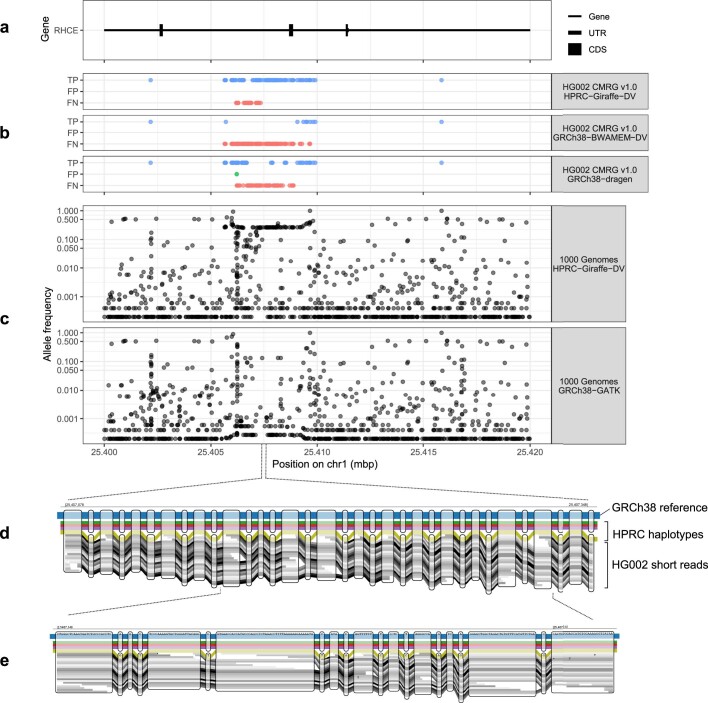
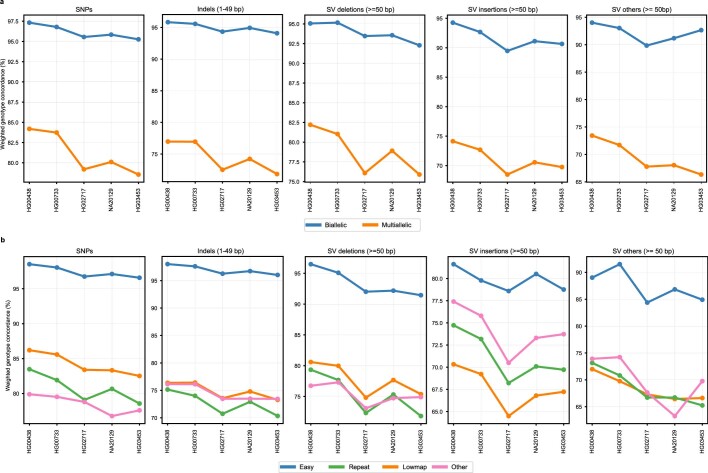
- In short-read analysis, the pangenome workflow reduced small-variant discovery errors by 34% and increased the number of structural variants detected per haplotype by 104% compared with GRCh38-based workflows.
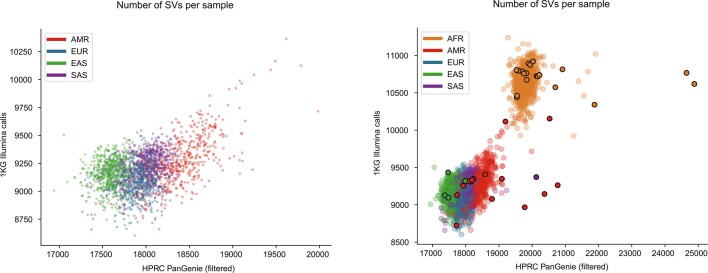
- For 1KG short-read genotyping, the pangenome-based call set gave on average 64,000 more small variants per sample than the 1KG catalogue; for SV genotyping it produced 18,483 SVs per sample versus 9,596 in the short-read 1KG call set.
Methods
- The study assembled 47 fully phased diploid genomes from globally diverse individuals, using PacBio HiFi, Oxford Nanopore, Hi-C, Bionano, and parental Illumina data; assemblies were phased with Trio-Hifiasm and manually/automatically curated.
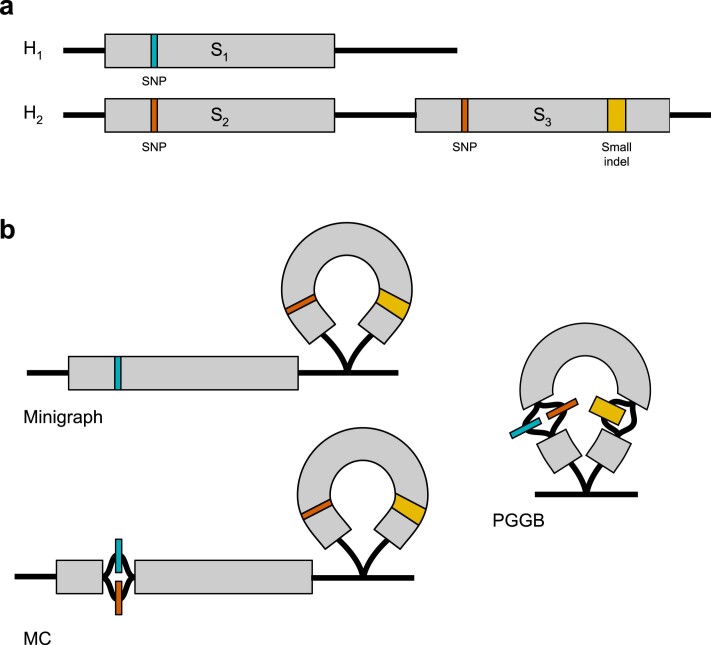
- The authors constructed pangenomes with three graph approaches: Minigraph, Minigraph-Cactus (MC), and PGGB, then evaluated variant representation, graph support, and downstream utility.
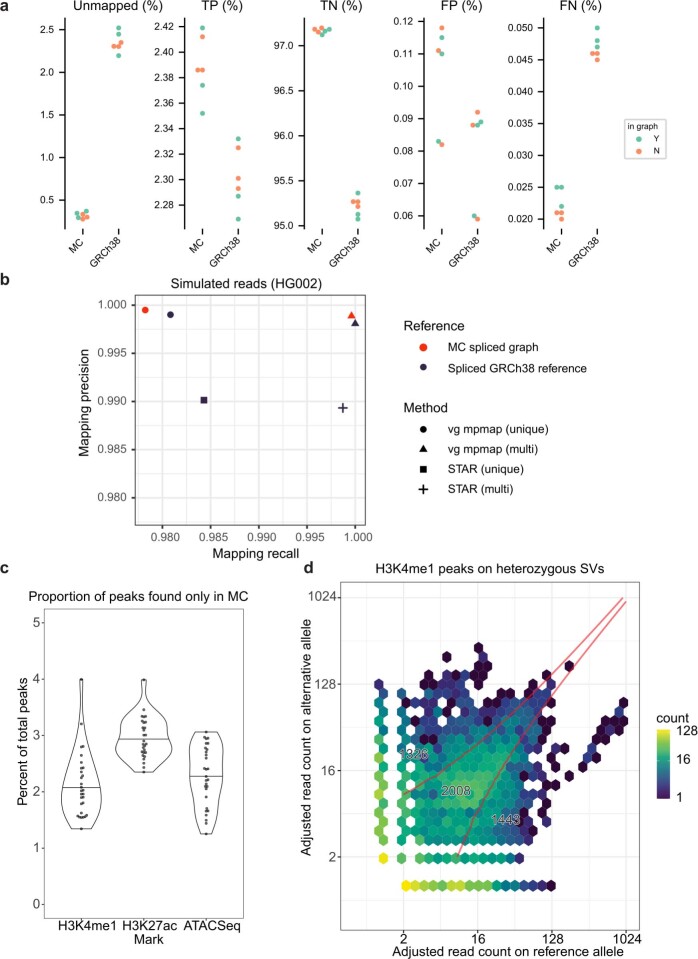
- They benchmarked pangenome-based analyses against GRCh38-based workflows using GIAB, 1KG short reads, and assembly-based comparisons for small variants, SVs, gene annotations, RNA-seq, ChIP-seq/ATAC-seq, VNTRs, and population analyses.
Limitations
- The paper states the cohort is relatively small and that the assembly reliability analysis found roughly an order of magnitude more erroneously assembled sequences in the HPRC assemblies than in T2T-CHM13.
- It explicitly notes remaining issues in highly repetitive regions and complex loci, where variant calling performance was lower and further work is needed; this is a stated limitation.
- The text also makes evident that some analyses are constrained by reference gaps, alignment ambiguity, and incomplete benchmarking truth sets; this is the paper’s implication, stated in the discussion around repetitive regions and underestimation of errors.
Model-written summary. Check it against the paper before relying on it.
Integrity signals
Registry
Cites
Statistics
Figures
Verification
Claims the paper makes
38 Valid · 5 Not valid · 2 Not checked · 206 Own results and interpretations
At least one cited source doesn’t support this claim or points to a different paper, and none confirmed it — see the verdicts below.
In the paper
“The pangenome contains 47 phased, diploid assemblies from a cohort of genetically diverse individuals1.”
§ A draft human pangenome reference > Abstract
What the sources say
- Disputedcites [1] 1000 Genomes Project Consortium. A global reference for human genetic variation Nature 2015 526 68 74 10.1038/nature15393 26432245 PMC4750478 sourceExperimental — accuracy not yet measured
The Abstract (page unavailable) describes a 1000 Genomes resource based on 2,504 individuals from 26 populations, with variants phased onto haplotypes. The Data set overview describes phasing variant sites, not a pangenome containing 47 phased, diploid assemblies. (LLM, conf=0.86)
Checked by a reasoning model — may be wrong.
plain- Asserted: passes — The authors put it forward as true.
- Checkable: passes — It can be checked against evidence.
- Load-bearing: passes — The paper’s conclusions depend on it.
- Based: passes — The paper gives a reason why it holds.
- Rests on an assumption not shown here.
- Disputed
The cited sources support only part of this claim — read each source’s verdict below.
In the paper
“Previous studies have identified tens of megabases of sequence contained within structural variants (SVs) that are polymorphic within the population5.”
§ A draft human pangenome reference > Main
What the sources say
- Partly supportedcites [5] Ebert P Haplotype-resolved diverse human genomes and integrated analysis of structural variation Science 2021 372 eabf7117 10.1126/science.abf7117 33632895 PMC8026704 sourceExperimental — accuracy not yet measured
The Results sections on structural variant distribution and complex structural variation document SVs and distinct structural haplotypes in human populations. But the reported ~279 Mbp is the genomic span of SV hotspots, not the amount of sequence contained within polymorphic SVs; the passages do not establish the claimed tens-of-megabases total. (LLM, conf=0.82)
plain- Asserted: passes — The authors put it forward as true.
- Checkable: passes — It can be checked against evidence.
- Load-bearing: passes — The paper’s conclusions depend on it.
- Based: passes — The paper gives a reason why it holds.
- Partly supported
Every source the paper cites for this claim was checked and supports it.
In the paper
“Recently, the Telomere-to-Telomere (T2T) consortium finished the first complete sequence of a haploid human genome, T2T-CHM13, which provides a contiguous representation of each autosome and of chromosome X, with the exception of some ribosomal DNA arrays that remain to be fully resolved3.”
§ A draft human pangenome reference > Main
What the sources say
- Supportedcites [3] Nurk S The complete sequence of a human genome Science 2022 376 44 53 10.1126/science.abj6987 35357919 PMC9186530 source
“A truly complete genome” states that T2T-CHM13 has gapless telomere-to-telomere assemblies for all 22 autosomes and chromosome X. “rDNA assembly” explains that the ordering of repeats in three rDNA arrays could not be fully resolved, so those arrays are represented by model sequences. (LLM, conf=0.93)
plainSingle case- Asserted: passes — The authors put it forward as true.
- Checkable: passes — It can be checked against evidence.
- Load-bearing: passes — The paper’s conclusions depend on it.
- Based: passes — The paper gives a reason why it holds.
- Supported
The cited sources support only part of this claim — read each source’s verdict below.
In the paper
“despite individual SVs being more likely to affect gene function than either individual SNPs or short insertions and deletions (indels)9,10.”
§ A draft human pangenome reference > Main
What the sources say
- Partly supportedcites [9] Chiang C The impact of structural variation on human gene expression Nat. Genet. 2017 49 692 699 10.1038/ng.3834 28369037 PMC5406250 sourceExperimental — accuracy not yet measured
The Results (Fine-mapping causal variants) state that, per variant, an SV is 28–54 times more likely to modulate gene expression than an SNV or indel. That supports the comparison for gene expression, but the cited analysis does not establish the broader claim about gene function generally. (LLM, conf=0.86)
- Partly supportedcites [10] Sudmant PH An integrated map of structural variation in 2,504 human genomes Nature 2015 526 75 81 10.1038/nature15394 26432246 PMC4617611 sourceExperimental — accuracy not yet measured
The Functional impact of SVs section reports that SV classes were enriched for expression-associated variants relative to the number tested, supporting a greater per-variant effect on gene expression. It uses eQTL associations as a surrogate for functional impact and groups SNPs with indels in the comparison; it does not establish the broader claim about gene function separately against each variant type. (LLM, conf=0.82)
hedgedstates an association- Asserted: passes — The authors put it forward as true.
- Checkable: passes — It can be checked against evidence.
- Load-bearing: passes — The paper’s conclusions depend on it.
- Based: passes — The paper gives a reason why it holds.
- Partly supported
Every source the paper cites for this claim was checked and supports it.
In the paper
“For the core assembler, we chose Trio-Hifiasm20 after detailed benchmarking of several alternatives21.”
§ A draft human pangenome reference > Assembling 47 diverse human genomes
What the sources say
- Supportedcites [20] Cheng H Concepcion GT Feng X Zhang H Li H Haplotype-resolved de novo assembly using phased assembly graphs with hifiasm Nat. Methods 2021 18 170 175 10.1038/s41592-020-01056-5 33526886 PMC7961889 source
Citation 20 identifies Trio-Hifiasm as the assembler the citing authors chose. The Results section (‘Overview of the hifiasm algorithm’) describes hifiasm’s graph-based trio binning, supporting that identification. The separate benchmarking claim is attached to citation 21, not this source. (LLM, conf=0.93)
- Supportedcites [21] Jarvis, E. D. et al. Semi-automated assembly of high-quality diploid human reference genomes. Nature611, 519–531 (2022). PMC9668749 36261518 source
The cited paper’s ‘Trios and higher phasing accuracy’ section compares several assembly algorithms and data types. Its ‘Graph phasing is more complete and accurate’ section reports that Trio hifiasm had the strongest combination of quality metrics among the diploid assemblies. The citing authors’ choice of core assembler is their own decision; this source supports the benchmarking offered as its rationale. Page numbers were not available in our copy. (LLM, conf=0.91)
plain- Asserted: passes — The authors put it forward as true.
- Checkable: passes — It can be checked against evidence.
- Load-bearing: unclear — It is unclear whether the paper’s conclusions depend on it.
- Based: passes — The paper gives a reason why it holds.
- Supported
135 more claims · 15 with their cited sources checked
Create a free account to see all 251 claims and to verify the 1 reference still open.
- It may state two separate claims as one. 80
- Probably not a substantial claim. 40
- The quote only partly states this claim. 1
Claims other papers make about this one
Each is checked against this paper’s own text: does it say what the citing paper says it does?
The cited source doesn’t support the claim as written.
In the citing paper
“In addition, the DRAGEN multigenome mapper is already incorporated for SV and CNV calling, something that is not currently possible with any other graph genome implementations because they focus primarily on genotyping variants14,73.”
From Comprehensive genome analysis and variant detection at scale using DRAGEN (2025) · cites this paper as [73]
Checked by a reasoning model — may be wrong.
Experimental — accuracy not yet measuredThe source backs part of the claim, not all of it — or backs it for a different population, condition or comparison.
In the citing paper
“Other biases, for example, in terms of sex, specific diseases, or human ancestral populations could also reduce the impact of AIVC models.115”
From How to build the virtual cell with artificial intelligence: Priorities and opportunities (2024) · cites this paper as [115]
Experimental — accuracy not yet measuredThe source backs part of the claim, not all of it — or backs it for a different population, condition or comparison.
In the citing paper
“For example, population-specific genes may provide insights into local adaptation, while structural variants may contribute to disease susceptibility or resistance in ways that were previously invisible to reference-based analyses [112,113].”
From Origin and Evolution of Genes in Eukaryotes: Mechanisms, Dynamics, and Functional Implications (2025) · cites this paper as [113]
Experimental — accuracy not yet measuredThe source backs part of the claim, not all of it — or backs it for a different population, condition or comparison.
In the citing paper
“These values were chosen after empirical experimentation specifically to filter out spurious mappings as determined by VCF-based comparison with Hi-Fi-based DeepVariant calls 25 .”
From Pangenome graph construction from genome alignments with Minigraph-Cactus (2024) · cites this paper as [25]
Experimental — accuracy not yet measuredThe cited source says what the claim attributes to it.
In the citing paper
“Notably, the first draft of a human pangenome reference has been released by the Human Pangenome Reference Consortium just last year as of the time of writing [19].”
From <tt>SAFARI</tt> : pangenome alignment of ancient DNA using purine/pyrimidine encodings (2025) · cites this paper as [19]
2 more claims about this paper
Create a free account to see every claim other papers make about this one.
Citations
Cites
The Sequence Alignment/Map format and SAMtools
Li, H., Handsaker, B., Wysoker, A., Fennell, T., Ruan, J., Homer, N., Marth, G., Abecasis, G., Durbin, R., & 1000 Genome Project Data Processing Subgroup (2009) · Bioinformatics · doi:10.1093/bioinformatics/btp352 · Cited by 62,041 · cited 1×
“3.1), (Li et al., 2009).”
InfluentialFast gapped-read alignment with Bowtie 2
Langmead, B., & Salzberg, S. L. (2012) · Nature Methods · doi:10.1038/nmeth.1923 · Cited by 56,400
STAR: ultrafast universal RNA-seq aligner
Dobin, A., Davis, C. A., Schlesinger, F., Drenkow, J., Zaleski, C., Jha, S., Batut, P., Chaisson, M., & Gingeras, T. R. (2013) · Bioinformatics · doi:10.1093/bioinformatics/bts635 · Cited by 51,709
BEDTools: a flexible suite of utilities for comparing genomic features
Quinlan, A. R., & Hall, I. M. (2010) · Bioinformatics · doi:10.1093/bioinformatics/btq033 · Cited by 27,437
Initial sequencing and analysis of the human genome
International Human Genome Sequencing Consortium, Whitehead Institute for Biomedical Research, C. F. G. R., Lander, E. S., Linton, L. M., Birren, B., Nusbaum, C., Zody, M. C., Baldwin, J., Devon, K., Dewar, K., et al. (2001) · Nature · doi:10.1038/35057062 · Cited by 24,216
Self-citationRSEM: accurate transcript quantification from RNA-Seq data with or without a reference genome
Li, B., & Dewey, C. N. (2011) · BMC Bioinformatics · doi:10.1186/1471-2105-12-323 · Cited by 22,179
A global reference for human genetic variation
The 1000 Genomes Project Consortium, authors, C., Auton, A., Abecasis, G. R., Steering committee, Altshuler, D. M., Durbin, R. M., Abecasis, G. R., Bentley, D. R., Chakravarti, A., et al. (2015) · Nature · doi:10.1038/nature15393 · Cited by 18,247
Self-citationAn integrated encyclopedia of DNA elements in the human genome
The ENCODE Project Consortium (2012) · Nature · doi:10.1038/nature11247 · Cited by 18,072
Twelve years of SAMtools and BCFtools
Danecek, P., Bonfield, J. K., Liddle, J., Marshall, J., Ohan, V., Pollard, M. O., Whitwham, A., Keane, T., McCarthy, S. A., Davies, R. M., et al. (2021) · GigaScience · doi:10.1093/gigascience/giab008 · Cited by 15,343 · cited 2×
“9 was used for filtering the variant sets (Danecek et al., 2021).”
MethodSelf-citationMinimap2: Pairwise alignment for nucleotide sequences
Li, H. (2018) · Bioinformatics · doi:10.1093/bioinformatics/bty191 · Cited by 14,807 · cited 8×
“The sequences of these anchors were them mapped against the target genome with minimap2 (Li, 2018b) using the following command:”
MethodInfluential
Cited by
Items 501–600 of 1,147
gaftools: a toolkit for analyzing and manipulating pangenome alignments
Pani, S., Dabbaghie, F., Marschall, T., & Söylev, A. (2026) · Bioinformatics · doi:10.1093/bioinformatics/btag406 · Cited by 8
“With the recent efforts of the Human Pangenome Reference Consortium (HPRC), a first draft human pangenome reference has been generated (Liao et al. 2023).”
InfluentialSelf-citationGretl—variation GRaph Evaluation TooLkit
Vorbrugg, S., Bezrukov, I., Bao, Z., & Weigel, D. (2024) · Bioinformatics · doi:10.1093/bioinformatics/btae755 · Cited by 9
“During testing on a 3.2 GHz AMD Epyc 64 core machine using chromosome 19 of the PGGB-built HPRC graph (Liao et al. 2023), which consisted of 48 samples (96 haplotypes, 1072 paths) with 3.02 million nodes and 4.21 million edges, our evaluation tool demonstrated a level of performance that should…”
InfluentialRapid GPU-Based Pangenome Graph Layout
Li, J., Schmelzle, J.-N., Du, Y., Heumos, S., Guarracino, A., Guidi, G., Prins, P., Garrison, E. P., & Zhang, Z. (2024) · International Conference for High Performance Computing, Networking, Storage and Analysis (SC) · doi:10.1109/sc41406.2024.00035 · Cited by 6
Self-citationGDBr: genomic signature interpretation tool for DNA double-strand break repair mechanisms
Ryu, H. C., Han, H. H., Kim, C., & Kim, J. (2025) · Nucleic Acids Research · doi:10.1093/nar/gkae1295 · Cited by 5
He, G., Liu, C., & Wang, M. (2025) · Forensic Science International · doi:10.1016/j.forsciint.2025.112370 · Cited by 4
Advancing clinical genomics with Middle Eastern and South Asian pangenomes
Nassir, N., Almarri, M. A., Akter, H., Khansaheb, H. H., Uddin, K. M. F., Tayoun, A. N. A., du Plessis, S. S., Haber, M., Alsheikh-Ali, A. A. A., & Uddin, M. J. (2025) · Nature Medicine · doi:10.1038/s41591-025-03544-7 · Cited by 4
Mycobiome: an underexplored kingdom in cancer
Sun, Y.-Y., & Liu, N. (2025) · Microbiology and Molecular Biology Reviews · doi:10.1128/mmbr.00261-24 · Cited by 5
Srinath, S., Kalal, A. A., Anand, P., Mohapatra, S., & Chakraborty, P. (2025) · International Journal of Developmental Neuroscience · doi:10.1002/jdn.70016 · Cited by 7
“…extent to which these such interactions contribute to the disease (Virolainen et al. 2022), the recent creation of the human pangenome that considers multiple ethnic variations in the human genome (Liao et al. 2023) could ensure a finer investigation of ethnic susceptibility in ASD in the future.”
Salsi, V., Losi, F., Salani, M., Kaufman, P. D., & Tupler, R. G. (2025) · Clinical Epigenetics · doi:10.1186/s13148-025-01881-5 · Cited by 6
Alsoud, D., Noor, N. M., Chen, L. A., Abadom, V., Anderson, S. H. C., Ardolli, L., Axelrad, J. E., Bossuyt, P. J., Croitoru, K., Damas, O. M., et al. (2025) · United European Gastroenterology Journal · doi:10.1002/ueg2.70050 · Cited by 4
“Given the growing understanding of biological diversity between populations [19, 20], and of the differences between clinical practice in distinct healthcare settings [21], an important unanswered question is whether the assay would be predictive in other populations.”
Henry, J. A. (2025) · Frontiers in Artificial Intelligence · doi:10.3389/frai.2025.1496948 · Cited by 4
“In the right column of Table 3, the benefits of Generative Adversarial Network (GAN) biopharma-biomarker development for HPO system personalized plans (NHSE, 2023) are enhanced by greater pan-genome specificity (Liao et al., 2023).”
The Karnataka Individual Genome Project expands the human reference landscape to include South Asia
Ganesh, A., Mhatre, A., Chindarkar, Y., Goswami, M., Mishra, P., Sharma, A., Kalpande, M., Ravindran, F., Srinivasan, S., & Choudhary, B. (2025) · Human Genetics and Genomics Advances · doi:10.1016/j.xhgg.2025.100516 · Cited by 4
“13 This work capitalized on the ethnic diversity within the IGSR sample collection to achieve a phased assembly of 47 individuals using state-of-the-art sequencing technologies.”
The state of the human coding gene catalogues
Maquedano, M., Cerdán-Vélez, D., & Tress, M. L. (2025) · Database · doi:10.1093/database/baaf045 · Cited by 6
“The annotation of both the new CHM13-T2T assembly [ 65 , 66 ] and the human pangenome [ 67 ] has the potential to add to the gene numbers here.”
ESGq: Alternative Splicing events quantification across conditions based on Event Splicing GraphsPreprint
Cozzi, D., Bonizzoni, P., & Denti, L. (2023) · bioRxiv (Cold Spring Harbor Laboratory) · doi:10.1101/2023.07.05.547757 · Cited by 3
“Inspired by the recent progress and development in the field of pangenomic and graph algorithms [18, 19], ESGq models AS events as local splicing graphs, called event splicing graphs , and then quantify the events by aligning reads to them.”
MethodBall, R. L., Bogue, M. A., Liang, H., Srivastava, A., Ashbrook, D. G., Lamoureux, A., Gerring, M. W., Hatoum, A. S., Kim, M. J., He, H., et al. (2023) · bioRxiv (Cold Spring Harbor Laboratory) · doi:10.1101/2023.08.08.552506 · Cited by 5
Local read haplotagging enables accurate long-read small variant callingPreprint
Kolesnikov, A., Cook, D. E., Nattestad, M., et al. (2023) · bioRxiv (Cold Spring Harbor Laboratory) · doi:10.1101/2023.09.07.556731 · Cited by 4
“Long-read sequencing has helped to generate highly contiguous genome assemblies [6, 7, 8], extend variant benchmarking to complex regions [9, 10] and has improved the quality and completeness of reference genomes [11, 12, 13, 14].”
Self-citationPangenome graph layout by Path-Guided Stochastic Gradient DescentPreprint
Heumos, S., Guarracino, A., Schmelzle, J.-N. M., Li, J., Zhang, Z., Hagmann, J., Nahnsen, S., Prins, P., & Garrison, E. P. (2023) · bioRxiv (Cold Spring Harbor Laboratory) · doi:10.1101/2023.09.22.558964 · Cited by 4
“These algorithms have already been successfully applied to construct and visualize large-scale pangenome graphs of the Human Pangenome Reference Consortium (HPRC) (Liao et al. , 2023; Guarracino et al. , 2023).”
InfluentialSelf-citationRibosome Decision Graphs for the Representation of Eukaryotic RNA Translation ComplexityPreprint
Tierney, J. A. S., Świrski, M., Tjeldnes, H., Mudge, J. M., Kufel, J., Whiffin, N., Valen, E., & Baranov, P. (2023) · bioRxiv · doi:10.1101/2023.11.10.566564 · Cited by 8
“However, the concept of representing biological sequences as graphs is gaining momentum with splice graphs for representing alternative splicing (71) and variation graphs for representing pangenomes (72).”
BackgroundHung, T.-K., Liu, W.-C., Lai, S.-K., Chuang, H.-W., Lee, Y.-C., Lin, H.-Y., Hsu, C., Chen, C., Yang, Y., Hsu, J. S., et al. (2023) · bioRxiv (Cold Spring Harbor Laboratory) · doi:10.1101/2023.11.12.566753 · Cited by 4
Haplotype-aware sequence alignment to pangenome graphsPreprint
Chandra, G., Gibney, D., & Jain, C. (2023) · bioRxiv (Cold Spring Harbor Laboratory) · doi:10.1101/2023.11.15.566493 · Cited by 5
Full resolution HLA and KIR genes annotation for human genome assembliesPreprint
Zhou, Y., Song, L., & Li, H. (2024) · bioRxiv (Cold Spring Harbor Laboratory) · doi:10.1101/2024.01.20.576452 · Cited by 4
Self-citationRibosome decision graphs for the representation of eukaryotic RNA translation complexity
Tierney, J. A. S., Świrski, M. I., Tjeldnes, H., Mudge, J. M., Kufel, J., Whiffin, N., Valen, E., & Baranov, P. V. (2024) · Genome Research · doi:10.1101/gr.278810.123 · Cited by 10
Chromosome breakage-replication/fusion enables rapid DNA amplificationPreprint
Zhang, C., & Pellman, D. S. (2024) · bioRxiv (Cold Spring Harbor Laboratory) · doi:10.1101/2024.08.17.608415 · Cited by 5
Pangenome-Informed Language Models for Synthetic Genome Sequence GenerationPreprint
Huang, P.-S., Charton, F., Schmelzle, J.-N. M., et al. (2024) · bioRxiv (Cold Spring Harbor Laboratory) · doi:10.1101/2024.09.18.612131 · Cited by 4
Self-citationHighly accurate assembly polishing with DeepPolisherPreprint
Mastoras, M., Asri, M., Brambrink, L., et al. (2024) · bioRxiv (Cold Spring Harbor Laboratory) · doi:10.1101/2024.09.17.613505 · Cited by 4
“Finally, NextPolish2 removed 3,260 errors from the unpolished assembly (6.68 errors / Mb) ( Figure 2A, Supplementary Table 1C ).”
BackgroundMethodInfluentialSelf-citationJiang, X., Zhang, L., Yang, Z., Yang, X., Ma, K., Yoo, D., Lu, Y., Zhang, S., Chen, J., Nie, Y., et al. (2024) · bioRxiv (Cold Spring Harbor Laboratory) · doi:10.1101/2024.12.12.628057 · Cited by 4
Self-citationGornitzka, M. B., Røsjø, E., Jana, U., et al. (2024) · bioRxiv (Cold Spring Harbor Laboratory) · doi:10.1101/2024.12.14.628445 · Cited by 4
Self-citationThe Emirati T2T-Level Pangenome: A Graph of 58 Complete GenomesPreprint
Olbrich, M. R., Mousa, M., Wohlers, I., Al-Aamri, A., Alnaqbi, H., Alsuwaidi, A. H., Manoharan, H. V., Marzouka, N., Ramachandran, S., Thomas, A. A., et al. (2024) · bioRxiv (Cold Spring Harbor Laboratory) · doi:10.1101/2024.12.16.628631 · Cited by 5
Zeng, T., Liao, H., Lin, X., You, S., Huang, Y., Zhang, J., Liu, Y., Liu, X., & Xie, D. (2025) · Genome Research · doi:10.1101/gr.279617.124 · Cited by 7
Accurate short-read alignment throughr-index-based pangenome indexing
Varki, R., Rossi, M., Ferro, E., Oliva, M., Garrison, E. P., Langmead, B., & Boucher, C. A. (2025) · Genome Research · doi:10.1101/gr.279858.124 · Cited by 10
Self-citationRare k-mers reveal centromere haplogroups underlying human diversity and cancer translocationsPreprint
Shiraishi, Y., Ochi, Y., Sugawa, M., Sakamoto, Y., Kimura, K., Tsujimura, T., Okada, A., Okuda, R., Namba, S., Miyauchi, T., et al. (2025) · bioRxiv (Cold Spring Harbor Laboratory) · doi:10.1101/2025.07.26.666712 · Cited by 5
Self-citationApproaching an Error-Free Diploid Human Genome Using a Support-Based Validation FrameworkPreprint
Chu, Y., Huang, Z., Shao, C., et al. (2025) · bioRxiv (Cold Spring Harbor Laboratory) · doi:10.1101/2025.08.01.667781 · Cited by 4
“The growing number of complete human genomes is rapidly expanding the catalog of sequences absent from GRCh38 and other existing references, many of which originate from repetitive and structurally complex regions ( 15-17 ).”
Čechová, M., Potapova, T., Rechtsteiner, A., Hickey, G., Mari, R. S., Mastoras, M., Menendez, J. M., Polakova, N., Hebbar, P., Ryabov, F., et al. (2025) · bioRxiv (Cold Spring Harbor Laboratory) · doi:10.64898/2025.12.14.693655 · Cited by 13
“Of the 69 arrays examined, 62 showed no evidence of assembly error with Flagger Pacbio or ONT; notably, 18 of 23 arrays were transmitted without such issues across all three individuals in the pedigree.”
InfluentialSelf-citationGenetics of canine cancer: a guide for the veterinary oncologist
Arendt, M. L., van der Heiden, A. D., Pensch, R., & Lindblad‐Toh, K. (2025) · Veterinary oncology. · doi:10.1186/s44356-025-00021-8 · Cited by 3
“These reference genomes represent the diversity across a population and provide an improved representation of genetic variation and haplotypes within a species [25–28].”
Munns, S., Brown, A. D. H., & Buckberry, S. (2025) · Frontiers in Molecular Biosciences · doi:10.3389/fmolb.2025.1502640 · Cited by 6
“While it is encouraging that improvements to the human reference genome are occurring (Liao et al., 2023), lack of diversity can introduce unknown biases into epigenetic biomarker development.”
Insights from the Biorepository and Integrative Genomics pediatric resource
Buonaiuto, S., Marsico, F. L., Mohammed, A., Chinthala, L. K., Amos-Abanyie, E. K., Baras, A., Abecasis, G. R., Ferrando, A., Coppola, G., Deubler, A., et al. (2025) · Nature Communications · doi:10.1038/s41467-025-59375-0 · Cited by 6
“The genetic diversity represented within BIG would be more accurately modeled by a pangenomic approach 15 .”
Self-citationMosbruger, T. L., Dinou, A., Duke, J. L., Ferriola, D., Li, Y., Hayeck, T. J., & Monos, D. S. (2025) · Nucleic Acids Research · doi:10.1093/nar/gkaf441 · Cited by 7
“Second, our approach only uses ONT-based sequencing, as opposed to prior approaches that have used a combination of sequencing methods [ 14 , 16 , 17 ].”
Parasite-resistant variants in African genomes: implications for global genetic medicine
Esoh, K. K., Yalcouyé, A., & Wonkam, A. (2025) · Trends in Parasitology · doi:10.1016/j.pt.2025.05.007 · Cited by 4
Defining and cataloging variants in pangenome graphs
Nowbandegani, P. S., Zhang, S., Hu, H., Li, H., & O’Connor, L. J. (2026) · Cell Genomics · doi:10.1016/j.xgen.2026.101327 · Cited by 8
Self-citationJiang, Z., Pan, W., Gao, R., Hu, H. K., Gao, W., Zhou, M., Yin, Y., Qian, Z., Shuilin, J., & Wang, G. (2025) · Advanced Science · doi:10.1002/advs.202515308 · Cited by 5
Approaches to Studying Viral Pangenome Variation Graphs
Downing, T. (2026) · Genomics Proteomics & Bioinformatics · doi:10.1093/gpbjnl/qzag003 · Cited by 7
“Moreover, PVGs found an average of 64,000 additional mutations per human sample, because 10% more reads were perfectly mapped to the PVG [28]: these hard-to-resolve regions/mutations are often strongly associated with phenotypic changes [29].”
Non-B DNA structures and their contributions to genetic diversity, aging, and disease
Bochalis, E., Dereki, I., Wang, G., Sgourou, A., Vásquez, K. M., & Georgakopoulos‐Soares, I. (2026) · Nucleic Acids Research · doi:10.1093/nar/gkag084 · Cited by 16
“Non-B DNA-forming sequences are abundant in repetitive regions of the human genome [ 173 , 201 , 202 ], and human pangenome assemblies enable genome-wide analysis of non-B DNA motif distribution across previously missing repetitive regions [ 373 , 375 ].”
Yano, S. T., & Phitsanuwong, C. (2026) · Epiliepsy currents/Epilepsy currents · doi:10.1177/15357597251410840 · Cited by 4
“13 Technical and conceptual improvements to the reference human genome by the Telomere-to-Telomere and Human Pangenome Reference consortia will allow variants in these “ missing ” regions to start being detected and studied.”
Accessing crop genetic diversity via pangenomics
MacNish, T. R., Kopalli, V., Zanini, S. F., Snowdon, R. J., Golicz, A. A., & Edwards, D. (2026) · Theoretical and Applied Genetics · doi:10.1007/s00122-026-05201-0 · Cited by 5
“…maintain distinct paths for duplicated or repetitive segments, PGGB often merges copy-number variable regions such as segmental duplications and VNTRs into a single shared path traversed by multiple haplotypes, simplifying graph topology but reducing explicit repeat resolution (Liao et al. 2023).”
Determinants of chromosome-specific telomere lengths among 2573 All of Us participants
Jain, N., Luo, J., Yang, Y., Demanelis, K., Ahsan, H., Aschebrook‐Kilfoy, B., Chen, L. S., & Pierce, B. L. (2026) · Nature Communications · doi:10.1038/s41467-026-71172-x · Cited by 5
“To further evaluate Telogator2 performance, we analyzed 36 high-coverage samples from (>30× telomere coverage) the HPRC (Supplementary Data 10), that were sequenced using the PacBio Revio platform 50 .”
Deleterious coding variation associated with autism is shared across ancestries
Avila, M. N., Jung, S., Satterstrom, F. K., Fu, J. M., Levy, T., Sloofman, L. G., Klei, L., Pichardo, T., Márquez., D. Y. P., Stevens, C. R., et al. (2026) · Nature Medicine · doi:10.1038/s41591-026-04228-6 · Cited by 13
“At the same time, it is possible that unknown genomic complexity, such as common structural variants 44–46 , elevate false negatives within these populations, including genomic variation important for phenotypes like autism, which is another limitation of our study.”
Population-scale long-read DNA sequencing: peering under the hood of the new evolutionary genomics
Edwards, S. V., & Li, H. (2026) · Proceedings of the Royal Society B Biological Sciences · doi:10.1098/rspb.2025.2899 · Cited by 7
Self-citationFalker‐Gieske, C. (2023) · Human Genomics · doi:10.1186/s40246-023-00543-y · Cited by 5
“While all the datasets examined here were based on Illumina short reads, the use of long read RNA sequencing techniques [54] in conjunction with the T2T-CHM13 assembly or even a human pangenome [55] promises significant improvements in the quality and depth of future human transcriptome analyses.”
MethodRole of Genetic Variation in Transcriptional Regulatory Elements in Heart Rhythm
Jonker, T., Barnett, P., Boink, G. J. J., & Christoffels, V. M. (2023) · Cells · doi:10.3390/cells13010004 · Cited by 3
“This genetic component is commonly referred to as genetic predisposition and is composed of many rare and common genetic variants such as single nucleotide polymorphisms (SNPs), of which each individual has millions across their genome [18,19].”
BackgroundSamson, C., du Rand, A., Hunt, J., Whitford, W., Jacobsen, J. C., & Sheppard, H. M. (2024) · Journal of the Royal Society of New Zealand · doi:10.1080/03036758.2024.2347968 · Cited by 5
“This precludes the identi fi cation of any impact of structural variants (variants a ff ecting more than 50 bases) such as those included in the gNomad structural variant database (Collins et al. 2020) or in drafts of the human pangenome (Liao et al. 2023).”
Long-read sequencing for brain tumors
Shelton, W. J., Zandpazandi, S., Nix, J. S., Gökden, M., Bauer, M., Ryan, K. R., Wardell, C. P., Vaske, O. M., & Rodriguez, A. (2024) · Frontiers in Oncology · doi:10.3389/fonc.2024.1395985 · Cited by 8
“Moreover, the pangenome, which contains genome assemblies from a diverse population was released in 2023 (73).”
BackgroundYang, Z.-D., Kuo, H.-Y., Hsieh, P.-W., & Hung, J. (2024) · Bioinformatics · doi:10.1093/bioinformatics/btae409 · Cited by 4
“Although contemporary computer memory capacities have substantially increased, making hash indexing increasingly popular (Alser et al. 2021), the pan-genome era is marked by a growing number of available reference genomes (Liao et al. 2023) and the need to process batch samples in parallel.”
BackgroundToward building a comprehensive human pan-genome: The SEN-GENOME project
Gaye, A., Sène, A. R. G., Gadji, M., Dème, A., Cissé, A., & Ndiaye, R. (2024) · The American Journal of Human Genetics · doi:10.1016/j.ajhg.2024.08.017 · Cited by 3
Otto, M., Zheng, Y., Grablowitz, P., & Wiehe, T. (2024) · Human Genome Variation · doi:10.1038/s41439-024-00293-w · Cited by 5
“More recent data, for instance from the human pangenome project (Liao et al. 2023), still lack sufficient coverage of the different subpopulations.”
InfluentialNanopore sequencing as a novel method of characterising anorexia nervosa risk loci
Berthold, N., Gaudieri, S., Hood, S. D., Tschochner, M., Miller, A. L., Jordan, J., Thornton, L. M., Bulik, C. M., Akkari, P. A., & Kennedy, M. A. (2024) · BMC Genomics · doi:10.1186/s12864-024-11172-7 · Cited by 4
“Finally, we compared prioritised variants to the 90 HPRC assembly tracks available on the UCSC Genome browser allele frequencies [11, 31, 32].”
Hunter, B. S., Cromwell, T., & Shim, H. (2025) · Computational and Structural Biotechnology Journal · doi:10.1016/j.csbj.2025.01.002 · Cited by 4
“Metagenomic assembly using nanopore sequencing can capture extensive genomic regions, including repetitive elements and structural variations, that are often missed by short-read technologies [51 – 53].”
Nagasaki, M., Hirayasu, K., Khor, S., Otokozawa, R., Sekiya, Y., Kawai, Y., & Tokunaga, K. (2025) · Human Immunology · doi:10.1016/j.humimm.2025.111272 · Cited by 4
Generating multiple alignments on a pangenomic scale
Olbrich, J., Büchler, T., & Ohlebusch, E. (2025) · Bioinformatics · doi:10.1093/bioinformatics/btaf104 · Cited by 8
“1000.fa.xz archived at https://www. uni-ulm.de/in/theo/research/seqana/panama) (56 GiB) and data from the draft human pangenome reference (https://s3-us-west-2.amazonaws.com/human-pangenomics/index.html?prefix=work ing) (21 GiB) (Liao et al. 2023).”
Ma, C., Huang, X., Wang, F.-J., Zhang, S.-R., Shi, X., Weng, Z., BingWang, D., Zhang, Y.-P., Andersson, L., & Minsheng, P. (2025) · Scientific Reports · doi:10.1038/s41598-025-94250-4 · Cited by 4
“As more and more research focus on large-scale structural variation 15 , such as pan-genome 16 , we suggest that the assembly of regions showing complex structural variation can be validated using population genomics data.”
Nine high-quality Anas genomes provide insights into Anas evolution and domestication
Zhang, Z., Ni, Z., Li, T., Ning, M., Gao, C., Hu, J., Han, M., Yang, J., Wu, F., Chen, L., et al. (2025) · Cell Reports · doi:10.1016/j.celrep.2025.115477 · Cited by 7
Improved Pangenomic Classification Accuracy with Chain Statistics
Brown, N. K., Shivakumar, V. S., & Langmead, B. (2025) · Lecture notes in computer science · doi:10.1007/978-3-031-90252-9_12 · Cited by 3
Dong, Z., Whitehead, J., Fu, M. P., MacIsaac, J. L., Rehkopf, D. H., Rosero‐Bixby, L., Kobor, M. S., & Korthauer, K. D. (2025) · Cell Reports · doi:10.1016/j.celrep.2025.115755 · Cited by 7
“7 These results suggested that the pangenome can add more CpGs in EWASs utilizing short-sequencing data, thus potentially advancing the discovery of DNAm alterations of functional relevance.”
Tørresen, O. K., Garmann-Aarhus, B., Hoff, S. N. K., Jentoft, S., Svensson, M., Schartum, E., Tooming‐Klunderud, A., Skage, M., Krabberød, A. K., Vøllestad, L. A., et al. (2025) · Journal of Heredity · doi:10.1093/jhered/esaf036 · Cited by 4
GWAS SVatalog: a visualization tool to aid fine-mapping of GWAS loci with structural variations
Chirmade, S., Wang, Z., Mastromatteo, S., Sanders, E., Thiruvahindrapuram, B., Nalpathamkalam, T., Pellecchia, G., Fan, L., Keenan, K., Patel, R. V., et al. (2025) · Heredity · doi:10.1038/s41437-025-00809-2 · Cited by 5
“Current publicly available long-read databases are not population-based and contain diverse ethnicities with small sample sizes (Liao et al., 2023; Logsdon et al., 2024), minimizing the reliability of LD required for this study ’ s analysis.”
The human pangenome reference: the beginning of a new era for genomics
Wang, B., Dang, N., Yang, X., Xu, S., & Ye, K. (2023) · 中国科学通报:英文版 · doi:10.1016/j.scib.2023.06.014 · Cited by 3
Diversifying the Genetic Landscape of Heart Disease
Tcheandjieu, C., & Cappola, T. P. (2023) · JAMA · doi:10.1001/jama.2023.12375 · Cited by 3
Constructing founder sets under allelic and non-allelic homologous recombination
Bonnet, K., Marschall, T., & Doerr, D. (2023) · Algorithms for Molecular Biology · doi:10.1186/s13015-023-00241-3 · Cited by 3
“Presently, the Human Pangenome Reference Consortium (HPRC), is applying these techniques to generate a large panel of haplotype-resolved genome assemblies from samples of diverse ancestries [17, 18].”
Self-citationModbed track: Visualization of modified bases in single-molecule sequencing
Li, D., Zhuo, X., Harrison, J. K., Liu, S., & Wang, T. (2023) · Cell Genomics · doi:10.1016/j.xgen.2023.100455 · Cited by 3
Self-citationSuffix sorting via matching statistics
Lipták, Z., Masillo, F., & Puglisi, S. J. (2024) · Algorithms for Molecular Biology · doi:10.1186/s13015-023-00245-z · Cited by 5
“With the rise of pangenomics [6, 7], there is an increased demand for indexes that support fast pattern matching over collections of genomes of individuals of the same species (see, e.g., [8–12]).”
BackgroundChoudalakis, M., Bashtrykov, P., & Jeltsch, A. (2024) · Mobile DNA · doi:10.1186/s13100-024-00315-y · Cited by 3
“0 and the Human Pangenome [2, 3, 6, 7], with mounting evidence of sequence exchanges, duplication and evolution in certain genomic areas [6, 8, 9].”
BackgroundPollock, N. R., Farias, T. D. J., Kichula, K. M., Sauter, J., Scholz, S., Nii-Trebi, N. I., Khor, S., Tokunaga, K., Voorter, C. E. M., Groeneweg, M., et al. (2024) · HLA · doi:10.1111/tan.15568 · Cited by 3
“In tandem with additional on-going initiatives, such as the pangenome haplotype project, 39,40 representation of worldwide human diversity by reference haplotypes for the MHC genomic region will be substantially improved.”
BackgroundVariation to biology: optimizing functional analysis of cancer risk variants
Nelson, S. A., Carrick, D. M., Daee, D. L., Fingerman, I. M., & Gillanders, E. M. (2024) · JNCI Journal of the National Cancer Institute · doi:10.1093/jnci/djae173 · Cited by 2
GGTyper: genotyping complex structural variants using short-read sequencing data
Mirus, T., Lohmayer, R., Döhring, C., Halldórsson, B. V., & Kehr, B. (2024) · Bioinformatics · doi:10.1093/bioinformatics/btae391 · Cited by 4
“Nevertheless, recent studies have shown that genotyping of a significant number of the “hidden” variants is possible with short-read data ( Aganezov et al. 2022, Liao et al. 2023).”
BackgroundBiologically-informed killer cell immunoglobulin-like receptor gene annotation tool
Ford, M. K. B., Hari, A., Zhou, Q.-H., Numanagić, I., & Şahinalp, S. C. (2024) · Bioinformatics · doi:10.1093/bioinformatics/btae622 · Cited by 4
Differential quantification of alternative splicing events on spliced pangenome graphs
Ciccolella, S., Cozzi, D., Vedova, G. D., Kuria, S. N., Bonizzoni, P., & Denti, L. (2024) · PLoS Computational Biology · doi:10.1371/journal.pcbi.1012665 · Cited by 5
“The recent release of the first draft human pangenome reference [24] demonstrated that this richer reference can be used to perform many bioinformatics analyses, e.g. variant calling, with superior accuracy and precision, especially in structurally complex loci of the genome.”
Pangenome reconstruction in rats enhances genotype-phenotype mapping and variant discovery
Villani, F., Guarracino, A., Ward, R. R., Green, T., Emms, M. A., Pravenec, M., Sharp, B. M., Prins, P., Garrison, E. P., Williams, R. W., et al. (2025) · iScience · doi:10.1016/j.isci.2025.111835 · Cited by 4
Self-citationAssessing genome conservation on pangenome graphs with PanSel
Zytnicki, M. (2024) · Bioinformatics Advances · doi:10.1093/bioadv/vbaf018 · Cited by 6
Shim, H. (2025) · F1000Research · doi:10.12688/f1000research.163516.1 · Cited by 2
Population health management genomic new-born screens and multi-omics intercepts
Henry, J. A. (2025) · Frontiers in Artificial Intelligence · doi:10.3389/frai.2024.1496942 · Cited by 4
“The inclusion of 350 personal nucleotide references enhances risk assessment of dark data introns to HPO disease precursors, representing a subset of a planned panel aimed at capturing diversity across 700 haplotypes (Liao et al., 2023).”
Short‐Read Pangenomes and Their Potential Utility in Population and Conservation Genomics
Jeon, J. Y., Allen, N. M., Black, A. N., & DeWoody, J. A. (2025) · Molecular Ecology Resources · doi:10.1111/1755-0998.70060 · Cited by 6
GrAnnoT, a tool for efficient and reliable annotation transfer through pangenome graph
Marthe, N., Zytnicki, M., & Sabot, F. (2025) · Peer Community Journal · doi:10.24072/pcjournal.651 · Cited by 10
Yang, Y.-H., Yao, C., Lin, M.-J., et al. (2026) · Journal of Advanced Research · doi:10.1016/j.jare.2026.01.053 · Cited by 3
Nie, J., Tellier, J., Tarasova, I., Nutt, S. L., & Smyth, G. K. (2023) · bioRxiv (Cold Spring Harbor Laboratory) · doi:10.1101/2023.05.24.542206 · Cited by 3
Sigmoni: classification of nanopore signal with a compressed pangenome indexPreprint
Shivakumar, V. S., Ahmed, O. Y., Kovaka, S., et al. (2023) · bioRxiv (Cold Spring Harbor Laboratory) · doi:10.1101/2023.08.15.553308 · Cited by 3
“Table 2 compares the size of the signal-space r-index when used to index various numbers of human genome assemblies, including from the Human Pangenome Reference Consortium (HPRC) [24].”
InfluentialIdentification of transposable element families from pangenome polymorphismsPreprint
Sierra, P., & Durbin, R. M. (2024) · bioRxiv (Cold Spring Harbor Laboratory) · doi:10.1101/2024.04.05.588311 · Cited by 3
Proteogenomics analysis of human tissues using pangenomesPreprint
Wang, D., Bouwmeester, R., Zheng, P., Dai, C., Sánchez, A., Shu, K., Bai, M., Umer, H. M., & Pérez‐Riverol, Y. (2024) · bioRxiv (Cold Spring Harbor Laboratory) · doi:10.1101/2024.05.24.595489 · Cited by 4
Vervoort, L., Dierckxsens, N., Santos, M. S., Meynants, S., Souche, E. L., Cools, R., Heung, T., Devriendt, K., Peeters, H., McDonald‐McGinn, D. M., et al. (2024) · Genome Research · doi:10.1101/gr.279331.124 · Cited by 3
Avila, M. N., Jung, S., Satterstrom, F. K., Fu, J. M., Levy, T., Sloofman, L. G., Klei, L., Pichardo, T., Stevens, C. R., Cusick, C. M., et al. (2025) · medRxiv · doi:10.1101/2024.12.27.24319460 · Cited by 3
Geographic and age-related variations in mutational processes in colorectal cancerPreprint
Díaz‐Gay, M., dos Santos, W., Moody, S., Kazachkova, M., Abbasi, A., Steele, C. D., Vangara, R., Senkin, S., Wang, J., Fitzgerald, S. F., et al. (2025) · medRxiv · doi:10.1101/2025.02.13.25322219 · Cited by 3
RAmbler resolves complex repeats in human Chromosomes 8, 19, and X
Chakravarty, S., Logsdon, G. A., & Lonardi, S. (2025) · Genome Research · doi:10.1101/gr.279308.124 · Cited by 5
Jana, U., Rodriguez, O. L., Engelbrecht, E., Lees, W., Vanwinkle, Z., Peres, A., Gibson, W. S., Shields, K. M., Schultze, S., Dorgham, A., et al. (2025) · SSRN Electronic Journal · doi:10.2139/ssrn.5175047 · Cited by 3
Self-citationRanallo-Benavidez, T. R., Hao, Y., Volpe, E., Jehangir, M., Fukushima, N. H., Mbegbu, O., Reiman, R. A., Molnar, J., Murphy, D., Paredes, D. M., et al. (2025) · bioRxiv (Cold Spring Harbor Laboratory) · doi:10.1101/2025.04.15.648829 · Cited by 5
Self-citationXiao, L. C., Semwal, A., John, B. S., Zeglinski, K., Su, S., Lancaster, J., Xue, S., Reversade, B., Ritchie, M. E., Magdinier, F., et al. (2025) · medRxiv · doi:10.1101/2025.04.24.25326320 · Cited by 3
Chantzi, N., Liew, S. W., Wijaya, A., Chan, C. S. Y., Mouratidis, I., Amaral, E. D. O. S., Uzun, Y., Hemberg, M., Vasquez, K. M., Kwok, C.-K., et al. (2025) · bioRxiv · doi:10.1101/2025.06.17.660256 · Cited by 3
Ha, Y.-J. J., Maziec, D., Markowski, J., et al. (2025) · bioRxiv (Cold Spring Harbor Laboratory) · doi:10.1101/2025.10.13.681545 · Cited by 3
Self-citationGhosal, S., Barhomi, Y., Ganapathi, T., Krystosik, A., Krishnan, L., Guntury, S., Li, D., Initiative, A. D. N., Casale, F. P., & Karaletsos, T. (2025) · bioRxiv (Cold Spring Harbor Laboratory) · doi:10.1101/2025.10.31.685862 · Cited by 6
Lougheed, D. R., Pastinen, T., & Bourque, G. (2026) · Genome Research · doi:10.1101/gr.280766.125 · Cited by 6
Self-citationrustybam : a composable toolkit for alignment analysis and visualization with SafFire
Mirchandani, C., & Vollger, M. R. (2026) · Bioinformatics · doi:10.64898/2026.02.16.706142 · Cited by 8
“Telomere-to-telomere (T2T) assemblies of diploid human genomes and pangenomes have made whole-genome pairwise alignment a routine step in comparative genomics (Nurk et al. 2022; Liao et al. 2023).”
Self-citationKöroğlu, Ç., Chen, P., Traurig, M. T., Altok, S., Bogardus, C., & Baier, L. J. (2024) · Genome Biology and Evolution · doi:10.1093/gbe/evae188 · Cited by 2
Gastric cancer genomics study using reference human pangenomes
Jiao, D., Dong, X., Fan, S., Liu, X., Yu, Y., & Wei, C. (2025) · Life Science Alliance · doi:10.26508/lsa.202402977 · Cited by 3
“The remaining one pangenome called the Minigraph-Cactus graph pangenome (MC) (Liao et al, 2023) containsonly structuralvariants.”
Metadata
- Authors
- Liao, W.-W., Asri, M., Ebler, J., Doerr, D., Haukness, M., Hickey, G., Lu, S., Lucas, J. K., Monlong, J., Abel, H. J., Buonaiuto, S., Chang, X. H., Cheng, H., Chu, J., Colonna, V., Eizenga, J. M., Feng, X., Fischer, C., Fulton, R. S., Garg, S., Groza, C., Guarracino, A., Harvey, W. T., Heumos, S., Howe, K., Jain, M., Lu, T.-Y., Markello, C., Martin, F. J., Mitchell, M. W., Munson, K. M., Mwaniki, M. N., Novak, A. M., Olsen, H. E., Pesout, T., Porubsky, D., Prins, P., Sibbesen, J. A., Sirén, J., Tomlinson, C., Villani, F., Vollger, M. R., Antonacci-Fulton, L. L., Baid, G., Baker, C. A., Belyaeva, A., Billis, K., Carroll, A., Chang, P.-C., Cody, S., Cook, D. E., Cook-Deegan, R. M., Cornejo, O. E., Diekhans, M., Ebert, P., Fairley, S., Fedrigo, O., Felsenfeld, A. L., Formenti, G., Frankish, A., Gao, Y., Garrison, N. A., Giron, C. G., Green, R. E., Haggerty, L., Hoekzema, K., Hourlier, T., Ji, H. P., Kenny, E. E., Koenig, B. A., Kolesnikov, A., Korbel, J. O., Kordosky, J., Koren, S., Lee, H., Lewis, A. P., Magalhães, H., Marco-Sola, S., Marijon, P., McCartney, A., McDaniel, J., Mountcastle, J., Nattestad, M., Nurk, S., Olson, N. D., Popejoy, A. B., Puiu, D., Rautiainen, M., Regier, A. A., Rhie, A., Sacco, S., Sanders, A. D., Schneider, V. A., Schultz, B. I., Shafin, K., Smith, M. W., Sofia, H. J., Abou Tayoun, A. N., Thibaud-Nissen, F., Tricomi, F. F., Wagner, J., Walenz, B., Wood, J. M. D., Zimin, A. V., Bourque, G., Chaisson, M. J. P., Flicek, P., Phillippy, A. M., Zook, J. M., Eichler, E. E., Haussler, D., Wang, T., Jarvis, E. D., Miga, K. H., Garrison, E., Marschall, T., Hall, I. M., Li, H., & Paten, B.
- Affiliations
- Washington University in St. Louis (US)
- University of California, Santa Cruz (US)
- Heinrich Heine University Düsseldorf (DE)
- Yale University (US)
- Institute of Genetics and Biophysics (IT)
- Harvard University (US)
- Dana-Farber Cancer Institute (US)
- University of Tennessee Health Science Center (US)
- Novo Nordisk Foundation (DK)
- McGill University (CA)
- University of Washington (US)
- Quantitative Biology Center (DE)
- Wellcome Sanger Institute (GB)
- Northeastern University (US)
- University of Southern California (US)
- European Bioinformatics Institute (GB)
- Coriell Institute For Medical Research (US)
- University of Pisa (IT)
- University of Copenhagen (DK)
- Google (United States) (US)
- Washington Center (US)
- Rockefeller University (US)
- National Institutes of Health (US)
- Children's Hospital of Philadelphia (US)
- University of California, Los Angeles (US)
- Stanford Medicine (US)
- Icahn School of Medicine at Mount Sinai (US)
- University of California, San Francisco (US)
- National Institute of Standards and Technology (US)
- University of California, Davis (US)
- Johns Hopkins University (US)
- Max Delbrück Center (DE)
- Kyoto University (JP)
- Howard Hughes Medical Institute (US)
- Corresponding author
- Garrison, Erik
- Marschall, Tobias
- Hall, Ira M.
- Li, Heng
- Paten, Benedict
- ORCID
- Liao, Wen-Wei
- Asri, Mobin
- Ebler, Jana
- Doerr, Daniel
- Haukness, Marina
- Hickey, Glenn
- Lu, Shuangjia
- Lucas, Julian K.
- Monlong, Jean
- Abel, Haley J.
- Buonaiuto, Silvia
- Chang, Xian H.
- Cheng, Haoyu
- Chu, Justin
- Colonna, Vincenza
- Eizenga, Jordan M.
- Feng, Xiaowen
- Fulton, Robert S.
- Garg, Shilpa
- Groza, Cristian
- Guarracino, Andrea
- Harvey, William T.
- Heumos, Simon
- Howe, Kerstin
- Jain, Miten
- Lu, Tsung-Yu
- Markello, Charles
- Martin, Fergal J.
- Mitchell, Matthew W.
- Munson, Katherine M.
- Mwaniki, Moses Njagi
- Novak, Adam M.
- Olsen, Hugh E.
- Pesout, Trevor
- Porubsky, David
- Prins, Pjotr
- Sibbesen, Jonas A.
- Sirén, Jouni
- Tomlinson, Chad
- Villani, Flavia
- Vollger, Mitchell R.
- Baid, Gunjan
- Belyaeva, Anastasiya
- Billis, Konstantinos
- Carroll, Andrew
- Chang, Pi-Chuan
- Cook, Daniel E.
- Cook-Deegan, Robert M.
- Cornejo, Omar E.
- Diekhans, Mark
- Ebert, Peter
- Fairley, Susan
- Fedrigo, Olivier
- Formenti, Giulio
- Frankish, Adam
- Gao, Yan
- Garrison, Nanibaa’ A.
- Green, Richard E.
- Haggerty, Leanne
- Hoekzema, Kendra
- Hourlier, Thibaut
- Ji, Hanlee P.
- Kenny, Eimear E.
- Koenig, Barbara A.
- Kolesnikov, Alexey
- Korbel, Jan O.
- Koren, Sergey
- Lee, HoJoon
- Lewis, Alexandra P.
- Magalhães, Hugo
- Marco-Sola, Santiago
- Marijon, Pierre
- McDaniel, Jennifer
- Mountcastle, Jacquelyn
- Nattestad, Maria
- Nurk, Sergey
- Olson, Nathan D.
- Popejoy, Alice B.
- Puiu, Daniela
- Rautiainen, Mikko
- Regier, Allison A.
- Rhie, Arang
- Sacco, Samuel
- Sanders, Ashley D.
- Shafin, Kishwar
- Smith, Michael W.
- Sofia, Heidi J.
- Thibaud-Nissen, Françoise
- Tricomi, Francesca Floriana
- Wagner, Justin
- Walenz, Brian
- Wood, Jonathan M. D.
- Zimin, Aleksey V.
- Bourque, Guillaume
- Chaisson, Mark J. P.
- Flicek, Paul
- Phillippy, Adam M.
- Zook, Justin M.
- Eichler, Evan E.
- Haussler, David
- Wang, Ting
- Jarvis, Erich D.
- Miga, Karen H.
- Garrison, Erik
- Marschall, Tobias
- Hall, Ira M.
- Li, Heng
- Paten, Benedict
- Venue
- Nature
- Published
- 2023-05-10
- Volume
- 617
- Issue
- 7960
- Pages
- 312-324
- ISSN
- 0028-0836 (ISSN-L)
- 1476-4687
- PMC
- PMC10172123
- OpenAlex
- W4376133202
- Semantic Scholar
- 30c5780eccdbc66a26c4f4b744e35df1a2817bea
- Cited by
- 1,129
- References
- 150
- Citations by year
- 2026: 300 · 2025: 374 · 2024: 315 · 2023: 132
- FWCI
- 101.10
- Type
- journal article
- Language
- en
- Open access
- hybrid
- doi.org
- Licence
- cc-by
- creativecommons.org/licenses/by/4.0 (tdm)
- creativecommons.org/licenses/by/4.0 (vor)
- Locations
- Nature (publishedVersion, cc-by)
- PubMed Central (publishedVersion, cc-by)
- PubMed (publishedVersion)
- Digital Commons@Becker (Washington University School of Medicine) (submittedVersion, cc-by)
- HAL (submittedVersion)
- Dipòsit Digital de Documents de la UAB (Universitat Autònoma de Barcelona) (submittedVersion, cc-by)
- eScholarship (California Digital Library) (submittedVersion, cc-by)
- UPCommons institutional repository (Universitat Politècnica de Catalunya) (submittedVersion, cc-by-nc-nd)
- Funders
- Wellcome Trust (WT104947/Z/14/Z, WT222155/Z/20/Z, WT108749/Z/15/Z)
- Nederlandse Organisatie voor Wetenschappelijk Onderzoek (2021.040)
- Novo Nordisk Fonden (NNF10CC1016517, NNF21OC0069089)
- National Institutes of Health (OT2OD033761)
- National Human Genome Research Institute (R01HG010485, U24HG009081, U01HG010973, U01HG010963, U01HG010971, U41HG007234, R01HG011274, U01HG010961, R01HG002385, U24HG011853, U24HG007234, R01HG010169, ZIAHG200398, U24HG007497, U24HG010262, U41HG010972, R01HG011649, R01HG006677)
- National Institute of General Medical Sciences (R01GM123489, R35GM130151)
- Topics
- Life Sciences › Biochemistry, Genetics and Molecular Biology › Molecular Biology › Genomics and Phylogenetic Studies
- Life Sciences › Biochemistry, Genetics and Molecular Biology › Genetics › Genomic variations and chromosomal abnormalities
- Life Sciences › Biochemistry, Genetics and Molecular Biology › Genetics › Genetic Associations and Epidemiology
- Keywords
- human pangenome, structural variants, gene duplication, haplotypes, GRCh38, genetic diversity
- MeSH terms
- Alleles, Diploidy, Haplotypes, Humans, Reference Standards, Genetic Variation, Cohort Studies, Genome, Human, Sequence Analysis, DNA, Genomics
About these checks
Registry, retraction, Cites and statistics results are computed, not judged, with one exception: a printed reference that no index lists is read once by a model before it counts as a citation error. Claims are extracted by a model and kept only when their quote appears verbatim in the text; each cited source is then checked, with a model’s help, for whether it says what the claim relies on. Those verdicts can be wrong — read the claim’s quote and the cited source before relying on one.
The claim verdicts this report counts are experimental: their accuracy is not yet measured.
A language model drew the claims from the paper on 2026-10-11, under version 3 of the claim definition (model deepseek-v4.1-flash, prompt extract-v3).
A second model labelled each claim on 2026-10-11 (model jev-1.13-20260917, definition revision gold-guideline-v0.2).
Cited sources are checked with a language model’s help (gpt-6-sol).
Statistics and arithmetic are recomputed, not judged.
Confidence bands are shown only for fields calibrated on our annotated test set. None is calibrated yet, so no band is shown.
What counts as a claim ›How we measure confidence ›How we check this ›
Are you an author, or do you see a problem with this page? Request a review
Data sources
Bibliographic data: Semantic Scholar, OpenAlex, Crossref.
Contains information from the Semantic Scholar Academic Graph Datasets, made available under the ODC Attribution License (ODC-BY 1.0).
Semantic Scholar’s data is described in: Kinney, R., et al. (2023). The Semantic Scholar Open Data Platform. arXiv:2301.10140.
