

A draft human pangenome reference.
Open accessPublished version of a preprint
The DOI matches its Crossref record; 139 of the 150 references it cites were found in a registry or an index; 59 of the 67 sources its claims cite were checked for support.
Abstract
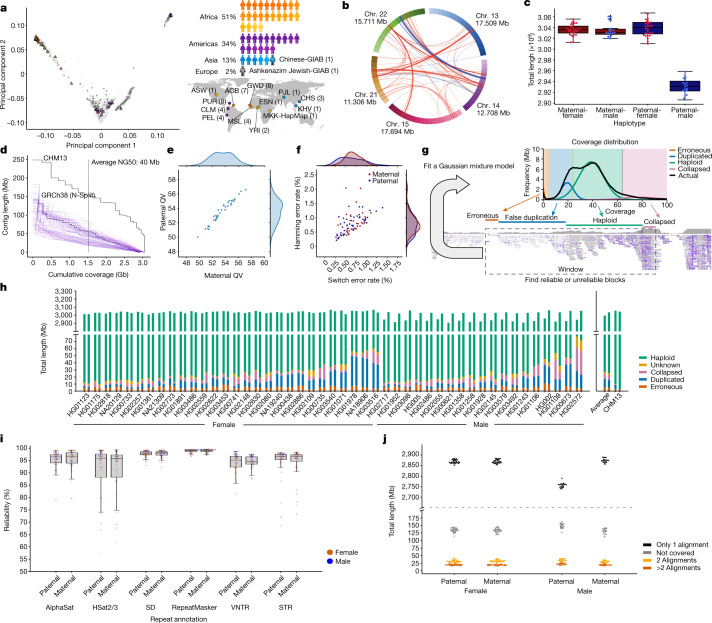
Here the Human Pangenome Reference Consortium presents a first draft of the human pangenome reference. The pangenome contains 47 phased, diploid assemblies from a cohort of genetically diverse individuals. These assemblies cover more than 99% of the expected sequence in each genome and are more than 99% accurate at the structural and base pair levels.
Overview
CoChat Summary
TL;DR
The paper presents a first draft human pangenome reference built from 47 phased, diploid assemblies from genetically diverse individuals, plus graph-based representations and annotations. The draft pangenome improves downstream analyses versus GRCh38, including reducing small-variant discovery errors by 34% and increasing detected structural variants per haplotype by 104%.
Key findings
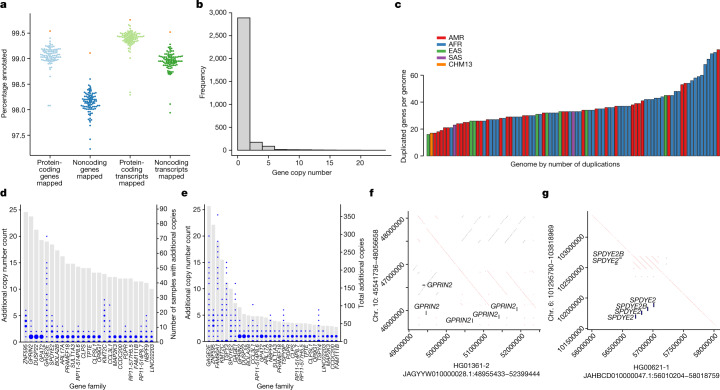
- The draft pangenome was built from 47 phased, diploid assemblies and adds 119 million base pairs of euchromatic polymorphic sequence plus 1,115 gene duplications relative to GRCh38; about 90 million of the added bases came from structural variation.
- Assemblies were reported as >99% complete and >99% accurate at structural and base-pair levels; the assembly reliability pipeline marked only 0.88% (26.4 Mb) of each assembly as unreliable.
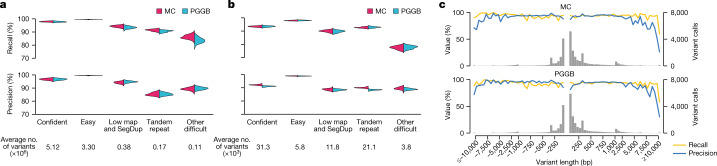
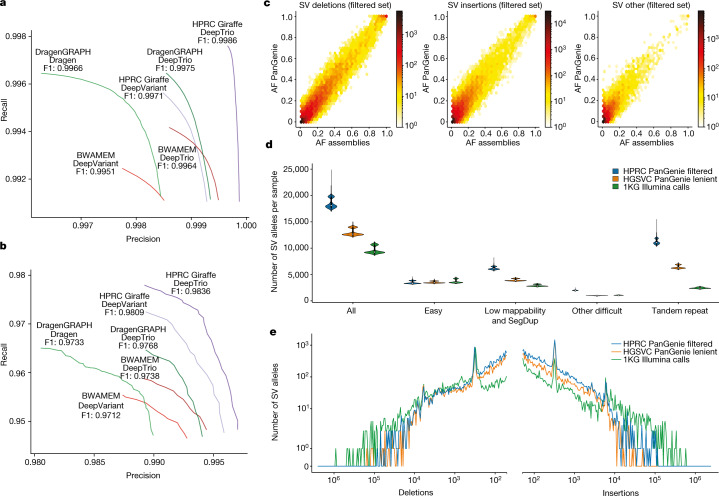
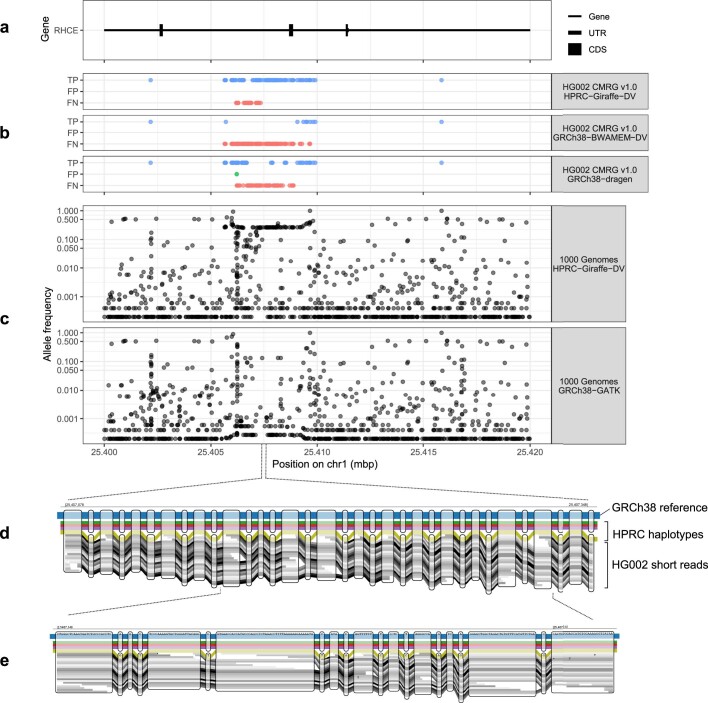
- In short-read analysis, the pangenome workflow reduced small-variant discovery errors by 34% and increased the number of structural variants detected per haplotype by 104% compared with GRCh38-based workflows.
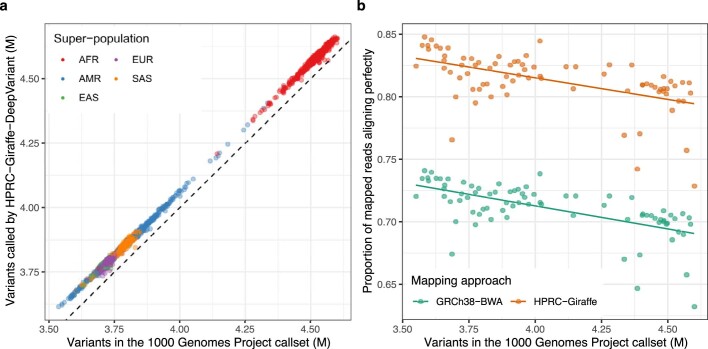
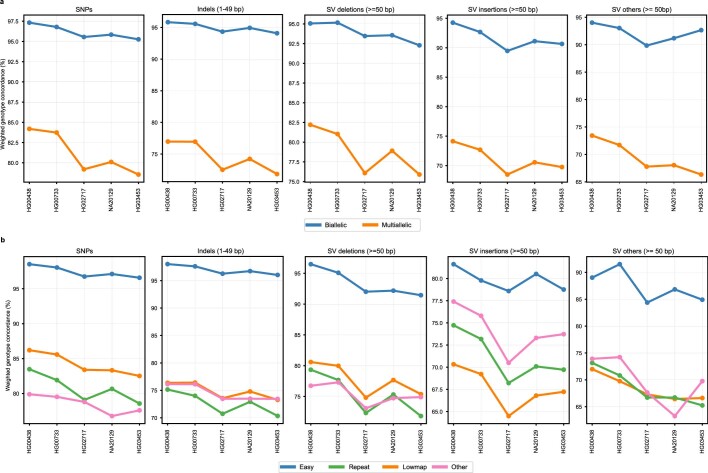
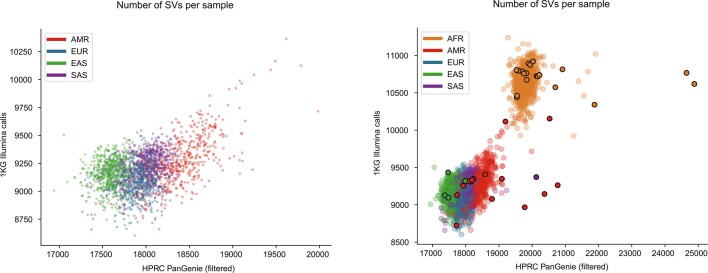
- For 1KG short-read genotyping, the pangenome-based call set gave on average 64,000 more small variants per sample than the 1KG catalogue; for SV genotyping it produced 18,483 SVs per sample versus 9,596 in the short-read 1KG call set.
Methods
- The study assembled 47 fully phased diploid genomes from globally diverse individuals, using PacBio HiFi, Oxford Nanopore, Hi-C, Bionano, and parental Illumina data; assemblies were phased with Trio-Hifiasm and manually/automatically curated.
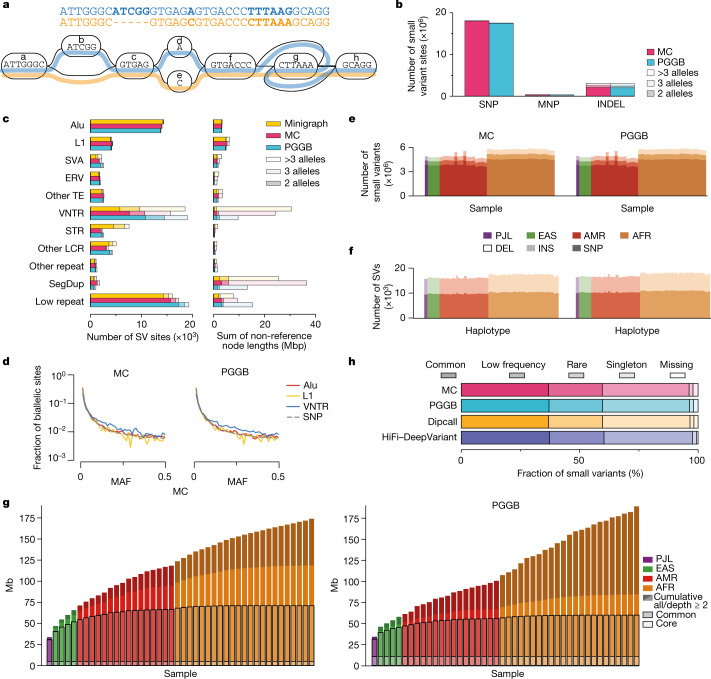
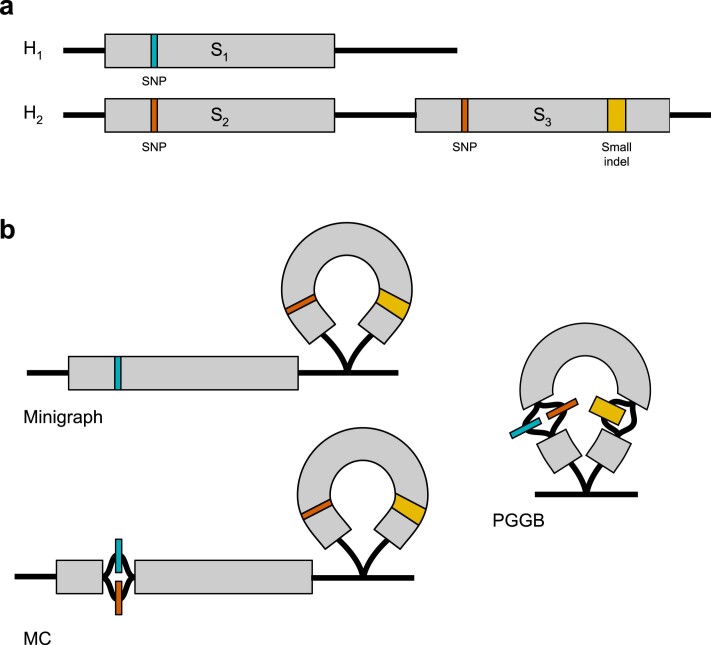
- The authors constructed pangenomes with three graph approaches: Minigraph, Minigraph-Cactus (MC), and PGGB, then evaluated variant representation, graph support, and downstream utility.
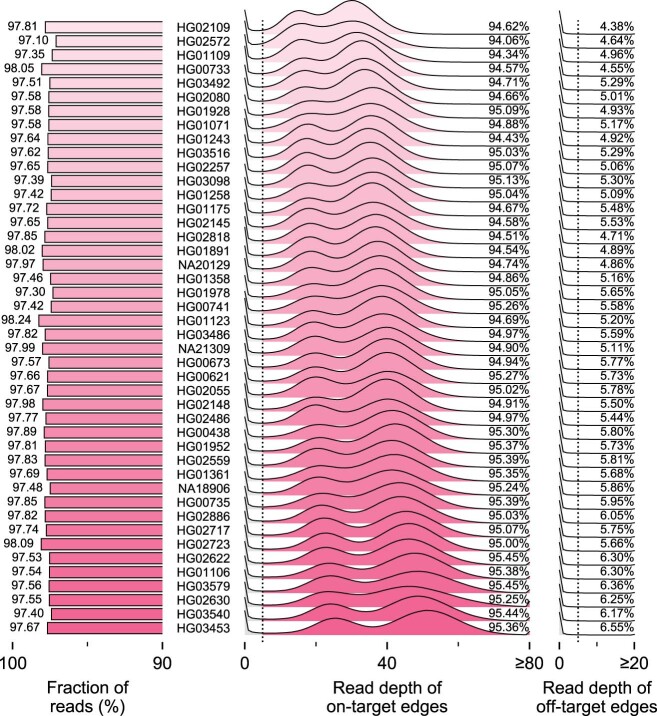
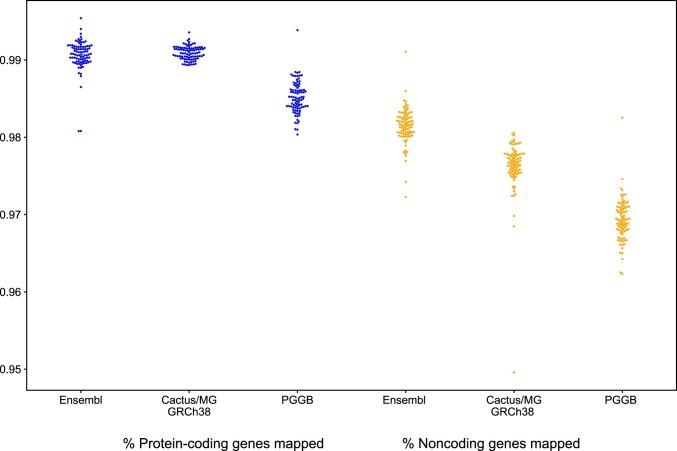
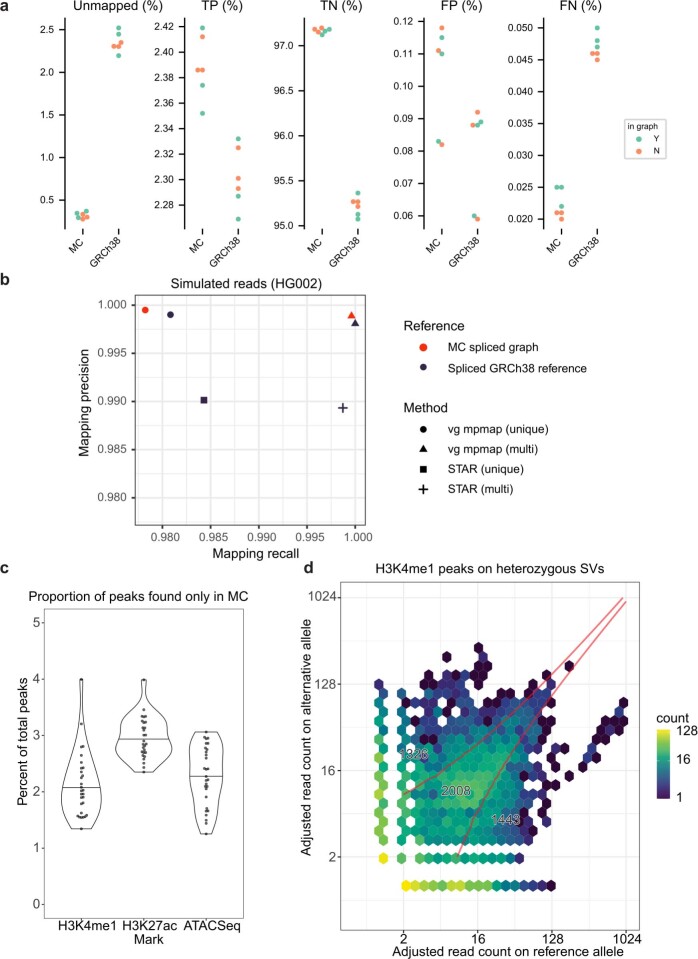
- They benchmarked pangenome-based analyses against GRCh38-based workflows using GIAB, 1KG short reads, and assembly-based comparisons for small variants, SVs, gene annotations, RNA-seq, ChIP-seq/ATAC-seq, VNTRs, and population analyses.
Limitations
- The paper states the cohort is relatively small and that the assembly reliability analysis found roughly an order of magnitude more erroneously assembled sequences in the HPRC assemblies than in T2T-CHM13.
- It explicitly notes remaining issues in highly repetitive regions and complex loci, where variant calling performance was lower and further work is needed; this is a stated limitation.
- The text also makes evident that some analyses are constrained by reference gaps, alignment ambiguity, and incomplete benchmarking truth sets; this is the paper’s implication, stated in the discussion around repetitive regions and underestimation of errors.
Model-written summary. Check it against the paper before relying on it.
Integrity signals
Registry
Cites
Statistics
Figures
Verification
Claims the paper makes
38 Valid · 5 Not valid · 2 Not checked · 206 Own results and interpretations
At least one cited source doesn’t support this claim or points to a different paper, and none confirmed it — see the verdicts below.
In the paper
“The pangenome contains 47 phased, diploid assemblies from a cohort of genetically diverse individuals1.”
§ A draft human pangenome reference > Abstract
What the sources say
- Disputedcites [1] 1000 Genomes Project Consortium. A global reference for human genetic variation Nature 2015 526 68 74 10.1038/nature15393 26432245 PMC4750478 sourceExperimental — accuracy not yet measured
The Abstract (page unavailable) describes a 1000 Genomes resource based on 2,504 individuals from 26 populations, with variants phased onto haplotypes. The Data set overview describes phasing variant sites, not a pangenome containing 47 phased, diploid assemblies. (LLM, conf=0.86)
Checked by a reasoning model — may be wrong.
plain- Asserted: passes — The authors put it forward as true.
- Checkable: passes — It can be checked against evidence.
- Load-bearing: passes — The paper’s conclusions depend on it.
- Based: passes — The paper gives a reason why it holds.
- Rests on an assumption not shown here.
- Disputed
The cited sources support only part of this claim — read each source’s verdict below.
In the paper
“Previous studies have identified tens of megabases of sequence contained within structural variants (SVs) that are polymorphic within the population5.”
§ A draft human pangenome reference > Main
What the sources say
- Partly supportedcites [5] Ebert P Haplotype-resolved diverse human genomes and integrated analysis of structural variation Science 2021 372 eabf7117 10.1126/science.abf7117 33632895 PMC8026704 sourceExperimental — accuracy not yet measured
The Results sections on structural variant distribution and complex structural variation document SVs and distinct structural haplotypes in human populations. But the reported ~279 Mbp is the genomic span of SV hotspots, not the amount of sequence contained within polymorphic SVs; the passages do not establish the claimed tens-of-megabases total. (LLM, conf=0.82)
plain- Asserted: passes — The authors put it forward as true.
- Checkable: passes — It can be checked against evidence.
- Load-bearing: passes — The paper’s conclusions depend on it.
- Based: passes — The paper gives a reason why it holds.
- Partly supported
Every source the paper cites for this claim was checked and supports it.
In the paper
“Recently, the Telomere-to-Telomere (T2T) consortium finished the first complete sequence of a haploid human genome, T2T-CHM13, which provides a contiguous representation of each autosome and of chromosome X, with the exception of some ribosomal DNA arrays that remain to be fully resolved3.”
§ A draft human pangenome reference > Main
What the sources say
- Supportedcites [3] Nurk S The complete sequence of a human genome Science 2022 376 44 53 10.1126/science.abj6987 35357919 PMC9186530 source
“A truly complete genome” states that T2T-CHM13 has gapless telomere-to-telomere assemblies for all 22 autosomes and chromosome X. “rDNA assembly” explains that the ordering of repeats in three rDNA arrays could not be fully resolved, so those arrays are represented by model sequences. (LLM, conf=0.93)
plainSingle case- Asserted: passes — The authors put it forward as true.
- Checkable: passes — It can be checked against evidence.
- Load-bearing: passes — The paper’s conclusions depend on it.
- Based: passes — The paper gives a reason why it holds.
- Supported
The cited sources support only part of this claim — read each source’s verdict below.
In the paper
“despite individual SVs being more likely to affect gene function than either individual SNPs or short insertions and deletions (indels)9,10.”
§ A draft human pangenome reference > Main
What the sources say
- Partly supportedcites [9] Chiang C The impact of structural variation on human gene expression Nat. Genet. 2017 49 692 699 10.1038/ng.3834 28369037 PMC5406250 sourceExperimental — accuracy not yet measured
The Results (Fine-mapping causal variants) state that, per variant, an SV is 28–54 times more likely to modulate gene expression than an SNV or indel. That supports the comparison for gene expression, but the cited analysis does not establish the broader claim about gene function generally. (LLM, conf=0.86)
- Partly supportedcites [10] Sudmant PH An integrated map of structural variation in 2,504 human genomes Nature 2015 526 75 81 10.1038/nature15394 26432246 PMC4617611 sourceExperimental — accuracy not yet measured
The Functional impact of SVs section reports that SV classes were enriched for expression-associated variants relative to the number tested, supporting a greater per-variant effect on gene expression. It uses eQTL associations as a surrogate for functional impact and groups SNPs with indels in the comparison; it does not establish the broader claim about gene function separately against each variant type. (LLM, conf=0.82)
hedgedstates an association- Asserted: passes — The authors put it forward as true.
- Checkable: passes — It can be checked against evidence.
- Load-bearing: passes — The paper’s conclusions depend on it.
- Based: passes — The paper gives a reason why it holds.
- Partly supported
Every source the paper cites for this claim was checked and supports it.
In the paper
“For the core assembler, we chose Trio-Hifiasm20 after detailed benchmarking of several alternatives21.”
§ A draft human pangenome reference > Assembling 47 diverse human genomes
What the sources say
- Supportedcites [20] Cheng H Concepcion GT Feng X Zhang H Li H Haplotype-resolved de novo assembly using phased assembly graphs with hifiasm Nat. Methods 2021 18 170 175 10.1038/s41592-020-01056-5 33526886 PMC7961889 source
Citation 20 identifies Trio-Hifiasm as the assembler the citing authors chose. The Results section (‘Overview of the hifiasm algorithm’) describes hifiasm’s graph-based trio binning, supporting that identification. The separate benchmarking claim is attached to citation 21, not this source. (LLM, conf=0.93)
- Supportedcites [21] Jarvis, E. D. et al. Semi-automated assembly of high-quality diploid human reference genomes. Nature611, 519–531 (2022). PMC9668749 36261518 source
The cited paper’s ‘Trios and higher phasing accuracy’ section compares several assembly algorithms and data types. Its ‘Graph phasing is more complete and accurate’ section reports that Trio hifiasm had the strongest combination of quality metrics among the diploid assemblies. The citing authors’ choice of core assembler is their own decision; this source supports the benchmarking offered as its rationale. Page numbers were not available in our copy. (LLM, conf=0.91)
plain- Asserted: passes — The authors put it forward as true.
- Checkable: passes — It can be checked against evidence.
- Load-bearing: unclear — It is unclear whether the paper’s conclusions depend on it.
- Based: passes — The paper gives a reason why it holds.
- Supported
135 more claims · 15 with their cited sources checked
Create a free account to see all 251 claims and to verify the 1 reference still open.
- It may state two separate claims as one. 80
- Probably not a substantial claim. 40
- The quote only partly states this claim. 1
Claims other papers make about this one
Each is checked against this paper’s own text: does it say what the citing paper says it does?
The cited source doesn’t support the claim as written.
In the citing paper
“In addition, the DRAGEN multigenome mapper is already incorporated for SV and CNV calling, something that is not currently possible with any other graph genome implementations because they focus primarily on genotyping variants14,73.”
From Comprehensive genome analysis and variant detection at scale using DRAGEN (2025) · cites this paper as [73]
Checked by a reasoning model — may be wrong.
Experimental — accuracy not yet measuredThe source backs part of the claim, not all of it — or backs it for a different population, condition or comparison.
In the citing paper
“Other biases, for example, in terms of sex, specific diseases, or human ancestral populations could also reduce the impact of AIVC models.115”
From How to build the virtual cell with artificial intelligence: Priorities and opportunities (2024) · cites this paper as [115]
Experimental — accuracy not yet measuredThe source backs part of the claim, not all of it — or backs it for a different population, condition or comparison.
In the citing paper
“For example, population-specific genes may provide insights into local adaptation, while structural variants may contribute to disease susceptibility or resistance in ways that were previously invisible to reference-based analyses [112,113].”
From Origin and Evolution of Genes in Eukaryotes: Mechanisms, Dynamics, and Functional Implications (2025) · cites this paper as [113]
Experimental — accuracy not yet measuredThe source backs part of the claim, not all of it — or backs it for a different population, condition or comparison.
In the citing paper
“These values were chosen after empirical experimentation specifically to filter out spurious mappings as determined by VCF-based comparison with Hi-Fi-based DeepVariant calls 25 .”
From Pangenome graph construction from genome alignments with Minigraph-Cactus (2024) · cites this paper as [25]
Experimental — accuracy not yet measuredThe cited source says what the claim attributes to it.
In the citing paper
“Notably, the first draft of a human pangenome reference has been released by the Human Pangenome Reference Consortium just last year as of the time of writing [19].”
From <tt>SAFARI</tt> : pangenome alignment of ancient DNA using purine/pyrimidine encodings (2025) · cites this paper as [19]
2 more claims about this paper
Create a free account to see every claim other papers make about this one.
Citations
Cites
The Sequence Alignment/Map format and SAMtools
Li, H., Handsaker, B., Wysoker, A., Fennell, T., Ruan, J., Homer, N., Marth, G., Abecasis, G., Durbin, R., & 1000 Genome Project Data Processing Subgroup (2009) · Bioinformatics · doi:10.1093/bioinformatics/btp352 · Cited by 62,041 · cited 1×
“3.1), (Li et al., 2009).”
InfluentialFast gapped-read alignment with Bowtie 2
Langmead, B., & Salzberg, S. L. (2012) · Nature Methods · doi:10.1038/nmeth.1923 · Cited by 56,400
STAR: ultrafast universal RNA-seq aligner
Dobin, A., Davis, C. A., Schlesinger, F., Drenkow, J., Zaleski, C., Jha, S., Batut, P., Chaisson, M., & Gingeras, T. R. (2013) · Bioinformatics · doi:10.1093/bioinformatics/bts635 · Cited by 51,709
BEDTools: a flexible suite of utilities for comparing genomic features
Quinlan, A. R., & Hall, I. M. (2010) · Bioinformatics · doi:10.1093/bioinformatics/btq033 · Cited by 27,437
Initial sequencing and analysis of the human genome
International Human Genome Sequencing Consortium, Whitehead Institute for Biomedical Research, C. F. G. R., Lander, E. S., Linton, L. M., Birren, B., Nusbaum, C., Zody, M. C., Baldwin, J., Devon, K., Dewar, K., et al. (2001) · Nature · doi:10.1038/35057062 · Cited by 24,216
Self-citationRSEM: accurate transcript quantification from RNA-Seq data with or without a reference genome
Li, B., & Dewey, C. N. (2011) · BMC Bioinformatics · doi:10.1186/1471-2105-12-323 · Cited by 22,179
A global reference for human genetic variation
The 1000 Genomes Project Consortium, authors, C., Auton, A., Abecasis, G. R., Steering committee, Altshuler, D. M., Durbin, R. M., Abecasis, G. R., Bentley, D. R., Chakravarti, A., et al. (2015) · Nature · doi:10.1038/nature15393 · Cited by 18,247
Self-citationAn integrated encyclopedia of DNA elements in the human genome
The ENCODE Project Consortium (2012) · Nature · doi:10.1038/nature11247 · Cited by 18,072
Twelve years of SAMtools and BCFtools
Danecek, P., Bonfield, J. K., Liddle, J., Marshall, J., Ohan, V., Pollard, M. O., Whitwham, A., Keane, T., McCarthy, S. A., Davies, R. M., et al. (2021) · GigaScience · doi:10.1093/gigascience/giab008 · Cited by 15,343 · cited 2×
“9 was used for filtering the variant sets (Danecek et al., 2021).”
MethodSelf-citationMinimap2: Pairwise alignment for nucleotide sequences
Li, H. (2018) · Bioinformatics · doi:10.1093/bioinformatics/bty191 · Cited by 14,807 · cited 8×
“The sequences of these anchors were them mapped against the target genome with minimap2 (Li, 2018b) using the following command:”
MethodInfluential
Cited by
Items 601–700 of 1,147
Genetic resources and pangenome analysis of barley
Sato, K. (2025) · Ikushugaku zasshi · doi:10.1270/jsbbs.24029 · Cited by 3
Yang, Q., Chen, J., Nie, S., Liu, C., Deng, H., & He, G. (2025) · Frontiers in Ecology and Evolution · doi:10.3389/fevo.2025.1572596 · Cited by 5
A 28-nm 239-bp/μJ Agile Pangenome Analysis Accelerator for Multi-Scheme Read Mapping
Zhang, Y., Zhu, J., Li, L., Zeng, G., Chen, D., Zhang, T., Deng, Y., Gong, Z., Zhang, A., Liu, Y., et al. (2025) · IEEE Journal of Solid-State Circuits · doi:10.1109/jssc.2025.3554616 · Cited by 4
“T HE recent release of the first human pangenome graph has revolutionized genome analysis [1].”
PVGwfa: a multi-level parallel sequence-to-graph alignment algorithm
Peng, C., Xia, Z., Tang, S., Guo, Y., Yang, C., Tang, T., & Cui, Y. (2025) · The Journal of Supercomputing · doi:10.1007/s11227-025-07184-z · Cited by 2
Au, E. H., Weaver, S., Katikaneni, A., Wucherpfennig, J. I., Luo, Y., Mangan, R. J., Wund, M. A., Bell, M. A., & Lowe, C. B. (2025) · G3 Genes Genomes Genetics · doi:10.1093/g3journal/jkaf114 · Cited by 2
Garvin, M. R., & Kainer, D. (2025) · Frontiers in Molecular Neuroscience · doi:10.3389/fnmol.2025.1553575 · Cited by 5
Dutta, D., Gouveia, M. H., Gorman, B. R., Adu-Gyamfi, A., Lee, C.-H., Ogwang, M. D., Kerchan, P., Reynolds, S. J., Tenge, C., Were, P. A., et al. (2025) · Leukemia · doi:10.1038/s41375-025-02690-8 · Cited by 2
Joint processing of long- and short-read sequencing data with deep learning improves variant calling
Gambardella, G. (2025) · Cell Reports Methods · doi:10.1016/j.crmeth.2025.101107 · Cited by 7
Current Progress in Phased Genome Assembly from Long-Read DNA Sequencing Data
Díaz-Riaño, J., & Duitama, J. (2025) · Methods in molecular biology · doi:10.1007/978-1-0716-4702-8_4 · Cited by 3
Mahdaoui, C. E., Dehbi, H., & Cherkaoui, S. (2025) · Lymphatics · doi:10.3390/lymphatics3030023 · Cited by 2
“The rapid evolution of pangenomic techniques has made it increasingly viable to advocate for the integration of a pangenome into routine genomic analyses (Table 6) [29].”
Mechanism of parent-of-origin effects revealed by multi-omic data in euro-chinese hybrid pigs
Li, C., Ge, M., Long, K., Han, Z., Li, M., Zhang, Z., & Huang, L. (2025) · Nature Communications · doi:10.1038/s41467-025-62243-6 · Cited by 8
Köksal, Z., Preussner, A., Leinonen, J. T., & Tukiainen, T. (2025) · Molecular Biology and Evolution · doi:10.1093/molbev/msaf222 · Cited by 2
Assembly of a high-quality Polypterus senegalus diploid genome
Shin, J. W., Kim, B., Kim, J., & Rhee, J. (2025) · Genes & Genomics · doi:10.1007/s13258-025-01685-0 · Cited by 2
“Moreover, pangenome-scale analyses and associated methodologies have emerged with an expanded capacity to capture intraspecific genomic variation (Kim et al. 2019, 2020, 2021, 2025; Lee et al. 2023a; Liao et al. 2023; Ryu et al. 2025; Wang et al. 2022).”
Finishing a complete giraffe genome from telomere to telomere with Verkko-Fillet
Kim, J., Rosen, B. D., Fumagalli, S. E., Kuhn, K. L., Long, A., Schoenebeck, J. J., Schwartz, H., Wu‐Cavener, L., Zimin, A. V., Cavener, D. R., et al. (2026) · Cell Genomics · doi:10.1016/j.xgen.2026.101279 · Cited by 7
“To this end, numerous international efforts—such as the Telomere-to-Telomere (T2T) Consortium, 1–3 the Human Pange-nome Reference Consortium (HPRC), 4,5 Vertebrate Genomes Project (VGP), 6 and Ruminant Telomere-to-Telomere (RT2T) Consortium 7 —focused on producing complete and accurate genome…”
Self-citationMovi 2: fast and space-efficient queries on pangenomes
Zakeri, M., Brown, N. K., Gagie, T., & Langmead, B. (2026) · Bioinformatics · doi:10.1093/bioinformatics/btag362 · Cited by 13
“Each row corresponds to a BWT run and consists of columns that correspond to the run-length representation, the LF -mapping of the run head, and the thresholds information (Bannai et al. 2020) which are offsets in the run.”
Optical mapping in Black genomes: Distinct LCR22 structures and 22q11.2 deletion syndrome mechanisms
Pastor, S. J., Tran, O., Lapointe, R., Olali, A. Z., Wallace, D. C., Morrow, B., Zackai, E. H., McDonald‐McGinn, D. M., & Emanuel, B. S. (2024) · Genetics in Medicine · doi:10.1016/j.gim.2025.101614 · Cited by 2
Genomic Crosstalk Between Nuclear Receptors in Hormone-dependent Cancers
Campbell, M. J. (2025) · Endocrinology · doi:10.1210/endocr/bqaf149 · Cited by 5
“…considerations that are little discussed, namely, the use of the human pangenome reference for alignment for cells of different ancestry (142); how the union or intersection of replicates is considered in cistrome studies and how that impacts false discovery; the merits of motif…”
Emerging hallmarks and the rise of complexities and heterogeneity of tumor
Arora, H. L., Sekar, G., Phadnis, A., Bahot, A., Bomle, D., Patel, V. G., Pal, J. K., Sarode, S. C., & Sharma, N. K. (2025) · Biochemistry and Biophysics Reports · doi:10.1016/j.bbrep.2025.102347 · Cited by 8
“Simultaneous examination of different layers of molecular data identifies significant molecular markers associated with the onset of cancer and elucidates the challenging relationships of various biological components involved [239].”
Liu, Z., & Gao, D. (2025) · Marine Biotechnology · doi:10.1007/s10126-025-10535-9 · Cited by 3
“These assemblies added over 90 million new bases to the existing reference genome (GRCh38), identified 115 million new polymorphic variations and discovered 1,115 new duplicated genes, demonstrating the great need for the pangenome reference (Liao et al. 2023).”
Genome region aware CADD thresholds for noncoding variant prioritization
Tenywa, J.-F., Lamouche, J.-B., Baer, S., Nicaise, S., Béchec, A. L., Piton, A., & Muller, J. (2025) · NAR Genomics and Bioinformatics · doi:10.1093/nargab/lqaf157 · Cited by 3
The value of structural variants to conservation genomics in the pangenome era
Pegan, T. M., Sivakumar, A., Burns, C. A., Lopez, K. A., Fang, B., Melendez, N. M., Bartel, L., & Edwards, S. V. (2025) · Journal of Heredity · doi:10.1093/jhered/esaf098 · Cited by 6
Yang, Z., Zhang, L., Jiang, X., Yang, X., Ma, K., Yoo, D., Lu, Y., Zhang, S., Chen, J., Nie, Y., et al. (2025) · Cell Genomics · doi:10.1016/j.xgen.2025.101079 · Cited by 11
Self-citationMohammadi, S., Gauthier, J., Nguyen, G. Q. H., et al. (2025) · Journal of Fungi · doi:10.3390/jof11120861 · Cited by 2
“Even the human genome, one of the most studied DNA sequences to date [54–56], still has more than 1000 conserved hypothetical proteins of yet unknown molecular function [57].”
DNA shape and epigenomics distinguish the mechanistic origin of human genomic structural variations
Boev, N. B., Gerstein, M., & Kumar, S. (2025) · Nucleic Acids Research · doi:10.1093/nar/gkaf1325 · Cited by 2
“Genomic consortia, including HGSVC [ 13 ], Human Pan Genome Reference Consortium (HPRC) [ 66 ], AllofUs [ 67 ], and 1KG-ONT [ 43 ] projects, are leveraging these technical advancements to describe SVs from diverse human populations.”
PG-SCUnK: measuring pangenome graph representativeness using single-copy and universal K-mers
Cumer, T., Milia, S., Leonard, A. S., & Pausch, H. (2025) · BMC Bioinformatics · doi:10.1186/s12859-025-06355-2 · Cited by 5
“Recent work evaluated graph quality by re-aligning either the original long read sequences (Liao et al. 2023) or source assemblies (Leonard et al. 2023) to the pangenome graph.”
Substitution Spectrum and Selection at G-quadruplexes in Great Ape Telomere-to-Telomere Genomes
Zhang, X., Mohanty, S. K., Chiaromonte, F., & Makova, K. D. (2026) · Genome Biology and Evolution · doi:10.1093/gbe/evag040 · Cited by 2
Structural variation in context: mechanisms, functions and selection regimes across the tree of life
Karageorgiou, C., Leffler, E. M., Dennis, M. Y., & Gökçümen, Ö. (2026) · Heredity · doi:10.1038/s41437-026-00832-x · Cited by 4
H19 and IGF2 imprinting from embryogenesis to oncogenesis
Ortega, B., Saeed, R., White, S., Tajanlangit, P. S., & Gallicano, G. I. (2026) · Frontiers in Cell and Developmental Biology · doi:10.3389/fcell.2026.1698015 · Cited by 2
“On a molecular level, focal hypomethylation within ICR1 unlocks access of shared enhancers to the IGF2 promoter on the maternal allele, amplifying IGF2 output and reactivating fetal growth programs in the metanephric blastema (Liao J et al., 2023).”
InfluentialCoster, W. D., den Broeck, M. V., Baker, M., Ghayal, N. B., Wynants, S., Batzler, A. J., Pottier, C. P., Alidadiani, S., Küçükali, F., Jenkins, G. D., et al. (2026) · Nature Genetics · doi:10.1038/s41588-026-02537-7 · Cited by 4
“In agreement with the HPRC assemblies 11 , we identified copy number variation (CNV) at the GOLGA8A–GOLGA8B locus but without disease association (Supplementary Note).”
Strand-seq and the future of personalized genomics
Hanlon, V. C. T., & Lansdorp, P. M. (2026) · Nature Genetics · doi:10.1038/s41588-026-02548-4 · Cited by 3
“Beyond these two applications, Strand-seq is also a powerful tool for constructing or refining de novo genome assemblies 1,4,17–22 , particularly as a scaffolding tool (that is, to group, order and orient contigs) and for phasing diploid genome assemblies.”
Global impact of germline structural variation on the cancer proteome
Chen, F., Zhang, Y., Paulin, L. F., Chandrashekar, D. S., Varambally, S., Sedlazeck, F. J., & Creighton, C. J. (2026) · Nature Communications · doi:10.1038/s41467-026-71967-y · Cited by 2
“In addition, when using Fisher ’ s method to combine protein and mRNA p values for each region (computed using one-sided p values, with the direction of change required to be the same in both), the top genes signi fi cant by both protein and mRNA at nominal p 0.01 for each were signi fi cant by Fisher ’ s methods with F…”
InfluentialThe regulation, function and disease relevance of cytoplasmic tRNAs
Stanley, R. E., Lowe, T. M., & Ignatova, Z. (2026) · Nature Reviews Molecular Cell Biology · doi:10.1038/s41580-026-00963-3 · Cited by 6
Revisiting tandem duplication in plant genomes: Technical challenges and pangenome solutions
Lim, S. D., Cushman, J. C., & Yim, W. C. (2026) · Current Opinion in Plant Biology · doi:10.1016/j.pbi.2026.102894 · Cited by 3
Unraveling Non-B DNA Structures in the Era of Telomere-to-Telomere Genomes
Makova, K. D., Mohanty, S., Smeds, L., Sieg, J. P., & Lahnsteiner, A. (2026) · Annual Review of Genomics and Human Genetics · doi:10.1146/annurev-genom-120324-010100 · Cited by 5
Shi, J., Lu, Y., Sheng, Z., Liu, H., Li, K., Chong, Y., Gao, Z., Deng, W., & Wu, D. (2026) · Biology · doi:10.3390/biology15110832 · Cited by 3
“In constructing the Human Pangenome Reference Consortium (HPRC), Liao et al. [24] employed this approach to reduce small-variant detection error rates by over 34%, demonstrating the iterative model-building method’s exceptional potential for enhancing variant calling reliability.”
The SMN locus in the T2T era: Structure, gene conversion, and clinical implications
Gommers, D., Zwartkruis, M. M., van der Pol, W. L., Groen, E. J. N., & van Haaften, G. W. (2026) · Trends in Genetics · doi:10.1016/j.tig.2026.05.009 · Cited by 2
Leaf: an ultrafast filter for population-scale long-read SV detection
Pan, C., & Reinert, K. (2024) · Genome biology · doi:10.1186/s13059-024-03297-5 · Cited by 1
Low, W. Y. (2024) · Animal Research and One Health · doi:10.1002/aro2.86 · Cited by 2
Kim, S., & Kim, J. (2024) · Genes & Genomics · doi:10.1007/s13258-024-01576-w · Cited by 2
“For example, long-read sequencing technologies have improved the genome assembly protocol to build reference genomes of any species by providing kilobase to megabase reads (Liao et al. 2023; Logsdon et al. 2020; Marx 2023; Nurk et al. 2022; Pol-lard et al. 2018).”
Enhancing Variant Calling in Whole-exome Sequencing Data Using Population-matched Reference Genomes
Guo, S., Huang, Z., Zhang, Y., He, Y., Chen, X., Wang, W., Li, L. M., Kang, Y., Gao, Z., Yu, J., et al. (2024) · Genomics Proteomics & Bioinformatics · doi:10.1093/gpbjnl/qzae070 · Cited by 4
“Furthermore, a draft human pangenome reference [17] and a comprehensive pangenome reference encompassing 36 Chinese populations have been developed [18], providing valuable resources for understanding genetic diversity across different populations.”
Constructing and personalizing population pangenome graphs
Chikhi, R., Dufresne, Y., & Medvedev, P. (2024) · Nature Methods · doi:10.1038/s41592-024-02402-7 · Cited by 5
Phasing nanopore genome assembly by integrating heterozygous variations and Hi-C data
Zhang, J., Nie, F., Luo, F., & Wang, J. (2024) · Bioinformatics · doi:10.1093/bioinformatics/btae712 · Cited by 2
“Notably, the Human Pangenome Reference Consortium has recently unveiled the initial draft of the human pangenome reference, comprising 47 phased diploid assemblies (Liao et al. 2023).”
Glunčić, M., Barić, D., & Paar, V. (2024) · Bioinformatics Advances · doi:10.1093/bioadv/vbae191 · Cited by 2
Geny: a genotyping tool for allelic decomposition of killer cell immunoglobulin-like receptor genes
Zhou, Q.-H., Ghezelji, M., Hari, A., Ford, M. K. B., Holley, C., Mirabello, L., Chanock, S. J., Şahinalp, S. C., & Numanagić, I. (2024) · Frontiers in Immunology · doi:10.3389/fimmu.2024.1494995 · Cited by 5
Breast Cancer: General Overview
Kavgacı, G., & Aksoy, S. (2024) · Springer eBooks · doi:10.1007/978-3-031-75480-7_1 · Cited by 4
Elenbaas, J. S., Lee, P. C., Patel, V., & Stitziel, N. O. (2025) · The Annual Review of Pharmacology and Toxicology · doi:10.1146/annurev-pharmtox-061724-080905 · Cited by 3
(2025) · Nature Medicine · doi:10.1038/s41591-025-03634-6 · Cited by 2
Castelli, E. C., Pereira, R. N., Paes, G. S., Andrade, H. S., Ferreira, M. R., Santos, Í. S. D. F., Vince, N., Pollock, N. R., Norman, P. J., & Meyer, D. (2025) · HLA · doi:10.1111/tan.70092 · Cited by 3
“We compared the allele calls from kir-mapper, PING-WGS and T1K with the ones reported for 34 long-read phased assemblies from the Human Pangenome Reference Consortium (HPRC) [30, 31], for which Illumina short-read data is also available from the 1000 Genomes project [17] (Figure 6).”
Diversity of U1 Small Nuclear RNAs and Diagnostic Methods for Their Mutations
Nakashima, T., Miyauchi, T., Takeuchi, R., Sugihara, Y., Funakoshi, Y., Ohka, F., Maeda, S., Hirato, J., Yoshioka, T., Okita, H., et al. (2025) · Cancer Science · doi:10.1111/cas.70110 · Cited by 3
“To further evaluate the complexity of U1 snRNA loci, we employed Minigraph and annotated cU1 and vU1 snRNA genes [6, 12].”
InfluentialChu, Y., Zhang, C., Pan, Z., & Peng, J. (2025) · The Italian Journal of Pediatrics/Italian journal of pediatrics · doi:10.1186/s13052-025-02053-0 · Cited by 4
Cis-regulatory elements at cellular resolution
See, Y. X., Stuart, T., & Shin, J. W. (2025) · Nature Reviews Genetics · doi:10.1038/s41576-025-00882-7 · Cited by 2
JG2: an updated version of the Japanese population-specific reference genome
Sriwichaiin, S., Makino, S., Funayama, T., Otsuki, A., Kawashima, J., Okamura, Y., Tadaka, S., Katsuoka, F., Kumada, K., Tsutsumi, S., et al. (2025) · Human Genome Variation · doi:10.1038/s41439-025-00326-y · Cited by 2
Maggio, F. D., Nunziato, M., Toscano, E., Sepe, L., Cimmino, R., Capolongo, E. A., Vasco, A., Paolella, G., & Salvatore, F. (2025) · Animals · doi:10.3390/ani15202991 · Cited by 2
“In recent years, third-generation sequencing strategies, provided by companies such as PacBio and Oxford Nanopore [20,21], have made significant contributions, particularly in reconstructing de-novo assemblies [22,23].”
Sixth Annual BCM Hackathon on Structural Variation and Pangenomics
Jaryani, F., Adhikar, B., Beheshti, S. T., Fross, S., Kubica, J., Wang, J., Adekoya, A., Agustinho, D. P., Akinsulire, O., Andreace, F., et al. (2025) · F1000Research · doi:10.12688/f1000research.170665.1 · Cited by 2
Helmy, M., Li, J. U., Yan, X. F., Meade, R. K., Anderson, E., Chen, P. B., Czechanski, A. M., Di Domenico, T., Flint, J., Garrison, E., et al. (2026) · Cell Genomics · doi:10.1016/j.xgen.2025.101074 · Cited by 8
Self-citationColumba: fast approximate pattern matching with optimized search schemes
Renders, L., Depuydt, L., Gagie, T., & Fostier, J. (2025) · Bioinformatics · doi:10.1093/bioinformatics/btaf652 · Cited by 2
“The alignment percentage of reads is noted alongside each runtime. representation of genetic diversity (Liao et al., 2023).”
Comparative genomics reveals LINE-1 recombination with diverse RNAs
Law, C., & Burns, K. H. (2026) · Cell Genomics · doi:10.1016/j.xgen.2026.101165 · Cited by 5
VDJ-Insights: simplifying the annotation of genomic immunoglobulin and T cell receptor regions
Ott, S., Le, N. G., Mohammadi, S. J., Mittertreiner, J., Pasini, E. M., Bontrop, R. E., de Groot, N. G., & Bruijnesteijn, J. (2026) · Bioinformatics · doi:10.1093/bioinformatics/btag108 · Cited by 1
“Although that study included a larger sample size, which strengthens their confirmation of novel alleles, we consider the HPRC assemblies to be high quality, particularly given the use of long reads and a trio binning strategy (Liao et al. 2023).”
InfluentialFirst human ‘pangenome’ aims to catalogue genetic diversity
Liverpool, L. (2023) · Nature · doi:10.1038/d41586-023-01576-y · Cited by 2
Sule, L., Gupta, S., Jain, N., & Sapre, N. S. (2023) · Journal of Mathematical Chemistry · doi:10.1007/s10910-023-01545-w · Cited by 3
Haplotype-Aware Sequence Alignment to Pangenome Graphs
Chandra, G., Gibney, D., & Jain, C. (2024) · Lecture notes in computer science · doi:10.1007/978-1-0716-3989-4_36 · Cited by 2
Glunčić, M., Vlahović, I., Rosandić, M., & Paar, V. (2024) · International Journal of Molecular Sciences · doi:10.3390/ijms25147596 · Cited by 2
“It was found that the orangutan alpha satellite HOR arrays are organized as a “mosaic patchwork” of distinct alpha satellite HOR blocks with a high degree of divergence [9,33,48–50].”
BackgroundGuguchkin, E., Kasianov, A. S., Беленикин, М. С., Zobkova, G., Kosova, E. V., Makeev, V. J., & Karpulevich, E. (2024) · BMC Bioinformatics · doi:10.1186/s12859-024-05862-y · Cited by 3
VRPG: an interactive visualization framework for reference-projected pangenome graphPreprint
Miao, Z., & Yue, J. (2023) · bioRxiv (Cold Spring Harbor Laboratory) · doi:10.1101/2023.01.20.524991 · Cited by 2
Pangenome graphs improve the analysis of rare genetic diseasesPreprint
Groza, C., Schwendinger-Schreck, C., Cheung, W., Farrow, E., Thiffault, I., Lake, J. A., Rizzo, W. B., Evrony, G. D., Curran, T., Bourque, G., et al. (2023) · medRxiv · doi:10.1101/2023.05.31.23290808 · Cited by 3
Self-citationHidden protein-altering variants influence diverse human phenotypesPreprint
Hujoel, M., Handsaker, R., Sherman, M. A., Kamitaki, N., Barton, A. R., Mukamel, R. E., Terao, C., Mccarroll, S., & Loh, P.-R. (2023) · bioRxiv · doi:10.1101/2023.06.07.544066 · Cited by 2
“Recent major efforts to study structural variation in human genomes have elucidated the landscape and mutational origins of SVs by ascertaining SVs from short-read sequencing of many thousands of individuals 2,3 and long-read sequencing of tens of individuals 4,5 .”
InfluentialSmall allelic variants are a source of ancestral bias in structural variant breakpoint placementPreprint
Audano, P. A., & Beck, C. R. (2023) · bioRxiv (Cold Spring Harbor Laboratory) · doi:10.1101/2023.06.25.546295 · Cited by 4
“Variants against GRCh38 for PGGB and MC graphs were obtained from the decomposed VCFs published by the HPRC (Liao et al. , 2023) (see "Resource table" in Methods for URLs).”
BackgroundMethodInfluentialCalendo, G., Kusic, D., Madžo, J., et al. (2023) · bioRxiv (Cold Spring Harbor Laboratory) · doi:10.1101/2023.07.24.550372 · Cited by 2
“This annotation choice is specifically designed to take advantage of increasingly common long-read WGS datasets, such as the data being generated by the Human Pangenome Reference Consortium [21].”
MethodA pan-MHC reference graph with 246 fully contiguous phased sequencesPreprint
Huijse, L., Adams, S. M., Burton, J. N., David, J. K., Julian, R., Meshulam-Simon, G., Mickalide, H., Tafesse, B. D., Calonga‐Solís, V., Wolf, I. R., et al. (2023) · bioRxiv (Cold Spring Harbor Laboratory) · doi:10.1101/2023.09.01.555813 · Cited by 4
“The vertical dotted line represents the number of haplotypes released by the HPRC in Liao et al.(40)”
MethodImproving Hi-C contact matrices using genome graphsPreprint
Shen, Y., Yu, L., Qiu, Y., Zhang, T., & Kingsford, C. (2023) · bioRxiv (Cold Spring Harbor Laboratory) · doi:10.1101/2023.11.08.566275 · Cited by 2
KAGE 2: Fast and accurate genotyping of structural variation using pangenomesPreprint
Grytten, I., Rand, K. D., & Sandve, G. K. (2023) · bioRxiv (Cold Spring Harbor Laboratory) · doi:10.1101/2023.12.23.572333 · Cited by 4
RT2T: A Global Collaborative Project to Study Chromosomal Evolution in the Suborder RuminantiaPreprint
Kalbfleisch, T., McKay, S., Murdoch, B. M., Adelson, D. L., Almansa-Villa, D., Becker, G. M., Beckett, L. M., Benítez-Galeano, M. J., Biase, F. H., Casey, T., et al. (2024) · Research Square · doi:10.21203/rs.3.rs-3918604/v1 · Cited by 3
Self-citationDefining and Reducing Variant Classification DisparitiesPreprint
Dawood, M., Fayer, S., Pendyala, S., Post, M., Kalra, D., Patterson, K., Venner, E., Muffley, L. A., Fowler, D. M., Rubin, A. F., et al. (2024) · medRxiv · doi:10.1101/2024.04.11.24305690 · Cited by 2
“Calls for diversifying genomics have yielded a pangenome reference 36 , H3Africa to equip Africa with genomics infrastructure 37 , and diverse participant recruitment in All of Us 38 .”
BackgroundMind the gap: the relevance of the genome reference to resolve rare and pathogenic inversionsPreprint
Sæther, K. B., Eisfeldt, J., Bengtsson, J. D., Lun, M. Y., Grochowski, C. M., Mahmoud, M., Chao, H., Rosenfeld, J. A., Liu, P., Schuy, J., et al. (2024) · medRxiv · doi:10.1101/2024.04.22.24305780 · Cited by 3
The primate Major Histocompatibility Complex as a case study of gene family evolution
Fortier, A. L., & Pritchard, J. K. (2025) · eLife · doi:10.1101/2024.09.16.613318 · Cited by 15
AGAPduplicons associate with structural diversity at Chromosome 10q11.22
Fornezza, S., Delvecchio, V. S., Harvey, W. T., Dishuck, P. C., Eichler, E. E., & Giannuzzi, G. (2024) · Genome Research · doi:10.1101/gr.279454.124 · Cited by 3
Self-citationHu, T., Mosbruger, T. L., Tairis, N. G., Dinou, A., Jayaraman, P., Sarmady, M., Kingham, B. F., Li, Y., Hayeck, T. J., Duke, J. L., et al. (2024) · Genome Research · doi:10.1101/gr.278588.123 · Cited by 2
Li, C., Bonder, M. J., Syed, S. A., Jensen, M., HGSVC Functional Analysis Working Group, Gerstein, M., Zody, M. C., Chaisson, M., Talkowski, M. E., Marschall, T., et al. (2024) · Genome Research · doi:10.1101/gr.279419.124 · Cited by 11
Self-citationShin, H. D., Park, W., Chai, H., et al. (2025) · Scientific Data · doi:10.1038/s41597-024-04287-9 · Cited by 2
“19 .”
Pangenome graph augmentation from unassembled long readsPreprint
Denti, L., Bonizzoni, P., Brejová, B., Chikhi, R., Krannich, T., Vinař, T., & Hormozdiari, F. (2025) · bioRxiv (Cold Spring Harbor Laboratory) · doi:10.1101/2025.02.07.637057 · Cited by 8
“To evaluate the accuracy of our method, we considered pangenome graphs constructed from the variant callsets against the T2T reference genome provided by the Human Pangenome Reference Consortium (HPRC) [28] using vg [17].”
InfluentialMonlong, J., Chen, X., Barseghyan, H., Rowell, W. J., Negi, S., Nokoff, N., Mohnach, L. H., Hirsch, J. A., Finlayson, C. A., Keegan, C. E., et al. (2025) · medRxiv · doi:10.1101/2025.02.07.25321404 · Cited by 3
Self-citationExpanded methylome and quantitative trait loci detection by long-read profiling of personal DNA
Groza, C., Ge, B., Cheung, W., Pastinen, T., & Bourque, G. (2025) · Genome Research · doi:10.1101/gr.279240.124 · Cited by 7
“…de novo assemblies from the Genomic Answers for Kids (GA4K) Consortium (Cohen et al. 2022; Kane et al. 2023) and the 94 Human Pangenome Reference Consortium (HPRC) assemblies (Liao et al. 2023) to survey 435 5mC methylomes derived from whole genome sequencing of blood using HiFi long-reads.”
InfluentialSelf-citationPangenome-based identification of cryptic pathogenic variants in undiagnosed rare disease patientsPreprint
Jang, S., Kim, S., Lee, S., Kim, S. Y., Moon, J., Kim, J., & Chae, J. (2025) · medRxiv · doi:10.1101/2025.07.08.25330875 · Cited by 2
Pozner, T., Grandizio, C., Mitchell, M. W., Cui, X., Neilson, A., Sentmanat, M. F., Wang, T., Stitziel, N. O., Turan, N., & Scheinfeldt, L. (2025) · bioRxiv (Cold Spring Harbor Laboratory) · doi:10.1101/2025.08.05.668740 · Cited by 2
Self-citationPangenome-based genome inference using integer programming
Chandra, G., Hossen, M. H., Scholz, S., Dilthey, A., Gibney, D., & Jain, C. (2025) · Genome Research · doi:10.1101/gr.280567.125 · Cited by 3
Jiang, T., Hu, H. K., Gao, R., et al. (2025) · bioRxiv (Cold Spring Harbor Laboratory) · doi:10.1101/2025.07.11.664486 · Cited by 2
Himito : a Graph-based Toolkit for Mitochondrial Genome Analysis using Long ReadsPreprint
Su, H., Huang, Y., Durham, T., Kong, N., Casey, E., Benjamin, D. I., Jin, S. C., & Garimella, K. V. (2025) · bioRxiv (Cold Spring Harbor Laboratory) · doi:10.1101/2025.11.03.686348 · Cited by 2
The Clinical Genomic Variation LandscapePreprint
Goar, W., Puthawala, D., Kuzma, K., Bratulin, A., Antoniou, A. A., Arbesfeld, J. A., Babb, L. J., Ferriter, K., O’Neill, T., Stevenson, J., et al. (2025) · medRxiv · doi:10.1101/2025.11.04.25339115 · Cited by 3
“These novel reference assemblies are advancing our understanding of the human genome and have the potential to identify additional clinically-relevant variants 35 , and it is anticipated by the Human Pangenome Reference Consortium that there will be an increasingly broad set of clinical applications emerging from the…”
High-quality phased genome assemblies of line-bred Korean Hanwoo cattle
Shin, J. W., Kim, H. J., Jin, S., Chung, Y., Lee, S. H., & Kim, J. (2025) · Scientific Data · doi:10.1038/s41597-025-06069-3 · Cited by 3
Human acrocentric chromosome short arm de novo mutation and recombinationPreprint
Lin, J., Mastrorosa, F. K., Noyes, M. D., et al. (2025) · bioRxiv (Cold Spring Harbor Laboratory) · doi:10.64898/2025.12.16.694519 · Cited by 2
Self-citationA comprehensive assessment of tandem repeat genotyping methods for Nanopore long-read genomesPreprint
ALIYEV, E. E., Avvaru, A. K., Coster, W. D., Arner, G. M., Nyaga, D. M., Gibson, S. B., Weisburd, B., Gu, B., Gonzaga-Jauregui, C., Chaisson, M., et al. (2026) · bioRxiv (Cold Spring Harbor Laboratory) · doi:10.64898/2026.02.28.708646 · Cited by 2
Self-citationHamm, D. C., O'Donnell, A. B., Bennett, S. R., Lemmers, R. J. L. F., van der Vliet, P. J., van der Maarel, S. M., & Tapscott, S. J. (2026) · Genes & Development · doi:10.1101/gad.353253.125 · Cited by 3
Lee, C., Davenport, M. H., & Jarvis, E. D. (2026) · bioRxiv (Cold Spring Harbor Laboratory) · doi:10.64898/2026.04.21.719679 · Cited by 3
Self-citation<tt>SAFARI</tt> : pangenome alignment of ancient DNA using purine/pyrimidine encodings
Rubin, J., van Waaij, J., Kraft, L., Sirén, J., Sackett, P. W., & Renaud, G. (2025) · NAR Genomics and Bioinformatics · doi:10.1093/nargab/lqaf170 · Cited by 1
“Notably, the first draft of a human pangenome reference has been released by the Human Pangenome Reference Consortium just last year as of the time of writing [ 19 ].”
Self-citationThe importance of age‐specific gene expression
Hall, J. G. (2023) · American Journal of Medical Genetics Part A · doi:10.1002/ajmg.a.63354 · Cited by 1
“There may be differences between different ethnic groups (Liao et al., 2023; Xu et al., 2023; Zhang et al., 2023).”
BackgroundLINE1 mediates long-range DNA interactions
Liang, Y., & Wang, T. (2024) · Nature Genetics · doi:10.1038/s41588-024-01824-5 · Cited by 1
Self-citationOrthanq: transparent and uncertainty-aware haplotype quantification with application in HLA-typing
Uzuner, H., Paschen, A., Schadendorf, D., & Köster, J. (2024) · BMC Bioinformatics · doi:10.1186/s12859-024-05832-4 · Cited by 1
“…Illumina Dragen pipeline), Orthanq also provides the by far most favorable runtime and memory requirements: it can directly work from pangenome aligned reads with the accuracy reported in this paper given that a sufficiently representative pangenome was used as e.g. presented by Liao et al. [19].”
BackgroundMethodThree decades of rat genomics: approaching the finish(ed) line
Kalbfleisch, T., Smith, M. L., Ciosek, J. L., Li, K., & Doris, P. A. (2024) · Physiological Genomics · doi:10.1152/physiolgenomics.00110.2024 · Cited by 1
Self-citationEpigenomic Sequencing Technologies
Chen, J., Keshavarzian, T., & Lupien, M. (2024) · Royal Society of Chemistry eBooks · doi:10.1039/9781837674916-00109 · Cited by 1
Fernandez-Luna, L., Aguilar-Perez, C., Grochowski, C. M., Mehaffey, M. G., Carvalho, C. M. B., & Gonzaga-Jauregui, C. G. (2024) · Human Genetics and Genomics Advances · doi:10.1016/j.xhgg.2024.100396 · Cited by 5
“65,66 The availability of long-read sequenced human genomes assembled de novo in a reference-free manner in the years to come offers the possibility to expand the landscape of human repeat variation and architecture.”
Metadata
- Authors
- Liao, W.-W., Asri, M., Ebler, J., Doerr, D., Haukness, M., Hickey, G., Lu, S., Lucas, J. K., Monlong, J., Abel, H. J., Buonaiuto, S., Chang, X. H., Cheng, H., Chu, J., Colonna, V., Eizenga, J. M., Feng, X., Fischer, C., Fulton, R. S., Garg, S., Groza, C., Guarracino, A., Harvey, W. T., Heumos, S., Howe, K., Jain, M., Lu, T.-Y., Markello, C., Martin, F. J., Mitchell, M. W., Munson, K. M., Mwaniki, M. N., Novak, A. M., Olsen, H. E., Pesout, T., Porubsky, D., Prins, P., Sibbesen, J. A., Sirén, J., Tomlinson, C., Villani, F., Vollger, M. R., Antonacci-Fulton, L. L., Baid, G., Baker, C. A., Belyaeva, A., Billis, K., Carroll, A., Chang, P.-C., Cody, S., Cook, D. E., Cook-Deegan, R. M., Cornejo, O. E., Diekhans, M., Ebert, P., Fairley, S., Fedrigo, O., Felsenfeld, A. L., Formenti, G., Frankish, A., Gao, Y., Garrison, N. A., Giron, C. G., Green, R. E., Haggerty, L., Hoekzema, K., Hourlier, T., Ji, H. P., Kenny, E. E., Koenig, B. A., Kolesnikov, A., Korbel, J. O., Kordosky, J., Koren, S., Lee, H., Lewis, A. P., Magalhães, H., Marco-Sola, S., Marijon, P., McCartney, A., McDaniel, J., Mountcastle, J., Nattestad, M., Nurk, S., Olson, N. D., Popejoy, A. B., Puiu, D., Rautiainen, M., Regier, A. A., Rhie, A., Sacco, S., Sanders, A. D., Schneider, V. A., Schultz, B. I., Shafin, K., Smith, M. W., Sofia, H. J., Abou Tayoun, A. N., Thibaud-Nissen, F., Tricomi, F. F., Wagner, J., Walenz, B., Wood, J. M. D., Zimin, A. V., Bourque, G., Chaisson, M. J. P., Flicek, P., Phillippy, A. M., Zook, J. M., Eichler, E. E., Haussler, D., Wang, T., Jarvis, E. D., Miga, K. H., Garrison, E., Marschall, T., Hall, I. M., Li, H., & Paten, B.
- Affiliations
- Washington University in St. Louis (US)
- University of California, Santa Cruz (US)
- Heinrich Heine University Düsseldorf (DE)
- Yale University (US)
- Institute of Genetics and Biophysics (IT)
- Harvard University (US)
- Dana-Farber Cancer Institute (US)
- University of Tennessee Health Science Center (US)
- Novo Nordisk Foundation (DK)
- McGill University (CA)
- University of Washington (US)
- Quantitative Biology Center (DE)
- Wellcome Sanger Institute (GB)
- Northeastern University (US)
- University of Southern California (US)
- European Bioinformatics Institute (GB)
- Coriell Institute For Medical Research (US)
- University of Pisa (IT)
- University of Copenhagen (DK)
- Google (United States) (US)
- Washington Center (US)
- Rockefeller University (US)
- National Institutes of Health (US)
- Children's Hospital of Philadelphia (US)
- University of California, Los Angeles (US)
- Stanford Medicine (US)
- Icahn School of Medicine at Mount Sinai (US)
- University of California, San Francisco (US)
- National Institute of Standards and Technology (US)
- University of California, Davis (US)
- Johns Hopkins University (US)
- Max Delbrück Center (DE)
- Kyoto University (JP)
- Howard Hughes Medical Institute (US)
- Corresponding author
- Garrison, Erik
- Marschall, Tobias
- Hall, Ira M.
- Li, Heng
- Paten, Benedict
- ORCID
- Liao, Wen-Wei
- Asri, Mobin
- Ebler, Jana
- Doerr, Daniel
- Haukness, Marina
- Hickey, Glenn
- Lu, Shuangjia
- Lucas, Julian K.
- Monlong, Jean
- Abel, Haley J.
- Buonaiuto, Silvia
- Chang, Xian H.
- Cheng, Haoyu
- Chu, Justin
- Colonna, Vincenza
- Eizenga, Jordan M.
- Feng, Xiaowen
- Fulton, Robert S.
- Garg, Shilpa
- Groza, Cristian
- Guarracino, Andrea
- Harvey, William T.
- Heumos, Simon
- Howe, Kerstin
- Jain, Miten
- Lu, Tsung-Yu
- Markello, Charles
- Martin, Fergal J.
- Mitchell, Matthew W.
- Munson, Katherine M.
- Mwaniki, Moses Njagi
- Novak, Adam M.
- Olsen, Hugh E.
- Pesout, Trevor
- Porubsky, David
- Prins, Pjotr
- Sibbesen, Jonas A.
- Sirén, Jouni
- Tomlinson, Chad
- Villani, Flavia
- Vollger, Mitchell R.
- Baid, Gunjan
- Belyaeva, Anastasiya
- Billis, Konstantinos
- Carroll, Andrew
- Chang, Pi-Chuan
- Cook, Daniel E.
- Cook-Deegan, Robert M.
- Cornejo, Omar E.
- Diekhans, Mark
- Ebert, Peter
- Fairley, Susan
- Fedrigo, Olivier
- Formenti, Giulio
- Frankish, Adam
- Gao, Yan
- Garrison, Nanibaa’ A.
- Green, Richard E.
- Haggerty, Leanne
- Hoekzema, Kendra
- Hourlier, Thibaut
- Ji, Hanlee P.
- Kenny, Eimear E.
- Koenig, Barbara A.
- Kolesnikov, Alexey
- Korbel, Jan O.
- Koren, Sergey
- Lee, HoJoon
- Lewis, Alexandra P.
- Magalhães, Hugo
- Marco-Sola, Santiago
- Marijon, Pierre
- McDaniel, Jennifer
- Mountcastle, Jacquelyn
- Nattestad, Maria
- Nurk, Sergey
- Olson, Nathan D.
- Popejoy, Alice B.
- Puiu, Daniela
- Rautiainen, Mikko
- Regier, Allison A.
- Rhie, Arang
- Sacco, Samuel
- Sanders, Ashley D.
- Shafin, Kishwar
- Smith, Michael W.
- Sofia, Heidi J.
- Thibaud-Nissen, Françoise
- Tricomi, Francesca Floriana
- Wagner, Justin
- Walenz, Brian
- Wood, Jonathan M. D.
- Zimin, Aleksey V.
- Bourque, Guillaume
- Chaisson, Mark J. P.
- Flicek, Paul
- Phillippy, Adam M.
- Zook, Justin M.
- Eichler, Evan E.
- Haussler, David
- Wang, Ting
- Jarvis, Erich D.
- Miga, Karen H.
- Garrison, Erik
- Marschall, Tobias
- Hall, Ira M.
- Li, Heng
- Paten, Benedict
- Venue
- Nature
- Published
- 2023-05-10
- Volume
- 617
- Issue
- 7960
- Pages
- 312-324
- ISSN
- 0028-0836 (ISSN-L)
- 1476-4687
- PMC
- PMC10172123
- OpenAlex
- W4376133202
- Semantic Scholar
- 30c5780eccdbc66a26c4f4b744e35df1a2817bea
- Cited by
- 1,129
- References
- 150
- Citations by year
- 2026: 300 · 2025: 374 · 2024: 315 · 2023: 132
- FWCI
- 101.10
- Type
- journal article
- Language
- en
- Open access
- hybrid
- doi.org
- Licence
- cc-by
- creativecommons.org/licenses/by/4.0 (tdm)
- creativecommons.org/licenses/by/4.0 (vor)
- Locations
- Nature (publishedVersion, cc-by)
- PubMed Central (publishedVersion, cc-by)
- PubMed (publishedVersion)
- Digital Commons@Becker (Washington University School of Medicine) (submittedVersion, cc-by)
- HAL (submittedVersion)
- Dipòsit Digital de Documents de la UAB (Universitat Autònoma de Barcelona) (submittedVersion, cc-by)
- eScholarship (California Digital Library) (submittedVersion, cc-by)
- UPCommons institutional repository (Universitat Politècnica de Catalunya) (submittedVersion, cc-by-nc-nd)
- Funders
- Wellcome Trust (WT104947/Z/14/Z, WT222155/Z/20/Z, WT108749/Z/15/Z)
- Nederlandse Organisatie voor Wetenschappelijk Onderzoek (2021.040)
- Novo Nordisk Fonden (NNF10CC1016517, NNF21OC0069089)
- National Institutes of Health (OT2OD033761)
- National Human Genome Research Institute (R01HG010485, U24HG009081, U01HG010973, U01HG010963, U01HG010971, U41HG007234, R01HG011274, U01HG010961, R01HG002385, U24HG011853, U24HG007234, R01HG010169, ZIAHG200398, U24HG007497, U24HG010262, U41HG010972, R01HG011649, R01HG006677)
- National Institute of General Medical Sciences (R01GM123489, R35GM130151)
- Topics
- Life Sciences › Biochemistry, Genetics and Molecular Biology › Molecular Biology › Genomics and Phylogenetic Studies
- Life Sciences › Biochemistry, Genetics and Molecular Biology › Genetics › Genomic variations and chromosomal abnormalities
- Life Sciences › Biochemistry, Genetics and Molecular Biology › Genetics › Genetic Associations and Epidemiology
- Keywords
- human pangenome, structural variants, gene duplication, haplotypes, GRCh38, genetic diversity
- MeSH terms
- Alleles, Diploidy, Haplotypes, Humans, Reference Standards, Genetic Variation, Cohort Studies, Genome, Human, Sequence Analysis, DNA, Genomics
About these checks
Registry, retraction, Cites and statistics results are computed, not judged, with one exception: a printed reference that no index lists is read once by a model before it counts as a citation error. Claims are extracted by a model and kept only when their quote appears verbatim in the text; each cited source is then checked, with a model’s help, for whether it says what the claim relies on. Those verdicts can be wrong — read the claim’s quote and the cited source before relying on one.
The claim verdicts this report counts are experimental: their accuracy is not yet measured.
A language model drew the claims from the paper on 2026-10-11, under version 3 of the claim definition (model deepseek-v4.1-flash, prompt extract-v3).
A second model labelled each claim on 2026-10-11 (model jev-1.13-20260917, definition revision gold-guideline-v0.2).
Cited sources are checked with a language model’s help (gpt-6-sol).
Statistics and arithmetic are recomputed, not judged.
Confidence bands are shown only for fields calibrated on our annotated test set. None is calibrated yet, so no band is shown.
What counts as a claim ›How we measure confidence ›How we check this ›
Are you an author, or do you see a problem with this page? Request a review
Data sources
Bibliographic data: Semantic Scholar, OpenAlex, Crossref.
Contains information from the Semantic Scholar Academic Graph Datasets, made available under the ODC Attribution License (ODC-BY 1.0).
Semantic Scholar’s data is described in: Kinney, R., et al. (2023). The Semantic Scholar Open Data Platform. arXiv:2301.10140.
