

A draft human pangenome reference.
Open accessPublished version of a preprint
The DOI matches its Crossref record; 139 of the 150 references it cites were found in a registry or an index; 59 of the 67 sources its claims cite were checked for support.
Abstract
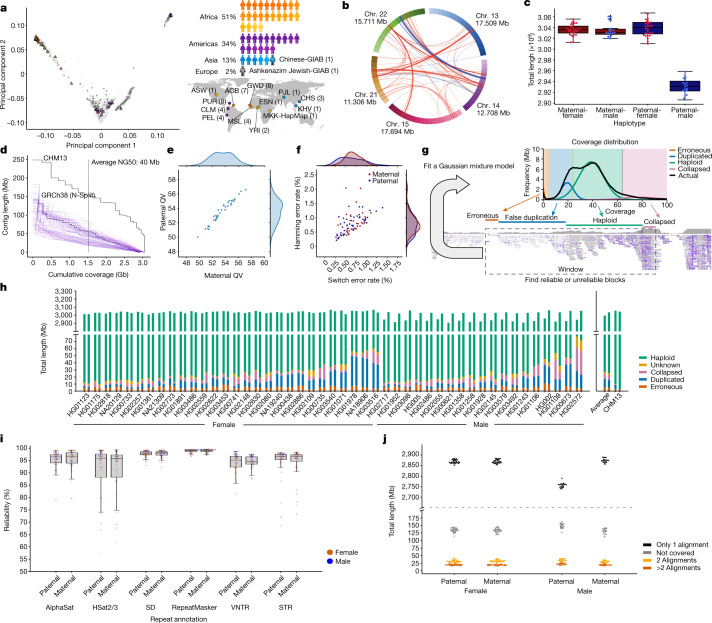
Here the Human Pangenome Reference Consortium presents a first draft of the human pangenome reference. The pangenome contains 47 phased, diploid assemblies from a cohort of genetically diverse individuals. These assemblies cover more than 99% of the expected sequence in each genome and are more than 99% accurate at the structural and base pair levels.
Overview
CoChat Summary
TL;DR
The paper presents a first draft human pangenome reference built from 47 phased, diploid assemblies from genetically diverse individuals, plus graph-based representations and annotations. The draft pangenome improves downstream analyses versus GRCh38, including reducing small-variant discovery errors by 34% and increasing detected structural variants per haplotype by 104%.
Key findings
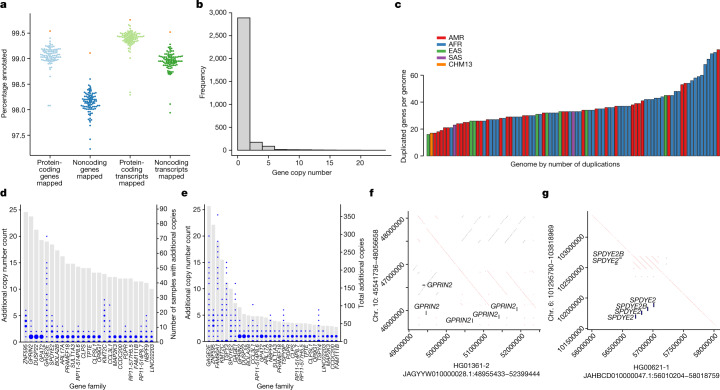
- The draft pangenome was built from 47 phased, diploid assemblies and adds 119 million base pairs of euchromatic polymorphic sequence plus 1,115 gene duplications relative to GRCh38; about 90 million of the added bases came from structural variation.
- Assemblies were reported as >99% complete and >99% accurate at structural and base-pair levels; the assembly reliability pipeline marked only 0.88% (26.4 Mb) of each assembly as unreliable.
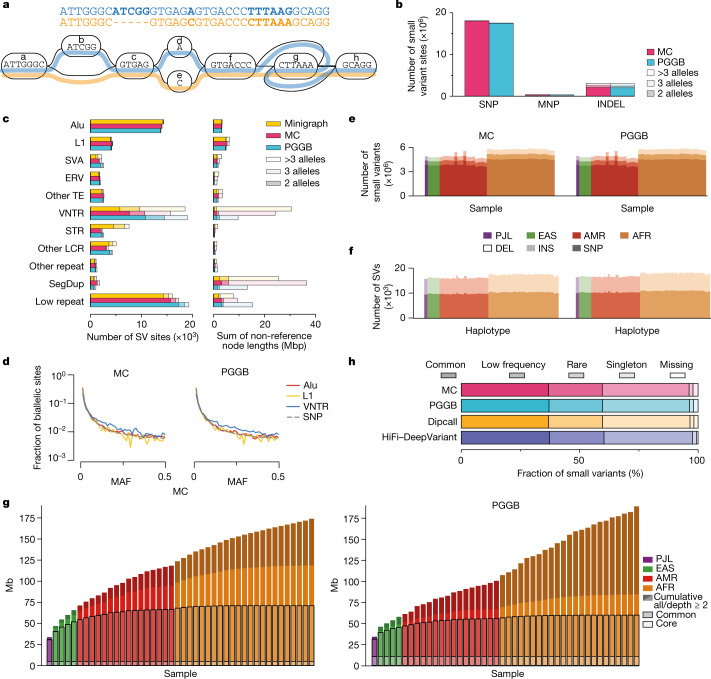
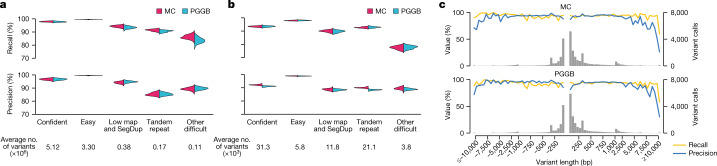
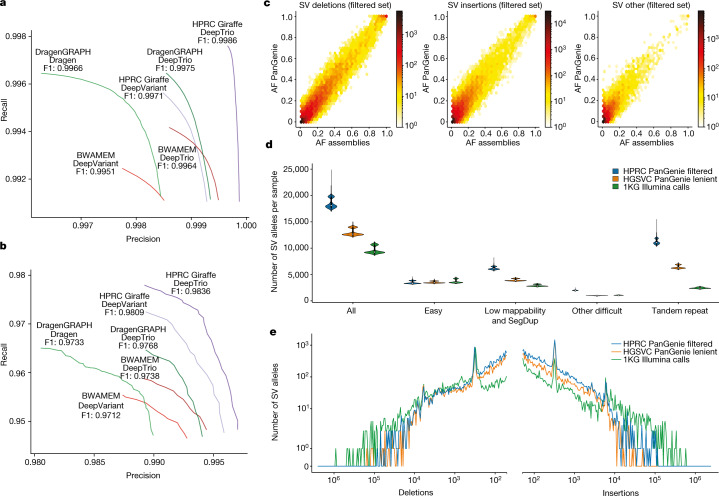
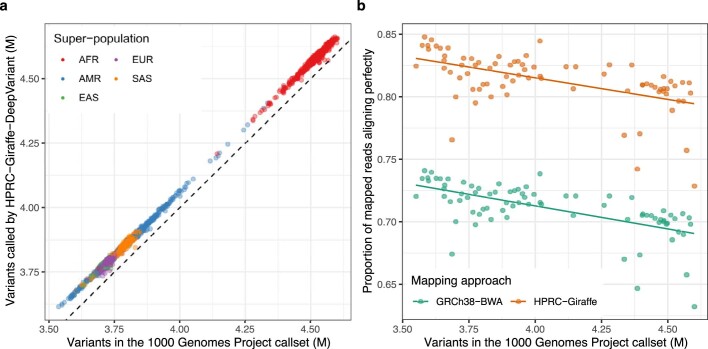
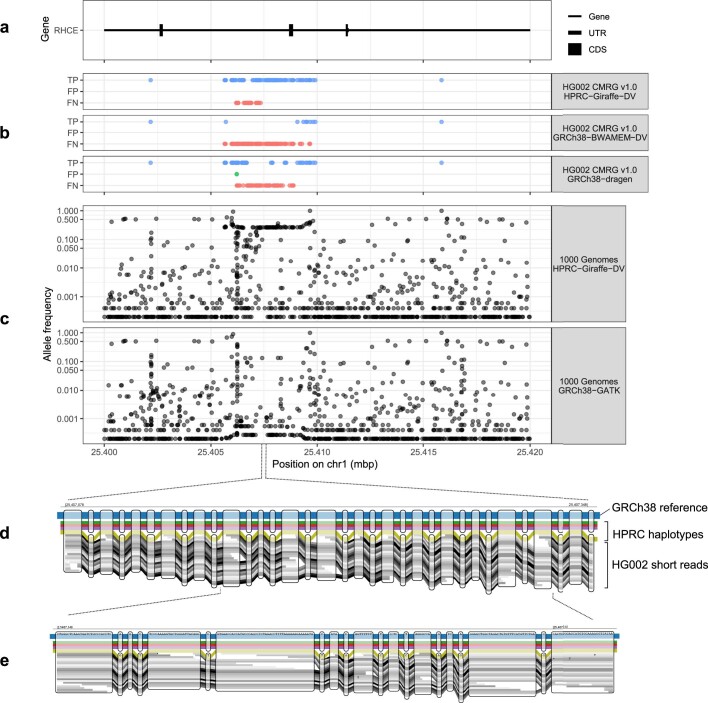
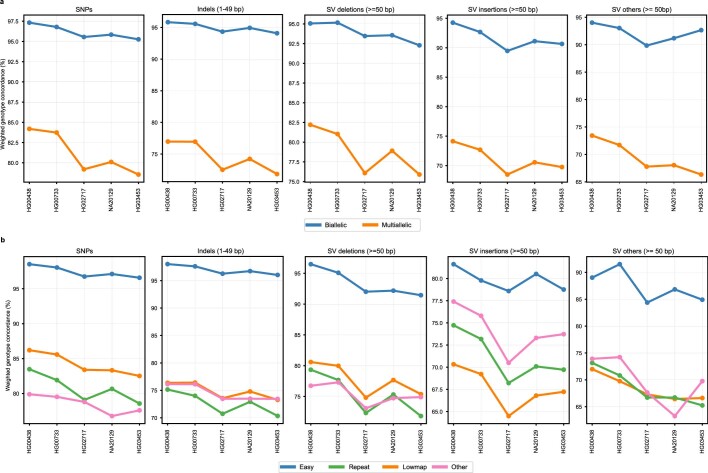
- In short-read analysis, the pangenome workflow reduced small-variant discovery errors by 34% and increased the number of structural variants detected per haplotype by 104% compared with GRCh38-based workflows.
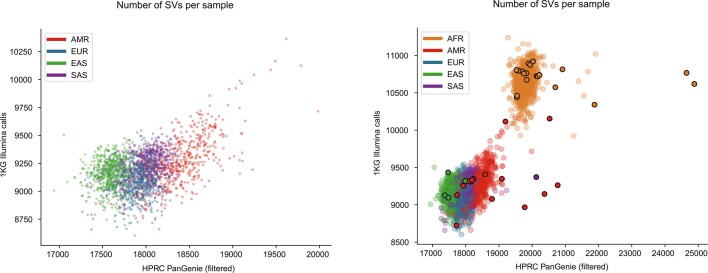
- For 1KG short-read genotyping, the pangenome-based call set gave on average 64,000 more small variants per sample than the 1KG catalogue; for SV genotyping it produced 18,483 SVs per sample versus 9,596 in the short-read 1KG call set.
Methods
- The study assembled 47 fully phased diploid genomes from globally diverse individuals, using PacBio HiFi, Oxford Nanopore, Hi-C, Bionano, and parental Illumina data; assemblies were phased with Trio-Hifiasm and manually/automatically curated.
- The authors constructed pangenomes with three graph approaches: Minigraph, Minigraph-Cactus (MC), and PGGB, then evaluated variant representation, graph support, and downstream utility.
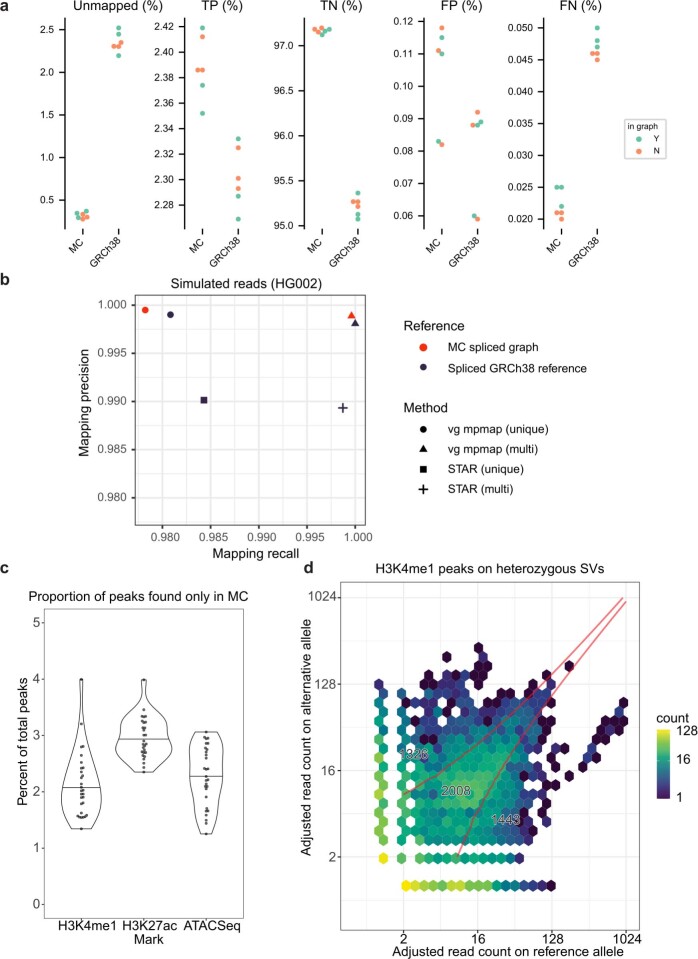
- They benchmarked pangenome-based analyses against GRCh38-based workflows using GIAB, 1KG short reads, and assembly-based comparisons for small variants, SVs, gene annotations, RNA-seq, ChIP-seq/ATAC-seq, VNTRs, and population analyses.
Limitations
- The paper states the cohort is relatively small and that the assembly reliability analysis found roughly an order of magnitude more erroneously assembled sequences in the HPRC assemblies than in T2T-CHM13.
- It explicitly notes remaining issues in highly repetitive regions and complex loci, where variant calling performance was lower and further work is needed; this is a stated limitation.
- The text also makes evident that some analyses are constrained by reference gaps, alignment ambiguity, and incomplete benchmarking truth sets; this is the paper’s implication, stated in the discussion around repetitive regions and underestimation of errors.
Model-written summary. Check it against the paper before relying on it.
Integrity signals
Registry
Cites
Statistics
Figures
Verification
Claims the paper makes
38 Valid · 5 Not valid · 2 Not checked · 206 Own results and interpretations
At least one cited source doesn’t support this claim or points to a different paper, and none confirmed it — see the verdicts below.
In the paper
“The pangenome contains 47 phased, diploid assemblies from a cohort of genetically diverse individuals1.”
§ A draft human pangenome reference > Abstract
What the sources say
- Disputedcites [1] 1000 Genomes Project Consortium. A global reference for human genetic variation Nature 2015 526 68 74 10.1038/nature15393 26432245 PMC4750478 sourceExperimental — accuracy not yet measured
The Abstract (page unavailable) describes a 1000 Genomes resource based on 2,504 individuals from 26 populations, with variants phased onto haplotypes. The Data set overview describes phasing variant sites, not a pangenome containing 47 phased, diploid assemblies. (LLM, conf=0.86)
Checked by a reasoning model — may be wrong.
plain- Asserted: passes — The authors put it forward as true.
- Checkable: passes — It can be checked against evidence.
- Load-bearing: passes — The paper’s conclusions depend on it.
- Based: passes — The paper gives a reason why it holds.
- Rests on an assumption not shown here.
- Disputed
The cited sources support only part of this claim — read each source’s verdict below.
In the paper
“Previous studies have identified tens of megabases of sequence contained within structural variants (SVs) that are polymorphic within the population5.”
§ A draft human pangenome reference > Main
What the sources say
- Partly supportedcites [5] Ebert P Haplotype-resolved diverse human genomes and integrated analysis of structural variation Science 2021 372 eabf7117 10.1126/science.abf7117 33632895 PMC8026704 sourceExperimental — accuracy not yet measured
The Results sections on structural variant distribution and complex structural variation document SVs and distinct structural haplotypes in human populations. But the reported ~279 Mbp is the genomic span of SV hotspots, not the amount of sequence contained within polymorphic SVs; the passages do not establish the claimed tens-of-megabases total. (LLM, conf=0.82)
plain- Asserted: passes — The authors put it forward as true.
- Checkable: passes — It can be checked against evidence.
- Load-bearing: passes — The paper’s conclusions depend on it.
- Based: passes — The paper gives a reason why it holds.
- Partly supported
Every source the paper cites for this claim was checked and supports it.
In the paper
“Recently, the Telomere-to-Telomere (T2T) consortium finished the first complete sequence of a haploid human genome, T2T-CHM13, which provides a contiguous representation of each autosome and of chromosome X, with the exception of some ribosomal DNA arrays that remain to be fully resolved3.”
§ A draft human pangenome reference > Main
What the sources say
- Supportedcites [3] Nurk S The complete sequence of a human genome Science 2022 376 44 53 10.1126/science.abj6987 35357919 PMC9186530 source
“A truly complete genome” states that T2T-CHM13 has gapless telomere-to-telomere assemblies for all 22 autosomes and chromosome X. “rDNA assembly” explains that the ordering of repeats in three rDNA arrays could not be fully resolved, so those arrays are represented by model sequences. (LLM, conf=0.93)
plainSingle case- Asserted: passes — The authors put it forward as true.
- Checkable: passes — It can be checked against evidence.
- Load-bearing: passes — The paper’s conclusions depend on it.
- Based: passes — The paper gives a reason why it holds.
- Supported
The cited sources support only part of this claim — read each source’s verdict below.
In the paper
“despite individual SVs being more likely to affect gene function than either individual SNPs or short insertions and deletions (indels)9,10.”
§ A draft human pangenome reference > Main
What the sources say
- Partly supportedcites [9] Chiang C The impact of structural variation on human gene expression Nat. Genet. 2017 49 692 699 10.1038/ng.3834 28369037 PMC5406250 sourceExperimental — accuracy not yet measured
The Results (Fine-mapping causal variants) state that, per variant, an SV is 28–54 times more likely to modulate gene expression than an SNV or indel. That supports the comparison for gene expression, but the cited analysis does not establish the broader claim about gene function generally. (LLM, conf=0.86)
- Partly supportedcites [10] Sudmant PH An integrated map of structural variation in 2,504 human genomes Nature 2015 526 75 81 10.1038/nature15394 26432246 PMC4617611 sourceExperimental — accuracy not yet measured
The Functional impact of SVs section reports that SV classes were enriched for expression-associated variants relative to the number tested, supporting a greater per-variant effect on gene expression. It uses eQTL associations as a surrogate for functional impact and groups SNPs with indels in the comparison; it does not establish the broader claim about gene function separately against each variant type. (LLM, conf=0.82)
hedgedstates an association- Asserted: passes — The authors put it forward as true.
- Checkable: passes — It can be checked against evidence.
- Load-bearing: passes — The paper’s conclusions depend on it.
- Based: passes — The paper gives a reason why it holds.
- Partly supported
Every source the paper cites for this claim was checked and supports it.
In the paper
“For the core assembler, we chose Trio-Hifiasm20 after detailed benchmarking of several alternatives21.”
§ A draft human pangenome reference > Assembling 47 diverse human genomes
What the sources say
- Supportedcites [20] Cheng H Concepcion GT Feng X Zhang H Li H Haplotype-resolved de novo assembly using phased assembly graphs with hifiasm Nat. Methods 2021 18 170 175 10.1038/s41592-020-01056-5 33526886 PMC7961889 source
Citation 20 identifies Trio-Hifiasm as the assembler the citing authors chose. The Results section (‘Overview of the hifiasm algorithm’) describes hifiasm’s graph-based trio binning, supporting that identification. The separate benchmarking claim is attached to citation 21, not this source. (LLM, conf=0.93)
- Supportedcites [21] Jarvis, E. D. et al. Semi-automated assembly of high-quality diploid human reference genomes. Nature611, 519–531 (2022). PMC9668749 36261518 source
The cited paper’s ‘Trios and higher phasing accuracy’ section compares several assembly algorithms and data types. Its ‘Graph phasing is more complete and accurate’ section reports that Trio hifiasm had the strongest combination of quality metrics among the diploid assemblies. The citing authors’ choice of core assembler is their own decision; this source supports the benchmarking offered as its rationale. Page numbers were not available in our copy. (LLM, conf=0.91)
plain- Asserted: passes — The authors put it forward as true.
- Checkable: passes — It can be checked against evidence.
- Load-bearing: unclear — It is unclear whether the paper’s conclusions depend on it.
- Based: passes — The paper gives a reason why it holds.
- Supported
135 more claims · 15 with their cited sources checked
Create a free account to see all 251 claims and to verify the 1 reference still open.
- It may state two separate claims as one. 80
- Probably not a substantial claim. 40
- The quote only partly states this claim. 1
Claims other papers make about this one
Each is checked against this paper’s own text: does it say what the citing paper says it does?
The cited source doesn’t support the claim as written.
In the citing paper
“In addition, the DRAGEN multigenome mapper is already incorporated for SV and CNV calling, something that is not currently possible with any other graph genome implementations because they focus primarily on genotyping variants14,73.”
From Comprehensive genome analysis and variant detection at scale using DRAGEN (2025) · cites this paper as [73]
Checked by a reasoning model — may be wrong.
Experimental — accuracy not yet measuredThe source backs part of the claim, not all of it — or backs it for a different population, condition or comparison.
In the citing paper
“Other biases, for example, in terms of sex, specific diseases, or human ancestral populations could also reduce the impact of AIVC models.115”
From How to build the virtual cell with artificial intelligence: Priorities and opportunities (2024) · cites this paper as [115]
Experimental — accuracy not yet measuredThe source backs part of the claim, not all of it — or backs it for a different population, condition or comparison.
In the citing paper
“For example, population-specific genes may provide insights into local adaptation, while structural variants may contribute to disease susceptibility or resistance in ways that were previously invisible to reference-based analyses [112,113].”
From Origin and Evolution of Genes in Eukaryotes: Mechanisms, Dynamics, and Functional Implications (2025) · cites this paper as [113]
Experimental — accuracy not yet measuredThe source backs part of the claim, not all of it — or backs it for a different population, condition or comparison.
In the citing paper
“These values were chosen after empirical experimentation specifically to filter out spurious mappings as determined by VCF-based comparison with Hi-Fi-based DeepVariant calls 25 .”
From Pangenome graph construction from genome alignments with Minigraph-Cactus (2024) · cites this paper as [25]
Experimental — accuracy not yet measuredThe cited source says what the claim attributes to it.
In the citing paper
“Notably, the first draft of a human pangenome reference has been released by the Human Pangenome Reference Consortium just last year as of the time of writing [19].”
From <tt>SAFARI</tt> : pangenome alignment of ancient DNA using purine/pyrimidine encodings (2025) · cites this paper as [19]
2 more claims about this paper
Create a free account to see every claim other papers make about this one.
Citations
Cites
The Sequence Alignment/Map format and SAMtools
Li, H., Handsaker, B., Wysoker, A., Fennell, T., Ruan, J., Homer, N., Marth, G., Abecasis, G., Durbin, R., & 1000 Genome Project Data Processing Subgroup (2009) · Bioinformatics · doi:10.1093/bioinformatics/btp352 · Cited by 62,041 · cited 1×
“3.1), (Li et al., 2009).”
InfluentialFast gapped-read alignment with Bowtie 2
Langmead, B., & Salzberg, S. L. (2012) · Nature Methods · doi:10.1038/nmeth.1923 · Cited by 56,400
STAR: ultrafast universal RNA-seq aligner
Dobin, A., Davis, C. A., Schlesinger, F., Drenkow, J., Zaleski, C., Jha, S., Batut, P., Chaisson, M., & Gingeras, T. R. (2013) · Bioinformatics · doi:10.1093/bioinformatics/bts635 · Cited by 51,709
BEDTools: a flexible suite of utilities for comparing genomic features
Quinlan, A. R., & Hall, I. M. (2010) · Bioinformatics · doi:10.1093/bioinformatics/btq033 · Cited by 27,437
Initial sequencing and analysis of the human genome
International Human Genome Sequencing Consortium, Whitehead Institute for Biomedical Research, C. F. G. R., Lander, E. S., Linton, L. M., Birren, B., Nusbaum, C., Zody, M. C., Baldwin, J., Devon, K., Dewar, K., et al. (2001) · Nature · doi:10.1038/35057062 · Cited by 24,216
Self-citationRSEM: accurate transcript quantification from RNA-Seq data with or without a reference genome
Li, B., & Dewey, C. N. (2011) · BMC Bioinformatics · doi:10.1186/1471-2105-12-323 · Cited by 22,179
A global reference for human genetic variation
The 1000 Genomes Project Consortium, authors, C., Auton, A., Abecasis, G. R., Steering committee, Altshuler, D. M., Durbin, R. M., Abecasis, G. R., Bentley, D. R., Chakravarti, A., et al. (2015) · Nature · doi:10.1038/nature15393 · Cited by 18,247
Self-citationAn integrated encyclopedia of DNA elements in the human genome
The ENCODE Project Consortium (2012) · Nature · doi:10.1038/nature11247 · Cited by 18,072
Twelve years of SAMtools and BCFtools
Danecek, P., Bonfield, J. K., Liddle, J., Marshall, J., Ohan, V., Pollard, M. O., Whitwham, A., Keane, T., McCarthy, S. A., Davies, R. M., et al. (2021) · GigaScience · doi:10.1093/gigascience/giab008 · Cited by 15,343 · cited 2×
“9 was used for filtering the variant sets (Danecek et al., 2021).”
MethodSelf-citationMinimap2: Pairwise alignment for nucleotide sequences
Li, H. (2018) · Bioinformatics · doi:10.1093/bioinformatics/bty191 · Cited by 14,807 · cited 8×
“The sequences of these anchors were them mapped against the target genome with minimap2 (Li, 2018b) using the following command:”
MethodInfluential
Cited by
Items 301–400 of 1,147
Pangenome graph layout by Path-Guided Stochastic Gradient Descent
Heumos, S., Guarracino, A., Schmelzle, J.-N., Li, J., Zhang, Z., Hagmann, J., Nahnsen, S., Prins, P., & Garrison, E. P. (2024) · Bioinformatics · doi:10.1093/bioinformatics/btae363 · Cited by 13
Self-citationTsouris, A., Brach, G., Friedrich, A., Hou, J., & Schacherer, J. (2024) · Molecular Systems Biology · doi:10.1038/s44320-024-00021-0 · Cited by 13
“A few studies have provided catalogs of SVs in large populations of various organisms, including human, tomato, and yeast (Alonge et al, 2020; Li et al, 2023; O ’ Donnell et al, 2023; Liao et al, 2023), however, these catalogs are still non-exhaustive.”
Harvey, W. T., Ebert, P., Ebler, J., et al. (2023) · bioRxiv (Cold Spring Harbor Laboratory) · doi:10.1101/2023.05.04.539448 · Cited by 10
“Similar outliers may be avoidable with deeper coverage to support high-quality assembly-based callsets (Ebert et al., 2021; Liao et al., 2022).”
BackgroundMethodInfluentialSelf-citationZhuo, X., Hsu, S., Purushotham, D., Kuntala, P. K., Harrison, J. K., Du, A. Y., Chen, S., Li, D., & Wang, T. (2023) · Genome Research · doi:10.1101/gr.277550.122 · Cited by 15
Self-citationSmall polymorphisms are a source of ancestral bias in structural variant breakpoint placement
Audano, P. A., & Beck, C. R. (2024) · Genome Research · doi:10.1101/gr.278203.123 · Cited by 19
MOSHPIT: accessible, reproducible metagenome data science on the QIIME 2 frameworkPreprint
Ziemski, M., Gehret, L., Simard, A., Dau, S. C., Risch, V., Grabocka, D., Matzoros, C. K., Wood, C., Cabrera, P. M., Hernández-Velázquez, R., et al. (2025) · bioRxiv (Cold Spring Harbor Laboratory) · doi:10.1101/2025.01.27.635007 · Cited by 9
Evolution of genome-wide methylation profiling technologies
Montaño, C., & Timp, W. (2025) · Genome Research · doi:10.1101/gr.278407.123 · Cited by 13
“Moreover, linking haplotypes across multiple samples to define the same haplotype group is particularly challenging, and mayrequire graph genome approaches or k -mer analysesto effectively connect haplotypes across larger data sets (Liao et al. 2023).”
Yohannis, E., Teka, T. A., Urugo, M. M., Tola, Y. B., & Getachew, P. (2025) · Applied Food Research · doi:10.1016/j.afres.2025.101394 · Cited by 15
A global view of human centromere variation and evolution
Gao, S., Oshima, K. K., Chuang, S.-C., Loftus, M. G., Potapova, T., Montanari, A., Gordon, D., Yang, Z., Ashraf, H., Audano, P. A., et al. (2026) · Nature · doi:10.1038/s41586-026-10841-9 · Cited by 43
Self-citationGraph-based pangenome reveals structural variation dynamics during cucumber breeding
Zhao, X., Yu, J., Zhang, J., Sun, H., Wu, S., Zhao, J., Zhou, Y., Hammar, S. A., Lin, Y.-C., Zhang, Z., et al. (2026) · Nature Genetics · doi:10.1038/s41588-026-02506-0 · Cited by 17
Are cereal grasses a single genetic system?
Mascher, M., Marone, M. P., Schreiber, M., & Stein, N. (2024) · Nature Plants · doi:10.1038/s41477-024-01674-3 · Cited by 9
Copy number variation and population-specific immune genes in the model vertebrate zebrafish
Schäfer, Y., Palitzsch, K., Leptin, M., Whiteley, A. R., Wiehe, T., & Suurväli, J. (2024) · eLife · doi:10.7554/elife.98058 · Cited by 9
Shojaeisaadi, H., Schoenrock, A., Meier, M. J., Williams, A., Norris, J. M., Palmer, N. D., Yauk, C. L., & Marchetti, F. (2024) · Communications Biology · doi:10.1038/s42003-024-07140-2 · Cited by 11
“Theanalysisofdiversepopulationsandethnicitiesingenetic studies 27 – 29 is of great importance to identify factors that determine differences in susceptibility to genetic disorders (e.g., asthma, cancer, diabetes, and atherosclerosis), responses to intervention therapies 30 , and…”
Detecting transposable elements in long-read genomes using sTELLeR
Sæther, K. B., & Eisfeldt, J. (2024) · Bioinformatics · doi:10.1093/bioinformatics/btae686 · Cited by 12
Xuelin, T., Chen, Y., Ren, Y., Yang, W., Yu, W., Zhou, Y., Guo, J., Hu, J., Chen, X., Gu, Y., et al. (2025) · Brain · doi:10.1093/brain/awaf025 · Cited by 9
Zhang, W., Macias-Velasco, J. F., Zhuo, X., Belter, E. A., Tomlinson, C., Garza, J. E., Tekkey, N., Li, D., & Wang, T. (2025) · Nucleic Acids Research · doi:10.1093/nar/gkaf028 · Cited by 21
Self-citationWang, Z., Gao, L., Jia, Z., Liu, L., Gu, A., Liu, Z., Zhu, Q., Zuo, Y., Yang, M., Wang, S., et al. (2025) · Signal Transduction and Targeted Therapy · doi:10.1038/s41392-025-02150-w · Cited by 11
Yang, Q., Sun, J., Wang, X., Wang, J., Liu, Q., Ru, J., Zhang, X., Wang, S., Hao, R., Bian, P., et al. (2025) · Nature Communications · doi:10.1038/s41467-025-57756-z · Cited by 9
“We downloaded haplotype-resolved genomes of the 15 human individuals from the Human Pangenome Reference Consortium (HPRC) 35 .”
InfluentialTandem LTR-retrotransposon structures are common and highly polymorphic in plant genomes
Morales-Díaz, N., Sushko, S., Campos, L., Kopalli, V., Golicz, A. A., Castanera, R., & Casacuberta, J. (2025) · Mobile DNA · doi:10.1186/s13100-025-00347-y · Cited by 10
“The pipeline was run in every chromosome independently, and vg deconstruct [34] was used for variant calling using vg 1.58 version Cartari [34], with the -”
InfluentialK-mer analysis of long-read alignment pileups for structural variant genotyping
English, A. C., Cunial, F., Metcalf, G., Gibbs, R. A., & Sedlazeck, F. J. (2025) · Nature Communications · doi:10.1038/s41467-025-58577-w · Cited by 20
“1 SVs and the HPRC assemblies 19 .”
Entering the era of precision medicine to treat amyotrophic lateral sclerosis
Theunissen, F., Flynn, L. L., Iacoangeli, A., Khleifat, A. A., Al‐Chalabi, A., Giordano, J. J., Strømme, M., & Akkari, P. A. (2025) · Molecular Neurodegeneration · doi:10.1186/s13024-025-00890-5 · Cited by 19
“Projects including the draft human pangenome reference [200], the pangenome reference of Chinese ethnicities [201], a draft Arab pangenome reference [203], and a Pacific Islanders pangenome [202], are now beginning to fill this gap.”
Gobbo, G. F. D., Wang, X., Couse, M., Mackay, L., Goldsmith, C. L., Marshall, A. E., Liang, Y., Lambert, C. C., Zhang, S., Dhillon, H., et al. (2023) · American Journal of Medical Genetics Part A · doi:10.1002/ajmg.a.63522 · Cited by 11
“The insertion was absent from all population data-sets, comprising over 22,500 alleles from sr-GS (Karczewski et al., 2020) and over 1,000 alleles from lr-GS (Cohen et al., 2022; Liao et al., 2023).”
BackgroundMethodReview of Molecular Technologies for Investigating Canine Cancer
Kehl, A., Aupperle‐Lellbach, H., de Brot, S., & van der Weyden, L. (2024) · Animals · doi:10.3390/ani14050769 · Cited by 14
“In contrast, the latest human reference—a draft of the human pangenome—contains 47 assemblies from a cohort of genetically diverse individuals [105].”
BackgroundLuo, C., Liu, Y. H., & Zhou, X. (2024) · Nature Communications · doi:10.1038/s41467-024-51282-0 · Cited by 9
The Effect of Methodological Considerations on the Construction of Gene-Based Plant Pan-genomes
Glick, L., & Mayrose, I. (2023) · Genome Biology and Evolution · doi:10.1093/gbe/evad121 · Cited by 11
Genome assembly in the telomere-to-telomere eraPreprint
Li, H., & Durbin, R. M. (2023) · PubMed · doi:10.48550/arxiv.2308.07877 · Cited by 9
“This enables whole genome de novo assembly of population samples 17,18 and leads to systematic projects to sequence entire groups of species, including ultimately all eukaryotes 19 .”
BackgroundSelf-citationGenetic complexity of killer-cell immunoglobulin-like receptor genes in human pangenome assemblies
Hung, T.-K., Liu, W.-C., Lai, S.-K., Chuang, H.-W., Lee, Y.-C., Lin, H.-Y., Hsu, C., Chen, C., Yang, Y., Hsu, J. S., et al. (2024) · Genome Research · doi:10.1101/gr.278358.123 · Cited by 12
The microbiome diversifies N -acyl lipid pools - including short-chain fatty acid-derived compoundsPreprint
Mannochio-Russo, H., Charron‐Lamoureux, V., van Faassen, M. H. J. R., Lamichhane, S., Nunes, W. D. G., Deleray, V., Patan, A., Vittali, K., Rajkumar, P., Abiead, Y. E., et al. (2024) · bioRxiv (Cold Spring Harbor Laboratory) · doi:10.1101/2024.10.31.621412 · Cited by 9
Deacon: fast sequence filtering and contaminant depletionPreprint
Constantinides, B., Lees, J. A., & Crook, D. W. (2025) · bioRxiv (Cold Spring Harbor Laboratory) · doi:10.1101/2025.06.09.658732 · Cited by 16
“Deacon’s default panhuman-1 index comprises the union of minimizer hashes ( k =31, w =15) contained in the HPRC Year 1 assemblies for 47 samples (maternal and paternal haplotypes) and the human reference genomes GrCh38.p14 and T2T-CHM13v2.”
Towards precision cancer medicine for Aboriginal and Torres Strait Islander cancer health equity
Clark, J. R., Buck, J. M., Richards‐Satour, A., Lyons, L., & Brown, A. D. H. (2024) · The Medical Journal of Australia · doi:10.5694/mja2.52346 · Cited by 9
“42 The Human Pangenome Reference Consortium has begun work to produce an updated human reference genome that better represents global genomic diversity, 43 Narrative review precision cancer care.”
BackgroundStratoMod: predicting sequencing and variant calling errors with interpretable machine learning
Dwarshuis, N. J., Tonner, P. D., Olson, N. D., Sedlazeck, F. J., Wagner, J., & Zook, J. M. (2024) · Communications Biology · doi:10.1038/s42003-024-06981-1 · Cited by 9
“4c, Supplementary Data 3, 4).”
Self-citationIntegrated multiomic analyses: An approach to improve understanding of diabetic kidney disease
Hill, C., McKnight, A. J., & Smyth, L. J. (2024) · Diabetic Medicine · doi:10.1111/dme.15447 · Cited by 11
“161 Tremendous scope exists to generate new DKD insights; utilising new datasets and reanalysing already generated data.”
BackgroundOvercoming challenges associated with broad sharing of human genomic data
LoTempio, J. E., & Moreno, J. D. (2025) · Nature Genetics · doi:10.1038/s41588-024-02049-2 · Cited by 12
“This difference is graphical, with network nodes and edges representing human diversity captured in gfa format, rather than a series of linear genomes that do not directly overlap with each other in the same file 42 .”
Embed-Search-Align: DNA sequence alignment using Transformer models
Holur, P., Enevoldsen, K., Rajesh, S., Mboning, L., Georgiou, T., Bouchard, L., Pellegrini, M. A., & Roychowdhury, V. (2025) · Bioinformatics · doi:10.1093/bioinformatics/btaf041 · Cited by 11
“Future application of RDE to the alignment task might lie in aligning reads to pan-genomes (Liao et al. 2023), where the diversity in the genomic content—modeled as allelic paths in a reference genome graph—can be exhaustively mapped onto the described embedding space (as in Fig.”
Ghorbani, M., Moosa, S., Siddig, Z., Farhad, R., Naeem, H., Harvey, W. T., Mastrorosa, F. K., Munson, K. M., Razali, R., ALIYEV, E. E., et al. (2025) · Nature Genetics · doi:10.1038/s41588-025-02173-7 · Cited by 18
“Recently, over a hundred near-complete and fully phased genomes have been produced by the Human Pangenome Research Consortium (HPRC) 4 and the Chinese Pangenome Consortium (CPC) 5 , in addition to complete telomere-to-telomere (T2T) genomes for a haploid genome of primarily European ancestry…”
InfluentialSelf-citationWashU Epigenome Browser update 2025
Seng, C., Liu, S., Zhang, W., Zhuo, X., Li, D., & Wang, T. (2025) · Nucleic Acids Research · doi:10.1093/nar/gkaf387 · Cited by 14
“Recent advances in pan-genomics methods, such as methylGrapher [ 24 ], avoided linear reference bias by mapping whole-genome bisulfite (WGBS) sequencing reads to the pangenome graph [ 25 , 26 ], helped identify structural variation (Fig.”
Self-citationBensouna, I., Doreille, A., Dancer, M. S., Lèbre, A.-S., Robert, T., & Mesnard, L. (2025) · Nature Reviews Nephrology · doi:10.1038/s41581-025-00970-1 · Cited by 15
Loss of CFHR5 function reduces the risk for age-related macular degeneration
Reeve, M. P., Loomis, S. J., Nissilä, E., Soare, T. W., Rausch, T., Zheng, Z., Parolo, P. D. B., Ben-Isvy, D., Aho, E., Cesetti, E., et al. (2025) · Nature Communications · doi:10.1038/s41467-025-61193-3 · Cited by 11
“For the HPRC haplotypes, we used AGC 48 to extract the haplotype sequences from the AGC archive of HPRC year1 assemblies, which contains fully phased diploid assemblies for 47 samples.”
Self-citationDeepGene: An Efficient Foundation Model for Genomics Based on Pan-Genome Graph Transformer
Zhang, X., Yang, M., Yin, X., Qian, Y., & Sun, F. (2025) · IEEE Transactions on Computational Biology and Bioinformatics · doi:10.1109/tcbbio.2025.3614354 · Cited by 15
“Each subgraph is then individually pre-trained as a separate sample.”
Liu, G. E. (2025) · Journal of Animal Science and Biotechnology · doi:10.1186/s40104-025-01294-7 · Cited by 8
“These tools enable the construction of pangenome graphs with increasing sensitivity and scalability [59, 60].”
Long-read transcriptomics of a diverse human cohort reveals ancestry bias in gene annotation
Clavell-Revelles, P., Reese, F., Sala, S. C., Degalez, F., Arnan, C., Oliveros, W., Palumbo, E., Perteghella, T., Guigó, R., & Melé, M. (2025) · Nature Communications · doi:10.1038/s41467-025-66096-x · Cited by 16
A comprehensive tandem repeat catalog of the human genome
Chiu, R., Rajan‐Babu, I., Friedman, J. M., & BİROL, İ. (2026) · Nature Communications · doi:10.1038/s41467-025-66153-5 · Cited by 22
“One such example can be found at the ATTCT STR in ATXN10 , where an expansion is associated with spinocerebellar ataxia type 10, in the HPRC sample HG01123.”
InfluentialBai, W.-Y., Liu, S., Duan, Z., Yang, J.-J., Chen, J., Hou, J., Wu, L., Li, N., Qi, T., & Yang, J. (2026) · Nature Genetics · doi:10.1038/s41588-026-02612-z · Cited by 16
“Two external SV datasets, namely, the HGSVC3 SVs 20 and the HPRC Year 1 pangenome-derived SVs (decomposed VCF; from Minigraph-Cactus (v1.”
InfluentialRetrotransposon-derived transcripts and their functions in immunity and disease
Ueda, M. T. (2023) · Genes & Genetic Systems · doi:10.1266/ggs.23-00187 · Cited by 8
Antibiotic-Free Gene Vectors: A 25-Year Journey to Clinical Trials
Marie, C., & Scherman, D. (2024) · Genes · doi:10.3390/genes15030261 · Cited by 10
The T2T-CHM13 reference assembly uncovers essential WASH1 and GPRIN2 paralogues
Cerdán-Vélez, D., & Tress, M. L. (2024) · Bioinformatics Advances · doi:10.1093/bioadv/vbae029 · Cited by 6
“We have shown that this change, G343S, is a common variant (Liao et al. 2023).”
BackgroundMethodInfluentialProtocol for transcriptome-wide mapping of small-molecule RNA-binding sites in live cells
Tong, Y., Zanon, P. R. A., Yang, X., et al. (2024) · STAR Protocols · doi:10.1016/j.xpro.2024.103271 · Cited by 8
“…17 which provides a more comprehensive annotation of the human genome, especially for the difficult-to-sequence regions, and (2) the Human Pangenome, 18 which provides annotation from a cohort of individuals to account for genetic diversity in human populations. b. Unzip the downloaded files by…”
BackgroundMacPhillamy, C., Chen, T., Hiendleder, S., Williams, J. L., Alinejad‐Rokny, H., & Low, W. Y. (2024) · GigaScience · doi:10.1093/gigascience/giae061 · Cited by 10
“Current pangenome projects include human [ 24 , 25 ], cattle [ 26 ], and maize [ 27 ].”
Mumemto: efficient maximal matching across pangenomes
Shivakumar, V. S., & Langmead, B. (2025) · Genome biology · doi:10.1186/s13059-025-03644-0 · Cited by 19
“G , H Genome-wide multi-MUMs reveal an interchromosomal join (confirmed to be a misassembly by HPRC [1]) in the aberrant regions one sequence reveal large, private deletions (Fig.”
InfluentialGap-Sensitive Colinear Chaining Algorithms for Acyclic Pangenome Graphs
Chandra, G., & Jain, C. (2023) · Journal of Computational Biology · doi:10.1089/cmb.2023.0186 · Cited by 10
Co-Linear Chaining on Pangenome Graphs
Rajput, J., Chandra, G., & Jain, C. (2023) · DROPS (Schloss Dagstuhl – Leibniz Center for Informatics) · doi:10.4230/lipics.wabi.2023.12 · Cited by 2
Self-citationRepeatOBserver: tandem repeat visualization and centromere detectionPreprint
Elphinstone, C., Elphinstone, R., Todesco, M., & Rieseberg, L. H. (2023) · bioRxiv (Cold Spring Harbor Laboratory) · doi:10.1101/2023.12.30.573697 · Cited by 7
Locityper: targeted genotyping of complex polymorphic genesPreprint
Prodanov, T., Plender, E. G., Seebohm, G., Meuth, S. G., Eichler, E. E., & Marschall, T. (2024) · bioRxiv (Cold Spring Harbor Laboratory) · doi:10.1101/2024.05.03.592358 · Cited by 8
“Of them, 273 genes are widely used for variant calling and assembly benchmarking 8,9 .”
BackgroundMethodInfluentialSelf-citationA Draft Pacific Ancestry Pangenome ReferencePreprint
Littlefield, C., Lázaro-Guevara, J. M., STUCKI, D., Lansford, M., Pezzolesi, M. H., Taylor, E. J., Wolfgramm, E.-M. C., Taloa, J., Lao, K., Dumaguit, C. D. C., et al. (2024) · bioRxiv (Cold Spring Harbor Laboratory) · doi:10.1101/2024.08.07.606392 · Cited by 13
Pangenome-aware DeepVariantPreprint
Asri, M., Chang, P.-C., Mier, J. C., Sirén, J., Eskandar, P., Kolesnikov, A., Cook, D. E., Brambrink, L., Hickey, G., Novak, A. M., et al. (2025) · bioRxiv (Cold Spring Harbor Laboratory) · doi:10.1101/2025.06.05.657102 · Cited by 12
Self-citationRapid, accurate long- and short-read mapping to large pangenome graphs with vg GiraffePreprint
Chang, X. H., Novak, A. M., Eizenga, J. M., Sirén, J., Monlong, J., Negi, S., Andreace, F., Nag, S., Kyriakidis, K., Hickey, G., et al. (2025) · Research Square · doi:10.1101/2025.09.29.678807 · Cited by 16
Self-citationA telomere-to-telomere map of somatic mutation burden and functional impact in cancerPreprint
Sohn, M.-H., Dubocanin, D., Vollger, M. R., Kwon, Y.-J., Minkina, A., Munson, K. M., Hart, S. F. M., Ranchalis, J. E., Parmalee, N. L., Sedeño-Cortés, A. E., et al. (2025) · bioRxiv (Cold Spring Harbor Laboratory) · doi:10.1101/2025.10.10.681725 · Cited by 9
Self-citationLiang, S.-A., Ren, T., Zhang, J., He, J., Wang, X., Jiang, X., He, Y., McCoy, R. C., Fu, Q., Akey, J. M., et al. (2025) · Genome Biology · doi:10.1186/s13059-025-03502-z · Cited by 8
Zhou, B., Purmann, C., Guo, H., Shin, G. W., Huang, Y., Pattni, R., Meng, Q., Greer, S., Roychowdhury, T., Wood, R. N., et al. (2024) · Proceedings of the National Academy of Sciences · doi:10.1073/pnas.2322834121 · Cited by 9
Self-citationAssociation of tumor microbiome with survival in resected early-stage PDAC
Meng, Y., Wang, C., Usyk, M., Kwak, S., Peng, C., Hu, K. S., Oberstein, P. E., Krogsgaard, M., Li, H., Hayes, R. B., et al. (2025) · mSystems · doi:10.1128/msystems.01229-24 · Cited by 9
Self-citationA rapid accurate approach to inferring pedigrees in endogamous populations
Williams, C. M., Scelza, B. A., Slack, S. D., Font‐Porterias, N., Al-Hindi, D. R., Mathias, R. A., Watson, H. R., Barnes, K. C., Lange, E. M., Johnson, R. K., et al. (2025) · Genetics · doi:10.1093/genetics/iyaf094 · Cited by 26
Gu, L., Chen, P., Chen, A., Chen, K., Zheng, X., Yu, D., Wang, Z., Fang, L., Liu, G. E., & Zhao, P. (2025) · iMetaOmics. · doi:10.1002/imo2.70027 · Cited by 12
“Recent advances in long ‐ read sequencing technologies have enabled the generation of high ‐ quality assemblies [20].”
Morin, P. A., Bein, B., Bortoluzzi, C., Bukhman, Y. V., Hains, T., Heimeier, D., Uliano‐Silva, M., Absolon, D. E., Abueg, L. A. L., Antosiewicz‐Bourget, J., et al. (2025) · Frontiers in Marine Science · doi:10.3389/fmars.2025.1562045 · Cited by 11
Self-citationOn the biological meaning of the population pangenome
Rodríguez‐Valera, F., & Molina-Pardines, C. (2025) · Trends in Microbiology · doi:10.1016/j.tim.2025.07.004 · Cited by 9
Beyond single references: pangenome graphs and the future of genomic medicine
Nyaga, D. M., Zaied, R. E., Silander, O., Black, M. A., & O'Sullivan, J. M. (2025) · Frontiers in Genetics · doi:10.3389/fgene.2025.1679660 · Cited by 12
SMX: Heterogeneous Architecture for Universal Sequence Alignment Acceleration
Doblas, M., Shih, P. J., Lostes-Cazorla, O., Moretó, M., Batten, C., & Marco‐Sola, S. (2025) · IEEE/ACM International Symposium on Microarchitecture (MICRO) · doi:10.1145/3725843.3756018 · Cited by 9
Self-citationTargeted sequencing and iterative assembly of near-complete genomes
Gamaarachchi, H., Stevanovski, I., Hammond, J. W., Reis, A. L. M., Rapadas, M., Jayasooriya, K., Russell, T., Yeow, D., Hort, Y., Patel, C., et al. (2025) · Nature Communications · doi:10.1038/s41467-025-65410-x · Cited by 9
“We hope that our demonstration of scalable, affordable genome assembly from saliva – with assembly quality at least on par with the HPRC – may open the doortoevengreaterdiversityandinclusioninthegrowingpangenome fi eld 35 .”
InfluentialSelf-citationEnvironmental and maternal imprints on infant gut metabolic development
Kvitne, K. E., Allaband, C., Onuora, J. C., Perry, D. S., Zuffa, S., Patel, L., Charron‐Lamoureux, V., Mohanty, I., Sejane, K., Patan, A., et al. (2025) · Cell Host & Microbe · doi:10.1016/j.chom.2025.11.002 · Cited by 11
Canalda-Baltrons, A., Silcocks, M., Hall, M. B., Theys, D., Chang, X., Viberg, L. T., Sherry, N. L., Coin, L., & Dunstan, S. J. (2025) · Nature Communications · doi:10.1038/s41467-025-65779-9 · Cited by 12
“Genotyping SVs using the Mtb -PRG andminiwalkismoreprecise than using a traditional short-read SV caller PRG-involving approaches have been shown to call SVs more accu-ratelyfrom short-readsequencing data compared totraditionalsingle-reference genome approaches 16 .”
Self-citationUsing the linear references from the pangenome to discover missing autism variants
Sui, Y., Lin, J., Noyes, M. D., Kwon, Y., Wong, I., Koundinya, N., Harvey, W. T., Wu, M., Hoekzema, K., Munson, K. M., et al. (2026) · Nature Communications · doi:10.1038/s41467-026-68378-4 · Cited by 15
“We aggregated the validated SVs from all 189 study samples and compared them with SVs observed in the 108 population controls from the HPRC and HGSVC 18,29,30 via Truvari 41 , focusing on rare SVs exclusive to autism families.”
InfluentialSelf-citationA common 19 bp APOE enhancer deletion is protective against Alzheimer’s disease in African Americans
Brutman, J. N., Busald, T., Nizamis, E., Kaufman, E. J., Lin, E., Hendricks, N. E., Chintamen, S., Sulovari, A., Smukowski, S. N., Ye, Y., et al. (2026) · Nature Communications · doi:10.1038/s41467-026-68808-3 · Cited by 8
“Here, we leveraged 78 phased long-read genomes from diverse reference populations 24 – 26 to identify APOE-ε 4 allelevariantsinindividualsofAfricanancestrytodeterminea potential mechanism for their reduced relative risk of AD.”
Xie, S., Davenport, K. M., Salavati, M., Caulton, A., Clark, E. L., Archibald, A., Clarke, S., Bräuning, R., Massa, A. T., Mousel, M. R., et al. (2026) · Nature Communications · doi:10.1038/s41467-026-70382-7 · Cited by 9
“Recently, genomic research has advanced dramatically through the construction of hundreds, or even thousands, of pan-genomes and achieving telomere-to-telomere (T2T) assemblies 34,35 .”
Zhang, Y., Sun, Z., Tian, S., Wu, L., Gu, Q., Ke, H., Zhang, G., Chen, B., Wang, Z., Zhang, J., et al. (2026) · Nature Genetics · doi:10.1038/s41588-026-02523-z · Cited by 10
The 1000 Chinese Pangenome empowers medical and population genetics
Wang, Y., Duan, Z., Chen, D., Shi, D., Ding, Y., Wang, Z., Li, B., Wang, Z., Guo, M., Yang, W., et al. (2026) · Nature · doi:10.1038/s41586-026-10315-y · Cited by 17
Mahmud, M. I., & Banerjee, T. (2026) · Briefings in Bioinformatics · doi:10.1093/bib/bbag229 · Cited by 16
“This dataset is critical for benchmarking graph-based genomic analyses, enabling the detection of complex structural variations often missed by standard references [180].”
Short-read aligner performance in germline variant identification
Wilton, R. N., & Szalay, A. S. (2023) · Bioinformatics · doi:10.1093/bioinformatics/btad480 · Cited by 8
“These problems may be addressed through the use of a graph-based reference genome (e.g. Liao et al. 2023) with a read aligner that incorporates heuristics that search for mappings only in plausible subsets of the alternative sequence in the genome (Sire´n et al. 2021).”
BackgroundWang, X., Muenzler, M., King, J. L., Liu, M., Li, H., Budowle, B., & Ge, J. (2024) · Electrophoresis · doi:10.1002/elps.202300143 · Cited by 7
Self-citationLinderman, M. D., Wallace, J., van der Heyde, A., Wieman, E., Brey, D., Shi, Y., Hansen, P., Shamsi, Z., Liu, J. Z., Gelb, B. D., et al. (2024) · Bioinformatics · doi:10.1093/bioinformatics/btae129 · Cited by 8
“As a result of heterogeneity in the population (Liao et al. 2023) [and/or imprecision in SV discovery (Kirsche et al. 2023)], the multi-sample HGSVC2 call set has numerous similar or overlapping SVs, only a fraction of which are present in any specific sample.”
Small variant benchmark from a complete assembly of X and Y chromosomes
Wagner, J., Olson, N. D., McDaniel, J., Harris, L. N., Pinto, B. J., Jáspez, D., Muñoz‐Barrera, A., Rubio‐Rodríguez, L. A., Lorenzo-Salazar, J. M., Flores, C., et al. (2025) · Nature Communications · doi:10.1038/s41467-024-55710-z · Cited by 8
“Visualizationofgenesinaregioncontaininganinvertedsegmentalduplicationpair using pangene, a pangenome visualization tool 21 . pangenomes 11,27 , are needed.”
Self-citationHatchell, K. E., Poll, S. R., Russell, E. M., Williams, T. J., Ellsworth, R. E., Facio, F. M., Aguilar, S. J., Esplin, E. D., Popejoy, A. B., Nussbaum, R. L., et al. (2025) · The American Journal of Human Genetics · doi:10.1016/j.ajhg.2025.01.008 · Cited by 8
“60,61”
Self-citationOn the ancestry and evolution of the extinct dire wolf
Gedman, G. L., Morrill, K. M., Oppenheimer, J., Hyseni, C., Cassatt‐Johnstone, M., Lucaci, A. G., Alexandre, N. M., Troy, W., Chao, J. C., Fedrigo, O. D., et al. (2026) · Cell Genomics · doi:10.1016/j.xgen.2026.101306 · Cited by 14
Self-citationDevine, S. E. (2023) · Genes · doi:10.3390/genes14101923 · Cited by 9
“In addition to PacBio HiFi long reads, some of these projects also are using Oxford Nanopore long reads as scaffolds to assemble these genomes [48,49] along with a variety of other technologies such as Bionano optical maps, single-cell DNA template strand sequencing (Strand-seq), and high-coverage…”
BackgroundMethodO’Connor, E. C., Kambara, K., & Bertrand, D. (2023) · Expert Opinion on Drug Discovery · doi:10.1080/17460441.2023.2270902 · Cited by 7
“Looking to the future, given progress in DNA sequencing as illustrated with publication of the first human pangenome [7], it is foreseen that clinical research will increasingly become associated with genetic screening.”
BackgroundStreamlining remote nanopore data access with slow5curl
Wong, B., Ferguson, J. M., Jessica, Y. A., Gamaarachchi, H., & Deveson, I. W. (2024) · GigaScience · doi:10.1093/gigascience/giae016 · Cited by 5
“With the breadth of nanopore sequencing adoption and the scale of nanopor e datasets gr owing r a pidl y, ther e is a need for new and efficient methods for nanopore data sharing and public access.”
A Unified Framework to Analyze Transposable Element Insertion Polymorphisms using Graph GenomesPreprint
Groza, C., Chen, X., Wheeler, T. J., Bourque, G., & Goubert, C. (2023) · bioRxiv (Cold Spring Harbor Laboratory) · doi:10.1101/2023.09.11.557209 · Cited by 7
Self-citationThe MUC19 Gene: An Evolutionary History of Recurrent Introgression and Natural SelectionPreprint
Villanea, F. A., Peede, D., Kaufman, E. J., et al. (2023) · bioRxiv (Cold Spring Harbor Laboratory) · doi:10.1101/2023.09.25.559202 · Cited by 7
Bolognini, D., Halgren, A. S., Lou, R. N., Raveane, A., Rocha, J. L., Guarracino, A., Soranzo, N., Chin, J., Garrison, E. P., & Sudmant, P. H. (2024) · bioRxiv (Cold Spring Harbor Laboratory) · doi:10.1101/2024.02.07.579378 · Cited by 7
“The copy number maximizing the likelihood function was used as the estimated copy number for each individual in subsequent analyses.”
MethodSelf-citationAdaptive diversification through structural variation in barleyPreprint
Jayakodi, M., Lu, Q., Pidon, H., Rabanus‐Wallace, M. T., Bayer, M., Lux, T. M., Guo, Y., Jaegle, B., Badea, A., Bekele, W. A., et al. (2024) · bioRxiv (Cold Spring Harbor Laboratory) · doi:10.1101/2024.02.14.580266 · Cited by 7
A Draft Arab Pangenome ReferencePreprint
Nassir, N., Almarri, M. A., Kumail, M., Mohamed, N., Balan, B., Hanif, S., AlObathani, M., Jamalalail, B. A., ElSokary, H. A., Kondaramage, D., et al. (2024) · SSRN Electronic Journal · doi:10.2139/ssrn.4891977 · Cited by 7
Expanding the genome information on Bacillales for biosynthetic gene cluster discovery
Song, L., Nielsen, L. J. D., Xu, X., Mohite, O. S., Nuhamunada, M., Xu, Z., Murphy, R., Bodawatta, K. H., Poulsen, M., Abdulla, M. H., et al. (2024) · Scientific Data · doi:10.1038/s41597-024-04118-x · Cited by 10
A reference quality, fully annotated diploid genome from a Saudi individual
Kulmanov, M., Tawfiq, R., Liu, Y., Ali, H. A., Abdelhakim, M., Alarawi, M. S., Aldakhil, H., Alhattab, D. M., Alsolme, E., Althagafi, A., et al. (2024) · Scientific Data · doi:10.1038/s41597-024-04121-2 · Cited by 12
Antipov, D., Rautiainen, M., Nurk, S., Walenz, B. P., Solar, S. J., Phillippy, A. M., & Koren, S. (2024) · bioRxiv (Cold Spring Harbor Laboratory) · doi:10.1101/2024.12.20.629807 · Cited by 8
Self-citationIdentification of germline population variants misclassified as cancer-associated somatic variants
Pollard, R. D., Wilkerson, M. D., & Rajagopal, P. S. (2024) · Frontiers in Medicine · doi:10.3389/fmed.2024.1361317 · Cited by 7
“…as the Human Pangenome Reference demonstrate the limitations of the current reference genome and opportunities in moving to genomic references with greater diversity, with “3.7 million additional single-nucleotide polymorphisms (SNPs) in regions non-syntenic to GRCh38” among other expansions (29).”
BackgroundInfluentialDu, D., Zhong, F., & Liu, L. (2024) · Journal of Translational Medicine · doi:10.1186/s12967-024-05567-z · Cited by 8
“After splitting the continuous sequence with two or more consecutive Ns, retain the part longer than 150 bp and further remove sequences with a similarity above 95% using Mmseqs Easy-linclust [23].”
BackgroundMethodSorin, V., Naji, M. M., Birbes, C., Grohs, C., Escouflaire, C., Fritz, S., Eché, C., Marcuzzo, C., Suin, A., Donnadieu, C., et al. (2025) · Genetics Selection Evolution · doi:10.1186/s12711-025-01012-x · Cited by 9
Gueuning, M., Thun, G. A., Koller, S., Sigurdardottir, S., Trost, N., Wagner, L., Mayer, B., Engström, C., Mattle‐Greminger, M. P., & Meyer, S. (2025) · Blood Advances · doi:10.1182/bloodadvances.2025017463 · Cited by 9
“For instance, it has been shown to significantly reduce both false-positive and false-negative variant calls, particularly at complex genomic loci 41,42 .”
ntRoot: computational inference of human ancestry at scale from genomic data
Warren, R. L., Coombe, L., Wong, J., Kazemi, P., & Birol, İ. (2024) · Bioinformatics Advances · doi:10.1093/bioadv/vbaf287 · Cited by 6
“The ntRoot framework is inherently scalable and could be extended to incorporate larger, more comprehensive reference datasets, such as pan-human references (Liao et al. 2023) or gnomAD (Chen et al. 2024), to improve ancestry resolution.”
Calculating fast differential genome coverages among metagenomic sources using micov
Weng, Y., Guccione, C., McDonald, D., Oles, R. E., Devkota, S., Kopylova, E., Sepich‐Poore, G. D., Salido, R. A., Din, M. O., Song, S. J., et al. (2025) · Communications Biology · doi:10.1038/s42003-025-09007-6 · Cited by 9
“Brie fl y, adapters were trimmed using fastp version 0.23.4 28 and reads mapping to reference human genomes (HPRC 29 , T2T-CHM13v2.”
InfluentialCell line-matched reference enables high-precision functional genomics
Corda, L., Volpe, E., Dallali, H., Tommaso, E. D., Colantoni, A., Guarracino, A., Chittoor, S. S., Capulli, M., Tassone, E., & Giunta, S. (2025) · Nature Communications · doi:10.1038/s41467-025-66155-3 · Cited by 10
“2, 3).”
Self-citationChallenges in structural variant calling in low-complexity regions
Qin, Q., & Li, H. (2025) · GigaScience · doi:10.1093/gigascience/giaf154 · Cited by 8
“Recent work based on high-quality long-read assemblies suggests there are broadly 25,000–35,000 SVs per human individual [2, 3].”
Self-citation
Metadata
- Authors
- Liao, W.-W., Asri, M., Ebler, J., Doerr, D., Haukness, M., Hickey, G., Lu, S., Lucas, J. K., Monlong, J., Abel, H. J., Buonaiuto, S., Chang, X. H., Cheng, H., Chu, J., Colonna, V., Eizenga, J. M., Feng, X., Fischer, C., Fulton, R. S., Garg, S., Groza, C., Guarracino, A., Harvey, W. T., Heumos, S., Howe, K., Jain, M., Lu, T.-Y., Markello, C., Martin, F. J., Mitchell, M. W., Munson, K. M., Mwaniki, M. N., Novak, A. M., Olsen, H. E., Pesout, T., Porubsky, D., Prins, P., Sibbesen, J. A., Sirén, J., Tomlinson, C., Villani, F., Vollger, M. R., Antonacci-Fulton, L. L., Baid, G., Baker, C. A., Belyaeva, A., Billis, K., Carroll, A., Chang, P.-C., Cody, S., Cook, D. E., Cook-Deegan, R. M., Cornejo, O. E., Diekhans, M., Ebert, P., Fairley, S., Fedrigo, O., Felsenfeld, A. L., Formenti, G., Frankish, A., Gao, Y., Garrison, N. A., Giron, C. G., Green, R. E., Haggerty, L., Hoekzema, K., Hourlier, T., Ji, H. P., Kenny, E. E., Koenig, B. A., Kolesnikov, A., Korbel, J. O., Kordosky, J., Koren, S., Lee, H., Lewis, A. P., Magalhães, H., Marco-Sola, S., Marijon, P., McCartney, A., McDaniel, J., Mountcastle, J., Nattestad, M., Nurk, S., Olson, N. D., Popejoy, A. B., Puiu, D., Rautiainen, M., Regier, A. A., Rhie, A., Sacco, S., Sanders, A. D., Schneider, V. A., Schultz, B. I., Shafin, K., Smith, M. W., Sofia, H. J., Abou Tayoun, A. N., Thibaud-Nissen, F., Tricomi, F. F., Wagner, J., Walenz, B., Wood, J. M. D., Zimin, A. V., Bourque, G., Chaisson, M. J. P., Flicek, P., Phillippy, A. M., Zook, J. M., Eichler, E. E., Haussler, D., Wang, T., Jarvis, E. D., Miga, K. H., Garrison, E., Marschall, T., Hall, I. M., Li, H., & Paten, B.
- Affiliations
- Washington University in St. Louis (US)
- University of California, Santa Cruz (US)
- Heinrich Heine University Düsseldorf (DE)
- Yale University (US)
- Institute of Genetics and Biophysics (IT)
- Harvard University (US)
- Dana-Farber Cancer Institute (US)
- University of Tennessee Health Science Center (US)
- Novo Nordisk Foundation (DK)
- McGill University (CA)
- University of Washington (US)
- Quantitative Biology Center (DE)
- Wellcome Sanger Institute (GB)
- Northeastern University (US)
- University of Southern California (US)
- European Bioinformatics Institute (GB)
- Coriell Institute For Medical Research (US)
- University of Pisa (IT)
- University of Copenhagen (DK)
- Google (United States) (US)
- Washington Center (US)
- Rockefeller University (US)
- National Institutes of Health (US)
- Children's Hospital of Philadelphia (US)
- University of California, Los Angeles (US)
- Stanford Medicine (US)
- Icahn School of Medicine at Mount Sinai (US)
- University of California, San Francisco (US)
- National Institute of Standards and Technology (US)
- University of California, Davis (US)
- Johns Hopkins University (US)
- Max Delbrück Center (DE)
- Kyoto University (JP)
- Howard Hughes Medical Institute (US)
- Corresponding author
- Garrison, Erik
- Marschall, Tobias
- Hall, Ira M.
- Li, Heng
- Paten, Benedict
- ORCID
- Liao, Wen-Wei
- Asri, Mobin
- Ebler, Jana
- Doerr, Daniel
- Haukness, Marina
- Hickey, Glenn
- Lu, Shuangjia
- Lucas, Julian K.
- Monlong, Jean
- Abel, Haley J.
- Buonaiuto, Silvia
- Chang, Xian H.
- Cheng, Haoyu
- Chu, Justin
- Colonna, Vincenza
- Eizenga, Jordan M.
- Feng, Xiaowen
- Fulton, Robert S.
- Garg, Shilpa
- Groza, Cristian
- Guarracino, Andrea
- Harvey, William T.
- Heumos, Simon
- Howe, Kerstin
- Jain, Miten
- Lu, Tsung-Yu
- Markello, Charles
- Martin, Fergal J.
- Mitchell, Matthew W.
- Munson, Katherine M.
- Mwaniki, Moses Njagi
- Novak, Adam M.
- Olsen, Hugh E.
- Pesout, Trevor
- Porubsky, David
- Prins, Pjotr
- Sibbesen, Jonas A.
- Sirén, Jouni
- Tomlinson, Chad
- Villani, Flavia
- Vollger, Mitchell R.
- Baid, Gunjan
- Belyaeva, Anastasiya
- Billis, Konstantinos
- Carroll, Andrew
- Chang, Pi-Chuan
- Cook, Daniel E.
- Cook-Deegan, Robert M.
- Cornejo, Omar E.
- Diekhans, Mark
- Ebert, Peter
- Fairley, Susan
- Fedrigo, Olivier
- Formenti, Giulio
- Frankish, Adam
- Gao, Yan
- Garrison, Nanibaa’ A.
- Green, Richard E.
- Haggerty, Leanne
- Hoekzema, Kendra
- Hourlier, Thibaut
- Ji, Hanlee P.
- Kenny, Eimear E.
- Koenig, Barbara A.
- Kolesnikov, Alexey
- Korbel, Jan O.
- Koren, Sergey
- Lee, HoJoon
- Lewis, Alexandra P.
- Magalhães, Hugo
- Marco-Sola, Santiago
- Marijon, Pierre
- McDaniel, Jennifer
- Mountcastle, Jacquelyn
- Nattestad, Maria
- Nurk, Sergey
- Olson, Nathan D.
- Popejoy, Alice B.
- Puiu, Daniela
- Rautiainen, Mikko
- Regier, Allison A.
- Rhie, Arang
- Sacco, Samuel
- Sanders, Ashley D.
- Shafin, Kishwar
- Smith, Michael W.
- Sofia, Heidi J.
- Thibaud-Nissen, Françoise
- Tricomi, Francesca Floriana
- Wagner, Justin
- Walenz, Brian
- Wood, Jonathan M. D.
- Zimin, Aleksey V.
- Bourque, Guillaume
- Chaisson, Mark J. P.
- Flicek, Paul
- Phillippy, Adam M.
- Zook, Justin M.
- Eichler, Evan E.
- Haussler, David
- Wang, Ting
- Jarvis, Erich D.
- Miga, Karen H.
- Garrison, Erik
- Marschall, Tobias
- Hall, Ira M.
- Li, Heng
- Paten, Benedict
- Venue
- Nature
- Published
- 2023-05-10
- Volume
- 617
- Issue
- 7960
- Pages
- 312-324
- ISSN
- 0028-0836 (ISSN-L)
- 1476-4687
- PMC
- PMC10172123
- OpenAlex
- W4376133202
- Semantic Scholar
- 30c5780eccdbc66a26c4f4b744e35df1a2817bea
- Cited by
- 1,129
- References
- 150
- Citations by year
- 2026: 300 · 2025: 374 · 2024: 315 · 2023: 132
- FWCI
- 101.10
- Type
- journal article
- Language
- en
- Open access
- hybrid
- doi.org
- Licence
- cc-by
- creativecommons.org/licenses/by/4.0 (tdm)
- creativecommons.org/licenses/by/4.0 (vor)
- Locations
- Nature (publishedVersion, cc-by)
- PubMed Central (publishedVersion, cc-by)
- PubMed (publishedVersion)
- Digital Commons@Becker (Washington University School of Medicine) (submittedVersion, cc-by)
- HAL (submittedVersion)
- Dipòsit Digital de Documents de la UAB (Universitat Autònoma de Barcelona) (submittedVersion, cc-by)
- eScholarship (California Digital Library) (submittedVersion, cc-by)
- UPCommons institutional repository (Universitat Politècnica de Catalunya) (submittedVersion, cc-by-nc-nd)
- Funders
- Wellcome Trust (WT104947/Z/14/Z, WT222155/Z/20/Z, WT108749/Z/15/Z)
- Nederlandse Organisatie voor Wetenschappelijk Onderzoek (2021.040)
- Novo Nordisk Fonden (NNF10CC1016517, NNF21OC0069089)
- National Institutes of Health (OT2OD033761)
- National Human Genome Research Institute (R01HG010485, U24HG009081, U01HG010973, U01HG010963, U01HG010971, U41HG007234, R01HG011274, U01HG010961, R01HG002385, U24HG011853, U24HG007234, R01HG010169, ZIAHG200398, U24HG007497, U24HG010262, U41HG010972, R01HG011649, R01HG006677)
- National Institute of General Medical Sciences (R01GM123489, R35GM130151)
- Topics
- Life Sciences › Biochemistry, Genetics and Molecular Biology › Molecular Biology › Genomics and Phylogenetic Studies
- Life Sciences › Biochemistry, Genetics and Molecular Biology › Genetics › Genomic variations and chromosomal abnormalities
- Life Sciences › Biochemistry, Genetics and Molecular Biology › Genetics › Genetic Associations and Epidemiology
- Keywords
- human pangenome, structural variants, gene duplication, haplotypes, GRCh38, genetic diversity
- MeSH terms
- Alleles, Diploidy, Haplotypes, Humans, Reference Standards, Genetic Variation, Cohort Studies, Genome, Human, Sequence Analysis, DNA, Genomics
About these checks
Registry, retraction, Cites and statistics results are computed, not judged, with one exception: a printed reference that no index lists is read once by a model before it counts as a citation error. Claims are extracted by a model and kept only when their quote appears verbatim in the text; each cited source is then checked, with a model’s help, for whether it says what the claim relies on. Those verdicts can be wrong — read the claim’s quote and the cited source before relying on one.
The claim verdicts this report counts are experimental: their accuracy is not yet measured.
A language model drew the claims from the paper on 2026-10-11, under version 3 of the claim definition (model deepseek-v4.1-flash, prompt extract-v3).
A second model labelled each claim on 2026-10-11 (model jev-1.13-20260917, definition revision gold-guideline-v0.2).
Cited sources are checked with a language model’s help (gpt-6-sol).
Statistics and arithmetic are recomputed, not judged.
Confidence bands are shown only for fields calibrated on our annotated test set. None is calibrated yet, so no band is shown.
What counts as a claim ›How we measure confidence ›How we check this ›
Are you an author, or do you see a problem with this page? Request a review
Data sources
Bibliographic data: Semantic Scholar, OpenAlex, Crossref.
Contains information from the Semantic Scholar Academic Graph Datasets, made available under the ODC Attribution License (ODC-BY 1.0).
Semantic Scholar’s data is described in: Kinney, R., et al. (2023). The Semantic Scholar Open Data Platform. arXiv:2301.10140.
