

A draft human pangenome reference.
Open accessPublished version of a preprint
The DOI matches its Crossref record; 139 of the 150 references it cites were found in a registry or an index; 59 of the 67 sources its claims cite were checked for support.
Abstract
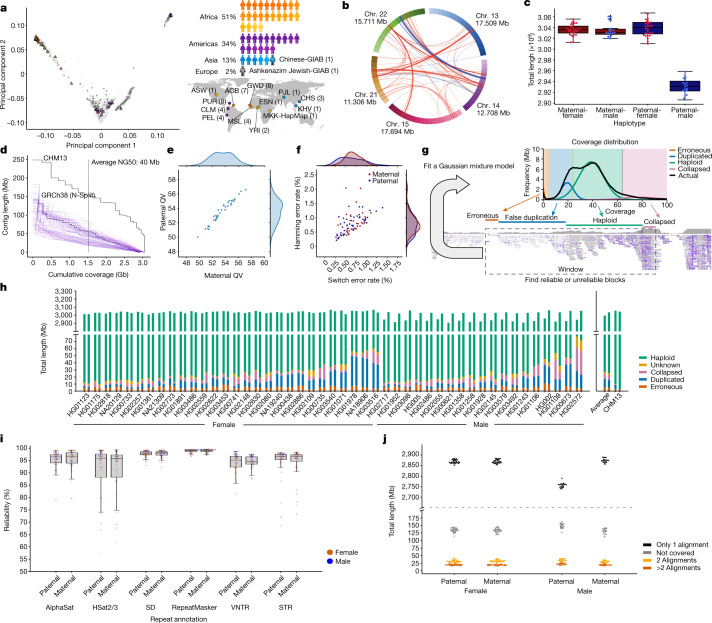
Here the Human Pangenome Reference Consortium presents a first draft of the human pangenome reference. The pangenome contains 47 phased, diploid assemblies from a cohort of genetically diverse individuals. These assemblies cover more than 99% of the expected sequence in each genome and are more than 99% accurate at the structural and base pair levels.
Overview
CoChat Summary
TL;DR
The paper presents a first draft human pangenome reference built from 47 phased, diploid assemblies from genetically diverse individuals, plus graph-based representations and annotations. The draft pangenome improves downstream analyses versus GRCh38, including reducing small-variant discovery errors by 34% and increasing detected structural variants per haplotype by 104%.
Key findings
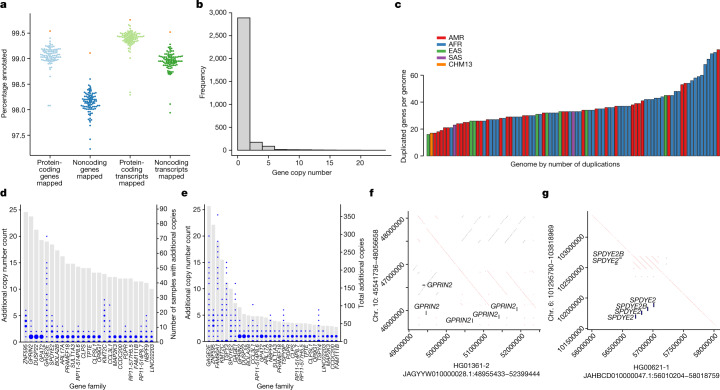
- The draft pangenome was built from 47 phased, diploid assemblies and adds 119 million base pairs of euchromatic polymorphic sequence plus 1,115 gene duplications relative to GRCh38; about 90 million of the added bases came from structural variation.
- Assemblies were reported as >99% complete and >99% accurate at structural and base-pair levels; the assembly reliability pipeline marked only 0.88% (26.4 Mb) of each assembly as unreliable.
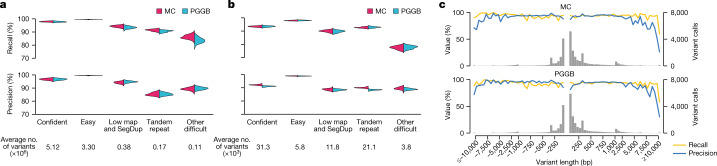
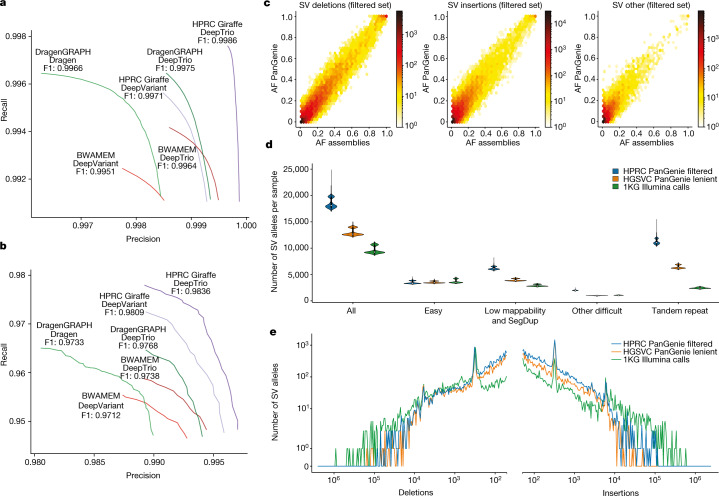
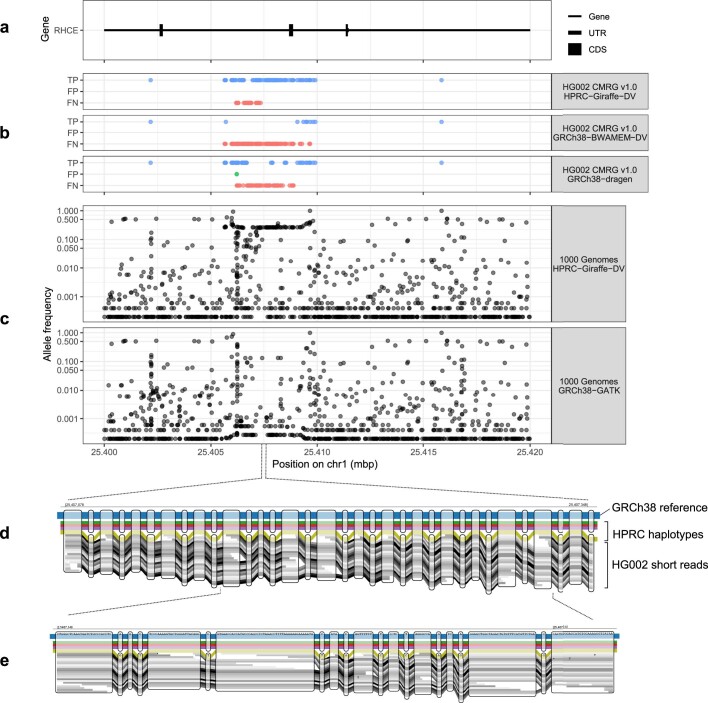
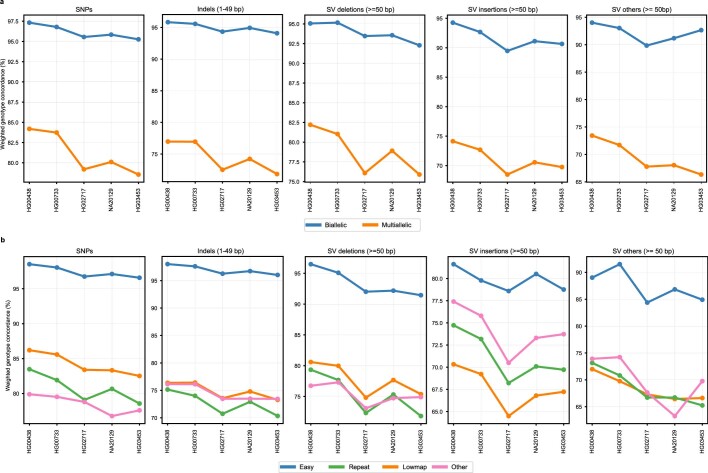
- In short-read analysis, the pangenome workflow reduced small-variant discovery errors by 34% and increased the number of structural variants detected per haplotype by 104% compared with GRCh38-based workflows.
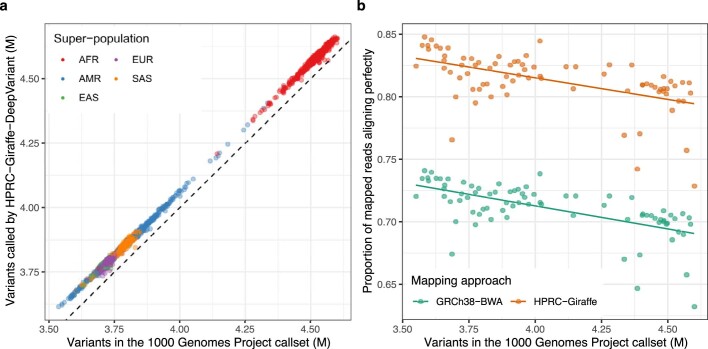
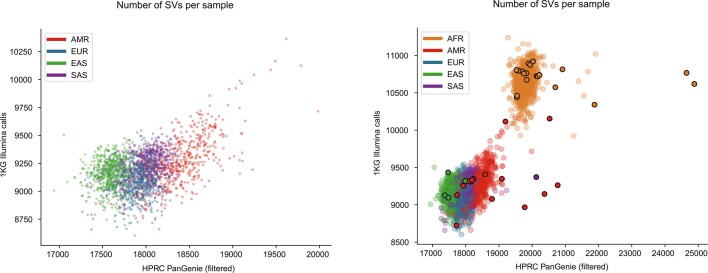
- For 1KG short-read genotyping, the pangenome-based call set gave on average 64,000 more small variants per sample than the 1KG catalogue; for SV genotyping it produced 18,483 SVs per sample versus 9,596 in the short-read 1KG call set.
Methods
- The study assembled 47 fully phased diploid genomes from globally diverse individuals, using PacBio HiFi, Oxford Nanopore, Hi-C, Bionano, and parental Illumina data; assemblies were phased with Trio-Hifiasm and manually/automatically curated.
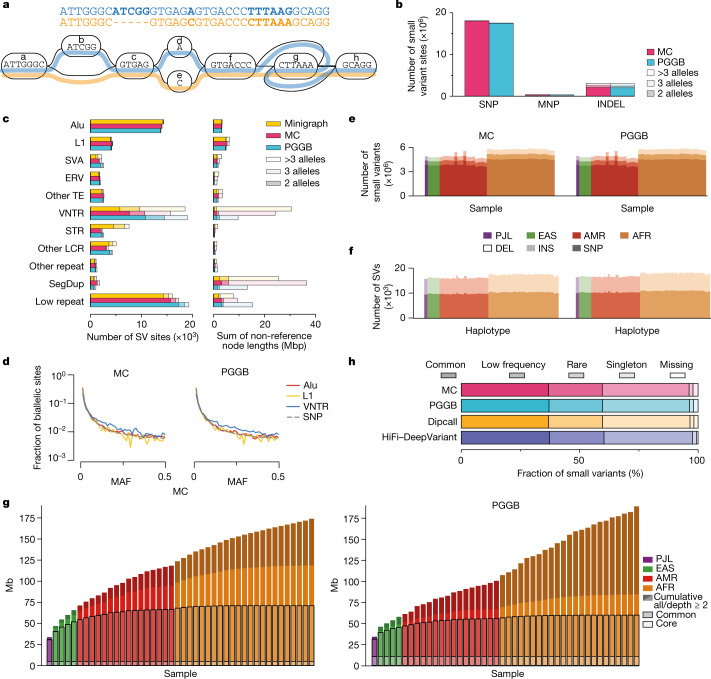
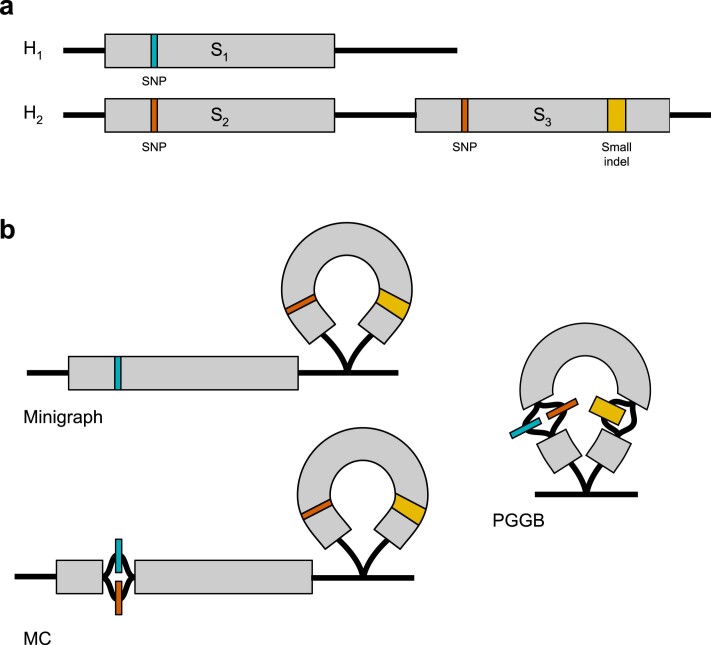
- The authors constructed pangenomes with three graph approaches: Minigraph, Minigraph-Cactus (MC), and PGGB, then evaluated variant representation, graph support, and downstream utility.
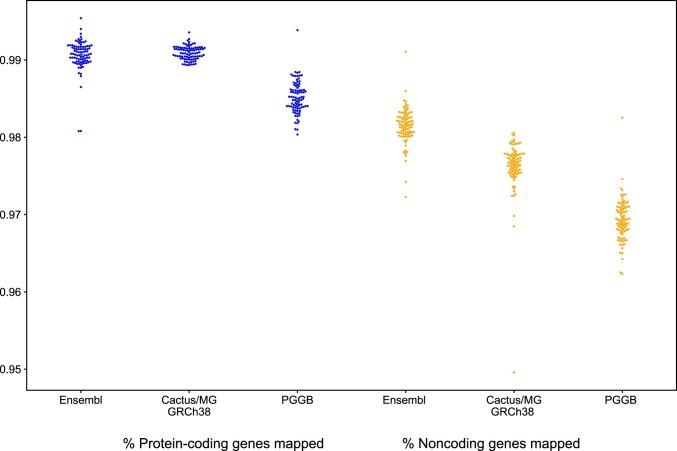
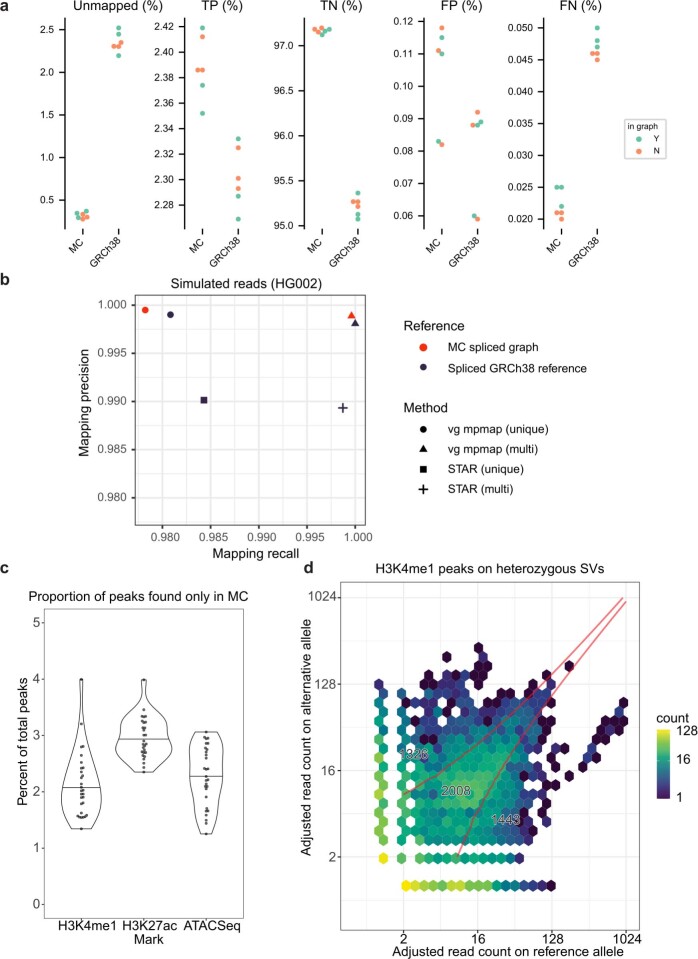
- They benchmarked pangenome-based analyses against GRCh38-based workflows using GIAB, 1KG short reads, and assembly-based comparisons for small variants, SVs, gene annotations, RNA-seq, ChIP-seq/ATAC-seq, VNTRs, and population analyses.
Limitations
- The paper states the cohort is relatively small and that the assembly reliability analysis found roughly an order of magnitude more erroneously assembled sequences in the HPRC assemblies than in T2T-CHM13.
- It explicitly notes remaining issues in highly repetitive regions and complex loci, where variant calling performance was lower and further work is needed; this is a stated limitation.
- The text also makes evident that some analyses are constrained by reference gaps, alignment ambiguity, and incomplete benchmarking truth sets; this is the paper’s implication, stated in the discussion around repetitive regions and underestimation of errors.
Model-written summary. Check it against the paper before relying on it.
Integrity signals
Registry
Cites
Statistics
Figures
Verification
Claims the paper makes
38 Valid · 5 Not valid · 2 Not checked · 206 Own results and interpretations
At least one cited source doesn’t support this claim or points to a different paper, and none confirmed it — see the verdicts below.
In the paper
“The pangenome contains 47 phased, diploid assemblies from a cohort of genetically diverse individuals1.”
§ A draft human pangenome reference > Abstract
What the sources say
- Disputedcites [1] 1000 Genomes Project Consortium. A global reference for human genetic variation Nature 2015 526 68 74 10.1038/nature15393 26432245 PMC4750478 sourceExperimental — accuracy not yet measured
The Abstract (page unavailable) describes a 1000 Genomes resource based on 2,504 individuals from 26 populations, with variants phased onto haplotypes. The Data set overview describes phasing variant sites, not a pangenome containing 47 phased, diploid assemblies. (LLM, conf=0.86)
Checked by a reasoning model — may be wrong.
plain- Asserted: passes — The authors put it forward as true.
- Checkable: passes — It can be checked against evidence.
- Load-bearing: passes — The paper’s conclusions depend on it.
- Based: passes — The paper gives a reason why it holds.
- Rests on an assumption not shown here.
- Disputed
The cited sources support only part of this claim — read each source’s verdict below.
In the paper
“Previous studies have identified tens of megabases of sequence contained within structural variants (SVs) that are polymorphic within the population5.”
§ A draft human pangenome reference > Main
What the sources say
- Partly supportedcites [5] Ebert P Haplotype-resolved diverse human genomes and integrated analysis of structural variation Science 2021 372 eabf7117 10.1126/science.abf7117 33632895 PMC8026704 sourceExperimental — accuracy not yet measured
The Results sections on structural variant distribution and complex structural variation document SVs and distinct structural haplotypes in human populations. But the reported ~279 Mbp is the genomic span of SV hotspots, not the amount of sequence contained within polymorphic SVs; the passages do not establish the claimed tens-of-megabases total. (LLM, conf=0.82)
plain- Asserted: passes — The authors put it forward as true.
- Checkable: passes — It can be checked against evidence.
- Load-bearing: passes — The paper’s conclusions depend on it.
- Based: passes — The paper gives a reason why it holds.
- Partly supported
Every source the paper cites for this claim was checked and supports it.
In the paper
“Recently, the Telomere-to-Telomere (T2T) consortium finished the first complete sequence of a haploid human genome, T2T-CHM13, which provides a contiguous representation of each autosome and of chromosome X, with the exception of some ribosomal DNA arrays that remain to be fully resolved3.”
§ A draft human pangenome reference > Main
What the sources say
- Supportedcites [3] Nurk S The complete sequence of a human genome Science 2022 376 44 53 10.1126/science.abj6987 35357919 PMC9186530 source
“A truly complete genome” states that T2T-CHM13 has gapless telomere-to-telomere assemblies for all 22 autosomes and chromosome X. “rDNA assembly” explains that the ordering of repeats in three rDNA arrays could not be fully resolved, so those arrays are represented by model sequences. (LLM, conf=0.93)
plainSingle case- Asserted: passes — The authors put it forward as true.
- Checkable: passes — It can be checked against evidence.
- Load-bearing: passes — The paper’s conclusions depend on it.
- Based: passes — The paper gives a reason why it holds.
- Supported
The cited sources support only part of this claim — read each source’s verdict below.
In the paper
“despite individual SVs being more likely to affect gene function than either individual SNPs or short insertions and deletions (indels)9,10.”
§ A draft human pangenome reference > Main
What the sources say
- Partly supportedcites [9] Chiang C The impact of structural variation on human gene expression Nat. Genet. 2017 49 692 699 10.1038/ng.3834 28369037 PMC5406250 sourceExperimental — accuracy not yet measured
The Results (Fine-mapping causal variants) state that, per variant, an SV is 28–54 times more likely to modulate gene expression than an SNV or indel. That supports the comparison for gene expression, but the cited analysis does not establish the broader claim about gene function generally. (LLM, conf=0.86)
- Partly supportedcites [10] Sudmant PH An integrated map of structural variation in 2,504 human genomes Nature 2015 526 75 81 10.1038/nature15394 26432246 PMC4617611 sourceExperimental — accuracy not yet measured
The Functional impact of SVs section reports that SV classes were enriched for expression-associated variants relative to the number tested, supporting a greater per-variant effect on gene expression. It uses eQTL associations as a surrogate for functional impact and groups SNPs with indels in the comparison; it does not establish the broader claim about gene function separately against each variant type. (LLM, conf=0.82)
hedgedstates an association- Asserted: passes — The authors put it forward as true.
- Checkable: passes — It can be checked against evidence.
- Load-bearing: passes — The paper’s conclusions depend on it.
- Based: passes — The paper gives a reason why it holds.
- Partly supported
Every source the paper cites for this claim was checked and supports it.
In the paper
“For the core assembler, we chose Trio-Hifiasm20 after detailed benchmarking of several alternatives21.”
§ A draft human pangenome reference > Assembling 47 diverse human genomes
What the sources say
- Supportedcites [20] Cheng H Concepcion GT Feng X Zhang H Li H Haplotype-resolved de novo assembly using phased assembly graphs with hifiasm Nat. Methods 2021 18 170 175 10.1038/s41592-020-01056-5 33526886 PMC7961889 source
Citation 20 identifies Trio-Hifiasm as the assembler the citing authors chose. The Results section (‘Overview of the hifiasm algorithm’) describes hifiasm’s graph-based trio binning, supporting that identification. The separate benchmarking claim is attached to citation 21, not this source. (LLM, conf=0.93)
- Supportedcites [21] Jarvis, E. D. et al. Semi-automated assembly of high-quality diploid human reference genomes. Nature611, 519–531 (2022). PMC9668749 36261518 source
The cited paper’s ‘Trios and higher phasing accuracy’ section compares several assembly algorithms and data types. Its ‘Graph phasing is more complete and accurate’ section reports that Trio hifiasm had the strongest combination of quality metrics among the diploid assemblies. The citing authors’ choice of core assembler is their own decision; this source supports the benchmarking offered as its rationale. Page numbers were not available in our copy. (LLM, conf=0.91)
plain- Asserted: passes — The authors put it forward as true.
- Checkable: passes — It can be checked against evidence.
- Load-bearing: unclear — It is unclear whether the paper’s conclusions depend on it.
- Based: passes — The paper gives a reason why it holds.
- Supported
135 more claims · 15 with their cited sources checked
Create a free account to see all 251 claims and to verify the 1 reference still open.
- It may state two separate claims as one. 80
- Probably not a substantial claim. 40
- The quote only partly states this claim. 1
Claims other papers make about this one
Each is checked against this paper’s own text: does it say what the citing paper says it does?
The cited source doesn’t support the claim as written.
In the citing paper
“In addition, the DRAGEN multigenome mapper is already incorporated for SV and CNV calling, something that is not currently possible with any other graph genome implementations because they focus primarily on genotyping variants14,73.”
From Comprehensive genome analysis and variant detection at scale using DRAGEN (2025) · cites this paper as [73]
Checked by a reasoning model — may be wrong.
Experimental — accuracy not yet measuredThe source backs part of the claim, not all of it — or backs it for a different population, condition or comparison.
In the citing paper
“Other biases, for example, in terms of sex, specific diseases, or human ancestral populations could also reduce the impact of AIVC models.115”
From How to build the virtual cell with artificial intelligence: Priorities and opportunities (2024) · cites this paper as [115]
Experimental — accuracy not yet measuredThe source backs part of the claim, not all of it — or backs it for a different population, condition or comparison.
In the citing paper
“For example, population-specific genes may provide insights into local adaptation, while structural variants may contribute to disease susceptibility or resistance in ways that were previously invisible to reference-based analyses [112,113].”
From Origin and Evolution of Genes in Eukaryotes: Mechanisms, Dynamics, and Functional Implications (2025) · cites this paper as [113]
Experimental — accuracy not yet measuredThe source backs part of the claim, not all of it — or backs it for a different population, condition or comparison.
In the citing paper
“These values were chosen after empirical experimentation specifically to filter out spurious mappings as determined by VCF-based comparison with Hi-Fi-based DeepVariant calls 25 .”
From Pangenome graph construction from genome alignments with Minigraph-Cactus (2024) · cites this paper as [25]
Experimental — accuracy not yet measuredThe cited source says what the claim attributes to it.
In the citing paper
“Notably, the first draft of a human pangenome reference has been released by the Human Pangenome Reference Consortium just last year as of the time of writing [19].”
From <tt>SAFARI</tt> : pangenome alignment of ancient DNA using purine/pyrimidine encodings (2025) · cites this paper as [19]
2 more claims about this paper
Create a free account to see every claim other papers make about this one.
Citations
Cites
The Sequence Alignment/Map format and SAMtools
Li, H., Handsaker, B., Wysoker, A., Fennell, T., Ruan, J., Homer, N., Marth, G., Abecasis, G., Durbin, R., & 1000 Genome Project Data Processing Subgroup (2009) · Bioinformatics · doi:10.1093/bioinformatics/btp352 · Cited by 62,041 · cited 1×
“3.1), (Li et al., 2009).”
InfluentialFast gapped-read alignment with Bowtie 2
Langmead, B., & Salzberg, S. L. (2012) · Nature Methods · doi:10.1038/nmeth.1923 · Cited by 56,400
STAR: ultrafast universal RNA-seq aligner
Dobin, A., Davis, C. A., Schlesinger, F., Drenkow, J., Zaleski, C., Jha, S., Batut, P., Chaisson, M., & Gingeras, T. R. (2013) · Bioinformatics · doi:10.1093/bioinformatics/bts635 · Cited by 51,709
BEDTools: a flexible suite of utilities for comparing genomic features
Quinlan, A. R., & Hall, I. M. (2010) · Bioinformatics · doi:10.1093/bioinformatics/btq033 · Cited by 27,437
Initial sequencing and analysis of the human genome
International Human Genome Sequencing Consortium, Whitehead Institute for Biomedical Research, C. F. G. R., Lander, E. S., Linton, L. M., Birren, B., Nusbaum, C., Zody, M. C., Baldwin, J., Devon, K., Dewar, K., et al. (2001) · Nature · doi:10.1038/35057062 · Cited by 24,216
Self-citationRSEM: accurate transcript quantification from RNA-Seq data with or without a reference genome
Li, B., & Dewey, C. N. (2011) · BMC Bioinformatics · doi:10.1186/1471-2105-12-323 · Cited by 22,179
A global reference for human genetic variation
The 1000 Genomes Project Consortium, authors, C., Auton, A., Abecasis, G. R., Steering committee, Altshuler, D. M., Durbin, R. M., Abecasis, G. R., Bentley, D. R., Chakravarti, A., et al. (2015) · Nature · doi:10.1038/nature15393 · Cited by 18,247
Self-citationAn integrated encyclopedia of DNA elements in the human genome
The ENCODE Project Consortium (2012) · Nature · doi:10.1038/nature11247 · Cited by 18,072
Twelve years of SAMtools and BCFtools
Danecek, P., Bonfield, J. K., Liddle, J., Marshall, J., Ohan, V., Pollard, M. O., Whitwham, A., Keane, T., McCarthy, S. A., Davies, R. M., et al. (2021) · GigaScience · doi:10.1093/gigascience/giab008 · Cited by 15,343 · cited 2×
“9 was used for filtering the variant sets (Danecek et al., 2021).”
MethodSelf-citationMinimap2: Pairwise alignment for nucleotide sequences
Li, H. (2018) · Bioinformatics · doi:10.1093/bioinformatics/bty191 · Cited by 14,807 · cited 8×
“The sequences of these anchors were them mapped against the target genome with minimap2 (Li, 2018b) using the following command:”
MethodInfluential
Cited by
Items 401–500 of 1,147
Setting higher standards for reports of microbial species in human cancers
Salzberg, S. L., Chia, M., Tay, C. Y., de Miranda, N. F. C. C., Smit, V. T. H. B. M., Wesseling, J., Irizarry, R. A., Marshall, B. J., Willerslev, E., Neefjes, J., et al. (2026) · Nature Cancer · doi:10.1038/s43018-026-01121-6 · Cited by 8
Human pangenome supports analysis of complex genomic regions
Massarat, A. R., Gymrek, M., McStay, B., & Jónsson, H. (2023) · Nature · doi:10.1038/d41586-023-01490-3 · Cited by 6
Morgan, M. A., Parast, S. M., Iwanaszko, M., Aoi, Y., Yoo, D., Dumar, Z. J., Howard, B. C., Helmin, K. A., Liu, Q., Thakur, W. R., et al. (2023) · Science Advances · doi:10.1126/sciadv.adj1261 · Cited by 4
Self-citationCharacterization of the genetic variation and evolutionary divergence of the CLEC18 family
Chang, C., Chang, W., & Hsieh, S.-L. E. (2024) · Journal of Biomedical Science · doi:10.1186/s12929-024-01034-5 · Cited by 5
“Concurrently, the Human Pangenome Reference Consortium (HPRC) has released the latest version of the human pangenome reference, containing 94 de novo phased whole genome assemblies from 47 individuals obtained through long-read sequencing [13].”
BackgroundMethodInfluentialPangenome comparison via ED strings
Gabory, E., Mwaniki, M. N., Pisanti, N., Pissis, S. P., Radoszewski, J., Sweering, M., & Zuba, W. (2024) · Frontiers in Bioinformatics · doi:10.3389/fbinf.2024.1397036 · Cited by 13
Self-citationGenome assembly of wisent (Bison bonasus) uncovers a deletion that likely inactivates the THRSP gene
Bortoluzzi, C., Mapel, X. M., Neuenschwander, S., Janett, F., Pausch, H., & Leonard, A. S. (2024) · Communications Biology · doi:10.1038/s42003-024-07295-y · Cited by 9
“55.0 deconstruct 71 tocallstructuralvariants(SV)foreachassemblyusingtaurine cattle as reference.”
InfluentialResolving the source of branch length variation in the Y chromosome phylogeny
Swiel, Y., Kelso, J. F., & Peyrégne, S. (2025) · Genome biology · doi:10.1186/s13059-024-03468-4 · Cited by 8
“…diversity in the reference to which sequence reads are aligned, known as ’pan-genomes’, have been shown to reduce the effect of reference bias when used as a reference for short-read mapping [25, 26] and could potentially maximise the amount of the Y chromosome that is accessible for comparison.”
Lin, M.-J., Langmead, B., & Safonova, Y. (2025) · Cell Reports Methods · doi:10.1016/j.crmeth.2025.101033 · Cited by 10
PanPA : generation and alignment of panproteome graphs
Dabbaghie, F., Srikakulam, S. K., Marschall, T., & Kalinina, O. V. (2023) · Bioinformatics Advances · doi:10.1093/bioadv/vbad167 · Cited by 6
Self-citationGoing beyond a reference genome in conservation genomics
Pegueroles, C., Pascual, M., & Carreras, C. (2023) · Trends in Ecology & Evolution · doi:10.1016/j.tree.2023.11.009 · Cited by 9
iSCORE-PD: an isogenic stem cell collection to research Parkinson’s disease
Busquets, O., Li, H., Syed, K. M., Jerez, P. Á., Dunnack, J., Bu, R. L., Verma, Y., Pangilinan, G. R., Martin, A., Straub, J., et al. (2026) · Nature Communications · doi:10.1038/s41467-026-74355-8 · Cited by 10
Self-citationChu, J., Rong, J., Feng, X., & Li, H. (2024) · GigaScience · doi:10.1093/gigascience/giae024 · Cited by 6
“To show the performance of ntsm, we sequence data from the HPRC [ 17 ] and a m ulti-VCF file fr om the 1000 Genomes Project [ 25 ] featuring 3,202 samples.”
Self-citationFrom complete genomes to pangenomes
Miga, K. H. (2024) · The American Journal of Human Genetics · doi:10.1016/j.ajhg.2024.05.012 · Cited by 7
Self-citationXiao, Y., Xiao, Z., Liu, L., Ma, Y., Zhao, H., Wu, Y., Huang, J., Xu, P., Liu, J., & Li, J. (2024) · GigaScience · doi:10.1093/gigascience/giae045 · Cited by 9
Milia, S., Leonard, A. S., Mapel, X. M., et al. (2024) · bioRxiv (Cold Spring Harbor Laboratory) · doi:10.1101/2024.02.02.578587 · Cited by 6
A personalized multi-platform assessment of somatic mosaicism in the human frontal cortexPreprint
Zhou, W., Mumm, C., Gan, Y., et al. (2024) · bioRxiv (Cold Spring Harbor Laboratory) · doi:10.1101/2024.12.18.629274 · Cited by 6
“In the era of genome assembly 55,56 , long-read technologies have demonstrated the capability to generate megabase-scale phase blocks and de novo diploid contigs 57–60 that provide essential haplotype information for phasing and significantly enhance genetic variation calling 61–63 .”
Igolkina, A. A., Bezlepsky, A. D., Senti, K.-A., & Nordborg, M. (2025) · bioRxiv (Cold Spring Harbor Laboratory) · doi:10.1101/2025.02.07.637071 · Cited by 9
Fast sequence alignment for centromeres with RaMA
Zhang, P., Wei, Y., Tian, Q., Zou, Q., & Wang, Y. (2025) · Genome Research · doi:10.1101/gr.279763.124 · Cited by 8
Lalli, J. L., Bortvin, A. N., McCoy, R. C., & Werling, D. M. (2025) · bioRxiv (Cold Spring Harbor Laboratory) · doi:10.1101/2025.02.24.639687 · Cited by 14
Freitas, A. C., Li, G., Shawon, J., Qamar, H., Pell, L. G., Kabir, M., Oduaran, O. H., Puebla-Barragan, S., Bassani, D. G., O'Callaghan, K. M., et al. (2025) · mSphere · doi:10.1128/msphere.00314-25 · Cited by 6
Pairwise graph edit distance characterizes the impact of the construction method on pangenome graphs
Dubois, S., Zytnicki, M., Lemaitre, C., & Faraut, T. (2025) · Bioinformatics · doi:10.1093/bioinformatics/btaf291 · Cited by 11
“Recent studies have shown that using multiple tools on the same input data produces different graphs (Leonard et al. 2022, Andreace et al. 2023, Liao et al. 2023); however, there is no method to quantify or qualify the differences between them.”
Association of human-specific expanded short tandem repeats with neuron-specific regulatory features
Liu, Q., & Tian, W. (2025) · Science Advances · doi:10.1126/sciadv.adp9707 · Cited by 7
Diversifying the reference iPSC line concept
Ellis, J., Woltjen, K., Mital, S. R., Saito, M. K., Hotta, A., & Loring, J. F. (2025) · Cell stem cell · doi:10.1016/j.stem.2025.05.004 · Cited by 6
A global map for introgressed structural variation and selection in humans
Hsieh, P., Soisangwan, N., Gordon, D., Javidh, A., Harvey, W. T., Porubskỳ, D., Hoekzema, K., Baker, C. A., Munson, K. M., Kinipi, C., et al. (2026) · Science · doi:10.1126/science.adz7518 · Cited by 11
Self-citationScaling for African Inclusion in High-Throughput Whole Cancer Genome Bioinformatic Workflows
Jiang, J., Samaha, G., Willet, C. E., Chew, T., Hayes, V. M., & Jaratlerdsiri, W. (2025) · Cancers · doi:10.3390/cancers17152481 · Cited by 5
“The pangenome draft has reported additional African-specific SVs that are related to epigenetic features [72].”
Finding easy regions for short-read variant calling from pangenome data
Li, H. (2025) · GigaScience · doi:10.1093/gigascience/giaf103 · Cited by 11
“In this article, we will describe a new method to produce easy regions from multiple high-quality human assemblies [ 18 ].”
Self-citationNardone, G. G., Andrioletti, V., Santin, A., Morgan, A., Spedicati, B., Concas, M. P., Gasparini, P., Girotto, G., & Limongelli, I. (2025) · Biomedicines · doi:10.3390/biomedicines13081949 · Cited by 7
“Moreover, in recent years, new reference genomes, such as the Telomere-to-Telomere [20] and the new Human Pangenome [21], have been created and proved to enhance SV calling for both srWGS and lrWGS, unravelling sequences that were not available in the previous release of the human reference genome.”
Advances in haplotype phasing and genotype imputation
Sun, Q., & Li, Y. (2025) · Nature Reviews Genetics · doi:10.1038/s41576-025-00895-2 · Cited by 17
“We note that SVs powered by long-read sequencing have also led to novel genome representations using graphics (for example, pangenomes) 151 , which have the potential to serve as a standard format of reference panels for phasing and imputation in the future.”
Ma, W., & Chaisson, M. (2025) · Nature Genetics · doi:10.1038/s41588-025-02346-4 · Cited by 9
“New, high-quality pangenome assemblies provide sequence-resolved CNVs, including nonreference duplications, from diverse populations 18–20 .”
Self-citationThompson, E., Korani, W., Wu, D., Garg, V., Tonnis, B., Wang, M. L., Holbrook, C. C., Ozias‐Akins, P., Culbreath, A. K., Varshney, R. K., et al. (2025) · Nature Communications · doi:10.1038/s41467-025-67371-7 · Cited by 8
“56.0) 55 subcommands “ stats ” and “ deconstruct ” 56 were used to extract components and variant locations for each pangenome.”
InfluentialSalsi, V., Losi, F., Pini, S., et al. (2026) · European Journal of Human Genetics · doi:10.1038/s41431-025-02000-x · Cited by 5
“T2T-like assemblies, made available through large-scale initiatives such as the Human Pangenome Project, have already demonstrate copy number polymorphisms and structural rearrangements in these domains [18, 46].”
InfluentialThe DNA dialect: a comprehensive guide to pretrained genomic language models
Veiner, M., & Supek, F. (2026) · Molecular Systems Biology · doi:10.1038/s44320-025-00184-4 · Cited by 13
“Another approach relies on training on the human pan-genome graph constructed from 47 individuals from the Human Pangenome Reference Consortium (Liao et al, 2023), as done in DeepGene (Zhang et al, 2024a).”
The PIN domain of SMG-5 functionally interacts with SMG-6 to stimulate NMD
Modena, M. S., Wohlenberg, C., Viscardi, M. J., Dunn, C., Haag, B. L., & Arribere, J. A. (2026) · RNA · doi:10.1261/rna.080653.125 · Cited by 8
Cookbook for plant genome sequences
de Oliveira, J. A. V. S., Choudhary, N., Meckoni, S. N., Nowak, M. S., Hagedorn, M., & Pucker, B. (2026) · BMC Genomics · doi:10.1186/s12864-026-12623-z · Cited by 14
Genetic diversity and regulatory features of human-specific NOTCH2NL duplications
Real, T. D., Hebbar, P., Yoo, D., Antonacci, F., Pačar, I., Dubocanin, D., Diekhans, M., Mikol, G. J., Popoola, O. G., Mallory, B. J., et al. (2026) · Cell Genomics · doi:10.1016/j.xgen.2026.101194 · Cited by 9
Self-citationFrom structural pangenomes to functional panomics in plants
Cochetel, N., & Cantù, D. (2026) · Molecular Biology and Evolution · doi:10.1093/molbev/msag087 · Cited by 11
The human pangenome reference anticipates equitable and fundamental genomic insights
Frazer, K. A., & Schork, N. J. (2023) · Cell Genomics · doi:10.1016/j.xgen.2023.100360 · Cited by 5
“These technical issues have been overcome to some degree with the efforts described in the recent publication by the Human Pangenome Reference Committee (HPRC).(1) Third, the use of DNA sequencing in a wide variety of research contexts has revealed both complex historical and recent migrations and mixing of population…”
ResultAlves, E., Chopra, A., Ram, R., Currenti, J., Kalams, S. A., Mallal, S. A., Phillips, E. J., & Gaudieri, S. (2023) · European Journal of Immunology · doi:10.1002/eji.202350590 · Cited by 5
Pangenomics: A new era in the field of neurodegenerative diseases
Abondio, P., Bruno, F., Passarino, G., Montesanto, A., & Luiselli, D. (2023) · Ageing Research Reviews · doi:10.1016/j.arr.2023.102180 · Cited by 7
Seven quick tips for gene-focused computational pangenomic analysis
Bonnici, V., & Chicco, D. (2024) · BioData Mining · doi:10.1186/s13040-024-00380-2 · Cited by 5
“In these approach, the pangenomic content of genomes is represented through formal languages or graph structures [8, 9], highly used to represent population-level information in human studies [10].”
BackgroundCelus, C. S., Ahmad, S. F., Gangwar, M., Kumar, S., & Kumar, A. (2024) · Gene · doi:10.1016/j.gene.2024.149159 · Cited by 9
Oliva, A., Foare, R., Campbell, P. M., Twine, N. A., Bauer, D. C., & Johar, A. (2025) · Biomolecules · doi:10.3390/biom15040582 · Cited by 5
“…the intuitive discoveries by Tetikol et al. [27], concluding that variation graphs with greater population specificity are far superior to more generic alternatives or proxies such as the Human Pangenome Reference Consortium (HPRC) [45] and the draft Arab Pangenome Reference (APR) [46].”
Methodological opportunities in genomic data analysis to advance health equity
Lehmann, B., Bräuninger, L., Cho, Y., Falck, F., Jayadeva, S., Katell, M. A., Nguyen, T., Perini, A., Tallman, S., Mackintosh, M. E., et al. (2025) · Nature Reviews Genetics · doi:10.1038/s41576-025-00839-w · Cited by 8
“A promising alternative is the draft human pangenome reference 147 .”
Building immunoglobulin and T cell receptor gene databases for the future
Watson, C. T., Collins, A. M., Ohlin, M., Heather, J., Peres, A., Lees, W., & Yaari, G. (2025) · ImmunoInformatics · doi:10.1016/j.immuno.2025.100059 · Cited by 7
VACmap: an accurate long-read aligner for unraveling complex genomic rearrangements
Ding, H., Sedlazeck, F. J., Proukakis, C., Morley, C., Toffoli, M., Schapira, A. H. V., Liao, Z., Pu, L., & Zhu, S. (2026) · Nature Communications · doi:10.1038/s41467-025-67096-7 · Cited by 9
“…genome representations offer signi fi cant advantages over linearreferencegenomes by providing a fl exible framework to encode SVs such as duplications, inversions, and translocations as graph structures, enabling a more comprehensive representation of genetic diversity across populations 38 .”
Lee, H., Greer, S., Pavlichin, D. S., Zhou, B., Urban, A. E., Weissman, T., Liao, W., Asri, M., Ebler, J., Doerr, D., et al. (2023) · Cell Reports Methods · doi:10.1016/j.crmeth.2023.100543 · Cited by 5
Self-citationReščenko, R., Brīvība, M., Atava, I., Rovīte, V., Pečulis, R., Silamiķelis, I., Ansone, L., Megnis, K., Birzniece, L., Leja, M., et al. (2023) · International Journal of Molecular Sciences · doi:10.3390/ijms242015345 · Cited by 6
“Additionally, pangenome reference could be constructed from existing WGS samples, further improving alignment and variant calling of genomes from the population of Latvia [24,25].”
BackgroundHayeck, T. J., Li, Y., Mosbruger, T. L., Bradfield, J. P., Gleason, A., Damianos, G., Shaw, G. T.-W., Duke, J. L., Conlin, L. K., Turner, T. N., et al. (2024) · Genome Biology and Evolution · doi:10.1093/gbe/evae009 · Cited by 4
Calendo, G., Kusic, D., Madžo, J., Gharani, N., & Scheinfeldt, L. (2024) · Frontiers in Bioinformatics · doi:10.3389/fbinf.2024.1351620 · Cited by 7
Are Viruses Taxonomic Units? A Protein Domain and Loop-Centric Phylogenomic Assessment
Caetano‐Anollés, G. (2024) · Viruses · doi:10.3390/v16071061 · Cited by 7
“Bacteriophages Bacteri-ophages provide selective advantages when integrated into their bacterial hosts, regulating microbiome populations. provide selective advantages when integrated into their bacterial hosts, regulating micro-biome populations.”
BackgroundQUETZAL: Vector Acceleration Framework for Modern Genome Sequence Analysis Algorithms
Pavón, J., Valdivieso, I. V., Rojas, C., Hernández, C., Aslan, M., Figueras, R., Yuan, Y., Lindegger, J., Alser, M., Moll, F., et al. (2024) · Proceedings - International Symposium on Computer Architecture/Proceedings · doi:10.1109/isca59077.2024.00050 · Cited by 12
“This information includes 1) the number and locations of genomic variations in DNA and RNA sequences for identifying disease causes [14], 2) functional regions that are conserved across evolution among different protein sequences for designing personalized therapeutic treatments [15], and 3)…”
BackgroundSelf-citationVISTA: an integrated framework for structural variant discovery
Sarwal, V., Lee, S., Yang, J., Sankararaman, S., Chaisson, M., Eskin, E., & Mangul, S. (2024) · Briefings in Bioinformatics · doi:10.1093/bib/bbae462 · Cited by 5
“…the Genome-in-a-Bottle (GIAB) gold standard SV set, haplotype-resolved de novo assemblies from the Human Pangenome Reference Consortium [23,24] (HPRC), along with an in-house PCR-validated gold standard across seven mouse strains to demonstrate its superiority, in consistently…”
BackgroundSelf-citationProHap enables human proteomic database generation accounting for population diversity
Vašíček, J., Kuznetsova, K. G., Skiadopoulou, D., Unger, L., Chera, S., Ghila, L., Bandeira, N., Njølstad, P. R., Johansson, S., Brückner, S., et al. (2024) · Nature Methods · doi:10.1038/s41592-024-02506-0 · Cited by 7
“The pangenome graph was decomposed into VCF files using the Minigraph-Cactus method 29 , as provided by the HPRC.”
InfluentialPrendergast, A. E., Sheppard, M. B., Famulski, J. K., Nicoli, S., Mukherjee, S. K., Sips, P. Y., & Elefteriades, J. A. (2025) · Frontiers in Cardiovascular Medicine · doi:10.3389/fcvm.2025.1480407 · Cited by 4
ChIP provides 10-fold microbial DNA enrichment from tissue while minimizing bias
Bhute, S. S., Sanders, J. G., Song, S. J., Lavoie, S., Swafford, A. D.-E., Guccione, C., Patel, L., Gonzalez, A., Rooks, M. G., Knight, R. D., et al. (2025) · Molecular Biology Reports · doi:10.1007/s11033-025-10330-8 · Cited by 5
Ethics choices during the Human Genome Project reflected their policy world, not ours
LoTempio, J. E., Donohue, C., Moreno, J. D., & Cook-Deegan, R. M. (2025) · Cell Genomics · doi:10.1016/j.xgen.2025.100841 · Cited by 6
Self-citationClade distillation for genome-wide association studies
Christ, R., Wang, X., Aslett, L. J. M., Steinsaltz, D., & Hall, I. M. (2025) · Genetics · doi:10.1093/genetics/iyaf158 · Cited by 7
Self-citationHaplotype-resolved reconstruction and functional interrogation of cancer karyotypesPreprint
Brunette, G. J., Tourdot, R. W., Wangsa, D., et al. (2024) · bioRxiv (Cold Spring Harbor Laboratory) · doi:10.1101/2024.03.02.583108 · Cited by 5
Gu, B., Peng, D., LaFlamme, C. W., Bennett, M. F., Bahlo, M., Weisburd, B., Mefford, H. C., & Chaisson, M. (2024) · bioRxiv (Cold Spring Harbor Laboratory) · doi:10.1101/2024.08.07.607105 · Cited by 8
“This provides a valuable resource of sequence-resolved TR sequences (Supplementary Figure S1) [33, 34, 35, 36, 37, 38].”
Self-citationDong, Z., Whitehead, J., Fu, M., MacIsaac, J. L., Rehkopf, D. H., Rosero‐Bixby, L., Kobor, M. S., & Korthauer, K. D. (2024) · bioRxiv (Cold Spring Harbor Laboratory) · doi:10.1101/2024.10.07.617116 · Cited by 4
Kim, J., Kim, Y.-S., Shin, J. W., Kim, Y., Lee, D. H., Park, J.-W., Lee, D., Kim, H.-C., Lee, J., Lee, S. H., et al. (2024) · Scientific Data · doi:10.1038/s41597-024-04033-1 · Cited by 5
Multisample motif discovery and visualization for tandem repeats
Zhang, Y., Hulsman, M., Salazar, A., Tesi, N., Knoop, L., van der Lee, S. J., Wijesekera, S., Křížová, J., Kamsteeg, E., & Holstege, H. H. (2024) · Genome Research · doi:10.1101/gr.279278.124 · Cited by 9
The Primate Major Histocompatibility Complex: An Illustrative Example of Gene Family EvolutionPreprint
Fortier, A. L., & Pritchard, J. K. (2025) · eLife · doi:10.7554/elife.103545.1 · Cited by 5
Investigating the topological motifs of inversions in pangenome graphsPreprint
Romain, S. J., Dubois, S., Legeai, F., & Lemaitre, C. (2025) · bioRxiv (Cold Spring Harbor Laboratory) · doi:10.1101/2025.03.14.643331 · Cited by 5
“The main tools for bubble detection are vg toolkit [10], BubbleGun [11] and gfatools [12], the former being the most used one as it is included in Minigraph-Cactus and PGGB pipelines.”
InfluentialPhased genome assemblies and pangenome graphs of human populations of Japan and Saudi Arabia
Kulmanov, M., Ashouri, S., Liu, Y., Abdelhakim, M., Alsolme, E., Nagasaki, M., Ohkawa, Y., Suzuki, Y., Tawfiq, R., Tokunaga, K., et al. (2025) · Scientific Data · doi:10.1038/s41597-025-05652-y · Cited by 8
“Although the draft human reference pangenome graph includes individuals from diverse regions 1 , it significantly lacks representation from Arab and Japanese populations, collectively accounting for approximately 600 million people worldwide.”
InfluentialGornitzka, M. B., Røsjø, E., Jana, U., Ford, E. E., Tourancheau, A., Lees, W., Vanwinkle, Z. M., Smith, M. L., Watson, C. T., & Lossius, A. (2025) · Genome Research · doi:10.1101/gr.280400.125 · Cited by 11
Self-citationA Pangenomic Method for Establishing a Somatic Variant Detection Resource in HapMap MixturesPreprint
Kong, N., Tang, Z., Ruttenberg, A., Macias-Velasco, J. F., Li, Z., Zhang, W., Miao, B., Xin, Z., Fu, Q., Park, H., et al. (2025) · bioRxiv (Cold Spring Harbor Laboratory) · doi:10.1101/2025.09.29.679336 · Cited by 5
Self-citationComprehensive benchmarking of somatic mutation detection by the SMaHT NetworkPreprint
The Somatic Mosaicism across Human Tissues Network (SMaHT), & Abyzov, A. S. (2025) · bioRxiv (Cold Spring Harbor Laboratory) · doi:10.1101/2025.10.09.678885 · Cited by 5
Luo, Y., Mangan, R. J., Weaver, S., et al. (2025) · bioRxiv (Cold Spring Harbor Laboratory) · doi:10.1101/2025.10.20.683446 · Cited by 5
Duchen, D., Clipman, S. J., Vergara, C., Thio, C. L., Thomas, D. L., Duggal, P., & Wojcik, G. L. (2024) · PLoS ONE · doi:10.1371/journal.pone.0301069 · Cited by 4
Zhao, Q., Yin, Z., & Hou, Z. (2025) · Journal of Animal Science and Biotechnology/Journal of animal science and biotechnology · doi:10.1186/s40104-024-01141-1 · Cited by 9
“In recent years, an increasing number of pangenome studies [6, 7] have shown that one single genome is not sufficient to represent all the genetic information of a species.”
Chromosome-Level Genome Assembly of the Meishan Pig and Insights into Its Domestication Mechanisms
Du, H., Hu, J., Zhang, Z., & Wu, Z. (2025) · Animals · doi:10.3390/ani15040603 · Cited by 7
“The genomic resources available for pig populations are still limited in comparison to those for humans [24].”
Information theoretic clustering of the human pangenome minigraph
Ferrero, R., Gandino, F., & Carbone, A. (2025) · Pattern Recognition Letters · doi:10.1016/j.patrec.2025.03.004 · Cited by 3
Zwartkruis, M. M., de Pagter, M. S., Gommers, D., Koopmans, M., Ottenheim, C. P. E., Kortooms, J. V., Albring, M., Elferink, M., Wadman, R. I., Asselman, F., et al. (2025) · Human Molecular Genetics · doi:10.1093/hmg/ddaf035 · Cited by 5
Sheep pan-genome retrieves the lost sequences and genes during domestication and selection
Liu, J., Mo, D.-X., Luo, L., Shi, Y., & Xu, S. (2025) · Genomics · doi:10.1016/j.ygeno.2025.111047 · Cited by 8
Du, Z., He, J.-B., Xiao, P.-X., Hu, J., Yang, N., & Jiao, W. (2025) · Molecular Plant · doi:10.1016/j.molp.2025.08.001 · Cited by 6
Process, V., Ambavaram, M. M. R., Vasantgadkar, S., Khanal, S., Werner, M., Berkeley, M., Herbert, Z. T., Endress, G., Thomann, U., & Daviso, E. (2025) · Diagnostics · doi:10.3390/diagnostics15182294 · Cited by 5
“Furthermore, global initiatives such as the 1000 Genomes Project [16] and the Human Pangenome Reference [17] are enhancing SV detection sensitivity and accuracy, thereby providing a more comprehensive understanding of human genomic diversity.”
Diverse short tandem repeat sequences influence gene regulation in human populations
Mitina, A., Engchuan, W., Trost, B., Pellecchia, G., Scherer, S. W., & Yuen, R. K. C. (2025) · Genome biology · doi:10.1186/s13059-025-03754-9 · Cited by 6
“The use of long-read sequencing technologies facilitated the T2T-CHM13 reference assembly, uncovering an additional 8% of the genome, and allowed detailed characterization of human centromeres and telomeres [42–45].”
Targeted adaptive sampling enables clinical pharmacogenomics testing and genome-wide genotyping
Gan, P. H. P., Yeo, H. L., Hajis, M. I. B., Maulana, Y., Ng, A. Q. H., Ramanto, K. N., Dewanggana, M. N., Irwanto, A. K., Sani, L. L., Goh, L. L., et al. (2025) · Scientific Reports · doi:10.1038/s41598-025-22941-z · Cited by 4
Zentgraf, J., Schmitz, J. E., & Rahmann, S. (2025) · Bioinformatics · doi:10.1093/bioinformatics/btaf632 · Cited by 8
Foundation models in clinical oncology: Progresses and perspectives
Li, J., Fu, J., Geng, X., & Wang, H. (2025) · Cancer Letters · doi:10.1016/j.canlet.2025.218220 · Cited by 11
Pajic, P., & Gökçümen, Ö. (2025) · Genome Biology and Evolution · doi:10.1093/gbe/evaf250 · Cited by 7
Yang, L., Gao, Y., Kuhn, K. L., Bhowmik, N., Li, W., Zanton, G. I., Fang, L., Cole, J. B., Li, C., Baldwin, R. L., et al. (2026) · Nature Communications · doi:10.1038/s41467-026-68807-4 · Cited by 5
“Tools such as vg 36 , Minigraph 37 , MC (Minigraph-Cactus) 38 , and the PGGB (PanGenome Graph Builder) 39 , have been developed to construct pangenome graph assemblies, each with speci fi c advantages and trade-offs 40,41 .”
Self-citationPopulation-level structural variant characterization using pangenome graphs
Wang, S., Xu, T., Zhang, P., & Ye, K. (2026) · Nature Genetics · doi:10.1038/s41588-026-02538-6 · Cited by 9
Rare disease genomics in an era of human pangenomics and telomere-to-telomere genome references
Folland, C., Monahan, G., Breen, J., Johari, M., Patel, H. R., & Ravenscroft, G. (2026) · European Journal of Human Genetics · doi:10.1038/s41431-026-02125-7 · Cited by 6
“Over two-thirds of SVs have remained unidenti fi ed in SRS data because of the lack of representation of these alternate alleles in the GRCh37/38 assemblies [13].”
InfluentialTransposable element DNA and RNA: Drivers of gene expression, evolution, and disease
Ho, J., Douse, C. H., & Marazzi, I. (2026) · Cell · doi:10.1016/j.cell.2026.05.003 · Cited by 9
Olbrich, M. R., Bartels, L., & Wohlers, I. (2024) · Frontiers in Bioinformatics · doi:10.3389/fbinf.2024.1384497 · Cited by 5
“Recently, pangenomics has been extended to plants (Li et al., 2022), animals (Golicz et al., 2020), and humans (Liao et al., 2023).”
BackgroundMethodCentromere Landscapes Resolved from Hundreds of Human Genomes
Gao, S., Zhang, Y., Bush, S. J., Wang, B., Yang, X., & Ye, K. (2024) · Genomics Proteomics & Bioinformatics · doi:10.1093/gpbjnl/qzae071 · Cited by 12
Microsatellites explorer: A database of short tandem repeats across genomes
Provatas, K., Chantzi, N., Patsakis, M., Nayak, A., Mouratidis, I., & Georgakopoulos‐Soares, I. (2024) · Computational and Structural Biotechnology Journal · doi:10.1016/j.csbj.2024.10.041 · Cited by 7
Long-read sequencing for diagnosis of genetic myopathies
Yeow, D., Rudaks, L. I., Davis, R. L., Ng, K., Ghaoui, R., Cheong, P. L., Ravenscroft, G., Kennerson, M. L., Deveson, I. W., & Kumar, K. R. (2025) · BMJ Neurology Open · doi:10.1136/bmjno-2024-000990 · Cited by 6
Nie, J., Tellier, J., Tarasova, I., Nutt, S. L., & Smyth, G. K. (2025) · NAR Genomics and Bioinformatics · doi:10.1093/nargab/lqaf074 · Cited by 9
“The two genomes correspond to HG00438 and HG00621 in Figure 1h of [ 40 ], but are relabelled as Han-438 and Han-621 in this article to emphasize their Han Chinese origins.”
Yang, H., & Wang, Y. (2025) · G3 Genes Genomes Genetics · doi:10.1093/g3journal/jkaf204 · Cited by 4
Structure of a polymorphic repeat at the CACNA1C schizophrenia locus
Moya, R., Wang, X., Tsien, R. W., & Maurano, M. T. (2025) · Proceedings of the National Academy of Sciences · doi:10.1073/pnas.2415650122 · Cited by 6
Nagasaki, M., Katayama, T., Moriya, Y., Sekiya, Y., Kawashima, S., Teraoka, R., Machida, S., Matsubara, T., Hashimoto, H., Asakura, A., et al. (2025) · Nucleic Acids Research · doi:10.1093/nar/gkaf1232 · Cited by 4
“…10, 29, 17, and 94 publicly available HiFi datasets from JaSaPaGe (PRJDB19680) [ 31 ], the Human Pangenome Reference Consortium (HPRC) release 1, HPRC Plus, and part of the forthcoming HPRC next release candidate (PR-JNA731524, PRJNA701308), respectively ( Supplementary Table S2 ) [ 32 ].”
Porubskỳ, D., Yoo, D., Koundinya, N., Souche, E. L., Dishuck, P. C., Dierckxsens, N., Harvey, W. T., Munson, K. M., Hoekzema, K., Chan, D. D., et al. (2026) · Nature Communications · doi:10.1038/s41467-026-71905-y · Cited by 8
“Our complete sequencing of human genomes 16,20,21 as well as NHPs 23 con fi rms that this core duplicon expanded exclusively in the human lineage 51 .”
InfluentialSelf-citationLim, P. K., Wang, R., Lim, S. C., Velankanni, J. P. A., & Mutwil, M. (2026) · Nature Communications · doi:10.1038/s41467-026-72380-1 · Cited by 5
Genetic Researchers’ Use of and Interest in Research With Diverse Ancestral Groups
Jaffe, K., Greene, A. K., Chen, L., Ryan, K. A., Krenz, C. D., Roberts, J. S., Zikmund‐Fisher, B. J., McGuire, A. L., Thomas, J. D., Marsh, E. E., et al. (2024) · JAMA Network Open · doi:10.1001/jamanetworkopen.2024.6805 · Cited by 8
Strategic targeting of Cas9 nickase induces large segmental duplications
Sugiyama, Y., Okada, S., Daigaku, Y., Kusumoto, E., & Ito, T. (2024) · Cell Genomics · doi:10.1016/j.xgen.2024.100610 · Cited by 6
VUS next in rare diseases? Deciphering genetic determinants of biomolecular condensation
Heredia-Torrejón, M., Montañez, R., González‐Meneses, A., Carcavilla, A., Medina, M. Á., & Lechuga-Sancho, A. M. (2024) · Orphanet Journal of Rare Diseases · doi:10.1186/s13023-024-03307-6 · Cited by 4
“The genetic diversity present among the nearly 8 billion living humans, with 5·10 6 variants on average [1], hinders the understanding of genetic traits [2, 3].”
BackgroundBuilding a pangenome alignment index via recursive prefix-free parsing
Ferro, E., Oliva, M., Gagie, T., & Boucher, C. A. (2024) · iScience · doi:10.1016/j.isci.2024.110933 · Cited by 8
Metadata
- Authors
- Liao, W.-W., Asri, M., Ebler, J., Doerr, D., Haukness, M., Hickey, G., Lu, S., Lucas, J. K., Monlong, J., Abel, H. J., Buonaiuto, S., Chang, X. H., Cheng, H., Chu, J., Colonna, V., Eizenga, J. M., Feng, X., Fischer, C., Fulton, R. S., Garg, S., Groza, C., Guarracino, A., Harvey, W. T., Heumos, S., Howe, K., Jain, M., Lu, T.-Y., Markello, C., Martin, F. J., Mitchell, M. W., Munson, K. M., Mwaniki, M. N., Novak, A. M., Olsen, H. E., Pesout, T., Porubsky, D., Prins, P., Sibbesen, J. A., Sirén, J., Tomlinson, C., Villani, F., Vollger, M. R., Antonacci-Fulton, L. L., Baid, G., Baker, C. A., Belyaeva, A., Billis, K., Carroll, A., Chang, P.-C., Cody, S., Cook, D. E., Cook-Deegan, R. M., Cornejo, O. E., Diekhans, M., Ebert, P., Fairley, S., Fedrigo, O., Felsenfeld, A. L., Formenti, G., Frankish, A., Gao, Y., Garrison, N. A., Giron, C. G., Green, R. E., Haggerty, L., Hoekzema, K., Hourlier, T., Ji, H. P., Kenny, E. E., Koenig, B. A., Kolesnikov, A., Korbel, J. O., Kordosky, J., Koren, S., Lee, H., Lewis, A. P., Magalhães, H., Marco-Sola, S., Marijon, P., McCartney, A., McDaniel, J., Mountcastle, J., Nattestad, M., Nurk, S., Olson, N. D., Popejoy, A. B., Puiu, D., Rautiainen, M., Regier, A. A., Rhie, A., Sacco, S., Sanders, A. D., Schneider, V. A., Schultz, B. I., Shafin, K., Smith, M. W., Sofia, H. J., Abou Tayoun, A. N., Thibaud-Nissen, F., Tricomi, F. F., Wagner, J., Walenz, B., Wood, J. M. D., Zimin, A. V., Bourque, G., Chaisson, M. J. P., Flicek, P., Phillippy, A. M., Zook, J. M., Eichler, E. E., Haussler, D., Wang, T., Jarvis, E. D., Miga, K. H., Garrison, E., Marschall, T., Hall, I. M., Li, H., & Paten, B.
- Affiliations
- Washington University in St. Louis (US)
- University of California, Santa Cruz (US)
- Heinrich Heine University Düsseldorf (DE)
- Yale University (US)
- Institute of Genetics and Biophysics (IT)
- Harvard University (US)
- Dana-Farber Cancer Institute (US)
- University of Tennessee Health Science Center (US)
- Novo Nordisk Foundation (DK)
- McGill University (CA)
- University of Washington (US)
- Quantitative Biology Center (DE)
- Wellcome Sanger Institute (GB)
- Northeastern University (US)
- University of Southern California (US)
- European Bioinformatics Institute (GB)
- Coriell Institute For Medical Research (US)
- University of Pisa (IT)
- University of Copenhagen (DK)
- Google (United States) (US)
- Washington Center (US)
- Rockefeller University (US)
- National Institutes of Health (US)
- Children's Hospital of Philadelphia (US)
- University of California, Los Angeles (US)
- Stanford Medicine (US)
- Icahn School of Medicine at Mount Sinai (US)
- University of California, San Francisco (US)
- National Institute of Standards and Technology (US)
- University of California, Davis (US)
- Johns Hopkins University (US)
- Max Delbrück Center (DE)
- Kyoto University (JP)
- Howard Hughes Medical Institute (US)
- Corresponding author
- Garrison, Erik
- Marschall, Tobias
- Hall, Ira M.
- Li, Heng
- Paten, Benedict
- ORCID
- Liao, Wen-Wei
- Asri, Mobin
- Ebler, Jana
- Doerr, Daniel
- Haukness, Marina
- Hickey, Glenn
- Lu, Shuangjia
- Lucas, Julian K.
- Monlong, Jean
- Abel, Haley J.
- Buonaiuto, Silvia
- Chang, Xian H.
- Cheng, Haoyu
- Chu, Justin
- Colonna, Vincenza
- Eizenga, Jordan M.
- Feng, Xiaowen
- Fulton, Robert S.
- Garg, Shilpa
- Groza, Cristian
- Guarracino, Andrea
- Harvey, William T.
- Heumos, Simon
- Howe, Kerstin
- Jain, Miten
- Lu, Tsung-Yu
- Markello, Charles
- Martin, Fergal J.
- Mitchell, Matthew W.
- Munson, Katherine M.
- Mwaniki, Moses Njagi
- Novak, Adam M.
- Olsen, Hugh E.
- Pesout, Trevor
- Porubsky, David
- Prins, Pjotr
- Sibbesen, Jonas A.
- Sirén, Jouni
- Tomlinson, Chad
- Villani, Flavia
- Vollger, Mitchell R.
- Baid, Gunjan
- Belyaeva, Anastasiya
- Billis, Konstantinos
- Carroll, Andrew
- Chang, Pi-Chuan
- Cook, Daniel E.
- Cook-Deegan, Robert M.
- Cornejo, Omar E.
- Diekhans, Mark
- Ebert, Peter
- Fairley, Susan
- Fedrigo, Olivier
- Formenti, Giulio
- Frankish, Adam
- Gao, Yan
- Garrison, Nanibaa’ A.
- Green, Richard E.
- Haggerty, Leanne
- Hoekzema, Kendra
- Hourlier, Thibaut
- Ji, Hanlee P.
- Kenny, Eimear E.
- Koenig, Barbara A.
- Kolesnikov, Alexey
- Korbel, Jan O.
- Koren, Sergey
- Lee, HoJoon
- Lewis, Alexandra P.
- Magalhães, Hugo
- Marco-Sola, Santiago
- Marijon, Pierre
- McDaniel, Jennifer
- Mountcastle, Jacquelyn
- Nattestad, Maria
- Nurk, Sergey
- Olson, Nathan D.
- Popejoy, Alice B.
- Puiu, Daniela
- Rautiainen, Mikko
- Regier, Allison A.
- Rhie, Arang
- Sacco, Samuel
- Sanders, Ashley D.
- Shafin, Kishwar
- Smith, Michael W.
- Sofia, Heidi J.
- Thibaud-Nissen, Françoise
- Tricomi, Francesca Floriana
- Wagner, Justin
- Walenz, Brian
- Wood, Jonathan M. D.
- Zimin, Aleksey V.
- Bourque, Guillaume
- Chaisson, Mark J. P.
- Flicek, Paul
- Phillippy, Adam M.
- Zook, Justin M.
- Eichler, Evan E.
- Haussler, David
- Wang, Ting
- Jarvis, Erich D.
- Miga, Karen H.
- Garrison, Erik
- Marschall, Tobias
- Hall, Ira M.
- Li, Heng
- Paten, Benedict
- Venue
- Nature
- Published
- 2023-05-10
- Volume
- 617
- Issue
- 7960
- Pages
- 312-324
- ISSN
- 0028-0836 (ISSN-L)
- 1476-4687
- PMC
- PMC10172123
- OpenAlex
- W4376133202
- Semantic Scholar
- 30c5780eccdbc66a26c4f4b744e35df1a2817bea
- Cited by
- 1,129
- References
- 150
- Citations by year
- 2026: 300 · 2025: 374 · 2024: 315 · 2023: 132
- FWCI
- 101.10
- Type
- journal article
- Language
- en
- Open access
- hybrid
- doi.org
- Licence
- cc-by
- creativecommons.org/licenses/by/4.0 (tdm)
- creativecommons.org/licenses/by/4.0 (vor)
- Locations
- Nature (publishedVersion, cc-by)
- PubMed Central (publishedVersion, cc-by)
- PubMed (publishedVersion)
- Digital Commons@Becker (Washington University School of Medicine) (submittedVersion, cc-by)
- HAL (submittedVersion)
- Dipòsit Digital de Documents de la UAB (Universitat Autònoma de Barcelona) (submittedVersion, cc-by)
- eScholarship (California Digital Library) (submittedVersion, cc-by)
- UPCommons institutional repository (Universitat Politècnica de Catalunya) (submittedVersion, cc-by-nc-nd)
- Funders
- Wellcome Trust (WT104947/Z/14/Z, WT222155/Z/20/Z, WT108749/Z/15/Z)
- Nederlandse Organisatie voor Wetenschappelijk Onderzoek (2021.040)
- Novo Nordisk Fonden (NNF10CC1016517, NNF21OC0069089)
- National Institutes of Health (OT2OD033761)
- National Human Genome Research Institute (R01HG010485, U24HG009081, U01HG010973, U01HG010963, U01HG010971, U41HG007234, R01HG011274, U01HG010961, R01HG002385, U24HG011853, U24HG007234, R01HG010169, ZIAHG200398, U24HG007497, U24HG010262, U41HG010972, R01HG011649, R01HG006677)
- National Institute of General Medical Sciences (R01GM123489, R35GM130151)
- Topics
- Life Sciences › Biochemistry, Genetics and Molecular Biology › Molecular Biology › Genomics and Phylogenetic Studies
- Life Sciences › Biochemistry, Genetics and Molecular Biology › Genetics › Genomic variations and chromosomal abnormalities
- Life Sciences › Biochemistry, Genetics and Molecular Biology › Genetics › Genetic Associations and Epidemiology
- Keywords
- human pangenome, structural variants, gene duplication, haplotypes, GRCh38, genetic diversity
- MeSH terms
- Alleles, Diploidy, Haplotypes, Humans, Reference Standards, Genetic Variation, Cohort Studies, Genome, Human, Sequence Analysis, DNA, Genomics
About these checks
Registry, retraction, Cites and statistics results are computed, not judged, with one exception: a printed reference that no index lists is read once by a model before it counts as a citation error. Claims are extracted by a model and kept only when their quote appears verbatim in the text; each cited source is then checked, with a model’s help, for whether it says what the claim relies on. Those verdicts can be wrong — read the claim’s quote and the cited source before relying on one.
The claim verdicts this report counts are experimental: their accuracy is not yet measured.
A language model drew the claims from the paper on 2026-10-11, under version 3 of the claim definition (model deepseek-v4.1-flash, prompt extract-v3).
A second model labelled each claim on 2026-10-11 (model jev-1.13-20260917, definition revision gold-guideline-v0.2).
Cited sources are checked with a language model’s help (gpt-6-sol).
Statistics and arithmetic are recomputed, not judged.
Confidence bands are shown only for fields calibrated on our annotated test set. None is calibrated yet, so no band is shown.
What counts as a claim ›How we measure confidence ›How we check this ›
Are you an author, or do you see a problem with this page? Request a review
Data sources
Bibliographic data: Semantic Scholar, OpenAlex, Crossref.
Contains information from the Semantic Scholar Academic Graph Datasets, made available under the ODC Attribution License (ODC-BY 1.0).
Semantic Scholar’s data is described in: Kinney, R., et al. (2023). The Semantic Scholar Open Data Platform. arXiv:2301.10140.
