

A draft human pangenome reference.
Open accessPublished version of a preprint
The DOI matches its Crossref record; 139 of the 150 references it cites were found in a registry or an index; 59 of the 67 sources its claims cite were checked for support.
Abstract
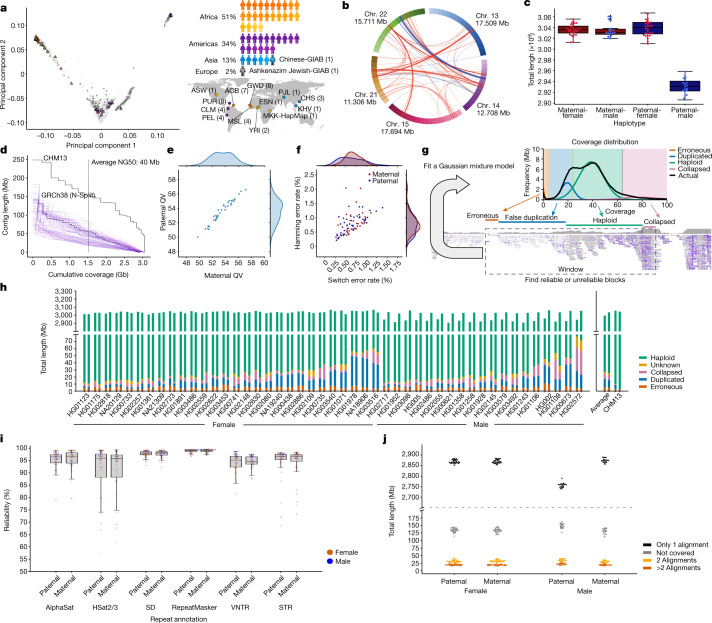
Here the Human Pangenome Reference Consortium presents a first draft of the human pangenome reference. The pangenome contains 47 phased, diploid assemblies from a cohort of genetically diverse individuals. These assemblies cover more than 99% of the expected sequence in each genome and are more than 99% accurate at the structural and base pair levels.
Overview
CoChat Summary
TL;DR
The paper presents a first draft human pangenome reference built from 47 phased, diploid assemblies from genetically diverse individuals, plus graph-based representations and annotations. The draft pangenome improves downstream analyses versus GRCh38, including reducing small-variant discovery errors by 34% and increasing detected structural variants per haplotype by 104%.
Key findings
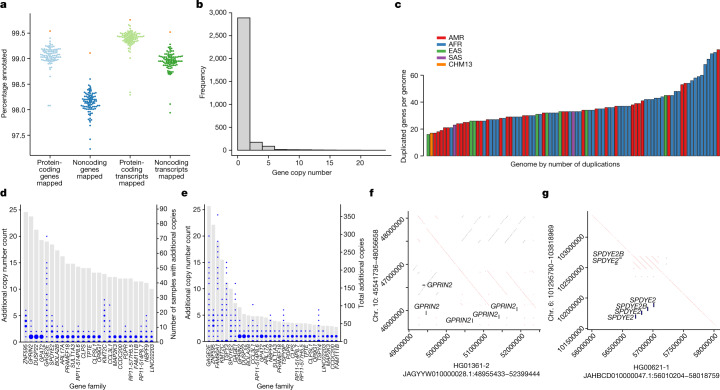
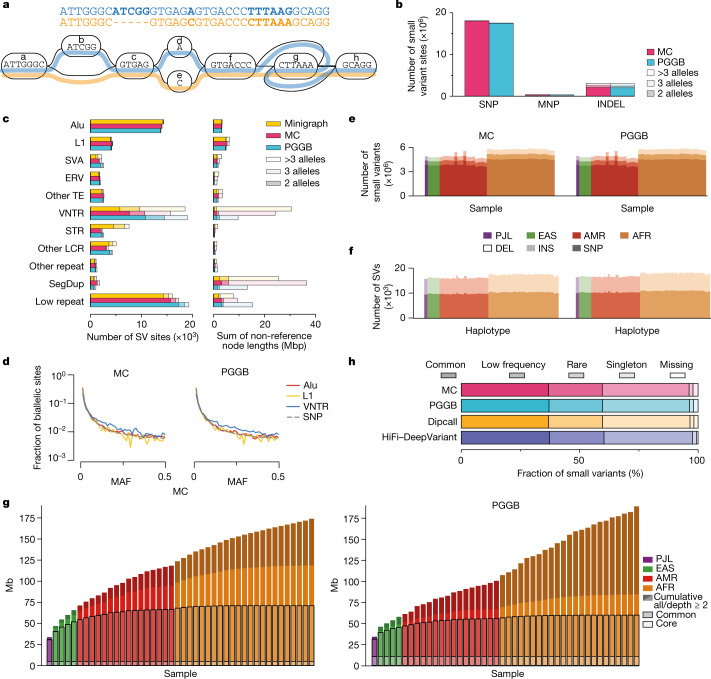
- The draft pangenome was built from 47 phased, diploid assemblies and adds 119 million base pairs of euchromatic polymorphic sequence plus 1,115 gene duplications relative to GRCh38; about 90 million of the added bases came from structural variation.
- Assemblies were reported as >99% complete and >99% accurate at structural and base-pair levels; the assembly reliability pipeline marked only 0.88% (26.4 Mb) of each assembly as unreliable.
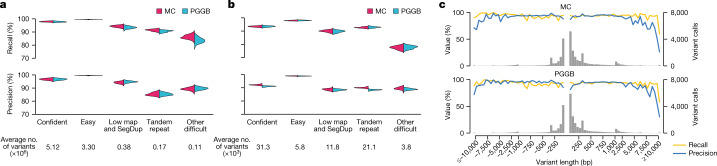
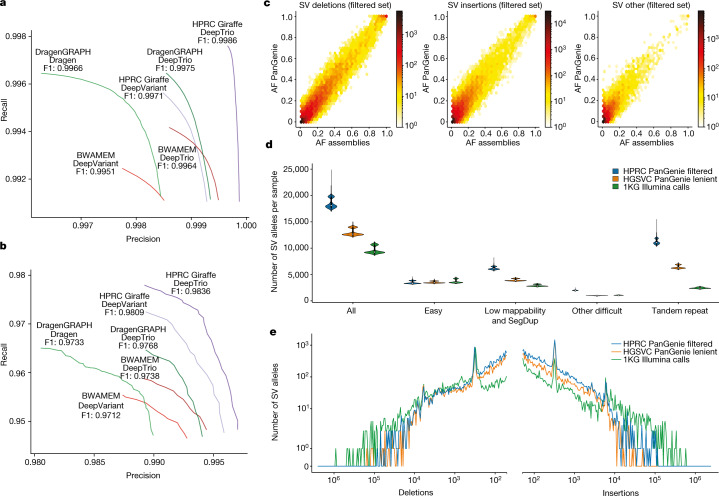
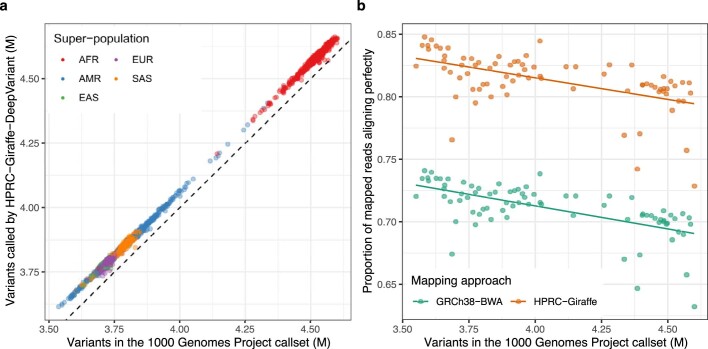
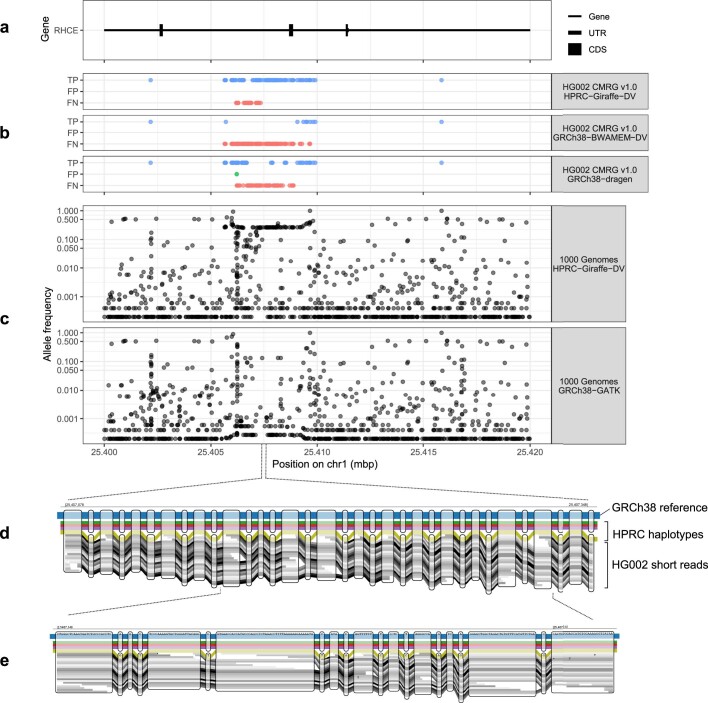
- In short-read analysis, the pangenome workflow reduced small-variant discovery errors by 34% and increased the number of structural variants detected per haplotype by 104% compared with GRCh38-based workflows.
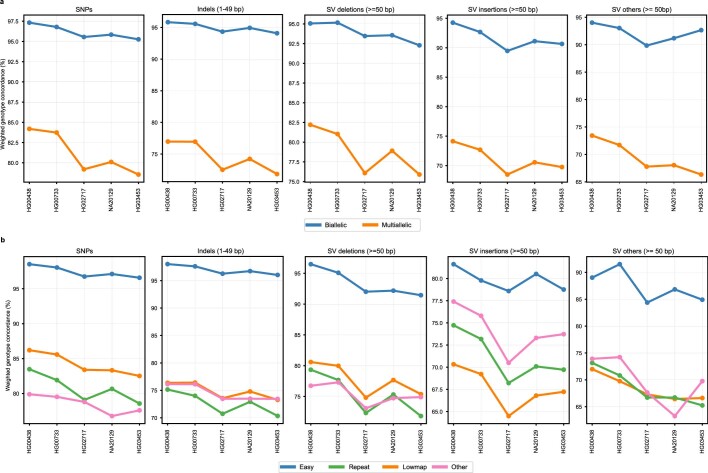
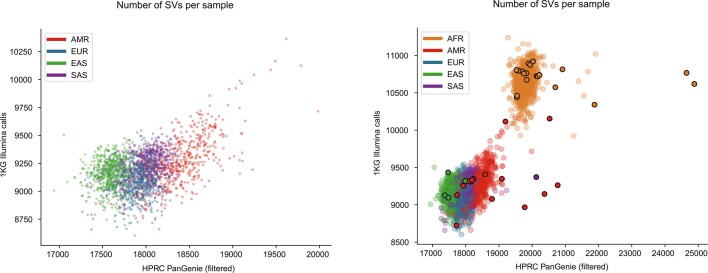
- For 1KG short-read genotyping, the pangenome-based call set gave on average 64,000 more small variants per sample than the 1KG catalogue; for SV genotyping it produced 18,483 SVs per sample versus 9,596 in the short-read 1KG call set.
Methods
- The study assembled 47 fully phased diploid genomes from globally diverse individuals, using PacBio HiFi, Oxford Nanopore, Hi-C, Bionano, and parental Illumina data; assemblies were phased with Trio-Hifiasm and manually/automatically curated.
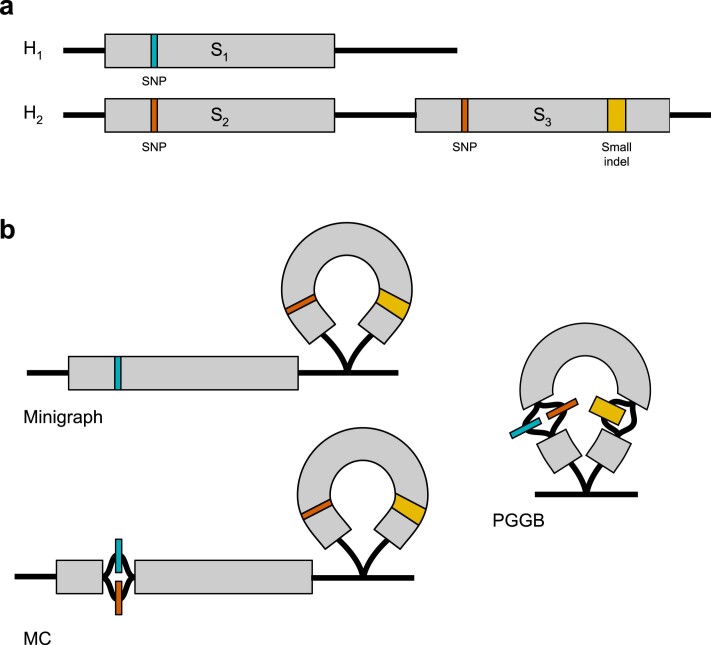
- The authors constructed pangenomes with three graph approaches: Minigraph, Minigraph-Cactus (MC), and PGGB, then evaluated variant representation, graph support, and downstream utility.
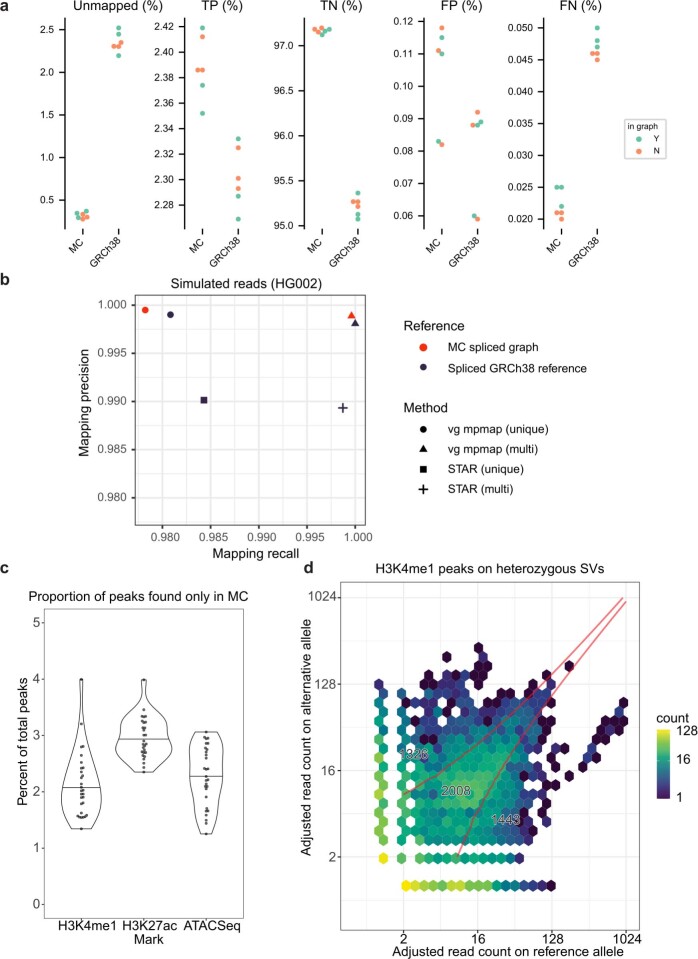
- They benchmarked pangenome-based analyses against GRCh38-based workflows using GIAB, 1KG short reads, and assembly-based comparisons for small variants, SVs, gene annotations, RNA-seq, ChIP-seq/ATAC-seq, VNTRs, and population analyses.
Limitations
- The paper states the cohort is relatively small and that the assembly reliability analysis found roughly an order of magnitude more erroneously assembled sequences in the HPRC assemblies than in T2T-CHM13.
- It explicitly notes remaining issues in highly repetitive regions and complex loci, where variant calling performance was lower and further work is needed; this is a stated limitation.
- The text also makes evident that some analyses are constrained by reference gaps, alignment ambiguity, and incomplete benchmarking truth sets; this is the paper’s implication, stated in the discussion around repetitive regions and underestimation of errors.
Model-written summary. Check it against the paper before relying on it.
Integrity signals
Registry
Cites
Statistics
Figures
Verification
Claims the paper makes
38 Valid · 5 Not valid · 2 Not checked · 206 Own results and interpretations
At least one cited source doesn’t support this claim or points to a different paper, and none confirmed it — see the verdicts below.
In the paper
“The pangenome contains 47 phased, diploid assemblies from a cohort of genetically diverse individuals1.”
§ A draft human pangenome reference > Abstract
What the sources say
- Disputedcites [1] 1000 Genomes Project Consortium. A global reference for human genetic variation Nature 2015 526 68 74 10.1038/nature15393 26432245 PMC4750478 sourceExperimental — accuracy not yet measured
The Abstract (page unavailable) describes a 1000 Genomes resource based on 2,504 individuals from 26 populations, with variants phased onto haplotypes. The Data set overview describes phasing variant sites, not a pangenome containing 47 phased, diploid assemblies. (LLM, conf=0.86)
Checked by a reasoning model — may be wrong.
plain- Asserted: passes — The authors put it forward as true.
- Checkable: passes — It can be checked against evidence.
- Load-bearing: passes — The paper’s conclusions depend on it.
- Based: passes — The paper gives a reason why it holds.
- Rests on an assumption not shown here.
- Disputed
The cited sources support only part of this claim — read each source’s verdict below.
In the paper
“Previous studies have identified tens of megabases of sequence contained within structural variants (SVs) that are polymorphic within the population5.”
§ A draft human pangenome reference > Main
What the sources say
- Partly supportedcites [5] Ebert P Haplotype-resolved diverse human genomes and integrated analysis of structural variation Science 2021 372 eabf7117 10.1126/science.abf7117 33632895 PMC8026704 sourceExperimental — accuracy not yet measured
The Results sections on structural variant distribution and complex structural variation document SVs and distinct structural haplotypes in human populations. But the reported ~279 Mbp is the genomic span of SV hotspots, not the amount of sequence contained within polymorphic SVs; the passages do not establish the claimed tens-of-megabases total. (LLM, conf=0.82)
plain- Asserted: passes — The authors put it forward as true.
- Checkable: passes — It can be checked against evidence.
- Load-bearing: passes — The paper’s conclusions depend on it.
- Based: passes — The paper gives a reason why it holds.
- Partly supported
Every source the paper cites for this claim was checked and supports it.
In the paper
“Recently, the Telomere-to-Telomere (T2T) consortium finished the first complete sequence of a haploid human genome, T2T-CHM13, which provides a contiguous representation of each autosome and of chromosome X, with the exception of some ribosomal DNA arrays that remain to be fully resolved3.”
§ A draft human pangenome reference > Main
What the sources say
- Supportedcites [3] Nurk S The complete sequence of a human genome Science 2022 376 44 53 10.1126/science.abj6987 35357919 PMC9186530 source
“A truly complete genome” states that T2T-CHM13 has gapless telomere-to-telomere assemblies for all 22 autosomes and chromosome X. “rDNA assembly” explains that the ordering of repeats in three rDNA arrays could not be fully resolved, so those arrays are represented by model sequences. (LLM, conf=0.93)
plainSingle case- Asserted: passes — The authors put it forward as true.
- Checkable: passes — It can be checked against evidence.
- Load-bearing: passes — The paper’s conclusions depend on it.
- Based: passes — The paper gives a reason why it holds.
- Supported
The cited sources support only part of this claim — read each source’s verdict below.
In the paper
“despite individual SVs being more likely to affect gene function than either individual SNPs or short insertions and deletions (indels)9,10.”
§ A draft human pangenome reference > Main
What the sources say
- Partly supportedcites [9] Chiang C The impact of structural variation on human gene expression Nat. Genet. 2017 49 692 699 10.1038/ng.3834 28369037 PMC5406250 sourceExperimental — accuracy not yet measured
The Results (Fine-mapping causal variants) state that, per variant, an SV is 28–54 times more likely to modulate gene expression than an SNV or indel. That supports the comparison for gene expression, but the cited analysis does not establish the broader claim about gene function generally. (LLM, conf=0.86)
- Partly supportedcites [10] Sudmant PH An integrated map of structural variation in 2,504 human genomes Nature 2015 526 75 81 10.1038/nature15394 26432246 PMC4617611 sourceExperimental — accuracy not yet measured
The Functional impact of SVs section reports that SV classes were enriched for expression-associated variants relative to the number tested, supporting a greater per-variant effect on gene expression. It uses eQTL associations as a surrogate for functional impact and groups SNPs with indels in the comparison; it does not establish the broader claim about gene function separately against each variant type. (LLM, conf=0.82)
hedgedstates an association- Asserted: passes — The authors put it forward as true.
- Checkable: passes — It can be checked against evidence.
- Load-bearing: passes — The paper’s conclusions depend on it.
- Based: passes — The paper gives a reason why it holds.
- Partly supported
Every source the paper cites for this claim was checked and supports it.
In the paper
“For the core assembler, we chose Trio-Hifiasm20 after detailed benchmarking of several alternatives21.”
§ A draft human pangenome reference > Assembling 47 diverse human genomes
What the sources say
- Supportedcites [20] Cheng H Concepcion GT Feng X Zhang H Li H Haplotype-resolved de novo assembly using phased assembly graphs with hifiasm Nat. Methods 2021 18 170 175 10.1038/s41592-020-01056-5 33526886 PMC7961889 source
Citation 20 identifies Trio-Hifiasm as the assembler the citing authors chose. The Results section (‘Overview of the hifiasm algorithm’) describes hifiasm’s graph-based trio binning, supporting that identification. The separate benchmarking claim is attached to citation 21, not this source. (LLM, conf=0.93)
- Supportedcites [21] Jarvis, E. D. et al. Semi-automated assembly of high-quality diploid human reference genomes. Nature611, 519–531 (2022). PMC9668749 36261518 source
The cited paper’s ‘Trios and higher phasing accuracy’ section compares several assembly algorithms and data types. Its ‘Graph phasing is more complete and accurate’ section reports that Trio hifiasm had the strongest combination of quality metrics among the diploid assemblies. The citing authors’ choice of core assembler is their own decision; this source supports the benchmarking offered as its rationale. Page numbers were not available in our copy. (LLM, conf=0.91)
plain- Asserted: passes — The authors put it forward as true.
- Checkable: passes — It can be checked against evidence.
- Load-bearing: unclear — It is unclear whether the paper’s conclusions depend on it.
- Based: passes — The paper gives a reason why it holds.
- Supported
135 more claims · 15 with their cited sources checked
Create a free account to see all 251 claims and to verify the 1 reference still open.
- It may state two separate claims as one. 80
- Probably not a substantial claim. 40
- The quote only partly states this claim. 1
Claims other papers make about this one
Each is checked against this paper’s own text: does it say what the citing paper says it does?
The cited source doesn’t support the claim as written.
In the citing paper
“In addition, the DRAGEN multigenome mapper is already incorporated for SV and CNV calling, something that is not currently possible with any other graph genome implementations because they focus primarily on genotyping variants14,73.”
From Comprehensive genome analysis and variant detection at scale using DRAGEN (2025) · cites this paper as [73]
Checked by a reasoning model — may be wrong.
Experimental — accuracy not yet measuredThe source backs part of the claim, not all of it — or backs it for a different population, condition or comparison.
In the citing paper
“Other biases, for example, in terms of sex, specific diseases, or human ancestral populations could also reduce the impact of AIVC models.115”
From How to build the virtual cell with artificial intelligence: Priorities and opportunities (2024) · cites this paper as [115]
Experimental — accuracy not yet measuredThe source backs part of the claim, not all of it — or backs it for a different population, condition or comparison.
In the citing paper
“For example, population-specific genes may provide insights into local adaptation, while structural variants may contribute to disease susceptibility or resistance in ways that were previously invisible to reference-based analyses [112,113].”
From Origin and Evolution of Genes in Eukaryotes: Mechanisms, Dynamics, and Functional Implications (2025) · cites this paper as [113]
Experimental — accuracy not yet measuredThe source backs part of the claim, not all of it — or backs it for a different population, condition or comparison.
In the citing paper
“These values were chosen after empirical experimentation specifically to filter out spurious mappings as determined by VCF-based comparison with Hi-Fi-based DeepVariant calls 25 .”
From Pangenome graph construction from genome alignments with Minigraph-Cactus (2024) · cites this paper as [25]
Experimental — accuracy not yet measuredThe cited source says what the claim attributes to it.
In the citing paper
“Notably, the first draft of a human pangenome reference has been released by the Human Pangenome Reference Consortium just last year as of the time of writing [19].”
From <tt>SAFARI</tt> : pangenome alignment of ancient DNA using purine/pyrimidine encodings (2025) · cites this paper as [19]
2 more claims about this paper
Create a free account to see every claim other papers make about this one.
Citations
Cites
The Sequence Alignment/Map format and SAMtools
Li, H., Handsaker, B., Wysoker, A., Fennell, T., Ruan, J., Homer, N., Marth, G., Abecasis, G., Durbin, R., & 1000 Genome Project Data Processing Subgroup (2009) · Bioinformatics · doi:10.1093/bioinformatics/btp352 · Cited by 62,041 · cited 1×
“3.1), (Li et al., 2009).”
InfluentialFast gapped-read alignment with Bowtie 2
Langmead, B., & Salzberg, S. L. (2012) · Nature Methods · doi:10.1038/nmeth.1923 · Cited by 56,400
STAR: ultrafast universal RNA-seq aligner
Dobin, A., Davis, C. A., Schlesinger, F., Drenkow, J., Zaleski, C., Jha, S., Batut, P., Chaisson, M., & Gingeras, T. R. (2013) · Bioinformatics · doi:10.1093/bioinformatics/bts635 · Cited by 51,709
BEDTools: a flexible suite of utilities for comparing genomic features
Quinlan, A. R., & Hall, I. M. (2010) · Bioinformatics · doi:10.1093/bioinformatics/btq033 · Cited by 27,437
Initial sequencing and analysis of the human genome
International Human Genome Sequencing Consortium, Whitehead Institute for Biomedical Research, C. F. G. R., Lander, E. S., Linton, L. M., Birren, B., Nusbaum, C., Zody, M. C., Baldwin, J., Devon, K., Dewar, K., et al. (2001) · Nature · doi:10.1038/35057062 · Cited by 24,216
Self-citationRSEM: accurate transcript quantification from RNA-Seq data with or without a reference genome
Li, B., & Dewey, C. N. (2011) · BMC Bioinformatics · doi:10.1186/1471-2105-12-323 · Cited by 22,179
A global reference for human genetic variation
The 1000 Genomes Project Consortium, authors, C., Auton, A., Abecasis, G. R., Steering committee, Altshuler, D. M., Durbin, R. M., Abecasis, G. R., Bentley, D. R., Chakravarti, A., et al. (2015) · Nature · doi:10.1038/nature15393 · Cited by 18,247
Self-citationAn integrated encyclopedia of DNA elements in the human genome
The ENCODE Project Consortium (2012) · Nature · doi:10.1038/nature11247 · Cited by 18,072
Twelve years of SAMtools and BCFtools
Danecek, P., Bonfield, J. K., Liddle, J., Marshall, J., Ohan, V., Pollard, M. O., Whitwham, A., Keane, T., McCarthy, S. A., Davies, R. M., et al. (2021) · GigaScience · doi:10.1093/gigascience/giab008 · Cited by 15,343 · cited 2×
“9 was used for filtering the variant sets (Danecek et al., 2021).”
MethodSelf-citationMinimap2: Pairwise alignment for nucleotide sequences
Li, H. (2018) · Bioinformatics · doi:10.1093/bioinformatics/bty191 · Cited by 14,807 · cited 8×
“The sequences of these anchors were them mapped against the target genome with minimap2 (Li, 2018b) using the following command:”
MethodInfluential
Cited by
Items 801–900 of 1,147
De Novo Variation in Autism by Sex and Diagnostic Status in 41,367 Parent-Child TriosPreprint
Turner, T. N. (2026) · medRxiv · doi:10.64898/2026.01.26.26344889 · Cited by 1
Walsh, D. J., & Njie, E. G. (2026) · bioRxiv (Cold Spring Harbor Laboratory) · doi:10.64898/2026.02.02.703356 · Cited by 1
Scalable and comprehensive mosaic variant calling using DRAGENPreprint
Behera, S., Rossi, M., Wang, Y., Izydorczyk, M., Tran, D., Dalgard, C. L., Kalef-Ezra, E., Kottapalli, K., Mehta, H. H., Parnaby, G., et al. (2026) · medRxiv · doi:10.64898/2026.02.03.26345450 · Cited by 2
“Low-VAF variants are disproportionately enriched in repetitive and structurally complex regions 11,33 , where linear reference genomes perform poorly 16,34 .”
Population-scalable genotyping from low-coverage sequencing data using pangenome graphsPreprint
Bolognini, D., Guarracino, A., Paleni, C., et al. (2026) · bioRxiv (Cold Spring Harbor Laboratory) · doi:10.64898/2026.02.05.704023 · Cited by 1
Self-citationXie, D., Ye, P., Ma, Y., & Zhao, Z. (2026) · Genome Research · doi:10.1101/gr.280885.125 · Cited by 2
Distinct mechanisms of CNV formation at the human 15q13.3 locusPreprint
Höps, W., Porubskỳ, D., Yoo, D., de Groot, M., den Ouden, A., Derks, R. C., Hoekzema, K., Neveling, K., Hoischen, A., Yntema, H. G., et al. (2026) · bioRxiv (Cold Spring Harbor Laboratory) · doi:10.64898/2026.03.03.709017 · Cited by 1
“Comparison with 581 assembled population haplotypes (Liao et al., 2023) indicates that the CNV-carrying allele most closely matches a haplotype harboring an Inv-β configuration and suggests a NAHR-driven breakpoint (440 bp homology) located within the FAM7A HOR that forms part of the extended…”
Self-citationPan-repository analysis reveals a drug-activating function of microbial bile acid conjugationPreprint
Charron‐Lamoureux, V., Kelly, P. E., Zuffa, S., Patan, A., Sala‐Climent, M., Walker, C., Zhao, H. N., Xing, S., Gouda, H., Agongo, J., et al. (2026) · bioRxiv (Cold Spring Harbor Laboratory) · doi:10.64898/2026.03.03.709330 · Cited by 4
A family portrait of the genomic factors shaping tandem repeat mutagenesisPreprint
Sasani, T. A., Goldberg, M. E., Avvaru, A. K., Nicholas, T. J., Neklason, D. W., Dolzhenko, E., Mokveld, T., Munson, K. M., Hoekzema, K., Ayllon, M., et al. (2026) · bioRxiv (Cold Spring Harbor Laboratory) · doi:10.64898/2026.03.06.710071 · Cited by 2
“At every locus with a de novo mutation in K1463 ( n = 1,270 loci), we genotyped 100 members of the Human Pangenome References Consortium (HPRC) [49] and calculated the fraction of HPRC individuals who possessed two non-identical TR alleles; we refer to this measure as "locus heterozygosity."”
Self-citationThe diploid reference genome of a human embryonic stem cell linePreprint
Pačar, I., Ungaro, M. T., Chen, Y., Dallali, H., Medico, J. A., Hebbar, P., Diekhans, M., Tommaso, E. D., Geleta, M., Chan, P. P., et al. (2026) · bioRxiv (Cold Spring Harbor Laboratory) · doi:10.64898/2026.03.26.714432 · Cited by 4
Self-citationA computational model for quantifying instability of tandem repeats across the genomePreprint
Dolzhenko, E., English, A. C., Mokveld, T., et al. (2026) · bioRxiv (Cold Spring Harbor Laboratory) · doi:10.64898/2026.04.08.717199 · Cited by 1
“The samples from the Human Pangenome Reference Consortium were processed with the PacBio WGS Variant Pipeline v3.”
Structural variation shapes regulatory and evolutionary diversity at the HLA locusPreprint
Canalda-Baltrons, A., Silcocks, M., Saunders, P. M., Jackson, S. F., Coin, L., & Dunstan, S. J. (2026) · bioRxiv (Cold Spring Harbor Laboratory) · doi:10.64898/2026.04.23.720469 · Cited by 1
“Recent advances from the Human Pangenome Reference Consortium (HPRC) provide haplotype-resolved assemblies and, coupled with expression data (Iso-Seq, RNA-Seq), enable systematic SV analysis ( 5,6 ).”
Single-molecule variation in telomeric sequence and structure across humansPreprint
Dubocanin, D., Vollger, M. R., Neph, S. J., Pisula, M. S. D. R., Lucas, J., Sedeño-Cortés, A. E., Mallory, B. J., Real, T. D., Barthel, F. P., Altemose, N., et al. (2026) · bioRxiv (Cold Spring Harbor Laboratory) · doi:10.64898/2026.05.01.722200 · Cited by 4
Self-citationKaryoScope: rapid, alignment-free sequence annotation for the pangenome eraPreprint
Ranallo-Benavidez, T. R., Chen, Y., Potapova, T., Alanko, J., Loucks, H., Lucas, J., Guarracino, A., Puglisi, S. J., Marchet, C., Miga, K. H., et al. (2026) · bioRxiv (Cold Spring Harbor Laboratory) · doi:10.64898/2026.05.15.725544 · Cited by 5
“The number of clusters k was selected automatically over k ∈ [ 2 , 10 ] by maximizing the silhouette score (sub-sampling cap = 2 , 000 haplotypes; random seed = 42).”
Self-citationFunctional CENP-B boxes are selectively conserved at centromeric regionsPreprint
Jiao, C., Goncharov, N., Shmakova, A., Chakraborty, C., & Fachinetti, D. (2026) · bioRxiv (Cold Spring Harbor Laboratory) · doi:10.64898/2026.05.25.727640 · Cited by 1
DiLalla, L. F. (2011) · Oxford University Press eBooks · doi:10.1093/obo/9780199828340-0010 · Cited by 1
York, A. (2023) · Nature Reviews Microbiology · doi:10.1038/s41579-023-00897-z
Editorial: Evolution in Neurogenomics
Xie, J., & Friedman, R. (2023) · Frontiers in Genetics · doi:10.3389/fgene.2023.1220750
“The hope is that our Research Topic will stimulate neurogenomic studies that accurately map the genome to pathologies of the brain and the related tissues of the nervous system, while fusing themore traditional approaches with recent techniques of machine learning, as in the sequence-based deep learning models (Vaswan…”
MethodDiversity in hematology research
Paula, E. V. D. (2023) · Hematology Transfusion and Cell Therapy · doi:10.1016/j.htct.2023.06.003
A diverse and inclusive human pangenome
Attwaters, M. (2023) · Nature Reviews Genetics · doi:10.1038/s41576-023-00634-5
Das funktionelle Unbekanntom: Unwissenheit explizieren, um Forschung zu expandieren
Spitzer, M. (2023) · Nervenheilkunde · doi:10.1055/a-2106-0196
Proyecto genoma veinte años después: el primer 'pangenoma humano'
Gamboa-Bernal, G. A. (2023) · Persona y Bioética · doi:10.5294/pebi.2023.27.2.1
Köroğlu, Ç., Chen, P., Traurig, M. T., Altok, S., Bogardus, C., & Baier, L. J. (2023) · bioRxiv (Cold Spring Harbor Laboratory) · doi:10.1101/2023.10.23.563520
“The Human Pangenome Reference Consortium has been working on constructing a reference that encompasses diverse genomes, and they have published the first draft of the pangenome, consisting of 47 genome assemblies from a diverse cohort [15].”
BackgroundChrisman, B., He, C., Jung, J.-Y., Stockham, N., Paskov, K. M., Washington, P. Y., Petereit, J., & Wall, D. P. (2023) · Genome Research · doi:10.1101/gr.277175.122 · Cited by 1
GIN-TONIC: Non-hierarchical full-text indexing for graph-genomesPreprint
Öztürk, Ü., Mattavelli, M., & Ribeca, P. (2023) · bioRxiv (Cold Spring Harbor Laboratory) · doi:10.1101/2023.11.01.565214
Hansen, N. F., Wang, X., Tegegn, M. B., Liu, Z., Gouveia, M. H., Hill, G., Lin, J., Okulosubo, T., Shriner, D., Thein, S. L., et al. (2023) · bioRxiv (Cold Spring Harbor Laboratory) · doi:10.1101/2023.11.27.568683 · Cited by 1
“For each simulated read set, we used as our genome consensus two constructed haplotypes: one maternal and one paternal haploid region taken from seven diploid assemblies (14 haplotypes) assembled by the Human Pangenome Reference Project(24).”
From AI to the Y chromosome (and everything in between)
(2023) · Nature Biotechnology · doi:10.1038/s41587-023-02076-0
Falus, A. (2023) · Kaleidoscope könyvek · doi:10.32558/elet.2023.4
Human pangenome: far-reaching implications in precision medicine
Yu, Y., & Chen, H. (2023) · Frontiers of Medicine · doi:10.1007/s11684-023-1039-1
Precision Medicine, Future Risk and the Present Self
Hoffman, L. (2024) · Anthropology Today · doi:10.1111/1467-8322.12864
Kosztolányi, G., & Kosztolányi, G. (2023) · Magyar Tudomány · doi:10.1556/2065.184.2023.12.14
“A 2003-ban először leírt humán genom szekvencia hiátusainak kiegészítése rendkívül inten-zív tudományos-technikai fejlődésnek köszönhetően folyamatosan zajlik, az ed-digi eredmények a humán genom óriási mértékű variabilitását mutatják (Liao et al., 2023).”
Exploring gene content with pangene graphsPreprint
Li, H., Marin, M. G., & Farhat, M. R. (2024) · PubMed · doi:10.48550/arxiv.2402.16185
“To study gene-level variations, HPRC had to manually annotate genes on each haplotype (Liao et al. 2023) which is a time-consuming process.”
BackgroundMethodResultInfluentialSelf-citationGeny: A Genotyping Tool for Allelic Decomposition of Killer Cell Immunoglobulin-Like Receptor GenesPreprint
Zhou, Q.-H., Ghezelji, M., Hari, A., et al. (2024) · bioRxiv (Cold Spring Harbor Laboratory) · doi:10.1101/2024.02.27.582413
“The ground truth for this comparison was derived from multi-model assemblies generated by the Human Pan Genome Consortium [36] and covers diverse ethnicities.”
Structure of a polymorphic repeat at the CACNA1C schizophrenia locusPreprint
Moya, R., Wang, X., Tsien, R., & Maurano, M. T. (2024) · medRxiv · doi:10.1101/2024.03.05.24303780 · Cited by 4
Understanding what Pan Genome is
Bucal, U. N. D. C. F. D. O. D. D. B., & Brunotto, M. (2024) · Revista de la Facultad de Odontología · doi:10.25014/revfacodont271.2024.34.1.1
Expanded methylome and quantitative trait loci detection by long-read profiling of personal DNAPreprint
Groza, C., Ge, B., Cheung, W., et al. (2024) · bioRxiv (Cold Spring Harbor Laboratory) · doi:10.1101/2024.03.17.585420
Self-citationAdditional file 1 of Haplotype-resolved assemblies and variant benchmark of a Chinese Quartet
Jia, P., Dong, L., Yang, X., Wang, B., Bush, S. J., Wang, T., Lin, J., Wang, S., Zhao, X., Xu, T., et al. (2023) · Figshare · doi:10.6084/m9.figshare.24741805
Self-citationHe, J., Liao, Z., Chen, H., et al. (2024) · Research Square · doi:10.21203/rs.3.rs-4233607/v1
Graph-Based Genome Inference from Hi-C Data
Shen, Y., Yu, L., Qiu, Y., Zhang, T., & Kingsford, C. (2024) · Lecture notes in computer science · doi:10.1007/978-1-0716-3989-4_8
Edsinger, E., & Moroz, L. L. (2024) · bioRxiv (Cold Spring Harbor Laboratory) · doi:10.1101/2024.05.23.594666
The Molecular Biology of Cancer Disparities
García-Cárdenas, J. M., Morán-Erazo, C., Chávez-Vélez, E., Terán-Navas, M., Aleaga, A., Armendáriz‐Castillo, I., López‐Cortés, A., Pesántez, D., Indacochea, A., & Guerrero, S. X. (2024) · Interdisciplinary cancer research · doi:10.1007/16833_2024_257 · Cited by 1
Haplotype-resolved assembly of the mule duck genome using high-fidelity sequencing technology
Che, T., Li, J., Li, X., Wang, Z., Zhang, X., Yang, W., Liu, T., Wang, Y., Wang, K., Gao, T., et al. (2024) · PLoS ONE · doi:10.1371/journal.pone.0305914 · Cited by 1
The Two Genomes of Gilthead Sea Bream (Sparus aurata): a Multi-Omics and Holobiont Approach
Naya-Català, F. (2024) · RiuNet (Universitat Politècnica de València) · doi:10.4995/thesis/10251/205692
Optically Mapped Black Genomes: Distinct Structures and 22q11.2 Deletion Syndrome MechanismsPreprint
Pastor, S. J., Tran, O., Lapointe, R., et al. (2024) · bioRxiv (Cold Spring Harbor Laboratory) · doi:10.1101/2024.07.08.602568
Son, K. H., & Cho, J. (2024) · bioRxiv (Cold Spring Harbor Laboratory) · doi:10.1101/2024.07.18.604168
Rare and Orphan Diseases and Social Work Practice
Levine, C. (2024) · Oxford University Press eBooks · doi:10.1093/obo/9780195389678-0337
Chromosome components central to cell division evolve rapidly
(2024) · Nature · doi:10.1038/d41586-024-02523-1 · Cited by 1
Du, D., Li, M., Zhu, C., Li, X., Wu, F., Zhang, W., Cheng, X., Zhong, F., & Liu, L. (2024) · Research Square · doi:10.21203/rs.3.rs-4800291/v1
Hunter, B. S., Cromwell, T., & Shim, H. (2024) · bioRxiv (Cold Spring Harbor Laboratory) · doi:10.1101/2024.08.04.606558
“Recently, nanopore sequencing has contributed to the expansion of human genomes [52,54] and the cell-free DNA profiling [76–78].”
BackgroundMethodDiverse Genomes Make Medicine More Equitable
Rawat, S. (2024) · GEN Biotechnology · doi:10.1089/genbio.2024.0037
A layout framework for genome-wide multiple sequence alignment graphs
Schebera, J., Zeckzer, D., & Wiegreffe, D. (2024) · Frontiers in Bioinformatics · doi:10.3389/fbinf.2024.1358374
“Recently, research efforts and successes in pangenomes have increased (Consortium, 2016; Liao et al., 2023).”
Thun, G. A., Gueuning, M., Merki, Y., et al. (2024) · Transfusionsmedizin · doi:10.1055/a-2138-6702
“Obwohl sie weit-hin Beachtung für die Sequenzierung vollständiger menschlicher Genome findet [2], wird sie bisher noch wenig zur Analyse einzel - ner Gene in diagnostischen Fragestellungen, einschließlich der Im-munhämatologie, eingesetzt [3, 4].”
VCAT: an integrated variant function annotation tools
Huang, B., Fan, C., Chen, K., Rao, J., Ou, P., Tian, C., Yang, Y., Cooper, D. N., & Zhao, H. (2024) · Human Genetics · doi:10.1007/s00439-024-02699-6
“…now, the largest variant database dbSNP (Sherry et al. 2001) (build 156) have accumulated over one billion SNPs. Recently, the Pangenome projects (Liao et al. 2023) have discovered 4,632,888 novel variants that have not been reported in dbSNP in the human genome, representing a new direction for…”
The Functional Map of Ultraconserved Regions in Humans, Mice and RatsPreprint
Nichio, B. T. D. L., Oliveira, L. S., Rodrigues, A. C., Mathias, C., Gradia, D. F., Urbanski, A. H., Passetti, F., Camargo, V. L. S., Cury, S. S., Schnepper, A. P., et al. (2024) · Research Square · doi:10.21203/rs.3.rs-4837600/v1
A chromosome-level genome assembly of the common eider, Somateria mollissima (Linnaeus, 1758)
Tørresen, O. K., Kersten, O., Garmann-Aarhus, B., Helberg, M., Tooming‐Klunderud, A., Skage, M., Boessenkool, S., & Jakobsen, K. S. (2024) · Journal of Heredity · doi:10.1093/jhered/esae042 · Cited by 1
Kssdtree: an interactive Python package for phylogenetic analysis based on sketching technique
Yang, H., Lu, X., Chang, J., et al. (2024) · Bioinformatics · doi:10.1093/bioinformatics/btae566
Accurate Multiple Sequence Alignment of Ultramassive Genome SetsPreprint
Lai, X., Luan, H., & Tian, P. (2024) · bioRxiv (Cold Spring Harbor Laboratory) · doi:10.1101/2024.09.22.613454
Emerging Technologies for Epigenetic Drug Discovery
(2024) · Royal Society of Chemistry eBooks · doi:10.1039/9781837674916-part2
Genomics of human neurological disorders
Nussbaum, R. L. (2024) · Elsevier eBooks · doi:10.1016/b978-0-443-19041-4.00066-2
Nanopore Sequencing as a Novel Method of Characterising Anorexia Nervosa Risk LociPreprint
Berthold, N., Gaudieri, S., Hood, S. D., Tschochner, M., Akkari, P. A., & Kennedy, M. A. (2024) · Research Square · doi:10.21203/rs.3.rs-4949322/v1
Song, Q., Hu, T., Liang, B., Li, S., Li, Y., Wu, J., Wang, S., & Zhou, X. (2024) · Interdisciplinary Sciences Computational Life Sciences · doi:10.1007/s12539-024-00653-8 · Cited by 1
Next-generation sequencing analysis with a population-specific human reference genome
Suzuki, T., Ninomiya, K., Funayama, T., Okamura, Y., Tadaka, S., Kinoshita, K., Yamamoto, M. P., Kure, S., Kikuchi, A., Tamiya, G., et al. (2024) · Genes & Genetic Systems · doi:10.1266/ggs.24-00112
Diverse Genomes Make Medicine More Equitable
Rawat, S. (2024) · GEN Edge · doi:10.1089/genedge.6.01.158
Further laboratory-based investigations for possible gene- or genome-based disorders
Smith, M. (2024) · Elsevier eBooks · doi:10.1016/b978-0-443-23648-8.00003-6
Self-citationFlórez-Vargas, O., Ho, M., Hogshead, M. H., Lee, C.-H., Papenberg, B. W., Forsythe, K., Jones, K. M., Luo, W., Teshome, K., Blauwendraat, C., et al. (2024) · medRxiv · doi:10.1101/2024.11.04.24316722
Self-citationImage-based DNA Sequencing Encoding for Detecting Low-Mosaicism Somatic Mobile Element InsertionsPreprint
Tan, M., Lin, Z., Chen, Z., et al. (2024) · bioRxiv (Cold Spring Harbor Laboratory) · doi:10.1101/2024.11.07.619809
Why focus on population genomics in developing countries?
Siwada, A., & Möller, M. (2024) · Elsevier eBooks · doi:10.1016/b978-0-443-18546-5.00002-4 · Cited by 1
Sengupta, D., Basu, A., Ramsay, M., & Choudhury, A. (2024) · Elsevier eBooks · doi:10.1016/b978-0-443-18546-5.00003-6
Pangenome References Improve Biomarker Estimation from Tumor Sequencing DataPreprint
Arslan, E., Turgut, D., Kalay, Ö., Demirkaya-Budak, S., Budak, G., & Jain, A. (2024) · bioRxiv (Cold Spring Harbor Laboratory) · doi:10.1101/2024.11.14.623554
Canderan, J., Yuan, R., Tang, H., & Ye, Y. (2024) · bioRxiv (Cold Spring Harbor Laboratory) · doi:10.1101/2024.11.25.625239
Accelerating whole-genome alignment in the age of complete genome assembliesPreprint
Chandra, G., Md, V., Misra, S., & Jain, C. (2024) · bioRxiv (Cold Spring Harbor Laboratory) · doi:10.1101/2024.11.25.625328
extgfa: a low-memory on-disk representation of genome graphsPreprint
Dabbaghie, F. (2024) · bioRxiv (Cold Spring Harbor Laboratory) · doi:10.1101/2024.11.29.626045
GIN-TONIC: non-hierarchical full-text indexing for graph genomes
Öztürk, Ü., Mattavelli, M., & Ribeca, P. (2024) · NAR Genomics and Bioinformatics · doi:10.1093/nargab/lqae159 · Cited by 1
“Recent related work based on the Burrows-Wheeler Transform (BWT) ( 16 ) and the FM-Index includes the vg toolkit ( 17 ) and extensions of the BWT to the positional BWT ( 18 ) for pangenomic-level haplotype indexing (graph BWT, graph positional BWT) ( 19 ,20 ).”
Phased genome assemblies and pangenome graphs of human populations of Japan and Saudi ArabiaPreprint
Kulmanov, M., Ashouri, S., Liu, Y., et al. (2024) · bioRxiv (Cold Spring Harbor Laboratory) · doi:10.1101/2024.12.18.628902
Simple Worm, Complex Disorder: Studying Down Syndrome Mechanisms in the Unassuming Model C. elegans
Sanchez, S. M., & Pierce-Shimomura, J. T. (2025) · Springer eBooks · doi:10.1007/978-3-031-78611-2_4
Salazar, A., Tesi, N., Knoop, L., van Schoor, N. M., Huisman, M. A., Tijms, B. M., Vijverberg, E. G. B., van der Lee, S. J., Wijesekera, S., Křížová, J., et al. (2025) · medRxiv · doi:10.1101/2025.02.02.25321330 · Cited by 5
A Vectorized Sequence-to-Graph Alignment Algorithm
Peng, C., Tang, S., Guo, Y., Xia, Z., Yang, C., & Cui, Y. (2025) · Lecture notes in computer science · doi:10.1007/978-981-96-1525-4_22
DiVerG: Scalable Distance Index for Validation of Paired-End Alignments in Sequence GraphsPreprint
Ghaffaari, A., Schönhuth, A., & Marschall, T. (2025) · bioRxiv (Cold Spring Harbor Laboratory) · doi:10.1101/2025.02.12.637964
Self-citationVariations and Polymorphisms: The Human Pangenome Project
Pandey, S., Gambhir, S., Singh, V. K., & Bhardwaj, A. (2025) · Elsevier eBooks · doi:10.1016/b978-0-323-95502-7.00184-6
Li, C., Mowlaei, M. E., Ni, L., HGSVC Functional Analysis Working Group, Chaisson, M., Eichler, E. E., Carnevale, V., Kumar, S., & Shi, X. M. (2025) · bioRxiv (Cold Spring Harbor Laboratory) · doi:10.1101/2025.03.29.646133
“We anticipate that these models will be further enhanced with regard to their robustness and performance in the future by incorporating additional LCL Hi-C data from consortia such as HGSVC 52 , HPRC 53 , and the 4D nucleome project 54 , as well as studies like Harris et al. 51 .”
Self-citationLuo, C., Liu, Y. H., Liu, H., et al. (2025) · bioRxiv (Cold Spring Harbor Laboratory) · doi:10.1101/2025.03.31.646392
“To simulate reads sequenced within realistic genomic contexts, we utilized the phased diploid assembly of HG002 released by the Human Pangenome Reference Consortium (HPRC) [17].”
Ptok, J., Theiss, S., & Schaal, H. (2025) · NAR Genomics and Bioinformatics · doi:10.1093/nargab/lqaf036
“Some of the first genomes, newly assembled using this method, came from 44 individuals of the 1000 Genome Project [ 17 ].”
InfluentialStudying the genetics of behavior in the genomics era
Tiwari, T., Brenman‐Suttner, D. B., Kent, C. F., Rose, S. A., Patel, H., Conflitti, I. M., & Zayed, A. (2025) · Elsevier eBooks · doi:10.1016/b978-0-443-29068-8.00133-1
Gencube: centralized retrieval and integration of multi-omics resources from leading databases
Son, K. H., & Cho, J. (2025) · Bioinformatics · doi:10.1093/bioinformatics/btaf128
“The depth of these efforts is demonstrated by the enhanced understanding of genomic variation within species, as seen in the Human Pangenome Reference Consortium and Dog10K (Liao et al. 2023, Meadows et al. 2023).”
Nuclear mitochondrial sequences in great ape telomere-to-telomere genomesPreprint
Torres-González, E., Cremona, M. A., Storer, J. M., Ventura, M., O'Neill, R. J. W., & Makova, K. D. (2026) · Genome Research · doi:10.1101/gr.280875.125
“We could address this question only for the human T2T CHM13 assembly by using the HPRC high-quality assemblies (Liao et al. 2023), which are not currently available for nonhuman great apes.”
InfluentialPanScan: A tertiary analysis tool for pangenome graphPreprint
Balan, B., Hanif, S., Hashmi, M. A., Kumail, M., Bineshaq, S., Al-Yazeedi, T., Tambi, R., Murtaza, M., Jamalalail, B. A., ElSokary, H. A., et al. (2025) · bioRxiv (Cold Spring Harbor Laboratory) · doi:10.1101/2025.05.01.651685 · Cited by 2
Martínez‐Núñez, L. (2025) · Frontiers in Bioinformatics · doi:10.3389/fbinf.2025.1589122
Köksal, Z., Preussner, A., Leinonen, J. T., et al. (2025) · bioRxiv (Cold Spring Harbor Laboratory) · doi:10.1101/2025.05.07.652589
Lossless pangenome indexing using tag arrays
Eskandar, P., Paten, B., & Sirén, J. (2026) · Algorithms for Molecular Biology · doi:10.1186/s13015-026-00301-4 · Cited by 4
“Starting from the end of the interval, we locate the BWT position corresponding to (sid , q − 1) and then iterate backwards towards (sid , p ) with LF-mapping.”
Self-citationAssembling unmapped reads reveals hidden variation in South Asian genomes
Das, A., Biddanda, A., McCoy, R. C., & Schatz, M. C. (2026) · Nature Communications · doi:10.1038/s41467-026-71755-8 · Cited by 1
“The addition of non-reference sequences to the pangenome has been demonstrated to improve both variant detection and reduce variant discovery errors, motivating this application 3 .”
Partitioned Multi-MUM finding for scalable pangenomicsPreprint
Shivakumar, V. S., & Langmead, B. (2025) · bioRxiv (Cold Spring Harbor Laboratory) · doi:10.1101/2025.05.20.654611
GPatch enables chromosome-scale, gap-free pseudoassemblies from fragmented draft genomesPreprint
Diehl, A. G., & Boyle, A. P. (2025) · bioRxiv (Cold Spring Harbor Laboratory) · doi:10.1101/2025.05.22.655567 · Cited by 1
“T2T-HG002, for example, achieved this milestone using a combination of HiFi data at 120X depth and ONT data at 710X [14,19], while, for T2T CHM13, 30X HiFi and 120X ONT sequencing data, in combination with additional strand-seq, Hi-C, and BioNano optical map data were required [18].”
InfluentialPISAD: reference-free intraspecies sample anomalies detection tool based on k-mer counting
Zheng-hua, X., Nie, F., & Wang, J. (2025) · GigaScience · doi:10.1093/gigascience/giaf061
“To validate sample s waps , we used 20 samples from the Human P angenome Refer ence Consortium (HPRC) [ 31 ], whic h includes sequencing data from Illumina, PacBio HiFi, Hi-C, and ONT (R9.”
Seq2KING: An unsupervised internal transformer representation of global human heritagesPreprint
Jonnalagadda, B., & Njie, E. G. (2025) · bioRxiv (Cold Spring Harbor Laboratory) · doi:10.1101/2025.06.17.660172
Population-level structural variant characterization from pangenome graphPreprint
Wang, S., Xu, T., Zhang, P., & Ye, K. (2025) · bioRxiv (Cold Spring Harbor Laboratory) · doi:10.1101/2025.07.06.663386
“With the declining cost of genome sequencing and computing, population-level SV analysis using assemblies is now feasible 17-19 .”
Fornezza, S., & Giannuzzi, G. (2025) · bioRxiv (Cold Spring Harbor Laboratory) · doi:10.1101/2025.07.09.663898 · Cited by 1
Knust, E., Müller, H. ‐. J., & Janning, W. (2025) · Springer eBooks · doi:10.1007/978-3-662-70442-4_14
Polygenic prediction of phenotypes with a neural empirical Bayes approachPreprint
Weinstock, J. S., Kim, A., & Battle, A. J. (2025) · medRxiv · doi:10.1101/2025.07.21.25331918 · Cited by 1
Chan, C. S. Y., & Georgakopoulos‐Soares, I. (2025) · Advances in clinical chemistry · doi:10.1016/bs.acc.2025.06.009 · Cited by 1
Building pangenomes for domesticated and wild tree species: genomic complexity and strategiesPreprint
Blanchard, I., Bui, Q. T., Mergez, A., Denni, S., Cornille, A., Groppi, A., Confais, J., Duvaux, L., Decroocq‐Ferrant, V., & Linard, B. (2025) · bioRxiv (Cold Spring Harbor Laboratory) · doi:10.1101/2025.07.22.665893
Metadata
- Authors
- Liao, W.-W., Asri, M., Ebler, J., Doerr, D., Haukness, M., Hickey, G., Lu, S., Lucas, J. K., Monlong, J., Abel, H. J., Buonaiuto, S., Chang, X. H., Cheng, H., Chu, J., Colonna, V., Eizenga, J. M., Feng, X., Fischer, C., Fulton, R. S., Garg, S., Groza, C., Guarracino, A., Harvey, W. T., Heumos, S., Howe, K., Jain, M., Lu, T.-Y., Markello, C., Martin, F. J., Mitchell, M. W., Munson, K. M., Mwaniki, M. N., Novak, A. M., Olsen, H. E., Pesout, T., Porubsky, D., Prins, P., Sibbesen, J. A., Sirén, J., Tomlinson, C., Villani, F., Vollger, M. R., Antonacci-Fulton, L. L., Baid, G., Baker, C. A., Belyaeva, A., Billis, K., Carroll, A., Chang, P.-C., Cody, S., Cook, D. E., Cook-Deegan, R. M., Cornejo, O. E., Diekhans, M., Ebert, P., Fairley, S., Fedrigo, O., Felsenfeld, A. L., Formenti, G., Frankish, A., Gao, Y., Garrison, N. A., Giron, C. G., Green, R. E., Haggerty, L., Hoekzema, K., Hourlier, T., Ji, H. P., Kenny, E. E., Koenig, B. A., Kolesnikov, A., Korbel, J. O., Kordosky, J., Koren, S., Lee, H., Lewis, A. P., Magalhães, H., Marco-Sola, S., Marijon, P., McCartney, A., McDaniel, J., Mountcastle, J., Nattestad, M., Nurk, S., Olson, N. D., Popejoy, A. B., Puiu, D., Rautiainen, M., Regier, A. A., Rhie, A., Sacco, S., Sanders, A. D., Schneider, V. A., Schultz, B. I., Shafin, K., Smith, M. W., Sofia, H. J., Abou Tayoun, A. N., Thibaud-Nissen, F., Tricomi, F. F., Wagner, J., Walenz, B., Wood, J. M. D., Zimin, A. V., Bourque, G., Chaisson, M. J. P., Flicek, P., Phillippy, A. M., Zook, J. M., Eichler, E. E., Haussler, D., Wang, T., Jarvis, E. D., Miga, K. H., Garrison, E., Marschall, T., Hall, I. M., Li, H., & Paten, B.
- Affiliations
- Washington University in St. Louis (US)
- University of California, Santa Cruz (US)
- Heinrich Heine University Düsseldorf (DE)
- Yale University (US)
- Institute of Genetics and Biophysics (IT)
- Harvard University (US)
- Dana-Farber Cancer Institute (US)
- University of Tennessee Health Science Center (US)
- Novo Nordisk Foundation (DK)
- McGill University (CA)
- University of Washington (US)
- Quantitative Biology Center (DE)
- Wellcome Sanger Institute (GB)
- Northeastern University (US)
- University of Southern California (US)
- European Bioinformatics Institute (GB)
- Coriell Institute For Medical Research (US)
- University of Pisa (IT)
- University of Copenhagen (DK)
- Google (United States) (US)
- Washington Center (US)
- Rockefeller University (US)
- National Institutes of Health (US)
- Children's Hospital of Philadelphia (US)
- University of California, Los Angeles (US)
- Stanford Medicine (US)
- Icahn School of Medicine at Mount Sinai (US)
- University of California, San Francisco (US)
- National Institute of Standards and Technology (US)
- University of California, Davis (US)
- Johns Hopkins University (US)
- Max Delbrück Center (DE)
- Kyoto University (JP)
- Howard Hughes Medical Institute (US)
- Corresponding author
- Garrison, Erik
- Marschall, Tobias
- Hall, Ira M.
- Li, Heng
- Paten, Benedict
- ORCID
- Liao, Wen-Wei
- Asri, Mobin
- Ebler, Jana
- Doerr, Daniel
- Haukness, Marina
- Hickey, Glenn
- Lu, Shuangjia
- Lucas, Julian K.
- Monlong, Jean
- Abel, Haley J.
- Buonaiuto, Silvia
- Chang, Xian H.
- Cheng, Haoyu
- Chu, Justin
- Colonna, Vincenza
- Eizenga, Jordan M.
- Feng, Xiaowen
- Fulton, Robert S.
- Garg, Shilpa
- Groza, Cristian
- Guarracino, Andrea
- Harvey, William T.
- Heumos, Simon
- Howe, Kerstin
- Jain, Miten
- Lu, Tsung-Yu
- Markello, Charles
- Martin, Fergal J.
- Mitchell, Matthew W.
- Munson, Katherine M.
- Mwaniki, Moses Njagi
- Novak, Adam M.
- Olsen, Hugh E.
- Pesout, Trevor
- Porubsky, David
- Prins, Pjotr
- Sibbesen, Jonas A.
- Sirén, Jouni
- Tomlinson, Chad
- Villani, Flavia
- Vollger, Mitchell R.
- Baid, Gunjan
- Belyaeva, Anastasiya
- Billis, Konstantinos
- Carroll, Andrew
- Chang, Pi-Chuan
- Cook, Daniel E.
- Cook-Deegan, Robert M.
- Cornejo, Omar E.
- Diekhans, Mark
- Ebert, Peter
- Fairley, Susan
- Fedrigo, Olivier
- Formenti, Giulio
- Frankish, Adam
- Gao, Yan
- Garrison, Nanibaa’ A.
- Green, Richard E.
- Haggerty, Leanne
- Hoekzema, Kendra
- Hourlier, Thibaut
- Ji, Hanlee P.
- Kenny, Eimear E.
- Koenig, Barbara A.
- Kolesnikov, Alexey
- Korbel, Jan O.
- Koren, Sergey
- Lee, HoJoon
- Lewis, Alexandra P.
- Magalhães, Hugo
- Marco-Sola, Santiago
- Marijon, Pierre
- McDaniel, Jennifer
- Mountcastle, Jacquelyn
- Nattestad, Maria
- Nurk, Sergey
- Olson, Nathan D.
- Popejoy, Alice B.
- Puiu, Daniela
- Rautiainen, Mikko
- Regier, Allison A.
- Rhie, Arang
- Sacco, Samuel
- Sanders, Ashley D.
- Shafin, Kishwar
- Smith, Michael W.
- Sofia, Heidi J.
- Thibaud-Nissen, Françoise
- Tricomi, Francesca Floriana
- Wagner, Justin
- Walenz, Brian
- Wood, Jonathan M. D.
- Zimin, Aleksey V.
- Bourque, Guillaume
- Chaisson, Mark J. P.
- Flicek, Paul
- Phillippy, Adam M.
- Zook, Justin M.
- Eichler, Evan E.
- Haussler, David
- Wang, Ting
- Jarvis, Erich D.
- Miga, Karen H.
- Garrison, Erik
- Marschall, Tobias
- Hall, Ira M.
- Li, Heng
- Paten, Benedict
- Venue
- Nature
- Published
- 2023-05-10
- Volume
- 617
- Issue
- 7960
- Pages
- 312-324
- ISSN
- 0028-0836 (ISSN-L)
- 1476-4687
- PMC
- PMC10172123
- OpenAlex
- W4376133202
- Semantic Scholar
- 30c5780eccdbc66a26c4f4b744e35df1a2817bea
- Cited by
- 1,129
- References
- 150
- Citations by year
- 2026: 300 · 2025: 374 · 2024: 315 · 2023: 132
- FWCI
- 101.10
- Type
- journal article
- Language
- en
- Open access
- hybrid
- doi.org
- Licence
- cc-by
- creativecommons.org/licenses/by/4.0 (tdm)
- creativecommons.org/licenses/by/4.0 (vor)
- Locations
- Nature (publishedVersion, cc-by)
- PubMed Central (publishedVersion, cc-by)
- PubMed (publishedVersion)
- Digital Commons@Becker (Washington University School of Medicine) (submittedVersion, cc-by)
- HAL (submittedVersion)
- Dipòsit Digital de Documents de la UAB (Universitat Autònoma de Barcelona) (submittedVersion, cc-by)
- eScholarship (California Digital Library) (submittedVersion, cc-by)
- UPCommons institutional repository (Universitat Politècnica de Catalunya) (submittedVersion, cc-by-nc-nd)
- Funders
- Wellcome Trust (WT104947/Z/14/Z, WT222155/Z/20/Z, WT108749/Z/15/Z)
- Nederlandse Organisatie voor Wetenschappelijk Onderzoek (2021.040)
- Novo Nordisk Fonden (NNF10CC1016517, NNF21OC0069089)
- National Institutes of Health (OT2OD033761)
- National Human Genome Research Institute (R01HG010485, U24HG009081, U01HG010973, U01HG010963, U01HG010971, U41HG007234, R01HG011274, U01HG010961, R01HG002385, U24HG011853, U24HG007234, R01HG010169, ZIAHG200398, U24HG007497, U24HG010262, U41HG010972, R01HG011649, R01HG006677)
- National Institute of General Medical Sciences (R01GM123489, R35GM130151)
- Topics
- Life Sciences › Biochemistry, Genetics and Molecular Biology › Molecular Biology › Genomics and Phylogenetic Studies
- Life Sciences › Biochemistry, Genetics and Molecular Biology › Genetics › Genomic variations and chromosomal abnormalities
- Life Sciences › Biochemistry, Genetics and Molecular Biology › Genetics › Genetic Associations and Epidemiology
- Keywords
- human pangenome, structural variants, gene duplication, haplotypes, GRCh38, genetic diversity
- MeSH terms
- Alleles, Diploidy, Haplotypes, Humans, Reference Standards, Genetic Variation, Cohort Studies, Genome, Human, Sequence Analysis, DNA, Genomics
About these checks
Registry, retraction, Cites and statistics results are computed, not judged, with one exception: a printed reference that no index lists is read once by a model before it counts as a citation error. Claims are extracted by a model and kept only when their quote appears verbatim in the text; each cited source is then checked, with a model’s help, for whether it says what the claim relies on. Those verdicts can be wrong — read the claim’s quote and the cited source before relying on one.
The claim verdicts this report counts are experimental: their accuracy is not yet measured.
A language model drew the claims from the paper on 2026-10-11, under version 3 of the claim definition (model deepseek-v4.1-flash, prompt extract-v3).
A second model labelled each claim on 2026-10-11 (model jev-1.13-20260917, definition revision gold-guideline-v0.2).
Cited sources are checked with a language model’s help (gpt-6-sol).
Statistics and arithmetic are recomputed, not judged.
Confidence bands are shown only for fields calibrated on our annotated test set. None is calibrated yet, so no band is shown.
What counts as a claim ›How we measure confidence ›How we check this ›
Are you an author, or do you see a problem with this page? Request a review
Data sources
Bibliographic data: Semantic Scholar, OpenAlex, Crossref.
Contains information from the Semantic Scholar Academic Graph Datasets, made available under the ODC Attribution License (ODC-BY 1.0).
Semantic Scholar’s data is described in: Kinney, R., et al. (2023). The Semantic Scholar Open Data Platform. arXiv:2301.10140.
