

Autonomous chemical research with large language models
Open accessThe DOI matches its Crossref record; 47 of the 47 references it cites were found in a registry or an index.
Abstract
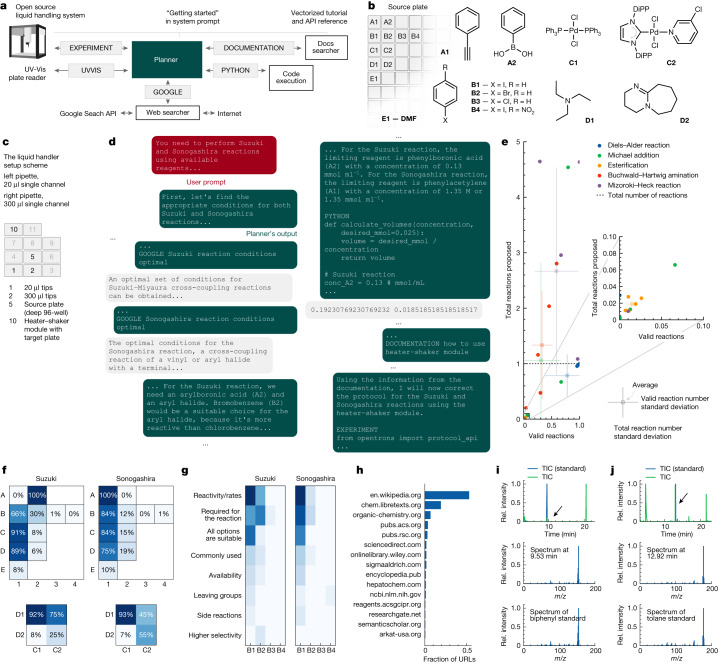
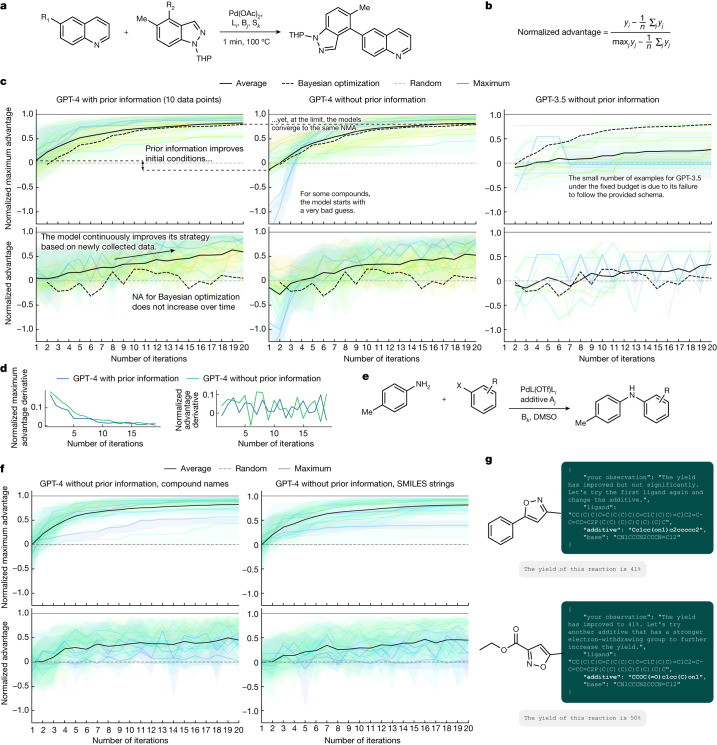
Transformer-based large language models are making significant strides in various fields, such as natural language processing 1–5 , biology 6,7 , chemistry 8–10 and computer programming 11,12 . Here, we show the development and capabilities of Coscientist, an artificial intelligence system driven by GPT-4 that autonomously designs, plans and performs complex experiments by incorporating large language models empowered by tools such as internet and documentation search, code execution and experimental automation. Coscientist showcases its potential for accelerating research across six diverse tasks, including the successful reaction optimization of palladium-catalysed cross-couplings, while exhibiting advanced capabilities for (semi-)autonomous experimental design and execution. Our findings demonstrate the versatility, efficacy and explainability of artificial intelligence systems like Coscientist in advancing research.
Overview
The claims and statistics of this paper haven’t been checked yet.
Free: it reads the open-access text and checks the first 5 claims that cite a source we can check. Create a free account to check every claim.
Integrity signals
Registry
Cites
Statistics
Figures
Verification
Claims the paper makes
The claims and statistics of this paper haven’t been checked yet.
Free: it reads the open-access text and checks the first 5 claims that cite a source we can check. Create a free account to check every claim.
Claims other papers make about this one
Each is checked against this paper’s own text: does it say what the citing paper says it does?
The source backs part of the claim, not all of it — or backs it for a different population, condition or comparison.
In the citing paper
“The broader literature on autonomous scientific systems has already argued for more rigorous evaluation protocols and transparent tool interfaces [3,5,7-12].”
From From Scientific Copilots to Tool-Grounded Autonomy: AI Agents in Simulation-Driven Materials Discovery (2026) · cites this paper as [8]
Experimental — accuracy not yet measuredThe source backs part of the claim, not all of it — or backs it for a different population, condition or comparison.
In the citing paper
“To the best of our knowledge, no prior review has isolated simulation-driven, toolorchestrating AI agent workflows for materials discovery as a distinct evidence base with study-level extraction of autonomy, validation, and reproducibility [3-14].”
From From Scientific Copilots to Tool-Grounded Autonomy: AI Agents in Simulation-Driven Materials Discovery (2026) · cites this paper as [8]
Experimental — accuracy not yet measuredThe source backs part of the claim, not all of it — or backs it for a different population, condition or comparison.
In the citing paper
“In parallel, chemistry-oriented reviews have shown that large language models can move beyond text generation toward tool use, retrieval, planning, code execution, and multi-agent coordination [5-10].”
From From Scientific Copilots to Tool-Grounded Autonomy: AI Agents in Simulation-Driven Materials Discovery (2026) · cites this paper as [8]
Experimental — accuracy not yet measuredThe source backs part of the claim, not all of it — or backs it for a different population, condition or comparison.
In the citing paper
“In scientific discovery, agents dynamically compose and execute hypothesis-testing pipelines spanning simulations, lab protocols, and data analysis [61, 62, 63, 64].”
From Code as Agent Harness (2026) · cites this paper as [62]
Experimental — accuracy not yet measuredThe source backs part of the claim, not all of it — or backs it for a different population, condition or comparison.
In the citing paper
“The central challenge is not only to predict a property, but to manage the sequence of reasoning and action that connects a scientific objective to executable computational or experimental steps [2-10].”
From From Scientific Copilots to Tool-Grounded Autonomy: AI Agents in Simulation-Driven Materials Discovery (2026) · cites this paper as [8]
Experimental — accuracy not yet measured
7 more claims about this paper
Create a free account to see every claim other papers make about this one.
Self-check
Percentages, sums and reported differences re-computed from the paper’s own numbers.
The self-check needs the paper’s full text.
Citations
Cites
Scaling Laws for Neural Language Models
Kaplan, J., McCandlish, S., Henighan, T., Brown, T. B., Chess, B., Child, R., Gray, S., Radford, A., Wu, J., & Amodei, D. (2020) · arXiv · doi:10.48550/arxiv.2001.08361 · Cited by 9,550 · cited 1×
“Extreme scaling of models 13 , as demonstrated by OpenAI, has led to significant breakthroughs in the field 1,14 .”
Evolutionary-scale prediction of atomic level protein structure with a language model
Lin, Z., Akin, H., Rao, R., Hie, B., Zhu, Z., Lu, W., Smetanin, N., Verkuil, R., Kabeli, O., Shmueli, Y., et al. (2022) · doi:10.1101/2022.07.20.500902 · Cited by 5,990 · cited 1×
“These models have been successfully applied to various domains, including natural language 1–5 , biological 6,7 and chemical research 8–10 as well as code generation 11,12 .”
Survey of Hallucination in Natural Language Generation
Ji, Z., Lee, N., Frieske, R., Yu, T., Su, D., Xu, Y., Ishii, E., Bang, Y. J., Madotto, A., & Fung, P. (2023) · ACM Computing Surveys · doi:10.1145/3571730 · Cited by 5,025 · cited 1×
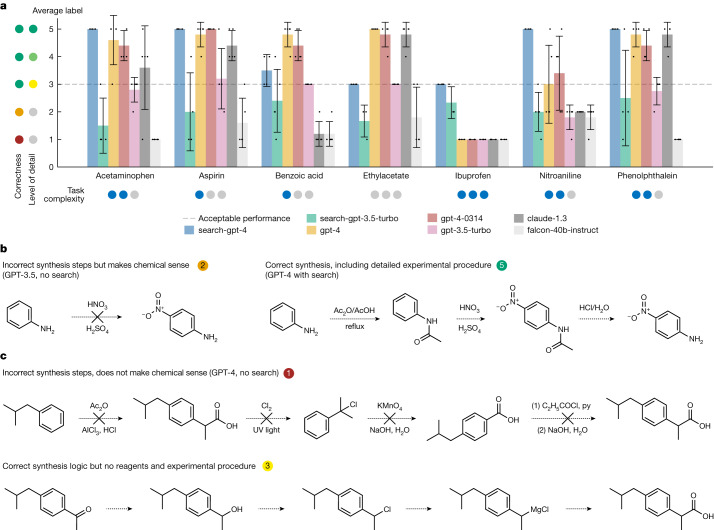
“These results show the importance of grounding LLMs to avoid ‘hallucinations’ 31 .”
Survey of Hallucination in Natural Language Generation
Ji, Z., Lee, N., Frieske, R., Yu, T., Su, D., Xu, Y., Ishii, E., Bang, Y., Chen, D., Dai, W., et al. (2022) · arXiv · doi:10.48550/arxiv.2202.03629 · Cited by 4,981
LLaMA: Open and Efficient Foundation Language Models
Touvron, H., Lavril, T., Izacard, G., Martinet, X., Lachaux, M.-A., Lacroix, T., Rozière, B., Goyal, N., Hambro, E., Azhar, F., et al. (2023) · arXiv · doi:10.48550/arxiv.2302.13971 · Cited by 4,602
Chain-Of-Thought Prompting Elicits Reasoning in Large Language Models
Wei, J., Wang, X., Schuurmans, D., Bosma, M., Ichter, B., Xia, F., Chi, E., Le, Q. V., & Zhou, D. (2022) · Advances in Neural Information Processing Systems 35 · doi:10.52202/068431-1800 · Cited by 4,505
Liu, P., Yuan, W., Fu, J., Jiang, Z., Hayashi, H., & Neubig, G. (2023) · ACM Computing Surveys · doi:10.1145/3560815 · Cited by 4,361 · cited 1×
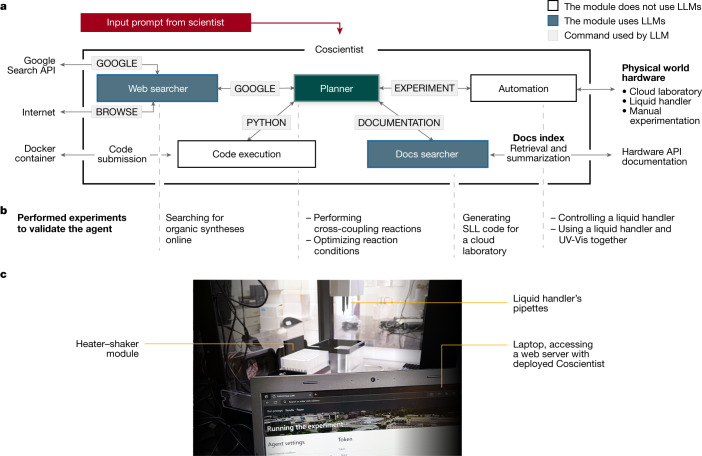
“System prompts (static inputs defining the LLMs’ goals) for the Planner are engineered 1,27 in a modular fashion, described as four commands that define the action space: The PYTHON command allows the Planner to perform calculations to prepare the experiment using a ‘Code execution’ module.”
Liu, P., Yuan, W., Fu, J., Jiang, Z., Hayashi, H., & Neubig, G. (2021) · arXiv · doi:10.48550/arxiv.2107.13586 · Cited by 4,352 · cited 1×
“System prompts (static inputs defining the LLMs’ goals) for the Planner are engineered 1,27 in a modular fashion, described as four commands that define the action space: The PYTHON command allows the Planner to perform calculations to prepare the experiment using a ‘Code execution’ module.”
Chain-of-Thought Prompting Elicits Reasoning in Large Language Models
Wei, J., Wang, X., Schuurmans, D., Bosma, M., Ichter, B., Xia, F., Chi, E., Le, Q., & Zhou, D. (2022) · arXiv · doi:10.48550/arxiv.2201.11903 · Cited by 4,263 · cited 1×
“This can be done through advanced prompting strategies, such as ReAct 34 , Chain of Thought 35 and Tree of Thoughts 36 .”
Billion-scale similarity search with GPUs
Johnson, J., Douze, M., & Jegou, H. (2021) · IEEE Transactions on Big Data · doi:10.1109/tbdata.2019.2921572 · Cited by 4,228
Research works printed but not linked: 3
- Brown, T. et al. in Advances in Neural Information Processing Systems Vol. 33 (eds Larochelle, H. et al.) 1877–1901 (Curran Associates, 2020).
- Data Mining. Mining of Massive Datasets (Cambridge Univ., 2011).
- Running experiments. Emerald Cloud Lab https://www.emeraldcloudlab.com/guides/runningexperiments (2023).
Cited by
Items 501–600 of 1,047
A Computational Perspective on the Reactivity of π‐spacers in Self‐Immolative Elimination Reactions
Padula, D. (2024) · Chemistry - An Asian Journal · doi:10.1002/asia.202400010 · Cited by 4
Autonomous Pharmaceutical Care with Large Language Models
Dou, Y., Deng, Z., Xing, T., Xiao, J. Q., & Peng, S. (2024) · IEEE International Conference on Bioinformatics and Biomedicine (BIBM) · doi:10.1109/bibm62325.2024.10822302 · Cited by 6
“[13] demonstrated the real-world impact of LLM systems through tools by developing Coscientist, a GPT-4-powered agent system that autonomously designs, plans, and executes complex chemical experiments using internet and document search, code execution, and experimental automation.”
Beyond the fourth paradigm of modeling in chemical engineering
Kitchin, J. R., Alves, V. M. C., & Laird, C. D. (2025) · Nature Chemical Engineering · doi:10.1038/s44286-024-00170-x · Cited by 4
Learning-Assisted Search Path Reconstruction Empowers Evolution Algorithm for Optimization
Song, Y., Wang, K., Zhan, Z., Lei, Z., & Gao, S. (2025) · IEEE Transactions on Evolutionary Computation · doi:10.1109/tevc.2025.3550259 · Cited by 4
“DL has witnessed remarkable success, particularly in computer vision, natural language processing, image and speech recognition, etc [4], [5], [6].”
DeepSyn: Operable Chemical Retrosynthetic Design with the DeepSeek R1 Model
Lai, Z., Dai, G., Lu, Y., Xu, Y., Li, J., & Zhu, X. (2025) · The Journal of Physical Chemistry Letters · doi:10.1021/acs.jpclett.5c00804 · Cited by 6
Large language model-based multi-objective modeling framework for vacuum gas oil hydrotreating
Pang, Z., Liu, S., Lin, Y., Fang, X., Liu, H., Peng, C., & Lian, C. (2025) · Chinese Journal of Chemical Engineering · doi:10.1016/j.cjche.2025.05.012 · Cited by 4
Liu, D., Xu, Y. M., Zhang, X., Yin, F., Cao, J., Liu, Z., Zhou, D., Feng, A., & Li, C. (2025) · Foods · doi:10.3390/foods14162890 · Cited by 6
“…language models with tools such as internet search, code execution, and experiment automation to enable this AI system (Coscientist) to independently design, plan, and execute complex experiments, and have been verified in palladium-catalyzed cross-coupled response optimization experiments [130].”
Ai, L., Muggleton, S., Liang, S.-S., & Baldwin, G. S. (2025) · Machine Learning · doi:10.1007/s10994-025-06868-0 · Cited by 5
Lu, S., Fang, C., Zeng, H., Hu, R., Wei, C., Miao, R., Gan, X., Guo, B., Yao, M., & He, S. (2025) · Science China Life Sciences · doi:10.1007/s11427-025-3074-8 · Cited by 10
“…tools expand the scientific process from hypothesis generation to large-scale data interpretation, interdisciplinary collaboration becomes imperative, with biologists, data scientists, and deep learning engineers joining forces (Boiko et al., 2023; Karbstein et al., 2024; Lu et al., 2024a).”
Takahara, W., Yamaguchi, Y., Ogano, M., Kakami, F., Harashima, Y., Takayama, T., Takasuka, S., Kudo, A., & Fujii, M. (2025) · Journal of Chemical Information and Modeling · doi:10.1021/acs.jcim.5c01941 · Cited by 8
Autonomous Chemistry and Materials Innovation Driven by Scientific Agents
Xie, Z., Luo, M., Ye, Z. P., Chen, L., Zhu, Z. G., & Jiang, J. (2026) · JACS Au · doi:10.1021/jacsau.6c00213 · Cited by 8
Artificial Intelligence for Bioinspired Nanofluidic Iontronics
Guo, Z., Ling, Y., Ouyang, Y., Hou, Y., Tong, J., & Hou, X. (2026) · Nano Letters · doi:10.1021/acs.nanolett.6c00390 · Cited by 4
Empowering biomedical evidence exploration and synthesis with deep knowledge graph research
Wang, Z., Chen, Z., Yang, Z., Wang, X., Jin, Q., Peng, Y., Lu, Z., & Sun, J. (2026) · Nature Machine Intelligence · doi:10.1038/s42256-026-01266-0 · Cited by 14
Maqbool, M. A., Okamoto, S., Shibata, T., Santra, T. S., & Nagai, M. (2024) · Instrumentation Science & Technology · doi:10.1080/10739149.2024.2390907 · Cited by 4
“[1,2] Recent advancements in this field include the development of self-driving laboratories that combine automated experimentation with machine learning, leading to discoveries such as new organic semiconductor laser materials.”
ChemLit-QA: a human evaluated dataset for chemistry RAG tasks
Wellawatte, G. P., Guo, H., Lederbauer, M., Borisova, A., Hart, M., Brucka, M., & Schwaller, P. (2025) · Machine Learning Science and Technology · doi:10.1088/2632-2153/adc2d6 · Cited by 18
Machine learning-based design of electrocatalysts and catalytic mechanism research
Guo, K., Fan, X., Chen, L., Zhang, X., & Zhou, Z. (2025) · Scientia Sinica Chimica · doi:10.1360/ssc-2025-0052 · Cited by 4
The Evolving Role of Programming and LLMs in the Development of Self-Driving Laboratories
Kitchin, J. (2025) · APL Machine Learning · doi:10.1063/5.0266757 · Cited by 9
“Two of the earliest examples include Coscientist 14 and ChemCrow.”
An unsupervised machine learning based approach to identify efficient spin-orbit torque materials
Sayed, S., Kleidermacher, H. C., Hashemi-Asasi, G., Hsu, C., & Salahuddin, S. (2025) · npj Computational Materials · doi:10.1038/s41524-025-01626-1 · Cited by 3
“This method of predictive research differs from those employing advanced generative models 28 – 34 , which can generate results not explicitly part of its training datasetand does not serve solely the purpose of fi nding hidden correlations among the elements within the dataset.”
吴, S. 思. W., 朱, T. 天. Z., 涂, S. 思. T., 肖, R. 睿. X., 袁, J. 洁. Y., Wu, Q., 李, H. 泓. L., & 翁, H. 红. W. (2024) · Chinese Physics B · doi:10.1088/1674-1056/ad3c30 · Cited by 6
Pannu, J., Bloomfield, D., Zhu, A., MacKnight, R., Gomes, G., Cicero, A. J., & Inglesby, T. V. (2024) · SSRN Electronic Journal · doi:10.2139/ssrn.4873106 · Cited by 4
Self-citationA multi-agent-driven robotic AI chemist enabling autonomous chemical research on demandPreprint
Song, T., Luo, M., Chen, L., Huang, Y. H., Zhu, Q., Liu, D., Zhang, B., Zou, G., Zhang, F., Shang, W., et al. (2024) · ChemRxiv · doi:10.26434/chemrxiv-2024-w953h · Cited by 10
Zheng, Z., Florit, F., Jin, B., Wu, H., Li, S., Nandiwale, K. Y., Salazar, C. A., Mustakis, J. G., Green, W. H., & Jensen, K. F. (2024) · ChemRxiv · doi:10.26434/chemrxiv-2024-pk105-v2 · Cited by 3
A Visual Dataset for Anomaly Detection in Self-Driving Laboratories
Lin, S., Chen, Z., Jia, X., Wang, Y., Wang, C., Zhang, S., Ding, X., Du, B., Ding, W., & Liu, H. (2025) · Scientific Data · doi:10.1038/s41597-025-06060-y · Cited by 9
CiteME: Can Language Models Accurately Cite Scientific Claims?
Press, O., Hochlehnert, A., Prabhu, A., Udandarao, V., Press, O., & Bethge, M. (2024) · arXiv · doi:10.48550/arxiv.2407.12861 · Cited by 4
“Paper discovery is a crucial component of systems that automate scientific research as shown in [10, 47, 54, 61, 78].”
BackgroundAI4Research: a survey of artificial intelligence for scientific research
Chen, Q., Yang, M., Qin, L., Liu, J., Yan, Z., Guan, J., Peng, D., Ji, Y., Li, H., Hu, M., et al. (2026) · Science China Information Sciences · doi:10.1007/s11432-025-5000-y · Cited by 4
Ock, J., Meda, R. S., Vinchurkar, T., Jadhav, Y., & Barati Farimani, A. (2026) · Digital Discovery · doi:10.1039/d5dd00298b · Cited by 3
Intelligent Experiment Robotic Systems Design for Material Preparation and Detection
Yifan, W., Sun, Y., Yu, X., Zhang, D., & He, W. (2024) · IEEE Transactions on Systems Man and Cybernetics Systems · doi:10.1109/tsmc.2024.3501318 · Cited by 5
“Some breakthroughs continued with the introduction of “Coscientist,” an intelligent systems leveraging large-scale language models like GPT-4 for autonomous information retrieval, experimental planning, programming, remote-controlling automated systems and data analysis [9].”
Embracing Foundation Models for Advancing Scientific Discovery
Guo, S., Shariatmadari, A. H., Xiong, G., & Zhang, A. (2024) · IEEE International Conference on Big Data (BigData) · doi:10.1109/bigdata62323.2024.10825618 · Cited by 14
Protein design and optimization for synthetic cells
Frohn, B. P., Kohyama, S., & Schwille, P. (2025) · Nature Reviews Bioengineering · doi:10.1038/s44222-025-00318-1 · Cited by 8
“The combination of automated sample preparation, automated screening and active learning further allows the development of fully autonomous procedures, as has already been reported in chemical engineering 146,147 , materials sciences 147,148 and protein engineering 13,149 .”
Zhang, Q., Zhang, H., Su, Z., Sun, Y., & Hu, W. (2025) · Journal of Chemical Theory and Computation · doi:10.1021/acs.jctc.5c00713 · Cited by 3
Characterizing the Behavior and Impact of KV Caching on Transformer Inferences Under Concurrency
Ye, J., Cernuda, J., Maurya, A., Sun, X., Kougkas, A., & Nicolae, B. (2025) · IEEE International Parallel and Distributed Processing Symposium (IPDPS) · doi:10.1109/ipdps64566.2025.00108 · Cited by 11
“LLMs are only a starting point in unlocking the generative abilities of broader transformers to accelerate science: analyzing and plotting experimental data [4], formulating hypotheses [5], designing experiments [6], and even predicting promising research directions.”
Large Language Model-Based Autonomous Agent for Prognostics and Health Management
Cha, M., Yoon, S.-I., Kim, S., Kang, D., Nam, K., Lee, T., & Kim, J.-Y. (2025) · Machines · doi:10.3390/machines13090831 · Cited by 9
Liu, Y., Gao, L., Yang, Z., Zhang, H., Chen, J., Xu, J., & Yin, K. (2025) · Journal of Chemical Education · doi:10.1021/acs.jchemed.5c00505 · Cited by 3
Empowering scientific discovery with explainable small domain-specific and large language models
Yu, H., Wang, Y., Cheng, T., Yan, Y., Dawson, K. A., Li, S. F. Y., Zheng, Y., & Jin, Y. (2025) · Artificial Intelligence Review · doi:10.1007/s10462-025-11365-w · Cited by 5
“…executes scientific experiments by leveraging tools such as internet and documentation search, code execution, and experimental automation, demonstrating its versatility and efficacy across six diverse tasks, including the optimization of palladium-catalyzed cross-couplings (Boiko et al. 2023 ).”
OptiChat: Bridging Optimization Models and Practitioners with Large Language Models
Chen, H., Constante‐Flores, G. E., Mantri, K. S. I., Kompalli, S. M., Ahluwalia, A. S., & Li, C. (2025) · INFORMS Journal on Data Science · doi:10.1287/ijds.2025.0074 · Cited by 18
Artificial intelligence in combustion reaction kinetics: Methods and applications
Tao, C., Liu, C., & Yang, B. (2025) · Applications in Energy and Combustion Science · doi:10.1016/j.jaecs.2025.100422 · Cited by 11
A virtual platform for automated hybrid organic-enzymatic synthesis planning
Wang, X., Yin, X., Zhang, X., Zhao, H., Gu, S., Wu, Z., Zhang, O., Qian, W., Huang, Y., Li, Y., et al. (2025) · Nature Communications · doi:10.1038/s41467-025-65898-3 · Cited by 7
“Subsequent developments such as Coscientist 35 and LLM-RDF 36 have further expanded the applicability of LLMs by integrating web browsers, literature analysis modules, code interpreters, and automated synthesis platforms — enabling end-to-end autonomous chemical experiment design, execution, and…”
Li, L., Liu, M., & Dai, H. (2025) · Animal Diseases · doi:10.1186/s44149-025-00203-9 · Cited by 4
“Furthermore, the application of autonomous AI-driven experimental platforms (e.g., Coscientist, ChemCrow) could streamline compound validation and translation from bench to field (Boiko et al. 2023; Bran et al. 2024).”
Multimodal AI agents for capturing and sharing proteomics laboratory practice
Skowronek, P., Nawalgaria, A., & Mann, M. (2025) · Molecular Systems Biology · doi:10.1038/s44320-025-00179-1 · Cited by 6
“In life science, this concept is beginning to extend into the physical lab, where AI has been used to program liquid-handling robots (Boiko et al, 2023).”
What are the limits to biomedical research acceleration through general-purpose AI?
Hebenstreit, K., Convalexius, C., Reichl, S., Huber, S. E., Bock, C., & Samwald, M. (2026) · Scientific Reports · doi:10.1038/s41598-025-32583-w · Cited by 5
“Finally, GPAI models can utilize external tools —such as search systems, specialized narrow AI systems, or lab automation frameworks 20–22 .”
A Prospectus on Generative Artificial Intelligence in Marine Ecosystem Modelling
Spillias, S. (2026) · Fish and Fisheries · doi:10.1111/faf.70037 · Cited by 5
Osprey: Production-ready agentic AI for safety-critical control systems
Hellert, T., Montenegro, J., & Sulc, A. (2025) · APL Machine Learning · doi:10.1063/5.0306302 · Cited by 12
Wang, Z., Ma, Z., Song, W., Jiang, G., Jiang, B., Jiang, M., Shu, W., Wang, B., Wan, Z., Geng, S., et al. (2026) · Advanced Science · doi:10.1002/advs.74293 · Cited by 4
Li, D., Sun, X., Sun, S., Wang, R., Zhang, M., Xiao, M., Wang, Y., & Zhang, Y. (2026) · Advanced Science · doi:10.1002/advs.202524215 · Cited by 5
“While general-purpose models (e.g., GPT-4o [ 37 ], Claude 3.5) offer balanced performance with native multimodal support, specialized architectures excel in specific areas: long-context specialists (e.g., Kimi [ 38 ]) process full research papers [ 39 ], and reasoning-focused models (e.g., DeepSeek…”
InfluentialData-driven copper catalysis enables stereoselective fluorocyclopropanation
Yan, C., Liu, J., Tan, L., Chen, Y., Davies, H. M. L., Yu, Z., & Liao, K. (2026) · Chem · doi:10.1016/j.chempr.2025.102922 · Cited by 4
Zhou, R. H. F. L., Ma, H., Xin, T., Miao, Q., Zou, L., Hu, Q., Cheng, H., Guo, J., Mu, Y., Wang, S., et al. (2026) · Journal of Chemical Information and Modeling · doi:10.1021/acs.jcim.6c00090 · Cited by 3
Foundation models and AI agents in oncology drug discovery
Ghanwatkar, Y., Rajdeo, P., & Mahato, R. I. (2026) · Drug Discovery Today · doi:10.1016/j.drudis.2026.104655 · Cited by 4
Data-driven chemical feature extraction and material design for halide solid-state electrolytes
Li, D., Lin, Z., Luo, F., Xiao, C., Dai, Z., Ye, Z., Wang, Q., Guo, Y., & Yang, C. (2026) · eScience · doi:10.1016/j.esci.2026.100590 · Cited by 3
Li, H., Fang, X., Li, Y., Huang, C., Wang, J., Wang, X., Bai, H., Hao, B., Lin, S., Liang, H., et al. (2026) · Journal of Chemical Information and Modeling · doi:10.1021/acs.jcim.6c00286 · Cited by 17
Decoding complexity through machine learning is redefining scientific discovery
Vinuesa, R., Cinnella, P., Rabault, J., Azizpour, H., Bauer, S., Brunton, B. W., Elofsson, A., Jarlebring, E., Kjellström, H., Markidis, S., et al. (2026) · Communications Physics · doi:10.1038/s42005-026-02676-7 · Cited by 21
A knowledge graph framework for digital twins of chemical processes
Zhang, S., Zhang, J., & Lapkin, A. A. (2026) · Nature Chemical Engineering · doi:10.1038/s44286-026-00392-1 · Cited by 12
“This framework is integrated with seamless access to up-to-date chemical databases 24 and artificial intelligence (AI) models 25 for physicochemical properties, as well as large language models 26 (LLMs) for chemistry and chemical process knowledge queries through natural language.”
Gao, W., Liu, Y., & Gao, Y. (2026) · Physiological and Molecular Plant Pathology · doi:10.1016/j.pmpp.2026.103274 · Cited by 3
Shi, S., Huang, J., Qin, L., Chen, D., Zhou, L., Pan, H., & Zhu, L. (2026) · Chemical Engineering Journal · doi:10.1016/j.cej.2026.177780 · Cited by 3
Automating Computational Chemistry Workflows via OpenClaw and Domain-Specific Skills
Ding, M., Huang, C. J., Hu, Y., Li, Y., Lu, Z., Yu, X. H., Zhang, D., Zhai, W., Zhu, T., Gu, Q., et al. (2026) · Journal of Chemical Theory and Computation · doi:10.1021/acs.jctc.6c00622 · Cited by 12
“23 21–23 Current approaches to computational chemistry automation occupy two largely separate design regimes.”
Xu, L., Wang, J., Zhang, C., Huang, J. Y., Zhou, J., Ren, Z., Yao, J., Li, J., Jiang, H., Huang, M., et al. (2026) · ACS Catalysis · doi:10.1021/acscatal.6c03989 · Cited by 3
Self-Driving Scanning Probe Microscopy: From Acceleration to Discovery and Manipulation
Narasimha, G., Bulanadi, R., Chowdhury, J., Vasudevan, R., & Liu, Y. (2026) · Accounts of Chemical Research · doi:10.1021/acs.accounts.6c00273 · Cited by 6
AI for Accelerated Materials Discovery: From Generative Design to Autonomous Realization
Choi, J., Kim, S., Park, J., Choi, J., An, S., & Jung, Y. (2026) · Chemical Reviews · doi:10.1021/acs.chemrev.6c00154 · Cited by 11
“Systems such as ChemCrow 221 and Coscientist 222 demonstrate LLM-driven autonomous experimental agents that can read papers, plan syntheses, and direct robotic execution.”
New Frontiers in Single-Atom Catalysis: Active-Site Dynamics and AI-Enabled Design
Chen, J., Liu, J., Sun, J., Li, J., Meng, Y., Hu, C., Li, J., & Lu, J. (2026) · Chemical Reviews · doi:10.1021/acs.chemrev.6c00200 · Cited by 4
Diao, Z., Yamashita, H., & Abe, M. (2025) · Measurement Science and Technology · doi:10.1088/1361-6501/adbf3a · Cited by 14
Sirisha, U., Kumar, C. K., Durgam, R., Eswaraiah, P., & Nagamani, G. M. (2025) · Computers, materials & continua/Computers, materials & continua (Print) · doi:10.32604/cmc.2025.063721 · Cited by 7
A federated graph learning method to realize multi-party collaboration for molecular discovery
Zhang, L., Zhang, J., Huang, R., Wang, Y., Liu, L., Zhang, Y., Chen, K., Jiang, J., & Wu, Y. (2026) · Nature Machine Intelligence · doi:10.1038/s42256-026-01184-1 · Cited by 5
Solving Advanced Task-Specific Problems in Measurement Sciences with Generative AI
Wahab, M. F., Handlovic, T. T., Roy, S., Burk, R. J., & Armstrong, D. W. (2024) · Analytical Chemistry · doi:10.1021/acs.analchem.4c01734 · Cited by 7
Applications of machine learning in ion beam analysis of materials
da Silva, T. F. (2025) · Journal of Vacuum Science & Technology A Vacuum Surfaces and Films · doi:10.1116/6.0004277 · Cited by 4
Kim, M.-W., Park, H.-B., Ahn, H.-J., Park, W.-R., Jeon, J.-W., Lee, K.-H., Lee, R., & Choi, D. (2025) · Electronics · doi:10.3390/electronics14061175 · Cited by 9
Key technologies and applications of large language models for materials science
Danyu, L. U. O., Liyang, W. E. N., Chen, B., Sijia, G. U. O., Wang, H., Ziping, W. A. N., Chen, L., & Chen, X. (2025) · Scientia Sinica Informationis · doi:10.1360/ssi-2025-0169 · Cited by 5
“Coscientist [109] 整合大语言模型与自动化实验设备 , 实现了从目标设定、 路径规划到实验执行的无人化流程 .”
LLMs can Design Sustainable Concrete – a Systematic BenchmarkPreprint
Völker, C., Rug, T., Jablonka, K. M., & Kruschwitz, S. (2024) · Research Square · doi:10.21203/rs.3.rs-3913272/v1 · Cited by 6
Kalmer, T. L., Ancajas, C. M. F., Cheng, Z., Oyedele, A. S., Davis, H. L., & Walker, A. S. (2024) · bioRxiv (Cold Spring Harbor Laboratory) · doi:10.1101/2024.08.01.606186 · Cited by 3
“41,42 LLMs have the potential to speed up the expansion of training datasets for natural product bioactivity prediction and other tasks in natural products research.”
BackgroundGenerative molecular design and discovery on the rise
(2025) · Nature Computational Science · doi:10.1038/s43588-025-00802-z · Cited by 4
Jin, R., Guo, Y., Qu, Y., Yang, M., Shang, C., Yang, Q., Chao, L., Zhou, Y., Xu, R. M., Xu, Z., et al. (2025) · bioRxiv (Cold Spring Harbor Laboratory) · doi:10.1101/2025.09.03.674085 · Cited by 16
“While foundation models have revolutionized specific tasks such as protein structure prediction, they function as specialized tools and lack the executive function to orchestrate a multi-stage research campaign 21,57,58 .”
An AI Agent for cell-type specific brain computer interfacesPreprint
Marin‐Llobet, A., Lin, Z., Baek, J., Aljović, A., Zhang, X., Lee, A. J., Wang, W., Lee, J. Y., Shen, H., He, Y., et al. (2025) · bioRxiv (Cold Spring Harbor Laboratory) · doi:10.1101/2025.09.11.675660 · Cited by 5
“More recently, the emergence of agentic AI 28-30 –systems that autonomously perceive, reason, plan, and execute complex workflows–has transformed scientific automation and discovery across fields including molecular biology 31 , chemistry 32 , behavior 33 , spatial biology 34 and robotics 35, 36 .”
Djidrovski, I. (2026) · bioRxiv (Cold Spring Harbor Laboratory) · doi:10.64898/2026.02.06.703989 · Cited by 4
“12,13,14,15 Integrated decision-support environments are not new in computational toxicology: earlier efforts such as Bioclipse Decision Support and OpenTox demonstrated how interoperable services, standardized representations, and reportable outputs can connect structure-based predictions to…”
Coevolution of large language models with physical models boosts advanced battery research
Li, J.-H., Hu, Y., Xia, G., Mo, W., Li, B., Jia, Y., Gao, Y., Xuan, F., Liu, H., & Lian, C. (2025) · Cell Reports Physical Science · doi:10.1016/j.xcrp.2025.102553 · Cited by 2
Towards Dual Transparent Liquid Level Estimation in Biomedical Lab: Dataset, Methods and Practices
Wang, X., Ma, K., Zhong, R., Wang, X., Fang, Y., Xiao, Y., & Xia, T. (2024) · Lecture notes in computer science · doi:10.1007/978-3-031-73650-6_12 · Cited by 15
Interpretable machine learning-assisted development of catalytic science theory
Hu, J., Yang, J., Hu, S., Liu, J., & Li, W. (2025) · Scientia Sinica Chimica · doi:10.1360/ssc-2025-0066 · Cited by 2
Haro, L. P. D. (2025) · Applied Biosafety · doi:10.1089/apb.2024.0068 · Cited by 3
“15,16 Notable examples include Chemcrow, 17 Coscientist, 15 and Genegpt, 18 among others.”
Intelligent chemical synthesis based on microchemical engineering technology
Pan, Y., Yu, Y., Wang, L., Hu, G., Wang, Y., & Luo, G. (2025) · Chinese Journal of Chemical Engineering · doi:10.1016/j.cjche.2025.05.010 · Cited by 2
AI in drug design: evolution or revolution?
Green, D. V. S. (2025) · Emerging Topics in Life Sciences · doi:10.1042/etls20240005 · Cited by 4
Zhang, L., Song, X., Li, P., Yuan, Y., Wan, K., Huang, F., Guo, Y., & Zhang, H. (2025) · Arabian Journal of Chemistry · doi:10.25259/ajc_33_2025 · Cited by 2
Pan, Z., Zhao, Y., Wang, Z., & Huang, H.-Z. (2025) · Langmuir · doi:10.1021/acs.langmuir.5c02763 · Cited by 3
Vision language models excel at perception but struggles with scientific reasoning
(2025) · Nature Computational Science · doi:10.1038/s43588-025-00871-0 · Cited by 4
Balancing AI and human insights in scientific discovery: Challenges and guidelines
Vinuesa, R., Manchón, P., Hoyas, S., & García‐Martínez, J. (2025) · The Innovation · doi:10.1016/j.xinn.2025.101144 · Cited by 4
Ananikov, V. P. (2025) · ANALYTICS Russia · doi:10.22184/2227-572x.2025.15.4.246.260 · Cited by 6
Are we there yet? Adventures on a road trip through machine learning as a computational chemist
Kulik, H. J. (2025) · APL Computational Physics · doi:10.1063/5.0297853 · Cited by 3
Exocortex Network for AI-Augmented Human-Led Scientific Expedition
Tsai, E. H. R., & Yager, K. G. (2025) · Photon Science · doi:10.1021/photonsci.5c00009 · Cited by 5
Leveraging large language models for enzymatic reaction prediction and characterization
Fruscia, L. D., & Weber, J. M. (2025) · Digital Discovery · doi:10.1039/d5dd00187k · Cited by 3
LABMATE: Language Model Based Multi-Agent System to Accelerate Catalysis Experiments
Acharya, A., Sharma, A. K., Parker, D., Vega, T., Ashraf, R. A., Isenberg, N. M., Strube, J., & Ralló, R. (2025) · International Conference for High Performance Computing, Networking, Storage and Analysis (SC) · doi:10.1145/3731599.3767399 · Cited by 3
Augmentation or substitution: defining role of large language model in physical education
Yang, H., Huang, B., & Li, X. (2025) · Frontiers in Sports and Active Living · doi:10.3389/fspor.2025.1662056 · Cited by 6
“This result is consistent with the findings of Boiko et al. (38), who noted that AI systems powered by GPT-4 are capable of semi-autonomously designing, planning, and executing science experiments in multiple steps.”
Hellert, T., Bertwistle, D., Leemann, S. C., Sulc, A., & Venturini, M. (2026) · Physical Review Research · doi:10.1103/jtqy-9jz1 · Cited by 25
“…this diversity: ChemCrow augments LMs with chemistry-specific tools [19], Co-scientist enables autonomous experimental planning in chemistry [20], and CRISPR-GPT applies agentic orchestration to gene-editing workflows [21]; and in synchrotron science, beamline prototypes such as VISION [22]…”
An LLM agent-based framework for analytical characterization of Nash equilibria
Liu, W., Zhou, X., Wang, X., Cheng, Y., Ye, L., Berry, R., Tassiulas, L., Huang, J., & Zhao, J. (2025) · Nexus · doi:10.1016/j.ynexs.2025.100107 · Cited by 4
Yang, Y., Liu, Z., Wu, W., Zhang, Y., Zhang, H., Lin, J., Wu, S., Chen, Z., Sun, Y., Li, R., et al. (2025) · Journal of Chemical Information and Modeling · doi:10.1021/acs.jcim.5c02299 · Cited by 3
The missing data for intelligent scientific instruments
Pinkard, H., & Norlin, N. (2025) · Nature Methods · doi:10.1038/s41592-025-02995-7 · Cited by 5
Synergizing Chemical and AI Communities for Advancing Laboratories of the Future
Oh, S., Fang, X., Lin, I.-H., Dee, P., Dunham, C. S., Copp, S. M., Doyle, A. G., de Alaniz, J. R., & Gu, M. (2026) · ACS Central Science · doi:10.1021/acscentsci.5c01994 · Cited by 7
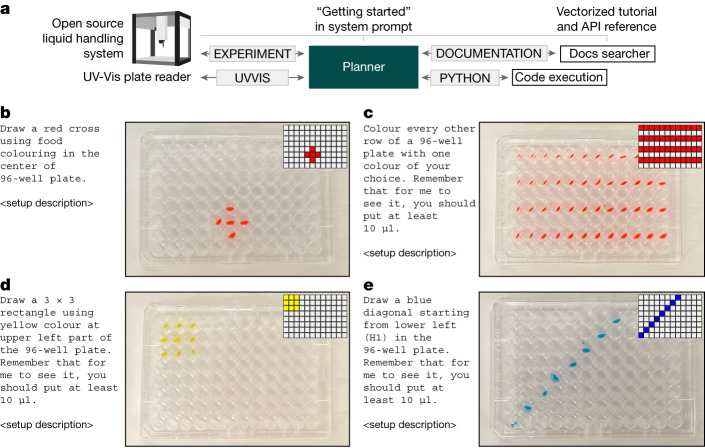
“9 Also, the wide adoption of the 96-well plate in the early 1990s established a practical standard for parallel assays and screening, enabling reproducible experimentation in large sample volumes.”
Yutong, G. U. O., & Yang, C. (2026) · Metals · doi:10.3390/met16020162 · Cited by 5
Beck, A. G., Jones, G., Singh, A. N., Fine, J. A., Shrestha, R., Barrientos, R. C., Sherer, E. C., Williams, K. B., Regalado, E. L., & Aggarwal, P. (2026) · Analytical Chemistry · doi:10.1021/acs.analchem.5c06729 · Cited by 6
TrustSciAgent: Towards Rigorous and Trustworthy Agents for Scientific Research
Li, Y., Wang, M., Zhang, M., Zhang, Z., Zhang, G., & Li, H. (2025) · IEEE International Conference on Trust, Security and Privacy in Computing and Communications (TrustCom) · doi:10.1109/trustcom66490.2025.00384 · Cited by 3
Artificial intelligence at scale in the chemical industry: from legacy to leadership
Chiang, L. H., Christiansen, D., Malloure, M., Briceno-Mena, L. A., & Kim, S. H. (2026) · Current Opinion in Chemical Engineering · doi:10.1016/j.coche.2026.101229 · Cited by 2
Yue, Z., Bao, Z., Chen, M., Wang, J., Huang, B., Tan, G., & Han, W. (2026) · Journal of Manufacturing Processes · doi:10.1016/j.jmapro.2026.02.019 · Cited by 2
EpidemIQs: Prompt-to-Paper LLM Agents for Epidemic Modeling and Analysis
Samaei, M. H., Sahneh, F. D., Cohnstaedt, L. W., & Scoglio, C. (2026) · IEEE Transactions on Artificial Intelligence · doi:10.1109/tai.2026.3666830 · Cited by 9
“LLM agents have since been applied to diverse domains, including software engineering [15], [16], cybersecurity [17], medical diagnosis [18], chemistry [19], [20], material science [21], [22], [23], computational biology [24], algorithm design [25], and healthcare [26].”
Chauhan, R. S., Mottafegh, A., Rana, A., & Singh, A. K. (2026) · Chemical Engineering Journal · doi:10.1016/j.cej.2026.174829 · Cited by 2
Rao, S., Cui, K. C. K., Yang, J., Li, Y., Wang, S., Feng, X., Liu, F., Zhang, W., & Huang, Y. (2026) · Light Advanced Manufacturing · doi:10.37188/lam.2026.037 · Cited by 3
Metadata
- Authors
- Boiko, D. A., MacKnight, R., Kline, B., & Gomes, G.
- Affiliations
- Carnegie Mellon University (US)
- Corresponding author
- Gomes, Gabe
- Venue
- Nature
- Published
- 2023-12-20
- Volume
- 624
- Issue
- 7992
- Pages
- 570-578
- ISSN
- 0028-0836 (ISSN-L)
- 1476-4687
- PMC
- PMC10733136
- OpenAlex
- W4389991792
- Semantic Scholar
- 6fe3779fe5f2e9402abdd08ad8db41a0f13a99eb
- Cited by
- 1,050
- References
- 37
- Citations by year
- 2026: 458 · 2025: 401 · 2024: 186 · 2023: 5
- FWCI
- 77.41
- Type
- journal article
- Language
- en
- Open access
- hybrid
- doi.org
- Licence
- cc-by
- creativecommons.org/licenses/by/4.0 (tdm)
- creativecommons.org/licenses/by/4.0 (vor)
- Locations
- Nature (publishedVersion, cc-by)
- PubMed Central (publishedVersion, cc-by)
- PubMed (publishedVersion)
- RePEc: Research Papers in Economics (submittedVersion)
- Funders
- National Science Foundation (2221346, 2202693)
- Carnegie Mellon University
- Topics
- Physical Sciences › Materials Science › Materials Chemistry › Machine Learning in Materials Science
- Physical Sciences › Computer Science › Artificial Intelligence › Artificial Intelligence Applications
- Life Sciences › Pharmacology, Toxicology and Pharmaceutics › Drug Discovery › Computational Drug Discovery Methods
- Keywords
- large language models, GPT-4, experimental automation, reaction condition optimization, palladium-catalyzed cross-coupling, program execution
- MeSH terms
- Artificial Intelligence, Automation, Catalysis, Documentation, Electric Power Supplies
About these checks
Registry, retraction, Cites and statistics results are computed, not judged, with one exception: a printed reference that no index lists is read once by a model before it counts as a citation error. Claims are extracted by a model and kept only when their quote appears verbatim in the text; each cited source is then checked, with a model’s help, for whether it says what the claim relies on. Those verdicts can be wrong — read the claim’s quote and the cited source before relying on one.
Statistics and arithmetic are recomputed, not judged.
Confidence bands are shown only for fields calibrated on our annotated test set. None is calibrated yet, so no band is shown.
What counts as a claim ›How we measure confidence ›How we check this ›
Are you an author, or do you see a problem with this page? Request a review
Data sources
Bibliographic data: Semantic Scholar, OpenAlex, Crossref.
Contains information from the Semantic Scholar Academic Graph Datasets, made available under the ODC Attribution License (ODC-BY 1.0).
Semantic Scholar’s data is described in: Kinney, R., et al. (2023). The Semantic Scholar Open Data Platform. arXiv:2301.10140.
