

Autonomous chemical research with large language models
Open accessThe DOI matches its Crossref record; 47 of the 47 references it cites were found in a registry or an index.
Abstract
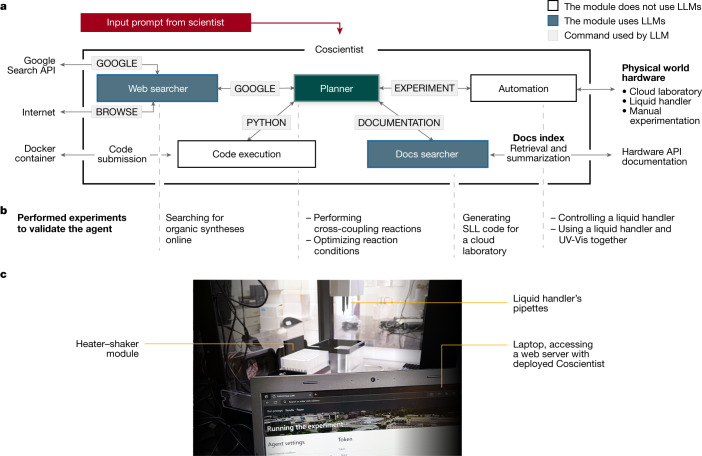
Transformer-based large language models are making significant strides in various fields, such as natural language processing 1–5 , biology 6,7 , chemistry 8–10 and computer programming 11,12 . Here, we show the development and capabilities of Coscientist, an artificial intelligence system driven by GPT-4 that autonomously designs, plans and performs complex experiments by incorporating large language models empowered by tools such as internet and documentation search, code execution and experimental automation. Coscientist showcases its potential for accelerating research across six diverse tasks, including the successful reaction optimization of palladium-catalysed cross-couplings, while exhibiting advanced capabilities for (semi-)autonomous experimental design and execution. Our findings demonstrate the versatility, efficacy and explainability of artificial intelligence systems like Coscientist in advancing research.
Overview
The claims and statistics of this paper haven’t been checked yet.
Free: it reads the open-access text and checks the first 5 claims that cite a source we can check. Create a free account to check every claim.
Integrity signals
Registry
Cites
Statistics
Figures
Verification
Claims the paper makes
The claims and statistics of this paper haven’t been checked yet.
Free: it reads the open-access text and checks the first 5 claims that cite a source we can check. Create a free account to check every claim.
Claims other papers make about this one
Each is checked against this paper’s own text: does it say what the citing paper says it does?
The source backs part of the claim, not all of it — or backs it for a different population, condition or comparison.
In the citing paper
“The broader literature on autonomous scientific systems has already argued for more rigorous evaluation protocols and transparent tool interfaces [3,5,7-12].”
From From Scientific Copilots to Tool-Grounded Autonomy: AI Agents in Simulation-Driven Materials Discovery (2026) · cites this paper as [8]
Experimental — accuracy not yet measuredThe source backs part of the claim, not all of it — or backs it for a different population, condition or comparison.
In the citing paper
“To the best of our knowledge, no prior review has isolated simulation-driven, toolorchestrating AI agent workflows for materials discovery as a distinct evidence base with study-level extraction of autonomy, validation, and reproducibility [3-14].”
From From Scientific Copilots to Tool-Grounded Autonomy: AI Agents in Simulation-Driven Materials Discovery (2026) · cites this paper as [8]
Experimental — accuracy not yet measuredThe source backs part of the claim, not all of it — or backs it for a different population, condition or comparison.
In the citing paper
“In parallel, chemistry-oriented reviews have shown that large language models can move beyond text generation toward tool use, retrieval, planning, code execution, and multi-agent coordination [5-10].”
From From Scientific Copilots to Tool-Grounded Autonomy: AI Agents in Simulation-Driven Materials Discovery (2026) · cites this paper as [8]
Experimental — accuracy not yet measuredThe source backs part of the claim, not all of it — or backs it for a different population, condition or comparison.
In the citing paper
“In scientific discovery, agents dynamically compose and execute hypothesis-testing pipelines spanning simulations, lab protocols, and data analysis [61, 62, 63, 64].”
From Code as Agent Harness (2026) · cites this paper as [62]
Experimental — accuracy not yet measuredThe source backs part of the claim, not all of it — or backs it for a different population, condition or comparison.
In the citing paper
“The central challenge is not only to predict a property, but to manage the sequence of reasoning and action that connects a scientific objective to executable computational or experimental steps [2-10].”
From From Scientific Copilots to Tool-Grounded Autonomy: AI Agents in Simulation-Driven Materials Discovery (2026) · cites this paper as [8]
Experimental — accuracy not yet measured
7 more claims about this paper
Create a free account to see every claim other papers make about this one.
Self-check
Percentages, sums and reported differences re-computed from the paper’s own numbers.
The self-check needs the paper’s full text.
Citations
Cites
Scaling Laws for Neural Language Models
Kaplan, J., McCandlish, S., Henighan, T., Brown, T. B., Chess, B., Child, R., Gray, S., Radford, A., Wu, J., & Amodei, D. (2020) · arXiv · doi:10.48550/arxiv.2001.08361 · Cited by 9,550 · cited 1×
“Extreme scaling of models 13 , as demonstrated by OpenAI, has led to significant breakthroughs in the field 1,14 .”
Evolutionary-scale prediction of atomic level protein structure with a language model
Lin, Z., Akin, H., Rao, R., Hie, B., Zhu, Z., Lu, W., Smetanin, N., Verkuil, R., Kabeli, O., Shmueli, Y., et al. (2022) · doi:10.1101/2022.07.20.500902 · Cited by 5,990 · cited 1×
“These models have been successfully applied to various domains, including natural language 1–5 , biological 6,7 and chemical research 8–10 as well as code generation 11,12 .”
Survey of Hallucination in Natural Language Generation
Ji, Z., Lee, N., Frieske, R., Yu, T., Su, D., Xu, Y., Ishii, E., Bang, Y. J., Madotto, A., & Fung, P. (2023) · ACM Computing Surveys · doi:10.1145/3571730 · Cited by 5,025 · cited 1×
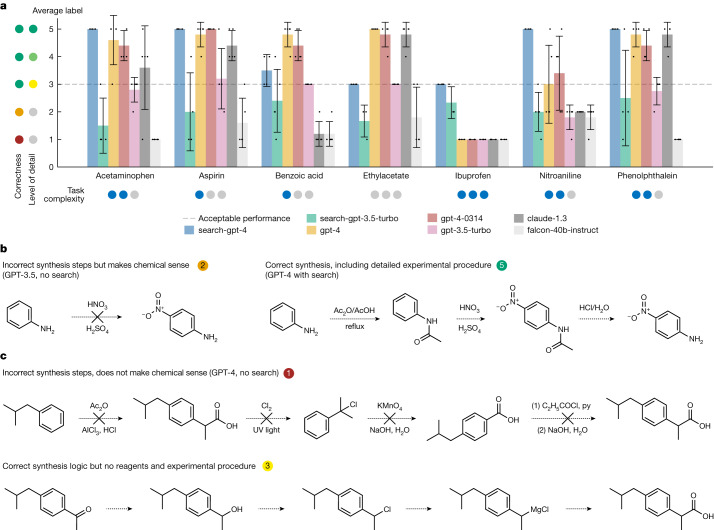
“These results show the importance of grounding LLMs to avoid ‘hallucinations’ 31 .”
Survey of Hallucination in Natural Language Generation
Ji, Z., Lee, N., Frieske, R., Yu, T., Su, D., Xu, Y., Ishii, E., Bang, Y., Chen, D., Dai, W., et al. (2022) · arXiv · doi:10.48550/arxiv.2202.03629 · Cited by 4,981
LLaMA: Open and Efficient Foundation Language Models
Touvron, H., Lavril, T., Izacard, G., Martinet, X., Lachaux, M.-A., Lacroix, T., Rozière, B., Goyal, N., Hambro, E., Azhar, F., et al. (2023) · arXiv · doi:10.48550/arxiv.2302.13971 · Cited by 4,602
Chain-Of-Thought Prompting Elicits Reasoning in Large Language Models
Wei, J., Wang, X., Schuurmans, D., Bosma, M., Ichter, B., Xia, F., Chi, E., Le, Q. V., & Zhou, D. (2022) · Advances in Neural Information Processing Systems 35 · doi:10.52202/068431-1800 · Cited by 4,505
Liu, P., Yuan, W., Fu, J., Jiang, Z., Hayashi, H., & Neubig, G. (2023) · ACM Computing Surveys · doi:10.1145/3560815 · Cited by 4,361 · cited 1×
“System prompts (static inputs defining the LLMs’ goals) for the Planner are engineered 1,27 in a modular fashion, described as four commands that define the action space: The PYTHON command allows the Planner to perform calculations to prepare the experiment using a ‘Code execution’ module.”
Liu, P., Yuan, W., Fu, J., Jiang, Z., Hayashi, H., & Neubig, G. (2021) · arXiv · doi:10.48550/arxiv.2107.13586 · Cited by 4,352 · cited 1×
“System prompts (static inputs defining the LLMs’ goals) for the Planner are engineered 1,27 in a modular fashion, described as four commands that define the action space: The PYTHON command allows the Planner to perform calculations to prepare the experiment using a ‘Code execution’ module.”
Chain-of-Thought Prompting Elicits Reasoning in Large Language Models
Wei, J., Wang, X., Schuurmans, D., Bosma, M., Ichter, B., Xia, F., Chi, E., Le, Q., & Zhou, D. (2022) · arXiv · doi:10.48550/arxiv.2201.11903 · Cited by 4,263 · cited 1×
“This can be done through advanced prompting strategies, such as ReAct 34 , Chain of Thought 35 and Tree of Thoughts 36 .”
Billion-scale similarity search with GPUs
Johnson, J., Douze, M., & Jegou, H. (2021) · IEEE Transactions on Big Data · doi:10.1109/tbdata.2019.2921572 · Cited by 4,228
Research works printed but not linked: 3
- Brown, T. et al. in Advances in Neural Information Processing Systems Vol. 33 (eds Larochelle, H. et al.) 1877–1901 (Curran Associates, 2020).
- Data Mining. Mining of Massive Datasets (Cambridge Univ., 2011).
- Running experiments. Emerald Cloud Lab https://www.emeraldcloudlab.com/guides/runningexperiments (2023).
Cited by
Items 101–200 of 1,047
Wu, Y., Ding, X., Wang, Y., & Ouyang, D. (2024) · Burns & Trauma · doi:10.1093/burnst/tkae053 · Cited by 59
Large language models to accelerate organic chemistry synthesis
Zhang, Y., Han, Y., Chen, S., Yu, R., Zhao, X. Z., Liu, X., Zeng, K., Yu, M., Tian, J., Zhu, F., et al. (2025) · Nature Machine Intelligence · doi:10.1038/s42256-025-01066-y · Cited by 105
“In addition, we also compare the capability of GPT-4 as an agent for reaction optimization, as reported by Boiko et al. 26 .”
GIScience in the era of Artificial Intelligence: a research agenda towards Autonomous GIS
Li, Z., Ning, H., Gao, S., Janowicz, K., Li, W., Arundel, S. T., Yang, C. P., Bhaduri, B., Wang, S., Zhu, A.-X., et al. (2025) · Annals of GIS · doi:10.1080/19475683.2025.2552161 · Cited by 98
AI-driven advances in metal–organic frameworks: from data to design and applications
Song, Y., Li, J., Chi, D., Xu, Z., Liu, J., Chen, M., & Wang, Z. (2025) · Chemical Communications · doi:10.1039/d5cc04220h · Cited by 61
AI Approaches to Homogeneous Catalysis with Transition Metal Complexes
Morán‐González, L., Burnage, A. L., Nova, A., & Balcells, D. (2025) · ACS Catalysis · doi:10.1021/acscatal.5c01202 · Cited by 65
“189 This approach might be further augmented in the context of large language models for chemistry, 190 − 192 contributing to a major leap in lab automation and autonomous design.”
Artificial intelligence for quantum computing
Alexeev, Y., Farag, M. H., Patti, T. L., Wolf, M. E., Ares, N., Aspuru‐Guzik, A., Benjamin, S. C., Cai, Z., Cao, S., Chamberland, C., et al. (2025) · Nature Communications · doi:10.1038/s41467-025-65836-3 · Cited by 140
“…(LLMs) and vision-language models (VLMs), trained on a combination of visual media and text, have demonstrated strong capabilities in understanding human instructions and reasoning in both natural language and image data, and has been applied to many scienti fi c discovery applications 162 – 164 .”
Chen, X., Wang, L., You, M., Liu, W., Fu, Y., Xu, J., Zhang, S., Chen, G., Li, K., & Li, J. (2024) · Journal of Medical Internet Research · doi:10.2196/58158 · Cited by 48
“Similar methodologies have been applied to the development of specialized LLMs for chemical domains [29].”
Shi, W., Xu, R., Zhuang, Y., Yu, Y., Zhang, J., Wu, H., Zhu, Y., Ho, J. C., Yang, C., & Wang, M. D. (2024) · Proceedings of the 2024 Conference on Empirical Methods in Natural Language Processing · doi:10.18653/v1/2024.emnlp-main.1245 · Cited by 54
“We will explore stricter evaluation metrics to assess the cases of misinformation that could pose a risk within clinical settings in our future work.”
MethodDeveloping ChemDFM as a large language foundation model for chemistry
Zhao, Z., Ma, D., Chen, L., Sun, L., Li, Z., Xia, Y., Chen, B., Xu, H., Zhu, Z., Su, Z., et al. (2025) · Cell Reports Physical Science · doi:10.1016/j.xcrp.2025.102523 · Cited by 197
“…exploits LLMs’ strong natural language understanding and reasoning abilities, using them directly to handle complex chemical tasks described in natural language [Hatakeyama-Sato et al., 2023, Cao et al., 2023b, Boiko et al., 2023, Yoshikawa et al., 2023, M. Bran et al., 2024, Ruan et al., 2024].”
Artificial Intelligence‐Driven Approaches in Semiconductor Research
Zheng, Y., Xu, H., Li, Z., Li, L., Yu, Y., Jiang, P., Shi, Y., Zhang, J., Huang, Y., Luo, Q., et al. (2025) · Advanced Materials · doi:10.1002/adma.202504378 · Cited by 67
Developing ChemDFM as a large language foundation model for chemistry
Zhao, Z., Ma, D., Chen, L., Sun, L., Li, Z., Xia, Y., Chen, B., Xu, H., Zhu, Z., Zhu, S., et al. (2024) · arXiv · doi:10.48550/arxiv.2401.14818 · Cited by 48
Large language model-based evolutionary optimizer: Reasoning with elitism
Brahmachary, S., Joshi, S. M., Panda, A., Koneripalli, K., Sagotra, A. K., Patel, H., Sharma, A., Jagtap, A. D., & Kalyanaraman, K. (2024) · Neurocomputing · doi:10.1016/j.neucom.2024.129272 · Cited by 95
AI, agentic models and lab automation for scientific discovery — the beginning of scAInce
Härtung, T. (2025) · Frontiers in Artificial Intelligence · doi:10.3389/frai.2025.1649155 · Cited by 73
Artificial intelligence in paleontology
Yu, C., Qin, F., Watanabe, A., Yao, W., Li, Y., Qin, Z., Liu, Y., Wang, H., Jiangzuo, Q., Hsiang, A. Y., et al. (2024) · Earth-Science Reviews · doi:10.1016/j.earscirev.2024.104765 · Cited by 55
Reddy, M. R., Walter, N. G., & Sevryugina, Y. V. (2024) · Journal of Chemical Education · doi:10.1021/acs.jchemed.4c00226 · Cited by 56
Dual-use capabilities of concern of biological AI models
Pannu, J., Bloomfield, D., MacKnight, R., Hanke, M. S., Zhu, A. W., Gomes, G., Cicero, A. J., & Inglesby, T. V. (2025) · PLoS Computational Biology · doi:10.1371/journal.pcbi.1012975 · Cited by 86
Self-citationSteering towards safe self-driving laboratories
Leong, S. X., Griesbach, C. E., Zhang, R., Darvish, K., Zhao, Y., Mandal, A., Zou, Y., Hao, H., Bernales, V., & Aspuru‐Guzik, A. (2025) · Nature Reviews Chemistry · doi:10.1038/s41570-025-00747-x · Cited by 97
Evaluating large language model agents for automation of atomic force microscopy
Mandal, I., Soni, J., Zaki, M. F. M., Smedskjær, M. M., Wondraczek, K., Wondraczek, L., Gosvami, N. N., & Krishnan, N. M. A. (2025) · Nature Communications · doi:10.1038/s41467-025-64105-7 · Cited by 156
Comparing SMILES and SELFIES tokenization for enhanced chemical language modeling
Leon, M., Perezhohin, Y., Peres, F., Popovič, A., & Castelli, M. (2024) · Scientific Reports · doi:10.1038/s41598-024-76440-8 · Cited by 63
Wang, X., Yue, Q., & Liu, X. (2025) · Automation in Construction · doi:10.1016/j.autcon.2025.105995 · Cited by 44
Urban planning in the era of large language models
Zheng, Y., Xu, F., Lin, Y., Santi, P., Ratti, C., Wang, Q., & Li, Y. (2025) · Nature Computational Science · doi:10.1038/s43588-025-00846-1 · Cited by 88
Piao, J., Yan, Y., Zhang, J., Li, N., Yan, J., Lan, X., Lu, Z., Zheng, Z., Wang, J. Y., Zhou, D., et al. (2025) · doi:10.2139/ssrn.5954414 · Cited by 43
Oniani, D., Wu, X., Visweswaran, S., Kapoor, S., Kooragayalu, S., Polanska, K., & Wang, Y. (2024) · IEEE International Conference on Healthcare Informatics (ICHI) · doi:10.1109/ichi61247.2024.00111 · Cited by 87
“Large Language Models (LLMs) 1 have opened new opportunities in many fields, with applications ranging from creative writing [1] to chemical research [2].”
BackgroundEnabling large language models for real-world materials discovery
Miret, S., & Krishnan, N. M. A. (2025) · Nature Machine Intelligence · doi:10.1038/s42256-025-01058-y · Cited by 166
“Hence, while proposing an IUPAC-style naming convention might seem like a natural solution to aid the deployment of LLMs in materials science, many proposals of such conventions have previously fallen short, given the vast diversity of the field.”
SciToolAgent: a knowledge-graph-driven scientific agent for multitool integration
Ding, K., Yu, J., Huang, J., Yang, Y., Zhang, Q., & Chen, H. (2025) · Nature Computational Science · doi:10.1038/s43588-025-00849-y · Cited by 151
“Scientific research increasingly depends on specialized computational tools that automate essential tasks ranging from data analysis to result visualization.”
Kim, S.-J. (2024) · Science Editing · doi:10.6087/kcse.343 · Cited by 42
Multimodal language and graph learning of adsorption configuration in catalysis
Ock, J., Badrinarayanan, S., Magar, R., Antony, A., & Farimani, A. B. (2024) · Nature Machine Intelligence · doi:10.1038/s42256-024-00930-7 · Cited by 57
“To assess the effectiveness of our configuration augmentation method, we conduct a comparative analysis using a dataset where the augmented data is sourced from intermediate”
Transforming the synthesis of carbon nanotubes with machine learning models and automation
Li, Y., Wang, S., Lv, Z., Wang, Z., Zhao, Y., Xie, Y., Xu, Y., Qian, L., Yang, Y., Zhao, Z., et al. (2024) · Matter · doi:10.1016/j.matt.2024.11.007 · Cited by 67
Large language model for knowledge synthesis and AI-enhanced biomanufacturing
Li, W., Mao, Z., Xiao, Z., Liao, X., Koffas, M. A. G., Chen, Y., Ma, H., & Tang, Y. (2025) · Trends in biotechnology · doi:10.1016/j.tibtech.2025.02.008 · Cited by 55
Penadés, J. R., Gottweis, J., He, L., Patkowski, J. B., Daryin, A., Weng, W.-H., Tu, T., Palepu, A., Myaskovsky, A., Pawlosky, A., et al. (2025) · Cell · doi:10.1016/j.cell.2025.08.018 · Cited by 42
Chakraborty, C., Bhattacharya, M., Pal, S., Chatterjee, S., Das, A., & Lee, S. (2025) · Journal of Advanced Research · doi:10.1016/j.jare.2025.02.011 · Cited by 60
“The transformer-enabled LLM or MLLM is widely applied in different areas of science, including chemical science, computer science, and biology, due to its impressive capabilities and several advantages [14–16].”
Zhao, Y., Zhao, Y., Wang, J., & Wang, Z. (2025) · Industrial & Engineering Chemistry Research · doi:10.1021/acs.iecr.4c04636 · Cited by 50
A Deep Generative Model for the Inverse Design of Transition Metal Ligands and Complexes
Strandgaard, M., Linjordet, T., Kneiding, H., Burnage, A. L., Nova, A., Jensen, J. H., & Balcells, D. (2025) · JACS Au · doi:10.1021/jacsau.5c00242 · Cited by 54
Using ChatGPT for method development and green chemistry education in upper-level laboratory courses
Ruff, E. F., Franz, J. L., & West, J. K. (2024) · Journal of Chemical Education · doi:10.1021/acs.jchemed.4c00193 · Cited by 40
Large Language Models and Their Applications in Drug Discovery and Development: A Primer
Lu, J. J.-Q., Choi, K., Eremeev, M., Gobburu, J. V. S., Goswami, S., Liu, Q., Mo, G., Musante, C. J., & Shahin, M. H. (2025) · Clinical and Translational Science · doi:10.1111/cts.70205 · Cited by 56
“Boiko et al. [36] presented a multi- LLM-based intelligent agent capable of automating the design, planning, and performance of complex scientific experiments, such as compound synthesis.”
Enhancing LLMs for Power System Simulations: A Feedback-Driven Multi-Agent Framework
Jia, M., Cui, Z., & Hug, G. (2025) · IEEE Transactions on Smart Grid · doi:10.1109/tsg.2025.3589114 · Cited by 42
“C OMBINING laboratory automation technologies with large language models (LLMs) enables automated execution of scientific experiments [1].”
Probing the limitations of multimodal language models for chemistry and materials research
Alampara, N., Schilling-Wilhelmi, M., Ríos-García, M., Mandal, I., Khetarpal, P., Grover, H. S., Krishnan, N. M. A., & Jablonka, K. M. (2025) · Nature Computational Science · doi:10.1038/s43588-025-00836-3 · Cited by 124
Autonomous catalysis research with human–AI–robot collaboration
Orouji, N., Bennett, J. A., Canty, R. B., Qi, L. H., Sun, S., Majumdar, P., Liu, C., López, N., Schweitzer, N. M., Kitchin, J. R., et al. (2025) · Nature Catalysis · doi:10.1038/s41929-025-01430-6 · Cited by 65
“3e) 56 .”
InfluentialRecent progress on the synthesis of defective UiO-66 for thermal catalysis
Feng, Q., Yang, C., Chang, L., Li, G., & Tang, Z. (2024) · Nano Research · doi:10.1007/s12274-024-6621-6 · Cited by 40
Guan, S., & Wang, G. (2024) · Artificial Intelligence Chemistry · doi:10.1016/j.aichem.2024.100070 · Cited by 50
AI for organic and polymer synthesis
Hong, X., Yang, Q., Liao, K., Pei, J., Chen, M., Mo, F., Lu, H., Zhang, W.-B., Zhou, H., Chen, J., et al. (2024) · Science China Chemistry · doi:10.1007/s11426-024-2072-4 · Cited by 45
Artificial Intelligence in Chemistry Research─Implications for Teaching and Learning
Berber, S., Brückner, M., Maurer, N., & Huwer, J. (2025) · Journal of Chemical Education · doi:10.1021/acs.jchemed.4c01033 · Cited by 69
Foundation models for atomistic simulation of chemistry and materials
Yuan, E. C., Liu, Y., Chen, J., Zhong, P., Raja, S., Kreiman, T., Vargas, S., Xu, W., Head‐Gordon, M., Yang, C., et al. (2026) · Nature Reviews Chemistry · doi:10.1038/s41570-025-00793-5 · Cited by 122
Peivaste, I., Belouettar, S., Mercuri, F., Fantuzzi, N., Dehghani, H., Izadi, R., Ibrahim, H., Lengiewicz, J., Belouettar-Mathis, M., Bendine, K., et al. (2025) · Composite Structures · doi:10.1016/j.compstruct.2025.119419 · Cited by 54
An LLM-based hybrid approach for enhanced automated essay scoring
Atkinson, J., & Palma, D. (2025) · Scientific Reports · doi:10.1038/s41598-025-87862-3 · Cited by 59
A chemical autonomous robotic platform for end-to-end synthesis of nanoparticles
Gao, F., Li, H., Chen, Z., Yi, Y., Nie, S., Cheng, Z., Liu, Z., Guo, Y., Liu, S., Qin, Q., et al. (2025) · Nature Communications · doi:10.1038/s41467-025-62994-2 · Cited by 57
“(ii) The intensive reading section employed the GPT 3.5 model, which may retrieve information in an unordered manner that might lack chemical sense 44 .”
InfluentialAutonomous LLM-Driven Research — from Data to Human-Verifiable Research Papers
Ifargan, T., Hafner, L., Kern, M., Alcalay, O., & Kishony, R. (2025) · NEJM AI · doi:10.1056/aioa2400555 · Cited by 34
Zhang, Y., Li, J., Wang, Z., He, Z., Guan, Q., Lin, J., & Yu, W. (2024) · International Journal of Applied Earth Observation and Geoinformation · doi:10.1016/j.jag.2024.104312 · Cited by 66
Computational tools for the prediction of site- and regioselectivity of organic reactions
Sigmund, L. M., Assante, M., Johansson, M. J., Norrby, P., Jorner, K., & Kabeshov, M. (2025) · Chemical Science · doi:10.1039/d5sc00541h · Cited by 45
Song, Z., Lu, S., Ju, M., Zhou, Q., & Wang, J. (2025) · Nature Communications · doi:10.1038/s41467-025-61778-y · Cited by 72
“Inmaterialsscience,LLMsfacilitate predictingmaterialproperties 39 ,optimizingexperimentalwork fl ows 40 , generating crystal structures 41 , proposing synthesis strategies for organic molecules 42 , metal-organic frameworks 43 , and evaluating syn-thesizability based on inorganic material formulas…”
Luo, H., Wu, J., Liu, J., & Antwi‐Afari, M. F. (2024) · Developments in the Built Environment · doi:10.1016/j.dibe.2024.100488 · Cited by 68
Autonomous Scanning Tunneling Microscopy Imaging via Deep Learning
Zhu, Z., Yuan, S., Yang, Q., Jiang, H., Zheng, F., Lu, J., & Sun, Q. (2024) · Journal of the American Chemical Society · doi:10.1021/jacs.4c11674 · Cited by 46
Zheng, Z., Florit, F., Jin, B., Wu, H., Li, S., Nandiwale, K. Y., Salazar, C. A., Mustakis, J. G., Green, W. H., & Jensen, K. F. (2024) · Angewandte Chemie International Edition · doi:10.1002/anie.202418074 · Cited by 51
A multi-robot–multi-task scheduling system for autonomous chemistry laboratories
Zhou, J., Luo, M., Chen, L., Zhu, Q., Jiang, S., Zhang, F., Shang, W., & Jiang, J. (2025) · Digital Discovery · doi:10.1039/d4dd00313f · Cited by 39
Quality by digital design to accelerate sustainable medicines development
Mustoe, C. L., Turner, A., Urwin, S. J., Houson, I., Feilden, H., Markl, D., Qaraghuli, M. M. A., Chong, M. W. S., Robertson, M. N., Nordon, A., et al. (2025) · International Journal of Pharmaceutics · doi:10.1016/j.ijpharm.2025.125625 · Cited by 40
Design of circularly polarized phosphorescence materials guided by transfer learning
Liu, X., Zhang, Y., Xie, Y., Wang, L., Gan, L., Li, J., Li, J., Zhang, H., Chen, L., Shang, W., et al. (2025) · Nature Communications · doi:10.1038/s41467-025-60310-6 · Cited by 44
Zhang, J., Li, J., Zhao, G., Wang, Q., Guo, Y., & Yang, C. (2025) · Journal of the American Chemical Society · doi:10.1021/jacs.5c12212 · Cited by 43
Future Shock: Generative AI and the International AI Policy and Governance Crisis
Leslie, D., & Perini, A. M. (2024) · Harvard Data Science Review · doi:10.1162/99608f92.88b4cc98 · Cited by 33
Large language models for batteries
Zuo, W., Zheng, H., He, T., Vishwanath, V., Chan, M. K. Y., Stevens, R. L., Amine, K., & Xu, G. (2025) · Joule · doi:10.1016/j.joule.2025.102037 · Cited by 40
Programmable enzyme catalysis based on multiscale confinements
Cao, Y., Qiao, W., Zhang, C., Zhu, M., Wu, Q., Lou, W.-Y., Willner, I., Zare, R. N., & Ge, J. (2025) · Nature Synthesis · doi:10.1038/s44160-025-00898-1 · Cited by 35
AI in computational chemistry through the lens of a decade-long journey
Dral, P. O. (2024) · Chemical Communications · doi:10.1039/d4cc00010b · Cited by 38
“163,169,170 Which leads to the final topic.”
The Evolution of Large Language Model: Models, Applications and Challenges
B., S., P, P., B., S. M., & S, K. (2024) · 2024 International Conference on Current Trends in Advanced Computing (ICCTAC) · doi:10.1109/icctac61556.2024.10581180 · Cited by 48
Wellawatte, G. P., & Schwaller, P. (2025) · Communications Chemistry · doi:10.1038/s42004-024-01393-y · Cited by 76
“Boiko et al. 31 introduced Coscientist, an AI system based on natural language, to design, plan, and executechemicalexperiments.”
Empowering Generalist Material Intelligence with Large Language Models
Yuan, W., Chen, G., Wang, Z., & You, F. (2025) · Advanced Materials · doi:10.1002/adma.202502771 · Cited by 54
Recent advancements for defect engineering in nanozymes
Han, D. H., Li, X., & Zhang, L. (2025) · Coordination Chemistry Reviews · doi:10.1016/j.ccr.2025.217067 · Cited by 32
Digital materials ecosystem: from databases to AI agents for autonomous discovery
Zhang, D., Jia, X., Wang, Y., Liu, H., Wang, Q., Jang, S., Shah, D., Ye, S., Tran, H. B., & Li, H. (2026) · Chemical Science · doi:10.1039/d5sc09229a · Cited by 40
“Looking ahead, the close coupling of AI agents with autonomous experimental platforms will pave the way for a truly self-driving laboratory, 109,110 where materials discovery evolves from a manual and time-consuming process into an intelligent, iterative, and self-improving cycle.”
Language models for materials discovery and sustainability: Progress, challenges, and opportunities
Pei, Z., Yin, J., & Zhang, J. (2025) · Progress in Materials Science · doi:10.1016/j.pmatsci.2025.101495 · Cited by 30
AgentLens: Visual Analysis for Agent Behaviors in LLM-Based Autonomous Systems
Lu, J., Pan, B., Chen, J., Feng, Y., Hu, J., Peng, Y., & Chen, W. (2024) · IEEE Transactions on Visualization and Computer Graphics · doi:10.1109/tvcg.2024.3394053 · Cited by 66
When Large Language Models Meet Evolutionary Algorithms: Potential Enhancements and Challenges
Wang, C., Zhao, J., Jiao, L., Li, L., Liu, F., & Yang, S. (2025) · Research · doi:10.34133/research.0646 · Cited by 77
“This sequence-to-sequence model with powerful understanding and generation capabilities has been employed to assist users on a variety of innovative tasks, including writing, mathematical discovery, and chemical research [ 8 – 13 ].”
Towards Scientific Discovery with Generative AI: Progress, Opportunities, and Challenges
Reddy, C. K. A., & Shojaee, P. (2025) · Proceedings of the AAAI Conference on Artificial Intelligence · doi:10.1609/aaai.v39i27.35084 · Cited by 131
Chemspyd : an open-source python interface for Chemspeed robotic chemistry and materials platforms
Seifrid, M. T., Strieth‐Kalthoff, F., Haddadnia, M., Wu, T., Alca, E., Bodo, L., Arellano-Rubach, S., Yoshikawa, N., Skreta, M., Keunen, R., et al. (2024) · Digital Discovery · doi:10.1039/d4dd00046c · Cited by 36
Sun, Z., Hong, W., Xue, C., & Dong, N. (2024) · The Science of The Total Environment · doi:10.1016/j.scitotenv.2024.175971 · Cited by 38
Reproducibility in automated chemistry laboratories using computer science abstractions
Canty, R. B., & Abolhasani, M. (2024) · Nature Synthesis · doi:10.1038/s44160-024-00649-8 · Cited by 45
“In this regard, the success of machine learning for programming language translation 5,12,88–90 presents a tantalizing opportunity for learning the mappings between batch and flow chemistry, solid-and solution-phase processes or local and decentralized orchestration.”
Posthuman Cartography? Rethinking Artificial Intelligence, Cartographic Practices, and Reflexivity
Lin, Y., & Zhao, B. (2025) · Annals of the American Association of Geographers · doi:10.1080/24694452.2024.2435920 · Cited by 47
“As AI continues to take on social and cognitive functions once attributed solely to humans and evolves into roles such as coscientist (Boiko et al. 2023) and copilot (Dakhel et al. 2023) for collaborative tasks traditionally dominated by human intelligence, it increasingly embodies the concept of…”
Can large language models fully automate or partially assist paper selection in systematic reviews?
Chen, H., Jiang, Z., Liu, X., Xue, C. C., Yew, S. M. E., Sheng, B., Zheng, Y., Wang, X., Wu, Y., Sivaprasad, S., et al. (2025) · British Journal of Ophthalmology · doi:10.1136/bjo-2024-326254 · Cited by 33
Leveraging Prompt Engineering in Large Language Models for Accelerating Chemical Research
Luo, F., Zhang, J., Wang, Q., & Yang, C. (2025) · ACS Central Science · doi:10.1021/acscentsci.4c01935 · Cited by 49
Towards agentic science for advancing scientific discovery
Xin, H., Kitchin, J. R., & Kulik, H. J. (2025) · Nature Machine Intelligence · doi:10.1038/s42256-025-01110-x · Cited by 51
Transformers and Large Language Models for Chemistry and Drug Discovery
Bran, A. M., & Schwaller, P. (2024) · Springer eBooks · doi:10.1007/978-981-97-4828-0_8 · Cited by 56
PANDA: a self-driving lab for studying electrodeposited polymer films
Quinn, H., Robben, G. A., Zheng, Z., Gardner, A. L., Werner, J. G., & Brown, K. A. (2024) · Materials Horizons · doi:10.1039/d4mh00797b · Cited by 39
SynAsk: unleashing the power of large language models in organic synthesis
Zhang, C., Lin, Q., Zhu, B., Yang, H., Lian, X., Deng, H., Zheng, J., & Liao, K. (2025) · Chemical Science · doi:10.1039/d4sc04757e · Cited by 54
“Recent research has showcased the potential of LLMs to drive robotic chemists effectively [51].”
PDGPT: A large language model for acquiring phase diagram information in magnesium alloys
Yan, Z., Liang, H., Wang, J., Zhang, H., da Silva, A. K., Liang, S., Rao, Z., & Zeng, X. (2024) · Materials Genome Engineering Advances · doi:10.1002/mgea.77 · Cited by 28
Explainable Synthesizability Prediction of Inorganic Crystal Polymorphs Using Large Language Models
Kim, S.-M., Schrier, J., & Jung, Y. (2025) · Angewandte Chemie International Edition · doi:10.1002/anie.202423950 · Cited by 47
Advancing Organic Chemistry Using High‐Throughput Experimentation
Nsouli, R., Galiyan, G., & Ackerman, L. K. G. (2025) · Angewandte Chemie International Edition · doi:10.1002/anie.202506588 · Cited by 47
Jang, H., & Choi, H. (2024) · Journal of Science Education and Technology · doi:10.1007/s10956-024-10173-1 · Cited by 45
“ChatGPT was used as a lab partner to automate the research tasks, such as literature collection, experimental design, and data analysis (Boiko et al., 2023).”
Li, Z., Zhou, Z., Wang, H., Li, X., Shi, X., Xiao, J., Yang, Z., Sun, M., Li, X., & Jia, H. (2025) · Environmental Modelling & Software · doi:10.1016/j.envsoft.2025.106525 · Cited by 35
Márquez, R., Ortiz, M. S., BARRIOS, N. A., Vera, R. E., Agudelo, Á. J. P., Vivas, K. A., Salas, M., Zambrano, F., & Theiner, E. (2024) · Journal of Surfactants and Detergents · doi:10.1002/jsde.12766 · Cited by 32
A call for built-in biosecurity safeguards for generative AI tools
Wang, M., Zhang, Z., Bedi, A. S., Velasquez, A., Guerra, S., Lin‐Gibson, S., Cong, L., Qu, Y., Chakraborty, S., Blewett, M. M., et al. (2025) · Nature Biotechnology · doi:10.1038/s41587-025-02650-8 · Cited by 59
Large language models open new way of AI-assisted molecule design for chemists
Ishida, S., Sato, T., Honma, T., & Terayama, K. (2025) · Journal of Cheminformatics · doi:10.1186/s13321-025-00984-8 · Cited by 37
“…on a ReAct framework so that it can address the whole workflow of general AI-based molecule generators, and the framework employs the generative pretrained transformer (GPT) model of OpenAI, which has shown the great potential as an LLM chemistry agent to perform chemistry-related tasks [27–33].”
AI4Materials: Transforming the landscape of materials science and engineering
Jiang, X. F., Xue, D., Bai, Y., Wang, W. Y., Liu, J., Yang, M., & Su, Y. (2025) · Review of Materials Research · doi:10.1016/j.revmat.2025.100010 · Cited by 48
Shu, C., Wang, L., Yang, X., Xie, W., Xie, P., Wang, X., Yang, X., Rao, J., Wang, K., Chen, L., et al. (2026) · Nature Communications · doi:10.1038/s41467-026-69549-z · Cited by 42
“Building on thisconcept, the Coscientist system connected GPT-4 to web search, code execution, and robotic lab control, successfully designing and executing experiments with minimal human input — providing a striking proof-of-concept that LLMs can close the loop from hypothesis to bench 23 .”
MDCrow: automating molecular dynamics workflows with large language models
Campbell, Q., Cox, S., Medina, J., Watterson, B., & White, A. (2026) · Machine Learning Science and Technology · doi:10.1088/2632-2153/ae4b07 · Cited by 87
Schrier, J. (2024) · Journal of Chemical Education · doi:10.1021/acs.jchemed.4c00058 · Cited by 32
Toward Automated Simulation Research Workflow through LLM Prompt Engineering Design
Liu, Z., Chai, Y., & Li, J. (2025) · Journal of Chemical Information and Modeling · doi:10.1021/acs.jcim.4c01653 · Cited by 24
Oniani, D., Hilsman, J., Zang, C., Wang, J., Cai, L., Zawała, J., & Wang, Y. (2024) · Scientific Reports · doi:10.1038/s41598-024-61124-0 · Cited by 33
Dai, Z., Xu, J., Guan, J., Feng, M., Liu, Y., Xing, C., Cai, X., Wang, S., Lian, L., Dong, H., et al. (2025) · Environmental Science & Technology · doi:10.1021/acs.est.5c02701 · Cited by 27
Lü, J., Song, Z., Zhao, Q., Du, Y., Cao, Y., Jia, H., & Duan, C. (2025) · Journal of the American Chemical Society · doi:10.1021/jacs.5c02097 · Cited by 48
Artificial intelligence agents in cancer research and oncology
Truhn, D., Azizi, S., Zou, J., Cerdá-Alberich, L., Mahmood, F., & Kather, J. N. (2026) · Nature reviews. Cancer · doi:10.1038/s41568-025-00900-0 · Cited by 46
You, Me, and the AI: The Role of Third‐Party Human Teammates for Trust Formation Toward AI Teammates
Erengin, T., Briker, R., & de Jong, S. B. (2025) · Journal of Organizational Behavior · doi:10.1002/job.2857 · Cited by 41
Huang, L. J., Zhang, C., Fu, Y. Z., Jiang, Y., He, E., Qi, M., Du, M., Kong, X., Cheng, J., Cronin, L., et al. (2025) · Journal of the American Chemical Society · doi:10.1021/jacs.5c05916 · Cited by 35
The rise of generative AI for metal-organic framework design and synthesis
Duan, C., Nandy, A., Pal, S. C., Yang, X., Gao, W., Du, Y., Kraß, H., Kang, Y., Bernales, V., Ye, Z., et al. (2026) · Matter · doi:10.1016/j.matt.2026.102748 · Cited by 37
“To address these limitations, echoing developments in LLM-driven organic synthesis (e.g., ChemCrow 106 and Co-Scientist 107 ), MOF research is beginning to incorporate LLM-copilot workflows such as the ChatGPT Research Group 108 and Chemical Robotic Explorer 109 for iterative reaction optimization.”
Metadata
- Authors
- Boiko, D. A., MacKnight, R., Kline, B., & Gomes, G.
- Affiliations
- Carnegie Mellon University (US)
- Corresponding author
- Gomes, Gabe
- Venue
- Nature
- Published
- 2023-12-20
- Volume
- 624
- Issue
- 7992
- Pages
- 570-578
- ISSN
- 0028-0836 (ISSN-L)
- 1476-4687
- PMC
- PMC10733136
- OpenAlex
- W4389991792
- Semantic Scholar
- 6fe3779fe5f2e9402abdd08ad8db41a0f13a99eb
- Cited by
- 1,050
- References
- 37
- Citations by year
- 2026: 458 · 2025: 401 · 2024: 186 · 2023: 5
- FWCI
- 77.41
- Type
- journal article
- Language
- en
- Open access
- hybrid
- doi.org
- Licence
- cc-by
- creativecommons.org/licenses/by/4.0 (tdm)
- creativecommons.org/licenses/by/4.0 (vor)
- Locations
- Nature (publishedVersion, cc-by)
- PubMed Central (publishedVersion, cc-by)
- PubMed (publishedVersion)
- RePEc: Research Papers in Economics (submittedVersion)
- Funders
- National Science Foundation (2221346, 2202693)
- Carnegie Mellon University
- Topics
- Physical Sciences › Materials Science › Materials Chemistry › Machine Learning in Materials Science
- Physical Sciences › Computer Science › Artificial Intelligence › Artificial Intelligence Applications
- Life Sciences › Pharmacology, Toxicology and Pharmaceutics › Drug Discovery › Computational Drug Discovery Methods
- Keywords
- large language models, GPT-4, experimental automation, reaction condition optimization, palladium-catalyzed cross-coupling, program execution
- MeSH terms
- Artificial Intelligence, Automation, Catalysis, Documentation, Electric Power Supplies
About these checks
Registry, retraction, Cites and statistics results are computed, not judged, with one exception: a printed reference that no index lists is read once by a model before it counts as a citation error. Claims are extracted by a model and kept only when their quote appears verbatim in the text; each cited source is then checked, with a model’s help, for whether it says what the claim relies on. Those verdicts can be wrong — read the claim’s quote and the cited source before relying on one.
Statistics and arithmetic are recomputed, not judged.
Confidence bands are shown only for fields calibrated on our annotated test set. None is calibrated yet, so no band is shown.
What counts as a claim ›How we measure confidence ›How we check this ›
Are you an author, or do you see a problem with this page? Request a review
Data sources
Bibliographic data: Semantic Scholar, OpenAlex, Crossref.
Contains information from the Semantic Scholar Academic Graph Datasets, made available under the ODC Attribution License (ODC-BY 1.0).
Semantic Scholar’s data is described in: Kinney, R., et al. (2023). The Semantic Scholar Open Data Platform. arXiv:2301.10140.
