

Autonomous chemical research with large language models
Open accessThe DOI matches its Crossref record; 47 of the 47 references it cites were found in a registry or an index.
Abstract
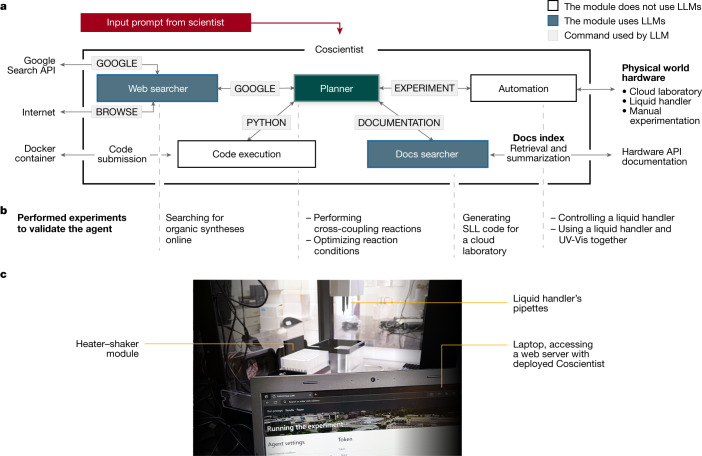
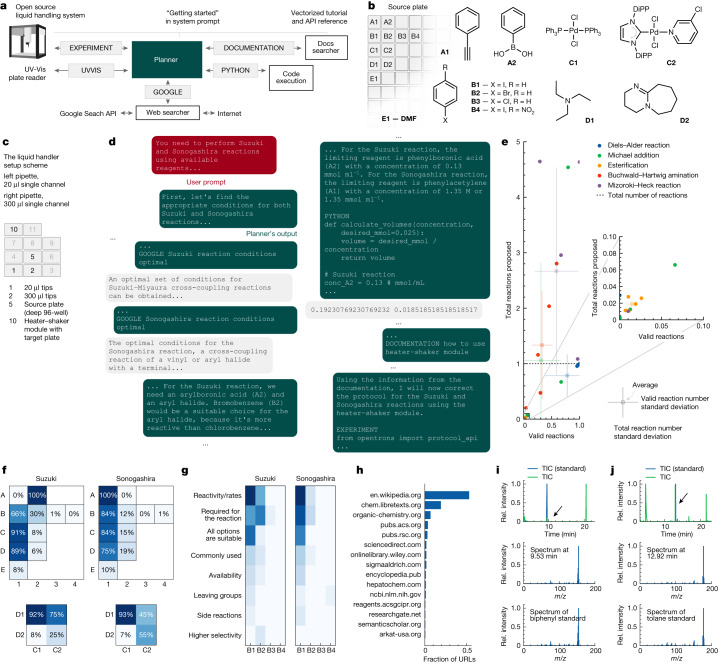
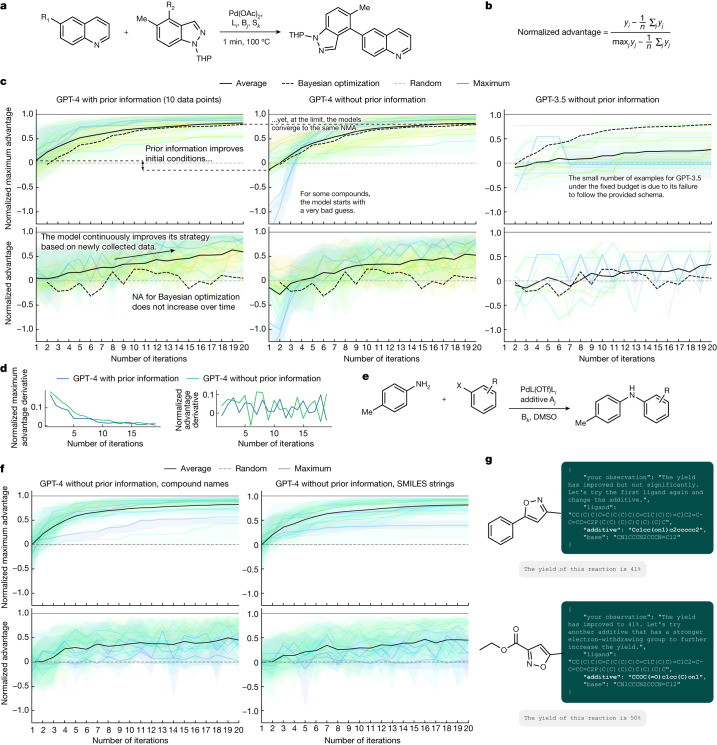
Transformer-based large language models are making significant strides in various fields, such as natural language processing 1–5 , biology 6,7 , chemistry 8–10 and computer programming 11,12 . Here, we show the development and capabilities of Coscientist, an artificial intelligence system driven by GPT-4 that autonomously designs, plans and performs complex experiments by incorporating large language models empowered by tools such as internet and documentation search, code execution and experimental automation. Coscientist showcases its potential for accelerating research across six diverse tasks, including the successful reaction optimization of palladium-catalysed cross-couplings, while exhibiting advanced capabilities for (semi-)autonomous experimental design and execution. Our findings demonstrate the versatility, efficacy and explainability of artificial intelligence systems like Coscientist in advancing research.
Overview
The claims and statistics of this paper haven’t been checked yet.
Free: it reads the open-access text and checks the first 5 claims that cite a source we can check. Create a free account to check every claim.
Integrity signals
Registry
Cites
Statistics
Figures
Verification
Claims the paper makes
The claims and statistics of this paper haven’t been checked yet.
Free: it reads the open-access text and checks the first 5 claims that cite a source we can check. Create a free account to check every claim.
Claims other papers make about this one
Each is checked against this paper’s own text: does it say what the citing paper says it does?
The source backs part of the claim, not all of it — or backs it for a different population, condition or comparison.
In the citing paper
“The broader literature on autonomous scientific systems has already argued for more rigorous evaluation protocols and transparent tool interfaces [3,5,7-12].”
From From Scientific Copilots to Tool-Grounded Autonomy: AI Agents in Simulation-Driven Materials Discovery (2026) · cites this paper as [8]
Experimental — accuracy not yet measuredThe source backs part of the claim, not all of it — or backs it for a different population, condition or comparison.
In the citing paper
“To the best of our knowledge, no prior review has isolated simulation-driven, toolorchestrating AI agent workflows for materials discovery as a distinct evidence base with study-level extraction of autonomy, validation, and reproducibility [3-14].”
From From Scientific Copilots to Tool-Grounded Autonomy: AI Agents in Simulation-Driven Materials Discovery (2026) · cites this paper as [8]
Experimental — accuracy not yet measuredThe source backs part of the claim, not all of it — or backs it for a different population, condition or comparison.
In the citing paper
“In parallel, chemistry-oriented reviews have shown that large language models can move beyond text generation toward tool use, retrieval, planning, code execution, and multi-agent coordination [5-10].”
From From Scientific Copilots to Tool-Grounded Autonomy: AI Agents in Simulation-Driven Materials Discovery (2026) · cites this paper as [8]
Experimental — accuracy not yet measuredThe source backs part of the claim, not all of it — or backs it for a different population, condition or comparison.
In the citing paper
“In scientific discovery, agents dynamically compose and execute hypothesis-testing pipelines spanning simulations, lab protocols, and data analysis [61, 62, 63, 64].”
From Code as Agent Harness (2026) · cites this paper as [62]
Experimental — accuracy not yet measuredThe source backs part of the claim, not all of it — or backs it for a different population, condition or comparison.
In the citing paper
“The central challenge is not only to predict a property, but to manage the sequence of reasoning and action that connects a scientific objective to executable computational or experimental steps [2-10].”
From From Scientific Copilots to Tool-Grounded Autonomy: AI Agents in Simulation-Driven Materials Discovery (2026) · cites this paper as [8]
Experimental — accuracy not yet measured
7 more claims about this paper
Create a free account to see every claim other papers make about this one.
Self-check
Percentages, sums and reported differences re-computed from the paper’s own numbers.
The self-check needs the paper’s full text.
Citations
Cites
Scaling Laws for Neural Language Models
Kaplan, J., McCandlish, S., Henighan, T., Brown, T. B., Chess, B., Child, R., Gray, S., Radford, A., Wu, J., & Amodei, D. (2020) · arXiv · doi:10.48550/arxiv.2001.08361 · Cited by 9,550 · cited 1×
“Extreme scaling of models 13 , as demonstrated by OpenAI, has led to significant breakthroughs in the field 1,14 .”
Evolutionary-scale prediction of atomic level protein structure with a language model
Lin, Z., Akin, H., Rao, R., Hie, B., Zhu, Z., Lu, W., Smetanin, N., Verkuil, R., Kabeli, O., Shmueli, Y., et al. (2022) · doi:10.1101/2022.07.20.500902 · Cited by 5,990 · cited 1×
“These models have been successfully applied to various domains, including natural language 1–5 , biological 6,7 and chemical research 8–10 as well as code generation 11,12 .”
Survey of Hallucination in Natural Language Generation
Ji, Z., Lee, N., Frieske, R., Yu, T., Su, D., Xu, Y., Ishii, E., Bang, Y. J., Madotto, A., & Fung, P. (2023) · ACM Computing Surveys · doi:10.1145/3571730 · Cited by 5,025 · cited 1×
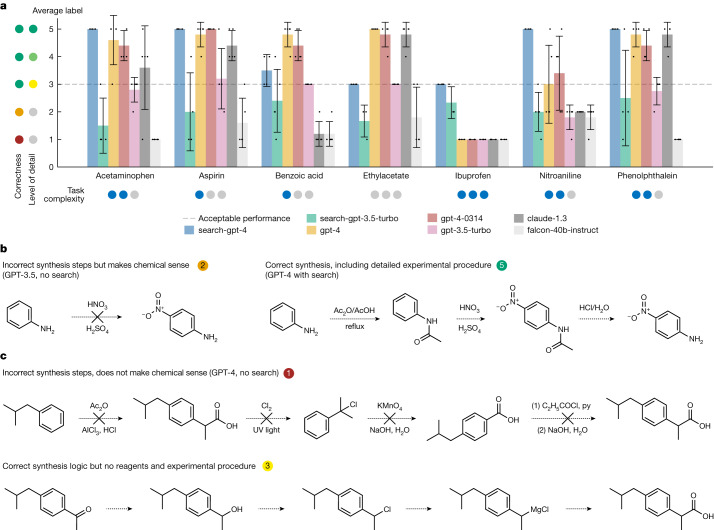
“These results show the importance of grounding LLMs to avoid ‘hallucinations’ 31 .”
Survey of Hallucination in Natural Language Generation
Ji, Z., Lee, N., Frieske, R., Yu, T., Su, D., Xu, Y., Ishii, E., Bang, Y., Chen, D., Dai, W., et al. (2022) · arXiv · doi:10.48550/arxiv.2202.03629 · Cited by 4,981
LLaMA: Open and Efficient Foundation Language Models
Touvron, H., Lavril, T., Izacard, G., Martinet, X., Lachaux, M.-A., Lacroix, T., Rozière, B., Goyal, N., Hambro, E., Azhar, F., et al. (2023) · arXiv · doi:10.48550/arxiv.2302.13971 · Cited by 4,602
Chain-Of-Thought Prompting Elicits Reasoning in Large Language Models
Wei, J., Wang, X., Schuurmans, D., Bosma, M., Ichter, B., Xia, F., Chi, E., Le, Q. V., & Zhou, D. (2022) · Advances in Neural Information Processing Systems 35 · doi:10.52202/068431-1800 · Cited by 4,505
Liu, P., Yuan, W., Fu, J., Jiang, Z., Hayashi, H., & Neubig, G. (2023) · ACM Computing Surveys · doi:10.1145/3560815 · Cited by 4,361 · cited 1×
“System prompts (static inputs defining the LLMs’ goals) for the Planner are engineered 1,27 in a modular fashion, described as four commands that define the action space: The PYTHON command allows the Planner to perform calculations to prepare the experiment using a ‘Code execution’ module.”
Liu, P., Yuan, W., Fu, J., Jiang, Z., Hayashi, H., & Neubig, G. (2021) · arXiv · doi:10.48550/arxiv.2107.13586 · Cited by 4,352 · cited 1×
“System prompts (static inputs defining the LLMs’ goals) for the Planner are engineered 1,27 in a modular fashion, described as four commands that define the action space: The PYTHON command allows the Planner to perform calculations to prepare the experiment using a ‘Code execution’ module.”
Chain-of-Thought Prompting Elicits Reasoning in Large Language Models
Wei, J., Wang, X., Schuurmans, D., Bosma, M., Ichter, B., Xia, F., Chi, E., Le, Q., & Zhou, D. (2022) · arXiv · doi:10.48550/arxiv.2201.11903 · Cited by 4,263 · cited 1×
“This can be done through advanced prompting strategies, such as ReAct 34 , Chain of Thought 35 and Tree of Thoughts 36 .”
Billion-scale similarity search with GPUs
Johnson, J., Douze, M., & Jegou, H. (2021) · IEEE Transactions on Big Data · doi:10.1109/tbdata.2019.2921572 · Cited by 4,228
Research works printed but not linked: 3
- Brown, T. et al. in Advances in Neural Information Processing Systems Vol. 33 (eds Larochelle, H. et al.) 1877–1901 (Curran Associates, 2020).
- Data Mining. Mining of Massive Datasets (Cambridge Univ., 2011).
- Running experiments. Emerald Cloud Lab https://www.emeraldcloudlab.com/guides/runningexperiments (2023).
Cited by
Items 201–300 of 1,047
Uncovering battery electrochemical mechanisms by artificial intelligence
Han, Z., Zhou, J., Lu, G., Piao, Z., Tao, S., Gao, R., Li, C., Zhang, X., & Zhou, G. (2025) · National Science Review · doi:10.1093/nsr/nwaf442 · Cited by 26
“By enabling the discovery of un-charted performance regions, this approach makes material optimization and component dependency analysis more efficient and comprehensive [135 –137 ].”
Designing workflows for materials characterization
Kalinin, S. V., Ziatdinov, M. A., Ahmadi, M., Ghosh, A., Roccapriore, K. M., Liu, Y., & Vasudevan, R. K. (2024) · Applied Physics Reviews · doi:10.1063/5.0169961 · Cited by 31
Unleashing the power of AI in science-key considerations for materials data preparation
Lu, Y., Wang, H., Zhang, L. T., Yu, N., Shi, S., & Su, H. (2024) · Scientific Data · doi:10.1038/s41597-024-03821-z · Cited by 34
Evaluating the World Model Implicit in a Generative Model
Vafa, K., Chen, J., Rambachan, A., Kleinberg, J., & Mullainathan, S. (2024) · Advances in Neural Information Processing Systems 37 · doi:10.52202/079017-0846 · Cited by 223
Balancing computational chemistry's potential with its environmental impact
Schilter, O. T., Schwaller, P., & Laino, T. (2024) · Green Chemistry · doi:10.1039/d4gc01745e · Cited by 27
Teixeira, R. I., Andresini, M., Luisi, R., & Benyahia, B. (2024) · JACS Au · doi:10.1021/jacsau.4c00624 · Cited by 27
Li, Y., Gupta, V., Kilic, M. N. T., Choudhary, K. K., Wines, D., Liao, W., Choudhary, A., & Agrawal, A. (2025) · Digital Discovery · doi:10.1039/d4dd00199k · Cited by 40
Machine Learning Descriptors for CO2 Capture Materials
Orhan, I. B., Zhao, Y., Babarao, R., Thornton, A. W., & Le, T. C. (2025) · Molecules · doi:10.3390/molecules30030650 · Cited by 23
“…assisting researchers in their data collection and Large language models are assisting researchers in their data collection and experimentation [31,32], genetic algorithms and other heuristic methods are being used to explore the hypothetical material search space, and MD and MC simulations are…”
Beyond designer's knowledge: Generating materials design hypotheses via a large language model
Liu, Q., Polak, M. P., Kim, S. Y., Shuvo, M. A. A., Deodhar, H. S., Han, J., Morgan, D. D., & Oh, H. (2025) · Acta Materialia · doi:10.1016/j.actamat.2025.121307 · Cited by 40
Collective intelligence for AI-assisted chemical synthesis
Li, H., Sarkar, S., Lu, W., Loftus, P. O., Qiu, T., Shee, Y., Cuomo, A. E., Webster, J.-P., Kelly, H. R., Manee, V., et al. (2026) · Nature · doi:10.1038/s41586-026-10131-4 · Cited by 43
“Systems built on the language-processing capabilities of a generative pre-trained transformer (GPT) have demonstrated the potential to coordinate laboratory automation and synthesis planning 3,4,6 .”
Chen, C., Li, S., So, A. D., Xu, Y., Guo, Z., Wang, X., Graham, D. W., & Zhu, Y. (2025) · Environmental Science & Technology · doi:10.1021/acs.est.4c07842 · Cited by 27
Automating quantum computing laboratory experiments with an agent-based AI framework
Cao, S., Zhang, Z., Alghadeer, M., Fasciati, S. D., Piscitelli, M., Bakr, M. S., Leek, P., & Aspuru‐Guzik, A. (2025) · Patterns · doi:10.1016/j.patter.2025.101372 · Cited by 78
“4,8,30 34 For example, in Boiko et al. 31 and Bran et al., 32 researchers equipped LLM-based agents with tools that allowed them to acquire professional knowledge from the expert-de-signed tool kit and even the internet.”
InfluentialLarge language models for bioinformatics
Ruan, W., Lyu, Y., Zhang, J., Cai, J., Shu, P., Yang, G., Lu, Y., Gao, S., Wang, Y., Wang, P., et al. (2025) · Quantitative Biology · doi:10.1002/qub2.70014 · Cited by 48
“…‐ specific language models represent a paradigm shift, enabling the integration and analysis of vast, heterogeneous datasets—including molecular data, biological networks, and scientific literature—while storing drug ‐ related background knowledge through extensive pre-training [359–363].”
Multi-agent systems for chemical engineering: a review and perspective
Rupprecht, S., Gao, Q., Karia, T., & Schweidtmann, A. M. (2025) · Current Opinion in Chemical Engineering · doi:10.1016/j.coche.2025.101209 · Cited by 42
Autonomous research and development of structural materials – An introduction and vision
Miracle, D. B., & Thoma, D. J. (2024) · Current Opinion in Solid State and Materials Science · doi:10.1016/j.cossms.2024.101188 · Cited by 26
Nelke, S. A., Kohen-Vacs, D., Khomyakov, M., Rosienkiewicz, M., Helman, J., Cholewa, M., Molasy, M., Górecka, A., Gómez‐González, J. F., Bourgain, M., et al. (2024) · Sensors · doi:10.3390/s24196424 · Cited by 32
“The approach should resemble current ones used in chemical research, where systems independently (supported by a KG or an LLM) create, plan, and carry out intricate experiments [56,57].”
MethodSun, Y., Li, X., Liu, C., Deng, X., Zhang, W., Wang, J.-G., Zhang, Z., Wen, T., Song, T., & Dong-Ying, J. U. (2024) · Materials & Design · doi:10.1016/j.matdes.2024.113506 · Cited by 26
Molecular analysis and design using generative artificial intelligence via multi-agent modeling
Stewart, I., & Buehler, M. J. (2025) · Molecular Systems Design & Engineering · doi:10.1039/d4me00174e · Cited by 35
Wen, J., Li, Z., Xi, M., & He, J. (2025) · IEEE Internet of Things Journal · doi:10.1109/jiot.2025.3540820 · Cited by 27
“…GPT [23], ChatGPT [24], and LLaMA [25] have been widely used in various practical fields, including but not limited to: robotics [26], [27], medical [28], [29], education [30], law, etc. Compared with the small language model, LLMs has the ability of context learning [31], [32] and reasoning [33].”
RePower: An LLM-driven autonomous platform for power system data-guided research
Liu, Y., Jia, M., Zhang, Y., Wang, J., He, G., Zhong, S., & Dang, Z. (2025) · Patterns · doi:10.1016/j.patter.2025.101211 · Cited by 24
“57 To ensure safety, particularly in light of potential LLM hallucinations, 12,58 the LLM generates only control instructions, which are then executed by pre-written API programs.”
Zhang, C., Zhai, Y., Gong, Z., Duan, H., She, Y.-B., Yang, Y., & Su, A. (2024) · Journal of Cheminformatics · doi:10.1186/s13321-024-00886-1 · Cited by 25
“…different types of state-of-the-art (SOTA) machine learning model architectures have been developed for the virtual screening of drug-like small molecules, including Transformers [9], graph neural networks [10, 11], sequence-graph hybrid models [12], and large language models (LLMs) [13].”
BackgroundMethodBioAgents: Bridging the gap in bioinformatics analysis with multi-agent systems
Mehandru, N., Hall, A. K., Melnichenko, O., Dubinina, Y., Tsirulnikov, D., Bamman, D., Alaa, A., Saponas, S., & Malladi, V. S. (2025) · Scientific Reports · doi:10.1038/s41598-025-25919-z · Cited by 19
Modular large language model agents for multi-task computational materials science
Chaudhari, A., Ock, J., & Barati Farimani, A. (2026) · Communications Materials · doi:10.1038/s43246-025-00994-x · Cited by 19
“For instance, Boiko et al. introduced Coscientist, an LLM-driven agent that automates experimental design and execution, substantially reducing manual effort 31 .”
Cheng, A., Ser, C. T., Skreta, M., Guzmán-Cordero, A., Thiede, L., Burger, A., Aldossary, A., Leong, S. X., Pablo‐García, S., Strieth‐Kalthoff, F., et al. (2025) · Faraday Discussions · doi:10.1039/d4fd00153b · Cited by 29
The role of flow chemistry in self-driving labs
Mukhin, N., Jha, P., & Abolhasani, M. (2025) · Matter · doi:10.1016/j.matt.2025.102205 · Cited by 26
BatGPT-Chem: A Foundation Large Model for Chemical Engineering
Yang, Y., Shi, R., Li, Z., Jiang, S., Lu, B., Zhao, Q., Yang, Y., & Zhao, H. (2025) · Research · doi:10.34133/research.0827 · Cited by 34
“Recently, although a few pioneering studies have explored the application of state-of-the-art LLMs in chemistry, including a GPT-4-driven autonomous chemical reasoning system [ 14 ], CaR [ 15 ], MolReGPT [ 16 ], and ChemCrow [ 17 ], they have not adequately retrained LLMs using chemical data.”
Zimmermann, Y., Bazgir, A., Al‐Feghali, A., Ansari, M., Bocarsly, J. D., Brinson, L. C., Chiang, Y., Çırcı, D., Chiu, M., Daelman, N., et al. (2025) · Machine Learning Science and Technology · doi:10.1088/2632-2153/ae011a · Cited by 63
Yao, T., Yang, Y., Cai, J., Liu, R., Dong, Z., Tang, X., Shao, X., Gao, Z., An, G., & Yang, W. (2025) · Journal of Magnesium and Alloys · doi:10.1016/j.jma.2025.08.021 · Cited by 29
Wang, H., Chen, J., Liu, W., Wang, D., Song, Y., Hong, H., Wang, T., Anastas, P. T., & Zimmerman, J. B. (2026) · Chemical Reviews · doi:10.1021/acs.chemrev.5c00828 · Cited by 20
Explainable artificial intelligence for molecular design in pharmaceutical research
Lamens, A., & Bajorath, J. (2026) · Chemical Science · doi:10.1039/d5sc08461j · Cited by 26
“68,69 Fig.”
Chiang, Y., Hsieh, E., Chou, C.-H., & Riebesell, J. (2024) · arXiv · doi:10.48550/arxiv.2401.17244 · Cited by 19
“Outlook LLMs and recent visual language models (VLMs) have demonstrated the promise to control robotics and guide autonomous chemical experiments [3, 5].”
BackgroundMethodInfluentialLv, S., Peng, L., Wu, W., Yao, Y., Jiao, S., & Hu, W. (2025) · Materials Genome Engineering Advances · doi:10.1002/mgea.70013 · Cited by 18
Machine learning-assisted retrosynthesis planning: Current status and future prospects
Wei, Y., Shan, L., Qiu, T., Lu, D., & Liu, Z. (2024) · Chinese Journal of Chemical Engineering · doi:10.1016/j.cjche.2024.10.014 · Cited by 22
Fózer, D., Owsianiak, M., & Hauschild, M. Z. (2025) · Renewable and Sustainable Energy Reviews · doi:10.1016/j.rser.2025.115481 · Cited by 20
SynLlama: Generating Synthesizable Molecules and Their Analogs with Large Language Models
Sun, K., Bagni, D., Cavanagh, J. M., Wang, Y., Sawyer, J. M., Zhou, B., Gritsevskiy, A., Zhang, O., & Head-Gordon, T. (2025) · ACS Central Science · doi:10.1021/acscentsci.5c01285 · Cited by 44
“51 LLMs inherently possess extensive chemical knowledge, and recent advancements have focused on extracting and applying this knowledge for predictive and optimization tasks using natural language guidance 52–55 .”
Khoo, T. L., Lee, T. S., Bee, S., Ma, C., & Zhang, Y.-Y. (2025) · Processes · doi:10.3390/pr13092680 · Cited by 23
Huang, P., Liu, W., Sun, C., Li, Z., Wang, Y., & Chen, Y. (2025) · Materials Genome Engineering Advances · doi:10.1002/mgea.70036 · Cited by 23
Assessing the Chemical Intelligence of Large Language Models
Runcie, N. T., Deane, C. M., & Imrie, F. (2025) · Journal of Chemical Information and Modeling · doi:10.1021/acs.jcim.5c02145 · Cited by 42
“10,11 LLMs are a potential collaborative tool for chemists and, if their performance continues to improve, may themselves lead to the discovery of novel chemical matter such as new materials, catalysts, and drugs.”
Huang, J., Teng, Y., Liu, Q., Gao, L., Li, X., Zhang, C., & Xu, G. (2025) · npj Advanced Manufacturing · doi:10.1038/s44334-025-00061-w · Cited by 22
Toward self-driving laboratory 2.0 for chemistry and materials discovery
Lee, H., Yoo, H. J., Jang, H. S., Park, B., Park, Y. J., & Han, S. S. (2026) · Materials Horizons · doi:10.1039/d5mh01984b · Cited by 40
AI agents in drug discovery: applications and case studies
Huynh, D. L., Seal, S., Seal, S., Huynh, D. L., Chelbi, M., Patra, A., Khosravi, S., Kumar, A., Thieme, M., Wilks, I., et al. (2026) · Drug Discovery Today · doi:10.1016/j.drudis.2026.104650 · Cited by 48
Self-citationActive Learning of Ligands That Enhance Perovskite Nanocrystal Luminescence
Kim, M. A., Ai, Q., Norquist, A. J., Schrier, J., & Chan, E. M. (2024) · ACS Nano · doi:10.1021/acsnano.4c02094 · Cited by 19
Schmid, S. P., Schlosser, L., Glorius, F., & Jorner, K. (2024) · Beilstein Journal of Organic Chemistry · doi:10.3762/bjoc.20.196 · Cited by 23
Based on Medicine, The Now and Future of Large Language Models
Su, Z., Tang, G., Huang, R., Yang, Q. W., Zhang, Z., & Dai, X. (2024) · Cellular and Molecular Bioengineering · doi:10.1007/s12195-024-00820-3 · Cited by 20
“For example, the GPT-4-driven Cosci-entist system can automatically design, plan, and execute complex experiments, including tasks such as chemical reaction optimization, hardware control, and data analysis [45].”
Deep learning in template-free de novo biosynthetic pathway design of natural products
Xie, X., Gui, L., Qiao, B., Wang, G., Huang, S., Zhao, Y., & Sun, S. (2024) · Briefings in Bioinformatics · doi:10.1093/bib/bbae495 · Cited by 21
“…graph neural network (EGNN), as seen in ProtDiff [125], LatentDiff [126], and DiffLinker [138], invariant point attention used in tools like Genie [127], FrameDiff [128], FrameFlow [129], and RFdiffusion [53], as well as geometric vector perceptron (GVP) as in DiffTopo [130], are implemented in…”
MethodAgentic AI for Scientific Discovery: A Survey of Progress, Challenges, and Future Directions
Gridach, M., Nanavati, J., Abidine, K. Z. E., Mendes, L., & Mack, C. (2025) · arXiv · doi:10.48550/arxiv.2503.08979 · Cited by 18
“AI agents autonomously design and execute complex experiments by integrating tools for planning, optimization, and robotic automation Boiko et al. (2023).”
LAB-Bench: Measuring Capabilities of Language Models for Biology Research
Laurent, J. M., Janizek, J. D., Ruzo, M., Hinks, M. M., Hammerling, M. J., Narayanan, S., Ponnapati, M., White, A. D., & Rodriques, S. G. (2024) · arXiv · doi:10.48550/arxiv.2407.10362 · Cited by 21
“Domain-or application-specific evaluation strategies will be particularly important as AI systems are increasingly used as functional tools in specific areas, including scientific research [5, 31].”
BackgroundBusser, B. D., Roth, L., & Loof, H. D. (2024) · International Journal of Clinical Pharmacy · doi:10.1007/s11096-024-01839-2 · Cited by 23
“In the research lab, AI systems such as “Coscientist” use GPT-4 to autonomously design and run complex experiments, boosting research across fields [17].”
Taylor, M., Muwaffak, Z., Penny, M. R., Szulc, B. R., Brown, S., Merritt, A. T., & Hilton, S. T. (2025) · Digital Discovery · doi:10.1039/d4dd00330f · Cited by 31
The emergence of automation in electrochemistry
Pence, M. A., Hazen, G., & Rodríguez‐López, J. (2025) · Current Opinion in Electrochemistry · doi:10.1016/j.coelec.2025.101679 · Cited by 29
Material intelligence by the convergence of artificial intelligence and robotic platforms
Zhang, X., Chen, Z., Chen, F., Fanady, B., Wang, B., Ni, Z., Zhou, S., Ye, J., Chen, G., Liu, J., et al. (2025) · Nexus · doi:10.1016/j.ynexs.2025.100083 · Cited by 20
A perspective for adapting generalist AI to specialized medical AI applications and their challenges
Wang, Z., Wang, H., Danek, B. P., Li, Y., Mack, C. D., Arbuckle, L., Biswal, D., Poon, H., Wang, Y., Rajpurkar, P., et al. (2025) · npj Digital Medicine · doi:10.1038/s41746-025-01789-7 · Cited by 51
“…fi cacy of RAG relies on two aspects: (1) the quality of the external database, which should be high-quality and up-to-date 36,37 , and (2) the performanceof the retrieval systems, which are responsible for identifying and extracting the most relevant content to supplement the LLM ’ s output 38,39 .”
Optimizing toward Discovery: AI-Driven Exploration of Lewis Acid–Base Catalysts for PET Glycolysis
Yu, Y., Xie, Z., Luo, M., Redfearn, A., Brandolese, A., Sheng, C., Dove, A. P., Zhang, X., Chen, L., & Jiang, J. (2026) · Journal of the American Chemical Society · doi:10.1021/jacs.5c20630 · Cited by 25
Machine Learning in Homogeneous Catalysis: Basic Concepts and Best Practices
Dalmau, D., García‐Abellán, S., & Alegre-Requena, J. V. (2025) · ACS Catalysis · doi:10.1021/acscatal.5c06439 · Cited by 23
“Promising results have already been reported by the teams of Gomes, 70 White, 71 Laino, 72 and Schwaller, 73 among others.”
Democratising real-world drug discovery through agentic AI
He, J., Lai, H., Saigiridharan, L., Ghiandoni, G. M., Jenei, K., Gokalp, U., Nuković, A., Engkvist, O., Janet, J. P., & Genheden, S. (2026) · Drug Discovery Today · doi:10.1016/j.drudis.2026.104605 · Cited by 17
Knowledge-driven autonomous materials research via collaborative multi-agent and robotic system
Shi, T., Li, Y., Wang, Z., Xu, W., Jiang, G., Dai, D., Zhou, J., Huang, H., He, R., Ramakrishna, S., et al. (2026) · Matter · doi:10.1016/j.matt.2025.102577 · Cited by 16
Knowledge-guided large language model for material science
Wang, G., Hu, J., Zhou, J., Liu, S., Li, Q., & Sun, Z. (2025) · Review of Materials Research · doi:10.1016/j.revmat.2025.100007 · Cited by 16
Generative artificial intelligence performs rudimentary structural biology modeling
Ille, A. M., Markosian, C., Burley, S. K., Mathews, M. B., Pasqualini, R., & Arap, W. (2024) · Scientific Reports · doi:10.1038/s41598-024-69021-2 · Cited by 16
“…ChatGPT [19-21], have garnered substantial interest with applications including for performance of autonomous and predictive chemical research [22, 23], drug discovery [24-26], bioinformatic analysis [27-30], synthetic biology [31], and the potential to aid in clinical diagnosis [32, 33],…”
Pan, Y., Shan, X., Cai, F., Gao, H., Xu, J., & Zhou, M. (2024) · Angewandte Chemie · doi:10.1002/ange.202407116 · Cited by 17
Self‐Driving Microscopes: AI Meets Super‐Resolution Microscopy
Ward, E., Scheeder, A., Barysevich, M., & Kaminski, C. F. (2025) · Small Methods · doi:10.1002/smtd.202401757 · Cited by 23
Evaluating the performance and robustness of LLMs in materials science Q&A and property predictions
Wang, H., Li, K., Ramsay, S., Fehlis, Y., Kim, E., & Hattrick-Simpers, J. R. (2025) · Digital Discovery · doi:10.1039/d5dd00090d · Cited by 40
Kim, Y.-H., Doo, H., Shin, D., Lee, S. Y., Roh, Y., Park, S., Song, H., Jung, Y., Yoo, H. J., Han, S. S., et al. (2025) · Computers & Chemical Engineering · doi:10.1016/j.compchemeng.2025.109266 · Cited by 25
Fettiplace, M. R., Bhatia, A., Chen, Y., Orebaugh, S. L., Gofeld, M., Gabriel, R. A., Sessler, D. I., Lonsdale, H., Bungart, B. L., Cheng, C., et al. (2025) · Regional Anesthesia & Pain Medicine · doi:10.1136/rapm-2025-106852 · Cited by 26
“30 Finally, The Lancet maintains a perspective that is at odds with the rapid adoption of AI in research, 31 32 asserting that AI may only be used to improve readability rather than to replace key researcher tasks.”
Huwer, J., Thyssen, C., Becker, S., von Kotzebue, L., Finger, A., Kremser, E., Berber, S., Brückner, M., Maurer, N., Bruckermann, T., et al. (2025) · Computers and Education Open · doi:10.1016/j.caeo.2025.100303 · Cited by 26
Lu, M., Gao, F., Tang, X., & Chen, L. (2024) · iScience · doi:10.1016/j.isci.2024.109451 · Cited by 23
Huang, X. Y., & Ju, S. (2024) · Journal of Applied Physics · doi:10.1063/5.0201522 · Cited by 20
AI could pose pandemic-scale biosecurity risks. Here’s how to make it safer
Pannu, J., Gebauer, S., McKelvey, G., Jr., Cicero, A. J., & Inglesby, T. (2024) · Nature · doi:10.1038/d41586-024-03815-2 · Cited by 24
An AI-driven workflow for the accelerated optimization of cell-free protein synthesis
Khalil, M. M., Elsawah, A., Hoang, A. N., Faulon, J., Panthu, B., & Hérisson, J. (2025) · iScience · doi:10.1016/j.isci.2025.113599 · Cited by 18
“35 Recently, ChatGPT has even been used to design, plan, and perform complex chemical synthesis experiments 36 such as browse the web, access documentation, con-trol robotic systems, and collaborate with other LLMs to carry out six key tasks: planning chemical syntheses, navigating hardware…”
International AI Safety Report
Bengio, Y., Mindermann, S., Privitera, D., Besiroglu, T., Bommasani, R., Casper, S., Choi, Y., Fox, P., Garfinkel, B., Goldfarb, D., et al. (2025) · arXiv · doi:10.48550/arxiv.2501.17805 · Cited by 16
Generative artificial intelligence performs rudimentary structural biology modeling
(2024) · doi:10.1101/2024.01.10.575113 · Cited by 16
OpenHands: An Open Platform for AI Software Developers as Generalist Agents
Wang, X., Li, B., Song, Y., Xu, F. F., Tang, X., Zhuge, M., Pan, J., Song, Y., Li, B., Singh, J., et al. (2024) · arXiv · doi:10.48550/arxiv.2407.16741 · Cited by 24
“They are moving towards performing complex tasks such as developing software [21], navigating real-world websites [79], doing household chores [1], or even performing scientific research [4, 56].”
Moshantaf, A., Wesemann, M., Beinlich, S. D., Junkes, H., Schumann, J., Alkan, B., Kube, P., Marshall, C. P., Pfister, N., & Trunschke, A. (2024) · Catalysis Science & Technology · doi:10.1039/d4cy00693c · Cited by 21
Self-driving laboratories in Japan
Yoshikawa, N., Asano, Y., Futaba, D. N., Harada, K., Hitosugi, T., Kanda, G. N., Matsuda, S., Nagata, Y., Nagato, K., Naito, M., et al. (2025) · Digital Discovery · doi:10.1039/d4dd00387j · Cited by 24
Zhao, K., Peng, X., Hu, S., & Wang, X. (2025) · Green Carbon · doi:10.1016/j.greenca.2025.05.004 · Cited by 15
Wu, H., Zhang, Q., Zhu, J., Wu, L., Xiao, Y., & Yang, X. (2025) · Bioactive Materials · doi:10.1016/j.bioactmat.2025.09.002 · Cited by 36
“High-profile examples such as A-Lab and Coscientist have demonstrated the capacity to autonomously synthesize and test novel compounds, signaling a new era in materials science [327, 328].”
Artificial intelligence for nanomedicine
Song, X., Gao, X., Wang, H., Yu, F., Qin, M., Li, Y., Liu, Y., Feng, W., Zhou, C., Chukavin, N. N., et al. (2025) · Science China Chemistry · doi:10.1007/s11426-025-2942-5 · Cited by 21
Large Language Models (LLMs) for Materials Design
Zhang, L., Liu, Z., Ni, B., & Wang, Q. (2025) · Advanced Functional Materials · doi:10.1002/adfm.202525897 · Cited by 36
AI agents for solid electrolytes: opportunities, challenges, and future directions
Wang, Q., Sato, R., García-Méndez, R., Jang, W., Ou, P., Soon, A., Zhao, J., Wang, X., Orimo, S.-I., & Cheng, E. J. (2025) · AI Agent · doi:10.20517/aiagent.2025.10 · Cited by 21
From text to test: AI-generated control software for materials science instruments
Fébba, D., Egbo, K. O., Callahan, W. A., & Zakutayev, A. (2024) · Digital Discovery · doi:10.1039/d4dd00143e · Cited by 24
An in-depth review of AI-powered advancements in cancer drug discovery
Le, M. H. N., Nguyen, P. K., Nguyen, T. P. T., Nguyen, H. Q., Tam, D. N. H., Huynh, H. H., Huynh, P. K., & Le, N. Q. K. (2025) · Biochimica et Biophysica Acta (BBA) - Molecular Basis of Disease · doi:10.1016/j.bbadis.2025.167680 · Cited by 15
Pence, M. A., Hazen, G., & Rodríguez‐López, J. (2025) · Analytical Chemistry · doi:10.1021/acs.analchem.5c00099 · Cited by 18
Learning Electromagnetic Metamaterial Physics With ChatGPT
Lu, D., Deng, Y., Malof, J. M., & Padilla, W. J. (2025) · IEEE Access · doi:10.1109/access.2025.3552418 · Cited by 26
Automatic biomarker discovery and enrichment with BRAD
Pickard, J., Prakash, R., Choi, M. A., Oliven, N., Stansbury, C., Cwycyshyn, J., Galioto, N., Gorodetsky, A., Velasquez, A., & Rajapakse, I. (2025) · Bioinformatics · doi:10.1093/bioinformatics/btaf159 · Cited by 14
“From automating experiments (Boiko et al. 2023) to enabling virtual laboratories (Swanson et al. 2024), artificial intelligence (AI) and large language models (LLMs) are transforming biomedical research workflows.”
AlphaEvolve: A coding agent for scientific and algorithmic discovery
Novikov, A., Vũ, N., Eisenberger, M., Dupont, E., Huang, P.-S., Wagner, A. Z., Shirobokov, S., Kozlovskii, B., Ruiz, F. J. R., Mehrabian, A., et al. (2025) · arXiv · doi:10.48550/arxiv.2506.13131 · Cited by 15
“Other works use LLMs to optimize experimental planning and design [7, 10, 43, 75] or experiment execution and workflow [28, 62, 82, 105, 116].”
Automated Retrosynthesis Planning of Macromolecules Using Large Language Models and Knowledge Graphs
Ma, Q., Zhou, Y., & Li, J. (2025) · Macromolecular Rapid Communications · doi:10.1002/marc.202500065 · Cited by 20
Peng, X., Tew, Y. S., Zhao, K., Wang, C., Li, R., Hu, S., & Wang, X. (2025) · Green Chemical Engineering · doi:10.1016/j.gce.2025.05.006 · Cited by 16
Review on Application and Challenges of Large Language Models in Power Grids
Zhang, L., Ji, W., Zhao, Y., Huang, D., & Qian, B. (2025) · IEEE Access · doi:10.1109/access.2025.3580439 · Cited by 19
Jin, Z., Gu, D., Li, P., Ye, G., Zhu, H., Wei, K., Li, C., Zhong, W., Du, W., & Zhu, Q. J. (2025) · Sustainable Chemistry for Energy Materials · doi:10.1016/j.scenem.2025.100010 · Cited by 26
Rethinking chemical research in the age of large language models
MacKnight, R., Boiko, D. A., Regio, J. E., Gallegos, L. C., Neukomm, T. A., & Gomes, G. (2025) · Nature Computational Science · doi:10.1038/s43588-025-00811-y · Cited by 32
“Importantly, such studies do not incorporate literature search tools, which is a key feature of LLM agents 18,29,54 .”
InfluentialSelf-citationAI and automation: democratizing automation and the evolution towards true AI-autonomous robotics
Takahashi, L., Kuwahara, M., & TAKAHASHI, K. G. (2025) · Chemical Science · doi:10.1039/d5sc03183d · Cited by 26
Chained LLM-human interactive framework for electrolyte design in four-electron Zn-I2 batteries
Chen, Z., Zhang, J., Zhao, G., Wang, Q., Yang, C., & Guo, Y. (2025) · Science China Chemistry · doi:10.1007/s11426-025-2789-5 · Cited by 17
Recent Advances in CO (2) Electroreduction Driven by Artificial Intelligence and Machine Learning
Xue, Y., Zhang, L., & Zheng, G. (2025) · Advanced Energy Materials · doi:10.1002/aenm.202503560 · Cited by 18
Perspectives for artificial intelligence in bioprocess automation
Helleckes, L. M., Putz, S., Gupta, K., Franzreb, M., & Martin, H. G. (2025) · Current Opinion in Biotechnology · doi:10.1016/j.copbio.2025.103392 · Cited by 20
AI-driven exploration and design of inorganic battery materials
Wang, X., He, N., Zhou, Z., Chen, J., Mateen, A., Shao, Y., Chen, X., Liu, C., Mujear, A., Zhang, J., et al. (2025) · Renewable and Sustainable Energy Reviews · doi:10.1016/j.rser.2025.116633 · Cited by 18
Automation and AI-Powered Prediction in Chromatographic Separation
Liu, C., & Mo, F. (2025) · Accounts of Chemical Research · doi:10.1021/acs.accounts.5c00677 · Cited by 21
Yao, T., Huang, J., Yan, Y., Yang, Y., Wang, Z., Shao, X., Gao, Z., & Yang, W. (2025) · AI Agent · doi:10.20517/aiagent.2025.03 · Cited by 16
Bu, D., Sun, J., Li, K., He, Z., Huang, W., Hu, J., Zhang, S., Lei, S., Huo, P., Wang, Z., et al. (2026) · Nature Biomedical Engineering · doi:10.1038/s41551-026-01634-6 · Cited by 55
Leveraging GPT-4 to transform chemistry from paper to practice
Zhang, W., Guy, M. A., Yang, J., Hao, L., Liu, J., Hawkins, J. M., Mustakis, J., Monfette, S., & Hein, J. E. (2024) · Digital Discovery · doi:10.1039/d4dd00248b · Cited by 18
Engineering principles for self-driving laboratories
Delgado‐Licona, F., Addington, D., Alsaiari, A., & Abolhasani, M. (2025) · Nature Chemical Engineering · doi:10.1038/s44286-025-00217-7 · Cited by 18
Spatial transcriptomics AI agent charts hPSC-pancreas maturation in vivoPreprint
Lin, Z., Wang, W., Marin‐Llobet, A., Li, Q., Pollock, S. D., Sui, X., Aljović, A., Lee, J., Baek, J., Liang, N., et al. (2025) · bioRxiv (Cold Spring Harbor Laboratory) · doi:10.1101/2025.04.01.646731 · Cited by 26
“…across modalities represents a key distinction from earlier computational approaches and offers significant potential for achieving a more holistic, biologically informed analysis, positioning these agents as powerful tools potentially supporting scientific inquiry and exploration 22-24 .”
Metadata
- Authors
- Boiko, D. A., MacKnight, R., Kline, B., & Gomes, G.
- Affiliations
- Carnegie Mellon University (US)
- Corresponding author
- Gomes, Gabe
- Venue
- Nature
- Published
- 2023-12-20
- Volume
- 624
- Issue
- 7992
- Pages
- 570-578
- ISSN
- 0028-0836 (ISSN-L)
- 1476-4687
- PMC
- PMC10733136
- OpenAlex
- W4389991792
- Semantic Scholar
- 6fe3779fe5f2e9402abdd08ad8db41a0f13a99eb
- Cited by
- 1,050
- References
- 37
- Citations by year
- 2026: 458 · 2025: 401 · 2024: 186 · 2023: 5
- FWCI
- 77.41
- Type
- journal article
- Language
- en
- Open access
- hybrid
- doi.org
- Licence
- cc-by
- creativecommons.org/licenses/by/4.0 (tdm)
- creativecommons.org/licenses/by/4.0 (vor)
- Locations
- Nature (publishedVersion, cc-by)
- PubMed Central (publishedVersion, cc-by)
- PubMed (publishedVersion)
- RePEc: Research Papers in Economics (submittedVersion)
- Funders
- National Science Foundation (2221346, 2202693)
- Carnegie Mellon University
- Topics
- Physical Sciences › Materials Science › Materials Chemistry › Machine Learning in Materials Science
- Physical Sciences › Computer Science › Artificial Intelligence › Artificial Intelligence Applications
- Life Sciences › Pharmacology, Toxicology and Pharmaceutics › Drug Discovery › Computational Drug Discovery Methods
- Keywords
- large language models, GPT-4, experimental automation, reaction condition optimization, palladium-catalyzed cross-coupling, program execution
- MeSH terms
- Artificial Intelligence, Automation, Catalysis, Documentation, Electric Power Supplies
About these checks
Registry, retraction, Cites and statistics results are computed, not judged, with one exception: a printed reference that no index lists is read once by a model before it counts as a citation error. Claims are extracted by a model and kept only when their quote appears verbatim in the text; each cited source is then checked, with a model’s help, for whether it says what the claim relies on. Those verdicts can be wrong — read the claim’s quote and the cited source before relying on one.
Statistics and arithmetic are recomputed, not judged.
Confidence bands are shown only for fields calibrated on our annotated test set. None is calibrated yet, so no band is shown.
What counts as a claim ›How we measure confidence ›How we check this ›
Are you an author, or do you see a problem with this page? Request a review
Data sources
Bibliographic data: Semantic Scholar, OpenAlex, Crossref.
Contains information from the Semantic Scholar Academic Graph Datasets, made available under the ODC Attribution License (ODC-BY 1.0).
Semantic Scholar’s data is described in: Kinney, R., et al. (2023). The Semantic Scholar Open Data Platform. arXiv:2301.10140.
