

Autonomous chemical research with large language models
Open accessThe DOI matches its Crossref record; 47 of the 47 references it cites were found in a registry or an index.
Abstract
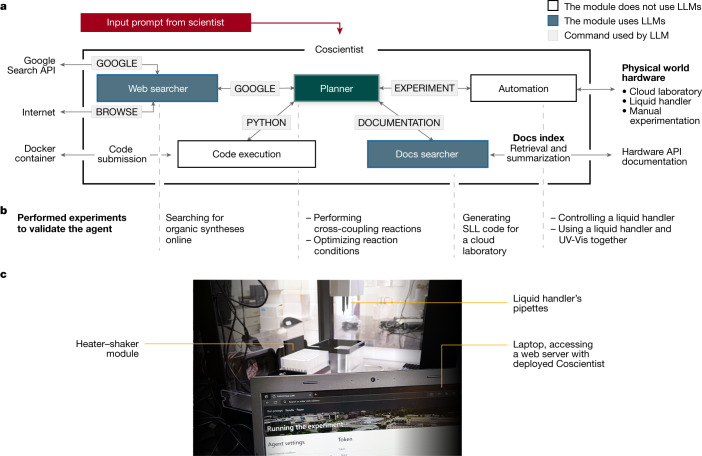
Transformer-based large language models are making significant strides in various fields, such as natural language processing 1–5 , biology 6,7 , chemistry 8–10 and computer programming 11,12 . Here, we show the development and capabilities of Coscientist, an artificial intelligence system driven by GPT-4 that autonomously designs, plans and performs complex experiments by incorporating large language models empowered by tools such as internet and documentation search, code execution and experimental automation. Coscientist showcases its potential for accelerating research across six diverse tasks, including the successful reaction optimization of palladium-catalysed cross-couplings, while exhibiting advanced capabilities for (semi-)autonomous experimental design and execution. Our findings demonstrate the versatility, efficacy and explainability of artificial intelligence systems like Coscientist in advancing research.
Overview
The claims and statistics of this paper haven’t been checked yet.
Free: it reads the open-access text and checks the first 5 claims that cite a source we can check. Create a free account to check every claim.
Integrity signals
Registry
Cites
Statistics
Figures
Verification
Claims the paper makes
The claims and statistics of this paper haven’t been checked yet.
Free: it reads the open-access text and checks the first 5 claims that cite a source we can check. Create a free account to check every claim.
Claims other papers make about this one
Each is checked against this paper’s own text: does it say what the citing paper says it does?
The source backs part of the claim, not all of it — or backs it for a different population, condition or comparison.
In the citing paper
“The broader literature on autonomous scientific systems has already argued for more rigorous evaluation protocols and transparent tool interfaces [3,5,7-12].”
From From Scientific Copilots to Tool-Grounded Autonomy: AI Agents in Simulation-Driven Materials Discovery (2026) · cites this paper as [8]
Experimental — accuracy not yet measuredThe source backs part of the claim, not all of it — or backs it for a different population, condition or comparison.
In the citing paper
“To the best of our knowledge, no prior review has isolated simulation-driven, toolorchestrating AI agent workflows for materials discovery as a distinct evidence base with study-level extraction of autonomy, validation, and reproducibility [3-14].”
From From Scientific Copilots to Tool-Grounded Autonomy: AI Agents in Simulation-Driven Materials Discovery (2026) · cites this paper as [8]
Experimental — accuracy not yet measuredThe source backs part of the claim, not all of it — or backs it for a different population, condition or comparison.
In the citing paper
“In parallel, chemistry-oriented reviews have shown that large language models can move beyond text generation toward tool use, retrieval, planning, code execution, and multi-agent coordination [5-10].”
From From Scientific Copilots to Tool-Grounded Autonomy: AI Agents in Simulation-Driven Materials Discovery (2026) · cites this paper as [8]
Experimental — accuracy not yet measuredThe source backs part of the claim, not all of it — or backs it for a different population, condition or comparison.
In the citing paper
“In scientific discovery, agents dynamically compose and execute hypothesis-testing pipelines spanning simulations, lab protocols, and data analysis [61, 62, 63, 64].”
From Code as Agent Harness (2026) · cites this paper as [62]
Experimental — accuracy not yet measuredThe source backs part of the claim, not all of it — or backs it for a different population, condition or comparison.
In the citing paper
“The central challenge is not only to predict a property, but to manage the sequence of reasoning and action that connects a scientific objective to executable computational or experimental steps [2-10].”
From From Scientific Copilots to Tool-Grounded Autonomy: AI Agents in Simulation-Driven Materials Discovery (2026) · cites this paper as [8]
Experimental — accuracy not yet measured
7 more claims about this paper
Create a free account to see every claim other papers make about this one.
Self-check
Percentages, sums and reported differences re-computed from the paper’s own numbers.
The self-check needs the paper’s full text.
Citations
Cites
Scaling Laws for Neural Language Models
Kaplan, J., McCandlish, S., Henighan, T., Brown, T. B., Chess, B., Child, R., Gray, S., Radford, A., Wu, J., & Amodei, D. (2020) · arXiv · doi:10.48550/arxiv.2001.08361 · Cited by 9,550 · cited 1×
“Extreme scaling of models 13 , as demonstrated by OpenAI, has led to significant breakthroughs in the field 1,14 .”
Evolutionary-scale prediction of atomic level protein structure with a language model
Lin, Z., Akin, H., Rao, R., Hie, B., Zhu, Z., Lu, W., Smetanin, N., Verkuil, R., Kabeli, O., Shmueli, Y., et al. (2022) · doi:10.1101/2022.07.20.500902 · Cited by 5,990 · cited 1×
“These models have been successfully applied to various domains, including natural language 1–5 , biological 6,7 and chemical research 8–10 as well as code generation 11,12 .”
Survey of Hallucination in Natural Language Generation
Ji, Z., Lee, N., Frieske, R., Yu, T., Su, D., Xu, Y., Ishii, E., Bang, Y. J., Madotto, A., & Fung, P. (2023) · ACM Computing Surveys · doi:10.1145/3571730 · Cited by 5,025 · cited 1×
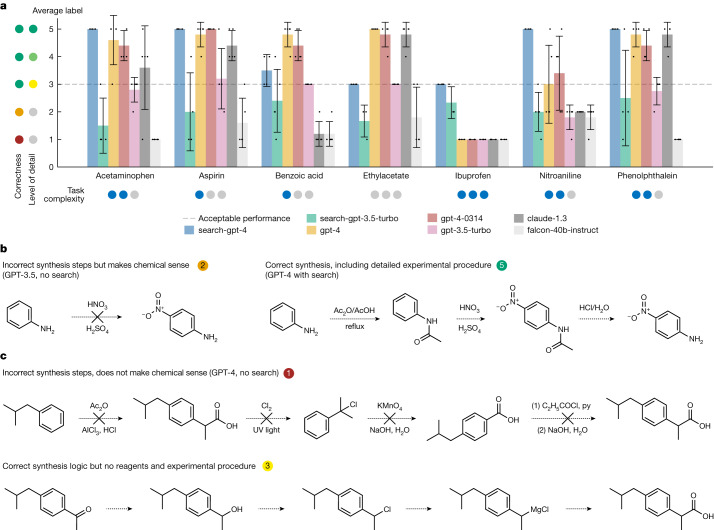
“These results show the importance of grounding LLMs to avoid ‘hallucinations’ 31 .”
Survey of Hallucination in Natural Language Generation
Ji, Z., Lee, N., Frieske, R., Yu, T., Su, D., Xu, Y., Ishii, E., Bang, Y., Chen, D., Dai, W., et al. (2022) · arXiv · doi:10.48550/arxiv.2202.03629 · Cited by 4,981
LLaMA: Open and Efficient Foundation Language Models
Touvron, H., Lavril, T., Izacard, G., Martinet, X., Lachaux, M.-A., Lacroix, T., Rozière, B., Goyal, N., Hambro, E., Azhar, F., et al. (2023) · arXiv · doi:10.48550/arxiv.2302.13971 · Cited by 4,602
Chain-Of-Thought Prompting Elicits Reasoning in Large Language Models
Wei, J., Wang, X., Schuurmans, D., Bosma, M., Ichter, B., Xia, F., Chi, E., Le, Q. V., & Zhou, D. (2022) · Advances in Neural Information Processing Systems 35 · doi:10.52202/068431-1800 · Cited by 4,505
Liu, P., Yuan, W., Fu, J., Jiang, Z., Hayashi, H., & Neubig, G. (2023) · ACM Computing Surveys · doi:10.1145/3560815 · Cited by 4,361 · cited 1×
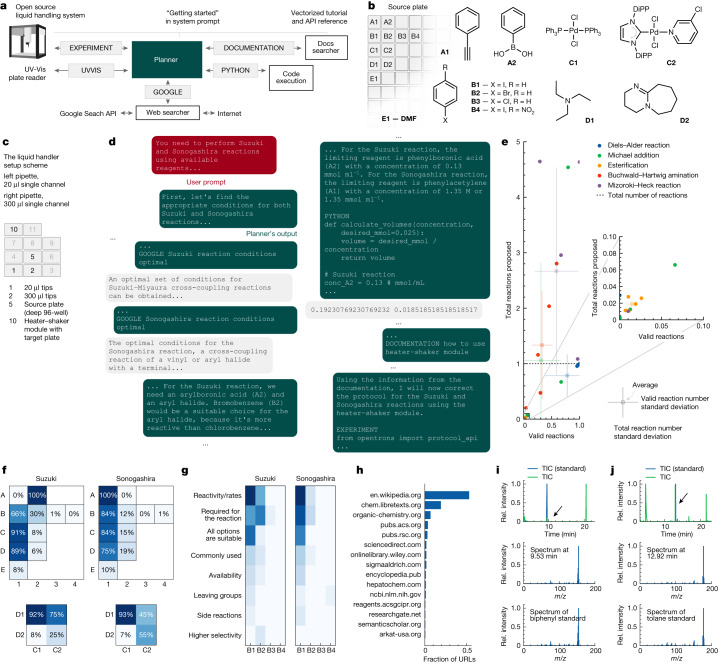
“System prompts (static inputs defining the LLMs’ goals) for the Planner are engineered 1,27 in a modular fashion, described as four commands that define the action space: The PYTHON command allows the Planner to perform calculations to prepare the experiment using a ‘Code execution’ module.”
Liu, P., Yuan, W., Fu, J., Jiang, Z., Hayashi, H., & Neubig, G. (2021) · arXiv · doi:10.48550/arxiv.2107.13586 · Cited by 4,352 · cited 1×
“System prompts (static inputs defining the LLMs’ goals) for the Planner are engineered 1,27 in a modular fashion, described as four commands that define the action space: The PYTHON command allows the Planner to perform calculations to prepare the experiment using a ‘Code execution’ module.”
Chain-of-Thought Prompting Elicits Reasoning in Large Language Models
Wei, J., Wang, X., Schuurmans, D., Bosma, M., Ichter, B., Xia, F., Chi, E., Le, Q., & Zhou, D. (2022) · arXiv · doi:10.48550/arxiv.2201.11903 · Cited by 4,263 · cited 1×
“This can be done through advanced prompting strategies, such as ReAct 34 , Chain of Thought 35 and Tree of Thoughts 36 .”
Billion-scale similarity search with GPUs
Johnson, J., Douze, M., & Jegou, H. (2021) · IEEE Transactions on Big Data · doi:10.1109/tbdata.2019.2921572 · Cited by 4,228
Research works printed but not linked: 3
- Brown, T. et al. in Advances in Neural Information Processing Systems Vol. 33 (eds Larochelle, H. et al.) 1877–1901 (Curran Associates, 2020).
- Data Mining. Mining of Massive Datasets (Cambridge Univ., 2011).
- Running experiments. Emerald Cloud Lab https://www.emeraldcloudlab.com/guides/runningexperiments (2023).
Cited by
Items 601–700 of 1,047
Revealing the intrinsic ethical vulnerability of aligned large language models
Lian, J., Jianhong, P., Wang, L., Wang, Y., Wang, X., Lu, Y., Mei, S., & Chau, L. (2026) · Nature Communications · doi:10.1038/s41467-026-70917-y · Cited by 11
“The rapid evolution of large language models (LLMs) [1–6] has positioned them as cornerstones in the pursuit of artificial general intelligence (AGI) [7, 8].”
Inside the ‘self-driving’ lab revolution
Brazil, R. (2026) · Nature · doi:10.1038/d41586-026-00974-2 · Cited by 2
Jiang, C., Wang, X., Hui, L. I., Prasad, P. N., & Chen, G. (2026) · PhotoniX Life · doi:10.3724/pxlife.2025-0008 · Cited by 2
EcoRxAgent: an AI agent for generating economically substitutable prescriptions
Li, C., Lai, P., Zhang, N., Wen, C., Cai, H., Zheng, G., Wu, Z., Liang, L., Zeng, G., Yang, T., et al. (2026) · npj Digital Medicine · doi:10.1038/s41746-026-02612-7 · Cited by 4
Cheng, F., Li, Q., He, L., Li, H., Brooks, B. W., Yu, Z., & You, J. (2026) · Environmental Science & Technology · doi:10.1021/acs.est.6c01342 · Cited by 4
Zhuang, W., Lv, X., Wu, X., Chen, C., Xiao, W., Wang, J., Jiang, C., Yao, J., Bao, J., & Li, X. (2026) · Advanced Engineering Informatics · doi:10.1016/j.aei.2026.104695 · Cited by 2
Mittal, P., Sharma, S., Solanki, S., Kumar, L., Haripriya, R., & Beg, R. (2026) · Discover Artificial Intelligence · doi:10.1007/s44163-026-01279-z · Cited by 4
“Boiko et al. [11] demonstrate autonomous chemical discovery pipelines, and Zhang et al. [12] explore personalized vehicular communication.”
Cai, R., Gao, T., Fang, F., & Liu, Y. (2026) · Chemistry of Materials · doi:10.1021/acs.chemmater.5c03513 · Cited by 3
Yan, J., & Ji, S. (2026) · Computers & Industrial Engineering · doi:10.1016/j.cie.2026.112079 · Cited by 4
Gadekallu, T. R., Zhao, Y., Wen, Z., Bhattacharya, P., Xia, Y., Cai, J., Zeydan, E., Fang, K., & Feng, H. (2026) · IEEE Internet of Things Journal · doi:10.1109/jiot.2026.3703862 · Cited by 4
“Beyond general automation, agentic workflows have already demonstrated transformative potential in high-stakes domains, such as medicine [7] and scientific discovery, where systems can autonomously design and execute experiments by orchestrating tools and laboratory automation [8].”
Xin, H., Kitchin, J. R., López, N., Schweitzer, N. M., Abolhasani, M., Artrith, N., Árnadóttir, L., Choudhary, K., (423236), R. D., Frenkel, A. I., et al. (2026) · Chem Catalysis · doi:10.1016/j.checat.2026.101755 · Cited by 8
“16,59 Authors should disclose (1) the model identity and version, hardware and AI infrastructure, and key inference settings that affect outputs such as LLM decoding/sampling temperature, top-p (the cumulative probability threshold used in sampling, which controls the diversity of model-generated…”
Agentic AI integrated with scientific knowledge: laboratory validation in systems biology
Brunnsåker, D., Gower, A. H., Naval, P., Bjurström, E. Y., Kronström, F., Tiukova, I., & King, R. D. (2026) · Journal of The Royal Society Interface · doi:10.1098/rsif.2026.0043 · Cited by 8
Kusne, A. G., & McDannald, A. (2026) · Communications Materials · doi:10.1038/s43246-026-01219-5 · Cited by 5
From Chatbots to Chemists: Autonomous Agents for Heterogeneous Catalysis
Jin, M., Liao, C., Xu, Z., Song, Y., He, R., Zhang, Y., Hu, X., & Shen, Z. (2026) · ACS Catalysis · doi:10.1021/acscatal.6c02268 · Cited by 4
El agente cuántico: automating quantum simulations
Gustín, I., Calderón, L., Pérez-Sánchez, J. B., Crebolder, C., Gonthier, J. F., Vakili, M. G., Nakamura, Y., Panicker, K., Ramprasad, M., Yin, A., et al. (2026) · Reports on Progress in Physics · doi:10.1088/1361-6633/ae8933 · Cited by 20
Agentic genomics: From pipeline automation to autonomous validation
Corpas, M., Guio, H., & Fatumo, S. (2026) · Cell Genomics · doi:10.1016/j.xgen.2026.101305 · Cited by 6
“8,9 Recent systematic reviews have cataloged dozens of such systems across genomics, proteomics, spatial biology, and biomedicine, 10–12 confirming that LLM-based agents have moved from isolated prompts to coordinating multi-tool pipelines with iterative decision-making.”
Buehler, M. J. (2026) · Integrating materials and manufacturing innovation · doi:10.1007/s40192-026-00465-2 · Cited by 4
AI for science: Progress, challenges, and perspectives
Xu, Y., Shao, Z., Liu, X., Li, Y., An, Z., Fu, C., Huang, C., Zhang, L., Gao, F., Li, J., et al. (2026) · The Innovation · doi:10.1016/j.xinn.2026.101530 · Cited by 16
Development of AI-eChemist Laboratory
Tan, Y., Chen, L., Shan, X., Tu, Y., Wang, P., Xu, J., Gao, H., & Zhou, M. (2026) · AI Agent · doi:10.20517/aiagent.2026.15 · Cited by 3
Veiga, L. S., Zhang, D., Lu, T., Lu, Y., & Li, H. (2026) · Chemical Synthesis · doi:10.20517/cs.2026.35 · Cited by 3
Yang, S., Liu, J., Jin, F., & Lu, Y. (2024) · Chinese Science Bulletin (Chinese Version) · doi:10.1360/tb-2024-0404 · Cited by 5
Mobility ChatBot: supporting decision making in mobility data with chatbots
Padoan, L., Cesetti, M., Brunello, L., Antonelli, M., Zamengo, B., & Silvestri, F. (2024) · IEEE International Conference on Mobile Data Management (MDM) · doi:10.1109/mdm61037.2024.00061 · Cited by 5
Towards End-to-End Prompt-Vision-Physics Neural Network for Fast Design Discovery
Xu, Q., Liu, J., Wong, M., Jin, G., Lau, R., Ong, Y.-S., Menzel, S., Rios, T., Lim, J., & Ooi, C. C. (2024) · IEEE Conference on Artificial Intelligence (CAI) · doi:10.1109/cai59869.2024.00255 · Cited by 2
“Recent advances in using artificial intelligence (AI) to speed up scientific discovery have garnered significant interest * Equal Contribution to drive further progress across diverse domains [1]–[3].”
BackgroundExtraction of optimal synthesis conditions from scientific literature using a knowledge graph
Kobayashi, S., Kuwashiro, N., Itoh, F., Sakurai, D., & Hitosugi, T. (2024) · Science and Technology of Advanced Materials Methods · doi:10.1080/27660400.2024.2395242 · Cited by 3
“In particular, accurate knowledge extraction from texts enables efficient material discovery using autonomous experimental techniques [5].”
Xi, M., Perera, M., Matthews, B. J., Wang, R., Weiley, V., Somarathna, R., Maqbool, H., Chen, J., Engelke, U., Anderson, S., et al. (2024) · IEEE International Symposium on Mixed and Augmented Reality Adjunct (ISMAR-Adjunct) · doi:10.1109/ismar-adjunct64951.2024.00062 · Cited by 5
Shao, Z., Zhang, Z., Kuang, Y., Xiong, C., Yang, J., Wu, W., Liu, Y., Xiong, L., Duan, X., & Liu, C. (2025) · Small · doi:10.1002/smll.202411788 · Cited by 4
Will AI ever win its own Nobel? Some predict a prize-worthy science discovery soon
Ahart, J. (2025) · Nature · doi:10.1038/d41586-025-03223-0 · Cited by 3
Perspective on utilizing foundation models for laboratory automation in materials research
Hatakeyama‐Sato, K., Nishida, T., Kitamura, K., Ushiku, Y., TAKAHASHI, K., Nabae, Y., & Hayakawa, T. (2025) · Science and Technology of Advanced Materials Methods · doi:10.1080/27660400.2025.2582379 · Cited by 8
“Beyond experimental result predictions, foundation models hold the potential to handle a broad spectrum of intellectual tasks, including research theme exploration, experiment planning, scheduling, report preparation, and peer review [17,26].”
InfluentialAn automated evaluation agent for Q&A pairs and reticular synthesis conditions
Rampal, N., Fu, D. J., Zhao, C., Murayshid, H. S., Abaalkhail, A. A., Alhazmi, N. E., Alawad, M. O., Borgs, C., Chayes, J., & Yaghi, O. M. (2025) · Digital Discovery · doi:10.1039/d5dd00413f · Cited by 6
Ding, H., Shen, Y., Chen, J., & Wang, P. (2026) · Information Processing & Management · doi:10.1016/j.ipm.2026.105046 · Cited by 6
Humanity Amplified: The Fusion of Deep Learning and Human Insight to Shape the Future of InnovationPreprint
Bauschard, S., & Quidwai, S. (2023) · SSRN Electronic Journal · doi:10.2139/ssrn.4621210 · Cited by 5
Can Large Language Models Predict Antimicrobial Peptide Activity and Toxicity?Preprint
Orsi, M., & Reymond, J. (2024) · ChemRxiv · doi:10.26434/chemrxiv-2023-74041-v2 · Cited by 1
Deep Generative Model for the Dual-Objective Inverse Design of Metal ComplexesPreprint
Strandgaard, M., Linjordet, T., Kneiding, H., Burnage, A. L., Nova, A., Jensen, J. H., & Balcells, D. (2024) · ChemRxiv · doi:10.26434/chemrxiv-2024-mzs7b · Cited by 2
Application of Self-Evolving AI Agents in Chemical Research: A Novel Intelligent Assistance SystemPreprint
Ma, K. (2024) · ChemRxiv · doi:10.26434/chemrxiv-2024-6tv8c · Cited by 1
Self-Driving Development of Perfusion Processes for Monoclonal Antibody ProductionPreprint
Müller, C., Vuillemin, T., Gadiyar, C. J., Bielser, J., Souquet, J., Fagnani, A., Sokolov, M., von Stosch, M., Feidl, F., Butté, A., et al. (2024) · Qeios · doi:10.1101/2024.09.03.610922 · Cited by 2
A language model assistant for biocatalysisPreprint
Teukam, Y. G. N., Grisoni, F., & Manica, M. (2024) · bioRxiv (Cold Spring Harbor Laboratory) · doi:10.1101/2024.11.15.623739 · Cited by 2
Xu, Q., Liu, X., Jiang, X., & Kim, Y. (2024) · medRxiv · doi:10.1101/2024.12.10.24318800 · Cited by 3
A Generalized Platform for Artificial Intelligence-powered Autonomous Protein EngineeringPreprint
Singh, N., Lane, S., Yu, T., Lu, J., Ramos, A., Cui, H., & Zhao, H. (2025) · bioRxiv (Cold Spring Harbor Laboratory) · doi:10.1101/2025.02.12.637932 · Cited by 2
GeneWhisperer: Enhancing manual genome annotation with large language modelsPreprint
Li, X., Whan, A., McNeil, M., Andrew, S. C., Dai, X., Fechner, M., Paris, C. L., & Suchecki, R. (2025) · bioRxiv (Cold Spring Harbor Laboratory) · doi:10.1101/2025.03.30.646211 · Cited by 5
Jiang, H., Chase, J., Fu, L., Shivaram, S., & Sinitskiy, A. V. (2025) · bioRxiv (Cold Spring Harbor Laboratory) · doi:10.1101/2025.05.14.654152 · Cited by 5
Agentic AI Integrated with Scientific Knowledge: Laboratory Validation in Systems BiologyPreprint
Brunnsåker, D., Gower, A. H., Naval, P., Bjurström, E. Y., Kronström, F., Tiukova, I., & King, R. D. (2025) · bioRxiv (Cold Spring Harbor Laboratory) · doi:10.1101/2025.06.24.661378 · Cited by 2
“In this automated paradigm, algorithms design experiments, robots execute protocols, and the results are all automatically analysed, enabling exploration of vast experimental spaces that lie far beyond human throughput (2–4, 10 ).”
Multimodal AI agents for capturing and sharing laboratory practicePreprint
Skowronek, P., Nawalgaria, A., & Mann, M. (2025) · bioRxiv (Cold Spring Harbor Laboratory) · doi:10.1101/2025.10.05.680425 · Cited by 2
“In life science, this concept is beginning to extend into the physical lab, where AI has been used to program liquid-handling robots (Boiko et al , 2023).”
DeviceAgent: An autonomous multimodal AI agent for flexible bioelectronicsPreprint
Lee, J., Lin, Z., Wang, W., Baek, J., Lee, A. J., Aljović, A., Marin‐Llobet, A., Zhang, X., Liu, R., Li, N., et al. (2025) · bioRxiv (Cold Spring Harbor Laboratory) · doi:10.1101/2025.10.10.681748 · Cited by 3
Blockchain Technology for Big-data Sharing in Material Genome Engineering
Wang, R., Ye, F., Tang, S. H., Zhang, H., He, J., Zhang, X., & Xu, C. (2025) · Scientific Data · doi:10.1038/s41597-025-06092-4 · Cited by 6
“The strategic significance of materials data has become even more evident with the rapid development of artificial intelligence (AI) technologies 7,8 .”
Zhang, C., Yang, L., Qin, Y., Li, D., Dong, S., & Yang, M. (2026) · bioRxiv (Cold Spring Harbor Laboratory) · doi:10.64898/2026.02.01.703093 · Cited by 3
“Unlike traditional systems, our platform features an Agent-Native control system powered by Large Language Models (LLMs) and the Model Context Protocol (MCP) [22].”
Fostering a collaborative partnership with AI agents in materials/nanoscience
Ma, R. (2026) · Nanoscale Horizons · doi:10.1039/d6nh90023b · Cited by 2
Vasina, M., Kovar, D. R., Kizovský, M., Lacko, D., Vaňáček, P., Herich, M., Volf, E., Drdla, L., Cabalová, S., Sikorová, P., et al. (2026) · bioRxiv (Cold Spring Harbor Laboratory) · doi:10.64898/2026.06.04.730034 · Cited by 2
Memory in LLM-Based Multi-agent Systems: Mechanisms, Challenges, and Collective Intelligence
Wu, S., & Shu, K. (2026) · Lecture Notes in Computer Science · doi:10.1007/978-981-92-1468-6_10 · Cited by 2
Branda, F., Ahmed, M. M., Ciccozzi, M., Guzzi, P. H., & Scarpa, F. (2026) · Briefings in Bioinformatics · doi:10.1093/bib/bbag245 · Cited by 2
Liu, A., Kim, G., & Song, H. (2026) · Chemical Engineering Journal · doi:10.1016/j.cej.2026.175701 · Cited by 1
Can digital organic synthesis evolve into AI-driven organic synthesis?
Takebe, H., & Matsubara, S. (2024) · Journal of Synthetic Organic Chemistry Japan · doi:10.5059/yukigoseikyokaishi.82.915 · Cited by 1
Miao, Q., & Wang, F.-Y. (2024) · SpringerBriefs in service science · doi:10.1007/978-3-031-67419-8_6 · Cited by 1
AI-driven materials design: paradigm shift from small data to big data
Chen, X., Song, Z., Lu, S., Wu, Y., Ju, M., Zhou, Q., & Wang, J. (2025) · Scientia Sinica Chimica · doi:10.1360/ssc-2025-0048 · Cited by 2
ChatMolData: A Multimodal Agent for Automatic Molecular Data Processing
Yu, Y., Wang, H., Zong, L., Chen, B., Li, Y., & Yu, X. (2025) · Advanced Intelligent Systems · doi:10.1002/aisy.202401089 · Cited by 2
Intelligent Meal Planning: A Generative LLM-Based Autonomous Agent Application
Howlett, E., Catlett, J., & Memari, M. (2025) · Intermountain Engineering, Technology and Computing (IETC) · doi:10.1109/ietc64455.2025.11039478 · Cited by 1
“Recent research has demonstrated the effectiveness of LLMs in processing images captured by device cameras, with further integration of OCR technology enhancing the accuracy of food item and ingredient recognition [1], [2].”
A Conversational Agent based on Large Language Models for Fault Recovery Planning Generation
Zhang, W., Yao, T., Zhou, F., Jin, H., Liu, J., Wan, Z., Liu, C., Wang, Y., Chai, B., & Chen, X. (2025) · IEEE International Symposium on Circuits and Systems proceedings · doi:10.1109/iscas56072.2025.11043523 · Cited by 4
Biomedical education in the era of large language models: a paradigm shift
Lee, S.-H. (2025) · Journal of Clinical Investigation · doi:10.1172/jci196863 · Cited by 1
“LLMs have also been used as AI agents capable of autonomously performing tasks of a research assistant, searching the Web and documents and executing tasks related to experiments (10).”
Accelerating Ptychography Algorithm Development with Reasoning Large Language Models
Yin, X., Shi, C., Han, Y., & Jiang, Y. (2025) · Microscopy and Microanalysis · doi:10.1093/mam/ozaf048.039 · Cited by 1
The Hitchhiker’s Guide to Autonomous Research: A Survey of Scientific Agents
Wang, X.-M., Xu, J., Lian, S., Chen, Y., Guo, H.-Y., Zhu, F., Shao, Y.-Q., Ren, M.-S., Yi, H.-Z., Feng, A. H., et al. (2026) · IEEE Transactions on Pattern Analysis and Machine Intelligence · doi:10.1109/tpami.2026.3721500 · Cited by 13
Peng, C., Wang, B., Wu, L., Jin, H., Li, Y., Gao, W., Zhou, J., Jiang, G., Wang, C., Wang, J., et al. (2025) · Angewandte Chemie · doi:10.1002/ange.202508454 · Cited by 1
Multi-Functional Low-Threshold Nonlinear Activations for Photonic Neural Networks
Liu, C., Gu, J., Wang, Q., & Geng, Z. (2025) · Journal of Lightwave Technology · doi:10.1109/jlt.2025.3610431 · Cited by 1
BioSage: Human-Agent Collaboration Platform for Cross-Disciplinary Knowledge Discovery and Synthesis
Klinefelter, Z. P., Erickson, I., Ganberg, G., Abele, N., Engberson, G., Penafiel, L., Kao, H.-T., Hiriyanna, A., Bautista, P., & Volkova, S. (2025) · Proceedings of the Human Factors and Ergonomics Society Annual Meeting · doi:10.1177/10711813251369365 · Cited by 1
“In this paper, we present our workflow-centric approach to designing a multi-agent compound AI platform aimed at supporting complex scientific discovery tasks across scientific disciplines (Boiko et al.. 2023, Bran et al., 2024).”
Structural design and machine learning of non-membrane solar evaporators: A review
Wang, Y., Li, D., Minqin, Z., Song, Y., Yu, G., Zheng, Y., Dai, Y., Zhang, H., & Lian, Y. (2025) · Journal of environmental chemical engineering · doi:10.1016/j.jece.2025.119474 · Cited by 4
Deep learning for toxicity prediction
Miao, Y., & Huang, J. (2025) · Elsevier eBooks · doi:10.1016/b978-0-44-332908-1.00028-3 · Cited by 1
ControlA: Agentic Workflow Control Mechanisms for Reliable Science
Gueroudji, A., Mallick, T., de Souza, R. P., da Silva, R. F., Ross, R. B., Dorier, M., Carns, P., Chard, K., & Foster, I. T. (2025) · IEEE International Conference on eScience · doi:10.1109/escience65000.2025.00086 · Cited by 6
“This new paradigm is playing an increasingly critical role across a wide range of scientific disciplines, including biology [7], chemistry [8], materials science [9], medicine [10], and economics [11].”
Li, X., Zhang, T., Liu, C., Xu, S., & Xu, B. (2025) · Machine Intelligence Research · doi:10.1007/s11633-025-1547-3 · Cited by 5
Large language model agents as experimental orchestrators in data-driven enzyme engineering
Gao, Y., Fu, L., & Si, T. (2025) · Current Opinion in Biotechnology · doi:10.1016/j.copbio.2025.103376 · Cited by 5
LangChain-Parsl: Connect Large Language Model Agents to High Performance Computing Resource
Ma, H., Brace, A., Siebenschuh, C., Foster, I. T., & Ramanathan, A. (2025) · International Conference for High Performance Computing, Networking, Storage and Analysis (SC) · doi:10.1145/3731599.3767349 · Cited by 5
Opportunities of Large Language Models in the Development of Organic Electrosynthesis
Yu, Z., Yang, Q., & Mo, Y. (2025) · ACS electrochemistry. · doi:10.1021/acselectrochem.5c00377 · Cited by 3
Biomaterials education through artificial intelligence-enabled product-based learning
Márquez, R., Salas, M., BARRIOS, N. A., Tolosa, L. I., Pal, L., & Viitala, R. (2025) · Elsevier eBooks · doi:10.1016/b978-0-323-95464-8.00018-9 · Cited by 3
Self‐Driving Development of Perfusion Processes for Monoclonal Antibody Production
Gadiyar, C. J., Müller, C., Vuillemin, T., Bielser, J., Souquet, J., Fagnani, A., Sokolov, M., von Stosch, M., Feidl, F., Butté, A., et al. (2025) · Biotechnology and Bioengineering · doi:10.1002/bit.70093 · Cited by 6
Autonomous Analysis of Curated Patient Data Using a Large Language Model–Based Multiagent Framework
Wang, J., Swoboda, D. M., & Nazha, A. (2025) · JCO Clinical Cancer Informatics · doi:10.1200/cci-25-00176 · Cited by 2
Microstructure-guided glass ceramics design via physics transfer
Liao, Y., Chen, W., & Xu, Z. (2025) · Physical Review Materials · doi:10.1103/lcrf-hxh4 · Cited by 1
Application and progress of artificial intelligence agents in drug development
Zhao, D., & Hsieh, C. (2026) · Journal of Zhejiang University (Medical Sciences) · doi:10.3724/zdxbyxb-2025-0697 · Cited by 2
He, M., Yan, Z., Li, Q., Cheng, G., Zhang, J., Zheng, S., Zhang, M., & Shen, L. (2026) · APL Photonics · doi:10.1063/5.0287988 · Cited by 1
Zeng, C., Tan, Z., Zhao, Y., & Zhou, T. (2026) · Process Safety and Environmental Protection · doi:10.1016/j.psep.2026.108476 · Cited by 1
A Multi-Sector Approach to Retrieval Augmented Generation in Agriculture
Benfenati, D., Rinaldi, A. M., Russo, C., & Tommasino, C. (2025) · Conference proceedings/Conference proceedings - IEEE International Conference on Systems, Man, and Cybernetics · doi:10.1109/smc58881.2025.11343229 · Cited by 1
“Natural sciences, including agriculture, biology, chemistry, and so on, have benefited from such tools for extracting knowledge from texts, quickly answering complex questions, and synthesizing information, making the scientific method of discovery faster [11]–[14].”
LLM-assisted intelligent discovery of metal-organic frameworks for solid-state electrolytes
Xi, Z., Xu, X., Gao, H., & Wang, G. (2026) · Materials Today · doi:10.1016/j.mattod.2026.103225 · Cited by 1
Wang, Q., Wang, Y., & Gong, X. (2026) · Pharmaceuticals · doi:10.3390/ph19020264 · Cited by 2
Large language models in aquatic risk assessment: research status and future perspectives
Li, Q., Cheng, F., & You, J. (2026) · Environmental and Biogeochemical Processes · doi:10.48130/ebp-0026-0002 · Cited by 1
Roblonski: A Material-Efficient Robo-Fluidic Toolbox for Rapid Photochemical Characterization
Arshad, A., Canty, R. B., Danilov, E. O., Abolhasani, M., & Castellano, F. N. (2026) · ACS Central Science · doi:10.1021/acscentsci.5c02027 · Cited by 1
Machine Learning and Autonomous Systems for Accelerated Synthesis
McDonald, M. A., & Jensen, K. F. (2026) · Annual Review of Analytical Chemistry · doi:10.1146/annurev-anchem-071924-103847 · Cited by 4
Ivana, K., Ilic, V., & Tadić, J. (2026) · Lecture notes in networks and systems · doi:10.1007/978-3-032-04890-5_24 · Cited by 3
AI succeeds in diagnosing rare diseases
Lassmann, T. (2026) · Nature · doi:10.1038/d41586-026-00290-9 · Cited by 2
Clouseau: A Hierarchical Multi-Agent Approach for Autonomous Attack Investigation
Aldaihan, A., Alotaibi, F., & Maffeis, S. (2025) · Annual Computer Security Applications Conference · doi:10.1109/acsac67867.2025.00051 · Cited by 11
Liu, X., Zhang, Y., Qiu, Q., Cheng, Y., Hu, W., & Zhuge, Q. (2026) · Journal of Optical Communications and Networking · doi:10.1364/jocn.575402 · Cited by 5
“Advanced agents, such as Coscientist [2], ChemCrow [3], AIOS [4], and Copilot [5,6], are proposed to solve expertized problems in the field of chemistry, operating systems, computer science, and so on.”
Chen, Z., Du, M., Qian, C., & Yu, H. (2026) · Journal of Hazardous Materials · doi:10.1016/j.jhazmat.2026.141820 · Cited by 3
TabAgent: A Multi-Agent Table Extraction Framework for Unstructured Documents
Wu, J., Han, J., & Gao, Y. (2025) · International Symposium on Artificial Intelligence and Big Data (AIBDF) · doi:10.1109/aibdf67964.2025.11440749 · Cited by 2
Diefenbacher, S., Hallin, A., Kasieczka, G., Krämer, M., Lauscher, A., & Lukas, T. (2026) · SciPost Physics · doi:10.21468/scipostphys.20.3.091 · Cited by 23
Sun, Y., Cheng, Q., Xie, W., Huang, H., & Gu, C. (2026) · Scientific Reports · doi:10.1038/s41598-026-39823-7 · Cited by 1
PRISM-XR: Empowering Privacy-Aware XR Collaboration with Multimodal Large Language Models
Chen, J., Zhu, M., & Li, B. (2026) · IEEE Conference on Virtual Reality and 3D User Interfaces (VR) · doi:10.1109/vr67842.2026.00069 · Cited by 4
Post-Document Science: From Static Narratives to Intelligent Objects
Fırat, M. (2026) · Standards · doi:10.3390/standards6020014 · Cited by 3
“Recent demonstrations, including systems such as Co-scientist , have shown that large language models can autonomously plan and execute complex scientific workflows when coupled with appropriate tools [16].”
Yang, Y. (2026) · Chinese Journal of Chemical Engineering · doi:10.1016/j.cjche.2026.03.012 · Cited by 1
Organic reaction development guided by large language models: the next stage of AI-driven chemistry
Takebe, H., & Matsubara, S. (2026) · Chemistry Letters · doi:10.1093/chemle/upag051 · Cited by 2
A Survey on LLM Agents: Architecture, Applications, and Challenges
Lee, D., & Kim, H. (2026) · International Conference on Information Networking · doi:10.1109/icoin68469.2026.11480623 · Cited by 7
“Hierarchical Control (Figure 2c) Hierarchical Agents structure the problem-solving process by delegating tasks [5], [18], [19].”
Dhanya, K. S., Dhanushiya, R., & Veena Gayathri, K. (2026) · Advances in computational intelligence and robotics book series · doi:10.4018/979-8-3373-5268-8.ch005 · Cited by 1
Chen, X., Li, X., Wu, Y., Zhang, F., & Zheng, J. (2026) · Trends in Food Science & Technology · doi:10.1016/j.tifs.2026.105805 · Cited by 1
Li, Z.-H., Kuang, Y., Chamness, S. A., Prout, E., Jones-Thomson, G., Niu, B., McClure, T. J., Burns, S. M., Schindler, C. S., & Reid, J. P. (2026) · Journal of the American Chemical Society · doi:10.1021/jacs.6c00975 · Cited by 1
Zhao, Z., Tan, F., Xie, T., Chen, W., Yu, J., Ye, Y., Liao, Z., Xu, G., Lee, B., Jiang, Y., et al. (2026) · Materials & Design · doi:10.1016/j.matdes.2026.116250 · Cited by 2
Herron, E., Lama, V., Bouknight, S., & Ghosal, T. (2026) · ACM Computing Surveys · doi:10.1145/3815423 · Cited by 4
Metadata
- Authors
- Boiko, D. A., MacKnight, R., Kline, B., & Gomes, G.
- Affiliations
- Carnegie Mellon University (US)
- Corresponding author
- Gomes, Gabe
- Venue
- Nature
- Published
- 2023-12-20
- Volume
- 624
- Issue
- 7992
- Pages
- 570-578
- ISSN
- 0028-0836 (ISSN-L)
- 1476-4687
- PMC
- PMC10733136
- OpenAlex
- W4389991792
- Semantic Scholar
- 6fe3779fe5f2e9402abdd08ad8db41a0f13a99eb
- Cited by
- 1,050
- References
- 37
- Citations by year
- 2026: 458 · 2025: 401 · 2024: 186 · 2023: 5
- FWCI
- 77.41
- Type
- journal article
- Language
- en
- Open access
- hybrid
- doi.org
- Licence
- cc-by
- creativecommons.org/licenses/by/4.0 (tdm)
- creativecommons.org/licenses/by/4.0 (vor)
- Locations
- Nature (publishedVersion, cc-by)
- PubMed Central (publishedVersion, cc-by)
- PubMed (publishedVersion)
- RePEc: Research Papers in Economics (submittedVersion)
- Funders
- National Science Foundation (2221346, 2202693)
- Carnegie Mellon University
- Topics
- Physical Sciences › Materials Science › Materials Chemistry › Machine Learning in Materials Science
- Physical Sciences › Computer Science › Artificial Intelligence › Artificial Intelligence Applications
- Life Sciences › Pharmacology, Toxicology and Pharmaceutics › Drug Discovery › Computational Drug Discovery Methods
- Keywords
- large language models, GPT-4, experimental automation, reaction condition optimization, palladium-catalyzed cross-coupling, program execution
- MeSH terms
- Artificial Intelligence, Automation, Catalysis, Documentation, Electric Power Supplies
About these checks
Registry, retraction, Cites and statistics results are computed, not judged, with one exception: a printed reference that no index lists is read once by a model before it counts as a citation error. Claims are extracted by a model and kept only when their quote appears verbatim in the text; each cited source is then checked, with a model’s help, for whether it says what the claim relies on. Those verdicts can be wrong — read the claim’s quote and the cited source before relying on one.
Statistics and arithmetic are recomputed, not judged.
Confidence bands are shown only for fields calibrated on our annotated test set. None is calibrated yet, so no band is shown.
What counts as a claim ›How we measure confidence ›How we check this ›
Are you an author, or do you see a problem with this page? Request a review
Data sources
Bibliographic data: Semantic Scholar, OpenAlex, Crossref.
Contains information from the Semantic Scholar Academic Graph Datasets, made available under the ODC Attribution License (ODC-BY 1.0).
Semantic Scholar’s data is described in: Kinney, R., et al. (2023). The Semantic Scholar Open Data Platform. arXiv:2301.10140.
