

Autonomous chemical research with large language models
Open accessThe DOI matches its Crossref record; 47 of the 47 references it cites were found in a registry or an index.
Abstract
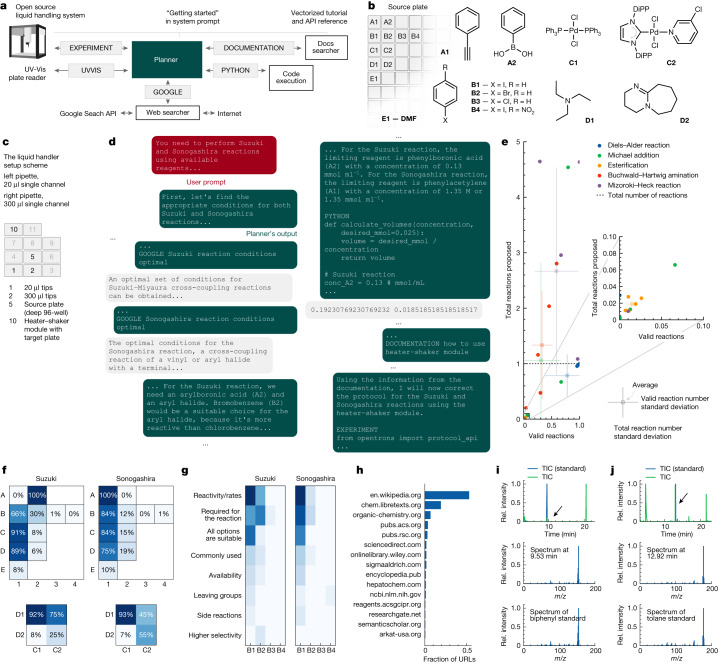
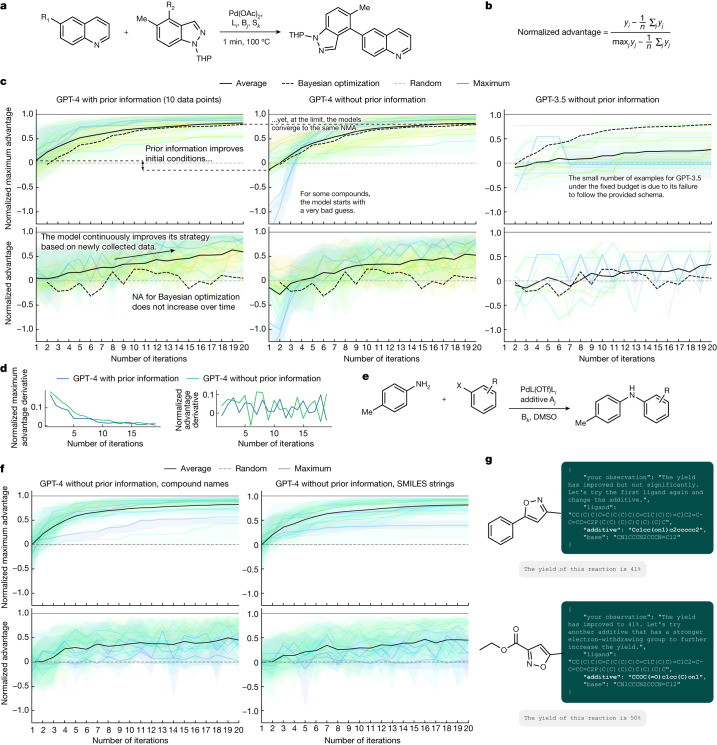
Transformer-based large language models are making significant strides in various fields, such as natural language processing 1–5 , biology 6,7 , chemistry 8–10 and computer programming 11,12 . Here, we show the development and capabilities of Coscientist, an artificial intelligence system driven by GPT-4 that autonomously designs, plans and performs complex experiments by incorporating large language models empowered by tools such as internet and documentation search, code execution and experimental automation. Coscientist showcases its potential for accelerating research across six diverse tasks, including the successful reaction optimization of palladium-catalysed cross-couplings, while exhibiting advanced capabilities for (semi-)autonomous experimental design and execution. Our findings demonstrate the versatility, efficacy and explainability of artificial intelligence systems like Coscientist in advancing research.
Overview
The claims and statistics of this paper haven’t been checked yet.
Free: it reads the open-access text and checks the first 5 claims that cite a source we can check. Create a free account to check every claim.
Integrity signals
Registry
Cites
Statistics
Figures
Verification
Claims the paper makes
The claims and statistics of this paper haven’t been checked yet.
Free: it reads the open-access text and checks the first 5 claims that cite a source we can check. Create a free account to check every claim.
Claims other papers make about this one
Each is checked against this paper’s own text: does it say what the citing paper says it does?
The source backs part of the claim, not all of it — or backs it for a different population, condition or comparison.
In the citing paper
“The broader literature on autonomous scientific systems has already argued for more rigorous evaluation protocols and transparent tool interfaces [3,5,7-12].”
From From Scientific Copilots to Tool-Grounded Autonomy: AI Agents in Simulation-Driven Materials Discovery (2026) · cites this paper as [8]
Experimental — accuracy not yet measuredThe source backs part of the claim, not all of it — or backs it for a different population, condition or comparison.
In the citing paper
“To the best of our knowledge, no prior review has isolated simulation-driven, toolorchestrating AI agent workflows for materials discovery as a distinct evidence base with study-level extraction of autonomy, validation, and reproducibility [3-14].”
From From Scientific Copilots to Tool-Grounded Autonomy: AI Agents in Simulation-Driven Materials Discovery (2026) · cites this paper as [8]
Experimental — accuracy not yet measuredThe source backs part of the claim, not all of it — or backs it for a different population, condition or comparison.
In the citing paper
“In parallel, chemistry-oriented reviews have shown that large language models can move beyond text generation toward tool use, retrieval, planning, code execution, and multi-agent coordination [5-10].”
From From Scientific Copilots to Tool-Grounded Autonomy: AI Agents in Simulation-Driven Materials Discovery (2026) · cites this paper as [8]
Experimental — accuracy not yet measuredThe source backs part of the claim, not all of it — or backs it for a different population, condition or comparison.
In the citing paper
“In scientific discovery, agents dynamically compose and execute hypothesis-testing pipelines spanning simulations, lab protocols, and data analysis [61, 62, 63, 64].”
From Code as Agent Harness (2026) · cites this paper as [62]
Experimental — accuracy not yet measuredThe source backs part of the claim, not all of it — or backs it for a different population, condition or comparison.
In the citing paper
“The central challenge is not only to predict a property, but to manage the sequence of reasoning and action that connects a scientific objective to executable computational or experimental steps [2-10].”
From From Scientific Copilots to Tool-Grounded Autonomy: AI Agents in Simulation-Driven Materials Discovery (2026) · cites this paper as [8]
Experimental — accuracy not yet measured
7 more claims about this paper
Create a free account to see every claim other papers make about this one.
Self-check
Percentages, sums and reported differences re-computed from the paper’s own numbers.
The self-check needs the paper’s full text.
Citations
Cites
Scaling Laws for Neural Language Models
Kaplan, J., McCandlish, S., Henighan, T., Brown, T. B., Chess, B., Child, R., Gray, S., Radford, A., Wu, J., & Amodei, D. (2020) · arXiv · doi:10.48550/arxiv.2001.08361 · Cited by 9,550 · cited 1×
“Extreme scaling of models 13 , as demonstrated by OpenAI, has led to significant breakthroughs in the field 1,14 .”
Evolutionary-scale prediction of atomic level protein structure with a language model
Lin, Z., Akin, H., Rao, R., Hie, B., Zhu, Z., Lu, W., Smetanin, N., Verkuil, R., Kabeli, O., Shmueli, Y., et al. (2022) · doi:10.1101/2022.07.20.500902 · Cited by 5,990 · cited 1×
“These models have been successfully applied to various domains, including natural language 1–5 , biological 6,7 and chemical research 8–10 as well as code generation 11,12 .”
Survey of Hallucination in Natural Language Generation
Ji, Z., Lee, N., Frieske, R., Yu, T., Su, D., Xu, Y., Ishii, E., Bang, Y. J., Madotto, A., & Fung, P. (2023) · ACM Computing Surveys · doi:10.1145/3571730 · Cited by 5,025 · cited 1×
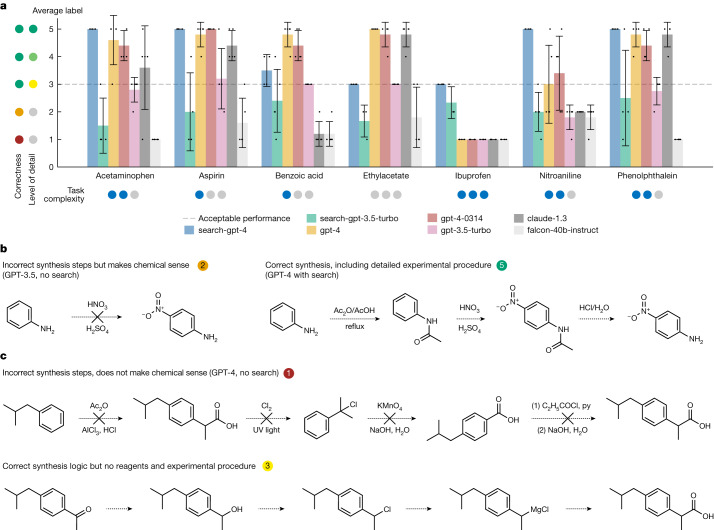
“These results show the importance of grounding LLMs to avoid ‘hallucinations’ 31 .”
Survey of Hallucination in Natural Language Generation
Ji, Z., Lee, N., Frieske, R., Yu, T., Su, D., Xu, Y., Ishii, E., Bang, Y., Chen, D., Dai, W., et al. (2022) · arXiv · doi:10.48550/arxiv.2202.03629 · Cited by 4,981
LLaMA: Open and Efficient Foundation Language Models
Touvron, H., Lavril, T., Izacard, G., Martinet, X., Lachaux, M.-A., Lacroix, T., Rozière, B., Goyal, N., Hambro, E., Azhar, F., et al. (2023) · arXiv · doi:10.48550/arxiv.2302.13971 · Cited by 4,602
Chain-Of-Thought Prompting Elicits Reasoning in Large Language Models
Wei, J., Wang, X., Schuurmans, D., Bosma, M., Ichter, B., Xia, F., Chi, E., Le, Q. V., & Zhou, D. (2022) · Advances in Neural Information Processing Systems 35 · doi:10.52202/068431-1800 · Cited by 4,505
Liu, P., Yuan, W., Fu, J., Jiang, Z., Hayashi, H., & Neubig, G. (2023) · ACM Computing Surveys · doi:10.1145/3560815 · Cited by 4,361 · cited 1×
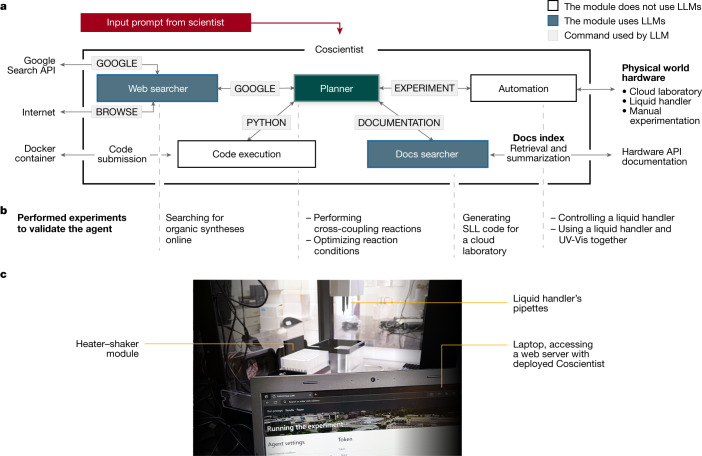
“System prompts (static inputs defining the LLMs’ goals) for the Planner are engineered 1,27 in a modular fashion, described as four commands that define the action space: The PYTHON command allows the Planner to perform calculations to prepare the experiment using a ‘Code execution’ module.”
Liu, P., Yuan, W., Fu, J., Jiang, Z., Hayashi, H., & Neubig, G. (2021) · arXiv · doi:10.48550/arxiv.2107.13586 · Cited by 4,352 · cited 1×
“System prompts (static inputs defining the LLMs’ goals) for the Planner are engineered 1,27 in a modular fashion, described as four commands that define the action space: The PYTHON command allows the Planner to perform calculations to prepare the experiment using a ‘Code execution’ module.”
Chain-of-Thought Prompting Elicits Reasoning in Large Language Models
Wei, J., Wang, X., Schuurmans, D., Bosma, M., Ichter, B., Xia, F., Chi, E., Le, Q., & Zhou, D. (2022) · arXiv · doi:10.48550/arxiv.2201.11903 · Cited by 4,263 · cited 1×
“This can be done through advanced prompting strategies, such as ReAct 34 , Chain of Thought 35 and Tree of Thoughts 36 .”
Billion-scale similarity search with GPUs
Johnson, J., Douze, M., & Jegou, H. (2021) · IEEE Transactions on Big Data · doi:10.1109/tbdata.2019.2921572 · Cited by 4,228
Research works printed but not linked: 3
- Brown, T. et al. in Advances in Neural Information Processing Systems Vol. 33 (eds Larochelle, H. et al.) 1877–1901 (Curran Associates, 2020).
- Data Mining. Mining of Massive Datasets (Cambridge Univ., 2011).
- Running experiments. Emerald Cloud Lab https://www.emeraldcloudlab.com/guides/runningexperiments (2023).
Cited by
Items 701–800 of 1,047
Cross-material catalyst discovery via deep learning
Moon, J., Yoo, S., Shim, J., Heo, S., Kim, J. H., Bootharaju, M. S., Lee, K.-S., Ryu, J., Sung, Y., & Hyeon, T. (2026) · Nature Materials · doi:10.1038/s41563-026-02622-6 · Cited by 7
“Achieving integration in catalyst design requires combining knowledge across material domains—an ambition aligned with ongoing efforts to develop transferable ML frameworks 26–28 .”
AI for battery-accelerated discovery of high-voltage electrolytes for advanced lithium batteries
Zhan, Y. Z., Chen, N., Li, L., Wu, F., & Chen, R. (2026) · Chemical Society Reviews · doi:10.1039/d4cs01250j · Cited by 1
Evaluating LLM-generated code for domain-specific languages: Molecular dynamics with LAMMPS
Holbrook, E., Verduzco, J. C., & Strachan, A. H. (2026) · Computational Materials Science · doi:10.1016/j.commatsci.2026.114839 · Cited by 5
“For instance, projects like CoScientist 11 and Chem-Crow 12 have already demonstrated that LLMs can design and execute wet-lab protocols or plan chemical syntheses by integrating external tools.”
Qiao, Z., Liang, B., Li, T., Li, Y., Lin, S., Liu, M., Li, H., Zeng, Y., Sun, X., Duan, C., et al. (2026) · Chemical Engineering Science · doi:10.1016/j.ces.2026.124406 · Cited by 4
Data Science for Chemistry, Energy and Materials: Building the Foundations for Data-Driven Discovery
Cai, Y. (2026) · Data · doi:10.3390/data11060144 · Cited by 1
Organic Chemistry as a Catalyst for AI Innovation: Challenges, Methods, and Emerging Paradigms
Chawla, N. V., González‐Montiel, G. A., Guo, K., Guo, T., Hua, T., Huang, X., Inae, E., Jiang, M., Le, K., Liu, G., et al. (2026) · Chemical Reviews · doi:10.1021/acs.chemrev.5c01081 · Cited by 4
Han, P., Feng, S., Feng, Y., Huang, R., Peng, X., & Zhang, X. (2026) · ACS Applied Polymer Materials · doi:10.1021/acsapm.6c00906 · Cited by 1
Gangwal, A., & Lavecchia, A. (2026) · Medicinal Research Reviews · doi:10.1002/med.70074 · Cited by 4
AI systems devise hypotheses and ways to test them
Elemento, O. (2026) · Nature · doi:10.1038/d41586-026-01873-2 · Cited by 1
Fu, L., Lv, Y., Chen, F., Zhao, S., Lin, C., & Karimi-Maleh, H. (2026) · TrAC Trends in Analytical Chemistry · doi:10.1016/j.trac.2026.119022 · Cited by 2
Yuvaraj, N., Kumar, M. S., & Manoj, M. S. (2026) · International Conference on Computational Intelligence and Communication Networks (CICN) · doi:10.1109/cicn70047.2026.11594381 · Cited by 1
Zhou, J., An, J., Wang, J., Xu, Y., & Wang, X. (2026) · Applied Physics Reviews · doi:10.1063/5.0320251 · Cited by 1
Forecasting Individual Dairy Cow Milk Yield via Large Language Model Orchestration
Lee, S., Jung, W., Cho, S., Kim, M.-K., Park, D., WONGWANG, C., Park, H., & Park, J. (2026) · AgriEngineering · doi:10.3390/agriengineering8070295 · Cited by 1
“Studies report its effectiveness in autonomous chemical synthesis [17], tool-augmented scientific reasoning [18], and automated clinical calculation [19].”
Autonomous laboratories for sustainable nanomaterials discovery
Jathar, A., Nawghare, B. R., & Ganure, K. A. (2026) · Next Materials · doi:10.1016/j.nxmate.2026.102883 · Cited by 2
Closed-loop agentic AI in drug discovery
Chhetri, P. (2026) · RSC Medicinal Chemistry · doi:10.1039/d6md00319b · Cited by 4
Wang, C., Zhu, C., Lu, M., Bai, J., & Qiao, L. (2026) · Engineering Applications of Artificial Intelligence · doi:10.1016/j.engappai.2026.115720 · Cited by 1
Artificial intelligence for representing and characterizing quantum systems
Du, Y., Zhu, Y., Zhang, Y., Hsieh, M.-H., Rebentrost, P., Gao, W., You, Y., Eisert, J., Chiribella, G., Tao, D., et al. (2026) · Nature Reviews Physics · doi:10.1038/s42254-026-00962-5 · Cited by 21
Liu, G., Ma, X., Zhang, L., Pascasio, J., Yang, J., Chen, Y., & Li, W.-L. (2026) · Digital Discovery · doi:10.1039/d6dd00273k · Cited by 7
Zhang, R., Chen, B., Yuan, R., Wang, Y. W., Wang, J., & Li, J. (2026) · Metals Advances · doi:10.1016/j.metadv.2026.06.006 · Cited by 1
Multi-task scheduling of self-driving laboratories under scientific constraints
Zhou, J., Ge, L., Li, X., Guo, L., Chen, L., Jiang, J., & Shang, W. (2026) · Chemical Science · doi:10.1039/d6sc03892a · Cited by 2
“Rapid advances in automation, 1 – 6 robotics, 7 – 11 and arti cial intelligence 12,13 have driven the emergence of a new research paradigm known as the self-driving laboratory (SDL, as illustrated by the SDL environment employed in this work, Fig.”
Artificial intelligence in drug development: From molecular discovery to precision medicine
Xie, T., Zhang, Z.-H., Wang, Y.-S., Wang, H., Chen, X., Han, F., & Shao, F. (2026) · Genes & Diseases · doi:10.1016/j.gendis.2026.102402 · Cited by 1
Artificial intelligence for CRISPR-based biosensing: From molecular design to assay intelligence
Wang, R., Zhang, Q., Gaira, S., Zhao, Y., Lai, J., Li, M., Zhang, C., Wu, L., Deng, F., & Tang, S. (2026) · TrAC Trends in Analytical Chemistry · doi:10.1016/j.trac.2026.119061 · Cited by 2
The case for near-term artificial intelligence risks to be considered a public health problem
Armitage, R. C. (2026) · Global Public Health · doi:10.1080/17441692.2026.2716984 · Cited by 1
Enhancing Power Grid Model Generation With Large Language Models via Progressive Fine-Tuning
Deng, K., Zhou, Y., Yang, Y., Yang, X., Dong, W., & Guo, Q. (2026) · IEEE Transactions on Power Systems · doi:10.1109/tpwrs.2026.3723876 · Cited by 1
Wu, C., Jiang, S., Zuo, Z., & Li, J. (2026) · Applied Sciences · doi:10.3390/app16168291 · Cited by 1
Provenance grounds trust in autonomous science
MacKnight, R., Novitskiy, I. M., Radadiya, R., & Gomes, G. (2026) · Nature Computational Science · doi:10.1038/s43588-026-01035-4 · Cited by 5
Self-citationLiu, B., Li, J., Xing, A., Luo, G., Lu, H. Y., Li, Q., Shi, Q., Rao, W., & Li, K. (2026) · TrAC Trends in Analytical Chemistry · doi:10.1016/j.trac.2026.119107 · Cited by 1
Computational materials agents: from task demonstrations to executable scientific workflows
Hu, C., & Wang, Z. (2026) · AI Agent · doi:10.20517/aiagent.2026.38 · Cited by 3
EAIRA: Establishing a methodology for evaluating LLMs as scientific research assistants
Cappello, F., Madireddy, S., Underwood, R., Getty, N., Chia, N., Ramachandra, N., Nguyen, T. D., Keçeli, M., Mallick, T., Li, Z., et al. (2026) · The International Journal of High Performance Computing Applications · doi:10.1177/10943420261467786 · Cited by 21
Alviz-Meza, A., Valencia-Arias, A., Rojas-Flores, S., & Díaz, F. (2026) · Processes · doi:10.3390/pr14182917 · Cited by 1
AcawebAgent: A Large Language Model-Powered Assistant for Early Academic Research
Yang, Y., & Wang, X. (2024) · International Conference on Computer Engineering and Application (ICCEA) · doi:10.1109/iccea62105.2024.10603661 · Cited by 1
Guerrero, C. U., Corcho, Ó., & Garijo, D. (2024) · Lecture notes in computer science · doi:10.1007/978-3-031-65794-8_8 · Cited by 3
“The automated planning community has also continued to push the boundaries of approaches that learn how to extract plans [20] and action sequences from text in domain-specific [13], [4], [8], and general domains (i.e., [18], [35]).”
BackgroundChemical jargon: thinking out loud
Rulev, A. Y. (2024) · Foundations of Chemistry · doi:10.1007/s10698-024-09521-1 · Cited by 1
“Very recently, a new word Coscientist appeared in English which does not need translation (Boiko et al. 2023).”
Real-time autonomous control of a continuous macroscopic process as demonstrated by plastic forming
Muroga, S., Honda, T., Miki, Y., Nakajima, H., Futaba, D. N., & Hata, K. (2024) · Materials Horizons · doi:10.1039/d4mh00051j · Cited by 4
Explainable Synthesizability Prediction of Inorganic Crystal Polymorphs Using Large Language Models
Kim, S.-M., Schrier, J., & Jung, Y. (2025) · Angewandte Chemie · doi:10.1002/ange.202423950 · Cited by 3
A Preliminary Study on the Application of Large Language Models in Power System Simulations
Sun, X., Xu, Y., Xiao, T., Diao, H., Huang, S., Zhou, B., & Wei, W. (2024) · International Conference on Power and Energy Technology (ICPET) · doi:10.1109/icpet62369.2024.10941115 · Cited by 3
Variation in journal website characterization by an AI-driven “predatory” journal detector
da Silva, J. A. T. (2025) · Expert Systems with Applications · doi:10.1016/j.eswa.2025.127933 · Cited by 5
Data-intelligent-driven exploration of robotic chemist systems
Jincheng, X., Chen, L., & Jiang, J. (2025) · Scientia Sinica Chimica · doi:10.1360/ssc-2025-0093 · Cited by 1
Xue, Y., Liu, M., Wang, K., Yang, Y., Cheng, Y., Ma, X., & Qiao, Y. (2025) · CHAIN · doi:10.23919/chain.2025.000010 · Cited by 1
Autonomous Drug Discovery with Parallel Intelligence
Lin, F., Yang, J., Sun, D., Kovács, L., & Wang, F. (2025) · IEEE/CAA Journal of Automatica Sinica · doi:10.1109/jas.2025.125426 · Cited by 2
Zhao, J., Zhou, Q., Wang, T., Fan, Y., Yang, Q., Li, J., Liu, C., Guo, Z., Lü, Q., Zhou, F., et al. (2025) · Journal of Advanced Research · doi:10.1016/j.jare.2025.10.035 · Cited by 1
“LLMs have recently emerged as powerful tools in chemistry, with platforms like ChemCrow [22] and Coscientist [23] demonstrating their capability to assist in complex tasks like synthesis planning.”
Li, C., Liao, J., Zhu, Y., Zhu, J., Gan, Z., Zhang, R., Zhao, W., Huang, J., Zhang, Y., & You, H. (2025) · Cell Reports Physical Science · doi:10.1016/j.xcrp.2025.102931 · Cited by 1
An Artificial Intelligence Model for Translating Natural Language into Functional De Novo Proteins
Riley, T. P., Parsa, M. S., Kalantari, P., Naderi, I., Azimian, K., Begloo, N., Matusovsky, O. S., Osher, E., Prabhakaran, D., Yadav, R., et al. (2026) · ACS Synthetic Biology · doi:10.1021/acssynbio.6c00246 · Cited by 3
Liu, Y., Shen, R., Zhou, L., Xiao, Q., Yuan, J., & Li, Y. (2024) · bioRxiv (Cold Spring Harbor Laboratory) · doi:10.1101/2024.05.19.594895 · Cited by 1
As Generative Models Improve, People Adapt Their Prompts *Preprint
Jahani, E., Manning, B. S., Zhang, J., Ye, H. Y. T., Alsobay, M., Nicolaides, C., Suri, S., & Holtz, D. (2024) · SSRN Electronic Journal · doi:10.2139/ssrn.4899363 · Cited by 5
Mudd, A., Conroy, T., Voldbjerg, S. L., Goldschmied, A. Z., & Schuwirth, L. (2024) · Research Square · doi:10.21203/rs.3.rs-4767916/v1 · Cited by 2
Zheng, Z., Florit, F., Jin, B., Wu, H., Li, S., Nandiwale, K. Y., Salazar, C. A., Mustakis, J. G., Green, W. H., & Jensen, K. F. (2024) · ChemRxiv · doi:10.26434/chemrxiv-2024-pk105
The Dual-use Dilemma in LLMs: Do Empowering Ethical Capacities Make a Degraded Utility?Preprint
Zhang, Y., Chen, X., Chen, K., Du, Y., Dang, X., & Heng, P. (2025) · Qeios · doi:10.32388/cw5qru · Cited by 3
Ning, Z., Ming, Y., Zhang, C., Cao, S., Li, C., Guo, J., & Duan, H. (2025) · bioRxiv (Cold Spring Harbor Laboratory) · doi:10.1101/2025.06.09.658607 · Cited by 6
Predicting Reactivity with Machine Learning
Jacot‐Descombes, L., & Jorner, K. (2025) · Wiley eBooks · doi:10.1002/9783527847068.ch07 · Cited by 1
Embodied Intelligence Unlocks Autonomous MicroscopyPreprint
Huang, G., Zhang, Z., Zhuang, S., Wu, Y. J., Lü, Z., Tong, M., & Gao, H. (2025) · bioRxiv (Cold Spring Harbor Laboratory) · doi:10.1101/2025.08.13.670210 · Cited by 2
“The implications of this work extend far beyond a single instrument, pointing toward a future of fully autonomous science 18–20 .”
Can AI Conduct Autonomous Scientific Research? Case Studies on Two Real-World TasksPreprint
Agrawal, S., Anadkat, H., Athimoolam, K., Bhardwaj, H., Chowdhury, T., Gao, S., Kamat, P., Makwana, V., Shariff, M., Badkul, A., et al. (2026) · bioRxiv (Cold Spring Harbor Laboratory) · doi:10.64898/2026.01.05.697809 · Cited by 10
BiomniBench: Process-level Evaluation of LLM Agents for Real-world Biomedical ResearchPreprint
Qu, Y., Lu, Y., Tu, X., Zhang, S., She, T., Shaw, A. G., Shih, J., Zhao, B., Shen, M., Yang, H., et al. (2026) · bioRxiv (Cold Spring Harbor Laboratory) · doi:10.64898/2026.05.12.724604 · Cited by 14
“…autonomous chemistry workflows, support drug-discovery pipelines, and interpret clinical multi-omics — work that once required hours to days of expert effort [Huang et al., 2025, Qu et al., 2026, Roohani et al., 2025, Boiko et al., 2023, M. Bran et al., 2024, Liu et al., 2024, Wang et al., 2025].”
Baker, C., Ren, T., Rafferty, K., Wang, H., & McDade, S. S. (2026) · bioRxiv (Cold Spring Harbor Laboratory) · doi:10.64898/2026.07.05.736565 · Cited by 1
“Specifically, the field is undergoing a rapid transition from static predictive modelling to autonomous, agent-driven scientific discovery 5 .”
Agentic campaign control for high-throughput de novo binder designPreprint
Jeon, M., Song, J., Kim, J., & Zhong, E. D. (2026) · bioRxiv (Cold Spring Harbor Laboratory) · doi:10.64898/2026.09.22.753604 · Cited by 3
From Fluent to Verifiable: Claim-Level Auditability for Deep Research Agents
Rasheed, R. A., Banerjee, S., Mukherjee, A., & Hazra, R. (2026) · arXiv · doi:10.48550/arxiv.2602.13855 · Cited by 1
Alviz-Meza, A., Valencia-Arias, A., Rojas-Flores, S., & Diaz, F. (2026) · Data · doi:10.3390/data11070180
ClaroAI-Bench: Evaluating Agentic Scientific Reproducibility on Real Biomedical Papers
O’Connell, K. (2026) · bioRxiv (Cold Spring Harbor Laboratory) · doi:10.64898/2026.05.08.723611
“AI agents are increasingly applied to scientific tasks: code generation (Jimenez et al., 2024), literature review (Lu et al., 2024), and experiment design (Boiko et al., 2023).”
Testing Frontier Large Language Models' Physics Literacy in Parallel Physical Worlds
Zhang, D. (2026) · arXiv · doi:10.48550/arxiv.2607.00276
“Boiko et al.’s Coscientist (2023), which let an LLM autonomously schedule organic synthesis experiments, and the Finch analysis module in Robin are examples of this role (Boiko et al., 2023; Ghareeb et al., 2025).”
Evaluating and Guarding Citation Faithfulness in Agentic Scientific Synthesis
Goo, T., Kim, J., Han, K., Jo, G., Kim, J.-S., & Kim, T.-H. (2026) · arXiv · doi:10.48550/arxiv.2607.20527 · Cited by 1
Implicit Language Models are RNNs: Balancing Parallelization and Expressivity
Schöne, M., Rahmani, B., Kremer, H., Falck, F., Ballani, H., & Gladrow, J. (2025) · arXiv · doi:10.48550/arxiv.2502.07827
“…structured narratives), and modeling sequential dependencies in logic (Li et al., 2021), location tracking (Guan et al., 2023), games (Li et al., 2023) and scientific applications such as protein generation, genetics, and chemistry (Briand et al., 2023; Chowdhury et al., 2022; Boiko et al., 2023).”
Ning, X., Tieu, K., Fu, D., Wei, T., Li, Z., Bei, Y., Zou, J., Ai, M., Liu, Z., Li, T.-W., et al. (2026) · arXiv · doi:10.48550/arxiv.2605.18747
What Does It Take to Be a Good AI Research Agent? Studying the Role of Ideation Diversity
Audran-Reiss, A., Armengol-Estapé, J., Hambardzumyan, K., Budhiraja, A., Josifoski, M., Toledo, E., Hazra, R., Magka, D., Shvartsman, M., Pathak, P., et al. (2025) · arXiv · doi:10.48550/arxiv.2511.15593
“In the particular context of recent work on research agents based on generative AI and LLMs (Schick et al., 2023; Boiko et al., 2023; Shen et al., 2023; Huang et al., 2024; Swanson et al., 2025; Toledo et al., 2025; Zhao et al., 2025), we specifically refer to agent systems implemented using two…”
AI Research Agents for Machine Learning: Search, Exploration, and Generalization in MLE-bench
Toledo, E., Hambardzumyan, K., Josifoski, M., Hazra, R., Baldwin, N., Audran-Reiss, A., Kuchnik, M., Magka, D., Jiang, M., Lupidi, A. M., et al. (2025) · arXiv · doi:10.48550/arxiv.2507.02554
“…LLMs. Similar techniques have been applied to software engineering (Antoniades et al., 2025), algorithm and reward design (Romera-Paredes et al., 2024; Lu et al., 2024; Faldor et al., 2025; Hazra et al., 2025; DeepSeek-AI, 2025), and even natural sciences (Boiko et al., 2023; Swanson et al., 2024).”
An immune world model for multiscale forecasting and therapeutic hypothesis generation
Cui, T., Wang, X., Li, Z., Ding, J., You, L., Xu, Y., Xu, W., Wu, F., Ying, K., Ouyang, W., et al. (2026) · arXiv · doi:10.48550/arxiv.2609.14709
“36,37 We used Agent Genesis, a governed evolutionary AI Scientist, to construct the Immune World Model by evolving candidate Scientist workflows and immune-world-model configurations under versioned data manifests and prespecified evaluation gates.”
DRAK: Unlocking Molecular Insights with Domain-Specific Retrieval-Augmented Knowledge in LLMsPreprint
Liu, J., Huang, X., Chen, Z., & Fang, Y. (2024) · doi:10.36227/techrxiv.170957087.76389945/v1
DRAK: Unlocking Molecular Insights with Domain-Specific Retrieval-Augmented Knowledge in LLMs
Liu, J., Huang, X., Chen, Z., & Yin, F. (2024) · Lecture notes in computer science · doi:10.1007/978-981-97-9434-8_20 · Cited by 3
Ahmad, A. (2024) · Conference on AI, Science, Engineering, and Technology (AIxSET) · doi:10.1109/aixset62544.2024.00050 · Cited by 1
ChatGPT-assisted rational design for iterative performance optimization of perovskite solar cells
Zhang, X., Ni, Z., Fanady, B., Chen, F., Chen, Z., Wang, Z., Chen, G., He, Z., Bai, Y., & Zhao, H. (2026) · Applied Energy · doi:10.1016/j.apenergy.2026.128256 · Cited by 1
NeuroDISK: An AI Approach to Automate Continuous Inquiry-Driven Discoveries in Neuroimaging GeneticsPreprint
Garijo, D., Yang, Q., Vargas, H., Gadewar, S. P., Low, K., Ratnakar, V., Osorio, M., Zhu, A. H., McMahon, M. A. B., Gil, Y., et al. (2025) · bioRxiv (Cold Spring Harbor Laboratory) · doi:10.1101/2025.02.14.638360 · Cited by 1
“For example, Coscientist (Boiko et al., 2023) was developed as a proof-of-concept system that designs and plans Suzuki and Sonogashira chemical reaction experiments and generates code that can be executed in cloud laboratories.”
Research and Design of Intelligent Periodic Table of Elements Based on FBS-Agent
Liu, R., & Wei, Y. (2025) · International Conference on Software Engineering and Computer Science (CSECS) · doi:10.1109/csecs64665.2025.11010020
“Boiko et al. [12] adopts the GPT-4 large language model, integrating network document search, code execution, and experimental automation.”
Chai, S., Ying, W., Hu, F., Jiang, X., Zhao, X., Ma, Y., & Yao, C. (2024) · International Symposium on Computational Intelligence and Design · doi:10.1109/iscid63852.2024.00023
“LLMs, renowned for their robust generative and interpre-tative capabilities [1] , are increasingly becoming essential tools across various disciplines, including information technology [2] , life sciences [3] , and agricultural sciences [4] .”
Learning Human T Cell Behaviors Through Generative AI Embeddings of T Cell ReceptorsPreprint
Chen, D. G., Su, Y., & Heath, J. R. (2025) · bioRxiv (Cold Spring Harbor Laboratory) · doi:10.1101/2025.06.16.660016 · Cited by 1
The converging moment of chemistry and artificial intelligence: a review and outlook
Zhang, W., Zhang, Y., Xiong, J., Zheng, M., & Chen, K. (2025) · Scientia Sinica Chimica · doi:10.1360/ssc-2025-0111 · Cited by 1
Optimization of Catalysts Using Computational Chemistry, Machine Learning, and Cheminformatics
Dalmau, D., & Alegre‐Requena, J. V. (2025) · Wiley eBooks · doi:10.1002/9783527847068.ch06
Ng, S. (2025) · Springer eBooks · doi:10.1007/978-3-031-82790-7_17
Pulsar Movement Animation and its Corresponding Signal Visualization for Timing Source
Zhang, Y., Wu, Y., Liu, Y., Yang, J., Thotakura, N. L., & Liu, Y. (2025) · IEEE Workshop on Power Electronics and Power Quality Applications · doi:10.1109/pepqa66960.2025.11073319
Making Adequate Use of Generative Language Models in Scientific ResearchPreprint
Bustio-Martínez, L., Herrera-Semenets, V., Feregrino-Uribe, C., & van den Berg, J. (2025) · SSRN Electronic Journal · doi:10.2139/ssrn.5367076
A Descriptive Bibliometric Analysis and Review of ChatGPT in Programming Education
Hernandez, H. E., Nacianceno, M. C. B., Canlas, R. B., Loyola, L. G., Salenga, J. L., Yambao, J. A., Grume, J. C., Austria, J. A. P., & Miranda, J. P. P. (2025) · International Conference on Computer Science and Technologies in Education (CSTE) · doi:10.1109/cste64638.2025.11091950
Efficient Benchmarking via Bias-Bounded Subset Selection
Zhuang, Y., Yu, J., Liu, Q., Sun, Y., Li, J.-T., Huang, Z.-Y., & Chen, E. (2025) · IEEE Transactions on Pattern Analysis and Machine Intelligence · doi:10.1109/tpami.2025.3598031 · Cited by 5
Unified Language of Operation Units for Robot-Executable Synthesis Protocols
Fu, Y. Z., & Liu, X. (2025) · Communications in computer and information science · doi:10.1007/978-3-031-95130-5_19
From task-specific language models to research agents
Bajorath, J. (2025) · Artificial Intelligence in the Life Sciences · doi:10.1016/j.ailsci.2025.100141 · Cited by 2
Assessment of LLMs on basic bioinformatics tasks requiring multi-step reasoning and code writing
Rajesh, V., Blumberg, M., Jain, S., & Siwo, G. (2026) · Bioinformatics · doi:10.1101/2025.08.22.671610 · Cited by 2
Epstein, M. D., & Seielstad, C. (2025) · International Journal of Wildland Fire · doi:10.1071/wf25051
Wang, S., Liang, Y., Huang, L., & Li, P. (2025) · Computers, materials & continua/Computers, materials & continua (Print) · doi:10.32604/cmc.2025.068351
“Machine learning (ML) has already demonstrated strong potential in materials research by efficiently mapping inputs ( x ) such as composition and processing parameters to outputs ( Y ) such as dielectric or mechanical properties [11–13].”
Closing the Empirical Loop: Autonomous AI Agents Conduct End‐to‐end Research With Human Participants
Wehr, G., Rideaux, R., Fox, A. J., Lightfoot, D. R., Tangen, J. M., Mattingley, J. B., & Ehrhardt, S. E. (2026) · Advanced Science · doi:10.1002/advs.76675
“…in a chemical discovery context by automating certain chemical experimentation tasks (e.g., physically mixing reagents and observing results) [ 50, 51 ], but these systems lacked the capacity for autonomous hypothesis formulation or refinement of understanding based on experimental results.”
Shan, G., Ding, Z., Xi, L., Zhao, H., Zhang, J., & Xu, F. (2025) · Rare Metals · doi:10.1007/s12598-025-03617-z · Cited by 2
“Boiko et al. proposed an LLM that integrates tools for document search, code execution, and experimental automation to facilitate the autonomous design, planning, and execution of complex scientific experiments [83].”
García, R. A. H., Gracia, C. A. M., Aguilera-Rueda, V.-J., Domínguez, C. F. D., & Morales, L. E. C. (2025) · Arandu-UTIC. · doi:10.69639/arandu.v12i3.1543 · Cited by 1
Li, L., Zhou, Z., Yang, K., Du, W., Wang, P., & Wang, Y. (2025) · Knowledge and Information Systems · doi:10.1007/s10115-025-02610-3 · Cited by 1
Sculpting the future: harnessing artificial intelligence for revolutionary drug discovery
Lavecchia, A. (2025) · Elsevier eBooks · doi:10.1016/b978-0-443-33885-4.00003-2
Multimodal Visual Communication Effect Evaluation Method for University New Media Matrix
Yu, S., & Li, H. (2025) · International Conference on Artificial Intelligence and Digital Ethics (ICAIDE) · doi:10.1109/icaide65466.2025.11189570
“At the application level, some scholars have explored the coupling relationship between content creation style, release time, and user interaction [4], further enriching the application path of multimodal communication research.”
Unravelling the evolution of nickel-catalyzed C–O bond activation with data-driven strategies
Zhu, J., Wang, Y., Rava, I., Chen, S., Zou, Z., Huang, Y., Lin, Z., & Su, H. (2025) · Organic Chemistry Frontiers · doi:10.1039/d5qo00947b
Augmenting Collaborative Problem-Solving: Exploring the Design and Use of GenAI for Groupwork
Johnson, J. G., Rick, S., Grønbæk, J. E. S., Wong, E., Yin, M., Nebeling, M., Klein, M., Ackerman, M. S., & Malone, T. W. (2025) · ACM Conference on Computer Supported Cooperative Work (CSCW) · doi:10.1145/3715070.3748297 · Cited by 4
Yang, Q., Shi, Y., Zhang, H., Zhang, J., & Li, H. (2025) · International Conference on Internet of Things, Artificial Intelligence and Mechanical Automation (IoTAIMA) · doi:10.1109/iotaima66468.2025.11212770
“Boiko et al.’s Coscientist optimized palladium-catalyzed cross-coupling reactions, highlighting the potential of LLMs in closed-loop experimental workflows [8] .”
Parsing Bibliography Descriptions using Few-Shot Prompting with LLM
Kassab, K., & Teslya, N. (2025) · Conference of Open Innovations Association (FRUCT) · doi:10.23919/fruct67853.2025.11239310 · Cited by 2
“This has been proven in a number of complex fields, such as scientific research [13], education [14], and medical [15].”
Instructing a Chatbot to Design Nucleic Acid Probes for Diagnostics
Chen, H., & Chan, W. C. W. (2025) · ACS Nano Medicine · doi:10.1021/acsnanomed.5c00062
Hatcher-Lamarre, H. J., Do, J., Soto, C. J., & Kim, D. (2025) · SSRN Electronic Journal · doi:10.2139/ssrn.5849027
An automated workflow for lithium metal oxide screening assisted by large language models
Zhu, M., Lin, Y., Pang, Z., Zhao, Y., Li, J., Zhang, B., Xu, B., Xuan, F., Liu, H., & Lian, C. (2025) · Chinese Chemical Letters · doi:10.1016/j.cclet.2025.112217 · Cited by 1
Product design, synthesis, and lab automation with The World Avatar
Rihm, S. D., Kondinski, A., & Kraft, M. (2025) · Current Opinion in Chemical Engineering · doi:10.1016/j.coche.2025.101203 · Cited by 1
Islam, S., Rogers, W. S., Hu, C., Song, M., Bao, X., Sayed, S., & Incorvia, J. A. C. (2025) · Advanced Materials · doi:10.1002/adma.202518241
Metadata
- Authors
- Boiko, D. A., MacKnight, R., Kline, B., & Gomes, G.
- Affiliations
- Carnegie Mellon University (US)
- Corresponding author
- Gomes, Gabe
- Venue
- Nature
- Published
- 2023-12-20
- Volume
- 624
- Issue
- 7992
- Pages
- 570-578
- ISSN
- 0028-0836 (ISSN-L)
- 1476-4687
- PMC
- PMC10733136
- OpenAlex
- W4389991792
- Semantic Scholar
- 6fe3779fe5f2e9402abdd08ad8db41a0f13a99eb
- Cited by
- 1,050
- References
- 37
- Citations by year
- 2026: 458 · 2025: 401 · 2024: 186 · 2023: 5
- FWCI
- 77.41
- Type
- journal article
- Language
- en
- Open access
- hybrid
- doi.org
- Licence
- cc-by
- creativecommons.org/licenses/by/4.0 (tdm)
- creativecommons.org/licenses/by/4.0 (vor)
- Locations
- Nature (publishedVersion, cc-by)
- PubMed Central (publishedVersion, cc-by)
- PubMed (publishedVersion)
- RePEc: Research Papers in Economics (submittedVersion)
- Funders
- National Science Foundation (2221346, 2202693)
- Carnegie Mellon University
- Topics
- Physical Sciences › Materials Science › Materials Chemistry › Machine Learning in Materials Science
- Physical Sciences › Computer Science › Artificial Intelligence › Artificial Intelligence Applications
- Life Sciences › Pharmacology, Toxicology and Pharmaceutics › Drug Discovery › Computational Drug Discovery Methods
- Keywords
- large language models, GPT-4, experimental automation, reaction condition optimization, palladium-catalyzed cross-coupling, program execution
- MeSH terms
- Artificial Intelligence, Automation, Catalysis, Documentation, Electric Power Supplies
About these checks
Registry, retraction, Cites and statistics results are computed, not judged, with one exception: a printed reference that no index lists is read once by a model before it counts as a citation error. Claims are extracted by a model and kept only when their quote appears verbatim in the text; each cited source is then checked, with a model’s help, for whether it says what the claim relies on. Those verdicts can be wrong — read the claim’s quote and the cited source before relying on one.
Statistics and arithmetic are recomputed, not judged.
Confidence bands are shown only for fields calibrated on our annotated test set. None is calibrated yet, so no band is shown.
What counts as a claim ›How we measure confidence ›How we check this ›
Are you an author, or do you see a problem with this page? Request a review
Data sources
Bibliographic data: Semantic Scholar, OpenAlex, Crossref.
Contains information from the Semantic Scholar Academic Graph Datasets, made available under the ODC Attribution License (ODC-BY 1.0).
Semantic Scholar’s data is described in: Kinney, R., et al. (2023). The Semantic Scholar Open Data Platform. arXiv:2301.10140.
