

Autonomous chemical research with large language models
Open accessThe DOI matches its Crossref record; 47 of the 47 references it cites were found in a registry or an index.
Abstract
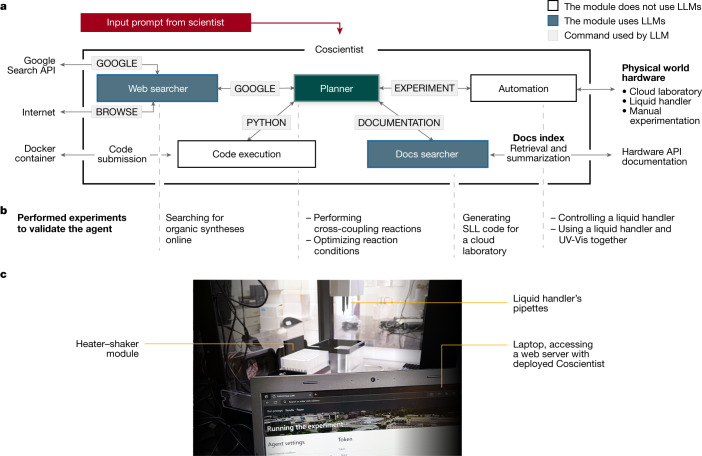
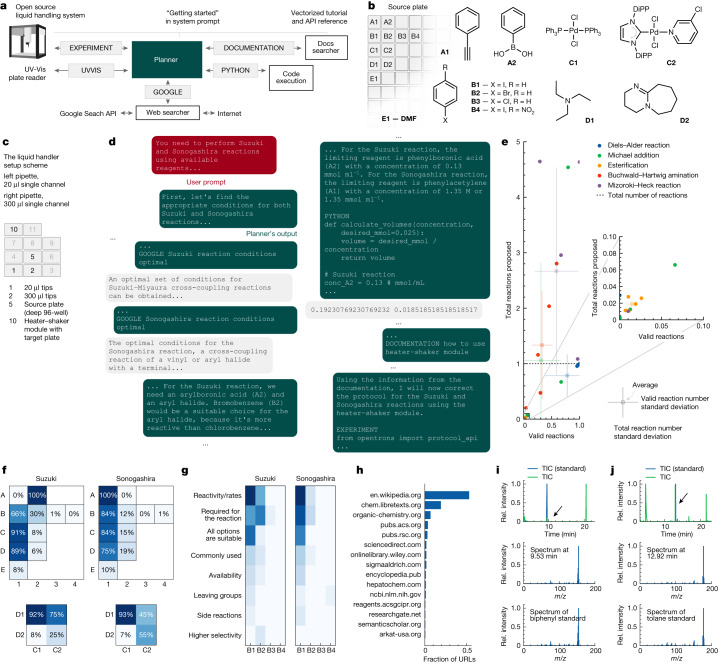
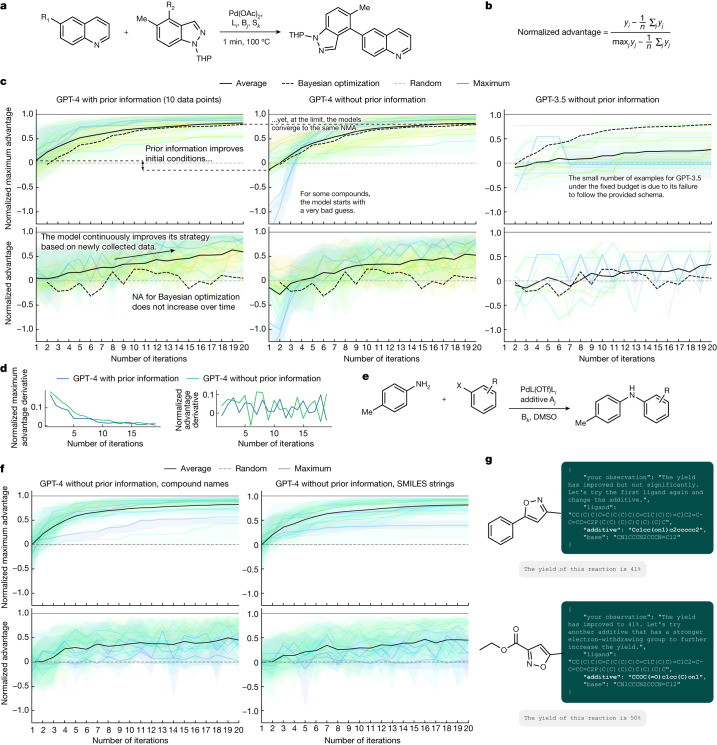
Transformer-based large language models are making significant strides in various fields, such as natural language processing 1–5 , biology 6,7 , chemistry 8–10 and computer programming 11,12 . Here, we show the development and capabilities of Coscientist, an artificial intelligence system driven by GPT-4 that autonomously designs, plans and performs complex experiments by incorporating large language models empowered by tools such as internet and documentation search, code execution and experimental automation. Coscientist showcases its potential for accelerating research across six diverse tasks, including the successful reaction optimization of palladium-catalysed cross-couplings, while exhibiting advanced capabilities for (semi-)autonomous experimental design and execution. Our findings demonstrate the versatility, efficacy and explainability of artificial intelligence systems like Coscientist in advancing research.
Overview
The claims and statistics of this paper haven’t been checked yet.
Free: it reads the open-access text and checks the first 5 claims that cite a source we can check. Create a free account to check every claim.
Integrity signals
Registry
Cites
Statistics
Figures
Verification
Claims the paper makes
The claims and statistics of this paper haven’t been checked yet.
Free: it reads the open-access text and checks the first 5 claims that cite a source we can check. Create a free account to check every claim.
Claims other papers make about this one
Each is checked against this paper’s own text: does it say what the citing paper says it does?
The source backs part of the claim, not all of it — or backs it for a different population, condition or comparison.
In the citing paper
“The broader literature on autonomous scientific systems has already argued for more rigorous evaluation protocols and transparent tool interfaces [3,5,7-12].”
From From Scientific Copilots to Tool-Grounded Autonomy: AI Agents in Simulation-Driven Materials Discovery (2026) · cites this paper as [8]
Experimental — accuracy not yet measuredThe source backs part of the claim, not all of it — or backs it for a different population, condition or comparison.
In the citing paper
“To the best of our knowledge, no prior review has isolated simulation-driven, toolorchestrating AI agent workflows for materials discovery as a distinct evidence base with study-level extraction of autonomy, validation, and reproducibility [3-14].”
From From Scientific Copilots to Tool-Grounded Autonomy: AI Agents in Simulation-Driven Materials Discovery (2026) · cites this paper as [8]
Experimental — accuracy not yet measuredThe source backs part of the claim, not all of it — or backs it for a different population, condition or comparison.
In the citing paper
“In parallel, chemistry-oriented reviews have shown that large language models can move beyond text generation toward tool use, retrieval, planning, code execution, and multi-agent coordination [5-10].”
From From Scientific Copilots to Tool-Grounded Autonomy: AI Agents in Simulation-Driven Materials Discovery (2026) · cites this paper as [8]
Experimental — accuracy not yet measuredThe source backs part of the claim, not all of it — or backs it for a different population, condition or comparison.
In the citing paper
“In scientific discovery, agents dynamically compose and execute hypothesis-testing pipelines spanning simulations, lab protocols, and data analysis [61, 62, 63, 64].”
From Code as Agent Harness (2026) · cites this paper as [62]
Experimental — accuracy not yet measuredThe source backs part of the claim, not all of it — or backs it for a different population, condition or comparison.
In the citing paper
“The central challenge is not only to predict a property, but to manage the sequence of reasoning and action that connects a scientific objective to executable computational or experimental steps [2-10].”
From From Scientific Copilots to Tool-Grounded Autonomy: AI Agents in Simulation-Driven Materials Discovery (2026) · cites this paper as [8]
Experimental — accuracy not yet measured
7 more claims about this paper
Create a free account to see every claim other papers make about this one.
Self-check
Percentages, sums and reported differences re-computed from the paper’s own numbers.
The self-check needs the paper’s full text.
Citations
Cites
Scaling Laws for Neural Language Models
Kaplan, J., McCandlish, S., Henighan, T., Brown, T. B., Chess, B., Child, R., Gray, S., Radford, A., Wu, J., & Amodei, D. (2020) · arXiv · doi:10.48550/arxiv.2001.08361 · Cited by 9,550 · cited 1×
“Extreme scaling of models 13 , as demonstrated by OpenAI, has led to significant breakthroughs in the field 1,14 .”
Evolutionary-scale prediction of atomic level protein structure with a language model
Lin, Z., Akin, H., Rao, R., Hie, B., Zhu, Z., Lu, W., Smetanin, N., Verkuil, R., Kabeli, O., Shmueli, Y., et al. (2022) · doi:10.1101/2022.07.20.500902 · Cited by 5,990 · cited 1×
“These models have been successfully applied to various domains, including natural language 1–5 , biological 6,7 and chemical research 8–10 as well as code generation 11,12 .”
Survey of Hallucination in Natural Language Generation
Ji, Z., Lee, N., Frieske, R., Yu, T., Su, D., Xu, Y., Ishii, E., Bang, Y. J., Madotto, A., & Fung, P. (2023) · ACM Computing Surveys · doi:10.1145/3571730 · Cited by 5,025 · cited 1×
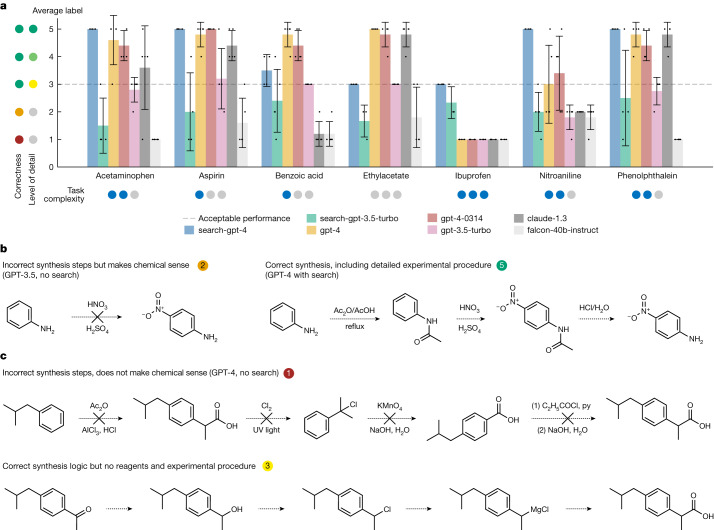
“These results show the importance of grounding LLMs to avoid ‘hallucinations’ 31 .”
Survey of Hallucination in Natural Language Generation
Ji, Z., Lee, N., Frieske, R., Yu, T., Su, D., Xu, Y., Ishii, E., Bang, Y., Chen, D., Dai, W., et al. (2022) · arXiv · doi:10.48550/arxiv.2202.03629 · Cited by 4,981
LLaMA: Open and Efficient Foundation Language Models
Touvron, H., Lavril, T., Izacard, G., Martinet, X., Lachaux, M.-A., Lacroix, T., Rozière, B., Goyal, N., Hambro, E., Azhar, F., et al. (2023) · arXiv · doi:10.48550/arxiv.2302.13971 · Cited by 4,602
Chain-Of-Thought Prompting Elicits Reasoning in Large Language Models
Wei, J., Wang, X., Schuurmans, D., Bosma, M., Ichter, B., Xia, F., Chi, E., Le, Q. V., & Zhou, D. (2022) · Advances in Neural Information Processing Systems 35 · doi:10.52202/068431-1800 · Cited by 4,505
Liu, P., Yuan, W., Fu, J., Jiang, Z., Hayashi, H., & Neubig, G. (2023) · ACM Computing Surveys · doi:10.1145/3560815 · Cited by 4,361 · cited 1×
“System prompts (static inputs defining the LLMs’ goals) for the Planner are engineered 1,27 in a modular fashion, described as four commands that define the action space: The PYTHON command allows the Planner to perform calculations to prepare the experiment using a ‘Code execution’ module.”
Liu, P., Yuan, W., Fu, J., Jiang, Z., Hayashi, H., & Neubig, G. (2021) · arXiv · doi:10.48550/arxiv.2107.13586 · Cited by 4,352 · cited 1×
“System prompts (static inputs defining the LLMs’ goals) for the Planner are engineered 1,27 in a modular fashion, described as four commands that define the action space: The PYTHON command allows the Planner to perform calculations to prepare the experiment using a ‘Code execution’ module.”
Chain-of-Thought Prompting Elicits Reasoning in Large Language Models
Wei, J., Wang, X., Schuurmans, D., Bosma, M., Ichter, B., Xia, F., Chi, E., Le, Q., & Zhou, D. (2022) · arXiv · doi:10.48550/arxiv.2201.11903 · Cited by 4,263 · cited 1×
“This can be done through advanced prompting strategies, such as ReAct 34 , Chain of Thought 35 and Tree of Thoughts 36 .”
Billion-scale similarity search with GPUs
Johnson, J., Douze, M., & Jegou, H. (2021) · IEEE Transactions on Big Data · doi:10.1109/tbdata.2019.2921572 · Cited by 4,228
Research works printed but not linked: 3
- Brown, T. et al. in Advances in Neural Information Processing Systems Vol. 33 (eds Larochelle, H. et al.) 1877–1901 (Curran Associates, 2020).
- Data Mining. Mining of Massive Datasets (Cambridge Univ., 2011).
- Running experiments. Emerald Cloud Lab https://www.emeraldcloudlab.com/guides/runningexperiments (2023).
Cited by
Items 801–900 of 1,045
Xiang, S., Wu, S., Liu, X., Qiu, Q., Zhang, Y., Chen, Y., Yi, L., Hu, W., & Zhuge, Q. (2025) · European Conference on Optical Communication · doi:10.1109/ecoc66593.2025.11263259
“Thus, recent advances in large language models (LLMs) introduce LLM-powered AI agents to deal with these problems [4-5].”
From automation to autonomy: Embracing multimodal intelligence in materials discovery
Liu, H., & Yao, Y. (2025) · The Innovation Materials · doi:10.59717/j.xinn-mater.2026.100178 · Cited by 1
An LLM-Assisted Data Augmentation Framework for Power System Operation
Xia, Y., Zhou, L., Deng, K., Yan, X., Xiang, P., & Wang, L. (2025) · International Conference on Applied Electrical Engineering and Technology (AEET) · doi:10.1109/aeet66561.2025.11307188
“Beyond computer science applications, LLM agents are also utilized in other scientific domains, such as assisting researchers in both the design and execution of complex chemical experiments [8], autonomous medicine and healthcare [9], software development [10] and game simulation [11].”
A Deep Reinforcement Learning-based Autonomous Robotic Operation Framework for Blood Gas Analyzers
Jiang, H., Liu, T. Y., Liu, H., Kadirkamanathan, V., Wu, H., & Wang, K. (2025) · IEEE International Conference on Industrial Informatics (INDIN) · doi:10.1109/indin64977.2025.11279129
“In addition, Fleischer et al. Carnegie Mellon University further combined laboratory automation technology with the large language model ChatGPT to develop the Coscientist system based on multi-algorithm collaboration [7].”
Large Language Models in Drug Discovery
Gangwal, A., & Lavecchia, A. (2026) · Springer eBooks · doi:10.1007/978-3-031-98022-0_14
Applications of multi-agent systems in computational materials science
Ying, W., Zhong-Yi, L., & Zefeng, G. A. O. (2026) · Acta Physica Sinica · doi:10.7498/aps.75.20251687 · Cited by 1
Engineering AI co-scientists for statistical genetics applications
Zhao, B. (2026) · Nature Genetics · doi:10.1038/s41588-025-02487-6 · Cited by 2
Cho, B., Lee, G.-Y., Jung, J., Kim, J., Park, G., Martin, P. C. N., Kim, H., Oh, J., Kim, J.-S., Kim, J., et al. (2026) · bioRxiv (Cold Spring Harbor Laboratory) · doi:10.64898/2026.01.16.699755 · Cited by 1
“PersonaAI is an agentic-AI framework designed to function as a digital co-pilot (Boiko et al., 2023; Wang et al., 2023) for aging research.”
InfluentialSong, Y., Wu, F., Wang, R., Zheng, W., He, B., Yan, Q., Huang, X., Li, Y., Chen, S., Yuan, Q., et al. (2026) · bioRxiv (Cold Spring Harbor Laboratory) · doi:10.64898/2026.01.20.700456 · Cited by 1
“Apart from structural information, sequence information obtained from PLMs can enhance model performance, supporting applications in drug discovery [28–30], chemical research [31], and protein intrinsic disorder prediction [32].”
Risk Mitigation Strategies for Artificial Intelligence-Enabled Self-Driving Laboratories
Haro, L. P. D. (2026) · Applied Biosafety · doi:10.1177/15356760251412428 · Cited by 1
“The rapid advancement of self-driving laboratories (SDLs) 1 – 4 has brought signi fi cant innovations to research, particularly in biology 5 – 7 and chemistry, 8 – 13 where complex and high-throughput experiments can bene fi t immensely from this next evolution of automation.”
Integrating AI Agents with Classical Reliability Assessment via LLMs of Semiconductor Lasers
Zhang, J., Wang, T., & Jiang, J. (2025) · International Conference on System Reliability and Safety Engineering (SRSE) · doi:10.1109/srse67406.2025.11357401
“Autonomous laboratory systems have shown that LLMs integrated with external tools can plan and evaluate experiments [10], and domain-specific deployments in electronic laboratory note-books already enhance experiment documentation and reproducibility [11].”
Qiu, Q., Zhang, Y., Liu, X., Yi, L., Hu, W., & Zhuge, Q. (2025) · Asia Communications and Photonics Conference · doi:10.1109/acp66871.2025.11350980
“In various fields such as chemical research [2], robotics [3], and software development [4], AI agents have demonstrated remarkable capabilities and potential.”
ChemAU: A collaborative framework for chemical reasoning via adaptive uncertainty estimation
Liu, X., Li, Y., Yang, W., Song, J., Ma, L., & Fei, B. (2026) · Expert Systems with Applications · doi:10.1016/j.eswa.2026.131399 · Cited by 3
Pinto, I., & Idoate, M. G. (2026) · Educación Médica · doi:10.1016/j.edumed.2025.101143 · Cited by 1
Truong, V. Q., Yang, S., Shen, L., & Ritchie, M. D. (2025) · IEEE International Conference on Bioinformatics and Biomedicine (BIBM) · doi:10.1109/bibm66473.2025.11356640
Autonomous Market Intelligence: Agentic AI Nowcasting Predicts Stock ReturnsPreprint
Pu, D., & Chen, Z. (2026) · Social Science Research Network · doi:10.2139/ssrn.6134446 · Cited by 6
The evolution of autonomous diagnostic workflows in cancer imaging
Truhn, D. (2026) · Annals of Oncology · doi:10.1016/j.annonc.2026.01.014
Automated Discovery of Multicellular Behavior for Optimized Plant Growth and Climate Resilience
DeAngelis, M. A., LeDuc, P. R., & Ruder, W. C. (2026) · Advanced Intelligent Systems · doi:10.1002/aisy.202500624
Cruz, E. D. L. (2026) · IGI Global eBooks · doi:10.4018/979-8-3373-3912-2.ch013
Chen, Z., wang, X., Wang, J., Hu, Y., Hu, H., Nie, J., Jiao, Z., Wang, Y., Li, Q., Cheng, Z., et al. (2026) · ChemSusChem · doi:10.1002/cssc.202502563 · Cited by 1
Autonomous Scientific Knowledge Discovery Platform
Zhou, B., Bai, L., Ding, N., & Qi, B. (2026) · Springer eBooks · doi:10.1007/978-981-96-8252-2_7 · Cited by 1
Optimizing the Emulsion Polymerization Reaction Process Using Artificial Intelligence (AI) Agents
Wang, X., & He, G. (2025) · International Conference on Computer, Big Data and Artificial Intelligence (ICCBD+AI) · doi:10.1109/iccbdai66607.2025.11388336
Auditing Partial Dataset Usage in Large Language Models via Fuzzy Membership Aggregation
Zhu, H.-Y., Liang, S.-C., Chen, B.-F., Wang, S.-L., Zhang, Z.-S., & Ding, W.-P. (2026) · IEEE transactions on fuzzy systems · doi:10.1109/tfuzz.2026.3665818
“Concurrently, LLMs have emerged as powerful engines for scientific discovery, accelerating progress in complex domains, such as medicine [6], mathematics [7], chemistry [8], and cognitive science [9].”
Simulating Spectroscopy Measuring Processes and Results Using Large Language Models
Ren, G. (2025) · International Conference on Artificial Intelligence, Human-Computer Interaction and Robotics (AIHCIR) · doi:10.1109/aihcir67580.2025.11405289
“In chemistry, for instance, GPT-4 has been applied to automatically convert published reaction schemes into executable laboratory procedures, accelerating the development of autonomous synthesis systems [4-8].”
Formalized scientific methodology enables rigorous AI-conducted research across domainsPreprint
Zhang, Y., & Zhao, J. (2026) · Research Square · doi:10.21203/rs.3.rs-9015466/v1
ChatMicroscopy: A Perspective Review of Large Language Models for Next-Generation Optical Microscopy
Sancataldo, G. (2026) · Applied Sciences · doi:10.3390/app16052502
Chen, Y., Tao, J., Chen, G., Yan, B., Chen, C., Liang, R., Cheng, Z., & Hou, L. (2026) · Carbon Neutral Systems · doi:10.1007/s44438-026-00025-3
Large language models for automated drug target discovery and literature mining
Shah, S. N. A., Aalam, J., & Parveen, R. (2026) · Elsevier eBooks · doi:10.1016/b978-0-443-44430-2.00016-5 · Cited by 1
AI-Driven Automation of Semiconductor Device Design Integrating Silvaco TCAD
Mondal, A., Biswas, A., & Maity, I. (2026) · International Conference on Electronics, Materials Engineering & Nano-Technology (IEMENTech) · doi:10.1109/iementech202669403.2026.11434256
“This concept, called Agentic Science, had been aimed at developing AI systems capable of independent reasoning, planning, and decision-making [8].”
Karton, A. (2026) · Chemical Physics Letters · doi:10.1016/j.cplett.2026.142765
An Automated Extraction System for Material Chemistry Experimental Protocols
Yang, F., Xu, F., Liang, H., Fan, X., Chen, L., Zhang, K., Li, X., Wu, L., & Wang, S. (2026) · Lecture notes in computer science · doi:10.1007/978-981-95-7144-4_14
Yang, S., Wang, J., & Wang, Y. (2026) · Advances in Engineering Software · doi:10.1016/j.advengsoft.2026.104304 · Cited by 6
“LLM-driven scientific discovery has been demonstrated in chemistry by Boiko et al. [14] and in mathematics by FunSearch [60], while autonomous research pipelines are reviewed by Wu et al. [64].”
Democratizing AI‐Enhanced Experimental Optimization: An Accessible Workflow for Chemists
Dahlen, N. N., & Forbes, T. Z. (2026) · Chemistry - Methods · doi:10.1002/cmtd.202600004
Zhang, L., Wang, L., Sun, X., Tang, W., Su, H., Qian, Y., Yang, Q., Li, Q., Tang, Z., Sun, H., et al. (2026) · bioRxiv (Cold Spring Harbor Laboratory) · doi:10.64898/2026.04.03.716272 · Cited by 10
“This paradigm is increasingly recognized as transformative for scientific discovery [64, 10], positioning AI agents as collaborative partners that integrate computational models, biomedical tools, and experimental platforms [26].”
Takahashi, K. (2026) · Zenodo (CERN European Organization for Nuclear Research) · doi:10.5281/zenodo.19447443
Do humans and large language models agree on the quality of synthesis plans?
Voinarovska, V., Mercado, R., Kabeshov, M., & Genheden, S. (2026) · Digital Discovery · doi:10.1039/d6dd00266h · Cited by 1
WPIS: From In-the-Wild Web Images to Physics-Aware 3D Scene Graphs for Physical Reasoning
Ma, K., Fu, C., Wang, J., Wang, Y., Li, W., Wang, X., Wang, M., & Xia, T. (2026) · International World Wide Web Conference (WWW) · doi:10.1145/3774904.3792591 · Cited by 3
NGSE: From Symbolic Control Search to Mechanism Discovery in Swarm RoboticsPreprint
Wang, C., Zhu, C., Lu, M., Bai, J., & Qiao, L. (2026) · SSRN Electronic Journal · doi:10.2139/ssrn.6560012
Research Automation in Healthcare: Scoping Review with ☸️SAIMSARA
SAIMSARA (2026) · SAIMSARA Journal · doi:10.62487/saimsaraed91d2be
Shi, T., Li, Y., Li, Z., Liu, Q., Zhou, J., Xu, W., Li, Y., Dai, D., He, R., Zhou, W., et al. (2026) · Nature Machine Intelligence · doi:10.1038/s42256-026-01298-6 · Cited by 2
“Mat-20K-RL was developed as a dataset of 20,000 open-ended queries; the corresponding SFT answers were not used as supervised processing information and coordinating tasks across disciplines 17–19 .”
Moch, E. (2026) · Journal of Entrepreneurship and Global Business Strategy · doi:10.66705/zakg0c54
Application of multi-agent in energy materials research
Wang, J., Zhu, H., Li, P., Liu, C., Liu, Y., & Wan, J. (2026) · Chinese Science Bulletin (Chinese Version) · doi:10.1360/csb-2025-5793 · Cited by 2
Gordon, C. K., Browne, L. D., Sweet, T. G., Zemke-Smith, C., Blaauw-Smith, F. J., Chan, S. V., Waterland, M., & Davis, N. J. L. K. (2026) · Discover Education · doi:10.1007/s44217-026-01479-w
Wang, Z., Zhang, S., Shao, L., Yin, L., Sun, N., & Li, X. (2026) · SLAS TECHNOLOGY · doi:10.1016/j.slast.2026.100418
Ruilin, Z., & Min, D. (2026) · SSRN Electronic Journal · doi:10.2139/ssrn.6602721
CGAgentX: Agentic AI Framework to Develop Transferable Coarse-Grained ModelsPreprint
Seth, S., & Deshmukh, S. A. (2026) · bioRxiv (Cold Spring Harbor Laboratory) · doi:10.64898/2026.04.17.719081
“In recent years, the emergence of LLMs has created new opportunities for automating scientific workflows that traditionally required substantial domain expertise and human oversight 21,22 .”
The Role of Artificial Intelligence for Drug Repurposing in Alzheimer’s Disease
Guntupalli, S., Bykova, M., Martin, W., & Cheng, F. (2026) · Topics in medicinal chemistry · doi:10.1007/7355_2026_191
BioAgent: An Auditable Multi-Agent Framework for Reproducible Translational BioinformaticsPreprint
Rahim, N. (2026) · Research Square · doi:10.21203/rs.3.rs-9535691/v1
Accelerating Photochemical Insight with “Roblonski”, a Robo-Fluidic Platform
Nsouli, R., Galiyan, G., & Ackerman, L. K. G. (2026) · ACS Central Science · doi:10.1021/acscentsci.6c00446
“Furthermore, integration with laboratory-assistance or experiment-planning software, such as Coscientist, 8 could further reduce operator burden and improve accessibility and user-friendliness.”
Catalyst discovery through AI agent collaboration
Jiang, Y., & Wang, C. X. (2026) · Nature Water · doi:10.1038/s44221-026-00637-6
Liu, C.-L., Yang, Y., & Wang, J. (2026) · Proceedings of the 2026 Asia-Pacific Intelligent Educational Technologies Conference · doi:10.1145/3796114.3796118
QRNG-DD: software data diode for quantum random number distribution with AI agent integration
Bocan, V. (2026) · SoftwareX · doi:10.1016/j.softx.2026.102676 · Cited by 1
Li, W., Tang, Z., Wang, X., Ge, H., & Fu, X. (2026) · Learning and analytics in intelligent systems · doi:10.1007/978-3-032-08195-7_23
Chen, Y., Rao, J., Xie, J., Sun, Y., & Yang, Y. (2026) · bioRxiv (Cold Spring Harbor Laboratory) · doi:10.64898/2026.05.02.722342
Robotic perturbation proteomics and AI agents enable scalable drug mechanism discoveryPreprint
Jiang, Y., Movassaghi, C. S., Muñoz‐Estrada, J., Sundararaman, N., Momenzadeh, A., & Meyer, J. G. (2026) · bioRxiv (Cold Spring Harbor Laboratory) · doi:10.64898/2026.05.04.722718
Towards autonomous biology: Compiler-Verified Protocols as a Foundation for Real-World AI ExecutionPreprint
Song, R., Fu, Y., Zhao, Z., Yu, J., Yuan, Q., & Chen, C.-T. (2026) · bioRxiv (Cold Spring Harbor Laboratory) · doi:10.64898/2026.05.05.720956 · Cited by 1
“T he BPL framework that operates as an intent-to-execution translation engine can be integrated with upstream AI-driven hypothesis generators (Boiko et al., 2023; Bran et al., 2024) and downstream robotic execution platforms (Abolhasani & Kumacheva, 2023) to enable fully autonomous, closed-loop…”
Tang, Z., Wu, S., Zhao, X., Wang, Y., & Gong, X. (2026) · Journal of Chromatography A · doi:10.1016/j.chroma.2026.467096 · Cited by 1
Tiwari, A., Mishra, G., & Narayan, J. (2026) · Sensors · doi:10.3390/s26103036
“The coupling of these processes enables sensing platforms that are not only responsive but context-aware and continuously adaptive, effectively blurring the boundary between sensing and learning [43,52].”
ColPackAgent: agent-skill-guided hard-particle Monte Carlo workflows for colloidal packing
Ding, L., & Do, C. (2026) · Digital Discovery · doi:10.1039/d6dd00285d · Cited by 1
AI-Enhanced Emoji Steganography: A Multi-Agent Framework for Secure Covert Communication
Rangdal, P., Sanjana, W., Uppununthala, S. H., & Gomathi, K. (2026) · International Conference on Future and Advanced Computing Technologies (ICFACT) · doi:10.1109/icfact66887.2026.11518228
“These systems are implemented in software development aids [26], scientific research automation assistants [27], and cyber-threat analysis tools.”
PRISM: protocol refinement through intelligent simulation modeling
Hsu, B., Setty, P. V., Butler, R. M., Lewis, R., Stone, C. R., Weinberg, R., Brettin, T. S., Stevens, R. L., Foster, I. T., & Ramanathan, A. (2026) · Digital Discovery · doi:10.1039/d6dd00004e · Cited by 3
More, P., Ghogare, S., Surwase, S., Sonone, A., Waghjale, P., & Kale, A. (2026) · International Conference on Artificial Intelligence and Machine Learning Applications Theme: Healthcare and Internet of Things (AIMLA) · doi:10.1109/aimla67915.2026.11522277
A survey of agentic materials science and engineering: where are we and where are we going?
Zhu, J., Zhang, L.-H., Zhu, Y., Lin, X.-T., Wu, Y.-F., Di, S.-M., Liu, B., Luo, Y.-Y., & Zhang, T. (2026) · Journal of Materials Informatics · doi:10.20517/jmi.2026.07 · Cited by 2
LLM-Based Multi-agent Collaborative Spectrum Cognition Method
Liu, L., Wang, J., Li, J., Hu, N., Zhang, W., & Zhang, D. (2026) · Journal of Advances in Information Technology · doi:10.12720/jait.17.5.1015-1027
“Traditional model-based methods, such as energy detection and matched filtering, struggle in congested real-world conditions [2, 3].”
Believable urban planning via large language model-enabled behavior modeling: A conceptual framework
Huang, F., Zhang, Z., & Tang, J. (2026) · Cities · doi:10.1016/j.cities.2026.107243 · Cited by 1
Eureka in the Age of Agentic AI: Educational Foundations for Creative Futures
Andreadakis, Z. (2026) · Advances in computational intelligence and robotics book series · doi:10.4018/979-8-3373-6471-1.ch009
Lim, J., Lee, H., & Shin, D. (2026) · ACS Sensors · doi:10.1021/acssensors.6c00865
CARIBOU: Computational AI Research Interface for Bioinformatics, Omics, and Unifying AgentsPreprint
Riffle, D., Shirooni, N., Sureshkumar, P., Vijay, V., & Rose, M. F. (2026) · bioRxiv (Cold Spring Harbor Laboratory) · doi:10.64898/2026.05.25.727730 · Cited by 1
“Domain deployments in chemistry, autonomous synthesis planning (Boiko et al., 2023) and tool-augmented molecular reasoning (M Bran et al., 2024), have shown that agentic LLMs can perform meaningful scientific work when given appropriate grounding.”
Beyond Storage: Toward Living Memory Systems for LLMs on the Edge
Foley, M., Radu, V., Pegoraro, M., Pour, M. V., Faricy, F., & Girolami, M. (2026) · International Conference on Mobile Systems, Applications, and Services · doi:10.1145/3812836.3814755
Chen, C., & Han, Z. (2026) · International Conference on Intelligent Computing and Signal Processing (ICSP) · doi:10.1109/icsp69961.2026.11540949
“Second, existing frameworks predominantly apply established biomarkers to new contexts rather than enabling de novo discovery [12], [6], and none incorporate formal clinical validation.”
Opportunities for AutoML in the Agentic Era
Shen, Z., Wijaya, K. C., & Yao, Q. (2026) · Lecture notes in computer science · doi:10.1007/978-981-92-1468-6_6
Multi-model framework for intelligent research and development of super-hydrophilic coatings
Wu, L., Fu, S., Li, Y., Li, Z., Wang, B., Li, Y., Yang, F., Gao, M., Wang, X., Zhou, W., et al. (2026) · Science China Materials · doi:10.1007/s40843-026-4146-8
“For instance, the rise of machine learning (ML) [11] and large language models (LLMs) [12] offers transformative tools for addressing challenges to R&D in new materials.”
CODE ACROSTIC: Robust Watermarking for Code Generation
Li, L., Xin, S., Cao, Y., & Cao, X. (2026) · Lecture notes in computer science · doi:10.1007/978-981-95-7251-9_35
LC Agent: Toward AI-Driven Recommendation of Liquid Chromatography Conditions for Chemical Reactions
Kwon, Y., Kwon, H., Park, J., Choi, Y.-S., & Kang, S. (2026) · Analytical Chemistry · doi:10.1021/acs.analchem.6c02058
Accelerating Smart City Resiliency: AI-Agent Approach to Isotope Detection Development
Zbirovsky, J., Staněk, K., Jeřábek, M., & Pavelková, L. (2026) · Smart City Symposium Prague (SCSP) · doi:10.1109/scsp69985.2026.11548581
“Recent advances in LLM-based multi-agent systems have demonstrated potential for automating complex workflows across domains including software engineering [15][31], scientific research [17], and general-purpose task automation [13][14][18].”
Rethinking Scientific Practice in the Age of Artificial Intelligence
Eren, M. E., & Perez, D. M. (2026) · ACM AI Letters · doi:10.1145/3803866 · Cited by 3
“…and run experiments with minimal supervision where co-scientist demonstrates autonomous planning across documentation navigation and instrument control [Boiko et al., 2023]; ORGANA integrates natural language and human-in-the-loop control for diverse wet-lab procedures [Darvish et al., 2025].”
Cheng, L., Shao, P., Zhao, S., Zhang, B., & Xing, G. (2026) · Chinese Chemical Letters · doi:10.1016/j.cclet.2026.113075
GALILEO: Embodied AI scientist for autonomous therapeutic discovery in dynamic membrane systemsPreprint
Jiang, N., Wei, R., Xiao, H., Yin, Z., Wang, X., Cui, T., Shao, K., Zhou, J., Fan, J., Torr, P. H. S., et al. (2026) · bioRxiv (Cold Spring Harbor Laboratory) · doi:10.64898/2026.06.10.731360 · Cited by 1
Multiagent design assistant for the simulation of inertial fusion energy
Shachar, M., Fernández-Godino, M. G., Jekel, C. F., Menon, H., Sterbentz, D. M., Hao, Y., Korner, K., Rieben, R. N., White, D. A., Belof, J. L., et al. (2026) · Physical review. E · doi:10.1103/c6jc-fnkm · Cited by 2
Zhao, F., Li, Y., Wang, C., Liu, Z. J., Chen, P., Liu, J., Li, H., & Wang, Y. (2026) · EPJ Data Science · doi:10.1140/epjds/s13688-026-00672-z
“The rapid development of scientific research necessitates tools that can assist researchers in complex scientific tasks, such as literature review [1], theorem proving [2, 3], experimental design [4, 5], and academic writing [6, 7].”
Lumi Agent: Autonomous Lumerical FDTD Simulation for Photonic Waveguide Experiments
Chen, W., Capuano, A., Gu, Q., & Ding, C. (2026) · ACM Great Lakes Symposium on VLSI (GLSVLSI) · doi:10.1145/3787109.3816402
Choi, H. S., & Cheng, D. S. (2026) · SSRN Electronic Journal · doi:10.2139/ssrn.6962764
Large Language Model-Assisted Resonance Parameter Extraction for Quartz Tuning Fork Characterization
Cao, A., Supichayanggoon, K., & Rosa, A. H. L. (2026) · Journal of Physics Conference Series · doi:10.1088/1742-6596/3260/1/012013
Research progress of domain-specific large language models for chemical materials
Chen, W., Li, L., Xu, H., & Cheng, D. (2026) · Chinese Journal of Chemical Engineering · doi:10.1016/j.cjche.2026.05.013 · Cited by 1
Siddiqui, E., & Tyagi, A. K. (2026) · Elsevier eBooks · doi:10.1016/b978-0-443-45875-0.00013-2
F.A.D.E. (Fully Agentic Drug Engine): A Conversational AI Platform for Drug DiscoveryPreprint
Kantorow, J., Mani, N., Mohanraj, N. R., & Zong, X. (2026) · bioRxiv (Cold Spring Harbor Laboratory) · doi:10.64898/2026.06.20.733481 · Cited by 1
Combinatorial to autonomous experimentation
Rajan, K. (2026) · Elsevier eBooks · doi:10.1016/b978-0-443-22256-6.00002-6
Chopra, J. (2026) · Smart innovation, systems and technologies · doi:10.1007/978-3-032-29237-7_38
Xu, Y., & Zhu, J. (2026) · TrAC Trends in Analytical Chemistry · doi:10.1016/j.trac.2026.118974
MolPy: A Large Language Model-Friendly Toolkit for Reactive Topology Editing in Polymer Simulations
Li, J., Schwarz, F., Guo, W., Sun, G., & Brandell, D. (2026) · Journal of Chemical Information and Modeling · doi:10.1021/acs.jcim.6c01137 · Cited by 1
IA para los datos, Ciencia para el criterio: un modelo de trabajo para la investigación científica
Rodríguez, A. M., & Reyes, C. E. Y. (2026) · Anales de química · doi:10.62534/rseq.aq.2123
Deep learning-assisted structural color inverse design: a perspective
Ma, T., & Guo, L. J. (2026) · Chemical Science · doi:10.1039/d6sc01773h
Artificial Intelligence for Discovery in Life Sciences
Chanda, S., Rizzoli, S. O., & Shaib, A. (2026) · Bioconjugate Chemistry · doi:10.1021/acs.bioconjchem.6c00230 · Cited by 1
Luo, J., Li, S., Wang, M., Cao, X., & Li, H. (2026) · IEEE Transactions on Learning Technologies · doi:10.1109/tlt.2026.3708984 · Cited by 1
Wen, C.-M., & Ierapetritou, M. (2026) · Computers & Chemical Engineering · doi:10.1016/j.compchemeng.2026.109792 · Cited by 1
A review of computational modeling for platinum-based alloys: From DFT to AI
Bao, X., Chen, X., Guo, J., Zhang, K. Y., Li, W., Yu, R., Zhou, J., Sun, R., Yang, Z., & Liu, C. (2026) · Journal of Alloys and Compounds · doi:10.1016/j.jallcom.2026.189500 · Cited by 1
Data-driven design of lightweight alloys: A comprehensive review and a challenge
Li, T., Yan, Z., Xie, H., Rao, Z., & Zeng, X. (2026) · Metals Advances · doi:10.1016/j.metadv.2026.07.001
Mass-produced science is coming. What happens to scientists?
Harris, K. (2026) · The Transmitter · doi:10.53053/mvlt4623
FMAgent: Autonomous multi-agent system for fluid mechanics
Sha, H., Bao, B., Jin, X., Li, S., Zuo, W., & Li, H. (2026) · Advanced Engineering Informatics · doi:10.1016/j.aei.2026.104988
Zhao, Y., Chen, B., Yin, Y., Yin, L., Yang, Y., Li, H., Xu, X., Wu, T., Nan, G., & Zou, L. (2026) · Chinese Chemical Letters · doi:10.1016/j.cclet.2026.113200
Metadata
- Authors
- Boiko, D. A., MacKnight, R., Kline, B., & Gomes, G.
- Affiliations
- Carnegie Mellon University (US)
- Corresponding author
- Gomes, Gabe
- Venue
- Nature
- Published
- 2023-12-20
- Volume
- 624
- Issue
- 7992
- Pages
- 570-578
- ISSN
- 0028-0836 (ISSN-L)
- 1476-4687
- PMC
- PMC10733136
- OpenAlex
- W4389991792
- Cited by
- 1,050
- References
- 37
- Citations by year
- 2026: 458 · 2025: 401 · 2024: 186 · 2023: 5
- FWCI
- 77.41
- Type
- journal article
- Language
- en
- Open access
- hybrid
- doi.org
- Licence
- cc-by
- creativecommons.org/licenses/by/4.0 (tdm)
- creativecommons.org/licenses/by/4.0 (vor)
- Locations
- Nature (publishedVersion, cc-by)
- PubMed Central (publishedVersion, cc-by)
- PubMed (publishedVersion)
- RePEc: Research Papers in Economics (submittedVersion)
- Funders
- National Science Foundation (2221346, 2202693)
- Carnegie Mellon University
- Topics
- Physical Sciences › Materials Science › Materials Chemistry › Machine Learning in Materials Science
- Physical Sciences › Computer Science › Artificial Intelligence › Artificial Intelligence Applications
- Life Sciences › Pharmacology, Toxicology and Pharmaceutics › Drug Discovery › Computational Drug Discovery Methods
- Keywords
- large language models, GPT-4, experimental automation, reaction condition optimization, palladium-catalyzed cross-coupling, program execution
- MeSH terms
- Artificial Intelligence, Automation, Catalysis, Documentation, Electric Power Supplies
About these checks
Registry, retraction, Cites and statistics results are computed, not judged, with one exception: a printed reference that no index lists is read once by a model before it counts as a citation error. Claims are extracted by a model and kept only when their quote appears verbatim in the text; each cited source is then checked, with a model’s help, for whether it says what the claim relies on. Those verdicts can be wrong — read the claim’s quote and the cited source before relying on one.
Statistics and arithmetic are recomputed, not judged.
Confidence bands are shown only for fields calibrated on our annotated test set. None is calibrated yet, so no band is shown.
What counts as a claim ›How we measure confidence ›How we check this ›
Are you an author, or do you see a problem with this page? Request a review
Data sources
Bibliographic data: Semantic Scholar, OpenAlex, Crossref.
Contains information from the Semantic Scholar Academic Graph Datasets, made available under the ODC Attribution License (ODC-BY 1.0).
Semantic Scholar’s data is described in: Kinney, R., et al. (2023). The Semantic Scholar Open Data Platform. arXiv:2301.10140.
