

Autonomous chemical research with large language models
Open accessThe DOI matches its Crossref record; 47 of the 47 references it cites were found in a registry or an index.
Abstract
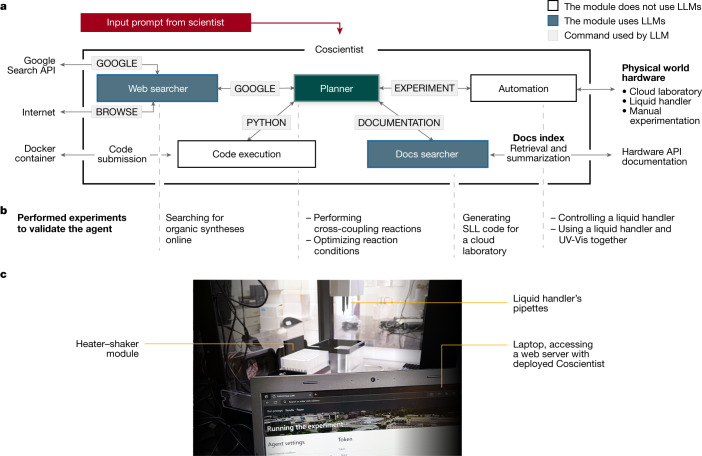
Transformer-based large language models are making significant strides in various fields, such as natural language processing 1–5 , biology 6,7 , chemistry 8–10 and computer programming 11,12 . Here, we show the development and capabilities of Coscientist, an artificial intelligence system driven by GPT-4 that autonomously designs, plans and performs complex experiments by incorporating large language models empowered by tools such as internet and documentation search, code execution and experimental automation. Coscientist showcases its potential for accelerating research across six diverse tasks, including the successful reaction optimization of palladium-catalysed cross-couplings, while exhibiting advanced capabilities for (semi-)autonomous experimental design and execution. Our findings demonstrate the versatility, efficacy and explainability of artificial intelligence systems like Coscientist in advancing research.
Overview
The claims and statistics of this paper haven’t been checked yet.
Free: it reads the open-access text and checks the first 5 claims that cite a source we can check. Create a free account to check every claim.
Integrity signals
Registry
Cites
Statistics
Figures
Verification
Claims the paper makes
The claims and statistics of this paper haven’t been checked yet.
Free: it reads the open-access text and checks the first 5 claims that cite a source we can check. Create a free account to check every claim.
Claims other papers make about this one
Each is checked against this paper’s own text: does it say what the citing paper says it does?
The source backs part of the claim, not all of it — or backs it for a different population, condition or comparison.
In the citing paper
“The broader literature on autonomous scientific systems has already argued for more rigorous evaluation protocols and transparent tool interfaces [3,5,7-12].”
From From Scientific Copilots to Tool-Grounded Autonomy: AI Agents in Simulation-Driven Materials Discovery (2026) · cites this paper as [8]
Experimental — accuracy not yet measuredThe source backs part of the claim, not all of it — or backs it for a different population, condition or comparison.
In the citing paper
“To the best of our knowledge, no prior review has isolated simulation-driven, toolorchestrating AI agent workflows for materials discovery as a distinct evidence base with study-level extraction of autonomy, validation, and reproducibility [3-14].”
From From Scientific Copilots to Tool-Grounded Autonomy: AI Agents in Simulation-Driven Materials Discovery (2026) · cites this paper as [8]
Experimental — accuracy not yet measuredThe source backs part of the claim, not all of it — or backs it for a different population, condition or comparison.
In the citing paper
“In parallel, chemistry-oriented reviews have shown that large language models can move beyond text generation toward tool use, retrieval, planning, code execution, and multi-agent coordination [5-10].”
From From Scientific Copilots to Tool-Grounded Autonomy: AI Agents in Simulation-Driven Materials Discovery (2026) · cites this paper as [8]
Experimental — accuracy not yet measuredThe source backs part of the claim, not all of it — or backs it for a different population, condition or comparison.
In the citing paper
“In scientific discovery, agents dynamically compose and execute hypothesis-testing pipelines spanning simulations, lab protocols, and data analysis [61, 62, 63, 64].”
From Code as Agent Harness (2026) · cites this paper as [62]
Experimental — accuracy not yet measuredThe source backs part of the claim, not all of it — or backs it for a different population, condition or comparison.
In the citing paper
“The central challenge is not only to predict a property, but to manage the sequence of reasoning and action that connects a scientific objective to executable computational or experimental steps [2-10].”
From From Scientific Copilots to Tool-Grounded Autonomy: AI Agents in Simulation-Driven Materials Discovery (2026) · cites this paper as [8]
Experimental — accuracy not yet measured
7 more claims about this paper
Create a free account to see every claim other papers make about this one.
Self-check
Percentages, sums and reported differences re-computed from the paper’s own numbers.
The self-check needs the paper’s full text.
Citations
Cites
Scaling Laws for Neural Language Models
Kaplan, J., McCandlish, S., Henighan, T., Brown, T. B., Chess, B., Child, R., Gray, S., Radford, A., Wu, J., & Amodei, D. (2020) · arXiv · doi:10.48550/arxiv.2001.08361 · Cited by 9,550 · cited 1×
“Extreme scaling of models 13 , as demonstrated by OpenAI, has led to significant breakthroughs in the field 1,14 .”
Evolutionary-scale prediction of atomic level protein structure with a language model
Lin, Z., Akin, H., Rao, R., Hie, B., Zhu, Z., Lu, W., Smetanin, N., Verkuil, R., Kabeli, O., Shmueli, Y., et al. (2022) · doi:10.1101/2022.07.20.500902 · Cited by 5,990 · cited 1×
“These models have been successfully applied to various domains, including natural language 1–5 , biological 6,7 and chemical research 8–10 as well as code generation 11,12 .”
Survey of Hallucination in Natural Language Generation
Ji, Z., Lee, N., Frieske, R., Yu, T., Su, D., Xu, Y., Ishii, E., Bang, Y. J., Madotto, A., & Fung, P. (2023) · ACM Computing Surveys · doi:10.1145/3571730 · Cited by 5,025 · cited 1×
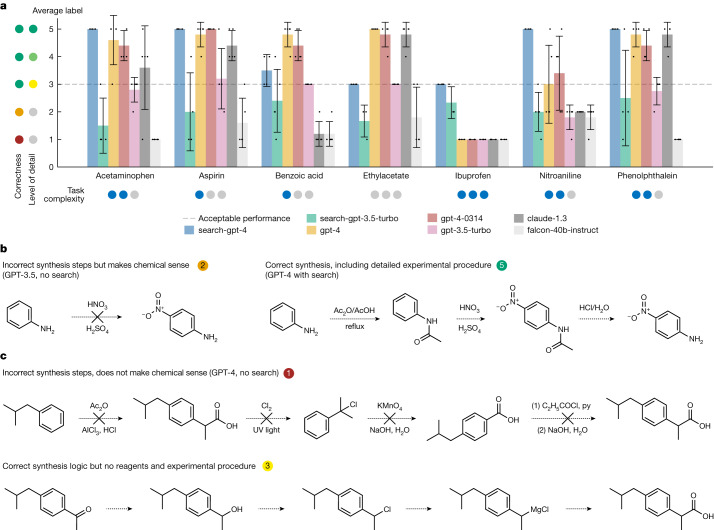
“These results show the importance of grounding LLMs to avoid ‘hallucinations’ 31 .”
Survey of Hallucination in Natural Language Generation
Ji, Z., Lee, N., Frieske, R., Yu, T., Su, D., Xu, Y., Ishii, E., Bang, Y., Chen, D., Dai, W., et al. (2022) · arXiv · doi:10.48550/arxiv.2202.03629 · Cited by 4,981
LLaMA: Open and Efficient Foundation Language Models
Touvron, H., Lavril, T., Izacard, G., Martinet, X., Lachaux, M.-A., Lacroix, T., Rozière, B., Goyal, N., Hambro, E., Azhar, F., et al. (2023) · arXiv · doi:10.48550/arxiv.2302.13971 · Cited by 4,602
Chain-Of-Thought Prompting Elicits Reasoning in Large Language Models
Wei, J., Wang, X., Schuurmans, D., Bosma, M., Ichter, B., Xia, F., Chi, E., Le, Q. V., & Zhou, D. (2022) · Advances in Neural Information Processing Systems 35 · doi:10.52202/068431-1800 · Cited by 4,505
Liu, P., Yuan, W., Fu, J., Jiang, Z., Hayashi, H., & Neubig, G. (2023) · ACM Computing Surveys · doi:10.1145/3560815 · Cited by 4,361 · cited 1×
“System prompts (static inputs defining the LLMs’ goals) for the Planner are engineered 1,27 in a modular fashion, described as four commands that define the action space: The PYTHON command allows the Planner to perform calculations to prepare the experiment using a ‘Code execution’ module.”
Liu, P., Yuan, W., Fu, J., Jiang, Z., Hayashi, H., & Neubig, G. (2021) · arXiv · doi:10.48550/arxiv.2107.13586 · Cited by 4,352 · cited 1×
“System prompts (static inputs defining the LLMs’ goals) for the Planner are engineered 1,27 in a modular fashion, described as four commands that define the action space: The PYTHON command allows the Planner to perform calculations to prepare the experiment using a ‘Code execution’ module.”
Chain-of-Thought Prompting Elicits Reasoning in Large Language Models
Wei, J., Wang, X., Schuurmans, D., Bosma, M., Ichter, B., Xia, F., Chi, E., Le, Q., & Zhou, D. (2022) · arXiv · doi:10.48550/arxiv.2201.11903 · Cited by 4,263 · cited 1×
“This can be done through advanced prompting strategies, such as ReAct 34 , Chain of Thought 35 and Tree of Thoughts 36 .”
Billion-scale similarity search with GPUs
Johnson, J., Douze, M., & Jegou, H. (2021) · IEEE Transactions on Big Data · doi:10.1109/tbdata.2019.2921572 · Cited by 4,228
Research works printed but not linked: 3
- Brown, T. et al. in Advances in Neural Information Processing Systems Vol. 33 (eds Larochelle, H. et al.) 1877–1901 (Curran Associates, 2020).
- Data Mining. Mining of Massive Datasets (Cambridge Univ., 2011).
- Running experiments. Emerald Cloud Lab https://www.emeraldcloudlab.com/guides/runningexperiments (2023).
Cited by
The Rise and Potential of Large Language Model Based Agents: A Survey
Xi, Z., Chen, W., Guo, X., He, W., Ding, Y., Hong, B., Zhang, M., Wang, J., Jin, S., Zhou, E., et al. (2023) · arXiv · doi:10.48550/arxiv.2309.07864 · Cited by 972
The rise and potential of large language model based agents: a survey
Xi, Z., Chen, W., Guo, X., He, W., Ding, Y., Hong, B., Zhang, M., Wang, J., Jin, S., Zhou, E., et al. (2025) · Science China Information Sciences · doi:10.1007/s11432-024-4222-0 · Cited by 970
Augmenting large language models with chemistry tools
M. Bran, A., Cox, S., Schilter, O., Baldassari, C., White, A. D., & Schwaller, P. (2024) · Nature Machine Intelligence · doi:10.1038/s42256-024-00832-8 · Cited by 794
Dell'Acqua, F., McFowland III, E., Mollick, E. R., Lifshitz-Assaf, H., Kellogg, K., Rajendran, S., Krayer, L., Candelon, F., & Lakhani, K. R. (2023) · SSRN Electronic Journal · doi:10.2139/ssrn.4573321 · Cited by 794
Self-Driving Laboratories for Chemistry and Materials Science
Tom, G., Schmid, S. P., Baird, S. G., Cao, Y., Darvish, K., Hao, H., Lo, S., Pablo-García, S., Rajaonson, E. M., Skreta, M., et al. (2024) · Chemical Reviews · doi:10.1021/acs.chemrev.4c00055 · Cited by 707
AgentDojo: A Dynamic Environment to Evaluate Prompt Injection Attacks and Defenses for LLM Agents
Debenedetti, E., Zhang, J., Balunović, M., Beurer-Kellner, L., Fischer, M., & Tramèr, F. (2024) · arXiv · doi:10.48550/arxiv.2406.13352 · Cited by 616
Artificial intelligence in drug development
Zhang, K., Yang, X., Wang, Y., Yu, Y., Huang, N., Li, G., Li, X., Wu, J. C., & Yang, S. (2025) · Nature Medicine · doi:10.1038/s41591-024-03434-4 · Cited by 498
“246), we can be judiciously optimistic about AI’s promise for accelerating drug development and benefiting human health.”
Empowering biomedical discovery with AI agents
Gao, S., Fang, A., Huang, Y., Giunchiglia, V., Noori, A., Schwarz, J. R., Ektefaie, Y., Kondic, J., & Zitnik, M. (2024) · Cell · doi:10.1016/j.cell.2024.09.022 · Cited by 315
A review of large language models and autonomous agents in chemistry
Ramos, M. C., Collison, C. J., & White, A. D. (2025) · Chemical Science · doi:10.1039/d4sc03921a · Cited by 274
Opportunities and Challenges for Machine Learning-Assisted Enzyme Engineering
Yang, J., Li, F.-Z., & Arnold, F. H. (2024) · ACS Central Science · doi:10.1021/acscentsci.3c01275 · Cited by 246
Autonomous mobile robots for exploratory synthetic chemistry
Dai, T., Vijayakrishnan, S., Szczypiński, F. T., Ayme, J.-F., Simaei, E., Fellowes, T., Clowes, R., Kotopanov, L., Shields, C. E., Zhou, Z., et al. (2024) · Nature · doi:10.1038/s41586-024-08173-7 · Cited by 215
Jablonka, K. M., Ai, Q., Al-Feghali, A., Badhwar, S., Bocarsly, J. D., Bran, A. M., Bringuier, S., Brinson, L. C., Choudhary, K., Circi, D., et al. (2023) · Digital Discovery · doi:10.1039/d3dd00113j · Cited by 218
A guide to artificial intelligence for cancer researchers
Perez-Lopez, R., Ghaffari Laleh, N., Mahmood, F., & Kather, J. N. (2024) · Nature Reviews Cancer · doi:10.1038/s41568-024-00694-7 · Cited by 211
“AI-based tools are not just influencing computational research in drug discovery, but a recent study suggested that a LLM can be coupled with a robotic system to perform independent chemical experimentation 153 .”
Machine learning in preclinical drug discovery
Catacutan, D. B., Alexander, J., Arnold, A., & Stokes, J. M. (2024) · Nature Chemical Biology · doi:10.1038/s41589-024-01679-1 · Cited by 204
“Transformer-based large language models (LLMs) are also being increasingly applied for generative chemistry 57,58 .”
Larger and more instructable language models become less reliable
Zhou, L., Schellaert, W., Martínez-Plumed, F., Moros-Daval, Y., Ferri, C., & Hernández-Orallo, J. (2024) · Nature · doi:10.1038/s41586-024-07930-y · Cited by 203
“They represent tasks that LLMs are likely to encounter in educational, academic and research settings 6,8,48 , some of which require considerable time to solve.”
Xu, H., Omitaomu, F., Sabri, S., Zlatanova, S., Li, X., & Song, Y. (2024) · Urban Informatics · doi:10.1007/s44212-024-00060-w · Cited by 178
“…in interpreting human natural language and automating code generation and information, therefore, have been applied to develop autonomous systems in various research fields, such as geoinformatics (Li & Ning, 2023), chemical research (Boiko et al. 2023), and transportation (Cui et al. 2024a).”
Strongly-confined colloidal lead-halide perovskite quantum dots: from synthesis to applications
Ye, J., Gaur, D., Mi, C., Chen, Z., Fernández, I. L., Zhao, H., Dong, Y., Polavarapu, L., & Hoye, R. L. Z. (2024) · Chemical Society Reviews · doi:10.1039/d4cs00077c · Cited by 170
Survey on large language model-enhanced reinforcement learning: Concept, taxonomy, and methods
Cao, Y., Zhao, H., Cheng, Y., Shu, T., Chen, Y., Liu, G., Liang, G., Zhao, J., Yan, J., & Li, Y. (2025) · IEEE Transactions on Neural Networks and Learning Systems · doi:10.1109/tnnls.2024.3497992 · Cited by 174
“The emergence of these LLMs has demonstrated powerful capabilities across various real-world applications, including medicine [30], chemical research [31], energy system [32], [33], [34], and embodied control in robotics [35].”
ChatGPT Research Group for Optimizing the Crystallinity of MOFs and COFs
Zheng, Z., Zhang, O., Nguyen, H. L., Rampal, N., Alawadhi, A. H., Rong, Z., Head-Gordon, T., Borgs, C., Chayes, J. T., & Yaghi, O. M. (2023) · ACS Central Science · doi:10.1021/acscentsci.3c01087 · Cited by 172
A Multiagent-Driven Robotic AI Chemist Enabling Autonomous Chemical Research On Demand
Song, T., Luo, M., Zhang, X., Chen, L., Huang, Y., Cao, J., Zhu, Q., Liu, D., Zhang, B., Zou, G., et al. (2025) · Journal of the American Chemical Society · doi:10.1021/jacs.4c17738 · Cited by 171
The Virtual Lab of AI agents designs new SARS-CoV-2 nanobodies
Swanson, K., Wu, W., Bulaong, N. L., Pak, J. E., & Zou, J. (2025) · Nature · doi:10.1038/s41586-025-09442-9 · Cited by 169
“Another framework called Coscientist includes GPT-4-powered modules such as a planner and a web searcher to handle several aspects of research 21 .”
Crystal structure generation with autoregressive large language modeling
Antunes, L. M., Butler, K. T., & Grau-Crespo, R. (2024) · Nature Communications · doi:10.1038/s41467-024-54639-7 · Cited by 157
“LLMs have recently been used in the context of materials science 22 – 28 .”
Dell’Acqua, F., McFowland, E., Mollick, E., Lifshitz, H., Kellogg, K. C., Rajendran, S., Krayer, L., Candelon, F., & Lakhani, K. R. (2026) · Organization Science · doi:10.1287/orsc.2025.21838 · Cited by 1,189
“Although trained as general models, LLMs demonstrate specialist knowledge and abilities as part of their training process and during normal use (Reed et al. 2022, Boiko et al. 2023, Moor et al. 2023, Singhal et al. 2023).”
From text to insight: large language models for chemical data extraction
Schilling-Wilhelmi, M., Ríos-García, M., Shabih, S., Gil, M. V., Miret, S., Koch, C. T., Márquez, J. A., & Jablonka, K. M. (2025) · Chemical Society Reviews · doi:10.1039/d4cs00913d · Cited by 142
CRISPR-GPT for agentic automation of gene-editing experiments
Qu, Y., Huang, K., Yin, M., Zhan, K., Liu, D., Yin, D., Cousins, H. C., Johnson, W. A., Wang, X., Shah, M., et al. (2025) · Nature Biomedical Engineering · doi:10.1038/s41551-025-01463-z · Cited by 140
“For example, the agent system relies on high-quality instructions and discussion data from human scientists who have deep knowledge about the biology domain.”
InfluentialApplications of natural language processing and large language models in materials discovery
Jiang, X., Wang, W., Tian, S., Wang, H., Lookman, T., & Su, Y. (2025) · npj Computational Materials · doi:10.1038/s41524-025-01554-0 · Cited by 145
Accelerated end-to-end chemical synthesis development with large language models
Ruan, Y., Lu, C., Xu, N., Zhang, J., Xuan, J., Pan, J., Fang, Q., Gao, H., Shen, X., Ye, N., et al. (2024) · doi:10.26434/chemrxiv-2024-6wmg4 · Cited by 140
Large language models for reticular chemistry
Zheng, Z., Rampal, N., Inizan, T. J., Borgs, C., Chayes, J. T., & Yaghi, O. M. (2025) · Nature Reviews Materials · doi:10.1038/s41578-025-00772-8 · Cited by 134
“Compared with rule-based coding, the major advantage of tool augmentation lies in the LLM’s ability to understand what tools exist, when to use them and how to configure the inputs to correctly execute these models through reasoning 16,42,51 .”
InfluentialORGANA: A robotic assistant for automated chemistry experimentation and characterization
Darvish, K., Skreta, M., Zhao, Y., Yoshikawa, N., Som, S., Bogdanović, M., Cao, Y., Hao, H., Xu, H., Aspuru‐Guzik, A., et al. (2024) · Matter · doi:10.1016/j.matt.2024.10.015 · Cited by 256
ORGANA: A Robotic Assistant for Automated Chemistry Experimentation and Characterization
Darvish, K., Skreta, M., Zhao, Y., Yoshikawa, N., Som, S., Bogdanovic, M., Cao, Y., Hao, H., Xu, H., Aspuru-Guzik, A., et al. (2024) · arXiv · doi:10.48550/arxiv.2401.06949 · Cited by 133
A generalized platform for artificial intelligence-powered autonomous enzyme engineering
Singh, N., Lane, S., Yu, T., Lu, J., Ramos, A., Cui, H., & Zhao, H. (2025) · Nature Communications · doi:10.1038/s41467-025-61209-y · Cited by 148
“Complete sequence of these plasmids are provided in Supplementary Data 5.”
InfluentialAn automatic end-to-end chemical synthesis development platform powered by large language models
Ruan, Y., Lu, C., Xu, N., He, Y., Chen, Y., Zhang, J., Xuan, J., Pan, J., Fang, Q., Gao, H., et al. (2024) · Nature Communications · doi:10.1038/s41467-024-54457-x · Cited by 116
“Although the LLMs have been used as an optimizer in recent publications and shown superior performance for optimizing reactions when provided kinetic information or reaction knowledge, they still fell behind statistical optimization algorithms (e.g., BO) for complex reaction systems 41,60 .”
Large language models for chemistry robotics
Yoshikawa, N., Skreta, M., Darvish, K., Arellano-Rubach, S., Ji, Z., Bjørn Kristensen, L., Li, A. Z., Zhao, Y., Xu, H., Kuramshin, A., et al. (2023) · Autonomous Robots · doi:10.1007/s10514-023-10136-2 · Cited by 112
Automation and machine learning augmented by large language models in a catalysis study
Su, Y., Wang, X., Ye, Y., Xie, Y., Xu, Y., Jiang, Y., & Wang, C. (2024) · Chemical Science · doi:10.1039/d3sc07012c · Cited by 107
Ghafarollahi, A., & Buehler, M. J. (2024) · Digital Discovery · doi:10.1039/d4dd00013g · Cited by 106
Artificial intelligence tools expand scientists' impact but contract science's focus
Hao, Q., Xu, F., Li, Y., & Evans, J. (2026) · Nature · doi:10.1038/s41586-025-09922-y · Cited by 117
“Autonomous laboratory systems driven by ChatGPT have helped some chemists and materials scientists upscale the number of adaptive high-throughput experiments 20–22 .”
Materials science in the era of large language models: a perspective
Lei, G., Docherty, R., & Cooper, S. J. (2024) · Digital Discovery · doi:10.1039/d4dd00074a · Cited by 99
“‘ Coscientist ’ 18 used LLMs as a coordinator to design, plan and execute chemical research.”
Machine Learning in Membrane Design: From Property Prediction to AI-Guided Optimization
Cao, Z., Farimani, O. B., Ock, J., & Farimani, A. B. (2024) · Nano Letters · doi:10.1021/acs.nanolett.3c05137 · Cited by 129
Autonomous chemistry: Navigating self-driving labs in chemical and material sciences
Bayley, O. M., Savino, E., Slattery, A., & Noël, T. (2024) · Matter · doi:10.1016/j.matt.2024.06.003 · Cited by 129
“13,14 SELF-DRIVING LABS Hardware With recent technological advancements already making automation of routine, repetitive, and time-consuming processes common place, the significant challenge facing the use of such hardware lies in the integration of these instruments into a cohesive automated…”
The future of self-driving laboratories: from human in the loop interactive AI to gamification
Hysmith, H., Foadian, E., Padhy, S. P., Kalinin, S. V., Moore, R. G., Ovchinnikova, O. S., & Ahmadi, M. (2024) · Digital Discovery · doi:10.1039/d4dd00040d · Cited by 103
Chatlaw: A Multi-Agent Legal Assistant based on a Role-Aligned Mixture-of-Experts Architecture
Cui, J., Ning, M., Li, Z., Li, H., Yang, Y., Chen, B., Ling, B., Tian, Y., & Yuan, L. (2026) · Fundamental Research · doi:10.1016/j.fmre.2026.03.026 · Cited by 94
Chatlaw: A Multi-Agent Legal Assistant based on a Role-Aligned Mixture-of-Experts Architecture
Cui, J., Ning, M., Li, Z., Chen, B., Yan, Y., Li, H., Ling, B., Tian, Y., & Yuan, L. (2023) · arXiv · doi:10.48550/arxiv.2306.16092 · Cited by 94
Exploring the role of large language models in the scientific method: from hypothesis to discovery
Zhang, Y., Khan, S., Mahmud, A., Yang, H., Lavin, A., Levin, M., Frey, J., Dunnmon, J. A., Evans, J., Bundy, A., et al. (2025) · npj Artificial Intelligence · doi:10.1038/s44387-025-00019-5 · Cited by 186
Towards end-to-end automation of AI research
Lu, C., Lu, C., Lange, R. T., Yamada, Y., Hu, S., Foerster, J., Ha, D., & Clune, J. (2026) · Nature · doi:10.1038/s41586-026-10265-5 · Cited by 116
“In future work, this same playbook could be applied to other scientific domains where one can automatically conduct experiments (or have humans conduct them) and collect data from them (for example, automated chemistry laboratories, on which swift progress is being made 46 ).”
Zhang, C., Xu, Q., Yu, Y., Zhou, G., Zeng, K., Chang, F., & Ding, K. (2024) · Robotics and Computer-Integrated Manufacturing · doi:10.1016/j.rcim.2024.102883 · Cited by 124
Mirza, A., Alampara, N., Kunchapu, S., Ríos-García, M., Emoekabu, B., Krishnan, A., Gupta, T., Schilling-Wilhelmi, M., Okereke, M., Aneesh, A., et al. (2025) · Nature Chemistry · doi:10.1038/s41557-025-01815-x · Cited by 380
“Although our findings indicate many areas for further improvement of LLM-based systems, such as agents (more discussion in Supplementary Note 11), it is also important to realize that clearly defined metrics have been the key to the progress of many fields of ML, such as computer vision.”
InfluentialQi, X., Zhao, L., Tian, C., Li, Y., Chen, Z.-L., Huo, P., Chen, R., Liu, X., Wan, B., Yang, S., et al. (2024) · Nature Communications · doi:10.1038/s41467-024-53457-1 · Cited by 131
Pan, Y., Shan, X., Cai, F., Gao, H., Xu, J., & Zhou, M. (2024) · Angewandte Chemie International Edition · doi:10.1002/anie.202407116 · Cited by 100
Xiao, T., & Xu, P. (2024) · Energy and Buildings · doi:10.1016/j.enbuild.2024.114691 · Cited by 95
In Silico Chemical Experiments in the Age of AI: From Quantum Chemistry to Machine Learning and Back
Aldossary, A., Campos-Gonzalez-Angulo, J. A., Pablo‐García, S., Leong, S. X., Rajaonson, E. M., Thiede, L., Tom, G., Wang, A., Avagliano, D., & Aspuru‐Guzik, A. (2024) · Advanced Materials · doi:10.1002/adma.202402369 · Cited by 109
AI-Driven Inverse Design of Materials: Past, Present, and Future
Han, X., Wang, X.-D., 徐, M.-Y. 孟. X., Zhen, F., 姚, B.-W. 博. Y., Guo, P.-J., Gao, Z.-F., & Lu, Z.-Y. (2025) · Chinese Physics Letters · doi:10.1088/0256-307x/42/2/027403 · Cited by 124
A multi-agent system for automating scientific discovery
Ghareeb, A. E., Chang, B., Mitchener, L., Yiu, A., Szostkiewicz, C. J., Shved, D., Gyimesi, G. J., Laurent, J. M., Wright, S. M., Razzak, M. T., et al. (2026) · Nature · doi:10.1038/s41586-026-10652-y · Cited by 128
Autonomous ‘self-driving’ laboratories: a review of technology and policy implications
Tobias, A. V., & Wahab, A. (2025) · Royal Society Open Science · doi:10.1098/rsos.250646 · Cited by 153
A multimodal robotic platform for multi-element electrocatalyst discovery
Zhang, Z., Ren, Z., Hsu, C.-W., Chen, W., Hong, Z.-W., Lee, C., Penn, A. N., Xu, H., Zheng, D. J., Miao, S., et al. (2025) · Nature · doi:10.1038/s41586-025-09640-5 · Cited by 140
AutoTRIZ: Automating engineering innovation with TRIZ and large language models
Jiang, S., Li, W., Qian, Y., Zhang, Y., & Luo, J. (2025) · Advanced Engineering Informatics · doi:10.1016/j.aei.2025.103312 · Cited by 114
“These capabilities have been applied across various domains, including medicine [17], chemistry [18], mathematics [19], manufacturing [20], robotics [21], and engineering management [22].”
Large Language Models for Inorganic Synthesis Predictions
Kim, S., Jung, Y., & Schrier, J. (2024) · Journal of the American Chemical Society · doi:10.1021/jacs.4c05840 · Cited by 73
From intuition to AI: evolution of small molecule representations in drug discovery
McGibbon, M., Shave, S., Dong, J. N., Gao, Y., Houston, D. R., Xie, J., Yang, Y., Schwaller, P., & Blay, V. (2023) · Briefings in Bioinformatics · doi:10.1093/bib/bbad422 · Cited by 89
Towards the application of machine learning in digital twin technology: a multi-scale review
Nele, L., Mattera, G., Yap, E. W., Vozza, M., & Vespoli, S. (2024) · Discover Applied Sciences · doi:10.1007/s42452-024-06206-4 · Cited by 106
“These models, boosted by Transformer architectures like GPT and LLAMA, are trained on massive datasets to acquire their remarkable language proficiency [107].”
Generative AI and process systems engineering: The next frontier
Decardi‐Nelson, B., Alshehri, A. S., Ajagekar, A., & You, F. (2024) · Computers & Chemical Engineering · doi:10.1016/j.compchemeng.2024.108723 · Cited by 97
Temperature excavation to boost machine learning battery thermochemical predictions
Wang, Y., Feng, X., Guo, D., Hsu, H., Hou, J., Zhang, F., Xu, C., Chen, X., Wang, L., Zhang, Q., et al. (2024) · Joule · doi:10.1016/j.joule.2024.07.002 · Cited by 73
Advancing materials discovery through artificial intelligence
Otyepka, M., Pykal, M., & Otyepka, M. (2025) · Applied Materials Today · doi:10.1016/j.apmt.2025.102981 · Cited by 105
Suchikova, Y., Tsybuliak, N., Teixeira da Silva, J. A., & Nazarovets, S. (2026) · Accountability in Research · doi:10.1080/08989621.2025.2544331 · Cited by 70
Large Language Models as Biomedical Hypothesis Generators: A Comprehensive Evaluation
Qi, B., Zhang, K., Tian, K., Li, H., Chen, Z.-R., Zeng, S., Hua, E., Jinfang, H., & Zhou, B. (2024) · arXiv · doi:10.48550/arxiv.2407.08940 · Cited by 70
Challenges in AI-driven Biomedical Multimodal Data Fusion and Analysis
Liu, J., Cen, X., Yi, C., Wang, F.-A., Ding, J., Cheng, J., Wu, Q., Gai, B., Zhou, Y., He, R., et al. (2025) · Genomics, Proteomics & Bioinformatics · doi:10.1093/gpbjnl/qzaf011 · Cited by 75
Image and data mining in reticular chemistry powered by GPT-4V
Zheng, Z., He, Z., Khattab, O., Rampal, N., Zaharia, M. A., Borgs, C., Chayes, J. T., & Yaghi, O. M. (2024) · Digital Discovery · doi:10.1039/d3dd00239j · Cited by 68
Płoszaj-Mazurek, M., & Ryńska, E. D. (2024) · Energies · doi:10.3390/en17122997 · Cited by 101
Interpretable Machine Learning Applications: A Promising Prospect of AI for Materials
Jiang, X. F., Fu, H., Bai, Y., Jiang, L., Zhang, H., Wang, W., Yun, P., He, J., Xue, D., Lookman, T., et al. (2025) · Advanced Functional Materials · doi:10.1002/adfm.202507734 · Cited by 96
Shan, X., Pan, Y., Cai, F., Gao, H. J., Xu, J., Liu, D., Zhu, Q., Li, P., Jin, Z., Jiang, J., et al. (2024) · Nano Letters · doi:10.1021/acs.nanolett.4c03208 · Cited by 78
Lehr, S. A., Caliskan, A., Liyanage, S., & Banaji, M. R. (2024) · Proceedings of the National Academy of Sciences · doi:10.1073/pnas.2404328121 · Cited by 66
“More detailed statistical reporting may be found in SI Appendix , section S9 .”
Deep learning in metasurfaces: from automated design to adaptive metadevices
Saifullah, Y., Wu, N., Wang, H., Zheng, B., Qian, C., & Chen, H. (2025) · Advanced Photonics · doi:10.1117/1.ap.7.3.034005 · Cited by 77
Can ChatGPT be used to generate scientific hypotheses?
Park, Y. J., Kaplan, D., Ren, Z., Hsu, C.-W., Li, C., Xu, H., Li, S., & Li, J. (2023) · arXiv · doi:10.48550/arxiv.2304.12208 · Cited by 65
The Potential of Neural Network Potentials
Duignan, T. T. (2024) · ACS Physical Chemistry Au · doi:10.1021/acsphyschemau.4c00004 · Cited by 82
Zhang, J., Zhang, C., Lu, J., & Zhao, Y. (2024) · Applied Energy · doi:10.1016/j.apenergy.2024.124378 · Cited by 162
Biomaterial design for regenerating aged bone: materiobiological advances and paradigmatic shifts
Dai, K., Geng, Z., Zhang, W., Xue, W., Wang, J., Nie, G., & Liu, C. (2024) · National Science Review · doi:10.1093/nsr/nwae076 · Cited by 67
“At the same time, transformer-based large language models have also been employed for the automated synthesis of complex compounds [99 ].”
MethodSun, D., Guo, D., Lu, Y., Chen, J., Lu, Y., Han, X., Feng, X., Lu, L., Wang, H., & Ouyang, M. (2024) · Energy & Environmental Science · doi:10.1039/d4ee03063j · Cited by 65
Toward large reasoning models: A survey of reinforced reasoning with large language models
Xu, F., Hao, Q., Shao, C., Zong, Z., Li, Y., Wang, J., Zhang, Y., Wang, J., Lan, X., Gong, J., et al. (2025) · Patterns · doi:10.1016/j.patter.2025.101370 · Cited by 656
“…Shojaee et al. 124 ; Mysocki et al. 125 ; Ma et al. 126 multi-agent Chen et al. 127 ; Zhou et al. 128 ; Le et al. 129 ; Yu et al. 130 embodied agent Boiko et al. 131 Memory-based reinforcement experiential learning Zhang et al. 132 ; Gao et al. 133 ; Qian et al. 134 reflective learning Shinn et…”
33 Unresolved Questions in Nanoscience and Nanotechnology
Mirkin, C. A., Petrosko, S. H., Artzi, N., Aydın, K., Biaggne, A., Brinker, C. J., Bujold, K. E., Cao, Y. C., Chan, R. R., Chen, C., et al. (2025) · ACS Nano · doi:10.1021/acsnano.5c12854 · Cited by 69
Artificial Intelligence Methods and Models for Retro-Biosynthesis: A Scoping Review
Gricourt, G., Meyer, P., Duigou, T., & Faulon, J. (2024) · ACS Synthetic Biology · doi:10.1021/acssynbio.4c00091 · Cited by 70
Studying Noncovalent Interactions in Molecular Systems with Machine Learning
Tretiakov, S., Nigam, A., & Pollice, R. (2025) · Chemical Reviews · doi:10.1021/acs.chemrev.4c00893 · Cited by 85
Steel design based on a large language model
Tian, S., Jiang, X. F., Wang, W., Jing, Z., Zhang, C., Zhang, C., Lookman, T., & Su, Y. (2024) · Acta Materialia · doi:10.1016/j.actamat.2024.120663 · Cited by 74
Accelerating battery innovation: AI-powered molecular discovery
Gao, Y., Chen, X., Yuan, Y., Chen, Y., Niu, Y.-L., Yao, N., Gao, Y.-B., Li, W. Z., & Zhang, Q. (2025) · Chemical Society Reviews · doi:10.1039/d5cs00053j · Cited by 68
El Agente: An autonomous agent for quantum chemistry
Zou, Y., Cheng, A., Aldossary, A., Bai, J., Leong, S. X., Campos-Gonzalez-Angulo, J. A., Choi, C., Ser, C. T., Tom, G., Wang, A., et al. (2025) · Matter · doi:10.1016/j.matt.2025.102263 · Cited by 193
The Virtual Lab: AI Agents Design New SARS-CoV-2 Nanobodies with Experimental Validation
Swanson, K., Wu, W., Bulaong, N. L., Pak, J. E., & Zou, J. (2024) · bioRxiv (Cold Spring Harbor Laboratory) · doi:10.1101/2024.11.11.623004 · Cited by 56
Risks of AI scientists: prioritizing safeguarding over autonomy
Tang, X., Jin, Q., Zhu, K., Yuan, T., Zhang, Y., Zhou, W., Qu, M., Zhao, Y., Tang, J., Zhang, Z., et al. (2025) · Nature Communications · doi:10.1038/s41467-025-63913-1 · Cited by 51
“Recent systems like ChemCrow [2] and Coscientist [13] exhibit their potential impact on scientific research automation.”
InfluentialFrom intention to implementation: automating biomedical research via LLMs
Luo, Y., Shi, L., Li, Y., Zhuang, A., Gong, Y., Liu, L., & Chen, L. (2025) · Science China Information Sciences · doi:10.1007/s11432-024-4485-0 · Cited by 88
Cross-disciplinary perspectives on the potential for artificial intelligence across chemistry
Mroz, A. M., Basford, A. R., Hastedt, F., Jayasekera, I. S., Mosquera‐Lois, I., Sedgwick, R., Ballester, P. J., Bocarsly, J. D., del Rio‐Chanona, E. A., Evans, M. L., et al. (2025) · Chemical Society Reviews · doi:10.1039/d5cs00146c · Cited by 73
Large language models for drug discovery and development
Zheng, Y., Koh, H. Y., Ju, J., Yang, M., May, L. T., Webb, G. I., Li, L., Pan, S., & Church, G. M. (2025) · Patterns · doi:10.1016/j.patter.2025.101346 · Cited by 134
“4,81 Despite these advances, their widespread deployment in industries, such as pharmaceuticals, remains limited, indicating the need for further research and development to fully leverage general LLMs in chemistry experiments.”
InfluentialFrom Intention To Implementation: Automating Biomedical Research via LLMs
Luo, Y., Shi, L., Li, Y., Zhuang, A., Gong, Y., Liu, L., & Lin, C. (2024) · arXiv · doi:10.48550/arxiv.2412.09429 · Cited by 53
Top 20 influential AI-based technologies in chemistry
Ananikov, V. P. (2024) · Artificial Intelligence Chemistry · doi:10.1016/j.aichem.2024.100075 · Cited by 75
Large‐Language‐Model‐Based AI Agent for Organic Semiconductor Device Research
Zhang, Q., Hu, Y., Yan, J., Zhang, H., Xie, X., Zhu, J., Li, H., Niu, X., Li, L., Sun, Y., et al. (2024) · Advanced Materials · doi:10.1002/adma.202405163 · Cited by 72
Agent-based learning of materials datasets from the scientific literature
Ansari, M., & Moosavi, S. M. (2024) · Digital Discovery · doi:10.1039/d4dd00252k · Cited by 103
Automating the practice of science: Opportunities, challenges, and implications
Musslick, S., Bartlett, L., Chandramouli, S., Dubova, M., Gobet, F. R., Griffiths, T. L., Hullman, J. R., King, R. D., Kutz, J. N., Lucas, C. G., et al. (2025) · Proceedings of the National Academy of Sciences · doi:10.1073/pnas.2401238121 · Cited by 103
A Large language model-based multi-agent manufacturing system for intelligent shopfloors
Zhao, Z. M., Tang, D., Liu, C., Wang, L., Zhang, Z., Zhu, H., Chen, K., Nie, Q., & Ji, Y. (2025) · Advanced Engineering Informatics · doi:10.1016/j.aei.2025.103888 · Cited by 107
“In biology, researchers have achieved immense progress building upon the use of LLMs. Boiko et al. [24] introduced Coscientist, an AI system powered by GPT-4.”
Human Creativity in the Age of LLMs: Randomized Experiments on Divergent and Convergent Thinking
Kumar, H., Vincentius, J., Jordan, E., & Anderson, A. (2025) · Proceedings of the 2025 CHI Conference on Human Factors in Computing Systems · doi:10.1145/3706598.3714198 · Cited by 129
Machine learning in nanozymes: from design to application
Gao, Y., Zhu, Z., Chen, Z., Guo, M., Zhang, Y., Wang, L., & Zhu, Z. (2024) · Biomaterials Science · doi:10.1039/d4bm00169a · Cited by 58
Recent advances from computer-aided drug design to artificial intelligence drug design
Wang, K., Huang, Y., Wang, Y., You, Q., & Wang, L. (2024) · RSC Medicinal Chemistry · doi:10.1039/d4md00522h · Cited by 70
Large language models in oncology: a review
Chen, D., Parsa, R., Swanson, K. E., Nuñez, J.-J., Critch, A., Bitterman, D. S., Liu, F., & Raman, S. (2025) · BMJ Oncology · doi:10.1136/bmjonc-2025-000759 · Cited by 76
“85 Roadmaps for the design of compound AI systems in oncology can be informed by previous system designs used for chemical synthesis 86 and geometry theorem proofs.”
Ahn, S. (2024) · The Korean Journal of Physiology & Pharmacology · doi:10.4196/kjpp.2024.28.5.393 · Cited by 51
“Moreover, an AI system driven by GPT-4, named Coscientist, has been showcased to autonomously design, plan, and perform complex experiments in chemistry [47].”
MethodAI and biosecurity: The need for governance
Bloomfield, D., Pannu, J., Zhu, A. W., Ng, M. Y., Lewis, A., Bendavid, E., Asch, S. M., Hernandez-Boussard, T., Cicero, A., & Inglesby, T. (2024) · Science · doi:10.1126/science.adq1977 · Cited by 50
From language to action: a review of large language models as autonomous agents and tool users
Chowa, S. S., Alvi, R., Rahman, S. S., Rahman, M. A., Raiaan, M. A. K., Islam, M. R., Hussain, M., & Azam, S. (2026) · Artificial Intelligence Review · doi:10.1007/s10462-025-11471-9 · Cited by 50
“For instance, ChemCrow and Coscientist are agent systems evaluated on their ability to plan and carry out complex chemical syntheses using expert-designed chemistry tools [54, 67].”
Influential
Metadata
- Authors
- Boiko, D. A., MacKnight, R., Kline, B., & Gomes, G.
- Affiliations
- Carnegie Mellon University (US)
- Corresponding author
- Gomes, Gabe
- Venue
- Nature
- Published
- 2023-12-20
- Volume
- 624
- Issue
- 7992
- Pages
- 570-578
- ISSN
- 0028-0836 (ISSN-L)
- 1476-4687
- PMC
- PMC10733136
- OpenAlex
- W4389991792
- Cited by
- 1,050
- References
- 37
- Citations by year
- 2026: 458 · 2025: 401 · 2024: 186 · 2023: 5
- FWCI
- 77.41
- Type
- journal article
- Language
- en
- Open access
- hybrid
- doi.org
- Licence
- cc-by
- creativecommons.org/licenses/by/4.0 (tdm)
- creativecommons.org/licenses/by/4.0 (vor)
- Locations
- Nature (publishedVersion, cc-by)
- PubMed Central (publishedVersion, cc-by)
- PubMed (publishedVersion)
- RePEc: Research Papers in Economics (submittedVersion)
- Funders
- National Science Foundation (2221346, 2202693)
- Carnegie Mellon University
- Topics
- Physical Sciences › Materials Science › Materials Chemistry › Machine Learning in Materials Science
- Physical Sciences › Computer Science › Artificial Intelligence › Artificial Intelligence Applications
- Life Sciences › Pharmacology, Toxicology and Pharmaceutics › Drug Discovery › Computational Drug Discovery Methods
- Keywords
- large language models, GPT-4, experimental automation, reaction condition optimization, palladium-catalyzed cross-coupling, program execution
- MeSH terms
- Artificial Intelligence, Automation, Catalysis, Documentation, Electric Power Supplies
About these checks
Registry, retraction, Cites and statistics results are computed, not judged, with one exception: a printed reference that no index lists is read once by a model before it counts as a citation error. Claims are extracted by a model and kept only when their quote appears verbatim in the text; each cited source is then checked, with a model’s help, for whether it says what the claim relies on. Those verdicts can be wrong — read the claim’s quote and the cited source before relying on one.
Statistics and arithmetic are recomputed, not judged.
Confidence bands are shown only for fields calibrated on our annotated test set. None is calibrated yet, so no band is shown.
What counts as a claim ›How we measure confidence ›How we check this ›
Are you an author, or do you see a problem with this page? Request a review
Data sources
Bibliographic data: Semantic Scholar, OpenAlex, Crossref.
Contains information from the Semantic Scholar Academic Graph Datasets, made available under the ODC Attribution License (ODC-BY 1.0).
Semantic Scholar’s data is described in: Kinney, R., et al. (2023). The Semantic Scholar Open Data Platform. arXiv:2301.10140.
