

Mapping single-cell data to reference atlases by transfer learning
Open accessThe DOI matches its Crossref record; 85 of the 85 references it cites were found in a registry or an index.
Abstract
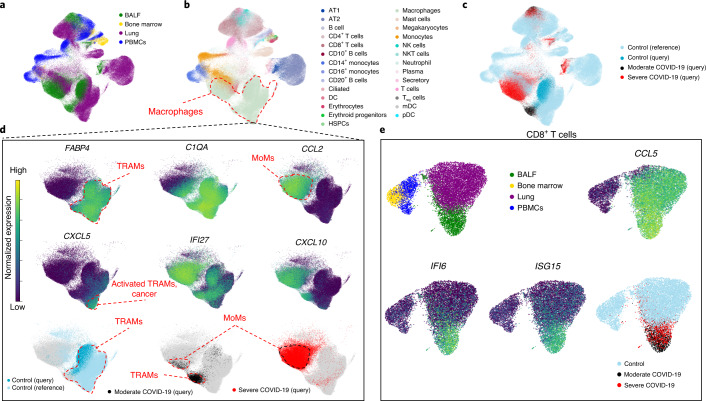
Large single-cell atlases are now routinely generated to serve as references for analysis of smaller-scale studies. Yet learning from reference data is complicated by batch effects between datasets, limited availability of computational resources and sharing restrictions on raw data. Here we introduce a deep learning strategy for mapping query datasets on top of a reference called single-cell architectural surgery (scArches). scArches uses transfer learning and parameter optimization to enable efficient, decentralized, iterative reference building and contextualization of new datasets with existing references without sharing raw data. Using examples from mouse brain, pancreas, immune and whole-organism atlases, we show that scArches preserves biological state information while removing batch effects, despite using four orders of magnitude fewer parameters than de novo integration. scArches generalizes to multimodal reference mapping, allowing imputation of missing modalities. Finally, scArches retains coronavirus disease 2019 (COVID-19) disease variation when mapping to a healthy reference, enabling the discovery of disease-specific cell states. scArches will facilitate collaborative projects by enabling iterative construction, updating, sharing and efficient use of reference atlases.
Overview
The claims and statistics of this paper haven’t been checked yet.
Free: it reads the open-access text and checks the first 5 claims that cite a source we can check. Create a free account to check every claim.
Integrity signals
Registry
Cites
Statistics
Figures
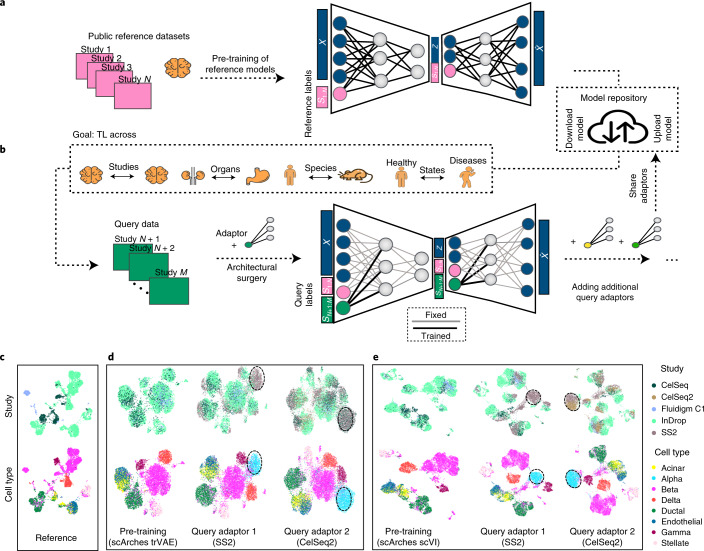
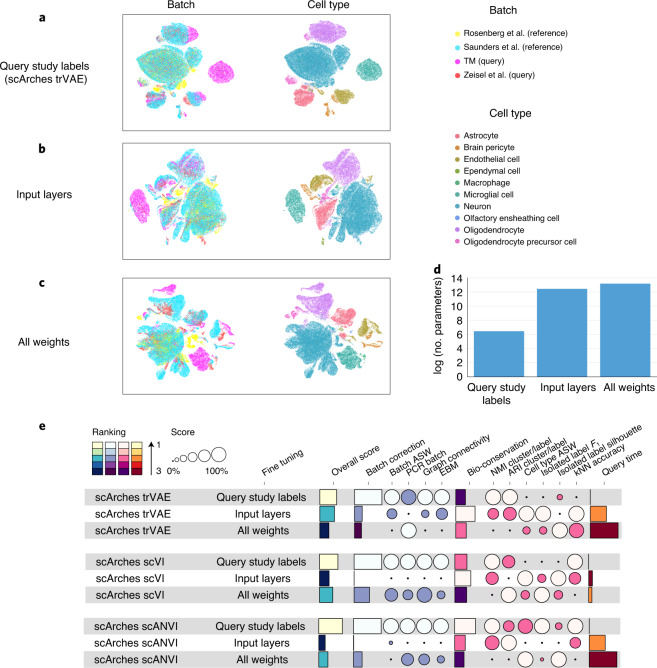
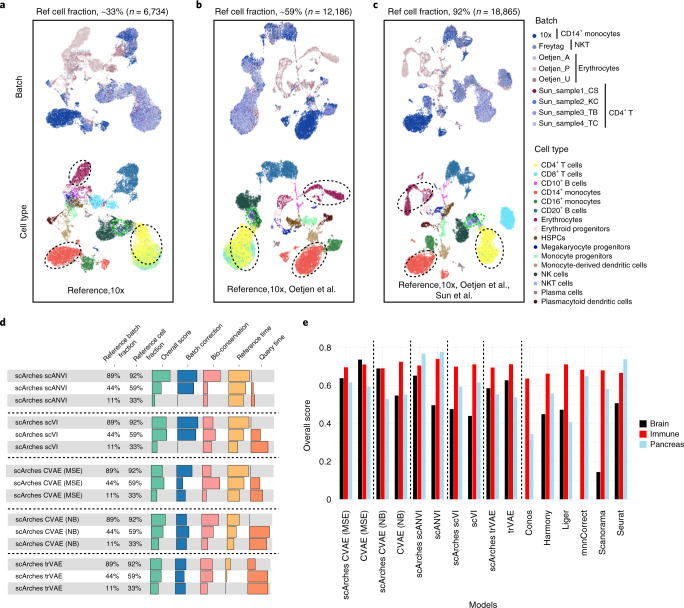
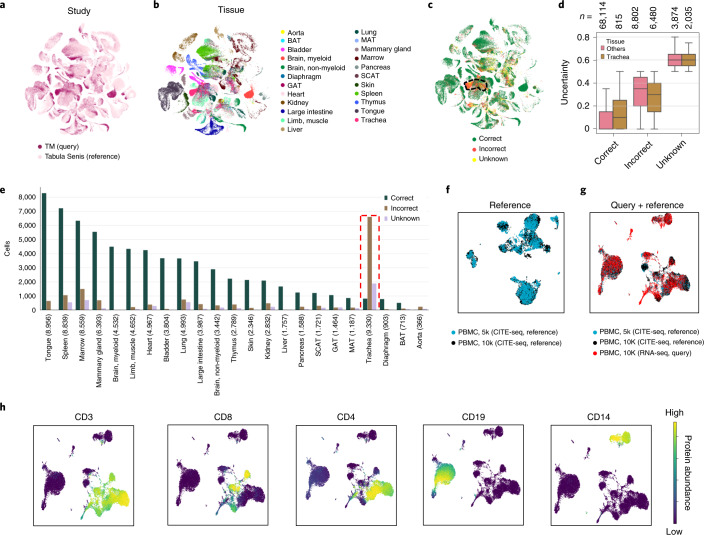
Verification
Claims the paper makes
The claims and statistics of this paper haven’t been checked yet.
Free: it reads the open-access text and checks the first 5 claims that cite a source we can check. Create a free account to check every claim.
Claims other papers make about this one
Each is checked against this paper’s own text: does it say what the citing paper says it does?
The cited source says what the claim attributes to it.
In the citing paper
“Lotfollahi et al. applied transfer learning for mapping query single cells with a decentralized and iterative updating reference model [12].”
From Challenges in AI-driven Biomedical Multimodal Data Fusion and Analysis (2025) · cites this paper as [12]
Self-check
Percentages, sums and reported differences re-computed from the paper’s own numbers.
The self-check needs the paper’s full text.
Citations
Cites
ImageNet classification with deep convolutional neural networks
Krizhevsky, A., Sutskever, I., & Hinton, G. E. (2017) · Communications of the ACM · doi:10.1145/3065386 · Cited by 112,155 · cited 1×
“These references help to understand the cellular heterogeneity that constitutes natural and inter-individual variation, aging, environmental influences and disease.”
BackgroundBERT: Pre-training of Deep Bidirectional Transformers for Language Understanding
Devlin, J., Chang, M.-W., Lee, K., & Toutanova, K. (2018) · arXiv · doi:10.48550/arxiv.1810.04805 · Cited by 73,173
Scikit-learn: Machine Learning in Python
Pedregosa, F., Varoquaux, G., Gramfort, A., Michel, V., Thirion, B., Grisel, O., Blondel, M., Müller, A., Nothman, J., Louppe, G., et al. (2012) · arXiv · doi:10.48550/arxiv.1201.0490 · Cited by 71,016 · cited 2×
“22 ) and logistic regression classifiers 50 (Supplementary Fig.”
BackgroundMethodBERT: Pre-training of Deep Bidirectional Transformers for Language Understanding
Devlin, J., Chang, M.-W., Lee, K., & Toutanova, K. (2019) · Proceedings of the 2019 Conference of the North American Chapter of the Association for Computational Linguistics: Human Language Technologies, Volume 1 (Long and Short Papers) · doi:10.18653/v1/n19-1423 · Cited by 54,325
Auto-Encoding Variational Bayes
Kingma, D. P., & Welling, M. (2013) · arXiv · doi:10.48550/arxiv.1312.6114 · Cited by 20,067
Integrated analysis of multimodal single-cell data
Hao, Y., Hao, S., Andersen-Nissen, E., Mauck, W. M., Zheng, S., Butler, A., Lee, M. J., Wilk, A. J., Darby, C., Zagar, M., et al. (2020) · doi:10.1101/2020.10.12.335331 · Cited by 15,508
Comprehensive Integration of Single-Cell Data
Stuart, T., Butler, A., Hoffman, P., Hafemeister, C., Papalexi, E., Mauck, W. M., Hao, Y., Stoeckius, M., Smibert, P., & Satija, R. (2019) · Cell · doi:10.1016/j.cell.2019.05.031 · Cited by 15,453
Fast, sensitive and accurate integration of single-cell data with Harmony
Korsunsky, I., Millard, N., Fan, J., Slowikowski, K., Zhang, F., Wei, K., Baglaenko, Y., Brenner, M., Loh, P.-R., & Raychaudhuri, S. (2019) · Nature Methods · doi:10.1038/s41592-019-0619-0 · Cited by 10,488
SCANPY: large-scale single-cell gene expression data analysis
Wolf, F. A., Angerer, P., & Theis, F. J. (2018) · Genome Biology · doi:10.1186/s13059-017-1382-0 · Cited by 8,881
Self-citationConditional Generative Adversarial Nets
Mirza, M., & Osindero, S. (2014) · arXiv · doi:10.48550/arxiv.1411.1784 · Cited by 8,863
Research works printed but not linked: 2
- Stuart T Comprehensive integration of single cell data Cell 2019 177 1888 1902 31178118 PMC6687398 · DOI · Paper page
- Sohn, K., Lee, H. & Yan, X. Learning structured output representation using deep conditional generative models. in Advances in Neural Information Processing Systems (eds. Cortes, C. et al.) 28, 3483–3491 (Curran Associates, 2015).
Cited by
Items 101–200 of 615
scMAE: a masked autoencoder for single-cell RNA-seq clustering
Fang, Z., Zheng, R., & Li, M. (2024) · Bioinformatics · doi:10.1093/bioinformatics/btae020 · Cited by 62
“Following Lotfollahi (Lotfollahi et al. 2022), we scale the ASW scores to a range between 0 and 1 using the formula: Larger values correspond to denser clusters.”
MethodFröhlich, A. S., Gerstner, N., Gagliardi, M., Ködel, M., Yusupov, N., Matosin, N., Czamara, D., Sauer, S., Roeh, S., Murek, V., et al. (2024) · Nature Neuroscience · doi:10.1038/s41593-024-01742-z · Cited by 66
Boyeau, P., Regier, J., Gayoso, A., Jordan, M. I., Lopez, R., & Yosef, N. (2023) · Proceedings of the National Academy of Sciences · doi:10.1073/pnas.2209124120 · Cited by 60
Self-citationMENDER: fast and scalable tissue structure identification in spatial omics data
Yuan, Z. (2024) · Nature Communications · doi:10.1038/s41467-023-44367-9 · Cited by 58
“Besides the above approach to determine the “ Cell Group ” , one can also apply reference-based 54 cell type annotations using methods such asscArches 55 , Tangram 56 , and Spatial-ID 57 , to determine the cell state labels.”
Karimzadeh, M., Momen-Roknabadi, A., Cavazos, T. B., Fang, Y., Chen, N.-C., Multhaup, M., Yen, J. L., Ku, J., Wang, J., Zhao, X., et al. (2024) · Nature Communications · doi:10.1038/s41467-024-53851-9 · Cited by 60
“The fl exibility of these models allows for reference building through transfer learning 43 or modeling speci fi c perturbations through contrastive learning 44 .”
scDiffusion: conditional generation of high-quality single-cell data using diffusion model
Luo, E., Hao, M., Wei, L., & Zhang, X. (2024) · Bioinformatics · doi:10.1093/bioinformatics/btae518 · Cited by 100
“Theoretically, all deep learning-based cell classifiers that can generate gradients can be used to guide the conditional generation process, such as scANVI (Lotfollahi et al. 2022), MARS (Brbic et al. 2020), and scFoundation (Hao et al. 2024).”
Consensus prediction of cell type labels in single-cell data with popV
Ergen, C., Xing, G., Xu, C. A., Kim, M., Jayasuriya, M., McGeever, A., Pisco, A. O., Streets, A., & Yosef, N. (2024) · Nature Genetics · doi:10.1038/s41588-024-01993-3 · Cited by 65
Self-citationGaldos, F. X., Xu, S., Goodyer, W. R., Duan, L., Huang, Y. V., Lee, S., Zhu, H., Lee, C., Wei, N., Lee, D. C., et al. (2022) · Nature Communications · doi:10.1038/s41467-022-33045-x · Cited by 50
Ng, M., Borst, R., Gacaferi, H., Davidson, S., Ackerman, J. E., Johnson, P. A., Machado, C. C., Reekie, I. R., Attar, M., Windell, D., et al. (2024) · Nature Communications · doi:10.1038/s41467-024-45341-9 · Cited by 55
“We applied a transfer-learning approach 26 to annotate the STM populations(Fig.5B)withtheclusterlabelsfromourshouldercapsuledataset (Fig.”
MethodKim, S., Lee, J., Koh, I. G., Ji, J., Kim, H. J., Kim, E., Park, J., Park, J.-E., & An, J. (2024) · Experimental & Molecular Medicine · doi:10.1038/s12276-024-01328-6 · Cited by 50
An integrated transcriptomic cell atlas of human endoderm-derived organoids
Xu, Q., Halle, L., Hediyeh-zadeh, S., Kuijs, M., Riedweg, R., Kilik, U., Recaldin, T., Yu, Q., Rall, I., Frum, T., et al. (2025) · Nature Genetics · doi:10.1038/s41588-025-02182-6 · Cited by 53
“We subsequently followed the query-to-reference mapping workflow outlined in the scArches documentation (Lotfollahi et al., 2022).”
Self-citationCurrent State and Prospects of Artificial Intelligence in Allergy
van Breugel, M., Fehrmann, R. S. N., Bügel, M., Rezwan, F. I., Holloway, J. W., Nawijn, M. C., Fontanella, S., Custovic, A., & Koppelman, G. H. (2023) · Allergy · doi:10.1111/all.15849 · Cited by 43
Single-cell reference mapping to construct and extend cell-type hierarchies
Michielsen, L., Lotfollahi, M., Strobl, D. C., Sikkema, L., Reinders, M. J. T., Theis, F. J., & Mahfouz, A. E. (2023) · NAR Genomics and Bioinformatics · doi:10.1093/nargab/lqad070 · Cited by 47
“As previously reported [1,2], the choice of the reference building algorithm and reference atlas itself can influence the quality of reference mapping.”
Self-citationHeimberg, G., Kuo, T., DePianto, D., Heigl, T., Diamant, N., Salem, O., Scalia, G., Biancalani, T., Turley, S., Rock, J., et al. (2023) · doi:10.1101/2023.07.18.549537 · Cited by 40
Harnessing the potential of machine learning and artificial intelligence for dementia research
Ranson, J. M., Bucholc, M., Lyall, D. M., Newby, D., Winchester, L. M., Oxtoby, N. P., Veldsman, M., Rittman, T., Marzi, S. J., Skene, N., et al. (2023) · Brain Informatics · doi:10.1186/s40708-022-00183-3 · Cited by 51
“…function and pathology Translational gap from models to human disease biology [126] Lack of power in small, single modality studies [126] Poor reproducibility [127] Efficient drug target discovery [128] Simulated ageing signatures [129] Digital brains for precision dementia research 34”
BackgroundSingle-cell meta-analysis of inflammatory bowel disease with scIBD
Nie, H., Lin, P., Zhang, Y., Wan, Y., Li, J., Yin, C., & Zhang, L. (2023) · Nature Computational Science · doi:10.1038/s43588-023-00464-9 · Cited by 45
Hu, Y., Hu, Q., Ansari, M., Riemondy, K. A., Pineda, R., Sembrat, J., Leme, A. S., Ngo, K., Morgenthaler, O., Ha, K., et al. (2024) · European Respiratory Journal · doi:10.1183/13993003.02071-2023 · Cited by 48
“To test whether asATII and rbATII cells are specific to COPD, we mapped [29] our human ATII subsets to the HLCA [30] data, which contains idiopathic pulmonary fibrosis (IPF) and interstitial lung disease (ILD) samples, in addition to healthy and COPD samples (supplementary figure S6a and b).”
InfluentialNovella-Rausell, C., Grudniewska, M., Peters, D. J. M., & Mahfouz, A. E. (2023) · iScience · doi:10.1016/j.isci.2023.106877 · Cited by 42
multiDGD: A versatile deep generative model for multi-omics data
Schuster, V., Dann, E., Krogh, A., & Teichmann, S. A. (2024) · Nature Communications · doi:10.1038/s41467-024-53340-z · Cited by 42
“Firstly, it enables the integrated modeling of unseen batches without the need for fine tuning methods such as scArches [28].”
InfluentialIntegrative mapping of human CD8+ T cells in inflammation and cancer
Xue, Z., Wu, L., Tian, R., Gao, B. X., Zhao, Y. S., He, B., Sun, D., Zhao, B., Li, Y., Zhu, K., et al. (2024) · Nature Methods · doi:10.1038/s41592-024-02530-0 · Cited by 44
“This feature facilitates rapid transfer learning without requiring training on query datasets, unlike scVI, scANVI and scPoli, which necessitate additional architectural surgery 44 .”
Transformer-Based Single-Cell Language Model: A Survey
Lan, W., He, G., Liu, M., Chen, Q., Cao, J., & Peng, W. (2024) · Big Data Mining and Analytics · doi:10.26599/bdma.2024.9020034 · Cited by 47
Comparative Analysis of Single-Cell RNA Sequencing Methods with and without Sample Multiplexing
Xie, Y., Chen, H., Chellamuthu, V. R., Lajam, A. B. M., Albani, S., Low, A. H. L., Petretto, E. G., & Behmoaras, J. V. (2024) · International Journal of Molecular Sciences · doi:10.3390/ijms25073828 · Cited by 42
“Various computational methods [30,31], such as incorporating pathway information in deep learning models for better clustering or integrating with other scRNA-seq or spatial transcriptomics data, will also help in rare cell population identification.”
MethodRole of Respiratory Epithelial Cells in Allergic Diseases
Jakwerth, C. A., Ordovás-Montañés, J., Blank, S., Schmidt‐Weber, C. B., & Zissler, U. M. (2022) · Cells · doi:10.3390/cells11091387 · Cited by 40
Artificial intelligence for neurodegenerative experimental models
Marzi, S. J., Schilder, B. M., Nott, A., Frigerio, C. S., Willaime‐Morawek, S., Bucholc, M., Hanger, D. P., James, C., Lewis, P. A., Lourida, I., et al. (2023) · Alzheimer's & Dementia · doi:10.1002/alz.13479 · Cited by 35
“38 Finally, unsupervised learning methods can be flexibly combined with supervised ML, simulations, SEM and/or traditional statistical approaches to form innovative solutions to problems inadequately addressed by any one method.”
BackgroundMethodYan, K., Liu, Q., Huang, R., Jiang, Y., Bian, Z.-H., Li, S., Li, L., Shen, F., Tsuneyama, K., Zhang, Q., et al. (2024) · Clinical and Translational Medicine · doi:10.1002/ctm2.1594 · Cited by 48
“For this reason, we used the cell label transfer method (find anchors between a reference and query object, and use the anchors to transfer data from the reference to query object 50,51 ) to ensure that the Visium spatial samples shared the same subtypes of tumour area, FC area and immune area.”
MethodDelineating the effective use of self-supervised learning in single-cell genomics
Richter, T., Bahrami, M., Xia, Y., Fischer, D. S., & Theis, F. J. (2024) · Nature Machine Intelligence · doi:10.1038/s42256-024-00934-3 · Cited by 56
Self-citationUnderstanding glioblastoma at the single-cell level: Recent advances and future challenges
Yabo, Y. A., & Heiland, D. H. (2024) · PLoS Biology · doi:10.1371/journal.pbio.3002640 · Cited by 38
Huang, Y., Li, Y.-C., You, Z.-H., Hu, L., Hu, P., Wang, L., Peng, Y., & Huang, Z.-A. (2025) · BMC Biology · doi:10.1186/s12915-025-02128-8 · Cited by 43
Single-Cell Sequencing: Genomic and Transcriptomic Approaches in Cancer Cell Biology
Ortega-Batista, A., Jaén-Alvarado, Y., Moreno-Labrador, D., Gómez, N., García, G., & Guerrero, E. N. (2025) · International Journal of Molecular Sciences · doi:10.3390/ijms26052074 · Cited by 40
“Tools like MOFA+ [139] and scArches [140] enable the integration of diverse omics data, revealing shared and unique features across different molecular layers.”
Single-cell atlas of the transcriptome and chromatin accessibility in the human retina
Li, J., Wang, J., Ibarra, I. L., Cheng, X., Luecken, M. D., Lu, J., Monavarfeshani, A., Yan, W., Zheng, Y., Zuo, Z., et al. (2026) · Nature Genetics · doi:10.1038/s41588-025-02454-1 · Cited by 79
Self-citationA Roadmap for a Consensus Human Skin Cell Atlas and Single-Cell Data Standardization
Almet, A. A., Yuan, H., Annusver, K., Ramos, R., Liu, Y., Wiedemann, J., Sorkin, D. H., Xu, N., Sonkoly, E., Haniffa, M. A., et al. (2023) · Journal of Investigative Dermatology · doi:10.1016/j.jid.2023.03.1679 · Cited by 34
Self-citationYoungblut, N. D., Carpenter, C., Nayebnazar, A., Adduri, A. K., Shah, R., Ricci-Tam, C., Prashar, J., Ilango, R., Teyssier, N., Konermann, S., et al. (2025) · bioRxiv · doi:10.1101/2025.02.27.640494 · Cited by 18
Durán, R. C., Wei, H., & Wu, J. (2024) · BMC Genomics · doi:10.1186/s12864-024-10364-5 · Cited by 43
“Batch effects also occur when single-cell datasets are compiled from multiple experiments, for example, when integrating large single-cell atlases [55, 56].”
BackgroundMachine learning integrative approaches to advance computational immunology
Curion, F., & Theis, F. J. (2024) · Genome Medicine · doi:10.1186/s13073-024-01350-3 · Cited by 39
“With the increasing size and complexity of these data-sets, the future calls for approaches to generate comprehensive multimodal references onto which new datasets can be queried, to ensure fast knowledge transfer [48].”
BackgroundSelf-citationscooby: modeling multimodal genomic profiles from DNA sequence at single-cell resolution
Hingerl, J., Martens, L. D., Karollus, A., Manz, T., Buenrostro, J. D., Theis, F. J., & Gagneur, J. (2025) · Nature Methods · doi:10.1038/s41592-025-02854-5 · Cited by 53
Self-citationSingle-Cell RNA Sequencing for Studying Human Cancers
Aran, D. (2023) · Annual Review of Biomedical Data Science · doi:10.1146/annurev-biodatasci-020722-091857 · Cited by 31
Current annotation strategies for T cell phenotyping of single-cell RNA-seq data
Mullan, K. A., de Vrij, N., Valkiers, S., & Meysman, P. (2023) · Frontiers in Immunology · doi:10.3389/fimmu.2023.1306169 · Cited by 38
Hua-wen, Z., Han, W., Gómez-Cabrero, D., Tegner, J. N., Gao, X., Cui, G., & Aranda, M. (2025) · Nucleic Acids Research · doi:10.1093/nar/gkae1316 · Cited by 45
Tian, R., Xue, Z., Chen, Y., Qi, Y., Zhang, J., Yuan, J., Ruan, D., Lin, J., Liu, J., Wang, D., et al. (2025) · Nature Communications · doi:10.1038/s41467-025-63915-z · Cited by 46
“Additionally,MaximumMeanDiscrepancy(MMD)lossesareappliedto ensure the comparability of joint embeddings across different samples 47 .”
InfluentialIntegrated multi-omics single cell atlas of the human retinaPreprint
Li, J., Wang, J., Ibarra, I. L., Cheng, X., Luecken, M. D., Lu, J., Monavarfeshani, A., Yan, W., Zheng, Y., Zuo, Z. C., et al. (2023) · bioRxiv (Cold Spring Harbor Laboratory) · doi:10.1101/2023.11.07.566105 · Cited by 30
Self-citationSystematic scRNA-seq screens profile neural organoid response to morphogens
Sanchís-Calleja, F., Azbukina, N. V., Jain, A., He, Z., Okamoto, R., Rusimbi, C., Rifes, P., Rathore, G. S., Santel, M., Janssens, J., et al. (2025) · Nature Methods · doi:10.1038/s41592-025-02927-5 · Cited by 32
“To apply the two scoring models to the organoid data, scArches 76 was first used to project the organoid data to the scANVI model of the primary atlas to obtain the projected latent representation as described in the previous section.”
Franchini, M., Pellecchia, S., Viscido, G., & Gambardella, G. (2023) · NAR Genomics and Bioinformatics · doi:10.1093/nargab/lqad024 · Cited by 39
Berg, M., Petoukhov, I., van den Ende, I., Meyer, K. B., Guryev, V., Vonk, J. M., Carpaij, O. A., Banchero, M., Hendriks, R. W., van den Berge, M., et al. (2023) · BMC Genomics · doi:10.1186/s12864-023-09822-3 · Cited by 36
“If a reference is available for the tissue then transfer learning with for instance scArches [18] can provide these labels.”
BackgroundNBAtlas: A harmonized single-cell transcriptomic reference atlas of human neuroblastoma tumors
Bonine, N., Zanzani, V., Hemelryk, A. V., Vanneste, B., Zwicker, C., Thoné, T., Roelandt, S., Bekaert, S.-L., Köster, J., Janoueix‐Lerosey, I., et al. (2024) · Cell Reports · doi:10.1016/j.celrep.2024.114804 · Cited by 36
Jiang, Q., Zhang, S., & Wan, L. (2022) · PLoS Computational Biology · doi:10.1371/journal.pcbi.1009821 · Cited by 33
“The newly developed single-cell data analysis tools such as the on-line integration method online iNMF [40] and the cell type annotation method scArches based on transfer learning [41] can be adopted.”
MethodDeep transfer learning enables lesion tracing of circulating tumor cells
Guo, X., Lin, F., Yi, C., Song, J., Sun, D., Lin, L., Zhong, Z., Wu, Z., Wang, X., Zhang, Y., et al. (2022) · Nature Communications · doi:10.1038/s41467-022-35296-0 · Cited by 36
Proks, M., Salehin, N., & Brickman, J. M. (2024) · Nature Methods · doi:10.1038/s41592-024-02511-3 · Cited by 33
“Datasets were split 80:20 for training and testing of each classification strategy.”
scMoMtF: An interpretable multitask learning framework for single-cell multi-omics data analysis
Lan, W., Ling, T., Chen, Q., Zheng, R., Li, M., & Pan, Y. F. (2024) · PLoS Computational Biology · doi:10.1371/journal.pcbi.1012679 · Cited by 30
“Many methods have been proposed recently for transferring cell type labels across modalities [18].”
Auerbach, B. J., Hu, J., Reilly, M. P., & Li, M. (2021) · Genome Research · doi:10.1101/gr.275430.121 · Cited by 33
“scArches (Lotfollahi et al. 2021) relaxed the requirement of having raw data from the reference.”
BackgroundAn overview of computational methods in single-cell transcriptomic cell type annotation
Li, T., Wang, Z., Liu, Y., He, S., Zou, Q., & Zhang, Y. (2025) · Briefings in Bioinformatics · doi:10.1093/bib/bbaf207 · Cited by 39
“Moreover, scArches [109] combines variational autoencoders (VAE) [110] with transfer learning to generate cross-platform reference maps, further enhancing model generalizability across different data platforms.”
ResolVI: addressing noise and bias in spatial transcriptomics
Ergen, C., & Yosef, N. (2026) · Nature Methods · doi:10.1038/s41592-026-03212-9 · Cited by 40
“We implemented a network surgery procedure for resolVI, similar to scArches 27 , and used this procedure to integrate the day 35 samples into the reference model (without affecting the day 0–21 samples).”
Self-citationBesca, a single-cell transcriptomics analysis toolkit to accelerate translational research
Mädler, S. C., Julien-Laferrière, A., Wyss, L., Phan, M., Sonrel, A., Kang, A. S. W., Ulrich, E., Schmucki, R., Zhang, J. D., Ebeling, M., et al. (2021) · NAR Genomics and Bioinformatics · doi:10.1093/nargab/lqab102 · Cited by 30
Cell-cell interactome of the hematopoietic niche and its changes in acute myeloid leukemia
Ennis, S., Conforte, A. J., O’Reilly, E., Takanlu, J. S., Cichocka, T., Dhami, S. P. S., Nicholson, P., Krebs, P., Broin, P. Ó., & Szegezdi, É. (2023) · iScience · doi:10.1016/j.isci.2023.106943 · Cited by 32
Pal, A., Noble, M. A., Morales, M., Pal, R., Baumgartner, M., Yang, J. W., Yim, K., Uebbing, S., & Noonan, J. P. (2025) · Cell · doi:10.1016/j.cell.2025.01.007 · Cited by 43
Zhang, Y., Xiang, G., Jiang, A. Y., Lynch, A. W., Zeng, Z., Wang, C., Zhang, W., Fan, J., Kang, J., Gu, S. S., et al. (2023) · Nature Communications · doi:10.1038/s41467-023-38333-8 · Cited by 28
Automated classification of cellular expression in multiplexed imaging data with Nimbus
(2025) · doi:10.1038/s41592-025-02826-9 · Cited by 24
“These include approaches based on decision trees 7 , hierarchical clustering 8,9 , self-organizing maps 10 , unsupervised graph-based clustering 11–13 and mapping to reference atlases 14–16 .”
Biology-driven insights into the power of single-cell foundation models
Wu, J., Ye, Q., Wang, Y., Hu, R., Zhu, Y., Yin, M., Wang, T., Wang, J., Hsieh, C., & Hou, T. (2025) · Genome biology · doi:10.1186/s13059-025-03781-6 · Cited by 50
“A critical step in automated cell type annotation is transferring the labels from a well-annotated reference dataset to newly generated datasets [29, 47].”
Artificial intelligence in bioinformatics: a survey
Jiang, J., Li, Y., Cao, S., Shan, Y., Liu, Y., Fei, T., Yu, Y., Feng, Y., Li, Y., Li, Y., et al. (2025) · Briefings in Bioinformatics · doi:10.1093/bib/bbaf576 · Cited by 35
“Multimodal integration further enables the synthesis of genomic sequences, protein structures, medical imaging, and clinical textual data, enhancing our capability to deeply reconstruct the dynamic interplay of biological systems across spatial–temporal scales and environmental contexts [20, 21].”
The discovAIR project: a roadmap towards the Human Lung Cell Atlas
Luecken, M. D., Zaragosi, L., Madissoon, E., Sikkema, L., Firsova, A. B., Domenico, E. D., Kuemmerle, L. B., Saglam, A., Berg, M., Gay, A. C. A., et al. (2022) · European Respiratory Journal · doi:10.1183/13993003.02057-2021 · Cited by 22
“This atlas can then be used as a reference to which newly generated datasets from either healthy or diseased lung tissue can be compared using transfer learning methods such as scArches [20].”
Self-citationAutomated classification of cellular expression in multiplexed imaging data with Nimbus
Rumberger, J. L., Greenwald, N. F., Ranek, J. S., Boonrat, P., Walker, C., Franzen, J., Varra, S. R., Kong, A., Sowers, C., Liu, C. C., et al. (2024) · doi:10.1101/2024.06.02.597062 · Cited by 24
Rapid Test and Assessment of Lithium-Ion Battery Cycle Life Based on Transfer Learning
Zhu, Y., Gu, X., Liu, K., Zhao, W., & Shang, Y. (2024) · IEEE Transactions on Transportation Electrification · doi:10.1109/tte.2024.3354107 · Cited by 23
“Transfer component analysis (TCA) is one of the strategies in the symmetric feature-based TL [37], [38], [39].”
An integrated transcriptomic cell atlas of human neural organoidsPreprint
He, Z., Dony, L., Fleck, J. S., Szałata, A., Li, K. X., Slišković, I., Lin, H., Santel, M., Atamian, A., Quadrato, G., et al. (2023) · bioRxiv (Cold Spring Harbor Laboratory) · doi:10.1101/2023.10.05.561097 · Cited by 23
Self-citationMissarova, A., Rosen, L. U., Dann, E., Satija, R., & Marioni, J. C. (2024) · Genome biology · doi:10.1186/s13059-024-03334-3 · Cited by 33
Gerstner, N., Fröhlich, A. S., Matosin, N., Gagliardi, M., Cruceanu, C., Ködel, M., Rex‐Haffner, M., Tu, X., Mostafavi, S., Ziller, M. J., et al. (2025) · Science Advances · doi:10.1126/sciadv.adq2290 · Cited by 32
Feature selection methods affect the performance of scRNA-seq data integration and querying
Zappia, L., Richter, S., Ramírez-Suástegui, C., Kfuri‐Rubens, R., Vornholz, L., Wang, W., Dietrich, O., Frishberg, A., Luecken, M. D., & Theis, F. J. (2025) · Nature Methods · doi:10.1038/s41592-025-02624-3 · Cited by 38
“This model uses a conditional variational autoencoder and allows the mapping of query samples using architecture surgery 80 .”
Self-citationZheng, W., Fong, J. H. C., Wan, Y. K., Chu, A. H. Y., Huang, Y., Wong, A. S. L., & Ho, J. W. K. (2023) · Cell Systems · doi:10.1016/j.cels.2023.10.011 · Cited by 26
Adapting systems biology to address the complexity of human disease in the single-cell era
Fischer, D. S., Villanueva, M. A., Winter, P. S., & Shalek, A. K. (2025) · Nature Reviews Genetics · doi:10.1038/s41576-025-00821-6 · Cited by 35
“Analysis methods have only just begun leveraging the joint complexity of genomic data from human tissues and experimental model systems.”
Out of distribution learning in bioinformatics: advancements and challenges
Shi, Y., Xu, W., & Hu, P. (2025) · Briefings in Bioinformatics · doi:10.1093/bib/bbaf294 · Cited by 30
“Lotfollahi et al. developed Single-Cell Architectural Surgery (scArches), a technique for mapping query datasets onto a reference [27].”
PAUSE: principled feature attribution for unsupervised gene expression analysis
Janizek, J. D., Spiro, A. E., Çelik, S., Blue, B. W., RUSSELL, J. C., Lee, T.-I., Kaeberlin, M., & Lee, S. (2023) · Genome biology · doi:10.1186/s13059-023-02901-4 · Cited by 29
“The increasing number of available samples in large transcriptomic compendia has enabled deep learning as a viable option for reference mapping [2], data integration [3], dimensionality reduction and visualization [4].”
BackgroundHausmann, F., Ergen, C., Khatri, R., Marouf, M., Hänzelmann, S., Gagliani, N., Huber, S., Machart, P., & Bonn, S. (2023) · Genome biology · doi:10.1186/s13059-023-03049-x · Cited by 23
“This is true for data integration [59, 60] as well as for expression reconstruction algorithms and we would highlight guiding principles for optimal results.”
Dony, L., Krontira, A. C., Kaspar, L., Ahmad, R., Demirel, I. S., Grochowicz, M., Schäfer, T., Begum, F., Sportelli, V., Raimundo, C., et al. (2025) · Science Advances · doi:10.1126/sciadv.adn8631 · Cited by 23
Self-citationScvi-hub: an actionable repository for model-driven single-cell analysis
Ergen, C., Amiri, V. V. P., Kim, M., Kronfeld, O., Streets, A., Gayoso, A., & Yosef, N. (2025) · Nature Methods · doi:10.1038/s41592-025-02799-9 · Cited by 30
“We projected the data using scArches 4 , and then compared model-generated and real expression values.”
InfluentialSelf-citationUniversal cell embedding provides a foundation model for cell biology
Rosen, Y., Roohani, Y., Agrawal, A., Samotorcan, L., Quake, S. R., & Leskovec, J. (2026) · Nature · doi:10.1038/s41586-026-10689-z · Cited by 287
“…cell-type transfer across such large evolutionary distances remains challenging, reflecting both reduced cross-species alignment performance and inherent ambiguity in defining reliable ‘ground-truth’ correspondences between distantly related cell-type ontologies (Supplementary Table 18).”
New horizons in the stormy sea of multimodal single-cell data integration
Jackson, C. A., & Vogel, C. (2022) · Molecular Cell · doi:10.1016/j.molcel.2021.12.012 · Cited by 26
Learning consistent subcellular landmarks to quantify changes in multiplexed protein maps
Spitzer, H., Berry, S., Donoghoe, M. W., Pelkmans, L., & Theis, F. J. (2023) · Nature Methods · doi:10.1038/s41592-023-01894-z · Cited by 22
“One example of this would be an adversarial loss to enforce strict disentangling of more complex condition effects and latent representation or ‘architecture surgery’ 40 to allow integration of new data to already learned representations.”
BackgroundSelf-citationIntegrated Single-Cell Transcriptomic Atlas of Human Kidney Endothelial Cells
Zhang, K., Kan, H., Mao, A., Yu, F., Li, G., Zhou, T., Feng, L., & Ma, X. (2024) · Journal of the American Society of Nephrology · doi:10.1681/asn.0000000000000320 · Cited by 23
Weakly supervised learning uncovers phenotypic signatures in single-cell dataPreprint
Litinetskaya, A., Hediyeh-zadeh, S., Moinfar, A. A., Lotfollahi, M., & Theis, F. J. (2024) · bioRxiv (Cold Spring Harbor Laboratory) · doi:10.1101/2024.07.29.605625 · Cited by 20
“We assume that the single-cell representations have the same dimensionality as the train data and that they were obtained from either mapping the query data onto the same atlas/reference with scArches [67], from the same foundation model or were left out from the train dataset as the test data.”
Self-citationRevealing gene function with statistical inference at single-cell resolution
Trapnell, C. (2024) · Nature Reviews Genetics · doi:10.1038/s41576-024-00750-w · Cited by 26
Menon, A. V., Song, B., Chao, L., Sriram, D., Chansky, P. A., Bakshi, I., Ulianova, J., & Li, W. (2025) · Frontiers in Genome Editing · doi:10.3389/fgeed.2025.1565387 · Cited by 30
Human neuron subtype programming via single-cell transcriptome-coupled patterning screens
Lin, H., Janssens, J., Eisinger, B., Hornauer, P., Kroell, A.-S. H., Santel, M., Pascual-Garcia, M., Okamoto, R., Karava, K., He, Z., et al. (2025) · Science · doi:10.1126/science.adn6121 · Cited by 28
Hu, Z., Ahmed, A. A., & Yau, C. (2021) · Genome biology · doi:10.1186/s13059-021-02561-2 · Cited by 19
“Along with the rapidly growing amount of available scRNA-Seq data, the recent advances in neural network models and approaches for transfer learning have facilitated the query-reference mapping [30].”
BackgroundPanpipes: a pipeline for multiomic single-cell and spatial transcriptomic data analysis
Curion, F., Rich‐Griffin, C., Agarwal, D., Ouologuem, S., Rue-Albrecht, K., May, L., Garcia, G. E. L., Heumos, L., Thomas, T. R., Lason, W., et al. (2024) · Genome biology · doi:10.1186/s13059-024-03322-7 · Cited by 30
““Reference Mapping” utilizes query-to-reference (Q2R) and label transfer (LT) functionalities from scvi-tools and single-cell architectural surgery (scArches) [37] to integrate and annotate query data with reference data.”
BackgroundMethodSelf-citationSIMVI disentangles intrinsic and spatial-induced cellular states in spatial omics data
Dong, M., Su, D. G., Kluger, H. M., Fan, R., & Kluger, Y. (2025) · Nature Communications · doi:10.1038/s41467-025-58089-7 · Cited by 28
“Additionally, fi ne-tuning of trained SIMVI models on scRNA-seq datasets may facilitate niche annotation and spatial effect identi fi cation in single-cell sequencing datasets 64 .”
Cell Marker Accordion: interpretable single-cell and spatial omics annotation in health and disease
Busarello, E., Biancon, G., Cimignolo, I., Lauria, F., Ibnat, Z., Ramirez, C., Tomè, G., Ciuffreda, M., Bucciarelli, G., Pilli, A., et al. (2025) · Nature Communications · doi:10.1038/s41467-025-60900-4 · Cited by 24
“Complementary to the Cell Marker Accordion, several annotation tools exist that do not directly rely on marker genes 85,86 .”
Joint representation and visualization of derailed cell states with Decipher
Nazaret, A., Fan, J. L., Lavallée, V., Burdziak, C., Cornish, A. E., Kiseliovas, V., Bowman, R. L., Masilionis, I., Chun, J., Eisman, S. E., et al. (2025) · Genome biology · doi:10.1186/s13059-025-03682-8 · Cited by 17
“The latent space is similar in principle to previous VAEs [37, 43, 44], except that the design of Decipher, which conditions the latent space on the Decipher components, enables dependencies between latent factors.”
Interpretable inflammation landscape of circulating immune cells
Jiménez-Gracia, L., Maspero, D., Aguilar-Fernández, S., Craighero, F., Boulougouri, M., Ruiz, M., Marchese, D., Caratù, G., Liñares-Blanco, J., Berasategi, M., et al. (2026) · Nature Medicine · doi:10.1038/s41591-025-04126-3 · Cited by 29
“In IBDs, an upregulation of CYBA may result in the accumulation of superperoxide and ROS through its oxidase function, a hallmark of these diseases 40 .”
Spatial Transcriptomics of the Respiratory System
Megas, S., Wilbrey-Clark, A., Maartens, A. P., Teichmann, S. A., & Meyer, K. B. (2024) · Annual Review of Physiology · doi:10.1146/annurev-physiol-022724-105144 · Cited by 20
Chan, P. Y., Alexander, D., Mehta, I., Matsuyama, L. S. A. S., Harle, V. J., Olvera-León, R., Park, J. S., Arriaga-González, F. G., van der Weyden, L., Cheema, S., et al. (2025) · Nature Genetics · doi:10.1038/s41588-025-02222-1 · Cited by 21
“…neural network model called single-cell ANnotation using Variational Inference (scANVI) 90 , within the transfer-learning framework of the single-cell architectural surgery algorithm (scArches) 91 . scArches–SCANVI requires prior knowledge of cell types and labels to create a reference map.”
Yılmaz, A., Gürhan, G., Comar, M.-Y., Viukov, S. V., Serfaty, I., Gayretli, M., Golenchenko, S., Lokshtanov, D., Ashouokhi, S., Polanco, A., et al. (2025) · Cell stem cell · doi:10.1016/j.stem.2025.07.005 · Cited by 21
Self-citationBccT: an efficient transformer model for blood cell classification
Zhu, H., Zhu, Z., & Lu, S. (2025) · Multimedia Systems · doi:10.1007/s00530-025-02085-w · Cited by 25
Polyphony: an Interactive Transfer Learning Framework for Single-Cell Data Analysis
Cheng, F., Keller, M. S., Qu, H., Gehlenborg, N., & Wang, Q. (2022) · IEEE Transactions on Visualization and Computer Graphics · doi:10.1109/tvcg.2022.3209408 · Cited by 24
“The proposed framework is built upon scArches (single-cell architectural surgery) [37], a transfer learning framework using conditional variational autoencoders (CVAEs) [56] for single-cell data integration.”
BackgroundMethodInfluentialscGAD: a new task and end-to-end framework for generalized cell type annotation and discovery
Zhai, Y., Chen, L., & Deng, M. (2023) · Briefings in Bioinformatics · doi:10.1093/bib/bbad045 · Cited by 20
Ma, Y., Zhou, Y., Jiang, D., Dai, W., Li, J., Deng, C., Cheng, C., Zheng, G., Zhang, Y., Qiu, F., et al. (2023) · Cell Proliferation · doi:10.1111/cpr.13558 · Cited by 15
scPML: pathway-based multi-view learning for cell type annotation from single-cell RNA-seq data
Du, Z., Hu, W.-L., Li, J., Shang, X., You, Z., Chen, Z., & Huang, Y. (2023) · Communications Biology · doi:10.1038/s42003-023-05634-z · Cited by 19
“We compared our model with other methods including Seurat 19 , scmap 15 , SingleR 16 , CHETAH 17 , scGCN 24 , scArches 37 and Geneformer 36 .”
Swarm immunology: harnessing blockchain technology and artificial intelligence in human immunology
Schultze, J. L., Büttner, M., & Becker, M. (2022) · Nature reviews. Immunology · doi:10.1038/s41577-022-00740-1 · Cited by 18
Self-citationOzmen, F., Ozmen, T. Y., Ors, A., Janghorban, M., Rames, M. J., Li, X., Doe, A. R., Behbod, F., Mills, G. B., & Mohammed, H. (2025) · npj Breast Cancer · doi:10.1038/s41523-025-00808-w · Cited by 26
Unified mass imaging maps the lipidome of vertebrate development
Schede, H. H., Alieh, L. H. A., Rohde, L. A., Herrera, A., Schlaeppi, A., Valentin, G., Motlagh, A. G., Mantes, A. D., Jollivet, C., Montoya, J. P., et al. (2025) · Nature Methods · doi:10.1038/s41592-025-02771-7 · Cited by 20
“We used ComBat, scArches and uMAIA to normalize the dataset and applied principal-component analysis (PCA) followed by k -means clustering 42,47 (Extended Data Fig.”
Chen, H., Shi, Y., Yuan, M., Li, H., & Liu, X. (2025) · Biotechnology Advances · doi:10.1016/j.biotechadv.2025.108785 · Cited by 21
Wen, W., Liu, Z., Tan, W., Tan, Y., Li, W., Wan, J., Hu, H., Jiang, Z., Tang, X., Yang, J., et al. (2026) · npj Digital Medicine · doi:10.1038/s41746-026-02352-8 · Cited by 22
“…machine learning for risk stra-ti fi cation of MASH/at-risk MASH 33 but also aligns with the concept of leveraging transfer learning and reference atlas mapping to integrate multi-source single-cell data, thereby strengthening the connection between mechanistic insight and clinical prediction 52 .”
Shen, H., Shen, X., Feng, M., Wu, D., Zhang, C., Yang, Y., Yang, M., Hu, J., Liu, J., Wang, W., et al. (2022) · Briefings in Bioinformatics · doi:10.1093/bib/bbab573 · Cited by 20
Metadata
- Authors
- Lotfollahi, M., Naghipourfar, M., Luecken, M. D., Khajavi, M., Büttner, M., Wagenstetter, M., Avsec, Ž., Gayoso, A., Yosef, N., Interlandi, M., Rybakov, S., Misharin, A. V., & Theis, F. J.
- Affiliations
- Helmholtz Munich (DE)
- Technical University of Munich (DE)
- University of California, Berkeley (US)
- Ragon Institute of MGH, MIT and Harvard (US)
- University of Münster (DE)
- Northwestern University (US)
- Corresponding author
- Theis, Fabian J.
- ORCID
- Venue
- Nature Biotechnology
- Published
- 2021-08-30
- Volume
- 40
- Issue
- 1
- Pages
- 121-130
- ISSN
- 0733-222X (ISSN-L)
- 1087-0156
- 1546-1696
- PMC
- PMC8763644
- OpenAlex
- W3196650609
- Semantic Scholar
- cec0cf40c589ecaa6d779b8433d96393fdcd9fdc
- Cited by
- 602
- References
- 76
- Citations by year
- 2026: 130 · 2025: 144 · 2024: 146 · 2023: 116 · 2022: 57 · 2021: 7
- FWCI
- 26.29
- Type
- journal article
- Language
- en
- Open access
- hybrid
- doi.org
- Licence
- cc-by
- creativecommons.org/licenses/by/4.0 (tdm)
- creativecommons.org/licenses/by/4.0 (vor)
- Locations
- Nature Biotechnology (publishedVersion, cc-by)
- PubMed Central (publishedVersion, cc-by)
- PubMed (publishedVersion)
- PuSH - Publication Server of Helmholtz Zentrum München (submittedVersion, cc-by)
- eScholarship (California Digital Library) (submittedVersion)
- mediaTUM (Technical University of Munich) (submittedVersion, other-oa)
- Site cant be reached (submittedVersion, cc-by)
- Funders
- Deutsche Forschungsgemeinschaft (ZT-I-0007)
- Topics
- Life Sciences › Biochemistry, Genetics and Molecular Biology › Molecular Biology › Single-cell and spatial transcriptomics
- Life Sciences › Biochemistry, Genetics and Molecular Biology › Molecular Biology › Gene Regulatory Network Analysis
- Life Sciences › Biochemistry, Genetics and Molecular Biology › Molecular Biology › Bioinformatics and Genomic Networks
- Keywords
- transfer learning, single-cell data integration, batch effect correction, mouse brain atlas
- MeSH terms
- Deep Learning, COVID-19, SARS-CoV-2, Animals, Humans, Organ Specificity, Reference Standards, Mice, Single-Cell Analysis, Datasets as Topic
About these checks
Registry, retraction, Cites and statistics results are computed, not judged, with one exception: a printed reference that no index lists is read once by a model before it counts as a citation error. Claims are extracted by a model and kept only when their quote appears verbatim in the text; each cited source is then checked, with a model’s help, for whether it says what the claim relies on. Those verdicts can be wrong — read the claim’s quote and the cited source before relying on one.
Statistics and arithmetic are recomputed, not judged.
Confidence bands are shown only for fields calibrated on our annotated test set. None is calibrated yet, so no band is shown.
What counts as a claim ›How we measure confidence ›How we check this ›
Are you an author, or do you see a problem with this page? Request a review
Data sources
Bibliographic data: Semantic Scholar, OpenAlex, Crossref.
Contains information from the Semantic Scholar Academic Graph Datasets, made available under the ODC Attribution License (ODC-BY 1.0).
Semantic Scholar’s data is described in: Kinney, R., et al. (2023). The Semantic Scholar Open Data Platform. arXiv:2301.10140.
