

Mapping single-cell data to reference atlases by transfer learning
Open accessThe DOI matches its Crossref record; 84 of the 84 references it cites were found in a registry or an index.
Abstract
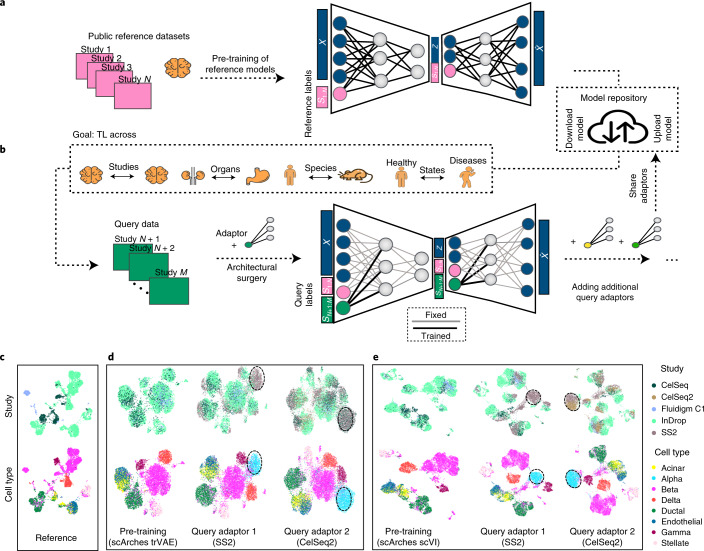
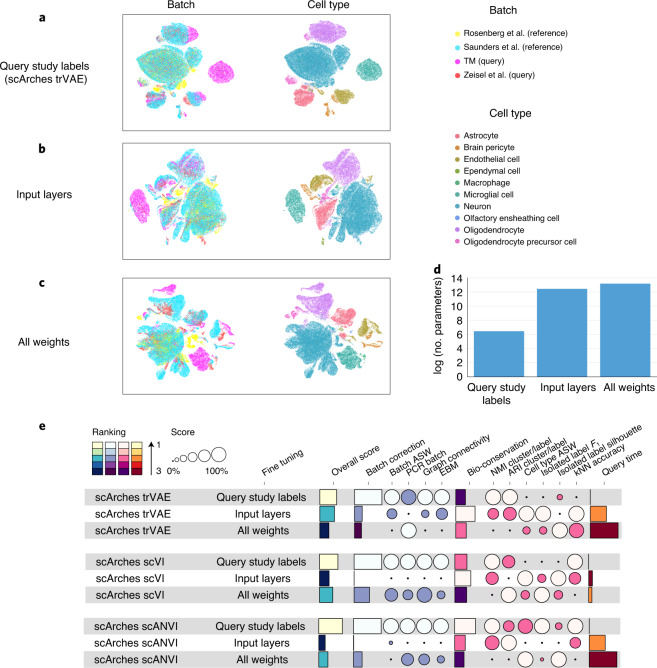
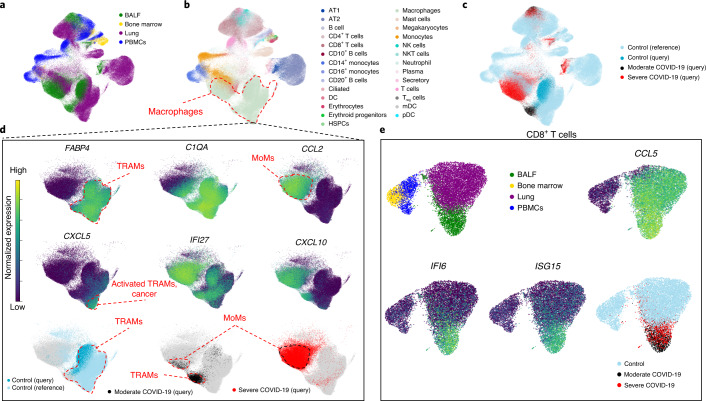
Large single-cell atlases are now routinely generated to serve as references for analysis of smaller-scale studies. Yet learning from reference data is complicated by batch effects between datasets, limited availability of computational resources and sharing restrictions on raw data. Here we introduce a deep learning strategy for mapping query datasets on top of a reference called single-cell architectural surgery (scArches). scArches uses transfer learning and parameter optimization to enable efficient, decentralized, iterative reference building and contextualization of new datasets with existing references without sharing raw data. Using examples from mouse brain, pancreas, immune and whole-organism atlases, we show that scArches preserves biological state information while removing batch effects, despite using four orders of magnitude fewer parameters than de novo integration. scArches generalizes to multimodal reference mapping, allowing imputation of missing modalities. Finally, scArches retains coronavirus disease 2019 (COVID-19) disease variation when mapping to a healthy reference, enabling the discovery of disease-specific cell states. scArches will facilitate collaborative projects by enabling iterative construction, updating, sharing and efficient use of reference atlases.
Overview
The claims and statistics of this paper haven’t been checked yet.
Free: it reads the open-access text and checks the first 5 claims that cite a source we can check. Create a free account to check every claim.
Integrity signals
Registry
Cites
Statistics
Figures
Verification
Claims the paper makes
The claims and statistics of this paper haven’t been checked yet.
Free: it reads the open-access text and checks the first 5 claims that cite a source we can check. Create a free account to check every claim.
Claims other papers make about this one
Each is checked against this paper’s own text: does it say what the citing paper says it does?
The cited source says what the claim attributes to it.
In the citing paper
“Lotfollahi et al. applied transfer learning for mapping query single cells with a decentralized and iterative updating reference model [12].”
From Challenges in AI-driven Biomedical Multimodal Data Fusion and Analysis (2025) · cites this paper as [12]
Self-check
Percentages, sums and reported differences re-computed from the paper’s own numbers.
The self-check needs the paper’s full text.
Citations
Cites
ImageNet classification with deep convolutional neural networks
Krizhevsky, A., Sutskever, I., & Hinton, G. E. (2017) · Communications of the ACM · doi:10.1145/3065386 · Cited by 112,155 · cited 1×
“These references help to understand the cellular heterogeneity that constitutes natural and inter-individual variation, aging, environmental influences and disease.”
BackgroundBERT: Pre-training of Deep Bidirectional Transformers for Language Understanding
Devlin, J., Chang, M.-W., Lee, K., & Toutanova, K. (2018) · arXiv · doi:10.48550/arxiv.1810.04805 · Cited by 73,173
Scikit-learn: Machine Learning in Python
Pedregosa, F., Varoquaux, G., Gramfort, A., Michel, V., Thirion, B., Grisel, O., Blondel, M., Müller, A., Nothman, J., Louppe, G., et al. (2012) · arXiv · doi:10.48550/arxiv.1201.0490 · Cited by 71,016 · cited 2×
“22 ) and logistic regression classifiers 50 (Supplementary Fig.”
BackgroundMethodBERT: Pre-training of Deep Bidirectional Transformers for Language Understanding
Devlin, J., Chang, M.-W., Lee, K., & Toutanova, K. (2019) · Proceedings of the 2019 Conference of the North American Chapter of the Association for Computational Linguistics: Human Language Technologies, Volume 1 (Long and Short Papers) · doi:10.18653/v1/n19-1423 · Cited by 54,325
Auto-Encoding Variational Bayes
Kingma, D. P., & Welling, M. (2013) · arXiv · doi:10.48550/arxiv.1312.6114 · Cited by 20,067
Integrated analysis of multimodal single-cell data
Hao, Y., Hao, S., Andersen-Nissen, E., Mauck, W. M., Zheng, S., Butler, A., Lee, M. J., Wilk, A. J., Darby, C., Zagar, M., et al. (2020) · doi:10.1101/2020.10.12.335331 · Cited by 15,508
Comprehensive Integration of Single-Cell Data
Stuart, T., Butler, A., Hoffman, P., Hafemeister, C., Papalexi, E., Mauck, W. M., Hao, Y., Stoeckius, M., Smibert, P., & Satija, R. (2019) · Cell · doi:10.1016/j.cell.2019.05.031 · Cited by 15,453
Fast, sensitive and accurate integration of single-cell data with Harmony
Korsunsky, I., Millard, N., Fan, J., Slowikowski, K., Zhang, F., Wei, K., Baglaenko, Y., Brenner, M., Loh, P.-R., & Raychaudhuri, S. (2019) · Nature Methods · doi:10.1038/s41592-019-0619-0 · Cited by 10,488
SCANPY: large-scale single-cell gene expression data analysis
Wolf, F. A., Angerer, P., & Theis, F. J. (2018) · Genome Biology · doi:10.1186/s13059-017-1382-0 · Cited by 8,881
Self-citationConditional Generative Adversarial Nets
Mirza, M., & Osindero, S. (2014) · arXiv · doi:10.48550/arxiv.1411.1784 · Cited by 8,863
Research works printed but not linked: 2
- Stuart T Comprehensive integration of single cell data Cell 2019 177 1888 1902 31178118 PMC6687398 · DOI · Paper page
- Sohn, K., Lee, H. & Yan, X. Learning structured output representation using deep conditional generative models. in Advances in Neural Information Processing Systems (eds. Cortes, C. et al.) 28, 3483–3491 (Curran Associates, 2015).
Cited by
Items 501–600 of 615
Primer on machine learning applications in brain immunology
Binder, N., Khavaran, A., & Sankowski, R. (2025) · Frontiers in Bioinformatics · doi:10.3389/fbinf.2025.1554010 · Cited by 1
Single Cell and Spatial Omics and Applications in Toxicology
Gallegos, D. A., Robarts, D. R., & Umbaugh, D. S. (2025) · Elsevier eBooks · doi:10.1016/b978-0-323-95488-4.00284-9
Learning Human T Cell Behaviors Through Generative AI Embeddings of T Cell ReceptorsPreprint
Chen, D. G., Su, Y., & Heath, J. R. (2025) · bioRxiv (Cold Spring Harbor Laboratory) · doi:10.1101/2025.06.16.660016 · Cited by 1
Phan, N. N., Wang, H., Nayak, T., Ye, Z., Chiu, Y., Jin, Y.-F., Huang, Y., & Chen, Y. (2025) · Computational and Structural Biotechnology Journal · doi:10.1016/j.csbj.2025.07.026
“Conven-tionally, cell types are assigned by analyzing expression of a group of marker genes in certain cell types, using either clustering of cells or individual cells [21 – 23] and a reference dataset mapping method [24 – 26].”
Zheng, K., Wang, S., Xu, Y., Lei, Q., Zhao, Q., Liang, X. P., Feng, Q., Li, Y., Li, M., Xu, J., et al. (2025) · bioRxiv (Cold Spring Harbor Laboratory) · doi:10.1101/2025.07.23.666288
Yin, D., Zhang, Z., Liu, X., Ni, K., Su, H., Li, N. L., Dong, H., Zhao, Q., Lin, X., Tian, L., et al. (2025) · bioRxiv (Cold Spring Harbor Laboratory) · doi:10.1101/2025.07.15.663271 · Cited by 1
A Benchmark of Semi-Supervised scRNA-seq Integration Methods in Real-World ScenariosPreprint
Shen, X., He, C., & Guan, L. (2025) · bioRxiv (Cold Spring Harbor Laboratory) · doi:10.1101/2025.08.23.671952
“The second most difficult is the lung atlas dataset [37], with 32,472 cells across 16 batches, followed by the human immune dataset [38], which contains 33,506 cells from 10 batches.”
Düz, T., Törőcsik, D., Momnougui, S. M. E., Oubounyt, M., Al, B., Gallinat, S., Baumbach, J., & Holzscheck, N. (2025) · bioRxiv (Cold Spring Harbor Laboratory) · doi:10.1101/2025.09.09.675235
Cheng, Y., & Zhang, X. (2025) · bioRxiv (Cold Spring Harbor Laboratory) · doi:10.1101/2025.09.19.677191
“…its performance against two widely used alternatives for novel cell type detection within classification space, namely a k-nearest neighbor (kNN) detector and a support vector machine (SVM) detector 12,44 , both of which output probabilistic scores that can be thresholded to identify OOR cells.”
Xiong, J., Zheng, S., Gong, F., Ma, L., & Wan, L. (2025) · IEEE Journal of Biomedical and Health Informatics · doi:10.1109/jbhi.2025.3615771 · Cited by 1
“For instance, scArches employs transfer learning and parameter optimization to facilitate efficient, decentralized, iterative reference building and contextualization of new datasets with existing references [14].”
Fang, Z., Miao, Z., Lin, J., Xie, Y., Tang, J., Ding, J., & Li, M. (2025) · bioRxiv (Cold Spring Harbor Laboratory) · doi:10.1101/2025.09.30.679123
“To comprehensively evaluate the performance of scLinguist in protein abundance prediction, we systematically compared it with four state-of-the-art (SOTA) models: totalVI (Gayoso et al. 2021), scArches (Lotfollahi et al. 2022), scButterfly (Cao et al. 2024), and scTranslator (L. Liu et al. 2023).”
Human iPSC-derived salivary gland organoids model diabetic salivary gland dysfunctionPreprint
Ehnes, D. D., Morishita, A., Phal, A., Jung, H. Y., Lim, Y. C., Foreman, Z., Cirulli, V., Mathieu, J., & Ruohola‐Baker, H. (2025) · bioRxiv (Cold Spring Harbor Laboratory) · doi:10.1101/2025.10.01.679897
Bakhtiari, M., Elkjaer, M. L., Can, A. O., Theis, F. J., Oubounyt, M., & Baumbach, J. (2026) · BioData Mining · doi:10.1186/s13040-026-00582-w
“We constructed a six-client federated scenario on the Covid-19 [44] dataset, which contains nine batches in total.”
Self-citationNotebook-based alignment of human and agentic reasoning in single-cell biologyPreprint
Fischer, D. S. (2025) · bioRxiv (Cold Spring Harbor Laboratory) · doi:10.1101/2025.11.24.689256
Tang, X., Nelson, D. A., Hernáez, M., Kandimalla, K. K., & Kalari, K. R. (2025) · bioRxiv (Cold Spring Harbor Laboratory) · doi:10.64898/2025.12.03.692162
Li, W., Jihad, M., Lloyd, E. G., Mucciolo, G., Henríquez, J. A., Zaccaria, M., Cheng, P. S. W., Harish, S., Mills, S., Johnson, P. M., et al. (2025) · bioRxiv (Cold Spring Harbor Laboratory) · doi:10.64898/2025.12.05.692494
Additional file 4 of PAUSE: principled feature attribution for unsupervised gene expression analysis
Janizek, J. D., Spiro, A. E., Çelik, S., Blue, B. W., Russell, J. C., Lee, T.-I., Kaeberlin, M., & Lee, S. (2024) · Figshare · doi:10.6084/m9.figshare.26583564
Additional file 2 of PAUSE: principled feature attribution for unsupervised gene expression analysis
Janizek, J. D., Spiro, A. E., Çelik, S., Blue, B. W., Russell, J. C., Lee, T.-I., Kaeberlin, M., & Lee, S. (2024) · Figshare · doi:10.6084/m9.figshare.26583558
Additional file 3 of PAUSE: principled feature attribution for unsupervised gene expression analysis
Janizek, J. D., Spiro, A. E., Çelik, S., Blue, B. W., Russell, J. C., Lee, T.-I., Kaeberlin, M., & Lee, S. (2024) · Figshare · doi:10.6084/m9.figshare.26583561
Benchmarking Self-Supervised Learning for Single-Cell DataPreprint
Toma, P., Ovcharenko, O., Daunhawer, I., Vogt, J. E., Barkmann, F., & Boeva, V. (2024) · bioRxiv (Cold Spring Harbor Laboratory) · doi:10.1101/2024.11.04.620867 · Cited by 1
Missarova, A., Dann, E., Rosen, L. U., Satija, R., & Marioni, J. C. (2024) · Figshare · doi:10.6084/m9.figshare.26750681
Ben-Kiki, O., Bercovich, A., Lifshitz, A., Raz, O., Brook, D., & Tanay, A. (2024) · Figshare · doi:10.6084/m9.figshare.24257601
Curion, F., Rich‐Griffin, C., Agarwal, D., Ouologuem, S., Rue-Albrecht, K., May, L., Garcia, G. E. L., Heumos, L., Thomas, T. R., Lason, W., et al. (2024) · Figshare · doi:10.6084/m9.figshare.26211618
Self-citationWang, L., Nie, R., Miao, X., Cai, Y., Wang, A., Zhang, H., Zhang, J., & Cai, J. (2024) · Figshare · doi:10.6084/m9.figshare.25059609
Hausmann, F., Ergen, C., Khatri, R., Marouf, M., Hänzelmann, S., Gagliani, N., Huber, S., Machart, P., & Bonn, S. (2023) · Figshare · doi:10.6084/m9.figshare.24172161
Missarova, A., Dann, E., Rosen, L. U., Satija, R., & Marioni, J. C. (2024) · Figshare · doi:10.6084/m9.figshare.26750675
Missarova, A., Dann, E., Rosen, L. U., Satija, R., & Marioni, J. C. (2024) · Figshare · doi:10.6084/m9.figshare.26750678
Curion, F., Rich‐Griffin, C., Agarwal, D., Ouologuem, S., Rue-Albrecht, K., May, L., Garcia, G. E. L., Heumos, L., Thomas, T. R., Lason, W., et al. (2024) · Figshare · doi:10.6084/m9.figshare.26211351
Self-citationHausmann, F., Ergen, C., Khatri, R., Marouf, M., Hänzelmann, S., Gagliani, N., Huber, S., Machart, P., & Bonn, S. (2023) · Figshare · doi:10.6084/m9.figshare.24172167
Additional file 1 of PAUSE: principled feature attribution for unsupervised gene expression analysis
Janizek, J. D., Spiro, A. E., Çelik, S., Blue, B. W., Russell, J. C., Lee, T.-I., Kaeberlin, M., & Lee, S. (2024) · Figshare · doi:10.6084/m9.figshare.26583555
Missarova, A., Dann, E., Rosen, L. U., Satija, R., & Marioni, J. C. (2024) · Figshare · doi:10.6084/m9.figshare.26750687
Missarova, A., Dann, E., Rosen, L. U., Satija, R., & Marioni, J. C. (2024) · Figshare · doi:10.6084/m9.figshare.26750690
Hausmann, F., Ergen, C., Khatri, R., Marouf, M., Hänzelmann, S., Gagliani, N., Huber, S., Machart, P., & Bonn, S. (2023) · Figshare · doi:10.6084/m9.figshare.24172164
Missarova, A., Dann, E., Rosen, L. U., Satija, R., & Marioni, J. C. (2024) · Figshare · doi:10.6084/m9.figshare.26750684
Ben-Kiki, O., Bercovich, A., Lifshitz, A., Raz, O., Brook, D., & Tanay, A. (2023) · Figshare · doi:10.6084/m9.figshare.24257415
Missarova, A., Dann, E., Rosen, L. U., Satija, R., & Marioni, J. C. (2024) · Figshare · doi:10.6084/m9.figshare.26750672
Wang, L., Nie, R., Miao, X., Cai, Y., Wang, A., Zhang, H., Zhang, J., & Cai, J. (2024) · Figshare · doi:10.6084/m9.figshare.25059446
Balcı, M. A., Kuralay, S. C., Aksel, E. G., Shahpar, Z., Kayalar, Ö., & Eldem, V. (2025) · Springer handbooks · doi:10.1007/978-3-031-81728-1_38
scDiagnostics: systematic assessment of cell type annotation in single-cell transcriptomics data
Christidis, A.-A., Ghazi, A. R., Chawla, S., Turaga, N., Gentleman, R., & Geistlinger, L. (2026) · Briefings in Bioinformatics · doi:10.1093/bib/bbag496 · Cited by 1
scDiagnostics: systematic assessment of cell type annotation in single-cell transcriptomics dataPreprint
Christidis, A.-A., Ghazi, A. R., Chawla, S., Turaga, N., Gentleman, R., & Geistlinger, L. (2026) · bioRxiv (Cold Spring Harbor Laboratory) · doi:10.64898/2026.01.29.701618 · Cited by 1
“Integration with Python-based tools such as CellTypist [13] and scArches [19] is facilitated by conversion utilities such as reticulate [49] and zellkonverter [50], bridging the gap between the AnnData format [51] and R-based data infrastructure.”
InfluentialMOSAIC: A Structured Multi-level Framework for Probabilistic and Interpretable Cell-type AnnotationPreprint
Yang, M., Qi, J., Lan, M., Huang, J., & Jin, S. (2026) · bioRxiv (Cold Spring Harbor Laboratory) · doi:10.64898/2026.01.31.702798
Gélineau, A., Brown, B. D., Hall, E. J., Wang, L. L., Germain, R. N., & Benoist, C. O. (2026) · Nature Immunology · doi:10.1038/s41590-025-02415-0
PRISM: Niche-informed Deciphering of Incomplete Spatial Multi-Omics DataPreprint
Mu, S., Wang, Z., Liao, Y., Liang, J., Zhang, D., Wang, C., Xie, J., Sheng, X., Zhang, T. Q., Huang, W., et al. (2026) · bioRxiv (Cold Spring Harbor Laboratory) · doi:10.64898/2026.02.03.703456
Lance, C., Shitov, V. A., Wen, H., Ji, Y., Holderrieth, P., Wu, Y., Liu, R., Cannoodt, R., Tang, W., Waldrant, K., et al. (2026) · bioRxiv (Cold Spring Harbor Laboratory) · doi:10.64898/2026.02.24.707614
“Other frameworks such as Seurat 17 , scVAEIT 18 , scArches 19 and GLUE 20 embed any multi-modal data and can infer missing modalities.”
Self-citationTraeuble, K., Träuble, J., Schierle, G. S. K., & Heinig, M. (2026) · bioRxiv (Cold Spring Harbor Laboratory) · doi:10.64898/2026.02.26.708154 · Cited by 1
“Query data were mapped to the reference using the scArches architecture surgery framework 53 .”
Chen, X., He, W., Yu, J., & Fang, Z. (2026) · Interdisciplinary Sciences Computational Life Sciences · doi:10.1007/s12539-026-00822-x · Cited by 1
Gerstner, N., Fröhlich, A. S., Matosin, N., Binder, E. B., & Arloth, J. (2026) · Cellular and Molecular Life Sciences · doi:10.1007/s00018-026-06177-2
Recent advances in machine learning-enhanced extracellular vesicle omics for oncology
Wang, Z., Lu, W. M., Guo, Z., Liu, H., Yin, Z., Ma, S., Wang, Z., Huang, Z., Sun, X. W., Xu, Y., et al. (2026) · Journal of Nanobiotechnology · doi:10.1186/s12951-026-04342-0 · Cited by 2
Xiong, X., Zhang, C., Yang, F., Wang, S., & Zhang, Y. (2026) · Journal of Chemical Information and Modeling · doi:10.1021/acs.jcim.6c00436
IMAS resolves perturbation-sensitive regulatory architectures from matched tumour multiomicsPreprint
Deyang, W., Yamashiro, T., & Inubushi, T. (2026) · bioRxiv (Cold Spring Harbor Laboratory) · doi:10.64898/2026.04.09.717444
Ahmad, F., & Mohamed, J. M. M. (2026) · Research Square · doi:10.21203/rs.3.rs-9402277/v1
Xie, Q.-Q., Zeng, M.-Q., Mao, L.-N., Han, S.-J., Sun, D., & Zheng, Z. (2026) · World Journal of Stem Cells · doi:10.4252/wjsc.v18.i4.118621 · Cited by 1
Turep: Detecting cross-cancer tumor-reactive T cells in single-cell and spatial transcriptomics dataPreprint
Liu, W., Tung, C.-H., Sevick-Muraca, E. M., & Zhao, Z. (2026) · bioRxiv (Cold Spring Harbor Laboratory) · doi:10.64898/2026.04.21.719961
Pathway-informed Universal Domain Adaptation for Single-cell RNA-seq DataPreprint
Wei, X., Li, X., Liu, H., Du, G., Wei, F., & Shang, X. (2026) · bioRxiv (Cold Spring Harbor Laboratory) · doi:10.64898/2026.05.07.723423
“Second, the cell-type composition between reference and query datasets often differs[7].”
Du, Z., Yi, J.-L., Hu, W.-L., Li, J. W., You, H.-R., You, Z.-H., Huang, Z.-A., & Huang, Y. (2026) · IEEE Transactions on Computational Biology and Bioinformatics · doi:10.1109/tcbbio.2026.3693722 · Cited by 1
“Recentmachinelearningapproaches[18],[19],[20]leverage neuralnetworkstolearnrobustrepresentationsagainstbatch effects.”
Computational modelling of cell identity
Shim, W. J., Chow, C. S. Y., Bao, S. C., Zhao, Q., & Palpant, N. J. (2026) · Biochemical Journal · doi:10.1042/bcj20250132
Immune context governs stage-specific responses to depleting anti-PD-1 antibody in type 1 diabetes
Zhai, Y., Dong, S., Naatz, L. C., Zhang, T., Ye, X., Tantin, D. R., Andrews, T. S., & Chen, M. (2026) · Cell Biomaterials · doi:10.1016/j.celbio.2026.100490
“Barcode annotation was performed using a reference-based barcode labeling (ReBaLa) approach, 60,61 rather than approaches relying on limited gene sets or off-the-shelf annotation programs.”
Atlas-Level Single-Cell and Spatial Transcriptomics Data Integration via PRIMEPreprint
Wu, X., Wang, X., Wang, J., & Wan, S. (2026) · bioRxiv (Cold Spring Harbor Laboratory) · doi:10.64898/2026.05.20.726698
“First, the framework can be adapted to streaming or online integration 41 , in which newly acquired batches are projected onto an existing consensus-anchor graph without recomputing the full ensemble from scratch, enabling incremental reference mapping against atlases that continuously grow.”
甘, 蓓. (2026) · Advances in Clinical Medicine · doi:10.12677/acm.2026.1652027
Niu, Y., Chen, Y., & Ma, W. (2026) · Briefings in Bioinformatics · doi:10.1093/bib/bbag259 · Cited by 1
“Established methods such as scVI [ 5] and scArches [ 49] have demonstrated the utility of VAEs in batch correction and cross-condition transfer learning, enabling robust integration of diverse datasets.”
Computational blueprints for cell fate programming
Yang, P. (2026) · Stem Cell Reports · doi:10.1016/j.stemcr.2026.102929
Hierarchical classification of immune cell transcriptomes at population-scalePreprint
Beltz, C., Qiu, Z., Sadowski, L., Kraske, J. A., Aggarwal, A., Quintanal-Villalonga, À., Manoj, P., Littbarski, A., Bajaj, S., Meškauskaitė, B., et al. (2026) · bioRxiv (Cold Spring Harbor Laboratory) · doi:10.64898/2026.05.30.728980 · Cited by 1
Sun, N., Guan, M., Zhou, P., & Yau, S. (2026) · BMC Bioinformatics · doi:10.1186/s12859-026-06508-x
“Despite methodological advances, integrating single-cell datasets across institutions remains challenging due to regulatory and logistical constraints on data sharing [11].”
Doddi, A., Dawes, P., Chan, Y., & Lim, E. T. (2026) · bioRxiv (Cold Spring Harbor Laboratory) · doi:10.64898/2026.06.08.727881
Current Practices and Considerations for Benchmarking Human Gastrointestinal Organoids
Brown, M. E., Gleizes, A. R., Yu, Q., Adhikari, U. D., Nagarajan, R., Rout, P., Camp, J. G., Yilmaz, Ö. H., Tape, C. J., Tyska, M. J., et al. (2026) · Cellular and Molecular Gastroenterology and Hepatology · doi:10.1016/j.jcmgh.2026.101832
Qiu, X., Wang, H., Tan, X., Li, S., Xiong, Y.-J., & Fang, Z. (2026) · IEEE Transactions on Computational Social Systems · doi:10.1109/tcss.2026.3695671
“Integrated learning techniques originate from transfer learning [56], [57], aiming to improve a target model by incorporating additional signals from other modalities [58], [59].”
Hu, C., Xiao, B., & Chen, C. Y. (2026) · bioRxiv (Cold Spring Harbor Laboratory) · doi:10.64898/2026.06.16.732528
“Healthy single-cell references provide the basis for comparing disease states across studies [21, 23, 24]; here, the reference layer standardizes state construction before ingredient ranking.”
Parikh, S., Strobl, D. C., Jiménez, S., Beckmann, J., Arnoldt, L., Roellin, E., Vandenbempt, V., Sterr, M., Aije, M., Vu, H. T. H., et al. (2026) · bioRxiv (Cold Spring Harbor Laboratory) · doi:10.64898/2026.06.22.733853 · Cited by 1
Self-citationAI-Driven Design Platforms of Next-Generation Antibody Therapeutics
Wang, Y., Saba, A., Ran, Y., Shehzadi, K., Zhang, Q., Jianhua, L., & Yu, M. (2026) · Topics in Current Chemistry · doi:10.1007/s41061-026-00554-y
An integrated skin cell atlas decodes the pilosebaceous unit
Düz, T., Törőcsik, D., Momnougui, S. M. E., Oubounyt, M., Al, B., Gallinat, S., Baumbach, J., & Holzscheck, N. (2026) · Journal of Investigative Dermatology · doi:10.1016/j.jid.2026.06.1282 · Cited by 1
Kharan, P., Mathew, A. S., Ghosh, P., & Syama, H. P. (2026) · Frontiers in Oncology · doi:10.3389/fonc.2026.1835062
“(104).”
Cross-dataset annotation harmonization for cell-type hierarchy construction
Zhou, T., Chen, Y., Zhu, Y., Jia, J., Zhang, X., & Wei, L. (2026) · Bioinformatics · doi:10.1093/bioinformatics/btag506
“To address this, Michielsen’s team further released treeArches, which mitigates batch effects using scArches before performing annotation alignment to enhance accuracy (Lotfollahi et al. 2022, Michielsen et al. 2023).”
Coding agents author interpretable single-cell embedding models from the literaturePreprint
Brunn, N., Krissmer, S. M., Frosch, M., Frick, M., Prinz, M., & Binder, H. (2026) · bioRxiv (Cold Spring Harbor Laboratory) · doi:10.64898/2026.07.07.737048
scCT: Mapping Single-Cell Data to Human Reference Atlases to Identify Deviated Cell States
Li, Y., Yin, Z., Wu, Y., & Gu, J. (2026) · Lecture notes in computer science · doi:10.1007/978-981-92-3716-6_15
Organism-scale annotation with Pan-human AzimuthPreprint
Sarkar, S., Li, Z., Molla, G., Shenoy, A., Zhang, B. Y., Collins, D., Vasilevsky, N., Gaut, J. P., Puig-Barbe, A., Bueckle, A., et al. (2026) · bioRxiv (Cold Spring Harbor Laboratory) · doi:10.64898/2026.07.16.738997 · Cited by 4
“The first involves building individual organ-specific references trained to predict cell types within a single tissue 8–13 .”
Jensen, S., Vos, P., Olsen, L., & Weber, K. (2026) · Entomology and Applied Science Letters · doi:10.51847/1ggg63eret
Cang, H., & Sun, S. (2026) · bioRxiv (Cold Spring Harbor Laboratory) · doi:10.64898/2026.07.27.740807
Malignant B-cell States Orchestrate Spatially Organized Immune Ecosystems in B-cell LymphomasPreprint
Mondello, P., Sadekova, A., fede, K., Dasari, S., Au, W., Binder, M., Kriukov, K., Meerson, M., Novak, J. P., Yang, Z.-Z., et al. (2026) · Research Square · doi:10.21203/rs.3.rs-10435263/v1
Xu, Z., Liu, Y., Cheng, L., & Xu, J. (2026) · Frontiers in Oncology · doi:10.3389/fonc.2026.1915323
“To manage the computational burden of incremental data, scArches introduces network surgery and transfer learning strategies, allowing newly sequenced HCC samples to be directly projected onto pre-built reference atlases without costly model retraining (54).”
Cao, S., Cheng, J., Wang, F., Yi, C., Chen, J., Wang, K., Liu, L., Liu, J., & Li, Y. (2026) · Advanced Science · doi:10.1002/advs.76983
“In UMAP visualizations, TSTScope showed clearer organization of validated antigen-specific/TST-like cells than the transcriptome-only methods (Figure 3A ).”
Language-Enhanced Representation Learning for Single-Cell Transcriptomics
Yang, J., Liu, Z., Shi, Y., Zhang, Q., Nai, C., Fang, J., Long, Y., Zhang, Y., & Wang, X. (2026) · ACM SIGKDD Conference on Knowledge Discovery and Data Mining (KDD) · doi:10.1145/3770855.3819031 · Cited by 1
“We evaluate scMMGPT on cell clustering tasks using the PBMC-10K [19] and COVID-19 [46] datasets, comparing it against several scLLMs and softwares: Seurat [60], Harmony [26], scVI [44], scGPT [14], Geneformer [66], and LangCell [76].”
Khoury, O., Ross, E., Lefevre, J.-M., & Al-Hammadi, A. (2024) · Pharmacophore · doi:10.51847/rbfe0o1wzp
Move BeTween modAlities (MBTA) employs flow matching to predict single cell data modalitiesPreprint
Xu, B., Zhang, Y., & Michor, F. (2026) · bioRxiv (Cold Spring Harbor Laboratory) · doi:10.64898/2026.08.05.743110
Kadiatou, D., Camara, F., KEITA, M., & Leclercq, S. (2025) · Pharmacophore · doi:10.51847/a1xh4xuw5o
Abebe, L., Hussein, F., Daba, C., & van den Bergh, J. (2025) · Pharmacophore · doi:10.51847/pawzutmsvq
Cell State, Not Cell Type, Should Anchor Computational Strategies for Therapeutic Target Discovery
Hamdy, A., Khalil, M., & Ibrahim, Y. (2025) · Pharmacophore · doi:10.51847/ebseqibybb
Liu, Z., Zhen, P., Wang, B., Shu, H., Zhao, Y., Zhang, K., Wang, Y., Hu, J., Wang, T., & Chen, J. (2026) · bioRxiv (Cold Spring Harbor Laboratory) · doi:10.64898/2026.08.10.743892
“More broadly, methods for integrating heterogeneous datasets and mapping new observations to reference atlases have demonstrated the value of representations that remain stable across batches, platforms, and study-specific variation [38, 39].”
Disentangling batch effects and biological signals across conditions in single-cell transcriptome
Sakaguchi, S., Tsutsumi, M., Nishi, K., & Naoki, H. (2026) · Patterns · doi:10.1016/j.patter.2026.101638 · Cited by 1
Gao, Z., Wang, S., Qiu, D., Wei, X., Ma, T., Wang, S., Zhang, Y., Cao, W., Deng, W., Yao, L., et al. (2026) · Biosafety and Health · doi:10.1016/j.bsheal.2026.08.003
Data-centric feedback loops for next-generation immunotherapy development
Shalita, R., & Amit, I. (2026) · Nature Biomedical Engineering · doi:10.1038/s41551-026-01785-6
Integration of artificial intelligence and multi-omics for precision medicine
Marei, H. E. S., Cenciarelli, C., & Vagni, D. (2026) · Functional & Integrative Genomics · doi:10.1007/s10142-026-02024-6
scOLAR: Ontology-Anchored Open-Set Annotation of Single-Cell RNA-seq DataPreprint
Liu, Y., Yi, S., Yin, H., & Ju, W. (2026) · bioRxiv (Cold Spring Harbor Laboratory) · doi:10.64898/2026.09.05.749179
Global tree encoding of atlas-scale single-cell genomicsPreprint
Kiyota, B., Lee, C., Yao, H., & Yachie, N. (2026) · bioRxiv (Cold Spring Harbor Laboratory) · doi:10.64898/2026.08.31.747971
Zhao, J., Zhu, J., & Zhang, J. (2026) · International Journal of Molecular Sciences · doi:10.3390/ijms27177966
“Future studies using appropriately matched reference based annotation could compare the resulting cell assignments with those obtained using marker based strategies, including the present integrated analysis [29].”
Sun, L., Ma, L., Chen, L., Cai, W., 韦建瑞, Guo, K., Gu, H., & Zhou, L. (2026) · The International Journal of Biochemistry & Cell Biology · doi:10.1016/j.biocel.2026.107027
Systematic benchmarking and optimal strategy selection of cross-species integration methods
Wang, R., Zheng, J., Mao, C., Zhang, Y., Ding, Z., & Wang, G. (2026) · Briefings in Bioinformatics · doi:10.1093/bib/bbag490
“The main challenge in cross-species integration is the distinct gene sets across species [ 64], and different gene selection approaches alter data characteristics, dimensionality reduction effects, integration outcomes, and biological analysis reliability.”
Han, L., Yu, Y., Feng, M., Lin, Z., Wang, Y., Xia, T., Fan, Q., Liu, H., Wei, Y., & Zhang, Y. (2026) · PLoS Computational Biology · doi:10.1371/journal.pcbi.1014788
“To harmonize these datasets, we employed scArches [55] to project the query samples onto a previously trained reference model, thereby mapping them into a shared latent space.”
Metadata
- Authors
- Lotfollahi, M., Naghipourfar, M., Luecken, M. D., Khajavi, M., Büttner, M., Wagenstetter, M., Avsec, Ž., Gayoso, A., Yosef, N., Interlandi, M., Rybakov, S., Misharin, A. V., & Theis, F. J.
- Affiliations
- Helmholtz Munich (DE)
- Technical University of Munich (DE)
- University of California, Berkeley (US)
- Ragon Institute of MGH, MIT and Harvard (US)
- University of Münster (DE)
- Northwestern University (US)
- Corresponding author
- Theis, Fabian J.
- ORCID
- Venue
- Nature Biotechnology
- Published
- 2021-08-30
- Volume
- 40
- Issue
- 1
- Pages
- 121-130
- ISSN
- 0733-222X (ISSN-L)
- 1087-0156
- 1546-1696
- PMC
- PMC8763644
- OpenAlex
- W3196650609
- Cited by
- 602
- References
- 76
- Citations by year
- 2026: 130 · 2025: 144 · 2024: 146 · 2023: 116 · 2022: 57 · 2021: 7
- FWCI
- 26.29
- Type
- journal article
- Language
- en
- Open access
- hybrid
- doi.org
- Licence
- cc-by
- creativecommons.org/licenses/by/4.0 (tdm)
- creativecommons.org/licenses/by/4.0 (vor)
- Locations
- Nature Biotechnology (publishedVersion, cc-by)
- PubMed Central (publishedVersion, cc-by)
- PubMed (publishedVersion)
- PuSH - Publication Server of Helmholtz Zentrum München (submittedVersion, cc-by)
- eScholarship (California Digital Library) (submittedVersion)
- mediaTUM (Technical University of Munich) (submittedVersion, other-oa)
- Site cant be reached (submittedVersion, cc-by)
- Funders
- Deutsche Forschungsgemeinschaft (ZT-I-0007)
- Topics
- Life Sciences › Biochemistry, Genetics and Molecular Biology › Molecular Biology › Single-cell and spatial transcriptomics
- Life Sciences › Biochemistry, Genetics and Molecular Biology › Molecular Biology › Gene Regulatory Network Analysis
- Life Sciences › Biochemistry, Genetics and Molecular Biology › Molecular Biology › Bioinformatics and Genomic Networks
- Keywords
- transfer learning, single-cell data integration, batch effect correction, mouse brain atlas
- MeSH terms
- Deep Learning, COVID-19, SARS-CoV-2, Animals, Humans, Organ Specificity, Reference Standards, Mice, Single-Cell Analysis, Datasets as Topic
About these checks
Registry, retraction, Cites and statistics results are computed, not judged, with one exception: a printed reference that no index lists is read once by a model before it counts as a citation error. Claims are extracted by a model and kept only when their quote appears verbatim in the text; each cited source is then checked, with a model’s help, for whether it says what the claim relies on. Those verdicts can be wrong — read the claim’s quote and the cited source before relying on one.
Statistics and arithmetic are recomputed, not judged.
Confidence bands are shown only for fields calibrated on our annotated test set. None is calibrated yet, so no band is shown.
What counts as a claim ›How we measure confidence ›How we check this ›
Are you an author, or do you see a problem with this page? Request a review
Data sources
Bibliographic data: Semantic Scholar, OpenAlex, Crossref.
Contains information from the Semantic Scholar Academic Graph Datasets, made available under the ODC Attribution License (ODC-BY 1.0).
Semantic Scholar’s data is described in: Kinney, R., et al. (2023). The Semantic Scholar Open Data Platform. arXiv:2301.10140.
