

Mapping single-cell data to reference atlases by transfer learning
Open accessThe DOI matches its Crossref record; 84 of the 84 references it cites were found in a registry or an index.
Abstract
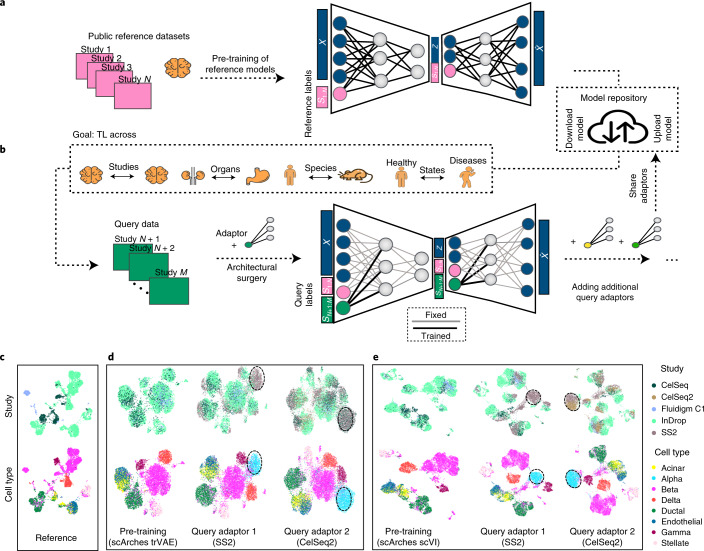
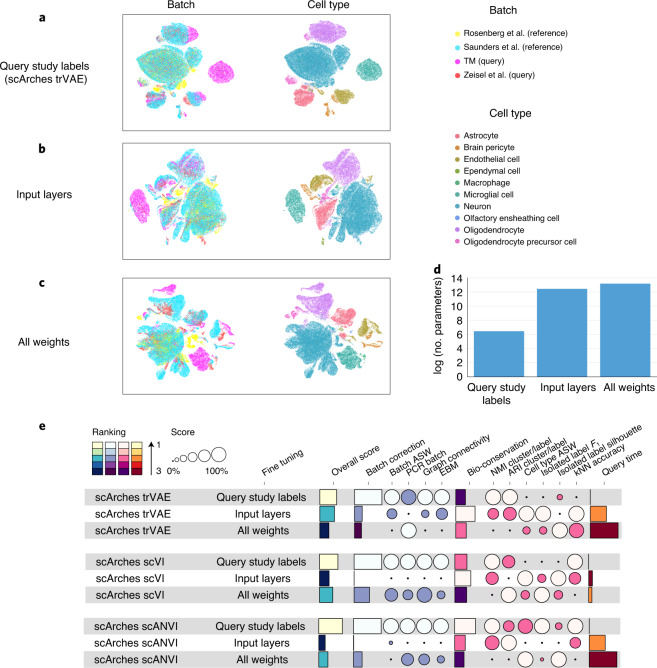
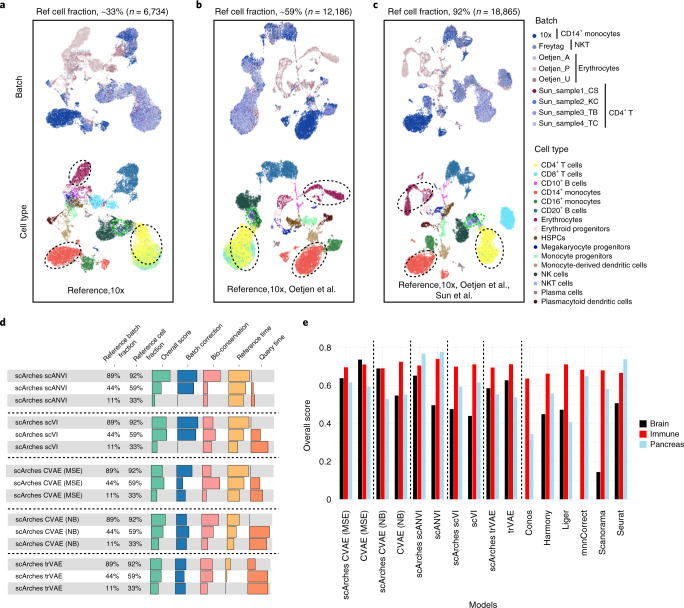
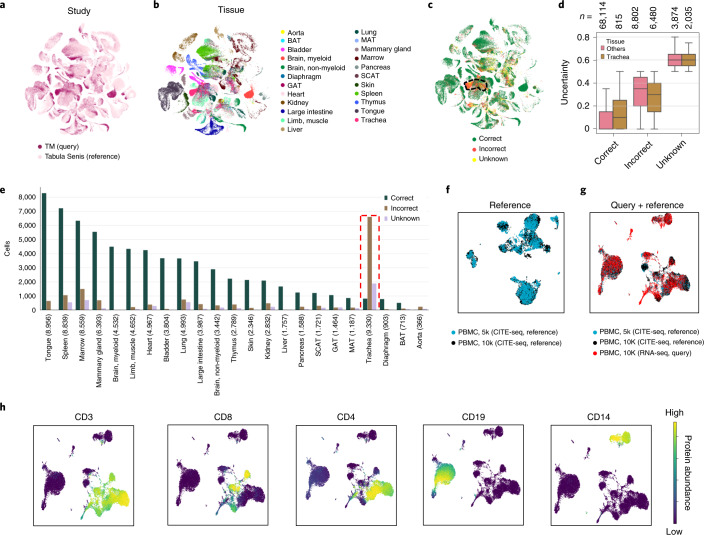
Large single-cell atlases are now routinely generated to serve as references for analysis of smaller-scale studies. Yet learning from reference data is complicated by batch effects between datasets, limited availability of computational resources and sharing restrictions on raw data. Here we introduce a deep learning strategy for mapping query datasets on top of a reference called single-cell architectural surgery (scArches). scArches uses transfer learning and parameter optimization to enable efficient, decentralized, iterative reference building and contextualization of new datasets with existing references without sharing raw data. Using examples from mouse brain, pancreas, immune and whole-organism atlases, we show that scArches preserves biological state information while removing batch effects, despite using four orders of magnitude fewer parameters than de novo integration. scArches generalizes to multimodal reference mapping, allowing imputation of missing modalities. Finally, scArches retains coronavirus disease 2019 (COVID-19) disease variation when mapping to a healthy reference, enabling the discovery of disease-specific cell states. scArches will facilitate collaborative projects by enabling iterative construction, updating, sharing and efficient use of reference atlases.
Overview
The claims and statistics of this paper haven’t been checked yet.
Free: it reads the open-access text and checks the first 5 claims that cite a source we can check. Create a free account to check every claim.
Integrity signals
Registry
Cites
Statistics
Figures
Verification
Claims the paper makes
The claims and statistics of this paper haven’t been checked yet.
Free: it reads the open-access text and checks the first 5 claims that cite a source we can check. Create a free account to check every claim.
Claims other papers make about this one
Each is checked against this paper’s own text: does it say what the citing paper says it does?
The cited source says what the claim attributes to it.
In the citing paper
“Lotfollahi et al. applied transfer learning for mapping query single cells with a decentralized and iterative updating reference model [12].”
From Challenges in AI-driven Biomedical Multimodal Data Fusion and Analysis (2025) · cites this paper as [12]
Self-check
Percentages, sums and reported differences re-computed from the paper’s own numbers.
The self-check needs the paper’s full text.
Citations
Cites
ImageNet classification with deep convolutional neural networks
Krizhevsky, A., Sutskever, I., & Hinton, G. E. (2017) · Communications of the ACM · doi:10.1145/3065386 · Cited by 112,155 · cited 1×
“These references help to understand the cellular heterogeneity that constitutes natural and inter-individual variation, aging, environmental influences and disease.”
BackgroundBERT: Pre-training of Deep Bidirectional Transformers for Language Understanding
Devlin, J., Chang, M.-W., Lee, K., & Toutanova, K. (2018) · arXiv · doi:10.48550/arxiv.1810.04805 · Cited by 73,173
Scikit-learn: Machine Learning in Python
Pedregosa, F., Varoquaux, G., Gramfort, A., Michel, V., Thirion, B., Grisel, O., Blondel, M., Müller, A., Nothman, J., Louppe, G., et al. (2012) · arXiv · doi:10.48550/arxiv.1201.0490 · Cited by 71,016 · cited 2×
“22 ) and logistic regression classifiers 50 (Supplementary Fig.”
BackgroundMethodBERT: Pre-training of Deep Bidirectional Transformers for Language Understanding
Devlin, J., Chang, M.-W., Lee, K., & Toutanova, K. (2019) · Proceedings of the 2019 Conference of the North American Chapter of the Association for Computational Linguistics: Human Language Technologies, Volume 1 (Long and Short Papers) · doi:10.18653/v1/n19-1423 · Cited by 54,325
Auto-Encoding Variational Bayes
Kingma, D. P., & Welling, M. (2013) · arXiv · doi:10.48550/arxiv.1312.6114 · Cited by 20,067
Integrated analysis of multimodal single-cell data
Hao, Y., Hao, S., Andersen-Nissen, E., Mauck, W. M., Zheng, S., Butler, A., Lee, M. J., Wilk, A. J., Darby, C., Zagar, M., et al. (2020) · doi:10.1101/2020.10.12.335331 · Cited by 15,508
Comprehensive Integration of Single-Cell Data
Stuart, T., Butler, A., Hoffman, P., Hafemeister, C., Papalexi, E., Mauck, W. M., Hao, Y., Stoeckius, M., Smibert, P., & Satija, R. (2019) · Cell · doi:10.1016/j.cell.2019.05.031 · Cited by 15,453
Fast, sensitive and accurate integration of single-cell data with Harmony
Korsunsky, I., Millard, N., Fan, J., Slowikowski, K., Zhang, F., Wei, K., Baglaenko, Y., Brenner, M., Loh, P.-R., & Raychaudhuri, S. (2019) · Nature Methods · doi:10.1038/s41592-019-0619-0 · Cited by 10,488
SCANPY: large-scale single-cell gene expression data analysis
Wolf, F. A., Angerer, P., & Theis, F. J. (2018) · Genome Biology · doi:10.1186/s13059-017-1382-0 · Cited by 8,881
Self-citationConditional Generative Adversarial Nets
Mirza, M., & Osindero, S. (2014) · arXiv · doi:10.48550/arxiv.1411.1784 · Cited by 8,863
Research works printed but not linked: 2
- Stuart T Comprehensive integration of single cell data Cell 2019 177 1888 1902 31178118 PMC6687398 · DOI · Paper page
- Sohn, K., Lee, H. & Yan, X. Learning structured output representation using deep conditional generative models. in Advances in Neural Information Processing Systems (eds. Cortes, C. et al.) 28, 3483–3491 (Curran Associates, 2015).
Cited by
Items 201–300 of 615
Technological and computational advances driving high-throughput oncology
Kolmar, L., Autour, A., Ma, X., Vergier, B., Eduati, F., & Merten, C. A. (2022) · Trends in Cell Biology · doi:10.1016/j.tcb.2022.04.008 · Cited by 16
Guidelines for mouse and human DC functional assays
Clausen, B. E., Amon, L., Backer, R. A., Berod, L., Bopp, T., Brand, A., Burgdorf, S., Chen, L., Da, M., Distler, U., et al. (2022) · European Journal of Immunology · doi:10.1002/eji.202249925 · Cited by 19
Application of residual neural networks to detect and quantify milk adulterations
Pérez-Calabuig, A. M., Pradana‐López, S., López-Ortega, S., Sáenz, K. D. J. B., Cancilla, J. C., & Torrecilla, J. S. (2023) · Journal of Food Composition and Analysis · doi:10.1016/j.jfca.2023.105427 · Cited by 18
Respiratory epithelial cell types, states and fates in the era of single-cell RNA-sequencing
Dudchenko, O., Ordovás-Montañés, J., & Bingle, C. D. (2023) · Biochemical Journal · doi:10.1042/bcj20220572 · Cited by 18
SiFT: uncovering hidden biological processes by probabilistic filtering of single-cell data
Piran, Z., & Nitzan, M. (2024) · Nature Communications · doi:10.1038/s41467-024-44757-7 · Cited by 18
Lapuente-Santana, Ó., Sturm, G., Kant, J. A., Außerhofer, M., Zackl, C., Zopoglou, M., McGranahan, N., Rieder, D., Trajanoski, Z., de Miranda, N. F. C. C., et al. (2024) · iScience · doi:10.1016/j.isci.2024.110529 · Cited by 19
Cancilla, J. C., Pradana‐López, S., Pérez-Calabuig, A. M., López-Ortega, S., Rodrigo, C., & Torrecilla, J. S. (2022) · Food Chemistry · doi:10.1016/j.foodchem.2022.132468 · Cited by 16
Ex vivo modeling of precision immuno-oncology responses in lung cancer
Alsaed, B., Smolander, J., Laitinen, H. K., Lin, L., Bobik, N., Lahtinen, L., Räsänen, M., Jansouz, S., Peltonen, K., Jokinen, E., et al. (2024) · Science Advances · doi:10.1126/sciadv.adq6830 · Cited by 18
CellSTAR: a comprehensive resource for single-cell transcriptomic annotation
Zhang, Y., Sun, H., Zhang, W., Fu, T., Huang, S., Mou, M., Zhang, J., Gao, J., Ge, Y., Yang, Q., et al. (2023) · Nucleic Acids Research · doi:10.1093/nar/gkad874 · Cited by 21
“(iii) Rigorous inspection and verification : due to factors such as data size, complexity, protection regulations and organizational barriers, sharing annotation information along with expression profiles can be challenging ( 37 ).”
JOINTLY: interpretable joint clustering of single-cell transcriptomes
Møller, A. F., & Madsen, J. G. S. (2023) · Nature Communications · doi:10.1038/s41467-023-44279-8 · Cited by 18
“The investigators were not blinded to allocation during experiments and outcome assessment.”
SIMS: A deep-learning label transfer tool for single-cell RNA sequencing analysis
Gonzalez-Ferrer, J., Lehrer, J., O’Farrell, A., Paten, B., Teodorescu, M., Haussler, D. H., Jönsson, V. D., & Mostajo-Radji, M. A. (2024) · Cell Genomics · doi:10.1016/j.xgen.2024.100581 · Cited by 18
Sensitive cluster-free differential expression testing.Preprint
Missarova, A. M., Rosen, L. U., Dann, E., Satija, R., & Marioni, J. C. (2023) · bioRxiv (Cold Spring Harbor Laboratory) · doi:10.1101/2023.03.08.531744 · Cited by 15
Advancing Cardiovascular Research With Single-Cell and Spatial Transcriptomics
Li, K., Samiei, S., Pikulska, D., Foecking, S., & Kuppe, C. (2026) · Circulation Research · doi:10.1161/circresaha.125.325795 · Cited by 19
Characterization of Commercially Available Human Primary Alveolar Epithelial Cells
Herbst, C., López-Rodríguez, E., Gluhovic, V., Schulz, S., Brandt, R., Timm, S., Abledu, J. K., Falivene, J., Pennitz, P., Kirsten, H., et al. (2024) · American Journal of Respiratory Cell and Molecular Biology · doi:10.1165/rcmb.2023-0320ma · Cited by 17
Zhai, Y., Chen, L., & Deng, M. (2024) · Briefings in Bioinformatics · doi:10.1093/bib/bbae188 · Cited by 15
“…the meta-dataset [40]. scArches uses transfer learning and parameter optimization to enable reference building and contextualization of target data [45]. scNym applies semi-supervised learning and adversarial learning techniques to integrate gene expression knowledge from different datasets [46].”
BackgroundMethodscATAnno: Automated Cell Type Annotation for Single-cell ATAC-seq Data
Jiang, Y., Hu, Z., Lu, F., Lynch, A. W., Jiang, J., Zhu, A., Zeng, Z., Zhang, Y., Wu, G., Xie, Y., et al. (2025) · Genomics Proteomics & Bioinformatics · doi:10.1093/gpbjnl/qzaf108 · Cited by 24
“The first metric is the KNN-based uncertainty score, which has been described in previous publications [30,34].”
Unravelling the landscape of skin cancer through single-cell transcriptomics
Srivastava, A., Bencomo, T., Das, I., & Lee, C. S. (2022) · Translational Oncology · doi:10.1016/j.tranon.2022.101557 · Cited by 19
Chen, S., Duan, B., Zhu, C., Tang, C., Wang, S., Gao, Y., Fu, S., Fan, L., Yang, Q., & Liu, Q. (2022) · Science China Life Sciences · doi:10.1007/s11427-022-2224-4 · Cited by 19
“tegies failed to address these issues, hindered by legal restrictions on data sharing (Lotfollahi et al., 2022).”
BackgroundAn integrated single-cell reference atlas of the human endometriumPreprint
Marečková, M., García‐Alonso, L., Moullet, M., Lorenzi, V., Petryszak, R., Sancho‐Serra, C., Oszlánczi, Á., Icoresi-Mazzeo, C., Hoffman, S., Krassowski, M., et al. (2023) · bioRxiv (Cold Spring Harbor Laboratory) · doi:10.1101/2023.11.03.564728 · Cited by 14
“Altogether, we generated the most comprehensive reference atlas of the human endometrium (i.e. the HECA), which can now be used to map and contextualise newly processed samples and external datasets using the transfer learning framework scArches 32 .”
MethodSelf-citation(2024) · doi:10.1038/s41467-024-45198-y · Cited by 14
Faravelli, I., Rinchetti, P., Tambalo, M., Simutin, I., Mapelli, L., Mancinelli, S., Miotto, M., Rizzuti, M., D’Angelo, A., Cordiglieri, C., et al. (2025) · Nature Communications · doi:10.1038/s41467-025-67725-1 · Cited by 16
Single‐Cell and Spatial Omics: Methods and Applications
Cen, X., Huang, X., Deng, E., Gong, X., Tan, N., Ye, J. T., Wang, Y., Eils, R., Luo, Q., Li, Y., et al. (2026) · MedComm · doi:10.1002/mco2.70713 · Cited by 18
“Tools such as BERMUDA [ 172 ], scScope [ 173 ], MARS [ 174 ], and scArches [ 175 ] employed transfer learning or deep metric learning (DML) to map new datasets onto existing reference atlases while correcting for batch and platform variation.”
Aging disrupts spatiotemporal coordination in the cycling murine ovary
Lan, T. C. T., Kochersberger, A., Raichur, R., Szady, S., Tran, H., Simeonova, R., Helmuth, A., Minagar, A., Fuentes, M. J. O., Kumar, V., et al. (2026) · Nature Aging · doi:10.1038/s43587-026-01140-z · Cited by 18
Cell type matching in single-cell RNA-sequencing data using FR-Match
Zhang, Y., Aevermann, B. D., Gala, R., & Scheuermann, R. H. (2022) · Scientific Reports · doi:10.1038/s41598-022-14192-z · Cited by 13
Li, Z., Wang, Y., Gañán‐Gómez, I., Colla, S., & Do, K.-A. (2022) · Bioinformatics · doi:10.1093/bioinformatics/btac617 · Cited by 15
Deep learning models will shape the future of stem cell research
Ouyang, J. F., Chothani, S. P., & Rackham, O. J. L. (2023) · Stem Cell Reports · doi:10.1016/j.stemcr.2022.11.007 · Cited by 14
A CRISPR/Cas9-based enhancement of high-throughput single-cell transcriptomics
Pandey, A. C., Bezney, J., DeAscanis, D., Kirsch, E., Ahmed, F., Crinklaw, A., Choudhary, K. S., Mandala, T., Deason, J., Hamidi, J., et al. (2025) · Nature Communications · doi:10.1038/s41467-025-59880-2 · Cited by 19
“We also sequenced the same 10x-V3 processed sample to ~80,000 reads per cell and integrated a well-characterized PBMC dataset from scArches for direct comparison 32 .”
InfluentialLi, Q. (2022) · bioRxiv (Cold Spring Harbor Laboratory) · doi:10.1101/2022.04.17.488600 · Cited by 13
Choi, H., Park, J., Kim, S., Kim, J., Lee, D., Bae, S., Shin, H., & Lee, D. (2024) · bioRxiv (Cold Spring Harbor Laboratory) · doi:10.1101/2024.05.08.593094 · Cited by 13
Marshe, V. S., Tuddenham, J. F., Chen, K. W., Chiu, R., Haage, V. C., Ma, Y., Lee, A., Shneider, N. A., Agin‐Liebes, J., Alcalay, R. N., et al. (2025) · bioRxiv (Cold Spring Harbor Laboratory) · doi:10.1101/2025.03.27.641500 · Cited by 23
MapMyCells: High-performance mapping of cell-by-gene data to reference brain taxonomies
Daniel, S. F., Lee, C., Mollenkopf, T. S., Lee, M. H., Arbuckle, J., Fiabane, E., Gabitto, M. I., Johansen, N., Kapen, I., Kraft, A. W., et al. (2026) · Cell Reports Methods · doi:10.64898/2026.03.06.710160 · Cited by 34
Tran, T. P., Wee, F. Y. T., Joseph, C. R., Zhang, W., Lim, J. C. T., Neo, Z. W., Chong, L. Y., Yap, F. H. X., Patterson, N. H., Claesen, M., et al. (2025) · Frontiers in Molecular Biosciences · doi:10.3389/fmolb.2025.1614288 · Cited by 16
“To reconcile this, we used level 3 HLCA annotations, which group cells into broader categories with higher certainty (Lotfollahi et al., 2022).”
Artificial Intelligence Revolution in Transcriptomics: From Single Cells to Spatial Atlases
Li, S., Xiao, T., Lan, Y., Wu, C., Li, Z., Liu, R., Fang, Q., & Zhang, C. (2025) · Advanced Science · doi:10.1002/advs.202518949 · Cited by 15
Interpretation, extrapolation and perturbation of single cells
Dimitrov, D., Schrod, S., Rohbeck, M., & Stegle, O. (2026) · Nature Reviews Genetics · doi:10.1038/s41576-025-00920-4 · Cited by 39
Fritz, D., Inamo, J., & Zhang, F. (2023) · Frontiers in Immunology · doi:10.3389/fimmu.2022.1076700 · Cited by 13
Deep generative models in single-cell omics
Rivero-García, I., Torres, M., & Sánchez‐Cabo, F. (2024) · Computers in Biology and Medicine · doi:10.1016/j.compbiomed.2024.108561 · Cited by 14
Evolutionary diversity of cell-type-specific expression and stress response in Brassicaceae roots
Wang, G., Ryu, K. H., Dinneny, A., Lee, J., Oh, D., Ramachandran, P., Oliva, M., Lister, R., Dinneny, J. R., Schiefelbein, J., et al. (2026) · Nature Communications · doi:10.1038/s41467-026-73270-2 · Cited by 21
“We employed three prediction algorithms (TransferData in Seurat 22 , Symphony 23 , and scArches 24 ) to transfer Arabidopsis annotations to individual cells in the other species based on 15,198 unambiguous 1-to-1 orthologous genesidenti fi ed(SupplementaryFig.4-Step2,detailsinMethods).”
Orexin/hypocretin receptor 2 signaling in MCH neurons regulates REM sleep and insulin sensitivity
Izawa, S., Fuscà, D., Jiang, H., Heilinger, C., Hausen, A. C., Wunderlich, F. T., Steuernagel, L., Kloppenburg, P., & Brüning, J. C. (2025) · Cell Reports · doi:10.1016/j.celrep.2025.115277 · Cited by 15
A spatial code governs olfactory receptor choice and aligns sensory maps in the nose and brain
Brann, D. H., Tsukahara, T., Tau, C., Kalloor, D., Lubash, R. W., Kannan, L. T., Klimpert, N., Köllő, M., Escamilla-Del-Arenal, M., Bintu, B., et al. (2026) · Cell · doi:10.1016/j.cell.2026.03.051 · Cited by 17
Netskar, H., Pfefferle, A., Goodridge, J. P., Sohlberg, E., Dufva, O., Teichmann, S. A., Clancy, T., Horowitz, A., & Malmberg, K. (2023) · bioRxiv (Cold Spring Harbor Laboratory) · doi:10.1101/2023.10.26.564050 · Cited by 12
Cranley, J. J., Kanemaru, K., Bayraktar, S., Knight-Schrijver, V. R., Hulbert, R., Lana-Elola, E., Aoidi, R., Pett, J. P., Wilbrey-Clark, A., Polański, K., et al. (2024) · bioRxiv (Cold Spring Harbor Laboratory) · doi:10.1101/2024.04.29.591736 · Cited by 12
CAPTAIN: a multimodal foundation model pretrained on co-assayed single-cell RNA and protein
Ji, B., Hu, T., Wang, J., Liu, M., Xu, L., Zhang, Q., Zhong, S., Qiao, L., Zhang, Y., Peng, S., et al. (2026) · Nature Communications · doi:10.1038/s41467-026-72882-y · Cited by 22
Nevi, L., Aiello, C., Molinaro, F., Altomare, A., Musarra, T., Gallo, P., Taffon, C., Guarino, M. P. L., Gentilucci, U. V., Baiocchini, A., et al. (2025) · npj gut and liver. · doi:10.1038/s44355-025-00038-8 · Cited by 14
“Computational tools like Tangram or Cell2location enable this integration, allowing for the resolution of complex cell-cell interactions, the understanding of the TME ’ s functional logic, and the discovery of regional biomarkers 76,79 .”
Lin, J., Chen, C., Li, S., Chen, L., Fang, M., Fu, S., Chen, K., Xu, H., Zhang, F., Wang, R., et al. (2026) · Nature Neuroscience · doi:10.1038/s41593-026-02265-5 · Cited by 21
“Results from a deep generative model SCANVI 52,53 matched these cell-type assignments (Extended Data Fig.”
Continually adapting pre-trained language model to universal annotation of single-cell RNA-seq data
Wan, H. S., Yuan, M., Fu, Y., & Deng, M. (2024) · Briefings in Bioinformatics · doi:10.1093/bib/bbae047 · Cited by 15
“Additionally, two deep learning data integration methods, scArches [11] and SCALEX [12], are based on the framework of variational autoencoders and also allow for the continuous arrival of datasets.”
MethodMapping the tumor immune landscape: single-cell RNA sequencing in cancer immunotherapy
Huang, Y., Zhang, M., & Gao, Q. (2025) · Cancer Letters · doi:10.1016/j.canlet.2025.218012 · Cited by 15
Wan, H. S., Chen, L., & Deng, M. (2022) · Genomics Proteomics & Bioinformatics · doi:10.1016/j.gpb.2022.12.008 · Cited by 11
“As a new attempt, scArches [11] is a transfer learning strategy which maps target data on top of a source dataset by single-cell architectural surgery without sharing raw source data.”
BackgroundDecoding Human Biology and Disease Using Single-Cell Omics Technologies
Shi, Q., Chen, X., & Zhang, Z. (2023) · Genomics Proteomics & Bioinformatics · doi:10.1016/j.gpb.2023.06.003 · Cited by 13
“Recently, the construction of large atlases has inspired the invention of new annotation methods, including CellTypist [191], scArches [192], TOSICA [193], and scBERT [194].”
MethodWang, L., Nie, R., Miao, X., Cai, Y., Wang, A., Zhang, H., Zhang, J., & Cai, J. (2024) · BMC Bioinformatics · doi:10.1186/s12859-024-05656-2 · Cited by 13
“Generally speaking, as a model augmentation technology, adding a pair of masks to the model is not only limited to inClust, but also can be extended to deep learning models with similar encoder-decoder structures, such as scArches [29].”
BackgroundBreaking the Immune Complexity of the Tumor Microenvironment Using Single-Cell Technologies
Caligola, S., Sanctis, F. D., Canè, S., & Ugel, S. (2022) · Frontiers in Genetics · doi:10.3389/fgene.2022.867880 · Cited by 11
Chen, R., Zhou, J., & Chen, B. (2024) · Cell Systems · doi:10.1016/j.cels.2024.08.006 · Cited by 12
Berg, M., Krabbendam, L., van der Ploeg, E. K., van Nimwegen, M., van der Veer, T., Banchero, M., Carpaij, O. A., Hoogenboezem, R. M., van den Berge, M., Bindels, E. M., et al. (2025) · Journal of Cystic Fibrosis · doi:10.1016/j.jcf.2025.01.016 · Cited by 10
A mesothelial differentiation gateway drives fibrosis
Kadri, S., Fischer, A., Mück-Häusl, M., Han, W., Kadri, A., Lin, Y., Yang, L., Hu, S., Ye, H., Ramesh, P., et al. (2025) · Nature Communications · doi:10.1038/s41467-025-63990-2 · Cited by 11
Zheng, D., Lu, X., Lu, Y., Liang, P., Shang, N., Xu, J., Yao, J., Mo, F., Chu, Q., Fan, L., et al. (2025) · Molecular Plant · doi:10.1016/j.molp.2025.12.026 · Cited by 10
Kendiukhov, I. (2026) · Journal of Biomedical Informatics · doi:10.1016/j.jbi.2026.105056 · Cited by 17
Just how transformative will AI/ML be for immuno-oncology?
Bottomly, D., & McWeeney, S. K. (2024) · Journal for ImmunoTherapy of Cancer · doi:10.1136/jitc-2023-007841 · Cited by 9
“91 Based on the success of models such as GPT and BERT, there is much interest in developing large pretrained transformer models to support transfer learning in many aspects of clinical research including IO.”
BackgroundSmall data methods in omics: the power of one
Johnston, K. G., Grieco, S. F., Nie, Q. H., Theis, F. J., & Xu, X. (2024) · Nature Methods · doi:10.1038/s41592-024-02390-8 · Cited by 9
“This is particularly true when analyzing rare cell types, as identification of higher-resolution distinct cell states contextualized within cell-type atlases frequently requires co-embedding approaches, requiring access to processed atlas data, and potentially the embedding model 20 .”
Self-citationZhu, Y., Shang, Y., Gu, X., Wang, Y., & Zhang, C. (2024) · IEEE Transactions on Transportation Electrification · doi:10.1109/tte.2024.3483870 · Cited by 9
“More detailed information can be found in [33] and [34].”
Gangadharan, K., & Zhang, Q. (2023) · IEEE Transactions on Instrumentation and Measurement · doi:10.1109/tim.2023.3265753 · Cited by 12
“Further, we propose a transfer learning [25], [26], [27], [28], [29] approach to maximize the deep learning performance and minimize the training effort based on the optimal sensor location, named SxPAD.”
MethodscFormer: A Universal Representation Learning Approach for Single-Cell Data Using TransformersPreprint
Cui, H., Wang, C., Maan, H., Duan, N., & Wang, B. (2022) · bioRxiv (Cold Spring Harbor Laboratory) · doi:10.1101/2022.11.20.517285 · Cited by 13
“…has been employed in the field of single-cell biology to integrate cell embed-dings across datasets (Lopez et al., 2018; Gayoso et al., 2021; Lotfollahi et al., 2022), infer cell types (Zhang et al., 2019), analyze gene regulatory networks (Seninge et al., 2021), and predict genetic…”
MethodToward mastering the cell language by learning to generatePreprint
Chen, Y., Bian, H., Wei, L., Jia, J., Dong, X., Li, Y., Zhao, Y., Wu, X., Li, C., Luo, E., et al. (2024) · bioRxiv (Cold Spring Harbor Laboratory) · doi:10.1101/2024.01.25.577152 · Cited by 13
Towards a universal spatial molecular atlas of the mouse brainPreprint
He, Y., Sheng, H., Shi, H., Wang, W. X., Tang, Z., Liu, J., & Wang, X. (2024) · bioRxiv (Cold Spring Harbor Laboratory) · doi:10.1101/2024.05.27.594872 · Cited by 10
Pregizer, S. K., Vreven, T., Mathur, M., & Robinson, L. N. (2023) · Frontiers in Molecular Biosciences · doi:10.3389/fmolb.2023.1176856 · Cited by 9
A General Framework for Comparing Embedding Visualizations Across Class-Label Hierarchies
Manz, T., Lekschas, F., Greene, E., Finak, G., & Gehlenborg, N. (2024) · IEEE Transactions on Visualization and Computer Graphics · doi:10.1109/tvcg.2024.3456370 · Cited by 10
“Consequently, there are scenarios where current comparison metrics and visual perception are at odds, like in Figure 2 where point-based metrics suggest substantial differences between the two embedding visualizations, yet perceptually, the two visualizations look almost identical.”
Single-cell views of the Plasmodium life cycle
Real, E., & Mâncio-Silva, L. (2022) · Trends in Parasitology · doi:10.1016/j.pt.2022.05.009 · Cited by 8
uniLIVER: a human liver cell atlas for data-driven cellular state mapping
Wu, Y., Fan, Y., Miao, Y., Li, Y., Du, G., Chen, Z., Diao, J., Chen, Y.-A., Ye, M., You, R., et al. (2025) · Journal of genetics and genomics/Journal of Genetics and Genomics · doi:10.1016/j.jgg.2025.01.017 · Cited by 8
Joint Trajectory Inference for Single-cell Genomics Using Deep Learning with a Mixture PriorPreprint
Du, J., Chen, T., Gao, M., & Wang, J. (2020) · bioRxiv (Cold Spring Harbor Laboratory) · doi:10.1101/2020.12.26.424452 · Cited by 8
Shen, H., Shen, X., Hu, J., Liu, J., Zhang, C., Wu, D., Feng, M., Yang, M., Li, Y., Yang, Y., et al. (2022) · bioRxiv (Cold Spring Harbor Laboratory) · doi:10.1101/2022.01.31.478596 · Cited by 8
Advancing Lung Immunology Research: An Official American Thoracic Society Workshop Report
Rahimi, R. A., Cho, J. L., Jakubzick, C., Khader, S. A., Lambrecht, B. N., Lloyd, C. M., Molofsky, A. B., Talbot, S., Bonham, C. A., Drake, W. P., et al. (2022) · American Journal of Respiratory Cell and Molecular Biology · doi:10.1165/rcmb.2022-0167st · Cited by 8
Rodov, A., Baniadam, H., Zeiser, R., Amit, I., Yosef, N., Wertheimer, T., & Ingelfinger, F. (2025) · European Journal of Immunology · doi:10.1002/eji.202451234 · Cited by 10
Self-citationA unified single-cell atlas of human lung provides insights into pulmonary diseases
Wu, F., Cai, W., Tang, H. C., Zheng, S., Zhang, H., Chen, Y., Han, Y., Zhou, D., Wang, R., Ye, M., et al. (2025) · EBioMedicine · doi:10.1016/j.ebiom.2025.106025 · Cited by 9
“To confirm the presence of Lym-monocytes and T-like B cells, we used scArches 54 to map them onto other existing lung atlases.”
Park, J., Kim, S., Kim, J., Lee, D., Bae, S., Shin, H., Lee, D., & Choi, H. (2025) · Advanced Science · doi:10.1002/advs.202513210 · Cited by 27
“As another dataset, a COVID-19 dataset was employed to demonstrate the capability in zero-shot reference mapping scenarios as well as finetuing for specific purpose and specific organ data 18 .”
Quantitative analysis of high‐throughput biological data
Juan, H., & Huang, H. (2023) · Wiley Interdisciplinary Reviews Computational Molecular Science · doi:10.1002/wcms.1658 · Cited by 10
“Deep learning models would be good candidates for mapping query datasets on top of a reference. scArches 184 uses transfer learning and fine-tuning strategy to leverage existing conditional neural network models and transfer them to new datasets.”
BackgroundRecovering single-cell expression profiles from spatial transcriptomics with scResolve
Chen, H., Lee, Y. J., Ovando-Ricárdez, J. A., Rosas, L., Rojas, M., Mora, A. L., Bar‐Joseph, Z., & Lugo-Martinez, J. (2024) · Cell Reports Methods · doi:10.1016/j.crmeth.2024.100864 · Cited by 10
“We directly used the trained scArches 61 model provided by HLCA for label transfering. scArches performs joint embedding of reference data and query data and uses a nearest neighbor classifier to label cell types.”
ERS International Congress 2022: highlights from the Basic and Translational Science Assembly
Ocaña, S. C., El-Merhie, N., Kuipers, M. E., Lehmann, M., Enes, S. R., Voss, C., Dean, L. S. N., Loxham, M., Boots, A. W., Cloonan, S. M., et al. (2023) · ERJ Open Research · doi:10.1183/23120541.00561-2022 · Cited by 8
“…has been able to recover rare cell identities ( ⩽ 0.01% of the sample), identify variant-cell type associations previously detected by genome-wide association studies (GWAS), identify differential pathway activities across the proximodistal axis, and rapidly analyse and contextualise new data [45].”
InfluentialPrecise identification of cell states altered in disease with healthy single-cell referencesPreprint
Dann, E., Teichmann, S. A., & Marioni, J. C. (2022) · bioRxiv (Cold Spring Harbor Laboratory) · doi:10.1101/2022.11.10.515939 · Cited by 7
Starfysh reveals heterogeneous spatial dynamics in the breast tumor microenvironmentPreprint
He, S., Jin, Y., Nazaret, A., Shi, L., Chen, X., Rampersaud, S., Dhillon, B. S., Valdez, I. K., Friend, L. E., Fan, J. L., et al. (2022) · bioRxiv (Cold Spring Harbor Laboratory) · doi:10.1101/2022.11.21.517420 · Cited by 7
Semi-supervised integration of single-cell transcriptomics dataPreprint
Andreatta, M., Hérault, L., Gueguen, P., Gfeller, D., Berenstein, A. J., & Carmona, S. J. (2023) · bioRxiv (Cold Spring Harbor Laboratory) · doi:10.1101/2023.07.07.548105 · Cited by 7
Scaling cross-tissue single-cell annotation modelsPreprint
Fischer, F., Fischer, D. S., Biederstedt, E., Villani, A., & Theis, F. J. (2023) · bioRxiv (Cold Spring Harbor Laboratory) · doi:10.1101/2023.10.07.561331 · Cited by 7
“Nevertheless, a dominant paradigm of the cell type annotation task has been annotation transfer 16 , specifically the approach of projecting entire samples of cells on an annotated reference atlas to transfer cell type labels 1,17,18 .”
BackgroundSelf-citationLuo, E., Wei, L., Hao, M., Zhang, X., & Liu, Q. (2026) · Nature Communications · doi:10.1038/s41467-026-71744-x · Cited by 14
Wu, Y.-H., Liu, J., Xiao, Y., Zhang, S., & Li, L.-M. (2024) · bioRxiv · doi:10.1093/bib/bbaf126 · Cited by 8
“[31](Fig.”
Deep Learning for Clustering Single-cell RNA-seq Data
Zhu, Y., Bai, L., Ning, Z., Fu, W., Liu, J., Jiang, L., Fei, S., Gong, S., Lu, L., Deng, M., et al. (2022) · Current Bioinformatics · doi:10.2174/1574893618666221130094050 · Cited by 6
Friedrich, V. D., Pennitz, P., Wyler, E., Adler, J. M., Postmus, D., Müller, K., Alves, L. G. T., Prigann, J., Pott, F., Vladimirova, D., et al. (2024) · EBioMedicine · doi:10.1016/j.ebiom.2024.105312 · Cited by 8
“32 The development of scGen by the lab of Theis and colleagues is a vital application of VAEs.”
Cell-GraphCompass: modeling single cells with graph structure foundation model
Fang, C., Cui, W., Hu, Z., Liu, W., Chen, S., Chang, S., Long, Q., Li, C., Liu, Y., Jiang, H., et al. (2025) · National Science Review · doi:10.1093/nsr/nwaf255 · Cited by 10
“The PBMC 10k dataset [29 ] includes data from two sequencing batches, while the COVID-19 [30 ] and human pancreas [23 ] datasets are more complex, encompassing 18 and 9 batches, respectively.”
NeMO Analytics: a compendium of transcriptomic data for the exploration of neocortical development
Sonthalia, S., Herb, B. R., Adkins, R. S., Orvis, J., Liu, J., Liao, X., Yu, Q., Mato-Blanco, X., Casella, A. M., Liu, J., et al. (2026) · Nature Neuroscience · doi:10.1038/s41593-026-02204-4 · Cited by 10
“These are many and include: ExpiMap 82 , scArches 83 , treeArches 84 , scGAD 74 , BEENE 85 , Symphony 86 , scMC 87 , SIMS 88 , scCross 89 , scBOL 90 , MIDAS 91 , scPML 92 , scMRA 93 , CIForm 94 , ABC 95 , MOFA 96,97 , transfer learning for scRNA-seq clustering 98 and a new review of reference…”
Translation Rate Prediction and Regulatory Motif Discovery with Multi-task Learning
Zheng, W., Fong, J. H. C., Wan, Y. K., Chu, A. H. Y., Huang, Y., Wong, A. S. L., & Ho, J. W. K. (2023) · Lecture notes in computer science · doi:10.1007/978-3-031-29119-7_9 · Cited by 9
Gundogdu, P., Alamo, I., Nepomuceno-Chamorro, I. A., Dopazo, J., & Loucera, C. (2023) · Biology · doi:10.3390/biology12040579 · Cited by 3
“Single reference mapping methods are growing in popularity as Seurat’s supervised principal component analysis [10], single-cell architecture surgery (scArches) [11], or an extension of Harmony [12] to map query datasets by minimal modification of the reference atlas [13].”
MethodMCProj: metacell projection for interpretable and quantitative use of transcriptional atlases
Ben-Kiki, O., Bercovich, A., Lifshitz, A., Raz, O., Bar, D., & Tanay, A. (2023) · Genome biology · doi:10.1186/s13059-023-03069-7 · Cited by 6
“Approaches for mapping cells on reference data may use a variety of strategies [3, 11, 12] including transfer learning [4, 13, 14] or simple correlation matching of cells to atlas distributions [15].”
BackgroundMethodComputational single cell oncology: state of the art
Paas-Oliveros, E., Lemus, E. H., & de Anda‐Jáuregui, G. (2023) · Frontiers in Genetics · doi:10.3389/fgene.2023.1256991 · Cited by 7
Cell fate decision in erythropoiesis: Insights from multiomics studies
Tur, S., Palii, C. G., & Brand, M. (2024) · Experimental Hematology · doi:10.1016/j.exphem.2024.104167 · Cited by 7
Panpipes: a pipeline for multiomic single-cell and spatial transcriptomic data analysisPreprint
Curion, F., Rich‐Griffin, C., Agarwal, D., Ouologuem, S., Thomas, T. R., Theis, F. J., & Dendrou, C. A. (2023) · bioRxiv (Cold Spring Harbor Laboratory) · doi:10.1101/2023.03.11.532085 · Cited by 6
Self-citationMulti-omic human neural organoid cell atlas of the posterior brainPreprint
Azbukina, N. V., He, Z., Lin, H., Santel, M., Kashanian, B., Maynard, A., Torok, T., Okamoto, R., Nikolova, M. T., Kanton, S., et al. (2025) · bioRxiv (Cold Spring Harbor Laboratory) · doi:10.1101/2025.03.20.644368 · Cited by 6
“…how well organoid chromatin accessibility dynamics recapitulate human early brain development, we developed an approach combining topic analysis and transfer learning 29,27 to project organoid scATAC-seq data to a single-cell chromatin accessibility atlas of the human developing brain 30 (Fig.”
InfluentialIwata, R., López, I. M. G., Erkol, E., Limame, R., Vandekeere, A., Bénac, N., Turner-Bridger, B., Planque, M., Ditkowska, M., Lein, V., et al. (2025) · bioRxiv (Cold Spring Harbor Laboratory) · doi:10.1101/2025.08.27.672586 · Cited by 10
An integrated single cell and spatial omics atlas of human prenatal developmentPreprint
Webb, S., Rose, A., Xu, C., Steele, L., Ando‐Kuri, M., Stephenson, E., İnecik, K., Jafree, D. J., Foster, A. R., Basurto-Lozada, D., et al. (2026) · bioRxiv (Cold Spring Harbor Laboratory) · doi:10.64898/2026.03.30.714220 · Cited by 8
Self-citationKim, H., Park, I., Park, J.-E., Kim, J. K., Seo, M., & Kim, J. K. (2025) · Nature Communications · doi:10.1038/s41467-025-60702-8 · Cited by 18
“For example, the transfer learning method, like scArches, enables ef fi cient label transfer from pre-trained reference models to querydatasets 49 .”
Abedi, M., Rai, P., Zhou, Y., Liu, C., Johnson, I., Chandra, A., Fasolino, M., Rostami, S. Y., Wang, W., Min, Z., et al. (2025) · Science Immunology · doi:10.1126/sciimmunol.adz0472 · Cited by 6
Toward informed batch correction for single-cell transcriptome integration
Li, S., Luecken, M. D., Marioni, J. C., Teichmann, S. A., & He, P. (2026) · Nature Computational Science · doi:10.1038/s43588-025-00943-1 · Cited by 18
Self-citationGuo, J. (2024) · PeerJ Computer Science · doi:10.7717/peerj-cs.2148 · Cited by 7
FedscGen: privacy-preserving federated batch effect correction of single-cell RNA sequencing data
Bakhtiari, M., Bonn, S., Theis, F. J., Zolotareva, O. I., & Baumbach, J. (2025) · Genome biology · doi:10.1186/s13059-025-03684-6 · Cited by 10
“Inclusion of standalone (only present in one batch) and minority cell types (with a few samples) in centralized batch effect correction experiments was previously done by combining [38] or using them as they appeared in the dataset [35].”
InfluentialSelf-citationHe, F., Fei, R., Krull, J. E., Yu, Y., Zhang, X., Wang, X., Cheng, H., Gao, M., Su, L., Chen, Y., et al. (2025) · Nature Machine Intelligence · doi:10.1038/s42256-025-01170-z · Cited by 5
Metadata
- Authors
- Lotfollahi, M., Naghipourfar, M., Luecken, M. D., Khajavi, M., Büttner, M., Wagenstetter, M., Avsec, Ž., Gayoso, A., Yosef, N., Interlandi, M., Rybakov, S., Misharin, A. V., & Theis, F. J.
- Affiliations
- Helmholtz Munich (DE)
- Technical University of Munich (DE)
- University of California, Berkeley (US)
- Ragon Institute of MGH, MIT and Harvard (US)
- University of Münster (DE)
- Northwestern University (US)
- Corresponding author
- Theis, Fabian J.
- ORCID
- Venue
- Nature Biotechnology
- Published
- 2021-08-30
- Volume
- 40
- Issue
- 1
- Pages
- 121-130
- ISSN
- 0733-222X (ISSN-L)
- 1087-0156
- 1546-1696
- PMC
- PMC8763644
- OpenAlex
- W3196650609
- Cited by
- 602
- References
- 76
- Citations by year
- 2026: 130 · 2025: 144 · 2024: 146 · 2023: 116 · 2022: 57 · 2021: 7
- FWCI
- 26.29
- Type
- journal article
- Language
- en
- Open access
- hybrid
- doi.org
- Licence
- cc-by
- creativecommons.org/licenses/by/4.0 (tdm)
- creativecommons.org/licenses/by/4.0 (vor)
- Locations
- Nature Biotechnology (publishedVersion, cc-by)
- PubMed Central (publishedVersion, cc-by)
- PubMed (publishedVersion)
- PuSH - Publication Server of Helmholtz Zentrum München (submittedVersion, cc-by)
- eScholarship (California Digital Library) (submittedVersion)
- mediaTUM (Technical University of Munich) (submittedVersion, other-oa)
- Site cant be reached (submittedVersion, cc-by)
- Funders
- Deutsche Forschungsgemeinschaft (ZT-I-0007)
- Topics
- Life Sciences › Biochemistry, Genetics and Molecular Biology › Molecular Biology › Single-cell and spatial transcriptomics
- Life Sciences › Biochemistry, Genetics and Molecular Biology › Molecular Biology › Gene Regulatory Network Analysis
- Life Sciences › Biochemistry, Genetics and Molecular Biology › Molecular Biology › Bioinformatics and Genomic Networks
- Keywords
- transfer learning, single-cell data integration, batch effect correction, mouse brain atlas
- MeSH terms
- Deep Learning, COVID-19, SARS-CoV-2, Animals, Humans, Organ Specificity, Reference Standards, Mice, Single-Cell Analysis, Datasets as Topic
About these checks
Registry, retraction, Cites and statistics results are computed, not judged, with one exception: a printed reference that no index lists is read once by a model before it counts as a citation error. Claims are extracted by a model and kept only when their quote appears verbatim in the text; each cited source is then checked, with a model’s help, for whether it says what the claim relies on. Those verdicts can be wrong — read the claim’s quote and the cited source before relying on one.
Statistics and arithmetic are recomputed, not judged.
Confidence bands are shown only for fields calibrated on our annotated test set. None is calibrated yet, so no band is shown.
What counts as a claim ›How we measure confidence ›How we check this ›
Are you an author, or do you see a problem with this page? Request a review
Data sources
Bibliographic data: Semantic Scholar, OpenAlex, Crossref.
Contains information from the Semantic Scholar Academic Graph Datasets, made available under the ODC Attribution License (ODC-BY 1.0).
Semantic Scholar’s data is described in: Kinney, R., et al. (2023). The Semantic Scholar Open Data Platform. arXiv:2301.10140.
