

Highly efficient therapeutic gene editing of human hematopoietic stem cells
Open accessThe DOI matches its Crossref record; 48 of the 48 references it cites were found in a registry or an index.
Abstract
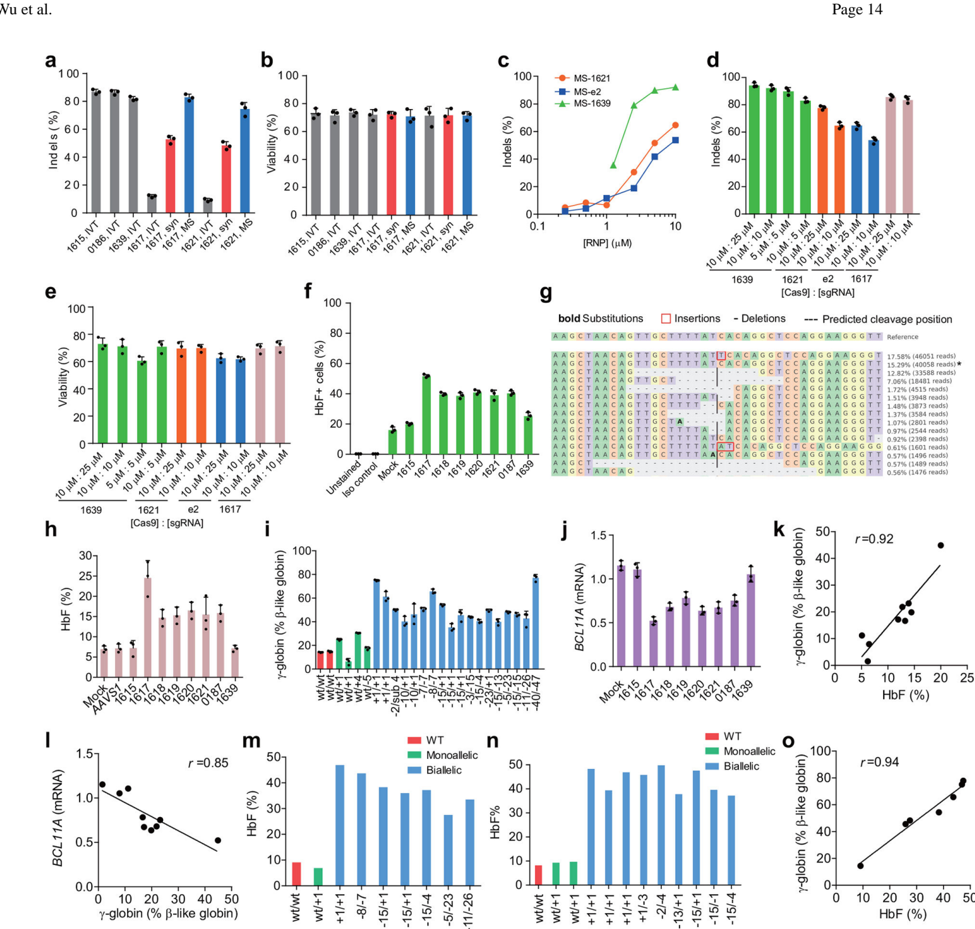
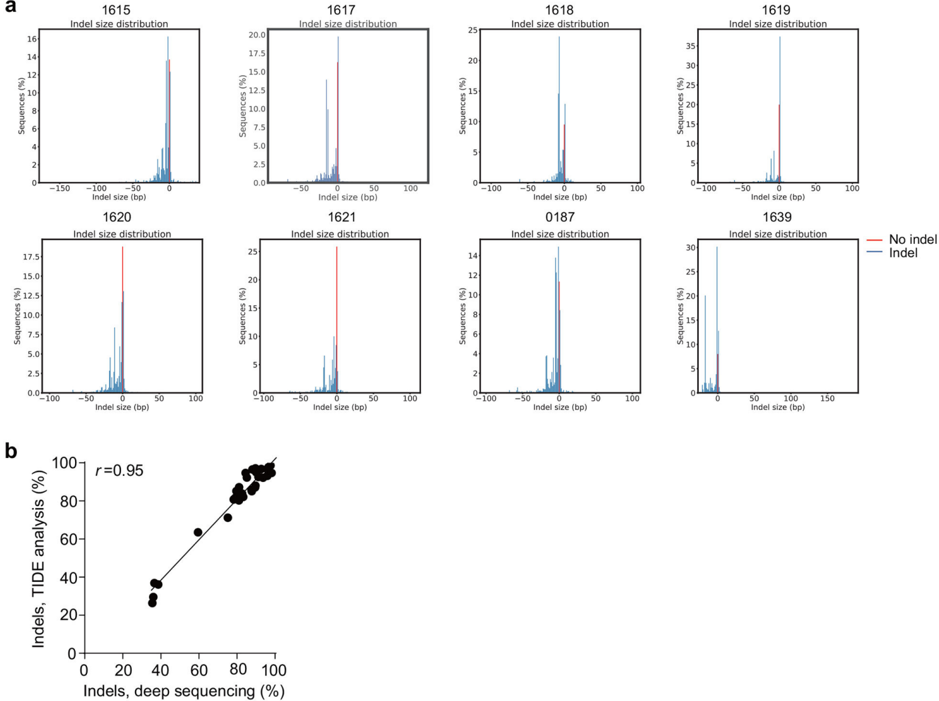
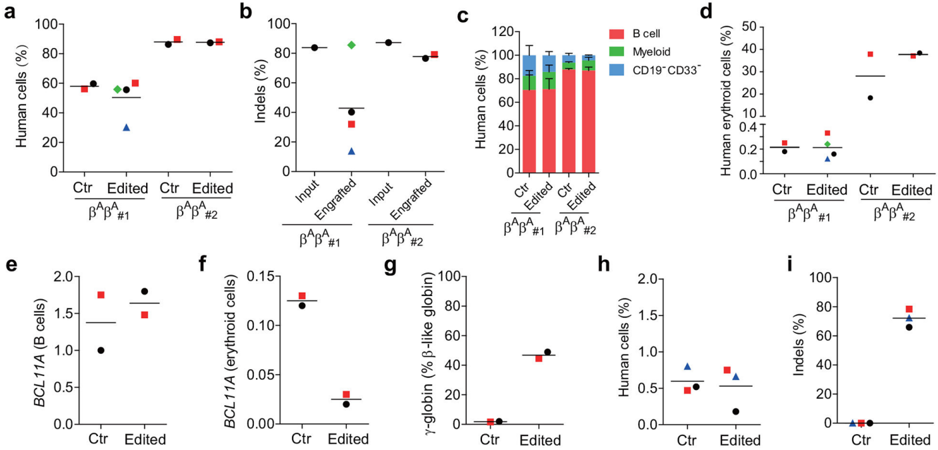
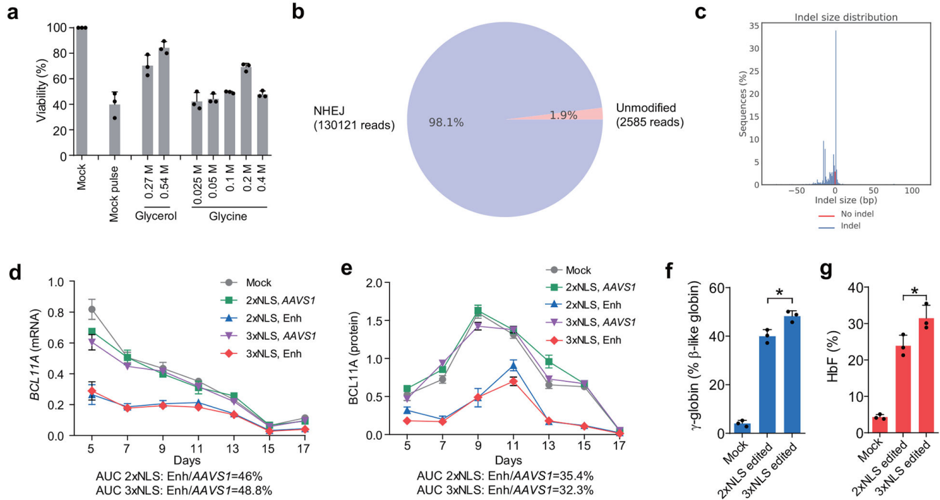
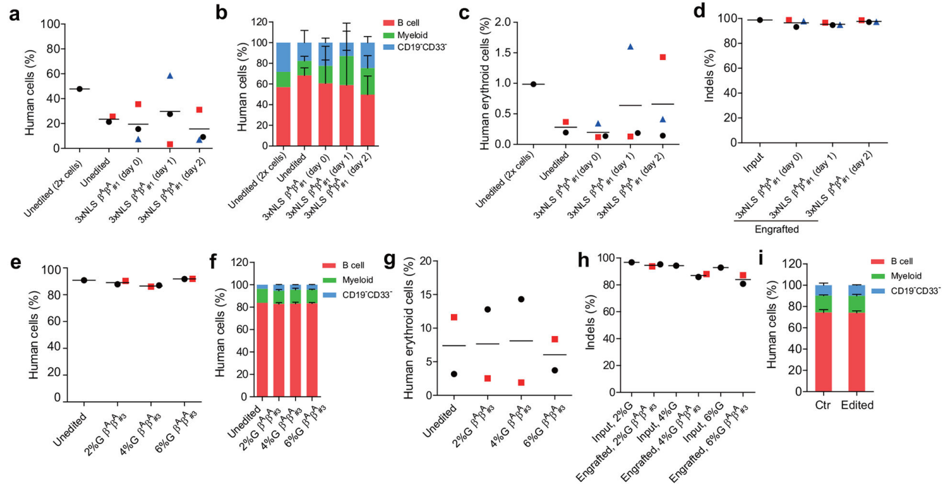
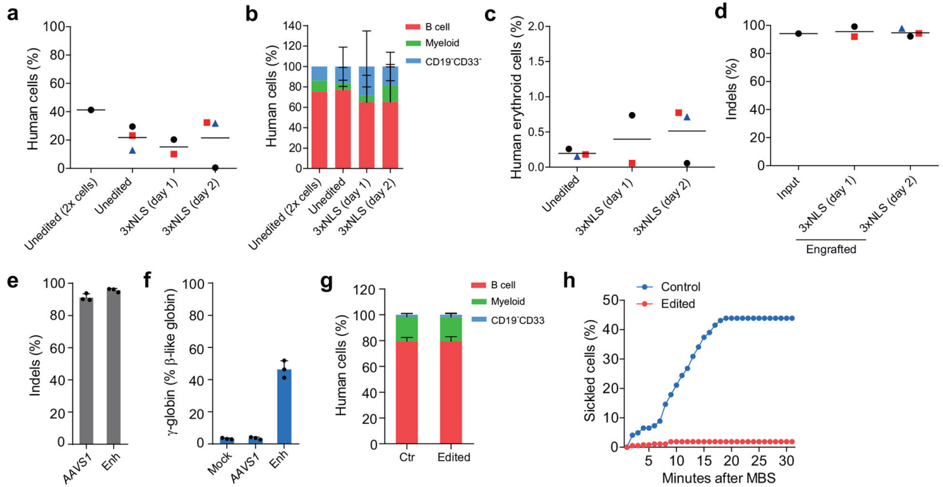
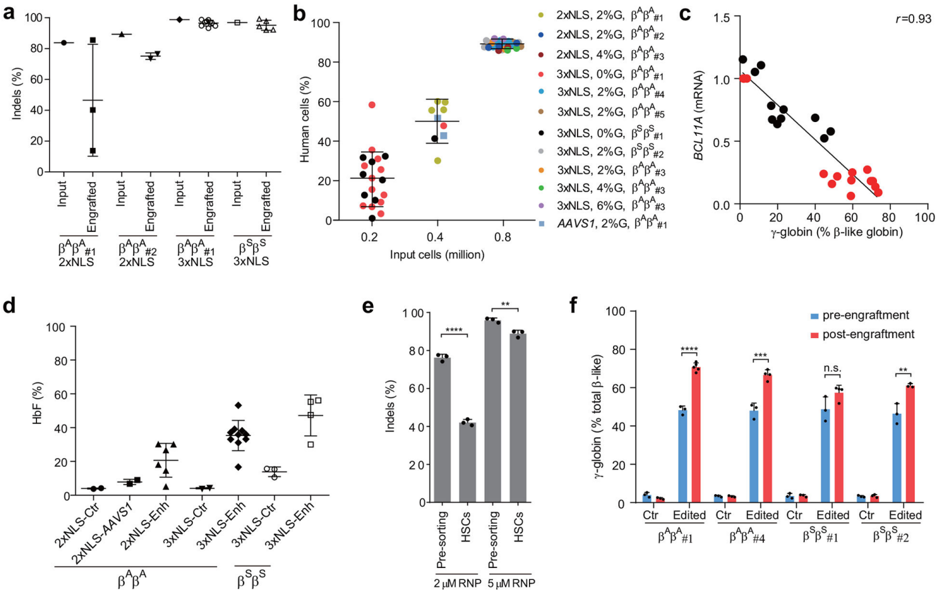
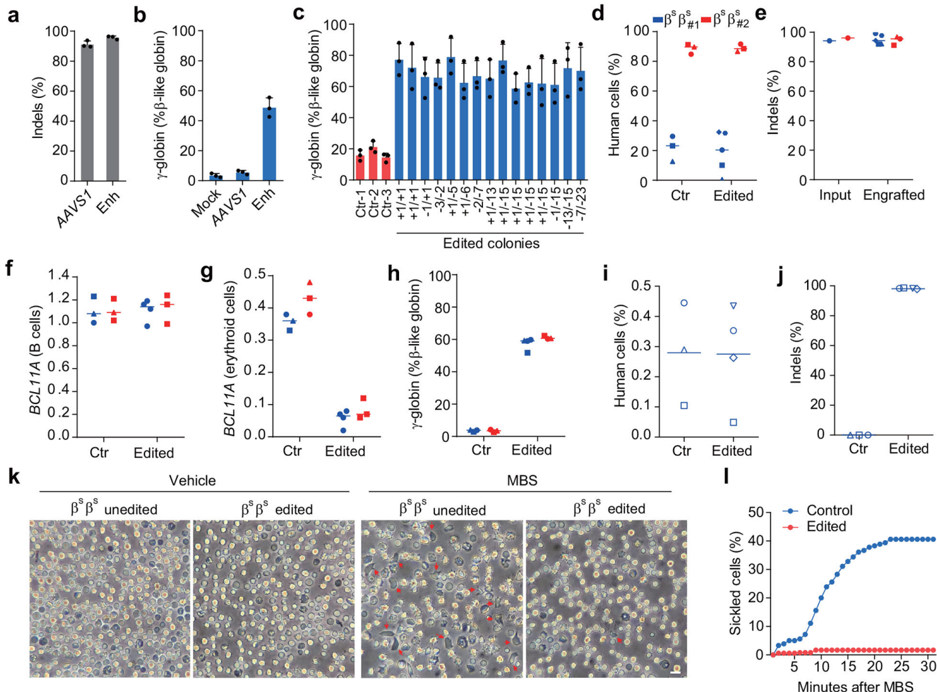
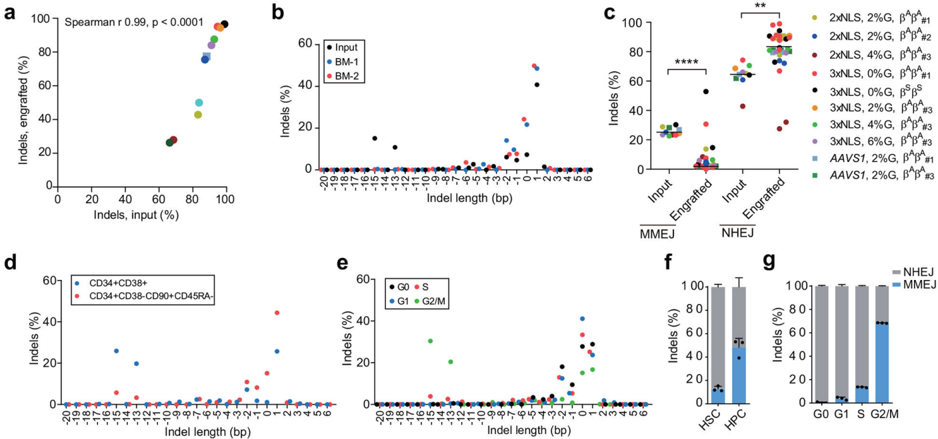
Re-expression of the paralogous γ-globin genes (HBG1/2) could be a universal strategy to ameliorate the severe β-globin disorders sickle cell disease (SCD) and β-thalassemia by induction of fetal hemoglobin (HbF, α2γ2)1. Previously, we and others have shown that core sequences at the BCL11A erythroid enhancer are required for repression of HbF in adult-stage erythroid cells but are dispensable in non-erythroid cells2–6. CRISPR–Cas9-mediated gene modification has demonstrated variable efficiency, specificity, and persistence in hematopoietic stem cells (HSCs). Here, we demonstrate that Cas9:sgRNA ribonucleoprotein (RNP)-mediated cleavage within a GATA1 binding site at the +58 BCL11A erythroid enhancer results in highly penetrant disruption of this motif, reduction of BCL11A expression, and induction of fetal γ-globin. We optimize conditions for selection-free on-target editing in patient-derived HSCs as a nearly complete reaction lacking detectable genotoxicity or deleterious impact on stem cell function. HSCs preferentially undergo non-homologous compared with microhomology-mediated end joining repair. Erythroid progeny of edited engrafting SCD HSCs express therapeutic levels of HbF and resist sickling, while those from patients with β-thalassemia show restored globin chain balance. Non-homologous end joining repair-based BCL11A enhancer editing approaching complete allelic disruption in HSCs is a practicable therapeutic strategy to produce durable HbF induction. Optimized co…
Overview
The claims and statistics of this paper haven’t been checked yet.
Free: it reads the open-access text and checks the first 5 claims that cite a source we can check. Create a free account to check every claim.
Integrity signals
Registry
Cites
Statistics
Figures
Verification
Claims the paper makes
The claims and statistics of this paper haven’t been checked yet.
Free: it reads the open-access text and checks the first 5 claims that cite a source we can check. Create a free account to check every claim.
Claims other papers make about this one
Each is checked against this paper’s own text: does it say what the citing paper says it does?
The source backs part of the claim, not all of it — or backs it for a different population, condition or comparison.
In the citing paper
“Major progress in delivering to 44 and handling HPSCs has resulted in formidable efficiencies of mutation correction or mitigation 18,45-47 that are expected to be curative.”
From The promise and challenge of therapeutic genome editing (2020) · cites this paper as [47]
Experimental — accuracy not yet measuredThe source backs part of the claim, not all of it — or backs it for a different population, condition or comparison.
In the citing paper
“Subsequent experiments showed that p53 inactivation can be controlled or avoided through protocol optimization 47,107 .”
From The promise and challenge of therapeutic genome editing (2020) · cites this paper as [47]
Experimental — accuracy not yet measuredThe source backs part of the claim, not all of it — or backs it for a different population, condition or comparison.
In the citing paper
“Although gene therapy has been slow to evolve since its early introduction, recent advances in gene editing are reinvigorating approaches to treat disorders by manipulation of the underlying genetic defects156.”
From A brief history of human disease genetics (2020) · cites this paper as [156]
Experimental — accuracy not yet measured
Self-check
Percentages, sums and reported differences re-computed from the paper’s own numbers.
The self-check needs the paper’s full text.
Citations
Cites
Kosicki, M., Tomberg, K., & Bradley, A. (2018) · Nature Biotechnology · doi:10.1038/nbt.4192 · Cited by 1,883
Kim, S., Kim, D., Cho, S. W., Kim, J., & Kim, J.-S. (2014) · Genome Research · doi:10.1101/gr.171322.113 · Cited by 1,856
CRISPR–Cas9 genome editing induces a p53-mediated DNA damage response
Haapaniemi, E., Botla, S., Persson, J., Schmierer, B., & Taipale, J. (2018) · Nature Medicine · doi:10.1038/s41591-018-0049-z · Cited by 1,264
Enhanced homology-directed human genome engineering by controlled timing of CRISPR/Cas9 delivery
Lin, S., Staahl, B. T., Alla, R. K., & Doudna, J. A. (2014) · eLife · doi:10.7554/elife.04766 · Cited by 1,189
Chemically modified guide RNAs enhance CRISPR-Cas genome editing in human primary cells
Hendel, A., Bak, R. O., Clark, J. T., Kennedy, A. B., Ryan, D. E., Roy, S., Steinfeld, I., Lunstad, B. D., Kaiser, R. J., Wilkens, A. B., et al. (2015) · Nature Biotechnology · doi:10.1038/nbt.3290 · Cited by 1,090
p53 inhibits CRISPR–Cas9 engineering in human pluripotent stem cells
Ihry, R. J., Worringer, K. A., Salick, M. R., Frias, E., Ho, D., Theriault, K., Kommineni, S., Chen, J., Sondey, M., Ye, C., et al. (2018) · Nature Medicine · doi:10.1038/s41591-018-0050-6 · Cited by 978
BCL11A enhancer dissection by Cas9-mediated in situ saturating mutagenesis
Canver, M. C., Smith, E. C., Sher, F., Pinello, L., Sanjana, N. E., Shalem, O., Chen, D. D., Schupp, P. G., Vinjamur, D. S., Garcia, S. P., et al. (2015) · Nature · doi:10.1038/nature15521 · Cited by 886
Self-citationTsai, S.-F., Martin, D. I. K., Zon, L. I., D'Andrea, A. D., Wong, G. G., & Orkin, S. H. (1989) · Nature · doi:10.1038/339446a0 · Cited by 885
Self-citationCRISPR/Cas9 β-globin gene targeting in human haematopoietic stem cells
Dever, D. P., Bak, R. O., Reinisch, A., Camarena, J., Washington, G., Nicolas, C. E., Pavel-Dinu, M., Saxena, N., Wilkens, A. B., Mantri, S., et al. (2016) · Nature · doi:10.1038/nature20134 · Cited by 864
Improving genetic diagnosis in Mendelian disease with transcriptome sequencing
Cummings, B. B., Marshall, J. L., Tukiainen, T., Lek, M., Donkervoort, S., Foley, A. R., Bolduc, V., Waddell, L. B., Sandaradura, S. A., O’Grady, G. L., et al. (2017) · Science Translational Medicine · doi:10.1126/scitranslmed.aal5209 · Cited by 831
Research works printed but not linked: 1
- Lin, S., Staahl, B., Alla, R. K. & Doudna, J. A. Enhanced homology-directed human genome engineering by controlled timing of CRISPR/Cas9 delivery. Elife 3, 1–13 (2014).
Cited by
Items 101–200 of 553
Strategies for the CRISPR-Based Therapeutics
Li, B., Niu, Y., Ji, W., & Dong, Y. (2020) · Trends in Pharmacological Sciences · doi:10.1016/j.tips.2019.11.006 · Cited by 50
“This strategy can also be used to restore globin chain balance of hematopoietic stem cells with b-thalassemia [64].”
BackgroundSingle-nucleotide-level mapping of DNA regulatory elements that control fetal hemoglobin expression
Cheng, L., Li, Y., Qi, Q., Xu, P., Feng, R., Palmer, L. E., Chen, J., Wu, R., Yee, T., Zhang, J., et al. (2021) · Nature Genetics · doi:10.1038/s41588-021-00861-8 · Cited by 60
CRISPR-Cas9 to induce fetal hemoglobin for the treatment of sickle cell disease
Demirci, S., Leonard, A. K., Essawi, K., & Tisdale, J. F. (2021) · Molecular Therapy — Methods & Clinical Development · doi:10.1016/j.omtm.2021.09.010 · Cited by 63
Gutiérrez-Guerrero, A., Abrey-Recalde, M. J., Mangeot, P. E., Costa, C., Bernadin, O., Perian, S., Fusil, F., Froment, G., Martinez-Turtos, A., Krug, A., et al. (2021) · Frontiers in Genome Editing · doi:10.3389/fgeed.2021.604371 · Cited by 60
Gene Therapy For Beta-Thalassemia: Updated Perspectives
Karponi, G., & Ζώγας, Ν. (2019) · The Application of Clinical Genetics · doi:10.2147/tacg.s178546 · Cited by 60
“of BCL11A may also lead to therapeutic expression levels of HbF.(79) Generation of hereditary persistence of fetal hemo-”
BackgroundAdenovirus vectors in hematopoietic stem cell genome editing
Li, C., & Lieber, A. (2019) · FEBS Letters · doi:10.1002/1873-3468.13668 · Cited by 58
Genetics and Genomics Approaches for Diagnosis and Research Into Hereditary Anemias
Russo, R., Marra, R., Rosato, B. E., Iolascon, A., & Andolfo, I. (2020) · Frontiers in Physiology · doi:10.3389/fphys.2020.613559 · Cited by 61
Dissecting ELANE neutropenia pathogenicity by human HSC gene editing
Rao, S., Yao, Y., de Brito, J. S., Yao, Q., Shen, A. H., Watkinson, R. E., Kennedy, A. L., Coyne, S. M., Ren, C., Zeng, J., et al. (2021) · Cell stem cell · doi:10.1016/j.stem.2020.12.015 · Cited by 57
Self-citationEfficient generation of isogenic primary human myeloid cells using CRISPR-Cas9 ribonucleoproteins
Hiatt, J. B., Cavero, D. A., McGregor, M., Zheng, W., Budzik, J. M., Roth, T. L., Haas, K. M., Wu, D., Rathore, U., Meyer‐Franke, A., et al. (2021) · Cell Reports · doi:10.1016/j.celrep.2021.109105 · Cited by 58
“…efforts and enhanced cell therapy approaches in primary T cells (Roth et al., 2018; Schumann et al., 2015; Simeonov and Marson, 2019; Stadtmauer et al., 2020), as well as cures for debilitating genetic diseases using edited hematopoietic stem/progenitor cells (Foss et al., 2019; Wu et al., 2019).”
Han, W., Qiu, H.-Y., Sun, S., Fu, Z.-C., Wang, G., Qian, X., Wang, L., Zhai, X., Jia, W. P., Wang, Y., et al. (2023) · Cell stem cell · doi:10.1016/j.stem.2023.10.007 · Cited by 55
Genome-wide detection of CRISPR editing in vivo using GUIDE-tag
Liang, S.-Q., Liu, P., Smith, J. L., Mintzer, E., Maitland, S., Dong, X., Yang, Q., Lee, J., Haynes, C. M., Zhu, L. J., et al. (2022) · Nature Communications · doi:10.1038/s41467-022-28135-9 · Cited by 54
Self-citationCRISPR/Cas9-based gene-editing technology for sickle cell disease
Ma, L., Yang, S., Peng, Q., Zhang, J., & Zhang, J. (2023) · Gene · doi:10.1016/j.gene.2023.147480 · Cited by 56
Therapy Development by Genome Editing of Hematopoietic Stem Cells
Koniali, L., Lederer, C. W., & Kleanthous, M. (2021) · Cells · doi:10.3390/cells10061492 · Cited by 54
“93-21G>A) CRISPR/Cas9 & TALEN RNP and mRNA 90% NHEJ [152] HSPCs BCL11A (GATA 1) CRISPR/Cas9 RNP 87% NHEJ [153] HSPCs HBG1/2 TALEN mRNA 74% NHEJ [154]”
BackgroundInfluentialFunctional profiling of single CRISPR/Cas9-edited human long-term hematopoietic stem cells
Wagenblast, E., Azkanaz, M., Smith, S. A., Shakib, L., McLeod, J. L., Krivdova, G., Araújo, J., Shultz, L. D., Gan, O. I., Dick, J. E., et al. (2019) · Nature Communications · doi:10.1038/s41467-019-12726-0 · Cited by 53
Samuelson, C., Radtke, S., Zhu, H., Llewellyn, M. J., Fields, E., Cook, S. M., Huang, M.-L. W., Jerome, K. R., Kiem, H., & Humbert, O. (2021) · Molecular Therapy — Methods & Clinical Development · doi:10.1016/j.omtm.2021.10.008 · Cited by 54
“HbF levels in erythroid colonies with biallelic editing of BCL11A-ee were similar to those previously reported by Wu et al.(26) and trended toward being lower than those in colonies with editing of all HBG-113 alleles.”
BackgroundMethodResultInfluentialPrevention of acquired sensorineural hearing loss in mice by in vivo Htra2 gene editing
Gu, X. G., Wang, D., Xu, Z., Wang, J., Guo, L., Chai, R., Li, G., Shu, Y., & Li, H. (2021) · Genome biology · doi:10.1186/s13059-021-02311-4 · Cited by 52
The Neutrophil: The Underdog That Packs a Punch in the Fight against Cancer
Avtenyuk, N. U., Visser, N., Bremer, E., & Wiersma, V. R. (2020) · International Journal of Molecular Sciences · doi:10.3390/ijms21217820 · Cited by 53
“Such gene editing of hematopoietic stem cells can be achieved with high efficiency [254], with proof-of-concept for the effective modification of neutrophil activity recently generated for severe congenital neutropenia using ELANE knock-out [255] that in phagocytic functions, ROS production, and chemotaxis was similar…”
BackgroundGenome editing in large animal models
Maynard, L. H., Humbert, O., Peterson, C. W., & Kiem, H. (2021) · Molecular Therapy · doi:10.1016/j.ymthe.2021.09.026 · Cited by 51
Immune mechanisms involved in sickle cell disease pathogenesis: current knowledge and perspectives
de Azevedo, J. T. C., & Malmegrim, K. C. R. (2020) · Immunology Letters · doi:10.1016/j.imlet.2020.04.012 · Cited by 51
Hu, Y., Stilp, A. M., McHugh, C., Rao, S., Jain, D., Zheng, X., Lane, J., de Bellefon, S. M., Raffield, L. M., Chen, M., et al. (2021) · The American Journal of Human Genetics · doi:10.1016/j.ajhg.2021.04.003 · Cited by 51
Self-citationEnhanced HbF reactivation by multiplex mutagenesis of thalassemic CD34+ cells in vitro and in vivo
Psatha, N., Georgakopoulou, A., Li, C., Nandakumar, V., Georgolopoulos, G., Acosta, R., Paschoudi, K., Nelson, J. S., Chee, D. R., Athanasiadou, A., et al. (2021) · Blood · doi:10.1182/blood.2020010020 · Cited by 51
Engineering of efficiency-enhanced Cas9 and base editors with improved gene therapy efficacies
Yin, S., Zhang, M., Liu, Y., Sun, X., Guan, Y., Chen, X., Yang, L., Huo, Y., Yang, J., Zhang, X., et al. (2022) · Molecular Therapy · doi:10.1016/j.ymthe.2022.11.014 · Cited by 50
Chen, Z., Lin, W., Zhang, C., Xu, Y., Wei, C., Hu, H., Zhang, Y., & Chen, Z. (2023) · Advanced Fiber Materials · doi:10.1007/s42765-023-00350-z · Cited by 51
“Medical augmen-tations, such as implanting medical devices [4, 5], gene editing [6, 7], and ingesting chemicals inside the body [8], rely on invasive methods to improve or repair bodily functions.”
MKL1 deficiency results in a severe neutrophil motility defect due to impaired actin polymerization
Sprenkeler, E. G. G., Henriet, S. S. V., Tool, A. T. J., Kreft, I. C., van der Bijl, I., Aarts, C. E. M., van Houdt, M., Verkuijlen, P. J. J. H., van Aerde, K., Jaspers, G., et al. (2020) · Blood · doi:10.1182/blood.2019002633 · Cited by 45
Evaluation of Homology-Independent CRISPR-Cas9 Off-Target Assessment Methods
Chaudhari, H. G., Penterman, J. N., Whitton, H. J., Spencer, S. J., Flanagan, N., Zhang, M. C. L., Huang, E., Khedkar, A. S., Toomey, J. M., Shearer, C. A., et al. (2020) · The CRISPR Journal · doi:10.1089/crispr.2020.0053 · Cited by 49
In vivo base editing by a single i.v. vector injection for treatment of hemoglobinopathies
Li, C. L., Georgakopoulou, A., Newby, G. A., Everette, K. A., Nizamis, E., Paschoudi, K., Vlachaki, E., Gil, S., Anderson, A. K., Koob, T., et al. (2022) · JCI Insight · doi:10.1172/jci.insight.162939 · Cited by 49
“An approach based on RNA interference to silence bcl11a expression (20) or reactivation of γ-globin expression by CRISPR-Cas9 editing of the erythroid bcl11a enhancer (21) have delivered promising clinical data.”
BackgroundCosenza, L. C., Gasparello, J., Romanini, N., Zurlo, M., Zuccato, C., Gambari, R., & Finotti, A. (2021) · Molecular Therapy — Methods & Clinical Development · doi:10.1016/j.omtm.2021.03.025 · Cited by 47
Revolutionising healing: Gene Editing's breakthrough against sickle cell disease
Dimitrievska, M., Bansal, D., Vitale, M., Strouboulis, J., Miccio, A., Nicolaides, K. H., Hoss, S. E., Shangaris, P., & Jackow, J. (2024) · Blood Reviews · doi:10.1016/j.blre.2024.101185 · Cited by 46
Du, R., Wang, C., Zhu, L., & Yang, Y. (2022) · Pharmaceutics · doi:10.3390/pharmaceutics14102236 · Cited by 47
In vivo base editing gene therapy for heterozygous familial hypercholesterolemia: a phase 1 trial
Wan, P., Tang, S., Lin, D., Lu, Y., Long, M., Xiao, L., Jiang, Y., Liao, J., Ma, X., Liu, Y., et al. (2025) · Nature Medicine · doi:10.1016/j.atherosclerosis.2025.119507 · Cited by 47
Self-citationTHALIDOMIDE FOR PATIENTS WITH THALASSEMIA INTERMEDIA: A RETROSPECTIVE MULTICENTER CLINICAL STUDY
Yang, K., Wu, Y., Zhou, Y., Zhou, T., Wang, L., Geng, Z., & Yin, X. (2020) · Mediterranean Journal of Hematology and Infectious Diseases · doi:10.4084/mjhid.2020.021 · Cited by 45
“Observational studies have suggested that inducing synthesis of HbF may be effective in alleviating clinical manifestations in βthalassemia patients.(4,5) Drugs capable of improving the synthesis of HbF and then anemia and quality of life have therefore been investigated.”
BackgroundSelf-citationCancer Treatment Evolution from Traditional Methods to Stem Cells and Gene Therapy
Dong, C., He, W., Li, Q., Lü, Y., Ju, D., Gu, Y., & Zhao, K. (2021) · Current Gene Therapy · doi:10.2174/1566523221666211119110755 · Cited by 45
Therapeutic genome editing in cardiovascular diseases
Nishiga, M., Qi, L. S., & Wu, J. C. (2020) · Advanced Drug Delivery Reviews · doi:10.1016/j.addr.2020.02.003 · Cited by 44
“In ex vivo editing therapy of blood cells, hematopoietic stem cells (HSCs) are collected from a patient, edited and then re-engrafted to the patient of origin because HSCs can survive outside of the body and home back to the bone marrow after transplantation [1, 55].”
BackgroundHematopoietic Stem Cell-Targeted Gene-Addition and Gene-Editing Strategies for β-hemoglobinopathies
Drysdale, C. M., Nassehi, T., Gamer, J., Yapundich, M., Tisdale, J. F., & Uchida, N. (2021) · Cell stem cell · doi:10.1016/j.stem.2021.01.001 · Cited by 45
Genomic enhancers in cardiac development and disease
Anene-Nzelu, C. G., Lee, C. J. M., Tan, W. L. W., Dashi, A., & Foo, R. (2021) · Nature Reviews Cardiology · doi:10.1038/s41569-021-00597-2 · Cited by 43
CRISPR–Cas9 gene editing induced complex on-target outcomes in human cells
Wen, W., & Zhang, X. (2022) · Experimental Hematology · doi:10.1016/j.exphem.2022.03.002 · Cited by 42
Cromer, M. K., Barsan, V. V., Jaeger, E., Wang, M., Hampton, J. P., Chen, F., Kennedy, D., Xiao, J., Khrebtukova, I., Granat, A., et al. (2022) · Nature Communications · doi:10.1038/s41467-022-32233-z · Cited by 38
Levesque, S., Cosentino, A., Verma, A., Genovese, P., & Bauer, D. E. (2024) · Nature Biotechnology · doi:10.1038/s41587-024-02266-4 · Cited by 43
“7d), consistent with previous observations 39,41–43 .”
Self-citationGene editing without ex vivo culture evades genotoxicity in human hematopoietic stem cells
Zeng, J., Nguyen, M. A., Liu, P., da Silva, L. F., Levesque, S., Lin, L. Y., Justus, D. G., Petri, K., Clement, K., Porter, S. N., et al. (2024) · Cell stem cell · doi:10.1016/j.stem.2024.11.001 · Cited by 41
“…cells in xenograft recipient bone marrow as compared to input cells following editing of sg1617+sg1450, sg1618+sg1450 and sg1618+sg1449 ( Figure 4I ), consistent with prior observations that gene edit distribution in engrafting HSCs may differ from that in CD34+ HSPC input cell products 28,53 .”
InfluentialSelf-citationBrendel, C., Río, P., & Verhoeyen, E. (2019) · Biochemical Pharmacology · doi:10.1016/j.bcp.2019.113711 · Cited by 41
Self-citationSun, N., Zhao, D., Li, S., Zhang, Z., Bi, C., & Zhang, X. (2022) · Molecular Therapy · doi:10.1016/j.ymthe.2022.03.023 · Cited by 41
Current advances of CRISPR-Cas technology in cell therapy
Qiu, H.-Y., Ji, R.-J., & Zhang, Y. (2022) · Cell Insight · doi:10.1016/j.cellin.2022.100067 · Cited by 41
“To reactivate HBG expression, strategies such as knockout negative regulators or disrupting the binding sites on HBG promoter have been shown to alleviate repression and restore γ-globin expression (Frangoul et al., 2021; Newby et al., 2021; Park et al., 2019; Traxler et al., 2016; Wu et al., 2019; Zeng et al., 2020).”
BackgroundAdvances in CRISPR Delivery Methods: Perspectives and Challenges
Demirci, S., Essawi, K., Germino-Watnick, P., Liu, X., Hakami, W., & Tisdale, J. F. (2022) · The CRISPR Journal · doi:10.1089/crispr.2022.0051 · Cited by 41
Genome Editing-Mediated Utrophin Upregulation in Duchenne Muscular Dystrophy Stem Cells
Sengupta, K., Mishra, M. K., Loro, E., Spencer, M. J., Pyle, A. D., & Khurana, T. S. (2020) · Molecular Therapy — Nucleic Acids · doi:10.1016/j.omtn.2020.08.031 · Cited by 40
CRISPR/Cas-Dependent and Nuclease-Free In Vivo Therapeutic Gene Editing
Dasgupta, I., Flotte, T. R., & Keeler, A. M. (2021) · Human Gene Therapy · doi:10.1089/hum.2021.013 · Cited by 40
“For example, the existing site-specific gene editing approaches to treat sickle cell disease include isolation of a patient’s hematopoietic stem and progenitor cells, followed by either repairing the mutated hemoglobin gene (HBB)(47) or inducing fetal hemoglobin expression,(48,49) and finally, reinfusion of the correc…”
BackgroundAdvantages and Limitations of Gene Therapy and Gene Editing for Friedreich’s Ataxia
Sivakumar, A., & Cherqui, S. (2022) · Frontiers in Genome Editing · doi:10.3389/fgeed.2022.903139 · Cited by 40
Donnelly, H., Ross, E. A., Xiao, Y., Hermantara, R., Taqi, A. F., Doherty-Boyd, W. S., Cassels, J. E., Tsimbouri, P. M., Dunn, K. M., Hay, J., et al. (2024) · Nature Communications · doi:10.1038/s41467-024-50054-0 · Cited by 39
“These biological insights guide us for future bioengineered niche developments.”
BackgroundMethodCRISPR-based therapeutic genome editing for inherited blood disorders
Levesque, S., & Bauer, D. E. (2025) · Nature Reviews Drug Discovery · doi:10.1038/s41573-025-01236-y · Cited by 39
“Increasing evidence indicates that HSCs, which are mostly quiescent in situ, possess unique DNA damage repair preferences compared with rapidly dividing progenitors 18,39,73,75,199,200 .”
InfluentialSelf-citationMolecular Medicine: Found in Translation
Orkin, S. H. (2021) · Med · doi:10.1016/j.medj.2020.12.011 · Cited by 39
Xu, S., Liang, D., Wang, Q., Cheng, Y., Xie, D., Yang, G., Zhang, H., Feng, C., Zhao, F., Ren, W., et al. (2025) · Nature Biomedical Engineering · doi:10.1038/s41551-025-01480-y · Cited by 40
Self-citationYang, L., Wang, L., Huo, Y., Chen, X., Yin, S., Hu, Y., Zhang, X., Zheng, R., Geng, H., Han, H., et al. (2020) · Molecular Therapy · doi:10.1016/j.ymthe.2020.05.001 · Cited by 38
“the GATA1 binding site at the +58 BCL11A erythroid enhancer or genome editing of the HBG1 promoter that mimics the 13-nt HPFH (hereditary persistence of HbF) deletion observed in patients with SCD (sickle cell disease) was used to treat b-hemoglobinopathies.(2,51,52) Furthermore, deletion of an upstream gene in the ty…”
MethodCRISPR/Cas-based gene editing in therapeutic strategies for beta-thalassemia
Zeng, S., Lei, S.-Y., Qu, C., Wang, Y., Teng, S., & Huang, P. C. (2023) · Human Genetics · doi:10.1007/s00439-023-02610-9 · Cited by 39
“In another study, Cas9/sgRNA complexes were delivered into β -thalassemia patient-derived HSCs by electroporation to target the BCL11A -specific erythroid enhancer, leading to indel mutations at the shear site with a mean RNP editing rate of 84.4% (Wu et al. 2019).”
BackgroundMethodInfluentialFrati, G., Brusson, M., Sartre, G., Mlayah, B., Félix, T., Chalumeau, A., Antoniou, P., Hardouin, G., Concordet, J., Romano, O., et al. (2024) · Molecular Therapy · doi:10.1016/j.ymthe.2024.07.015 · Cited by 37
“These events could be generated by microhomology-mediated end-joining (MMEJ), which takes place through annealing of short stretches of identical sequence fl anking the DSB but is thought to be less active in long-term repopulating HSCs compared with NHEJ 19,42 (Figures 1B andS2A).”
Enhanced RNA-targeting CRISPR-Cas technology in zebrafish
Moreno-Sánchez, I., Hernández-Huertas, L., Nahón-Cano, D., Martínez‐García, P. M., Treichel, A. J., Gómez-Marín, C., Tomás‐Gallardo, L., Pescador, G. D. S., Kushawah, G., Egidy, R., et al. (2025) · Nature Communications · doi:10.1038/s41467-025-57792-9 · Cited by 38
Hematopoietic Cell Transplantation for Sickle Cell Disease
Krishnamurti, L. (2021) · Frontiers in Pediatrics · doi:10.3389/fped.2020.551170 · Cited by 37
Strategies for precise gene edits in mammalian cells
Fichter, K. M., Setayesh, T., & Malik, P. (2023) · Molecular Therapy — Nucleic Acids · doi:10.1016/j.omtn.2023.04.012 · Cited by 37
“demonstrated that adding an additional NLS on the N terminus of Cas9 (to a construct already containing two NLSs on the C terminus) increased gene editing levels, although the dosage and delivery conditions may need to be optimized to control toxicity.(77) Cas9-protein fusions, if combined with other approaches (i.”
BackgroundGenome Editing for β-Hemoglobinopathies: Advances and Challenges
Frati, G., & Miccio, A. (2021) · Journal of Clinical Medicine · doi:10.3390/jcm10030482 · Cited by 36
Research Progress on Nanoparticles-Based CRISPR/Cas9 System for Targeted Therapy of Tumors
Nie, D., Guo, T., Yue, M., Li, W., Zong, X., Zhu, Y., Huang, J., & Lin, M. (2022) · Biomolecules · doi:10.3390/biom12091239 · Cited by 36
“Most important of all, RNP also can provide transient and efficient gene editing, with relatively less off-target indels being generated [64,65].”
BackgroundZheng, R., Fang, X., Chen, X., Huang, Y., Xu, G., He, L., Li, Y., Niu, X., Yang, L., Wang, L., et al. (2020) · Clinical and Translational Medicine · doi:10.1002/ctm2.261 · Cited by 35
Epigenetic inactivation of ERF reactivates γ-globin expression in β-thalassemia
Bao, X., Zhang, X., Wang, L., Wang, Z., Huang, J., Zhang, Q., Ye, Y., Liu, Y., Chen, D., Zuo, Y., et al. (2021) · The American Journal of Human Genetics · doi:10.1016/j.ajhg.2021.03.005 · Cited by 35
“Silencing of the g-globin genes (HBG1 [MIM: 142200]/ HBG2 [MIM: 142250]) is regulated by the combined action of numerous factors, among which BCL11A and ZBTB7A are direct repressors essential for this regulation.(1,2,17,18) Epigenetic regulators such as the NuRD chromatin complex, EHMT, DNMT3A, and KDM1A, along with l…”
BackgroundEditing outside the body: Ex vivo gene-modification for β-hemoglobinopathy cellular therapy
Rosanwo, T. O., & Bauer, D. E. (2021) · Molecular Therapy · doi:10.1016/j.ymthe.2021.10.002 · Cited by 35
Self-citationDiverse Approaches to Gene Therapy of Sickle Cell Disease
White, S. L., Hart, K. L., & Kohn, D. B. (2022) · Annual Review of Medicine · doi:10.1146/annurev-med-042921-021707 · Cited by 35
Shui, S., Wang, S., & Liu, J. (2022) · Bioengineering · doi:10.3390/bioengineering9020083 · Cited by 34
“Multi-NLS has been employed under therapeutic settings to improve the cellular activity of SpCas9 RNPs in difficult-to-transfect hematopoietic stem cells (HSCs) [15].”
BackgroundMethodPrecision Editing as a Therapeutic Approach for β-Hemoglobinopathies
Paschoudi, K., Yannaki, E., & Psatha, N. (2023) · International Journal of Molecular Sciences · doi:10.3390/ijms24119527 · Cited by 35
“Cg-KitW−41J Tyr + Prkdcscid Il2rgtm1Wjl (NBSGW) mice and is currently being tested in a clinical trial [135,136].”
BackgroundPerturbing Enhancer Activity in Cancer Therapy
Hamdan, F. H., & Johnsen, S. A. (2019) · Cancers · doi:10.3390/cancers11050634 · Cited by 34
“For example, fetal hemoglobin was effectively induced by disrupting the binding site of the TF GATA binding protein 1 (GATA1) at the upstream enhancer of the fetal hemoglobin repressor BAF chromatin remodeling complex subunit BCL11A (BCL11A) [23].”
BackgroundThe p53 challenge of hematopoietic stem cell gene editing
Dorset, S. R., & Bak, R. O. (2023) · Molecular Therapy - Methods & Clinical Development · doi:10.1016/j.omtm.2023.06.003 · Cited by 33
“Some studies showmarked reductions in engraftment between control cells and edited cells as well as decreased indel frequencies in LT-HSCs compared with transplanted HSPCs,(29,32,33) while other studies show minimal impact on both parameters.(30,31) These discrepancies might be ascribed to differences in sgRNA specifi…”
ResultZhu, W., Du, W., Rameshbabu, A. P., Armstrong, A. M., Silver, S., Kim, Y., Wei, W., Shu, Y., Liu, X., Lewis, M. A., et al. (2024) · Science Translational Medicine · doi:10.1126/scitranslmed.adn0689 · Cited by 34
“3A) to enhance nuclear import (41, 42).”
Engineering a New Generation of Gene Editors: Integrating Synthetic Biology and AI Innovations
Chia, B. S., Seah, S., Wang, B., Shen, K., Srivastava, D., & Chew, W. L. (2025) · ACS Synthetic Biology · doi:10.1021/acssynbio.4c00686 · Cited by 33
Genome editing using CRISPR/Cas9 to treat hereditary hematological disorders
Chen, Y., Wen, R., Yang, Z., & Chen, Z. (2021) · Gene Therapy · doi:10.1038/s41434-021-00247-9 · Cited by 33
Genome editing approaches to β-hemoglobinopathies
Brusson, M., & Miccio, A. (2021) · Progress in molecular biology and translational science · doi:10.1016/bs.pmbts.2021.01.025 · Cited by 33
Genome editing strategies for fetal hemoglobin induction in beta-hemoglobinopathies
Demirci, S., Leonard, A. K., & Tisdale, J. F. (2020) · Human Molecular Genetics · doi:10.1093/hmg/ddaa088 · Cited by 33
DaSilva, L. F., Senan, S., Patel, Z. M., Reddy, A. J., Gabbita, S., Nussbaum, Z., Córdova, C. M. V., Wenteler, A., Weber, N., Tunjic, T. M., et al. (2024) · doi:10.1101/2024.02.01.578352 · Cited by 32
“Specifically, this included GATA1, a transcription factor that plays an essential role in red blood development and is implicated in various blood-related disorders 26,27 .”
Self-citationTaher, M., Aminondin, S. '., Nasir, N. A., Jasmadi, N. A., Nizam, N. I. N., Shahrul, I. S., Susanti, D., Khotib, J., Faiyazuddin, M., Widodo, R. T., et al. (2025) · Frontiers in Pharmacology · doi:10.3389/fphar.2025.1630994 · Cited by 34
Recent advances in therapeutic CRISPR-Cas9 genome editing: mechanisms and applications
Zhou, L., & Yao, S. (2023) · Molecular Biomedicine · doi:10.1186/s43556-023-00115-5 · Cited by 34
Ball, J., Bradley, A., Le, A., Tisdale, J. F., & Uchida, N. (2025) · Molecular Therapy · doi:10.1016/j.ymthe.2025.03.016 · Cited by 31
Biophysical and rheological biomarkers of red blood cell physiology and pathophysiology
Gurkan, U. A. (2021) · Current Opinion in Hematology · doi:10.1097/moh.0000000000000639 · Cited by 31
“Gene therapy methods can be used to induce HbF, for example by posttranscriptional silencing of the HbF repressor BCL11A [57 && ].”
BackgroundInfluentialGenetic therapies for the first molecular disease
Doerfler, P. A., Sharma, A., Porter, J. S., Zheng, Y., Tisdale, J. F., & Weiss, M. J. (2021) · Journal of Clinical Investigation · doi:10.1172/jci146394 · Cited by 31
Huang, J. M., Chen, Y., Guo, Z., Yu, Y., Zhang, Y., Li, P., Shi, L., Lv, G., & Sun, B. (2023) · Burns & Trauma · doi:10.1093/burnst/tkac050 · Cited by 31
Advances in the gene therapy of monogenic blood cell diseases
Bueren, J. A., Bustamante, O. Q., Almarza, E., Navarro, S., Río, P., Segovia, J. C., & Güenechea, G. (2019) · Clinical Genetics · doi:10.1111/cge.13593 · Cited by 31
Correction of Beta-Thalassemia IVS-II-654 Mutation in a Mouse Model Using Prime Editing
Zhang, H., Sun, R., Fei, J., Chen, H., & Lu, D. (2022) · International Journal of Molecular Sciences · doi:10.3390/ijms23115948 · Cited by 31
Recent advancements in gene therapy for sickle cell disease and β-thalassemia
Li, L., & Mandal, P. K. (2024) · Frontiers in Hematology · doi:10.3389/frhem.2024.1468952 · Cited by 31
Zuccato, C., Cosenza, L. C., Zurlo, M., Lampronti, I., Borgatti, M., Scapoli, C., Gambari, R., & Finotti, A. (2021) · International Journal of Molecular Sciences · doi:10.3390/ijms222413433 · Cited by 29
Ali, G., Tariq, M. A., Shahid, K., Ahmad, F. J., & Akram, J. (2020) · Gene Therapy · doi:10.1038/s41434-020-0153-9 · Cited by 30
Generation and application of endogenously floxed alleles for cell-specific knockout in zebrafish
Shin, M., Yin, H.-M., Shih, Y.-H., Nozaki, T., Portman, D., Toles, B., Kolb, A., Luk, K., Isogai, S., Ishida, K., et al. (2023) · Developmental Cell · doi:10.1016/j.devcel.2023.07.022 · Cited by 28
Self-citationHogeling, S. M., Lê, D. M., Rose, N. L., Kwon, M. C., Wierenga, A. T. J., van den Heuvel, F. A. J., van den Boom, V., Kuchnio, A., Philippar, U., Huls, G. A., et al. (2024) · Haematologica · doi:10.3324/haematol.2024.285616 · Cited by 28
Maganti, H. B., Bailey, A. J.-M., Kirkham, A. M., Shorr, R., Pineault, N., & Allan, D. (2021) · Stem Cells Translational Medicine · doi:10.1002/sctm.20-0520 · Cited by 28
Wu, J., Li, J., Chen, K., Liu, G., Zhou, Y., Chen, W., Zhu, X., Ni, T. T., Zhang, B., Jin, D., et al. (2022) · Proceedings of the National Academy of Sciences · doi:10.1073/pnas.2209062120 · Cited by 29
“We next mutated ATF7IP in human CD34 + HSPCs using CRISPR/ Cas9 edition technology (38). sgRNAs targeting the ATF7IP exon 2 and ribonucleoprotein (RNP) complex were electroporated into human CD34 + cells (Fig.”
Self-citationAdvances in CRISPR/Cas gene therapy for inborn errors of immunity
Liu, X., Li, G., Liu, Y., Zhou, F., Huang, X., & Li, K. (2023) · Frontiers in Immunology · doi:10.3389/fimmu.2023.1111777 · Cited by 29
CRISPR/Cas9 for the treatment of haematological diseases: a journey from bacteria to the bedside
Humbert, O., Samuelson, C., & Kiem, H. (2020) · British Journal of Haematology · doi:10.1111/bjh.16807 · Cited by 27
Genome editing of immune cells using CRISPR/Cas9
Kim, S., Hupperetz, C., Kim, C. H., & Kim, C. H. (2021) · BMB Reports · doi:10.5483/bmbrep.2021.54.1.245 · Cited by 26
Wheeler, M. M., Stilp, A. M., Rao, S., Halldórsson, B. V., Beyter, D., Wen, J., Mikhaylova, A. V., McHugh, C., Lane, J., Jiang, M.-Z., et al. (2022) · Nature Communications · doi:10.1038/s41467-022-35354-7 · Cited by 26
Self-citationCRISPR-Cas9 base editors and their current role in human therapeutics
Lahr, W. S., Sipe, C. J., Skeate, J. G., Webber, B. R., & Moriarity, B. S. (2023) · Cytotherapy · doi:10.1016/j.jcyt.2022.11.013 · Cited by 26
Alayoubi, A. M., Khawaji, Z. Y., Mohammed, M. A., & Mercier, F. (2023) · Annals of Hematology · doi:10.1007/s00277-023-05457-2 · Cited by 27
“Similar studies on human-derived and non-human erythroid progenitor cells have shown corresponding outcomes [44, 49, 50].”
Venkatesan, V., Srinivasan, S., Babu, P., & Thangavel, S. (2020) · Molecular and Cellular Biology · doi:10.1128/mcb.00253-20 · Cited by 26
“CRISPR-based BCL11A erythroidspecific enhancer editing reversed the sickling phenotype in SCD patient cells (91).”
BackgroundBCL11A-deficient human erythropoiesis is impaired in vitro and after xenotransplantation into mice
Jang, Y., Feng, R., Palmer, L. E., Mayuranathan, T., Yao, Y., Mayberry, K. D., Zhou, S., Xu, J., Gossett, J. M., Kang, G., et al. (2025) · Blood Advances · doi:10.1182/bloodadvances.2024015574 · Cited by 25
Therapeutic gene editing strategies using CRISPR-Cas9 for the β-hemoglobinopathies
Papizan, J. B., Porter, S. N., Sharma, A., & Pruett‐Miller, S. M. (2020) · Journal of Biomedical Research · doi:10.7555/jbr.34.20200096 · Cited by 25
“Additionally, a new CBE was recently purified (A3A [N57Q]-BE3) that reduces bystander mutations and was used for multiplex base editing the BCL11A enhancer and a common Chinese βthalassemia variant (−28A>G) in patient-derived CD34+ HSPCs[127].”
BackgroundInfluentialGene therapy strategies for rare monogenic disorders with nuclear or mitochondrial gene mutations
Wang, Y., Hu, L., Zhou, T., Qi, L., Xing, L., Lee, J., Wang, F., Oh, Y., & Jiang, H. (2021) · Biomaterials · doi:10.1016/j.biomaterials.2021.121108 · Cited by 25
Luk, K., Liu, P., Zeng, J., Wang, Y., Maitland, S. A., Idrizi, F., Ponnienselvan, K., Zhu, L. J., Luban, J., Bauer, D. E., et al. (2022) · GEN Biotechnology · doi:10.1089/genbio.2022.0003 · Cited by 25
Self-citationGarcía, M., Bonafont, J., Martínez‐Palacio, J., Xu, R., Turchiano, G., Svensson, S., Thrasher, A. J., Larcher, F., Río, M. D., Hernández-Alcoceba, R., et al. (2022) · Molecular Therapy — Methods & Clinical Development · doi:10.1016/j.omtm.2022.09.005 · Cited by 25
Cruz, L. J., Rezaei, S., Grosveld, F. G., Philipsen, S., & Eich, C. (2022) · Frontiers in Genome Editing · doi:10.3389/fgeed.2022.1030285 · Cited by 26
“Alternative approaches focus on destroying the binding site for BCL11A in the HBG1/ 2 promoters, either by non-homologous end-joining of Cas9directed DSBs, HDR of DSBs, or base editing, and have shown promising results in pre-clinical studies (Traxler et al., 2016; Martyn et al., 2018; Metais et al., 2019; Wu et al.,…”
Background
Metadata
- Authors
- Wu, Y., Zeng, J., Roscoe, B. P., Liu, P., Yao, Q., Lazzarotto, C. R., Clement, K., Cole, M. A., Luk, K., Baricordi, C., Shen, A. H., Ren, C., Esrick, E. B., Manis, J. P., Dorfman, D. M., Williams, D. A., Biffi, A., Brugnara, C., Biasco, L., Brendel, C., Pinello, L., Tsai, S. Q., Wolfe, S. A., & Bauer, D. E.
- Affiliations
- Broad Institute (US)
- University of Massachusetts Chan Medical School (US)
- Brigham and Women's Hospital (US)
- St. Jude Children's Research Hospital (US)
- Corresponding author
- Bauer, Daniel E.
- ORCID
- Venue
- Nature Medicine
- Published
- 2019-03-25
- Volume
- 25
- Issue
- 5
- Pages
- 776-783
- ISSN
- 1078-8956 (ISSN-L)
- 1546-170X
- PMC
- PMC6512986
- OpenAlex
- W2923636118
- Cited by
- 515
- References
- 48
- Citations by year
- 2026: 33 · 2025: 71 · 2024: 61 · 2023: 74 · 2022: 74 · 2021: 85 · 2020: 84 · 2019: 33
- FWCI
- 38.59
- Type
- journal article
- Language
- en
- Open access
- green
- www.ncbi.nlm.nih.gov
- Licence
- www.springernature.com/gp/researchers/text-and-data-mining (tdm)
- www.springernature.com/gp/researchers/text-and-data-mining (vor)
- Locations
- Nature Medicine (publishedVersion)
- PubMed (publishedVersion)
- Europe PMC (PubMed Central) (acceptedVersion)
- PubMed Central (acceptedVersion)
- Padua Research Archive (University of Padova) (submittedVersion)
- Funders
- Doris Duke Charitable Foundation (2013137, 2015134)
- Kenneth Rainin Foundation (KRA000003)
- National Institutes of Health (UL1TR001102)
- National Heart, Lung, and Blood Institute (P01HL053749, DP2HL137300, R01HL137848, P01HL032262, R21HL145636, U01HL117720)
- National Human Genome Research Institute (R00HG008399)
- National Institute of General Medical Sciences (R01GM115911)
- National Institute of Allergy and Infectious Diseases (R01AI117839)
- National Institute of Diabetes and Digestive and Kidney Diseases (R03DK109232, K08DK093705, U54DK106829)
- National Center for Advancing Translational Sciences
- Topics
- Health Sciences › Medicine › Genetics (clinical) › Hemoglobinopathies and Related Disorders
- Life Sciences › Biochemistry, Genetics and Molecular Biology › Molecular Biology › CRISPR and Genetic Engineering
- Life Sciences › Biochemistry, Genetics and Molecular Biology › Genetics › Virus-based gene therapy research
- Keywords
- sickle cell disease, beta-thalassemia, fetal hemoglobin induction, hematopoietic stem cells, CRISPR/Cas9, ribonucleoprotein delivery, non-homologous end joining, microhomology-mediated end joining, genome editing efficiency, genotoxicity
- MeSH terms
- Gene Editing, RNA, Guide, CRISPR-Cas Systems, Amino Acid Sequence, Anemia, Sickle Cell, Base Sequence, Carrier Proteins, Enhancer Elements, Genetic, Fetal Hemoglobin, Hematopoietic Stem Cells, Humans, Nuclear Proteins, Repressor Proteins, Erythroid Precursor Cells, beta-Thalassemia, Hematopoietic Stem Cell Transplantation, INDEL Mutation, gamma-Globins, CRISPR-Cas Systems
About these checks
Registry, retraction, Cites and statistics results are computed, not judged, with one exception: a printed reference that no index lists is read once by a model before it counts as a citation error. Claims are extracted by a model and kept only when their quote appears verbatim in the text; each cited source is then checked, with a model’s help, for whether it says what the claim relies on. Those verdicts can be wrong — read the claim’s quote and the cited source before relying on one.
Statistics and arithmetic are recomputed, not judged.
Confidence bands are shown only for fields calibrated on our annotated test set. None is calibrated yet, so no band is shown.
What counts as a claim ›How we measure confidence ›How we check this ›
Are you an author, or do you see a problem with this page? Request a review
Data sources
Bibliographic data: Semantic Scholar, OpenAlex, Crossref.
Contains information from the Semantic Scholar Academic Graph Datasets, made available under the ODC Attribution License (ODC-BY 1.0).
Semantic Scholar’s data is described in: Kinney, R., et al. (2023). The Semantic Scholar Open Data Platform. arXiv:2301.10140.
