

Highly efficient therapeutic gene editing of human hematopoietic stem cells
Open accessThe DOI matches its Crossref record; 48 of the 48 references it cites were found in a registry or an index.
Abstract
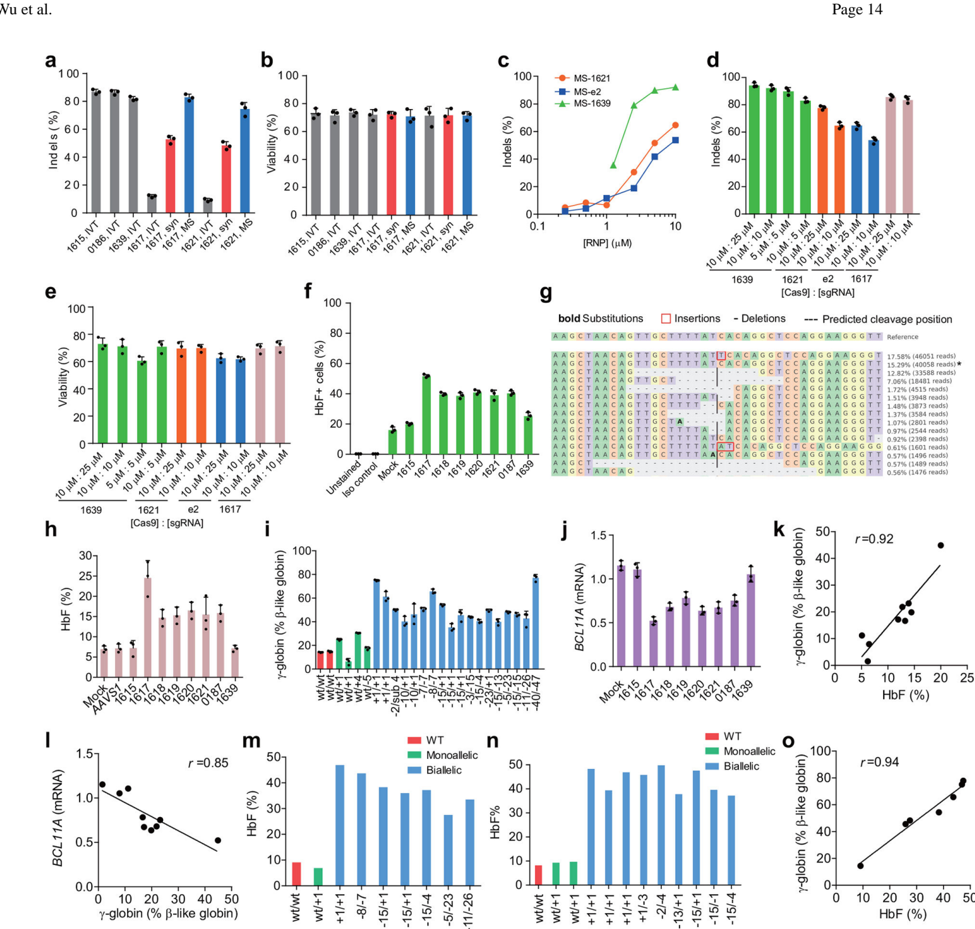
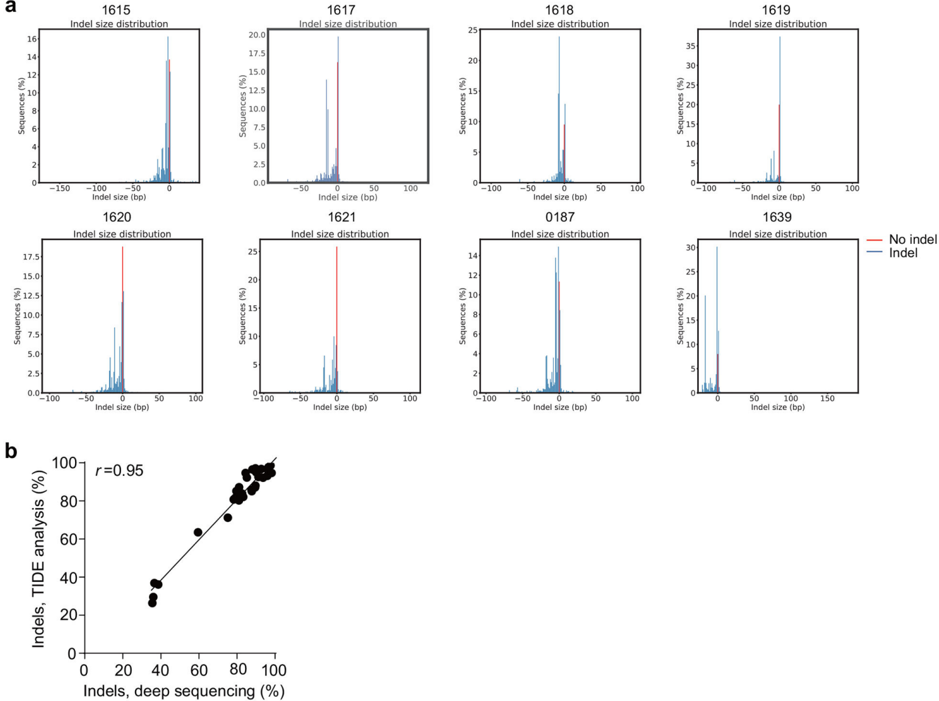
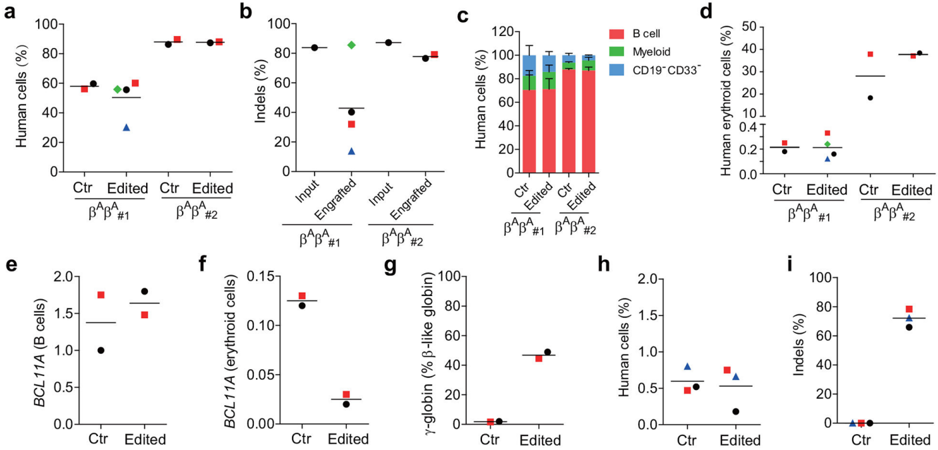
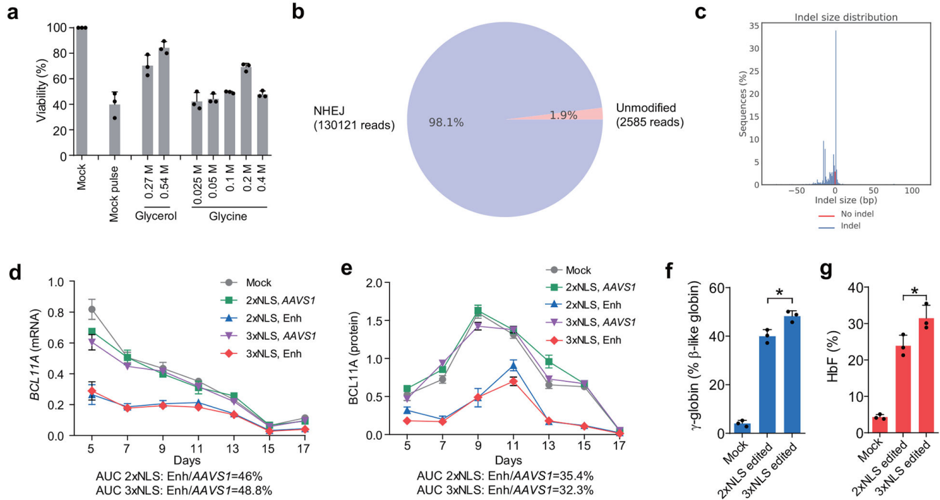
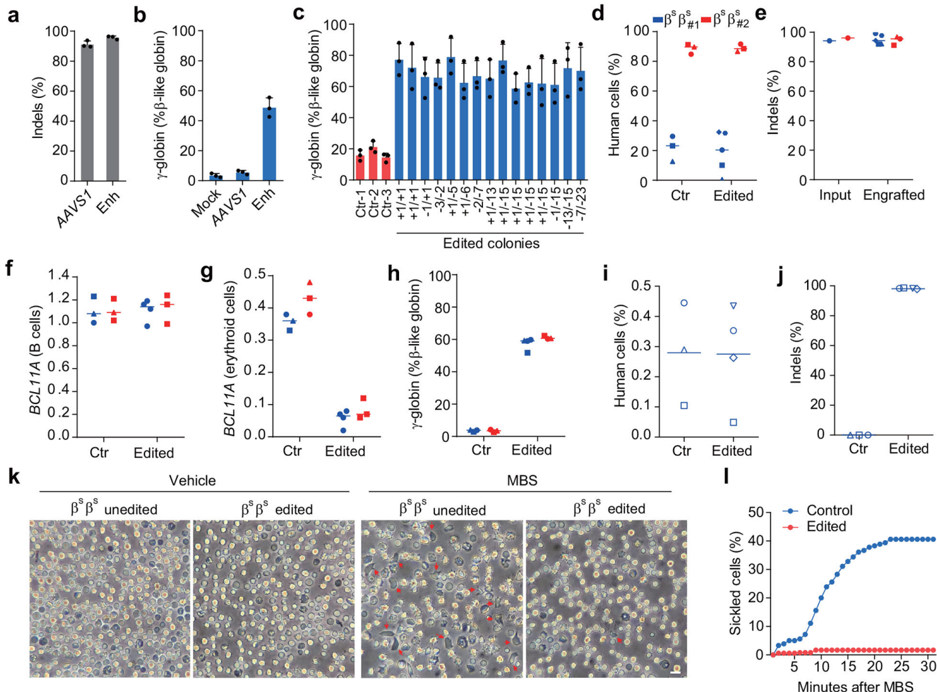
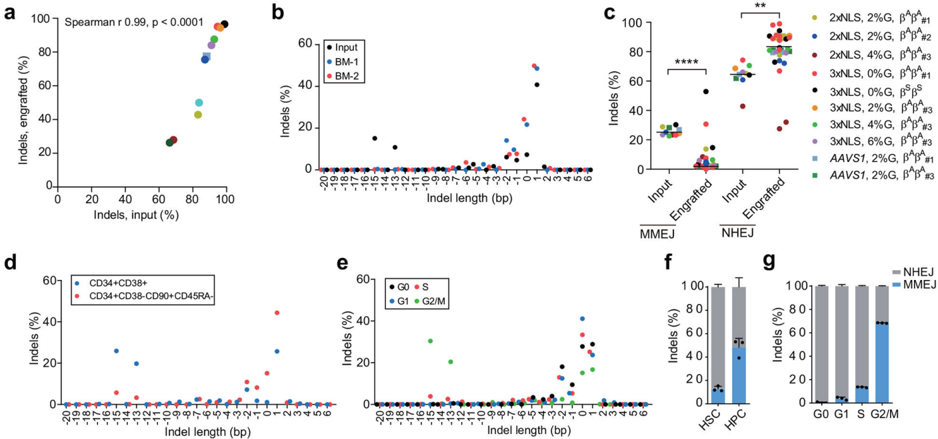
Re-expression of the paralogous γ-globin genes (HBG1/2) could be a universal strategy to ameliorate the severe β-globin disorders sickle cell disease (SCD) and β-thalassemia by induction of fetal hemoglobin (HbF, α2γ2)1. Previously, we and others have shown that core sequences at the BCL11A erythroid enhancer are required for repression of HbF in adult-stage erythroid cells but are dispensable in non-erythroid cells2–6. CRISPR–Cas9-mediated gene modification has demonstrated variable efficiency, specificity, and persistence in hematopoietic stem cells (HSCs). Here, we demonstrate that Cas9:sgRNA ribonucleoprotein (RNP)-mediated cleavage within a GATA1 binding site at the +58 BCL11A erythroid enhancer results in highly penetrant disruption of this motif, reduction of BCL11A expression, and induction of fetal γ-globin. We optimize conditions for selection-free on-target editing in patient-derived HSCs as a nearly complete reaction lacking detectable genotoxicity or deleterious impact on stem cell function. HSCs preferentially undergo non-homologous compared with microhomology-mediated end joining repair. Erythroid progeny of edited engrafting SCD HSCs express therapeutic levels of HbF and resist sickling, while those from patients with β-thalassemia show restored globin chain balance. Non-homologous end joining repair-based BCL11A enhancer editing approaching complete allelic disruption in HSCs is a practicable therapeutic strategy to produce durable HbF induction. Optimized co…
Overview
The claims and statistics of this paper haven’t been checked yet.
Free: it reads the open-access text and checks the first 5 claims that cite a source we can check. Create a free account to check every claim.
Integrity signals
Registry
Cites
Statistics
Figures
Verification
Claims the paper makes
The claims and statistics of this paper haven’t been checked yet.
Free: it reads the open-access text and checks the first 5 claims that cite a source we can check. Create a free account to check every claim.
Claims other papers make about this one
Each is checked against this paper’s own text: does it say what the citing paper says it does?
The source backs part of the claim, not all of it — or backs it for a different population, condition or comparison.
In the citing paper
“Major progress in delivering to 44 and handling HPSCs has resulted in formidable efficiencies of mutation correction or mitigation 18,45-47 that are expected to be curative.”
From The promise and challenge of therapeutic genome editing (2020) · cites this paper as [47]
Experimental — accuracy not yet measuredThe source backs part of the claim, not all of it — or backs it for a different population, condition or comparison.
In the citing paper
“Subsequent experiments showed that p53 inactivation can be controlled or avoided through protocol optimization 47,107 .”
From The promise and challenge of therapeutic genome editing (2020) · cites this paper as [47]
Experimental — accuracy not yet measuredThe source backs part of the claim, not all of it — or backs it for a different population, condition or comparison.
In the citing paper
“Although gene therapy has been slow to evolve since its early introduction, recent advances in gene editing are reinvigorating approaches to treat disorders by manipulation of the underlying genetic defects156.”
From A brief history of human disease genetics (2020) · cites this paper as [156]
Experimental — accuracy not yet measured
Self-check
Percentages, sums and reported differences re-computed from the paper’s own numbers.
The self-check needs the paper’s full text.
Citations
Cites
Kosicki, M., Tomberg, K., & Bradley, A. (2018) · Nature Biotechnology · doi:10.1038/nbt.4192 · Cited by 1,883
Kim, S., Kim, D., Cho, S. W., Kim, J., & Kim, J.-S. (2014) · Genome Research · doi:10.1101/gr.171322.113 · Cited by 1,856
CRISPR–Cas9 genome editing induces a p53-mediated DNA damage response
Haapaniemi, E., Botla, S., Persson, J., Schmierer, B., & Taipale, J. (2018) · Nature Medicine · doi:10.1038/s41591-018-0049-z · Cited by 1,264
Enhanced homology-directed human genome engineering by controlled timing of CRISPR/Cas9 delivery
Lin, S., Staahl, B. T., Alla, R. K., & Doudna, J. A. (2014) · eLife · doi:10.7554/elife.04766 · Cited by 1,189
Chemically modified guide RNAs enhance CRISPR-Cas genome editing in human primary cells
Hendel, A., Bak, R. O., Clark, J. T., Kennedy, A. B., Ryan, D. E., Roy, S., Steinfeld, I., Lunstad, B. D., Kaiser, R. J., Wilkens, A. B., et al. (2015) · Nature Biotechnology · doi:10.1038/nbt.3290 · Cited by 1,090
p53 inhibits CRISPR–Cas9 engineering in human pluripotent stem cells
Ihry, R. J., Worringer, K. A., Salick, M. R., Frias, E., Ho, D., Theriault, K., Kommineni, S., Chen, J., Sondey, M., Ye, C., et al. (2018) · Nature Medicine · doi:10.1038/s41591-018-0050-6 · Cited by 978
BCL11A enhancer dissection by Cas9-mediated in situ saturating mutagenesis
Canver, M. C., Smith, E. C., Sher, F., Pinello, L., Sanjana, N. E., Shalem, O., Chen, D. D., Schupp, P. G., Vinjamur, D. S., Garcia, S. P., et al. (2015) · Nature · doi:10.1038/nature15521 · Cited by 886
Self-citationTsai, S.-F., Martin, D. I. K., Zon, L. I., D'Andrea, A. D., Wong, G. G., & Orkin, S. H. (1989) · Nature · doi:10.1038/339446a0 · Cited by 885
Self-citationCRISPR/Cas9 β-globin gene targeting in human haematopoietic stem cells
Dever, D. P., Bak, R. O., Reinisch, A., Camarena, J., Washington, G., Nicolas, C. E., Pavel-Dinu, M., Saxena, N., Wilkens, A. B., Mantri, S., et al. (2016) · Nature · doi:10.1038/nature20134 · Cited by 864
Improving genetic diagnosis in Mendelian disease with transcriptome sequencing
Cummings, B. B., Marshall, J. L., Tukiainen, T., Lek, M., Donkervoort, S., Foley, A. R., Bolduc, V., Waddell, L. B., Sandaradura, S. A., O’Grady, G. L., et al. (2017) · Science Translational Medicine · doi:10.1126/scitranslmed.aal5209 · Cited by 831
Research works printed but not linked: 1
- Lin, S., Staahl, B., Alla, R. K. & Doudna, J. A. Enhanced homology-directed human genome engineering by controlled timing of CRISPR/Cas9 delivery. Elife 3, 1–13 (2014).
Cited by
Items 201–300 of 553
In Vivo Hematopoietic Stem Cell Genome Editing: Perspectives and Limitations
Psatha, N., Paschoudi, K., Παπαδοπούλου, Α., & Yannaki, E. (2022) · Genes · doi:10.3390/genes13122222 · Cited by 25
Demirci, S., Zeng, J., Palchaudhuri, R., Wu, C., Abraham, D. M., Hayal, T. B., Essawi, K., Nguyen, M. A., Stasula, U., Chu, R., et al. (2024) · Cell stem cell · doi:10.1016/j.stem.2024.10.014 · Cited by 25
Self-citationTranscriptional enhancers: from prediction to functional assessment on a genome-wide scale
Tobias, I. C., Abatti, L. E., Moorthy, S. D., Mullany, S., Taylor, T., Khader, N., Filice, M., & Mitchell, J. A. (2020) · Genome · doi:10.1139/gen-2020-0104 · Cited by 26
“Encouraging results from ex vivo and in vivo studies show CRISPR-mediated targeting of key nucleotides or epigenetic domains can reverse aberrant enhancer activities (Matharu et al. 2019; Wu et al. 2019).”
BackgroundChemogenetic System Demonstrates That Cas9 Longevity Impacts Genome Editing Outcomes
Sreekanth, V., Zhou, Q., Kokkonda, P., Bermudez-Cabrera, H. C., Lim, D., Law, B. K., Holmes, B. R., Chaudhary, S. K., Pergu, R., Leger, B. S., et al. (2020) · ACS Central Science · doi:10.1021/acscentsci.0c00129 · Cited by 25
Correction of RNA splicing defect in β654-thalassemia mice using CRISPR/Cas9 gene-editing technology
Lü, D., Gong, X., Fang, Y., Guo, X., Chen, Y., Yang, F., Zhao, G., Ma, Q., Zeng, Y., & Zeng, F. (2021) · Haematologica · doi:10.3324/haematol.2020.278238 · Cited by 25
“β 654-ER mice, and these results are consistent with studies in other mouse embryos(33) and hematopoietic stem cells.(11,34) On the other hand, off-target events may become apparent with expanded sample size, and a lack of overall increases in variation does not preclude the occurrence of individual pathogenic changes.”
A Small Key for a Heavy Door: Genetic Therapies for the Treatment of Hemoglobinopathies
Zittersteijn, H. A., Harteveld, C. L., Klaver-Flores, S., Lankester, A. C., Hoeben, R. C., Staal, F. J. T., & Gonçalves, M. A. F. V. (2021) · Frontiers in Genome Editing · doi:10.3389/fgeed.2020.617780 · Cited by 24
Lydeard, J. R., Lin, M. I., Ge, H. G., Halfond, A. L., Wang, S., Jones, M. B., Etchin, J., Angelini, G., Xavier-Ferrucio, J. M., Lisle, J. E., et al. (2023) · Molecular Therapy — Methods & Clinical Development · doi:10.1016/j.omtm.2023.101135 · Cited by 24
The interactions between ineffective erythropoiesis and ferroptosis in β-thalassemia
Lin, S., Zheng, Y., Chen, M., Xu, L., & Huang, H. (2024) · Frontiers in Physiology · doi:10.3389/fphys.2024.1346173 · Cited by 26
Lessard, S., Rimmelé, P., Ling, H., Moran, K., Vieira, B. F., Lin, Y.-D., Rajani, G. M., Hong, V., Reik, A., Boismenu, R., et al. (2024) · Scientific Reports · doi:10.1038/s41598-024-74716-7 · Cited by 24
“Consistently, preclinical data from CRISPR-mediated gene editing in HSC suggest that long-term HSC favor NHEJ-repair and that MMEJ may be less common in these cell types 40,41 .”
BackgroundRogers, G. L., Chen, H.-Y., Morales, H., & Cannon, P. M. (2019) · Molecular Therapy · doi:10.1016/j.ymthe.2019.08.019 · Cited by 24
Interrogantes y retos actuales de la edición genética
Marfany, G. (2019) · Revista de Bioética y Derecho · doi:10.1344/rbd2019.0.28551 · Cited by 26
Editing out HIV: application of gene editing technology to achieve functional cure
Xun, J., Zhang, X., Guo, S., Lu, H., & Chen, J. (2021) · Retrovirology · doi:10.1186/s12977-021-00581-1 · Cited by 24
Fañanas-Baquero, S., Bustamante, O. Q., Dever, D. P., Alberquilla, O., Sánchez‐Domínguez, R., Camarena, J., Ojeda-Pérez, I., Dessy-Rodríguez, M., Turk, R., Schubert, M. S., et al. (2021) · Molecular Therapy — Methods & Clinical Development · doi:10.1016/j.omtm.2021.05.001 · Cited by 23
Perspectives of Sickle Cell Disease Stakeholders on Heritable Genome Editing
Hollister, B. M., Gatter, M. C., Abdallah, K. E., Armsby, A. J., Buscetta, A. J., Byeon, Y. J. J., Cooper, K. E., Desine, S., Persaud, A., Ormond, K. E., et al. (2019) · The CRISPR Journal · doi:10.1089/crispr.2019.0034 · Cited by 23
“SCD is particularly relevant to the gene-editing debate, given that somatic genome editing (SGE) clinical trials are underway.(14,15)”
BackgroundClinical application of base editing for treating β-thalassaemia
Lai, Y., Liu, R., Wang, L., Ma, X.-K., Li, Y., Yang, G., Shi, L., Guo, Y., Wei, Z., Zhou, X., et al. (2026) · Nature · doi:10.1038/s41586-026-10342-9 · Cited by 24
Mouse models in hematopoietic stem cell gene therapy and genome editing
Radtke, S., Humbert, O., & Kiem, H. (2019) · Biochemical Pharmacology · doi:10.1016/j.bcp.2019.113692 · Cited by 22
“In the majority of studies, NSG or NBSGW animals were employed to assess engraftment of HSPCs engineered using a strategy aimed at the correction of the SCD mutation [51, 104, 105], at inactivating the repressor of fetal hemoglobin BCL11A [106, 107], or at recapitulating mutations associated with hereditary persistenc…”
MethodVersatile modification of the CRISPR/Cas9 ribonucleoprotein system to facilitate in vivo application
Sun, B., Chen, H., & Gao, X. (2021) · Journal of Controlled Release · doi:10.1016/j.jconrel.2021.08.007 · Cited by 22
Gene Editing in Pluripotent Stem Cells and Their Derived Organoids
Zhou, H., Wang, Y., Liu, L., Li, Y., & Zheng, Y. (2021) · Stem Cells International · doi:10.1155/2021/8130828 · Cited by 22
“of transfusion-dependent β-thalassemia in human cells [3, 4].”
let-7 miRNAs repress HIC2 to regulate BCL11A transcription and hemoglobin switching
Huang, P., Peslak, S. A., Shehu, V., Keller, C. A., Giardine, B. M., Shi, J., Hardison, R. C., Blobel, G. A., & Khandros, E. (2024) · Blood · doi:10.1182/blood.2023023399 · Cited by 23
Molaei, Z., Jabbarpour, Z., Omidkhoda, A., & Ahmadbeigi, N. (2024) · Stem Cell Research & Therapy · doi:10.1186/s13287-024-03848-4 · Cited by 23
“…disease (AD) [19], AIDS [20], autoimmune diseases [21], cystic fibrosis [22, 23], Huntington’s chorea disorder [24], Duchenne muscular dystrophy [25], chronic granulomatous disease [26], retinitis pigmentosa [27], hemophilia [28, 29], sickle cell disease (SCD) [30–32] and thalas-semia [31, 33, 34].”
BackgroundKatta, V., O’Keefe, K., Li, Y., Mayuranathan, T., Lazzarotto, C. R., Wood, R. K., Levine, R. M., Powers, A., Mayberry, K. D., Manquen, G., et al. (2024) · Molecular Therapy · doi:10.1016/j.ymthe.2024.07.022 · Cited by 22
Self-citationDowaidar, M. (2021) · OSF Preprints (OSF Preprints) · doi:10.31219/osf.io/3nwzd · Cited by 26
Janoudi, T., Jagdale, M., Wu, M., Gorlla, S., Zhang, P., Shao, Y., Li, L., Bowley, S. R., Marco, E., & Chang, K.-H. (2024) · Blood Advances · doi:10.1182/bloodadvances.2024014040 · Cited by 21
A narrative review of in utero gene therapy: advances, challenges, and future considerations
Yung, N. K., Maassel, N. L., Ullrich, S. J., Ricciardi, A. S., & Stitelman, D. H. (2021) · Translational Pediatrics · doi:10.21037/tp-20-89 · Cited by 22
“Using this strategy, researchers were able to downregulate expression of BCL11A in order to upregulate expression of fetal hemoglobin within animal models, providing evidence for potential translation (16).”
BackgroundHan, Y., Tan, X., Jin, T., Zhao, S., Li, H., Zhang, W., Kurita, R., Nakamura, Y., Liu, J., Li, D., et al. (2022) · European Journal of Pharmacology · doi:10.1016/j.ejphar.2022.174788 · Cited by 21
Effective therapies for sickle cell disease: are we there yet?
Crossley, M., Christakopoulos, G. E., & Weiss, M. J. (2022) · Trends in Genetics · doi:10.1016/j.tig.2022.07.003 · Cited by 23
Gene Editing for Inherited Red Blood Cell Diseases
Bustamante, O. Q., Fañanas-Baquero, S., Dessy-Rodríguez, M., Ojeda-Pérez, I., & Segovia, J. C. (2022) · Frontiers in Physiology · doi:10.3389/fphys.2022.848261 · Cited by 21
Combination of lentiviral and genome editing technologies for the treatment of sickle cell disease
Ramadier, S., Chalumeau, A., Félix, T., Othman, N., Aknoun, S., Casini, A., Maule, G., Masson, C., Cian, A. D., Frati, G., et al. (2021) · Molecular Therapy · doi:10.1016/j.ymthe.2021.08.019 · Cited by 20
Gamage, U., Warnakulasuriya, K., Hansika, S., & Silva, G. N. (2023) · Thalassemia Reports · doi:10.3390/thalassrep13010006 · Cited by 20
“Several studies have demonstrated the excellent promise of targeted disruption of the BCL11A erythroid-specific enhancer region by CRISPR/Cas9 system leading to a significant induction of γ-globin levels [99,100,102].”
Background(2024) · doi:10.1038/s41467-024-51695-x · Cited by 19
Sahu, S. U., Castro, M., Muldoon, J. J., Asija, K., Wyman, S. K., Krishnappa, N., de Oñate, L., Eyquem, J., Nguyen, D. N., & Wilson, R. C. (2025) · Nature Protocols · doi:10.1038/s41596-025-01154-8 · Cited by 19
“We recommend the Cas9-triNLS construct (referred to as ‘3xNLS’ when initially published), which has three different nuclear localization signals (NLSs): SV40, MYC and nucleoplasmin 57,58 .”
Huang, Y., Zhang, X., Zhu, P., & Ji, L. (2022) · World Journal of Clinical Cases · doi:10.12998/wjcc.v10.i18.5934 · Cited by 20
Han, L., Wang, Z., Wang, D., Gao, Z., Hu, S., Shi, D., & Shu, Y. (2024) · Frontiers in Cell and Developmental Biology · doi:10.3389/fcell.2023.1305433 · Cited by 20
Poly(Lactic-co-Glycolic Acid) Nanoparticle Delivery of Peptide Nucleic Acids In Vivo
Oyaghire, S. N., Quijano, E., Piotrowski-Daspit, A. S., Saltzman, W. M., & Glazer, P. M. (2020) · Methods in molecular biology · doi:10.1007/978-1-0716-0243-0_17 · Cited by 19
In The Blood: Connecting Variant to Function In Human Hematopoiesis
Nandakumar, S. K., Liao, X., & Sankaran, V. G. (2020) · Trends in Genetics · doi:10.1016/j.tig.2020.05.006 · Cited by 19
“Interestingly, a CRISPR saturation mutagenesis screen identified the +58 DHS peak as harboring nearly all of the enhancer activity [45] and this is now being pursued therapeutically for sickle cell disease and β-thalassemia through a number of ongoing studies [46].”
BackgroundGuo, J., Gong, L., Yu, H., Li, M., Liu, Z., Fan, S., Yang, C., Zhao, D., Han, J., & Xiang, H. (2024) · doi:10.1101/2024.01.26.577312 · Cited by 19
Advances in neuroimaging to improve care in sickle cell disease
Jordan, L. C., DeBaun, M. R., & Donahue, M. J. (2021) · The Lancet Neurology · doi:10.1016/s1474-4422(20)30490-7 · Cited by 18
Gene therapy and gene editing strategies in inherited blood disorders
Song, X., Liu, J., Chen, T., Zheng, T., Wang, X., & Guo, X. (2024) · Journal of genetics and genomics/Journal of Genetics and Genomics · doi:10.1016/j.jgg.2024.07.004 · Cited by 18
Novel therapies in β‐thalassaemia
Grech, L., Borg, K., & Borg, J. (2021) · British Journal of Clinical Pharmacology · doi:10.1111/bcp.14918 · Cited by 21
Quan, Z.-J., Li, S.-A., Yang, Z.-X., Zhao, J.-J., Li, G., Zhang, F., Wen, W., Cheng, T., & Zhang, X. (2022) · Genomics Proteomics & Bioinformatics · doi:10.1016/j.gpb.2022.06.002 · Cited by 19
Gene Therapy for Hemoglobinopathies
Lidonnici, M. R., Scaramuzza, S., & Ferrari, G. (2023) · Human Gene Therapy · doi:10.1089/hum.2023.138 · Cited by 18
A Curative DNA Code for Hematopoietic Defects
Porteus, M. H., Pavel-Dinu, M., & Pai, S. (2022) · Hematology/Oncology Clinics of North America · doi:10.1016/j.hoc.2022.05.002 · Cited by 18
Mattè, A., Cappellini, M. D., Iolascon, A., Federti, E., & Franceschi, L. D. (2019) · Expert Opinion on Investigational Drugs · doi:10.1080/13543784.2020.1703947 · Cited by 17
Yang, K., Wu, Y., Ma, Y., Xiao, J., Zhou, Y., & Yin, X. (2020) · Blood Cells Molecules and Diseases · doi:10.1016/j.bcmd.2020.102442 · Cited by 18
Self-citationChuan-ping, Z., Qiu, H.-Y., Zhang, C., Zhang, Y., Zhang, Y., Yin, H., Zhang, K., & Zhang, Y. (2023) · Journal of Molecular Cell Biology · doi:10.1093/jmcb/mjad018 · Cited by 17
Siva, N., Gupta, S., Gupta, A., Shukla, J. N., Malik, B., & Shukla, N. (2021) · 3 Biotech · doi:10.1007/s13205-021-02680-4 · Cited by 17
Wu, Y., Sun, G., Ren, W., Yang, G., Wang, C., Ye, X., Chen, Y., Pang, X., Zhang, Q., Wang, Z. J., et al. (2025) · Journal of Nanobiotechnology · doi:10.1186/s12951-025-03681-8 · Cited by 16
“Next, intracellular staining was conducted following an established protocol [54].”
Self-citationGenome editing for sickle cell disease: still time to correct?
Ceglie, G., Lecis, M., Canciani, G., Algeri, M., & Frati, G. (2023) · Frontiers in Pediatrics · doi:10.3389/fped.2023.1249275 · Cited by 16
Base Editors-Mediated Gene Therapy in Hematopoietic Stem Cells for Hematologic Diseases
Zhang, C., Xu, J., Wu, Y., Xu, C., & Xu, P. (2024) · Stem Cell Reviews and Reports · doi:10.1007/s12015-024-10715-5 · Cited by 16
Self-citationAdvances in Sickle Cell Disease Treatments
Pavan, A. R., & dos Santos, J. L. (2020) · Current Medicinal Chemistry · doi:10.2174/0929867327666200610175400 · Cited by 16
Baseline and Disease-Induced Transcriptional Profiles in Children with Sickle Cell Disease
Creary, S. E., Shrestha, C. L., Kotha, K. S., Minta, A., Fitch, J., Jaramillo, L., Zhang, S., Pinto, S. J., Thompson, R., Ramilo, O., et al. (2020) · Scientific Reports · doi:10.1038/s41598-020-65822-3 · Cited by 15
Papadopoulou, P., & Lytras, M. D. (2023) · Applied Research · doi:10.1002/appl.202200131 · Cited by 15
Kuppers, D. A., Linton, J., Ortiz‐Espinosa, S., McKenna, K. M., Rongvaux, A., & Paddison, P. J. (2023) · PLoS ONE · doi:10.1371/journal.pone.0287052 · Cited by 15
Design and application of the transformer base editor in mammalian cells and mice
Han, W., Gao, B., Zhu, J., He, Z., Li, J., Yang, L. C., & Chen, J. (2023) · Nature Protocols · doi:10.1038/s41596-023-00877-w · Cited by 15
Multiplex base editing of BCL11A regulatory elements to treat sickle cell disease
Fontana, L., Martinucci, P., Amistadi, S., Félix, T., Mombled, M., Tachtsidi, A., Corre, G., Chalumeau, A., Hardouin, G., Martin, J., et al. (2025) · Cell Reports Medicine · doi:10.1016/j.xcrm.2025.102376 · Cited by 15
Discovery and engineering of retrons for precise genome editing
Buffington, J., Kuo, H., Hu, K., Chang, Y.-C., Javanmardi, K., Voigt, B., Li, Y.-R., Little, M. E., Devanathan, S. K., Xhemalçe, B., et al. (2025) · Nature Biotechnology · doi:10.1038/s41587-025-02879-3 · Cited by 15
Current and future gene therapies for hemoglobinopathies
Brendel, C., & Williams, D. A. (2020) · Current Opinion in Hematology · doi:10.1097/moh.0000000000000581 · Cited by 15
Self-citationMurugesan, R., Karuppusamy, K. V., Marepally, S. K., & Thangavel, S. (2023) · Frontiers in Genome Editing · doi:10.3389/fgeed.2023.1148693 · Cited by 16
“Gene editing requires the delivery of the gene editing cargo, such as nucleic acids and proteins, to the target cells (Wu et al., 2019).”
Context base editing for splice correction of IVSI-110 β-thalassemia
Naiisseh, B., Papasavva, P. L., Papaioannou, N. Y., Tomazou, M., Koniali, L., Felekis, X., Constantinou, C. G., Sitarou, M., Christou, S., Kleanthous, M., et al. (2024) · Molecular Therapy — Nucleic Acids · doi:10.1016/j.omtn.2024.102183 · Cited by 15
Non-viral ex vivo genome-editing in mouse bona fide hematopoietic stem cells with CRISPR/Cas9
Byambaa, S., Uosaki, H., Ohmori, T., Hara, H., Endo, H., Nureki, O., & Hanazono, Y. (2021) · Molecular Therapy — Methods & Clinical Development · doi:10.1016/j.omtm.2021.01.001 · Cited by 15
Kostamo, Z., Ortega, M. A., Xu, C., Feliciano, P. R., Budak, E., Lam, D., Winton, V. J., Jenkins, R., Venugopal, A., Zhang, M., et al. (2025) · Nature Communications · doi:10.1038/s41467-025-56578-3 · Cited by 14
Self-citationCurrent trends in gene therapy to treat inherited disorders of the brain
Matuszek, Ż., Brown, B. L., Yrigollen, C. M., Keiser, M. S., & Davidson, B. L. (2025) · Molecular Therapy · doi:10.1016/j.ymthe.2025.03.057 · Cited by 14
Benitez, E. K., Lomova, A., Cervantes, L., Clark, D. N., Ayoub, P. G., Senadheera, S., Osborne, K. S., Sanchez, J. M., Crisostomo, R. V., Wang, X., et al. (2020) · Frontiers in Genome Editing · doi:10.3389/fgeed.2020.601541 · Cited by 14
“Additionally, recent work suggests that microhomology-mediated end joining (MMEJ), an HDR event that results in deletions, is also a notable repair pathway in many cell types (McVey and Lee, 2008; Huertas, 2010; Iyer et al., 2019; Wu et al., 2019; Yeh et al., 2019).”
BackgroundLu, Z. H., Li, J., Dmitriev, I. P., Kashentseva, E. A., & Curiel, D. T. (2022) · ACS Nano · doi:10.1021/acsnano.2c00909 · Cited by 14
Rajendiran, V., Devaraju, N., Haddad, M., Ravi, N. S., Panigrahi, L., Paul, J., Gopalakrishnan, C., Wyman, S. K., Ariudainambi, K., Mahalingam, G., et al. (2024) · Molecular Therapy · doi:10.1016/j.ymthe.2024.01.023 · Cited by 13
A critical review of therapeutic interventions in sickle cell disease: Progress and challenges
Chandu, A., Joshi, R. P., Gupta, P., Goswami, S. G., Ramalingam, S., Gowri, C. S. K. V., & Murugesan, S. (2024) · Archiv der Pharmazie · doi:10.1002/ardp.202400381 · Cited by 13
mRNA-engineered CRISPR-Cas epigenetic editors enable durable and efficient gene silencing in vivo
Xu, C., Zeng, C., Wang, M., Wei, X., Song, M., Liu, X., Wang, W., Chen, Q., Ji, X., Luo, P., et al. (2025) · The Innovation · doi:10.1016/j.xinn.2025.101151 · Cited by 13
Self-citationA culture platform to study quiescent hematopoietic stem cells following genome editing
Shiroshita, K., Kobayashi, H., Watanuki, S., Karigane, D., Sorimachi, Y., Fujita, S., Tamaki, S., Haraguchi, M., Itokawa, N., Aoyama, K., et al. (2022) · Cell Reports Methods · doi:10.1016/j.crmeth.2022.100354 · Cited by 13
Zheng, C., Sui, B., & Jin, Y. J. (2023) · Aggregate · doi:10.1002/agt2.497 · Cited by 13
Hu, Y. G., Stilp, A. M., McHugh, C., Rao, S., Jain, D., Zheng, X., Lane, J., de Bellefon, S. M., Raffield, L. M., Chen, M., et al. (2021) · The American Journal of Human Genetics · doi:10.1016/j.ajhg.2021.04.015 · Cited by 13
Self-citationInsulin-like growth factor 2 mRNA-binding protein 1 (IGF2BP1) in hematological diseases
Ma, S., Qin, Y., & Ren, W. (2024) · Molecular Medicine · doi:10.1186/s10020-024-00936-2 · Cited by 12
Wonkam, A., Esoh, K. K., Levine, R. M., Bitoungui, V. J. N., Mnika, K., Nimmagadda, N., Dempsey, E., Nkya, S. W., Sangeda, R. Z., Nembaware, V., et al. (2025) · Nature Communications · doi:10.1038/s41467-025-57413-5 · Cited by 13
Silencing of BCL11A by disrupting enhancer-dependent epigenetic insulation
Wang, K., Wang, J., Feng, R., Dudnyk, K., Kim, Y. J., Lim, J. Y. S., Lee, M., Zhang, Y., Gao, X., Cheng, Y., et al. (2025) · Blood · doi:10.1182/blood.2025030211 · Cited by 14
Chakraborty, C., Bhattacharya, M., Das, A., Agoramoorthy, G., & Lee, S.-S. (2026) · Molecular Therapy — Nucleic Acids · doi:10.1016/j.omtn.2026.102859 · Cited by 12
“66 Similarly, by using CD34 + hematopoietic stem and progenitor cells (HSPCs), Frangoul et al. edited BCL11A enhancer employing the CRISPR-Cas9 technology funded by Vertex Pharmaceuticals and CRISPR Therapeutics.”
Gene Therapy as the New Frontier for Sickle Cell Disease
Garg, H., Tatiossian, K. J., Peppel, K., Kato, G. J., & Herzog, E. (2021) · Current Medicinal Chemistry · doi:10.2174/0929867328666210527092456 · Cited by 12
Khodayari, H., Khodayari, S., Ebrahimi, E., Hadjilooei, F., Vesovic, M., Mahmoodzadeh, H., Šarić, T., Stücker, W., Gool, S. V., Hescheler, J., et al. (2021) · Cancer Immunology Immunotherapy · doi:10.1007/s00262-021-02975-8 · Cited by 12
Verhagen, H. J. M. P., Kuijk, C., Rutgers, L., Kokke, A. M., van der Meulen, S. A., van Mierlo, G. J., Voermans, C., & van den Akker, E. (2022) · The CRISPR Journal · doi:10.1089/crispr.2021.0112 · Cited by 13
The origin of unwanted editing byproducts in gene editing
Yin, J., & Hu, J. (2022) · Acta Biochimica et Biophysica Sinica · doi:10.3724/abbs.2022056 · Cited by 12
“These CRISPRbased therapeutic schemes target some very intractable diseases, including T cell, chimeric antigen receptor T cell (CAR T), or T cell receptor-engineered T cell (TCR T) therapy for acquired immunodeficiency syndrome (AIDS) and malignancy [17–19], modified hematopoietic stem and progenitor cells (HSPCs) fo…”
BackgroundEx vivo modification of hematopoietic stem and progenitor cells for gene therapy
Williams, D. A., Kohn, D. B., & Thrasher, A. J. (2025) · Molecular Therapy · doi:10.1016/j.ymthe.2025.03.058 · Cited by 11
Self-citationCrosstalk between corepressor NRIP1 and cAMP signaling on adipocyte thermogenic programming
Tsagkaraki, E., Guilherme, A., Nicoloro, S. M. C., Kelly, M., Lifshitz, L. M., Wang, H., Min, K., Rowland, L. A., Santos, K. B., Wetoska, N., et al. (2023) · Molecular Metabolism · doi:10.1016/j.molmet.2023.101780 · Cited by 11
“Transfection of primary preadipocytes with ribonucleoprotein (RNP) For RNP transfection, we used the Neon Transfection System 10 mL or 100 mL Kits (ThermoFisher, #MPK10096) depending on the expected targeted cell population and we prepared a mix consisting unless otherwise specified of sgRNA 4 mM (Synthego or IDT DNA)…”
MethodSelf-citationButt, H., Mandava, M., & Jacobsohn, D. A. (2025) · The CRISPR Journal · doi:10.1089/crispr.2024.0101 · Cited by 11
Genetics Matters: Voyaging from the Past into the Future of Humanity and Sustainability
Cheng, A., Harikrishna, J. A., Redwood, C. S., Lit, L. C., Nath, S. K., & Chua, K. H. (2022) · International Journal of Molecular Sciences · doi:10.3390/ijms23073976 · Cited by 12
Cardiovascular consequences of sickle cell disease
Palomarez, A., Jha, M., Romero, X. M., & Horton, R. E. (2022) · Biophysics Reviews · doi:10.1063/5.0094650 · Cited by 11
Quagliano, A., Acevedo, D., Hardigan, P., & Prasad, S. A. (2022) · Frontiers in Medicine · doi:10.3389/fmed.2022.943631 · Cited by 11
“The B-cell lymphoma/leukemia 11A gene (BCL11A) and promoters of the gamma globin genes (HBG1 and HBG2) have been largely studied for inducing long-term expression of HbF (16, 17).”
BackgroundCRISPR technology in human diseases
Feng, Q., Li, Q., Zhou, H., Wang, Z., Lin, C., Jiang, Z., Liu, T., & Wang, D. (2024) · MedComm · doi:10.1002/mco2.672 · Cited by 11
Engineering precision therapies: lessons and motivations from the clinic
Xie, M., Viviani, M., & Fussenegger, M. (2020) · Synthetic Biology · doi:10.1093/synbio/ysaa024 · Cited by 11
Middlezong, W., Stinnett, V., Phan, M., Phan, B., Morsberger, L. A., Klausner, M., Ghabrial, J., DeMetrick, N., Zhu, J., James, T., et al. (2024) · Biomolecules · doi:10.3390/biom14121595 · Cited by 10
Lee, J. M., Zeng, J., Liu, P., Nguyen, M. A., Loustaunau, D. S., Bauer, D. E., Yılmaz, N. K., Wolfe, S. A., & Schiffer, C. A. (2024) · Nucleic Acids Research · doi:10.1093/nar/gkae1217 · Cited by 10
Self-citationGuo, Z., & Liang, J. (2022) · Lipids in Health and Disease · doi:10.1186/s12944-022-01759-y · Cited by 10
“CRISPR technology has been used in viral infections [70], genetic diseases [71], antibiotic resistant bacteria [72].”
BackgroundCRISPR/Cas9 genetic screens in hepatocellular carcinoma gene discovery
Chiu, C. H. (2023) · Current Research in Biotechnology · doi:10.1016/j.crbiot.2023.100127 · Cited by 10
A systematic review of clinical trials for gene therapies for β-hemoglobinopathy around the world
Rós, F. A., Couto, S. C. F., Milhomens, J., Ovider, I., Tozatto‐Maio, K., Jennifer, V., Ramos, R. N., Picanço‐Castro, V., Kashima, S. H., Calado, R. T., et al. (2023) · Cytotherapy · doi:10.1016/j.jcyt.2023.05.006 · Cited by 10
β-Hemoglobinopathies: The Test Bench for Genome Editing-Based Therapeutic Strategies
Barbarani, G., Łabędź, A., & Ronchi, A. E. (2020) · Frontiers in Genome Editing · doi:10.3389/fgeed.2020.571239 · Cited by 10
“the generation of selection-free HSCs of therapeutic potential (Genovese et al., 2014; DeWitt et al., 2016; Porteus, 2016; Yu et al., 2016; Wu et al., 2019).”
BackgroundCRISPR/Cas-based Diagnostics and Gene Therapy
Qiu, M., & Li, P. (2021) · BIO Integration · doi:10.15212/bioi-2020-0048 · Cited by 11
“Initially CRISPR-Cas9 was applied for the treatment inherited blood disorders [71].”
MethodIkwuka, A. O., Musa, S., Udeh, F. C., Musa, A. A., & Chukwuezie, U. C. (2023) · American Journal of Medical Science and Innovation · doi:10.54536/ajmsi.v2i2.1760 · Cited by 10
Genetic disruption of KCC cotransporters in a mouse model of thalassemia intermedia
Shmukler, B. E., Rivera, A., Bhargava, P., Nishimura, K. K., Kim, E. H., Hsu, A., Wohlgemuth, J. G., Morton, J. P., Snyder, L. M., Franceschi, L. D., et al. (2019) · Blood Cells Molecules and Diseases · doi:10.1016/j.bcmd.2019.102389 · Cited by 10
“Perhaps the most exciting long-term therapeutic development is ex vivo complementation [39] or gene-editing correction [40] of β-globin mutations in patient hematopoietic stem cells.”
BackgroundSelf-citationInnovative Therapies for Hemoglobin Disorders
Sii-Felice, K., Nègre, O., Brendel, C., Tubsuwan, A., Morel-à-l’Huissier, E., Filardo, C., & Payen, E. (2020) · BioDrugs · doi:10.1007/s40259-020-00439-6 · Cited by 10
Self-citationDing, L., Chen, D., Li, Y., Xie, Y., Sun, X., & Wang, D. (2024) · Human Cell · doi:10.1007/s13577-024-01034-5 · Cited by 9
“The induction of HbF can relieve anemia symptoms in adults and is considered a therapeutic strategy for β-thalassemia patients [3], while the erythroid differentiation of K562 cells is an appropriate cell model [4, 5].”
Ye, Y., Niu, C. S., Mao, A., Qin, L., Zhan, J., Chen, W., Liu, Z., Xie, T., Zhang, Q., Li, J., et al. (2024) · Advanced Science · doi:10.1002/advs.202410992 · Cited by 10
Epigenetic Regulation of Erythropoiesis: From Developmental Programs to Therapeutic Targets
Vasiloudis, N.-I., Paschoudi, K., Beta, C., Georgolopoulos, G., & Psatha, N. (2025) · International Journal of Molecular Sciences · doi:10.3390/ijms26136342 · Cited by 9
Nonclinical evaluation of renizgamglogene autogedtemcel for SCD and TDT
Marco, E., Sousa, P., Janoudi, T., Dreuzy, E. D., Heath, J. M., Viswanathan, R., Zuris, J. A., Gotta, G. M., Giannoukos, G., Hansen, S., et al. (2025) · Molecular Therapy · doi:10.1016/j.ymthe.2025.09.031 · Cited by 9
“25 16–18 Importantly, long-term, robust HbF induction in a pan-cellular fashion was observed non-clinically (Figures 5H and 5I), which would predict a potentially durable clinical benefit for patients with β -hemoglobinopathies.”
Metadata
- Authors
- Wu, Y., Zeng, J., Roscoe, B. P., Liu, P., Yao, Q., Lazzarotto, C. R., Clement, K., Cole, M. A., Luk, K., Baricordi, C., Shen, A. H., Ren, C., Esrick, E. B., Manis, J. P., Dorfman, D. M., Williams, D. A., Biffi, A., Brugnara, C., Biasco, L., Brendel, C., Pinello, L., Tsai, S. Q., Wolfe, S. A., & Bauer, D. E.
- Affiliations
- Broad Institute (US)
- University of Massachusetts Chan Medical School (US)
- Brigham and Women's Hospital (US)
- St. Jude Children's Research Hospital (US)
- Corresponding author
- Bauer, Daniel E.
- ORCID
- Venue
- Nature Medicine
- Published
- 2019-03-25
- Volume
- 25
- Issue
- 5
- Pages
- 776-783
- ISSN
- 1078-8956 (ISSN-L)
- 1546-170X
- PMC
- PMC6512986
- OpenAlex
- W2923636118
- Cited by
- 515
- References
- 48
- Citations by year
- 2026: 33 · 2025: 71 · 2024: 61 · 2023: 74 · 2022: 74 · 2021: 85 · 2020: 84 · 2019: 33
- FWCI
- 38.59
- Type
- journal article
- Language
- en
- Open access
- green
- www.ncbi.nlm.nih.gov
- Licence
- www.springernature.com/gp/researchers/text-and-data-mining (tdm)
- www.springernature.com/gp/researchers/text-and-data-mining (vor)
- Locations
- Nature Medicine (publishedVersion)
- PubMed (publishedVersion)
- Europe PMC (PubMed Central) (acceptedVersion)
- PubMed Central (acceptedVersion)
- Padua Research Archive (University of Padova) (submittedVersion)
- Funders
- Doris Duke Charitable Foundation (2013137, 2015134)
- Kenneth Rainin Foundation (KRA000003)
- National Institutes of Health (UL1TR001102)
- National Heart, Lung, and Blood Institute (P01HL053749, DP2HL137300, R01HL137848, P01HL032262, R21HL145636, U01HL117720)
- National Human Genome Research Institute (R00HG008399)
- National Institute of General Medical Sciences (R01GM115911)
- National Institute of Allergy and Infectious Diseases (R01AI117839)
- National Institute of Diabetes and Digestive and Kidney Diseases (R03DK109232, K08DK093705, U54DK106829)
- National Center for Advancing Translational Sciences
- Topics
- Health Sciences › Medicine › Genetics (clinical) › Hemoglobinopathies and Related Disorders
- Life Sciences › Biochemistry, Genetics and Molecular Biology › Molecular Biology › CRISPR and Genetic Engineering
- Life Sciences › Biochemistry, Genetics and Molecular Biology › Genetics › Virus-based gene therapy research
- Keywords
- sickle cell disease, beta-thalassemia, fetal hemoglobin induction, hematopoietic stem cells, CRISPR/Cas9, ribonucleoprotein delivery, non-homologous end joining, microhomology-mediated end joining, genome editing efficiency, genotoxicity
- MeSH terms
- Gene Editing, RNA, Guide, CRISPR-Cas Systems, Amino Acid Sequence, Anemia, Sickle Cell, Base Sequence, Carrier Proteins, Enhancer Elements, Genetic, Fetal Hemoglobin, Hematopoietic Stem Cells, Humans, Nuclear Proteins, Repressor Proteins, Erythroid Precursor Cells, beta-Thalassemia, Hematopoietic Stem Cell Transplantation, INDEL Mutation, gamma-Globins, CRISPR-Cas Systems
About these checks
Registry, retraction, Cites and statistics results are computed, not judged, with one exception: a printed reference that no index lists is read once by a model before it counts as a citation error. Claims are extracted by a model and kept only when their quote appears verbatim in the text; each cited source is then checked, with a model’s help, for whether it says what the claim relies on. Those verdicts can be wrong — read the claim’s quote and the cited source before relying on one.
Statistics and arithmetic are recomputed, not judged.
Confidence bands are shown only for fields calibrated on our annotated test set. None is calibrated yet, so no band is shown.
What counts as a claim ›How we measure confidence ›How we check this ›
Are you an author, or do you see a problem with this page? Request a review
Data sources
Bibliographic data: Semantic Scholar, OpenAlex, Crossref.
Contains information from the Semantic Scholar Academic Graph Datasets, made available under the ODC Attribution License (ODC-BY 1.0).
Semantic Scholar’s data is described in: Kinney, R., et al. (2023). The Semantic Scholar Open Data Platform. arXiv:2301.10140.
