

Highly efficient therapeutic gene editing of human hematopoietic stem cells
Open accessThe DOI matches its Crossref record; 48 of the 48 references it cites were found in a registry or an index.
Abstract
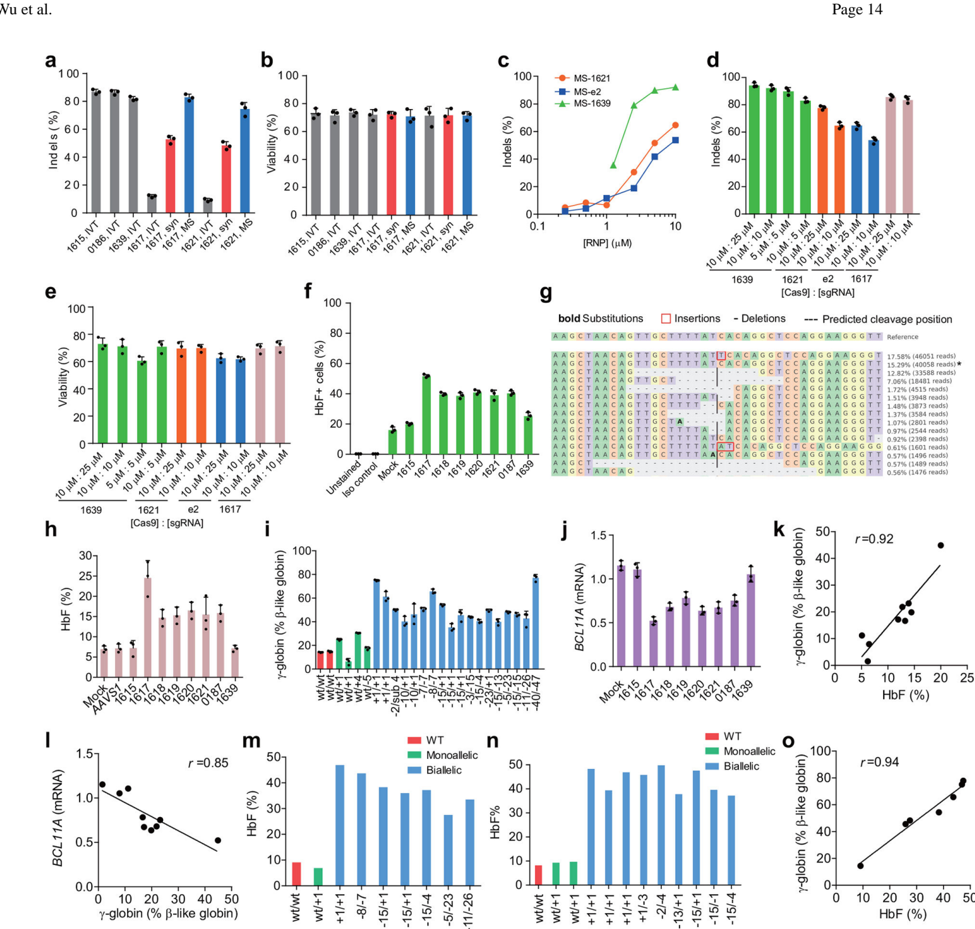
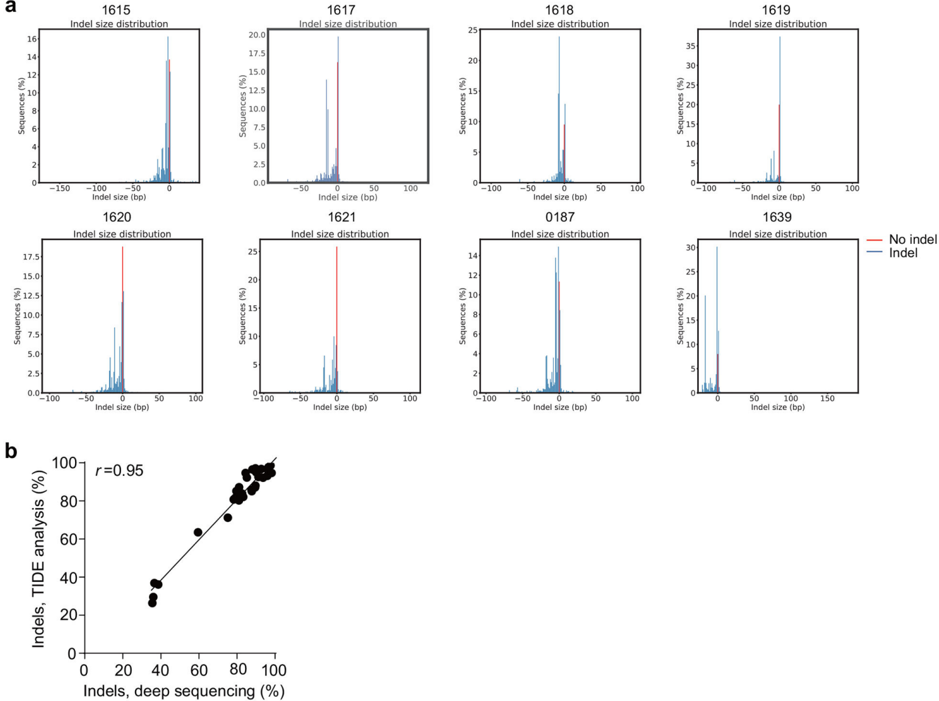
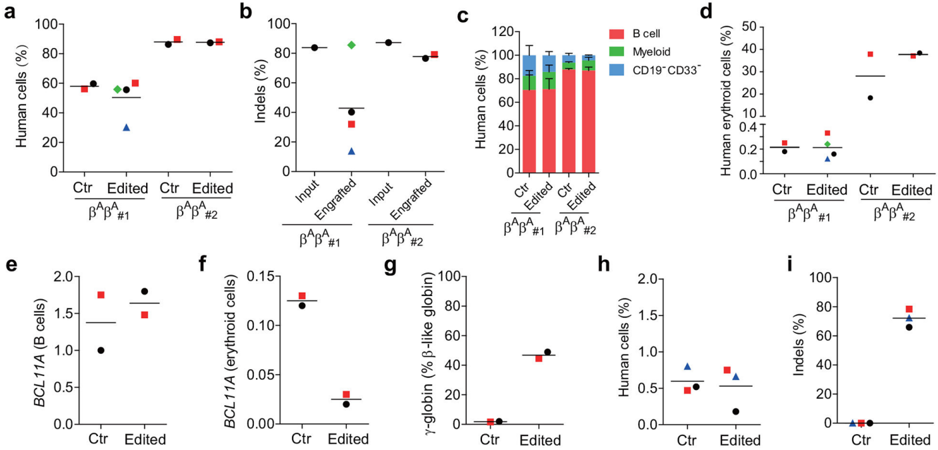
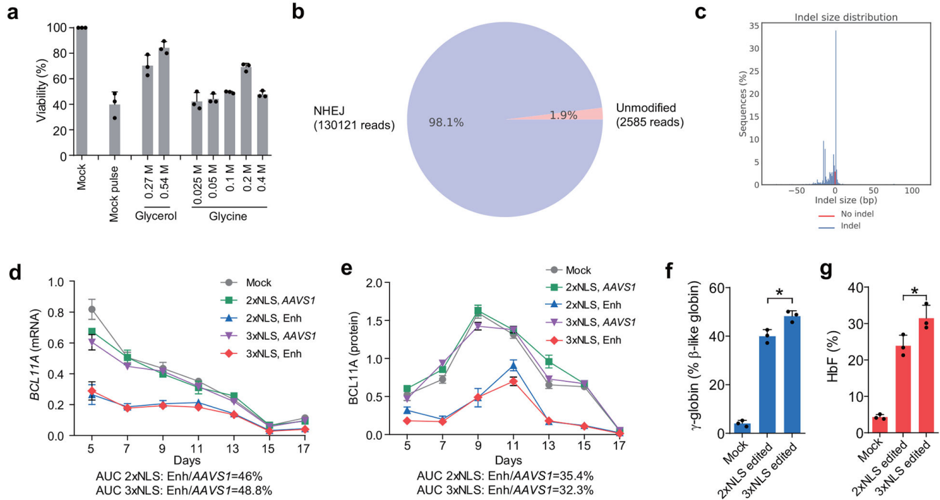
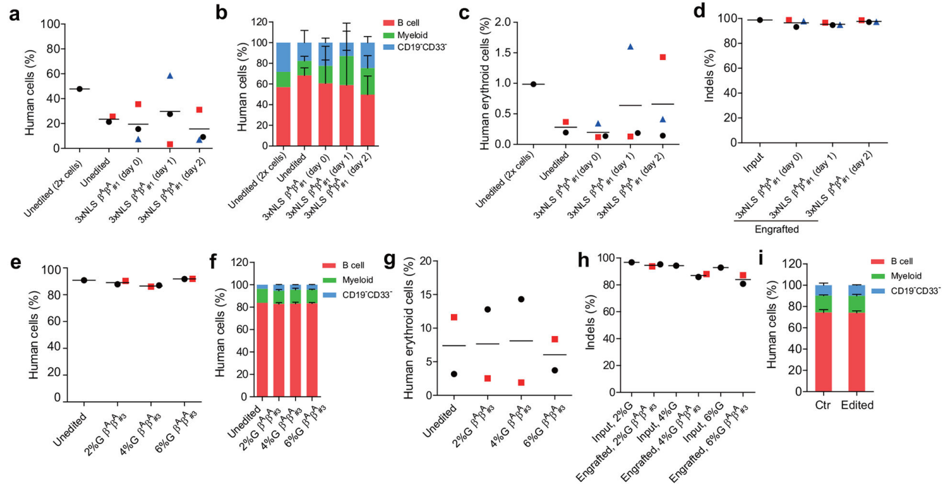
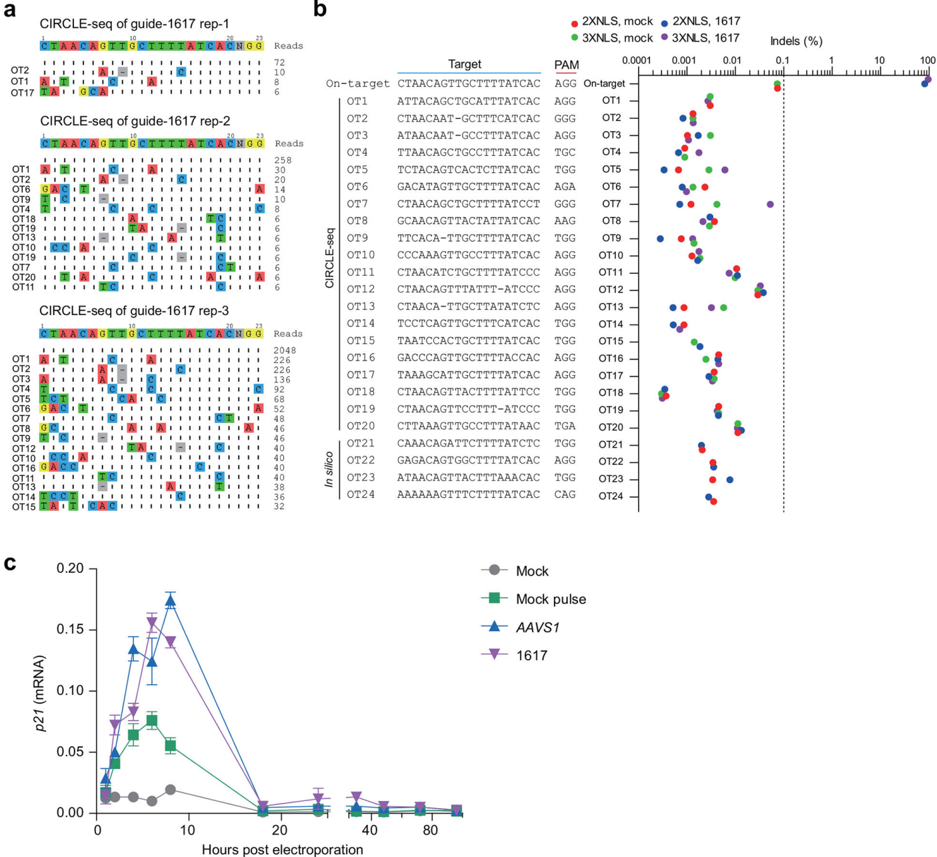
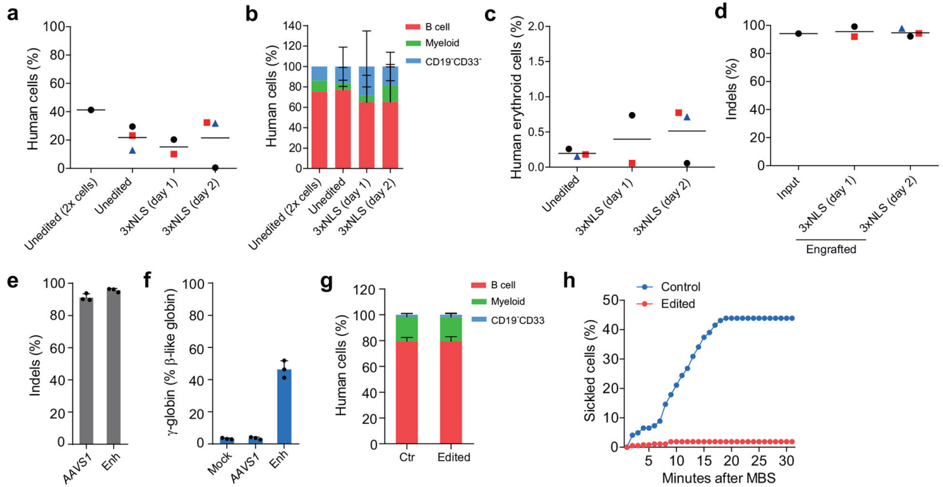
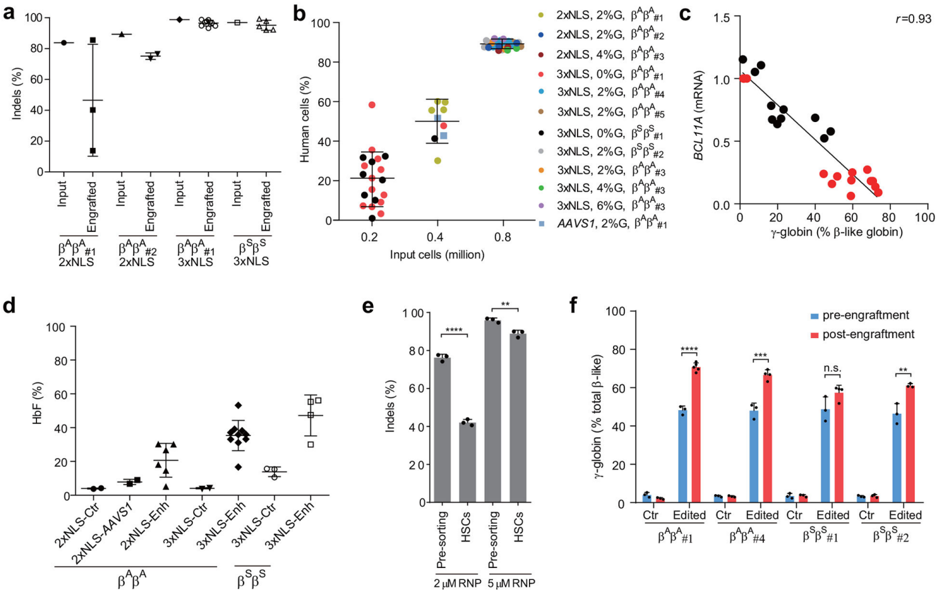
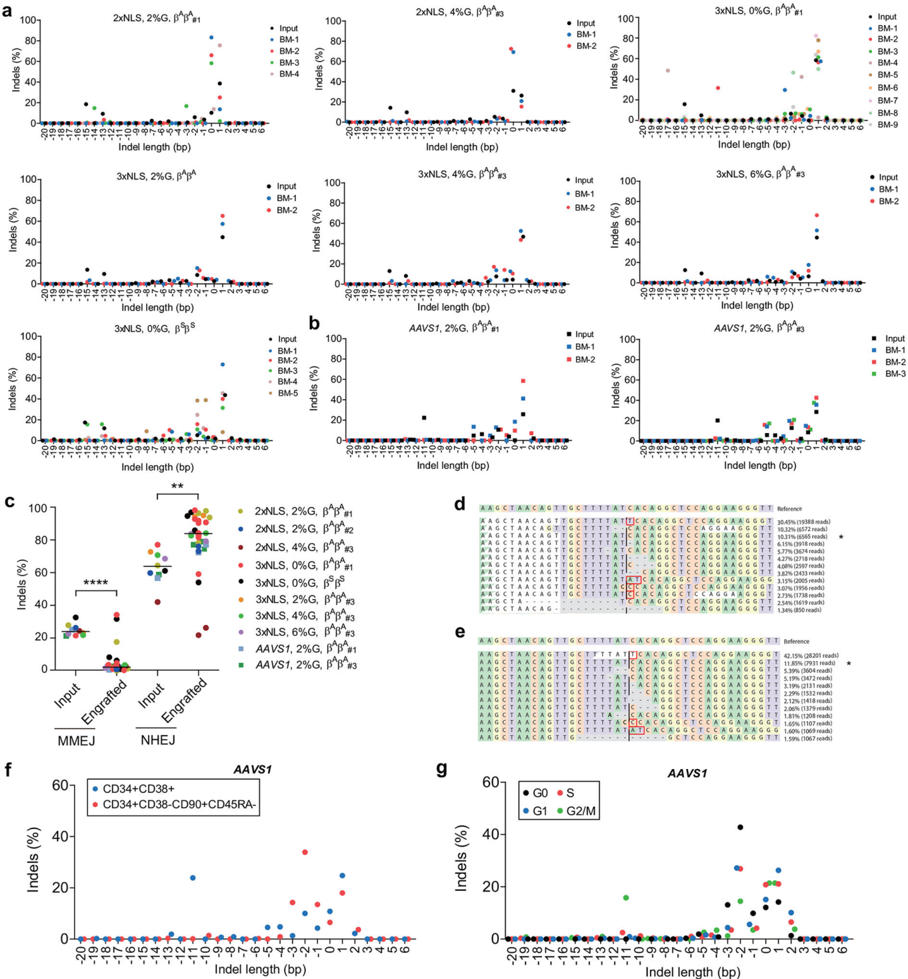
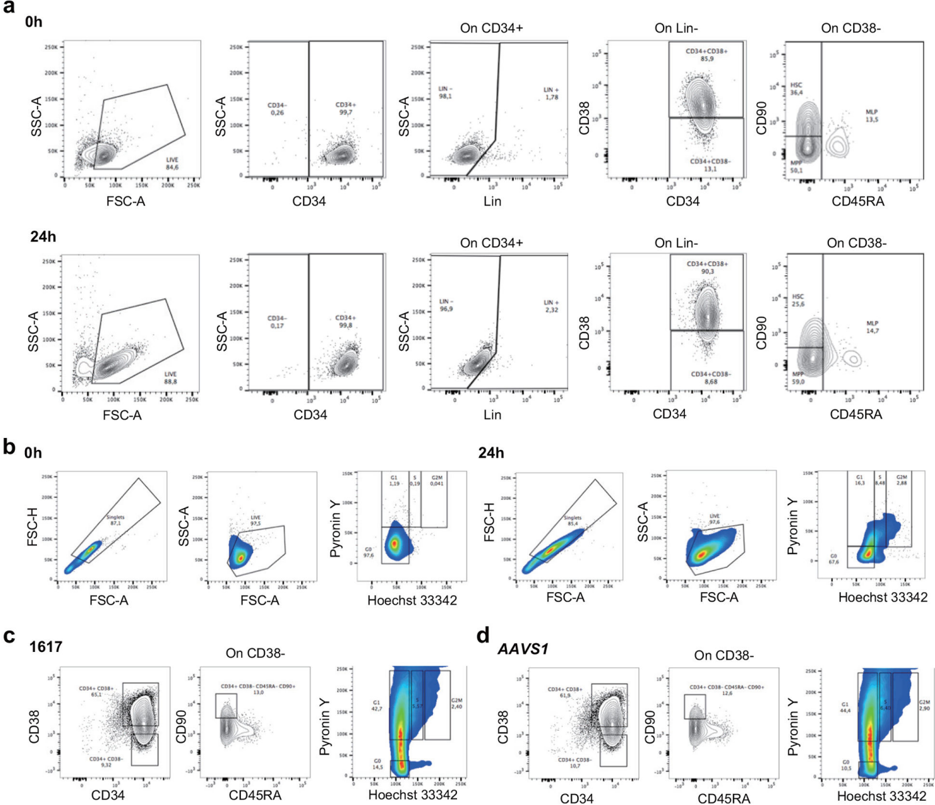
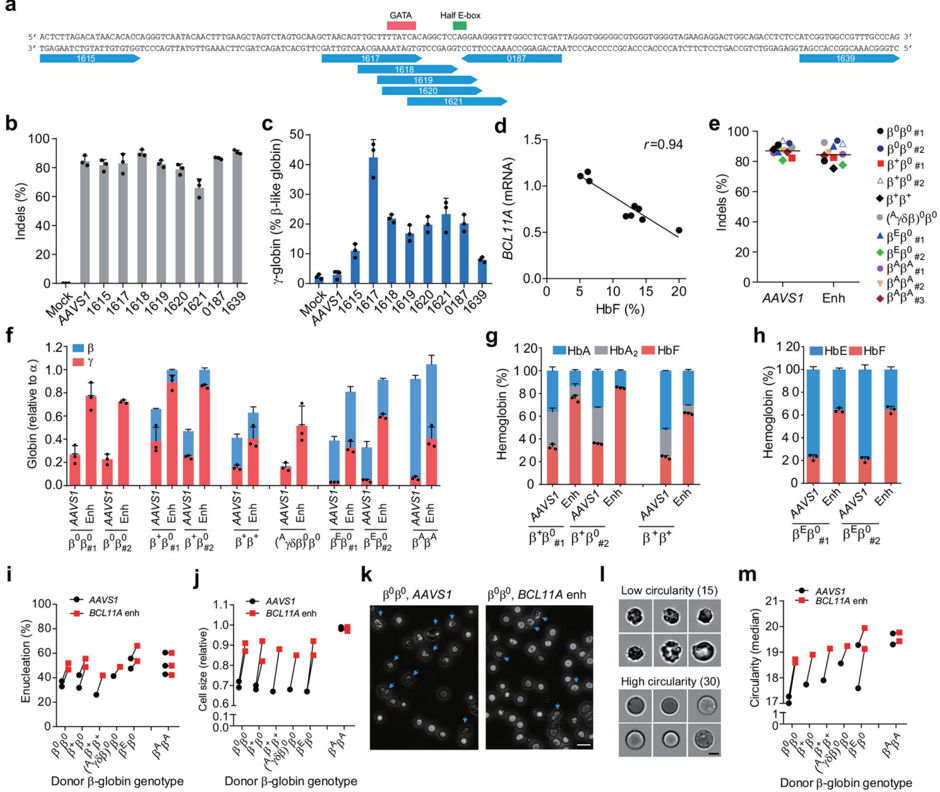
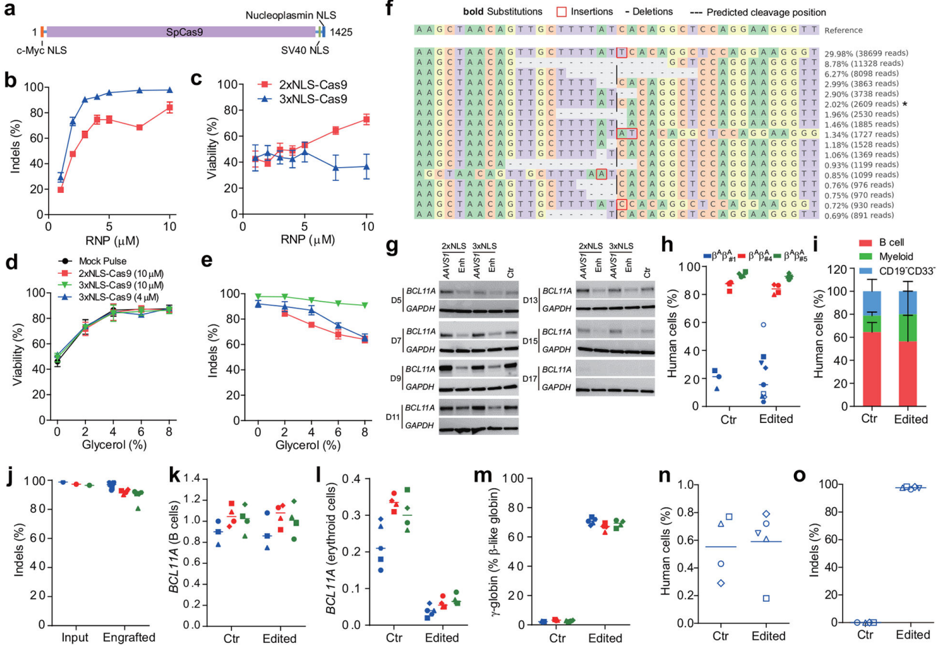
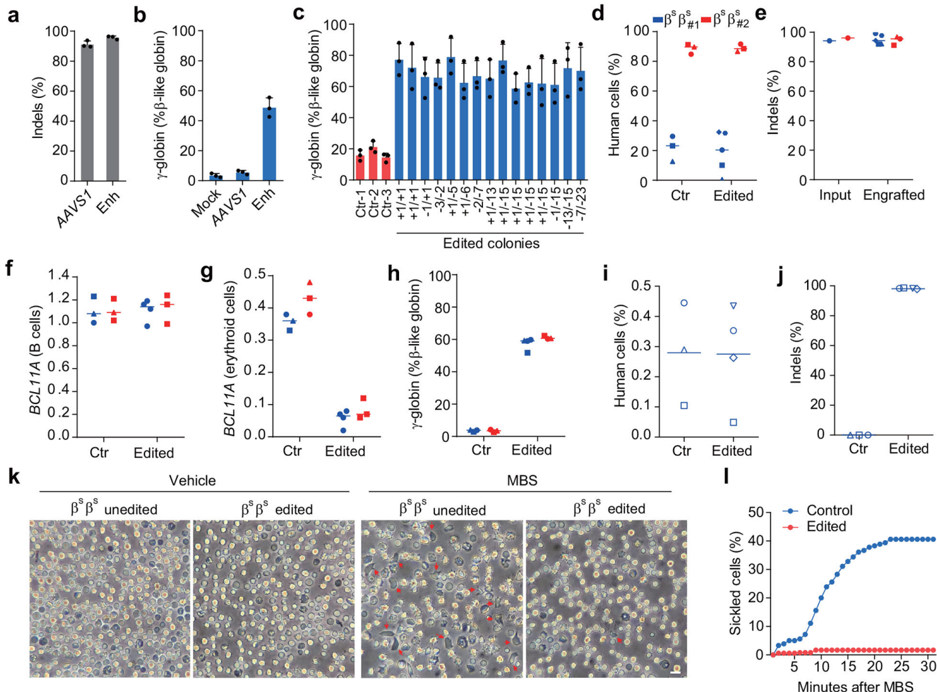
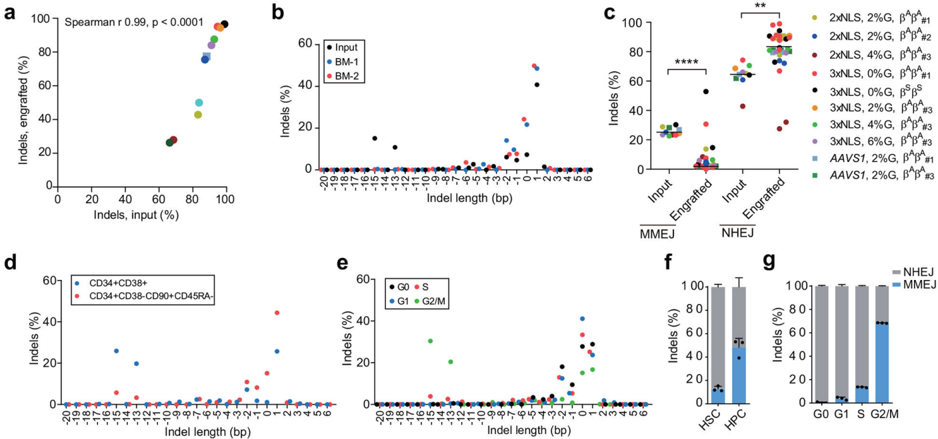
Re-expression of the paralogous γ-globin genes (HBG1/2) could be a universal strategy to ameliorate the severe β-globin disorders sickle cell disease (SCD) and β-thalassemia by induction of fetal hemoglobin (HbF, α2γ2)1. Previously, we and others have shown that core sequences at the BCL11A erythroid enhancer are required for repression of HbF in adult-stage erythroid cells but are dispensable in non-erythroid cells2–6. CRISPR–Cas9-mediated gene modification has demonstrated variable efficiency, specificity, and persistence in hematopoietic stem cells (HSCs). Here, we demonstrate that Cas9:sgRNA ribonucleoprotein (RNP)-mediated cleavage within a GATA1 binding site at the +58 BCL11A erythroid enhancer results in highly penetrant disruption of this motif, reduction of BCL11A expression, and induction of fetal γ-globin. We optimize conditions for selection-free on-target editing in patient-derived HSCs as a nearly complete reaction lacking detectable genotoxicity or deleterious impact on stem cell function. HSCs preferentially undergo non-homologous compared with microhomology-mediated end joining repair. Erythroid progeny of edited engrafting SCD HSCs express therapeutic levels of HbF and resist sickling, while those from patients with β-thalassemia show restored globin chain balance. Non-homologous end joining repair-based BCL11A enhancer editing approaching complete allelic disruption in HSCs is a practicable therapeutic strategy to produce durable HbF induction. Optimized co…
Overview
The claims and statistics of this paper haven’t been checked yet.
Free: it reads the open-access text and checks the first 5 claims that cite a source we can check. Create a free account to check every claim.
Integrity signals
Registry
Cites
Statistics
Figures
Verification
Claims the paper makes
The claims and statistics of this paper haven’t been checked yet.
Free: it reads the open-access text and checks the first 5 claims that cite a source we can check. Create a free account to check every claim.
Claims other papers make about this one
Each is checked against this paper’s own text: does it say what the citing paper says it does?
The source backs part of the claim, not all of it — or backs it for a different population, condition or comparison.
In the citing paper
“Major progress in delivering to 44 and handling HPSCs has resulted in formidable efficiencies of mutation correction or mitigation 18,45-47 that are expected to be curative.”
From The promise and challenge of therapeutic genome editing (2020) · cites this paper as [47]
Experimental — accuracy not yet measuredThe source backs part of the claim, not all of it — or backs it for a different population, condition or comparison.
In the citing paper
“Subsequent experiments showed that p53 inactivation can be controlled or avoided through protocol optimization 47,107 .”
From The promise and challenge of therapeutic genome editing (2020) · cites this paper as [47]
Experimental — accuracy not yet measuredThe source backs part of the claim, not all of it — or backs it for a different population, condition or comparison.
In the citing paper
“Although gene therapy has been slow to evolve since its early introduction, recent advances in gene editing are reinvigorating approaches to treat disorders by manipulation of the underlying genetic defects156.”
From A brief history of human disease genetics (2020) · cites this paper as [156]
Experimental — accuracy not yet measured
Self-check
Percentages, sums and reported differences re-computed from the paper’s own numbers.
The self-check needs the paper’s full text.
Citations
Cites
Kosicki, M., Tomberg, K., & Bradley, A. (2018) · Nature Biotechnology · doi:10.1038/nbt.4192 · Cited by 1,883
Kim, S., Kim, D., Cho, S. W., Kim, J., & Kim, J.-S. (2014) · Genome Research · doi:10.1101/gr.171322.113 · Cited by 1,856
CRISPR–Cas9 genome editing induces a p53-mediated DNA damage response
Haapaniemi, E., Botla, S., Persson, J., Schmierer, B., & Taipale, J. (2018) · Nature Medicine · doi:10.1038/s41591-018-0049-z · Cited by 1,264
Enhanced homology-directed human genome engineering by controlled timing of CRISPR/Cas9 delivery
Lin, S., Staahl, B. T., Alla, R. K., & Doudna, J. A. (2014) · eLife · doi:10.7554/elife.04766 · Cited by 1,189
Chemically modified guide RNAs enhance CRISPR-Cas genome editing in human primary cells
Hendel, A., Bak, R. O., Clark, J. T., Kennedy, A. B., Ryan, D. E., Roy, S., Steinfeld, I., Lunstad, B. D., Kaiser, R. J., Wilkens, A. B., et al. (2015) · Nature Biotechnology · doi:10.1038/nbt.3290 · Cited by 1,090
p53 inhibits CRISPR–Cas9 engineering in human pluripotent stem cells
Ihry, R. J., Worringer, K. A., Salick, M. R., Frias, E., Ho, D., Theriault, K., Kommineni, S., Chen, J., Sondey, M., Ye, C., et al. (2018) · Nature Medicine · doi:10.1038/s41591-018-0050-6 · Cited by 978
BCL11A enhancer dissection by Cas9-mediated in situ saturating mutagenesis
Canver, M. C., Smith, E. C., Sher, F., Pinello, L., Sanjana, N. E., Shalem, O., Chen, D. D., Schupp, P. G., Vinjamur, D. S., Garcia, S. P., et al. (2015) · Nature · doi:10.1038/nature15521 · Cited by 886
Self-citationTsai, S.-F., Martin, D. I. K., Zon, L. I., D'Andrea, A. D., Wong, G. G., & Orkin, S. H. (1989) · Nature · doi:10.1038/339446a0 · Cited by 885
Self-citationCRISPR/Cas9 β-globin gene targeting in human haematopoietic stem cells
Dever, D. P., Bak, R. O., Reinisch, A., Camarena, J., Washington, G., Nicolas, C. E., Pavel-Dinu, M., Saxena, N., Wilkens, A. B., Mantri, S., et al. (2016) · Nature · doi:10.1038/nature20134 · Cited by 864
Improving genetic diagnosis in Mendelian disease with transcriptome sequencing
Cummings, B. B., Marshall, J. L., Tukiainen, T., Lek, M., Donkervoort, S., Foley, A. R., Bolduc, V., Waddell, L. B., Sandaradura, S. A., O’Grady, G. L., et al. (2017) · Science Translational Medicine · doi:10.1126/scitranslmed.aal5209 · Cited by 831
Research works printed but not linked: 1
- Lin, S., Staahl, B., Alla, R. K. & Doudna, J. A. Enhanced homology-directed human genome engineering by controlled timing of CRISPR/Cas9 delivery. Elife 3, 1–13 (2014).
Cited by
Items 401–500 of 553
Therapeutic Effects of Hematopoietic Stem Cell Derived From Gene-Edited Mice on β654-Thalassemia
Lü, D., Gong, X., Guo, X., Chen, Y., Zhu, Y., Fang, Y., Qin, C., Xu, M., Yang, H., Li, D., et al. (2023) · Stem Cells · doi:10.1093/stmcls/sxad096 · Cited by 3
[Gene therapy strategies and prospects for neurofibromatosis type 1].
Zheng, T., Zhu, B., Wang, Z., & Li, Q. (2024) · PubMed Central · doi:10.7507/1002-1892.202309071 · Cited by 3
Xu, L., Wei, W., Qian, J., Zhang, S., Jin, Z., Wang, X., Li, L., Gu, Y., Lv, Y., Zhao, C. N., et al. (2022) · medRxiv · doi:10.1101/2022.08.18.22278875 · Cited by 3
“Recently, gene editing has been explored to treat congenital forms of anemia, such as β-Hb disorders (Wu et al., 2019; Doudna, 2020; Frangoul et al., 2021; Fu et al., 2022).”
BackgroundGenome editing technology and medical applications
Wang, L., Zhou, B., & Li, D. (2024) · Science China Life Sciences · doi:10.1007/s11427-024-2773-3 · Cited by 3
“One breakthrough application of CRISPR was its use to disrupt an enhancer region of the transcriptional repressor BCL11A, reactivating the expression of fetal γ -globin to treat β -thalassemia and sickle cell disease (Fu et al., 2022; Wu et al., 2019).”
Liao, J., Zhang, H., Chen, S., Hsiao, S., Lai, C.-P., Hu, F., Ren, W., Feng, C., Xie, D., Zheng, Y., et al. (2025) · bioRxiv (Cold Spring Harbor Laboratory) · doi:10.1101/2025.05.14.653640 · Cited by 3
Self-citationEfficient in vivo mammalian neuron editing using peptide-mediated CRISPR enzyme deliveryPreprint
Manohar, B. D., Travis, M., Munjal, V., Baehr, C. M., Rahnama, L. M. A., Kang, M. H., Haddad, R. F., Asija, K., Noel, E. A., Peddireddy, N., et al. (2025) · bioRxiv (Cold Spring Harbor Laboratory) · doi:10.1101/2025.11.26.690638 · Cited by 3
Understanding genetic heterogeneity in gene-edited hematopoietic stem cell products
Becker, H., & Yamazaki, S. (2023) · Experimental Hematology · doi:10.1016/j.exphem.2023.11.007 · Cited by 2
A one-base therapeutic insertion in the HBG2 distal promoter reactivates γ-globin expression
Bao, X., Gao, Y., Chen, X., Wang, Z., Feng, X., Wang, L., Du, J., Ye, Y., Chen, F., Du, L., et al. (2025) · Experimental Hematology and Oncology · doi:10.1186/s40164-025-00626-7 · Cited by 2
“CD34 + HSPCs were cultured and differentiated as previous described [16].”
Establishment of a reverse genetics system for studying human immune functions in mice
Pal, P., Gao, S., Gao, H., Qin, X., Cella, M., Wang, Q., & Shan, L. (2025) · Science Advances · doi:10.1126/sciadv.adu1561 · Cited by 2
Gene Therapy of Beta Hemoglobinopathies
Testa, U., Pelosi, E., & Castelli, G. (2025) · Biomedicines · doi:10.3390/biomedicines13123093 · Cited by 2
“Gene editing of the BCL11A erythroid enhancer appeared to represent an important strategy to induce therapeutically relevant high levels of HbF synthesis in SCD and β -thalassemia [77].”
Calcium Shock Enables Efficient and Programmable Particle Delivery for Genome Editing Applications
Vo, N., de Oñate, L., Frank, M., Hu, X., Blackburn, S. M., Foss, D. V., Villegas, J., Asija, K., Hockemeyer, D. F., Fu, H., et al. (2026) · Advanced Science · doi:10.1002/advs.202510441 · Cited by 2
CRISPR-HAWK: haplotype- and variant-aware guide design toolkit for CRISPR-Cas
Kumbara, A., Tognon, M., Carone, G., Fontanesi, A., Bombieri, N., Giugno, R., & Pinello, L. (2026) · Bioinformatics · doi:10.1093/bioinformatics/btag708 · Cited by 2
“To demonstrate CRISPR-HAWK’s functionality, we focused on the BCL11A +58 erythroid enhancer, a regulatory region critical for hemoglobin gene expression (Bauer et al. 2013), targeted by the clinically optimized SpCas9 guide sg1617 (Canver et al. 2015, Wu et al. 2019, Frangoul et al. 2021).”
Self-citationGenome Editing and Hematologic Malignancy
Emmer, B. T., & Ginsburg, D. (2019) · Annual Review of Medicine · doi:10.1146/annurev-med-052318-100741 · Cited by 2
Gene Therapy for Human Diseases: Recent Achievements and Near-Term Development Prospects
Айтбаев, К. А., Murkamilov, I. T., Абдилалимовна, М. Ж., & Yusupov, F. A. (2022) · The Russian Archives of Internal Medicine · doi:10.20514/2226-6704-2022-12-5-363-369 · Cited by 2
Kristof, A., Karunakaran, K., Ferry, Y., Briggs, S., Allen, C., Mizote, P., Jian, Z., Arvanitis, C., & Blazeck, J. (2025) · Protein Engineering Design and Selection · doi:10.1093/protein/gzaf008 · Cited by 2
Cui, M., Billett, H. H., Suzuka, S. M., Ambadipudi, K., Archarya, S., Mowrey, W. B., & Branch, C. A. (2022) · Translational research · doi:10.1016/j.trsl.2022.01.003 · Cited by 2
Pediatric Bone Marrow Transplantation
Yadav, S. P., Sharma, A., Shah, R. M., & Satwani, P. (2021) · Organ and tissue transplantation · doi:10.1007/978-3-030-36358-1_11 · Cited by 2
Management of autoinflammatory syndromes and periodic fevers
Peet, C. J., & Lachmann, H. J. (2022) · Elsevier eBooks · doi:10.1016/b978-0-323-95061-9.00049-7 · Cited by 2
CRISPR-CAS 9 and its application as therapeutics for β-haemoglobinopathies
Tripathi, M. K., Kumar, P., Jose, B., Mondal, S., Priyadarshi Mahendra, K., & SARMA, K. (2023) · Exploratory Animal and Medical Research · doi:10.52635/eamr/13.1.8-15 · Cited by 2
Foss, D. V., & Norris, A. L. (2024) · Elsevier eBooks · doi:10.1016/b978-0-12-817218-6.00011-5 · Cited by 2
Orphan Nuclear Receptors TR2 and TR4 in Erythropoiesis: From Mechanisms to Therapies
Liu, Y., Yang, H., Ren, M., Yu, Q., Xu, Q., & Fu, X. (2025) · Biomolecules · doi:10.3390/biom15060798 · Cited by 2
“Dysregulation of this switching process underlies the pathogenesis of hemoglobinopathies such as β -thalassemia and SCD [9].”
Exploiting HIV‐1 tropism to target CD4+ T cells for CRISPR
Heeren, J. J. F. (2021) · Immunology and Cell Biology · doi:10.1111/imcb.12487 · Cited by 2
First CRISPR editing trial results assuage safety concerns
Reardon, S. (2019) · Nature Medicine · doi:10.1038/d41591-019-00019-4 · Cited by 2
ZNF410 represses fetal globin by devoted control of CHD4/NuRDPreprint
Vinjamur, D. S., Yao, Q., Cole, M. A., McGuckin, C., Ren, C., Zeng, J., Hossain, M., Luk, K., Wolfe, S. A., Pinello, L., et al. (2020) · bioRxiv (Cold Spring Harbor Laboratory) · doi:10.1101/2020.08.31.272856 · Cited by 2
Self-citationRodríguez, T., Yurkovetskiy, L., Nagalekshmi, K., Lam, O., Jazbec, E., Maitland, S. A., Wolfe, S. A., Sontheimer, E. J., & Luban, J. (2024) · bioRxiv (Cold Spring Harbor Laboratory) · doi:10.1101/2024.07.12.603173 · Cited by 2
“3xNLS-SpyCas9 protein was bacterially expressed and purified as previously described [59].”
Self-citationTowards a BETter understanding of cardiac fibrosis
Stout, E. S., Elliott, D. A., & Porrello, E. R. (2022) · The Journal of Cardiovascular Aging · doi:10.20517/jca.2022.15 · Cited by 1
Genetic modifications of EGLN1 reactivate HbF production in β0-thalassemia/HbE
Jan‐ngam, V., Boontha, S., Tubsuwan, A., Wongpalee, S. P., Fanhchaksai, K., Tantiworawit, A., Charoenkwan, P., & Khamphikham, P. (2024) · Heliyon · doi:10.1016/j.heliyon.2024.e38020 · Cited by 1
“Previous study demonstrated that BCL11A expression level was gradually decreased upon erythroid differentiation in the 3-phase erythroid culture media [33].”
Luo, D., Wang, N., Major-Monfried, H., Ralls, J., Rha, S., Maitland, S. A., Ponnienselvan, K., Yamada, M., Bauer, D. E., Wolfe, S. A., et al. (2025) · Bioconjugate Chemistry · doi:10.1021/acs.bioconjchem.5c00440 · Cited by 1
Self-citationQian, Y., Hui, F., Niu, W., Wang, D., Hao, Y., Meng, Q., Ren, S., Kong, D., Gong, H., Wu, J., et al. (2025) · Genome biology · doi:10.1186/s13059-025-03849-3 · Cited by 1
Márquez-Benitez, Y., Osorio-Garzón, V. I., Bernal, J. E., & Briceño, I. (2026) · Genes · doi:10.3390/genes17020135 · Cited by 2
Zin, T. N., Jatavan, P., Sakunpansa, N., Charoenkwan, P., & Khamphikham, P. (2026) · Scientific Reports · doi:10.1038/s41598-026-54128-5 · Cited by 1
Chen, S., Hsiao, S., Xie, T., Chen, D., Chen, N., Jiang, J., Li, J., Wu, Y., & Liao, J. (2026) · Nature Communications · doi:10.1038/s41467-026-74624-6 · Cited by 1
Self-citationYoo, B., Betancourth, D., Cao, M., Karsenty, C. L., Prasca-Chamorro, D., Pham, Q.-K., Zhang, Y., Pendergast, M. A., Sheehan, V., Park, S. H., et al. (2026) · Cell Biomaterials · doi:10.1016/j.celbio.2026.100537 · Cited by 1
Unlocking the curative potential of gene transfer and editing for hematopoietic disorders
Shiroshita, K., Stolz, A., Malouf, C., Tran, V. L., Li, J., Weiss, M. J., & Naldini, L. (2026) · Experimental Hematology · doi:10.1016/j.exphem.2026.105493 · Cited by 1
‘Emerging cell-specific therapies in cardiovascular disease’
Mondal, A. R., & Misra, A. (2025) · Vascular Pharmacology · doi:10.1016/j.vph.2025.107516 · Cited by 1
Fetal Hemoglobin Research and Clinical Relevance in Sickle Cell Disease
Gudmundsdóttir, B. K., & Tisdale, J. F. (2025) · Physiology · doi:10.1152/physiol.00024.2025 · Cited by 1
Gene-Editing-Based Approaches for Curing Sickle Cell Disease
Park, S. H., Karsenty, C. L., Prasca-Chamorro, D., Moyo, B., Yoo, B., & Bao, G. (2026) · Springer eBooks · doi:10.1007/978-3-032-12532-3_8 · Cited by 1
CRISPR in Thalassemia: Global Research Trend Analysis
Saboor, M., Alblooshi, M. J., Alkaabi, A. A., Soozaei, F. R., & Alketbi, M. H. (2026) · Hemoglobin · doi:10.1080/03630269.2026.2634815 · Cited by 1
Large-scale parallel characterization of RNA-guided nuclease activity and specificity
Zheng, J., Wang, X., Wu, M., Liu, J., Feng, H., Yang, H., Li, D., Wang, H., Hu, J., & Zuo, E. (2026) · 中国科学通报:英文版 · doi:10.1016/j.scib.2026.03.047 · Cited by 2
Cao, J., Liu, Z., Chen, X., Lan, Z., Liu, L., Zhai, Y., Wang, W., Xue, C., Cheng, H., Yao, Y., et al. (2026) · Nature Communications · doi:10.1038/s41467-026-72833-7 · Cited by 1
Taki, A. G., Shareef, A., Arora, V., Oweis, R. J., Jyothi, S. R., Singh, U., Sahoo, S., Chauhan, A. S., Давлятовна, К. Г., Sameer, H. N., et al. (2026) · PubMed Central · doi:10.22038/ijbms.2026.90248.19456 · Cited by 1
RNA therapeutics: current status and future directions
Yang, B., Sedano, M. J., Perez, K. L., Vijayaraghavan, M., Reid, V. A., Yallapu, M. M., Chauhan, S. C., Dhandayuthapani, S., Ramos, E., & Gadad, S. S. (2026) · Signal Transduction and Targeted Therapy · doi:10.1038/s41392-026-03032-5 · Cited by 1
Davis, B. H. (2020) · American Journal of Hematology · doi:10.1002/ajh.25971 · Cited by 1
“emerging clinical need? The evidence for continued development of therapeutics able of inducing the increased RBC levels of HbF in sickle cell disease is convincing both from economic and risk/benefit perspectives.(5-10) These studies and others paint an increasing better understanding of the molecular regulation of h…”
BackgroundHacking hematopoiesis – emerging tools for examining variant effects
Gundry, M. C., & Sankaran, V. G. (2023) · Disease Models & Mechanisms · doi:10.1242/dmm.049857 · Cited by 1
Salivary proteomic profile of response to different resistance training protocols: A case report
Santos, K. O., Filho, D. M. P., Ventura, T. M. O., Grizzo, L. T., Macedo, A. G., Buzalaf, M. A. R., Braga, A. S., Faria, M. H., & Magalhães, A. C. (2024) · Cell Biochemistry and Function · doi:10.1002/cbf.3936 · Cited by 1
“20 However, in adults, hemoglobin gamma is inactivated and one of the genes associated with this is BCL11A, which is expressed in most hematopoietic cells and is highly enriched in B cells.”
BackgroundMechanistic and Biological Perspectives on Erythropoiesis
Bresnick, E. H., Papayannopoulou, T., & Migliaccio, A. R. (2024) · Experimental Hematology · doi:10.1016/j.exphem.2024.104286 · Cited by 1
Hong, W., Huang, M., Wei, Y., & Wei, X. (2019) · 中国科学通报:英文版 · doi:10.1016/j.scib.2019.09.002 · Cited by 1
CRISPR/Cas9: The new era of gene therapy
Alotaibi, A. (2020) · International Journal of ADVANCED AND APPLIED SCIENCES · doi:10.21833/ijaas.2020.10.003 · Cited by 1
“…disease Autologous CD34+ hematopoietic stem and progenitor cells BCL11A Multiple locations, United States, Belgium, Canada, Germany, Italy recruiting (Wu et al., 2019) NCT04244656 Relapsed or refractory multiple myeloma Allogeneic T cells BCMA Melbourne, Australia; Portland and Nashville, United…”
BackgroundGenome Editing with CRISPR‐Cas Systems
Lotfy, P., & Hsu, P. D. (2022) · Wiley eBooks · doi:10.1002/9781683673798.ch11 · Cited by 1
Zhou, G., & Lu, D. (2023) · Journal of Proteomics · doi:10.1016/j.jprot.2023.104957 · Cited by 1
Pediatric Bone Marrow Transplantation
Yadav, S. P., Sharma, A., Shah, R. M., & Satwani, P. (2020) · Organ and tissue transplantation · doi:10.1007/978-3-319-64938-2_11-1 · Cited by 1
Verhagen, H. J. M. P., Kuijk, C., Kokke, A. M., Rutgers, L., van der Meulen, S. A., van Mierlo, G. J., Voermans, C., & van den Akker, E. (2020) · bioRxiv (Cold Spring Harbor Laboratory) · doi:10.1101/2020.12.18.423329 · Cited by 1
“Various Cas9 modifications were reported to potentially enhance genome editing activity by the addition of nuclear localization signals (NLS), which might improve the delivery of RNPs to the nucleus [18,19].”
BackgroundMethodInfluentialIn Vivo Delivery of Precision Genome Editing Agents
Davis, J. R. (2023) · Digital Access to Scholarship at Harvard (DASH) (Harvard University) · Cited by 1
Production of foetal globin in adult monkeys
Bauer, D. E. (2019) · Nature Biomedical Engineering · doi:10.1038/s41551-019-0475-3
Self-citationGrundlagen und klinische Anwendung der Genomeditierung
Klermund, J., & Cathomen, T. (2019) · Monatsschrift Kinderheilkunde · doi:10.1007/s00112-019-00821-x
Chan, D. C. H. (2020) · MacSphere (McMaster University) · doi:10.71548/16397
Zukünftige intrauterine Therapien
Ochsenbein‐Kölble, N. (2020) · Der Gynäkologe · doi:10.1007/s00129-020-04567-6
CRISPR-enhanced human adipocyte “browning” as cell therapy for metabolic diseasePreprint
Tsagkaraki, E., Nicoloro, S., Souza, T. D., Solivan-Rivera, J., Desai, A., Shen, Y., Kelly, M., Guilherme, A., Henriques, F. D. S., Ibraheim, R., et al. (2020) · bioRxiv (Cold Spring Harbor Laboratory) · doi:10.1101/2020.10.13.337923
Self-citationFlipping the Hemoglobin Switch and Discovering Regulators Involved in Fetal Hemoglobin Reactivation
Boontanrart, M. Y. (2020) · eScholarship (California Digital Library)
Synthetic Activation of Aberrantly Silenced Genes in Diseases
Hafner, N. (2020) · Archive ouverte UNIGE (University of Geneva) · doi:10.13097/archive-ouverte/unige:141767
Ibraheim, R. (2020) · The Journal of the American Medical Association (JAMA) Network (American Medical Association) · doi:10.13028/ey4j-tj18
Edición de genomas por CRISPR en investigación básica y aplicada
Ruiz, M. D. P., & de la Mata, M. (2020) · CONICET Digital (CONICET)
Han, Y., Huang, L., Zhou, M., Tan, X., Gong, S., Zhang, Z., Jin, T., Liu, J., Li, H., Zhang, W., et al. (2020) · Research Square · doi:10.21203/rs.3.rs-45443/v2
Suh, Y. (2020) · Faculty Opinions – Post-Publication Peer Review of the Biomedical Literature · doi:10.3410/f.737623696.793579913
Pediatric Bone Marrow Transplantation
Yadav, S. P., Sharma, A., Shah, R. M., & Satwani, P. (2020) · Organ and tissue transplantation · doi:10.1007/978-3-319-64938-2_11-2
Genome‐Editing Applications in Stem Cell Engineering and Regenerative Medicine
Gupta, P., Jaitly, S., Thakur, P., Goswami, S. G., Bhargava, N., & Ramalingam, S. (2022) · Wiley eBooks · doi:10.1002/9781119671404.ch17
DNA Repair Pathways in the Context of Therapeutic Genome Editing
Wimberger, S., Akrap, N., & Taheri‐Ghahfarokhi, A. (2022) · Wiley eBooks · doi:10.1002/9781119671404.ch13
RNA delivery for cancer gene therapy
Öncül, S., Amero, P., Rodriguez‐Aguayo, C., Sood, A. K., Călin, G. A., & Lopez‐Berestein, G. (2022) · Elsevier eBooks · doi:10.1016/b978-0-12-821595-1.00004-x
Chakraborty, S. (2020) · OSF Preprints (OSF Preprints) · doi:10.31219/osf.io/vzmf3
Gene therapy for primary immune deficiencies
Kohn, D. B. (2020) · Elsevier eBooks · doi:10.1016/b978-0-12-816768-7.00058-2
Han, Y., Huang, L., Zhou, M., Gong, S., Zhang, Z., Jin, T., Liu, J., Li, H., Zhang, W., Fang, X., et al. (2020) · Research Square · doi:10.21203/rs.3.rs-45443/v1
Expression, functional mechanism and therapy application of long noncoding RNA in β-thalassemia.
Pan, Y., Xu, L., & Huang, H. (2022) · PubMed Central · doi:10.11817/j.issn.1672-7347.2022.210411
Les thérapies géniques des hémoglobinopathies : une nouvelle ère, mais à quel prix ?
Beuzard, Y. (2022) · Hématologie · doi:10.1684/hma.2022.1753
Liu, W., Wang, X., & Cartwright, E. J. (2021) · Royal Society of Chemistry eBooks · doi:10.1039/9781788017862-00155
CRISPR/Cas9 system in hematopoietic stem cells: Basic research and clinical applications
Albayrak, E. (2023) · Journal of Experimental and Clinical Medicine · doi:10.52142/omujecm.40.1.31
Aplicación de tecnología de edición de genes como alternativa de tratamiento en pacientes con VIH
Cabrera-Ávila, P., Solano, F. D. C., & Flores-Montesinos, C. (2023) · 593 Digital Publisher CEIT · doi:10.33386/593dp.2023.5.2001
Progress and development of CRISPR-Cas tool in the treatment of thalassemia
Lu, F. J., Xu, Z., & Feng, W. (2023) · Theoretical and Natural Science · doi:10.54254/2753-8818/8/20240425
Gene Editing Approaches for Haematological Disorders
Ferrari, S., & Canarutto, D. (2024) · Elsevier eBooks · doi:10.1016/b978-0-443-15717-2.00053-6 · Cited by 1
Ramadier, S. (2020) · theses.fr (ABES) · doi:10.70675/b75724f6zb386z4f05zae5dzc8f17b350499
Sécurisation de la thérapie génique par CRISPR-Cas9 dans les pathologies du globule rouge
Boutin, J. (2021) · theses.fr (ABES) · doi:10.70675/aa1d0b59z401cz4506zacd4z39e9fd3c090b
Navigating hypoxia and amino acid signatures in Acute Myeloid Leukemia
Cunningham, A. (2024) · University of Groningen research database (University of Groningen / Centre for Information Technology) · doi:10.33612/diss.940095971
Shakirova, A. I., Gaponenko, I. N., Komarova, Y. V., Epifanovskaya, O. S., Senichkina, D. A., Sergeev, V. S., Muslimov, A. R., Onopchenko, A. V., Shchelina, E. V., Osipova, S. A., et al. (2024) · Clinical oncohematology · doi:10.21320/2500-2139-2024-17-2-82-93
“Не - обходимо учитывать, что на эффективность прижив - Доклиническая разработка подходов генной терапии имело место в опубликованных исследованиях при оптимальных значениях количества клеток в транс - плантате [15].”
InfluentialGu, X. G., Wang, D., Xu, Z., Wang, J., Guo, L., Chai, R., Li, G., Shu, Y., & Li, H. (2021) · Figshare · doi:10.6084/m9.figshare.14266959
Gu, X. G., Wang, D., Xu, Z., Wang, J., Guo, L., Chai, R., Li, G., Shu, Y., & Li, H. (2021) · Figshare · doi:10.6084/m9.figshare.14266965
Gu, X. G., Wang, D., Xu, Z., Wang, J., Guo, L., Chai, R., Li, G., Shu, Y., & Li, H. (2021) · Figshare · doi:10.6084/m9.figshare.14266956
Xi, G., Wang, D., Xu, Z., Wang, J., Guo, L., Chai, R., Li, G., Shu, Y., & Li, H. (2021) · Figshare · doi:10.6084/m9.figshare.14266968
Gu, X. G., Wang, D., Xu, Z., Wang, J., Guo, L., Chai, R., Li, G., Shu, Y., & Li, H. (2021) · Figshare · doi:10.6084/m9.figshare.14266971
Les solutions pour prévenir de la génotoxicité du système CRISPR-Cas9
Prat, F. (2020) · theses.fr (ABES) · doi:10.70675/b43fcab3zc6b2z4ae5zaf1bz218ebd30ffad
EDIÇÃO GENÔMICA: UMA NOVA ESPERANÇA NO TRATAMENTO DA DOENÇA FALCIFORME?
Cardozo, T. G., da Silva, A. R. A., Alves, J. S., Oliveira, M. A., & Solano, M. E. G. (2024) · RECIMA21 - Revista Científica Multidisciplinar · doi:10.47820/recima21.v5i6.5328
How can CRISPR technologies be used to treat patients with sickle cell disorder?Preprint
Zheng, Y. (2024) · doi:10.58445/rars.1916
Applications of CRISPR technology
Du, Z. (2024) · Elsevier eBooks · doi:10.1016/b978-0-443-23865-9.00003-4
Oliezer, R. S. (2024) · Digital Library of Theses and Dissertations (Universidade de São Paulo) · doi:10.11606/t.58.2024.tde-06112024-104505
Progress on CRISPR -Cas9 Gene Editing Technology in Sickle cell disease: A Review
Wada, U. B., Nath, S., Zeeshan, M., Sharma, K., & Joshi, Y. (2025) · Galore International Journal of Health Sciences and Research · doi:10.52403/gijhsr.20240404
CRISPR/Cas9 gene editing for treating gene and protein disorders
Umeyor, C. E., Negi, P., Agarwal, R., Hanjankar, S. N., & Patravale, V. B. (2025) · Elsevier eBooks · doi:10.1016/b978-0-443-27416-9.00004-6
Identification of Pathogenic Regulatory Variants in Mendelian Diseases
Jan, Z., Balyan, M. K., Nisamudheen, N. A., Velayutham, D., Balyan, P., & Jithesh, P. V. (2025) · Elsevier eBooks · doi:10.1016/b978-0-323-95502-7.00289-x
CELLULAR REPROGRAMMING: AN APPROACH TO TISSUE ENGINEERING AND NANOTECHNOLOGY
dos Santos, A. Í. L., dos Santos, A. M., Gomes, J. A. D. S., da Silva, J. V., dos Santos, L. M. Q. M., Yara, R., & Amorim, R. V. D. S. (2025) · International Journal of Health Science · doi:10.22533/at.ed.15951525180312
Analysis of Disease Treatment Efficacy Based on CRISPR
Yan, Z. (2025) · Theoretical and Natural Science · doi:10.54254/2753-8818/2025.au23156
Sethi, P., Rastogi, S., Sherawat, K., Panwar, N., Madan, A., & Islam, M. (2025) · Wiley eBooks · doi:10.1002/9781394313785.ch2
TERAPIA GÊNICA EM HEMOGLOBINOPATIAS: AVANÇOS PROGNÓSTICOS E TERAPÊUTICOS
SANTOS, C. S., Pinto, D., MARCUCCI, E. S. D., MORAIS, M. E. F., & SILVA, S. S. D. (2025) · Anais do II Congresso Brasileiro de Hematologia Clínico-laboratorial On-line · doi:10.51161/v-hematoclil/60935
Integrating Human Genetics and Protective Genome Editing to Enable ADGRE2-Directed AML TherapyPreprint
Keschner, Y., Etchin, J., Silva, M. C., Mager, H., Hoyt, H., Xavier-Ferrucio, J. M., Manalo, N. A., Halfond, A. L., Qiu, H., Wang, R., et al. (2025) · bioRxiv (Cold Spring Harbor Laboratory) · doi:10.1101/2025.08.21.671614
Metadata
- Authors
- Wu, Y., Zeng, J., Roscoe, B. P., Liu, P., Yao, Q., Lazzarotto, C. R., Clement, K., Cole, M. A., Luk, K., Baricordi, C., Shen, A. H., Ren, C., Esrick, E. B., Manis, J. P., Dorfman, D. M., Williams, D. A., Biffi, A., Brugnara, C., Biasco, L., Brendel, C., Pinello, L., Tsai, S. Q., Wolfe, S. A., & Bauer, D. E.
- Affiliations
- Broad Institute (US)
- University of Massachusetts Chan Medical School (US)
- Brigham and Women's Hospital (US)
- St. Jude Children's Research Hospital (US)
- Corresponding author
- Bauer, Daniel E.
- ORCID
- Venue
- Nature Medicine
- Published
- 2019-03-25
- Volume
- 25
- Issue
- 5
- Pages
- 776-783
- ISSN
- 1078-8956 (ISSN-L)
- 1546-170X
- PMC
- PMC6512986
- OpenAlex
- W2923636118
- Cited by
- 515
- References
- 48
- Citations by year
- 2026: 33 · 2025: 71 · 2024: 61 · 2023: 74 · 2022: 74 · 2021: 85 · 2020: 84 · 2019: 33
- FWCI
- 38.59
- Type
- journal article
- Language
- en
- Open access
- green
- www.ncbi.nlm.nih.gov
- Licence
- www.springernature.com/gp/researchers/text-and-data-mining (tdm)
- www.springernature.com/gp/researchers/text-and-data-mining (vor)
- Locations
- Nature Medicine (publishedVersion)
- PubMed (publishedVersion)
- Europe PMC (PubMed Central) (acceptedVersion)
- PubMed Central (acceptedVersion)
- Padua Research Archive (University of Padova) (submittedVersion)
- Funders
- Doris Duke Charitable Foundation (2013137, 2015134)
- Kenneth Rainin Foundation (KRA000003)
- National Institutes of Health (UL1TR001102)
- National Heart, Lung, and Blood Institute (P01HL053749, DP2HL137300, R01HL137848, P01HL032262, R21HL145636, U01HL117720)
- National Human Genome Research Institute (R00HG008399)
- National Institute of General Medical Sciences (R01GM115911)
- National Institute of Allergy and Infectious Diseases (R01AI117839)
- National Institute of Diabetes and Digestive and Kidney Diseases (R03DK109232, K08DK093705, U54DK106829)
- National Center for Advancing Translational Sciences
- Topics
- Health Sciences › Medicine › Genetics (clinical) › Hemoglobinopathies and Related Disorders
- Life Sciences › Biochemistry, Genetics and Molecular Biology › Molecular Biology › CRISPR and Genetic Engineering
- Life Sciences › Biochemistry, Genetics and Molecular Biology › Genetics › Virus-based gene therapy research
- Keywords
- sickle cell disease, beta-thalassemia, fetal hemoglobin induction, hematopoietic stem cells, CRISPR/Cas9, ribonucleoprotein delivery, non-homologous end joining, microhomology-mediated end joining, genome editing efficiency, genotoxicity
- MeSH terms
- Gene Editing, RNA, Guide, CRISPR-Cas Systems, Amino Acid Sequence, Anemia, Sickle Cell, Base Sequence, Carrier Proteins, Enhancer Elements, Genetic, Fetal Hemoglobin, Hematopoietic Stem Cells, Humans, Nuclear Proteins, Repressor Proteins, Erythroid Precursor Cells, beta-Thalassemia, Hematopoietic Stem Cell Transplantation, INDEL Mutation, gamma-Globins, CRISPR-Cas Systems
About these checks
Registry, retraction, Cites and statistics results are computed, not judged, with one exception: a printed reference that no index lists is read once by a model before it counts as a citation error. Claims are extracted by a model and kept only when their quote appears verbatim in the text; each cited source is then checked, with a model’s help, for whether it says what the claim relies on. Those verdicts can be wrong — read the claim’s quote and the cited source before relying on one.
Statistics and arithmetic are recomputed, not judged.
Confidence bands are shown only for fields calibrated on our annotated test set. None is calibrated yet, so no band is shown.
What counts as a claim ›How we measure confidence ›How we check this ›
Are you an author, or do you see a problem with this page? Request a review
Data sources
Bibliographic data: Semantic Scholar, OpenAlex, Crossref.
Contains information from the Semantic Scholar Academic Graph Datasets, made available under the ODC Attribution License (ODC-BY 1.0).
Semantic Scholar’s data is described in: Kinney, R., et al. (2023). The Semantic Scholar Open Data Platform. arXiv:2301.10140.
