

Highly efficient therapeutic gene editing of human hematopoietic stem cells
Open accessThe DOI matches its Crossref record; 48 of the 48 references it cites were found in a registry or an index.
Abstract
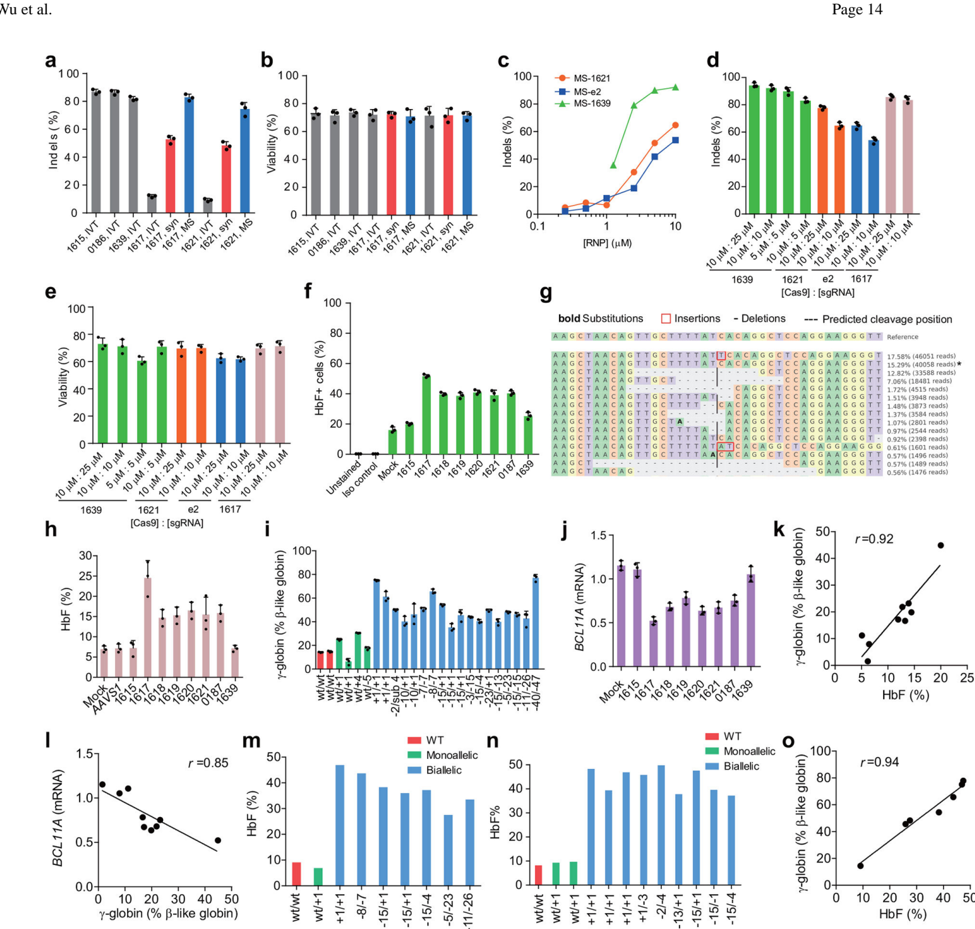
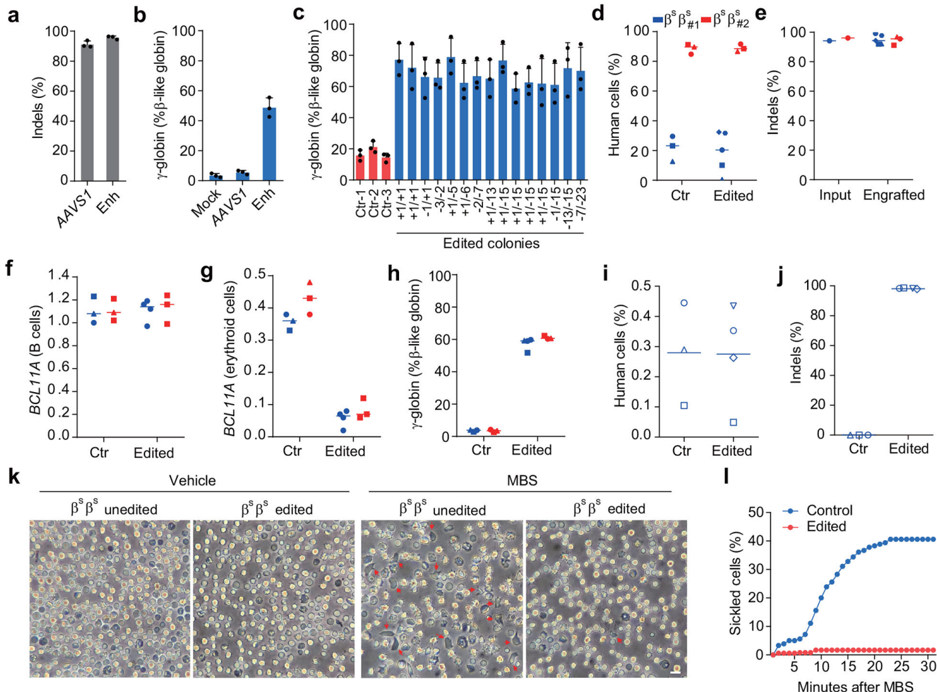
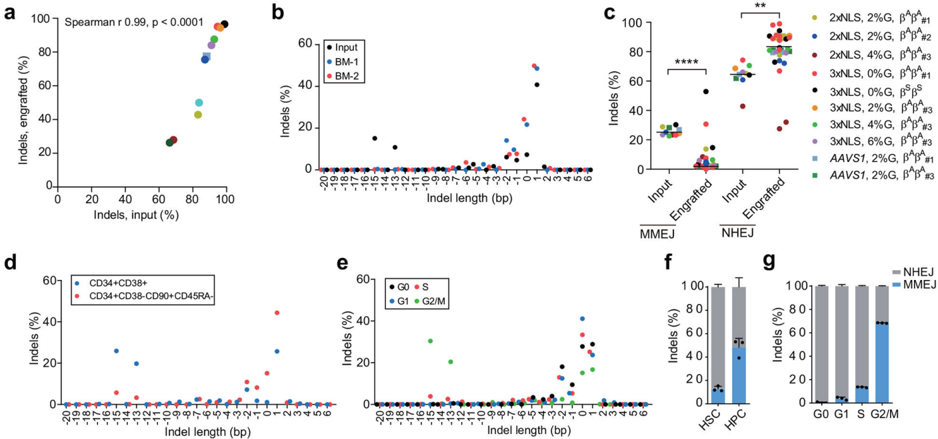
Re-expression of the paralogous γ-globin genes (HBG1/2) could be a universal strategy to ameliorate the severe β-globin disorders sickle cell disease (SCD) and β-thalassemia by induction of fetal hemoglobin (HbF, α2γ2)1. Previously, we and others have shown that core sequences at the BCL11A erythroid enhancer are required for repression of HbF in adult-stage erythroid cells but are dispensable in non-erythroid cells2–6. CRISPR–Cas9-mediated gene modification has demonstrated variable efficiency, specificity, and persistence in hematopoietic stem cells (HSCs). Here, we demonstrate that Cas9:sgRNA ribonucleoprotein (RNP)-mediated cleavage within a GATA1 binding site at the +58 BCL11A erythroid enhancer results in highly penetrant disruption of this motif, reduction of BCL11A expression, and induction of fetal γ-globin. We optimize conditions for selection-free on-target editing in patient-derived HSCs as a nearly complete reaction lacking detectable genotoxicity or deleterious impact on stem cell function. HSCs preferentially undergo non-homologous compared with microhomology-mediated end joining repair. Erythroid progeny of edited engrafting SCD HSCs express therapeutic levels of HbF and resist sickling, while those from patients with β-thalassemia show restored globin chain balance. Non-homologous end joining repair-based BCL11A enhancer editing approaching complete allelic disruption in HSCs is a practicable therapeutic strategy to produce durable HbF induction. Optimized co…
Overview
The claims and statistics of this paper haven’t been checked yet.
Free: it reads the open-access text and checks the first 5 claims that cite a source we can check. Create a free account to check every claim.
Integrity signals
Registry
Cites
Statistics
Figures
Verification
Claims the paper makes
The claims and statistics of this paper haven’t been checked yet.
Free: it reads the open-access text and checks the first 5 claims that cite a source we can check. Create a free account to check every claim.
Claims other papers make about this one
Each is checked against this paper’s own text: does it say what the citing paper says it does?
The source backs part of the claim, not all of it — or backs it for a different population, condition or comparison.
In the citing paper
“Major progress in delivering to 44 and handling HPSCs has resulted in formidable efficiencies of mutation correction or mitigation 18,45-47 that are expected to be curative.”
From The promise and challenge of therapeutic genome editing (2020) · cites this paper as [47]
Experimental — accuracy not yet measuredThe source backs part of the claim, not all of it — or backs it for a different population, condition or comparison.
In the citing paper
“Subsequent experiments showed that p53 inactivation can be controlled or avoided through protocol optimization 47,107 .”
From The promise and challenge of therapeutic genome editing (2020) · cites this paper as [47]
Experimental — accuracy not yet measuredThe source backs part of the claim, not all of it — or backs it for a different population, condition or comparison.
In the citing paper
“Although gene therapy has been slow to evolve since its early introduction, recent advances in gene editing are reinvigorating approaches to treat disorders by manipulation of the underlying genetic defects156.”
From A brief history of human disease genetics (2020) · cites this paper as [156]
Experimental — accuracy not yet measured
Self-check
Percentages, sums and reported differences re-computed from the paper’s own numbers.
The self-check needs the paper’s full text.
Citations
Cites
Kosicki, M., Tomberg, K., & Bradley, A. (2018) · Nature Biotechnology · doi:10.1038/nbt.4192 · Cited by 1,883
Kim, S., Kim, D., Cho, S. W., Kim, J., & Kim, J.-S. (2014) · Genome Research · doi:10.1101/gr.171322.113 · Cited by 1,856
CRISPR–Cas9 genome editing induces a p53-mediated DNA damage response
Haapaniemi, E., Botla, S., Persson, J., Schmierer, B., & Taipale, J. (2018) · Nature Medicine · doi:10.1038/s41591-018-0049-z · Cited by 1,264
Enhanced homology-directed human genome engineering by controlled timing of CRISPR/Cas9 delivery
Lin, S., Staahl, B. T., Alla, R. K., & Doudna, J. A. (2014) · eLife · doi:10.7554/elife.04766 · Cited by 1,189
Chemically modified guide RNAs enhance CRISPR-Cas genome editing in human primary cells
Hendel, A., Bak, R. O., Clark, J. T., Kennedy, A. B., Ryan, D. E., Roy, S., Steinfeld, I., Lunstad, B. D., Kaiser, R. J., Wilkens, A. B., et al. (2015) · Nature Biotechnology · doi:10.1038/nbt.3290 · Cited by 1,090
p53 inhibits CRISPR–Cas9 engineering in human pluripotent stem cells
Ihry, R. J., Worringer, K. A., Salick, M. R., Frias, E., Ho, D., Theriault, K., Kommineni, S., Chen, J., Sondey, M., Ye, C., et al. (2018) · Nature Medicine · doi:10.1038/s41591-018-0050-6 · Cited by 978
BCL11A enhancer dissection by Cas9-mediated in situ saturating mutagenesis
Canver, M. C., Smith, E. C., Sher, F., Pinello, L., Sanjana, N. E., Shalem, O., Chen, D. D., Schupp, P. G., Vinjamur, D. S., Garcia, S. P., et al. (2015) · Nature · doi:10.1038/nature15521 · Cited by 886
Self-citationTsai, S.-F., Martin, D. I. K., Zon, L. I., D'Andrea, A. D., Wong, G. G., & Orkin, S. H. (1989) · Nature · doi:10.1038/339446a0 · Cited by 885
Self-citationCRISPR/Cas9 β-globin gene targeting in human haematopoietic stem cells
Dever, D. P., Bak, R. O., Reinisch, A., Camarena, J., Washington, G., Nicolas, C. E., Pavel-Dinu, M., Saxena, N., Wilkens, A. B., Mantri, S., et al. (2016) · Nature · doi:10.1038/nature20134 · Cited by 864
Improving genetic diagnosis in Mendelian disease with transcriptome sequencing
Cummings, B. B., Marshall, J. L., Tukiainen, T., Lek, M., Donkervoort, S., Foley, A. R., Bolduc, V., Waddell, L. B., Sandaradura, S. A., O’Grady, G. L., et al. (2017) · Science Translational Medicine · doi:10.1126/scitranslmed.aal5209 · Cited by 831
Research works printed but not linked: 1
- Lin, S., Staahl, B., Alla, R. K. & Doudna, J. A. Enhanced homology-directed human genome engineering by controlled timing of CRISPR/Cas9 delivery. Elife 3, 1–13 (2014).
Cited by
Items 501–553 of 553
CRISPR/Cas‐Based Gene Editing as a Therapy in Beta‐Thalassemia
Xie, Q., Qu, C., Teng, S., & Huang, P. (2025) · Wiley eBooks · doi:10.1002/9780470015902.a0029835
The Role of Precision Medicine in Family Health: Tailoring Treatments for Hereditary Diseases
Ajayi, R. O., Adeyemi-Benson, O. S., Adeyemi-Benson, O. A., Ogunjobi, T. T., Ukpoju-Ebonyi, O. M., & Ebonyi, J.-M. A. (2025) · Medinformatics · doi:10.47852/bonviewmedin52025796
“By restoring the generation of functional hemoglobin or raising HbF levels, gene-editing technologies aim to improve or eliminate the clinical signs of SCA [16].”
Wen, W., Quan, Z.-J., Li, S.-A., Yang, Z.-X., Fu, Y.-W., Zhang, F., Li, G.-H., Zhao, M., Yin, M.-D., Xu, J., et al. (2021) · Figshare · doi:10.6084/m9.figshare.15982471
Gu, X., Wang, D., Xu, Z., Wang, J., Guo, L., Chai, R., Li, G., Shu, Y., & Li, H. (2021) · Figshare · doi:10.6084/m9.figshare.14266953
Gu, X., Wang, D., Xu, Z., Wang, J., Guo, L., Chai, R., Li, G., Shu, Y., & Li, H. (2021) · Figshare · doi:10.6084/m9.figshare.14266974
Gu, X., Wang, D., Xu, Z., Wang, J., Guo, L., Chai, R., Li, G., Shu, Y., & Li, H. (2021) · Figshare · doi:10.6084/m9.figshare.14266962
Höijer, I., Johansson, J., Gudmundsson, S., Chin, C.-S., Bunikis, I., Häggqvist, S., Emmanouilidou, A., Wilbe, M., den Hoed, M., Bondeson, M.-L., et al. (2020) · Figshare · doi:10.6084/m9.figshare.13316830
Höijer, I., Johansson, J., Gudmundsson, S., Chin, C.-S., Bunikis, I., Häggqvist, S., Emmanouilidou, A., Wilbe, M., den Hoed, M., Bondeson, M.-L., et al. (2020) · Figshare · doi:10.6084/m9.figshare.13316827
Wen, W., Quan, Z.-J., Li, S.-A., Yang, Z.-X., Fu, Y.-W., Zhang, F., Li, G.-H., Zhao, M., Yin, M.-D., Xu, J., et al. (2021) · Figshare · doi:10.6084/m9.figshare.15982474
Ritter, P., Oliveto, S., Bocconi, A., Buduo, C. D., della Volpe, L., Balduini, A., Micco, R. D., Biffo, S., & Raimondi, M. T. (2023) · Virtual Community of Pathological Anatomy (University of Castilla La Mancha)
Dret, O. D. B. I. (2019) · Revista de Bioética y Derecho
CRISPR-enhanced human adipocyte 'browning' as cell therapy for metabolic disease [preprint]
Tsagkaraki, E., Nicoloro, S. M. C., DeSouza, T., Solivan-Rivera, J., Desai, A., Shen, Y., Kelly, M., Guilherme, A., Henriques, F. D. S., Ibraheim, R., et al. (2020) · eScholarship@UMassChan
Self-citationEnfoque terapéutico de la anemia falciforme
Soto-Manzano, A. V., Córdoba-García, S., Castaño, L. M. F., Uribe-Ramírez, M., & Sánchez, L. M. M. (2025) · Revista Repertorio de Medicina y Cirugía · doi:10.31260/repertmedcir.01217372.1553
Artis, T. (2024) · Digital Access to Scholarship at Harvard (DASH) (Harvard University)
Developing genome-editing strategies to ameliorate HbE/beta-thalassaemia
Badat, M. (2021) · Oxford University Research Archive (ORA) (University of Oxford) · doi:10.5287/ora-r1ykq4nyb
Identification of RBM3 as a novel regulator of human fetal hemoglobin expression
Ma, S., Liu, X., Qin, Y., Wang, Y., Feng, Y., Cheng, B., & Wang, L. (2025) · International Immunopharmacology · doi:10.1016/j.intimp.2025.116107
Biopharmaceutical Production from Cell Engineering and Molecular Pharming
Mishra, A., Malik, A., Marwal, A., & Gaur, R. K. (2026) · Springer eBooks · doi:10.1007/978-981-95-3823-2_5
Génotoxicité des systèmes CRISPR-Cas9.
Cullot, G. (2019) · theses.fr (ABES) · doi:10.70675/cb1809e4zaafbz4fc1z89e9zeb0e5fd69275
Caulier, A. (2020) · theses.fr (ABES) · doi:10.70675/be1fe49bz54d1z42eaz98acze40f1fd3fc55
Mianné, J. (2020) · theses.fr (ABES) · doi:10.70675/179210b5z933bz4406zb297z7beef82bc3ae
Base editing approaches for the treatment of β-hemoglobinopathies
Antoniou, P. (2021) · theses.fr (ABES) · doi:10.70675/c4dddb32zf8aez4bc3z8cf8zce9a4e808265
Development of gene therapy approaches to ß-hemoglobinopathies
Chalumeau, A. (2023) · theses.fr (ABES) · doi:10.70675/7fc1b037zbffbz4005z9109zd81aa6f38a83
Base editing approaches for the treatment of ß-hemoglobinopathies
Hardouin, G. (2022) · theses.fr (ABES) · doi:10.70675/593cd291z9d0ez45a6z82cdz64ffb2e65ff8
Identification de nouvelles approches thérapeutiques pour les lymphomes T périphériques
Krug, A. (2023) · theses.fr (ABES) · doi:10.70675/a7d03ecfz08c1z4eb2z8979z0a3888d49669
Genome and epigenome editing approaches to treat β-hemoglobinopathies
Fontana, L. (2024) · theses.fr (ABES) · doi:10.70675/f1623d8bz5529z4d2dzb255z45ed273f643c
Cohrt, K. O., & O’Dea, S. (2026) · International Journal of Molecular Sciences · doi:10.3390/ijms27083384 · Cited by 1
“The emergence of genome-editing technologies enabled direct, loss-of-function interrogation of regulatory DNA elements controlling the fetal-to-adult globin switch, exemplified by targeted disruption of the erythroid-specific BCL11A enhancer [70,71].”
Peer, M. R. (2026) · Digital Access to Scholarship at Harvard (DASH) (Harvard University)
Zhao, A. (2026) · Exploring Science Academic Conference Series · doi:10.70267/shbe.20262633
Fully modified SpyCas9 guide RNAs enable robust genome editing in cells and in vivo
Vu, K. A., Zhang, H., Amrani, N., Devi, G., Gaston, N., Lee, J., Maitland, S. A., Chen, Z., Echeverria, D., Liu, P., et al. (2026) · Nucleic Acids Research · doi:10.64898/2026.05.28.725424
“Protein purification for 3×NLS-SpyCas9 was performed similarly to our previous approach (35).”
Self-citationMouse models and translational research progress of hereditary vestibular dysfunction
Si, N., Jin, L., Chang, W., Cheng, F., Zhao, C., & Suo, L. (2026) · Journal of Vestibular Research · doi:10.1177/09574271261453788
Sickle Cell Disease: Historical Overview and Current Therapies
Babatunde, O. O., Bibby, M. G., Atala, A., Almeida-Porada, G. D., & Porada, C. D. (2026) · Prenatal Diagnosis · doi:10.1002/pd.70195
CRISPR/Cas9 in red blood cell-related diseases: breakthroughs in gene editing and therapy
Jin, Y., Zhang, Y., Ling, Y., Fu, Q., & He, C. (2026) · Blood and Genomics · doi:10.46701/bg.20260101002
Ferrara, F., Wielgosz, M. M., Park, J. J., Bauler, M. N., Wincek, C., Mier, N., Su, Y., Tang, L., Lowe, B. R., Beard, J. A., et al. (2026) · Molecular Therapy Advances · doi:10.1016/j.omta.2026.201809
Huang, Q., Yang, D., Zhou, X., Li, G., Liu, W., Fan, X., Yuan, F., & Chang, X. (2026) · Nature Communications · doi:10.1038/s41467-026-75912-x
Huertas, L. H. (2025) · RIO (Universidad Pablo de Olavide)
Ansong‐Ansongton, Y. O. N., Adanho, C. S. A., Goreke, U., Lawanprasert, A., Vysotskiy, M., Tang, Y., Kleinhez, A. L., Ross, W. S., Rivers, A. E., Murthy, N., et al. (2026) · bioRxiv (Cold Spring Harbor Laboratory) · doi:10.64898/2026.08.26.747413
Current Status of Cellular and Gene-Based Therapies for Congenital Metabolic Disorders: A Review
Masiarz, A., Kosteczko, P., Mazur, M., Pelczar, P. M., Kimber-Trojnar, Ż., & Leszczyńska‐Gorzelak, B. (2026) · Medical Science Monitor · doi:10.12659/msm.954145
“These cells can also be genetically modified using tools such as CRISPR-Cas9 before transplantation, allowing correction of disease-causing mutations [6,13].”
Resistance to modulation of in vivo gene expression by genomic editing
Planutis, A., Pillay, S., Mia, M. B., Schaniel, C., Li, H., Campbell, S., Hoffman, R., Waksal, J. A., Glassberg, J., & Bieker, J. J. (2026) · Communications Biology · doi:10.1038/s42003-026-10868-8
Yesin, A., Outlaw, K., Flores, R. S., Doucoure, A., Hüttenhain, R., & Thiam, H. R. (2026) · bioRxiv (Cold Spring Harbor Laboratory) · doi:10.64898/2026.09.03.749278
Microfluidics device for gene delivery
Chaudhary, A., Moses, A. J., Mathuria, A., & Mani, I. (2026) · Progress in molecular biology and translational science · doi:10.1016/bs.pmbts.2026.08.006
Liu, Q., Zhang, J., Zhang, M., Xin, Y., Ye, Y., Jiang, M., Xu, X., & Xu, P. (2026) · Journal of genetics and genomics/Journal of Genetics and Genomics · doi:10.1016/j.jgg.2026.09.003
Culturing neutrophils from human CD34+ HSPCs: Why medium matters
Gankema, A. A. F., van Oosterom, F., & Kuijpers, T. W. (2026) · STAR Protocols · doi:10.1016/j.xpro.2026.104844
“Lonza medium has been described by multiple studies for the maintenance of hematopoietic stem cells, 18,19 as well as for differentiation of monocytes from PBMCs and iPSCs into macrophages.”
Lanka, C. S. (2026) · International Journal of Science and Research (IJSR) · doi:10.21275/sr26922175428
Sickle cell disease-specific barriers to in vivo hematopoietic stem cell gene therapy
Choi, R., & Sheehan, V. (2026) · Seminars in Hematology · doi:10.1053/j.seminhematol.2026.09.003
Evolution of gene therapy in hematology
Loves, R. H., & Kohn, D. B. (2026) · Seminars in Hematology · doi:10.1053/j.seminhematol.2026.09.005
Fiumara, M. (n.d.) · Archivio Istituzionale della Ricerca - Università Vita-Salute San Raffaele
MOBILIZATION-BASED CHEMOTHERAPY-FREE ENGRAFTMENT OF GENE EDITED HEMATOPOIETIC STEM CELLS
Pedrazzani, G. (n.d.) · Archivio Istituzionale della Ricerca - Università Vita-Salute San Raffaele
Valeri, E. (n.d.) · Archivio Istituzionale della Ricerca - Università Vita-Salute San Raffaele
Hassan, M. S., Hoque, M., & Ali, S. (2026) · Gene Reports · doi:10.1016/j.genrep.2026.102662
Generation of CD43-P2A-mNeonGreen reporter human pluripotent stem cell line using CRISPR Cas9
van der Stel, M., Adriaanssen, V. E., Flierman, S., Brosens, E., Philipsen, S., van den Akker, E., & Varga, E. (2026) · Stem Cell Research · doi:10.1016/j.scr.2026.104126
Metadata
- Authors
- Wu, Y., Zeng, J., Roscoe, B. P., Liu, P., Yao, Q., Lazzarotto, C. R., Clement, K., Cole, M. A., Luk, K., Baricordi, C., Shen, A. H., Ren, C., Esrick, E. B., Manis, J. P., Dorfman, D. M., Williams, D. A., Biffi, A., Brugnara, C., Biasco, L., Brendel, C., Pinello, L., Tsai, S. Q., Wolfe, S. A., & Bauer, D. E.
- Affiliations
- Broad Institute (US)
- University of Massachusetts Chan Medical School (US)
- Brigham and Women's Hospital (US)
- St. Jude Children's Research Hospital (US)
- Corresponding author
- Bauer, Daniel E.
- ORCID
- Venue
- Nature Medicine
- Published
- 2019-03-25
- Volume
- 25
- Issue
- 5
- Pages
- 776-783
- ISSN
- 1078-8956 (ISSN-L)
- 1546-170X
- PMC
- PMC6512986
- OpenAlex
- W2923636118
- Cited by
- 515
- References
- 48
- Citations by year
- 2026: 33 · 2025: 71 · 2024: 61 · 2023: 74 · 2022: 74 · 2021: 85 · 2020: 84 · 2019: 33
- FWCI
- 38.59
- Type
- journal article
- Language
- en
- Open access
- green
- www.ncbi.nlm.nih.gov
- Licence
- www.springernature.com/gp/researchers/text-and-data-mining (tdm)
- www.springernature.com/gp/researchers/text-and-data-mining (vor)
- Locations
- Nature Medicine (publishedVersion)
- PubMed (publishedVersion)
- Europe PMC (PubMed Central) (acceptedVersion)
- PubMed Central (acceptedVersion)
- Padua Research Archive (University of Padova) (submittedVersion)
- Funders
- Doris Duke Charitable Foundation (2013137, 2015134)
- Kenneth Rainin Foundation (KRA000003)
- National Institutes of Health (UL1TR001102)
- National Heart, Lung, and Blood Institute (P01HL053749, DP2HL137300, R01HL137848, P01HL032262, R21HL145636, U01HL117720)
- National Human Genome Research Institute (R00HG008399)
- National Institute of General Medical Sciences (R01GM115911)
- National Institute of Allergy and Infectious Diseases (R01AI117839)
- National Institute of Diabetes and Digestive and Kidney Diseases (R03DK109232, K08DK093705, U54DK106829)
- National Center for Advancing Translational Sciences
- Topics
- Health Sciences › Medicine › Genetics (clinical) › Hemoglobinopathies and Related Disorders
- Life Sciences › Biochemistry, Genetics and Molecular Biology › Molecular Biology › CRISPR and Genetic Engineering
- Life Sciences › Biochemistry, Genetics and Molecular Biology › Genetics › Virus-based gene therapy research
- Keywords
- sickle cell disease, beta-thalassemia, fetal hemoglobin induction, hematopoietic stem cells, CRISPR/Cas9, ribonucleoprotein delivery, non-homologous end joining, microhomology-mediated end joining, genome editing efficiency, genotoxicity
- MeSH terms
- Gene Editing, RNA, Guide, CRISPR-Cas Systems, Amino Acid Sequence, Anemia, Sickle Cell, Base Sequence, Carrier Proteins, Enhancer Elements, Genetic, Fetal Hemoglobin, Hematopoietic Stem Cells, Humans, Nuclear Proteins, Repressor Proteins, Erythroid Precursor Cells, beta-Thalassemia, Hematopoietic Stem Cell Transplantation, INDEL Mutation, gamma-Globins, CRISPR-Cas Systems
About these checks
Registry, retraction, Cites and statistics results are computed, not judged, with one exception: a printed reference that no index lists is read once by a model before it counts as a citation error. Claims are extracted by a model and kept only when their quote appears verbatim in the text; each cited source is then checked, with a model’s help, for whether it says what the claim relies on. Those verdicts can be wrong — read the claim’s quote and the cited source before relying on one.
Statistics and arithmetic are recomputed, not judged.
Confidence bands are shown only for fields calibrated on our annotated test set. None is calibrated yet, so no band is shown.
What counts as a claim ›How we measure confidence ›How we check this ›
Are you an author, or do you see a problem with this page? Request a review
Data sources
Bibliographic data: Semantic Scholar, OpenAlex, Crossref.
Contains information from the Semantic Scholar Academic Graph Datasets, made available under the ODC Attribution License (ODC-BY 1.0).
Semantic Scholar’s data is described in: Kinney, R., et al. (2023). The Semantic Scholar Open Data Platform. arXiv:2301.10140.
