

Highly efficient therapeutic gene editing of human hematopoietic stem cells
Open accessThe DOI matches its Crossref record; 48 of the 48 references it cites were found in a registry or an index.
Abstract
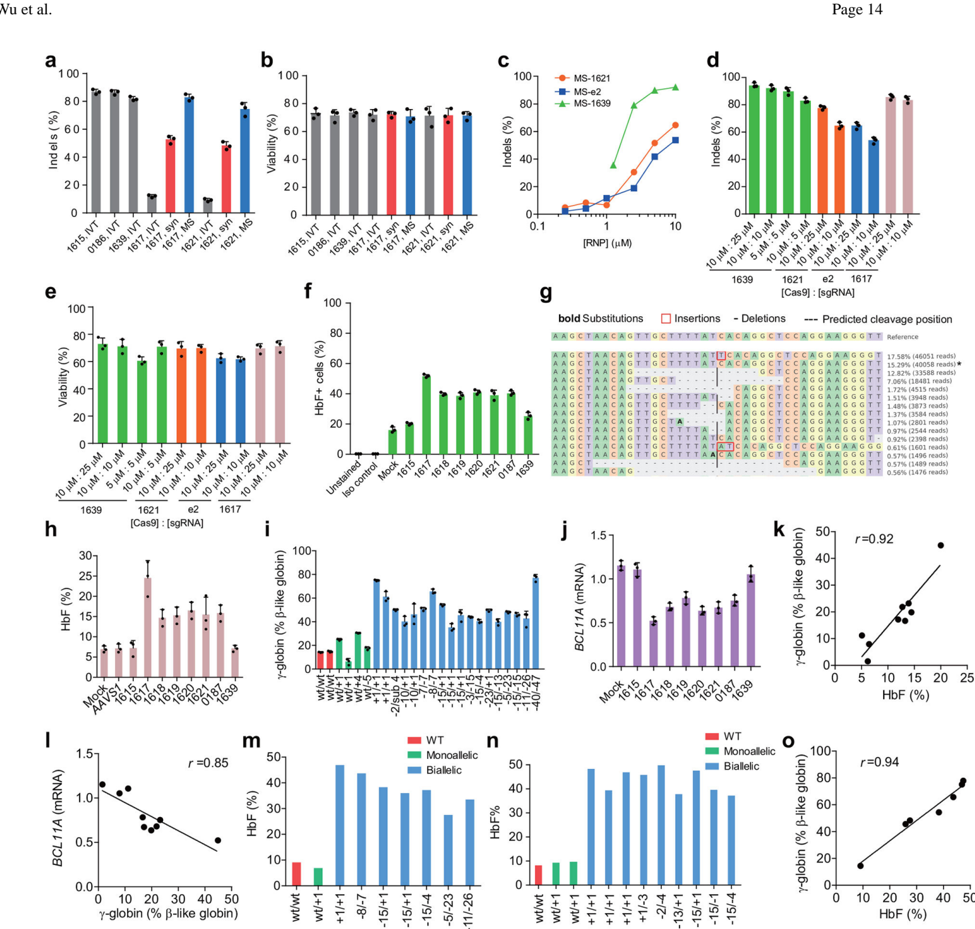
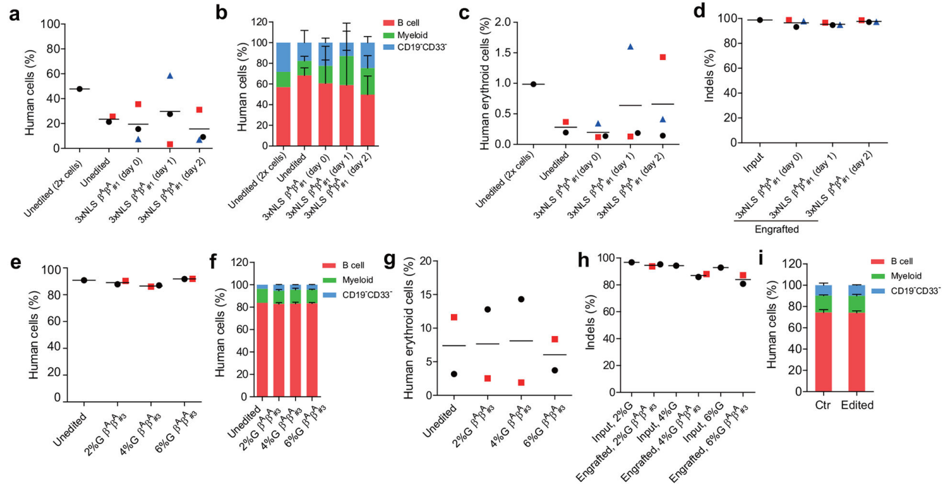
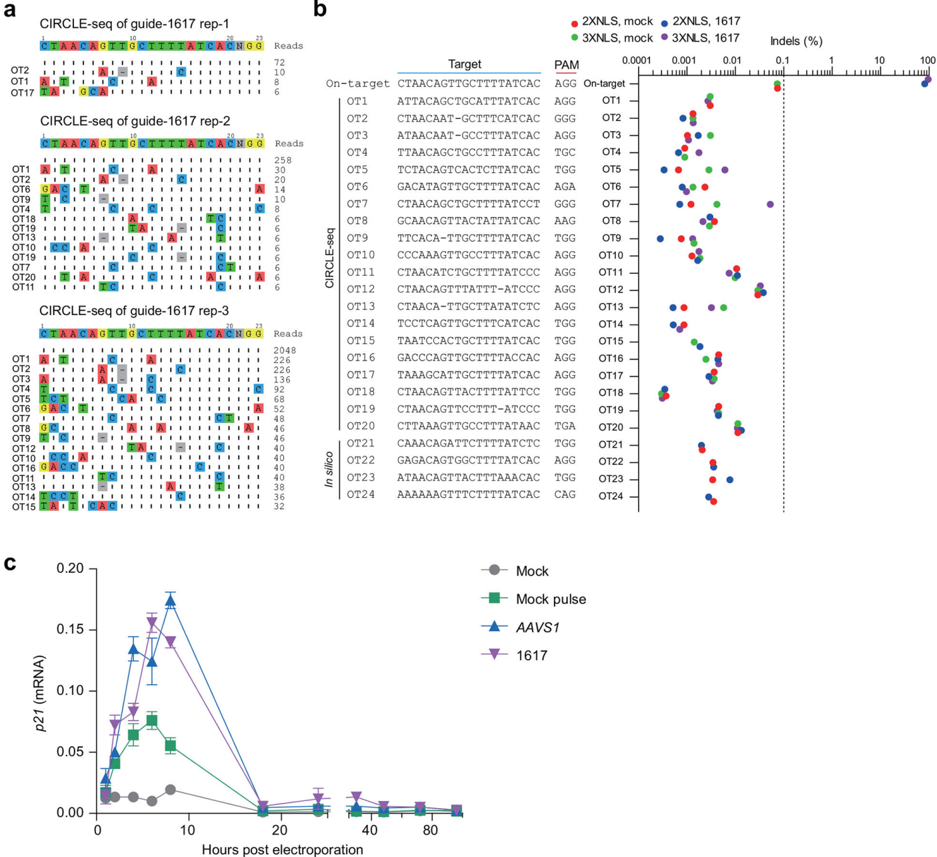
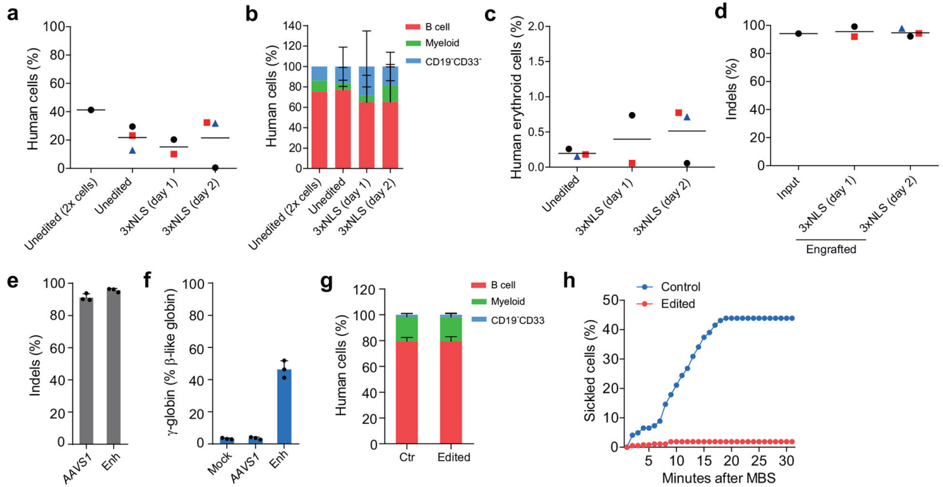
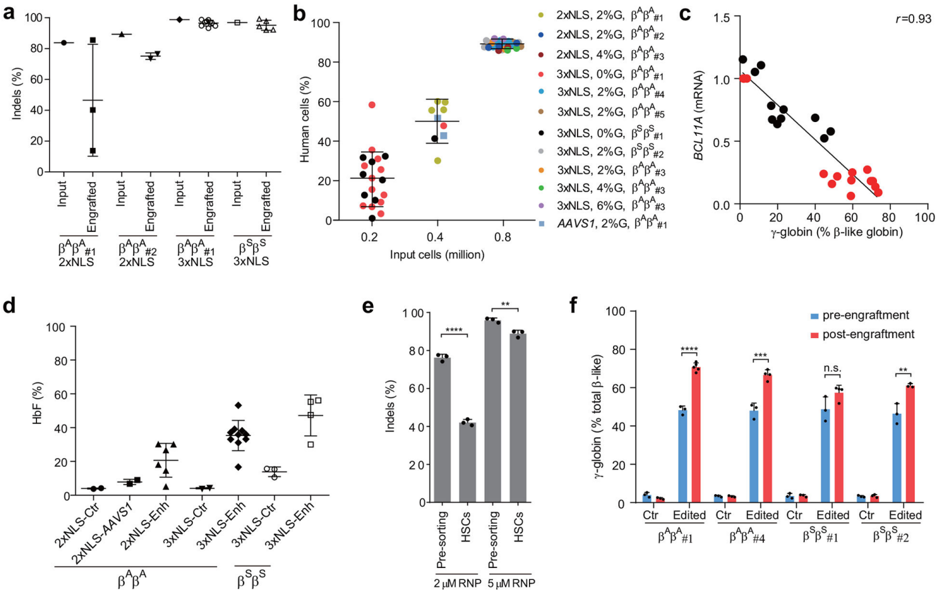
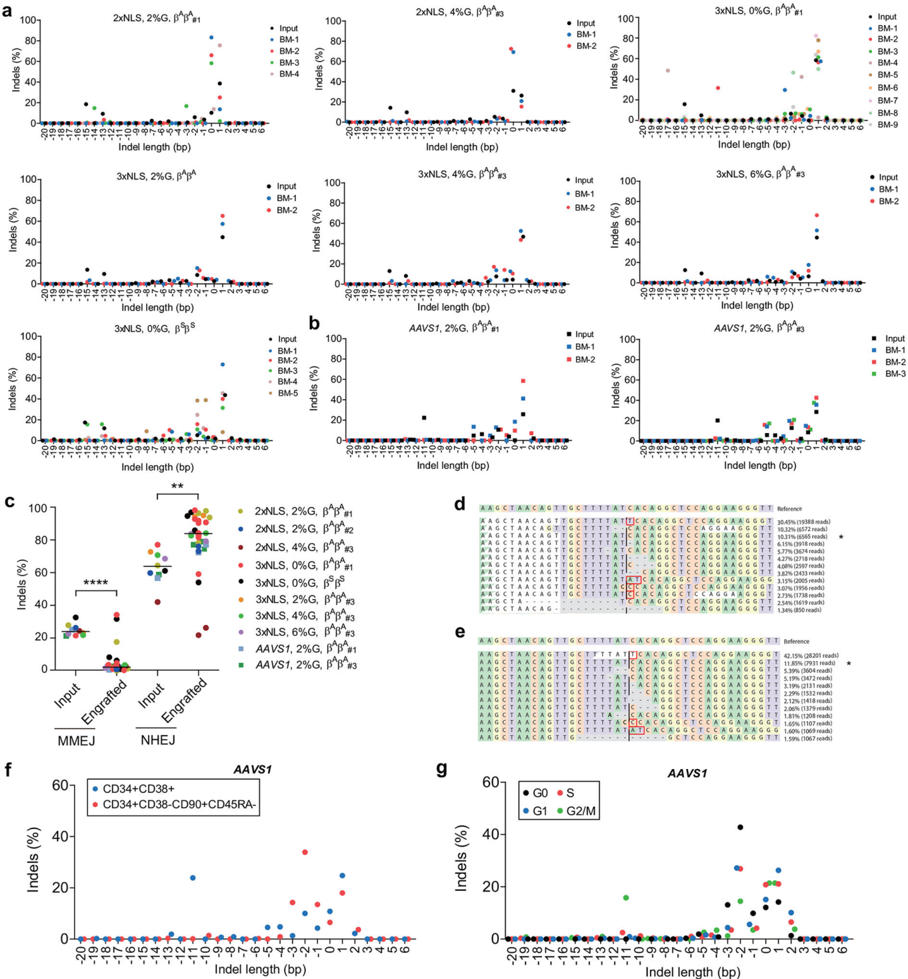
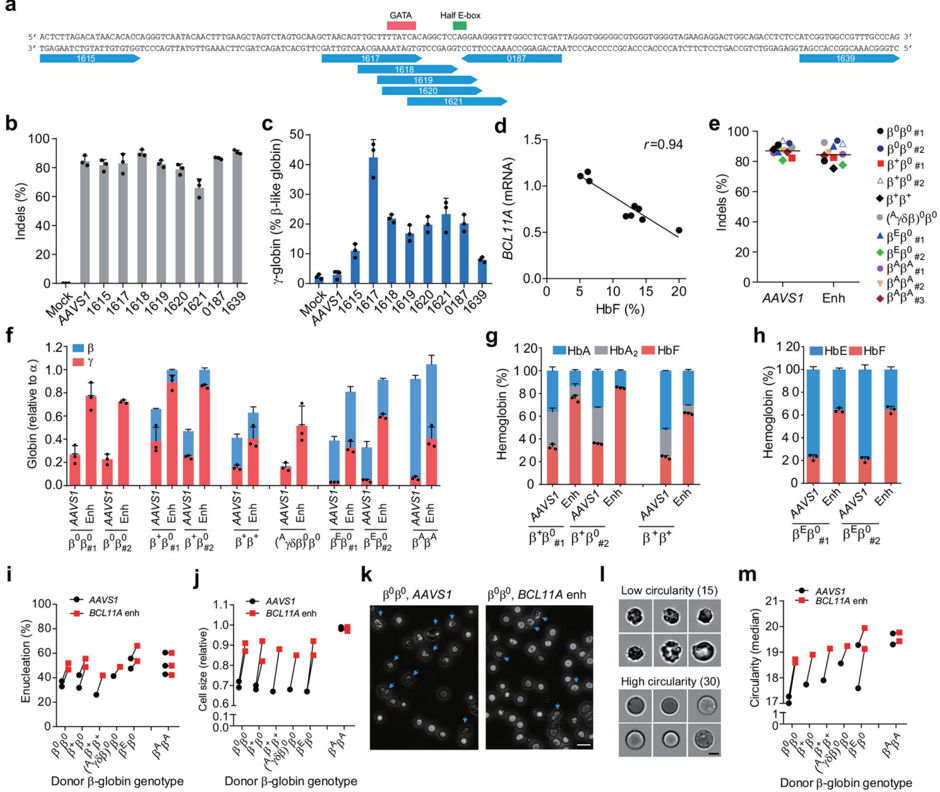
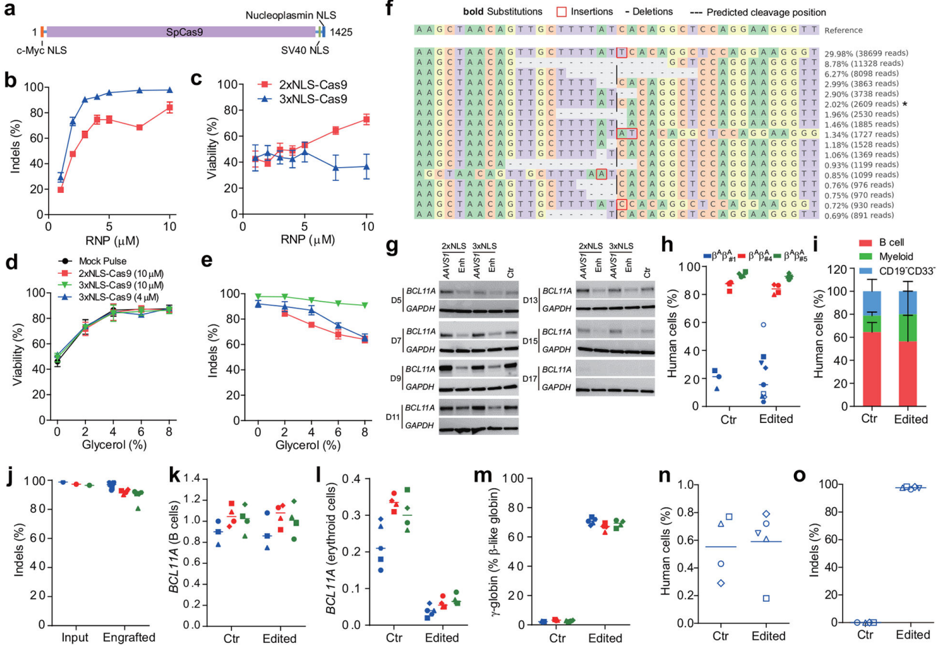
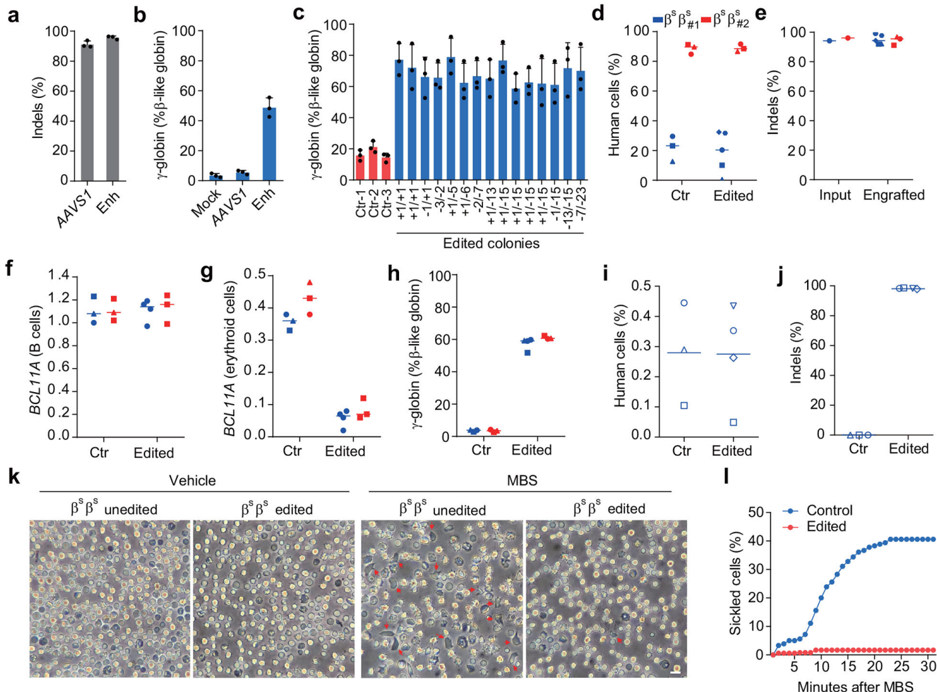
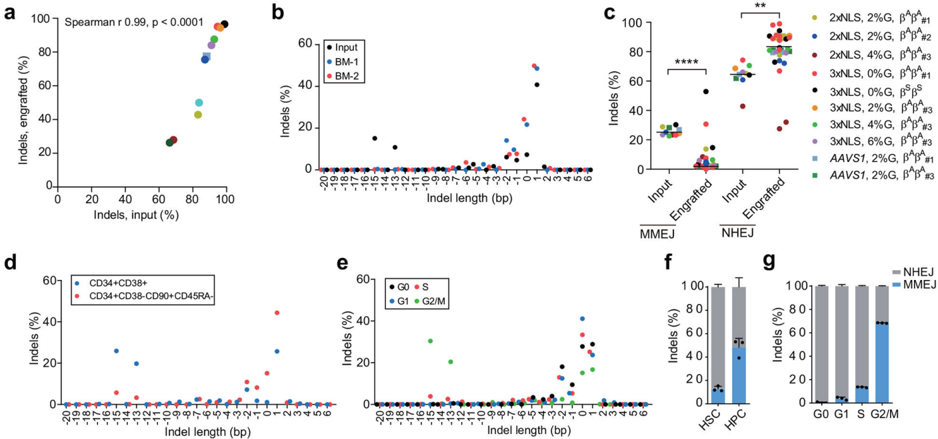
Re-expression of the paralogous γ-globin genes (HBG1/2) could be a universal strategy to ameliorate the severe β-globin disorders sickle cell disease (SCD) and β-thalassemia by induction of fetal hemoglobin (HbF, α2γ2)1. Previously, we and others have shown that core sequences at the BCL11A erythroid enhancer are required for repression of HbF in adult-stage erythroid cells but are dispensable in non-erythroid cells2–6. CRISPR–Cas9-mediated gene modification has demonstrated variable efficiency, specificity, and persistence in hematopoietic stem cells (HSCs). Here, we demonstrate that Cas9:sgRNA ribonucleoprotein (RNP)-mediated cleavage within a GATA1 binding site at the +58 BCL11A erythroid enhancer results in highly penetrant disruption of this motif, reduction of BCL11A expression, and induction of fetal γ-globin. We optimize conditions for selection-free on-target editing in patient-derived HSCs as a nearly complete reaction lacking detectable genotoxicity or deleterious impact on stem cell function. HSCs preferentially undergo non-homologous compared with microhomology-mediated end joining repair. Erythroid progeny of edited engrafting SCD HSCs express therapeutic levels of HbF and resist sickling, while those from patients with β-thalassemia show restored globin chain balance. Non-homologous end joining repair-based BCL11A enhancer editing approaching complete allelic disruption in HSCs is a practicable therapeutic strategy to produce durable HbF induction. Optimized co…
Overview
The claims and statistics of this paper haven’t been checked yet.
Free: it reads the open-access text and checks the first 5 claims that cite a source we can check. Create a free account to check every claim.
Integrity signals
Registry
Cites
Statistics
Figures
Verification
Claims the paper makes
The claims and statistics of this paper haven’t been checked yet.
Free: it reads the open-access text and checks the first 5 claims that cite a source we can check. Create a free account to check every claim.
Claims other papers make about this one
Each is checked against this paper’s own text: does it say what the citing paper says it does?
The source backs part of the claim, not all of it — or backs it for a different population, condition or comparison.
In the citing paper
“Major progress in delivering to 44 and handling HPSCs has resulted in formidable efficiencies of mutation correction or mitigation 18,45-47 that are expected to be curative.”
From The promise and challenge of therapeutic genome editing (2020) · cites this paper as [47]
Experimental — accuracy not yet measuredThe source backs part of the claim, not all of it — or backs it for a different population, condition or comparison.
In the citing paper
“Subsequent experiments showed that p53 inactivation can be controlled or avoided through protocol optimization 47,107 .”
From The promise and challenge of therapeutic genome editing (2020) · cites this paper as [47]
Experimental — accuracy not yet measuredThe source backs part of the claim, not all of it — or backs it for a different population, condition or comparison.
In the citing paper
“Although gene therapy has been slow to evolve since its early introduction, recent advances in gene editing are reinvigorating approaches to treat disorders by manipulation of the underlying genetic defects156.”
From A brief history of human disease genetics (2020) · cites this paper as [156]
Experimental — accuracy not yet measured
Self-check
Percentages, sums and reported differences re-computed from the paper’s own numbers.
The self-check needs the paper’s full text.
Citations
Cites
Kosicki, M., Tomberg, K., & Bradley, A. (2018) · Nature Biotechnology · doi:10.1038/nbt.4192 · Cited by 1,883
Kim, S., Kim, D., Cho, S. W., Kim, J., & Kim, J.-S. (2014) · Genome Research · doi:10.1101/gr.171322.113 · Cited by 1,856
CRISPR–Cas9 genome editing induces a p53-mediated DNA damage response
Haapaniemi, E., Botla, S., Persson, J., Schmierer, B., & Taipale, J. (2018) · Nature Medicine · doi:10.1038/s41591-018-0049-z · Cited by 1,264
Enhanced homology-directed human genome engineering by controlled timing of CRISPR/Cas9 delivery
Lin, S., Staahl, B. T., Alla, R. K., & Doudna, J. A. (2014) · eLife · doi:10.7554/elife.04766 · Cited by 1,189
Chemically modified guide RNAs enhance CRISPR-Cas genome editing in human primary cells
Hendel, A., Bak, R. O., Clark, J. T., Kennedy, A. B., Ryan, D. E., Roy, S., Steinfeld, I., Lunstad, B. D., Kaiser, R. J., Wilkens, A. B., et al. (2015) · Nature Biotechnology · doi:10.1038/nbt.3290 · Cited by 1,090
p53 inhibits CRISPR–Cas9 engineering in human pluripotent stem cells
Ihry, R. J., Worringer, K. A., Salick, M. R., Frias, E., Ho, D., Theriault, K., Kommineni, S., Chen, J., Sondey, M., Ye, C., et al. (2018) · Nature Medicine · doi:10.1038/s41591-018-0050-6 · Cited by 978
BCL11A enhancer dissection by Cas9-mediated in situ saturating mutagenesis
Canver, M. C., Smith, E. C., Sher, F., Pinello, L., Sanjana, N. E., Shalem, O., Chen, D. D., Schupp, P. G., Vinjamur, D. S., Garcia, S. P., et al. (2015) · Nature · doi:10.1038/nature15521 · Cited by 886
Self-citationTsai, S.-F., Martin, D. I. K., Zon, L. I., D'Andrea, A. D., Wong, G. G., & Orkin, S. H. (1989) · Nature · doi:10.1038/339446a0 · Cited by 885
Self-citationCRISPR/Cas9 β-globin gene targeting in human haematopoietic stem cells
Dever, D. P., Bak, R. O., Reinisch, A., Camarena, J., Washington, G., Nicolas, C. E., Pavel-Dinu, M., Saxena, N., Wilkens, A. B., Mantri, S., et al. (2016) · Nature · doi:10.1038/nature20134 · Cited by 864
Improving genetic diagnosis in Mendelian disease with transcriptome sequencing
Cummings, B. B., Marshall, J. L., Tukiainen, T., Lek, M., Donkervoort, S., Foley, A. R., Bolduc, V., Waddell, L. B., Sandaradura, S. A., O’Grady, G. L., et al. (2017) · Science Translational Medicine · doi:10.1126/scitranslmed.aal5209 · Cited by 831
Research works printed but not linked: 1
- Lin, S., Staahl, B., Alla, R. K. & Doudna, J. A. Enhanced homology-directed human genome engineering by controlled timing of CRISPR/Cas9 delivery. Elife 3, 1–13 (2014).
Cited by
CRISPR-Cas9 Gene Editing for Sickle Cell Disease and β-Thalassemia
Frangoul, H., Altshuler, D., Cappellini, M. D., Chen, Y.-S., Domm, J., Eustace, B. K., Foell, J., de la Fuente, J., Grupp, S., Handgretinger, R., et al. (2021) · New England Journal of Medicine · doi:10.1056/nejmoa2031054 · Cited by 1,962
The next generation of CRISPR–Cas technologies and applications
Pickar-Oliver, A., & Gersbach, C. A. (2019) · Nature Reviews Molecular Cell Biology · doi:10.1038/s41580-019-0131-5 · Cited by 1,459
Unconstrained genome targeting with near-PAMless engineered CRISPR-Cas9 variants
Walton, R. T., Christie, K. A., Whittaker, M. N., & Kleinstiver, B. P. (2020) · Science · doi:10.1126/science.aba8853 · Cited by 1,233
The promise and challenge of therapeutic genome editing
Doudna, J. A. (2020) · Nature · doi:10.1038/s41586-020-1978-5 · Cited by 1,126
Richter, M. F., Zhao, K. T., Eton, E., Lapinaite, A., Newby, G. A., Thuronyi, B. W., Wilson, C., Koblan, L. W., Zeng, J., Bauer, D. E., et al. (2020) · Nature Biotechnology · doi:10.1038/s41587-020-0453-z · Cited by 1,020
Self-citationCRISPR/Cas9 therapeutics: progress and prospects
Li, T., Yang, Y., Qi, H., Cui, W., Zhang, L., Fu, X., He, X., Liu, M., Li, P.-F., & Yu, T. (2023) · Signal Transduction and Targeted Therapy · doi:10.1038/s41392-023-01309-7 · Cited by 719
“used CRISPR/Cas9 to cleave the BCL11A enhancer sequence in HSCs and successfully downregulated its expression without inducing significant side effects.(296) In December 2020, clinical data were released for a gene therapy called CTX001, a one-time therapy for SCD and TDT developed by CRISPR Therapeutics in associatio…”
MethodA brief history of human disease genetics
Claussnitzer, M., Cho, J. H., Collins, R., Cox, N. J., Dermitzakis, E. T., Hurles, M. E., Kathiresan, S., Kenny, E. E., Lindgren, C. M., MacArthur, D. G., et al. (2020) · Nature · doi:10.1038/s41586-019-1879-7 · Cited by 697
Chromothripsis as an on-target consequence of CRISPR–Cas9 genome editing
Leibowitz, M. L., Papathanasiou, S., Doerfler, P. A., Blaine, L. J., Sun, L., Yao, Y., Zhang, C.-Z., Weiss, M. J., & Pellman, D. (2021) · Nature Genetics · doi:10.1038/s41588-021-00838-7 · Cited by 583
“Some CD34 + HSPC editing protocols appear to favor quiescent or G1 HSCs, whereas other protocols cause a higher frequency of editing in cycling or G2 HSCs, sometimes unintentionally 5,8,72,79–81 .”
Strategies in the delivery of Cas9 ribonucleoprotein for CRISPR/Cas9 genome editing
Zhang, S., Shen, J., Li, D., & Cheng, Y. (2021) · Theranostics · doi:10.7150/thno.47007 · Cited by 430
Xu, Y., & Li, Z. (2020) · Computational and Structural Biotechnology Journal · doi:10.1016/j.csbj.2020.08.031 · Cited by 404
Base editing of haematopoietic stem cells rescues sickle cell disease in mice
Newby, G. A., Yen, J. S., Woodard, K. J., Mayuranathan, T., Lazzarotto, C. R., Li, Y., Sheppard-Tillman, H., Porter, S. N., Yao, Y., Mayberry, K., et al. (2021) · Nature · doi:10.1038/s41586-021-03609-w · Cited by 386
Self-citationThe once and future gene therapy
Bulaklak, K., & Gersbach, C. A. (2020) · Nature Communications · doi:10.1038/s41467-020-19505-2 · Cited by 321
Cas9 activates the p53 pathway and selects for p53-inactivating mutations
Enache, O. M., Rendo, V., Abdusamad, M., Lam, D., Davison, D., Pal, S., Currimjee, N., Hess, J., Pantel, S., Nag, A., et al. (2020) · Nature Genetics · doi:10.1038/s41588-020-0623-4 · Cited by 285
Therapeutic base editing of human hematopoietic stem cells
Zeng, J., Wu, Y., Ren, C., Bonanno, J., Shen, A. H., Shea, D., Gehrke, J. M., Clement, K., Luk, K., Yao, Q., et al. (2020) · Nature Medicine · doi:10.1038/s41591-020-0790-y · Cited by 283
Self-citationNext-generation stem cells — ushering in a new era of cell-based therapies
Kimbrel, E. A., & Lanza, R. (2020) · Nature Reviews Drug Discovery · doi:10.1038/s41573-020-0064-x · Cited by 275
Improved prime editors enable pathogenic allele correction and cancer modelling in adult mice
Liu, P., Liang, S.-Q., Zheng, C., Mintzer, E., Zhao, Y. G., Ponnienselvan, K., Mir, A., Sontheimer, E. J., Gao, G., Flotte, T. R., et al. (2021) · Nature Communications · doi:10.1038/s41467-021-22295-w · Cited by 273
“PiZ mice Precise Editing Indel K342E correction (via A•T-to-G•C) in mice U1A Cas9 (H840A)-N terminal (1-713) pAAV-PE2-N”
BackgroundSelf-citationNeugebauer, M. E., Hsu, A., Arbab, M., Krasnow, N. A., McElroy, A. N., Pandey, S., Doman, J. L., Huang, T. P., Raguram, A., Banskota, S., et al. (2023) · Nature Biotechnology · doi:10.1038/s41587-022-01533-6 · Cited by 272
Gene therapy using haematopoietic stem and progenitor cells
Ferrari, G., Thrasher, A. J., & Aiuti, A. (2021) · Nature Reviews Genetics · doi:10.1038/s41576-020-00298-5 · Cited by 254
Advances in stem cell research and therapeutic development
De Luca, M., Aiuti, A., Cossu, G., Parmar, M., Pellegrini, G., & Robey, P. G. (2019) · Nature Cell Biology · doi:10.1038/s41556-019-0344-z · Cited by 239
Mitigation of chromosome loss in clinical CRISPR-Cas9-engineered T cells
Tsuchida, C. A., Brandes, N., Bueno, R., Trinidad, M., Mazumder, T., Yu, B., Hwang, B., Chang, C., Liu, J., Sun, Y., et al. (2023) · Cell · doi:10.1016/j.cell.2023.08.041 · Cited by 209
In vivo somatic cell base editing and prime editing
Newby, G. A., & Liu, D. R. (2021) · Molecular Therapy · doi:10.1016/j.ymthe.2021.09.002 · Cited by 199
Various Aspects of a Gene Editing System—CRISPR–Cas9
Janik, E., Niemcewicz, M., Ceremuga, M., Krzowski, L., Saluk-Bijak, J., & Bijak, M. (2020) · International Journal of Molecular Sciences · doi:10.3390/ijms21249604 · Cited by 197
“This strategy is therapeutically feasible regarding producing stable fetal hemoglobin induction [81].”
BackgroundThe road ahead in genetics and genomics
McGuire, A. L., Gabriel, S., Tishkoff, S. A., Wonkam, A., Chakravarti, A., Furlong, E. E. M., Treutlein, B., Meissner, A., Chang, H. Y., López-Bigas, N., et al. (2020) · Nature Reviews Genetics · doi:10.1038/s41576-020-0272-6 · Cited by 188
Rational designs of in vivo CRISPR-Cas delivery systems
Xu, C.-F., Chen, G.-J., Luo, Y.-L., Zhang, Y., Zhao, G., Lu, Z.-D., Czarna, A., Gu, Z., & Wang, J. (2021) · Advanced Drug Delivery Reviews · doi:10.1016/j.addr.2019.11.005 · Cited by 184
Fu, B., Liao, J., Chen, S., Li, W., Wang, Q., Hu, J., Yang, F., Hsiao, S., Jiang, Y., Wang, L., et al. (2022) · Nature Medicine · doi:10.1038/s41591-022-01906-z · Cited by 181
Self-citationFu, Y.-W., Dai, X.-Y., Wang, W.-T., Yang, Z.-X., Zhao, J.-J., Zhang, J.-P., Wen, W., Zhang, F., Oberg, K. C., Zhang, L., et al. (2021) · Nucleic Acids Research · doi:10.1093/nar/gkaa1251 · Cited by 180
“We selected these sites based on their potential clinical interest and differential expression levels in the different cell types (52,53).”
MethodGenome editing of HBG1 and HBG2 to induce fetal hemoglobin
Métais, J.-Y., Doerfler, P. A., Mayuranathan, T., Bauer, D. E., Fowler, S. C., Hsieh, M. M., Katta, V., Keriwala, S., Lazzarotto, C. R., Luk, K., et al. (2019) · Blood Advances · doi:10.1182/bloodadvances.2019000820 · Cited by 177
“However, our data using newly developed Cas9-3xNLS suggest that consistent high-level editing of theHBG1/HBG2 promoters in repopulating HSCs can now be achieved, similar to what was recently reported for an erythroidspecific enhancer in the BCL11A gene.(35) Third, our study provides critical new preclinical safety ass…”
MethodResultSelf-citationPiel, F. B., Rees, D. C., DeBaun, M. R., Nnodu, O., Ranque, B., Thompson, A. A., Ware, R. E., Abboud, M. R., Abraham, A., Ambrose, E. E., et al. (2023) · The Lancet Haematology · doi:10.1016/s2352-3026(23)00096-0 · Cited by 177
Self-citationAdvances in CRISPR/Cas-based Gene Therapy in Human Genetic Diseases
Wu, S.-S., Li, Q.-C., Yin, C.-Q., Xue, W., & Song, C.-Q. (2020) · Theranostics · doi:10.7150/thno.43360 · Cited by 131
“This strategy is therapeutically practicable to produce durable fetal hemoglobin induction [50-52] (Table 2).”
BackgroundInfluentialRNA‐based medicine: from molecular mechanisms to therapy
Sparmann, A., & Vogel, J. (2023) · The EMBO Journal · doi:10.15252/embj.2023114760 · Cited by 157
“Instead, it seeks to disrupt an erythroid-specific enhancer region of BCL11A, a transcription factor that represses expression of fetal hemoglobin (Canver et al , 2015; Wu et al , 2019).”
Peptide-mediated delivery of CRISPR enzymes for the efficient editing of primary human lymphocytes
Foss, D. V., Muldoon, J. J., Nguyen, D. N., Carr, D., Sahu, S. U., Hunsinger, J. M., Wyman, S. K., Krishnappa, N., Mendonsa, R., Schanzer, E. V., et al. (2023) · Nature Biomedical Engineering · doi:10.1038/s41551-023-01032-2 · Cited by 150
Wei, T., Cheng, Q., Farbiak, L., Anderson, D. G., Langer, R., & Siegwart, D. J. (2020) · ACS Nano · doi:10.1021/acsnano.0c04707 · Cited by 135
The Role of Noncoding Variants in Heritable Disease
French, J. D., & Edwards, S. L. (2020) · Trends in Genetics · doi:10.1016/j.tig.2020.07.004 · Cited by 146
“For example, the identification of a BCL11A enhancer through a GWAS for fetal hemoglobin levels has led to a promising new therapy for sickle cell disease and β-thalassemia [91].”
BackgroundCell‐Based Delivery Systems: Emerging Carriers for Immunotherapy
Li, Z., Wang, Y., Ding, Y., Repp, L., Kwon, G. S., & Hu, Q. (2021) · Advanced Functional Materials · doi:10.1002/adfm.202100088 · Cited by 146
CRISPR-Based Gene Therapies: From Preclinical to Clinical Treatments
Laurent, M., Geoffroy, M., Pavani, G., & Guiraud, S. (2024) · Cells · doi:10.3390/cells13100800 · Cited by 150
“Among these, the DHS at +58 kb is crucial for BCL11a expression in erythroid cells [49,50].”
BackgroundCRISPR/Cas9 gene editing for curing sickle cell disease
Park, S. H., & Bao, G. (2021) · Transfusion and Apheresis Science · doi:10.1016/j.transci.2021.103060 · Cited by 145
“The persistence of BCL11A enhancer edited cells suggests that the NHEJmediated gene disruption strategy could be more efficient over other gene-editing strategies relying on HDR or MMEJ.”
BackgroundInfluentialWeber, L., Frati, G., Felix, T., Hardouin, G., Casini, A., Wollenschlaeger, C., Meneghini, V., Masson, C., De Cian, A., Chalumeau, A., et al. (2020) · Science Advances · doi:10.1126/sciadv.aay9392 · Cited by 140
“Previous reports have suggested that HSCs, the target of therapeutic genome editing, are preferentially edited via the NHEJ mechanism (24, 25).”
BackgroundInfluentialDictys: dynamic gene regulatory network dissects developmental continuum with single-cell multiomics
Wang, L., Trasanidis, N., Wu, T., Dong, G., Hu, M., Bauer, D. E., & Pinello, L. (2023) · Nature Methods · doi:10.1038/s41592-023-01971-3 · Cited by 135
Self-citationHuman genetic diversity alters off-target outcomes of therapeutic gene editing
Cancellieri, S., Zeng, J., Lin, L. Y., Tognon, M., Nguyen, M. A., Lin, J., Bombieri, N., Maitland, S. A., Ciuculescu, M.-F., Katta, V., et al. (2022) · Nature Genetics · doi:10.1038/s41588-022-01257-y · Cited by 133
Self-citationEx vivo cell-based CRISPR/Cas9 genome editing for therapeutic applications
Li, Y., Glass, Z., Huang, M., Chen, Z., & Xu, Q. (2020) · Biomaterials · doi:10.1016/j.biomaterials.2019.119711 · Cited by 128
Microfluidic fabrication of lipid nanoparticles for the delivery of nucleic acids
Prakash, G., Shokr, A., Willemen, N. G. A., Bashir, S. M., Shin, S. R., & Hassan, S. (2022) · Advanced Drug Delivery Reviews · doi:10.1016/j.addr.2022.114197 · Cited by 126
Kluesner, M. G., Lahr, W. S., Lonetree, C.-L., Smeester, B. A., Qiu, X., Slipek, N. J., Claudio Vázquez, P. N., Pitzen, S. P., Pomeroy, E. J., Vignes, M. J., et al. (2021) · Nature Communications · doi:10.1038/s41467-021-22009-2 · Cited by 121
Precise therapeutic gene correction by a simple nuclease-induced double-stranded break
Iyer, S., Suresh, S., Guo, D., Daman, K., Chen, J. C. J., Liu, P., Zieger, M., Luk, K., Roscoe, B. P., Mueller, C., et al. (2019) · Nature · doi:10.1038/s41586-019-1076-8 · Cited by 111
Self-citationRational targeting of a NuRD subcomplex guided by comprehensive in situ mutagenesis
Sher, F., Hossain, M., Seruggia, D., Schoonenberg, V. A. C., Yao, Q., Cifani, P., Dassama, L. M. K., Cole, M. A., Ren, C., Vinjamur, D. S., et al. (2019) · Nature Genetics · doi:10.1038/s41588-019-0453-4 · Cited by 111
Self-citationIdentification of non-coding silencer elements and their regulation of gene expression
Pang, B., van Weerd, J. H., Hamoen, F. L., & Snyder, M. P. (2022) · Nature Reviews Molecular Cell Biology · doi:10.1038/s41580-022-00549-9 · Cited by 120
Humbert, O., Radtke, S., Samuelson, C., Carrillo, R. R., Perez, A. M., Reddy, S. S., Lux, C., Pattabhi, S., Schefter, L. E., Negre, O., et al. (2019) · Science Translational Medicine · doi:10.1126/scitranslmed.aaw3768 · Cited by 111
“Our findings demonstrating stable and high frequencies of in vivo editing will be valuable for other editing strategies aimed at HbF reactivation, such as knocking down the HbF repressor BCL11A exclusively in the erythroid lineage using lentiviral delivery of short hairpin RNA (29) or disrupting the BCL11A intronic en…”
BackgroundResultInfluentialImproved Nucleic Acid Therapy with Advanced Nanoscale Biotechnology
Weng, Y., Huang, Q., Li, C., Yang, Y., Wang, X., Yu, J., Huang, Y., & Liang, X.-J. (2020) · Molecular Therapy - Nucleic Acids · doi:10.1016/j.omtn.2019.12.004 · Cited by 107
Efficient engineering of human and mouse primary cells using peptide-assisted genome editing
Zhang, Z., Baxter, A. E., Ren, D., Qin, K., Chen, Z., Collins, S. M., Huang, H., Komar, C. A., Bailer, P. F., Parker, J. B., et al. (2023) · Nature Biotechnology · doi:10.1038/s41587-023-01756-1 · Cited by 117
Lentiviral and genome-editing strategies for the treatment of β-hemoglobinopathies
Magrin, E., Miccio, A., & Cavazzana, M. (2019) · Blood · doi:10.1182/blood.2019000949 · Cited by 114
The Promise and the Hope of Gene Therapy
Papanikolaou, E., & Bosio, A. (2021) · Frontiers in Genome Editing · doi:10.3389/fgeed.2021.618346 · Cited by 114
“, 2013), and a follow-up study employing genome editing proved that targeted disruption of the critical GATA1 binding motif within the+58 intronic BCL11A enhancer leads to indel generation and thereby to reduced BCL11A expression with associated induction of γ-globin expression in erythroid cells (Wu et al., 2019).”
BackgroundRozas, P., Kessi‐Pérez, E. I., & Martínez, C. (2022) · Biological Research · doi:10.1186/s40659-022-00399-x · Cited by 112
Gene therapy for sickle cell disease: moving from the bench to the bedside
Abraham, A., & Tisdale, J. F. (2021) · Blood · doi:10.1182/blood.2019003776 · Cited by 111
RANKL-responsive epigenetic mechanism reprograms macrophages into bone-resorbing osteoclasts
Bae, S., Kim, K., Kang, K., Kim, H., Lee, M. J., Oh, B., Kaneko, K., Ma, S., Choi, J., Kwak, H., et al. (2022) · Cellular and Molecular Immunology · doi:10.1038/s41423-022-00959-x · Cited by 108
“Advances in gene editing technology, such as CRISPR‒Cas9, have enabled direct manipulation of SEs in human cells [88, 89].”
BackgroundSmall-Molecule PAPD5 Inhibitors Restore Telomerase Activity in Patient Stem Cells
Nagpal, N., Wang, J., Zeng, J., Lo, E., Moon, D. H., Luk, K., Braun, R. O., Burroughs, L. M., Keel, S. B., Reilly, C., et al. (2020) · Cell Stem Cell · doi:10.1016/j.stem.2020.03.016 · Cited by 105
“RNP electroporation-: 3xNLS-SpCas9 was prepared as described (Wu et al., 2019).”
MethodInfluentialSelf-citationPavani, G., Fabiano, A., Laurent, M., Amor, F., Cantelli, E., Chalumeau, A., Maule, G., Tachtsidi, A., Concordet, J., Cereseto, A., et al. (2021) · Blood Advances · doi:10.1182/bloodadvances.2020001996 · Cited by 104
Park, S. H., Cao, M., Pan, Y., Davis, T. H., Saxena, L., Deshmukh, H., Fu, Y., Treangen, T., Sheehan, V. A., & Bao, G. (2022) · Science Advances · doi:10.1126/sciadv.abo7676 · Cited by 93
“Furthermore, CRISPR-Cas9–based disruption of the BCL11A erythroid enhancer region has been used to induce HbF in human HSCs for treating SCD ( 28 , 36 ).”
InfluentialMolecular Basis and Genetic Modifiers of Thalassemia
Tesio, N., & Bauer, D. E. (2023) · Hematology/Oncology Clinics of North America · doi:10.1016/j.hoc.2022.12.001 · Cited by 103
Self-citationLi, C., Georgakopoulou, A., Mishra, A., Gil, S., Hawkins, R. D., Yannaki, E., & Lieber, A. (2021) · Blood Advances · doi:10.1182/bloodadvances.2020003702 · Cited by 101
“Although direct BCL11A knockout is not possible because of its developmentally indispensable roles, partial downregulation of BCL11A by editing its erythroid-specific enhancer allows for efficient g-globin induction without significant side effects.(20,21) This result has been demonstrated by ex vivo transfection of h…”
BackgroundTissue-restricted genome editing in vivo specified by microRNA-repressible anti-CRISPR proteins
Lee, J., Mou, H., Ibraheim, R., Liang, S.-Q., Liu, P., Xue, W., & Sontheimer, E. J. (2019) · RNA · doi:10.1261/rna.071704.119 · Cited by 100
Self-citationBase and Prime Editing Technologies for Blood Disorders
Antoniou, P., Miccio, A., & Brusson, M. (2021) · Frontiers in Genome Editing · doi:10.3389/fgeed.2021.618406 · Cited by 84
“As NHEJ is an active DNA repair pathway in HSCs, NHEJbased strategies are highly efficient (Wu et al., 2019; Weber et al., 2020).”
BackgroundRoman‐Rodriguez, F. J., Ugalde, L., Alvarez, L. A., Díez, B., Ramírez, M. J., Risueño, C., Cortón, M., Bogliolo, M., Bernal, S., March, F., et al. (2019) · Cell stem cell · doi:10.1016/j.stem.2019.08.016 · Cited by 100
CRISPR-enhanced human adipocyte browning as cell therapy for metabolic disease
Tsagkaraki, E., Nicoloro, S. M. C., DeSouza, T., Solivan-Rivera, J., Desai, A., Lifshitz, L. M., Shen, Y., Kelly, M., Guilherme, A., Henriques, F. D. S., et al. (2021) · Nature Communications · doi:10.1038/s41467-021-27190-y · Cited by 99
Self-citationEngineering Gene Therapy: Advances and Barriers
Shahryari, A., Burtscher, I., Nazari, Z., & Lickert, H. (2021) · Advanced Therapeutics · doi:10.1002/adtp.202100040 · Cited by 81
Current approaches in CRISPR-Cas9 mediated gene editing for biomedical and therapeutic applications
Bhattacharjee, G., Gohil, N., Khambhati, K., Mani, I., Maurya, R., Karapurkar, J. K., Gohil, J., Chu, D., Vu‐Thi, H., Alzahrani, K. J., et al. (2022) · Journal of Controlled Release · doi:10.1016/j.jconrel.2022.02.005 · Cited by 96
Allen, D. G., Rosenberg, M., & Hendel, A. (2021) · Frontiers in Genome Editing · doi:10.3389/fgeed.2020.617910 · Cited by 95
Shin, J. J., Schröder, M., Caiado, F., Wyman, S. K., Bray, N., Bordi, M., DeWitt, M. A., Vu, J. T., Kim, W., Hockemeyer, D. F., et al. (2020) · Cell Reports · doi:10.1016/j.celrep.2020.108093 · Cited by 95
“NHEJ is well-represented in long-term engrafting HSCs during genome editing (Dever et al., 2016; DeWitt et al., 2016; Genovese et al., 2014b; Hoban et al., 2015; Wang et al., 2015; Wu et al., 2019), and here, we show by immunophenotyping and cell cycle analysis that HSCs in G0 are fully capable of accumulating NHEJ al…”
BackgroundInfluentialApplications of CRISPR-Cas9 as an Advanced Genome Editing System in Life Sciences
Tavakoli, K., Pour‐Aboughadareh, A., Kianersi, F., Poczai, P., Etminan, A., & Shooshtari, L. (2021) · BioTech · doi:10.3390/biotech10030014 · Cited by 94
Therapeutic adenine base editing of human hematopoietic stem cells
Liao, J., Chen, S., Hsiao, S., Jiang, Y., Yang, Y., Zhang, Y., Wang, X., Lai, Y., Bauer, D. E., & Wu, Y. (2023) · Nature Communications · doi:10.1038/s41467-022-35508-7 · Cited by 94
Self-citationYadav, A. K., Butler, C. D., Ah, Y., Patil, A. A., Lloyd, A. L., & Scott, M. J. (2023) · Proceedings of the National Academy of Sciences · doi:10.1073/pnas.2301525120 · Cited by 93
“Cas9 carrying multiple NLSs has been reported to show higher editing efficiencies in mammalian cells (89, 90).”
Potent and uniform fetal hemoglobin induction via base editing
Mayuranathan, T., Newby, G. A., Feng, R., Yao, Y., Mayberry, K. D., Lazzarotto, C. R., Li, Y., Levine, R. M., Nimmagadda, N., Dempsey, E., et al. (2023) · Nature Genetics · doi:10.1038/s41588-023-01434-7 · Cited by 93
Self-citationMultiplex base- and prime-editing with drive-and-process CRISPR arrays
Yuan, Q., & Gao, X. (2022) · Nature Communications · doi:10.1038/s41467-022-30514-1 · Cited by 90
ZNF410 represses fetal globin by singular control of CHD4
Vinjamur, D. S., Yao, Q., Cole, M. A., McGuckin, C., Ren, C., Zeng, J., Hossain, M. A., Luk, K., Wolfe, S. A., Pinello, L., et al. (2021) · Nature Genetics · doi:10.1038/s41588-021-00843-w · Cited by 89
Self-citationBoutin, J., Rosier, J., Cappellen, D., Prat, F., Toutain, J., Pennamen, P., Bouron, J., Rooryck, C., Merlio, J., Lamrissi‐Garcia, I., et al. (2021) · Nature Communications · doi:10.1038/s41467-021-25190-6 · Cited by 90
He, Y., Zhou, X., Chang, C., Chen, G., Liu, W., Li, G., Fan, X., Sun, M., Miao, C., Huang, Q., et al. (2024) · Molecular Cell · doi:10.1016/j.molcel.2024.01.021 · Cited by 75
Editing aberrant splice sites efficiently restores β-globin expression in β-thalassemia
Xu, S., Luk, K., Yao, Q., Shen, A. H., Zeng, J., Wu, Y., Luo, H., Brendel, C., Pinello, L., Chui, D. H. K., et al. (2019) · Blood · doi:10.1182/blood-2019-01-895094 · Cited by 88
Self-citationGene therapy of hemoglobinopathies: progress and future challenges
Ikawa, Y., Miccio, A., Magrin, E., Kwiatkowski, J. L., Rivella, S., & Cavazzana, M. (2019) · Human Molecular Genetics · doi:10.1093/hmg/ddz172 · Cited by 86
“treatment options for hemoglobinopathies (49).”
A Versatile Nonviral Delivery System for Multiplex Gene‐Editing in the Liver
Gong, J., Wang, H., Lao, Y., Hu, H., Vatan, N. M., Guo, J., Ho, T., Huang, D., Li, M., Shao, D., et al. (2020) · Advanced Materials · doi:10.1002/adma.202003537 · Cited by 84
Reactivation of γ-globin expression through Cas9 or base editor to treat β-hemoglobinopathies
Wang, L., Li, L., Ma, Y., Hu, H., Li, Q., Yang, Y., Liu, W., Yin, S., Li, W., Fu, B., et al. (2020) · Cell Research · doi:10.1038/s41422-019-0267-z · Cited by 82
Wen, W., Quan, Z.-J., Li, S.-A., Yang, Z.-X., Fu, Y.-W., Zhang, F., Li, G., Zhao, M., Yin, M., Xu, J., et al. (2021) · Genome biology · doi:10.1186/s13059-021-02462-4 · Cited by 81
“Primers for qPCR analysis of DNA fragment located 40–160 kb from the target site (BCL11A-1) were designed using the Primer3Plus.”
BackgroundInfluentialHuang, P., Peslak, S. A., Lan, X., Khandros, E., Yano, J. A., Sharma, M., Keller, C. A., Giardine, B. M., Qin, K., Abdulmalik, O. Y., et al. (2020) · Blood · doi:10.1182/blood.2020005301 · Cited by 81
Li, C., Wang, H., Georgakopoulou, A., Gil, S., Yannaki, E., & Lieber, A. (2020) · Molecular Therapy · doi:10.1016/j.ymthe.2020.09.001 · Cited by 80
Gene editing and its applications in biomedicine
Li, G., Li, X., Zhuang, S., Wang, L., Zhu, Y., Chen, Y., Sun, W. C., Wu, Z., Zhou, Z. L., Chen, J., et al. (2022) · Science China Life Sciences · doi:10.1007/s11427-021-2057-0 · Cited by 77
“In the CRISPR/Cas9 system, a crRNA and a trans-activating crRNA (tracrRNA) form a double-stranded RNA, which can be processed by RNase III, and then the mature crRNA/tracrRNA complex recruits Cas9 protein to form a ribonucleoprotein (RNP) complex (Gasiunas et al., 2012; Jinek et al., 2012).”
BackgroundMethodInfluentialCRISPR/Cas9 ribonucleoprotein-mediated genome and epigenome editing in mammalian cells
Bloomer, H., Khirallah, J., Li, Y., & Xu, Q. (2021) · Advanced Drug Delivery Reviews · doi:10.1016/j.addr.2021.114087 · Cited by 76
Genetic engineering meets hematopoietic stem cell biology for next-generation gene therapy
Ferrari, S., Valeri, E., Conti, A., Scala, S., Aprile, A., Di Micco, R., Kajaste-Rudnitski, A., Montini, E., Ferrari, G., Aiuti, A., et al. (2023) · Cell Stem Cell · doi:10.1016/j.stem.2023.04.014 · Cited by 70
Editing GWAS: experimental approaches to dissect and exploit disease-associated genetic variation
Rao, S., Yao, Y., & Bauer, D. E. (2021) · Genome Medicine · doi:10.1186/s13073-021-00857-3 · Cited by 67
“Currently, many strategies are available to deliver Cas proteins and other editors into cells, including plasmid transfection, viral delivery, RNP, and mRNA delivery, which holds promise for high editing efficiency in primary cells [120].”
BackgroundSelf-citationSui, B., Zheng, C., Zhao, W., Xuan, K., Li, B., & Jin, Y. J. (2023) · Physiological Reviews · doi:10.1152/physrev.00019.2022 · Cited by 75
Activation of γ-globin expression by hypoxia-inducible factor 1α
Feng, R., Mayuranathan, T., Huang, P., Doerfler, P. A., Li, Y., Yao, Y., Zhang, J., Palmer, L. E., Mayberry, K. D., Christakopoulos, G. E., et al. (2022) · Nature · doi:10.1038/s41586-022-05312-w · Cited by 74
Schimmel, J., Muñoz-Subirana, N., Kool, H., van Schendel, R., van der Vlies, S., Kamp, J. A., de Vrij, F. M. S., Kushner, S. A., Smith, G. C. M., Boulton, S. J., et al. (2023) · Cell Reports · doi:10.1016/j.celrep.2023.112019 · Cited by 74
Adenoviral vectors for in vivo delivery of CRISPR-Cas gene editors
Rice-Boucher, P. J., Cui, X., & Curiel, D. T. (2020) · Journal of Controlled Release · doi:10.1016/j.jconrel.2020.09.003 · Cited by 71
“The use of CRISPR-Cas to generate indels at specific locations in the beta-globin locus control region has been proven to be an elegant and efficient approach to achieve this switch [84].”
MethodThe power and the promise of CRISPR/Cas9 genome editing for clinical application with gene therapy
Guo, N., Liu, J., Li, W., Ma, Y., & Fu, D. (2021) · Journal of Advanced Research · doi:10.1016/j.jare.2021.11.018 · Cited by 70
“Furthermore, the treatment of SCD by CRISPR/Cas9 has entered clinical phases, including one clinical survey (NCT03167450) and five clinical trials[16] (NCT03655678, NCT04819841, NCT04208529, NCT03745287, NCT04774536) (from clinicaltrials.gov, accessed 2021 -Jun-09).”
BackgroundInfluentialAmplification-free long-read sequencing reveals unforeseen CRISPR-Cas9 off-target activity
Höijer, I., Johansson, J., Gudmundsson, S., Chin, C.-S., Bunikis, I., Häggqvist, S., Emmanouilidou, A., Wilbe, M., den Hoed, M., Bondeson, M.-L., et al. (2020) · Genome biology · doi:10.1186/s13059-020-02206-w · Cited by 70
Non-viral strategies for delivering genome editing enzymes
Li, J., Røise, J. J., He, M., Das, R., & Murthy, N. (2020) · Advanced Drug Delivery Reviews · doi:10.1016/j.addr.2020.09.004 · Cited by 68
Ponnienselvan, K., Liu, P., Nyalile, T., Oikemus, S., Maitland, S. A., Lawson, N. D., Luban, J., & Wolfe, S. A. (2023) · Nucleic Acids Research · doi:10.1093/nar/gkad456 · Cited by 68
Self-citationHematopoietic Stem Cell Gene-Addition/Editing Therapy in Sickle Cell Disease
Germino-Watnick, P., Hinds, M., Le, A., Chu, R., Liu, X., & Uchida, N. (2022) · Cells · doi:10.3390/cells11111843 · Cited by 68
Efficient Homology-Directed Repair with Circular Single-Stranded DNA Donors
Iyer, S., Mir, A., Vega‐Badillo, J., Roscoe, B. P., Ibraheim, R., Zhu, L. J., Lee, J., Liu, P., Luk, K., Mintzer, E., et al. (2022) · The CRISPR Journal · doi:10.1089/crispr.2022.0058 · Cited by 69
Self-citationBCL11A enhancer–edited hematopoietic stem cells persist in rhesus monkeys without toxicity
Demirci, S., Zeng, J., Wu, Y., Uchida, N., Shen, A. H., Pellin, D., Gamer, J., Yapundich, M., Drysdale, C., Bonanno, J., et al. (2020) · Journal of Clinical Investigation · doi:10.1172/jci140189 · Cited by 66
“These predominant edits were the same as observed in human HSPCs after BCL11A enhancer editing with the identical sgRNA (12).”
BackgroundMethodResultSelf-citationThalassemias: from gene to therapy
Simone, G. D., Quattrocchi, A., Mancini, B., di Masi, A., Nervi, C., & Ascenzi, P. (2021) · Molecular Aspects of Medicine · doi:10.1016/j.mam.2021.101028 · Cited by 66
Recent Advances in CRISPR/Cas9 Delivery Approaches for Therapeutic Gene Editing of Stem Cells
Lotfi, M., Rad, D. M., Mashhadi, S., Ashouri, A., Mojarrad, M., Mozaffari‐Jovin, S., Farrokhi, S., Hashemi, M., Lotfi, M., Warkiani, M. E., et al. (2023) · Stem Cell Reviews and Reports · doi:10.1007/s12015-023-10585-3 · Cited by 65
Lamsfus‐Calle, A., Daniel-Moreno, A., Antony, J. S., Epting, T., Heumos, L., Baskaran, P., Admard, J., Casadei, N., Latifi, N., Siegmund, D. M., et al. (2020) · Scientific Reports · doi:10.1038/s41598-020-66309-x · Cited by 65
Reactivation of a developmentally silenced embryonic globin gene
King, A. J., Songdej, D., Downes, D. J., Beagrie, R. A., Liu, S., Buckley, M., Peng, H., Suciu, M., Oudelaar, A. M., Hanssen, L. L. P., et al. (2021) · Nature Communications · doi:10.1038/s41467-021-24402-3 · Cited by 62
Metadata
- Authors
- Wu, Y., Zeng, J., Roscoe, B. P., Liu, P., Yao, Q., Lazzarotto, C. R., Clement, K., Cole, M. A., Luk, K., Baricordi, C., Shen, A. H., Ren, C., Esrick, E. B., Manis, J. P., Dorfman, D. M., Williams, D. A., Biffi, A., Brugnara, C., Biasco, L., Brendel, C., Pinello, L., Tsai, S. Q., Wolfe, S. A., & Bauer, D. E.
- Affiliations
- Broad Institute (US)
- University of Massachusetts Chan Medical School (US)
- Brigham and Women's Hospital (US)
- St. Jude Children's Research Hospital (US)
- Corresponding author
- Bauer, Daniel E.
- ORCID
- Venue
- Nature Medicine
- Published
- 2019-03-25
- Volume
- 25
- Issue
- 5
- Pages
- 776-783
- ISSN
- 1078-8956 (ISSN-L)
- 1546-170X
- PMC
- PMC6512986
- OpenAlex
- W2923636118
- Cited by
- 515
- References
- 48
- Citations by year
- 2026: 33 · 2025: 71 · 2024: 61 · 2023: 74 · 2022: 74 · 2021: 85 · 2020: 84 · 2019: 33
- FWCI
- 38.59
- Type
- journal article
- Language
- en
- Open access
- green
- www.ncbi.nlm.nih.gov
- Licence
- www.springernature.com/gp/researchers/text-and-data-mining (tdm)
- www.springernature.com/gp/researchers/text-and-data-mining (vor)
- Locations
- Nature Medicine (publishedVersion)
- PubMed (publishedVersion)
- Europe PMC (PubMed Central) (acceptedVersion)
- PubMed Central (acceptedVersion)
- Padua Research Archive (University of Padova) (submittedVersion)
- Funders
- Doris Duke Charitable Foundation (2013137, 2015134)
- Kenneth Rainin Foundation (KRA000003)
- National Institutes of Health (UL1TR001102)
- National Heart, Lung, and Blood Institute (P01HL053749, DP2HL137300, R01HL137848, P01HL032262, R21HL145636, U01HL117720)
- National Human Genome Research Institute (R00HG008399)
- National Institute of General Medical Sciences (R01GM115911)
- National Institute of Allergy and Infectious Diseases (R01AI117839)
- National Institute of Diabetes and Digestive and Kidney Diseases (R03DK109232, K08DK093705, U54DK106829)
- National Center for Advancing Translational Sciences
- Topics
- Health Sciences › Medicine › Genetics (clinical) › Hemoglobinopathies and Related Disorders
- Life Sciences › Biochemistry, Genetics and Molecular Biology › Molecular Biology › CRISPR and Genetic Engineering
- Life Sciences › Biochemistry, Genetics and Molecular Biology › Genetics › Virus-based gene therapy research
- Keywords
- sickle cell disease, beta-thalassemia, fetal hemoglobin induction, hematopoietic stem cells, CRISPR/Cas9, ribonucleoprotein delivery, non-homologous end joining, microhomology-mediated end joining, genome editing efficiency, genotoxicity
- MeSH terms
- Gene Editing, RNA, Guide, CRISPR-Cas Systems, Amino Acid Sequence, Anemia, Sickle Cell, Base Sequence, Carrier Proteins, Enhancer Elements, Genetic, Fetal Hemoglobin, Hematopoietic Stem Cells, Humans, Nuclear Proteins, Repressor Proteins, Erythroid Precursor Cells, beta-Thalassemia, Hematopoietic Stem Cell Transplantation, INDEL Mutation, gamma-Globins, CRISPR-Cas Systems
About these checks
Registry, retraction, Cites and statistics results are computed, not judged, with one exception: a printed reference that no index lists is read once by a model before it counts as a citation error. Claims are extracted by a model and kept only when their quote appears verbatim in the text; each cited source is then checked, with a model’s help, for whether it says what the claim relies on. Those verdicts can be wrong — read the claim’s quote and the cited source before relying on one.
Statistics and arithmetic are recomputed, not judged.
Confidence bands are shown only for fields calibrated on our annotated test set. None is calibrated yet, so no band is shown.
What counts as a claim ›How we measure confidence ›How we check this ›
Are you an author, or do you see a problem with this page? Request a review
Data sources
Bibliographic data: Semantic Scholar, OpenAlex, Crossref.
Contains information from the Semantic Scholar Academic Graph Datasets, made available under the ODC Attribution License (ODC-BY 1.0).
Semantic Scholar’s data is described in: Kinney, R., et al. (2023). The Semantic Scholar Open Data Platform. arXiv:2301.10140.
