

Highly efficient therapeutic gene editing of human hematopoietic stem cells
Open accessThe DOI matches its Crossref record; 48 of the 48 references it cites were found in a registry or an index.
Abstract
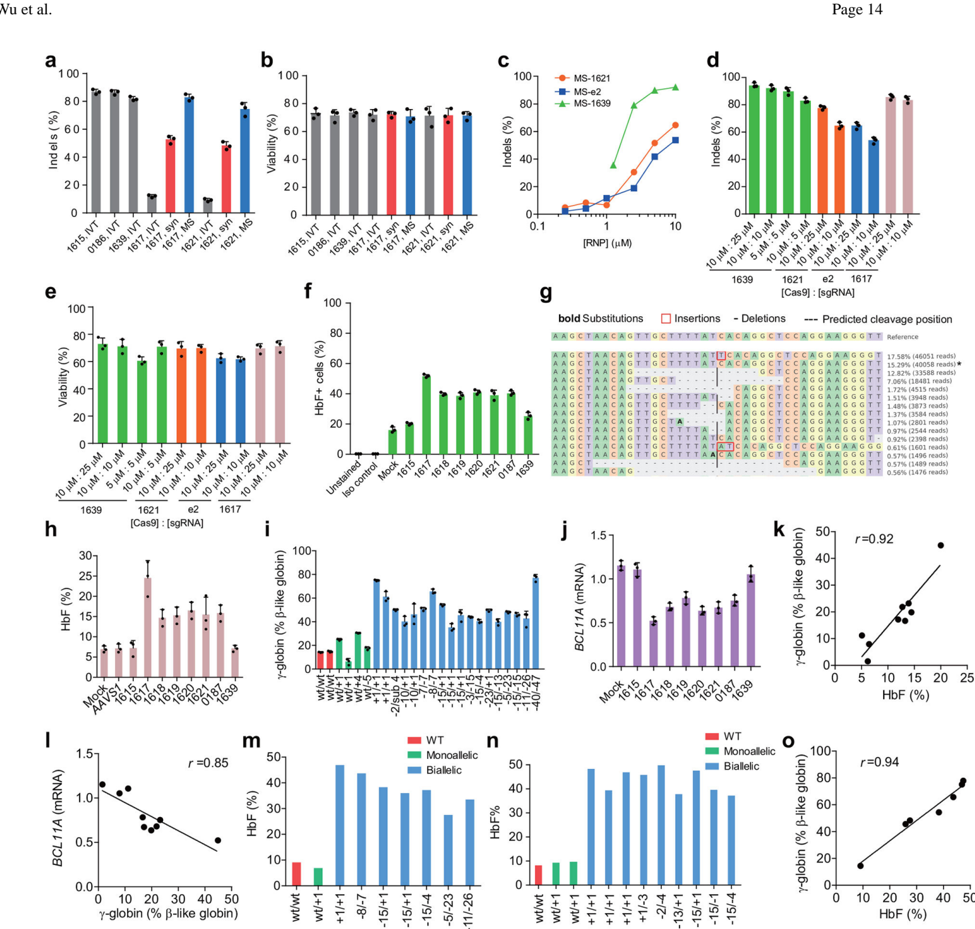
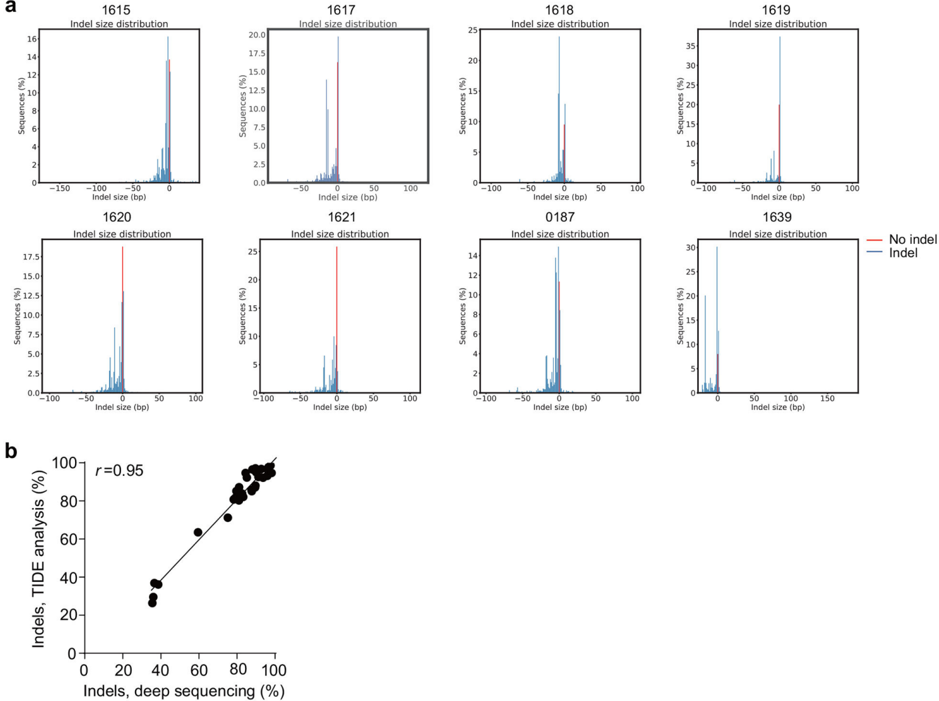
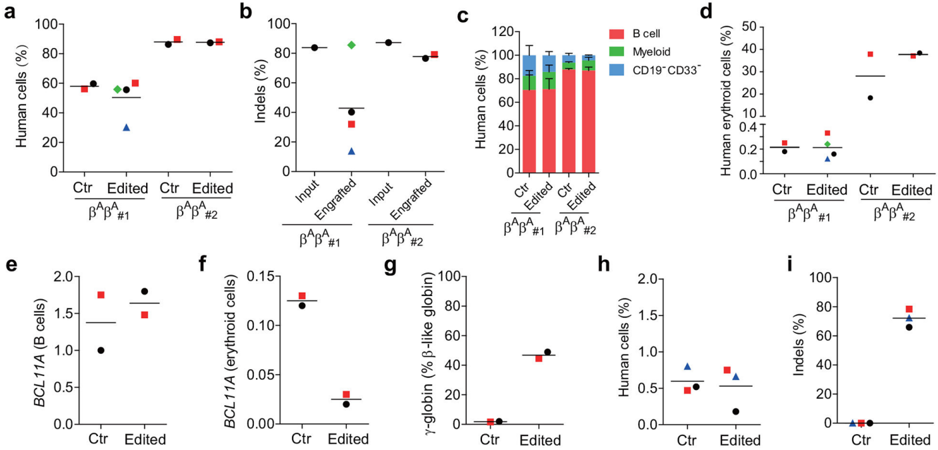
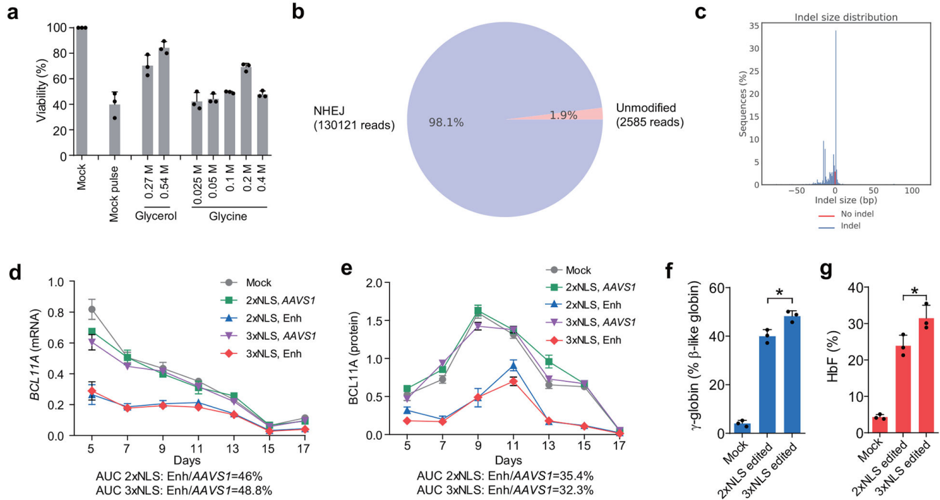
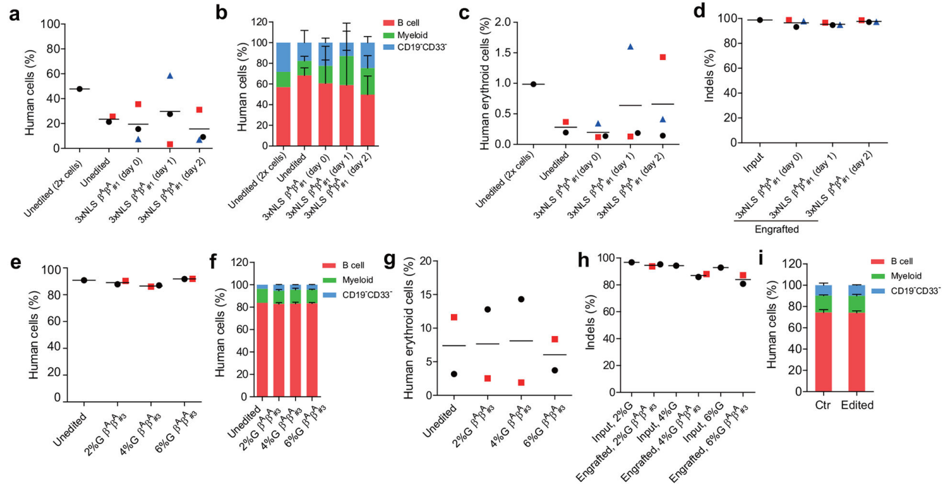
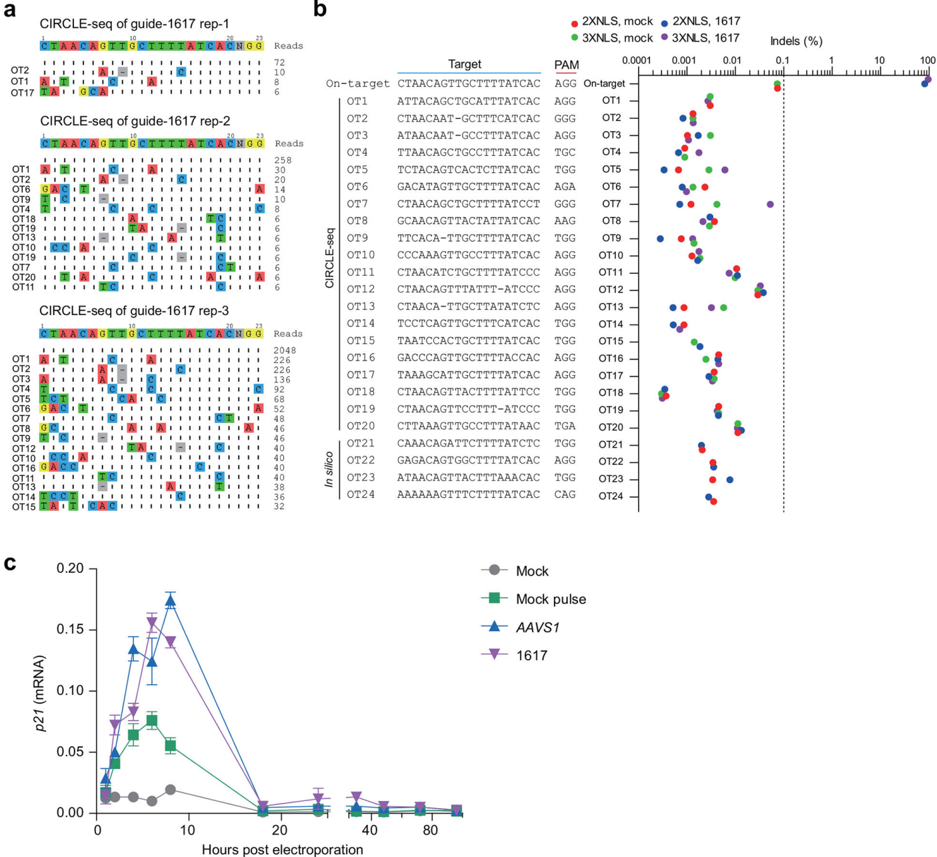
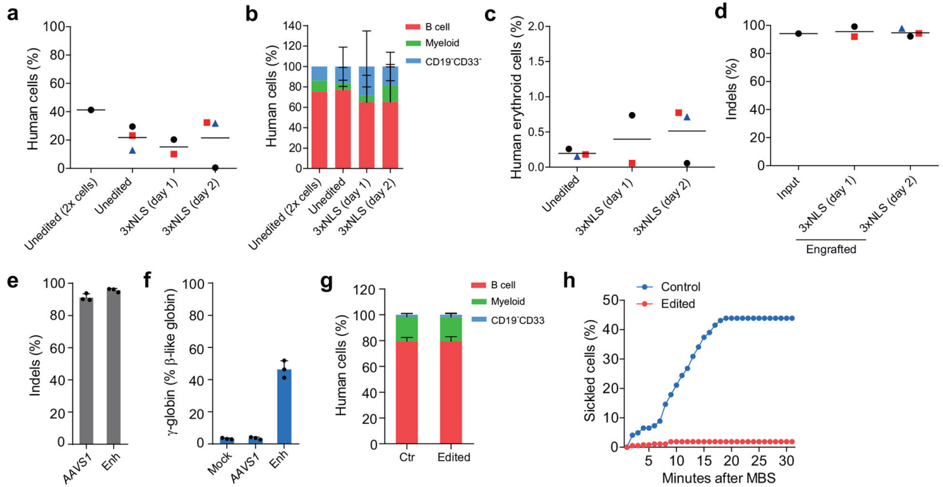
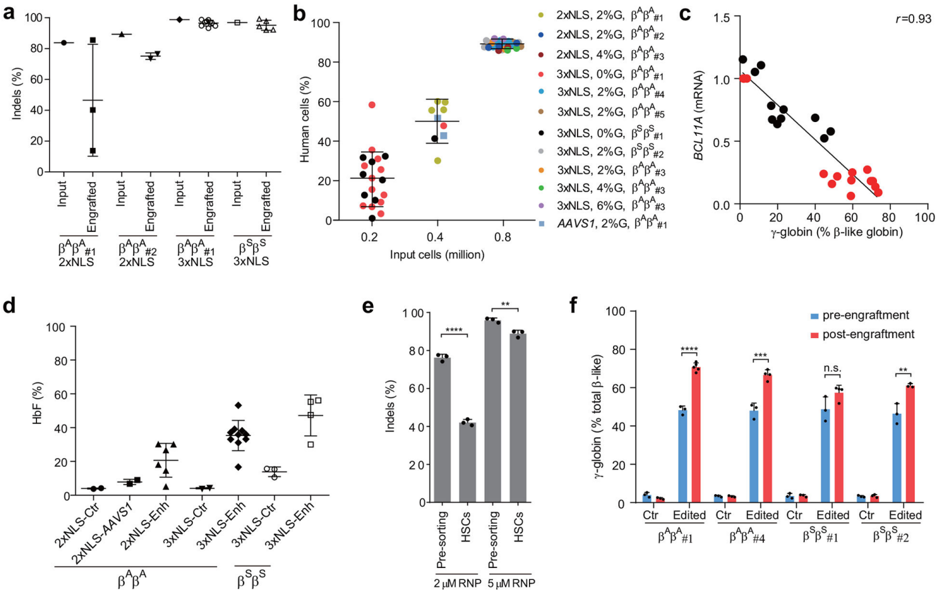
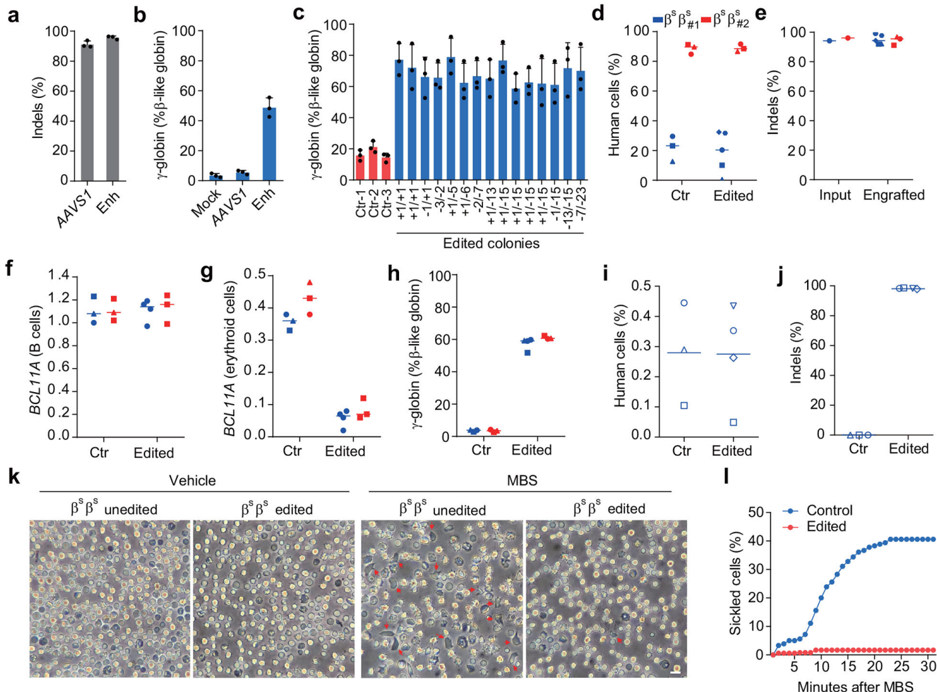
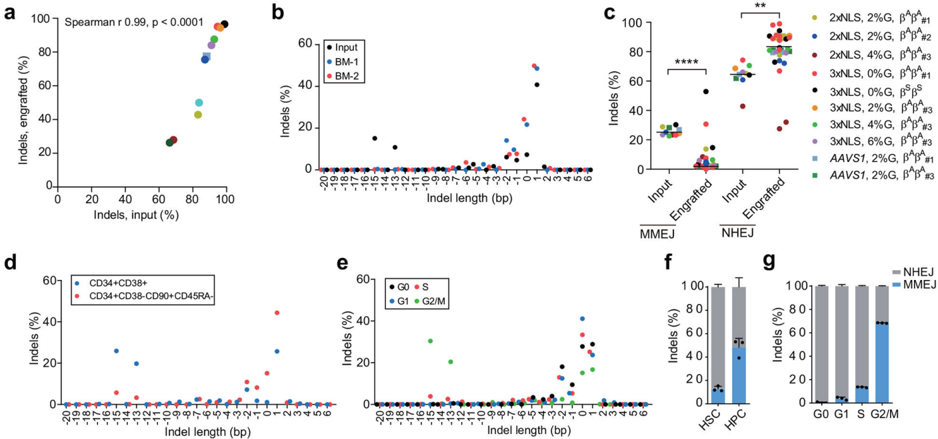
Re-expression of the paralogous γ-globin genes (HBG1/2) could be a universal strategy to ameliorate the severe β-globin disorders sickle cell disease (SCD) and β-thalassemia by induction of fetal hemoglobin (HbF, α2γ2)1. Previously, we and others have shown that core sequences at the BCL11A erythroid enhancer are required for repression of HbF in adult-stage erythroid cells but are dispensable in non-erythroid cells2–6. CRISPR–Cas9-mediated gene modification has demonstrated variable efficiency, specificity, and persistence in hematopoietic stem cells (HSCs). Here, we demonstrate that Cas9:sgRNA ribonucleoprotein (RNP)-mediated cleavage within a GATA1 binding site at the +58 BCL11A erythroid enhancer results in highly penetrant disruption of this motif, reduction of BCL11A expression, and induction of fetal γ-globin. We optimize conditions for selection-free on-target editing in patient-derived HSCs as a nearly complete reaction lacking detectable genotoxicity or deleterious impact on stem cell function. HSCs preferentially undergo non-homologous compared with microhomology-mediated end joining repair. Erythroid progeny of edited engrafting SCD HSCs express therapeutic levels of HbF and resist sickling, while those from patients with β-thalassemia show restored globin chain balance. Non-homologous end joining repair-based BCL11A enhancer editing approaching complete allelic disruption in HSCs is a practicable therapeutic strategy to produce durable HbF induction. Optimized co…
Overview
The claims and statistics of this paper haven’t been checked yet.
Free: it reads the open-access text and checks the first 5 claims that cite a source we can check. Create a free account to check every claim.
Integrity signals
Registry
Cites
Statistics
Figures
Verification
Claims the paper makes
The claims and statistics of this paper haven’t been checked yet.
Free: it reads the open-access text and checks the first 5 claims that cite a source we can check. Create a free account to check every claim.
Claims other papers make about this one
Each is checked against this paper’s own text: does it say what the citing paper says it does?
The source backs part of the claim, not all of it — or backs it for a different population, condition or comparison.
In the citing paper
“Major progress in delivering to 44 and handling HPSCs has resulted in formidable efficiencies of mutation correction or mitigation 18,45-47 that are expected to be curative.”
From The promise and challenge of therapeutic genome editing (2020) · cites this paper as [47]
Experimental — accuracy not yet measuredThe source backs part of the claim, not all of it — or backs it for a different population, condition or comparison.
In the citing paper
“Subsequent experiments showed that p53 inactivation can be controlled or avoided through protocol optimization 47,107 .”
From The promise and challenge of therapeutic genome editing (2020) · cites this paper as [47]
Experimental — accuracy not yet measuredThe source backs part of the claim, not all of it — or backs it for a different population, condition or comparison.
In the citing paper
“Although gene therapy has been slow to evolve since its early introduction, recent advances in gene editing are reinvigorating approaches to treat disorders by manipulation of the underlying genetic defects156.”
From A brief history of human disease genetics (2020) · cites this paper as [156]
Experimental — accuracy not yet measured
Self-check
Percentages, sums and reported differences re-computed from the paper’s own numbers.
The self-check needs the paper’s full text.
Citations
Cites
Kosicki, M., Tomberg, K., & Bradley, A. (2018) · Nature Biotechnology · doi:10.1038/nbt.4192 · Cited by 1,883
Kim, S., Kim, D., Cho, S. W., Kim, J., & Kim, J.-S. (2014) · Genome Research · doi:10.1101/gr.171322.113 · Cited by 1,856
CRISPR–Cas9 genome editing induces a p53-mediated DNA damage response
Haapaniemi, E., Botla, S., Persson, J., Schmierer, B., & Taipale, J. (2018) · Nature Medicine · doi:10.1038/s41591-018-0049-z · Cited by 1,264
Enhanced homology-directed human genome engineering by controlled timing of CRISPR/Cas9 delivery
Lin, S., Staahl, B. T., Alla, R. K., & Doudna, J. A. (2014) · eLife · doi:10.7554/elife.04766 · Cited by 1,189
Chemically modified guide RNAs enhance CRISPR-Cas genome editing in human primary cells
Hendel, A., Bak, R. O., Clark, J. T., Kennedy, A. B., Ryan, D. E., Roy, S., Steinfeld, I., Lunstad, B. D., Kaiser, R. J., Wilkens, A. B., et al. (2015) · Nature Biotechnology · doi:10.1038/nbt.3290 · Cited by 1,090
p53 inhibits CRISPR–Cas9 engineering in human pluripotent stem cells
Ihry, R. J., Worringer, K. A., Salick, M. R., Frias, E., Ho, D., Theriault, K., Kommineni, S., Chen, J., Sondey, M., Ye, C., et al. (2018) · Nature Medicine · doi:10.1038/s41591-018-0050-6 · Cited by 978
BCL11A enhancer dissection by Cas9-mediated in situ saturating mutagenesis
Canver, M. C., Smith, E. C., Sher, F., Pinello, L., Sanjana, N. E., Shalem, O., Chen, D. D., Schupp, P. G., Vinjamur, D. S., Garcia, S. P., et al. (2015) · Nature · doi:10.1038/nature15521 · Cited by 886
Self-citationTsai, S.-F., Martin, D. I. K., Zon, L. I., D'Andrea, A. D., Wong, G. G., & Orkin, S. H. (1989) · Nature · doi:10.1038/339446a0 · Cited by 885
Self-citationCRISPR/Cas9 β-globin gene targeting in human haematopoietic stem cells
Dever, D. P., Bak, R. O., Reinisch, A., Camarena, J., Washington, G., Nicolas, C. E., Pavel-Dinu, M., Saxena, N., Wilkens, A. B., Mantri, S., et al. (2016) · Nature · doi:10.1038/nature20134 · Cited by 864
Improving genetic diagnosis in Mendelian disease with transcriptome sequencing
Cummings, B. B., Marshall, J. L., Tukiainen, T., Lek, M., Donkervoort, S., Foley, A. R., Bolduc, V., Waddell, L. B., Sandaradura, S. A., O’Grady, G. L., et al. (2017) · Science Translational Medicine · doi:10.1126/scitranslmed.aal5209 · Cited by 831
Research works printed but not linked: 1
- Lin, S., Staahl, B., Alla, R. K. & Doudna, J. A. Enhanced homology-directed human genome engineering by controlled timing of CRISPR/Cas9 delivery. Elife 3, 1–13 (2014).
Cited by
Items 301–400 of 553
Strategies and mechanisms of precision genome engineering: From gene editing to genome writing
Huang, K., Tian, J., Zhao, W., Zhang, S., Xiang, L., Yang, M., Ls, L., Huang, Y., Zhang, N., Sun, L., et al. (2026) · iMetaOmics. · doi:10.1002/imo2.70115 · Cited by 10
Cosenza, L. C., Zuccato, C., Zurlo, M., Gambari, R., & Finotti, A. (2022) · Genes · doi:10.3390/genes13101727 · Cited by 9
“The possibility of using highly efficient gene-editing protocols opens new opportunities in the field of precision medicine for personalized therapy for β-thalassemia [23].”
BackgroundGenome editing and cancer therapy: handling the hypoxia-responsive pathway as a promising strategy
Stampone, E., Bencivenga, D., Capellupo, M. C., Roberti, D., Tartaglione, I., Perrotta, S., Ragione, F. D., & Borriello, A. (2023) · Cellular and Molecular Life Sciences · doi:10.1007/s00018-023-04852-2 · Cited by 9
Efficient repair of human genetic defect by CRISPR/Cas9-mediated interlocus gene conversion
Yang, F., Wang, Y., Wang, Q., Pang, J., Liu, G., Yang, Y., Qin, S., Zhang, Y., Lai, Y., Fu, B., et al. (2023) · Life Medicine · doi:10.1093/lifemedi/lnad042 · Cited by 9
“Consistent with our previous research [12], large fragment deletions (> −30 bp) were almost absent in the engrafted cells, while the 1 bp insertions and 1 bp deletions were predicted products (Fig.”
InfluentialSelf-citationA platform to deliver single and bi-specific Cas9/guide RNA to perturb genes in vitro and in vivo
Li, Y., Chien, S., Huang, R., Herrmann, A., Zhao, Q., Li, P.-C., Zhang, C., Martincuks, A., Santiago, N. L., Zong, K., et al. (2024) · Molecular Therapy · doi:10.1016/j.ymthe.2024.07.025 · Cited by 9
PIEZO1 Activation‐Mediated Generation of Transgene‐Free Long‐Term Hematopoietic Stem Cells
Scapin, G., Cillis, J. L., Goulard, M., Patch, T. C., Limia, C. E. G., Ding, Y., Du, W., Dharampuriya, P. R., Hagedorn, E. J., Anderson, H., et al. (2025) · American Journal of Hematology · doi:10.1002/ajh.27689 · Cited by 9
“We used the DF19- 9-7T hPSC line (WiCell) to generate PIEZO1 − / − hPSC clones [40, 41].”
Essawi, K., Hakami, W., Khan, M. B. N., Martin, R., Zeng, J., Chu, R., Uchida, N., Bonifacino, A. C., Krouse, A. E., Linde, N. S., et al. (2023) · Molecular Therapy — Methods & Clinical Development · doi:10.1016/j.omtm.2023.04.004 · Cited by 9
Self-citationSingh, J., Goodman-Vincent, E., & Santosh, P. (2023) · International Journal of Molecular Sciences · doi:10.3390/ijms24109023 · Cited by 9
“Another study explored the feasibility of CRISPR-associated protein 9 (Cas9) gene editing technology in haematopoietic stem cells isolated from a patient with Sickle cell disease and a patient with β-thalassemia [40].”
BackgroundHuman cellular model systems of β-thalassemia enable in-depth analysis of disease phenotype
Daniels, D. E., Ferrer-Vicens, I., Hawksworth, J., Andrienko, T. N., Finnie, E. M., Bretherton, N. S., Ferguson, D. C. J., Oliveira, A. S. F., Szeto, J.-Y. A., Wilson, M. C., et al. (2023) · Nature Communications · doi:10.1038/s41467-023-41961-9 · Cited by 8
Preclinical development of lentiviral vector gene therapy for Diamond-Blackfan anemia syndrome
Bhoopalan, S. V., Mayuranathan, T., Liu, N., Mayberry, K. D., Yao, Y., Zhang, J., Métais, J., Yan, K., Throm, R. E., Ellis, S. R., et al. (2024) · Molecular Therapy · doi:10.1016/j.ymthe.2024.12.020 · Cited by 8
AI-guided Cas9 engineering provides an effective strategy to enhance base editing
Wei, D., Cheng, P., Song, Z., Liu, Y., Xu, X., Huang, X., Wang, X., Zhang, Y., Shu, W., & Wei, Y. (2025) · Molecular Systems Biology · doi:10.1038/s44320-025-00142-0 · Cited by 8
“Through base editing, we could not only target pathogenic mutations at early developmental stages, but also introduce disease-associated variants and establish disease models for studying therapeutic mechanisms (Shi et al, 2017; Wu et al, 2019).”
Montagud‐Martínez, R., Ruiz, R., Baldanta, S., Delicado-Mateo, R., & Rodrigo, G. (2026) · Nature Communications · doi:10.1038/s41467-026-68789-3 · Cited by 10
Demirci, S., Khan, M. B. N., Hinojosa, G., Le, A., Leonard, A. K., Essawi, K., Gudmundsdottir, B., Liu, X., Zeng, J., Inam, Z. S., et al. (2024) · Cytotherapy · doi:10.1016/j.jcyt.2024.02.011 · Cited by 8
Self-citationRoy, A. A., Pokale, R., Mukharya, A., Nikam, A. N., Dua, K., Rao, B. S. S., Seetharam, R. N., & Mutalik, S. (2025) · Current Gene Therapy · doi:10.2174/0115665232342293241120033251 · Cited by 8
TOPO-seq reveals DNA topology-induced off-target activity by Cas9 and base editors
Duan, M., Gao, P., Zhang, Y.-Z., Hu, Y.-L., Zhou, L., Xu, Z.-C., Qiu, H.-Y., Tong, X., Ji, R.-J., Lei, X.-L., et al. (2025) · Nature Chemical Biology · doi:10.1038/s41589-025-01867-7 · Cited by 9
“…Nature Portfolio reporting summaries, source data, extended data, supplementary information, acknowledgements, peer review information; details of author contributions and competing interests; and statements of data and code availability are available at https://doi.org/10.1038/s41589-025-01867-7.”
InfluentialFelder, A.-K., Tjalsma, S. J. D., Verhagen, H. J. M. P., Majied, R., Verstegen, M. J. A. M., Verheul, T. C. J., van Haren, J., Mohnani, R., Gremmen, R., Krijger, P. H. L., et al. (2025) · Blood · doi:10.1182/blood.2024028128 · Cited by 8
Therapeutic gene editing is here, can regulations keep up?
Kannan, S., & Najjar, D. (2020) · MIT Science Policy Review · doi:10.38105/spr.czm9c2w8ig · Cited by 8
Get ready for the CRISPR/Cas system: A beginner's guide to the engineering and design of guide RNAs
Ma, S., Lv, J., Feng, Z., Rong, Z., & Lin, Y. (2021) · The Journal of Gene Medicine · doi:10.1002/jgm.3377 · Cited by 8
Human cellular model systems of β-thalassemia enable in-depth analysis of disease phenotype
Daniels, D. E., Ferrer-Vicens, I., Hawksworth, J., Andrienko, T. N., Finnie, E. M., Ferguson, D. C. J., Oliveira, A. S. F., Szeto, J.-Y. A., Wilson, M. C., & Frayne, J. (2022) · doi:10.1101/2022.09.01.506225 · Cited by 8
Wang, Y., Yu, L., Deng, K., Packiarajan, M., Aguilar, A., An, S. Y., Liu, X., Myers, G., Oh, H., Singh, S. A., et al. (2025) · Blood · doi:10.1182/blood.2024028006 · Cited by 7
CRISPR-Cas technologies: Emerging tools from research to clinical application
Hyeon, H., Hwang, S., Luo, Y., Shin, E., Yeom, J., Kim, H., Ryu, M., & Lee, K. (2025) · The Journal of Microbiology · doi:10.71150/jm.2504012 · Cited by 8
“…(NCT03728322; NCT03655678; NCT05356195) (Allife Medical Science and Technology, 2019; Vertex Pharmaceuticals, 2018a, 2022b), by targeting the DNase I hypersensitivity sites (DHS) in erythroid-specific enhancer of BCL11A in autologous CD34 + cells ex vivo (Canver et al., 2015; Wu et al., 2019).”
Li, Z., Wang, Y.-Y., Zhang, C., Shi, J., Xiao, Y., Ying, N.-T., Xu, X.-K., Li, J., & Guo, T. (2025) · Cellular Signalling · doi:10.1016/j.cellsig.2025.112252 · Cited by 7
Targeted genomic integration and rearrangement using prime assembly
Levesque, S., Kawashima, N., Hwang, G., Zeng, J., Toskov, V., Barry, T., Mannherz, W. P., Homfeldt, L., Becerra, B., Schoonenberg, V. A. C., et al. (2026) · Nature · doi:10.1038/s41586-026-11024-2 · Cited by 7
Self-citationThevendran, R., & Solayappan, M. (2023) · Biotechnology Journal · doi:10.1002/biot.202300077 · Cited by 7
Wongborisuth, C., Innachai, P., Saisawang, C., Tubsuwan, A., Jearawiriyapaisarn, N., Kaewprommal, P., Piriyapongsa, J., Chiangjong, W., Anurathapan, U., Songdej, D., et al. (2025) · Scientific Reports · doi:10.1038/s41598-025-10791-8 · Cited by 7
“The 2 −∆∆Ct method 46 was used to analyze the relative fold change.”
Cell-free screening of CRISPR-Cas activity by microfluidics-assisted in vitro compartmentalization
Bouzetos, E., Ganar, K. A., John van der, O. O. S. T., & Deshpande, S. (2025) · Trends in biotechnology · doi:10.1016/j.tibtech.2025.07.007 · Cited by 7
Iyer, S. R., Daman, K., Sun, Y., Tutto, A. A., Holbrook, S. E., Joynt, A. T., Yan, J., Ambegaokar, P. P., Guo, D., Liu, P., et al. (2026) · Molecular Therapy · doi:10.1016/j.ymthe.2026.03.010 · Cited by 7
Self-citationCRISPR Editing Enables Consequential Tag-Activated MicroRNA-Mediated Endogene Deactivation
Papasavva, P. L., Patsali, P., Loucari, C. C., Kurita, R., Nakamura, Y., Kleanthous, M., & Lederer, C. W. (2022) · International Journal of Molecular Sciences · doi:10.3390/ijms23031082 · Cited by 7
“Reduced BCL11A expression increases γ-globin expression and ameliorates or even cures β-hemoglobinopathies [33,34], by γ-globin compensating defective β-globin expression or neutralizing pathological β-globin variants.”
BackgroundGnanapragasam, M. N., Planutis, A., Glassberg, J., & Bieker, J. J. (2023) · Scientific Reports · doi:10.1038/s41598-023-34805-5 · Cited by 7
Singpant, P., Tubsuwan, A., Sakdee, S., Ketterman, A. J., Jearawiriyapaisarn, N., Kurita, R., Nakamura, Y., Songdej, D., Tangprasittipap, A., Bhukhai, K., et al. (2023) · Protein Expression and Purification · doi:10.1016/j.pep.2023.106313 · Cited by 7
TMED2 Induces Cisplatin Resistance in Breast Cancer via Targeting the KEAP1-Nrf2 Pathway
Chen, L., Zhang, H., Wang, Y., Yang, L.-A., Du, Y.-S., Luo, Y., Zhang, T., & Xu, Y. (2023) · Current Medical Science · doi:10.1007/s11596-023-2777-7 · Cited by 7
“According to reports, KEAP1 can regulate the balance of Nrf2 in cells by inducing the ubiquitination of Nrf2, mediating the sensitivity of tumor cells to drugs [10] .”
BackgroundA Split-Marker System for CRISPR-Cas9 Genome Editing in Methylotrophic Yeasts
Karginov, A. V., Tarutina, M. G., Lapteva, A. R., Pakhomova, M., Galliamov, A. A., Filkin, S. Y., Fedorov, A. N., & Agaphonov, M. O. (2023) · International Journal of Molecular Sciences · doi:10.3390/ijms24098173 · Cited by 7
“CRISPR-Cas9 based approaches are already in use the therapy of β-thalassemia [11] and transthyretin amyloidosis [12,13].”
BackgroundThe application of CRISPR-Cas in disease diagnosis and treatment
Wang, Z., Liu, Y., Zhou, F., Wang, Y., & Zhou, X. (2023) · Science China Chemistry · doi:10.1007/s11426-023-1765-0 · Cited by 8
Reactivation of γ-globin expression using a minicircle DNA system to treat β-thalassemia
Ma, S., Gao, X.-X., Zhou, G., Zhang, H., Yang, J.-M., Wang, W., Song, X., Chen, H., & Lu, D. (2022) · Gene · doi:10.1016/j.gene.2022.146289 · Cited by 7
Liu, P., Huang, L., & Song, C. (2023) · Frontiers in Endocrinology · doi:10.3389/fendo.2023.1256966 · Cited by 7
Self-citationNoel, E. A., Sahu, S. U., Wyman, S. K., Krishnappa, N., Jeans, C., & Wilson, R. C. (2025) · The CRISPR Journal · doi:10.1089/crispr.2024.0080 · Cited by 6
Canarutto, D., Fiumara, M., Venkatesan, V., Gaddoni, C., Shiroshita, K., Varesi, A., Albano, L., Pelosi, G., Silva, A., Firrito, C., et al. (2026) · Nature Biotechnology · doi:10.1038/s41587-026-03142-z · Cited by 6
Du, J., Luo, Z., Xie, D., Chen, Y., Yang, M., Li, Q., Wang, L., Han, L., Zhang, Y., Li, H., et al. (2026) · Nature Biomedical Engineering · doi:10.1038/s41551-026-01765-w · Cited by 6
Papaioannou, N. Y., Patsali, P., Naiisseh, B., Papasavva, P. L., Koniali, L., Kurita, R., Nakamura, Y., Christou, S., Sitarou, M., Mussolino, C., et al. (2023) · Frontiers in Genome Editing · doi:10.3389/fgeed.2023.1141618 · Cited by 6
“A wellunderstood system for the evaluation of new methodology is the β-globin disorders, β-thalassemia and sickle disease (Lederer and Kleanthous, 2015), which can both be corrected either by inducing γ-globin as a therapeutic β-globin ortholog and anti-sickling agent (Fanis et al., 2019; Wu et al., 2019; Ravi et al.,…”
BackgroundInfluentialRecent advances in CRISPR/Cas9-assisted gene therapy
Srivastava, A., Chauhan, S., & Ahuja, V. (2023) · Karbala International Journal of Modern Science · doi:10.33640/2405-609x.3330 · Cited by 6
“[73], amplified sgRNA with promoter T7 from”
The non-canonical poly(A) polymerase FAM46C promotes erythropoiesis
Yang, K., Zhu, T., Yin, J., Zhang, Q., Li, J. Y., Fan, H., Han, G., Xu, W., Liu, N., & Lv, X. (2024) · Journal of genetics and genomics/Journal of Genetics and Genomics · doi:10.1016/j.jgg.2024.02.003 · Cited by 7
Verheul, T. C. J., Gillemans, N., Putzker, K., Majied, R., Li, T., Vasiliou, M., Eussen, B., de Klein, A., van IJcken, W. F. J., van den Akker, E., et al. (2024) · HemaSphere · doi:10.1002/hem3.139 · Cited by 6
“To generate the reporter cell line, this procedure was repeated in HUDEP2 cells that did not express HbF.”
MethodShao, C., Liu, Q. F., Xu, J., Zhang, J.-X., Zhang, C., Ye, X., Ye, Y., Lin, B., Zhang, X., Cheng, L., et al. (2024) · Molecular Therapy — Nucleic Acids · doi:10.1016/j.omtn.2024.102371 · Cited by 6
Liu, Q., Li, X., Xu, H., Luo, Y., Cheng, L., Liang, J., He, Y., Liu, H., Fang, J., & Huang, J. (2025) · Advanced Biotechnology · doi:10.1007/s44307-024-00053-5 · Cited by 6
Nanotechnology-enhanced CRISPR systems for gene therapy – A review
Kareem, M. A., Aher, A., & Thitame, S. N. (2025) · Multidisciplinary Reviews · doi:10.31893/multirev.2025225 · Cited by 6
Zang, S.-S., Zhang, R., Zhang, J.-R., Zhang, X., & Li, J. (2025) · Human Gene Therapy · doi:10.1089/hum.2024.262 · Cited by 7
In situ gene editing of hematopoietic stem cells via AAV-delivered CRISPR guide RNAs
Karimzadeh, A., Kim, R., Garcia, V., Florea, M., Peacker, B. L., Kobayashi, S., Watkins, D., Messemer, K. A., Zeng, J., Bauer, D. E., et al. (2025) · Blood Advances · doi:10.1182/bloodadvances.2025016775 · Cited by 6
“50,51 Our analysis of large deletions in the Townes; Sp Cas9-EGFP model is in line with a higher frequency of large deletions in cycling neonatal HSCs than in quiescent adult HSCs (supplemental Figure 13D).”
Self-citationKansal, R. (2025) · Genes · doi:10.3390/genes16111367 · Cited by 6
“…by CRISPR-Cas-sgRNA-based cleavage within a GATA1 binding site at the +58 BCL11A erythroid enhancer were shown to achieve therapeutic levels of fetal hemoglobin and resist sickling in patients with sickle cell disease, and restoration of globin chain balance in patients with β -thalassemia [111].”
Gene Therapies for Sickle Cell Disease
Weaver, S. B., Singh, D., & Wilson, K. M. (2024) · Journal of Pharmacy Technology · doi:10.1177/87551225241268742 · Cited by 6
“38,46,47”
Harnessing CRISPR technology for next-generation microphysiological systems
Song, S., Kang, H. W., Kang, M., Chung, S. H., Choi, N., Kim, H. N., & Sung, Y. J. (2025) · TrAC Trends in Analytical Chemistry · doi:10.1016/j.trac.2025.118164 · Cited by 6
Impact of a grant program to spur advances in sickle cell disease research
Escobar-Alvarez, S., & Myers, E. R. (2021) · Blood Advances · doi:10.1182/bloodadvances.2021005709 · Cited by 6
“CRISPR/Cas9-mediated gene modification of the enhancer resulted in clinically meaningful fetal hemoglobin induction.(22) Targeting the BCL11A enhancer by genome editing is therefore a viable strategy for therapeutic genome editing for SCD.”
BackgroundSex-biased genome-editing effects of CRISPR-Cas9 across cancer cells dependent on p53 status
Guo, M., & Xiong, Y. (2023) · iScience · doi:10.1016/j.isci.2023.107529 · Cited by 6
Lotfi, M., Ashouri, A., Mojarrad, M., Mozaffari‐Jovin, S., & Abbaszadegan, M. R. (2023) · Molecular Biotechnology · doi:10.1007/s12033-023-00739-6 · Cited by 5
Mudde, A. C. A., Kuo, C. Y., Kohn, D. B., & Booth, C. (2024) · The Journal of Allergy and Clinical Immunology In Practice · doi:10.1016/j.jaip.2024.01.019 · Cited by 5
TR4 and BCL11A repress γ-globin transcription via independent mechanisms
Wang, Y., Myers, G., Yu, L., Deng, K., Balbin-Cuesta, G., Singh, S. A., Guan, Y., Khoriaty, R. N., & Engel, J. D. (2024) · Blood · doi:10.1182/blood.2024024599 · Cited by 5
Deconstructing the GWAS library: next-generation GWAS
Zhang, W., Koslowski, S., Benzaki, M., Lee, C. J. M., Zhu, Y., Mak, M. C. E., Zhu, Y., Loong, S. S. E., Lettre, G., Anene-Nzelu, C. G., et al. (2025) · Physiological Reviews · doi:10.1152/physrev.00025.2024 · Cited by 5
Discovery of Novel Fetal Hemoglobin Inducers through Small Chemical Library Screening
Breveglieri, G., Pacifico, S., Zuccato, C., Cosenza, L. C., Sultan, S., D’Aversa, E., Gambari, R., Preti, D., Trapella, C., Guerrini, R., et al. (2020) · International Journal of Molecular Sciences · doi:10.3390/ijms21197426 · Cited by 5
“While bone marrow transplantation is currently the only resolving treatment of the disease [6], several potentially curative strategies are under clinical validation, including gene therapy [7], gene editing [8], and treatment with novel agents potentiating hematopoiesis (i.”
BackgroundCRISPR-enhanced human adipocyte browning as cell therapy for metabolic disease
Tsagkaraki, E., Nicoloro, S. M. C., DeSouza, T., Solivan-Rivera, J., Desai, A., Lifshitz, L. M., Shen, Y., Kelly, M., Guilherme, A., Henriques, F. D. S., et al. (2021) · RePEc: Research Papers in Economics · Cited by 5
Self-citationHoldreith, N., Lee, G., Chandra, V., Salinas, C. S., Nicholas, P., Olson, T. S., & Tong, W. (2022) · Blood Advances · doi:10.1182/bloodadvances.2021004205 · Cited by 6
“for genome editing of the endogenous locus in HSCs have demonstrated the potential of curing monogenic hematological disorders by autologous HSCT-based gene therapy.(7-14) Autologous HSCT offers many advantages over allogenic HSCT for nonmalignant disorders, such as circumventing the requirement of finding a donor and…”
BackgroundCai, D., Chan, Y., He, G., Kong, Y., Cai, A., Guo, Y. P., & Zhu, B. (2025) · Frontiers in Pharmacology · doi:10.3389/fphar.2025.1578237 · Cited by 4
Detection of pre-existing immunity to bacterial Cas9 proteins in people with cystic fibrosis
Serpa, G., Gong, Q., De, M., Rana, P. S. J. B., Montgomery, C. P., Wozniak, D. J., Long, M. E., & Hemann, E. A. (2025) · ImmunoHorizons · doi:10.1093/immhor/vlaf041 · Cited by 4
Zeng, J., Diao, L., Xie, S., & Xiao, Z. (2025) · Cell investigation. · doi:10.1016/j.clnves.2025.100047 · Cited by 4
Self-citationRising Star: Single Cell Omics Technologies: When Whole Omics Analysis Meets Single Cell Resolution
Tang, F. (2026) · Journal of Molecular Biology · doi:10.1016/j.jmb.2026.169670 · Cited by 4
Papaioannou, N. Y., Patsali, P., Klermund, J., Papasavva, P. L., Andrieux, G., Koniali, L., Naiisseh, B., Christou, S., Sitarou, M., Kleanthous, M., et al. (2026) · Genome biology · doi:10.1186/s13059-026-03974-7 · Cited by 4
“An insertion of 1 bp next to the cut site, which disrupts the GATA1 binding motif, was the most common indel observed at 28.6% in the bulk population ( n = 3), a frequent editing event also observed elsewhere [16] (Fig.”
InfluentialSun, Y., Pien, Y.-C., Xiao, Y., Tan, W. H., Sanchez‐Ortiz, E., Durbacz, M. Z., Chen, Z., McAnally, J., Zhang, Y., Li, H., et al. (2026) · Proceedings of the National Academy of Sciences · doi:10.1073/pnas.2528477123 · Cited by 5
Yang, H., Han, S., Xu, J.-Q., he, S. T., Lu, Q., Luo, T.-Y., Chen, S., Dang, L., Wang, G., Li, J., et al. (2025) · Clinical Therapeutics · doi:10.1016/j.clinthera.2025.01.008 · Cited by 4
Dua, P. H., Simon, B. M. J., Marley, C. B. E., Feliciano, C. M., Watry, H. L., Cowan, Q. T., Steury, D., Abraham, A., Gilbertson, E. N., Ramey, G. D., et al. (2025) · Molecular Therapy · doi:10.1016/j.ymthe.2025.11.026 · Cited by 4
THE GORDON WILSON LECTURE: THE ETHICS OF HUMAN GENOME EDITING.
Coller, B. S. (2020) · PubMed Central · Cited by 4
Targeted genome editing for the correction or alleviation of primary Immunodeficiencies
Sipe, C. J., Vázquez, P. N. C., Skeate, J. G., McIvor, R. S., & Moriarity, B. S. (2021) · Progress in molecular biology and translational science · doi:10.1016/bs.pmbts.2021.03.001 · Cited by 4
Base Editing of Human Hematopoietic Stem Cells
Zeng, J., Casirati, G., Nguyen, M. A., Genovese, P., & Bauer, D. E. (2023) · Methods in molecular biology · doi:10.1007/978-1-0716-2879-9_5 · Cited by 4
Self-citationCRISPR/Cas9 Mechanism and Applications Progression
Liu, S. (2024) · Transactions on Materials Biotechnology and Life Sciences · doi:10.62051/b7416e56 · Cited by 4
“This can produce erythroid progeny with the highest levels of HbF induction [12].”
BackgroundA catalog of gene editing sites and genetic variations in editing sites in model organisms
Yang, W., Zhu, J., & Jin, W. (2024) · BMC Genomics · doi:10.1186/s12864-024-11073-9 · Cited by 4
Role of B-Cell Lymphoma/Leukemia 11A in Normal and Malignant Hematopoiesis
Zhang, H., Zeng, J., Zhang, F., Liu, J., & Liang, L. (2025) · Biology · doi:10.3390/biology14010026 · Cited by 5
Self-citationLncRNA SLNCR phenocopies the E2F1 DNA binding site to promote melanoma progression
Shah, K. K., Anastasakou, E., Sejour, L., Wang, Y., Wert-Lamas, L., Rauchet, C., Studer, S., Goller, S. G., Distel, R. J., Marasco, W. A., et al. (2025) · Cell Reports · doi:10.1016/j.celrep.2025.115608 · Cited by 4
Gene Therapy for Sickle Cell Anemia in India - Current Status and Challenges
Goel, A., Dalal, V., Dhawan, R., Maiti, S., & Chakraborty, D. (2025) · Indian Journal of Hematology and Blood Transfusion · doi:10.1007/s12288-025-02105-9 · Cited by 4
“In SCD, CRISPR-Cas9 is employed in two main strategies: (1) correcting the sickle cell mutation to restore normal HbA production and (2) inducing fetal hemoglobin (HbF) production by disrupting regulatory elements like BCL11A, which increases HbF levels and improves patient outcomes [ 51, 52].”
Precise somatic genome editing for treatment of inborn errors of immunity
Meng, Q., Sun, H., & Liu, J. (2022) · Frontiers in Immunology · doi:10.3389/fimmu.2022.960348 · Cited by 4
Rozen, E. J., Frantz, W. T., Wigglesworth, K., Vessella, T., Zhou, H. S., & Shohet, J. M. (2024) · Molecular Cancer Therapeutics · doi:10.1158/1535-7163.mct-23-0741 · Cited by 4
Ahmed, H. (2022) · IBT Journal of Business Studies · doi:10.46745/ilma.jbs.2022.18.01.04 · Cited by 4
Yao, Y., Yang, J. Y., Qin, Q., Tang, C., Li, Z., Chen, L., Li, K., Ren, C., Chen, L., & Rao, S. (2020) · Communications Biology · doi:10.1038/s42003-020-01527-7 · Cited by 4
Self-citationGene Therapy in Hemophilia: Latest Developments
Sanchez-Lara, P. A., Nathanson, J., & Valentino, L. A. (2022) · Springer eBooks · doi:10.1007/978-3-030-93990-8_18 · Cited by 4
Gene Therapy and Cardiovascular Diseases
Lu, D., Cushman, S., Thum, T., & Bär, C. (2022) · Advances in experimental medicine and biology · doi:10.1007/978-981-19-5642-3_16 · Cited by 4
The Novel Role of the B-Cell Lymphoma/Leukemia 11A (BCL11A) Gene in β-Thalassaemia Treatment
Lai, M. I., & Ahmed, N. H. M. (2022) · Cardiovascular & Haematological Disorders - Drug Targets · doi:10.2174/1871529x23666230123140926 · Cited by 4
Suwito, B. E., Adji, A. S., Widjaja, J. S., Angel, S. C. S., Hajiri, A. Z. Z. A., Salamy, N. F. W., & Choirotussanijjah, C. (2023) · Open Access Macedonian Journal of Medical Sciences · doi:10.3889/oamjms.2023.11435 · Cited by 4
Gene Editing in Hematopoietic Stem Cells
Liao, J., & Wu, Y. (2023) · Advances in experimental medicine and biology · doi:10.1007/978-981-99-7471-9_11 · Cited by 4
Self-citationXu, J., Wang, B., & Song, L. (2020) · Elsevier eBooks · doi:10.1016/b978-0-12-820007-0.00025-8 · Cited by 4
Odabaş, S. P., Bal, E., Yelgen, G., Metin, A. S., Karakaya, E., Gülden, G., Sert, B., Teymur, T., Ay, Y., Tiryaki, N. N., et al. (2022) · bioRxiv (Cold Spring Harbor Laboratory) · doi:10.1101/2022.03.21.484406 · Cited by 5
Maroofi, N., Maleki, M. S. M., Tahmasebi, M., Khorshid, H. R. K., Modaberi, Y., Najafipour, R., & Banan, M. (2024) · Molecular Biotechnology · doi:10.1007/s12033-024-01155-0 · Cited by 3
“The deployed sgRNA targets a critical GATA1 motif in the BCL11A enhancer—leading to down-regulation of BCL11A expression and reactivation of γ-globin/HbF in mPB-derived erythroblasts [2, 3, 24, 26].”
InfluentialTranscriptional regulators of fetal hemoglobin
dos Santos, G. P., Rabi, L. T., Bezerra, A. A., da Cunha, M. R., Iatecola, A., & Fernandes, V. A. R. (2024) · Hematology Transfusion and Cell Therapy · doi:10.1016/j.htct.2024.06.001 · Cited by 3
Sweileh, M. W. (2025) · Orphanet Journal of Rare Diseases · doi:10.1186/s13023-025-03957-0 · Cited by 3
“For SCD and thalassemia, the emergence of CRISPR-Cas9 genome editing enabled precise correction oh disease-causing mutations or reactivation of fetal hemoglobin pathways, providing curative strategies at the genetic level [17, 45, 68–74].”
Yin, J., Wen, H., Zeng, J., Sun, Y., Chen, X., Jin, L. G., Song, Y., & Xia, S. (2026) · Biology of Reproduction · doi:10.1093/biolre/ioag056 · Cited by 3
Self-citationClinical base editing for β-hemoglobinopathies across different genetic backgrounds
Liu, R., Lai, Y., Wang, L., Qian, X., Ma, X.-K., Li, Y., Yang, G., Shi, L., Li, Z., Wei, J., et al. (2026) · Cell stem cell · doi:10.1016/j.stem.2026.08.009 · Cited by 4
Recent advances of CRISPR/Cas9 gene editing in the treatment of β-thalassemia
Xie, Q., Lei, S.-Y., Qu, C., Wu, H., Liu, Y., Huang, P., & Teng, S. (2022) · Chinese Science Bulletin (Chinese Version) · doi:10.1360/tb-2022-0109 · Cited by 3
“无独有偶 , Wu 等人 [77] 通过 电穿孔技术结合 sgRNAs 核糖核蛋白 (RNP) 复合物靶向 [71,85,86] , 其具体位 点与作用机制直到 2018 年才由 ChIP-seq 和 CUT&RUN 分析技术阐明 [74,87] .”
CRISPR Gene Editing of Hematopoietic Stem and Progenitor Cells
Shahbazi, R., Lipson, P., Gottimukkala, K. S. V., Lane, D. D., & Adair, J. E. (2022) · Methods in molecular biology · doi:10.1007/978-1-0716-2679-5_4 · Cited by 3
Boccacci, Y., Dumont, N., Doyon, Y., & Laganière, J. (2023) · Cytotherapy · doi:10.1016/j.jcyt.2023.07.007 · Cited by 3
Major, R., Mills, C. A., Xing, L., Krantz, J. L., Wolter, J. M., & Zylka, M. J. (2025) · The CRISPR Journal · doi:10.1089/crispr.2024.0074 · Cited by 4
Creating New Cis-Regulatory Elements of HBD to Reactivate Delta-Globin
Chen, L., Liu, D., Hong, W., Xu, L., Cheng, L., Luo, Y., Xu, H. M., Liang, J., Fang, J., & Li, X. (2025) · Human Gene Therapy · doi:10.1089/hum.2024.186 · Cited by 3
Moursel, L. G., Visser, M., Servant, G., Durmuş, S., & Zuurmond, A. (2021) · Expert Opinion on Drug Discovery · doi:10.1080/17460441.2021.1850687 · Cited by 3
“tion of the GATA1 binding site in the BCL11A enhancer to reactivate fetal hemoglobin expression [75].”
BackgroundJones, J. C., Bassett, G. M., Lescalleet, J. L., & Wingert, J. R. (2021) · Journal of Biological Education · doi:10.1080/00219266.2021.1909640 · Cited by 3
“Additionally, there are several recent reports of successful and safe somatic gene editing experiments in humans (Frangoul et al. 2021; Stadtmauer et al. 2020; Wu et al. 2019).”
BackgroundUnexploited Performance of NLS in the dCas9-VPR-Mediated Transcriptional Activation
Zhou, J., He, M., Yin, X., Yu, Y., Yao, D., & Liang, H. (2023) · ACS Chemical Biology · doi:10.1021/acschembio.3c00195 · Cited by 3
Investigating the missing heritability of fetal haemoglobin level in Africa
Wonkam, A. (2020) · British Journal of Haematology · doi:10.1111/bjh.17101 · Cited by 3
“Genes and loci that control HbF levels, for example, BLL11A, a transcriptional repressor of HbF, are critical targets of current therapeutic approaches in increasing the production of HbF in SCD patients via gene editing techniques.(4,5) In their paper the authors(6) have investigated additional genetic variations tha…”
Background
Metadata
- Authors
- Wu, Y., Zeng, J., Roscoe, B. P., Liu, P., Yao, Q., Lazzarotto, C. R., Clement, K., Cole, M. A., Luk, K., Baricordi, C., Shen, A. H., Ren, C., Esrick, E. B., Manis, J. P., Dorfman, D. M., Williams, D. A., Biffi, A., Brugnara, C., Biasco, L., Brendel, C., Pinello, L., Tsai, S. Q., Wolfe, S. A., & Bauer, D. E.
- Affiliations
- Broad Institute (US)
- University of Massachusetts Chan Medical School (US)
- Brigham and Women's Hospital (US)
- St. Jude Children's Research Hospital (US)
- Corresponding author
- Bauer, Daniel E.
- ORCID
- Venue
- Nature Medicine
- Published
- 2019-03-25
- Volume
- 25
- Issue
- 5
- Pages
- 776-783
- ISSN
- 1078-8956 (ISSN-L)
- 1546-170X
- PMC
- PMC6512986
- OpenAlex
- W2923636118
- Cited by
- 515
- References
- 48
- Citations by year
- 2026: 33 · 2025: 71 · 2024: 61 · 2023: 74 · 2022: 74 · 2021: 85 · 2020: 84 · 2019: 33
- FWCI
- 38.59
- Type
- journal article
- Language
- en
- Open access
- green
- www.ncbi.nlm.nih.gov
- Licence
- www.springernature.com/gp/researchers/text-and-data-mining (tdm)
- www.springernature.com/gp/researchers/text-and-data-mining (vor)
- Locations
- Nature Medicine (publishedVersion)
- PubMed (publishedVersion)
- Europe PMC (PubMed Central) (acceptedVersion)
- PubMed Central (acceptedVersion)
- Padua Research Archive (University of Padova) (submittedVersion)
- Funders
- Doris Duke Charitable Foundation (2013137, 2015134)
- Kenneth Rainin Foundation (KRA000003)
- National Institutes of Health (UL1TR001102)
- National Heart, Lung, and Blood Institute (P01HL053749, DP2HL137300, R01HL137848, P01HL032262, R21HL145636, U01HL117720)
- National Human Genome Research Institute (R00HG008399)
- National Institute of General Medical Sciences (R01GM115911)
- National Institute of Allergy and Infectious Diseases (R01AI117839)
- National Institute of Diabetes and Digestive and Kidney Diseases (R03DK109232, K08DK093705, U54DK106829)
- National Center for Advancing Translational Sciences
- Topics
- Health Sciences › Medicine › Genetics (clinical) › Hemoglobinopathies and Related Disorders
- Life Sciences › Biochemistry, Genetics and Molecular Biology › Molecular Biology › CRISPR and Genetic Engineering
- Life Sciences › Biochemistry, Genetics and Molecular Biology › Genetics › Virus-based gene therapy research
- Keywords
- sickle cell disease, beta-thalassemia, fetal hemoglobin induction, hematopoietic stem cells, CRISPR/Cas9, ribonucleoprotein delivery, non-homologous end joining, microhomology-mediated end joining, genome editing efficiency, genotoxicity
- MeSH terms
- Gene Editing, RNA, Guide, CRISPR-Cas Systems, Amino Acid Sequence, Anemia, Sickle Cell, Base Sequence, Carrier Proteins, Enhancer Elements, Genetic, Fetal Hemoglobin, Hematopoietic Stem Cells, Humans, Nuclear Proteins, Repressor Proteins, Erythroid Precursor Cells, beta-Thalassemia, Hematopoietic Stem Cell Transplantation, INDEL Mutation, gamma-Globins, CRISPR-Cas Systems
About these checks
Registry, retraction, Cites and statistics results are computed, not judged, with one exception: a printed reference that no index lists is read once by a model before it counts as a citation error. Claims are extracted by a model and kept only when their quote appears verbatim in the text; each cited source is then checked, with a model’s help, for whether it says what the claim relies on. Those verdicts can be wrong — read the claim’s quote and the cited source before relying on one.
Statistics and arithmetic are recomputed, not judged.
Confidence bands are shown only for fields calibrated on our annotated test set. None is calibrated yet, so no band is shown.
What counts as a claim ›How we measure confidence ›How we check this ›
Are you an author, or do you see a problem with this page? Request a review
Data sources
Bibliographic data: Semantic Scholar, OpenAlex, Crossref.
Contains information from the Semantic Scholar Academic Graph Datasets, made available under the ODC Attribution License (ODC-BY 1.0).
Semantic Scholar’s data is described in: Kinney, R., et al. (2023). The Semantic Scholar Open Data Platform. arXiv:2301.10140.
