

Benchmarking atlas-level data integration in single-cell genomics
Open accessPublished version of a preprint
The DOI matches its Crossref record; 90 of the 90 references it cites were found in a registry or an index.
Abstract
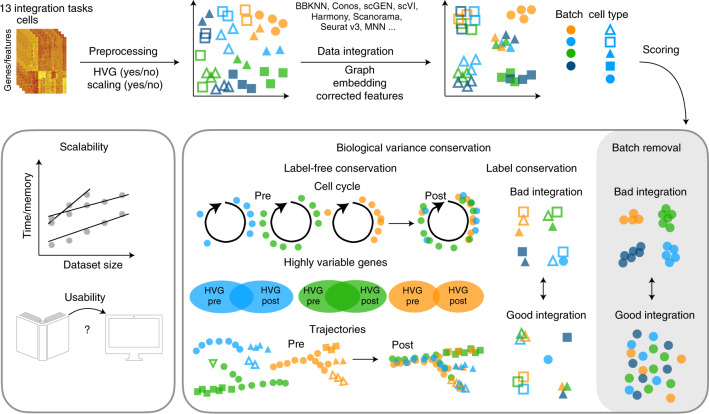
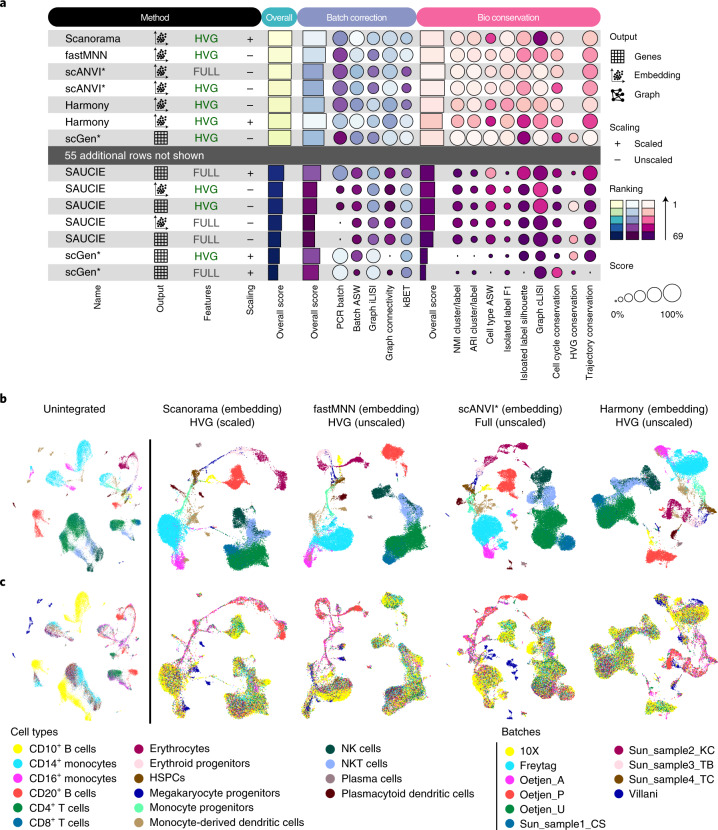
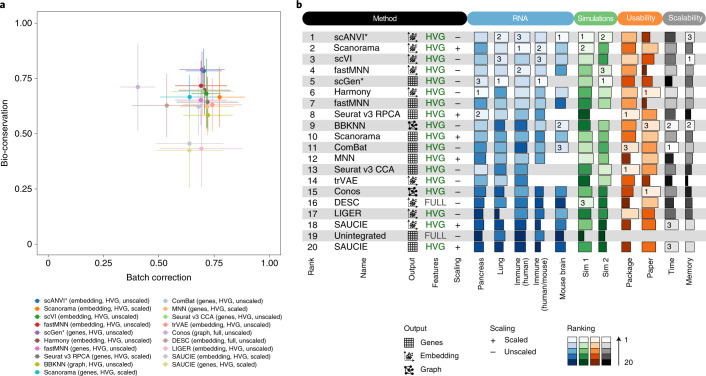
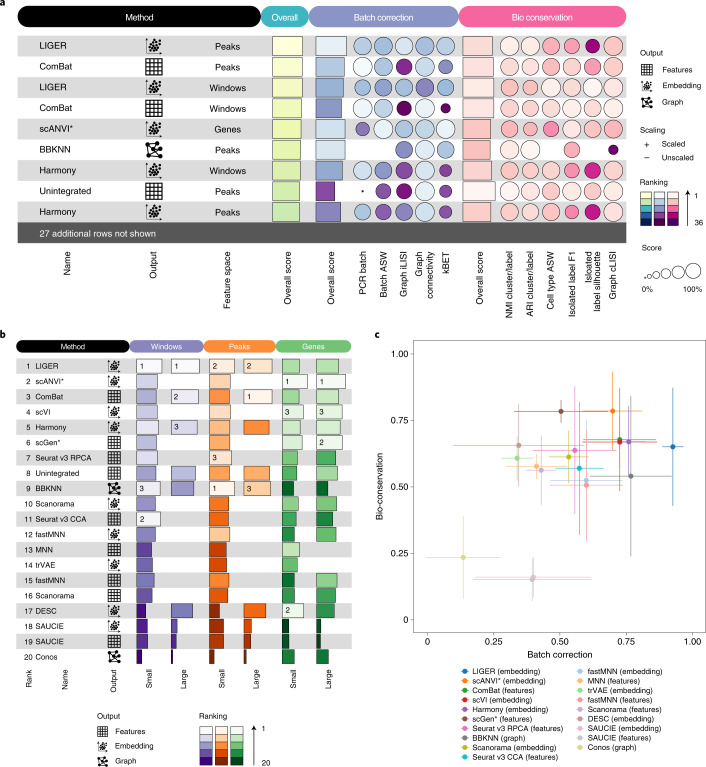
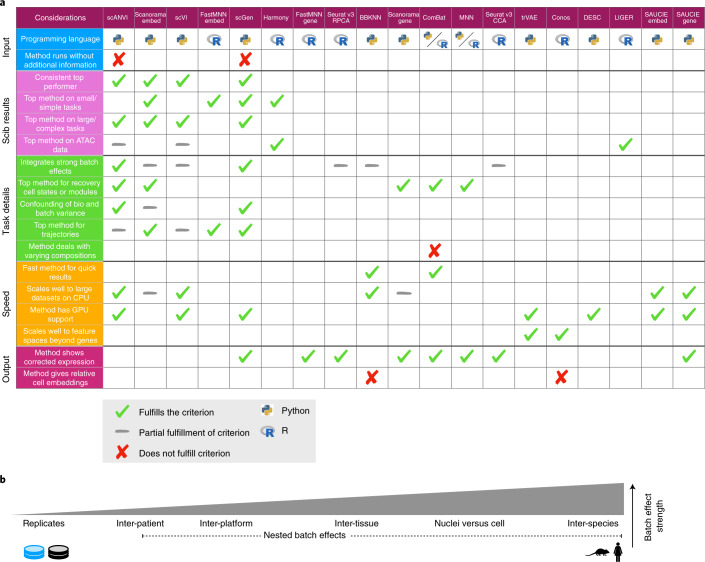
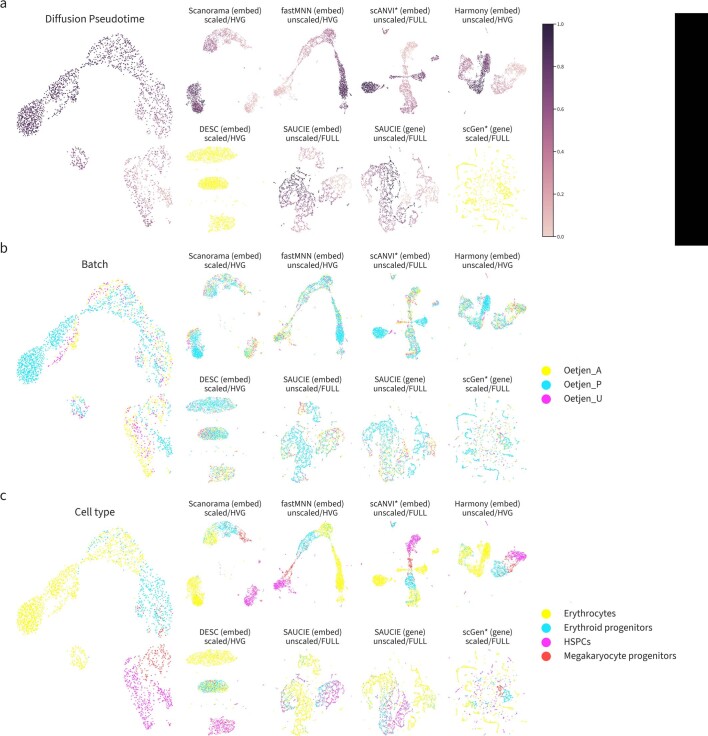
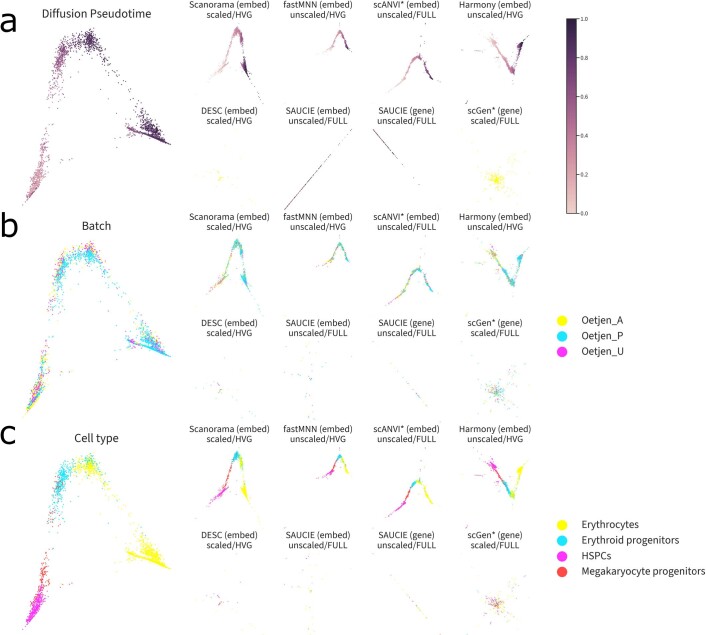
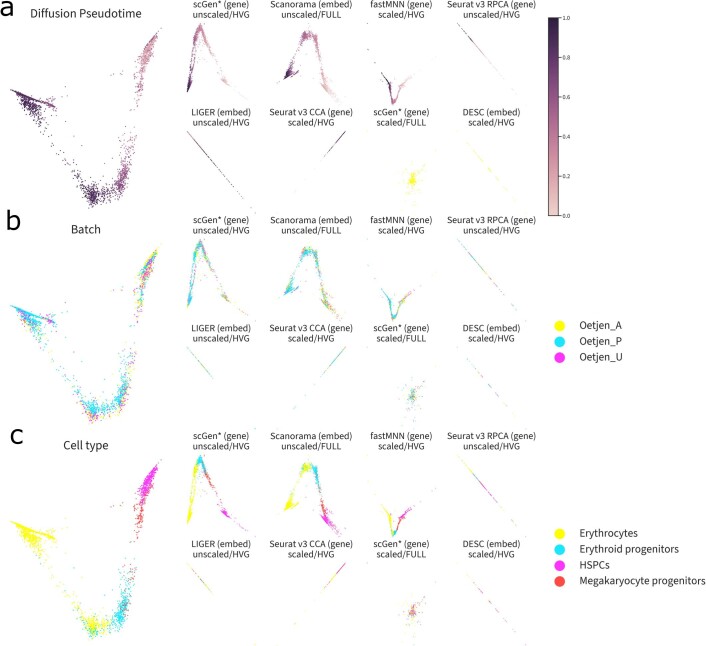
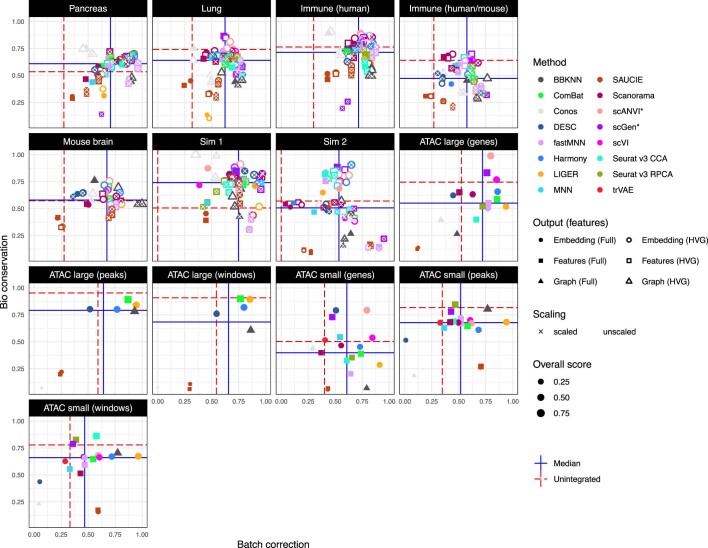
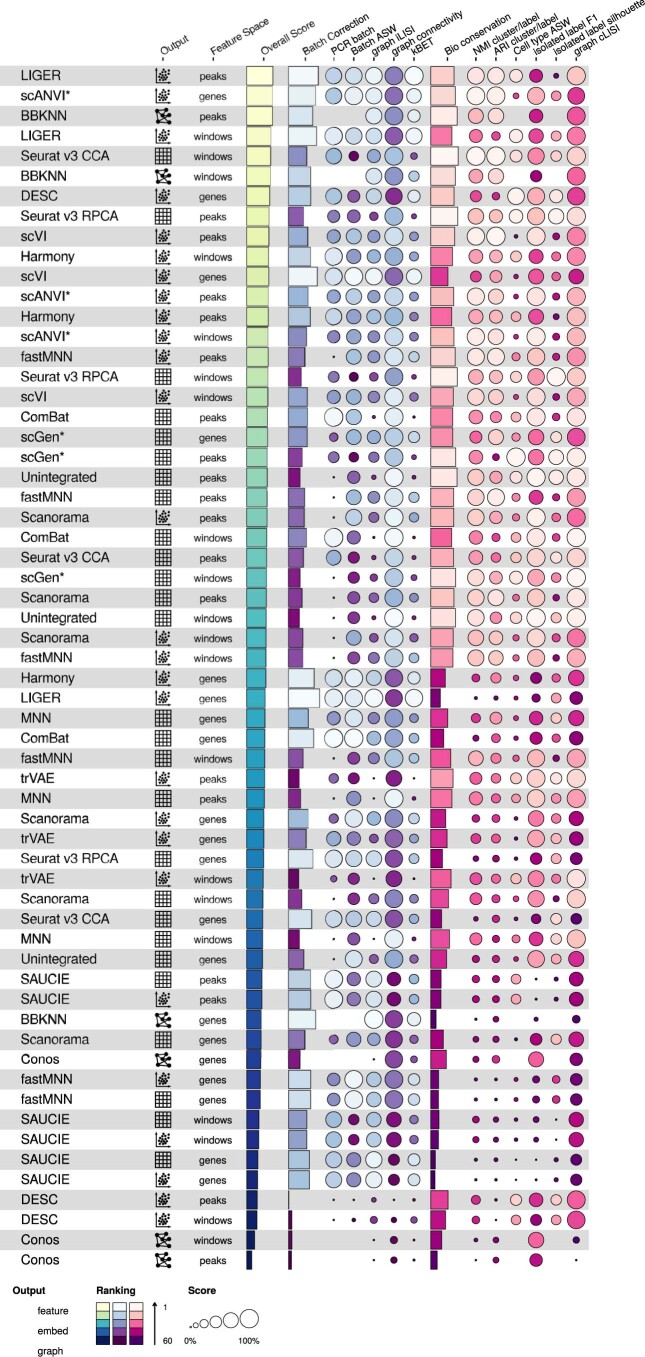
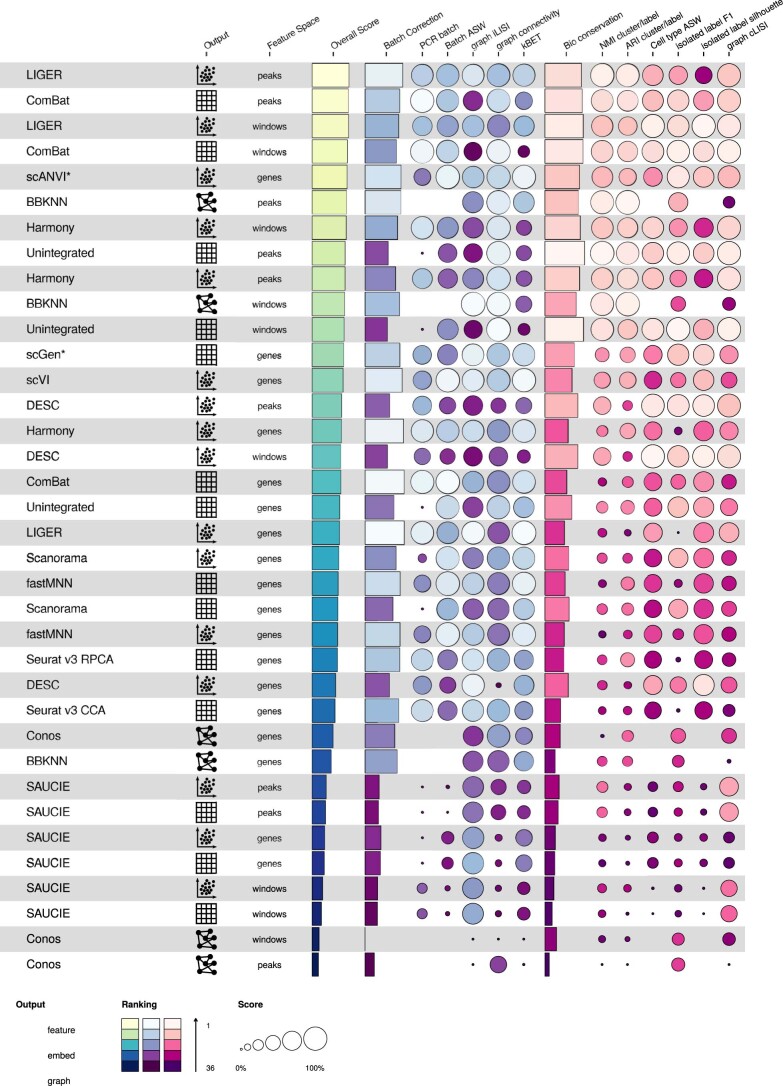
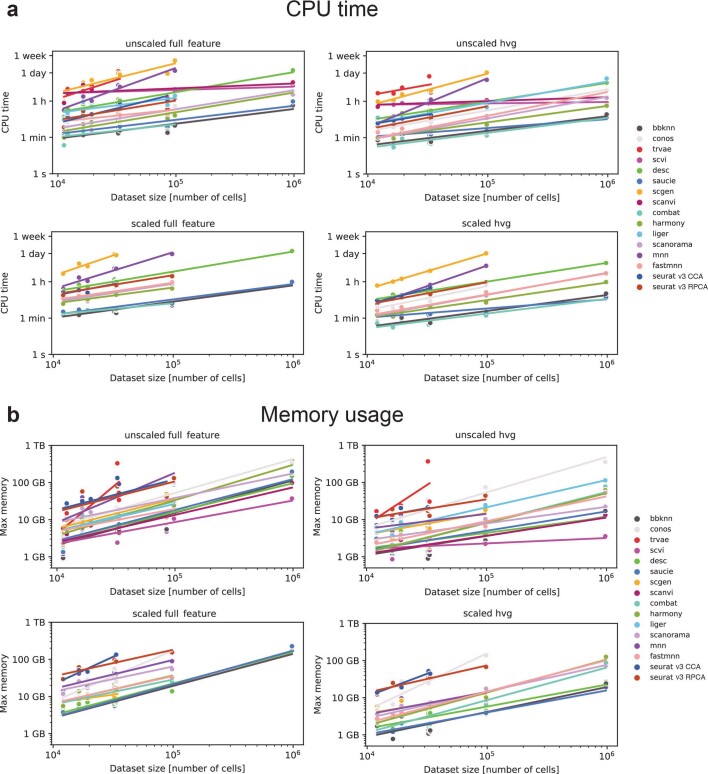
Single-cell atlases often include samples that span locations, laboratories and conditions, leading to complex, nested batch effects in data. Thus, joint analysis of atlas datasets requires reliable data integration. To guide integration method choice, we benchmarked 68 method and preprocessing combinations on 85 batches of gene expression, chromatin accessibility and simulation data from 23 publications, altogether representing >1.2 million cells distributed in 13 atlas-level integration tasks. We evaluated methods according to scalability, usability and their ability to remove batch effects while retaining biological variation using 14 evaluation metrics. We show that highly variable gene selection improves the performance of data integration methods, whereas scaling pushes methods to prioritize batch removal over conservation of biological variation. Overall, scANVI, Scanorama, scVI and scGen perform well, particularly on complex integration tasks, while single-cell ATAC-sequencing integration performance is strongly affected by choice of feature space. Our freely available Python module and benchmarking pipeline can identify optimal data integration methods for new data, benchmark new methods and improve method development.
Overview
The claims and statistics of this paper haven’t been checked yet.
Free: it reads the open-access text and checks the first 5 claims that cite a source we can check. Create a free account to check every claim.
Integrity signals
Registry
Cites
Statistics
Figures
Verification
Claims the paper makes
The claims and statistics of this paper haven’t been checked yet.
Free: it reads the open-access text and checks the first 5 claims that cite a source we can check. Create a free account to check every claim.
Claims other papers make about this one
Each is checked against this paper’s own text: does it say what the citing paper says it does?
The source backs part of the claim, not all of it — or backs it for a different population, condition or comparison.
In the citing paper
“Such integrative analysis is complicated by batch effects and biological differences between primary tissue and cell culture26,27.”
From scPerturb: harmonized single-cell perturbation data (2024) · cites this paper as [27]
Experimental — accuracy not yet measuredThe source backs part of the claim, not all of it — or backs it for a different population, condition or comparison.
In the citing paper
“Furthermore, 8 evaluation metrics (3 for batch effect removal and 5 for biological variation retention) are computed to verify the integration ability by scIB47, which ranks TOSICA the first out of all 13 applicable methods evaluated on combined effectiveness in batch effect removal and biological variation retention (Fig. 5b).”
From Transformer for one stop interpretable cell type annotation (2023) · cites this paper as [47]
Experimental — accuracy not yet measuredThe source backs part of the claim, not all of it — or backs it for a different population, condition or comparison.
In the citing paper
“In particular, Harmony22 is an algorithm well suited for correcting batch effects that may be present in a dimensionality-reduced single-cell expression dataset,79”
From hdWGCNA identifies co-expression networks in high-dimensional transcriptomics data (2023) · cites this paper as [79]
Experimental — accuracy not yet measuredThe cited source says what the claim attributes to it.
In the citing paper
“Although this work simplifies dataset access, joint analysis is limited by the complexity of data integration27.”
From scPerturb: harmonized single-cell perturbation data (2024) · cites this paper as [27]
The cited source says what the claim attributes to it.
In the citing paper
“Depending on the complexity of the integration tasks, such as atlas integration, deep-learning approaches such as scANVI40, scVI41 and scGen42 as well as linear-embedding models such as Scanorama43 performed best”
From Best practices for single-cell analysis across modalities (2023) · cites this paper as [35]
10 more claims about this paper
Create a free account to see every claim other papers make about this one.
Self-check
Percentages, sums and reported differences re-computed from the paper’s own numbers.
The self-check needs the paper’s full text.
Citations
Cites
Scikit-learn: Machine Learning in Python
Pedregosa, F., Varoquaux, G., Gramfort, A., Michel, V., Thirion, B., Grisel, O., Blondel, M., Müller, A., Nothman, J., Louppe, G., et al. (2012) · arXiv · doi:10.48550/arxiv.1201.0490 · Cited by 71,016 · cited 12×
“Similar to NMI, we compared the cell-type labels with the NMI-optimized Louvain clustering computed on the integrated dataset.”
BackgroundInfluentialSciPy 1.0: fundamental algorithms for scientific computing in Python
Virtanen, P., Gommers, R., Oliphant, T. E., Haberland, M., Reddy, T., Cournapeau, D., Burovski, E., Peterson, P., Weckesser, W., Bright, J., et al. (2020) · Nature Methods · doi:10.1038/s41592-019-0686-2 · Cited by 38,430
A note on two problems in connexion with graphs
Dijkstra, E. W. (1959) · Numerische Mathematik · doi:10.1007/bf01386390 · Cited by 29,065
Silhouettes: A graphical aid to the interpretation and validation of cluster analysis
Rousseeuw, P. J. (1987) · Journal of Computational and Applied Mathematics · doi:10.1016/0377-0427(87)90125-7 · Cited by 21,392
Comprehensive Integration of Single-Cell Data
Stuart, T., Butler, A., Hoffman, P., Hafemeister, C., Papalexi, E., Mauck, W. M., Hao, Y., Stoeckius, M., Smibert, P., & Satija, R. (2019) · Cell · doi:10.1016/j.cell.2019.05.031 · Cited by 15,453
ggplot2: Elegant Graphics for Data Analysis
Wickham, H. (2009) · doi:10.1007/978-0-387-98141-3 · Cited by 14,447
Fast, sensitive and accurate integration of single-cell data with Harmony
Korsunsky, I., Millard, N., Fan, J., Slowikowski, K., Zhang, F., Wei, K., Baglaenko, Y., Brenner, M., Loh, P.-R., & Raychaudhuri, S. (2019) · Nature Methods · doi:10.1038/s41592-019-0619-0 · Cited by 10,488
SciPy 1.0: fundamental algorithms for scientific computing in Python
Virtanen, P., Gommers, R., Oliphant, T. E., Haberland, M., Reddy, T., Cournapeau, D., Burovski, E., Peterson, P., Weckesser, W., Bright, J., et al. (2019) · Apollo - University of Cambridge Repository · doi:10.17863/cam.64134 · Cited by 10,460
UMAP: Uniform Manifold Approximation and Projection
McInnes, L., Healy, J., Saul, N., & Großberger, L. (2018) · Journal of Open Source Software · doi:10.21105/joss.00861 · Cited by 9,826
SCANPY: large-scale single-cell gene expression data analysis
Wolf, F. A., Angerer, P., & Theis, F. J. (2018) · Genome Biology · doi:10.1186/s13059-017-1382-0 · Cited by 8,881 · cited 1×
“Metrics were run on the integrated and unintegrated AnnData 47 objects.”
MethodSelf-citation
Cited by
Items 401–500 of 1,008
Mihajlović, K., Ceddia, G., Malod‐Dognin, N., Novak, G., Kyriakis, D., Skupin, A., & Pržulj, N. (2024) · Scientific Reports · doi:10.1038/s41598-024-61844-3 · Cited by 19
“NetSC-NMTF produces gene embedding vectors (i.e., “gene embeddings”) that are biologically relevant, as shown by clustering and enrichment analysis in biological annotations from Gene Ontology (GO) 27 , KEGG pathways (KP) 26 and Reactome pathways (RP) 28 .”
Kim, D., Kim, J., Yu, Y. S., Kim, Y. R., Baek, S. H., & Won, K. (2022) · Nucleic Acids Research · doi:10.1093/nar/gkac593 · Cited by 17
“However, batch correction can also lose relevant biologically meaningful trajectory (46).”
BackgroundBig Data in Gastroenterology Research
Alizadeh, M. A., Moura, N. S., Schledwitz, A., Patil, S. A., Ravel, J., & Raufman, J. (2023) · International Journal of Molecular Sciences · doi:10.3390/ijms24032458 · Cited by 17
Built on sand: the shaky foundations of simulating single-cell RNA sequencing dataPreprint
Crowell, H. L., Leonardo, S. X. M., Soneson, C., & Robinson, M. D. (2021) · bioRxiv (Cold Spring Harbor Laboratory) · doi:10.1101/2021.11.15.468676 · Cited by 16
“As a result, simulations have been applied to benchmark methods across a wide range of tasks, including differential expression analysis([9,10,11]), trajectory inference([12]), and data integration([13,14]).”
BackgroundHaage, V. C., Tuddenham, J. F., Comandante-Lou, N., Bautista, A. R., Monzel, A. S., Chiu, R., Fujita, M., Garcia, F. G., Bhattarai, P., Patel, R., et al. (2024) · bioRxiv (Cold Spring Harbor Laboratory) · doi:10.1101/2024.02.06.579103 · Cited by 16
Insights, opportunities, and challenges provided by large cell atlases
Hemberg, M., Marini, F., Ghazanfar, S., Al-Ajami, A., Abassi, N., Anchang, B., Benayoun, B. A., Cao, Y., Chen, K., Cuesta-Astroz, Y., et al. (2025) · Genome biology · doi:10.1186/s13059-025-03771-8 · Cited by 23
“To relate cell atlases with each other or with additional single-cell datasets, the research community relies on data integration tools [37].”
A comprehensive survey of genome language models in bioinformatics
Shu, L., Tang, J., Guan, X., & Zhang, D. (2026) · Briefings in Bioinformatics · doi:10.1093/bib/bbaf724 · Cited by 25
Organoids in drug development: from predictive models to regulatory integration
Song, X., Chen, X., Chen, Q., Wang, H., Zhang, T., Liao, M. Z., Liu, C., Yu, H., Hao, Y., Gu, G., et al. (2026) · Drug Discovery Today · doi:10.1016/j.drudis.2026.104608 · Cited by 21
Bai, D., Mo, S., Zhang, R., Luo, Y., Gao, J., Yang, J. P., Wu, Q., Rahmani, H., Amariuta, T., Grotjahn, D., et al. (2026) · Nature Communications · doi:10.1038/s41467-026-69102-y · Cited by 15
“For the zero-shot batch integration task, we used the widely adopted pancreas dataset 49 , which comprises M = 16, 382 cells and N = 19, 093 genes across six batches, each generated using a distinct scRNA-seq technology.”
InfluentialDip, S. A., Mallick, D., Shuvo, U. A., Soumma, S. B., Rafsani, F., Paul, B. K., Moumi, N. A., Ahmed, S., & Zhang, L. (2026) · Briefings in Bioinformatics · doi:10.1093/bib/bbag110 · Cited by 25
“…the full scRNA-seq pipeline QC, clustering, annotation, batch correction, trajectory analysis via GPT-4 and tools including Scanpy [62], CellTypist [63], scVI-tools [64], Enrichr [65], Harmony [66], and scIB [67]; its adaptive planning yields expert-level annotations but incurs higher runtime.”
Which single-cell analysis tool is best? Scientists offer advice
Dance, A. (2022) · Nature · doi:10.1038/d41586-022-04426-5 · Cited by 14
JOINTLY: interpretable joint clustering of single-cell transcriptomes
Møller, A. F., & Madsen, J. G. S. (2023) · Nature Communications · doi:10.1038/s41467-023-44279-8 · Cited by 18
“…eight state-of-the-art integration methods 1 – 3, 7, 12 – 14 to a sxRNA-seq Next, we expanded the benchmark by including an additional 4 integration tasks containing between 8444 and 46,993 cells distributed over fi ve to 18 batches 4,18 – 21 with labels transferred from similar datasets 4,20 – 24 .”
InfluentialMYT1L deficiency impairs excitatory neuron trajectory during cortical development
Yen, A., Sarafinovska, S., Chen, X., Skinner, D. D., Leti, F., Crosby, M., Hoisington‐Lopez, J., Wu, Y., Chen, J., Li, Z. A., et al. (2024) · Nature Communications · doi:10.1038/s41467-024-54371-2 · Cited by 16
Hao, G., Yi, F., Yu, Z., Su, Y., Zhu, H., Wang, F., Chen, X., Yang, Y., Wang, G., Wong, K., et al. (2025) · Nature Communications · doi:10.1038/s41467-025-57027-x · Cited by 16
“According to the prior benchmarking of single-cell genomics 26 , we assess the bio-conservationquality ofthecellembeddingsthrougha suite of metrics, including the ARI, NMI, F1, cell-type average silhouette width (ASW), with larger values of these metrics indicating better performance.”
Osorio, D., Kuijjer, M. L., & Cai, J. J. (2021) · Bioinformatics · doi:10.1093/bioinformatics/btab549 · Cited by 20
Single-Cell RNA Sequencing Procedures and Data Analysis
Wolfien, M., David, R., & Galow, A.-M. (2021) · Exon Publications eBooks · doi:10.36255/exonpublications.bioinformatics.2021.ch2 · Cited by 21
Toward learning a foundational representation of cells and genes
Lotfollahi, M. (2024) · Nature Methods · doi:10.1038/s41592-024-02367-7 · Cited by 14
Schaefer, M., Peneder, P., Malzl, D., Peycheva, M., Burton, J., Hakobyan, A., Sharma, V. S., Krausgruber, T., Menche, J., Tomazou, E. M., et al. (2024) · bioRxiv (Cold Spring Harbor Laboratory) · doi:10.1101/2024.10.15.618501 · Cited by 15
Distinct immunophenotypic profiles and neutrophil heterogeneity in colorectal cancer
Bai, M., Jin, Y., Jin, Z., Xie, Y., Chen, J., Zhong, Q., Wang, Z., Zhang, Q., Cai, Y., Qun, F., et al. (2025) · Cancer Letters · doi:10.1016/j.canlet.2025.217570 · Cited by 17
spVelo: RNA velocity inference for multi-batch spatial transcriptomics data
Long, W., Liu, T., Xue, L., & Zhao, H. (2025) · Genome biology · doi:10.1186/s13059-025-03701-8 · Cited by 15
“As a result, we used scGen [29] for batch effect correction, as recommended by scIB [44].”
Wei, W.-Q., Li, S., Zhang, D., & Tang, W. (2025) · Developmental Cell · doi:10.1016/j.devcel.2025.07.022 · Cited by 17
Metabolomics across scales: from single cells to population studies
Alexandrov, T., & Zamboni, N. (2026) · Nature · doi:10.1038/s41586-026-10277-1 · Cited by 18
Wong, M., Wei, Y., & Ho, Y. (2023) · Current Opinion in HIV and AIDS · doi:10.1097/coh.0000000000000809 · Cited by 16
“Batch effect correction LIGER [82], ComBat [83] See [77] for benchmark comparisons of different integration methods.”
BackgroundMethodErythropoietin re-wires cognition-associated transcriptional networks
Singh, M., Zhao, Y., Gastaldi, V. D., Wojcik, S. M., Curto, Y., Kawaguchi, R., Merino, R. M., Garcia‐Agudo, L. F., Taschenberger, H., Brose, N., et al. (2023) · Nature Communications · doi:10.1038/s41467-023-40332-8 · Cited by 16
“Ultimately, using the combinations of established and most popular clustering algorithms 29 – 31 , we assembled transcriptionally similar nuclei, represented by 36 clusters (Fig.”
Divoux, A., Whytock, K. L., Halász, L., Hopf, M. E., Sparks, L. M., Osborne, T. F., & Smith, S. R. (2024) · American Journal of Physiology-Cell Physiology · doi:10.1152/ajpcell.00726.2023 · Cited by 15
G2 arrest primes hematopoietic stem cells for megakaryopoiesis
Garyn, C. M., Bover, O., Murray, J. W., Ma, J., Salas-Briceno, K., Ross, S. R., & Snoeck, H.-W. (2024) · Cell Reports · doi:10.1016/j.celrep.2024.114388 · Cited by 14
Zhao, B., Song, K., Wei, D., Xiong, Y., & Ding, J. (2025) · Communications Biology · doi:10.1038/s42003-025-07692-x · Cited by 19
“Besides, the evaluation of current batch correction meth-ods heavily relies on the simulation datasets 27,28 .”
InfluentialWu, Y., & Tang, F. (2025) · Genome biology · doi:10.1186/s13059-025-03639-x · Cited by 21
“We further evaluated scExtract’s integration performance on six larger datasets [6, 9, 35], containing between 50,000 and 600,000 cells in total, representing typical real-world integration scenarios.”
InfluentialA multimodal cross-species comparison of pancreas development
Yang, K., Spitzer, H., Sterr, M., Hrovatin, K., Sean de la, O., Zhang, X., Setyono, E. S. A., Ud‐Dean, M., Walzthoeni, T., Flisikowski, K., et al. (2025) · Nature Communications · doi:10.1038/s41467-025-64774-4 · Cited by 22
Self-citationGLOBE: a contrastive learning-based framework for integrating single-cell transcriptome datasets
Yan, X., Zheng, R., & Li, M. (2022) · Briefings in Bioinformatics · doi:10.1093/bib/bbac311 · Cited by 14
A comparison of data integration methods for single-cell RNA sequencing of cancer samplesPreprint
Richards, L. M., Riverin, M., Mohanraj, S., Ayyadhury, S., Croucher, D. C., Díaz-Mejía, J. J., Coutinho, F. J., Dirks, P. B., & Pugh, T. J. (2021) · bioRxiv (Cold Spring Harbor Laboratory) · doi:10.1101/2021.08.04.453579 · Cited by 12
“We did not include Seurat’s canonical correlation analysis 19 (CCA), as it employs a similar methodology to RPCA but has inferior performance on datasets that share only a subset of cell types, as often encountered when comparing cancerous tissues 5 .”
MethodA systematic evaluation of highly variable gene selection methods for single-cell RNA-sequencing
Zhao, R., Lu, J., Li, Y.-Z., Zhou, W., Zhao, N., & Ji, H. (2025) · Genome biology · doi:10.1186/s13059-025-03887-x · Cited by 22
A single-cell time-series atlas of endothelial cell embryonic development
Lin, L., Zhong, J., Jiang, F., Wang, Y.-X., Ma, L.-Y., Yang, J., Li, Y.-Y., Gao, R., Feng, H., Cai, B., et al. (2026) · Cell · doi:10.1016/j.cell.2026.01.002 · Cited by 18
Tosoni, G., Ayyildiz, D., Snoeck, S., Moreno‐Jiménez, E. P., Penning, A., Santiago-Mujika, E., Ormaechea, O. R., Lee, H., Poovathingal, S. K., Davie, K., et al. (2026) · Cell stem cell · doi:10.1016/j.stem.2026.04.002 · Cited by 16
Fouché, A., & Zinovyev, A. Y. (2023) · Frontiers in Bioinformatics · doi:10.3389/fbinf.2023.1191961 · Cited by 16
Predicting cell types with supervised contrastive learning on cells and their types
Heryanto, Y. D., Zhang, Y., & Imoto, S. (2024) · Scientific Reports · doi:10.1038/s41598-023-50185-2 · Cited by 15
Карнаухов, В. К., Gac, A. L., Mutala, L. B., Darbois, A., Perrin, L., Legoux, F. P., Walczak, A. M., Mora, T., & Lantz, O. J. (2024) · Proceedings of the National Academy of Sciences · doi:10.1073/pnas.2311348121 · Cited by 13
Deep Batch Integration and Denoise of Single‐Cell RNA‐Seq Data
Lu, Q., Zhang, G., Zhang, S., & Chen, Y. (2024) · Advanced Science · doi:10.1002/advs.202308934 · Cited by 14
Bhayana, S., Schytz, P. A., Olesen, E. T. B., Soh, K., & Das, V. (2024) · American Journal Of Pathology · doi:10.1016/j.ajpath.2024.07.007 · Cited by 15
Guo, B., Ling, W., Kwon, S. H., Panwar, P., Ghazanfar, S., Martinowich, K., & Hicks, S. C. (2025) · Small Methods · doi:10.1002/smtd.202401194 · Cited by 19
Millard, N., Chen, J. H., Palshikar, M. G., Pelka, K., Spurrell, M., Price, C. O., He, J., Hacohen, N., Raychaudhuri, S., & Korsunsky, I. (2025) · Genome biology · doi:10.1186/s13059-025-03479-9 · Cited by 17
“Highly variable gene conservation [48] metrics showed that Crescendo and ComBat-Seq outperform the alternative algorithms (Additional file 1: Table S1A, “ Methods”).”
Application of Deep Learning for Single Cell Multi-Omics: A State-of-the-Art Review
Wani, S. A., Khan, S. A., & Quadri, S. (2025) · Archives of Computational Methods in Engineering · doi:10.1007/s11831-025-10230-x · Cited by 15
Timofeeva, A. M., Aulova, K. S., & Nevinsky, G. A. (2025) · Brain Sciences · doi:10.3390/brainsci15050486 · Cited by 17
“A considerable number of these data, however, demand robust computational methodologies for their interpretation [335,336].”
A CRISPR/Cas9-based enhancement of high-throughput single-cell transcriptomics
Pandey, A. C., Bezney, J., DeAscanis, D., Kirsch, E., Ahmed, F., Crinklaw, A., Choudhary, K. S., Mandala, T., Deason, J., Hamidi, J., et al. (2025) · Nature Communications · doi:10.1038/s41467-025-59880-2 · Cited by 19
“2g, h) 38,39 .”
Assessing and improving reliability of neighbor embedding methods: a map-continuity perspective
Liu, Z., Ma, R., & Zhong, Y. (2025) · Nature Communications · doi:10.1038/s41467-025-60434-9 · Cited by 28
“The dataset has been preprocessed by Luecken et al. [36].”
Kiaee, K., Jodat, Y. A., Bassous, N. J., Matharu, N. K., & Shin, S. R. (2021) · Cells · doi:10.3390/cells10123422 · Cited by 15
“Many methods have been recently developed to mitigate batch effects without confounding biological variations, in depth review and benchmarks are reported elsewhere [27,28].”
MethodscMoC: single-cell multi-omics clustering
Eltager, M., Abdelaal, T., Mahfouz, A. E., & Reinders, M. J. T. (2022) · Bioinformatics Advances · doi:10.1093/bioadv/vbac011 · Cited by 14
Ranek, J. S., Stanley, N., & Purvis, J. E. (2022) · Genome biology · doi:10.1186/s13059-022-02749-0 · Cited by 14
“Method scores were subsequently min-max scaled to ensure datasets were equally weighted prior to computing the average.”
MethodCell-connectivity-guided trajectory inference from single-cell data
Smolander, J., Junttila, S., & Elo, L. L. (2023) · Bioinformatics · doi:10.1093/bioinformatics/btad515 · Cited by 17
“If the dataset has batch effects, and the user does not want to model these differences in trajectory inference, data integration methods (Butler et al. 2018, Luecken et al. 2022) can be used.”
MethodBailin, S. S., Kropski, J. A., Gangula, R., Hannah, L., Simmons, J. D., Mashayekhi, M., Ye, F., Fan, R., Mallal, S. A., Warren, C. M., et al. (2023) · Frontiers in Immunology · doi:10.3389/fimmu.2023.1152003 · Cited by 14
A pulmonologist's guide to perform and analyse cross-species single lung cell transcriptomics
Pennitz, P., Kirsten, H., Friedrich, V. D., Wyler, E., Goekeri, C., Obermayer, B., Heinz, G. A., Mashreghi, M., Büttner, M., Trimpert, J., et al. (2022) · European Respiratory Review · doi:10.1183/16000617.0056-2022 · Cited by 15
Self-citationLi, Q. (2022) · bioRxiv (Cold Spring Harbor Laboratory) · doi:10.1101/2022.04.17.488600 · Cited by 13
Choi, H., Park, J., Kim, S., Kim, J., Lee, D., Bae, S., Shin, H., & Lee, D. (2024) · bioRxiv (Cold Spring Harbor Laboratory) · doi:10.1101/2024.05.08.593094 · Cited by 13
Bilous, M., Buszta, D., Bac, J., Kang, S., Dong, Y., Tissot-Renaud, S., Andre, S., Gaveta, M. A., Voize, C., Peters, S., et al. (2025) · bioRxiv (Cold Spring Harbor Laboratory) · doi:10.1101/2025.04.23.649965 · Cited by 13
“Biological conservation of cell types and batch effect strength were assessed using metrics proposed by Luecken et al, 2022 31 , as implemented in the scib-metrics package ( https://github.com/YosefLab/scib-metrics ).”
Stack: In-Context Learning of Single-Cell BiologyPreprint
Dong, M., Adduri, A., Gautam, D., Wu, L., Kernick, C., Coons, M. M., Chih, Y.-C., Carpenter, C., Shah, R. M., Ricci-Tam, C., et al. (2026) · bioRxiv (Cold Spring Harbor Laboratory) · doi:10.64898/2026.01.09.698608 · Cited by 50
“Across perturbation effect pre-2 diction and expression profile generation benchmarks, Stack’s zero-shot performance surpasses all evaluated strong baselines in 28 of 31 cases (Kernfeld et al., 2023; Adduri et al., 2025; Luecken et al., 2022).”
MapMyCells: High-performance mapping of cell-by-gene data to reference brain taxonomies
Daniel, S. F., Lee, C., Mollenkopf, T. S., Lee, M. H., Arbuckle, J., Fiabane, E., Gabitto, M. I., Johansen, N., Kapen, I., Kraft, A. W., et al. (2026) · Cell Reports Methods · doi:10.64898/2026.03.06.710160 · Cited by 34
A guide to transcriptomic deconvolution in cancer
Dai, Y., Guo, S., Pan, Y., Castignani, C., Montierth, M. D., Loo, P. V., & Wang, W. (2025) · Nature reviews. Cancer · doi:10.1038/s41568-025-00886-9 · Cited by 20
Interpretation, extrapolation and perturbation of single cells
Dimitrov, D., Schrod, S., Rohbeck, M., & Stegle, O. (2026) · Nature Reviews Genetics · doi:10.1038/s41576-025-00920-4 · Cited by 39
Leveraging multi-modal foundation models for analysing spatial multi-omic and histopathology data
Liu, T., Huang, T., Ding, T., Wu, H., Humphrey, P., Perincheri, S., Schalper, K., Ying, R., Xu, H., Zou, J., et al. (2026) · Nature Biomedical Engineering · doi:10.1038/s41551-025-01602-6 · Cited by 36
Gene regulatory landscape dissected by single-cell four-omics sequencing
Chen, Y., Liu, Z., Xu, H., Liu, J., Wang, M., Chi, Y., LIANG, B., Liu, M., Peng, Y., Ge, H., et al. (2026) · Nature · doi:10.1038/s41586-026-10322-z · Cited by 24
Unbiased integration of single cell transcriptome replicates
Loza, M., Teraguchi, S., Standley, D. M., & Díez, D. (2022) · NAR Genomics and Bioinformatics · doi:10.1093/nargab/lqac022 · Cited by 15
“Following Haghverdi et al. (2018) (4) we assume that the batch effect is almost orthogonal to the biological space, and that the variations due to the batch effect are smaller than the biological variation (see Supplementary material of (4) for a deeper discussion of these assumptions).”
Tissue niches and immunopathology through the lens of spatial tissue profiling techniques
Reguant, A. P., Kroh, S., & Hauser, A. E. (2023) · European Journal of Immunology · doi:10.1002/eji.202350484 · Cited by 16
Cross-modality representation and multi-sample integration of spatially resolved omics data
Li, Z., Cui, X., Chen, X., Gao, Z., Liu, Y., Pan, Y., Chen, S., Lv, H., Zhai, L., & Jiang, R. (2026) · Briefings in Bioinformatics · doi:10.1093/bib/bbag214 · Cited by 17
“…conservation capabilities of PRESENT and other baseline methods, we systematically benchmarked them using 14 metrics, evenly divided into two categories: batch effect removal and biological variance conservation, following a recent benchmark framework for single-cell omics data integration [68].”
Zhang, C., Liu, L., Zhang, Y., Li, M., Fang, S., Kang, Q., Chen, A., Xu, X., Zhang, Y., & Li, Y. (2024) · GigaScience · doi:10.1093/gigascience/giae042 · Cited by 14
“, , , , , , 1 1 1 b b b 1 N 1 N V v v V v v (6) 465”
Causal disentanglement for single-cell representations and controllable counterfactual generation
Gao, Y., Dong, K., Shan, C., Li, D., & Liu, Q. (2025) · Nature Communications · doi:10.1038/s41467-025-62008-1 · Cited by 24
Single-Cell Analysis for Whole-Organism Datasets
Pisco, A. O., Tojo, B. M., & McGeever, A. (2021) · Annual Review of Biomedical Data Science · doi:10.1146/annurev-biodatasci-092820-031008 · Cited by 11
Single-Cell Profiling in Multiple Myeloma: Insights, Problems, and Promises
Samur, M., Szalat, R. E., & Munshi, N. C. (2023) · Blood · doi:10.1182/blood.2022017145 · Cited by 21
Maitra, C., Seal, D. B., Das, V., & De, R. K. (2023) · Frontiers in Molecular Biosciences · doi:10.3389/fmolb.2023.1184748 · Cited by 13
“, 2022), and technical batch effects (Luecken et al., 2022) account for the stochasticity and noise in the data.”
BackgroundAnalyzing single cell RNA sequencing with topological nonnegative matrix factorization
Hozumi, Y., & Wei, G. (2024) · Journal of Computational and Applied Mathematics · doi:10.1016/j.cam.2024.115842 · Cited by 17
Advances in Single-Cell Multi-Omics and Application in Cardiovascular Research
Zhang, X., Qiu, H., Zhang, F., & Ding, S. (2022) · Frontiers in Cell and Developmental Biology · doi:10.3389/fcell.2022.883861 · Cited by 15
Netskar, H., Pfefferle, A., Goodridge, J. P., Sohlberg, E., Dufva, O., Teichmann, S. A., Clancy, T., Horowitz, A., & Malmberg, K. (2023) · bioRxiv (Cold Spring Harbor Laboratory) · doi:10.1101/2023.10.26.564050 · Cited by 12
Building a unified model for drug synergy analysis powered by large language models
Liu, T., Chu, T., Luo, X., & Zhao, H. (2025) · Nature Communications · doi:10.1038/s41467-025-59822-y · Cited by 29
“Open-source is important for the development of science 27 .”
Quantifying batch effects for individual genes in single-cell data
Zhou, Y., Sheng, Q., Wang, G., Xu, L., & Jin, S. (2025) · Nature Computational Science · doi:10.1038/s43588-025-00824-7 · Cited by 23
“13–15 and Supplementary Note 3).”
InfluentialCAPTAIN: a multimodal foundation model pretrained on co-assayed single-cell RNA and protein
Ji, B., Hu, T., Wang, J., Liu, M., Xu, L., Zhang, Q., Zhong, S., Qiao, L., Zhang, Y., Peng, S., et al. (2026) · Nature Communications · doi:10.1038/s41467-026-72882-y · Cited by 22
Yan, Y., Kaihou, T., Lecuona, E., Wu, X., Shigemura, M., Sun, H., Kurihara, C., Gao, R., Nunez-Santana, F., Budinger, G. R. S., et al. (2025) · JCI Insight · doi:10.1172/jci.insight.197579 · Cited by 20
“Integration quality metrics confirmed successful batch effect removal (silhouette score: 0.72) while preserving biological variation (normalized mutual information: 0.79) (24), essential for distinguishing CLAD-specific signals from technical artifacts.”
InfluentialUnraveling the secrets of γδ T cells with single-cell biology
Sagar (2023) · Journal of Leukocyte Biology · doi:10.1093/jleuko/qiad131 · Cited by 11
Continually adapting pre-trained language model to universal annotation of single-cell RNA-seq data
Wan, H. S., Yuan, M., Fu, Y., & Deng, M. (2024) · Briefings in Bioinformatics · doi:10.1093/bib/bbae047 · Cited by 15
“The second experiment involved human immune datasets, comprising 10 different batches [22].”
Jurado, M. R., Tombor, L., Arsalan, M., Holubec, T., Emrich, F. C., Walther, T., Abplanalp, W. T., Fischer, A., Zeiher, A. M., Schulz, M. H., et al. (2024) · GigaScience · doi:10.1093/gigascience/giae011 · Cited by 12
Single‐Cell Hi‐C Technologies and Computational Data Analysis
Dautle, M., & Chen, Y. (2025) · Advanced Science · doi:10.1002/advs.202412232 · Cited by 15
Biases in machine-learning models of human single-cell data
Willem, T., Shitov, V. A., Luecken, M. D., Kilbertus, N., Bauer, S., Piraud, M., Buyx, A., & Theis, F. J. (2025) · Nature Cell Biology · doi:10.1038/s41556-025-01619-8 · Cited by 15
“Although the latter is possible through evaluation frameworks, such as scIB 52 and Open Problems in Single-Cell Analysis 79 , these frameworks rely on the availability of metadata that describe the possible origins of the batch effect (for example, laboratory protocols or equipment used).”
Self-citationJia, Z., Jiang, C. H., Li, J., Belgaid, Y., Ge, M., Li, L., Hu, S., Huang, X., Ho, T.-Y., Dong, W., et al. (2025) · Microsystems & Nanoengineering · doi:10.1038/s41378-025-00962-y · Cited by 11
Mapping the tumor immune landscape: single-cell RNA sequencing in cancer immunotherapy
Huang, Y., Zhang, M., & Gao, Q. (2025) · Cancer Letters · doi:10.1016/j.canlet.2025.218012 · Cited by 15
The current landscape and emerging challenges of benchmarking single-cell methods
Cao, Y., Yu, L., Torkel, M., Kim, S., Lin, Y., Yang, P., Speed, T. P., Ghazanfar, S., & Yang, J. Y. H. (2025) · Briefings in Bioinformatics · doi:10.1093/bib/bbaf380 · Cited by 17
Single-cell multiomics data integration and generation with scPairing
Niu, J., Vasquez-Rios, C., & Ding, J. (2025) · Cell Reports Methods · doi:10.1016/j.crmeth.2025.101211 · Cited by 18
“37 Modality alignment becomes easier to learn with low-dimensional representations, as fewer dimensions make finding the alignment simpler than if the inputs were high-dimensional raw counts.”
Chen, L., Li, H., Teng, J., Wang, Z., Qu, X., Chen, Z., Cai, X., Zeng, H., Bai, Z., Li, J., et al. (2025) · Advanced Science · doi:10.1002/advs.202504961 · Cited by 23
Overholt, K. J., Krog, J., Zanoni, I., & Bryson, B. D. (2021) · iScience · doi:10.1016/j.isci.2021.102738 · Cited by 11
Deng, Y., Choi, J., & Cao, K. L. (2022) · Briefings in Bioinformatics · doi:10.1093/bib/bbac088 · Cited by 10
“Using data integration to address this issue is difficult from both a statistical and data analysis perspective (Argelaguet et al., 2021; Luecken et al., 2020).”
BackgroundCommunity-driven ELIXIR activities in single-cell omics
Czarnewski, P., Mahfouz, A. E., Calogero, R., Palagi, P. M., Portell-Silva, L., Gonzalez‐Uriarte, A., Soneson, C., Burdett, T., Szomolay, B., Videm, P., et al. (2022) · F1000Research · doi:10.12688/f1000research.122312.1 · Cited by 14
Multi-batch single-cell comparative atlas construction by deep learning disentanglement
Lynch, A. W., Brown, M. A., & Meyer, C. A. (2023) · Nature Communications · doi:10.1038/s41467-023-39494-2 · Cited by 12
McKellar, D. W., Walter, L. D., Song, L. T., Mantri, M., Wang, M. F. Z., Vlaminck, I. D., & Cosgrove, B. D. (2020) · bioRxiv (Cold Spring Harbor Laboratory) · doi:10.1101/2020.12.01.407460 · Cited by 11
An integrated single-cell atlas of the limb skeleton from development through adulthoodPreprint
Herpelinck, T., Ory, L., Verbraeken, T., Nasello, G., Barzegari, M., Bolander, J., Luyten, F. P., Tylżanowski, P., & Geris, L. (2022) · bioRxiv (Cold Spring Harbor Laboratory) · doi:10.1101/2022.03.14.484345 · Cited by 11
Pytometry: Flow and mass cytometry analytics in PythonPreprint
Büttner, M., Hempel, F., Ryborz, T., Theis, F. J., & Schultze, J. L. (2022) · bioRxiv (Cold Spring Harbor Laboratory) · doi:10.1101/2022.10.10.511546 · Cited by 12
Self-citationThe Curated Cancer Cell Atlas: comprehensive characterisation of tumours at single-cell resolutionPreprint
Tyler, M., Gavish, A., Barbolin, C., Tschernichovsky, R., Hoefflin, R., Mints, M., Puram, S. V., & Tirosh, I. (2024) · bioRxiv (Cold Spring Harbor Laboratory) · doi:10.1101/2024.10.11.617836 · Cited by 11
“These methods attempt to remove batch effects in scRNA-seq data using certain assumptions as to what constitutes technical artefacts, but there is currently no widely agreed standard, and they will likely remove some true biological signal 28 .”
MethodHawkins, D. Y., Zuch, D. T., Huth, J., Rodriguez-Sastre, N., McCutcheon, K. R., Glick, A., Lion, A. T., Thomas, C. F., Descoteaux, A. E., Johnson, W. E., et al. (2023) · Bioinformatics · doi:10.1093/bioinformatics/btad278 · Cited by 10
“9 label separation: the accurate detection of populations-of-interest was measured using 180 population-specific F1 measures [13].”
BackgroundMethodLi, Y., Vigil, J. P., Pradhan, R., Zhu, J., & Libault, M. (2026) · Microorganisms · doi:10.3390/microorganisms14020380 · Cited by 16
“Plant single-cell research is beginning to adopt general multi-omics integration tools, but practices remain fragmented and most methods have been benchmarked primarily on animal and human data [89,90].”
A new "single" era of biomedicine and implications in disease research
Hu, C. (2023) · Journal of Bio-X Research · doi:10.1097/jbr.0000000000000140 · Cited by 15
Zito, A., & Lee, J. T. (2024) · Proceedings of the National Academy of Sciences · doi:10.1073/pnas.2312757121 · Cited by 13
The effect of data transformation on low-dimensional integration of single-cell RNA-seq
Park, Y., & Hauschild, A.-C. (2024) · BMC Bioinformatics · doi:10.1186/s12859-024-05788-5 · Cited by 12
“The benchmark work by Luecken et al. tried to find an optimal preprocessing step for various tools [28].”
BackgroundMethodInfluentialZaim, S. R., Pebworth, M.-P., McGrath, I., Okada, L. Y., Weiss, M. D. A., Reading, J., Czartoski, J., Torgerson, T. R., McElrath, M. J., Bumol, T. F., et al. (2024) · Nature Communications · doi:10.1038/s41467-024-50612-6 · Cited by 13
Filippov, I. V., Philip, C. S., Schauser, L., & Peterson, P. (2024) · BMC Genomics · doi:10.1186/s12864-024-10976-x · Cited by 16
“Nevertheless, large-scale studies remain challenging due to the high reagent costs and substantial batch effects [12].”
Metadata
- Authors
- Luecken, M. D., Büttner, M., Chaichoompu, K., Danese, A., Interlandi, M., Mueller, M. F., Strobl, D. C., Zappia, L., Dugas, M., Colomé-Tatché, M., & Theis, F. J.
- Affiliations
- Helmholtz Munich (DE)
- University of Münster (DE)
- University Hospital Heidelberg (DE)
- Corresponding author
- Theis, Fabian J.
- ORCID
- Venue
- Nature Methods
- Published
- 2021-12-23
- Volume
- 19
- Issue
- 1
- Pages
- 41-50
- ISSN
- 1548-7091 (ISSN-L)
- 1548-7105
- PMC
- PMC8748196
- OpenAlex
- W4225598893
- Cited by
- 1,438
- References
- 87
- Citations by year
- 2026: 380 · 2025: 358 · 2024: 304 · 2023: 210 · 2022: 115 · 2021: 53
- FWCI
- 55.88
- Type
- journal article
- Language
- en
- Open access
- hybrid
- doi.org
- Licence
- cc-by
- creativecommons.org/licenses/by/4.0 (tdm)
- creativecommons.org/licenses/by/4.0 (vor)
- Locations
- Nature Methods (publishedVersion, cc-by)
- bioRxiv (Cold Spring Harbor Laboratory) (acceptedVersion, cc-by)
- PubMed Central (publishedVersion, cc-by)
- PubMed (publishedVersion)
- Site cant be reached (submittedVersion, cc-by)
- Funders
- Silicon Valley Community Foundation (182835)
- Wellcome Trust (108413 /A/15/D)
- Chan Zuckerberg Initiative (182835)
- European Commission (874656, 2020 ‘, HORIZON2020)
- Helmholtz Zentrum München
- Topics
- Life Sciences › Biochemistry, Genetics and Molecular Biology › Molecular Biology › Single-cell and spatial transcriptomics
- Life Sciences › Biochemistry, Genetics and Molecular Biology › Molecular Biology › Gene expression and cancer classification
- Life Sciences › Biochemistry, Genetics and Molecular Biology › Molecular Biology › Bioinformatics and Genomic Networks
- Keywords
- single-cell data integration, batch effects, benchmarking, single-cell atlas, scANVI, scVI, single-cell ATAC-seq, chromatin accessibility, gene expression, feature space selection, scalability
- MeSH terms
- Animals, Humans, Immune System, Software, Sequence Analysis, RNA, Computational Biology, Benchmarking, Genomics, Databases, Genetic, Mice, Single-Cell Analysis
About these checks
Registry, retraction, Cites and statistics results are computed, not judged, with one exception: a printed reference that no index lists is read once by a model before it counts as a citation error. Claims are extracted by a model and kept only when their quote appears verbatim in the text; each cited source is then checked, with a model’s help, for whether it says what the claim relies on. Those verdicts can be wrong — read the claim’s quote and the cited source before relying on one.
Statistics and arithmetic are recomputed, not judged.
Confidence bands are shown only for fields calibrated on our annotated test set. None is calibrated yet, so no band is shown.
What counts as a claim ›How we measure confidence ›How we check this ›
Are you an author, or do you see a problem with this page? Request a review
Data sources
Bibliographic data: Semantic Scholar, OpenAlex, Crossref.
Contains information from the Semantic Scholar Academic Graph Datasets, made available under the ODC Attribution License (ODC-BY 1.0).
Semantic Scholar’s data is described in: Kinney, R., et al. (2023). The Semantic Scholar Open Data Platform. arXiv:2301.10140.
