

Benchmarking atlas-level data integration in single-cell genomics
Open accessPublished version of a preprint
The DOI matches its Crossref record; 90 of the 90 references it cites were found in a registry or an index.
Abstract
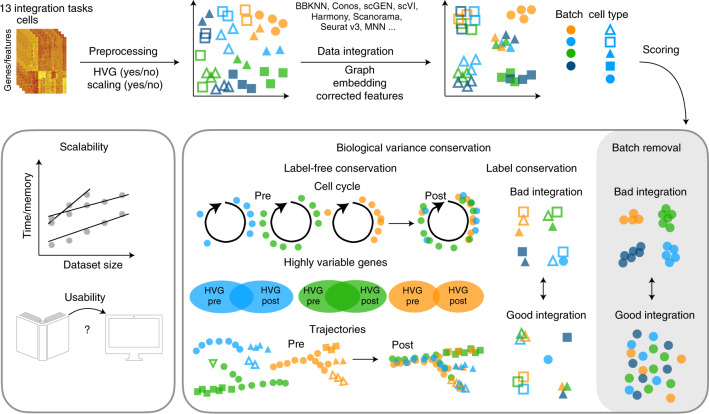
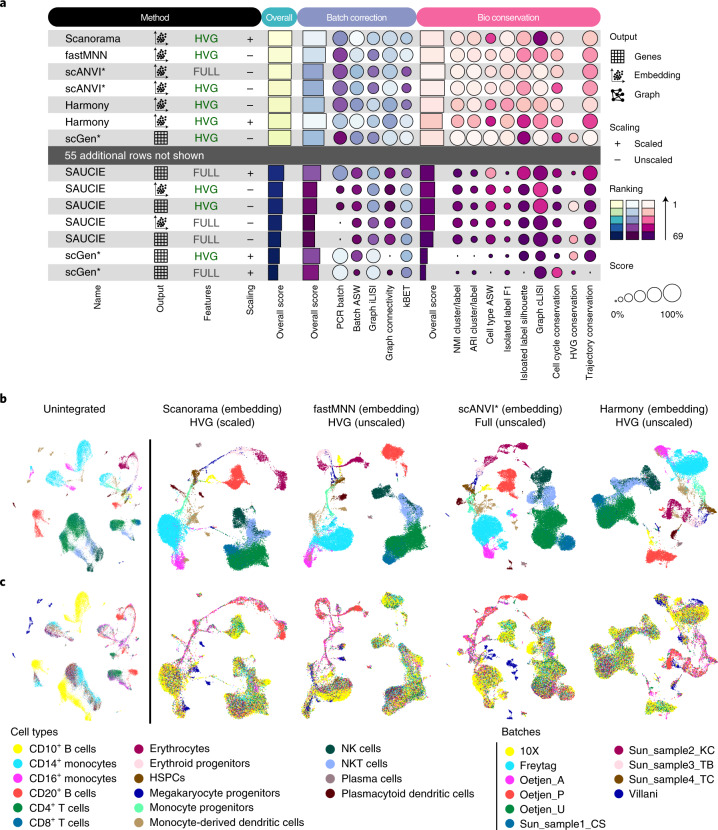
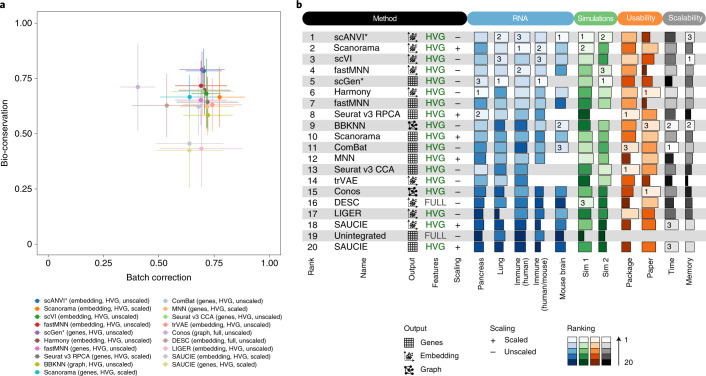
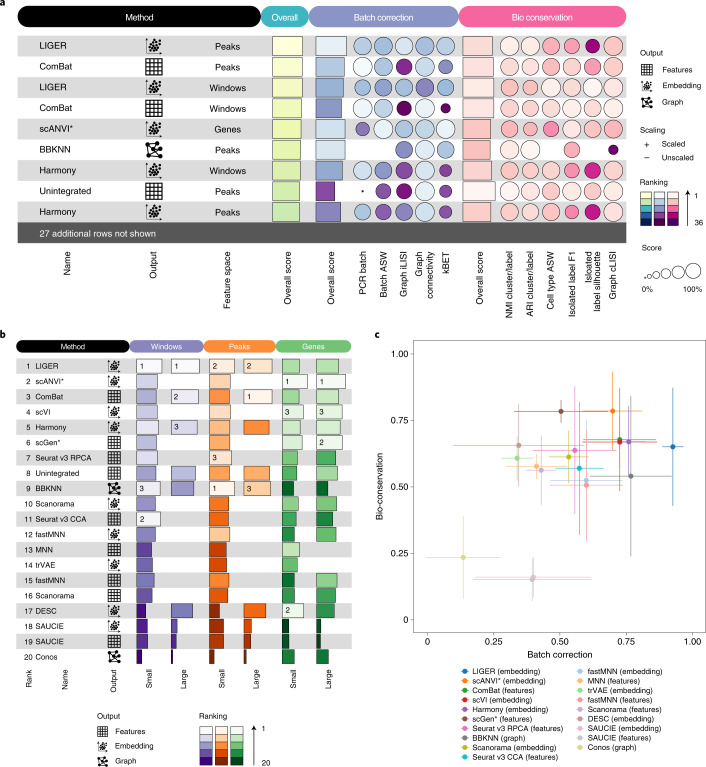
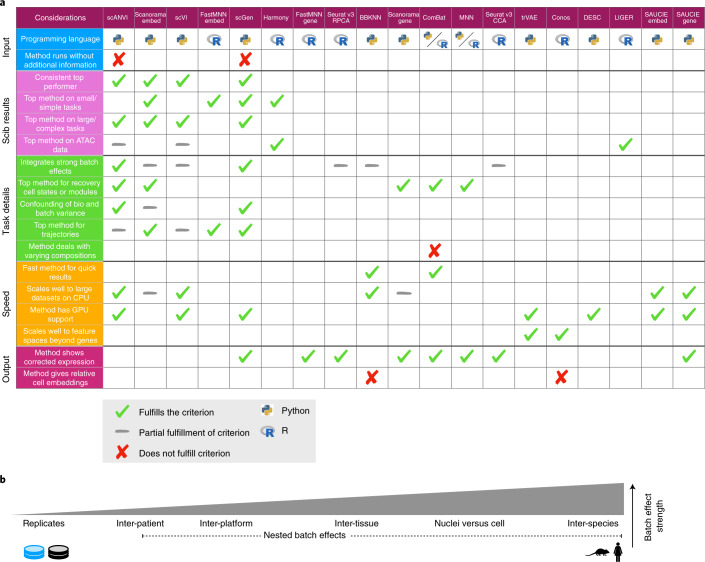
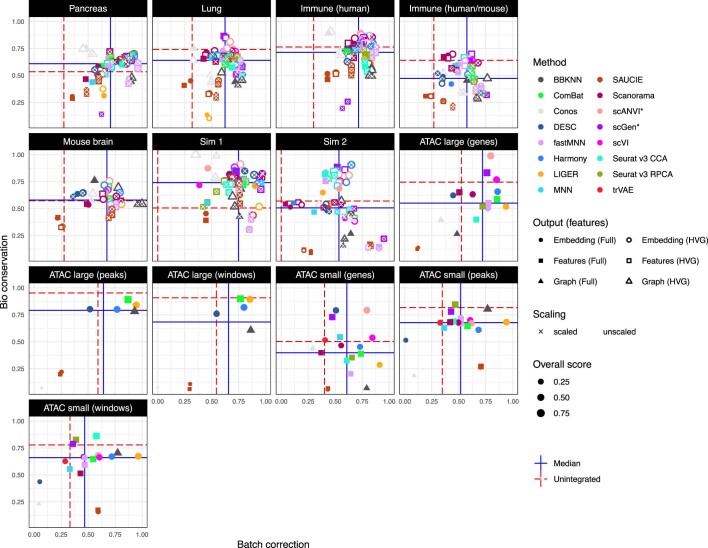
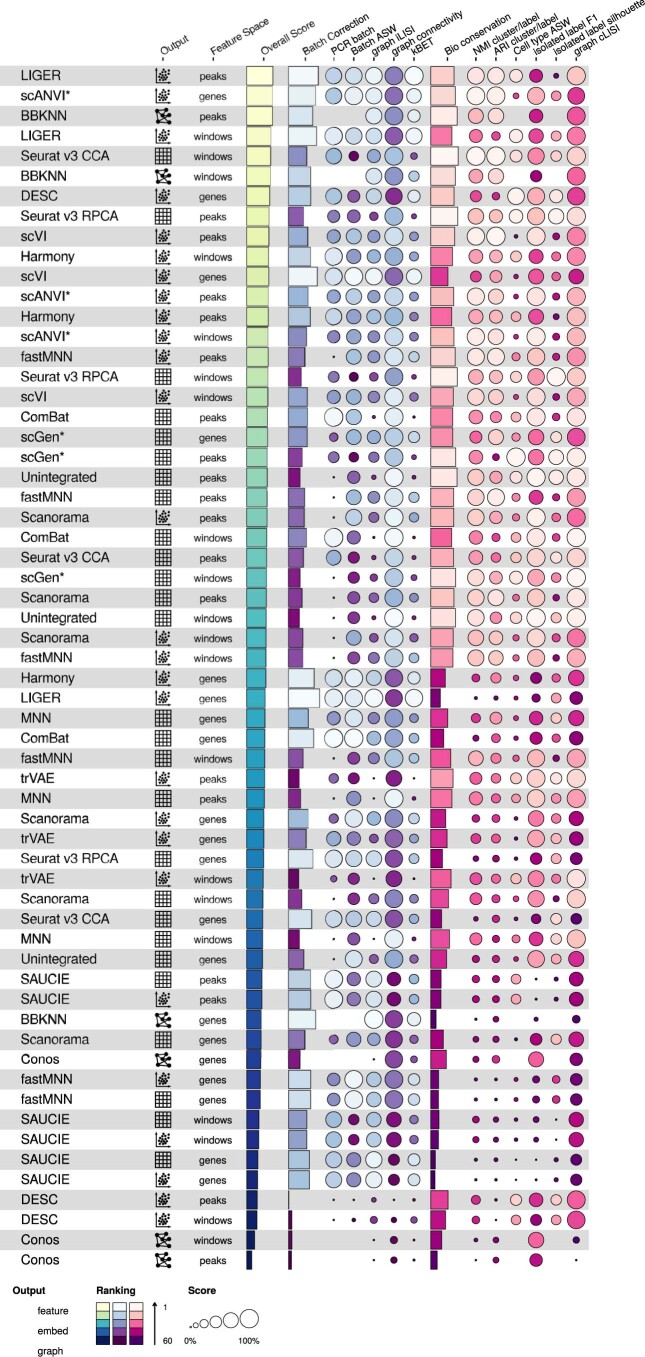
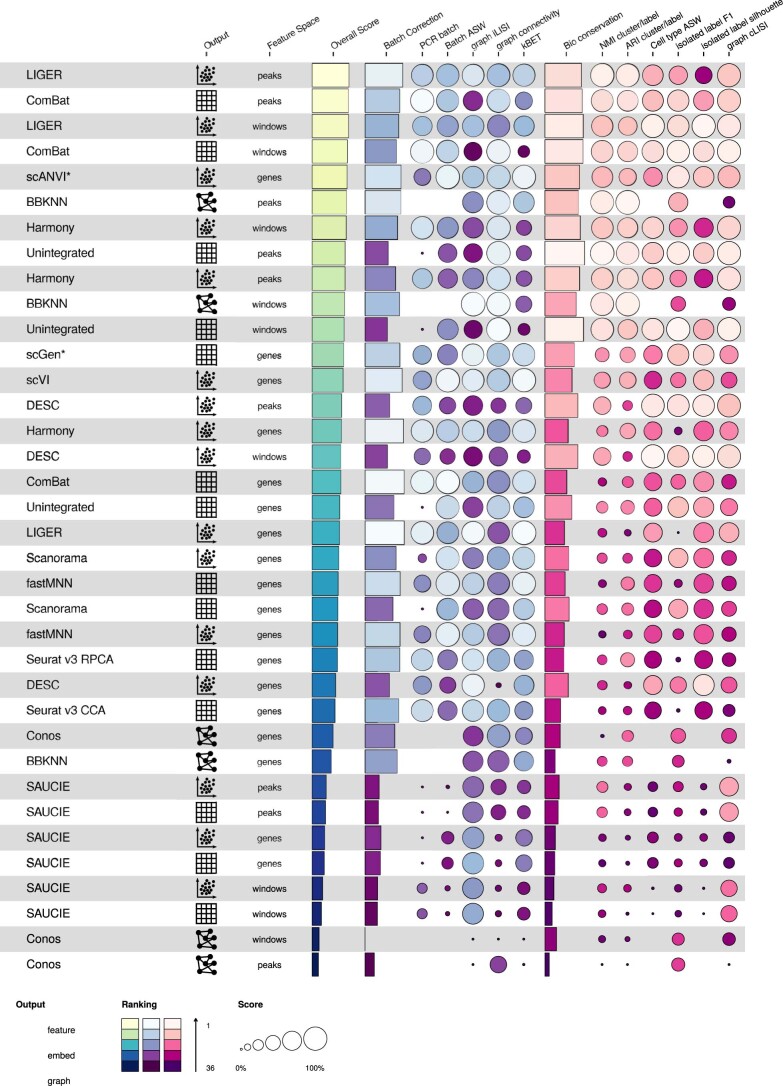
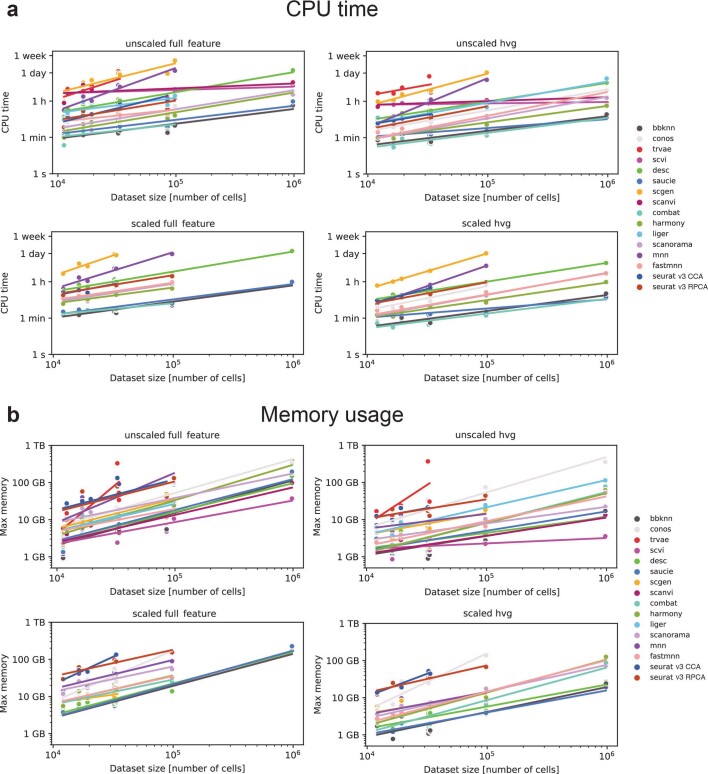
Single-cell atlases often include samples that span locations, laboratories and conditions, leading to complex, nested batch effects in data. Thus, joint analysis of atlas datasets requires reliable data integration. To guide integration method choice, we benchmarked 68 method and preprocessing combinations on 85 batches of gene expression, chromatin accessibility and simulation data from 23 publications, altogether representing >1.2 million cells distributed in 13 atlas-level integration tasks. We evaluated methods according to scalability, usability and their ability to remove batch effects while retaining biological variation using 14 evaluation metrics. We show that highly variable gene selection improves the performance of data integration methods, whereas scaling pushes methods to prioritize batch removal over conservation of biological variation. Overall, scANVI, Scanorama, scVI and scGen perform well, particularly on complex integration tasks, while single-cell ATAC-sequencing integration performance is strongly affected by choice of feature space. Our freely available Python module and benchmarking pipeline can identify optimal data integration methods for new data, benchmark new methods and improve method development.
Overview
The claims and statistics of this paper haven’t been checked yet.
Free: it reads the open-access text and checks the first 5 claims that cite a source we can check. Create a free account to check every claim.
Integrity signals
Registry
Cites
Statistics
Figures
Verification
Claims the paper makes
The claims and statistics of this paper haven’t been checked yet.
Free: it reads the open-access text and checks the first 5 claims that cite a source we can check. Create a free account to check every claim.
Claims other papers make about this one
Each is checked against this paper’s own text: does it say what the citing paper says it does?
The source backs part of the claim, not all of it — or backs it for a different population, condition or comparison.
In the citing paper
“Such integrative analysis is complicated by batch effects and biological differences between primary tissue and cell culture26,27.”
From scPerturb: harmonized single-cell perturbation data (2024) · cites this paper as [27]
Experimental — accuracy not yet measuredThe source backs part of the claim, not all of it — or backs it for a different population, condition or comparison.
In the citing paper
“Furthermore, 8 evaluation metrics (3 for batch effect removal and 5 for biological variation retention) are computed to verify the integration ability by scIB47, which ranks TOSICA the first out of all 13 applicable methods evaluated on combined effectiveness in batch effect removal and biological variation retention (Fig. 5b).”
From Transformer for one stop interpretable cell type annotation (2023) · cites this paper as [47]
Experimental — accuracy not yet measuredThe source backs part of the claim, not all of it — or backs it for a different population, condition or comparison.
In the citing paper
“In particular, Harmony22 is an algorithm well suited for correcting batch effects that may be present in a dimensionality-reduced single-cell expression dataset,79”
From hdWGCNA identifies co-expression networks in high-dimensional transcriptomics data (2023) · cites this paper as [79]
Experimental — accuracy not yet measuredThe cited source says what the claim attributes to it.
In the citing paper
“Although this work simplifies dataset access, joint analysis is limited by the complexity of data integration27.”
From scPerturb: harmonized single-cell perturbation data (2024) · cites this paper as [27]
The cited source says what the claim attributes to it.
In the citing paper
“Depending on the complexity of the integration tasks, such as atlas integration, deep-learning approaches such as scANVI40, scVI41 and scGen42 as well as linear-embedding models such as Scanorama43 performed best”
From Best practices for single-cell analysis across modalities (2023) · cites this paper as [35]
10 more claims about this paper
Create a free account to see every claim other papers make about this one.
Self-check
Percentages, sums and reported differences re-computed from the paper’s own numbers.
The self-check needs the paper’s full text.
Citations
Cites
Scikit-learn: Machine Learning in Python
Pedregosa, F., Varoquaux, G., Gramfort, A., Michel, V., Thirion, B., Grisel, O., Blondel, M., Müller, A., Nothman, J., Louppe, G., et al. (2012) · arXiv · doi:10.48550/arxiv.1201.0490 · Cited by 71,016 · cited 12×
“Similar to NMI, we compared the cell-type labels with the NMI-optimized Louvain clustering computed on the integrated dataset.”
BackgroundInfluentialSciPy 1.0: fundamental algorithms for scientific computing in Python
Virtanen, P., Gommers, R., Oliphant, T. E., Haberland, M., Reddy, T., Cournapeau, D., Burovski, E., Peterson, P., Weckesser, W., Bright, J., et al. (2020) · Nature Methods · doi:10.1038/s41592-019-0686-2 · Cited by 38,430
A note on two problems in connexion with graphs
Dijkstra, E. W. (1959) · Numerische Mathematik · doi:10.1007/bf01386390 · Cited by 29,065
Silhouettes: A graphical aid to the interpretation and validation of cluster analysis
Rousseeuw, P. J. (1987) · Journal of Computational and Applied Mathematics · doi:10.1016/0377-0427(87)90125-7 · Cited by 21,392
Comprehensive Integration of Single-Cell Data
Stuart, T., Butler, A., Hoffman, P., Hafemeister, C., Papalexi, E., Mauck, W. M., Hao, Y., Stoeckius, M., Smibert, P., & Satija, R. (2019) · Cell · doi:10.1016/j.cell.2019.05.031 · Cited by 15,453
ggplot2: Elegant Graphics for Data Analysis
Wickham, H. (2009) · doi:10.1007/978-0-387-98141-3 · Cited by 14,447
Fast, sensitive and accurate integration of single-cell data with Harmony
Korsunsky, I., Millard, N., Fan, J., Slowikowski, K., Zhang, F., Wei, K., Baglaenko, Y., Brenner, M., Loh, P.-R., & Raychaudhuri, S. (2019) · Nature Methods · doi:10.1038/s41592-019-0619-0 · Cited by 10,488
SciPy 1.0: fundamental algorithms for scientific computing in Python
Virtanen, P., Gommers, R., Oliphant, T. E., Haberland, M., Reddy, T., Cournapeau, D., Burovski, E., Peterson, P., Weckesser, W., Bright, J., et al. (2019) · Apollo - University of Cambridge Repository · doi:10.17863/cam.64134 · Cited by 10,460
UMAP: Uniform Manifold Approximation and Projection
McInnes, L., Healy, J., Saul, N., & Großberger, L. (2018) · Journal of Open Source Software · doi:10.21105/joss.00861 · Cited by 9,826
SCANPY: large-scale single-cell gene expression data analysis
Wolf, F. A., Angerer, P., & Theis, F. J. (2018) · Genome Biology · doi:10.1186/s13059-017-1382-0 · Cited by 8,881 · cited 1×
“Metrics were run on the integrated and unintegrated AnnData 47 objects.”
MethodSelf-citation
Cited by
Items 201–300 of 1,008
Causal machine learning for single-cell genomics
Tejada-Lapuerta, A., Bertin, P., Bauer, S., Aliee, H., Bengio, Y., & Theis, F. J. (2025) · Nature Genetics · doi:10.1038/s41588-025-02124-2 · Cited by 104
“However, their application to cell-based assays, in which batch effects are relatively large 3 , remains challenging.”
InfluentialSelf-citationChu, T., Zhu, G., Tang, Z., Qu, W., Yang, R., Pan, H., Wáng, Y., Tian, R., Chen, L., Guan, Z., et al. (2025) · Nature Communications · doi:10.1038/s41467-025-62132-y · Cited by 70
“To enable integrated analysis of single-cell multi-omics data, we utilized scANVI 21 for batch correction, which has been shown to perform wellonintegratingstrongbatchwhilepreservingunderlyingbiological information 22 (Illustrated in Supplementary Fig.”
Basal cell of origin resolves neuroendocrine–tuft lineage plasticity in cancer
Ireland, A. S., Xie, D. A., Hawgood, S. B., Barbier, M. W., Zuo, L. Y., Hanna, B. E., Lucas-Randolph, S., Tyson, D. R., Witt, B. L., Govindan, R., et al. (2025) · Nature · doi:10.1038/s41586-025-09503-z · Cited by 58
Benchmarking single-cell multi-modal data integrations
Fu, S., Wang, S.-G., Si, D., Li, G., Gao, Y., & Liu, Q. (2025) · Nature Methods · doi:10.1038/s41592-025-02737-9 · Cited by 66
“The user-friendliness metrics were adapted from previous benchmark study 58,59 , including executability of the code (execute directly, executable with manual source code debugging or non-executable), the quality of the paper (peer review and performance benchmarking available), the presence of a…”
InfluentialSingle-cell foundation models: bringing artificial intelligence into cell biology
Baek, S., Song, K., & Lee, I. (2025) · Experimental & Molecular Medicine · doi:10.1038/s12276-025-01547-5 · Cited by 46
“However, the inherent complexity and challenges of such integration render the task dif fi cult 44 .”
Unbiased single-cell morphology with self-supervised vision transformersPreprint
Doron, M., Moutakanni, T., Chen, Z., Moshkov, N., Caron, M., Touvron, H., Bojanowski, P., Pernice, W. M., & Caicedo, J. C. (2023) · bioRxiv (Cold Spring Harbor Laboratory) · doi:10.1101/2023.06.16.545359 · Cited by 46
“50 However, similar to gene-expression data 51 , DINO features can be transformed to correct for unwanted variation prior to downstream analyses (Figure 2B,E), potentially avoiding confounders.”
Adversarial domain translation networks for integrating large-scale atlas-level single-cell datasets
Zhao, J., Wang, G., Ming, J., Lin, Z., Wang, Y., Agarwal, S., Agrawal, A., Al‐Moujahed, A., Alam, A. A., Albertelli, M. A., et al. (2022) · Nature Computational Science · doi:10.1038/s43588-022-00251-y · Cited by 47
“…regularizers to find correct and consistent correspondence across domains. component regression of the batch covariate (PCR batch) 27 , the average silhouette width across batches (batch ASW) 27 , the graph integration local inverse Simpson’s index (graph iLISI) 13,22 and graph connectivity 22 .”
BackgroundMethodInfluentialZhang, T., Zhao, F., Lin, Y., Liu, M., Zhou, H., Cui, F., Jin, Y., Chen, L., & Sheng, X. (2024) · Theranostics · doi:10.7150/thno.92336 · Cited by 54
“Based on pre-annotation labels and scib evaluation [22], we determined that the BBKNN method was more suitable for our scRNA-seq meta-atlas, thereby being chosen for further analysis.”
MethodRoehrig, A., Hirsch, T. Z., Pire, A., Morcrette, G., Gupta, B., Marcaillou, C., Imbeaud, S., Chardot, C., Gonzales, E. M., Jacquemin, E., et al. (2024) · Nature Communications · doi:10.1038/s41467-024-47280-x · Cited by 48
“Principal component (PC) regression analysis was previously used to estimate the proportion of variance in a single-cell data set explained by sample-speci fi c variations, which may indicate the presence of technical batch effects 46 .”
MethodThe dynamics of hematopoiesis over the human lifespan
Li, H., Côté, P., Kuoch, M., Ezike, J., Frenis, K., Afanassiev, A., Greenstreet, L., Tanaka-Yano, M., Tarantino, G., Zhang, S., et al. (2024) · Nature Methods · doi:10.1038/s41592-024-02495-0 · Cited by 55
“1b) 36,37 .”
An integrated transcriptomic cell atlas of human endoderm-derived organoids
Xu, Q., Halle, L., Hediyeh-zadeh, S., Kuijs, M., Riedweg, R., Kilik, U., Recaldin, T., Yu, Q., Rall, I., Frum, T., et al. (2025) · Nature Genetics · doi:10.1038/s41588-025-02182-6 · Cited by 53
“1a–d), and selected scPoli 20,22 to generate an integrated embedding of all orga-noid cells, enabling a cohesive representation of the diverse data (Fig.”
Self-citationThe shaky foundations of simulating single-cell RNA sequencing data
Crowell, H. L., Leonardo, S. X. M., Soneson, C., & Robinson, M. D. (2023) · Genome biology · doi:10.1186/s13059-023-02904-1 · Cited by 66
“As a result, simulations have been applied to benchmark methods across a wide range of tasks, including differential expression analysis [9–11], trajectory inference [12], and data integration [13, 14].”
MethodScanorama: integrating large and diverse single-cell transcriptomic datasets
Hie, B., Kim, S., Rando, T. A., Bryson, B. D., & Berger, B. (2024) · Nature Protocols · doi:10.1038/s41596-024-00991-3 · Cited by 55
“However, one of the major challenges of analyzing multiple scRNA-seq datasets is the presence of batch effects that stem from technical or biological factors (Glossary in Box 1), making it difficult to distinguish biologically meaningful differences across datasets 3 .”
InfluentialLi, H., Zhang, Z., Squires, M., Chen, X. X., & Zhang, X. (2025) · Nature Methods · doi:10.1038/s41592-025-02651-0 · Cited by 78
“…data can provide a proof-of-concept evaluation, which is a basic step in method development, and can help evaluate the performance of methods in controlled settings, and thus has been used in major benchmarking efforts 8,42 , where real datasets were also used to gain comprehensive assessments.”
Building the mega single-cell transcriptome ocular meta-atlas
Swamy, V. S., Fufa, T., Hufnagel, R. B., & McGaughey, D. M. (2021) · GigaScience · doi:10.1093/gigascience/giab061 · Cited by 48
Inferring single-cell transcriptomic dynamics with structured latent gene expression dynamics
Farrell, S., Mani, M., & Goyal, S. (2023) · Cell Reports Methods · doi:10.1016/j.crmeth.2023.100581 · Cited by 55
Sharma, D., Worssam, M. D., Pedroza, A. J., Dalal, A. R., Alemany, H., Kim, H.-J., Kundu, R. K., Fischbein, M. P., Cheng, P. P., Wirka, R. C., et al. (2023) · Arteriosclerosis Thrombosis and Vascular Biology · doi:10.1161/atvbaha.123.320030 · Cited by 46
Characterizing the impacts of dataset imbalance on single-cell data integration
Maan, H., Zhang, L., Yu, C., Geuenich, M. J., Campbell, K. R., & Wang, B. (2024) · Nature Biotechnology · doi:10.1038/s41587-023-02097-9 · Cited by 66
“We included frequently used and best-performing scRNA-seq integration techniques based on previous benchmarking studies 4,7 , but we tested only one method that focuses specifically on preserving biological heterogeneity when differing cell populations are present, in CIDER 37 .”
InfluentialBerrío, R. T., & Dubois, M. (2024) · Journal of Experimental Botany · doi:10.1093/jxb/erae107 · Cited by 44
Finlay, J. B., Ireland, A. S., Hawgood, S. B., Reyes, T., Ko, T., Olsen, R. R., Hachem, R. A., Jang, D. W., Bell, D., Chan, J. M., et al. (2024) · Cancer Cell · doi:10.1016/j.ccell.2024.05.003 · Cited by 46
Almet, A. A., Liu, Y., Nie, Q. H., & Plikus, M. V. (2024) · Journal of Investigative Dermatology · doi:10.1016/j.jid.2024.06.1281 · Cited by 53
Towards a consensus atlas of human and mouse adipose tissue at single-cell resolution
Loft, A., Emont, M. P., Weinstock, A., Divoux, A., Ghosh, A., Wagner, A., Hertzel, A. V., Maniyadath, B., Deplancke, B., Liu, B., et al. (2025) · Nature Metabolism · doi:10.1038/s42255-025-01296-9 · Cited by 58
“Various integration methods can be explored to assess their impact on the results 154 ; however, when comparing two highly distinct datasets, it may be essential to use techniques such as reference mapping 150,155 , which enables the comparison of cells across datasets while preserving the unique…”
Mapping early human blood cell differentiation using single-cell proteomics and transcriptomics
Furtwängler, B., Üresin, N., Richter, S., Schuster, M. B., Barmpouri, D., Holze, H., Wenzel, A., Grønbæk, K., Theilgaard‐Mönch, K., Theis, F. J., et al. (2025) · Science · doi:10.1126/science.adr8785 · Cited by 65
Self-citationAbedini, A., Levinsohn, J. L., Klötzer, K. A., Dumoulin, B., Ma, Z., Frederick, J., Dhillon, P., Balzer, M. S., Shrestha, R., Liu, H., et al. (2022) · bioRxiv (Cold Spring Harbor Laboratory) · doi:10.1101/2022.10.24.513598 · Cited by 43
CellAgent: LLM-Driven Multi-Agent Framework for Natural Language-Based Single-Cell AnalysisPreprint
Xiao, Y., Liu, J., Zheng, Y., Jiao, S., Hao, J., Xie, X., Li, M., Wang, R., Ni, F., Li, Y., et al. (2024) · bioRxiv (Cold Spring Harbor Laboratory) · doi:10.1101/2024.05.13.593861 · Cited by 50
“Isolated Labels [38], ARI [41], NMI [42], ASW cell [40], and cLISI Graph [37] are for the conservation of biological variance (bio-conservation).”
Meta-Analysis of Human Cancer Single-Cell RNA-Seq Datasets Using the IMMUcan Database
Camps, J., Noël, F., Liechti, R., Massenet-Regad, L., Rigade, S., Götz, L., Hoffmann, C., Amblard, E., Saichi, M., Ibrahim, M. M., et al. (2022) · Cancer Research · doi:10.1158/0008-5472.can-22-0074 · Cited by 50
“From recent benchmark studies on scRNA-seq data integration (31 – 33), Harmony was among the top performers and it is recommended as integration method over methods such as CCA (34), Liger (35) and UMI downsampling (bioRxiv 2021.11.15.468733) for its good performance.”
InfluentialSingle-cell reference mapping to construct and extend cell-type hierarchies
Michielsen, L., Lotfollahi, M., Strobl, D. C., Sikkema, L., Reinders, M. J. T., Theis, F. J., & Mahfouz, A. E. (2023) · NAR Genomics and Bioinformatics · doi:10.1093/nargab/lqad070 · Cited by 47
“PBMC datasets The dataset was obtained from the recent data integration benchmark [17].”
BackgroundMethodSelf-citationThe primitive endoderm supports lineage plasticity to enable regulative development
Linneberg-Agerholm, M., Sell, A. C., Riveiro, A. R., Perera, M., Proks, M., Knudsen, T. E., Barral, A., Manzanares, M., & Brickman, J. M. (2024) · Cell · doi:10.1016/j.cell.2024.05.051 · Cited by 49
Predicting cell morphological responses to perturbations using generative modeling
Palma, A., Theis, F. J., & Lotfollahi, M. (2025) · Nature Communications · doi:10.1038/s41467-024-55707-8 · Cited by 41
“In the scIB metrics package 57 , the score is normalized between 0 and 1.”
Self-citationLi, H., Bao, S., Farzad, N., Qin, X., Fung, A. A., Zhang, D., Bai, Z., Tao, B., & Fan, R. (2025) · Nature Protocols · doi:10.1038/s41596-025-01145-9 · Cited by 50
“41.”
Benchmarking algorithms for generalizable single-cell perturbation response prediction
Wei, Z., Wang, Y., Gao, Y., Wang, S., Li, P., Si, D., Gao, Y., Wu, S., Li, D., Dong, K., et al. (2026) · Nature Methods · doi:10.1038/s41592-025-02980-0 · Cited by 42
Comprehensive evaluation of noise reduction methods for single-cell RNA sequencing data
Chu, S., Zhao, S., Shyr, Y., & Liu, Q. (2022) · Briefings in Bioinformatics · doi:10.1093/bib/bbab565 · Cited by 44
“Recent efforts to benchmark batch correction meth-ods for single-cell RNA-seq all came to the conclusion that no single method emerges as the best performer in every dataset [23, 33, 34].”
Sang-aram, C., Browaeys, R., Seurinck, R., & Saeys, Y. (2025) · Nature Protocols · doi:10.1038/s41596-024-01121-9 · Cited by 54
“If batch effects persist, it is important to ensure that biological variation is still preserved after batch correction 36 .”
Heimberg, G., Kuo, T., DePianto, D., Heigl, T., Diamant, N., Salem, O., Scalia, G., Biancalani, T., Turley, S., Rock, J., et al. (2023) · doi:10.1101/2023.07.18.549537 · Cited by 40
Flynn, E., Almonte-Loya, A., & Fragiadakis, G. K. (2023) · Annual Review of Biomedical Data Science · doi:10.1146/annurev-biodatasci-020422-050645 · Cited by 54
Single-Cell Mapping of GLP-1 and GIP Receptor Expression in the Dorsal Vagal Complex
Ludwig, M. Q., Todorov, P. V., Egerod, K. L., Olson, D. P., & Pers, T. H. (2021) · Diabetes · doi:10.2337/dbi21-0003 · Cited by 38
“Cell type labels can be automatically inferred from one of the growing numbers of DVC scRNA-seq data sets becoming available with use of data integration tools (26).”
BackgroundInfluentialNovella-Rausell, C., Grudniewska, M., Peters, D. J. M., & Mahfouz, A. E. (2023) · iScience · doi:10.1016/j.isci.2023.106877 · Cited by 42
Scaling up reproducible research for single-cell transcriptomics using MetaNeighbor
Fischer, S., Crow, M., Harris, B. D., & Gillis, J. (2021) · Nature Protocols · doi:10.1038/s41596-021-00575-5 · Cited by 43
“Popular metrics 21,22 include batch-mixing metrics, such as the k-nearest-neighbor batch-effect test (kBET) 25 and the local inverse Simpson ’ s index (LISI) 11 , and cell-type conservation metrics, such as the average silhouette width (ASW) and the adjusted Rand index (ARI).”
MethodQuery to reference single-cell integration with transfer learning
Lotfollahi, M., Naghipourfar, M., Luecken, M. D., Khajavi, M., Büttner, M., Avsec, Z., Misharin, A. V., & Theis, F. J. (2020) · bioRxiv (Cold Spring Harbor Laboratory) · doi:10.1101/2020.07.16.205997 · Cited by 34
“As the MCA was profiled using a different technique and was sequenced at a shallow depth, integrating this dataset has been reported to be a considerably harder challenge [7].”
BackgroundMethodInfluentialSelf-citationLongitudinal single-cell transcriptional dynamics throughout neurodegeneration in SCA1
Tejwani, L., Ravindra, N. G., Lee, C., Cheng, Y., Nguyen, B., Luttik, K. P., Ni, L., Zhang, S., Morrison, L. M., Gionco, J. T., et al. (2023) · Neuron · doi:10.1016/j.neuron.2023.10.039 · Cited by 40
multiDGD: A versatile deep generative model for multi-omics data
Schuster, V., Dann, E., Krogh, A., & Teichmann, S. A. (2024) · Nature Communications · doi:10.1038/s41467-024-53340-z · Cited by 42
Integrative mapping of human CD8+ T cells in inflammation and cancer
Xue, Z., Wu, L., Tian, R., Gao, B. X., Zhao, Y. S., He, B., Sun, D., Zhao, B., Li, Y., Zhu, K., et al. (2024) · Nature Methods · doi:10.1038/s41592-024-02530-0 · Cited by 44
“Variational autoencoder (VAE)-based methods, such as scVI 15 , scANVI 16 , scPoli 17 and SCALEX 18 , have proven effective in integrating large and heterogeneous datasets 19 .”
Bonev, B., Castelo‐Branco, G., Chen, F., Codeluppi, S., Corces, M. R., Fan, J., Heiman, M., Harris, K., Inoue, F., Kellis, M., et al. (2024) · Nature Neuroscience · doi:10.1038/s41593-024-01806-0 · Cited by 47
“There are also emerging computational integration benchmarks for single-cell and spatial data, although we lack methods to quantitatively assess the accuracy and robustness of integration between scRNA-seq or snRNA-seq and ST datasets 50,51 .”
Self-citationTransformer-Based Single-Cell Language Model: A Survey
Lan, W., He, G., Liu, M., Chen, Q., Cao, J., & Peng, W. (2024) · Big Data Mining and Analytics · doi:10.26599/bdma.2024.9020034 · Cited by 47
Multimodal learning enables chat-based exploration of single-cell data
Schaefer, M., Peneder, P., Malzl, D., Lombardo, S. D., Peycheva, M., Burton, J., Hakobyan, A., Sharma, V., Krausgruber, T., Sin, C., et al. (2025) · Nature Biotechnology · doi:10.1038/s41587-025-02857-9 · Cited by 83
“For further evaluation, we tested how well our model can distinguish between biological signal and technical noise in the Tabula Sapiens data-set, based on an established benchmark for dataset integration and batch effect correction 22 .”
InfluentialMarteau, V., Nemati, N., Handler, K., Raju, D., Kirchmair, A., Rieder, D., Soto, E. K., Fotakis, G., de Lange, G., Carollo, S., et al. (2026) · Cancer Cell · doi:10.1016/j.ccell.2025.12.003 · Cited by 61
Integration of millions of transcriptomes using batch-aware triplet neural networks
Simon, L. M., Wang, Y., & Zhao, Z. (2021) · Nature Machine Intelligence · doi:10.1038/s42256-021-00361-8 · Cited by 38
“We selected these algorithms as they showed high performance in previous comparisons 27,28 and are written in Python.”
MethodInfluentialZhang, Z., Zhao, X., Bindra, M., Qiu, P., & Zhang, X. (2024) · Nature Communications · doi:10.1038/s41467-024-45227-w · Cited by 54
“We evaluate the disentanglement of biological factors and technical batch effect using the ARI (adjusted rand index) and ASW-batch (batch-mixing average silhouette width) scores 38 .”
BackgroundMethodSenescent Syncytiotrophoblast Secretion During Early Onset Preeclampsia
Nonn, O., Debnath, O., Valdes, D. S., Sallinger, K., Secener, K., Fischer, C., Tiesmeyer, S., Nimo, J., Kuenzer, T., Ulrich, J., et al. (2024) · Hypertension · doi:10.1161/hypertensionaha.124.23362 · Cited by 38
Tyler, M., Gavish, A., Barbolin, C., Tschernichovsky, R., Hoefflin, R., Mints, M., Puram, S. V., & Tirosh, I. (2025) · Nature Cancer · doi:10.1038/s43018-025-00957-8 · Cited by 64
“These methods apply certain assumptions to identify and remove technical effects in scRNA-seq data but there is currently no widely agreed standard and they likely remove some biological signal 28 .”
Th17.1 cell driven sarcoidosis-like inflammation after anti-BCMA CAR T cells in multiple myeloma
Leipold, A. M., Werner, R. A., Düll, J., Jung, P., John, M., Stanojkovska, E., Zhou, X., Hornburger, H., Ruckdeschel, A., Dietrich, O., et al. (2023) · Leukemia · doi:10.1038/s41375-023-01824-0 · Cited by 36
“, especially in the human immune cell task [52].”
BackgroundIntegration of gene expression and DNA methylation data across different experiments
Itai, Y., Rappoport, N., & Shamir, R. (2023) · Nucleic Acids Research · doi:10.1093/nar/gkad566 · Cited by 41
“These algorithms should balance the tradeoff between the removal of batch effects and the conservation of biological variance (Luecken et al. 2020).”
BackgroundGawusu, S., Jamatutu, S. A., & Ahmed, A. (2024) · International Journal of Energy Research · doi:10.1155/2024/9411326 · Cited by 37
Delineating the effective use of self-supervised learning in single-cell genomics
Richter, T., Bahrami, M., Xia, Y., Fischer, D. S., & Theis, F. J. (2024) · Nature Machine Intelligence · doi:10.1038/s42256-024-00934-3 · Cited by 56
Self-citationMuñoz-Blat, I., Pérez-Moraga, R., Castillo-Marco, N., Cordero, T., Ochando, A., Ortega-Sanchís, S., Parras, M., Ortiz, I. R. M., Satorres-Pérez, E., Álamo, B. N.-D., et al. (2025) · Nature Medicine · doi:10.1038/s41591-024-03407-7 · Cited by 38
“19.0) to remove interindividual patient origin biases maintaining trajectories and removing batch effects 58 .”
InfluentialCombinatorial prediction of therapeutic perturbations using causally inspired neural networks
Gonzalez, G., Lin, X., Herath, I. S., Veselkov, K., Bronstein, M. M., & Žitnik, M. (2025) · Nature Biomedical Engineering · doi:10.1038/s41551-025-01481-x · Cited by 60
“• scGen 22 : scGen is a widely used gold-standard latent variable model for response prediction 71–74 .”
Heming, M., Börsch, A., Wiendl, H., & zu Hörste, G. M. (2022) · Genome Medicine · doi:10.1186/s13073-022-01097-9 · Cited by 36
“Can be combined with published CSF datasets to increase statistical power or non‐CSF datasets to compare cell abundances or phenotypes between compartments, which improves the reproducibility across stud‐ ies Batch effect can be misinterpreted as novel biological findings while cor‐ rection of batch effects entails th…”
BackgroundscPlant: A versatile framework for single-cell transcriptomic data analysis in plants
Cao, S., He, Z., Chen, R., Luo, Y., Fu, L.-Y., Zhou, X., He, C., Yan, W., Zhang, C., & Chen, D. (2023) · Plant Communications · doi:10.1016/j.xplc.2023.100631 · Cited by 35
Gene networks and systems biology in Alzheimer's disease: Insights from multi‐omics approaches
Rahimzadeh, N., Srinivasan, S. S., Zhang, J., & Swarup, V. (2024) · Alzheimer s & Dementia · doi:10.1002/alz.13790 · Cited by 44
Single-cell atlas of the transcriptome and chromatin accessibility in the human retina
Li, J., Wang, J., Ibarra, I. L., Cheng, X., Luecken, M. D., Lu, J., Monavarfeshani, A., Yan, W., Zheng, Y., Zuo, Z., et al. (2026) · Nature Genetics · doi:10.1038/s41588-025-02454-1 · Cited by 79
“However, integrating such extensive datasets is computationally challenging, particularly for large and complex data 22,23 .”
InfluentialSelf-citationThe use of single-cell multi-omics in immuno-oncology
Ma, A., Xin, G., & Ma, Q. (2022) · Nature Communications · doi:10.1038/s41467-022-30549-4 · Cited by 37
Comiter, C. S., Chen, X., Vaishnav, E. D., Kobayashi-Kirschvink, K. J., Ciampricotti, M., Zhang, K., Murray, J., Monticolo, F., Qi, J., Tanaka, R., et al. (2023) · bioRxiv (Cold Spring Harbor Laboratory) · doi:10.1101/2023.03.21.533680 · Cited by 41
Sfaira accelerates data and model reuse in single cell genomics
Fischer, D. S., Dony, L., König, M., Moeed, A., Zappia, L., Heumos, L., Tritschler, S., Holmberg, O., Aliee, H., & Theis, F. J. (2021) · Genome Biology · doi:10.1186/s13059-021-02452-6 · Cited by 33
Self-citationA Roadmap for a Consensus Human Skin Cell Atlas and Single-Cell Data Standardization
Almet, A. A., Yuan, H., Annusver, K., Ramos, R., Liu, Y., Wiedemann, J., Sorkin, D. H., Xu, N., Sonkoly, E., Haniffa, M. A., et al. (2023) · Journal of Investigative Dermatology · doi:10.1016/j.jid.2023.03.1679 · Cited by 34
Self-citationShree, A., Pavan, M. K., & Zafar, H. (2023) · Nature Communications · doi:10.1038/s41467-023-43590-8 · Cited by 40
“In graph LISI, the distanceoverjointembeddingsisreplacedwiththegraph-based distance between the cells to get a large number of neighbors.”
InfluentialA practical guide to spatial transcriptomics
Valihrach, L., Žucha, D., Abaffy, P., & Kubista, M. (2024) · Molecular Aspects of Medicine · doi:10.1016/j.mam.2024.101276 · Cited by 38
Soelter, T. M., Howton, T. C., Clark, A. D., Oza, V. H., & Lasseigne, B. N. (2024) · Cell Communication and Signaling · doi:10.1186/s12964-024-01686-8 · Cited by 38
“1.0 [41], as it preserves biological variation while reducing variation due to technical noise [42].”
BackgroundInfluentialChau, T. N., Timilsena, P. R., Bathala, S. P., Kundu, S., Bargmann, B. O. R., & Li, S. (2025) · Nature Communications · doi:10.1038/s41467-024-55755-0 · Cited by 38
Zheng, Y., Schupp, J. C., Adams, T. S., Clair, G., Justet, A., Ahangari, F., Yan, X., Hansen, P., Carlon, M. S., Cortesi, E. E., et al. (2025) · Nature Biomedical Engineering · doi:10.1038/s41551-025-01423-7 · Cited by 49
“…ARI, NMI, graph cell-type local inverse Simpson’s index (graph cLISI), silhouette score, cell-type ASW, isolated label F1 and isolated label silhouette score, SCIB bio-conservation overall score 145 along with Davies–Bouldin index (DBI) 174 and label score 175 to evaluate the benchmarking methods.”
InfluentialDrug-tolerant persister cells in cancer: bridging the gaps between bench and bedside
Wang, Z., Wang, M., Dong, B., Wang, Y., Ding, Z., & Shen, S. (2025) · Nature Communications · doi:10.1038/s41467-025-66376-6 · Cited by 63
“Several robust data integration tools support cross-tumour analyses at increasing scale and resolution 134 .”
Kopp, W., Akalin, A., & Ohler, U. (2022) · Nature Machine Intelligence · doi:10.1038/s42256-022-00443-1 · Cited by 31
Durán, R. C., Wei, H., & Wu, J. (2024) · BMC Genomics · doi:10.1186/s12864-024-10364-5 · Cited by 43
“Batch effects also occur when single-cell datasets are compiled from multiple experiments, for example, when integrating large single-cell atlases [55, 56].”
BackgroundMachine learning integrative approaches to advance computational immunology
Curion, F., & Theis, F. J. (2024) · Genome Medicine · doi:10.1186/s13073-024-01350-3 · Cited by 39
“Some methods originally developed for unimodal integration [68] are useful for integrating this type of multimodal data [47, 69, 70].”
MethodSelf-citationSpatial architecture of development and disease
Lázár, E., & Lundeberg, J. (2025) · Nature Reviews Genetics · doi:10.1038/s41576-025-00892-5 · Cited by 58
“developed to correct for batch effects and align cellular states across experiments, enabling comparative atlases and meta-analyses at scale 158 .”
Novel insights into Hodgkin lymphoma biology by single-cell analysis
Aoki, T., & Steidl, C. (2022) · Blood · doi:10.1182/blood.2022017147 · Cited by 33
Single-Cell RNA Sequencing for Studying Human Cancers
Aran, D. (2023) · Annual Review of Biomedical Data Science · doi:10.1146/annurev-biodatasci-020722-091857 · Cited by 31
Phenotype prediction from single-cell RNA-seq data using attention-based neural networks
Mao, Y., Lin, Y.-Y., Wong, N. K. Y., Volik, S., Sar, F., Collins, C., & Ester, M. (2024) · Bioinformatics · doi:10.1093/bioinformatics/btae067 · Cited by 31
Hua-wen, Z., Han, W., Gómez-Cabrero, D., Tegner, J. N., Gao, X., Cui, G., & Aranda, M. (2025) · Nucleic Acids Research · doi:10.1093/nar/gkae1316 · Cited by 45
Brombacher, E., Hackenberg, M., Kreutz, C., Binder, H., & Treppner, M. (2022) · Frontiers in Molecular Biosciences · doi:10.3389/fmolb.2022.962644 · Cited by 33
“[41] and are briefly introduced below: • NMI compares the overlap of two clusterings.”
BackgroundDeep learning does not outperform classical machine learning for cell-type annotation
Köhler, N. D., Büttner, M., Andriamanga, N., & Theis, F. J. (2019) · bioRxiv (Cold Spring Harbor Laboratory) · doi:10.1101/653907 · Cited by 31
Self-citationscELMo: Embeddings from Language Models are Good Learners for Single-cell Data Analysis
Liu, T., Chen, T., Zheng, W., Luo, X., Chen, Y., & Zhao, H. (2023) · doi:10.1101/2023.12.07.569910 · Cited by 30
“For the evaluations of clustering and batch effect correction, we utilize the metrics described and implemented by scIB [34].”
MethodInfluentialShih, Y.-C. (2024) · Marine Policy · doi:10.1016/j.marpol.2024.106081 · Cited by 46
Tian, R., Xue, Z., Chen, Y., Qi, Y., Zhang, J., Yuan, J., Ruan, D., Lin, J., Liu, J., Wang, D., et al. (2025) · Nature Communications · doi:10.1038/s41467-025-63915-z · Cited by 46
“…preservation of cell-type level variation, using Adjusted Rand Index (ARI), Normalized Mutual Information (NMI), the Average Silhouette Width (ASW) of cell types, the cell-type separation LocalInverse Simpson ’ s Index (cLISI),and the Isolated label ASW, as introduced by scIB 45 (Supplementary Fig.”
InfluentialEmbeddings from language models are good learners for single-cell data analysis
Liu, T., Chen, T., Zheng, W., Luo, X., Chen, Y. T., & Zhao, H. (2026) · Patterns · doi:10.1016/j.patter.2025.101431 · Cited by 44
“Details of these metrics, modified based on Liu et al. 16 and Luecken et al., 44 are introduced here.”
Integrated multi-omics single cell atlas of the human retinaPreprint
Li, J., Wang, J., Ibarra, I. L., Cheng, X., Luecken, M. D., Lu, J., Monavarfeshani, A., Yan, W., Zheng, Y., Zuo, Z. C., et al. (2023) · bioRxiv (Cold Spring Harbor Laboratory) · doi:10.1101/2023.11.07.566105 · Cited by 30
Self-citationWang, G., Zhao, J., Lin, Y., Liu, T., Zhao, Y., & Zhao, H. (2025) · Nature Communications · doi:10.1038/s41467-025-60333-z · Cited by 29
“Through comprehensive real data experiments, we demonstrate scMODAL ’ s performance in preserving biological variation across modalities and fi nding correct correspondences among them, using scRNA-seq, single-cell proteomics and scATAC-seq datasets.”
A practical handbook on single-cell RNA sequencing data quality control and downstream analysis
Kim, G. D., Lim, C., & Park, J. (2024) · Molecules and Cells · doi:10.1016/j.mocell.2024.100103 · Cited by 40
“A recent paper benchmarked batch correction methods and indicated that their performance varies depending on the scalability, complexity, and availability of cell annotations within the dataset (Luecken et al., 2022).”
Leveraging prior knowledge to infer gene regulatory networks from single-cell RNA-sequencing data
Stock, M., Losert, C., Zambon, M., Popp, N., Lubatti, G., Hörmanseder, E., Heinig, M., & Scialdone, A. (2025) · Molecular Systems Biology · doi:10.1038/s44320-025-00088-3 · Cited by 37
An aging bone marrow exacerbates lung fibrosis by fueling profibrotic macrophage persistence
Farhat, A., Radhouani, M., Deckert, F., Zahalka, S., Pimenov, L., Fokina, A., Hakobyan, A., Oberndorfer, F., Brösamlen, J., Hladik, A., et al. (2025) · Science Immunology · doi:10.1126/sciimmunol.adk5041 · Cited by 38
A versatile information retrieval framework for evaluating profile strength and similarity
Kalinin, A. A., Arévalo, J., Serrano, E., Vulliard, L., Tsang, H., Bornholdt, M., Muñoz, A. F., Sivagurunathan, S., Rajwa, B. P., Carpenter, A. E., et al. (2025) · Nature Communications · doi:10.1038/s41467-025-60306-2 · Cited by 42
Multitask benchmarking of single-cell multimodal omics integration methods
Liu, C., Ding, S., Kim, H. J., Long, S., Xiao, D., Ghazanfar, S., & Yang, P. (2025) · Nature Methods · doi:10.1038/s41592-025-02856-3 · Cited by 54
“Building on previous works 7,12 and based on input data structure and modality combination, we define four prototypical single-cell multimodal omics data integration categories: ‘vertical’, ‘diagonal’, ‘mosaic’ and ‘cross’ integration (Fig.”
Shahan, R., Hsu, C., Nolan, T. M., Cole, B., Taylor, I. W., Vlot, A. H. C., Benfey, P. N., & Ohler, U. (2020) · bioRxiv (Cold Spring Harbor Laboratory) · doi:10.1101/2020.06.29.178863 · Cited by 29
Chung, H., Melnikov, A., Aubin, C., Drokhlyansky, E., Wittenberghe, N. V., Magee, E. M., Waldman, J., Spira, A. E., Chen, F., Mazzilli, S. A., et al. (2022) · bioRxiv (Cold Spring Harbor Laboratory) · doi:10.1101/2022.08.25.505257 · Cited by 29
Deciphering cell types by integrating scATAC-seq data with genome sequences
Zeng, Y., Luo, M., Shangguan, N., Shi, P., Feng, J., Xu, J., Chen, K., Lu, Y., Yu, W., & Yang, Y. (2024) · Nature Computational Science · doi:10.1038/s43588-024-00622-7 · Cited by 33
“5,47, converting the cell-by-peak count matrices of the reference and query data to the binary matrices, where a peak with value ‘1’ that one or more reads fall within that peak, and value ‘0’ indicates otherwise.”
Nadalin, F., Marzi, M. J., Piscazzi, M. P., Fuentes-Bravo, P., Procaccia, S., Climent, M., Bonetti, P., Rubolino, C., Giuliani, B., Papatheodorou, I., et al. (2024) · Nature Communications · doi:10.1038/s41467-024-51424-4 · Cited by 38
“This approach is independent of single-cell data integration, whose accuracy is dif fi cult to assess when reliable markers are unknown 85,86 .”
Integration and transfer learning of single-cell transcriptomes via cFIT
Peng, M., Li, Y., Wamsley, B., Wei, Y., & Roeder, K. (2021) · Proceedings of the National Academy of Sciences · doi:10.1073/pnas.2024383118 · Cited by 37
“However, the advantages of integrated data can be compromised by differences due to experimental batch, sampling (sample acquisition and handling, sample composition, reagents or media, and sampling time), or technology (sequencing depth, sequencing lanes, read length, plates or flow cells, protocol) (2).”
BackgroundResPAN: a powerful batch correction model for scRNA-seq data through residual adversarial networks
Wang, Y., Liu, T., & Zhao, H. (2022) · Bioinformatics · doi:10.1093/bioinformatics/btac427 · Cited by 30
Derbois, C., Palomares, M.-A., Deleuze, J., Cabannes, É., & Bonnet, É. (2023) · Scientific Data · doi:10.1038/s41597-023-02348-z · Cited by 29
Wang, G., Zhao, J., Lin, Y., Liu, T., Zhao, Y., & Zhao, H. (2024) · doi:10.1101/2024.10.01.616142 · Cited by 28
Microglial immunometabolism endophenotypes contribute to sex difference in Alzheimer's disease
Hou, Y., Caldwell, J., Lathia, J. D., Leverenz, J. B., Pieper, A. A., Cummings, J. L., & Cheng, F. (2023) · Alzheimer s & Dementia · doi:10.1002/alz.13546 · Cited by 31
“To improve the statistical power 63 and reduce technical variability from the snRNA-seq data, 43,64 we integrated four publicly available snRNA-seq datasets to create a combined dataset using two deep generative models: scVI 41 and scANVI 42 (Figure 1).”
Method
Metadata
- Authors
- Luecken, M. D., Büttner, M., Chaichoompu, K., Danese, A., Interlandi, M., Mueller, M. F., Strobl, D. C., Zappia, L., Dugas, M., Colomé-Tatché, M., & Theis, F. J.
- Affiliations
- Helmholtz Munich (DE)
- University of Münster (DE)
- University Hospital Heidelberg (DE)
- Corresponding author
- Theis, Fabian J.
- ORCID
- Venue
- Nature Methods
- Published
- 2021-12-23
- Volume
- 19
- Issue
- 1
- Pages
- 41-50
- ISSN
- 1548-7091 (ISSN-L)
- 1548-7105
- PMC
- PMC8748196
- OpenAlex
- W4225598893
- Cited by
- 1,438
- References
- 87
- Citations by year
- 2026: 380 · 2025: 358 · 2024: 304 · 2023: 210 · 2022: 115 · 2021: 53
- FWCI
- 55.88
- Type
- journal article
- Language
- en
- Open access
- hybrid
- doi.org
- Licence
- cc-by
- creativecommons.org/licenses/by/4.0 (tdm)
- creativecommons.org/licenses/by/4.0 (vor)
- Locations
- Nature Methods (publishedVersion, cc-by)
- bioRxiv (Cold Spring Harbor Laboratory) (acceptedVersion, cc-by)
- PubMed Central (publishedVersion, cc-by)
- PubMed (publishedVersion)
- Site cant be reached (submittedVersion, cc-by)
- Funders
- Silicon Valley Community Foundation (182835)
- Wellcome Trust (108413 /A/15/D)
- Chan Zuckerberg Initiative (182835)
- European Commission (874656, 2020 ‘, HORIZON2020)
- Helmholtz Zentrum München
- Topics
- Life Sciences › Biochemistry, Genetics and Molecular Biology › Molecular Biology › Single-cell and spatial transcriptomics
- Life Sciences › Biochemistry, Genetics and Molecular Biology › Molecular Biology › Gene expression and cancer classification
- Life Sciences › Biochemistry, Genetics and Molecular Biology › Molecular Biology › Bioinformatics and Genomic Networks
- Keywords
- single-cell data integration, batch effects, benchmarking, single-cell atlas, scANVI, scVI, single-cell ATAC-seq, chromatin accessibility, gene expression, feature space selection, scalability
- MeSH terms
- Animals, Humans, Immune System, Software, Sequence Analysis, RNA, Computational Biology, Benchmarking, Genomics, Databases, Genetic, Mice, Single-Cell Analysis
About these checks
Registry, retraction, Cites and statistics results are computed, not judged, with one exception: a printed reference that no index lists is read once by a model before it counts as a citation error. Claims are extracted by a model and kept only when their quote appears verbatim in the text; each cited source is then checked, with a model’s help, for whether it says what the claim relies on. Those verdicts can be wrong — read the claim’s quote and the cited source before relying on one.
Statistics and arithmetic are recomputed, not judged.
Confidence bands are shown only for fields calibrated on our annotated test set. None is calibrated yet, so no band is shown.
What counts as a claim ›How we measure confidence ›How we check this ›
Are you an author, or do you see a problem with this page? Request a review
Data sources
Bibliographic data: Semantic Scholar, OpenAlex, Crossref.
Contains information from the Semantic Scholar Academic Graph Datasets, made available under the ODC Attribution License (ODC-BY 1.0).
Semantic Scholar’s data is described in: Kinney, R., et al. (2023). The Semantic Scholar Open Data Platform. arXiv:2301.10140.
