

A hippocampo-cerebellar centred network for the learning and execution of sequence-based navigation
Open accessThe DOI matches its Crossref record; 87 of the 88 references it cites were found in a registry or an index, and 1 are not checked yet.
Abstract
How do we translate self-motion into goal-directed actions? Here we investigate the cognitive architecture underlying self-motion processing during exploration and goal-directed behaviour. The task, performed in an environment with limited and ambiguous external landmarks, constrained mice to use self-motion based information for sequence-based navigation. The post-behavioural analysis combined brain network characterization based on c-Fos imaging and graph theory analysis as well as computational modelling of the learning process. The study revealed a widespread network centred around the cerebral cortex and basal ganglia during the exploration phase, while a network dominated by hippocampal and cerebellar activity appeared to sustain sequence-based navigation. The learning process could be modelled by an algorithm combining memory of past actions and model-free reinforcement learning, which parameters pointed toward a central role of hippocampal and cerebellar structures for learning to translate self-motion into a sequence of goal-directed actions.
Overview
The claims and statistics of this paper haven’t been checked yet.
Free: it reads the open-access text and checks the first 5 claims that cite a source we can check. Create a free account to check every claim.
Integrity signals
Registry
Cites
Statistics
Figures
Verification
Claims the paper makes
The claims and statistics of this paper haven’t been checked yet.
Free: it reads the open-access text and checks the first 5 claims that cite a source we can check. Create a free account to check every claim.
Claims other papers make about this one
Each is checked against this paper’s own text: does it say what the citing paper says it does?
The cited source says what the claim attributes to it.
In the citing paper
“Further, a network relying on hippocampal-cerebellar interactions is involved in learning sequence-based navigation in mice (Babayan et al., 2017).”
From Cerebellum, Predictions and Errors (2019) · cites this paper as Babayan et al., 2017
Self-check
Percentages, sums and reported differences re-computed from the paper’s own numbers.
The self-check needs the paper’s full text.
Citations
Cites
Controlling the False Discovery Rate: A Practical and Powerful Approach to Multiple Testing
Benjamini, Y., & Hochberg, Y. (1995) · Journal of the Royal Statistical Society Series B: Statistical Methodology · doi:10.1111/j.2517-6161.1995.tb02031.x · Cited by 109,482
Complex network measures of brain connectivity: Uses and interpretations
Rubinov, M., & Sporns, O. (2010) · NeuroImage · doi:10.1016/j.neuroimage.2009.10.003 · Cited by 11,522 · cited 2×
“Hub structures were identified using two measures of centrality: degree and betweenness 38 , computed with the Brain Connectivity Toolbox (https://sites.google.com/site/bctnet/) 84 .”
A neural substrate of prediction and reward
Schultz, W., Dayan, P., & Montague, P. R. (1997) · Science · doi:10.1126/science.275.5306.1593 · Cited by 9,388
(1978) · UA Campus Repository (The University of Arizona) · Cited by 8,010
Introduction to Reinforcement Learning
Sutton, R. S., & Barto, A. G. (1998) · The MIT Press eBooks · Cited by 6,855
An efficient algorithm for large-scale detection of protein families
Enright, A. J. (2002) · Nucleic Acids Research · doi:10.1093/nar/30.7.1575 · Cited by 3,588
Marr, D. (1969) · The Journal of Physiology · doi:10.1113/jphysiol.1969.sp008820 · Cited by 3,253
The role of the basal ganglia in habit formation
Yin, H. H., & Knowlton, B. J. (2006) · Nature Reviews Neuroscience · doi:10.1038/nrn1919 · Cited by 2,402 · cited 1×
“η ← + − + + + T N a N T N a N T N a N ( , , ) ( , , ) (1 ( , , )) (2) k i m k i m k i m 1 1 1”
Path integration and the neural basis of the 'cognitive map'
McNaughton, B. L., Battaglia, F. P., Jensen, O., Moser, E. I., & Moser, M.-B. (2006) · Nature Reviews Neuroscience · doi:10.1038/nrn1932 · Cited by 2,024 · cited 1×
“η η ← − + P Goal P Goal P Pos ( ) (1 ) ( ) ( ) (11) t”
Cerebellum and nonmotor function
Strick, P. L., Dum, R. P., & Fiez, J. A. (2009) · Annual Review of Neuroscience · doi:10.1146/annurev.neuro.31.060407.125606 · Cited by 1,777 · cited 1×
“It is noteworthy that c-Fos activity is reported as a ratio between exploitation and motor control, therefore suggesting that the activation of this cluster is not due to motor execution only 58 (but see in monkeys 59 and in humans 60 ).”
Reverse replay of behavioural sequences in hippocampal place cells during the awake state
Foster, D. J., & Wilson, M. A. (2006) · Nature · doi:10.1038/nature04587 · Cited by 1,727
Goal-directed instrumental action: contingency and incentive learning and their cortical substrates
Balleine, B. W., & Dickinson, A. (1998) · Neuropharmacology · doi:10.1016/s0028-3908(98)00033-1 · Cited by 1,541 · cited 1×
“1038/s41598-017-18004-7 η = + T N a N ( , , ) (1) k i m 1”
The role of medial prefrontal cortex in memory and decision making
Euston, D. R., Gruber, A. J., & McNaughton, B. L. (2012) · Neuron · doi:10.1016/j.neuron.2012.12.002 · Cited by 1,541 · cited 1×
“…navigation engage widespread activations of structures classically involved in both navigation (e.g. retrosplenial and parietal cortices, associated with reference frame manipulation 43–46 or egocentric motion coding 47–50 ) and decision-making (medial prefrontal cortex and striatum 24,51,52 ).”
What does the retrosplenial cortex do?
Vann, S. D., Aggleton, J. P., & Maguire, E. A. (2009) · Nature Reviews Neuroscience · doi:10.1038/nrn2733 · Cited by 1,409
Computational analysis of the role of the hippocampus in memory
Treves, A., & Rolls, E. T. (1994) · Hippocampus · doi:10.1002/hipo.450040319 · Cited by 1,272
Hippocampal place-cell sequences depict future paths to remembered goals
Pfeiffer, B. E., & Foster, D. J. (2013) · Nature · doi:10.1038/nature12112 · Cited by 1,216
Forward and reverse hippocampal place-cell sequences during ripples
Diba, K., & Buzsáki, G. (2007) · Nature Neuroscience · doi:10.1038/nn1961 · Cited by 1,205 · cited 1×
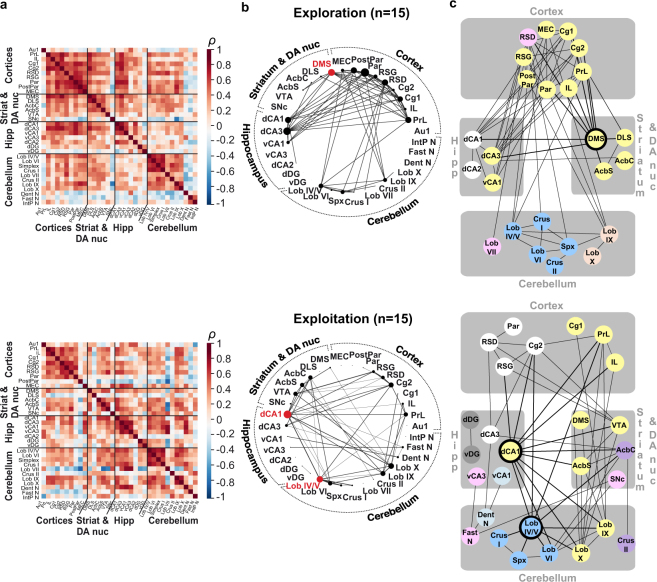
“This cluster had few (5) correlations with other clusters in the exploration group but exhibited an increased number of significant correlations (10) in the exploitation mice with hippocampal, cortical and striatal regions, through lobules IV/V, a hub region, and the lobule VI.”
Hippocampal ‘time cells’ bridge the gap in memory for discontiguous events
MacDonald, C. J., Lepage, K. Q., Eden, U. T., & Eichenbaum, H. (2011) · Neuron · doi:10.1016/j.neuron.2011.07.012 · Cited by 1,193
Putting a spin on the dorsal-ventral divide of the striatum
Voorn, P., Vanderschuren, L. J. M. J., Groenewegen, H. J., Robbins, T. W., & Pennartz, C. M. A. (2004) · Trends in Neurosciences · doi:10.1016/j.tins.2004.06.006 · Cited by 1,188
Requirement for Hippocampal CA3 NMDA Receptors in Associative Memory Recall
Nakazawa, K., Quirk, M. C., Chitwood, R. A., Watanabe, M., Yeckel, M. F., Sun, L. D., Kato, A., Carr, C. A., Johnston, D., Wilson, M. A., et al. (2002) · Science · doi:10.1126/science.1071795 · Cited by 1,099 · cited 1×
“Here, the dCA3, which has been proposed to store sequences of events 66,67 and convey memory-based representations to CA1 68,69 , has increased activity in the exploitation phase.”
Remembering the past and imagining the future: A neural model of spatial memory and imagery.
Byrne, P., Becker, S., & Burgess, N. (2007) · Psychological Review · doi:10.1037/0033-295x.114.2.340 · Cited by 1,011
Neural ensembles in CA3 transiently encode paths forward of the animal at a decision point
Johnson, A., & Redish, A. D. (2007) · The Journal of Neuroscience · doi:10.1523/jneurosci.3761-07.2007 · Cited by 1,003 · cited 1×
“δ γ = + − + r V s V s ( ) ( ) (6) t t t t 1”
Dolan, R. J., & Dayan, P. (2013) · Neuron · doi:10.1016/j.neuron.2013.09.007 · Cited by 977 · cited 1×
“γ ← ′ ′ V N max R N V N max T N a N V N ( ) ( ( ), ( ), ( ( , , ) ( ))) (3) i i”
Complementary roles of basal ganglia and cerebellum in learning and motor control
Doya, K. (2000) · Current Opinion in Neurobiology · doi:10.1016/s0959-4388(00)00153-7 · Cited by 964
What's Wrong With My Mouse?: Behavioral Phenotyping of Transgenic and Knockout Mice
Crawley, J. (2000) · doi:10.1002/9780470119051 · Cited by 962
(2000) · Cited by 919
The Well-Worn Route and the Path Less Traveled
Hartley, T., Maguire, E. A., Spiers, H. J., & Burgess, N. (2003) · Neuron · doi:10.1016/s0896-6273(03)00095-3 · Cited by 817 · cited 1×
“The implication of the basal ganglia on one hand in sequence-based navigation, is compatible with human studies of route recognition and memory 29–31 , and orients the possible learning rules underlying acquisition of a sequence-based memory toward reinforcement learning 32,33 .”
Iaria, G., Petrides, M., Dagher, A., Pike, B., & Bohbot, V. D. (2003) · The Journal of Neuroscience · doi:10.1523/jneurosci.23-13-05945.2003 · Cited by 799
Chen, L. L., Lin, L.-H., Green, E. J., Barnes, C. A., & McNaughton, B. L. (1994) · Experimental Brain Research · doi:10.1007/bf00243212 · Cited by 543 · cited 1×
“It also belongs to a cluster including the parietal and retrosplenial navigation-related cortices 47,50,70,71 , known to provide information about the mouse’s position and orientation in space.”
Cerebellar cortical organization: a one-map hypothesis
Apps, R., & Hawkes, R. (2009) · Nature Reviews Neuroscience · doi:10.1038/nrn2698 · Cited by 525 · cited 1×
“It is noteworthy that c-Fos activity is reported as a ratio between exploitation and motor control, therefore suggesting that the activation of this cluster is not due to motor execution only 58 (but see in monkeys 59 and in humans 60 ).”
Hippocampal “Time Cells”: Time versus Path Integration
Kraus, B. J., Robinson, R. J., White, J. A., Eichenbaum, H., & Hasselmo, M. E. (2013) · Neuron · doi:10.1016/j.neuron.2013.04.015 · Cited by 522
Cerebellar granule cells encode the expectation of reward
Wagner, M. J., Kim, T. H., Savall, J., Schnitzer, M. J., & Luo, L. (2017) · Nature · doi:10.1038/nature21726 · Cited by 481 · cited 2×
“Under the light of the studies showing error prediction signals in the cerebellum 36,65 , the cerebellum could be the learning module in our task, performing reinforcement learning on contextual information provided by hippocampal inputs.”
Trial-by-trial data analysis using computational models
Daw, N. D. (2011) · Decision Making, Affect, and Learning · doi:10.1093/acprof:oso/9780199600434.003.0001 · Cited by 456
The Importance of Falsification in Computational Cognitive Modeling
Palminteri, S., Wyart, V., & Koechlin, E. (2017) · Trends in Cognitive Sciences · doi:10.1016/j.tics.2017.03.011 · Cited by 448 · cited 1×
“…tool sampled parameters from a given range that we defined: After parameter optimization, the quality of the fit for each individual was checked by simulating the behaviour of 100 freely choosing agents with the same parameter set, and comparing it to the behaviour of the corresponding mouse 89 .”
The optimal control of partially observable Markov processes
Sondik, E. J. (1971) · Defense Technical Information Center (DTIC) · Cited by 440
Activation of immediate early genes and memory formation
Tischmeyer, W., & Grimm, R. (1999) · Cellular and Molecular Life Sciences (CMLS) · doi:10.1007/s000180050315 · Cited by 422 · cited 2×
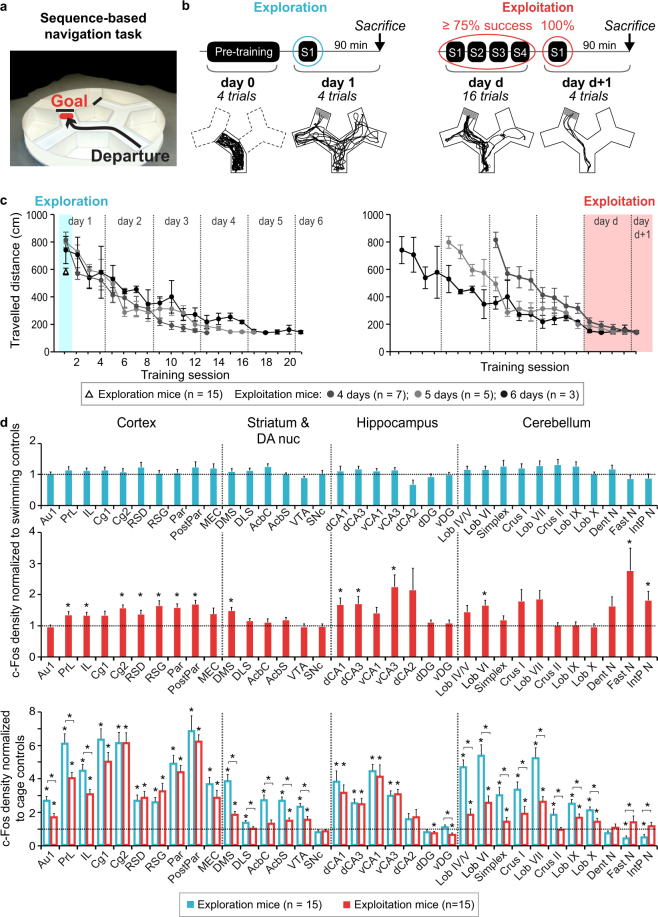
“To avoid this activity being mainly accounted for by stress and task novelty 41 , those mice completed on the previous day a pre-training session consisting in swimming four trials in a two-alley corridor without a platform (Fig.”
Memory for events and their spatial context: models and experiments
Burgess, N., Becker, S., King, J. A., & O'Keefe, J. (2001) · Philosophical Transactions of the Royal Society of London. Series B: Biological Sciences · doi:10.1098/rstb.2001.0948 · Cited by 377 · cited 1×
“…navigation engage widespread activations of structures classically involved in both navigation (e.g. retrosplenial and parietal cortices, associated with reference frame manipulation 43–46 or egocentric motion coding 47–50 ) and decision-making (medial prefrontal cortex and striatum 24,51,52 ).”
Beyond the Cognitive Map: From Place Cells to Episodic Memory
Redish, A. D. (1999) · Cited by 370
BIOLOGICALLY BASED ARTIFICIAL NAVIGATION SYSTEMS: REVIEW AND PROSPECTS
TRULLIER, O., WIENER, S. I., BERTHOZ, A., & MEYER, J.-A. (1997) · Progress in Neurobiology · doi:10.1016/s0301-0082(96)00060-3 · Cited by 363 · cited 1×
“Familiar routes have been proposed to be learned as chains of stimulus-response-stimulus associations 53–56 , either through model-free reinforcement learning or on the basis of model-based reinforcement learning algorithms with a representation of the maze (‘world model’, but not necessarily…”
Durstewitz, D., Vittoz, N. M., Floresco, S. B., & Seamans, J. K. (2010) · Neuron · doi:10.1016/j.neuron.2010.03.029 · Cited by 351 · cited 1×
“Prefrontal cortical neurons, for instance, have been implicated in coding task rules 22,23 and goal locations 24 .”
Committeri, G., Galati, G., Paradis, A.-L., Pizzamiglio, L., Berthoz, A., & LeBihan, D. (2004) · Journal of Cognitive Neuroscience · doi:10.1162/0898929042568550 · Cited by 335 · cited 1×
“…navigation engage widespread activations of structures classically involved in both navigation (e.g. retrosplenial and parietal cortices, associated with reference frame manipulation 43–46 or egocentric motion coding 47–50 ) and decision-making (medial prefrontal cortex and striatum 24,51,52 ).”
Self-citationIdentification of a Functional Connectome for Long-Term Fear Memory in Mice
Wheeler, A. L., Teixeira, C. M., Wang, A. H., Xiong, X., Kovacevic, N., Lerch, J. P., McIntosh, A. R., Parkinson, J., & Frankland, P. W. (2013) · PLoS Computational Biology · doi:10.1371/journal.pcbi.1002853 · Cited by 315 · cited 5×
“To ensure the robustness of the procedure, hubs had to rank over the 80 th percentile for both criteria together in the main network (p ≤ 0.01), and in the low-and high-confidence networks 38 .”
InfluentialTheta sequences are essential for internally generated hippocampal firing fields
Wang, Y., Romani, S., Lustig, B., Leonardo, A., & Pastalkova, E. (2015) · Nature Neuroscience · doi:10.1038/nn.3904 · Cited by 311
Lateralized human hippocampal activity predicts navigation based on sequence or place memory
Iglói, K., Doeller, C. F., Berthoz, A., Rondi-Reig, L., & Burgess, N. (2010) · Proceedings of the National Academy of Sciences · doi:10.1073/pnas.1004243107 · Cited by 306 · cited 1×
“We previously found an implication of the dorsomedial striatum in mice and caudate nucleus and right cerebellum Crus I in humans in sequence-based navigation 16,18,28 .”
Self-citationBeyond the Cognitive Map: From Place Cells to Episodic Memory
Redish, A. D. (1999) · The MIT Press eBooks · doi:10.7551/mitpress/1571.001.0001 · Cited by 303
A model of hippocampally dependent navigation, using the temporal difference learning rule
Foster, D. J., Morris, R. G. M., & Dayan, P. (2000) · Hippocampus · doi:10.1002/(sici)1098-1063(2000)10:1<1::aid-hipo1>3.0.co;2-1 · Cited by 290
The hippocampal-striatal axis in learning, prediction and goal-directed behavior
Pennartz, C. M. A., Ito, R., Verschure, P. F. M. J., Battaglia, F. P., & Robbins, T. W. (2011) · Trends in Neurosciences · doi:10.1016/j.tins.2011.08.001 · Cited by 287 · cited 1×
“The ventral striatum has been proposed to integrate hippocampal and prefrontal information to construct outcome predictions that invigorate motivated behaviours and support their selection 25–27 .”
Coding for spatial goals in the prelimbic/infralimbic area of the rat frontal cortex
Hok, V., Save, E., Lenck-Santini, P. P., & Poucet, B. (2005) · Proceedings of the National Academy of Sciences · doi:10.1073/pnas.0407332102 · Cited by 268 · cited 2×
“Prefrontal cortical neurons, for instance, have been implicated in coding task rules 22,23 and goal locations 24 .”
Encouraging Behavioral Diversity in Evolutionary Robotics: An Empirical Study
Mouret, J.-B., & Doncieux, S. (2012) · Evolutionary Computation · doi:10.1162/evco_a_00048 · Cited by 257 · cited 1×
“To avoid local optimum, we associated a diversity fitness function to ensure that the space of parameters was fully explored 88 .”
Interaction between the Human Hippocampus and the Caudate Nucleus during Route Recognition
Voermans, N. C., Petersson, K. M., Daudey, L., Weber, B., van Spaendonck, K. P., Kremer, H. P. H., & Fernández, G. (2004) · Neuron · doi:10.1016/j.neuron.2004.07.009 · Cited by 247 · cited 1×
“The implication of the basal ganglia on one hand in sequence-based navigation, is compatible with human studies of route recognition and memory 29–31 , and orients the possible learning rules underlying acquisition of a sequence-based memory toward reinforcement learning 32,33 .”
Climbing fibers encode a temporal-difference prediction error during cerebellar learning in mice
Ohmae, S., & Medina, J. F. (2015) · Nature Neuroscience · doi:10.1038/nn.4167 · Cited by 243
Heath, R. G., & Harper, J. W. (1974) · Experimental Neurology · doi:10.1016/0014-4886(74)90118-6 · Cited by 241 · cited 1×
“Interestingly, the activity of the cerebellar fastigial nucleus, an output of the cerebellum that may project to the hippocampus 73–75 , increased during the exploitation phase and correlated activity with the exploration/ exploitation trade-off, suggests that the acquisition and exploitation of…”
Internally generated sequences in learning and executing goal-directed behavior
Pezzulo, G., van der Meer, M. A. A., Lansink, C. S., & Pennartz, C. M. A. (2014) · Trends in Cognitive Sciences · doi:10.1016/j.tics.2014.06.011 · Cited by 217
Tracking Route Progression in the Posterior Parietal Cortex
Nitz, D. A. (2006) · Neuron · doi:10.1016/j.neuron.2006.01.037 · Cited by 210
Interaction of Egocentric and World-Centered Reference Frames in the Rat Posterior Parietal Cortex
Wilber, A. A., Clark, B. J., Forster, T. C., Tatsuno, M., & McNaughton, B. L. (2014) · The Journal of Neuroscience · doi:10.1523/jneurosci.0511-14.2014 · Cited by 199 · cited 2×
“It also belongs to a cluster including the parietal and retrosplenial navigation-related cortices 47,50,70,71 , known to provide information about the mouse’s position and orientation in space.”
Roesch, M. R., Singh, T., Brown, P. L., Mullins, S. E., & Schoenbaum, G. (2009) · The Journal of Neuroscience · doi:10.1523/jneurosci.2572-09.2009 · Cited by 190 · cited 1×
“The ventral striatum has been proposed to integrate hippocampal and prefrontal information to construct outcome predictions that invigorate motivated behaviours and support their selection 25–27 .”
Purkinje Cells in Posterior Cerebellar Vermis Encode Motion in an Inertial Reference Frame
Yakusheva, T. A., Shaikh, A. G., Green, A. M., Blazquez, P. M., Dickman, J. D., & Angelaki, D. E. (2007) · Neuron · doi:10.1016/j.neuron.2007.06.003 · Cited by 190 · cited 1×
“…points towards the implication of a second cerebellum cluster including lobules IX and X, which suggests that vestibular information processing performed by these cerebellar lobules 61,62 may be of particular importance when performing sequence-based navigation, once the sequence has been learned.”
Information Processing in Decision-Making Systems
van der Meer, M., Kurth-Nelson, Z., & Redish, A. D. (2012) · The Neuroscientist · doi:10.1177/1073858411435128 · Cited by 186 · cited 2×
“The implication of the basal ganglia on one hand in sequence-based navigation, is compatible with human studies of route recognition and memory 29–31 , and orients the possible learning rules underlying acquisition of a sequence-based memory toward reinforcement learning 32,33 .”
Lisman, J. E., Talamini, L. M., & Raffone, A. (2005) · Neural Networks · doi:10.1016/j.neunet.2005.08.008 · Cited by 170 · cited 1×
“Here, the dCA3, which has been proposed to store sequences of events 66,67 and convey memory-based representations to CA1 68,69 , has increased activity in the exploitation phase.”
Internally Recurring Hippocampal Sequences as a Population Template of Spatiotemporal Information
Villette, V., Malvache, A., Tressard, T., Dupuy, N., & Cossart, R. (2015) · Neuron · doi:10.1016/j.neuron.2015.09.052 · Cited by 165 · cited 1×
“Conversely, it has been recently shown that hippocampal activity can be triggered by self-motion signals in the absence of external landmarks 20 .”
The cerebellum: a new key structure in the navigation system
Rochefort, C., Lefort, J., & Rondi-Reig, L. (2013) · Frontiers in Neural Circuits · doi:10.3389/fncir.2013.00035 · Cited by 163 · cited 1×
“…conform with its proposed role in the temporal organization of events 76 , while the cerebellum could integrate self-motion information to allow the hippocampus update those past actions 77,78 and/or support learning of the sequence taking into account contextual information from the hippocampus.”
Self-citationFunctional Split between Parietal and Entorhinal Cortices in the Rat
Whitlock, J. R., Pfuhl, G., Dagslott, N., Moser, M.-B., & Moser, E. I. (2012) · Neuron · doi:10.1016/j.neuron.2011.12.028 · Cited by 159 · cited 2×
“It also belongs to a cluster including the parietal and retrosplenial navigation-related cortices 47,50,70,71 , known to provide information about the mouse’s position and orientation in space.”
Iglói, K., Doeller, C. F., Paradis, A.-L., Benchenane, K., Berthoz, A., Burgess, N., & Rondi-Reig, L. (2015) · Cerebral Cortex · doi:10.1093/cercor/bhu132 · Cited by 148 · cited 2×
“We previously found an implication of the dorsomedial striatum in mice and caudate nucleus and right cerebellum Crus I in humans in sequence-based navigation 16,18,28 .”
Self-citationRondi-Reig, L., Petit, G. H., Tobin, C., Tonegawa, S., Mariani, J., & Berthoz, A. (2006) · The Journal of Neuroscience · doi:10.1523/jneurosci.3408-05.2006 · Cited by 139
Self-citationCabral, H., Vinck, M. A., Fouquet, C., Pennartz, C. M. A., Rondi‐Reig, L., & Battaglia, F. P. (2014) · Neuron · doi:10.1016/j.neuron.2013.11.010 · Cited by 135
Self-citationNeunuebel, J. P., Yoganarasimha, D., Rao, G., & Knierim, J. J. (2013) · The Journal of Neuroscience · doi:10.1523/jneurosci.0946-13.2013 · Cited by 126 · cited 1×
“…entorhinal cortex had neither increased c-Fos activation nor correlated activity within the network of exploitation mice further points toward a greater importance of memory-based inputs in sequence acquisition, compared to spatial context inputs, which are usually conveyed via the MEC 14,72 .”
Orban, P., Peigneux, P., Lungu, O., Albouy, G., Breton, E., Laberenne, F., Benali, H., Maquet, P., & Doyon, J. (2009) · NeuroImage · doi:10.1016/j.neuroimage.2009.08.055 · Cited by 125 · cited 1×
“It is noteworthy that c-Fos activity is reported as a ratio between exploitation and motor control, therefore suggesting that the activation of this cluster is not due to motor execution only 58 (but see in monkeys 59 and in humans 60 ).”
Khamassi, M., & Humphries, M. D. (2012) · Frontiers in Behavioral Neuroscience · doi:10.3389/fnbeh.2012.00079 · Cited by 123 · cited 2×
“The implication of the basal ganglia on one hand in sequence-based navigation, is compatible with human studies of route recognition and memory 29–31 , and orients the possible learning rules underlying acquisition of a sequence-based memory toward reinforcement learning 32,33 .”
ARLEO, A., & RONDI-REIG, L. (2007) · Journal of Integrative Neuroscience · doi:10.1142/s0219635207001593 · Cited by 112
Self-citationSpaces within spaces: rat parietal cortex neurons register position across three reference frames
Nitz, D. A. (2012) · Nature Neuroscience · doi:10.1038/nn.3213 · Cited by 107
Cowen, S. L., Davis, G. A., & Nitz, D. A. (2012) · Journal of Neurophysiology · doi:10.1152/jn.01012.2011 · Cited by 107 · cited 1×
“…navigation engage widespread activations of structures classically involved in both navigation (e.g. retrosplenial and parietal cortices, associated with reference frame manipulation 43–46 or egocentric motion coding 47–50 ) and decision-making (medial prefrontal cortex and striatum 24,51,52 ).”
A new approach for modeling episodic memory from rodents to humans: The temporal order memory
Fouquet, C., Tobin, C., & Rondi‐Reig, L. (2010) · Behavioural Brain Research · doi:10.1016/j.bbr.2010.05.054 · Cited by 102
Self-citationA process analysis of the CA3 subregion of the hippocampus
Kesner, R. P. (2013) · Frontiers in Cellular Neuroscience · doi:10.3389/fncel.2013.00078 · Cited by 99 · cited 1×
“Here, the dCA3, which has been proposed to store sequences of events 66,67 and convey memory-based representations to CA1 68,69 , has increased activity in the exploitation phase.”
How the cerebellum may monitor sensory information for spatial representation
Rondi-Reig, L., Paradis, A.-L., Lefort, J. M., Babayan, B. M., & Tobin, C. (2014) · Frontiers in Systems Neuroscience · doi:10.3389/fnsys.2014.00205 · Cited by 96 · cited 1×
“…conform with its proposed role in the temporal organization of events 76 , while the cerebellum could integrate self-motion information to allow the hippocampus update those past actions 77,78 and/or support learning of the sequence taking into account contextual information from the hippocampus.”
Self-citationBellassen, V., Iglói, K., de Souza, L. C., Dubois, B., & Rondi-Reig, L. (2012) · The Journal of Neuroscience · doi:10.1523/jneurosci.4556-11.2012 · Cited by 93
Self-citationPothuizen, H. H. J., Davies, M., Albasser, M. M., Aggleton, J. P., & Vann, S. D. (2009) · European Journal of Neuroscience · doi:10.1111/j.1460-9568.2009.06881.x · Cited by 80 · cited 1×
“It also belongs to a cluster including the parietal and retrosplenial navigation-related cortices 47,50,70,71 , known to provide information about the mouse’s position and orientation in space.”
Representing episodes in the mammalian brain
Shapiro, M. L., Kennedy, P., & Ferbinteanu, J. (2006) · Current Opinion in Neurobiology · doi:10.1016/j.conb.2006.08.017 · Cited by 77 · cited 1×
“…actions to distinguish intersections in sequence-based navigation, which would conform with its proposed role in the temporal organization of events 76 , while the cerebellum could integrate self-motion information to allow the hippocampus update those past actions 77,78 and/or support learning of…”
Modeling the role of working memory and episodic memory in behavioral tasks
Zilli, E. A., & Hasselmo, M. E. (2008) · Hippocampus · doi:10.1002/hipo.20382 · Cited by 77 · cited 1×
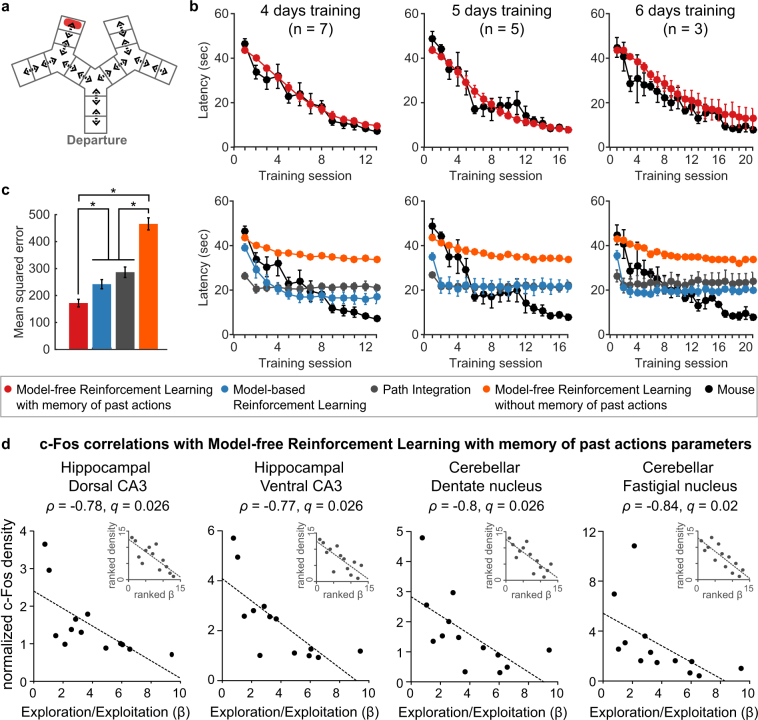
“This result is consistent with a theoretical study showing the beneficial contribution of a short-term memory buffer to model-free reinforcement to solve several spatial tasks otherwise unsolvable with standard model-free reinforcement learning models 57 .”
Poirier, G. L., Amin, E., & Aggleton, J. P. (2008) · The Journal of Neuroscience · doi:10.1523/jneurosci.4607-07.2008 · Cited by 72
Sferesv2: Evolvin' in the multi-core world
Mouret, J.-B., & Doncieux, S. (2010) · IEEE Congress on Evolutionary Computation · doi:10.1109/cec.2010.5586158 · Cited by 68
Model-based action planning involves cortico-cerebellar and basal ganglia networks
Fermin, A. S. R., Yoshida, T., Yoshimoto, J., Ito, M., Tanaka, S. C., & Doya, K. (2016) · Scientific Reports · doi:10.1038/srep31378 · Cited by 67
Arrigo, A., Mormina, E., Anastasi, G. P., Gaeta, M., Calamuneri, A., Quartarone, A., De Salvo, S., Bruschetta, D., Rizzo, G., Trimarchi, F., et al. (2014) · Frontiers in Human Neuroscience · doi:10.3389/fnhum.2014.00987 · Cited by 65
Computation of Egomotion in the Macaque Cerebellar Vermis
Angelaki, D. E., Yakusheva, T. A., Green, A. M., Dickman, J. D., & Blazquez, P. M. (2010) · The Cerebellum · doi:10.1007/s12311-009-0147-z · Cited by 58 · cited 1×
“…points towards the implication of a second cerebellum cluster including lobules IX and X, which suggests that vestibular information processing performed by these cerebellar lobules 61,62 may be of particular importance when performing sequence-based navigation, once the sequence has been learned.”
Fouquet, C., Babayan, B. M., Watilliaux, A., Bontempi, B., Tobin, C., & Rondi-Reig, L. (2013) · PLoS ONE · doi:10.1371/journal.pone.0067232 · Cited by 56 · cited 2×
“We previously found an implication of the dorsomedial striatum in mice and caudate nucleus and right cerebellum Crus I in humans in sequence-based navigation 16,18,28 .”
Self-citationEarly detection of age-related memory deficits in individual mice
Fouquet, C., Petit, G. H., Auffret, A., Gaillard, E., Rovira, C., Mariani, J., & Rondi‐Reig, L. (2009) · Neurobiology of Aging · doi:10.1016/j.neurobiolaging.2009.11.001 · Cited by 37 · cited 1×
“The tests included general observations (appearance, spontaneous behaviour and neurological reflexes), anxiety and motor abilities tests (motor coordination, balance, rotarod and muscular strength tests) and were performed within five days (details in 80 ).”
Self-citationActivating a memory system focuses connectivity toward its central structure
Boucard, A., Mons, N. E., Micheau, J., & Noguès, X. (2009) · Behavioural Brain Research · doi:10.1016/j.bbr.2009.06.016 · Cited by 12 · cited 2×
“Imaging-based approaches can detect coordinated activity across distributed and spatially remote brain regions, and therefore have been useful in defining functional networks 38–40 .”
A Navigation Analysis Tool (NAT) to assess spatial behavior in open-field and structured mazes
Jarlier, F., Arleo, A., Petit, G. H., Lefort, J. M., Fouquet, C., Burguière, E., & Rondi‐Reig, L. (2013) · Journal of Neuroscience Methods · doi:10.1016/j.jneumeth.2013.02.018 · Cited by 9
Self-citationThe Dynamics of Learning and Behavioral Flexibility
Wallis, J. D. (2011) · Neuron · doi:10.1016/j.neuron.2011.09.003 · Cited by 3 · cited 1×
“Prefrontal cortical neurons, for instance, have been implicated in coding task rules 22,23 and goal locations 24 .”
Research works printed but not linked: 1
- Paxinos, G. & Franklin, K. The Mouse Brain in Stereotaxic Coordinates, Compact | 978-0-12-374244-5|Elsevier. Mouse Brain Stereotaxic Coord. (2008).
Cited by
Vestibular processing during natural self-motion: implications for perception and action
Cullen, K. E. (2019) · Nature Reviews Neuroscience · doi:10.1038/s41583-019-0153-1 · Cited by 322
Cerebellum, Predictions and Errors
Popa, L. S., & Ebner, T. J. (2019) · Frontiers in Cellular Neuroscience · doi:10.3389/fncel.2018.00524 · Cited by 191
“Further, a network relying on hippocampalcerebellar interactions is involved in learning sequence-based navigation in mice (Babayan et al., 2017).”
BackgroundNeuronal circuitry for recognition memory of object and place in rodent models
Chao, O. Y.-H., Nikolaus, S., Yang, Y., & Huston, J. P. (2022) · Neuroscience & Biobehavioral Reviews · doi:10.1016/j.neubiorev.2022.104855 · Cited by 189
Anatomical and physiological foundations of cerebello-hippocampal interaction
Watson, T. C., Obiang, P., Torres-Herraez, A., Watilliaux, A., Coulon, P., Rochefort, C., & Rondi-Reig, L. (2019) · eLife · doi:10.7554/elife.41896 · Cited by 117
Self-citationThe Complex Nature of Hippocampal-Striatal Interactions in Spatial Navigation
Goodroe, S. C., Starnes, J., & Brown, T. I. (2018) · Frontiers in Human Neuroscience · doi:10.3389/fnhum.2018.00250 · Cited by 96
“Specifically, the DMS is a key network node alongside the VS and hippocampus for egocentric route-based navigation (Babayan et al., 2017), and DeCoteau et al.”
Metadata
- Authors
- Babayan, B. M., Watilliaux, A., Viejo, G., Paradis, A.-L., Girard, B., & Rondi-Reig, L.
- Affiliations
- Centre National de la Recherche Scientifique (FR)
- Venue
- Scientific Reports
- Published
- 2017-12-19
- Volume
- 7
- Issue
- 1
- Pages
- 17812-17812
- ISSN
- 2045-2322 (ISSN-L)
- PMC
- PMC5736633
- OpenAlex
- W2773861673
- Semantic Scholar
- a310e853a865633b3ff179c67fa0b0e1a73ffa8b
- Cited by
- 70
- References
- 88
- Citations by year
- 2026: 2 · 2025: 2 · 2024: 9 · 2023: 9 · 2022: 13 · 2021: 9 · 2020: 10 · 2019: 12 · 2018: 3 · 2017: 1
- FWCI
- 4.08
- Type
- journal article
- Language
- en
- Update notices
- correction (2019-12-20)
- Open access
- gold
- doi.org
- Licence
- cc-by
- creativecommons.org/licenses/by/4.0 (tdm)
- creativecommons.org/licenses/by/4.0 (vor)
- Locations
- Scientific Reports (publishedVersion, cc-by)
- Europe PMC (PubMed Central) (publishedVersion, cc-by)
- PubMed Central (publishedVersion, cc-by)
- PubMed (publishedVersion)
- HAL (submittedVersion, other-oa)
- DOAJ (DOAJ: Directory of Open Access Journals) (submittedVersion)
- Funders
- Agence Nationale de la Recherche (ANR–11–LABX–65, ANR-11IDEX-0004-02, ANR-11-IDEX, IDEX-0004-02, ANR-11-IDEX-0004, ANR-10, ANR-10-LABX, ANR-11-LABX-0065)
- Fondation pour la Recherche Médicale (ANR-11-IDEX-0004-02)
- Ministère de l'Enseignement Supérieur et de la Recherche (ANR-11-IDEX-0004-02)
- CHIST-ERA
- Topics
- Life Sciences › Neuroscience › Cognitive Neuroscience › Memory and Neural Mechanisms
- Social Sciences › Psychology › Experimental and Cognitive Psychology › Spatial Cognition and Navigation
- Life Sciences › Neuroscience › Neurology › Vestibular and auditory disorders
- Keywords
- hippocampus, cerebellum, goal-directed behavior, exploration, basal ganglia, cerebral cortex, graph theory, model-free reinforcement learning, mouse behavior, brain networks
- MeSH terms
- Animals, Basal Ganglia, Cerebellum, Cerebral Cortex, Computer Simulation, Hippocampus, Learning, Male, Memory, Mice, Inbred C57BL, Models, Neurological, Neural Pathways, Orientation, Space Perception, Mice
About these checks
Registry, retraction, Cites and statistics results are computed, not judged, with one exception: a printed reference that no index lists is read once by a model before it counts as a citation error. Claims are extracted by a model and kept only when their quote appears verbatim in the text; each cited source is then checked, with a model’s help, for whether it says what the claim relies on. Those verdicts can be wrong — read the claim’s quote and the cited source before relying on one.
Statistics and arithmetic are recomputed, not judged.
Confidence bands are shown only for fields calibrated on our annotated test set. None is calibrated yet, so no band is shown.
What counts as a claim ›How we measure confidence ›How we check this ›
Are you an author, or do you see a problem with this page? Request a review
Data sources
Bibliographic data: Semantic Scholar, OpenAlex, Crossref.
Contains information from the Semantic Scholar Academic Graph Datasets, made available under the ODC Attribution License (ODC-BY 1.0).
Semantic Scholar’s data is described in: Kinney, R., et al. (2023). The Semantic Scholar Open Data Platform. arXiv:2301.10140.
