

The DOI matches its Crossref record; 65 of the 65 references it cites were found in a registry or an index.
Oral administration of Proteus mirabilis damages dopaminergic neurons and motor functions in mice
Open accessAbstract
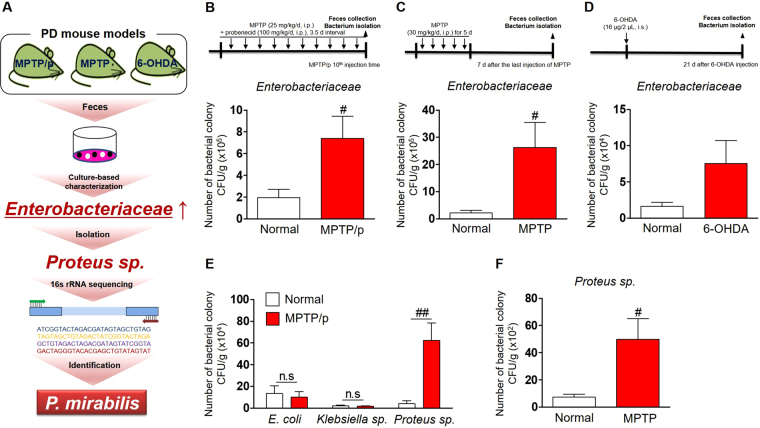
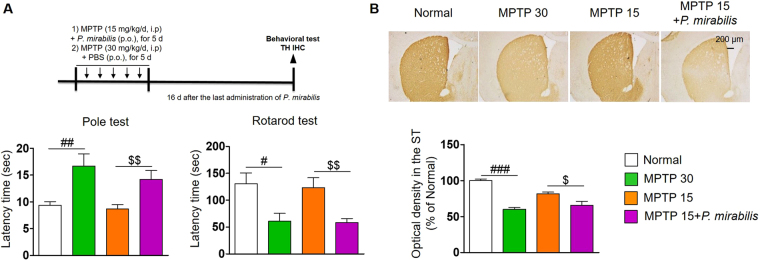
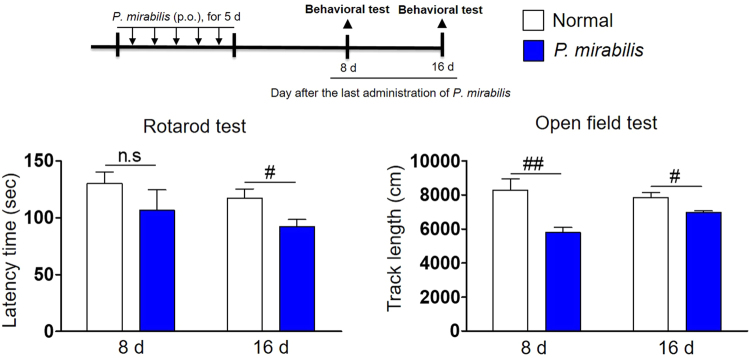
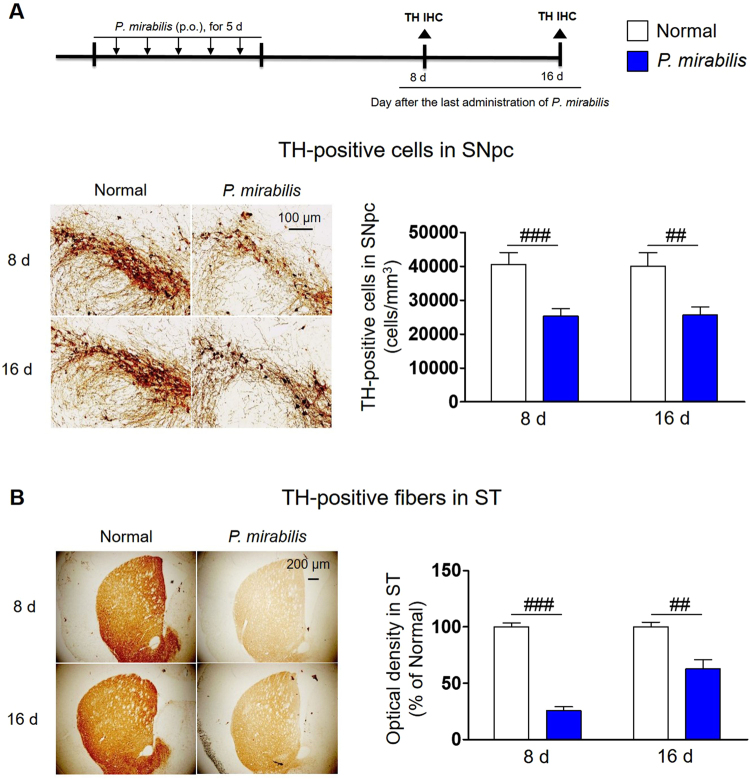
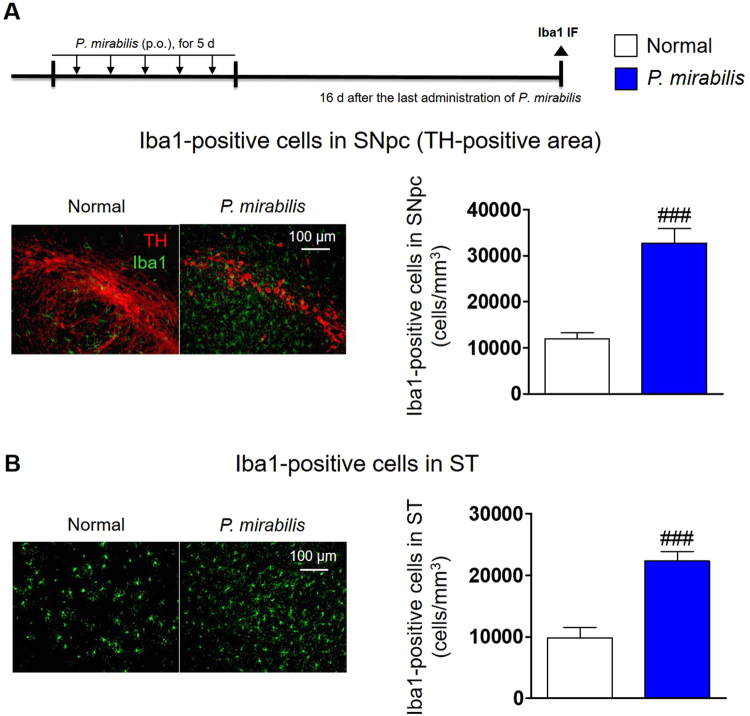
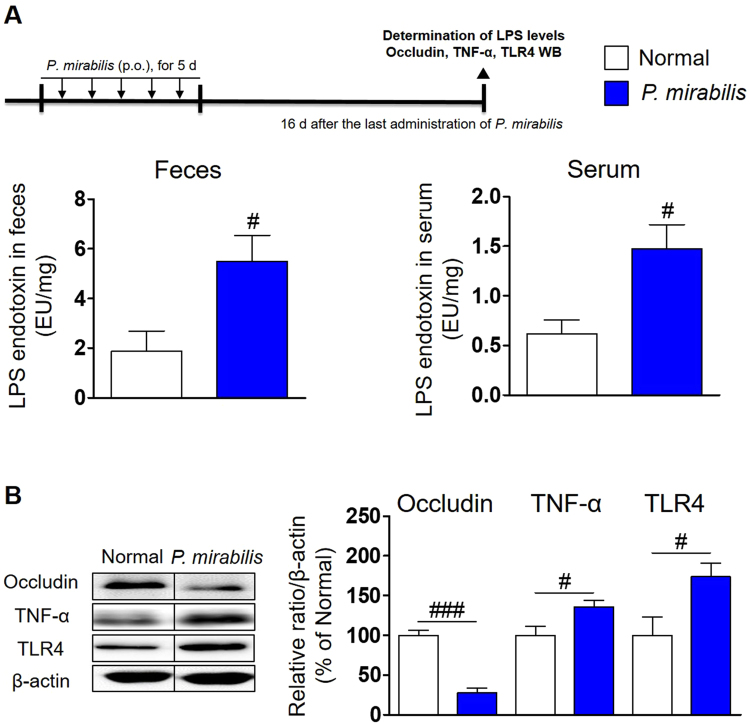
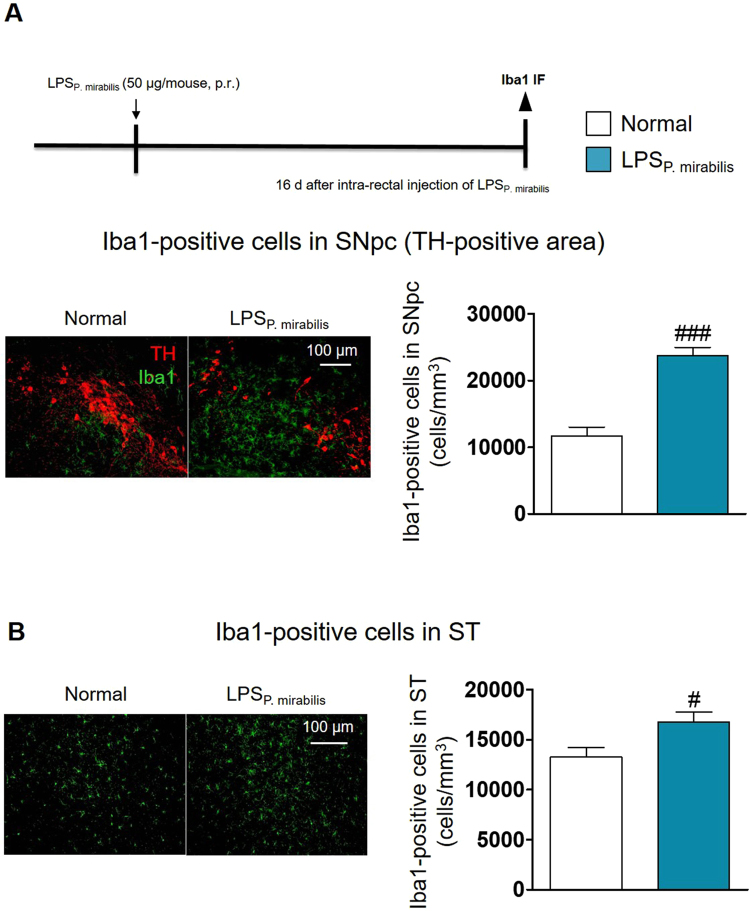
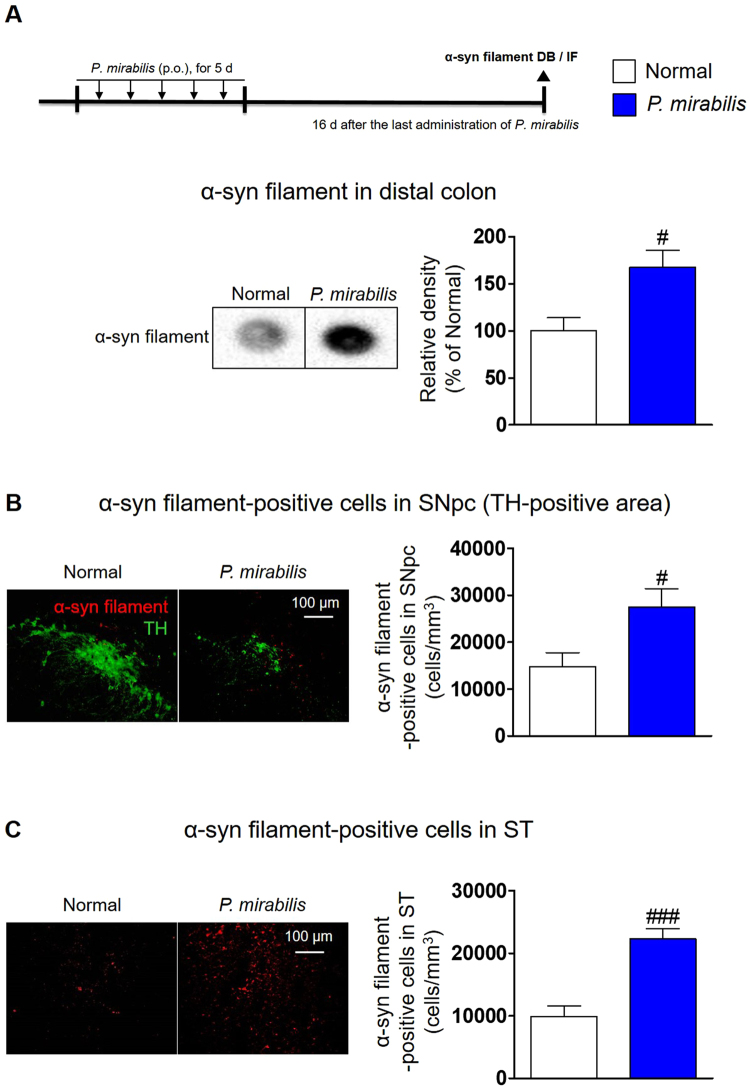
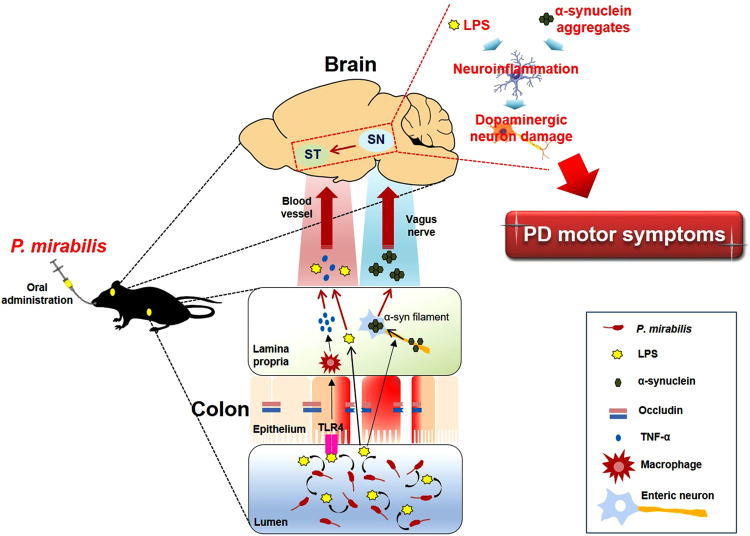
Recently, studies on the relationship between gut dysbiosis and Parkinson’s disease (PD) have increased, but whether a specific gut bacterium may cause PD remains unexplored. Here, we report, for the first time, that a specific gut bacterium directly induces PD symptoms and dopaminergic neuronal damage in the mouse brain. We found that the number of Enterobacteriaceae, particularly Proteus mirabilis, markedly and commonly increased in PD mouse models. Administration of P. mirabilis isolated from PD mice significantly induced motor deficits, selectively caused dopaminergic neuronal damage and inflammation in substantia nigra and striatum, and stimulated α-synuclein aggregation in the brain as well as in the colon. We found that lipopolysaccharides, a virulence factor of P. mirabilis, may be associated in these pathological changes via gut leakage and inflammatory actions. Our results suggest a role of P. mirabilis on PD pathogenesis in the brain.
Overview
The claims and statistics of this paper haven’t been checked yet.
Run the check — free, no account needed. It reads the open-access text and checks the sources it cites.
Integrity signals
Registry
Cites
Statistics
Figures
Verification
Claims the paper makes
The claims and statistics of this paper haven’t been checked yet.
Run the check — free, no account needed. It reads the open-access text and checks the sources it cites.
Claims other papers make about this one
Each is checked against this paper’s own text: does it say what the citing paper says it does?
In the citing paper
“Proteus mirabilis can cause motor dyskinesia, produce neuroinflammation and cause dopaminergic neuronal damage by producing LPS (Choi et al. 2018).”
From Therapeutic effect of GLP-1 engineered strain on mice model of Alzheimer’s disease and Parkinson’s disease (2020) · cites this paper as Choi et al. 2018
In the citing paper
“that may trigger neuroinflammation and lead to pathological changes related to PD by its metabolites (such as lipopolysaccharide) [39]”
From Neuroprotective Effect of Ceftriaxone on MPTP‐Induced Parkinson’s Disease Mouse Model by Regulating Inflammation and Intestinal Microbiota (2021) · cites this paper as [39]
In the citing paper
“Mice exposed to 1-methyl-4-phenyl-1,2,3,6-tetrahydropyridine (MPTP) or 6-hydroxydopamine presented increased amount of Proteus mirabilis in their feces.”
From The Role of Microbiota-Gut-Brain Axis in Neuropsychiatric and Neurological Disorders (2021) · cites this paper as [408]
In the citing paper
“After repeated oral administration of these bacteria isolated from the above-mentioned models to WT mice, the treated animals displayed Parkinson's disease-like symptoms, including impaired motor function, elevated α-synuclein aggregation in the brain and colon as well as dopaminergic neuronal loss [408].”
From The Role of Microbiota-Gut-Brain Axis in Neuropsychiatric and Neurological Disorders (2021) · cites this paper as [408]
In the citing paper
“In the end, in a differently induced model of PD, the repeated oral administration of Proteus mirabilis or its derived LPS to 1-methyl-4-phenyl-1,2,3,6-tetrahydropyridine-treated or young mice was sufficient to induce a PD-like phenotype with motor deficit, loss of dopaminergic neurons in the nigra, brain and gut inflammation with disruption of the intestinal epithelial barrier, and formation of α”
From The gut-brain axis: how microbiota and host inflammasome influence brain physiology and pathology (2020) · cites this paper as [185]
Self-check
Percentages, sums and reported differences re-computed from the paper’s own numbers.
The self-check needs the paper’s full text.
Citations
Cites
The Mouse Brain in Stereotaxic Coordinates
Paxinos, G. (2001) · Cited by 12,859
Staging of brain pathology related to sporadic Parkinson’s disease
Braak, H., Tredici, K. D., Rüb, U., de Vos, R. A. I., Jansen Steur, E. N. H., & Braak, E. (2003) · Neurobiology of Aging · doi:10.1016/s0197-4580(02)00065-9 · Cited by 10,777
From inflammation to sickness and depression: when the immune system subjugates the brain
Dantzer, R., O'Connor, J. C., Freund, G. G., Johnson, R. W., & Kelley, K. W. (2008) · Nature Reviews Neuroscience · doi:10.1038/nrn2297 · Cited by 7,395
Dauer, W., & Przedborski, S. (2003) · Neuron · doi:10.1016/s0896-6273(03)00568-3 · Cited by 5,469
Raetz, C. R. H., & Whitfield, C. (2002) · Annual Review of Biochemistry · doi:10.1146/annurev.biochem.71.110601.135414 · Cited by 4,404
Intestinal mucosal barrier function in health and disease
Turner, J. R. (2009) · Nature reviews. Immunology · doi:10.1038/nri2653 · Cited by 3,952
Gut microbiota regulate motor deficits and neuroinflammation in a model of Parkinson's disease
Sampson, T. R., Debelius, J. W., Thron, T., Janssen, S., Shastri, G. G., Ilhan, Z. E., Challis, C., Schretter, C. E., Rocha, S., Gradinaru, V., et al. (2016) · Cell · doi:10.1016/j.cell.2016.11.018 · Cited by 3,622
Hsiao, E. Y., McBride, S. W., Hsien, S., Sharon, G., Hyde, E. R., McCue, T., Codelli, J. A., Chow, J., Reisman, S. E., Petrosino, J. F., et al. (2013) · Cell · doi:10.1016/j.cell.2013.11.024 · Cited by 3,283
Gut biogeography of the bacterial microbiota
Donaldson, G. P., Lee, S. M., & Mazmanian, S. K. (2016) · Nature Reviews Microbiology · doi:10.1038/nrmicro3552 · Cited by 2,535
Systemic LPS causes chronic neuroinflammation and progressive neurodegeneration
Qin, L., Wu, X., Block, M. L., Liu, Y., Breese, G. R., Hong, J., Knapp, D. J., & Crews, F. T. (2007) · Glia · doi:10.1002/glia.20467 · Cited by 2,144
Gut microbiota are related to Parkinson's disease and clinical phenotype
Scheperjans, F., Aho, V., Pereira, P. A. B., Koskinen, K., Paulin, L., Pekkonen, E., Haapaniemi, E., Kaakkola, S., Eerola‐Rautio, J., Pohja, M., et al. (2015) · Movement Disorders · doi:10.1002/mds.26069 · Cited by 1,968
Abreu, M. T. (2010) · Nature Reviews Immunology · doi:10.1038/nri2707 · Cited by 1,288
Jung, H. C., Eckmann, L., Yang, S. K., Panja, A. B., Fierer, J., Morzycka-Wroblewska, E., & Kagnoff, M. F. (1995) · Journal of Clinical Investigation · doi:10.1172/jci117676 · Cited by 1,197
Unger, M. M., Spiegel, J., Dillmann, K.-U., Grundmann, D., Philippeit, H., Bürmann, J., Faßbender, K., Schwiertz, A., & Schäfer, K.-H. (2016) · Parkinsonism & Related Disorders · doi:10.1016/j.parkreldis.2016.08.019 · Cited by 1,159
Clinical progression in Parkinson disease and the neurobiology of axons
Cheng, H., Ulane, C. M., & Burke, R. E. (2010) · Annals of Neurology · doi:10.1002/ana.21995 · Cited by 1,012
Forsyth, C. B., Shannon, K. M., Kordower, J. H., Voigt, R. M., Shaikh, M., Jaglin, J. A., Estes, J. D., Dodiya, H. B., & Keshavarzian, A. (2011) · PLoS ONE · doi:10.1371/journal.pone.0028032 · Cited by 974
Direct evidence of Parkinson pathology spread from the gastrointestinal tract to the brain in rats
Holmqvist, S., Chutna, O., Bousset, L., Aldrin-Kirk, P., Li, W., Björklund, T., Wang, Z.-Y., Roybon, L., Melki, R., & Li, J.-Y. (2014) · Acta Neuropathologica · doi:10.1007/s00401-014-1343-6 · Cited by 925
Non‐motor symptoms in Parkinson’s disease
Poewe, W. H. (2008) · European Journal of Neurology · doi:10.1111/j.1468-1331.2008.02056.x · Cited by 790
Garrett, W. S., Gallini, C. A., Yatsunenko, T., Michaud, M., DuBois, A., Delaney, M. L., Punit, S., Karlsson, M., Bry, L., Glickman, J. N., et al. (2010) · Cell Host & Microbe · doi:10.1016/j.chom.2010.08.004 · Cited by 788
Cario, E., Rosenberg, I. M., Brandwein, S. L., Beck, P. L., Reinecker, H., & Podolsky, D. K. (2000) · The Journal of Immunology · doi:10.4049/jimmunol.164.2.966 · Cited by 751
Colonic inflammation in Parkinson's disease
Devos, D., Lebouvier, T., Lardeux, B., Biraud, M., Rouaud, T., Pouclet, H., Coron, E., Bruley des Varannes, S., Naveilhan, P., Nguyen, J.-M., et al. (2013) · Neurobiology of Disease · doi:10.1016/j.nbd.2012.09.007 · Cited by 627
Bloom, S. M., Bijanki, V. N., Nava, G. M., Sun, L., Malvin, N. P., Donermeyer, D. L., Dunne, W. M., Allen, P. M., & Stappenbeck, T. S. (2011) · Cell Host & Microbe · doi:10.1016/j.chom.2011.04.009 · Cited by 488
Alpha-synuclein in colonic submucosa in early untreated Parkinson’s disease
Shannon, K. M., Keshavarzian, A., Mutlu, E., Dodiya, H. B., Daian, D., Jaglin, J. A., & Kordower, J. H. (2012) · Movement Disorders · doi:10.1002/mds.23838 · Cited by 469
Is alpha-synuclein in the colon a biomarker for premotor Parkinson’s disease? Evidence from 3 cases
Shannon, K. M., Keshavarzian, A., Dodiya, H. B., Jakate, S., & Kordower, J. H. (2012) · Movement Disorders · doi:10.1002/mds.25020 · Cited by 464
Chen, S. G., Stribinskis, V., Rane, M. J., Demuth, D. R., Gozal, E., Roberts, A. M., Jagadapillai, R., Liu, R., Choe, K., Shivakumar, B., et al. (2016) · Scientific Reports · doi:10.1038/srep34477 · Cited by 463
Guo, S., Nighot, M., Al–Sadi, R., Alhmoud, T., Nighot, P. K., & Ma, T. Y. (2015) · The Journal of Immunology · doi:10.4049/jimmunol.1402598 · Cited by 437
Pan-Montojo, F., Schwarz, M., Winkler, C., Arnhold, M., O'Sullivan, G. A., Pal, A., Said, J., Marsico, G., Verbavatz, J.-M., Rodrigo-Angulo, M., et al. (2012) · Scientific Reports · doi:10.1038/srep00898 · Cited by 405
Seo, S.-U., Kamada, N., Muñoz-Planillo, R., Kim, Y.-G., Kim, D., Koizumi, Y., Hasegawa, M., Himpsl, S. D., Browne, H. P., Lawley, T. D., et al. (2015) · Immunity · doi:10.1016/j.immuni.2015.03.004 · Cited by 318
Self-citationCersosimo, M. G., Raina, G. B., Pecci, C., Pellene, A., Calandra, C. R., Gutiérrez, C., Micheli, F. E., & Benarroch, E. E. (2013) · Journal of Neurology · doi:10.1007/s00415-012-6801-2 · Cited by 314
Kelly, L. P., Carvey, P. M., Keshavarzian, A., Shannon, K. M., Shaikh, M., Bakay, R. A. E., & Kordower, J. H. (2014) · Movement Disorders · doi:10.1002/mds.25736 · Cited by 308
Structural alterations of the intestinal epithelial barrier in Parkinson’s disease
Clairembault, T., Leclair‐Visonneau, L., Coron, E., Bourreille, A., Dily, S. L., Vavasseur, F., Heymann, M., Neunlist, M., & Derkinderen, P. (2015) · Acta Neuropathologica Communications · doi:10.1186/s40478-015-0196-0 · Cited by 305
Goehler, L. E., Park, S. M., Opitz, N., Lyte, M., & Gaykema, R. P. A. (2008) · Brain Behavior and Immunity · doi:10.1016/j.bbi.2007.08.009 · Cited by 287
Neuropathology of non-motor features of Parkinson disease
Dickson, D. W., Fujishiro, H., Orr, C., DelleDonne, A., Josephs, K. A., Frigerio, R., Burnett, M. S., Parisi, J. E., Klos, K. J., & Ahlskog, J. E. (2009) · Parkinsonism & Related Disorders · doi:10.1016/s1353-8020(09)70769-2 · Cited by 274
Inflammation and α-Synuclein’s Prion-like Behavior in Parkinson's Disease—Is There a Link?
Tomé, C. M. L., Tyson, T., Rey, N. L., Grathwohl, S. A., Britschgi, M., & Brundin, P. (2012) · Molecular Neurobiology · doi:10.1007/s12035-012-8267-8 · Cited by 247
Lypd8 promotes the segregation of flagellated microbiota and colonic epithelia
Okumura, R., Kurakawa, T., Nakano, T., Kayama, H., Kinoshita, M., Motooka, D., Gotoh, K., Kimura, T., Kamiyama, N., Kusu, T., et al. (2016) · Nature · doi:10.1038/nature17406 · Cited by 208
A reassessment of risks and benefits of dopamine agonists in Parkinson's disease
Antonini, A., TOLOSA, E. S., Mizuno, Y., Yamamoto, M., & Poewe, W. H. (2009) · The Lancet Neurology · doi:10.1016/s1474-4422(09)70225-x · Cited by 194
Parkinson's Disease and Neurodegeneration: GABA-Collapse Hypothesis
Błaszczyk, J. W. (2016) · Frontiers in Neuroscience · doi:10.3389/fnins.2016.00269 · Cited by 192
Kourbeti, I. S., Vakis, A. F., Ziakas, P. D., Karabetsos, D., Potolidis, E., Christou, S., & Samonis, G. (2014) · Journal of neurosurgery · doi:10.3171/2014.8.jns132557 · Cited by 187
Kell, D. B., & Pretorius, E. (2015) · Integrative Biology · doi:10.1039/c5ib00158g · Cited by 170
Nuber, S., Harmuth, F., Kohl, Z., Adame, A., Trejo, M., Schönig, K., Zimmermann, F., Bauer, C. C., Casadei, N., Giel, C., et al. (2013) · Brain · doi:10.1093/brain/aws358 · Cited by 161
Sidorczyk, Z., Zähringer, U., & Rietschel, E. (1983) · European Journal of Biochemistry · doi:10.1111/j.1432-1033.1983.tb07789.x · Cited by 141
Enteric alpha‐synuclein expression is increased in Parkinson's disease but not Alzheimer's disease
Gold, A., Turkalp, Z. T., & Munoz, D. G. (2013) · Movement Disorders · doi:10.1002/mds.25298 · Cited by 132
Rezania, S., Amirmozaffari, N., Tabarrai, B., Jeddi‐Tehrani, M., Zarei, O., Alizadeh, R., Masjedian, F., & Zarnani, A. (2011) · Europe PMC (PubMed Central) · Cited by 123
Wang, L., Magen, I., Yuan, P. Q., Subramaniam, S., Richter, F., Chesselet, M. ‐., & Taché, Y. (2012) · Neurogastroenterology & Motility · doi:10.1111/j.1365-2982.2012.01974.x · Cited by 118
Microbial imbalance and intestinal pathologies: connections and contributions
Yang, Y., & Jobin, C. (2014) · Disease Models & Mechanisms · doi:10.1242/dmm.016428 · Cited by 118
Increased Urinary Indoxyl Sulfate (Indican): New Insights into Gut Dysbiosis in Parkinson’s Disease
Cassani, E., Barichella, M., Cancello, R., Cavanna, F., Iorio, L., Cereda, E., Bolliri, C., Zampella Maria, P., Bianchi, F., Cestaro, B., et al. (2015) · Parkinsonism & Related Disorders · doi:10.1016/j.parkreldis.2015.02.004 · Cited by 108
Old and new challenges in Parkinson's disease therapeutics
Pires, A. O., Teixeira, F. G., Mendes-Pinheiro, B., Serra, S. C., Sousa, N., & Salgado, A. J. (2017) · Progress in Neurobiology · doi:10.1016/j.pneurobio.2017.04.006 · Cited by 96
Pellegrini, C., Fornai, M., Colucci, R., Tirotta, E., Blandini, F., Levandis, G., Cerri, S., Segnani, C., Ippolito, C., Bernardini, N., et al. (2016) · Journal of Neuroinflammation · doi:10.1186/s12974-016-0608-5 · Cited by 91
Mishra, V., Shuai, B., Kodali, M., Shetty, G. A., Hattiangady, B., Rao, X., & Shetty, A. K. (2015) · Scientific Reports · doi:10.1038/srep17807 · Cited by 90
Im, E., Riegler, F. M., Pothoulakis, C., & Rhee, S. H. (2012) · American Journal of Physiology-Gastrointestinal and Liver Physiology · doi:10.1152/ajpgi.00120.2012 · Cited by 79
Parallel manifestations of neuropathologies in the enteric and central nervous systems
Natale, G., Pasquali, L., Paparelli, A., & Fornai, F. (2011) · Neurogastroenterology & Motility · doi:10.1111/j.1365-2982.2011.01794.x · Cited by 70
Metabolism of 3-Nitrotyrosine Induces Apoptotic Death in Dopaminergic Cells
Blanchard-Fillion, B., Prou, D., Polydoro, M., Spielberg, D., Tsika, E., Wang, Z., Hazen, S. L., Koval, M. H., Przedborski, S., & Ischiropoulos, H. (2006) · Journal of Neuroscience · doi:10.1523/jneurosci.1038-06.2006 · Cited by 69
Kim, H. G., Park, G., Piao, Y., Kang, M. S., Pak, Y. K., Hong, S.-P., & Oh, M. S. (2014) · Food and Chemical Toxicology · doi:10.1016/j.fct.2013.12.037 · Cited by 64
Self-citationMurine Model for Parkinson's Disease: from 6-OH Dopamine Lesion to Behavioral Test
da Conceição, F. S. L., Ngo-Abdalla, S., Houzel, J., & Rehen, S. K. (2010) · Journal of Visualized Experiments · doi:10.3791/1376 · Cited by 56
Bacterial Metabolites Mirror Altered Gut Microbiota Composition in Patients with Parkinson’s Disease
van Kessel, S. P., & Aidy, S. E. (2019) · Journal of Parkinson s Disease · doi:10.3233/jpd-191780 · Cited by 53
Windels, F., & Kiyatkin, E. A. (2004) · Journal of Neuroscience · doi:10.1523/jneurosci.1528-04.2004 · Cited by 52
Bencsik, A., Muselli, L., Leboidre, M., Lakhdar, L., & Baron, T. (2014) · Journal of Neuropathology & Experimental Neurology · doi:10.1097/nen.0000000000000137 · Cited by 48
Biochemical characteristics and identification of Enterobacteriaceae isolated from meats
Stiles, M. E., & Ng, L. ‐. (1981) · Applied and Environmental Microbiology · doi:10.1128/aem.41.3.639-645.1981 · Cited by 48
Biopsable Neural Tissues: Toward New Biomarkers for Parkinson's Disease?
Lebouvier, T., Tasselli, M., Paillusson, S., Pouclet, H., Neunlist, M., & Derkinderen, P. (2010) · Frontiers in Psychiatry · doi:10.3389/fpsyt.2010.00128 · Cited by 44
Motor complications, levodopa metabolism and progression of Parkinson's disease
Müller, T. H. (2011) · Expert Opinion on Drug Metabolism & Toxicology · doi:10.1517/17425255.2011.575779 · Cited by 41
The MPTP/Probenecid Model of Progressive Parkinson’s Disease
Carta, A. R., Carboni, E., & Spiga, S. (2012) · Methods in molecular biology · doi:10.1007/978-1-62703-251-3_17 · Cited by 38
Tan, C., Wu, Y.-P., Wu, H.-F., & Lai, C.-C. (2008) · Canadian Medical Association Journal · doi:10.1503/cmaj.071604 · Cited by 30
Kassim, Z., Aziz, A. A., Haque, Q. M., & Cheung, H. A. S. (2003) · European Journal of Pediatrics · doi:10.1007/s00431-003-1240-9 · Cited by 20
Scavone, P., Villar, S., Umpiérrez, A., & Zunino, P. (2015) · Pathogens and Disease · doi:10.1093/femspd/ftv017 · Cited by 19
Neonatal Meningoventriculitis Due to Proteus Mirabilis – A Case Report
Juyal, D. (2013) · JOURNAL OF CLINICAL AND DIAGNOSTIC RESEARCH · doi:10.7860/jcdr/2013/5146.2772 · Cited by 4
Research works printed but not linked: 1
- Paxinos, G. & Franklin, K. Paxinos and Franklin’s the Mouse Brain in Stereotaxic Coordinates 4th Edition. 4th edn, (Academic Press, 2012).
Cited by
Sorted by citations
The gut microbiota–brain axis in behaviour and brain disorders
Morais, L. H., Schreiber, H. L., & Mazmanian, S. K. (2021) · Nature Reviews Microbiology · doi:10.1038/s41579-020-00460-0 · Cited by 2,149
Microbiota–gut–brain axis and its therapeutic applications in neurodegenerative diseases
Loh, J. S., Mak, W. Q., Tan, L. K. S., Ng, C. X., Chan, H. H., Yeow, S. H., Foo, J. B., Ong, Y. S., How, C. W., & Khaw, K. Y. (2024) · Signal Transduction and Targeted Therapy · doi:10.1038/s41392-024-01743-1 · Cited by 1,193
The Role of Microbiota-Gut-Brain Axis in Neuropsychiatric and Neurological Disorders
Socała, K., Doboszewska, U., Szopa, A., Serefko, A., Włodarczyk, M., Zielińska, A., Poleszak, E., Fichna, J., & Wlaź, P. (2021) · Pharmacological Research · doi:10.1016/j.phrs.2021.105840 · Cited by 857
The gut-brain axis: how microbiota and host inflammasome influence brain physiology and pathology
Rutsch, A., Kantsjö, J. B., & Ronchi, F. (2020) · Frontiers in Immunology · doi:10.3389/fimmu.2020.604179 · Cited by 821
Parkinson disease and the immune system - Associations, mechanisms and therapeutics
Tan, E.-K., Chao, Y.-X., West, A., Chan, L.-L., Poewe, W., & Jankovic, J. (2020) · Nature Reviews Neurology · doi:10.1038/s41582-020-0344-4 · Cited by 457
Metadata
- Authors
- Choi, J. G., Kim, N., Ju, I. G., Eo, H., Lim, S.-M., Jang, S.-E., Kim, D.-H., & Oh, M. S.
- Affiliations
- Kyung Hee University (KR)
- Corresponding author
- Kim, Dong-Hyun
- Oh, Myung Sook
- ORCID
- Venue
- Scientific Reports
- Published
- 2018-01-19
- Volume
- 8
- Issue
- 1
- Pages
- 1275-1275
- ISSN
- 2045-2322 (ISSN-L)
- PMC
- PMC5775305
- OpenAlex
- W2782946155
- Cited by
- 170
- References
- 65
- Citations by year
- 2026: 12 · 2025: 19 · 2024: 23 · 2023: 32 · 2022: 23 · 2021: 25 · 2020: 19 · 2019: 14 · 2018: 3
- FWCI
- 10.36
- Type
- journal article
- Language
- en
- Open access
- gold
- doi.org
- Locations
- Scientific Reports (publishedVersion, cc-by)
- PubMed Central (publishedVersion, cc-by)
- PubMed (publishedVersion)
- DOAJ (DOAJ: Directory of Open Access Journals) (submittedVersion)
- Funders
- National Research Foundation (2015R1A2A2A01004341)
- National Research Foundation of Korea (NRF-2017R1A5A2014768, 2017R1A5A2014768, NRF-2015R1A2A2A01004341)
- Ministry of Science and ICT, South Korea (NRF-2017R1A5A2014768, 2017R1A5A2014768)
- Topics
- Health Sciences › Medicine › Clinical Neurology › Parkinson's Disease Mechanisms and Treatments
- Life Sciences › Biochemistry, Genetics and Molecular Biology › Molecular Biology › Gut microbiota and health
- Life Sciences › Neuroscience › Neurology › Neuroinflammation and Neurodegeneration Mechanisms
- Keywords
- Proteus mirabilis, Parkinson's disease, dopaminergic neurons, motor impairment, gut dysbiosis, Enterobacteriaceae, lipopolysaccharide, leaky gut, neuroinflammation, substantia nigra, striatum, alpha-synuclein aggregation, gut-brain axis, oral administration
- MeSH terms
- Gastrointestinal Microbiome, Animals, Colon, Corpus Striatum, Lipopolysaccharides, Male, Mice, Inbred C57BL, Movement, Proteus mirabilis, Substantia Nigra, MPTP Poisoning, Mice, Dopaminergic Neurons
About these checks
Registry, retraction, Cites and statistics results are computed, not judged, with one exception: a printed reference that no index lists is read once by a model before it counts as a citation error. Claims are extracted by a model and kept only when their quote appears verbatim in the text; each cited source is then checked, with a model’s help, for whether it says what the claim relies on. Those verdicts can be wrong — read the claim’s quote and the cited source before relying on one.
Statistics and arithmetic are recomputed, not judged.
Confidence bands are shown only for fields calibrated on our annotated test set. None is calibrated yet, so no band is shown.
What counts as a claim ›How we measure confidence ›How we check this ›
Are you an author, or do you see a problem with this page? Request a review
