

The future of digital health with federated learning
Open accessThe DOI matches its Crossref record; 75 of the 76 references it cites were found in a registry or an index, and 1 are not checked yet; 31 of the 51 sources its claims cite were checked for support.
Abstract
Data-driven machine learning (ML) has emerged as a promising approach for building accurate and robust statistical models from medical data, which is collected in huge volumes by modern healthcare systems. Existing medical data is not fully exploited by ML primarily because it sits in data silos and privacy concerns restrict access to this data. However, without access to sufficient data, ML will be prevented from reaching its full potential and, ultimately, from making the transition from research to clinical practice. This paper considers key factors contributing to this issue, explores how federated learning (FL) may provide a solution for the future of digital health and highlights the challenges and considerations that need to be addressed.
Verified 2026-11-25 · 1 reference not checked yet
Overview
CoChat Summary
TL;DR
This perspective paper argues that federated learning (FL) is a promising way to train medical AI across institutions without centralizing sensitive data, potentially improving accuracy, robustness, and privacy in digital health. It also emphasizes that FL does not remove core challenges such as data heterogeneity, privacy leakage, and the need for standardization and governance.
Key findings
- FL is presented as a learning paradigm that lets multiple parties train collaboratively without exchanging or centralizing datasets, by moving the model to the data rather than the data to the model.
- The paper states that recent research has shown FL models can achieve performance comparable to centrally hosted data sets and superior to models trained on isolated single-institution data.
- Reported application areas already include EHR tasks such as finding clinically similar patients and predicting hospitalizations due to cardiac events, mortality, and ICU stay time, as well as medical imaging tasks such as whole-brain segmentation, brain tumor segmentation, and fMRI classification.
- Concrete initiatives mentioned include a collaboration across 4 hospitals in France (HealthChain), an international federation of 30 healthcare institutions (FeTS), and a project across 10 pharmaceutical companies (Melloddy).
Methods
- Not stated in the paper.
- The article is a perspective/consensus paper rather than an empirical study; it synthesizes prior work and examples to discuss FL’s promise, current uses, and technical considerations.
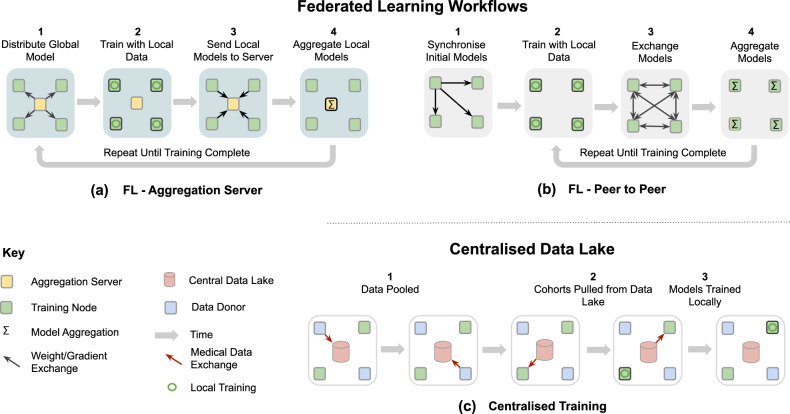
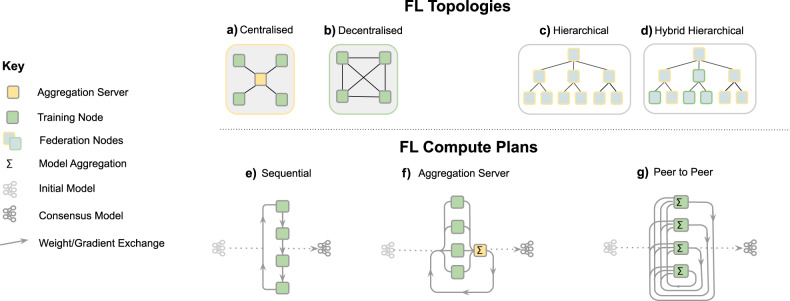
- The text describes FL workflows, including aggregation-server and peer-to-peer topologies, and discusses mechanisms such as FedAvg, FedProx, domain adaptation, and differential privacy at a conceptual level.
Limitations
- The paper explicitly states that FL does not solve all issues inherent to learning on medical data; success still depends on data quality, bias, and standardization.
- It states that FL does not eliminate privacy risks: models can still memorize information, and gradients/model updates may leak private data through inversion or adversarial attacks.
- Evident from the text: this is a perspective article, so it does not report original experimental results, sample sizes, or statistical testing.
Model-written summary. Check it against the paper before relying on it.
Integrity signals
Registry
Cites
Statistics
Figures
Verification
Claims the paper makes
16 Valid · 0 Not valid · 4 Not checked · 19 Own results and interpretations
The cited sources support only part of this claim — read each source’s verdict below.
In the paper
“Modern DL models feature millions of parameters that need to be learned from sufficiently large curated data sets in order to achieve clinical-grade accuracy, while being safe, fair, equitable and generalising well to unseen data2–5.”
§ The future of digital health with federated learning > Introduction
What the sources say
- Not checked — no full text of the sourcecites [2] Wang F Casalino LP Khullar D Deep learning in medicine—promise, progress, and challenges JAMA Intern. Med. 2019 179 293 294 10.1001/jamainternmed.2018.7117 30556825 source
- Not checked — no full text of the sourcecites [3] Chartrand G Deep learning: a primer for radiologists Radiographics 2017 37 2113 2131 10.1148/rg.2017170077 29131760 source
- Partly supportedcites [4] De Fauw J Clinically applicable deep learning for diagnosis and referral in retinal disease Nat. Med. 2018 24 1342 10.1038/s41591-018-0107-6 30104768 sourceExperimental — accuracy not yet measured
Split into 2 atoms — 0 confirmed, 2 partially supported, 0 disputed, 0 misattributed, 0 unverifiable. Expand the claim to see per-atom verdicts.
- Partly supportedcites [5] Sun, C., Shrivastava, A., Singh, S. & Gupta, A. Revisiting unreasonable effectiveness of data in deep learning era. In Proceedings of the IEEE international conference on computer vision, 843–852 (IEEE, 2017). sourceExperimental — accuracy not yet measured
Split into 2 atoms — 0 confirmed, 2 partially supported, 0 disputed, 0 misattributed, 0 unverifiable. Expand the claim to see per-atom verdicts.
plainstates a cause- Asserted: passes — The authors put it forward as true.
- Checkable: passes — It can be checked against evidence.
- Load-bearing: passes — The paper’s conclusions depend on it.
- Based: passes — The paper gives a reason why it holds.
The cited sources support only part of this claim — read each source’s verdict below.
In the paper
“Existing medical data is not fully exploited by ML primarily because it sits in data silos and privacy concerns restrict access to this data.”
§ The future of digital health with federated learning > Abstract
What the sources say
- Partly supportedcites [6] Van Panhuis WG A systematic review of barriers to data sharing in public health BMC Public Health 2014 14 1144 10.1186/1471-2458-14-1144 25377061 PMC4239377 sourceExperimental — accuracy not yet measured
The Background describes routinely collected public-health data as underused, and Results > Legal barriers says privacy concerns can lead to restrictive data-access policies. Results > Technical barriers describes difficulties integrating datasets. The paper does not establish that machine learning is the affected use or that data silos and privacy are the primary reasons medical data is underexploited. (LLM, conf=0.87)
- Partly supportedcites [7] Rocher L Hendrickx JM De Montjoye Y-A Estimating the success of re-identifications in incomplete datasets using generative models Nat. Commun. 2019 10 1 9 10.1038/s41467-019-10933-3 31337762 PMC6650473 sourceExperimental — accuracy not yet measured
The Introduction (page not provided) says medical and other personal data can advance AI, while privacy concerns affect its collection, use, and sharing. It does not say that medical data sits in silos or that silos and privacy restrictions are the primary reasons ML underuses it. (LLM, conf=0.85)
plainstates a cause- Asserted: passes — The authors put it forward as true.
- Checkable: passes — It can be checked against evidence.
- Load-bearing: passes — The paper’s conclusions depend on it.
- Based: passes — The paper gives a reason why it holds.
- Partly supported
The cited sources support only part of this claim — read each source’s verdict below.
In the paper
“The more rounds of local training are performed, the less it is guaranteed that the overall procedure is minimising (Eq. 1)9,12.”
§ The future of digital health with federated learning > Technical considerations > Federated learning definition
What the sources say
- Partly supportedcites [9] McMahan, B., Moore, E., Ramage, D., Hampson, S. & y Arcas, B. A. Communication-efficient learning of deep networks from decentralized data. In Artificial Intelligence and Statistics, 1273–1282. https://scholar.google.de/scholar?hl=de&as_sdt=0%2C5&q=Communicationefficient+learning+of+deep+networks+from+decentralized+data&btnG= (2017). sourceExperimental — accuracy not yet measured
The Experimental Results (p. 7) report that with very many local epochs, FedAvg can plateau or diverge on the Shakespeare LSTM task. But they also report no significant convergence degradation for large numbers of local epochs on the MNIST CNN, so the paper does not establish a general rule that more local training makes minimisation of the global loss less assured. (LLM, conf=0.86)
- Supportedcites [12] Kairouz, P. et al. Advances and open problems in federated learning. arXiv preprint arXiv:1912.04977 (2019). source
Section 3.2.1 states that more local updates increase divergence between client models and slow convergence of the training loss. Section 3.2.2 also reports more restrictive convergence bounds for local updates with non-IID data. Together, these support the claim that increasing local training weakens convergence assurances for the global loss. (LLM, conf=0.86)
plainstates a cause- Asserted: passes — The authors put it forward as true.
- Checkable: passes — It can be checked against evidence.
- Load-bearing: unclear — It is unclear whether the paper’s conclusions depend on it.
- Based: passes — The paper gives a reason why it holds.
- Partly supported
A conclusion the paper draws from its own results — it cites no other source for it, so there is none to check. The quote shows it is in the paper.
In the paper
“By linking healthcare institutions, not restricted to research centres, FL can have direct clinical impact.”
§ The future of digital health with federated learning > Data-driven medicine requires federated efforts > Current FL efforts for digital health
plainstates a possible cause- Asserted: passes — The authors put it forward as true.
- Checkable: passes — It can be checked against evidence.
- Load-bearing: passes — The paper’s conclusions depend on it.
- Based: passes — The paper gives a reason why it holds.
A conclusion the paper draws from its own results — it cites no other source for it, so there is none to check. The quote shows it is in the paper.
In the paper
“FL enables collaborative research for, even competing, companies.”
§ The future of digital health with federated learning > Data-driven medicine requires federated efforts > Current FL efforts for digital health
plainstates a cause- Asserted: passes — The authors put it forward as true.
- Checkable: passes — It can be checked against evidence.
- Load-bearing: unclear — It is unclear whether the paper’s conclusions depend on it.
- Based: passes — The paper gives a reason why it holds.
14 references still to check
A free account verifies the references that are still open.
- Probably not a substantial claim. 19
- It may state two separate claims as one. 32
- The quote only partly states this claim. 1
Claims other papers make about this one
Each is checked against this paper’s own text: does it say what the citing paper says it does?
The source backs part of the claim, not all of it — or backs it for a different population, condition or comparison.
In the citing paper
“This is currently addressed by sharing multi-site data, but such centralization is challenging/infeasible to scale due to various limitations.”
From Federated learning enables big data for rare cancer boundary detection (2022) · cites this paper as [10]
Experimental — accuracy not yet measuredThe source backs part of the claim, not all of it — or backs it for a different population, condition or comparison.
In the citing paper
“However, these methods often come with trade-offs in accuracy and computational efficiency.”
From The role of multimodality in clinical disease diagnosis: advances, challenges, and opportunities (2026) · cites this paper as [34]
Experimental — accuracy not yet measuredThe source backs part of the claim, not all of it — or backs it for a different population, condition or comparison.
In the citing paper
“The experts in healthcare and life sciences can use FL to solve the unique problem of data governance by training algorithms behind the hospital's firewall and only sharing models so that data remain secure [31].”
From A comprehensive survey on federated learning techniques for healthcare informatics (2023) · cites this paper as [31]
Experimental — accuracy not yet measuredThe source backs part of the claim, not all of it — or backs it for a different population, condition or comparison.
In the citing paper
“It also improves patient privacy and reduces low latency during the collaboration of multiple hospitals/entities [7].”
From Handling privacy-sensitive medical data with federated learning: Challenges and future directions (2023) · cites this paper as [7]
Experimental — accuracy not yet measuredThe source backs part of the claim, not all of it — or backs it for a different population, condition or comparison.
In the citing paper
“Enabling privacy protected data sharing across clinical centers is advocated as an essential pathway to promote collaborations internationally yet underexplored so far6,7.”
From Federated deep learning for detecting COVID-19 lung abnormalities in CT: a privacy-preserving multinational validation study (2021) · cites this paper as [7]
Experimental — accuracy not yet measured
27 more claims about this paper
Create a free account to see every claim other papers make about this one.
Citations
Cites
LeCun, Y., Bengio, Y., & Hinton, G. (2015) · Nature · doi:10.1038/nature14539 · Cited by 84,126
Communication-Efficient Learning of Deep Networks from Decentralized Data
McMahan, H. B., Moore, E., Ramage, D., Hampson, S., & Arcas, B. A. Y. (2016) · arXiv · doi:10.48550/arxiv.1602.05629 · Cited by 14,215
Sudlow, C., Gallacher, J., Allen, N., Beral, V., Burton, P., Danesh, J., Downey, P., Elliott, P., Green, J., Landray, M., et al. (2015) · PLOS Medicine · doi:10.1371/journal.pmed.1001779 · Cited by 12,728 · cited 2×
“Substantial, albeit smaller, initiatives include the Human Connectome25, the UK Biobank26, the Cancer Imaging Archive (TCIA)27, NIH CXR828, NIH DeepLesion29, the Cancer Genome Atlas (TCGA)30, the Alzheimer’s Disease Neuroimaging Initiative (ADNI)31, as well as medical grand challenges32 such as the CAMELYON challenge3…”
BackgroundAdvances and Open Problems in Federated Learning
Kairouz, P., McMahan, H. B., Avent, B., Bellet, A., Bennis, M., Bhagoji, A. N., Bonawitz, K., Charles, Z., Cormode, G., Cummings, R., et al. (2019) · arXiv · doi:10.48550/arxiv.1912.04977 · Cited by 7,857
Advances and Open Problems in Federated Learning
Kairouz, P., & McMahan, H. B. (2021) · Foundations and Trends in Machine Learning · doi:10.1561/2200000083 · Cited by 7,772
The multimodal brain tumor image segmentation benchmark (BRATS)
Menze, B. H., Jakab, A., Bauer, S., Kalpathy-Cramer, J., Farahani, K., Kirby, J., Burren, Y., Porz, N., Slotboom, J., Wiest, R., et al. (2015) · IEEE Transactions on Medical Imaging · doi:10.1109/tmi.2014.2377694 · Cited by 6,781
Deep Learning with Differential Privacy
Abadi, M., Chu, A., Goodfellow, I., McMahan, H. B., Mironov, I., Talwar, K., & Zhang, L. (2016) · Proceedings of the 2016 ACM SIGSAC Conference on Computer and Communications Security · doi:10.1145/2976749.2978318 · Cited by 6,578 · cited 2×
“Countermeasures, such as limiting the granularity of the shared model updates and to add specific noise to ensure differential privacy [34, 12, 57] may be needed and is still an active area of research [14].”
BackgroundMethodFederated Machine Learning: Concept and Applications
Yang, Q., Liu, Y., Chen, T., & Tong, Y. (2019) · ACM Transactions on Intelligent Systems and Technology · doi:10.1145/3298981 · Cited by 6,322 · cited 4×
“d FL approaches are still under development. 3 Technical Considerations FL is perhaps best-known from the work of Konecnˇ y` et al. [36], but various other definitions have been proposed in literature [14, 11, 15, 9]. These approaches can be realised via different communication architectures (see Figure 1) and respecti…”
BackgroundInfluentialFederated learning: Challenges, methods, and future directions
Li, T., Sahu, A. K., Talwalkar, A., & Smith, V. (2020) · IEEE Signal Processing Magazine · doi:10.1109/msp.2020.2975749 · Cited by 6,210 · cited 3×
“However, there is a trade-off in terms of performance and these techniques may affect for example the accuracy of the final model [10].”
BackgroundMethodShin, H.-C., Roth, H. R., Gao, M., Lu, L., Xu, Z., Nogues, I., Yao, J., Mollura, D., & Summers, R. M. (2016) · IEEE Transactions on Medical Imaging · doi:10.1109/tmi.2016.2528162 · Cited by 5,759
Self-citation
Cited by
Items 901–1,000 of 3,132
A Beginner's Guide to Federated Learning
Reddy, G. P., & Kumar, Y. V. P. (2023) · Intelligent Methods, Systems, and Applications (IMSA) · doi:10.1109/imsa58542.2023.10217383 · Cited by 18
“The healthcare sector benefits significantly from FL as a valuable technique for training machine learning models on data, while keeping patient data private [12].”
MethodMulti-scale V-net architecture with deep feature CRF layers for brain extraction
Park, J. S., Fadnavis, S., & Garyfallidis, E. (2024) · Communications Medicine · doi:10.1038/s43856-024-00452-8 · Cited by 11
Filice, R. W., Stein, A., Pan, I., & Shih, G. (2022) · Journal of Imaging Informatics in Medicine · doi:10.1007/s10278-021-00547-x · Cited by 10
“Finally, model accuracy is comparable to those developed by pooling multi-institutional data centrally, an intimidating process requiring cumbersome data transfer and onerous contractual agreements [8, 9].”
MethoddsMTL: a computational framework for privacy-preserving, distributed multi-task machine learning
Cao, H., Zhang, Y., Baumbach, J., Burton, P. R., Dwyer, D., Koutsouleris, N., Matschinske, J., Marcon, Y., Rajan, S., Rieg, T., et al. (2022) · Bioinformatics · doi:10.1093/bioinformatics/btac616 · Cited by 14
Knowledge Graph-Based Reinforcement Federated Learning for Chinese Question and Answering
Xu, L., Chen, T., Hou, Z., Zhang, W., Hon, C., Wang, X., Wang, D., Chen, L., Zhu, W., Tian, Y., et al. (2023) · IEEE Transactions on Computational Social Systems · doi:10.1109/tcss.2023.3246795 · Cited by 12
Heterogeneous Datasets for Federated Survival Analysis Simulation
Archetti, A., Lomurno, E., Lattari, F., Martin, A., & Matteucci, M. (2023) · ACM/SPEC International Conference on Performance Engineering (ICPE) · doi:10.1145/3578245.3584935 · Cited by 18
“Federated learning provides key advantages for the future of healthcare applications [5].”
BackgroundBiomarker-Guided Imaging and AI-Augmented Diagnosis of Degenerative Joint Disease
Kumar, R., Sporn, K., Borole, A., Khanna, A., Gowda, C., Paladugu, P., Ngo, A., Jagadeesan, R., Zaman, N., & Tavakkoli, A. (2025) · Diagnostics · doi:10.3390/diagnostics15111418 · Cited by 13
“Through cooperative model training across institutions without exposing raw patient data, federated learning preserves privacy and increases model resilience, hence improving explainable artificial intelligence [179].”
Merriweather, Lyytinen, K., Aron, D., & Cauley, M. R. (2026) · npj Digital Medicine · doi:10.1038/s41746-025-02243-4 · Cited by 9
“Importantly, information overload decreases when physicians encounter highly usable patient data, as they are better able to focus more on task-relevant cues and fi lter out noise 47 .”
Lee, K. H., Jang, S., Kim, G. J., Park, S., Kim, D., Kwon, O. J., Lee, J., & Kim, Y. (2025) · JMIR Medical Informatics · doi:10.2196/71252 · Cited by 18
Mehrtabar, S., Marey, A., Desai, A., Saad, A. M., Desai, V. S., Goñi, J., Pal, B., & Umair, M. (2025) · Journal of Imaging Informatics in Medicine · doi:10.1007/s10278-025-01656-7 · Cited by 19
“However, widespread adoption remains constrained by legal and operational hurdles [74–76].”
Krishnamoorthy, U. (2025) · Analytical Methods · doi:10.1039/d5ay01580d · Cited by 12
Artificial Intelligence and New Technologies in Melanoma Diagnosis: A Narrative Review
Górecki, S., Tatka, A., & Brusey, J. (2025) · Cancers · doi:10.3390/cancers17243896 · Cited by 19
“By allowing for distributed model training without direct data exchange, FL ensures compliance with GDPR and HIPAA while fostering multicenter collaboration [65].”
Benabderrahmane, F., Kerkouche, E., & Bouchemal, N. (2025) · Applied Sciences · doi:10.3390/app16010029 · Cited by 12
A Federated Learning Framework against Data Poisoning Attacks on the Basis of the Genetic Algorithm
Zhai, R., Chen, X., Pei, L., & Ma, Z. (2023) · Electronics · doi:10.3390/electronics12030560 · Cited by 11
Balch, J. A., Loftus, T. J., Efron, P. A., et al. (2023) · World Journal of Emergency Surgery · doi:10.1186/s13017-023-00484-w · Cited by 9
“Multivariate analysis and propensity matching may help address this question in future studies using much larger, federated datasets from multiple institutions [28].”
BackgroundDomain randomization using synthetic electrocardiograms for training neural networks
Kaisti, M., Laitala, J., Wong, D., & Airola, A. (2023) · Artificial Intelligence in Medicine · doi:10.1016/j.artmed.2023.102583 · Cited by 11
Huang, W., Tao, Z., Younis, M. H., Cai, W., & Kang, L. (2023) · View · doi:10.1002/viw.20230032 · Cited by 9
Federated Data Quality Assessment Approach: Robust Learning With Mixed Label Noise
Zeng, B., Yang, X., Chen, Y., Yu, H., Hu, C., & Zhang, Y. (2023) · IEEE Transactions on Neural Networks and Learning Systems · doi:10.1109/tnnls.2023.3306874 · Cited by 14
“This requirement is particularly prominent in real-world FL settings, where every client has a shared interest in learning from a larger and more diverse dataset, but not every client possesses sufficient data [18].”
Miao, G., Yu, L., Yang, J., Bennett, D. A., Zhao, J., & Wu, S. S. (2023) · Journal of Biomedical Informatics · doi:10.1016/j.jbi.2023.104581 · Cited by 11
Chinese experts’ consensus on the application of intensive care big data
Su, L., Liu, S., Long, Y., Chen, C., Chen, K., Chen, M., Chen, Y., Cheng, Y., Cui, Y., Ding, Q., et al. (2024) · Frontiers in Medicine · doi:10.3389/fmed.2023.1174429 · Cited by 11
Self-citationKnowledge Graphs, Clinical Trials, Dataspace, and AI: Uniting for Progressive Healthcare Innovation
Timilsina, M., Alsamhi, S. H., Haque, R., Judge, C. S., & Curry, E. (2023) · IEEE International Conference on Big Data (BigData) · doi:10.1109/bigdata59044.2023.10386401 · Cited by 13
“In a federated learning setting, data from multiple healthcare institutions or clinical trial sites remain decentralized, and the raw data remains within their respective premises [51].”
BackgroundRollo, C., Pancotti, C., Birolo, G., Rossi, I., Sanavia, T., & Fariselli, P. (2024) · Computers in Biology and Medicine · doi:10.1016/j.compbiomed.2024.108288 · Cited by 13
Orbital learning: a novel, actively orchestrated decentralised learning for healthcare
Chakshu, N. K., & Nithiarasu, P. (2024) · Scientific Reports · doi:10.1038/s41598-024-60915-9 · Cited by 12
“Though various network topologies have been proposed, two popular decentralised systems, federated learning 11–16 and swarm learning 17 , are being tested in healthcare 18–20 .”
Schmidt, K., Bearce, B., Chang, K., Coombs, L. P., Farahani, K., Elbatel, M., Mouheb, K., Martí, R., Zhang, R., Zhang, Y., et al. (2024) · Medical Image Analysis · doi:10.1016/j.media.2024.103206 · Cited by 16
Self-citationA Clinician's Guide to Sharing Data for AI in Ophthalmology
Gim, N., Wu, Y., Blazes, M. S., Lee, C. S., Wang, R. K., & Lee, A. (2024) · Investigative Ophthalmology & Visual Science · doi:10.1167/iovs.65.6.21 · Cited by 10
“58,59 It was initially introduced by Google in 2016.”
BackgroundFu, D. S., Huang, J., Hazra, D., Dwivedi, A. K., Gupta, S. K., Shivahare, B. D., & Garg, D. (2024) · PLoS ONE · doi:10.1371/journal.pone.0303462 · Cited by 10
Messinis, S., Protonotarios, N. Ε., & Doulamis, N. D. (2024) · Sensors · doi:10.3390/s24165142 · Cited by 13
Gholamiangonabadi, D., & Grolinger, K. (2024) · IEEE Access · doi:10.1109/access.2024.3453068 · Cited by 17
“As clients do not share their local data, FL reduces the risk of private data disclosure [8], [9], [10].”
BackgroundAdaptive Federated Deep Learning-Based Semantic Communication in the Social Internet of Things
Tan, W., Wang, Y., Liu, L., Wang, X., & Ding, T. C. (2024) · IEEE Internet of Things Journal · doi:10.1109/jiot.2024.3484230 · Cited by 10
“Federated learning has many advantages and is particularly suited for privacy-sensitive domains, such as healthcare and financial services [16], [25].”
Wardana, A. A., Sukarno, P., Basuki, S., & Utomo, S. B. (2024) · Procedia Computer Science · doi:10.1016/j.procs.2024.09.193 · Cited by 14
Fu, H., Zhang, J., Chen, L., & Zou, J. (2024) · Journal of Applied Clinical Medical Physics · doi:10.1002/acm2.14602 · Cited by 9
A Privacy-Preserving Indoor Localization System based on Hierarchical Federated Learning
Jan, M., Njima, W., & Zhang, X. (2024) · International Conference on Indoor Positioning and Indoor Navigation · doi:10.1109/ipin62893.2024.10786152 · Cited by 12
“These local losses are computed from private data X k which remains exclusively with the respective parties involved and is never shared between them [14]. where w k > 0 denote the respective weight coefficients.”
FedAssist: Federated Learning in AI-Powered Prosthetics for Sustainable and Collaborative Learning
Lee, H., Jiang, M. X., & Zhao, Q. (2024) · Annual International Conference of the IEEE Engineering in Medicine and Biology Society (EMBC) · doi:10.1109/embc53108.2024.10781961 · Cited by 14
“This ensures that raw patient data remains decentralized, reducing the risk of privacy breaches while maintaining model accuracy and generalization across decentralized datasets [6].”
Non-IID Medical Imaging Data on COVID-19 in the Federated Learning Framework: Impact and Directions
Al-Hafiz, F., & Basuhail, A. A. (2024) · COVID · doi:10.3390/covid4120140 · Cited by 13
The emergence of medical futures studies uncovers medicine and healthcare’s untapped potential
Meskó, B. (2024) · npj Digital Medicine · doi:10.1038/s41746-024-01365-5 · Cited by 9
DAG-Based Swarm Learning Approach in Healthcare: A Survey
Gana, D., & Jamil, F. (2025) · IEEE Access · doi:10.1109/access.2025.3531216 · Cited by 14
Sen, J., Waghela, H., & Rakshit, S. (2025) · IntechOpen eBooks · doi:10.5772/intechopen.1006677 · Cited by 14
LMSA: A Lightweight Multi-Key Secure Aggregation Framework for Privacy-Preserving Healthcare AIoT
Park, H., & Lee, J. (2025) · Computer Modeling in Engineering & Sciences · doi:10.32604/cmes.2025.061178 · Cited by 16
“This scalability issue limits their practicality for real-time or near-real-time applications in healthcare [28,29].”
Luo, L., Wu, Y., Li, S., Li, F., Wang, X., & Wei, X. (2025) · Journal of Nursing Management · doi:10.1155/jonm/5578698 · Cited by 12
“To keep the approach contemporary, federated learning [76] and fne-tuning pretrained models [77] are crucial solutions.”
FedProx-Based Federated Transfer Learning for Efficient Model Personalization in Healthcare
Das, A., & Saha, D. (2025) · International Conference on Ambient Intelligence in Health Care (ICAIHC) · doi:10.1109/icaihc64101.2025.10957093 · Cited by 13
“However, sharing sensitive healthcare data across multiple hospitals for collaborative ML training is challenging due to privacy concerns, data security regulations (e.g., HIPAA), and the potential risk of data breaches [2].”
InfluentialFederated Pseudo Modality Generation for Incomplete Multi-Modal MRI Reconstruction
Yan, Y., Feng, C.-M., Li, Y., Li, P., Goh, R. S. M., Lei, B., Wang, W., Feng, D. D., & Zhu, L. (2025) · IEEE Journal of Biomedical and Health Informatics · doi:10.1109/jbhi.2025.3566217 · Cited by 21
“The significant benefit of FL is that it can leverage the data of multiple clients as long preserving privacy, which is greatly suitable for application in the medical imaging field [22], [43], [44], [45], [46], [47], [48], [49], a privacy-sensitive and data-constrained scenario.”
Zhang, X., Liu, H., & Yang, F. (2025) · IEEE Internet of Things Journal · doi:10.1109/jiot.2025.3571952 · Cited by 11
“This framework ensures the protection of endpoint and personal data while maintaining compliance with legal and regulatory requirements [10], [19], [20], [21], [22].”
Ma, J., Zhou, Y., Li, Q. L., Sheng, Q. Z., Cui, L., & Liu, J. (2025) · IEEE Transactions on Dependable and Secure Computing · doi:10.1109/tdsc.2025.3572527 · Cited by 16
“Owing to its privacy protection capability, FL has been widely used in privacy sensitive applications, such as digital health [37] and smart cities [38].”
SemFedXAI: A Semantic Framework for Explainable Federated Learning in Healthcare
Amato, A., & Branco, D. (2025) · Information · doi:10.3390/info16060435 · Cited by 14
Yu, J., Cheong, I. H., Kozlakidis, Z., & Wang, H. (2025) · Frontiers in Digital Health · doi:10.3389/fdgth.2025.1544520 · Cited by 15
“So far, federated learning has shown promising results in various fi elds such as radiology and oncology, offering a potential option to address bias while protecting patient privacy (141).”
Devaraju, P., Devarapalli, S., Tuniki, R. R., & Kamatala, S. (2025) · International Conference on Computing Technologies (ICOCT) · doi:10.1109/icoct64433.2025.11118425 · Cited by 18
“Privacy issues arise when using multi-tenant centralized machine learning in regulated fields like finance, healthcare, and government [1] [2].”
Gao, Y., Yuan, Y., Wang, K., Wang, Y., Gao, T., Yang, Y., Ma, L., Li, R., Wang, G., & Liu, X. (2025) · Patterns · doi:10.1016/j.patter.2025.101347 · Cited by 16
Wettinger, S. B., Karađuzović-Hadžiabdić, K., Attard, R., Farrugia, R., Wolford, B. N., Chierici, M., Jurman, G., Alexiou, P., Peñalvo, J. L., Costa, R. S., et al. (2025) · Briefings in Bioinformatics · doi:10.1093/bib/bbaf526 · Cited by 11
“…via federated learning infrastructure that shares only model parameters or summary statistics between centres, avoiding direct data sharing [165, 166]; and (4) governance ensured through data use agreements, institutional data protection officers, and compliance with GDPR ethical and legal…”
Communication-Efficient Hierarchical Secure Aggregation with Cyclic User Association
Zhang, X., Zhou, L., Wan, K., Sun, H., Ji, M., & Caire, G. (2025) · IEEE International Symposium on Information Theory (ISIT) · doi:10.1109/isit63088.2025.11195652 · Cited by 15
“Federated learning (FL) is a popular machine learning (ML) framework which utilizes datasets distributed across many users to train a centralized ML model such as deep neural networks [1]–[4].”
Addressing data heterogeneity in distributed medical imaging with heterosync learning
Hu, H.-T., Li, M., Lin, X.-X., Cai, M.-Y., Liu, S., Wu, S., Tong, W., Ye, F.-Y., Hu, J., Ke, W.-P., et al. (2025) · Nature Communications · doi:10.1038/s41467-025-64459-y · Cited by 15
“AI development necessitates diverse data, yet signi fi cant heterogeneity often results in the creation of biased models 4 .”
Dinç, R., & Ardıç, N. (2025) · Frontiers in Cardiovascular Medicine · doi:10.3389/fcvm.2025.1585299 · Cited by 10
AggEnhance: Aggregation Enhancement by Class Interior Points in Federated Learning with Non-IID Data
Ou, J., Shen, Y., Wang, F., Liu, Q., Zhang, X., & Lv, H. (2022) · ACM Transactions on Intelligent Systems and Technology · doi:10.1145/3544495 · Cited by 12
“In the medical field, References [10, 16, 20, 21] reported potential federated learning applications in medical image processing and digital health.”
BackgroundFederated learning framework integrating REFINED CNN and Deep Regression Forests
Nolte, D., Bazgir, O., Ghosh, S., & Pal, R. (2023) · Bioinformatics Advances · doi:10.1093/bioadv/vbad036 · Cited by 10
Digital Health Ecosystem in India: Present Status, Challenges, and Way Forward
Kapoor, S. (2022) · D Y Patil Journal of Health Sciences · doi:10.4103/dypj.dypj_27_22 · Cited by 10
PTEase: Objective Airway Examination for Pulmonary Telemedicine using Commodity Smartphones
Yin, X.-Y., Huang, K., Forno, E., Chen, W., Huang, H., & Gao, W. (2023) · ACM SIGMOBILE International Conference on Mobile Systems, Applications, and Services · doi:10.1145/3581791.3596854 · Cited by 11
“Updates of NN models, on the other hand, can be conducted via distributed learning methods such as federated learning [47, 58], to further avoid privacy leakage from users.”
BackgroundFLSTRA: Federated Learning in Stratosphere
Farajzadeh, A., Yadav, A., Abbasi, O., Jaafar, W., & Yanıkömeroğlu, H. (2023) · IEEE Transactions on Wireless Communications · doi:10.1109/twc.2023.3285435 · Cited by 17
“For instance, in healthcare applications, different hospitals may have vastly different patient demographics and medical conditions, leading to non-IID data distributions [24].”
BackgroundFedFingerprinting: A Federated Learning Approach to Website Fingerprinting Attacks in Tor Networks
Bang, J., Jeong, J., & Lee, J. (2023) · IEEE Access · doi:10.1109/access.2023.3299174 · Cited by 13
“Therefore, FL is highly suitable for real-world scenarios such as personalized recommendation services [29], financial transitions [30], analyzing sensitive healthcare data [31], [32], [33], and next-word prediction on mobile keyboards [34].”
BackgroundRahman, M. M., & Purushotham, S. (2023) · ACM SIGKDD Conference on Knowledge Discovery and Data Mining (KDD) · doi:10.1145/3580305.3599348 · Cited by 17
“Collaborations among multiple institutions, involving data sharing and training on aggregated data, can enhance predictions [43].”
BackgroundPerspective Chapter: Digital Twins for Health – Opportunities, Barriers and a Path Forward
Armeni, P., Polat, I., Rossi, L. M. D., Diaferia, L., Visioli, G., Meregalli, S., & Gatti, A. M. (2023) · Industrial engineering and management. · doi:10.5772/intechopen.112490 · Cited by 9
Clinical Deployment of Machine Learning Tools in Transplant Medicine: What Does the Future Hold?
Rabindranath, M., Naghibzadeh, M., Zhao, X., Holdsworth, S., Brudno, M., Sidhu, A., & Bhat, M. (2023) · Transplantation · doi:10.1097/tp.0000000000004876 · Cited by 9
“68 For DynaComp, we developed the model on longitudinal clinical and laboratory data from >145 000 liver transplant recipients in the Scientific Registry of Transplant Recipients and further tested our model using the UHN dataset.”
Just how transformative will AI/ML be for immuno-oncology?
Bottomly, D., & McWeeney, S. K. (2024) · Journal for ImmunoTherapy of Cancer · doi:10.1136/jitc-2023-007841 · Cited by 9
“As reviewed in Rieke et al , 102 the implementation of digital healthcare can use advances in federated learning to help address these concerns.”
BackgroundInterpretable detector for cervical cytology using self-attention and cell origin group guidance
Jiang, P., Liu, J., Feng, J., Hua, C., Chen, Y., Li, C., Pang, B., & Cao, D. (2024) · Engineering Applications of Artificial Intelligence · doi:10.1016/j.engappai.2024.108661 · Cited by 10
Li, T., Wandella, A., Gomer, R., & Al-Mafazy, M. H. (2024) · Data & Policy · doi:10.1017/dap.2024.65 · Cited by 14
“Regarding the need to provision data access to external researchers, there are various technological solutions to address this, such as data enclaves (Lane and Schur, 2010) and federated learning systems (Rieke et al., 2020).”
Boniface, M., Carmichael, L., Hall, W., Pickering, B., Stalla-Bourdillon, S., & Taylor, S. (2022) · Data & Policy · doi:10.1017/dap.2022.1 · Cited by 11
“, 2014), while federated learning pipelines offer the opportunity to build AI (Machine Learning) models that can learn from multiple datasets without exchanging the data itself (Rieke et al., 2020).”
BackgroundStargazing through the lens of AI in clinical oncology
Lehman, C. D., & Wu, S. (2021) · Nature Cancer · doi:10.1038/s43018-021-00307-4 · Cited by 10
Liaw, W. R., Westfall, J. M., Williamson, T. S., Jabbarpour, Y., & Bazemore, A. (2022) · JMIR Medical Informatics · doi:10.2196/27691 · Cited by 9
“Federated learning, where algorithms from collaborators are tested locally, is one such approach, but more is needed to increase its adoption in primary care [22].”
BackgroundRadiomics and Its Applications and Progress in Pancreatitis: A Current State of the Art Review
Yan, G., Gaowen, Y., Li, H., Liang, H., Peng, C., Bhetuwal, A., McClure, M. A., Li, Y., Yang, G., Li, Y., et al. (2022) · Frontiers in Medicine · doi:10.3389/fmed.2022.922299 · Cited by 10
“Federated machine learning is also expected to provide effective solutions to the above difficulties (75, 76).”
BackgroundDefending Data Poisoning Attack via Trusted Platform Module and Blockchain Oracle
Huang, M., Cao, S., Li, X., Huang, K. J., & Zhang, X. (2022) · International Conference on Communications · doi:10.1109/icc45855.2022.9838252 · Cited by 13
“By training the data of digital pills, medical institutions can build the machine learning models [3, 4] to predict the medication compliance and the medical treatment effect of the patient.”
BackgroundSecuring a Local Training Dataset Size in Federated Learning
Shin, Y. A., Noh, G., Jeong, I. R., & Chun, J. Y. (2022) · IEEE Access · doi:10.1109/access.2022.3210702 · Cited by 12
“This problem is critical in situations where local data are privacy-sensitive enough to be monitored by laws, e.g. healthcare [5].”
BackgroundReidentification of Participants in Shared Clinical Data Sets: Experimental Study
Wiepert, D. A., Malin, B., Duffy, J. R., Utianski, R. L., Stricker, J. L., Jones, D. T., & Botha, H. (2024) · JMIR AI · doi:10.2196/52054 · Cited by 11
A Survey of Model Compression and Its Feedback Mechanism in Federated Learning
Le, D.-D., Khoa, T. A., Bao, P. T., & Tuong, N. H. (2024) · doi:10.1145/3643488.3660293 · Cited by 10
Askar, M., Tafavvoghi, M., Småbrekke, L., Bongo, L. A., & Svendsen, K. (2024) · PLoS ONE · doi:10.1371/journal.pone.0309175 · Cited by 10
Simulafed: an enhanced federated simulated environment for privacy and security in health
Rivas, J. M., Fernandez‐Basso, C., Morcillo-Jiménez, R., Paños-Basterra, J., Ruiz, M. D., & Martín-Bautista, M. J. (2024) · Computing · doi:10.1007/s00607-024-01364-0 · Cited by 9
“It is particularly useful in scenarios where data privacy is a concern, such as in healthcare [7], finance and banking [8], telecommunications [9], manufacturing and industry 4.0 [10], SmartCities and IoT [11], Retail [12], and Energy [13].”
InfluentialUllah, F., Mostarda, L., Cacciagrano, D., Alenazi, M. J. F., Chen, C., & Kumari, S. (2024) · IEEE Transactions on Consumer Electronics · doi:10.1109/tce.2024.3511615 · Cited by 11
“In our case, these clients could be various medical institutions or devices using adversarial network images generated on medical devices [28].”
Zheng, Y., Tang, P., Ju, T., Wang, H., Qiu, W., & Rajapakse, J. C. (2024) · IEEE International Conference on Bioinformatics and Biomedicine (BIBM) · doi:10.1109/bibm62325.2024.10822798 · Cited by 13
“By applying federated learning to medical image segmentation, each medical center can acquire a machine learning model with enough supervision and keep the privacy of raw data simultaneously (Sheller et al. 2019; Rieke et al. 2020; Liu et al. 2021a).”
A Review of Multi-Objective and Multi-Task Federated Learning Approaches
Skovajsová, L., Hluchý, L., & Staňo, M. (2025) · IEEE World Symposium on Applied Machine Intelligence and Informatics (SAMI) · doi:10.1109/sami63904.2025.10883172 · Cited by 12
Communication-efficient Quantum Federated Learning Optimization for Multi-Center Healthcare Data
Bhatia, A. S., Saggi, M. K., & Kais, S. (2024) · IEEE-EMBS International Conference on Biomedical and Health Informatics (BHI ...) · doi:10.1109/bhi62660.2024.10913485 · Cited by 10
“This hesitance stems from various factors, including concerns about healthcare data breaches, regulatory compliance, and the potential misuse of sensitive information [16].”
Federated Learning for Predicting Major Postoperative Complications
Ren, Y., Park, Y., Shickel, B., Guan, Z., Patel, A. K., Ma, Y., Hu, Z., Balch, J. A., Loftus, T. J., Rashidi, P., et al. (2025) · Annals of Surgery Open · doi:10.1097/as9.0000000000000573 · Cited by 10
Affective Computing for Healthcare: Recent Trends, Applications, Challenges, and Beyond
Wang, K., Lin, W., Liu, Y., Chen, J., Zhan, Y., Jin, H., Qi, C., & Chen, Z. (2025) · Communications in computer and information science · doi:10.1007/978-981-96-5084-2_1 · Cited by 10
Federated Learning Model Using CBDPL for Medical Image Segmentation
Hemalatha, K., & Das, S. (2025) · IEEE Access · doi:10.1109/access.2025.3576875 · Cited by 9
“FL frameworks are often limited to labeled datasets, but there is a large availability of unlabeled datasets [5], [6].”
Curriculum check, 2025—equipping radiology residents for AI challenges of tomorrow
Venugopal, V. K., Kumar, A., Tan, M. O., & Szarf, G. (2025) · Abdominal Radiology · doi:10.1007/s00261-025-05016-5 · Cited by 13
Rodriguez, M. P., Oladipo, E., & Nafea, M. (2025) · doi:10.1109/evolution65010.2025.11044926 · Cited by 10
Madsen, D. Ø., & Toston, D. M. (2025) · Digital · doi:10.3390/digital5030024 · Cited by 18
“In parallel, technical research should explore privacy-preserving architectures—such as federated learning or on-device processing [160]—that enable the use of LLMs in clinical environments while ensuring compliance with legal frameworks like HIPAA and GDPR. Understanding how ChatGPT can support,…”
Chang, K., Sun, H., Wan, J., Zhang, N., Liu, Y., Yang, K., Shu, Z., Xia, J., & Zhou, X. (2025) · Tsinghua Science & Technology · doi:10.26599/tst.2024.9010186 · Cited by 10
Pirmani, A., Brouwer, E. D., Arany, Á., Oldenhof, M., Passemiers, A., Faes, A., Kalinčík, T., Özakbaş, S., Gouider, R., Willekens, B. M. P., et al. (2025) · npj Digital Medicine · doi:10.1038/s41746-025-01788-8 · Cited by 20
The governance of federated learning: a decision framework for organisational archetypes
Barbereau, T., Fernández, J. D., & Menci, S. P. (2025) · Data & Policy · doi:10.1017/dap.2025.10020 · Cited by 16
“This was to be expected (Rieke et al., 2020).”
Huang, X., Sun, M., Chengxing, S., Haoxuan, L., & Zhu, J. (2025) · The Visual Computer · doi:10.1007/s00371-025-04109-y · Cited by 15
Meta-Analysis and Federated Learning over Decentralized Distributed Research Networks
Lu, Y., Zhang, B., Tong, J., & Chen, Y. (2025) · Annual Review of Biomedical Data Science · doi:10.1146/annurev-biodatasci-103123-094441 · Cited by 11
Federated Data Modeling for LLM Deployment in Secure Cloud-Native Architectures
Jonnalagadda, A. K., Madupati, B., Vegesna, R. V., et al. (2025) · doi:10.1109/icctdc64446.2025.11158782 · Cited by 8
“There is a set of tough security, regulatory and privacy problems resulting from when these models are used in real cloud-native environments [1], [2].”
Low field, high impact: democratizing MRI for clinical and research innovation
Jones, D. K., Alexander, D. C., Chetcuti, K., Cercignani, M., Donald, K. A., Griswold, M. A., Kopanoğlu, E., Lagunju, I., Obungoloch, J., Ogbole, G. I., et al. (2024) · BJR|Open · doi:10.1093/bjro/tzaf022 · Cited by 19
AI-Powered Synergistic Robotics and IoT Ecosystems for Predictive and Preventive Healthcare
Ravikumar, R. N., & Aarthi, S. (2025) · IGI Global eBooks · doi:10.4018/979-8-3373-5447-7.ch001 · Cited by 9
Malpetti, D., Scutari, M., Gualdi, F., van Setten, J., van der Laan, S. W., Haitjema, S., Lee, A. M., Hering, I., & Mangili, F. (2025) · Frontiers in Digital Health · doi:10.3389/fdgth.2025.1644291 · Cited by 13
“In addition to the issues discussed in Section 2, FL in proteomics must overcome the challenge of integrating data from different platforms (66) while accounting for imbalanced samples and batch effects.”
Yan, D., Zheng, Q., Chang, K., Hua, R., Liu, Y., Xue, J., Shu, Z., Hu, Y., Yang, P., Wei, Y., et al. (2025) · Chinese Journal of Natural Medicines · doi:10.1016/s1875-5364(25)60983-6 · Cited by 20
Federated vs. Centralized GCNs for Privacy-Preserving Drug–Gene Interaction Prediction
Mashrafi, M. J., Alif, H. A., Uddin, M., Haldar, U., Hasan, L., & Rahman, M. M. (2025) · International Conference on Innovative Data Communication Technologies and Application (ICIDCA) · doi:10.1109/icidca66325.2025.11280352 · Cited by 8
Gant, T. W., Boxall, A., Burgwinkel, D., Jeddi, M. Z., Djidrovski, I., Friedrichs, S., Hardy, B. J., Härtung, T., Holland, D., Karwath, A., et al. (2026) · Archives of Toxicology · doi:10.1007/s00204-025-04286-8 · Cited by 14
Federated Learning in Ophthalmology: Retinopathy of Prematurity
Teo, Z. L., & Ting, D. S. W. (2022) · Ophthalmology Retina · doi:10.1016/j.oret.2022.03.019 · Cited by 9
Towards More Efficient Data Valuation in Healthcare Federated Learning Using Ensembling
Kumar, S., Lakshminarayanan, A., Chang, K., Guretno, F., Mien, I. H., Kalpathy–Cramer, J., Krishnaswamy, P., & Singh, P. (2022) · Lecture notes in computer science · doi:10.1007/978-3-031-18523-6_12 · Cited by 12
Stealing Secrecy from Outside: A Novel Gradient Inversion Attack in Federated Learning
Zhang, C., Liang, H., Li, Y., Wu, T., Zhu, L., & Zhang, W. (2023) · IEEE International Conference on Parallel and Distributed Systems (ICPADS) · doi:10.1109/icpads56603.2022.00044 · Cited by 9
“Therefore, it has been widely adopted in various applications like healthcare systems [2], [3], intelligent transportation [4], [5], financial services [6], [7], etc.”
BackgroundEnabling inter-organizational analytics in business networks through meta machine learning
Hirt, R., Kühl, N., Martin, D., & Satzger, G. (2023) · Information Technology and Management · doi:10.1007/s10799-023-00399-7 · Cited by 14
“Other sources confirm the economic and/or public benefits of inter-organizational machine learning for other domains like health care (Rieke et al., 2020; Tuladhar et al., 2020; Xu et al., 2021), mobility (Saputra et al., 2020), or smart cities (Jiang et al., 2020).”
FedDNA: Federated learning using dynamic node alignment
Wang, S., & Zhu, X. (2023) · PLoS ONE · doi:10.1371/journal.pone.0288157 · Cited by 9
“Furthermore, averaging adjustment weights from the same initialization does not necessarily harm the performance of the resulting averaging model [1, 7].”
Background
Metadata
- Authors
- Rieke, N., Hancox, J., Li, W., Milletarì, F., Roth, H. R., Albarqouni, S., Bakas, S., Galtier, M. N., Landman, B. A., Maier-Hein, K., Ourselin, S., Sheller, M., Summers, R. M., Trask, A., Xu, D., Baust, M., & Cardoso, M. J.
- Affiliations
- Technical University of Munich (DE)
- Nvidia (United Kingdom) (GB)
- Nvidia (United States) (US)
- Imperial College London (GB)
- University of Pennsylvania (US)
- Vanderbilt University (US)
- German Cancer Research Center (DE)
- Intel (United States) (US)
- National Institutes of Health (US)
- University of Oxford (GB)
- King's College London (GB)
- Corresponding author
- Rieke, Nicola
- ORCID
- Venue
- npj Digital Medicine
- Published
- 2020-09-14
- Volume
- 3
- Issue
- 1
- Pages
- 119-119
- ISSN
- 2398-6352 (ISSN-L)
- PMC
- PMC7490367
- OpenAlex
- W3012501605
- Semantic Scholar
- b245c5d36702eaae0ff374fad92848024bc99534
- Cited by
- 4,015
- References
- 38
- Citations by year
- 2026: 1453 · 2025: 921 · 2024: 618 · 2023: 473 · 2022: 353 · 2021: 175 · 2020: 18
- FWCI
- 13.36
- Type
- journal article
- Language
- en
- Open access
- gold
- doi.org
- Licence
- cc-by
- creativecommons.org/licenses/by/4.0 (tdm)
- creativecommons.org/licenses/by/4.0 (vor)
- Locations
- npj Digital Medicine (publishedVersion, cc-by)
- PubMed (publishedVersion)
- arXiv (Cornell University) (submittedVersion, other-oa)
- Informationszentrum Lebenswissenschaften (ZB MED) (submittedVersion, cc-by)
- DOAJ (DOAJ: Directory of Open Access Journals) (submittedVersion, cc-by-sa)
- Research Portal (King's College London) (submittedVersion, other-oa)
- mediaTUM – the media and publications repository of the Technical University Munich (Technical University Munich) (submittedVersion, other-oa)
- arXiv (Cornell University)
- Funders
- U.S. Department of Health and Human Services (R01NS042645, U01CA242871)
- Nvidia
- Wellcome Trust
- UK Research and Innovation
- Bpifrance
- Deutscher Akademischer Austauschdienst
- Bundesministerium für Bildung und Forschung
- National Institutes of Health (1s10od023495-01)
- Engineering and Physical Sciences Research Council ([WT203148/Z/16/Z], WT213038/Z/18/Z)
- Centre For Medical Engineering, King’s College London (WT 203148/Z/16/Z)
- National Cancer Institute (U24CA189523, U01CA242871)
- National Institute of Neurological Disorders and Stroke (R01NS042645)
- NIH Clinical Center
- Topics
- Physical Sciences › Computer Science › Artificial Intelligence › Privacy-Preserving Technologies in Data
- Health Sciences › Medicine › Health Informatics › Artificial Intelligence in Healthcare and Education
- Physical Sciences › Computer Science › Artificial Intelligence › Machine Learning in Healthcare
- Keywords
- federated learning, digital health, medical data privacy, data silos, data-driven machine learning, health information access
About these checks
Registry, retraction, Cites and statistics results are computed, not judged, with one exception: a printed reference that no index lists is read once by a model before it counts as a citation error. Claims are extracted by a model and kept only when their quote appears verbatim in the text; each cited source is then checked, with a model’s help, for whether it says what the claim relies on. Those verdicts can be wrong — read the claim’s quote and the cited source before relying on one.
The claim verdicts this report counts are experimental: their accuracy is not yet measured.
A language model drew the claims from the paper on 2026-10-10, under version 3 of the claim definition (model deepseek-v4.1-flash, prompt extract-v3).
A second model labelled each claim on 2026-10-10 (model jev-1.13-20260917, definition revision gold-guideline-v0.2).
Cited sources are checked with a language model’s help (gpt-6-sol and qwen3.8-omni-flash).
Statistics and arithmetic are recomputed, not judged.
Confidence bands are shown only for fields calibrated on our annotated test set. None is calibrated yet, so no band is shown.
What counts as a claim ›How we measure confidence ›How we check this ›
Are you an author, or do you see a problem with this page? Request a review
Data sources
Bibliographic data: Semantic Scholar, OpenAlex, Crossref.
Contains information from the Semantic Scholar Academic Graph Datasets, made available under the ODC Attribution License (ODC-BY 1.0).
Semantic Scholar’s data is described in: Kinney, R., et al. (2023). The Semantic Scholar Open Data Platform. arXiv:2301.10140.
