

The future of digital health with federated learning
Open accessThe DOI matches its Crossref record; 75 of the 76 references it cites were found in a registry or an index, and 1 are not checked yet; 31 of the 51 sources its claims cite were checked for support.
Abstract
Data-driven machine learning (ML) has emerged as a promising approach for building accurate and robust statistical models from medical data, which is collected in huge volumes by modern healthcare systems. Existing medical data is not fully exploited by ML primarily because it sits in data silos and privacy concerns restrict access to this data. However, without access to sufficient data, ML will be prevented from reaching its full potential and, ultimately, from making the transition from research to clinical practice. This paper considers key factors contributing to this issue, explores how federated learning (FL) may provide a solution for the future of digital health and highlights the challenges and considerations that need to be addressed.
Verified 2026-11-25 · 1 reference not checked yet
Overview
CoChat Summary
TL;DR
This perspective paper argues that federated learning (FL) is a promising way to train medical AI across institutions without centralizing sensitive data, potentially improving accuracy, robustness, and privacy in digital health. It also emphasizes that FL does not remove core challenges such as data heterogeneity, privacy leakage, and the need for standardization and governance.
Key findings
- FL is presented as a learning paradigm that lets multiple parties train collaboratively without exchanging or centralizing datasets, by moving the model to the data rather than the data to the model.
- The paper states that recent research has shown FL models can achieve performance comparable to centrally hosted data sets and superior to models trained on isolated single-institution data.
- Reported application areas already include EHR tasks such as finding clinically similar patients and predicting hospitalizations due to cardiac events, mortality, and ICU stay time, as well as medical imaging tasks such as whole-brain segmentation, brain tumor segmentation, and fMRI classification.
- Concrete initiatives mentioned include a collaboration across 4 hospitals in France (HealthChain), an international federation of 30 healthcare institutions (FeTS), and a project across 10 pharmaceutical companies (Melloddy).
Methods
- Not stated in the paper.
- The article is a perspective/consensus paper rather than an empirical study; it synthesizes prior work and examples to discuss FL’s promise, current uses, and technical considerations.
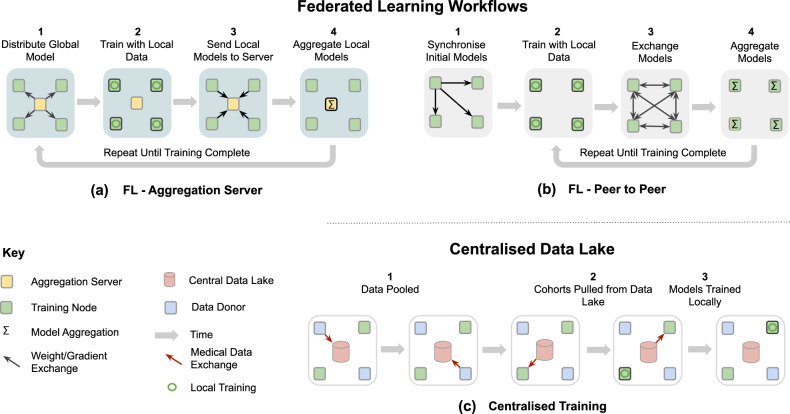
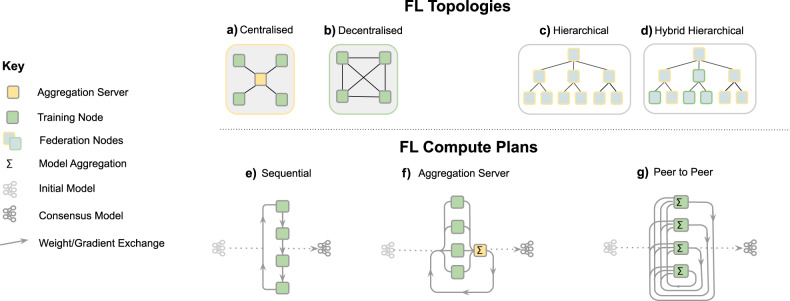
- The text describes FL workflows, including aggregation-server and peer-to-peer topologies, and discusses mechanisms such as FedAvg, FedProx, domain adaptation, and differential privacy at a conceptual level.
Limitations
- The paper explicitly states that FL does not solve all issues inherent to learning on medical data; success still depends on data quality, bias, and standardization.
- It states that FL does not eliminate privacy risks: models can still memorize information, and gradients/model updates may leak private data through inversion or adversarial attacks.
- Evident from the text: this is a perspective article, so it does not report original experimental results, sample sizes, or statistical testing.
Model-written summary. Check it against the paper before relying on it.
Integrity signals
Registry
Cites
Statistics
Figures
Verification
Claims the paper makes
16 Valid · 0 Not valid · 4 Not checked · 19 Own results and interpretations
The cited sources support only part of this claim — read each source’s verdict below.
In the paper
“Modern DL models feature millions of parameters that need to be learned from sufficiently large curated data sets in order to achieve clinical-grade accuracy, while being safe, fair, equitable and generalising well to unseen data2–5.”
§ The future of digital health with federated learning > Introduction
What the sources say
- Not checked — no full text of the sourcecites [2] Wang F Casalino LP Khullar D Deep learning in medicine—promise, progress, and challenges JAMA Intern. Med. 2019 179 293 294 10.1001/jamainternmed.2018.7117 30556825 source
- Not checked — no full text of the sourcecites [3] Chartrand G Deep learning: a primer for radiologists Radiographics 2017 37 2113 2131 10.1148/rg.2017170077 29131760 source
- Partly supportedcites [4] De Fauw J Clinically applicable deep learning for diagnosis and referral in retinal disease Nat. Med. 2018 24 1342 10.1038/s41591-018-0107-6 30104768 sourceExperimental — accuracy not yet measured
Split into 2 atoms — 0 confirmed, 2 partially supported, 0 disputed, 0 misattributed, 0 unverifiable. Expand the claim to see per-atom verdicts.
- Partly supportedcites [5] Sun, C., Shrivastava, A., Singh, S. & Gupta, A. Revisiting unreasonable effectiveness of data in deep learning era. In Proceedings of the IEEE international conference on computer vision, 843–852 (IEEE, 2017). sourceExperimental — accuracy not yet measured
Split into 2 atoms — 0 confirmed, 2 partially supported, 0 disputed, 0 misattributed, 0 unverifiable. Expand the claim to see per-atom verdicts.
plainstates a cause- Asserted: passes — The authors put it forward as true.
- Checkable: passes — It can be checked against evidence.
- Load-bearing: passes — The paper’s conclusions depend on it.
- Based: passes — The paper gives a reason why it holds.
The cited sources support only part of this claim — read each source’s verdict below.
In the paper
“Existing medical data is not fully exploited by ML primarily because it sits in data silos and privacy concerns restrict access to this data.”
§ The future of digital health with federated learning > Abstract
What the sources say
- Partly supportedcites [6] Van Panhuis WG A systematic review of barriers to data sharing in public health BMC Public Health 2014 14 1144 10.1186/1471-2458-14-1144 25377061 PMC4239377 sourceExperimental — accuracy not yet measured
The Background describes routinely collected public-health data as underused, and Results > Legal barriers says privacy concerns can lead to restrictive data-access policies. Results > Technical barriers describes difficulties integrating datasets. The paper does not establish that machine learning is the affected use or that data silos and privacy are the primary reasons medical data is underexploited. (LLM, conf=0.87)
- Partly supportedcites [7] Rocher L Hendrickx JM De Montjoye Y-A Estimating the success of re-identifications in incomplete datasets using generative models Nat. Commun. 2019 10 1 9 10.1038/s41467-019-10933-3 31337762 PMC6650473 sourceExperimental — accuracy not yet measured
The Introduction (page not provided) says medical and other personal data can advance AI, while privacy concerns affect its collection, use, and sharing. It does not say that medical data sits in silos or that silos and privacy restrictions are the primary reasons ML underuses it. (LLM, conf=0.85)
plainstates a cause- Asserted: passes — The authors put it forward as true.
- Checkable: passes — It can be checked against evidence.
- Load-bearing: passes — The paper’s conclusions depend on it.
- Based: passes — The paper gives a reason why it holds.
- Partly supported
The cited sources support only part of this claim — read each source’s verdict below.
In the paper
“The more rounds of local training are performed, the less it is guaranteed that the overall procedure is minimising (Eq. 1)9,12.”
§ The future of digital health with federated learning > Technical considerations > Federated learning definition
What the sources say
- Partly supportedcites [9] McMahan, B., Moore, E., Ramage, D., Hampson, S. & y Arcas, B. A. Communication-efficient learning of deep networks from decentralized data. In Artificial Intelligence and Statistics, 1273–1282. https://scholar.google.de/scholar?hl=de&as_sdt=0%2C5&q=Communicationefficient+learning+of+deep+networks+from+decentralized+data&btnG= (2017). sourceExperimental — accuracy not yet measured
The Experimental Results (p. 7) report that with very many local epochs, FedAvg can plateau or diverge on the Shakespeare LSTM task. But they also report no significant convergence degradation for large numbers of local epochs on the MNIST CNN, so the paper does not establish a general rule that more local training makes minimisation of the global loss less assured. (LLM, conf=0.86)
- Supportedcites [12] Kairouz, P. et al. Advances and open problems in federated learning. arXiv preprint arXiv:1912.04977 (2019). source
Section 3.2.1 states that more local updates increase divergence between client models and slow convergence of the training loss. Section 3.2.2 also reports more restrictive convergence bounds for local updates with non-IID data. Together, these support the claim that increasing local training weakens convergence assurances for the global loss. (LLM, conf=0.86)
plainstates a cause- Asserted: passes — The authors put it forward as true.
- Checkable: passes — It can be checked against evidence.
- Load-bearing: unclear — It is unclear whether the paper’s conclusions depend on it.
- Based: passes — The paper gives a reason why it holds.
- Partly supported
A conclusion the paper draws from its own results — it cites no other source for it, so there is none to check. The quote shows it is in the paper.
In the paper
“By linking healthcare institutions, not restricted to research centres, FL can have direct clinical impact.”
§ The future of digital health with federated learning > Data-driven medicine requires federated efforts > Current FL efforts for digital health
plainstates a possible cause- Asserted: passes — The authors put it forward as true.
- Checkable: passes — It can be checked against evidence.
- Load-bearing: passes — The paper’s conclusions depend on it.
- Based: passes — The paper gives a reason why it holds.
A conclusion the paper draws from its own results — it cites no other source for it, so there is none to check. The quote shows it is in the paper.
In the paper
“FL enables collaborative research for, even competing, companies.”
§ The future of digital health with federated learning > Data-driven medicine requires federated efforts > Current FL efforts for digital health
plainstates a cause- Asserted: passes — The authors put it forward as true.
- Checkable: passes — It can be checked against evidence.
- Load-bearing: unclear — It is unclear whether the paper’s conclusions depend on it.
- Based: passes — The paper gives a reason why it holds.
14 references still to check
A free account verifies the references that are still open.
- Probably not a substantial claim. 19
- It may state two separate claims as one. 32
- The quote only partly states this claim. 1
Claims other papers make about this one
Each is checked against this paper’s own text: does it say what the citing paper says it does?
The source backs part of the claim, not all of it — or backs it for a different population, condition or comparison.
In the citing paper
“This is currently addressed by sharing multi-site data, but such centralization is challenging/infeasible to scale due to various limitations.”
From Federated learning enables big data for rare cancer boundary detection (2022) · cites this paper as [10]
Experimental — accuracy not yet measuredThe source backs part of the claim, not all of it — or backs it for a different population, condition or comparison.
In the citing paper
“However, these methods often come with trade-offs in accuracy and computational efficiency.”
From The role of multimodality in clinical disease diagnosis: advances, challenges, and opportunities (2026) · cites this paper as [34]
Experimental — accuracy not yet measuredThe source backs part of the claim, not all of it — or backs it for a different population, condition or comparison.
In the citing paper
“The experts in healthcare and life sciences can use FL to solve the unique problem of data governance by training algorithms behind the hospital's firewall and only sharing models so that data remain secure [31].”
From A comprehensive survey on federated learning techniques for healthcare informatics (2023) · cites this paper as [31]
Experimental — accuracy not yet measuredThe source backs part of the claim, not all of it — or backs it for a different population, condition or comparison.
In the citing paper
“It also improves patient privacy and reduces low latency during the collaboration of multiple hospitals/entities [7].”
From Handling privacy-sensitive medical data with federated learning: Challenges and future directions (2023) · cites this paper as [7]
Experimental — accuracy not yet measuredThe source backs part of the claim, not all of it — or backs it for a different population, condition or comparison.
In the citing paper
“Enabling privacy protected data sharing across clinical centers is advocated as an essential pathway to promote collaborations internationally yet underexplored so far6,7.”
From Federated deep learning for detecting COVID-19 lung abnormalities in CT: a privacy-preserving multinational validation study (2021) · cites this paper as [7]
Experimental — accuracy not yet measured
27 more claims about this paper
Create a free account to see every claim other papers make about this one.
Citations
Cites
LeCun, Y., Bengio, Y., & Hinton, G. (2015) · Nature · doi:10.1038/nature14539 · Cited by 84,126
Communication-Efficient Learning of Deep Networks from Decentralized Data
McMahan, H. B., Moore, E., Ramage, D., Hampson, S., & Arcas, B. A. Y. (2016) · arXiv · doi:10.48550/arxiv.1602.05629 · Cited by 14,215
Sudlow, C., Gallacher, J., Allen, N., Beral, V., Burton, P., Danesh, J., Downey, P., Elliott, P., Green, J., Landray, M., et al. (2015) · PLOS Medicine · doi:10.1371/journal.pmed.1001779 · Cited by 12,728 · cited 2×
“Substantial, albeit smaller, initiatives include the Human Connectome25, the UK Biobank26, the Cancer Imaging Archive (TCIA)27, NIH CXR828, NIH DeepLesion29, the Cancer Genome Atlas (TCGA)30, the Alzheimer’s Disease Neuroimaging Initiative (ADNI)31, as well as medical grand challenges32 such as the CAMELYON challenge3…”
BackgroundAdvances and Open Problems in Federated Learning
Kairouz, P., McMahan, H. B., Avent, B., Bellet, A., Bennis, M., Bhagoji, A. N., Bonawitz, K., Charles, Z., Cormode, G., Cummings, R., et al. (2019) · arXiv · doi:10.48550/arxiv.1912.04977 · Cited by 7,857
Advances and Open Problems in Federated Learning
Kairouz, P., & McMahan, H. B. (2021) · Foundations and Trends in Machine Learning · doi:10.1561/2200000083 · Cited by 7,772
The multimodal brain tumor image segmentation benchmark (BRATS)
Menze, B. H., Jakab, A., Bauer, S., Kalpathy-Cramer, J., Farahani, K., Kirby, J., Burren, Y., Porz, N., Slotboom, J., Wiest, R., et al. (2015) · IEEE Transactions on Medical Imaging · doi:10.1109/tmi.2014.2377694 · Cited by 6,781
Deep Learning with Differential Privacy
Abadi, M., Chu, A., Goodfellow, I., McMahan, H. B., Mironov, I., Talwar, K., & Zhang, L. (2016) · Proceedings of the 2016 ACM SIGSAC Conference on Computer and Communications Security · doi:10.1145/2976749.2978318 · Cited by 6,578 · cited 2×
“Countermeasures, such as limiting the granularity of the shared model updates and to add specific noise to ensure differential privacy [34, 12, 57] may be needed and is still an active area of research [14].”
BackgroundMethodFederated Machine Learning: Concept and Applications
Yang, Q., Liu, Y., Chen, T., & Tong, Y. (2019) · ACM Transactions on Intelligent Systems and Technology · doi:10.1145/3298981 · Cited by 6,322 · cited 4×
“d FL approaches are still under development. 3 Technical Considerations FL is perhaps best-known from the work of Konecnˇ y` et al. [36], but various other definitions have been proposed in literature [14, 11, 15, 9]. These approaches can be realised via different communication architectures (see Figure 1) and respecti…”
BackgroundInfluentialFederated learning: Challenges, methods, and future directions
Li, T., Sahu, A. K., Talwalkar, A., & Smith, V. (2020) · IEEE Signal Processing Magazine · doi:10.1109/msp.2020.2975749 · Cited by 6,210 · cited 3×
“However, there is a trade-off in terms of performance and these techniques may affect for example the accuracy of the final model [10].”
BackgroundMethodShin, H.-C., Roth, H. R., Gao, M., Lu, L., Xu, Z., Nogues, I., Yao, J., Mollura, D., & Summers, R. M. (2016) · IEEE Transactions on Medical Imaging · doi:10.1109/tmi.2016.2528162 · Cited by 5,759
Self-citation
Cited by
Items 401–500 of 3,132
Bakas, S., Vollmuth, P., Galldiks, N., Booth, T. C., Aerts, H. J. W. L., Bi, W. L., Wiestler, B., Tiwari, P., Pati, S., Baid, U., et al. (2024) · The Lancet Oncology · doi:10.1016/s1470-2045(24)00315-2 · Cited by 36
Self-citationMcMillan, A. B., & Bradshaw, T. (2021) · PET Clinics · doi:10.1016/j.cpet.2021.06.010 · Cited by 47
Gao, Z., Wu, F., Gao, W., & Zhuang, X. (2022) · IEEE Transactions on Medical Imaging · doi:10.1109/tmi.2022.3220750 · Cited by 43
“Centralized learning methods, which assemble data from multiple centers, may not be applicable due to the data privacy issue [2].”
BackgroundMethodOliva, A., Kaphle, A., Reguant, R., Sng, L. M. F., Twine, N. A., Malakar, Y., Wickramarachchi, A., Keller, M., Ranbaduge, T., Chan, E. K. F., et al. (2024) · GigaScience · doi:10.1093/gigascience/giae021 · Cited by 48
“These locall y tr ained par am-eters are then sent to a centr al serv er that a ggr egates the local models from all participating peers to generate a global model shared by all [ 92 , 93 ].”
Astronaut omics and the impact of space on the human body at scale
Rutter, L. A., Cope, H., MacKay, M. J., Herranz, R., Das, S., Ponomarev, S. A., Costes, S. V., Paul, A. M., Barker, R. J., Taylor, D. M., et al. (2024) · Nature Communications · doi:10.1038/s41467-024-47237-0 · Cited by 44
“Additionally, federated approaches 102 , such as federating learning for training AI models without moving the data across jurisdictions, could prove useful 103,104 .”
Security, privacy, and robustness for trustworthy AI systems: A review
Saeed, M. M., & Alsharidah, M. (2024) · Computers & Electrical Engineering · doi:10.1016/j.compeleceng.2024.109643 · Cited by 58
Personalized Retrogress-Resilient Framework for Real-World Medical Federated Learning
Chen, Z., Zhu, M., Yang, C., & Yuan, Y. (2021) · Lecture notes in computer science · doi:10.1007/978-3-030-87199-4_33 · Cited by 61
“this challenge, Federated Learning (FL) [8,17] provides a collaborative paradigm to optimize local models at multiple clients, and regularly aggregate these local models together at a global server.”
BackgroundAndre, E. B., Carrington, N., Siami, F. S., Hiatt, J. C., McWilliams, C., Hiller, C., Surinach, A., Arancibia, A. Z., Pashos, C. L., & Schulz, W. L. (2022) · Clinical Pharmacology & Therapeutics · doi:10.1002/cpt.2565 · Cited by 40
“42 However, tiered access to data seems unavoidable, with many stages of permissioned access likely to come between tightly regulated to widely open access.”
BackgroundDeng, Z., Sun, R., Xue, M., Ma, W., Wen, S., Nepal, S., & Xiang, Y. (2025) · IEEE Transactions on Information Forensics and Security · doi:10.1109/tifs.2025.3581103 · Cited by 36
“We would like to argue that, although transmitting Intermediate Data Represen-tations (IDRs), such as gradients (in federated learning [16]), embeddings (in split learning [17]), and data distributions [18], is proposed as a potential solution to protect clients’ data from being collected by…”
Non-IID quantum federated learning with one-shot communication complexity
Zhao, H. (2023) · Quantum Machine Intelligence · doi:10.1007/s42484-022-00091-z · Cited by 58
“For example, medical data from patients across multiple hospitals [13] or cyber-physical attack data from Internet of Things devices [14] are sensitive and private, and cannot be directly shared without anonymization.”
BackgroundMulti-party Diabetes Mellitus risk prediction based on secure federated learning
Su, Y., Huang, C., Zhu, W., Lyu, X., & Ji, F. (2023) · Biomedical Signal Processing and Control · doi:10.1016/j.bspc.2023.104881 · Cited by 41
Zhao, T., Li, F., & He, L. (2023) · IEEE Transactions on Industrial Informatics · doi:10.1109/tii.2023.3280314 · Cited by 40
“…the assumption that the MEC server in own cell is trusted and MEC servers in other cells are untrusted is reasonable in universal scenarios of horizontal FL, including cross-regional similar-organizational smart healthcare [41] and cross-regional cross-organizationalsmartproductrecommendation[42].”
BackgroundBorsci, S., Lehtola, V., Nex, F., Yang, M. Y., Augustijn, E.-W., Bagheriye, L., Brüne, C., Kounadi, O., Li, J. J., Moreira, J., et al. (2022) · AI & Society · doi:10.1007/s00146-021-01383-x · Cited by 50
“On the other hand, decentralized approaches like federated learning (Rieke et al. 2020) may be more realistic for training local models with large datasets overall, while record-keeping in medical datasets could be possible only at a coarse-scale and not at a patient level.”
BackgroundLakhan, A. R., Lateef, A. A. A., Ghani, M. K. A., Abdulkareem, K. H., Mohammed, M. A., Nedoma, J., Martínek, R., & García-Zapirain, B. (2023) · Journal of King Saud University - Computer and Information Sciences · doi:10.1016/j.jksuci.2023.101747 · Cited by 40
Rajotte, J.-F., Mukherjee, S., Robinson, C., Ortiz, A., West, C., Ferres, J. M. L., & Ng, R. T. (2021) · Proceedings of the Conference on Information Technology for Social Good · doi:10.1145/3462203.3475875 · Cited by 34
“Another approach is to train a model in a federated learning setting such that the data never has to be shared ([7, 11, 23, 24]).”
BackgroundDeep learning in digital pathology for personalized treatment plans of cancer patients
Wen, Z., Wang, S., Yang, D. M., Xie, Y., Chen, M., Bishop, J., & Xiao, G. (2023) · Seminars in Diagnostic Pathology · doi:10.1053/j.semdp.2023.02.003 · Cited by 34
Artificial intelligence-enhanced patient evaluation: bridging art and science
Oikonomou, E. K., & Khera, R. (2024) · European Heart Journal · doi:10.1093/eurheartj/ehae415 · Cited by 34
Artificial Intelligence in Medicine: Text Mining of Health Care Workers’ Opinions
Nitiéma, P. (2023) · Journal of Medical Internet Research · doi:10.2196/41138 · Cited by 47
“Data sets from a given setting are used by a local server and are not shared with other entities; however, the algorithm being developed takes advantage of all the data sets in the network of servers [45-47].”
Decentralised, collaborative, and privacy-preserving machine learning for multi-hospital data
Fang, C., Dziedzic, A., Zhang, L., Oliva, L., Verma, A. A., Razak, F. A., Papernot, N., & Wang, B. (2024) · EBioMedicine · doi:10.1016/j.ebiom.2024.105006 · Cited by 55
Kolobkov, D. S., Sharma, S. M., Медведев, А. В., Lebedev, M., Kosaretskiy, E., & Vakhitov, R. (2024) · Frontiers in Big Data · doi:10.3389/fdata.2024.1266031 · Cited by 47
“A number of surveys describe the applications, prospects, challenges and privacy concerns of federated learning in healthcare (Rieke et al., 2020; Xu et al., 2021; Joshi et al., 2022).”
BackgroundKhalil, S. S., Tawfik, N. S., & Spruit, M. R. (2024) · Patterns · doi:10.1016/j.patter.2024.100990 · Cited by 55
Rudroff, T., Rainio, O., & Klén, R. (2024) · Neurological Sciences · doi:10.1007/s10072-024-07649-8 · Cited by 55
“Developing methods to visualize and interpret the features learned by AI models can help uncover the underlying biological mechanisms of AD and guide targeted interventions [72].”
Federated Learning in Smart Healthcare: A Survey of Applications, Challenges, and Future Directions
Nasajpour, M., Pouriyeh, S., Parizi, R. M., Han, M., Mosaiyebzadeh, F., Liu, L., Xie, Y., & Batista, D. M. (2025) · Electronics · doi:10.3390/electronics14091750 · Cited by 58
Nowrozy, R., Ahmed, K. E. U., Wang, H., & McIntosh, T. R. (2023) · Informatics · doi:10.3390/informatics10030060 · Cited by 49
“For example, sensitive health information may necessitate more stringent privacy controls compared to less critical data [19].”
BackgroundScoring Aided Federated Learning on Long-Tailed Data for Wireless IoMT Based Healthcare System
Zhang, L., Wu, Y., Chen, L., Fan, L., & Nallanathan, A. (2023) · IEEE Journal of Biomedical and Health Informatics · doi:10.1109/jbhi.2023.3300173 · Cited by 42
Digital phenotyping and sensitive health data: Implications for data governance
Perez-Pozuelo, I., Spathis, D., Gifford-Moore, J., Morley, J., & Cowls, J. (2021) · Journal of the American Medical Informatics Association · doi:10.1093/jamia/ocab012 · Cited by 50
“Through privacy-preserving, decentralized methods like federated learning 46–48 and zero-knowledge proofs, users could maintain sole custody of their data.”
BackgroundOpen problems in medical federated learning
Yoo, J. H., Jeong, H., Lee, J., & Chung, T. (2022) · International Journal of Web Information Systems · doi:10.1108/ijwis-04-2022-0080 · Cited by 49
Majeed, A., Zhang, X., & Hwang, S. O. (2022) · Big Data and Cognitive Computing · doi:10.3390/bdcc6040127 · Cited by 38
Shiri, I., Salimi, Y., Maghsudi, M., Jenabi, E., Harsini, S., Razeghi, B., Mostafaei, S., Hajianfar, G., Sanaat, A., Jafari, E., et al. (2023) · European Journal of Nuclear Medicine and Molecular Imaging · doi:10.1007/s00259-023-06418-7 · Cited by 41
“Federated learning (FL) is a technique that allows DL models to be developed on distributed datasets spread across several hospitals or institutes [9, 29, 35–38, 41, 42].”
MethodPrecision psychiatry: predicting predictability
van Dellen, E. (2024) · Psychological Medicine · doi:10.1017/s0033291724000370 · Cited by 52
“Healthcare information processing systems should be transformed to facilitate such approaches (McMahan, Moore, Ramage, Hampson, & Arcas, 2017; Rieke et al., 2020).”
BackgroundGiacobbe, D. R., Marelli, C., Guastavino, S., Mora, S., Rosso, N., Signori, A., Campi, C., Giacomini, M. L., & Bassetti, M. (2024) · Clinical Therapeutics · doi:10.1016/j.clinthera.2024.02.010 · Cited by 42
Advancing breast, lung and prostate cancer research with federated learning. A systematic review
Ankolekar, A., Boie, S. D., Abdollahyan, M., Gadaleta, E., Hasheminasab, S. A., Yang, G., Beauville, C., Δικαίος, Ν., Kastis, G. A., Bussmann, M., et al. (2025) · npj Digital Medicine · doi:10.1038/s41746-025-01591-5 · Cited by 53
“Oncology is undergoing rapid transformation due to the integration of machine learning (ML), which can enrich clinical evidence from large-scale datasets, surpassing traditional analytics 1 – 4 .”
InfluentialDistributed learning of fully connected neural networks using independent subnet training
Yuan, B., Wolfe, C. R., Dun, C., Tang, Y., Kyrillidis, A., & Jermaine, C. (2022) · Proceedings of the VLDB Endowment · doi:10.14778/3529337.3529343 · Cited by 70
“For example, consider a case where the training dataset is fragmented across several locations and organizations with privacy mandates preventing the possibility of centralized computing [15, 17, 59, 65, 85].”
BackgroundFederated Partially Supervised Learning With Limited Decentralized Medical Images
Dong, N., Kampffmeyer, M., Voiculescu, I. D., & Xing, E. P. (2022) · IEEE Transactions on Medical Imaging · doi:10.1109/tmi.2022.3231017 · Cited by 39
“FL is a learning paradigm that aims to utilize decentralized data stored separately in different places and has become a topic of active research in medical image analysis [14], [15], [16], [17], [18], [19].”
BackgroundApplications of Artificial Intelligence and Deep Learning in Glaucoma
Chen, D. K., Ran, E. A., Tan, T. F., Ramachandran, R., Li, F., Cheung, C. Y.-L., Yousefi, S., Tham, C. C. Y., Ting, D. S. W., Zhang, X., et al. (2023) · Asia-Pacific Journal of Ophthalmology · doi:10.1097/apo.0000000000000596 · Cited by 40
An Overview of Deep Generative Models in Functional and Evolutionary Genomics
Yelmen, B., & Jay, F. (2023) · Annual Review of Biomedical Data Science · doi:10.1146/annurev-biodatasci-020722-115651 · Cited by 41
Zhang, C., Meng, X., Liu, Q., Wu, S., Wang, L., & Ning, H. (2023) · Neurocomputing · doi:10.1016/j.neucom.2023.126791 · Cited by 37
Sharing sensitive data in life sciences: an overview of centralized and federated approaches
Rujano, M. A., Boiten, J., Ohmann, C., Canham, S., Contrino, S., David, R., Ewbank, J. J., Filippone, C., Connellan, C., Custers, I., et al. (2024) · Briefings in Bioinformatics · doi:10.1093/bib/bbae262 · Cited by 43
“1B) an attractive alternative to the centralized data model [34, 35], and a growing number of research collaborations in the life sciences are opting for federated models (e.g.the Federated EGA [36],the International HundredK + Cohorts Consortium [37] and the Global BiodiversityInformation…”
BackgroundVillegas, F., Bello, R. D., Andres, É. A., Dhont, J., Janssen, T. M., Milan, L., Robert, C., Sălăgean, G. A. M., Tejedor, N., Trnková, P., et al. (2024) · Radiotherapy and Oncology · doi:10.1016/j.radonc.2024.110387 · Cited by 37
FLShield: A Validation Based Federated Learning Framework to Defend Against Poisoning Attacks
Kabir, E., Song, Z., Rashid, M. R. U., & Mehnaz, S. (2024) · IEEE Symposium on Security and Privacy (S&P) · doi:10.1109/sp54263.2024.00141 · Cited by 67
“Due to these attractive features, FL technique has been adopted to solve problems in many diverse domains such as autonomous vehicles [39], [40], industry 4.0 [19], [41], healthcare sectors [9], [43], etc.”
MethodInfluentialLeptomeningeal metastatic disease: new frontiers and future directions
Ozair, A., Wilding, H. E., Bhanja, D., Mikolajewicz, N., Glantz, M., Grossman, S. A., Sahgal, A., Rhun, É. L., Weller, M., Weiß, T., et al. (2024) · Nature Reviews Clinical Oncology · doi:10.1038/s41571-024-00970-3 · Cited by 49
“…of artificial intelligence models 241,242 , federated learning provides an alternative approach by enabling the collaborative development of artificial intelligence models across multiple institutions without the need for data sharing, thus addressing data limitations and privacy concerns 243,244 .”
Artificial Intelligence (AI) in Pharmaceutical Formulation and Dosage Calculations
Joshi, S., & Sheth, S. (2025) · Pharmaceutics · doi:10.3390/pharmaceutics17111440 · Cited by 42
“On the other side, the use of federated learning and privacy-preserving techniques is also expanding, allowing researchers to utilize sensitive patient data without compromising confidentiality [48].”
Protecting Personal Healthcare Record Using Blockchain & Federated Learning Technologies
Aich, S., Sinai, N. K., Kumar, S., Ali, M. A., Choi, Y. R., Joo, M.-I., & Kim, H. (2021) · International Conference on Advanced Communication Technology · doi:10.23919/icact51234.2021.9370566 · Cited by 43
“This will help the AI researchers and developers to think about different algorithm strategies that would help them to make robust models [16].”
BackgroundSurgical Tool Datasets for Machine Learning Research: A Survey
Rodrigues, M., Mayo, M., & Patros, P. (2022) · International Journal of Computer Vision · doi:10.1007/s11263-022-01640-6 · Cited by 42
A survey on federated learning applications in healthcare, finance, and data privacy/data security
Nevrataki, T., Iliadou, A., Ntolkeras, G., Sfakianakis, I., Lazaridis, L., Maraslidis, G., Asimopoulos, N., & Fragulis, G. F. (2023) · AIP Conference Proceedings · doi:10.1063/5.0182160 · Cited by 32
Review on application progress of federated learning model and security hazard protection
Yang, A., Ma, Z., Zhang, C., Han, Y., Hu, Z., Zhang, W., Huang, X., & Wu, Y. (2022) · Digital Communications and Networks · doi:10.1016/j.dcan.2022.11.006 · Cited by 40
Dynamic multi-site graph convolutional network for autism spectrum disorder identification
Cui, W., Du, J., Sun, M., Zhu, S., Zhao, S., Peng, Z., Tan, L., & Li, Y. (2023) · Computers in Biology and Medicine · doi:10.1016/j.compbiomed.2023.106749 · Cited by 39
Shi, N., Lai, F., Kontar, R. A., & Chowdhury, M. (2023) · IEEE Transactions on Automation Science and Engineering · doi:10.1109/tase.2023.3269639 · Cited by 98
“Among them, [31] and [32] use FL to improve the predictive performance on several prognosis tasks, [35] applies FL to distributed manufacturing, and [36] discusses the applications of FL in healthcare.”
BackgroundCybersecurity considerations for radiology departments involved with artificial intelligence
Kelly, B. S., Quinn, C., Belton, N., Lawlor, A., Killeen, R. P., & Burrell, J. (2023) · European Radiology · doi:10.1007/s00330-023-09860-1 · Cited by 44
“Federated learning is an innovative technique that enables to development of more robust models [34].”
MethodArtificial intelligence in mental healthcare: an overview and future perspectives
Jin, K. W., Li, Q., Xie, Y., & Xiao, G. (2023) · British Journal of Radiology · doi:10.1259/bjr.20230213 · Cited by 62
Wei, M., Yang, J., Zhao, Z., Zhang, X., Li, J., & Deng, Z. (2024) · IEEE Transactions on Computational Social Systems · doi:10.1109/tcss.2024.3406528 · Cited by 41
“Additionally, if the central server fails, it can lead to system paralysis [21].”
BackgroundHow quantum computing can enhance biomarker discovery
Flöther, F. F., Blankenberg, D. J., Demidik, M., Jansen, K., Krishnakumar, R., Krishnakumar, R., Laanait, N., Parida, L., Saab, C. Y., & Utro, F. (2025) · Patterns · doi:10.1016/j.patter.2025.101236 · Cited by 62
“However, the quantum computers would have to be larger than the current generations or the initial image data would have to be downscaled with classical pre-processing techniques, such as passing the image through a residual networkbefore sending it through the QRC model.”
Applications and challenges of AI-based algorithms in the COVID-19 pandemic
Khemasuwan, D., & Colt, H. G. (2021) · BMJ Innovations · doi:10.1136/bmjinnov-2020-000648 · Cited by 38
Luo, C., Islam, M. N., Sheils, N. E., Buresh, J., Schuemie, M. J., Doshi, J. A., Werner, R. M., Asch, D. A., & Chen, Y. (2022) · Journal of the American Medical Informatics Association · doi:10.1093/jamia/ocac067 · Cited by 30
“Our proposed dPQL algorithm is in a similar fashion as federated learning methods, which have found profound applications in many clinical settings in recent years.(18) However, our AD release mechanism has not been investigated in rigorous privacy framework such as k-anonymity(19) or differential privacy,(20,21) and…”
MethodDFML: Dynamic Federated Meta-Learning for Rare Disease Prediction
Chen, B., Chen, T., Zeng, X., Zhang, W., Lu, Q., Hou, Z., Zhou, J., & Helal, S. (2024) · IEEE/ACM Transactions on Computational Biology and Bioinformatics · doi:10.1109/tcbb.2023.3239848 · Cited by 31
“Federated learning becomes the most effective approach to privacy-preserving data fusion in health care [26], [27], [28].”
BackgroundA federated learning architecture for secure and private neuroimaging analysis
Stripelis, D., Gupta, U., Saleem, H., Dhinagar, N., Ghai, T., Anastasiou, C., Sánchez, R., Steeg, G. V., Ravi, S., Naveed, M., et al. (2024) · Patterns · doi:10.1016/j.patter.2024.101031 · Cited by 31
“19 Our analysis shows that all systems can operate in a centralized federated learning environment.”
Human-centred artificial intelligence for mobile health sensing: challenges and opportunities
Dang, T., Spathis, D., Ghosh, A., & Mascolo, C. (2023) · Royal Society Open Science · doi:10.1098/rsos.230806 · Cited by 30
“More recently ML on decentralized data in terms of federated learning has shown promise to preserve privacy while building useful models out of the data [206,207].”
BackgroundMulti-level Federated Learning for Industry 4.0 - A Crowdsourcing Approach
Ullah, I., Hassan, U. U., & Ali, M. I. (2023) · Procedia Computer Science · doi:10.1016/j.procs.2022.12.238 · Cited by 42
Federated Learning on Internet of Things: Extensive and Systematic Review
Aggarwal, M., Khullar, V., Rani, S., Prola, T. A., Bhattacharjee, S. B., Shawon, S. M., & Goyal, N. (2024) · Computers, materials & continua/Computers, materials & continua (Print) · doi:10.32604/cmc.2024.049846 · Cited by 51
Empowering cancer research in Europe: the EUCAIM cancer imaging infrastructure
Martí‐Bonmatí, L., Blanquer, I., Tsiknakis, M., Tsakou, G., Martínez, R. M., Capella-Gutiérrez, S., Zullino, S., Meszaros, J. G., Bron, E. E., Gelpí, J. L., et al. (2025) · Insights into Imaging · doi:10.1186/s13244-025-01913-x · Cited by 38
“Federated processing and analysis seamlessly link the processing services of the data holders to the central hub services [30].”
Algarvio, R. C., Conceição, J., Rodrigues, P. P., Ribeiro‐Vaz, I., & Ferreira‐da‐Silva, R. (2025) · International Journal of Clinical Pharmacy · doi:10.1007/s11096-025-01975-3 · Cited by 79
“A key advancement in RWE analysis with AI is federated learning, which enables collaborative data analysis across institutions without sharing sensitive patient information [52].”
A Federated Learning Approach to Pneumonia Detection
Khan, S. H., & Alam, M. G. R. (2021) · International Conference on Engineering and Emerging Technologies (ICEET) · doi:10.1109/iceet53442.2021.9659591 · Cited by 36
Ngo, T., Nguyen, D. C., Pathirana, P. N., Corben, L. A., Delatycki, M. B., Horne, M., Szmulewicz, D. J., & Roberts, M. (2022) · IEEE Transactions on Neural Systems and Rehabilitation Engineering · doi:10.1109/tnsre.2022.3161272 · Cited by 35
Federated machine learning in data-protection-compliant research
Brauneck, A., Schmalhorst, L., Majdabadi, M. M. K., Bakhtiari, M., Völker, U., Saak, C. C., Baumbach, J., Baumbach, L., & Buchholtz, G. (2023) · Nature Machine Intelligence · doi:10.1038/s42256-022-00601-5 · Cited by 37
Pre-training in Medical Data: A Survey
Qiu, Y., Lin, F., Chen, W., & Xu, M. (2023) · Machine Intelligence Research · doi:10.1007/s11633-022-1382-8 · Cited by 30
“Compared to other state-of-the-art (SOTA) methods on VQA tasks on medical images, MMBERT achieves superior performance and provides attention maps to improve model interpretability.”
Artificial intelligence accelerates multi-modal biomedical process: A Survey
Li, J., Han, X., Qin, Y., Tan, F., Chen, Y., Wang, Z., Song, H., Zhou, X., Zhang, Y., Hu, L., et al. (2023) · Neurocomputing · doi:10.1016/j.neucom.2023.126720 · Cited by 36
Exploring the Distributed Knowledge Congruence in Proxy-data-free Federated Distillation
Wu, Z., Sun, S., Wang, Y., Liu, M., Pan, Q., Zhang, J., Li, Z., & Liu, Q. (2024) · ACM Transactions on Intelligent Systems and Technology · doi:10.1145/3639369 · Cited by 55
“Owing to the advantages of protecting data privacy and boosting model accuracy, FL has been widely applied to a variety of applications, such as medical treatment [24, 30], financial risk management [14], and recommendation systems [12, 26].”
BackgroundA systematic review of federated learning incentive mechanisms and associated security challenges
Ali, A., Ilahi, I., Qayyum, A., Mohammed, I., Al‐Fuqaha, A., & Qadir, J. (2023) · Computer Science Review · doi:10.1016/j.cosrev.2023.100593 · Cited by 43
Ma, S., Chen, J., & Ho, J. W. K. (2023) · Computer Methods and Programs in Biomedicine · doi:10.1016/j.cmpb.2023.107906 · Cited by 36
Privacy-preserving techniques for decentralized and secure machine learning in drug discovery
Smajíć, A., Grandits, M., & Ecker, G. F. (2023) · Drug Discovery Today · doi:10.1016/j.drudis.2023.103820 · Cited by 39
Ligero, M., Gielen, B., Navarro, V., Morgado, P. C., Prior, O., Dienstmann, R., Nuciforo, P. G., Trebeschi, S., Beets‐Tan, R. G. H., Sala, E., et al. (2024) · npj Precision Oncology · doi:10.1038/s41698-024-00534-9 · Cited by 34
Deep Learning and Multimodal Artificial Intelligence in Orthopaedic Surgery
Bozzo, A., Tsui, J. M. G., Bhatnagar, S., & Forsberg, J. A. (2024) · Journal of the American Academy of Orthopaedic Surgeons · doi:10.5435/jaaos-d-23-00831 · Cited by 37
“36 It is imperative that the orthopaedic community embrace and require checklists such as TRIPOD-AI, just as we have for reporting the results of other types of clinical research.”
MethodEnhancing Heart Disease Prediction with Federated Learning and Blockchain Integration
Otoum, Y., Hu, C., Said, E. H., & Nayak, A. R. (2024) · Future Internet · doi:10.3390/fi16100372 · Cited by 43
Federated Learning for Human Activity Recognition: Overview, Advances, and Challenges
Aouedi, O., Sacco, A., Khan, L. U., Nguyen, D. C., & Guizani, M. (2024) · IEEE Open Journal of the Communications Society · doi:10.1109/ojcoms.2024.3484228 · Cited by 57
“Another study in [14] considers technical issues and prerequisites for the employment of FL in the future landscape of digital health.”
Federated and transfer learning for cancer detection based on image analysis
Bechar, A., Medjoudj, R., Elmir, Y., Himeur, Y., & Amira, A. (2025) · Neural Computing and Applications · doi:10.1007/s00521-024-10956-y · Cited by 52
“Also, the lack of large labeled cancer medical imaging datasets affected the training of FL and complicated the convergence during federated optimization [248].”
Shah, S. T., Ali, Z., Waqar, M., & Kim, A. (2025) · Healthcare · doi:10.3390/healthcare13212760 · Cited by 54
Novel technical and privacy-preserving technology for artificial intelligence in ophthalmology
Lim, J. S., Hong, M., Lam, W. S. T., Zhang, Z., Teo, Z. L., Liu, Y., Ng, W. Y., Foo, L. L., & Ting, D. S. W. (2022) · Current Opinion in Ophthalmology · doi:10.1097/icu.0000000000000846 · Cited by 33
“In FL, raw data never leaves the local devices or institutions and only focused model updates (e.g. gradients, weight parameters) are transferred to a centralized server to create a single global model [131–133] (Fig.”
Dynamic Bank Learning for Semi-supervised Federated Image Diagnosis with Class Imbalance
Jiang, M., Yang, H., Li, X., Liu, Q., Heng, P., & Dou, Q. (2022) · Lecture notes in computer science · doi:10.1007/978-3-031-16437-8_19 · Cited by 42
Towards effective data sharing in ophthalmology: data standardization and data privacy
Halfpenny, W., & Baxter, S. L. (2022) · Current Opinion in Ophthalmology · doi:10.1097/icu.0000000000000878 · Cited by 31
Current status and future developments in predicting outcomes in radiation oncology
Niraula, D., Cui, S., Pakela, J. M., Wei, L., Luo, Y., Haken, R. K. T., & Naqa, I. E. (2022) · British Journal of Radiology · doi:10.1259/bjr.20220239 · Cited by 35
Zhou, B., Miao, T., Mirian, N., Chen, X., Xie, H., Feng, Z., Guo, X., Li, X., Zhou, S. K., Duncan, J. S., et al. (2022) · IEEE Transactions on Radiation and Plasma Medical Sciences · doi:10.1109/trpms.2022.3194408 · Cited by 39
“One way to alleviate this issue is through building a centralized dataset with multiinstitutional data, but the patient data privacy concern poses a major challenge to such a solution [17], [18].”
BackgroundNair, D. G., Nair, J. J., Reddy, K. J., & Narayana, C. V. A. (2022) · Engineering Applications of Artificial Intelligence · doi:10.1016/j.engappai.2022.105476 · Cited by 34
Subramanian, M., Rajasekar, V., Easwaramoorthy, S. V., Shanmugavadivel, K., & Nandhini, P. S. (2022) · Electronics · doi:10.3390/electronics11244117 · Cited by 55
An Elderly Fall Detection Method Based on Federated Learning and Extreme Learning Machine (Fed-ELM)
Yu, Z., Liu, J., Yang, M., Cheng, Y., Hu, J., & Li, X. (2022) · IEEE Access · doi:10.1109/access.2022.3229044 · Cited by 35
“Federated Learning has been applied to many fields [25], [26], [27], [29], and the goal is to solve the contradiction between data islanding and data privacy protection.”
MethodLiu, J., Tang, Y., Zhao, H., Wang, X., Li, F., & Zhang, J. (2024) · ACM Transactions on Sensor Networks · doi:10.1145/3585520 · Cited by 40
Decentralized Machine Learning Training: A Survey on Synchronization, Consolidation, and Topologies
Khan, Q. W., Khan, A. N., Rizwan, A., Ahmad, R., Khan, S., & Kim, D. (2023) · IEEE Access · doi:10.1109/access.2023.3284976 · Cited by 40
“Centralized models like vanilla FL and variants mainly rely on a central entity and are vulnerable to faults, stragglers, attacks and prone to scalability issues [13], [45], [46], [47].”
BackgroundLi, Y., Fu, Y., Gayo, I. J. M. B., Yang, Q., Min, Z., Saeed, S. U., Wen, Y., Wang, Y., Noble, J. A., Emberton, M., et al. (2023) · Medical Image Analysis · doi:10.1016/j.media.2023.102935 · Cited by 52
Generative AI could revolutionize health care — but not if control is ceded to big tech
Toma, A., Senkaiahliyan, S., Lawler, P. R., Rubin, B., & Wang, B. (2023) · Nature · doi:10.1038/d41586-023-03803-y · Cited by 29
Ji, Z., Guo, D., Wang, P., Yan, K., Lü, L., Xu, M., Wang, Q., Ge, J., Gao, M., Ye, X., et al. (2023) · IEEE/CVF International Conference on Computer Vision (ICCV) · doi:10.1109/iccv51070.2023.01933 · Cited by 45
“Notably, if all labeled datasets are simultaneously accessible, it simplifies to a federated learning [50, 55] or partial label learning [16, 57] problem.”
BackgroundD’Hondt, E., Ashby, T. J., Chakroun, I., Koninckx, T., & Wuyts, R. (2022) · Communications Medicine · doi:10.1038/s43856-022-00225-1 · Cited by 29
Scaling Neuroscience Research Using Federated Learning
Stripelis, D., Ambite, J. L., Lam, P., & Thompson, P. (2021) · 2021 IEEE 18th International Symposium on Biomedical Imaging (ISBI) · doi:10.1109/isbi48211.2021.9433925 · Cited by 29
“Federated Learning operates over sites that do not share data, so the joint model is obtained through parameter sharing and mixing [2, 6].”
Cluster Based Secure Multi-party Computation in Federated Learning for Histopathology Images
Hosseini, S. M., Sikaroudi, M., Babaei, M., & Tizhoosh, H. R. (2022) · Lecture notes in computer science · doi:10.1007/978-3-031-18523-6_11 · Cited by 35
Walskaar, I., Tran, M. C., & Çatak, F. Ö. (2023) · Cryptography · doi:10.3390/cryptography7040048 · Cited by 38
“FL can be categorized into three distinct types [19]: 1.”
Should the Use of Adaptive Machine Learning Systems in Medicine be Classified as Research?
Sparrow, R., Hatherley, J. J., Oakley, J. G., & Bain, C. (2024) · The American Journal of Bioethics · doi:10.1080/15265161.2024.2337429 · Cited by 33
“This would, for instance, exclude devices that contribute to “federated learning” for the sake of improving other, or future, devices (Rieke et al. 2020).”
BackgroundCross-modal prototype based multimodal federated learning under severely missing modality
Le, H. Q., Thwal, C. M., Qiao, Y., Tun, Y. L., Nguyen, M. N. H., Huh, E., & Zhang, C. (2025) · Information Fusion · doi:10.1016/j.inffus.2025.103219 · Cited by 57
Hernandez, M., Epelde, G., Beristain, A., Álvarez, R., Molina, C., Larrea, X., Alberdi, A., Timoleon, M., Bamidis, P. D., & Konstantinidis, E. I. (2022) · Electronics · doi:10.3390/electronics11050812 · Cited by 29
The potential of digital molecular diagnostics for infectious diseases in sub-Saharan Africa
The Digital Diagnostics for Africa Network (2022) · PLOS Digital Health · doi:10.1371/journal.pdig.0000064 · Cited by 35
Lansari, M., Bellafqira, R., Kapusta, K., Thouvenot, V., Bettan, O., & Coatrieux, G. (2023) · Machine Learning and Knowledge Extraction · doi:10.3390/make5040070 · Cited by 44
Zhou, B., Xie, H., Liu, Q., Chen, X., Guo, X., Feng, Z., Hou, J., Zhou, S. K., Li, B., Rominger, A., et al. (2023) · Medical Image Analysis · doi:10.1016/j.media.2023.102993 · Cited by 34
Sun, K., Roy, A., & Tobin, J. M. (2024) · Journal of Critical Care · doi:10.1016/j.jcrc.2024.154792 · Cited by 28
Metadata
- Authors
- Rieke, N., Hancox, J., Li, W., Milletarì, F., Roth, H. R., Albarqouni, S., Bakas, S., Galtier, M. N., Landman, B. A., Maier-Hein, K., Ourselin, S., Sheller, M., Summers, R. M., Trask, A., Xu, D., Baust, M., & Cardoso, M. J.
- Affiliations
- Technical University of Munich (DE)
- Nvidia (United Kingdom) (GB)
- Nvidia (United States) (US)
- Imperial College London (GB)
- University of Pennsylvania (US)
- Vanderbilt University (US)
- German Cancer Research Center (DE)
- Intel (United States) (US)
- National Institutes of Health (US)
- University of Oxford (GB)
- King's College London (GB)
- Corresponding author
- Rieke, Nicola
- ORCID
- Venue
- npj Digital Medicine
- Published
- 2020-09-14
- Volume
- 3
- Issue
- 1
- Pages
- 119-119
- ISSN
- 2398-6352 (ISSN-L)
- PMC
- PMC7490367
- OpenAlex
- W3012501605
- Semantic Scholar
- b245c5d36702eaae0ff374fad92848024bc99534
- Cited by
- 4,015
- References
- 38
- Citations by year
- 2026: 1453 · 2025: 921 · 2024: 618 · 2023: 473 · 2022: 353 · 2021: 175 · 2020: 18
- FWCI
- 13.36
- Type
- journal article
- Language
- en
- Open access
- gold
- doi.org
- Licence
- cc-by
- creativecommons.org/licenses/by/4.0 (tdm)
- creativecommons.org/licenses/by/4.0 (vor)
- Locations
- npj Digital Medicine (publishedVersion, cc-by)
- PubMed (publishedVersion)
- arXiv (Cornell University) (submittedVersion, other-oa)
- Informationszentrum Lebenswissenschaften (ZB MED) (submittedVersion, cc-by)
- DOAJ (DOAJ: Directory of Open Access Journals) (submittedVersion, cc-by-sa)
- Research Portal (King's College London) (submittedVersion, other-oa)
- mediaTUM – the media and publications repository of the Technical University Munich (Technical University Munich) (submittedVersion, other-oa)
- arXiv (Cornell University)
- Funders
- U.S. Department of Health and Human Services (R01NS042645, U01CA242871)
- Nvidia
- Wellcome Trust
- UK Research and Innovation
- Bpifrance
- Deutscher Akademischer Austauschdienst
- Bundesministerium für Bildung und Forschung
- National Institutes of Health (1s10od023495-01)
- Engineering and Physical Sciences Research Council ([WT203148/Z/16/Z], WT213038/Z/18/Z)
- Centre For Medical Engineering, King’s College London (WT 203148/Z/16/Z)
- National Cancer Institute (U24CA189523, U01CA242871)
- National Institute of Neurological Disorders and Stroke (R01NS042645)
- NIH Clinical Center
- Topics
- Physical Sciences › Computer Science › Artificial Intelligence › Privacy-Preserving Technologies in Data
- Health Sciences › Medicine › Health Informatics › Artificial Intelligence in Healthcare and Education
- Physical Sciences › Computer Science › Artificial Intelligence › Machine Learning in Healthcare
- Keywords
- federated learning, digital health, medical data privacy, data silos, data-driven machine learning, health information access
About these checks
Registry, retraction, Cites and statistics results are computed, not judged, with one exception: a printed reference that no index lists is read once by a model before it counts as a citation error. Claims are extracted by a model and kept only when their quote appears verbatim in the text; each cited source is then checked, with a model’s help, for whether it says what the claim relies on. Those verdicts can be wrong — read the claim’s quote and the cited source before relying on one.
The claim verdicts this report counts are experimental: their accuracy is not yet measured.
A language model drew the claims from the paper on 2026-10-10, under version 3 of the claim definition (model deepseek-v4.1-flash, prompt extract-v3).
A second model labelled each claim on 2026-10-10 (model jev-1.13-20260917, definition revision gold-guideline-v0.2).
Cited sources are checked with a language model’s help (gpt-6-sol and qwen3.8-omni-flash).
Statistics and arithmetic are recomputed, not judged.
Confidence bands are shown only for fields calibrated on our annotated test set. None is calibrated yet, so no band is shown.
What counts as a claim ›How we measure confidence ›How we check this ›
Are you an author, or do you see a problem with this page? Request a review
Data sources
Bibliographic data: Semantic Scholar, OpenAlex, Crossref.
Contains information from the Semantic Scholar Academic Graph Datasets, made available under the ODC Attribution License (ODC-BY 1.0).
Semantic Scholar’s data is described in: Kinney, R., et al. (2023). The Semantic Scholar Open Data Platform. arXiv:2301.10140.
