

The future of digital health with federated learning
Open accessThe DOI matches its Crossref record; 75 of the 76 references it cites were found in a registry or an index, and 1 are not checked yet; 31 of the 51 sources its claims cite were checked for support.
Abstract
Data-driven machine learning (ML) has emerged as a promising approach for building accurate and robust statistical models from medical data, which is collected in huge volumes by modern healthcare systems. Existing medical data is not fully exploited by ML primarily because it sits in data silos and privacy concerns restrict access to this data. However, without access to sufficient data, ML will be prevented from reaching its full potential and, ultimately, from making the transition from research to clinical practice. This paper considers key factors contributing to this issue, explores how federated learning (FL) may provide a solution for the future of digital health and highlights the challenges and considerations that need to be addressed.
Verified 2026-11-25 · 1 reference not checked yet
Overview
CoChat Summary
TL;DR
This perspective paper argues that federated learning (FL) is a promising way to train medical AI across institutions without centralizing sensitive data, potentially improving accuracy, robustness, and privacy in digital health. It also emphasizes that FL does not remove core challenges such as data heterogeneity, privacy leakage, and the need for standardization and governance.
Key findings
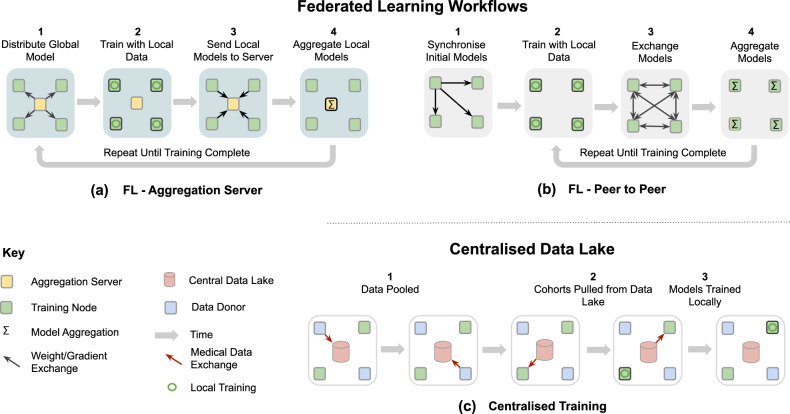
- FL is presented as a learning paradigm that lets multiple parties train collaboratively without exchanging or centralizing datasets, by moving the model to the data rather than the data to the model.
- The paper states that recent research has shown FL models can achieve performance comparable to centrally hosted data sets and superior to models trained on isolated single-institution data.
- Reported application areas already include EHR tasks such as finding clinically similar patients and predicting hospitalizations due to cardiac events, mortality, and ICU stay time, as well as medical imaging tasks such as whole-brain segmentation, brain tumor segmentation, and fMRI classification.
- Concrete initiatives mentioned include a collaboration across 4 hospitals in France (HealthChain), an international federation of 30 healthcare institutions (FeTS), and a project across 10 pharmaceutical companies (Melloddy).
Methods
- Not stated in the paper.
- The article is a perspective/consensus paper rather than an empirical study; it synthesizes prior work and examples to discuss FL’s promise, current uses, and technical considerations.
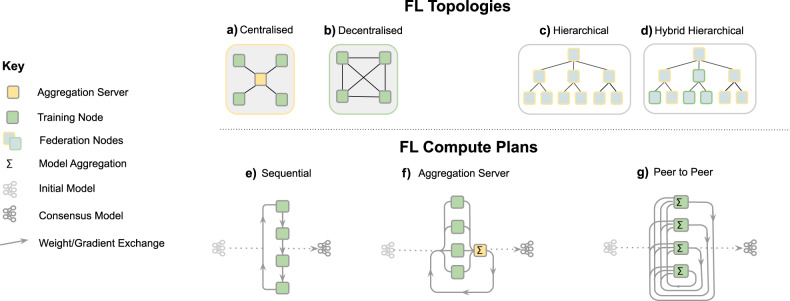
- The text describes FL workflows, including aggregation-server and peer-to-peer topologies, and discusses mechanisms such as FedAvg, FedProx, domain adaptation, and differential privacy at a conceptual level.
Limitations
- The paper explicitly states that FL does not solve all issues inherent to learning on medical data; success still depends on data quality, bias, and standardization.
- It states that FL does not eliminate privacy risks: models can still memorize information, and gradients/model updates may leak private data through inversion or adversarial attacks.
- Evident from the text: this is a perspective article, so it does not report original experimental results, sample sizes, or statistical testing.
Model-written summary. Check it against the paper before relying on it.
Integrity signals
Registry
Cites
Statistics
Figures
Verification
Claims the paper makes
16 Valid · 0 Not valid · 4 Not checked · 19 Own results and interpretations
The cited sources support only part of this claim — read each source’s verdict below.
In the paper
“Modern DL models feature millions of parameters that need to be learned from sufficiently large curated data sets in order to achieve clinical-grade accuracy, while being safe, fair, equitable and generalising well to unseen data2–5.”
§ The future of digital health with federated learning > Introduction
What the sources say
- Not checked — no full text of the sourcecites [2] Wang F Casalino LP Khullar D Deep learning in medicine—promise, progress, and challenges JAMA Intern. Med. 2019 179 293 294 10.1001/jamainternmed.2018.7117 30556825 source
- Not checked — no full text of the sourcecites [3] Chartrand G Deep learning: a primer for radiologists Radiographics 2017 37 2113 2131 10.1148/rg.2017170077 29131760 source
- Partly supportedcites [4] De Fauw J Clinically applicable deep learning for diagnosis and referral in retinal disease Nat. Med. 2018 24 1342 10.1038/s41591-018-0107-6 30104768 sourceExperimental — accuracy not yet measured
Split into 2 atoms — 0 confirmed, 2 partially supported, 0 disputed, 0 misattributed, 0 unverifiable. Expand the claim to see per-atom verdicts.
- Partly supportedcites [5] Sun, C., Shrivastava, A., Singh, S. & Gupta, A. Revisiting unreasonable effectiveness of data in deep learning era. In Proceedings of the IEEE international conference on computer vision, 843–852 (IEEE, 2017). sourceExperimental — accuracy not yet measured
Split into 2 atoms — 0 confirmed, 2 partially supported, 0 disputed, 0 misattributed, 0 unverifiable. Expand the claim to see per-atom verdicts.
plainstates a cause- Asserted: passes — The authors put it forward as true.
- Checkable: passes — It can be checked against evidence.
- Load-bearing: passes — The paper’s conclusions depend on it.
- Based: passes — The paper gives a reason why it holds.
The cited sources support only part of this claim — read each source’s verdict below.
In the paper
“Existing medical data is not fully exploited by ML primarily because it sits in data silos and privacy concerns restrict access to this data.”
§ The future of digital health with federated learning > Abstract
What the sources say
- Partly supportedcites [6] Van Panhuis WG A systematic review of barriers to data sharing in public health BMC Public Health 2014 14 1144 10.1186/1471-2458-14-1144 25377061 PMC4239377 sourceExperimental — accuracy not yet measured
The Background describes routinely collected public-health data as underused, and Results > Legal barriers says privacy concerns can lead to restrictive data-access policies. Results > Technical barriers describes difficulties integrating datasets. The paper does not establish that machine learning is the affected use or that data silos and privacy are the primary reasons medical data is underexploited. (LLM, conf=0.87)
- Partly supportedcites [7] Rocher L Hendrickx JM De Montjoye Y-A Estimating the success of re-identifications in incomplete datasets using generative models Nat. Commun. 2019 10 1 9 10.1038/s41467-019-10933-3 31337762 PMC6650473 sourceExperimental — accuracy not yet measured
The Introduction (page not provided) says medical and other personal data can advance AI, while privacy concerns affect its collection, use, and sharing. It does not say that medical data sits in silos or that silos and privacy restrictions are the primary reasons ML underuses it. (LLM, conf=0.85)
plainstates a cause- Asserted: passes — The authors put it forward as true.
- Checkable: passes — It can be checked against evidence.
- Load-bearing: passes — The paper’s conclusions depend on it.
- Based: passes — The paper gives a reason why it holds.
- Partly supported
The cited sources support only part of this claim — read each source’s verdict below.
In the paper
“The more rounds of local training are performed, the less it is guaranteed that the overall procedure is minimising (Eq. 1)9,12.”
§ The future of digital health with federated learning > Technical considerations > Federated learning definition
What the sources say
- Partly supportedcites [9] McMahan, B., Moore, E., Ramage, D., Hampson, S. & y Arcas, B. A. Communication-efficient learning of deep networks from decentralized data. In Artificial Intelligence and Statistics, 1273–1282. https://scholar.google.de/scholar?hl=de&as_sdt=0%2C5&q=Communicationefficient+learning+of+deep+networks+from+decentralized+data&btnG= (2017). sourceExperimental — accuracy not yet measured
The Experimental Results (p. 7) report that with very many local epochs, FedAvg can plateau or diverge on the Shakespeare LSTM task. But they also report no significant convergence degradation for large numbers of local epochs on the MNIST CNN, so the paper does not establish a general rule that more local training makes minimisation of the global loss less assured. (LLM, conf=0.86)
- Supportedcites [12] Kairouz, P. et al. Advances and open problems in federated learning. arXiv preprint arXiv:1912.04977 (2019). source
Section 3.2.1 states that more local updates increase divergence between client models and slow convergence of the training loss. Section 3.2.2 also reports more restrictive convergence bounds for local updates with non-IID data. Together, these support the claim that increasing local training weakens convergence assurances for the global loss. (LLM, conf=0.86)
plainstates a cause- Asserted: passes — The authors put it forward as true.
- Checkable: passes — It can be checked against evidence.
- Load-bearing: unclear — It is unclear whether the paper’s conclusions depend on it.
- Based: passes — The paper gives a reason why it holds.
- Partly supported
A conclusion the paper draws from its own results — it cites no other source for it, so there is none to check. The quote shows it is in the paper.
In the paper
“By linking healthcare institutions, not restricted to research centres, FL can have direct clinical impact.”
§ The future of digital health with federated learning > Data-driven medicine requires federated efforts > Current FL efforts for digital health
plainstates a possible cause- Asserted: passes — The authors put it forward as true.
- Checkable: passes — It can be checked against evidence.
- Load-bearing: passes — The paper’s conclusions depend on it.
- Based: passes — The paper gives a reason why it holds.
A conclusion the paper draws from its own results — it cites no other source for it, so there is none to check. The quote shows it is in the paper.
In the paper
“FL enables collaborative research for, even competing, companies.”
§ The future of digital health with federated learning > Data-driven medicine requires federated efforts > Current FL efforts for digital health
plainstates a cause- Asserted: passes — The authors put it forward as true.
- Checkable: passes — It can be checked against evidence.
- Load-bearing: unclear — It is unclear whether the paper’s conclusions depend on it.
- Based: passes — The paper gives a reason why it holds.
14 references still to check
A free account verifies the references that are still open.
- Probably not a substantial claim. 19
- It may state two separate claims as one. 32
- The quote only partly states this claim. 1
Claims other papers make about this one
Each is checked against this paper’s own text: does it say what the citing paper says it does?
The source backs part of the claim, not all of it — or backs it for a different population, condition or comparison.
In the citing paper
“This is currently addressed by sharing multi-site data, but such centralization is challenging/infeasible to scale due to various limitations.”
From Federated learning enables big data for rare cancer boundary detection (2022) · cites this paper as [10]
Experimental — accuracy not yet measuredThe source backs part of the claim, not all of it — or backs it for a different population, condition or comparison.
In the citing paper
“However, these methods often come with trade-offs in accuracy and computational efficiency.”
From The role of multimodality in clinical disease diagnosis: advances, challenges, and opportunities (2026) · cites this paper as [34]
Experimental — accuracy not yet measuredThe source backs part of the claim, not all of it — or backs it for a different population, condition or comparison.
In the citing paper
“The experts in healthcare and life sciences can use FL to solve the unique problem of data governance by training algorithms behind the hospital's firewall and only sharing models so that data remain secure [31].”
From A comprehensive survey on federated learning techniques for healthcare informatics (2023) · cites this paper as [31]
Experimental — accuracy not yet measuredThe source backs part of the claim, not all of it — or backs it for a different population, condition or comparison.
In the citing paper
“It also improves patient privacy and reduces low latency during the collaboration of multiple hospitals/entities [7].”
From Handling privacy-sensitive medical data with federated learning: Challenges and future directions (2023) · cites this paper as [7]
Experimental — accuracy not yet measuredThe source backs part of the claim, not all of it — or backs it for a different population, condition or comparison.
In the citing paper
“Enabling privacy protected data sharing across clinical centers is advocated as an essential pathway to promote collaborations internationally yet underexplored so far6,7.”
From Federated deep learning for detecting COVID-19 lung abnormalities in CT: a privacy-preserving multinational validation study (2021) · cites this paper as [7]
Experimental — accuracy not yet measured
27 more claims about this paper
Create a free account to see every claim other papers make about this one.
Citations
Cites
LeCun, Y., Bengio, Y., & Hinton, G. (2015) · Nature · doi:10.1038/nature14539 · Cited by 84,126
Communication-Efficient Learning of Deep Networks from Decentralized Data
McMahan, H. B., Moore, E., Ramage, D., Hampson, S., & Arcas, B. A. Y. (2016) · arXiv · doi:10.48550/arxiv.1602.05629 · Cited by 14,215
Sudlow, C., Gallacher, J., Allen, N., Beral, V., Burton, P., Danesh, J., Downey, P., Elliott, P., Green, J., Landray, M., et al. (2015) · PLOS Medicine · doi:10.1371/journal.pmed.1001779 · Cited by 12,728 · cited 2×
“Substantial, albeit smaller, initiatives include the Human Connectome25, the UK Biobank26, the Cancer Imaging Archive (TCIA)27, NIH CXR828, NIH DeepLesion29, the Cancer Genome Atlas (TCGA)30, the Alzheimer’s Disease Neuroimaging Initiative (ADNI)31, as well as medical grand challenges32 such as the CAMELYON challenge3…”
BackgroundAdvances and Open Problems in Federated Learning
Kairouz, P., McMahan, H. B., Avent, B., Bellet, A., Bennis, M., Bhagoji, A. N., Bonawitz, K., Charles, Z., Cormode, G., Cummings, R., et al. (2019) · arXiv · doi:10.48550/arxiv.1912.04977 · Cited by 7,857
Advances and Open Problems in Federated Learning
Kairouz, P., & McMahan, H. B. (2021) · Foundations and Trends in Machine Learning · doi:10.1561/2200000083 · Cited by 7,772
The multimodal brain tumor image segmentation benchmark (BRATS)
Menze, B. H., Jakab, A., Bauer, S., Kalpathy-Cramer, J., Farahani, K., Kirby, J., Burren, Y., Porz, N., Slotboom, J., Wiest, R., et al. (2015) · IEEE Transactions on Medical Imaging · doi:10.1109/tmi.2014.2377694 · Cited by 6,781
Deep Learning with Differential Privacy
Abadi, M., Chu, A., Goodfellow, I., McMahan, H. B., Mironov, I., Talwar, K., & Zhang, L. (2016) · Proceedings of the 2016 ACM SIGSAC Conference on Computer and Communications Security · doi:10.1145/2976749.2978318 · Cited by 6,578 · cited 2×
“Countermeasures, such as limiting the granularity of the shared model updates and to add specific noise to ensure differential privacy [34, 12, 57] may be needed and is still an active area of research [14].”
BackgroundMethodFederated Machine Learning: Concept and Applications
Yang, Q., Liu, Y., Chen, T., & Tong, Y. (2019) · ACM Transactions on Intelligent Systems and Technology · doi:10.1145/3298981 · Cited by 6,322 · cited 4×
“d FL approaches are still under development. 3 Technical Considerations FL is perhaps best-known from the work of Konecnˇ y` et al. [36], but various other definitions have been proposed in literature [14, 11, 15, 9]. These approaches can be realised via different communication architectures (see Figure 1) and respecti…”
BackgroundInfluentialFederated learning: Challenges, methods, and future directions
Li, T., Sahu, A. K., Talwalkar, A., & Smith, V. (2020) · IEEE Signal Processing Magazine · doi:10.1109/msp.2020.2975749 · Cited by 6,210 · cited 3×
“However, there is a trade-off in terms of performance and these techniques may affect for example the accuracy of the final model [10].”
BackgroundMethodShin, H.-C., Roth, H. R., Gao, M., Lu, L., Xu, Z., Nogues, I., Yao, J., Mollura, D., & Summers, R. M. (2016) · IEEE Transactions on Medical Imaging · doi:10.1109/tmi.2016.2528162 · Cited by 5,759
Self-citation
Cited by
Items 501–600 of 3,132
Federated Medical Learning Framework Based on Blockchain and Homomorphic Encryption
Yang, X., & Xing, C. (2024) · Wireless Communications and Mobile Computing · doi:10.1155/2024/8138644 · Cited by 33
Federated transfer learning for attack detection for Internet of Medical Things
Alharbi, A. (2024) · International Journal of Information Security · doi:10.1007/s10207-023-00805-9 · Cited by 31
Federated learning is not a cure-all for data ethics
Bak, M., Madai, V. I., Celi, L. A., Kaissis, G. A., Ronald Cornet, A., Maris, M., Rueckert, D., Buyx, A., & McLennan, S. (2024) · Nature Machine Intelligence · doi:10.1038/s42256-024-00813-x · Cited by 34
Wen, T., Chen, X., Zhang, D., Roberts, C., & Cai, B. (2024) · IEEE Transactions on Industrial Informatics · doi:10.1109/tii.2024.3378800 · Cited by 30
“FL has been used in various applications, including human activity recognition on smartphones [19], healthcare research [20], and object detection in IoT networks [21], [22].”
MethodDeep learning for liver cancer histopathology image analysis: A comprehensive survey
Jiang, H., Yin, Y., Zhang, J., Deng, W., & Li, C. (2024) · Engineering Applications of Artificial Intelligence · doi:10.1016/j.engappai.2024.108436 · Cited by 30
Empowering Dataspace 4.0: Unveiling Promise of Decentralized Data-Sharing
Alsamhi, S. H., Hawbani, A., Kumar, S., Timilsina, M., Al-Qatf, M., Haque, R., Nashwan, F., Zhao, L., & Curry, E. (2024) · IEEE Access · doi:10.1109/access.2024.3442968 · Cited by 35
“The FL function is handy in industries like healthcare, banking, and telecommunications, where direct data interchange is restricted by stringent data protection requirements [94].”
BackgroundEdge-assisted U-shaped split federated learning with privacy-preserving for Internet of Things
Zhang, S., Zhao, Z., Liu, D., Cao, Y., Tang, H., & You, S. (2024) · Expert Systems with Applications · doi:10.1016/j.eswa.2024.125494 · Cited by 37
van Drumpt, S., Chawla, K., Barbereau, T., Spagnuelo, D., & van de Burgwal, L. (2025) · Frontiers in Digital Health · doi:10.3389/fdgth.2025.1602101 · Cited by 39
“For example, federated learning in medical imaging enables hospitals and research institutions to train arti fi cial intelligence (AI) models on images without sharing raw patient data (18, 19).”
Chepkoech, M., Malila, B., & Mwangama, J. (2025) · Journal of Robotic Surgery · doi:10.1007/s11701-025-02703-9 · Cited by 39
“A major challenge is the limited availability of annotated surgical datasets in LMICs, necessitating federated learning techniques for collaborative AI model training across institutions [49].”
Flimma: a federated and privacy-aware tool for differential gene expression analysis
Zolotareva, O. I., Nasirigerdeh, R., Matschinske, J., Torkzadehmahani, R., Bakhtiari, M., Frisch, T., Späth, J., Blumenthal, D. B., Abbasinejad, A., Tieri, P., et al. (2021) · Genome biology · doi:10.1186/s13059-021-02553-2 · Cited by 37
“FL has become increasingly popular in bioinformatics for GWAS [42, 43], survival analysis [44], and additional challenges in patient data processing [40, 45].”
BackgroundSemi-Synchronous Personalized Federated Learning Over Mobile Edge Networks
You, C., Feng, D., Guo, K., Yang, H. H., Feng, C., & Quek, T. Q. S. (2022) · IEEE Transactions on Wireless Communications · doi:10.1109/twc.2022.3210434 · Cited by 31
“Since its advent, FL has been widely adopted as a powerful tool to exploit the wealth of data available at the end-user devices [2], [3] and foster new applications such as Artificial Intelligence (AI) medical diagnosis [4] and autonomous vehicles [5].”
MethodFedDefender: Client-Side Attack-Tolerant Federated Learning
Park, S., Han, S., Wu, F., Kim, S., Zhu, B., Xie, X., & Cha, M. (2023) · ACM SIGKDD Conference on Knowledge Discovery and Data Mining (KDD) · doi:10.1145/3580305.3599346 · Cited by 51
“Federated learning has been rapidly adopted by various applications that require data privacy [26, 30, 33, 43].”
BackgroundImaging Analytics using Artificial Intelligence in Oncology: A Comprehensive Review
Chakrabarty, N., & Mahajan, A. (2023) · Clinical Oncology · doi:10.1016/j.clon.2023.09.013 · Cited by 35
Ran, A. R., Wang, X., Chan, P. P. M., Wong, M. O. M., Yuen, H. K. L., Lam, N. M., Chan, N. C. Y., Yip, W. W. K., Young, A. L., Yung, H.-W., et al. (2023) · British Journal of Ophthalmology · doi:10.1136/bjo-2023-324188 · Cited by 36
“Our proposed FL paradigm is another clinical application in ophthal-mology, which holds huge potential to revolutionise the future of multidisciplinary collaborations in digital health 25 and eye care 26 by keeping and training data locally.”
MethodMultiple modes of data sharing can facilitate secondary use of sensitive health data for research
Tamuhla, T., Lulamba, T. E., Mutemaringa, T., & Tiffin, N. (2023) · BMJ Global Health · doi:10.1136/bmjgh-2023-013092 · Cited by 39
Petit-Jean, T., Gérardin, C., Berthelot, E., Châtellier, G., Frank, M., Tannier, X., Kempf, E., & Bey, R. (2024) · Journal of the American Medical Informatics Association · doi:10.1093/jamia/ocae069 · Cited by 29
“44,45 However, none of these technologies provides a silver bullet solution yet, and obtaining privacy-conscientious workflows still requires combining various security measures in architectures adapted to specific uses.”
BackgroundZhong, C., Sarkar, A., Manna, S., Khan, M. Z., Noorwali, A., Das, A. K., & Chakraborty, K. (2024) · International Journal of Machine Learning and Cybernetics · doi:10.1007/s13042-024-02269-2 · Cited by 34
“The effect of FL on the development of digital technology was examined by Rieke et al. [63] medicaid by outlining the difficulties around the confidentiality of medically personal information without the necessity to centralize or share information.”
Shang, Y., Tian, Y., Lyu, K., Zhou, T., Zhang, P., Chen, J., & Li, J. (2024) · Journal of Medical Internet Research · doi:10.2196/54263 · Cited by 51
Tackling heterogeneity in medical federated learning via aligning vision transformers
Darzidehkalani, E., Shen, Y., Ou, Y., Sijtsema, N. M., & van Ooijen, P. M. A. (2024) · Artificial Intelligence in Medicine · doi:10.1016/j.artmed.2024.102936 · Cited by 34
Pangal, D. J., Kugener, G., Zhu, Y., Sinha, A., Unadkat, V., Coté, D. J., Strickland, B. A., Rutkowski, M. J., Hung, A. J., Anandkumar, A., et al. (2022) · Scientific Reports · doi:10.1038/s41598-022-11549-2 · Cited by 30
Insights into Multi-Model Federated Learning: An Advanced Approach for Air Quality Index Forecasting
Le, D.-D., Khoa, T. A., Dao, M.-S., Nguyen-Ly, K.-C., Le, S., Thi, X. D. N., Pham, T.-Q., Nguyen, V.-L., & Nguyen-Thi, B.-Y. (2022) · Algorithms · doi:10.3390/a15110434 · Cited by 40
FedGiA: An Efficient Hybrid Algorithm for Federated Learning
Zhou, S., & Li, G. Y. (2023) · IEEE Transactions on Signal Processing · doi:10.1109/tsp.2023.3268845 · Cited by 31
“Typical applications include vehicular communications [1], [2], [3], [4], digital health [5], and smart manufacturing [6], just naming a few.”
BackgroundBernier, A., Molnár‐Gábor, F., Knoppers, B. M., Borry, P., César, P. M. D. G., Devriendt, T., Goisauf, M., Murtagh, M. J., Jiménez, P. N., Recuero, M., et al. (2023) · European Journal of Human Genetics · doi:10.1038/s41431-023-01403-y · Cited by 32
“This is often achieved through the use of distributed, rather than centralised, computing [29, 30, 32 – 34].”
BackgroundA Future of Smarter Digital Health Empowered by Generative Pretrained Transformer
Miao, H., Li, C., & Wang, J. (2023) · Journal of Medical Internet Research · doi:10.2196/49963 · Cited by 27
“The built-in complexity of digital health tools and their significantly large number of data elements generated through such tools naturally call for the customization and application of artificial intelligence (AI)–based devices and algorithms [18-20].”
FedAGL: A Communication-Efficient Federated Vehicular Network
Liu, S., Li, Y., Guan, P., Li, T., Yu, J., Taherkordi, A., & Jensen, C. S. (2024) · IEEE Transactions on Intelligent Vehicles · doi:10.1109/tiv.2024.3349655 · Cited by 30
“To solve those issues, many researchers have made contributions to communication efficiency [12], [13].”
BackgroundZhou, Y., Mei, S., Wang, J., Xu, Q., Zhang, Z., Qin, S., Feng, J., Li, C., Xing, S., Wang, W., et al. (2024) · eClinicalMedicine · doi:10.1016/j.eclinm.2024.102772 · Cited by 26
Oikonomou, E. K., & Khera, R. (2024) · Hellenic Journal of Cardiology · doi:10.1016/j.hjc.2024.07.003 · Cited by 36
Foundation models in ophthalmology: opportunities and challenges
Sevgi, M., Ruffell, E., Antaki, F., Chia, M. A., & Keane, P. A. (2024) · Current Opinion in Ophthalmology · doi:10.1097/icu.0000000000001091 · Cited by 35
Balancing Privacy and Performance: A Differential Privacy Approach in Federated Learning
Tayyeh, H. K., & AL-Jumaili, A. S. A. (2024) · Computers · doi:10.3390/computers13110277 · Cited by 41
Privacy-by-Design with Federated Learning will drive future Rare Disease Research
Süwer, S., Ullah, M. S., Probul, N., Maier, A., & Baumbach, J. (2024) · Journal of Neuromuscular Diseases · doi:10.1177/22143602241296276 · Cited by 38
“Therefore, innovative approaches that balance the need for comprehensive datasets with stringent privacy requirements are crucial, especially in the context of RDs. 28,39 Federated learning (FL) has emerged as a promising solu-tion to overcome the challenges associated with centralized AI models (Figure 1C).”
InfluentialEthics of trustworthy AI in healthcare: Challenges, principles, and practical pathways
Ahadian, P., Xu, W. F., Liu, D., & Guan, Q. (2025) · Neurocomputing · doi:10.1016/j.neucom.2025.131942 · Cited by 45
Pathak, A., Theagarajan, R., Rizqi, M. M., Nugraha, A. S., Boruah, T., Pratiksha, Kumar, H., Naik, B., Yadav, S., Jha, A. K., et al. (2025) · Discover Molecules · doi:10.1007/s44345-025-00037-5 · Cited by 44
“This approach enables collaborative training of AI models across multiple institutions without requiring centralized data storage, thereby preserving patient privacy while enabling large-scale collaborative research [210].”
Jatain, D., Sıngh, V., & Dahiya, N. (2021) · Journal of King Saud University - Computer and Information Sciences · doi:10.1016/j.jksuci.2021.05.016 · Cited by 45
“Collecting and processing medical data is quite challenging as it involves disclosing patients’ private data (Rieke et al., 2020).”
Federated Learning via Conditional Mutual Learning for Alzheimer’s Disease Classification on T1w MRI
Huang, Y., Yang, H.-C., & Lee, C.-C. (2021) · Annual International Conference of the IEEE Engineering in Medicine and Biology Society (EMBC) · doi:10.1109/embc46164.2021.9630382 · Cited by 34
“However, modern DL models require a large amount of data to achieve clinical-grade accuracy, while the privacy concerns restrict access or data sharing in the healthcare domain [2].”
BackgroundWong, J., Prieto‐Alhambra, D., Rijnbeek, P. R., Desai, R. J., Reps, J., & Toh, S. (2022) · Drug Safety · doi:10.1007/s40264-022-01158-3 · Cited by 30
“…protecting than sharing de-identified individual-level data (as in a centralized approach), it can still pose privacy risks owing to the amount of information that extremely flexible ML algorithms, such as deep learning models, can “memo-rize” about the training data (“information leakage”) [96].”
BackgroundMethodInfluentialZiegler, J., Pfitzner, B., Schulz, H., Saalbach, A., & Arnrich, B. (2022) · Sensors · doi:10.3390/s22145195 · Cited by 37
“Medical datasets are usually scattered across multiple sites and underlie rigorous privacy constraints of both ethical and regulatory natures [1].”
BackgroundSharing is caring: a call for a new era of rare disease research and development
Denton, N., Mulberg, A. E., Molloy, M., Charleston, S., Fajgenbaum, D. C., Marsh, E. D., & Howard, P. (2022) · Orphanet Journal of Rare Diseases · doi:10.1186/s13023-022-02529-w · Cited by 29
Personalized Federated Learning for In-Hospital Mortality Prediction of Multi-Center ICU
Deng, T., Hamdan, H., Yaakob, R., & Kasmiran, K. A. (2023) · IEEE Access · doi:10.1109/access.2023.3241488 · Cited by 27
Affordable federated edge learning framework via efficient Shapley value estimation
Dong, L., Liu, Z., Zhang, K., Yassine, A., & Hossain, M. S. (2023) · Future Generation Computer Systems · doi:10.1016/j.future.2023.05.007 · Cited by 28
Keloth, V. K., Selek, S., Chen, Q., Gilman, C., Fu, S., Dang, Y., Chen, X., Hu, X., Zhou, Y., He, H., et al. (2025) · npj Digital Medicine · doi:10.1038/s41746-025-01645-8 · Cited by 24
Bi, X., Gupta, A., & Yang, M. (2023) · Management Science · doi:10.1287/mnsc.2023.00611 · Cited by 38
Privacy-Enhancing and Robust Backdoor Defense for Federated Learning on Heterogeneous Data
Chen, Z., Yu, S., Fan, M., Liu, X., & Deng, R. H. (2023) · IEEE Transactions on Information Forensics and Security · doi:10.1109/tifs.2023.3326983 · Cited by 38
“It is a positive outcome of the attractive advantages of FL that various privacy-sensitive domains are promoted, including drug discovery [2], medical diagnosis [3], and face recognition [4], and so on.”
BackgroundThe Future of Orthodontics: Deep Learning Technologies
Surendran, A., Daigavane, P., Shrivastav, S., Kamble, R. H., Sanchla, A. D., Bharti, L., & Shinde, M. (2024) · Cureus · doi:10.7759/cureus.62045 · Cited by 42
“Potential solutions to enable data sharing while maintaining data security and privacy include federated learning and blockchain technology, which can result in larger and more varied datasets [79, 80].”
BackgroundReal-world federated learning in radiology: hurdles to overcome and benefits to gain
Bujotzek, M., Akünal, Ü., Denner, S., Neher, P., Zenk, M., Frodl, E., Jaiswal, A., Kim, M., Krekiehn, N. R., Nickel, M., et al. (2024) · Journal of the American Medical Informatics Association · doi:10.1093/jamia/ocae259 · Cited by 38
“…FL platform used by all sites ( ★ ) →S6: Define requirements, decide using decision-making tools, e.g. pairwise comparison matrix ( ★ , [15, 22, 30] ) Step 7: Identify DL algorithm and FL methodology ( ★ ) - D7: Select state-of-the-art DL and FL methods ( ★ ) Step 8: Identify task to evaluate,…”
BackgroundMethodInfluentialSelf-citationWorkplace security and privacy implications in the GenAI age: A survey
Diro, A. A., Kaisar, S., Saini, A., Fatima, S., Pham, H., & Erba, F. (2025) · Journal of Information Security and Applications · doi:10.1016/j.jisa.2024.103960 · Cited by 57
Simon, J., & Kapileswar, N. (2025) · International Conference on Self Sustainable Artificial Intelligence Systems (ICSSAS) · doi:10.1109/icssas66150.2025.11080854 · Cited by 28
“In [17], work was done on a hybrid cloud-edge IoT framework that supports the initial data processing at the edge layer and then upload to the cloud.”
Advances in machine learning for optimizing pharmaceutical drug discovery
Ogbonna, U. E., Ofoezie, E. F., Babalola, O. O., Ottu, P. O., Ogbonna, C. A., Olisakwe, S. C., George, E. T., Babarinde, S., Omaba, O. J., Chukwuemeka, C. G., et al. (2025) · Current Proteomics · doi:10.1016/j.curpro.2025.100015 · Cited by 26
AGIC: Approximate Gradient Inversion Attack on Federated Learning
Jin, X., Hong, C., Huang, J., Chen, L. Y., & Decouchant, J. (2022) · IEEE Symposium on Reliable Distributed Systems (SRDS) · doi:10.1109/srds55811.2022.00012 · Cited by 44
“For example, it can be used by medical institutes to collaboratively train a diagnosis model [17] without sharing patient-related information.”
BackgroundMedical informed machine learning: A scoping review and future research directions
Leiser, F., Rank, S., Schmidt-Kraepelin, M., Thiebes, S., & Sunyaev, A. (2023) · Artificial Intelligence in Medicine · doi:10.1016/j.artmed.2023.102676 · Cited by 34
“Building on previous works that have investigated IML approaches across domains [6], we synthesize the current state of knowledge on how DK is included in medical ML settings and thereby contribute to the emerging stream of literature on artificial intelligence in medicine [14].”
MethodKang, Y., Zhu, Y., Wang, D., Han, Z., & Başar, T. (2023) · IEEE Transactions on Network Science and Engineering · doi:10.1109/tnse.2023.3328776 · Cited by 28
“Remote health monitoring is another beneficiary, where isolated communities can employ FL to process health data locally, forwarding essential insights to centralizedhubsforexpertevaluation[10].”
BackgroundVerma, N., Duseja, A. K., Mehta, M., De, A., Lin, H., Wong, V. W., Wong, G. L., Rajaram, R. B., Chan, W., Mahadeva, S., et al. (2024) · Alimentary Pharmacology & Therapeutics · doi:10.1111/apt.17891 · Cited by 27
van Genderen, M. E., Cecconi, M., & Jung, C. (2024) · Intensive Care Medicine · doi:10.1007/s00134-024-07408-5 · Cited by 33
“This ensures that local ethical standards, organizational policies, and legal requirements can be met without the need of fully harmonizing these across many countries and institutions [11].”
BackgroundThe value of federated learning during and post-COVID-19
Qian, F., & Zhang, A. (2021) · International Journal for Quality in Health Care · doi:10.1093/intqhc/mzab010 · Cited by 22
“3 performance of ML models trained on centrally hosted datasets.(1, 3) It is worth mentioning that training ML models using centralized datasets confronts enormous challenges in healthcare applications due to stringent legal and administrative regulations, technical difficulties, and patient data privacy concerns.”
BackgroundInfluentialFederated learning as a smart tool for research on infectious diseases
Zwiers, L. C., Grobbee, D. E., Uijl, A., & Ong, D. S. Y. (2024) · BMC Infectious Diseases · doi:10.1186/s12879-024-10230-5 · Cited by 24
“FL has been renowned for its potential to include data from under-represented populations and from hospitals with fewer resources for participation in research [8, 11].”
Secure federated learning applied to medical imaging with fully homomorphic encryption
Lessage, X., Collier, L., Ouytsel, C.-H. B. V., Legay, A., Mahmoudi, S., & Massonet, P. (2024) · IEEE International Conference on AI in Cybersecurity (ICAIC) · doi:10.1109/icaic60265.2024.10433836 · Cited by 35
“…[6], and a range of deep learning architecture has been proposed [44, 22]. b) Federated Learning for medical imaging: Federated learning is a promising way to improve access to the benefits of broad and impactful medical data and to unlock the potential of machine learning for digital health [38].”
BackgroundMulti-party collaborative drug discovery via federated learning
Huang, D., Ye, X., & Sakurai, T. (2024) · Computers in Biology and Medicine · doi:10.1016/j.compbiomed.2024.108181 · Cited by 25
Multi-Modal Federated Learning for Cancer Staging Over Non-IID Datasets With Unbalanced Modalities
Borazjani, K., Khosravan, N., Ying, L. L., & Hosseinalipour, S. (2024) · IEEE Transactions on Medical Imaging · doi:10.1109/tmi.2024.3450855 · Cited by 40
“Researchers have thus explored alternative ML approaches, a notable example of which is federated learning (FL) [13], [14].”
Parwez, K., Sohail, S. I., Parwez, F., & Zia, M. A. (2025) · Informatics in Medicine Unlocked · doi:10.1016/j.imu.2025.101618 · Cited by 28
Federated learning for Healthcare 5.0: a comprehensive survey, taxonomy, challenges, and solutions
Amin, M., Ahmad, S., & Loh, W.-K. (2025) · Soft Computing · doi:10.1007/s00500-025-10508-z · Cited by 38
“A study conducted by Rieke et al. (2020) probed FL’s potential in digital health, exploring technical exigencies and requirements.”
Sensitivity-Aware Differential Privacy for Federated Medical Imaging
Zheng, L., Cao, Y., Yoshikawa, M., Shen, Y., Rashed, E. A., Taura, K., Hanaoka, S., & Zhang, T. (2025) · Sensors · doi:10.3390/s25092847 · Cited by 39
“Instead, only model updates are exchanged, preserving privacy and ensuring compliance with strict data protection regulations [6,7].”
de Almeida, J. G., Messiou, C., Withey, S. J., Matos, C., Koh, D.-M., & Papanikolaou, N. (2025) · European Radiology · doi:10.1007/s00330-025-11654-6 · Cited by 23
“Decentralised learning is gaining traction in medicine, with promising outcomes in radiology [89 – 91] via federated [92] and swarm learning [89].”
Diffusion model for medical image denoising, reconstruction and translation
Wang, W., Xia, J., Luo, G., Dong, S., Li, X., Wen, J., & Li, S. (2025) · Computerized Medical Imaging and Graphics · doi:10.1016/j.compmedimag.2025.102593 · Cited by 44
Federated Learning: Issues in Medical Application
Yoo, J. H., Jeong, H., Lee, J., & Chung, T. (2021) · Lecture notes in computer science · doi:10.1007/978-3-030-91387-8_1 · Cited by 31
“Rieke highlighted a method for determining who is responsible for the unexpectedly erroneous outcomes of the medical analysis caused by the federated learning algorithm [43].”
MethodBenis, A., Julien Grosjean, A., Billey, K., Montanha, G., Dornauer, V., Crişan-Vida, M., Hackl, W. O., Stoicu-Tivadar, L., & Darmoni, S. J. (2022) · International Journal of Medical Informatics · doi:10.1016/j.ijmedinf.2022.104860 · Cited by 23
Influence of Data Distribution on Federated Learning Performance in Tumor Segmentation
Luo, G., Liu, T., Lu, J., Chen, X., Yu, L., Wu, J., Chen, D. Z., & Cai, W. (2023) · Radiology Artificial Intelligence · doi:10.1148/ryai.220082 · Cited by 39
DYNAFED: Tackling Client Data Heterogeneity with Global Dynamics
Pi, R., Zhang, W., Xie, Y., Gao, J., Wang, X., Kim, S., & Chen, Q. (2023) · IEEE Computer Society Conference on Computer Vision and Pattern Recognition/Proceedings - IEEE Computer Society Conference on Computer Vision and Pattern Recognition/Proceedings · doi:10.1109/cvpr52729.2023.01172 · Cited by 49
“However, in real-world applications such as healthcare [22,23,36,37] and bio-metrics [2], the client data usually demonstrates heterogeneity (highly non-iid), which deflects the local optimum from the global optimum [24, 32, 52] and makes the locally This CVPR paper is the Open Access version, provided by the Computer…”
MethodPathogenomics for accurate diagnosis, treatment, prognosis of oncology: a cutting edge overview
Feng, X., Shu, W., Li, M., Li, J., Xu, J., & He, M. (2024) · Journal of Translational Medicine · doi:10.1186/s12967-024-04915-3 · Cited by 36
“On the other hand, federated learning [93] is a potential solution for the logistical challenges of anonymizing data and institutional privacy policies, especially via decentralized dataset distillation in resource-constrained edge environments [94].”
BackgroundA data-driven performance dashboard for surgical dissection
Baghdadi, A., Lama, S., Singh, R. S., Hoshyarmanesh, H., Razmi, M., & Sutherland, G. R. (2021) · Scientific Reports · doi:10.1038/s41598-021-94487-9 · Cited by 27
Yazdinejad, A., & Kong, J. D. (2025) · SSRN Electronic Journal · doi:10.2139/ssrn.5247328 · Cited by 23
Privacy-preserving deep learning in medical informatics: applications, challenges, and solutions
Naresh, V. S., Thamarai, M., & Allavarpu, V. V. L. D. (2023) · Artificial Intelligence Review · doi:10.1007/s10462-023-10556-7 · Cited by 30
“The multiple nodes/users can train the model using their local data sample Rieke et al. (2020).”
Advancing Pandemic Preparedness in Healthcare 5.0: A Survey of Federated Learning Applications
Alsamhi, S. H., Hawbani, A., Shvetsov, A. V., & Kumar, S. (2023) · Advances in Human-Computer Interaction · doi:10.1155/2023/9992393 · Cited by 42
Selvi, G. C., Murugan, R., Yenduri, G., Gurrammagari, D. R., Bhulakshmi, D., Kandati, D. R., Supriya, Y., Gadekallu, T. R., Rathore, R. S., & Jhaveri, R. H. (2023) · Recent Advances in Computer Science and Communications · doi:10.2174/0126662558266152231128060222 · Cited by 29
Heterogeneous Federated Learning Framework for IIoT Based on Selective Knowledge Distillation
Guo, S., Chen, H., Liu, Y., Yang, C., Li, Z., & Jin, C. (2024) · IEEE Transactions on Industrial Informatics · doi:10.1109/tii.2024.3452229 · Cited by 28
Federated learning with tensor networks: a quantum AI framework for healthcare
Bhatia, A. S., & Bernal, D. E. (2024) · Machine Learning Science and Technology · doi:10.1088/2632-2153/ad8c11 · Cited by 50
“The effective integration of FL into healthcare care is poised to significantly transform precision medicine on a broad scale and can improve clinical workflow while also upholding stringent privacy and governance standards [3].”
Beyond traditional orthopaedic data analysis: AI, multimodal models and continuous monitoring
Oettl, F. C., Zsidai, B., Oeding, J. F., Hirschmann, M. T., FELDT, R. H., Tischer, T., Samuelsson, K., & ESSKA Artificial Intelligence Working Group (2025) · Knee Surgery Sports Traumatology Arthroscopy · doi:10.1002/ksa.12657 · Cited by 34
“To mitigate these risks, researchers have developed sophisticated technical solutions including differential privacy, federated learning, homomorphic encryption, and swarm learning [7, 12, 31, 43, 44, 50].”
Li, X., Gao, B., Qin, Q., Yao, P., Li, J., Zhao, H., Liu, C., Zhang, Q., Hao, Z., Li, Y., et al. (2025) · Nature Electronics · doi:10.1038/s41928-025-01390-6 · Cited by 33
Cheungpasitporn, W., Athavale, A. M., Ghazi, L., KASHANI, K. B., Colicchio, T. K., Koyner, J. L., Chen, J., Ix, J. H., Nadkarni, G. N., & Neyra, J. A. (2026) · Clinical Kidney Journal · doi:10.1093/ckj/sfag004 · Cited by 42
“Careful consideration of these tradeoffs is essential when selecting AI tools for clinical deployment [1 , 98 , 105 , 106 ].”
Joshi, P., Thapa, C., Camtepe, S. A., Hasanuzzaman, M., Scully, T., & Afli, H. (2022) · Methods and Protocols · doi:10.3390/mps5040060 · Cited by 33
“A successful deployment of FL promises to enable precision medicine [10,11] and solutions to healthcare challenges at a large scale [12], eventually leading to model generation, which yields unbiased decisions [13].”
BackgroundMashar, M., Chawla, S., Chen, F., Lubwama, B., Patel, K., Kelshiker, M. A., Bächtiger, P., & Peters, N. S. (2023) · JMIR AI · doi:10.2196/42940 · Cited by 26
“However, data sharing poses a challenge due to the sensitive nature of patient data and the sheer volume of data to be transferred [33].”
BackgroundManzoor, S. I., Jain, S., Singh, Y. P., & Singh, H. (2023) · IEEE Access · doi:10.1109/access.2023.3269880 · Cited by 24
“The main drivers of FL are: (1) by application (Industrial IoT, Drug Discovery, Data Privacy & Security Management, Risk Management, and, others) and (2) by vertical(Healthcare [16]& Life Sciences, IT & Telecommunication, Automotive & Transportation, Retail & Ecommerce, and, etc.) [14].”
BackgroundBoch, A., Ryan, S., Kriebitz, A., Amugongo, L. M., & Lütge, C. (2023) · Robotics · doi:10.3390/robotics12040110 · Cited by 35
“Another potential solution to privacy is federated learning, a privacy-preserving ML technique that involves sharing the model instead of the data [132].”
A heart disease prognosis pipeline for the edge using federated learning
Mahalingam, P. R., & Dheeba, J. (2024) · e-Prime - Advances in Electrical Engineering Electronics and Energy · doi:10.1016/j.prime.2024.100490 · Cited by 32
Wu, J., Dai, T., Guan, P., Liu, S., Gou, F., Taherkordi, A., Li, Y., & Li, T. (2024) · IEEE Internet of Things Journal · doi:10.1109/jiot.2024.3367946 · Cited by 29
“Despite offering a compelling solution to the pressing issue of privacy protection, FL is not without its challenges [8], [9], [10].”
BackgroundD’Amico, S., Dall’Olio, L., Rollo, C., Alonso, P., Prada-Luengo, I., Dall’Olio, D., Sala, C., Sauta, E., Asti, G., Lanino, L., et al. (2024) · JCO Clinical Cancer Informatics · doi:10.1200/cci.24.00008 · Cited by 42
Zhang, R., & Chung, A. C. S. (2024) · Medical Image Analysis · doi:10.1016/j.media.2024.103277 · Cited by 27
Bailo, P., Nittari, G., Pesel, G., Basello, E., Spasari, T., & Ricci, G. (2026) · Sci · doi:10.3390/sci8020036 · Cited by 22
“Federated learning (FL) allows institutions to train models without exchanging raw data; when coupled with differential privacy (DP) and secure aggregation, FL can reduce re-identification risks while maintaining competitive performance in multi-institutional settings [96–99].”
Federated learning for rare disease detection: a survey
Wang, J., & Ma, F. (2023) · Rare Disease and Orphan Drugs Journal · doi:10.20517/rdodj.2023.16 · Cited by 29
Bimpas, A., Violos, J., Leivadeas, A., & Varlamis, I. (2023) · Computer Networks · doi:10.1016/j.comnet.2023.110156 · Cited by 35
Analyzing the Impact of Personalization on Fairness in Federated Learning for Healthcare
Wang, T., Zhang, K., Cai, J., Gong, Y., Choo, K. R., & Guo, Y. (2024) · Journal of Healthcare Informatics Research · doi:10.1007/s41666-024-00164-7 · Cited by 36
“…the tendency to create health data silos can exacerbate this challenge, particularly when privacy regulations such as the General Data Protection Regulation (GDPR) [14] and the Health Insurance Portability and Accountability Act (HIPAA) [15] restrict the sharing of medical data between parties [5].”
Federated attention consistent learning models for prostate cancer diagnosis and Gleason grading
Kong, F., Wang, X., Xiang, J., Yang, S., Wang, X., Yue, M., Zhang, J., Zhao, J., Han, X., Dong, Y., et al. (2024) · Computational and Structural Biotechnology Journal · doi:10.1016/j.csbj.2024.03.028 · Cited by 47
Lehmann, D. H., Gomes, B., Vetter, N., Braun, O., Amr, A., Hilbel, T., Müller, J., Köthe, U., Reich, C., Kayvanpour, E., et al. (2024) · The Lancet Digital Health · doi:10.1016/s2589-7500(24)00063-3 · Cited by 23
Decentralized big data mining: federated learning for clustering youth tobacco use in India
Haripriya, R., Khare, N., Pandey, M., & Biswas, S. (2024) · Journal Of Big Data · doi:10.1186/s40537-024-01042-0 · Cited by 28
Kapitan, D., Heddema, F., Dekker, A. L. A. J., Sieswerda, M. S., Verhoeff, B., & Berg, M. (2025) · Journal of Medical Internet Research · doi:10.2196/66616 · Cited by 29
“FL is a learning paradigm that aims to address these issues of data governance and privacy by training algorithms collaboratively without moving (copying) the data itself (Textbox 3) [23,24].”
Fed-BioMed: Open, Transparent and Trusted Federated Learning for Real-world Healthcare Applications
Cremonesi, F., Vesin, M., Cansiz, S., Bouillard, Y., Balelli, I., Innocenti, L., Taiello, R., Silva, S., Ayed, S.-S., Önen, M., et al. (2025) · Studies in Computational Intelligence · doi:10.1007/978-3-031-78841-3_2 · Cited by 13
“FL is particularly suited for applications in sensitive domains, such as healthcare and biomedical research [48, 9, 13].”
BackgroundYoonesi, S., Azar, R. A., Bafrani, M. A., Yaghmayee, S., Shahavand, H., Mirmazloumi, M., Limoudehi, N. M., Rahmani, M., Hasany, S., Idjadi, F. Z., et al. (2025) · BioMedical Engineering OnLine · doi:10.1186/s12938-025-01396-3 · Cited by 30
“Rieke et al. outlined how federated learning can facilitate decentralized data utilization, making it particularly well-suited for sensitive healthcare applications [60].”
Salvi, S., Vu, G. T., Gurupur, V. P., & King, C. (2025) · Electronics · doi:10.3390/electronics14163278 · Cited by 28
“Smart hospitals are increasingly adopting FL and privacy-preserving IoT frameworks to ensure secure, distributed health data processing while meeting data protection standards [160,161].”
Ryu, H., Lee, M., Kim, S.-H., Kim, J. H., & Yang, H.-J. (2025) · Healthcare · doi:10.3390/healthcare13212811 · Cited by 31
“FL ensures privacy protection and enables distributed model training across domains including medical imaging, clinical outcome prediction, biosignal analysis, and EHR-based modeling [4].”
Tawfik, M., Abu-Ein, A. A.-K. H., Noaman, H. M., Abdelhaliem, A. H., & Fathi, I. S. (2025) · Scientific Reports · doi:10.1038/s41598-025-25107-z · Cited by 44
“Our federated training protocol ensures rigorous privacy preservation while enabling effective collaborative learning across healthcare institutions 56 .”
Müller, M. D., Rossetti, A. O., Zimmermann, R., Alvarez, V., Rüegg, S. J., Hænggi, M., Z'Graggen, W. J., Schindler, K. A., & Zubler, F. (2020) · Critical Care · doi:10.1186/s13054-020-03407-2 · Cited by 26
Artificial Intelligence in Computer Vision: Cardiac MRI and Multimodality Imaging Segmentation
Kwan, A. C., Salto, G., Cheng, S. C., & Ouyang, D. (2021) · Current Cardiovascular Risk Reports · doi:10.1007/s12170-021-00678-4 · Cited by 26
Metadata
- Authors
- Rieke, N., Hancox, J., Li, W., Milletarì, F., Roth, H. R., Albarqouni, S., Bakas, S., Galtier, M. N., Landman, B. A., Maier-Hein, K., Ourselin, S., Sheller, M., Summers, R. M., Trask, A., Xu, D., Baust, M., & Cardoso, M. J.
- Affiliations
- Technical University of Munich (DE)
- Nvidia (United Kingdom) (GB)
- Nvidia (United States) (US)
- Imperial College London (GB)
- University of Pennsylvania (US)
- Vanderbilt University (US)
- German Cancer Research Center (DE)
- Intel (United States) (US)
- National Institutes of Health (US)
- University of Oxford (GB)
- King's College London (GB)
- Corresponding author
- Rieke, Nicola
- ORCID
- Venue
- npj Digital Medicine
- Published
- 2020-09-14
- Volume
- 3
- Issue
- 1
- Pages
- 119-119
- ISSN
- 2398-6352 (ISSN-L)
- PMC
- PMC7490367
- OpenAlex
- W3012501605
- Semantic Scholar
- b245c5d36702eaae0ff374fad92848024bc99534
- Cited by
- 4,015
- References
- 38
- Citations by year
- 2026: 1453 · 2025: 921 · 2024: 618 · 2023: 473 · 2022: 353 · 2021: 175 · 2020: 18
- FWCI
- 13.36
- Type
- journal article
- Language
- en
- Open access
- gold
- doi.org
- Licence
- cc-by
- creativecommons.org/licenses/by/4.0 (tdm)
- creativecommons.org/licenses/by/4.0 (vor)
- Locations
- npj Digital Medicine (publishedVersion, cc-by)
- PubMed (publishedVersion)
- arXiv (Cornell University) (submittedVersion, other-oa)
- Informationszentrum Lebenswissenschaften (ZB MED) (submittedVersion, cc-by)
- DOAJ (DOAJ: Directory of Open Access Journals) (submittedVersion, cc-by-sa)
- Research Portal (King's College London) (submittedVersion, other-oa)
- mediaTUM – the media and publications repository of the Technical University Munich (Technical University Munich) (submittedVersion, other-oa)
- arXiv (Cornell University)
- Funders
- U.S. Department of Health and Human Services (R01NS042645, U01CA242871)
- Nvidia
- Wellcome Trust
- UK Research and Innovation
- Bpifrance
- Deutscher Akademischer Austauschdienst
- Bundesministerium für Bildung und Forschung
- National Institutes of Health (1s10od023495-01)
- Engineering and Physical Sciences Research Council ([WT203148/Z/16/Z], WT213038/Z/18/Z)
- Centre For Medical Engineering, King’s College London (WT 203148/Z/16/Z)
- National Cancer Institute (U24CA189523, U01CA242871)
- National Institute of Neurological Disorders and Stroke (R01NS042645)
- NIH Clinical Center
- Topics
- Physical Sciences › Computer Science › Artificial Intelligence › Privacy-Preserving Technologies in Data
- Health Sciences › Medicine › Health Informatics › Artificial Intelligence in Healthcare and Education
- Physical Sciences › Computer Science › Artificial Intelligence › Machine Learning in Healthcare
- Keywords
- federated learning, digital health, medical data privacy, data silos, data-driven machine learning, health information access
About these checks
Registry, retraction, Cites and statistics results are computed, not judged, with one exception: a printed reference that no index lists is read once by a model before it counts as a citation error. Claims are extracted by a model and kept only when their quote appears verbatim in the text; each cited source is then checked, with a model’s help, for whether it says what the claim relies on. Those verdicts can be wrong — read the claim’s quote and the cited source before relying on one.
The claim verdicts this report counts are experimental: their accuracy is not yet measured.
A language model drew the claims from the paper on 2026-10-10, under version 3 of the claim definition (model deepseek-v4.1-flash, prompt extract-v3).
A second model labelled each claim on 2026-10-10 (model jev-1.13-20260917, definition revision gold-guideline-v0.2).
Cited sources are checked with a language model’s help (gpt-6-sol and qwen3.8-omni-flash).
Statistics and arithmetic are recomputed, not judged.
Confidence bands are shown only for fields calibrated on our annotated test set. None is calibrated yet, so no band is shown.
What counts as a claim ›How we measure confidence ›How we check this ›
Are you an author, or do you see a problem with this page? Request a review
Data sources
Bibliographic data: Semantic Scholar, OpenAlex, Crossref.
Contains information from the Semantic Scholar Academic Graph Datasets, made available under the ODC Attribution License (ODC-BY 1.0).
Semantic Scholar’s data is described in: Kinney, R., et al. (2023). The Semantic Scholar Open Data Platform. arXiv:2301.10140.
