

The future of digital health with federated learning
Open accessThe DOI matches its Crossref record; 75 of the 76 references it cites were found in a registry or an index, and 1 are not checked yet; 31 of the 51 sources its claims cite were checked for support.
Abstract
Data-driven machine learning (ML) has emerged as a promising approach for building accurate and robust statistical models from medical data, which is collected in huge volumes by modern healthcare systems. Existing medical data is not fully exploited by ML primarily because it sits in data silos and privacy concerns restrict access to this data. However, without access to sufficient data, ML will be prevented from reaching its full potential and, ultimately, from making the transition from research to clinical practice. This paper considers key factors contributing to this issue, explores how federated learning (FL) may provide a solution for the future of digital health and highlights the challenges and considerations that need to be addressed.
Verified 2026-11-25 · 1 reference not checked yet
Overview
CoChat Summary
TL;DR
This perspective paper argues that federated learning (FL) is a promising way to train medical AI across institutions without centralizing sensitive data, potentially improving accuracy, robustness, and privacy in digital health. It also emphasizes that FL does not remove core challenges such as data heterogeneity, privacy leakage, and the need for standardization and governance.
Key findings
- FL is presented as a learning paradigm that lets multiple parties train collaboratively without exchanging or centralizing datasets, by moving the model to the data rather than the data to the model.
- The paper states that recent research has shown FL models can achieve performance comparable to centrally hosted data sets and superior to models trained on isolated single-institution data.
- Reported application areas already include EHR tasks such as finding clinically similar patients and predicting hospitalizations due to cardiac events, mortality, and ICU stay time, as well as medical imaging tasks such as whole-brain segmentation, brain tumor segmentation, and fMRI classification.
- Concrete initiatives mentioned include a collaboration across 4 hospitals in France (HealthChain), an international federation of 30 healthcare institutions (FeTS), and a project across 10 pharmaceutical companies (Melloddy).
Methods
- Not stated in the paper.
- The article is a perspective/consensus paper rather than an empirical study; it synthesizes prior work and examples to discuss FL’s promise, current uses, and technical considerations.
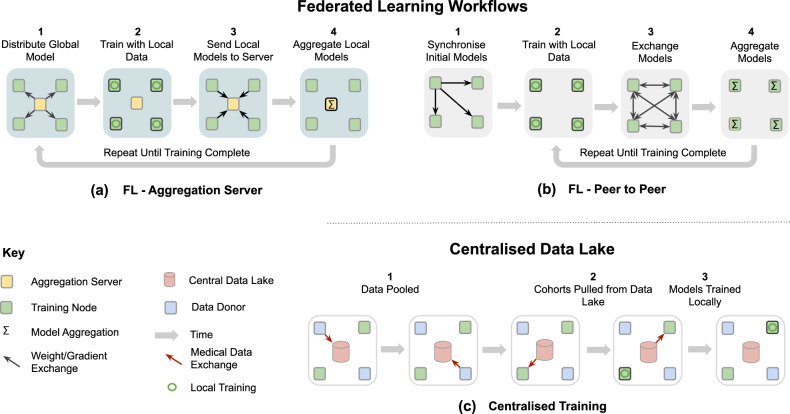
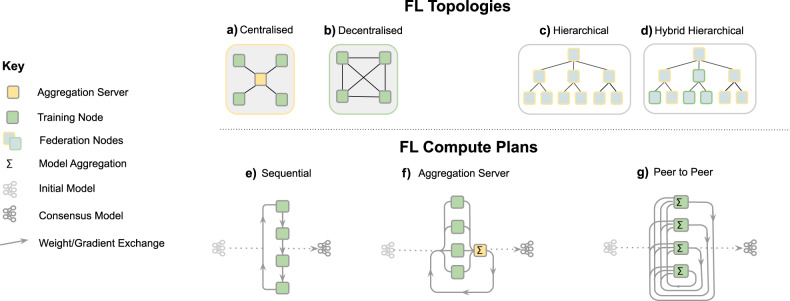
- The text describes FL workflows, including aggregation-server and peer-to-peer topologies, and discusses mechanisms such as FedAvg, FedProx, domain adaptation, and differential privacy at a conceptual level.
Limitations
- The paper explicitly states that FL does not solve all issues inherent to learning on medical data; success still depends on data quality, bias, and standardization.
- It states that FL does not eliminate privacy risks: models can still memorize information, and gradients/model updates may leak private data through inversion or adversarial attacks.
- Evident from the text: this is a perspective article, so it does not report original experimental results, sample sizes, or statistical testing.
Model-written summary. Check it against the paper before relying on it.
Integrity signals
Registry
Cites
Statistics
Figures
Verification
Claims the paper makes
16 Valid · 0 Not valid · 4 Not checked · 19 Own results and interpretations
The cited sources support only part of this claim — read each source’s verdict below.
In the paper
“Modern DL models feature millions of parameters that need to be learned from sufficiently large curated data sets in order to achieve clinical-grade accuracy, while being safe, fair, equitable and generalising well to unseen data2–5.”
§ The future of digital health with federated learning > Introduction
What the sources say
- Not checked — no full text of the sourcecites [2] Wang F Casalino LP Khullar D Deep learning in medicine—promise, progress, and challenges JAMA Intern. Med. 2019 179 293 294 10.1001/jamainternmed.2018.7117 30556825 source
- Not checked — no full text of the sourcecites [3] Chartrand G Deep learning: a primer for radiologists Radiographics 2017 37 2113 2131 10.1148/rg.2017170077 29131760 source
- Partly supportedcites [4] De Fauw J Clinically applicable deep learning for diagnosis and referral in retinal disease Nat. Med. 2018 24 1342 10.1038/s41591-018-0107-6 30104768 sourceExperimental — accuracy not yet measured
Split into 2 atoms — 0 confirmed, 2 partially supported, 0 disputed, 0 misattributed, 0 unverifiable. Expand the claim to see per-atom verdicts.
- Partly supportedcites [5] Sun, C., Shrivastava, A., Singh, S. & Gupta, A. Revisiting unreasonable effectiveness of data in deep learning era. In Proceedings of the IEEE international conference on computer vision, 843–852 (IEEE, 2017). sourceExperimental — accuracy not yet measured
Split into 2 atoms — 0 confirmed, 2 partially supported, 0 disputed, 0 misattributed, 0 unverifiable. Expand the claim to see per-atom verdicts.
plainstates a cause- Asserted: passes — The authors put it forward as true.
- Checkable: passes — It can be checked against evidence.
- Load-bearing: passes — The paper’s conclusions depend on it.
- Based: passes — The paper gives a reason why it holds.
The cited sources support only part of this claim — read each source’s verdict below.
In the paper
“Existing medical data is not fully exploited by ML primarily because it sits in data silos and privacy concerns restrict access to this data.”
§ The future of digital health with federated learning > Abstract
What the sources say
- Partly supportedcites [6] Van Panhuis WG A systematic review of barriers to data sharing in public health BMC Public Health 2014 14 1144 10.1186/1471-2458-14-1144 25377061 PMC4239377 sourceExperimental — accuracy not yet measured
The Background describes routinely collected public-health data as underused, and Results > Legal barriers says privacy concerns can lead to restrictive data-access policies. Results > Technical barriers describes difficulties integrating datasets. The paper does not establish that machine learning is the affected use or that data silos and privacy are the primary reasons medical data is underexploited. (LLM, conf=0.87)
- Partly supportedcites [7] Rocher L Hendrickx JM De Montjoye Y-A Estimating the success of re-identifications in incomplete datasets using generative models Nat. Commun. 2019 10 1 9 10.1038/s41467-019-10933-3 31337762 PMC6650473 sourceExperimental — accuracy not yet measured
The Introduction (page not provided) says medical and other personal data can advance AI, while privacy concerns affect its collection, use, and sharing. It does not say that medical data sits in silos or that silos and privacy restrictions are the primary reasons ML underuses it. (LLM, conf=0.85)
plainstates a cause- Asserted: passes — The authors put it forward as true.
- Checkable: passes — It can be checked against evidence.
- Load-bearing: passes — The paper’s conclusions depend on it.
- Based: passes — The paper gives a reason why it holds.
- Partly supported
The cited sources support only part of this claim — read each source’s verdict below.
In the paper
“The more rounds of local training are performed, the less it is guaranteed that the overall procedure is minimising (Eq. 1)9,12.”
§ The future of digital health with federated learning > Technical considerations > Federated learning definition
What the sources say
- Partly supportedcites [9] McMahan, B., Moore, E., Ramage, D., Hampson, S. & y Arcas, B. A. Communication-efficient learning of deep networks from decentralized data. In Artificial Intelligence and Statistics, 1273–1282. https://scholar.google.de/scholar?hl=de&as_sdt=0%2C5&q=Communicationefficient+learning+of+deep+networks+from+decentralized+data&btnG= (2017). sourceExperimental — accuracy not yet measured
The Experimental Results (p. 7) report that with very many local epochs, FedAvg can plateau or diverge on the Shakespeare LSTM task. But they also report no significant convergence degradation for large numbers of local epochs on the MNIST CNN, so the paper does not establish a general rule that more local training makes minimisation of the global loss less assured. (LLM, conf=0.86)
- Supportedcites [12] Kairouz, P. et al. Advances and open problems in federated learning. arXiv preprint arXiv:1912.04977 (2019). source
Section 3.2.1 states that more local updates increase divergence between client models and slow convergence of the training loss. Section 3.2.2 also reports more restrictive convergence bounds for local updates with non-IID data. Together, these support the claim that increasing local training weakens convergence assurances for the global loss. (LLM, conf=0.86)
plainstates a cause- Asserted: passes — The authors put it forward as true.
- Checkable: passes — It can be checked against evidence.
- Load-bearing: unclear — It is unclear whether the paper’s conclusions depend on it.
- Based: passes — The paper gives a reason why it holds.
- Partly supported
A conclusion the paper draws from its own results — it cites no other source for it, so there is none to check. The quote shows it is in the paper.
In the paper
“By linking healthcare institutions, not restricted to research centres, FL can have direct clinical impact.”
§ The future of digital health with federated learning > Data-driven medicine requires federated efforts > Current FL efforts for digital health
plainstates a possible cause- Asserted: passes — The authors put it forward as true.
- Checkable: passes — It can be checked against evidence.
- Load-bearing: passes — The paper’s conclusions depend on it.
- Based: passes — The paper gives a reason why it holds.
A conclusion the paper draws from its own results — it cites no other source for it, so there is none to check. The quote shows it is in the paper.
In the paper
“FL enables collaborative research for, even competing, companies.”
§ The future of digital health with federated learning > Data-driven medicine requires federated efforts > Current FL efforts for digital health
plainstates a cause- Asserted: passes — The authors put it forward as true.
- Checkable: passes — It can be checked against evidence.
- Load-bearing: unclear — It is unclear whether the paper’s conclusions depend on it.
- Based: passes — The paper gives a reason why it holds.
14 references still to check
A free account verifies the references that are still open.
- Probably not a substantial claim. 19
- It may state two separate claims as one. 32
- The quote only partly states this claim. 1
Claims other papers make about this one
Each is checked against this paper’s own text: does it say what the citing paper says it does?
The source backs part of the claim, not all of it — or backs it for a different population, condition or comparison.
In the citing paper
“This is currently addressed by sharing multi-site data, but such centralization is challenging/infeasible to scale due to various limitations.”
From Federated learning enables big data for rare cancer boundary detection (2022) · cites this paper as [10]
Experimental — accuracy not yet measuredThe source backs part of the claim, not all of it — or backs it for a different population, condition or comparison.
In the citing paper
“However, these methods often come with trade-offs in accuracy and computational efficiency.”
From The role of multimodality in clinical disease diagnosis: advances, challenges, and opportunities (2026) · cites this paper as [34]
Experimental — accuracy not yet measuredThe source backs part of the claim, not all of it — or backs it for a different population, condition or comparison.
In the citing paper
“The experts in healthcare and life sciences can use FL to solve the unique problem of data governance by training algorithms behind the hospital's firewall and only sharing models so that data remain secure [31].”
From A comprehensive survey on federated learning techniques for healthcare informatics (2023) · cites this paper as [31]
Experimental — accuracy not yet measuredThe source backs part of the claim, not all of it — or backs it for a different population, condition or comparison.
In the citing paper
“It also improves patient privacy and reduces low latency during the collaboration of multiple hospitals/entities [7].”
From Handling privacy-sensitive medical data with federated learning: Challenges and future directions (2023) · cites this paper as [7]
Experimental — accuracy not yet measuredThe source backs part of the claim, not all of it — or backs it for a different population, condition or comparison.
In the citing paper
“Enabling privacy protected data sharing across clinical centers is advocated as an essential pathway to promote collaborations internationally yet underexplored so far6,7.”
From Federated deep learning for detecting COVID-19 lung abnormalities in CT: a privacy-preserving multinational validation study (2021) · cites this paper as [7]
Experimental — accuracy not yet measured
27 more claims about this paper
Create a free account to see every claim other papers make about this one.
Citations
Cites
LeCun, Y., Bengio, Y., & Hinton, G. (2015) · Nature · doi:10.1038/nature14539 · Cited by 84,126
Communication-Efficient Learning of Deep Networks from Decentralized Data
McMahan, H. B., Moore, E., Ramage, D., Hampson, S., & Arcas, B. A. Y. (2016) · arXiv · doi:10.48550/arxiv.1602.05629 · Cited by 14,215
Sudlow, C., Gallacher, J., Allen, N., Beral, V., Burton, P., Danesh, J., Downey, P., Elliott, P., Green, J., Landray, M., et al. (2015) · PLOS Medicine · doi:10.1371/journal.pmed.1001779 · Cited by 12,728 · cited 2×
“Substantial, albeit smaller, initiatives include the Human Connectome25, the UK Biobank26, the Cancer Imaging Archive (TCIA)27, NIH CXR828, NIH DeepLesion29, the Cancer Genome Atlas (TCGA)30, the Alzheimer’s Disease Neuroimaging Initiative (ADNI)31, as well as medical grand challenges32 such as the CAMELYON challenge3…”
BackgroundAdvances and Open Problems in Federated Learning
Kairouz, P., McMahan, H. B., Avent, B., Bellet, A., Bennis, M., Bhagoji, A. N., Bonawitz, K., Charles, Z., Cormode, G., Cummings, R., et al. (2019) · arXiv · doi:10.48550/arxiv.1912.04977 · Cited by 7,857
Advances and Open Problems in Federated Learning
Kairouz, P., & McMahan, H. B. (2021) · Foundations and Trends in Machine Learning · doi:10.1561/2200000083 · Cited by 7,772
The multimodal brain tumor image segmentation benchmark (BRATS)
Menze, B. H., Jakab, A., Bauer, S., Kalpathy-Cramer, J., Farahani, K., Kirby, J., Burren, Y., Porz, N., Slotboom, J., Wiest, R., et al. (2015) · IEEE Transactions on Medical Imaging · doi:10.1109/tmi.2014.2377694 · Cited by 6,781
Deep Learning with Differential Privacy
Abadi, M., Chu, A., Goodfellow, I., McMahan, H. B., Mironov, I., Talwar, K., & Zhang, L. (2016) · Proceedings of the 2016 ACM SIGSAC Conference on Computer and Communications Security · doi:10.1145/2976749.2978318 · Cited by 6,578 · cited 2×
“Countermeasures, such as limiting the granularity of the shared model updates and to add specific noise to ensure differential privacy [34, 12, 57] may be needed and is still an active area of research [14].”
BackgroundMethodFederated Machine Learning: Concept and Applications
Yang, Q., Liu, Y., Chen, T., & Tong, Y. (2019) · ACM Transactions on Intelligent Systems and Technology · doi:10.1145/3298981 · Cited by 6,322 · cited 4×
“d FL approaches are still under development. 3 Technical Considerations FL is perhaps best-known from the work of Konecnˇ y` et al. [36], but various other definitions have been proposed in literature [14, 11, 15, 9]. These approaches can be realised via different communication architectures (see Figure 1) and respecti…”
BackgroundInfluentialFederated learning: Challenges, methods, and future directions
Li, T., Sahu, A. K., Talwalkar, A., & Smith, V. (2020) · IEEE Signal Processing Magazine · doi:10.1109/msp.2020.2975749 · Cited by 6,210 · cited 3×
“However, there is a trade-off in terms of performance and these techniques may affect for example the accuracy of the final model [10].”
BackgroundMethodShin, H.-C., Roth, H. R., Gao, M., Lu, L., Xu, Z., Nogues, I., Yao, J., Mollura, D., & Summers, R. M. (2016) · IEEE Transactions on Medical Imaging · doi:10.1109/tmi.2016.2528162 · Cited by 5,759
Self-citation
Cited by
Items 801–900 of 3,132
Radiomics in clinical radiology: advances, challenges, and future directions
Linton‐Reid, K., Chen, M., Martell, M. B., Posma, J. M., & Aboagye, E. O. (2025) · Clinical Radiology · doi:10.1016/j.crad.2025.107165 · Cited by 21
Discovery of predictive biomarkers for cancer therapy through computational approaches
Wang, X., Nguyen, J., Nader, K. M., Miihkinen, M., Wall, P., Singhal, A., Bedard, P. L., Ideker, T., Aittokallio, T. A., & Haibe‐Kains, B. (2026) · Nature Reviews Clinical Oncology · doi:10.1038/s41571-025-01109-8 · Cited by 31
“This approach enables improvements in predictive accuracy and generalizability beyond models trained on single-institution datasets 183 as demonstrated by the improved chemotherapy response predictions provided by the application of a federated learning infrastructure to the prediction of responses…”
Meng, L., Li, Z., Xu, L., Wei, F., Ji, H., Zhang, L., Zhu, A., & Zhou, Z. (2026) · Frontiers in Endocrinology · doi:10.3389/fendo.2025.1728293 · Cited by 21
Federated Learning for Brain Tumor Segmentation Using MRI and Transformers
Nalawade, S. S., Yogananda, C. G. B., Wagner, B. C., Reddy, D. D., Das, Y., Yu, F. F., Fei, B., Madhuranthakam, A. J., & Maldjian, J. A. (2022) · Lecture notes in computer science · doi:10.1007/978-3-031-09002-8_39 · Cited by 28
Dang, B. T. H., Luan, P. H., Ngan, V. D. T., Trong, N. T., Duy, P. T., & Pham, V.-H. (2023) · International Conference on Advanced Technologies for Communications · doi:10.1109/atc58710.2023.10318944 · Cited by 17
“As a result, concerns around data privacy, security, and ownership have led researchers to explore alternative approaches, Federated Learning (FL), for the future of Artificial Intelligence (AI) in health protection [3].”
BackgroundEdge-DPSDG: An Edge-Based Differential Privacy Protection Model for Smart Healthcare
Lyu, M., Ni, Z., Chen, Q., & Li, F. (2024) · IEEE Transactions on Big Data · doi:10.1109/tbdata.2024.3366071 · Cited by 17
“Existing approaches to privacy protection under distributed smart healthcare include federal learning [25], [26], [27], [28], homomorphic encryption [29], [30], [31], secure multi-party computation [32], [33] and differential privacy [34], [35], [36], [37].”
Vashishth, T. K., Sharma, V., Sharma, K. K., Kumar, B., Chaudhary, S., & Panwar, R. (2023) · Advances in healthcare information systems and administration book series · doi:10.4018/979-8-3693-2639-8.ch010 · Cited by 16
Data encoding for healthcare data democratization and information leakage prevention
Thakur, A., Zhu, T., Abrol, V., Armstrong, J., Wang, Y., & Clifton, D. A. (2024) · Nature Communications · doi:10.1038/s41467-024-45777-z · Cited by 16
“Similar to cross-site collaboration, federated learning also allows a central server to collaborate with multiple sites for training a global model without data sharing [36].”
BackgroundContinual learning framework for a multicenter study with an application to electrocardiogram
Kim, J., Lim, M. H., Kim, K., & Yoon, H. (2024) · BMC Medical Informatics and Decision Making · doi:10.1186/s12911-024-02464-9 · Cited by 19
“Federated learning is one of the alternatives for decentralized data [1–4].”
BackgroundLightweight federated learning for STIs/HIV prediction
Nguyen, T. P. V., Yang, W., Tang, Z., Xia, X., Mullens, A. B., Dean, J. A., & Li, Y. (2024) · Scientific Reports · doi:10.1038/s41598-024-56115-0 · Cited by 17
Song, C., & Shi, X. M. (2024) · Smart Health · doi:10.1016/j.smhl.2024.100469 · Cited by 16
Hsiao, C., Lin, F. Y., Sun, T.-L., Liao, Y.-Y., Wu, C., Lai, Y.-C., Wu, H.-P., Liu, P.-R., Xiao, B.-R., Chen, C., et al. (2024) · IEEE Journal of Biomedical and Health Informatics · doi:10.1109/jbhi.2024.3400599 · Cited by 18
“Federated Learning involves multiple clients exchanging [20].”
BackgroundResource-efficient Parallel Split Learning in Heterogeneous Edge Computing
Zhang, M., Cao, J., Sahni, Y., Chen, X., & Jiang, S. (2024) · 2012 International Conference on Computing, Networking and Communications (ICNC) · doi:10.1109/icnc59896.2024.10556386 · Cited by 19
“FL has proven effective in several applications [4], [5].”
Babar, F. F., Jamil, F., Alsboui, T., Babar, F. F., Ahmad, S., & Alkanhel, R. I. (2024) · International Wireless Communications and Mobile Computing Conference (IWCMC) · doi:10.1109/iwcmc61514.2024.10592390 · Cited by 13
“The proliferation of medical IoT devices, such as smartwatches and fitness trackers, will generate massive amounts of data, straining traditional Cloud computing infrastructures [8], [9].”
BackgroundArtificial intelligence for response prediction and personalisation in radiation oncology
Zwanenburg, A., Price, G. J., & Löck, S. (2024) · Strahlentherapie und Onkologie · doi:10.1007/s00066-024-02281-z · Cited by 19
“The most straightforward way is by training an AI system on data collected from multiple centres, e.g. through federated learning [46] or local, regional, national and international data repositories [47].”
Collaborative Distributed Machine Learning
Jin, D. S., Kannengießer, N., Rank, S., & Sunyaev, A. (2024) · ACM Computing Surveys · doi:10.1145/3704807 · Cited by 23
“Training data retrievals from third parties are often subject to compliance, social, and technical challenges [3, 4, 5] that hinder the acquisition of sufficient training data.”
Austin, J. A., Lobo, E. H., Samadbeik, M., Engstrom, T., Philip, R., Pole, J. D., & Sullivan, C. M. (2024) · Journal of Medical Internet Research · doi:10.2196/58637 · Cited by 20
“FL also stands to transform health care delivery, offering improved precision, accessibility, and patient-centered care [85,88,97,139].”
InfluentialGreen, H., Rieu, R., Slevin, F., Ashmore, L., Bulbeck, H., Gkogkou, P., Ingram, S., Kelly, C., Probst, H., Shakir, R., et al. (2024) · Clinical Oncology · doi:10.1016/j.clon.2024.103732 · Cited by 16
MLHOps: Machine Learning Health Operations
Khattak, F. K., Subasri, V., Krishnan, A., Pou-Prom, C., Koçak, S. A., Dolatabadi, E., Pandya, D., Seyyed-Kalantari, L., & Rudzicz, F. (2024) · IEEE Access · doi:10.1109/access.2024.3521279 · Cited by 39
“Federated learning [248] has demonstrated success in the context of healthcare; however, it has some limitations.”
A review of medical text analysis: Theory and practice
Chen, Y., Zhang, C., Bai, R., Sun, T., Ding, W., & Wang, R. (2025) · Information Fusion · doi:10.1016/j.inffus.2025.103024 · Cited by 13
Garro, R. J., Wilson, C. S., Swain, D. L., Pordomingo, A. J., & Wibowo, S. (2025) · Computers and Electronics in Agriculture · doi:10.1016/j.compag.2025.110180 · Cited by 19
Alaya, H., Letaïfa, A. B., & Rachedi, A. (2025) · The Journal of Supercomputing · doi:10.1007/s11227-025-07124-x · Cited by 21
“Finally, upon receiving the local models from the edge, the FL server aggregates This workflow can be realized in several ways depending on the architecture: centralized, decentralized, hierarchical, or hybrid [50].”
A Comprehensive Review of Open-Source Federated Learning Frameworks
Mehdi, M., Makkar, A., & Conway, M. E. (2025) · Procedia Computer Science · doi:10.1016/j.procs.2025.03.232 · Cited by 16
“This framework supports decentralized model training, ensuring data remains localized and private, a feature particularly valuable in domains such as healthcare and finance where data sensitivity is paramount [27].”
A Federated Learning Model for Detecting Cyberattacks in Internet of Medical Things Networks
Ghourabi, A., & Alkhalil, A. (2025) · IEEE Access · doi:10.1109/access.2025.3588808 · Cited by 21
“It was originally developed for various domains, such as mobile and IoT devices, and has recently gained popularity in the healthcare field [11], [12].”
Federated learning in food research
Fendor, Z., van der Velden, B. H. M., Wang, X., Carnoli, A. J., Mutlu, O., & Hürriyetoğlu, A. (2025) · Journal of Agriculture and Food Research · doi:10.1016/j.jafr.2025.102238 · Cited by 37
“One way to solve the above-mentioned limitation is via Federated Learning (FL), a type of privacy-preserving ML implemented to train a model without revealing the data themselves (Kaissis et al., 2020; McMahan, Moore, Ramage, Hampson, & Arcas, 2023; Rieke et al., 2020).”
Welten, S., Hempel, L., Abedi, M., Mou, Y., Jaberansary, M., Neumann, L., Weber, S., Tahar, K., Yediel, Y. Ü., Löbe, M., et al. (2022) · Applied Sciences · doi:10.3390/app12094336 · Cited by 17
“DA constitutes a paradigm shift in conventional data analysis [7,9–15].”
Backdoor Attack is a Devil in Federated GAN-Based Medical Image Synthesis
Jin, R., & Li, X. (2022) · Lecture notes in computer science · doi:10.1007/978-3-031-16980-9_15 · Cited by 21
F-CBR: An Architecture for Federated Case-Based Reasoning
Jaiswal, A. D., Yigzaw, K. Y., & Öztürk, P. (2022) · IEEE Access · doi:10.1109/access.2022.3188808 · Cited by 13
Shen, Y., Liu, B., Yu, R., Wang, Y., Wang, S., Wu, J., & Chen, W. (2022) · IEEE International Conference on Bioinformatics and Biomedicine (BIBM) · doi:10.1109/bibm55620.2022.9995355 · Cited by 15
“In this scenario, FL has already shown empirical success in various tasks of medical imaging [17], e.”
BackgroundEyes as the windows into cardiovascular disease in the era of big data
Chan, Y. K., Cheng, C., & Sabanayagam, C. (2023) · Taiwan Journal of Ophthalmology · doi:10.4103/tjo.tjo-d-23-00018 · Cited by 16
Lee, W., Hong, J., Lin, Y., Lu, Y., Hsu, Y., Lee, C., Yang, H., Wu, C., Lu, C., Sun, M., et al. (2023) · Journal of Magnetic Resonance Imaging · doi:10.1002/jmri.28950 · Cited by 18
A Survey on Blockchain-Based Federated Learning: Categorization, Application and Analysis
Tang, Y., Zhang, Y., Niu, T., Li, Z., Zhang, Z., Chen, H., & Zhang, L. (2024) · Computer Modeling in Engineering & Sciences · doi:10.32604/cmes.2024.030084 · Cited by 29
Rebirth of Distributed AI—A Review of eHealth Research
Khan, M. A., & Alkaabi, N. (2021) · Sensors · doi:10.3390/s21154999 · Cited by 14
“As far as we know, the existing surveys and reviews about FL in the healthcare sector are “Federated Learning for Healthcare Informatics” [23], which explains FL technology with a focus on Electronic Health Records (EHR) applications, and the second survey, “The future of digital health with federated learning” [24],…”
BackgroundMethodCollaborative learning without sharing data
(2021) · Nature Machine Intelligence · doi:10.1038/s42256-021-00364-5 · Cited by 13
Sun, H., Huang, Y., Hu, D., Hong, X., Salimi, Y., Lv, W., Chen, H., Zaidi, H., Wu, H., & Lu, L. (2024) · EJNMMI Physics · doi:10.1186/s40658-024-00666-8 · Cited by 16
“DL-ASC approaches usually require large, reliable datasets to generate robust and generalizable models [55].”
BackgroundLarge Language Model Architectures in Health Care: Scoping Review of Research Perspectives
Leiser, F., Guse, R., & Sunyaev, A. (2025) · Journal of Medical Internet Research · doi:10.2196/70315 · Cited by 17
“A possible avenue for future research could be to introduce privacy-preserving training approaches such as federated learning that have been shown to work in health care settings [82].”
Yuanyuan, Z., Bensahla, A., Bjelogrlic, M., Zaghir, J., Turbé, H., Bednarczyk, L., Gaudet-Blavignac, C., Ehrsam, J., Marchand‐Maillet, S., & Lovis, C. (2025) · npj Digital Medicine · doi:10.1038/s41746-025-01692-1 · Cited by 22
Cao, C., Zhao, W., Guo, J., Wang, Z., Lü, A., & Liang, C. C. (2025) · The Innovation Medicine · doi:10.59717/j.xinn-med.2025.100154 · Cited by 14
Țocu, G., Lisă, E. L., Tutunaru, D., Mihailov, R., Șerban, C., Luțenco, V., Dimofte, F., Guliciuc, M., Chiscop, I., Ștefănescu, B. I., et al. (2025) · Diagnostics · doi:10.3390/diagnostics15172169 · Cited by 23
“Additionally, federated learning techniques are becoming increasingly relevant because they allow training models directly on data distributed across different centers without the need to centralize them, thus respecting patient confidentiality [75].”
Introduction to health care data analytics- an overview
Worku, A., Arage, F. G., & Kebede, F. B. (2025) · Discover Health Systems · doi:10.1007/s44250-025-00291-x · Cited by 18
“It is a learning framework that is aimed at solving the issue of data governance and privacy by training algorithms collaboratively without exchanging the data [59, 60].”
Huang, M., Dissanayaka, W. L., & Yiu, C. K. Y. (2025) · Bioengineering · doi:10.3390/bioengineering12121302 · Cited by 12
“Key to this endeavor is the formation of cross-institutional multimodal data alliances that leverage privacy-preserving technologies such as federated learning to overcome data fragmentation and heterogeneity, thereby providing a solid foundation for model training [94].”
Alshorman, J., Mehran, M. J., Bahrami, Y., Mohammadzadeh, S., Barzigar, R., Morshedi, M., Haider, K. H., Tembo, K. M., Rong, S.-J., Jadgal, N., et al. (2026) · Clinical and Experimental Medicine · doi:10.1007/s10238-026-02107-5 · Cited by 22
“…pre-analytic and analytic pipelines (e.g., acquisition/scanning protocols, sequencing batch correction, and complete metadata capture), rigorous quality control, and interoperable data governance to ensure that “real-world” inputs remain reliable enough for decision support (298 , 299 ).”
Data Ethics in Digital Health and Genomics
Karabekmez, M. E. (2021) · The New Bioethics · doi:10.1080/20502877.2021.1996965 · Cited by 17
“Federated learning has been proposed for the data analytics portion of AI applications in health informatics to enable algorithm training without needing to share data (Rieke et al. 2020).”
BackgroundTozzi, A. E., Croci, I., Voicu, I. P., Dotta, F., Colafati, G. S., Carai, A., Fabozzi, F., Lacanna, G., Premuselli, R., & Mastronuzzi, A. (2023) · Frontiers in Oncology · doi:10.3389/fonc.2023.1285775 · Cited by 12
Schapranow, M.-P., Bayat, M., Rasheed, A., Naik, M. G., Graf, V., Schmidt, D., Budde, K., Cardinal, H., Sapir‐Pichhadze, R., Fenninger, F., et al. (2023) · JMIR Research Protocols · doi:10.2196/48892 · Cited by 14
“Combining data from multiple clinical data sources for development of CPMs traditionally involves complex data preprocessing steps, for example, data harmonization, data transformation, enable semantic interoperability, legal agreements, and data privacy measures [21].”
MethodImportance-aware adaptive dataset distillation
Li, G., Togo, R., Ogawa, T., & Haseyama, M. (2024) · Neural Networks · doi:10.1016/j.neunet.2024.106154 · Cited by 31
“Furthermore, privacy and copyright issues are associated with the use of raw data for training [23, 24].”
BackgroundYeom, J. C., Kim, J., Kim, Y. J., Kim, K. G., & Kim, K. G. (2024) · Journal of Imaging Informatics in Medicine · doi:10.1007/s10278-024-01020-1 · Cited by 16
Federated Versus Central Machine Learning on Diabetic Foot Ulcer Images: Comparative Simulations
Saeedi, M., Gorji, H. T., Vasefi, F., & Tavakolian, K. (2024) · IEEE Access · doi:10.1109/access.2024.3392916 · Cited by 12
“Additionally, traceability and accountability are crucial in FL systems, especially in environments with diverse hardware, software, and networks [29].”
BackgroundLongitudinal Image Data for Outcome Modeling
van Timmeren, J. E., Bussink, J., Koopmans, P. J., Smeenk, R. J., & Monshouwer, R. (2024) · Clinical Oncology · doi:10.1016/j.clon.2024.06.053 · Cited by 17
“Furthermore, sharing data publicly or adopting federated learning approaches improves the amount and diversity of data used for training and can thus enhance model generalization [58 e 60].”
The Role of Data Quality for Reliable AI Performance in Medical Applications
Enshaei, N., & Naderkhani, F. (2024) · IEEE reliability magazine · doi:10.1109/mrl.2024.3430192 · Cited by 17
“In response to the challenges of data sharing in healthcare, Federated Learning [4] presents a promising solution that can navigate the constraints of patient privacy and institutional protocols.”
BackgroundClinical Evaluation of Artificial Intelligence-Enabled Interventions
Hogg, H. D. J., Martindale, A. P. L., Liu, X., & Denniston, A. K. (2024) · Investigative Ophthalmology & Visual Science · doi:10.1167/iovs.65.10.10 · Cited by 13
“39 Understanding the data on which an AI technology was trained will also permit an appraisal of its likely performance in a specific population and any subgroups for whom it may underper-form.”
BackgroundRudroff, T., Rainio, O., & Klén, R. (2024) · Brain Sciences · doi:10.3390/brainsci14080831 · Cited by 16
“This approach, as described by Rieke et al. [51], allows AI models to be trained on decentralized data, potentially addressing both privacy concerns and the challenge of data scarcity in some settings.”
BackgroundMethodNguyen, T. X., Jiang, M., Yang, D., Ran, A. R., Tang, Z., Zhang, S., Hu, X., Tran, V. T., Dai, T. B. L., Le, D. T., et al. (2024) · NEJM AI · doi:10.1056/aioa2400091 · Cited by 13
Jamshidi, M. B., Hoang, D. T., Nguyen, D. N., Niyato, D. T., & Warkiani, M. E. (2025) · Computers in Biology and Medicine · doi:10.1016/j.compbiomed.2025.109970 · Cited by 19
Knowledge-augmented Graph Machine Learning for Drug Discovery: A Survey
Zhong, Z., Barkova, A., & Mottin, D. (2025) · ACM Computing Surveys · doi:10.1145/3744237 · Cited by 25
Federated Remote Physiological Measurement with Imperfect Data
Liu, X., Zhang, M., Jiang, Z., Patel, S., & McDuff, D. (2022) · IEEE/CVF Conference on Computer Vision and Pattern Recognition Workshops (CVPRW) · doi:10.1109/cvprw56347.2022.00234 · Cited by 18
“Therefore, aggregating as much data as possible from decentralized clients’ could help boost the performance of machine learning applications in healthcare while not leaking sensitive information or violating HIPAA guidelines [29,38].”
BackgroundA tool for federated training of segmentation models on whole slide images
Lutnick, B. R., Manthey, D., Becker, J. U., Zuckerman, J. E., Rodrigues, L., Jen, K., & Sarder, P. (2022) · Journal of Pathology Informatics · doi:10.1016/j.jpi.2022.100101 · Cited by 13
Palgen, J., Perrillat-Mercerot, A., Ceres, N., Peyronnet, E., Coudron, M., Tixier, E., Illigens, B. M. W., Bosley, J., L’Hostis, A., & Monteiro, C. (2022) · Acta Biotheoretica · doi:10.1007/s10441-022-09445-3 · Cited by 12
Security and Privacy Concerns for Healthcare Wearable Devices and Emerging Alternative Approaches
Boumpa, E., Tsoukas, V., Gkogkidis, A., Spathoulas, G. P., & Kakarountas, A. P. (2022) · Lecture notes of the Institute for Computer Sciences, Social Informatics and Telecommunications Engineering · doi:10.1007/978-3-031-06368-8_2 · Cited by 23
A COVID-19 Auxiliary Diagnosis Based on Federated Learning and Blockchain
Wang, Z., Cai, L., Zhang, X., Choi, C., & Su, X. (2022) · Computational and Mathematical Methods in Medicine · doi:10.1155/2022/7078764 · Cited by 14
“picture, thus reducing the sensitive information leakage risk [12, 13].”
BackgroundFederated data processing and learning for collaboration in the physical sciences
Huang, W., & Barnard, A. S. (2022) · Machine Learning Science and Technology · doi:10.1088/2632-2153/aca87c · Cited by 12
FedAP: Adaptive Personalization in Federated Learning for Non-IID Data
Yeganeh, Y., Farshad, A., Boschmann, J., Gaus, R., Frantzen, M., & Navab, N. (2022) · Lecture notes in computer science · doi:10.1007/978-3-031-18523-6_2 · Cited by 17
Distributed Learning in Healthcare
Tuladhar, A., Rajashekar, D., & Forkert, N. D. (2022) · Integrated science · doi:10.1007/978-3-031-11199-0_10 · Cited by 11
Federating Medical Deep Learning Models from Private Jupyter Notebooks to Distributed Institutions
Launet, L., Wang, Y., Colomer, A., Igual, J., Pulgarín-Ospina, C. C., Koulouzis, S., Bianchi, R., Mosquera‐Zamudio, A., Monteagudo, C. C., Naranjo, V., et al. (2023) · Applied Sciences · doi:10.3390/app13020919 · Cited by 13
“Although federated learning (FL) was initially developed for mobile and edge device use cases under a cross-device paradigm [9], cross-silo FL recently gained traction in various domains, including healthcare [10].”
Decentralized Federated Learning for Over-Parameterized Models
Qin, T., Etesami, S. R., & Uribe, C. A. (2022) · IEEE Conference on Decision and Control (CDC) · doi:10.1109/cdc51059.2022.9992924 · Cited by 15
“Federated Learning has shown great potential in communication efficiency and its capability of preserving data privacy [2], and has exhibited outstanding performance in real-world applications such as keyboard prediction [3] and healthcare [4], [5].”
BackgroundRobust Federated Learning for Ubiquitous Computing through Mitigation of Edge-Case Backdoor Attacks
Elhattab, F., Bouchenak, S., Talbi, R., & Nitu, V. (2022) · Proceedings of the ACM on Interactive, Mobile, Wearable and Ubiquitous Technologies · doi:10.1145/3569492 · Cited by 11
“adopted in several thriving ubiquitous computing applications such as healthcare [40], self-driving cars [51], home automation [25], next-word prediction [49], etc.”
BackgroundFederated Learning for Tabular Data using TabNet: A Vehicular Use-Case
Lindskog, W., & Prehofer, C. (2022) · IEEE International Conference on Intelligent Computer Communication and Processing (ICCP) · doi:10.1109/iccp56966.2022.10053975 · Cited by 14
“healthcare [2], [3], internet-of-things (IoT) [4]–”
AI and Blockchain for Cybersecurity in Cyber-Physical Systems: Challenges and Future Research Agenda
Girdhar, K., Singh, C., & Kumar, Y. (2023) · Advances in information security · doi:10.1007/978-3-031-25506-9_10 · Cited by 13
Artificial Intelligence Governance and Otolaryngology‐Head and Neck Surgery
Nwosu, O. I., Crowson, M. G., & Rameau, A. (2023) · The Laryngoscope · doi:10.1002/lary.31013 · Cited by 12
“13,14 In addition, otolaryngologists seeking to implement AI into their work fl ows should consult with their institutional data of fi cials to ensure the tools abide by existing privacy standards.”
BackgroundThe Impact of Federated Learning on AI-Enhanced Healthcare Delivery
Shahi, A., & Mittal, A. (2023) · Advances in healthcare information systems and administration book series · doi:10.4018/979-8-3693-2639-8.ch005 · Cited by 15
NeuroCrypt: Machine Learning Over Encrypted Distributed Neuroimaging Data
Senanayake, N., Podschwadt, R., Takabi, D., Calhoun, V. D., & Plis, S. (2021) · Neuroinformatics · doi:10.1007/s12021-021-09525-8 · Cited by 13
“Rieke et al. (2020) discusses a number of current approaches to preserve privacy of medical data using FL techniques but they do not discuss any work utilizing SMC as the encryption method.”
BackgroundMethodDigital Health Transformers and Opportunities for Artificial Intelligence–Enabled Nephrology
Shickel, B., Loftus, T. J., Ren, Y., Rashidi, P., Bihorac, A., & Ozrazgat‐Baslanti, T. (2023) · Clinical Journal of the American Society of Nephrology · doi:10.2215/cjn.0000000000000085 · Cited by 12
Kanthavel, R., & Dhaya, R. (2025) · Innovation and Emerging Technologies · doi:10.1142/s2737599425500252 · Cited by 11
Federated Learning for Smart Cities: A Thematic Review of Challenges and Approaches
Alterkawi, L., & Dib, F. K. (2025) · Future Internet · doi:10.3390/fi17120545 · Cited by 23
“Case Summary: Cross-Institutional Healthcare FL [66,67] Scope: Collaborative diagnostic modeling among hospitals while preserving patient privacy.”
Johnson, P. M., Umapathy, L., Gigax, B., Rossi, J. A. K., Tong, A. Y., Bruno, M. T., Sodickson, D. K., Nayan, M., & Chandarana, H. (2025) · Journal of Magnetic Resonance Imaging · doi:10.1002/jmri.70189 · Cited by 17
“Tools should be evaluated for consistency across age and race, and efforts to build diverse, multi-institutional datasets and/or federated learning strategies [114] should be supported.”
Afifi, I., Elgendy, M. A., Abdelfatah, M., & El–Sappagh, S. (2025) · Brain Informatics · doi:10.1186/s40708-025-00286-7 · Cited by 17
Convergence of machine learning and genomics for precision oncology
Reardon, B. M., Culhane, A. C., & Allen, E. M. V. (2026) · Nature reviews. Cancer · doi:10.1038/s41568-025-00897-6 · Cited by 17
“Federated networks offer a promising alternative for building larger clinicog-enomic datasets while preserving data privacy and ensuring compliance with the EU’s General Data Protection Regulation (GDPR) 89–92 .”
Kanauzia, R., Singh, M., Gulati, S., Singh, B. M., Arora, N., & Gola, K. K. (2026) · Knowledge and Information Systems · doi:10.1007/s10115-025-02673-2 · Cited by 19
“The reason behind the research is the increasing necessity to learn how FL can be used to resolve the problem in healthcare and identify the limitations that act as barriers to its application in practice [38–40].”
IoT Service Orchestration in Edge–Cloud Continuum With 6G: A Review
Shahid, H. F., Akdemir, B., Islam, J., Ahmad, I., Ahmad, I., & Harjula, E. (2026) · IEEE Internet of Things Journal · doi:10.1109/jiot.2026.3663918 · Cited by 31
“AI-based distributed learning paradigms including federated learning in digital healthcare [111], wireless networking systems [112], and split learning are among the techniques for the edge–cloud continuum.”
Nemane, S. G., Sarad, V. M., Tulaskar, D. P., Marode, T. P., Bhangdiya, V. K., Agrawal, L., Avthankar, A., Kondylakis, H., Kulkarni, M. B., Bhaiyya, M. L., et al. (2026) · Archives of Computational Methods in Engineering · doi:10.1007/s11831-026-10629-0 · Cited by 16
FeLebrities: A User-Centric Assessment of Federated Learning Frameworks
Riviera, W., Galazzo, I. B., & Menegaz, G. (2023) · IEEE Access · doi:10.1109/access.2023.3312579 · Cited by 14
“ing sensitive data [12], such as patient records [13], [14] or”
BackgroundGisslander, K., Rutherford, M., Aslett, L. J. M., Basu, N., Dradin, F., Hederman, L., Hrušková, Z., Kardaoui, H., Lamprecht, P., Lichołai, S., et al. (2023) · Annals of the Rheumatic Diseases · doi:10.1136/ard-2023-224571 · Cited by 14
Li, Y., Xu, G., Meng, X., Du, W., & Ren, X. (2024) · Entropy · doi:10.3390/e26050353 · Cited by 16
“Federated learning is increasingly being applied in privacy-sensitive, multi-party collaborative environments, notably in healthcare sector applications [1].”
BackgroundSadeghi, S., Hempel, L., Rodemund, N., & Kirsten, T. (2024) · Scientific Reports · doi:10.1038/s41598-024-61380-0 · Cited by 15
Federated Active Learning Framework for Efficient Annotation Strategy in Skin-Lesion Classification
Deng, Z., Yang, Y. S., & Suzuki, K. (2024) · Journal of Investigative Dermatology · doi:10.1016/j.jid.2024.05.023 · Cited by 18
Federated learning for digital healthcare: concepts, applications, frameworks, and challenges
Sachin, D. N., Annappa, B., & Ambesange, S. (2024) · Computing · doi:10.1007/s00607-024-01317-7 · Cited by 11
“Rieke et al. [12] provide an overview of the FL digital healthcare system and discuss potential solutions.”
Privacy Preserving Breast Cancer Prediction with Mammography Images Using Federated Learning
Tabassum, A., Ovi, S. H., Hossain, S., Tonmoy, M. R., Shovon, M. S. H., Hussein, M. R., & Mistry, D. (2024) · Studies in big data · doi:10.1007/978-981-97-3966-0_12 · Cited by 10
Blockchain federated learning with sparsity for IoMT devices
Ba, A. F., Yingchi, M., Muhammad, A. U., Samuel, O., Muazu, T., & Kumshe, U. M. M. (2024) · Cluster Computing · doi:10.1007/s10586-024-04810-y · Cited by 12
“Furthermore, researchers such as [14, 15] have emphasized the potential of FL to drive future innovations in medical and digital health applications by maintaining data privacy.”
AI-Powered Smart Digital Libraries
Meesad, P., & Mingkhwan, A. (2024) · Studies in big data · doi:10.1007/978-3-031-69216-1_10 · Cited by 20
Ahmed, S., Feng, J., Manan, M. A., Yaqub, M., Ali, M. U., & Raheem, A. (2024) · Biomedical Signal Processing and Control · doi:10.1016/j.bspc.2024.107360 · Cited by 18
Federated Learning: An Approach for Managing Data Privacy and Security in Collaborative Learning
Jaswal, R., Panda, S. N., & Khullar, V. (2025) · Recent Advances in Electrical & Electronic Engineering (Formerly Recent Patents on Electrical & Electronic Engineering) · doi:10.2174/0123520965328724241218110637 · Cited by 15
Panda, S., Dubey, R., Jena, B., Pareek, V., Tsai, L.-W., & Saxena, S. (2025) · Applied Soft Computing · doi:10.1016/j.asoc.2025.112747 · Cited by 13
Rizzo, M. (2025) · Annals of Neurology · doi:10.1002/ana.27230 · Cited by 19
“30 AI can identify patterns and correlations in these data sets that traditional methods might miss. 31,32 AI predicts outcomes from historical data, forecasting intervention effectiveness for conditions like epilepsy, neurodegenerative diseases, and stroke.”
Healthcare Industry 5.0: Pareto-Optimal IoT-Based Health Monitoring With Federated Learning
Diamantoulaki, I., Tegos, S. A., Bouzinis, P. S., Sarigiannidis, P. G., Chatzakis, C., Petousis, S., Maglaveras, N., & Karagiannidis, G. K. (2025) · IEEE Internet of Things Journal · doi:10.1109/jiot.2025.3557575 · Cited by 13
“First, in [14], the benefits and implications of FL in the medical domain were explored, with emphasis on relevant technical considerations.”
Momenpour, T., & Mallouh, A. A. (2025) · Diagnostics · doi:10.3390/diagnostics15111332 · Cited by 15
“Federated learning (FL) has emerged as a particularly compelling paradigm to address these concerns, especially in the context of sensitive medical data [17].”
A CNN-Transformer Fusion Model for Proactive Detection of Schizophrenia Relapse from EEG Signals
Yasin, S., Adeel, M., Draz, U., Ali, T. M., Hijji, M., Ayaz, M., & Marei, A. M. (2025) · Bioengineering · doi:10.3390/bioengineering12060641 · Cited by 14
Zhu, W., Shi, L. X., Wei, K., Zhou, Y., Wang, Z., Xiong, Z., & Li, J. (2025) · IEEE Transactions on Mobile Computing · doi:10.1109/tmc.2025.3588537 · Cited by 17
“In spite of diverse applications such as smart transportation [2], smart healthcare [3], and smart industries [4], FL generally faces two critical challenges.”
Lee, C., Kumar, S., Vogt, K. A., Munshi, M., Tallapudi, P., Vogt, A., Awad, H., & Khan, W. S. (2025) · Scientific Reports · doi:10.1038/s41598-025-10451-x · Cited by 18
Hindawi, S., Szubstarski, B., Boernert, E., Tackenberg, B., & Wuerfel, J. T. (2025) · Frontiers in Neurology · doi:10.3389/fneur.2025.1620469 · Cited by 18
“This fragmentation of data impedes the development of generalizable AI models and continues to hinder machine learning (ML) translation into clinical settings (8).”
FedAL: An Federated Active Learning Framework for Efficient Labeling in Skin Lesion Analysis
Deng, Z., Yang, Y., Suzuki, K., & Jin, Z. (2022) · Conference proceedings/Conference proceedings - IEEE International Conference on Systems, Man, and Cybernetics · doi:10.1109/smc53654.2022.9945452 · Cited by 12
“To overcome this problem, some studies introduced federated learning (FL) to conduct medical image analysis collaboratively [5][6].”
Background
Metadata
- Authors
- Rieke, N., Hancox, J., Li, W., Milletarì, F., Roth, H. R., Albarqouni, S., Bakas, S., Galtier, M. N., Landman, B. A., Maier-Hein, K., Ourselin, S., Sheller, M., Summers, R. M., Trask, A., Xu, D., Baust, M., & Cardoso, M. J.
- Affiliations
- Technical University of Munich (DE)
- Nvidia (United Kingdom) (GB)
- Nvidia (United States) (US)
- Imperial College London (GB)
- University of Pennsylvania (US)
- Vanderbilt University (US)
- German Cancer Research Center (DE)
- Intel (United States) (US)
- National Institutes of Health (US)
- University of Oxford (GB)
- King's College London (GB)
- Corresponding author
- Rieke, Nicola
- ORCID
- Venue
- npj Digital Medicine
- Published
- 2020-09-14
- Volume
- 3
- Issue
- 1
- Pages
- 119-119
- ISSN
- 2398-6352 (ISSN-L)
- PMC
- PMC7490367
- OpenAlex
- W3012501605
- Semantic Scholar
- b245c5d36702eaae0ff374fad92848024bc99534
- Cited by
- 4,015
- References
- 38
- Citations by year
- 2026: 1453 · 2025: 921 · 2024: 618 · 2023: 473 · 2022: 353 · 2021: 175 · 2020: 18
- FWCI
- 13.36
- Type
- journal article
- Language
- en
- Open access
- gold
- doi.org
- Licence
- cc-by
- creativecommons.org/licenses/by/4.0 (tdm)
- creativecommons.org/licenses/by/4.0 (vor)
- Locations
- npj Digital Medicine (publishedVersion, cc-by)
- PubMed (publishedVersion)
- arXiv (Cornell University) (submittedVersion, other-oa)
- Informationszentrum Lebenswissenschaften (ZB MED) (submittedVersion, cc-by)
- DOAJ (DOAJ: Directory of Open Access Journals) (submittedVersion, cc-by-sa)
- Research Portal (King's College London) (submittedVersion, other-oa)
- mediaTUM – the media and publications repository of the Technical University Munich (Technical University Munich) (submittedVersion, other-oa)
- arXiv (Cornell University)
- Funders
- U.S. Department of Health and Human Services (R01NS042645, U01CA242871)
- Nvidia
- Wellcome Trust
- UK Research and Innovation
- Bpifrance
- Deutscher Akademischer Austauschdienst
- Bundesministerium für Bildung und Forschung
- National Institutes of Health (1s10od023495-01)
- Engineering and Physical Sciences Research Council ([WT203148/Z/16/Z], WT213038/Z/18/Z)
- Centre For Medical Engineering, King’s College London (WT 203148/Z/16/Z)
- National Cancer Institute (U24CA189523, U01CA242871)
- National Institute of Neurological Disorders and Stroke (R01NS042645)
- NIH Clinical Center
- Topics
- Physical Sciences › Computer Science › Artificial Intelligence › Privacy-Preserving Technologies in Data
- Health Sciences › Medicine › Health Informatics › Artificial Intelligence in Healthcare and Education
- Physical Sciences › Computer Science › Artificial Intelligence › Machine Learning in Healthcare
- Keywords
- federated learning, digital health, medical data privacy, data silos, data-driven machine learning, health information access
About these checks
Registry, retraction, Cites and statistics results are computed, not judged, with one exception: a printed reference that no index lists is read once by a model before it counts as a citation error. Claims are extracted by a model and kept only when their quote appears verbatim in the text; each cited source is then checked, with a model’s help, for whether it says what the claim relies on. Those verdicts can be wrong — read the claim’s quote and the cited source before relying on one.
The claim verdicts this report counts are experimental: their accuracy is not yet measured.
A language model drew the claims from the paper on 2026-10-10, under version 3 of the claim definition (model deepseek-v4.1-flash, prompt extract-v3).
A second model labelled each claim on 2026-10-10 (model jev-1.13-20260917, definition revision gold-guideline-v0.2).
Cited sources are checked with a language model’s help (gpt-6-sol and qwen3.8-omni-flash).
Statistics and arithmetic are recomputed, not judged.
Confidence bands are shown only for fields calibrated on our annotated test set. None is calibrated yet, so no band is shown.
What counts as a claim ›How we measure confidence ›How we check this ›
Are you an author, or do you see a problem with this page? Request a review
Data sources
Bibliographic data: Semantic Scholar, OpenAlex, Crossref.
Contains information from the Semantic Scholar Academic Graph Datasets, made available under the ODC Attribution License (ODC-BY 1.0).
Semantic Scholar’s data is described in: Kinney, R., et al. (2023). The Semantic Scholar Open Data Platform. arXiv:2301.10140.
