

The DOI matches its Crossref record; 87 of the 87 references it cites were found in a registry or an index; 15 of the 115 sources its claims cite were checked for support.
Digital health interventions for non-communicable disease management in primary health care in low-and middle-income countries
Open accessAbstract
Current evidence on digital health interventions is disproportionately concerned with high-income countries and hospital settings. This scoping review evaluates the extent of use and effectiveness of digital health interventions for non-communicable disease (NCD) management in primary healthcare settings of low- and middle-income countries (LMICs) and identifies factors influencing digital health interventions’ uptake. We use PubMed, Embase, and Web of Science search results from January 2010 to 2021. Of 8866 results, 52 met eligibility criteria (31 reviews, 21 trials). Benchmarked against World Health Organization’s digital health classifications, only 14 out of 28 digital health intervention categories are found, suggesting critical under-use and lagging innovation. Digital health interventions’ effectiveness vary across outcomes: clinical (mixed), behavioral (positively inclined), and service implementation outcomes (clear effectiveness). We further identify multiple factors influencing digital health intervention uptake, including political commitment, interactivity, user-centered design, and integration with existing systems, which points to future research and practices to invigorate digital health interventions for NCD management in primary health care of LMICs.
Overview
AI snapshot
Written from the paper’s full text.
TL;DR
This scoping review synthesizes evidence on digital health interventions for non-communicable disease (NCD) management in primary health care in low- and middle-income countries (LMICs), finding under-use relative to WHO classifications and mixed effectiveness across outcomes. It identifies political commitment, interactivity, user-centered design, and integration with existing systems as key factors influencing uptake.
Key findings
- Of 8,866 records, 52 studies met eligibility criteria: 31 reviews and 21 trials; only 14 of 28 WHO digital health intervention categories were found, indicating “critical under-use and lagging innovation.”
- Effectiveness varied by outcome: clinical outcomes were “highly mixed,” behavioral outcomes were “more positively inclined,” and service implementation outcomes showed “clear effectiveness” or “consistently positive” results.
- Identified interventions were mainly used by primary healthcare providers (8 types) and clients (5 types), with 2 used by both; no interventions were found for health system managers.
- Factors influencing uptake were grouped into policymakers (n = 2), technological industry (n = 4), digital health designers (n = 7), and digital health users (n = 6), including political commitment, interoperability, co-design, training, and incentives.
Methods
- Scoping review guided by PRISMA-ScR, searching PubMed, Embase, and Web of Science from January 1, 2010, to April 30, 2021, for reviews and experimental studies on digital health for NCD management in primary healthcare settings in LMICs.
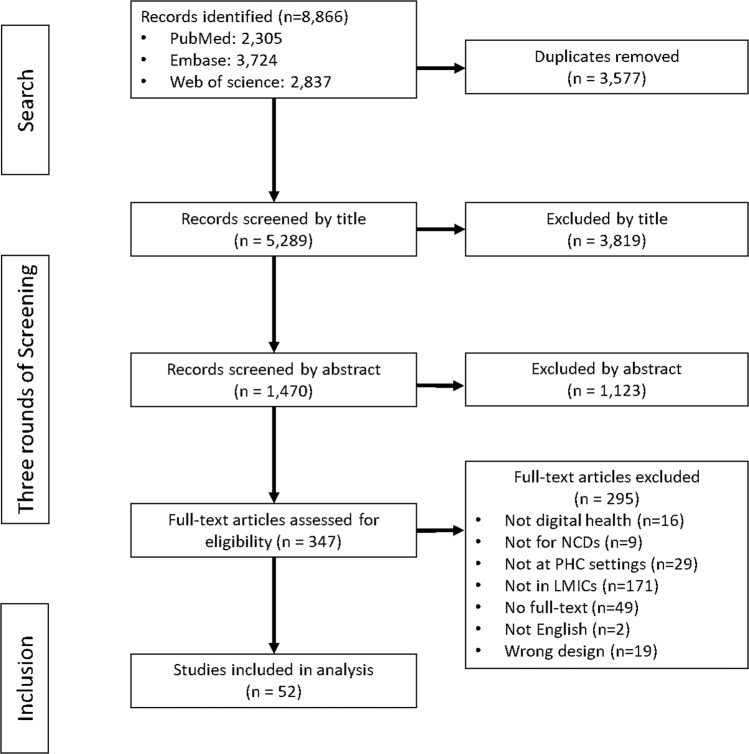
- Three rounds of screening by title, abstract, and full text were conducted by trained reviewers, with at least two independent reviewers per article; 52 papers were included.
- Data extraction covered study characteristics, digital health interventions, effectiveness by outcomes, and factors influencing uptake; analysis used WHO digital health classifications, WHO quality of care dimensions, and inductive content analysis. Trial quality was assessed with National Heart, Lung, and Blood Institute tools.
Limitations
- The paper states it focused only on academic publications in English and could not include grey literature, especially from non-English-speaking settings.
- The paper states high heterogeneity prevented rigorous quantitative synthesis such as meta-analysis, so it used narrative synthesis instead.
- Evident from the text: more than half of included trials were of suboptimal quality (n = 12), commonly due to lack of randomization (n = 11), lack of evidence on sample size sufficiency (n = 10), and absence of pre-specification for study outcomes (n = 7).
Model-written summary. Check it against the paper before relying on it.
Integrity signals
Registry
Cites
Statistics
Figures
Verification
Claims the paper makes
39 Not checked yet · 22 Own result · 8 Own interpretation · 7 Own method · 5 Partly supported · 4 No basis given · 1 Supported · accuracy not yet measured
Every source the paper cites for this claim was checked and supports it.
In the paper
“Lack of interoperability across different digital health systems is an important barrier for integration, especially with EHR, APPs, and online platforms.”
§ Digital health interventions for non-communicable disease management in primary health care in low-and middle-income countries > Results > Factors influencing digital health uptake
What the sources say
- Supportedcites [41] Lewis, J., Ray, P. & Liaw, S.-T. Recent worldwide developments in eHealth and mHealth to more effectively manage cancer and other chronic diseases–a systematic review. Yearb. Med. Inform. 25, 93–108 (2016). source
The Conclusions and Future Work section explicitly identifies interoperability and integration as barriers. The Medical Records, Mobile App Bundles, and Available Online Information for Patients sections discuss the electronic records, apps, and online information to which the claim refers; the paper does not single out one of those as the principal barrier. (LLM, conf=0.90)
plaindirect- Asserted: passes — The authors put it forward as true.
- Checkable: passes — It can be checked against evidence.
- Load-bearing: unclear — It is unclear whether the paper’s conclusions depend on it.
- Based: passes — The paper gives a reason why it holds.
- Supported
The paper states this without a source or data behind it here, so there is nothing to check it against. The quote shows it is in the paper.
In the paper
“We further identify multiple factors influencing digital health intervention uptake, including political commitment, interactivity, user-centered design, and integration with existing systems”
§ Digital health interventions for non-communicable disease management in primary health care in low-and middle-income countries > Abstract
plaincorrelational- Asserted: passes — The authors put it forward as true.
- Checkable: passes — It can be checked against evidence.
- Load-bearing: passes — The paper’s conclusions depend on it.
- Based: passes — The paper gives a reason why it holds.
A result the paper reports from its own data — it cites no other source for it, so there is none to check. The quote shows it is in the paper.
In the paper
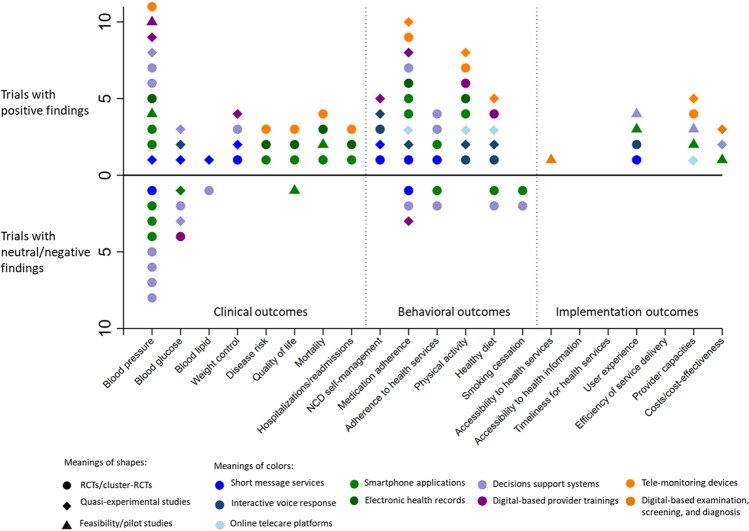
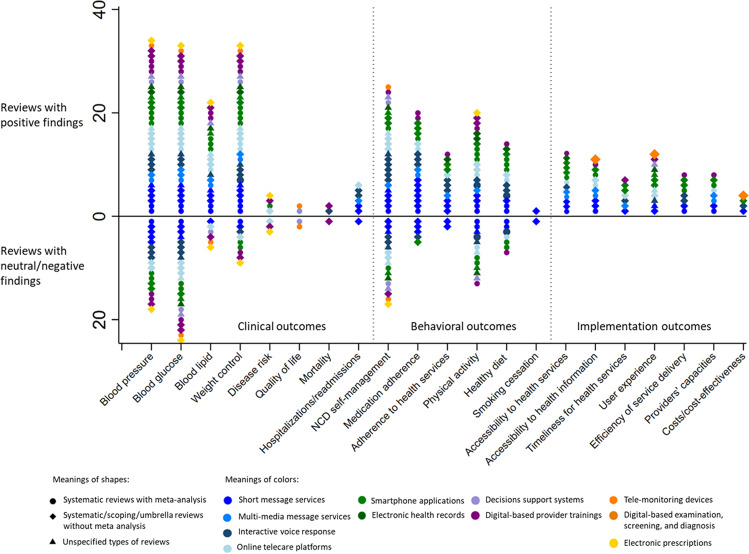
“the communication-related digital health interventions (i.e., SMS, multimedia message services, and online platforms, shown in different shades of blue) were the most widely explored in the included studies”
§ Digital health interventions for non-communicable disease management in primary health care in low-and middle-income countries > Results > Effectiveness of digital health interventions
plain- Asserted: passes — The authors put it forward as true.
- Checkable: passes — It can be checked against evidence.
- Load-bearing: unclear — It is unclear whether the paper’s conclusions depend on it.
- Based: passes — The paper gives a reason why it holds.
None of the sources cited for this claim have been checked yet.
In the paper
“The development in technologies and infrastructures provide solid ground for digital health advancement, including penetration of cell phones and the internet.”
§ Digital health interventions for non-communicable disease management in primary health care in low-and middle-income countries > Results > Factors influencing digital health uptake
What the sources say
- Not checked yetcites [23] Agarwal, R., Bills, J. E., Hecht, T. J. W. & Light, R. P. Role of home blood pressure monitoring in overcoming therapeutic inertia and improving hypertension control: a systematic review and meta-analysis. Hypertension 57, 29–38 (2011). source
- Not checked yetcites [24] Almutairi, N., Hosseinzadeh, H. & Gopaldasani, V. The effectiveness of patient activation intervention on type 2 diabetes mellitus glycemic control and self-management behaviors: a systematic review of RCTs. Prim. Care Diabetes 14, 12–20 (2020). source
- Not checked yetcites [26] Beishuizen, C. R. L. et al. Web-based interventions targeting cardiovascular risk factors in middle-aged and older people: a systematic review and meta-analysis. J. Med. Internet Res. 18, e55 (2016). source
plaindirect- Asserted: passes — The authors put it forward as true.
- Checkable: passes — It can be checked against evidence.
- Load-bearing: unclear — It is unclear whether the paper’s conclusions depend on it.
- Based: passes — The paper gives a reason why it holds.
A result the paper reports from its own data — it cites no other source for it, so there is none to check. The quote shows it is in the paper.
In the paper
“both the trials and reviews suggested that digital health interventions that aimed to strengthen providers’ capacities (i.e., decision support systems and online trainings, shown in different shades of purple) were substantially mixed in almost all the clinical and behavioral outcomes.”
§ Digital health interventions for non-communicable disease management in primary health care in low-and middle-income countries > Results > Effectiveness of digital health interventions
hedged- Asserted: passes — The authors put it forward as true.
- Checkable: passes — It can be checked against evidence.
- Load-bearing: passes — The paper’s conclusions depend on it.
- Based: passes — The paper gives a reason why it holds.
A result the paper reports from its own data — it cites no other source for it, so there is none to check. The quote shows it is in the paper.
In the paper
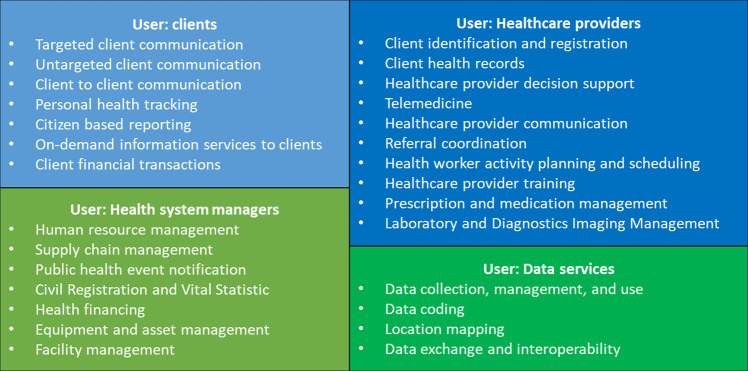
“We did not find any digital health interventions that were used by health system managers from the selected studies.”
§ Digital health interventions for non-communicable disease management in primary health care in low-and middle-income countries > Results > Digital health interventions in selected studies
plain- Asserted: passes — The authors put it forward as true.
- Checkable: passes — It can be checked against evidence.
- Load-bearing: unclear — It is unclear whether the paper’s conclusions depend on it.
- Based: passes — The paper gives a reason why it holds.
A result the paper reports from its own data — it cites no other source for it, so there is none to check. The quote shows it is in the paper.
In the paper
“We identified a total of 11 types of digital health interventions for NCD management in primary health care from the selected studies”
§ Digital health interventions for non-communicable disease management in primary health care in low-and middle-income countries > Results > Digital health interventions in selected studies
plain- Asserted: passes — The authors put it forward as true.
- Checkable: passes — It can be checked against evidence.
- Load-bearing: unclear — It is unclear whether the paper’s conclusions depend on it.
- Based: passes — The paper gives a reason why it holds.
A result the paper reports from its own data — it cites no other source for it, so there is none to check. The quote shows it is in the paper.
In the paper
“However, in the reviews (Fig. 3), the effects of these interventions were highly mixed in all types of outcomes except for implementation outcomes.”
§ Digital health interventions for non-communicable disease management in primary health care in low-and middle-income countries > Results > Effectiveness of digital health interventions
plain- Asserted: passes — The authors put it forward as true.
- Checkable: passes — It can be checked against evidence.
- Load-bearing: unclear — It is unclear whether the paper’s conclusions depend on it.
- Based: passes — The paper gives a reason why it holds.
A result the paper reports from its own data — it cites no other source for it, so there is none to check. The quote shows it is in the paper.
In the paper
“the majority of these interventions were used for communications (Table 1), including targeted client communication (n = 6), untargeted client communication (n = 3), healthcare provider communication (n = 1), and client-to- client communication (n = 1)”
§ Digital health interventions for non-communicable disease management in primary health care in low-and middle-income countries > Results > Digital health interventions in selected studies
plainn = 6- Asserted: passes — The authors put it forward as true.
- Checkable: passes — It can be checked against evidence.
- Load-bearing: unclear — It is unclear whether the paper’s conclusions depend on it.
- Based: passes — The paper gives a reason why it holds.
None of the sources cited for this claim have been checked yet.
In the paper
“Notably, several papers suggested the lack of rigorous cost-effectiveness analysis in the current digital health studies25,29,47.”
§ Digital health interventions for non-communicable disease management in primary health care in low-and middle-income countries > Results > Effectiveness of digital health interventions
What the sources say
- Not checked yetcites [25] Baron, J., McBain, H. & Newman, S. The impact of mobile monitoring technologies on glycosylated hemoglobin in diabetes: a systematic review. J. Diabetes Sci. Technol. 6, 1185–1196 (2012). source
- Not checked yetcites [29] Buhi, E. R. et al. Mobile phone-based behavioural interventions for health: a systematic review. Health Educ. J. 72, 564–583 (2013). source
- Not checked yetcites [47] Müller, A. M., Alley, S., Schoeppe, S. & Vandelanotte, C. J. I. JoBN, Activity P. The effectiveness of e- & mHealth interventions to promote physical activity and healthy diets in developing countries: a systematic review. Int. J. Behav. Nutr. Phys. Act. 13, 109 (2016). source
hedged- Asserted: passes — The authors put it forward as true.
- Checkable: passes — It can be checked against evidence.
- Load-bearing: unclear — It is unclear whether the paper’s conclusions depend on it.
- Based: passes — The paper gives a reason why it holds.
- It may state two separate claims as one. 40
- Probably not a substantial claim. 16
The cited sources support only part of this claim — read each source’s verdict below.
In the paper
“Current evidence on digital health interventions is disproportionately concerned with high-income countries and hospital settings.”
- Also stated in: § Introduction · plain
“However, most of these original studies and reviews focused on high-income countries, hospital settings, or fields other than NCDs15,16,19–22.”
§ Digital health interventions for non-communicable disease management in primary health care in low-and middle-income countries > Abstract
What the sources say
- Could not verifycites [15] Redfern, J. et al. A digital health intervention for cardiovascular disease management in primary care (CONNECT) randomized controlled trial. npj Digit. Med. 3, 117 (2020). 2020/09/10. sourceExperimental — accuracy not yet measured
The Introduction says evidence on the effectiveness of EHR-linked interventions for CVD risk control is limited, and the Discussion notes that this trial took place in urban Australian primary care practices. Neither section assesses whether digital-health research is disproportionately concentrated in high-income countries or hospital settings. Searches for those geographic and setting comparisons found no supporting passage in our copy. (LLM, conf=0.75)
- Not checked yetcites [16] Chow, C. K. et al. Effect of lifestyle-focused text messaging on risk factor modification in patients with coronary heart disease: a randomized clinical trial. J. Am. Med. Assoc. 314, 1255–1263 (2015). source
- Partly supportedcites [19] McLean, G. et al. Digital interventions to promote self-management in adults with hypertension systematic review and meta-analysis. J. Hypertens. 34, 600 (2016). sourceExperimental — accuracy not yet measured
The Results (Description of included studies; page unavailable) list seven hypertension-intervention studies, most conducted in countries such as the United States, Canada and Finland. But the Results (Description of interventions, Setting; page unavailable) say five studies were in healthcare settings spanning hospitals, community healthcare and outpatient clinics—not predominantly hospital settings. The review also covers hypertension self-management interventions, rather than digital health interventions generally. (LLM, conf=0.86)
- Could not verifycites [20] Khoong, E. C. et al. Mobile health strategies for blood pressure self-management in urban populations with digital barriers: systematic review and meta-analyses. npj Digit. Med. 4, 1–12 (2021). sourceExperimental — accuracy not yet measured
The Methods (Eligibility criteria; page unavailable) restrict this review to urban populations in high-income countries, but that restriction does not establish where digital-health research is disproportionately concentrated. The Introduction and Discussion address underrepresentation of older, lower-education, and minority populations; neither they nor the passages retrieved about study settings compare high- and lower-income countries or establish a concentration in hospital settings. (LLM, conf=0.76)
- Not checked yetcites [21] Xiong, S. et al. Effectiveness of mHealth interventions in improving medication adherence among people with hypertension: a systematic review. Curr. Hypertens. Rep. 20, 1–15 (2018). source
- Could not verifycites [22] Mohr, D. C., Lyon, A. R., Lattie, E. G., Reddy, M. & Schueller, S. M. Accelerating digital mental health research from early design and creation to successful implementation and sustainment. J. Med. Internet Res. 19, e7725 (2017). sourceExperimental — accuracy not yet measured
The Background discusses implementation examples in England and the United States, including primary care, but does not assess where digital health intervention evidence is concentrated. Searches for high-income countries and hospital settings found no passage establishing the claimed geographic or setting-based imbalance. (LLM, conf=0.74)
plaincorrelational- Asserted: passes — The authors put it forward as true.
- Checkable: passes — It can be checked against evidence.
- Load-bearing: passes — The paper’s conclusions depend on it.
- Based: passes — The paper gives a reason why it holds.
It may state two separate claims as one.
- Also stated in: § Introduction · plain
The cited sources support only part of this claim — read each source’s verdict below.
In the paper
“This is because NCDs—such as hypertension, diabetes, and cardiovascular diseases—are characterized by long disease durations and a continuous need to anticipate and mitigate risk factors through lifestyle modifications8–11, which is better addressed by primary health care than higher-level health facilities.”
§ Digital health interventions for non-communicable disease management in primary health care in low-and middle-income countries > Introduction
What the sources say
- Supportedcites [8] Mahipala, P., Dorji, G., Tisocki, K. & Rani, M. A critical review of addressing cardiovascular and other non-communicable diseases through a primary health care approach in the South-East Asia Region. Cardiovasc. Diagn. Ther. 9, 150 (2019). source
The Introduction describes NCD care as lifelong and says primary health care offers wider opportunities for prevention and control. “Contextualization of frontline health services for NCDs” identifies risk-factor screening and ongoing care as primary-care functions, while “Building community linkages for NCD care” describes efforts to address modifiable risk factors. The paper advocates strengthening primary care for these needs and reserving referral to higher centres for severe or complex cases. (LLM, conf=0.85)
- Supportedcites [9] Demaio, A. R., Nielsen, K. K., Tersbøl, B. P., Kallestrup, P. & Meyrowitsch, D. W. Primary health care: a strategic framework for the prevention and control of chronic non-communicable disease. Glob. Health Action 7, 24504 (2014). source
The section on integrated care says NCD risk factors accumulate throughout the life course and identifies primary care as the most appropriate setting for prevention. The Conclusion’s Table 2 describes NCDs as chronic and largely preventable through lifestyle change, with special emphasis on primary care and community-based programs. The paper also calls for care integrated across levels, rather than excluding higher-level facilities. (LLM, conf=0.88)
- Supportedcites [10] Varghese, C. et al. Better health and wellbeing for billion more people: integrating non-communicable diseases in primary care. BMJ 364, l327 (2019). source
The ‘Role of primary care in controlling non-communicable diseases’ section describes NCD care as requiring continuity and prevention over time. The ‘Prevention: modify risk factors and promote health’ section lists lifestyle measures, while ‘Next steps’ argues against treating hospitals and subspecialised facilities as the best setting for NCD care. Page numbers are not available in our copy. (LLM, conf=0.87)
- Partly supportedcites [11] Ndubuisi, N. E. Noncommunicable diseases prevention in low- and middle-income countries: an overview of health in all policies (HiAP). INQUIRY: J. Health Care Organ. Provis. Financing 58, 0046958020927885 (2021). sourceExperimental — accuracy not yet measured
The Introduction says NCD prevention should target risk factors and promote healthy lifestyles, and calls prevention at primary health care the best buy in low- and middle-income countries. The Problem section describes the costs of long-term NCD treatment. The paper does not specifically describe a continuous need for lifestyle modification or compare primary care with higher-level health facilities; it also stresses environmental and policy factors beyond individual lifestyle. (LLM, conf=0.84)
plaindirect- Asserted: passes — The authors put it forward as true.
- Checkable: passes — It can be checked against evidence.
- Load-bearing: passes — The paper’s conclusions depend on it.
- Based: passes — The paper gives a reason why it holds.
It may state two separate claims as one.
- Supported
The cited sources support only part of this claim — read each source’s verdict below.
In the paper
“The literature, however, has shown that substantial gaps exist in most primary healthcare systems, particularly in low-and middle-income countries (LMICs), including limited human resources and capacity, shortages in medicines and equipment, and suboptimal quality of care11–13.”
§ Digital health interventions for non-communicable disease management in primary health care in low-and middle-income countries > Introduction
What the sources say
- Partly supportedcites [11] Ndubuisi, N. E. Noncommunicable diseases prevention in low- and middle-income countries: an overview of health in all policies (HiAP). INQUIRY: J. Health Care Organ. Provis. Financing 58, 0046958020927885 (2021). sourceExperimental — accuracy not yet measured
The Introduction describes health systems in LMICs as already stretched while managing infectious diseases and a rising NCD burden. It does not identify limited human resources, medicine or equipment shortages, or suboptimal quality of care, and it does not establish that these gaps exist in most primary healthcare systems. No page number is available in our copy. (LLM, conf=0.86)
- Partly supportedcites [12] Bitton, A. et al. Primary healthcare system performance in low-income and middle-income countries: a scoping review of the evidence from 2010 to 2017. BMJ Glob. Health 4, e001551 (2019). sourceExperimental — accuracy not yet measured
The Results (Findings; page not available) document challenges in PHC staffing and gaps in drugs and supplies across many countries. The Discussion (page not available) describes poor provider competence and safety across most LMIC PHC systems. The copy does not establish equipment shortages specifically or extend these findings to most PHC systems worldwide. (LLM, conf=0.84)
- Not checked yetcites [13] Yan, L. L. et al. Strengthening primary health care for the prevention and management of cardiometabolic disease in low-and middle-income countries. New Delhi: World Health Organization Regional Office for South-East Asia (2019).
plain- Asserted: passes — The authors put it forward as true.
- Checkable: passes — It can be checked against evidence.
- Load-bearing: passes — The paper’s conclusions depend on it.
- Based: passes — The paper gives a reason why it holds.
It may state two separate claims as one.
- Partly supported
The cited sources support only part of this claim — read each source’s verdict below.
In the paper
“Digital health designs that were integrated into existing healthcare model was a facilitator for successful uptake, and unintegrated digital health interventions that impose additional workload for primary healthcare providers is a barrier.”
§ Digital health interventions for non-communicable disease management in primary health care in low-and middle-income countries > Results > Factors influencing digital health uptake
What the sources say
- Not checked yetcites [24] Almutairi, N., Hosseinzadeh, H. & Gopaldasani, V. The effectiveness of patient activation intervention on type 2 diabetes mellitus glycemic control and self-management behaviors: a systematic review of RCTs. Prim. Care Diabetes 14, 12–20 (2020). source
- Partly supportedcites [70] Silveira, D. V. et al. Development and evaluation of a mobile decision support system for hypertension management in the primary care setting in Brazil: mixed-methods field study on usability, feasibility, and utility. JMIR mHealth uHealth 7, e9869 (2019). sourceExperimental — accuracy not yet measured
The Discussion (Principal Findings; page not provided) identifies duplicate data entry and excessive workload as barriers to TeleHAS use. It says integration with records and clinical workflow should stimulate use and may improve usability, but does not establish that integration facilitated successful uptake. (LLM, conf=0.84)
- Partly supportedcites [71] Tian, M. et al. A cluster-randomized, controlled trial of a simplified multifaceted management program for individuals at high cardiovascular risk (SimCard trial) in rural Tibet, China, and Haryana, India. Circulation 132, 815–824 (2015). sourceExperimental — accuracy not yet measured
Methods (Intervention; page not provided) says the digital tool was designed for easy use by community health workers to support implementation, and Discussion (The role of community healthcare workers; page not provided) describes adapting the program to local contexts. But Discussion (The use of mobile health technology; page not provided) proposes linking the tool to local health records as a future improvement. The paper does not establish that integration into an existing healthcare model facilitated uptake or that unintegrated tools added workload and posed a barrier. (LLM, conf=0.85)
plaindirect- Asserted: passes — The authors put it forward as true.
- Checkable: passes — It can be checked against evidence.
- Load-bearing: passes — The paper’s conclusions depend on it.
- Based: passes — The paper gives a reason why it holds.
It may state two separate claims as one.
The cited sources support only part of this claim — read each source’s verdict below.
In the paper
“Incorporating behavioral theories in digital health design is a facilitator, and the absence of that could be a barrier.”
§ Digital health interventions for non-communicable disease management in primary health care in low-and middle-income countries > Results > Factors influencing digital health uptake
What the sources say
- Not checked yetcites [29] Buhi, E. R. et al. Mobile phone-based behavioural interventions for health: a systematic review. Health Educ. J. 72, 564–583 (2013). source
- Supportedcites [39] Kebede, M. M., Liedtke, T. P., Möllers, T. & Pischke, C. R. Characterizing active ingredients of eHealth interventions targeting persons with poorly controlled type 2 diabetes mellitus using the behavior change techniques taxonomy: scoping review. J. Med. Internet Res. 19, e348 (2017). source
The Discussion (Principal Findings; page unavailable) says theories can enhance uptake of desired behaviors and describes their underutilization in eHealth interventions as a major issue. This supports the claim that incorporating behavioral theories can help, while their absence may hinder an intervention; the paper also notes that evidence on effectiveness is mixed. (LLM, conf=0.86)
- Partly supportedcites [52] Watkins, J. A. et al. mHealth text and voice communication for monitoring people with chronic diseases in low-resource settings: a realist review. BMJ Glob. Health 3, e000543 (2018). sourceExperimental — accuracy not yet measured
The Discussion’s policy and practice implications section (page unavailable) says behavioural theory can guide the design of mHealth interventions aimed at changing health behaviours, supporting the facilitator idea. It does not say that omitting theory is a barrier, and its discussion is narrower than digital health design generally. (LLM, conf=0.86)
hedgeddirect- Asserted: passes — The authors put it forward as true.
- Checkable: passes — It can be checked against evidence.
- Load-bearing: unclear — It is unclear whether the paper’s conclusions depend on it.
- Based: passes — The paper gives a reason why it holds.
It may state two separate claims as one.
A result the paper reports from its own data — it cites no other source for it, so there is none to check. The quote shows it is in the paper.
In the paper
“We found three major types of outcomes from all included studies: (1) eight types of clinical outcomes for individuals including control for blood pressure, blood glucose, hospitalization, and mortality; (2) six types of behavioral outcomes for individuals, including self-management activities such as medication adherence, and health behaviors such as diet and physical activity; and (3) seven ty”
§ Digital health interventions for non-communicable disease management in primary health care in low-and middle-income countries > Results > Effectiveness of digital health interventions
plain- Asserted: passes — The authors put it forward as true.
- Checkable: passes — It can be checked against evidence.
- Load-bearing: unclear — It is unclear whether the paper’s conclusions depend on it.
- Based: passes — The paper gives a reason why it holds.
It may state two separate claims as one.
A result the paper reports from its own data — it cites no other source for it, so there is none to check. The quote shows it is in the paper.
In the paper
“Of 8866 results, 52 met eligibility criteria (31 reviews, 21 trials).”
- Also stated in: § Search results · plain
“A total of 52 papers were included for final analysis.”
§ Digital health interventions for non-communicable disease management in primary health care in low-and middle-income countries > Abstract
plain- Asserted: passes — The authors put it forward as true.
- Checkable: passes — It can be checked against evidence.
- Load-bearing: passes — The paper’s conclusions depend on it.
- Based: passes — The paper gives a reason why it holds.
It may state two separate claims as one.
- Also stated in: § Search results · plain
A result the paper reports from its own data — it cites no other source for it, so there is none to check. The quote shows it is in the paper.
In the paper
“For quality assessment, more than half of the included trials were of suboptimal quality (n = 12), with eight of them of good quality and one with fair quality.”
§ Digital health interventions for non-communicable disease management in primary health care in low-and middle-income countries > Results > Study characteristics
plainn = 12- Asserted: passes — The authors put it forward as true.
- Checkable: passes — It can be checked against evidence.
- Load-bearing: unclear — It is unclear whether the paper’s conclusions depend on it.
- Based: passes — The paper gives a reason why it holds.
It may state two separate claims as one.
A result the paper reports from its own data — it cites no other source for it, so there is none to check. The quote shows it is in the paper.
In the paper
“the effects of digital health interventions on individual behavioral outcomes were more positively inclined, where many studies showed a significantly positive impact on disease self-management activities and healthy lifestyles”
§ Digital health interventions for non-communicable disease management in primary health care in low-and middle-income countries > Results > Effectiveness of digital health interventions
plaindirect- Asserted: passes — The authors put it forward as true.
- Checkable: passes — It can be checked against evidence.
- Load-bearing: passes — The paper’s conclusions depend on it.
- Based: passes — The paper gives a reason why it holds.
It may state two separate claims as one.
A result the paper reports from its own data — it cites no other source for it, so there is none to check. The quote shows it is in the paper.
In the paper
“the digital-based clinical practices (i.e., screening, diagnosis, prescribing, and monitoring, shown in different shades of orange) were found to be consistently effective in all types of outcomes in the trials, but in the reviews their effectiveness in clinical outcomes were mixed.”
§ Digital health interventions for non-communicable disease management in primary health care in low-and middle-income countries > Results > Effectiveness of digital health interventions
plaindirect- Asserted: passes — The authors put it forward as true.
- Checkable: passes — It can be checked against evidence.
- Load-bearing: passes — The paper’s conclusions depend on it.
- Based: passes — The paper gives a reason why it holds.
It may state two separate claims as one.
The paper states this without a source or data behind it here, so there is nothing to check it against. The quote shows it is in the paper.
In the paper
“The most common factors that compromised the studies’ quality were the lack of randomization (n = 11), lack of evidence on sample size sufficiency (n = 10) and absence of pre-specification for study outcomes (n = 7)”
§ Digital health interventions for non-communicable disease management in primary health care in low-and middle-income countries > Results > Study characteristics
plainn = 11- Asserted: passes — The authors put it forward as true.
- Checkable: passes — It can be checked against evidence.
- Load-bearing: unclear — It is unclear whether the paper’s conclusions depend on it.
- Based: passes — The paper gives a reason why it holds.
It may state two separate claims as one.
A result the paper reports from its own data — it cites no other source for it, so there is none to check. The quote shows it is in the paper.
In the paper
“Among the trials (Fig. 2), several quasi-experimental studies documented the positive effects from these interventions in the control of blood pressure, glucose, lipids, and weight, and many RCTs also found their effectiveness in improving people’s adherence to medication and health services.”
§ Digital health interventions for non-communicable disease management in primary health care in low-and middle-income countries > Results > Effectiveness of digital health interventions
plaindirect- Asserted: passes — The authors put it forward as true.
- Checkable: passes — It can be checked against evidence.
- Load-bearing: passes — The paper’s conclusions depend on it.
- Based: passes — The paper gives a reason why it holds.
It may state two separate claims as one.
A result the paper reports from its own data — it cites no other source for it, so there is none to check. The quote shows it is in the paper.
In the paper
“we identified multiple factors influencing the uptake of digital health interventions for NCD management in primary health care of LMICs (Table 2). Based on the nature of different stakeholders, we further classified these factors into four groups: (1) factors regarding policymakers (n = 2), (2) factors regarding technological industry (n = 4), (3) factors regarding digital health designers (n = 7”
§ Digital health interventions for non-communicable disease management in primary health care in low-and middle-income countries > Results > Factors influencing digital health uptake
plain- Asserted: passes — The authors put it forward as true.
- Checkable: passes — It can be checked against evidence.
- Load-bearing: unclear — It is unclear whether the paper’s conclusions depend on it.
- Based: passes — The paper gives a reason why it holds.
It may state two separate claims as one.
A result the paper reports from its own data — it cites no other source for it, so there is none to check. The quote shows it is in the paper.
In the paper
“most of these digital health interventions focused on improving health service efficiency (n = 9) and accessibility (n = 9), followed by effectiveness (n = 9), while acceptability (n = 6), equity (n = 5), and safety (n = 4) issues were relatively less addressed”
§ Digital health interventions for non-communicable disease management in primary health care in low-and middle-income countries > Results > Digital health interventions in selected studies
plainn = 9- Asserted: passes — The authors put it forward as true.
- Checkable: passes — It can be checked against evidence.
- Load-bearing: unclear — It is unclear whether the paper’s conclusions depend on it.
- Based: passes — The paper gives a reason why it holds.
It may state two separate claims as one.
A result the paper reports from its own data — it cites no other source for it, so there is none to check. The quote shows it is in the paper.
In the paper
“the findings for clinical outcomes, such as blood pressure and blood glucose control, were highly mixed, where both positive and negative/neutral results were common in both trials and reviews”
§ Digital health interventions for non-communicable disease management in primary health care in low-and middle-income countries > Results > Effectiveness of digital health interventions
plain- Asserted: passes — The authors put it forward as true.
- Checkable: passes — It can be checked against evidence.
- Load-bearing: passes — The paper’s conclusions depend on it.
- Based: passes — The paper gives a reason why it holds.
It may state two separate claims as one.
A result the paper reports from its own data — it cites no other source for it, so there is none to check. The quote shows it is in the paper.
In the paper
“Compared with the WHO classification, there were major under-use of digital health interventions in these studies. For example, there was no intervention in “citizen-based reporting”, “client financial transactions”, “referral coordination”, and “health worker activity planning and scheduling”, and there were no digital health interventions for healthcare managers, such as “human resource manag”
§ Digital health interventions for non-communicable disease management in primary health care in low-and middle-income countries > Results > Digital health interventions in selected studies
plain- Asserted: passes — The authors put it forward as true.
- Checkable: passes — It can be checked against evidence.
- Load-bearing: unclear — It is unclear whether the paper’s conclusions depend on it.
- Based: passes — The paper gives a reason why it holds.
It may state two separate claims as one.
A result the paper reports from its own data — it cites no other source for it, so there is none to check. The quote shows it is in the paper.
In the paper
“Eight of the identified digital health interventions were used by primary healthcare providers, such as EHR, decisions support systems, and telemonitoring devices. Five interventions were used by healthcare clients (i.e. people with NCDs), including short messaging services (SMS), multimedia message services, and interactive voice responses or phone calls. Two were used by both healthcare provider”
§ Digital health interventions for non-communicable disease management in primary health care in low-and middle-income countries > Results > Digital health interventions in selected studies
plain- Asserted: passes — The authors put it forward as true.
- Checkable: passes — It can be checked against evidence.
- Load-bearing: unclear — It is unclear whether the paper’s conclusions depend on it.
- Based: passes — The paper gives a reason why it holds.
It may state two separate claims as one.
A result the paper reports from its own data — it cites no other source for it, so there is none to check. The quote shows it is in the paper.
In the paper
“for health service implementation outcomes, results were consistently positive among both trial reviews, where digital health interventions improved the accessibility and user experience in health service delivery, improved primary healthcare providers’ capacities, and/or with better cost-effectiveness”
§ Digital health interventions for non-communicable disease management in primary health care in low-and middle-income countries > Results > Effectiveness of digital health interventions
plaindirect- Asserted: passes — The authors put it forward as true.
- Checkable: passes — It can be checked against evidence.
- Load-bearing: passes — The paper’s conclusions depend on it.
- Based: passes — The paper gives a reason why it holds.
It may state two separate claims as one.
None of the sources cited for this claim have been checked yet.
In the paper
“Adequate high-quality personnel training for primary healthcare providers is a facilitator for digital health uptake, while lack of that could be a barrier.”
§ Digital health interventions for non-communicable disease management in primary health care in low-and middle-income countries > Results > Factors influencing digital health uptake
What the sources say
- Not checked yetcites [40] Kim, B. Y. & Lee, J. Smart devices for older adults managing chronic disease: a scoping review. JMIR mHealth uHealth 5, e69 (2017). source
- Not checked yetcites [53] Zapata, B. C., Fernández-Alemán, J. L., Idri, A. & Toval, A. Empirical studies on usability of mHealth apps: a systematic literature review. J. Med. Syst. 39, 1 (2015). source
- Not checked yetcites [55] Beratarrechea, A. et al. Using mHealth tools to improve access and coverage of people with public health insurance and high cardiovascular disease risk in Argentina: a pragmatic cluster randomized trial. J. Am. Heart Assoc. 8, e011799 (2019). source
hedgeddirect- Asserted: passes — The authors put it forward as true.
- Checkable: passes — It can be checked against evidence.
- Load-bearing: unclear — It is unclear whether the paper’s conclusions depend on it.
- Based: passes — The paper gives a reason why it holds.
It may state two separate claims as one.
None of the sources cited for this claim have been checked yet.
In the paper
“Incorporating users’ feedback on acceptability and satisfaction is a facilitator, and lack of that could be a barrier and is currently under-addressed.”
§ Digital health interventions for non-communicable disease management in primary health care in low-and middle-income countries > Results > Factors influencing digital health uptake
What the sources say
- Not checked yetcites [33] Dounavi, K. & Tsoumani, O. Mobile health applications in weight management: a systematic literature review. Am. J. Prev. Med. 56, 894–903 (2019). source
- Not checked yetcites [43] Mair, F. S. et al. BotWHO. Factors that promote or inhibit the implementation of e-health systems: an explanatory systematic review. Bull. World Health Organ 90, 357–364 (2012). source
hedgeddirect- Asserted: passes — The authors put it forward as true.
- Checkable: passes — It can be checked against evidence.
- Load-bearing: unclear — It is unclear whether the paper’s conclusions depend on it.
- Based: passes — The paper gives a reason why it holds.
It may state two separate claims as one.
None of the sources cited for this claim have been checked yet.
In the paper
“Designing incentives/motivations for primary healthcare providers and patients to use digital health facilitates the uptake, while lack of that could be a barrier.”
§ Digital health interventions for non-communicable disease management in primary health care in low-and middle-income countries > Results > Factors influencing digital health uptake
What the sources say
- Not checked yetcites [34] El-Gayar, O., Timsina, P., Nawar, N. & Eid, W. A systematic review of IT for diabetes self-management: are we there yet? Int. J. Med. Inform. 82, 637–652 (2013). source
- Not checked yetcites [45] McNatt, Z. Z. Addressing noncommunicable diseases among urban refugees in the Middle East and North Africa-a scoping review. Confl. Health 14, 1–14 (2020). source
- Not checked yetcites [51] Wang, Y., Xue, H., Huang, Y., Huang, L. & Zhang, D. A systematic review of application and effectiveness of mHealth interventions for obesity and diabetes treatment and self-management. Adv. Nutr. 8, 449–462 (2017). source
hedgeddirect- Asserted: passes — The authors put it forward as true.
- Checkable: passes — It can be checked against evidence.
- Load-bearing: unclear — It is unclear whether the paper’s conclusions depend on it.
- Based: passes — The paper gives a reason why it holds.
It may state two separate claims as one.
None of the sources cited for this claim have been checked yet.
In the paper
“Tailored design and personalized contents for patients is a facilitator, and one-for-all unified contents and designs could be a barrier.”
§ Digital health interventions for non-communicable disease management in primary health care in low-and middle-income countries > Results > Factors influencing digital health uptake
What the sources say
- Not checked yetcites [34] El-Gayar, O., Timsina, P., Nawar, N. & Eid, W. A systematic review of IT for diabetes self-management: are we there yet? Int. J. Med. Inform. 82, 637–652 (2013). source
- Not checked yetcites [39] Kebede, M. M., Liedtke, T. P., Möllers, T. & Pischke, C. R. Characterizing active ingredients of eHealth interventions targeting persons with poorly controlled type 2 diabetes mellitus using the behavior change techniques taxonomy: scoping review. J. Med. Internet Res. 19, e348 (2017). source
- Not checked yetcites [50] Pai, R. R. & Alathur, S. Bibliometric analysis and methodological review of mobile health services and applications in India. Int. J. Med. Inform. 145, 104330 (2021). source
hedgeddirect- Asserted: passes — The authors put it forward as true.
- Checkable: passes — It can be checked against evidence.
- Load-bearing: unclear — It is unclear whether the paper’s conclusions depend on it.
- Based: passes — The paper gives a reason why it holds.
It may state two separate claims as one.
None of the sources cited for this claim have been checked yet.
In the paper
“Digital health tools that enable two-way human interactions are better accepted while replacing human communications with automatic responses is less favored.”
§ Digital health interventions for non-communicable disease management in primary health care in low-and middle-income countries > Results > Factors influencing digital health uptake
What the sources say
- Not checked yetcites [26] Beishuizen, C. R. L. et al. Web-based interventions targeting cardiovascular risk factors in middle-aged and older people: a systematic review and meta-analysis. J. Med. Internet Res. 18, e55 (2016). source
- Not checked yetcites [32] de Jongh, T., Gurol-Urganci, I., Vodopivec-Jamsek, V., Car, J. & Atun, R. Mobile phone messaging for facilitating self-management of long-term illnesses. Cochrane Database Syst. Rev. 12, Cd007459 (2012).
- Not checked yetcites [34] El-Gayar, O., Timsina, P., Nawar, N. & Eid, W. A systematic review of IT for diabetes self-management: are we there yet? Int. J. Med. Inform. 82, 637–652 (2013). source
plaincorrelational- Asserted: passes — The authors put it forward as true.
- Checkable: passes — It can be checked against evidence.
- Load-bearing: unclear — It is unclear whether the paper’s conclusions depend on it.
- Based: passes — The paper gives a reason why it holds.
It may state two separate claims as one.
None of the sources cited for this claim have been checked yet.
In the paper
“Easily navigable interface is a facilitator, and poor/complicated interface is a barrier for the uptake of digital health tools.”
§ Digital health interventions for non-communicable disease management in primary health care in low-and middle-income countries > Results > Factors influencing digital health uptake
What the sources say
- Not checked yetcites [34] El-Gayar, O., Timsina, P., Nawar, N. & Eid, W. A systematic review of IT for diabetes self-management: are we there yet? Int. J. Med. Inform. 82, 637–652 (2013). source
- Not checked yetcites [40] Kim, B. Y. & Lee, J. Smart devices for older adults managing chronic disease: a scoping review. JMIR mHealth uHealth 5, e69 (2017). source
- Not checked yetcites [47] Müller, A. M., Alley, S., Schoeppe, S. & Vandelanotte, C. J. I. JoBN, Activity P. The effectiveness of e- & mHealth interventions to promote physical activity and healthy diets in developing countries: a systematic review. Int. J. Behav. Nutr. Phys. Act. 13, 109 (2016). source
plaindirect- Asserted: passes — The authors put it forward as true.
- Checkable: passes — It can be checked against evidence.
- Load-bearing: unclear — It is unclear whether the paper’s conclusions depend on it.
- Based: passes — The paper gives a reason why it holds.
It may state two separate claims as one.
The paper states this without a source or data behind it here, so there is nothing to check it against. The quote shows it is in the paper.
In the paper
“However, current digital health interventions in LMICs relied on importing existing technologies from other settings to places they were not created for, sometimes in one-off research projects.”
§ Digital health interventions for non-communicable disease management in primary health care in low-and middle-income countries > Discussion
plain- Asserted: passes — The authors put it forward as true.
- Checkable: passes — It can be checked against evidence.
- Load-bearing: passes — The paper’s conclusions depend on it.
- Based: passes — The paper gives a reason why it holds.
It may state two separate claims as one.
None of the sources cited for this claim have been checked yet.
In the paper
“For individuals’ behavioral outcomes, although still mixed, we consistently observed positively inclined results, especially when substantiated by behavioral science theories26,82.”
§ Digital health interventions for non-communicable disease management in primary health care in low-and middle-income countries > Discussion
What the sources say
- Not checked yetcites [26] Beishuizen, C. R. L. et al. Web-based interventions targeting cardiovascular risk factors in middle-aged and older people: a systematic review and meta-analysis. J. Med. Internet Res. 18, e55 (2016). source
- Not checked yetcites [82] Ajay, V. S. et al. Development of a smartphone‐enabled hypertension and diabetes mellitus management package to facilitate evidence‐based care delivery in primary healthcare facilities in India: the mPower Heart Project. J. Am. Heart Assoc. 5, e004343 (2016). source
plaincorrelational- Asserted: passes — The authors put it forward as true.
- Checkable: passes — It can be checked against evidence.
- Load-bearing: passes — The paper’s conclusions depend on it.
- Based: passes — The paper gives a reason why it holds.
It may state two separate claims as one.
None of the sources cited for this claim have been checked yet.
In the paper
“some studies attributed the highly mixed and neutral results to the study design limitations, such as small sample size and short follow-up durations40,52.”
§ Digital health interventions for non-communicable disease management in primary health care in low-and middle-income countries > Discussion
What the sources say
- Not checked yetcites [40] Kim, B. Y. & Lee, J. Smart devices for older adults managing chronic disease: a scoping review. JMIR mHealth uHealth 5, e69 (2017). source
- Not checked yetcites [52] Watkins, J. A. et al. mHealth text and voice communication for monitoring people with chronic diseases in low-resource settings: a realist review. BMJ Glob. Health 3, e000543 (2018). source
plaindirect- Asserted: passes — The authors put it forward as true.
- Checkable: passes — It can be checked against evidence.
- Load-bearing: fails — The paper’s conclusions may not depend on it.
- Based: passes — The paper gives a reason why it holds.
Probably not a substantial claim. The paper’s conclusions may not depend on it.
None of the sources cited for this claim have been checked yet.
In the paper
“This included improved user experience, timeliness of and accessibility to health care and information, consistent with studies in other settings20,85,86.”
§ Digital health interventions for non-communicable disease management in primary health care in low-and middle-income countries > Discussion
What the sources say
- Not checked yetcites [20] Khoong, E. C. et al. Mobile health strategies for blood pressure self-management in urban populations with digital barriers: systematic review and meta-analyses. npj Digit. Med. 4, 1–12 (2021). source
- Not checked yetcites [85] Khoong, E. C. et al. Patient interest in and barriers to telemedicine video visits in a multilingual urban safety-net system. J. Am. Med. Inform. Assoc. 28, 349–353 (2021). source
- Not checked yetcites [86] Khoong, E. C. et al. Health information seeking behaviors and preferences of a diverse multi-lingual cohort. Med. Care 57, S176 (2019). source
plaindirect- Asserted: passes — The authors put it forward as true.
- Checkable: passes — It can be checked against evidence.
- Load-bearing: passes — The paper’s conclusions depend on it.
- Based: passes — The paper gives a reason why it holds.
It may state two separate claims as one.
None of the sources cited for this claim have been checked yet.
In the paper
“The mobilization of local communities with local capacity improvements is a facilitator to enhance the use of digital health tools, and lack of those could be a barrier.”
§ Digital health interventions for non-communicable disease management in primary health care in low-and middle-income countries > Results > Factors influencing digital health uptake
What the sources say
- Not checked yetcites [43] Mair, F. S. et al. BotWHO. Factors that promote or inhibit the implementation of e-health systems: an explanatory systematic review. Bull. World Health Organ 90, 357–364 (2012). source
- Not checked yetcites [59] dos Santos, M. V. R., de Oliveira, D. C. & Novaes, M. D. A telehealth strategy for increasing adherence in the treatment of hypertension in primary care. Telemed. E-Health 19, 241–247 (2013). source
- Not checked yetcites [70] Silveira, D. V. et al. Development and evaluation of a mobile decision support system for hypertension management in the primary care setting in Brazil: mixed-methods field study on usability, feasibility, and utility. JMIR mHealth uHealth 7, e9869 (2019). source
hedgeddirect- Asserted: passes — The authors put it forward as true.
- Checkable: passes — It can be checked against evidence.
- Load-bearing: unclear — It is unclear whether the paper’s conclusions depend on it.
- Based: passes — The paper gives a reason why it holds.
It may state two separate claims as one.
None of the sources cited for this claim have been checked yet.
In the paper
“the included studies still presented high heterogeneity in the outcomes of using digital health, which was also found in other systematic reviews19–21.”
§ Digital health interventions for non-communicable disease management in primary health care in low-and middle-income countries > Discussion
What the sources say
- Not checked yetcites [19] McLean, G. et al. Digital interventions to promote self-management in adults with hypertension systematic review and meta-analysis. J. Hypertens. 34, 600 (2016). source
- Not checked yetcites [20] Khoong, E. C. et al. Mobile health strategies for blood pressure self-management in urban populations with digital barriers: systematic review and meta-analyses. npj Digit. Med. 4, 1–12 (2021). source
- Not checked yetcites [21] Xiong, S. et al. Effectiveness of mHealth interventions in improving medication adherence among people with hypertension: a systematic review. Curr. Hypertens. Rep. 20, 1–15 (2018). source
plain- Asserted: passes — The authors put it forward as true.
- Checkable: passes — It can be checked against evidence.
- Load-bearing: passes — The paper’s conclusions depend on it.
- Based: passes — The paper gives a reason why it holds.
It may state two separate claims as one.
In the paper
“The World Health Organization (WHO) further classified digital health interventions according to four types of users, including 28 categories and 87 sub-categories4.”
§ Digital health interventions for non-communicable disease management in primary health care in low-and middle-income countries > Introduction
What the sources say
- Not checked yetcites [4] World Health Organization. Classification of Digital Health Interventions v1. 0: A Shared Language to Describe the Uses of Digital Technology for Health (World Health Organization, 2018).
plain- Asserted: passes — The authors put it forward as true.
- Checkable: passes — It can be checked against evidence.
- Load-bearing: fails — The paper’s conclusions may not depend on it.
- Based: passes — The paper gives a reason why it holds.
Probably not a substantial claim. The paper’s conclusions may not depend on it.
A conclusion the paper draws from its own results — it cites no other source for it, so there is none to check. The quote shows it is in the paper.
In the paper
“suggesting critical under-use and lagging innovation”
§ Digital health interventions for non-communicable disease management in primary health care in low-and middle-income countries > Abstract
hedgeddirect- Asserted: passes — The authors put it forward as true.
- Checkable: passes — It can be checked against evidence.
- Load-bearing: passes — The paper’s conclusions depend on it.
- Based: passes — The paper gives a reason why it holds.
It may state two separate claims as one.
None of the sources cited for this claim have been checked yet.
In the paper
“However, most of these original studies and reviews focused on high-income countries, hospital settings, or fields other than NCDs15,16,19–22.”
§ Digital health interventions for non-communicable disease management in primary health care in low-and middle-income countries > Introduction
What the sources say
- Not checked yetcites [15] Redfern, J. et al. A digital health intervention for cardiovascular disease management in primary care (CONNECT) randomized controlled trial. npj Digit. Med. 3, 117 (2020). 2020/09/10. source
- Not checked yetcites [16] Chow, C. K. et al. Effect of lifestyle-focused text messaging on risk factor modification in patients with coronary heart disease: a randomized clinical trial. J. Am. Med. Assoc. 314, 1255–1263 (2015). source
- Not checked yetcites [19] McLean, G. et al. Digital interventions to promote self-management in adults with hypertension systematic review and meta-analysis. J. Hypertens. 34, 600 (2016). source
- Not checked yetcites [20] Khoong, E. C. et al. Mobile health strategies for blood pressure self-management in urban populations with digital barriers: systematic review and meta-analyses. npj Digit. Med. 4, 1–12 (2021). source
- Not checked yetcites [21] Xiong, S. et al. Effectiveness of mHealth interventions in improving medication adherence among people with hypertension: a systematic review. Curr. Hypertens. Rep. 20, 1–15 (2018). source
- Not checked yetcites [22] Mohr, D. C., Lyon, A. R., Lattie, E. G., Reddy, M. & Schueller, S. M. Accelerating digital mental health research from early design and creation to successful implementation and sustainment. J. Med. Internet Res. 19, e7725 (2017). source
plain- Asserted: passes — The authors put it forward as true.
- Checkable: passes — It can be checked against evidence.
- Load-bearing: passes — The paper’s conclusions depend on it.
- Based: passes — The paper gives a reason why it holds.
It may state two separate claims as one.
None of the sources cited for this claim have been checked yet.
In the paper
“Primary health care has been recognized as the cornerstone of combating NCDs worldwide6,7.”
§ Digital health interventions for non-communicable disease management in primary health care in low-and middle-income countries > Introduction
What the sources say
- Not checked yetcites [6] World Health Organization. Global Conference on Primary Health Care, 25–26 October 2018—Astana, Kazakhstan. Accessed March 10th, 2021. https://www.who.int/teams/primary-health-care/conference.
- Not checked yetcites [7] World Health Organization. Declaration of Alma-Ata (World Health Organization, 2000).
plain- Asserted: passes — The authors put it forward as true.
- Checkable: passes — It can be checked against evidence.
- Load-bearing: passes — The paper’s conclusions depend on it.
- Based: passes — The paper gives a reason why it holds.
Probably not a substantial claim.
The paper states this without a source or data behind it here, so there is nothing to check it against. The quote shows it is in the paper.
In the paper
“The literature on digital health interventions for NCD management in primary healthcare settings and LMICs are fragmented and sparse.”
§ Digital health interventions for non-communicable disease management in primary health care in low-and middle-income countries > Introduction
plain- Asserted: passes — The authors put it forward as true.
- Checkable: passes — It can be checked against evidence.
- Load-bearing: passes — The paper’s conclusions depend on it.
- Based: fails — The paper may give no reason why it holds.
Probably not a substantial claim. The paper may give no reason why it holds.
None of the sources cited for this claim have been checked yet.
In the paper
“This disagreement may result from differences in study locations (high-income countries or LMICs), populations (general population or less advantaged populations), and study settings (hospitals or primary health care)19,20.”
§ Digital health interventions for non-communicable disease management in primary health care in low-and middle-income countries > Discussion
What the sources say
- Not checked yetcites [19] McLean, G. et al. Digital interventions to promote self-management in adults with hypertension systematic review and meta-analysis. J. Hypertens. 34, 600 (2016). source
- Not checked yetcites [20] Khoong, E. C. et al. Mobile health strategies for blood pressure self-management in urban populations with digital barriers: systematic review and meta-analyses. npj Digit. Med. 4, 1–12 (2021). source
hedgedconditional- Asserted: passes — The authors put it forward as true.
- Checkable: passes — It can be checked against evidence.
- Load-bearing: fails — The paper’s conclusions may not depend on it.
- Based: passes — The paper gives a reason why it holds.
Probably not a substantial claim. The paper’s conclusions may not depend on it. It may state two separate claims as one.
A conclusion the paper draws from its own results — it cites no other source for it, so there is none to check. The quote shows it is in the paper.
In the paper
“this could also imply that digital health as an emerging field might be too broad and inclusive a concept to draw definitive conclusions at least for now, especially at settings where rigorous evidence is sparse.”
§ Digital health interventions for non-communicable disease management in primary health care in low-and middle-income countries > Discussion
hedged- Asserted: passes — The authors put it forward as true.
- Checkable: fails — It may be too vague to check against evidence.
- Load-bearing: passes — The paper’s conclusions depend on it.
- Based: passes — The paper gives a reason why it holds.
Probably not a substantial claim. It may be too vague to check against evidence.
A conclusion the paper draws from its own results — it cites no other source for it, so there is none to check. The quote shows it is in the paper.
In the paper
“Based on our scoping review, it could be safely inferred that digital health interventions are essentially an empowerment strategy for individuals’ health and disease management and for health facilities’ service delivery.”
§ Digital health interventions for non-communicable disease management in primary health care in low-and middle-income countries > Discussion
hedgeddirect- Asserted: passes — The authors put it forward as true.
- Checkable: passes — It can be checked against evidence.
- Load-bearing: passes — The paper’s conclusions depend on it.
- Based: passes — The paper gives a reason why it holds.
It may state two separate claims as one.
None of the sources cited for this claim have been checked yet.
In the paper
“Second, the importance of user-centered design was repeatedly mentioned in the literature, which should entail user engagement in co-design, customization to personal needs and preferences, and feedback evaluations22,87.”
§ Digital health interventions for non-communicable disease management in primary health care in low-and middle-income countries > Discussion
What the sources say
- Not checked yetcites [22] Mohr, D. C., Lyon, A. R., Lattie, E. G., Reddy, M. & Schueller, S. M. Accelerating digital mental health research from early design and creation to successful implementation and sustainment. J. Med. Internet Res. 19, e7725 (2017). source
- Not checked yetcites [87] Bhattacharyya, O., Mossman, K., Gustafsson, L. & Schneider, E. C. Using human-centered design to build a digital health advisor for patients with complex needs: persona and prototype development. J. Med. Internet Res. 21, e10318 (2019). source
plain- Asserted: passes — The authors put it forward as true.
- Checkable: fails — It may be too vague to check against evidence.
- Load-bearing: passes — The paper’s conclusions depend on it.
- Based: passes — The paper gives a reason why it holds.
Probably not a substantial claim. It may be too vague to check against evidence. It may state two separate claims as one.
A conclusion the paper draws from its own results — it cites no other source for it, so there is none to check. The quote shows it is in the paper.
In the paper
“In practice, however, effects are ultimately subject to digital health interventions’ real-world uptake, which is influenced by many factors.”
§ Digital health interventions for non-communicable disease management in primary health care in low-and middle-income countries > Discussion
plainconditional- Asserted: passes — The authors put it forward as true.
- Checkable: fails — It may be too vague to check against evidence.
- Load-bearing: passes — The paper’s conclusions depend on it.
- Based: passes — The paper gives a reason why it holds.
Probably not a substantial claim. It may be too vague to check against evidence. It may state two separate claims as one.
None of the sources cited for this claim have been checked yet.
In the paper
“This mixture of findings on clinical outcomes added to the conflicting evidence in the existing literature, where many meta-analyses of related topics disagreed on outcomes such as blood pressure reduction19,20.”
§ Digital health interventions for non-communicable disease management in primary health care in low-and middle-income countries > Discussion
What the sources say
- Not checked yetcites [19] McLean, G. et al. Digital interventions to promote self-management in adults with hypertension systematic review and meta-analysis. J. Hypertens. 34, 600 (2016). source
- Not checked yetcites [20] Khoong, E. C. et al. Mobile health strategies for blood pressure self-management in urban populations with digital barriers: systematic review and meta-analyses. npj Digit. Med. 4, 1–12 (2021). source
plaincorrelational- Asserted: passes — The authors put it forward as true.
- Checkable: passes — It can be checked against evidence.
- Load-bearing: unclear — It is unclear whether the paper’s conclusions depend on it.
- Based: passes — The paper gives a reason why it holds.
It may state two separate claims as one.
In the paper
“Although this is promising, the WHO’s guideline on digital interventions expected even more on health system strengthening3, including improving health service coverage, service awareness and utilization, availability and capacity of human resources, availability of commodities and equipment, and service continuity and effectiveness.”
§ Digital health interventions for non-communicable disease management in primary health care in low-and middle-income countries > Discussion
What the sources say
- Not checked yetcites [3] World Health Organization. WHO Guideline: Recommendations on Digital Interventions for Health System Strengthening: Executive Summary (World Health Organization, 2019).
plain- Asserted: passes — The authors put it forward as true.
- Checkable: passes — It can be checked against evidence.
- Load-bearing: passes — The paper’s conclusions depend on it.
- Based: passes — The paper gives a reason why it holds.
Probably not a substantial claim.
In the paper
“Existing studies on NCD management listed four major NCD behavioral risk factors—tobacco use, harmful alcohol consumption, unhealthy diet, and physical inactivity11.”
§ Digital health interventions for non-communicable disease management in primary health care in low-and middle-income countries > Discussion
What the sources say
- Not checked yetcites [11] Ndubuisi, N. E. Noncommunicable diseases prevention in low- and middle-income countries: an overview of health in all policies (HiAP). INQUIRY: J. Health Care Organ. Provis. Financing 58, 0046958020927885 (2021). source
plain- Asserted: passes — The authors put it forward as true.
- Checkable: passes — It can be checked against evidence.
- Load-bearing: fails — The paper’s conclusions may not depend on it.
- Based: passes — The paper gives a reason why it holds.
Probably not a substantial claim. The paper’s conclusions may not depend on it.
In the paper
“The following steps were guided by PRISMA guidelines (PRISMA-ScR, Supplementary Table 1)92.”
§ Digital health interventions for non-communicable disease management in primary health care in low-and middle-income countries > Methods > Search strategy and selection criteria
What the sources say
- Not checked yetcites [92] Moher, D. et al. Preferred reporting items for systematic reviews and meta-analyses: the PRISMA statement (Chinese edition). J. Chin. Integr. Med. 7, 889–896 (2009). source
plain- Asserted: passes — The authors put it forward as true.
- Checkable: passes — It can be checked against evidence.
- Load-bearing: fails — The paper’s conclusions may not depend on it.
- Based: passes — The paper gives a reason why it holds.
Probably not a substantial claim. The paper’s conclusions may not depend on it.
What the paper did — it cites no source for this, so there is none to check. The quote shows it is in the paper.
In the paper
“Each article was independently screened by at least two reviewers.”
§ Digital health interventions for non-communicable disease management in primary health care in low-and middle-income countries > Methods > Search strategy and selection criteria
plain- Asserted: passes — The authors put it forward as true.
- Checkable: passes — It can be checked against evidence.
- Load-bearing: fails — The paper’s conclusions may not depend on it.
- Based: passes — The paper gives a reason why it holds.
Probably not a substantial claim. The paper’s conclusions may not depend on it.
In the paper
“Finally, the optimal uptake of digital health interventions needs to be enhanced by political commitment for regulation, standardization, and support91.”
§ Digital health interventions for non-communicable disease management in primary health care in low-and middle-income countries > Discussion
What the sources say
- Not checked yetcites [91] van den Wijngaart, L. S. et al. Barriers and facilitators when implementing web-based disease monitoring and management as a substitution for regular outpatient care in pediatric asthma: qualitative survey study. J. Med. Internet Res. 20, e284–e284 (2018). source
plaindirect- Asserted: passes — The authors put it forward as true.
- Checkable: fails — It may be too vague to check against evidence.
- Load-bearing: passes — The paper’s conclusions depend on it.
- Based: passes — The paper gives a reason why it holds.
Probably not a substantial claim. It may be too vague to check against evidence.
What the paper did — it cites no source for this, so there is none to check. The quote shows it is in the paper.
In the paper
“Trained reviewers (S.X., H.L., E.D., A.N., R.D., and S.K.) independently extracted the following data and compared their results for consistency.”
§ Digital health interventions for non-communicable disease management in primary health care in low-and middle-income countries > Methods > Data extraction and analysis
plain- Asserted: passes — The authors put it forward as true.
- Checkable: passes — It can be checked against evidence.
- Load-bearing: fails — The paper’s conclusions may not depend on it.
- Based: passes — The paper gives a reason why it holds.
Probably not a substantial claim. The paper’s conclusions may not depend on it. It may state two separate claims as one.
What the paper did — it cites no source for this, so there is none to check. The quote shows it is in the paper.
In the paper
“Instead, we conducted a narrative synthesis with the available information, which sufficed to address our research questions and also pointed to future research directions to conduct more quantitative synthesis on specific types and elements of digital health interventions.”
§ Digital health interventions for non-communicable disease management in primary health care in low-and middle-income countries > Discussion
plain- Asserted: passes — The authors put it forward as true.
- Checkable: passes — It can be checked against evidence.
- Load-bearing: passes — The paper’s conclusions depend on it.
- Based: passes — The paper gives a reason why it holds.
Probably not a substantial claim. It may state two separate claims as one.
What the paper did — it cites no source for this, so there is none to check. The quote shows it is in the paper.
In the paper
“First, we only focused on academic publications in English, and could not include grey literatures relating to digital health, especially in non-English speaking settings.”
§ Digital health interventions for non-communicable disease management in primary health care in low-and middle-income countries > Discussion
plain- Asserted: passes — The authors put it forward as true.
- Checkable: passes — It can be checked against evidence.
- Load-bearing: unclear — It is unclear whether the paper’s conclusions depend on it.
- Based: passes — The paper gives a reason why it holds.
It may state two separate claims as one.
In the paper
“We assessed the study quality of the included trials, following National Heart, Lung, and Blood Institute’s Study Quality Assessment Tools for the quality assessment95. The trials were categorized into good, fair, or suboptimal quality, considering their research practices including randomization, blinding, sample size sufficiency, pre-specification of outcomes, and intent-to-treat analysis.”
§ Digital health interventions for non-communicable disease management in primary health care in low-and middle-income countries > Methods > Data extraction and analysis
What the sources say
- Not checked yetcites [95] National Heart Lung and Blood Institute. Study quality assessment tools. https://www.nhlbi.nih.gov/health-topics/study-quality-assessment-tools (2022).
plain- Asserted: passes — The authors put it forward as true.
- Checkable: passes — It can be checked against evidence.
- Load-bearing: passes — The paper’s conclusions depend on it.
- Based: passes — The paper gives a reason why it holds.
Probably not a substantial claim. It may state two separate claims as one.
Claims other papers make about this one
Each is checked against this paper’s own text: does it say what the citing paper says it does?
The cited source says what the claim attributes to it.
In the citing paper
“However, despite the emergence of digital health tools for chronic disease prevention and self-management, access to digital tools remains uneven [62].”
From Economic evaluation of wearable fitness trackers versus metformin for preventing type 2 diabetes in the UK population (2025) · cites this paper as [62]
In the citing paper
“With each passing year, there are more reports from communities of health researchers in the global south demonstrating the effectiveness of technology-supported, locally informed innovations in delivering care for NCDs and injuries.86–88”
From Global health 2050: the path to halving premature death by mid-century (2024) · cites this paper as [88]
Self-check
Percentages, sums and reported differences re-computed from the paper’s own numbers.
Each contradiction between two passages listed here was confirmed by an independent check.
Rated minor: it would not touch a result — a value no result rests on, a p-value that stays on the same side of the significance level, or a conflict that is clerical, resolved elsewhere in the paper, or outside its own findings.
In the paper
§ Digital health interventions for non-communicable disease management in primary health care in low-and middle-income countries > Results > Digital health interventions in selected studies
“Reviews:27–30,32,34–36,39,42,46–52Trials:27,56,61,72”
§ Digital health interventions for non-communicable disease management in primary health care in low-and middle-income countries > Results > Study characteristics
“There were three major review types in the 31 review papers:23–53 systematic reviews (n = 22)”
Rated minor: it would not touch a result — a value no result rests on, a p-value that stays on the same side of the significance level, or a conflict that is clerical, resolved elsewhere in the paper, or outside its own findings.
In the paper
§ Digital health interventions for non-communicable disease management in primary health care in low-and middle-income countries > Results > Factors influencing digital health uptake
“Reviews:23,24,26,28,30,38,41,44,47,49,51,55Trials:55,56,58,63”
§ Digital health interventions for non-communicable disease management in primary health care in low-and middle-income countries > Results > Study characteristics
“The 21 trials were conducted in various LMICs54–74”
Citations
Cites
Preferred reporting items for systematic reviews and meta-analyses: the PRISMA Statement.
(2009) · PubMed Central · Cited by 44,859
Eysenbach, G. (2001) · Journal of Medical Internet Research · doi:10.2196/jmir.3.2.e20 · Cited by 2,449
The impact of mHealth interventions: systematic review of systematic reviews
Marcolino, M. S., Oliveira, J. A. Q., D'Agostino, M., Ribeiro, A. L., Alkmim, M. B. M., & Novillo-Ortiz, D. (2018) · JMIR mHealth and uHealth · doi:10.2196/mhealth.8873 · Cited by 1,163
Moher, D. (2009) · Journal of Chinese Integrative Medicine · doi:10.3736/jcim20090918 · Cited by 909
Diffusion Of Innovations Theory, Principles, And Practice
Dearing, J. W., & Cox, J. G. (2018) · Health Affairs · doi:10.1377/hlthaff.2017.1104 · Cited by 757
Chow, C. K., Redfern, J., Hillis, G. S., Thakkar, J., Santo, K., Hackett, M. L., Jan, S., Graves, N., de Keizer, L., Barry, T., et al. (2015) · JAMA · doi:10.1001/jama.2015.10945 · Cited by 676
Labrique, A. B., Vasudevan, L., Kochi, E., Fabricant, R., & Mehl, G. (2013) · Global Health: Science and Practice · doi:10.9745/ghsp-d-13-00031 · Cited by 601
Mobile phone messaging for facilitating self-management of long-term illnesses
de Jongh, T., Gurol-Urganci, I., Vodopivec-Jamsek, V., Car, J., & Atun, R. (2012) · Cochrane Database of Systematic Reviews · doi:10.1002/14651858.cd007459.pub2 · Cited by 599
Empirical Studies on Usability of mHealth Apps: A Systematic Literature Review
Zapata, B. C., Fernández-Alemán, J. L., Idri, A., & Toval, A. (2015) · Journal of Medical Systems · doi:10.1007/s10916-014-0182-2 · Cited by 585
Mair, F. S., May, C., O’Donnell, C., Finch, T., Sullivan, F., & Murray, E. (2012) · Bulletin of the World Health Organization · doi:10.2471/blt.11.099424 · Cited by 553
Wildenbos, G. A., Peute, L., & Jaspers, M. (2018) · International Journal of Medical Informatics · doi:10.1016/j.ijmedinf.2018.03.012 · Cited by 495
Mohr, D. C., Lyon, A. R., Lattie, E. G., Reddy, M., & Schueller, S. M. (2017) · Journal of Medical Internet Research · doi:10.2196/jmir.7725 · Cited by 432
Agarwal, R., Bills, J. E., Hecht, T. J. W., & Light, R. P. (2011) · Hypertension · doi:10.1161/hypertensionaha.110.160911 · Cited by 430
Hou, C., Carter, B., Hewitt, J., Francisa, T., & Mayor, S. (2016) · Diabetes Care · doi:10.2337/dc16-0346 · Cited by 411
Wang, Y., Xue, H., Huang, Y., Huang, L., & Zhang, D. (2017) · Advances in Nutrition · doi:10.3945/an.116.014100 · Cited by 310
Bobrow, K., Farmer, A. J., Springer, D., Shanyinde, M., Yu, L.-M., Brennan, T., Rayner, B., Namane, M., Steyn, K., Tarassenko, L., et al. (2016) · Circulation · doi:10.1161/circulationaha.115.017530 · Cited by 295
Prescribable mHealth apps identified from an overview of systematic reviews
Byambasuren, O., Sanders, S., Beller, E., & Glasziou, P. (2018) · npj Digital Medicine · doi:10.1038/s41746-018-0021-9 · Cited by 291
Smart Devices for Older Adults Managing Chronic Disease: A Scoping Review
Kim, B. Y., & Lee, J. (2017) · JMIR mHealth and uHealth · doi:10.2196/mhealth.7141 · Cited by 217
Müller, A. M., Alley, S., Schoeppe, S., & Vandelanotte, C. (2016) · International Journal of Behavioral Nutrition and Physical Activity · doi:10.1186/s12966-016-0434-2 · Cited by 213
Bitton, A., Fifield, J., Ratcliffe, H., Karlage, A., Wang, H., Veillard, J. H., Schwarz, D., & Hirschhorn, L. R. (2019) · BMJ Global Health · doi:10.1136/bmjgh-2019-001551 · Cited by 205
Piette, J., Lun, K., Moura, L., Fraser, H., Mechael, P., Powell, J., & Khoja, S. (2012) · Bulletin of the World Health Organization · doi:10.2471/blt.11.099069 · Cited by 188 · cited 10×
“We applied these six dimensions to determine how the included studies attempted to use digital health interventions to improve NCD management in primary health care: (1) Effectiveness: being needbased, adherent to the evidence base, and resulting in improving health; (2) Efficiency: maximizing resource use and avoidin…”
BackgroundMethodInfluentialTian, M., Ajay, V. S., Dunzhu, D., Hameed, S. S., Li, X., Liu, Z., Li, C., Chen, H., Cho, K., Li, R., et al. (2015) · Circulation · doi:10.1161/circulationaha.115.015373 · Cited by 171
Self-citationMcLean, G., Band, R., Saunderson, K., Hanlon, P., Murray, E., Little, P., McManus, R. J., Yardley, L., & Mair, F. S. (2016) · Journal of Hypertension · doi:10.1097/hjh.0000000000000859 · Cited by 168
Peiris, D., Praveen, D., Johnson, C., & Mogulluru, K. (2014) · Journal of Cardiovascular Translational Research · doi:10.1007/s12265-014-9581-5 · Cited by 159
Bloomfield, G. S., Vedanthan, R., Vasudevan, L., Kithei, A., Were, M., & Velazquez, E. J. (2014) · Globalization and Health · doi:10.1186/1744-8603-10-49 · Cited by 154
Mobile Health Applications in Weight Management: A Systematic Literature Review
Dounavi, K., & Tsoumani, O. (2019) · American Journal of Preventive Medicine · doi:10.1016/j.amepre.2018.12.005 · Cited by 154
A systematic review of IT for diabetes self-management: Are we there yet?
El-Gayar, O., Timsina, P., Nawar, N., & Eid, W. (2013) · International Journal of Medical Informatics · doi:10.1016/j.ijmedinf.2013.05.006 · Cited by 148
Gonçalves-Bradley, D. C., J Maria, A. R., Ricci-Cabello, I., Villanueva, G., Fønhus, M. S., Glenton, C., Lewin, S., Henschke, N., Buckley, B. S., Mehl, G. L., et al. (2020) · Cochrane Database of Systematic Reviews · doi:10.1002/14651858.cd012927.pub2 · Cited by 145
Almutairi, N., Hosseinzadeh, H., & Gopaldasani, V. (2020) · Primary Care Diabetes · doi:10.1016/j.pcd.2019.08.009 · Cited by 144
Adler, A. J., Martin, N., Mariani, J. A., Tajer, C. D., Owolabi, O. O., Free, C., Serrano, N. C., Casas, J. P., & Perel, P. (2017) · Cochrane Database of Systematic Reviews · doi:10.1002/14651858.cd011851.pub2 · Cited by 143
Mobile phone-based behavioural interventions for health: A systematic review
Buhi, E. R., Trudnak, T. E., Martinasek, M. P., Oberne, A. B., Fuhrmann, H. J., & McDermott, R. J. (2013) · Health Education Journal · doi:10.1177/0017896912452071 · Cited by 138
A Systematic Review of mHealth-Based Heart Failure Interventions
Cajita, M. I., Gleason, K. T., & Han, H.-R. (2016) · Journal of Cardiovascular Nursing · doi:10.1097/jcn.0000000000000305 · Cited by 138
Beishuizen, C. R., Stephan, B. C., van Gool, W. A., Brayne, C., Peters, R. J., Andrieu, S., Kivipelto, M., Soininen, H., Busschers, W. B., Moll van Charante, E. P., et al. (2016) · Journal of Medical Internet Research · doi:10.2196/jmir.5218 · Cited by 128
Lu, X., Yang, H., Xia, X., Lu, X., Lin, J., Liu, F., & Gu, D. (2019) · Hypertension · doi:10.1161/hypertensionaha.119.13273 · Cited by 128
Demaio, A. R., Nielsen, K. K., Tersbøl, B. P., Kallestrup, P., & Meyrowitsch, D. W. (2014) · Global Health Action · doi:10.3402/gha.v7.24504 · Cited by 123
Baron, J., McBain, H., & Newman, S. (2012) · Journal of Diabetes Science and Technology · doi:10.1177/193229681200600524 · Cited by 123
Emerging New Era of Mobile Health Technologies
Park, Y. (2016) · Healthcare Informatics Research · doi:10.4258/hir.2016.22.4.253 · Cited by 116
Prabhakaran, D., Jha, D., Prieto‐Merino, D., Roy, A., Singh, K., Ajay, V. S., Jindal, D., Gupta, P., Kondal, D., Goenka, S., et al. (2019) · Circulation · doi:10.1161/circulationaha.118.038192 · Cited by 114
Zhou, M., Fukuoka, Y., Mintz, Y., Goldberg, K., Kaminsky, P., Flowers, E., & Aswani, A. (2018) · JMIR mHealth and uHealth · doi:10.2196/mhealth.9117 · Cited by 111
Xiong, S., Berkhouse, H., Schooler, M., Pu, W., Sun, A., Gong, E., & Yan, L. L. (2018) · Current Hypertension Reports · doi:10.1007/s11906-018-0886-7 · Cited by 106
Self-citationMobile phone text messaging improves antihypertensive drug adherence in the community
Varleta, P. E., Mónica Acevedo, B., Akel, C., Salinas, C., Navarrete, C., García, A. C. G., Echegoyen, C., Rodriguez, D., Gramusset, L., León, S., et al. (2017) · Journal of Clinical Hypertension · doi:10.1111/jch.13098 · Cited by 102
Njoroge, M., Zurovac, D., Ogara, E. A. A., Chuma, J., & Kirigia, D. (2017) · BMC Research Notes · doi:10.1186/s13104-017-2416-0 · Cited by 100
Yan, L. L., Gong, E., Gu, W., Turner, E. L., Gallis, J. A., Zhou, Y., Li, Z., McCormack, K. E., Xu, L.-Q., Bettger, J. P., et al. (2021) · PLOS Medicine · doi:10.1371/journal.pmed.1003582 · Cited by 98
Self-citationNdubuisi, N. E. (2021) · INQUIRY: The Journal of Health Care Organization, Provision, and Financing · doi:10.1177/0046958020927885 · Cited by 96
Redfern, J., Coorey, G., Mulley, J., Scaria, A., Neubeck, L., Hafiz, N., Pitt, C., Weir, K., Forbes, J., Parker, S., et al. (2020) · npj Digital Medicine · doi:10.1038/s41746-020-00325-z · Cited by 95
Khoong, E. C., Butler, B. A., Mesina, O., Su, G., DeFries, T. B., Nijagal, M., & Lyles, C. R. (2021) · Journal of the American Medical Informatics Association · doi:10.1093/jamia/ocaa234 · Cited by 94
Varghese, C., Nongkynrih, B., Onakpoya, I., McCall, M., Barkley, S., & Collins, T. E. (2019) · BMJ · doi:10.1136/bmj.l327 · Cited by 91
Ajay, V. S., Jindal, D., Roy, A., Venugopal, V., Sharma, R., Pawar, A., Kinra, S., Tandon, N., & Prabhakaran, D. (2016) · Journal of the American Heart Association · doi:10.1161/jaha.116.004343 · Cited by 90
Using electronic health records for clinical trials: Where do we stand and where can we go?
Cord, K. A. M., & Hemkens, L. G. (2019) · Canadian Medical Association Journal · doi:10.1503/cmaj.180841 · Cited by 88
World Heart Federation Roadmap for Digital Health in Cardiology
Tromp, J., Jindal, D., Redfern, J., Bhatt, A. B., Séverin, T., Banerjee, A., Ge, J., Itchhaporia, D., Jaarsma, T., Lanas, F. T., et al. (2022) · Global Heart · doi:10.5334/gh.1141 · Cited by 88
Nhavoto, J. A., & Grönlund, Å. (2014) · JMIR mhealth and uhealth · doi:10.2196/mhealth.3216 · Cited by 84
The Top Chinese Mobile Health Apps: A Systematic Investigation
Hsu, J., Liu, D., Yu, Y. M., Zhao, H. T., Chen, Z. R., Li, J., & Chen, W. (2016) · Journal of Medical Internet Research · doi:10.2196/jmir.5955 · Cited by 84
Ray, P., Liaw, S.-T., & Lewis, J. (2016) · Yearbook of Medical Informatics · doi:10.15265/iy-2016-020 · Cited by 82
Bhattacharyya, O., Mossman, K., Gustafsson, L., & Schneider, E. C. (2019) · Journal of Medical Internet Research · doi:10.2196/10318 · Cited by 82
Lee, J. Y., Chan, C. K. Y., Chua, S. S., Ng, C. J., Paraidathathu, T., Lee, K. K. C., & Lee, S. W. H. (2020) · Journal of General Internal Medicine · doi:10.1007/s11606-019-05316-9 · Cited by 79
Mobile Technology Interventions for Asthma Self-Management: Systematic Review and Meta-Analysis
Miller, L., Schüz, B., Walters, J., & Walters, E. H. (2017) · JMIR mHealth and uHealth · doi:10.2196/mhealth.7168 · Cited by 75
Khoong, E. C., Olazo, K., Rivadeneira, N. A., Thatipelli, S., Barr-Walker, J., Fontil, V., Lyles, C. R., & Sarkar, U. (2021) · npj Digital Medicine · doi:10.1038/s41746-021-00486-5 · Cited by 73
Menezes, P., Quayle, J., Garcia Claro, H., da Silva, S., Brandt, L. R., Diez-Canseco, F., Miranda, J. J., Price, L. N., Mohr, D. C., & Araya, R. (2019) · JMIR Mental Health · doi:10.2196/11698 · Cited by 71
DIEHL, L. A., de Souza, R. M., GORDAN, P. A., Esteves, R. Z., & Coelho, I. C. M. M. (2017) · Journal of Medical Internet Research · doi:10.2196/jmir.6944 · Cited by 70
Kebede, M. M., Liedtke, T. P., Möllers, T., & Pischke, C. R. (2017) · Journal of Medical Internet Research · doi:10.2196/jmir.7135 · Cited by 69
Slevin, P., Kessie, T., Cullen, J., Butler, M. W., Donnelly, S. C., & Caulfield, B. (2019) · QJM · doi:10.1093/qjmed/hcz241 · Cited by 66
Skinner, R., Gonet, V., Currie, S., Hoddinott, P., & Dombrowski, S. U. (2020) · Obesity Reviews · doi:10.1111/obr.12999 · Cited by 63
Integration of echocardiographic screening by non-physicians with remote reading in primary care
Nascimento, B. R., Beaton, A., Nunes, M. C. P., Tompsett, A. R., Oliveira, K., Diamantino, A. C., Barbosa, M. M., Lourenço, T. V., Teixeira, I. M., Ruiz, G. Z. L., et al. (2018) · Heart · doi:10.1136/heartjnl-2018-313593 · Cited by 55
Debon, R., Bellei, E. A., Biduski, D., Volpi, S. S., Alves, A. L. S., Portella, M. R., & Marchi, A. C. B. D. (2020) · Scientific Reports · doi:10.1038/s41598-020-63057-w · Cited by 52
mHealth for Integrated People-Centred Health Services in the Western Pacific: A Systematic Review
Godinho, M. A., Jonnagaddala, J., Gudi, N., Islam, R., Narasimhan, P., & Liaw, S. (2020) · International Journal of Medical Informatics · doi:10.1016/j.ijmedinf.2020.104259 · Cited by 52
Silveira, D. V., Marcolino, M. S., Machado, E. L., Ferreira, C. G., Alkmim, M. B. M., Resende, E. S., Carvalho, B. C., Antunes, A. P., & Ribeiro, A. L. P. (2019) · JMIR mHealth and uHealth · doi:10.2196/mhealth.9869 · Cited by 51
Anstey Watkins, J., Goudge, J., Gómez-Olivé, F. X., Huxley, C., Dodd, K., & Griffiths, F. (2018) · BMJ Global Health · doi:10.1136/bmjgh-2017-000543 · Cited by 45
Health Information–seeking Behaviors and Preferences of a Diverse, Multilingual Urban Cohort
Khoong, E. C., Le, G. M., Hoskote, M., Rivadeneira, N. A., Hiatt, R. A., & Sarkar, U. (2019) · Medical Care · doi:10.1097/mlr.0000000000001050 · Cited by 39
Mahipala, P., Dorji, G., Tisocki, K., & Rani, M. (2019) · Cardiovascular Diagnosis and Therapy · doi:10.21037/cdt.2018.09.03 · Cited by 38
Güner, T. A., & Coşansu, G. (2020) · Primary care diabetes · doi:10.1016/j.pcd.2020.04.007 · Cited by 35
Bibliometric Analysis and Methodological Review of Mobile Health Services and Applications in India
Pai, R. R., & Alathur, S. (2021) · International Journal of Medical Informatics · doi:10.1016/j.ijmedinf.2020.104330 · Cited by 35
Big Data for Public Health Policy-Making: Policy Empowerment
Mählmann, L., Reumann, M., Evangelatos, N. G., & Brand, A. M. (2017) · Public Health Genomics · doi:10.1159/000486587 · Cited by 32
Fernandes, B. S. M., Reis, I. A., & Torres, H. D. C. (2016) · Revista Latino-Americana de Enfermagem · doi:10.1590/1518-8345.0632.2719 · Cited by 31
Beratarrechea, A. G., Diez‐Canseco, F., Irazola, V. E., Miranda, J. J., Ramírez‐Zea, M., & Rubinstein, A. (2016) · Progress in Cardiovascular Diseases · doi:10.1016/j.pcad.2016.03.003 · Cited by 30
van den Wijngaart, L. S., Geense, W. W., Boehmer, A. L., Brouwer, M. L., Hugen, C. A., van Ewijk, B. E., Koenen-Jacobs, M.-J., Landstra, A. M., Niers, L. E., van Onzenoort-Bokken, L., et al. (2018) · Journal of Medical Internet Research · doi:10.2196/jmir.9245 · Cited by 30
Kim, M. T., Kim, K. B., Nguyen, T. H., Ko, J., Zabora, J., Jacobs, E., & Levine, D. (2019) · Patient Education and Counseling · doi:10.1016/j.pec.2018.10.021 · Cited by 28
Beratarrechea, A., Abrahams‐Gessel, S., Irazola, V., Gutierrez, L., Moyano, D., & Gaziano, T. A. (2019) · Journal of the American Heart Association · doi:10.1161/jaha.118.011799 · Cited by 26
Maia, J. X., de Sousa, L. A. P., Marcolino, M. S., Cardoso, C. S., da Silva, J. L. P., Alkmim, M. B. M., & Ribeiro, A. L. P. (2016) · Diabetes Technology & Therapeutics · doi:10.1089/dia.2015.0253 · Cited by 24
Kleczka, B., Musiega, A., Rabut, G., Wekesa, P., Mwaniki, P., Marx, M., & Kumar, P. A. (2017) · International Journal of Medical Informatics · doi:10.1016/j.ijmedinf.2017.10.014 · Cited by 24
McNatt, Z. Z. (2020) · Conflict and Health · doi:10.1186/s13031-020-0255-4 · Cited by 23
A Telehealth Strategy for Increasing Adherence in the Treatment of Hypertension in Primary Care
Santos, M. V. R. D., Cavalcanti de Oliveira, D., & de Araújo Novaes, M. (2013) · Telemedicine and e-Health · doi:10.1089/tmj.2012.0036 · Cited by 21
Visanuyothin, S., Plianbangchang, S., & Somrongthong, R. (2018) · Integrated Blood Pressure Control · doi:10.2147/ibpc.s160548 · Cited by 19
Pichayapinyo, P., Saslow, L. R., Aikens, J. E., Marinec, N. S., Sillabutra, J., Rattanapongsai, P., & Piette, J. D. (2019) · International Journal of Nursing Practice · doi:10.1111/ijn.12781 · Cited by 18
Montrivade, S., Chattranukulchai, P., Siwamogsatham, S., Vorasettakarnkij, Y., Naeowong, W., Boonchaya‐anant, P., Sakulsupsiri, A., Ariyachaipanich, A., Lertsuwunseri, V., Rungpradubvong, V., et al. (2020) · International Journal of Hypertension · doi:10.1155/2020/3261408 · Cited by 17
Murthy, S., Kamath, P., Godinho, M. A., Gudi, N., Jacob, A. G., & John, O. (2022) · BMJ Innovations · doi:10.1136/bmjinnov-2021-000903 · Cited by 17
Bhattarai, P., Shrestha, A., Xiong, S., Peoples, N., Ramakrishnan, C., Shrestha, S., Yin, R., Karmacharya, B. M., Yan, L. L., & Jafar, T. H. (2022) · Digital Health · doi:10.1177/20552076221114182 · Cited by 10
Self-citationA Review of eHealth Initiatives: Implications for Improving Health Service Delivery in Nepal
Ashish, K. C., Sunny, A. K., Poudel, R. P., & Basnet, O. (2019) · Journal of Nepal Health Research Council · doi:10.33314/jnhrc.v17i3.1787 · Cited by 9
Research works printed but not linked: 2
- World Health Organization. Global Conference on Primary Health Care, 25–26 October 2018—Astana, Kazakhstan. Accessed March 10th, 2021. https://www.who.int/teams/primary-health-care/conference.
- Ajay, V. S. et al. Development of a smartphone‐enabled hypertension and diabetes mellitus management package to facilitate evidence‐based care delivery in primary healthcare facilities in India: the mPower Heart Project. J. Am. Heart Assoc. 5, e004343 (2016). · DOI · Paper page
Cited by
Sorted by citations
World Heart Federation Roadmap for Secondary Prevention of Cardiovascular Disease: 2023 Update
Laranjo, L., Lanas, F. T., Sun, M. C., Chen, D. A., Hynes, L., Imran, T. F., Kazi, D. S., Kengne, A. P., Komiyama, M., Kuwabara, M., et al. (2024) · Global Heart · doi:10.5334/gh.1278 · Cited by 143
Self-citationGlobal health 2050: the path to halving premature death by mid-century
Jamison, D. T., Summers, L. H., Chang, A. Y., Karlsson, O., Mao, W., Norheim, O. F., Ogbuoji, O., Schäferhoff, M., Watkins, D., Adeyi, O., et al. (2024) · The Lancet · doi:10.1016/s0140-6736(24)01439-9 · Cited by 125
Boima, V., Doku, A., Agyekum, F., Tuglo, L. S., & Agyemang, C. (2024) · EClinicalMedicine · doi:10.1016/j.eclinm.2024.102432 · Cited by 82
“13 This is because NCDs, particularly hypertension, are characterized by long disease durations and a continuous need to anticipate and alleviate risk factors through lifestyle modi fi - cations, which is better addressed by primary health care than higher-level health facilities.”
BackgroundMethodWu, R., Guo, Y., Chen, Y., & Zhang, J. (2025) · Scientific Reports · doi:10.1038/s41598-025-93124-z · Cited by 72
Ambrosi, E., Mezzalira, E., Canzan, F., Leardini, C., Vita, G., Marini, G., & Longhini, J. (2025) · International Journal of Medical Informatics · doi:10.1016/j.ijmedinf.2025.105820 · Cited by 50
Metadata
- Authors
- Xiong, S., Lu, H., Peoples, N., Duman, E. K., Najarro, A., Ni, Z., Gong, E., Yin, R., Ostbye, T., Palileo-Villanueva, L. M., Doma, R., Kafle, S., Tian, M., & Yan, L. L.
- Affiliations
- UNSW Sydney (AU)
- Wake Forest University Health Sciences (US)
- Baylor College of Medicine (US)
- University of Oxford (GB)
- Peking University (CN)
- Yale University (US)
- Chinese Academy of Medical Sciences & Peking Union Medical College (CN)
- Nanyang Technological University (SG)
- Duke University (US)
- Harbin Medical University (CN)
- Northwestern University (US)
- Corresponding author
- Xiong, Shangzhi
- Yan, Lijing L.
- ORCID
- Venue
- npj Digital Medicine
- Published
- 2023-02-01
- Volume
- 6
- Issue
- 1
- Pages
- 12-12
- ISSN
- 2398-6352 (ISSN-L)
- PMC
- PMC9889958
- OpenAlex
- W4318816231
- Cited by
- 126
- References
- 87
- Citations by year
- 2026: 45 · 2025: 51 · 2024: 25 · 2023: 5
- FWCI
- 6.37
- Type
- journal article
- Language
- en
- Open access
- gold
- doi.org
- Locations
- npj Digital Medicine (publishedVersion, cc-by)
- PubMed Central (publishedVersion, cc-by)
- PubMed (publishedVersion)
- DR-NTU (Nanyang Technological University) (submittedVersion, cc-by)
- DOAJ (DOAJ: Directory of Open Access Journals) (submittedVersion, cc-by-sa)
- Funders
- The George Institute for Global Health, University of New South Wales, Sydney, Australia
- WHO | Asia Pacific Observatory on Health Systems and Policies (201963885)
- Duke Kunshan University, Jiangsu Province, China
- Topics
- Health Sciences › Health Professions › General Health Professions › Mobile Health and mHealth Applications
- Social Sciences › Psychology › Applied Psychology › Digital Mental Health Interventions
- Health Sciences › Medicine › Public Health, Environmental and Occupational Health › Telemedicine and Telehealth Implementation
- Keywords
- digital health interventions, non-communicable disease management, primary care, low- and middle-income countries, user-centered design, political commitment, health system innovation
About these checks
Registry, retraction, Cites and statistics results are computed, not judged, with one exception: a printed reference that no index lists is read once by a model before it counts as a citation error. Claims are extracted by a model and kept only when their quote appears verbatim in the text; each cited source is then checked, with a model’s help, for whether it says what the claim relies on. Those verdicts can be wrong — read the claim’s quote and the cited source before relying on one.
A language model drew the claims from the paper on 2026-10-09, under version 3 of the claim definition (model deepseek-v4.1-flash, prompt extract-v3).
A second model labelled each claim on 2026-10-09 (model jev-1.13-20260917, definition revision gold-guideline-v0.2).
Cited sources are checked with a language model’s help (gpt-6-sol).
Statistics and arithmetic are recomputed, not judged.
Confidence bands are shown only for fields calibrated on our annotated test set. None is calibrated yet, so no band is shown.
What counts as a claim ›How we measure confidence ›How we check this ›
Are you an author, or do you see a problem with this page? Request a review
