

Newly discovered Synechococcus sp. PCC 11901 is a robust cyanobacterial strain for high biomass production
Open accessPublished version of a preprint
The DOI matches its Crossref record; 65 of the 65 references it cites were found in a registry or an index.
Abstract
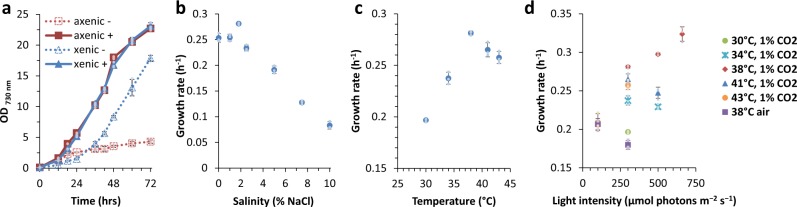
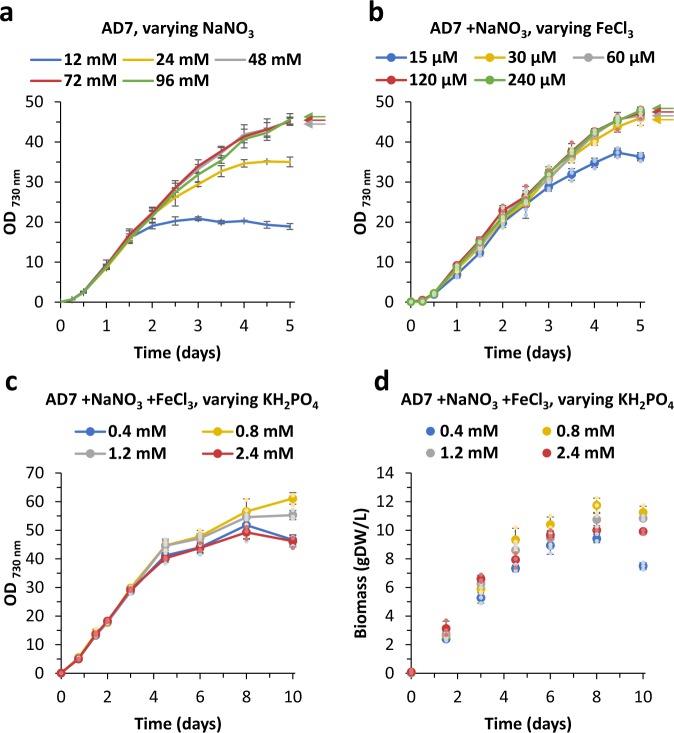
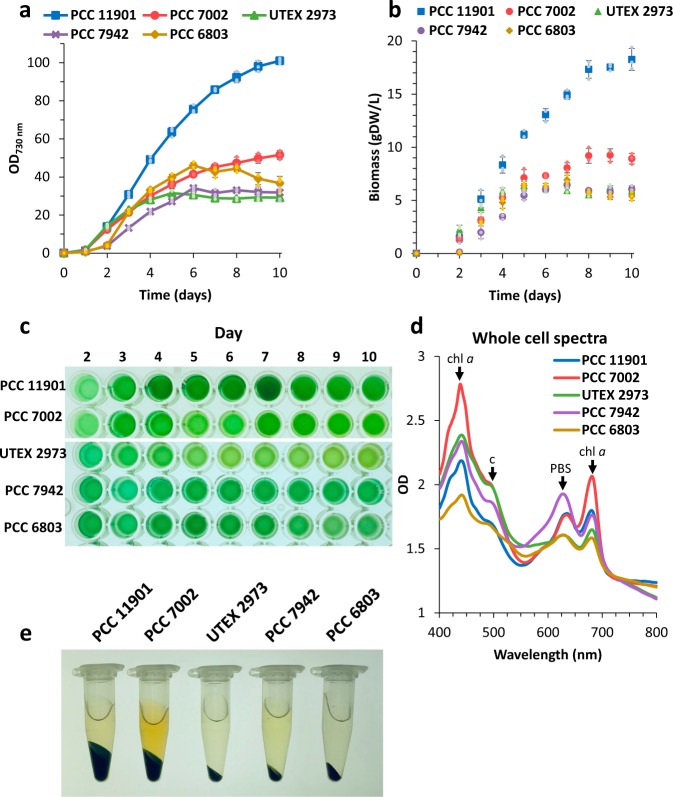
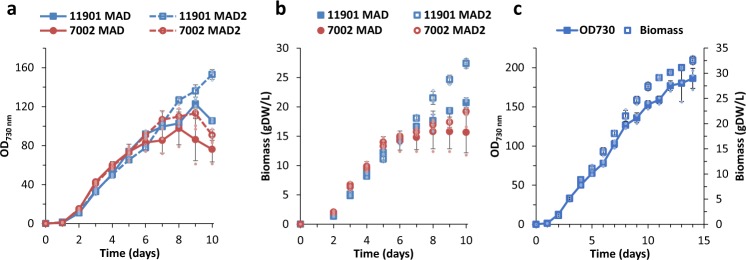
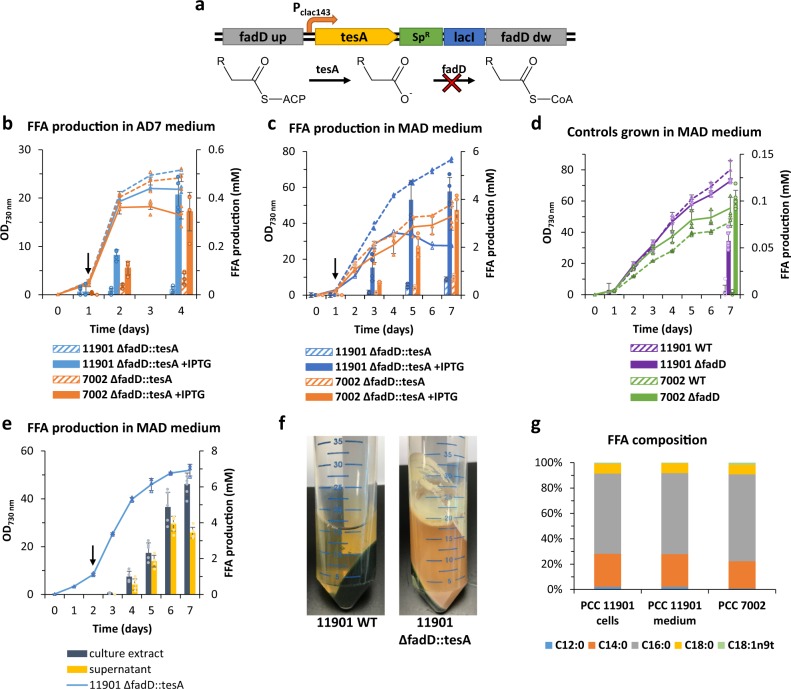
Cyanobacteria, which use solar energy to convert carbon dioxide into biomass, are potential solar biorefineries for the sustainable production of chemicals and biofuels. However, yields obtained with current strains are still uncompetitive compared to existing heterotrophic production systems. Here we report the discovery and characterization of a new cyanobacterial strain, Synechococcus sp. PCC 11901, with promising features for green biotechnology. It is naturally transformable, has a short doubling time of ≈2 hours, grows at high light intensities and in a wide range of salinities and accumulates up to ≈33 g dry cell weight per litre when cultured in a shake-flask system using a modified growth medium − 1.7 to 3 times more than other strains tested under similar conditions. As a proof of principle, PCC 11901 engineered to produce free fatty acids yielded over 6 mM (1.5 g L −1 ), an amount comparable to that achieved by similarly engineered heterotrophic organisms.
Overview
The claims and statistics of this paper haven’t been checked yet.
Free: it reads the open-access text and checks the first 5 claims that cite a source we can check. Create a free account to check every claim.
Integrity signals
Registry
Cites
Statistics
Figures
Verification
Claims the paper makes
The claims and statistics of this paper haven’t been checked yet.
Free: it reads the open-access text and checks the first 5 claims that cite a source we can check. Create a free account to check every claim.
Claims other papers make about this one
Each is checked against this paper’s own text: does it say what the citing paper says it does?
The source backs part of the claim, not all of it — or backs it for a different population, condition or comparison.
In the citing paper
“This slower growth can extend cultivation periods and diminish volumetric productivity, presenting challenges for industrial application [197].”
From Cyanobacteria as a Photosynthetic Chassis for Metabolic Pathway Engineering with Heterologous Gene Expression (2026) · cites this paper as [197]
Experimental — accuracy not yet measuredThe cited source says what the claim attributes to it.
In the citing paper
“Combined with these are new CRISPR-cas based technologies for precision genome editing and gene regulation in microalgae (Lu et al., 2021; Pattharaprachayakul et al., 2020) and the discovery of faster growing and more robust species that offer the next generation of cell platforms (e.g. W ł odarczyk et al., 2020).”
From Cyanobacteria and microalgae in supporting human habitation on Mars (2022) · cites this paper as Włodarczyk et al., 2020
The check wasn’t confident either way, so it gives no verdict — never disputed.
In the citing paper
“As a result, their growth rates are often significantly lower than those of rapidly growing heterotrophic bacteria cultivated on organic carbon substrates.”
From Cyanobacteria as a Photosynthetic Chassis for Metabolic Pathway Engineering with Heterologous Gene Expression (2026) · cites this paper as [197]
Experimental — accuracy not yet measured
Self-check
Percentages, sums and reported differences re-computed from the paper’s own numbers.
The self-check needs the paper’s full text.
Citations
Cites
Nonhybrid, finished microbial genome assemblies from long-read SMRT sequencing data
Chin, C.-S., Alexander, D. H., Marks, P., Klammer, A. A., Drake, J., Heiner, C., Clum, A., Copeland, A., Huddleston, J., Eichler, E. E., et al. (2013) · Nature Methods · doi:10.1038/nmeth.2474 · Cited by 4,029
Purification and properties of unicellular blue-green algae (order Chroococcales)
Stanier, R. Y., Kunisawa, R., Mandel, M., & Cohen-Bazire, G. (1971) · Bacteriological Reviews · doi:10.1128/br.35.2.171-205.1971 · Cited by 3,691
A large-scale evaluation of algorithms to calculate average nucleotide identity
Yoon, S.-H., Ha, S.-M., Lim, J., Kwon, S., & Chun, J. (2017) · Antonie van Leeuwenhoek · doi:10.1007/s10482-017-0844-4 · Cited by 3,632
When will fossil fuel reserves be diminished?
Shafiee, S., & Topal, E. (2009) · Energy Policy · doi:10.1016/j.enpol.2008.08.016 · Cited by 2,061
Critical Evaluation of Two Primers Commonly Used for Amplification of Bacterial 16S rRNA Genes
Frank, J. A., Reich, C. I., Sharma, S., Weisbaum, J. S., Wilson, B. A., & Olsen, G. J. (2008) · Applied and Environmental Microbiology · doi:10.1128/aem.02272-07 · Cited by 1,912
The CGView Server: a comparative genomics tool for circular genomes
Grant, J. R., & Stothard, P. (2008) · Nucleic Acids Research · doi:10.1093/nar/gkn179 · Cited by 1,477
Purification and properties of unicellular blue-green algae (order Chroococcales).
Stanier, R. Y., Kunisawa, R., Mandel, M., et al. (1971) · Bacteriological Reviews · doi:10.1128/mmbr.35.2.171-205.1971 · Cited by 1,455
Circlator: automated circularization of genome assemblies using long sequencing reads
Hunt, M., Silva, N. D., Otto, T. D., Parkhill, J., Keane, J. A., & Harris, S. R. (2015) · Genome Biology · doi:10.1186/s13059-015-0849-0 · Cited by 1,184
Fatty acid production in genetically modified cyanobacteria
Liu, X., Sheng, J., & Curtiss III, R. (2011) · Proceedings of the National Academy of Sciences · doi:10.1073/pnas.1103014108 · Cited by 532
Microbial production of vitamin B12: a review and future perspectives
Fang, H., Kang, J., & Zhang, D. (2017) · Microbial Cell Factories · doi:10.1186/s12934-017-0631-y · Cited by 463
Cited by
Maltsev, Y., Maltseva, K., Kulikovskiy, M., & Maltseva, S. (2021) · Biology · doi:10.3390/biology10101060 · Cited by 511
Hu, J., Meng, W., Su, Y., Qian, C., & Fu, W. (2023) · Frontiers in Marine Science · doi:10.3389/fmars.2023.1260709 · Cited by 138
Long, B., Fischer, B., Zeng, Y., Amerigian, Z., Li, Q., Bryant, H., Li, M., Dai, S. Y., & Yuan, J. S. (2022) · Nature Communications · doi:10.1038/s41467-021-27665-y · Cited by 125
Agarwal, P., Soni, R., Kaur, P., Madan, A., Mishra, R., Pandey, J., Singh, S., & Singh, G. (2022) · Frontiers in Microbiology · doi:10.3389/fmicb.2022.939347 · Cited by 113
Mills, L. A., McCormick, A. J., & Lea-Smith, D. J. (2020) · Bioscience Reports · doi:10.1042/bsr20193325 · Cited by 110
Cyanobacteria and microalgae in supporting human habitation on Mars
Mapstone, L. J., Leite, M. N., Purton, S., Crawford, I. A., & Dartnell, L. (2022) · Biotechnology Advances · doi:10.1016/j.biotechadv.2022.107946 · Cited by 92
Deciphering and engineering photosynthetic cyanobacteria for heavy metal bioremediation
Cui, J., Xie, Y., Sun, T., Chen, L., & Zhang, W. (2020) · The Science of The Total Environment · doi:10.1016/j.scitotenv.2020.144111 · Cited by 100
Phycobiliproteins from extreme environments and their potential applications
Puzorjov, A., & McCormick, A. J. (2020) · Journal of Experimental Botany · doi:10.1093/jxb/eraa139 · Cited by 73
Vijayakumar, S., Rahman, P. K. S. M., & Angione, C. (2020) · iScience · doi:10.1016/j.isci.2020.101818 · Cited by 69
Biosynthesis of Fatty Alcohols in Engineered Microbial Cell Factories: Advances and Limitations
Krishnan, A., McNeil, B. A., & Stuart, D. T. (2020) · Frontiers in Bioengineering and Biotechnology · doi:10.3389/fbioe.2020.610936 · Cited by 68
Biocatalysis in Green and Blue: Cyanobacteria
Jodlbauer, J., Rohr, T., Spadiut, O., Mihovilovič, M. D., & Rudroff, F. (2021) · Trends in biotechnology · doi:10.1016/j.tibtech.2020.12.009 · Cited by 69
Liu, X., Xie, H., Roussou, S., & Lindblad, P. (2022) · Current Opinion in Biotechnology · doi:10.1016/j.copbio.2021.07.014 · Cited by 62
Zhang, S., Sun, J., Feng, D., Sun, H., Cui, J., Zeng, X., Wu, Y., Luan, G., & Lü, X. (2023) · Nature Communications · doi:10.1038/s41467-023-39222-w · Cited by 70
Emerging Species and Genome Editing Tools: Future Prospects in Cyanobacterial Synthetic Biology
Gale, G. A. R., Schiavon Osorio, A. A., Mills, L. A., Wang, B., Lea-Smith, D. J., & McCormick, A. J. (2019) · Microorganisms · doi:10.3390/microorganisms7100409 · Cited by 61
Barone, G. D., Cernava, T., Ullmann, J., Liu, J., Lio, E., Germann, A. T., Nakielski, A., Russo, D. A., Chavkin, T., Knufmann, K., et al. (2023) · Heliyon · doi:10.1016/j.heliyon.2023.e14708 · Cited by 60
Carbon-negative synthetic biology: challenges and emerging trends of cyanobacterial technology
Tan, C., Xu, P., & Tao, F. (2022) · Trends in Biotechnology · doi:10.1016/j.tibtech.2022.09.012 · Cited by 57
Metabolic systems biology and multi-omics of cyanobacteria: Perspectives and future directions
Pathania, R., Srivastava, A., Srivastava, S., & Shukla, P. (2022) · Bioresource Technology · doi:10.1016/j.biortech.2021.126007 · Cited by 51
A new genomic taxonomy system for the Synechococcus collective
Salazar, V. W., Tschoeke, D. A., Swings, J., Cosenza, C. A. N., Mattoso, M., Thompson, C. C., & Thompson, F. L. (2020) · Environmental Microbiology · doi:10.1111/1462-2920.15173 · Cited by 79
Sengupta, A., Pritam, P., Jaiswal, D., Bandyopadhyay, A., Pakrasi, H. B., & Wangikar, P. P. (2020) · Metabolites · doi:10.3390/metabo10060250 · Cited by 55
“PCC 11901 [8] which have significantly higher growth rates than model cyanobacteria such as Synechocystis sp.”
BackgroundCurrent Metabolic Engineering Strategies for Photosynthetic Bioproduction in Cyanobacteria
Satta, A., Esquirol, L., & Ebert, B. E. (2023) · Microorganisms · doi:10.3390/microorganisms11020455 · Cited by 51
“They boosted the free fatty acid (FFA) level by sequentially introducing multiple copies of acylacyl carrier protein thio-esterase and acetyl-CoA carboxylase (ACC) genes, encoding ratecontrolling enzymes in fatty acid synthesis (Figure 2).”
BackgroundInfluentialLong-term patterns of an interconnected core marine microbiota
Krabberød, A. K., Deutschmann, I. M., Bjorbækmo, M. F. M., Balagué, V., Giner, C. R., Ferrera, I., Garcés, E., Massana, R., Gasol, J. M., & Logares, R. (2022) · Environmental Microbiome · doi:10.1186/s40793-022-00417-1 · Cited by 56
Genetic, Genomics, and Responses to Stresses in Cyanobacteria: Biotechnological Implications
Cassier-Chauvat, C., Blanc-Garin, V., & Chauvat, F. (2021) · Genes · doi:10.3390/genes12040500 · Cited by 50
Tan, C., Tao, F., & Xu, P. (2022) · Green Chemistry · doi:10.1039/d1gc04188f · Cited by 49
Rosyidah, A., Purbani, D. C., Pratiwi, R. D., Muttaqien, S. E., Nantapong, N., Warsito, M. F., Fikri, M. N., Ruth, F., Gustini, N., Syahputra, G., et al. (2024) · Kuwait Journal of Science · doi:10.1016/j.kjs.2024.100194 · Cited by 46
Engineering salt tolerance of photosynthetic cyanobacteria for seawater utilization
Cui, J., Sun, T., Chen, L., & Zhang, W. (2020) · Biotechnology Advances · doi:10.1016/j.biotechadv.2020.107578 · Cited by 46
Light and carbon: Synthetic biology toward new cyanobacteria-based living biomaterials
Goodchild-Michelman, I. M., Church, G. M., Schubert, M. G., & Tang, T.-C. (2023) · Materials Today Bio · doi:10.1016/j.mtbio.2023.100583 · Cited by 41
“As sequencing has become increasingly routine, the public availability of more and more cyanobacteria species genomes is a necessary step to begin developing synthetic biology tools for these new species [34,51,52].”
BackgroundEngineering biology approaches for food and nutrient production by cyanobacteria
Liu, D., Liberton, M., Hendry, J. I., Aminian-Dehkordi, J., Maranas, C. D., & Pakrasi, H. B. (2021) · Current Opinion in Biotechnology · doi:10.1016/j.copbio.2020.09.011 · Cited by 38
Ahmed, M., Abdullah, A., Patle, D. S., Shahadat, M., Ahmad, Z. A., Athar, M., Aslam, M., & Vo, D. N. (2021) · Environmental Chemistry Letters · doi:10.1007/s10311-021-01358-w · Cited by 39
Recent advances in engineering fast-growing cyanobacterial species for enhanced CO2 fixation
Kim, D. S., Moreno-Cabezuelo, J. Á., Schulz, E. N., Lea‐Smith, D. J., & Sagaram, U. S. (2024) · Frontiers in Climate · doi:10.3389/fclim.2024.1412232 · Cited by 34
Perspectives of cyanobacterial cell factories
Melis, A., Hidalgo Martinez, D. A., & Betterle, N. (2024) · Photosynthesis Research · doi:10.1007/s11120-023-01056-4 · Cited by 31
Cyanobacteria: Photosynthetic cell factories for biofuel production
Majhi, B. K. (2024) · Journal of Bioresources and Bioproducts · doi:10.1016/j.jobab.2024.10.001 · Cited by 60
DNA barcoding approach to characterize microalgae isolated from freshwater systems in Ecuador
Ballesteros, I., Terán, P., Guamán-Burneo, C., González, N., Cruz, A., & Castillejo, P. (2021) · Neotropical Biodiversity · doi:10.1080/23766808.2021.1920296 · Cited by 38
Generation of Synthetic Shuttle Vectors Enabling Modular Genetic Engineering of Cyanobacteria
Opel, F., Siebert, N. A., Klatt, S., Tüllinghoff, A., Hantke, J. G., Toepel, J., Bühler, B., Nürnberg, D. J., & Klähn, S. (2022) · ACS Synthetic Biology · doi:10.1021/acssynbio.1c00605 · Cited by 30
Fast-growing cyanobacterial chassis for synthetic biology application
Li, Z., Li, S., Chen, L., Sun, T., & Zhang, W. (2023) · Critical Reviews in Biotechnology · doi:10.1080/07388551.2023.2166455 · Cited by 35
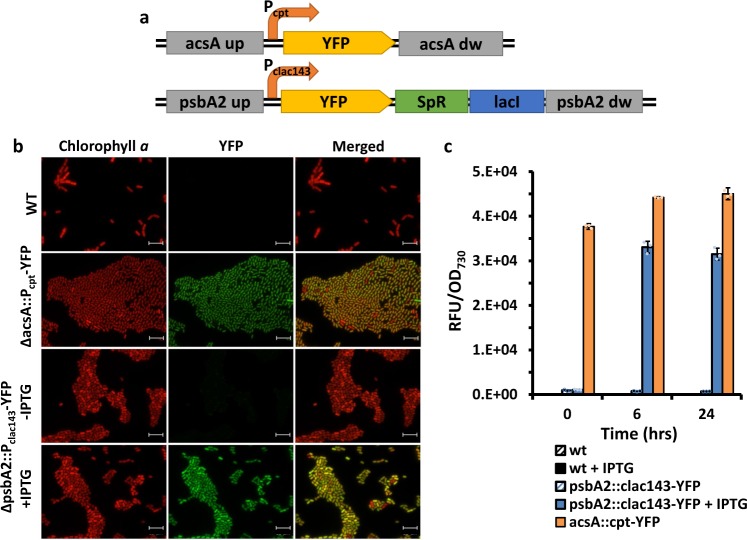
“Similarly, given the homology to Syn7002, the molecular tools commonly used in Syn7002 were evaluated in Syn11901, where the acsA gene encoding acetyl-CoA synthetase could be used as a neutral site [8].”
BackgroundMethodInfluentialThe role of systems biology in developing non-model cyanobacteria as hosts for chemical production
Mukherjee, B., Madhu, S., & Wangikar, P. P. (2020) · Current Opinion in Biotechnology · doi:10.1016/j.copbio.2019.10.003 · Cited by 30
Synthetic biology in marine cyanobacteria: Advances and challenges
Bourgade, B., & Stensjö, K. (2022) · Frontiers in Microbiology · doi:10.3389/fmicb.2022.994365 · Cited by 28
“, 2020) Characterised promoters (Włodarczyk et al., 2020) Włodarczyk et al.”
BackgroundMethodInfluentialA toolbox to engineer the highly productive cyanobacterium Synechococcus sp. PCC 11901
Victoria, A. J., Selão, T. T., Moreno-Cabezuelo, J. Á., Mills, L. A., Gale, G. A. R., Lea-Smith, D. J., & McCormick, A. J. (2024) · Plant Physiology · doi:10.1093/plphys/kiae261 · Cited by 28
“Furthermore, PCC 11901 can tolerate high light intensities ( > 900 μ mol photons m − 2 s − 1 ), temperatures (up to 43°C), and salinities over 2-fold higher than sea water (Włodarczyk et al. 2020; Cho et al. 2023).”
BackgroundMethodInfluentialSelf-citationEngineering highly productive cyanobacteria towards carbon negative emissions technologies
Victoria, A. J., Astbury, M. J., & McCormick, A. J. (2024) · Current Opinion in Biotechnology · doi:10.1016/j.copbio.2024.103141 · Cited by 27
Recombinant Protein Stability in Cyanobacteria
Zhang, X., Betterle, N., Hidalgo Martinez, D., & Melis, A. (2021) · ACS Synthetic Biology · doi:10.1021/acssynbio.0c00610 · Cited by 27
Mills, L., Moreno-Cabezuelo, J., Włodarczyk, A., Victoria, A., Mejías, R., Nenninger, A., Moxon, S., Bombelli, P., Selão, T., McCormick, A., et al. (2022) · Biomolecules · doi:10.3390/biom12070872 · Cited by 28
Self-citationSun, T., Li, Z., Li, S., Chen, L., & Zhang, W. (2022) · Chemical Engineering Journal · doi:10.1016/j.cej.2022.139158 · Cited by 31
Impact of engineering the ATP synthase rotor ring on photosynthesis in tobacco chloroplasts
Yamamoto, H., Cheuk, A., Shearman, J., Nixon, P. J., Meier, T. W., & Shikanai, T. (2023) · PLANT PHYSIOLOGY · doi:10.1093/plphys/kiad043 · Cited by 27
Self-citationSchmelling, N. M., & Bross, M. (2024) · Nature Communications · doi:10.1038/s41467-024-50828-6 · Cited by 27
Chen, W., Park, Y. K., Studená, L., Bell, D., Hapeta, P., Fu, J., Nixon, P. J., & Ledesma‐Amaro, R. (2024) · Bioresource Technology · doi:10.1016/j.biortech.2024.131232 · Cited by 23
Self-citationRautela, A., Yadav, I., Gangwar, A., Chatterjee, R., & Kumar, S. (2024) · Bioresource Technology · doi:10.1016/j.biortech.2024.130432 · Cited by 23
Andrews, F., Faulkner, M., Toogood, H. S., & Scrutton, N. S. (2021) · Biotechnology for Biofuels · doi:10.1186/s13068-021-02091-w · Cited by 26
“PCC 11901 [97] to supply extracellular pyruvate and/or αKG to the ethanologenic strain.”
BackgroundApplication of Cyanobacteria as Chassis Cells in Synthetic Biology
Liu, X., Tang, K., & Hu, J. (2024) · Microorganisms · doi:10.3390/microorganisms12071375 · Cited by 20
Huang, X., Wang, F., Rehman, O. U., Hu, X., Zhu, F., Wang, R., Xu, L., Cui, Y., & Huo, S. (2025) · Foods · doi:10.3390/foods14142500 · Cited by 25
Gale, G. A. R., Wang, B., & McCormick, A. J. (2021) · Frontiers in Microbiology · doi:10.3389/fmicb.2020.624011 · Cited by 19
Zhuang, X., Zhang, Y., Xiao, A., Zhang, A., & Fang, B. (2022) · Frontiers in Bioengineering and Biotechnology · doi:10.3389/fbioe.2022.826008 · Cited by 22
Beyond Soil-Dwelling Actinobacteria: Fantastic Antibiotics and Where to Find Them
Santos‐Aberturas, J., & Vior, N. M. (2022) · Antibiotics · doi:10.3390/antibiotics11020195 · Cited by 26
Cao, J., Russo, D. A., Xie, T., Groß, G. A., & Zedler, J. A. Z. (2022) · Scientific Reports · doi:10.1038/s41598-022-19773-6 · Cited by 20
Purdy, H. M., Pfleger, B. F., & Reed, J. L. (2022) · Metabolic Engineering · doi:10.1016/j.ymben.2021.11.003 · Cited by 18
Current insights into molecular mechanisms of environmental stress tolerance in Cyanobacteria
Rai, P., Pathania, R., Bhagat, N., Bongirwar, R., Shukla, P., & Srivastava, S. (2025) · World Journal of Microbiology and Biotechnology · doi:10.1007/s11274-025-04260-7 · Cited by 20
“Some strains have recently been identified with fast growth and some tolerance towards multiple stresses (Patha-nia and Srivastava 2021; Włodarczyk et al. 2020).”
Engineering of the fast-growing cyanobacterium Synechococcus sp. PCC 11901 to synthesize astaxanthin
Betterle, N., Gasparotto, E., Battagini, E., Ceschi, E., Bellamoli, F., Nixon, P. J., & Ballottari, M. (2025) · Biotechnology for Biofuels and Bioproducts · doi:10.1186/s13068-025-02626-5 · Cited by 20
“…the synthesis of Asta in Syn11901 as in the case of Chlamydomonas reinhardtii , a DNA construct was designed for the transformation of wild-type Syn11901 (WT) through double homologous DNA recombination at the acsA locus, identified previously as a suitable site for insertion of foreign DNA [2].”
InfluentialSelf-citationSchubert, M. G., Tang, T., Goodchild-Michelman, I. M., Ryon, K. A., Henriksen, J. R., Chavkin, T. A., Wu, Y., Miettinen, T. P., Wychen, S. V., Dahlin, L. R., et al. (2024) · Applied and Environmental Microbiology · doi:10.1128/aem.00841-24 · Cited by 21
“High-density batch growth cultures were grown in MAD2 medium prepared as per Włodarczyk et al. (18), and modified by substitution of 10 mM Tris-HCl pH 8.0 for 10 mM of TES-KOH pH 8.2.”
InfluentialOptimal proteome allocation strategies for phototrophic growth in a light-limited chemostat
Faizi, M., & Steuer, R. (2019) · Microbial Cell Factories · doi:10.1186/s12934-019-1209-7 · Cited by 19
Theodosiou, E., Tüllinghoff, A., Toepel, J., & Bühler, B. (2022) · Frontiers in Bioengineering and Biotechnology · doi:10.3389/fbioe.2022.855715 · Cited by 17
“PCC 11901 represent a significant progress (Włodarczyk et al., 2020).”
BackgroundA quantitative description of light-limited cyanobacterial growth using flux balance analysis
Höper, R., Komkova, D., Zavřel, T., & Steuer, R. (2024) · PLoS Computational Biology · doi:10.1371/journal.pcbi.1012280 · Cited by 20
Sengupta, S., Sahasrabuddhe, D., & Wangikar, P. P. (2022) · Biotechnology Advances · doi:10.1016/j.biotechadv.2021.107816 · Cited by 16
Laws, E. A., & McClellan, S. A. (2022) · Journal of Phycology · doi:10.1111/jpy.13278 · Cited by 19
Biocement from the ocean: Hybrid microbial-electrochemical mineralization of CO2
Kludze, A., Solanki, D., Lejeune, M., Yanagi, R., Ishii, M., Raychaudhuri, N., Anastas, P. T., Boyle, N. R., & Hu, S. (2022) · iScience · doi:10.1016/j.isci.2022.105156 · Cited by 18
“A bioaccumulation rate (the space-time growth rate in the photobioreactor) of 1g L 1 day 1 was used as a reasonable growth rate based on literature (Kumar et al., 2011; Ludwig and Bryant, 2012; Włodarczyk et al., 2020) to calculate the size of the photobioreactor required for a given growth rate.”
MethodExploring cyanobacterial diversity for sustainable biotechnology
Selão, T. T. (2022) · Journal of Experimental Botany · doi:10.1093/jxb/erac053 · Cited by 15
Self-citationZhou, J., Qin, W., Lu, X., Yang, Y., Stahl, D. A., Jiao, N., Zhou, J. Z., Liu, J., & Tu, Q. (2023) · mLife · doi:10.1002/mlf2.12095 · Cited by 15
“Notably, a recent genomic study 179 also observed salvage pathway gene families in Synechococcus genomes, possibly due to 180 horizontal gene transfer events or loss of function (de novo B12 biosynthesis) during evolution 181 (31).”
BackgroundElectron Transport in Cyanobacteria and Its Potential in Bioproduction
Lea‐Smith, D. J., & HANKE, G. T. (2021) · Wiley eBooks · doi:10.1002/9783527824908.ch2 · Cited by 16
Ravindran, S., Hajinajaf, N., Kundu, P., Comes, J., Nielsen, D. R., Varman, A. M., & Ghosh, A. (2024) · ACS Synthetic Biology · doi:10.1021/acssynbio.4c00379 · Cited by 14
Lea-Smith, D. J., Summerfield, T. C., Ducat, D. C., Lu, X., McCormick, A. J., & Purton, S. (2021) · Frontiers in Microbiology · doi:10.3389/fmicb.2021.725128 · Cited by 14
“PCC 11901 (Wlodarczyk et al., 2020), with doubling times as short as 2 h, is a promising development.”
BackgroundEngineering Cyanobacterial Cell Factories for Photosynthetic Production of Fructose
Sun, J., Zhang, Z., Zhang, S., Yu, D., Sun, H., Wu, Y., Luan, G., & Lü, X. (2023) · ACS Synthetic Biology · doi:10.1021/acssynbio.3c00338 · Cited by 14
Grimm, H. C., Erlsbacher, P., Medipally, H., Malihan-Yap, L., Sovic, L., Zöhrer, J., Kosourov, S. N., Allahverdiyeva, Y., Paul, C. E., & Kourist, R. (2025) · Green Chemistry · doi:10.1039/d4gc05686h · Cited by 13
CRISPR-Cas mediated genome engineering of cyanobacteria
Sengupta, A., Liu, D., & Pakrasi, H. B. (2022) · Methods in Enzymology · doi:10.1016/bs.mie.2022.07.023 · Cited by 13
Jaiswal, D., Nenwani, M., & Wangikar, P. P. (2023) · The Plant Journal · doi:10.1111/tpj.16316 · Cited by 12
Fast‐growing phototrophic microorganisms and the productivity of phototrophic cultures
Steuer, R. (2022) · Biotechnology and Bioengineering · doi:10.1002/bit.28123 · Cited by 13
“…of the fast‐growing strain Synechococcus elongatus UTEX 2973 (Yu et al., 2015), several cyanobacterial and algal strains have now been identified that exhibit significantly higher growth rates than established model strains (Jaiswal et al., 2018; Treves et al., 2017; Wlodarczyk et al., 2020).”
BackgroundLi, C., Zheng, J., Wu, Y., Wang, X., Shao, H., & Dong, Y. (2022) · Life · doi:10.3390/life12101537 · Cited by 13
“5 g L−1, which is comparable to that of gene-modified heterotrophic microorganisms [50].”
BackgroundJanssen, K. N., Bolay, P., Tüllinghoff, A., Toepel, J., Spindler, D., Bühler, B., & Lindberg, P. (2025) · Plant Biotechnology Journal · doi:10.1111/pbi.70395 · Cited by 16
Sustainable citric acid production from CO2 in an engineered cyanobacterium
Zhang, L., Bryan, S. J., & Selão, T. T. (2022) · Frontiers in Microbiology · doi:10.3389/fmicb.2022.973244 · Cited by 11
“This plasmid was reverse PCR-amplified using primers Gb_open_acnB_F and Gb_ open_acnB_R and combined with both a kanamycin cassette, amplified from pSZT025 (Włodarczyk et al., 2020), and a synthetic dsDNA fragment containing the previously described Ptrc-E* promoter-riboswitch combination (Ma et al.”
BackgroundMethodInfluentialSelf-citationEco-friendly Microbial Biofuel Production from Waste
Madakka, M., Rajesh, N., Jayaraju, N., Lakshmanna, B., Kumaraswamy, H. H., & Kashyap, B. K. (2020) · Springer eBooks · doi:10.1007/978-981-33-4347-4_4 · Cited by 10
EXCRETE workflow enables deep proteomics of the microbial extracellular environment
Russo, D. A., Oliinyk, D., Pohnert, G., Meier, F., & Zedler, J. A. Z. (2024) · Communications Biology · doi:10.1038/s42003-024-06910-2 · Cited by 10
Cyanobacterial myxoxanthophylls: biotechnological interventions and biological implications
Srivastava, A., Thapa, S., Chakdar, H., Babele, P. K., & Shukla, P. (2022) · Critical Reviews in Biotechnology · doi:10.1080/07388551.2022.2117682 · Cited by 10
Cho, B. A., Moreno-Cabezuelo, J. Á., Mills, L. A., del Rio‐Chanona, E. A., Lea‐Smith, D. J., & Zhang, D. (2023) · Algal Research · doi:10.1016/j.algal.2023.102997 · Cited by 11
Sukkasam, N., Incharoensakdi, A., & Monshupanee, T. (2022) · Plant and Cell Physiology · doi:10.1093/pcp/pcac100 · Cited by 11
Jodlbauer, J., Schmal, M., Waltl, C., Rohr, T., Mach-Aigner, A. R., Mihovilovic, M. D., & Rudroff, F. (2024) · Trends in Biotechnology · doi:10.1016/j.tibtech.2024.07.011 · Cited by 9
Philmus, B. J., Avalon, N. E., Ding, Y., Doering, D. T., Eustáquio, A. S., Gerwick, W. H., Luesch, H., Orjala, J., Sutherland, S., Taton, A., et al. (2026) · Natural Product Reports · doi:10.1039/d5np00016e · Cited by 12
Living Photoanodes for Solar-Driven Water Oxidation
Egan, R. M., Victoria, A. J., & Zhang, J. (2026) · Chemical Reviews · doi:10.1021/acs.chemrev.5c00921 · Cited by 9
Light-Driven Biosynthesis of myo-Inositol Directly From CO2 in Synechocystis sp. PCC 6803
Wang, X., Chen, L., Liu, J., Sun, T., & Zhang, W. (2020) · Frontiers in Microbiology · doi:10.3389/fmicb.2020.566117 · Cited by 12
Jain, V. S., Schubert, M. G., Sarnaik, A. P., Pritam, P., Jaiswal, D., Church, G. M., & Wangikar, P. P. (2024) · The Microbe · doi:10.1016/j.microb.2024.100048 · Cited by 9
Ma, Y., Liu, S., Cui, L., Fei, Q., & Wang, Q. (2024) · Environmental Research · doi:10.1016/j.envres.2024.119125 · Cited by 9
Cobos, M., Condori, R. C., Grández, M. A., Estela, S. L., Aguila, M. T. D., Castro, C. G., Rodríguez, H. N., Vargas, J. A., Tresierra, Á. B., Barriga, L. A., et al. (2022) · Frontiers in Genetics · doi:10.3389/fgene.2022.973324 · Cited by 8
Present and future potential role of toxin-producing Synechococcus in the tropical region
Sim, Z. Y., Goh, K. C., He, Y., & Gin, K. Y. (2023) · The Science of The Total Environment · doi:10.1016/j.scitotenv.2023.165230 · Cited by 8
Traits of Fast‐Growing Cyanobacteria
Srivastava, M., Hudson, E. P., & Wangikar, P. P. (2021) · Wiley eBooks · doi:10.1002/9783527824908.ch14 · Cited by 9
Microbial Catalysis for CO2Sequestration: A Geobiological Approach
Berghe, M. V. D., Walworth, N. G., Dalvie, N. C., Dupont, C. L., Springer, M., Andrews, M. G., Romaniello, S. J., Hutchins, D. A., Montserrat, F., Silver, P. A., et al. (2023) · Cold Spring Harbor Perspectives in Biology · doi:10.1101/cshperspect.a041673 · Cited by 8
The Molecular Toolset and Techniques Required to Build Cyanobacterial Cell Factories
Opel, F., Axmann, I. M., & Klähn, S. (2022) · Advances in Biochemical Engineering/Biotechnology · doi:10.1007/10_2022_210 · Cited by 7
Cultivation Conditions and Operating Modes in Large-Scale Microalgae Processes
Ahamefule, C. S., Osilo, C. B., Idenyi, J. N., Ogbonna, I. O., & Ogbonna, J. C. (2025) · Grand challenges in biology and biotechnology · doi:10.1007/978-3-031-84282-5_3 · Cited by 11
The Sustainable Production of Terpenoids in Cyanobacterial Chassis
Bo, H., Qiu, L., Lv, R., & Yu, Z.-X. (2025) · Microorganisms · doi:10.3390/microorganisms13061342 · Cited by 8
“Likewise, Synechococcus sp. PCC 11901 can endure temperatures up to 43 ◦ C and light intensities of 600 µ mol m 2 s − 1 , with a doubling time of just 2.1 h and a remarkable DCW of 32.6 g/L [59].”
InfluentialIda, K., Tanaka, K., Kato, Y., Koike, N., Horie, Y., Matsuda, M., Yasueda, H., Kondo, A., & Hasunuma, T. (2025) · ACS Synthetic Biology · doi:10.1021/acssynbio.5c00490 · Cited by 7
“35,36 To evaluate whether the engineered astaxanthin-producing strains (Strains 1 and 5) would similarly benefit from such conditions, we compared their performance under two defined culture conditions, referred to as Conditions A and B. Condition A served as the standard cultivation condition:…”
Wey, L. T., Yewale, R., Hautala, E., Hannonen, J., Katavisto, K., Kvarnström, C., Allahverdiyeva, Y., & Damlin, P. (2023) · Electrochimica Acta · doi:10.1016/j.electacta.2023.143597 · Cited by 9
Xie, Y., Chen, L., Sun, T., & Zhang, W. (2020) · Chinese Journal of Chemical Engineering · doi:10.1016/j.cjche.2020.11.002 · Cited by 8
Sukkasam, N., Leksingto, J., Incharoensakdi, A., & Monshupanee, T. (2022) · Plant and Cell Physiology · doi:10.1093/pcp/pcac136 · Cited by 7
Sukkasam, N., Leksingto, J., Keasornjun, N., In-na, P., Incharoensakdi, A., Hallam, S., & Monshupanee, T. (2023) · Algal Research · doi:10.1016/j.algal.2023.103142 · Cited by 7
Cyanotoxins and Other Bioactive Compounds from the Pasteur Cultures of Cyanobacteria (PCC)
Gugger, M. F., Boullié, A., & Laurent, T. (2023) · Toxins · doi:10.3390/toxins15060388 · Cited by 13
Reprogramming Metabolic Networks and Manipulating Circadian Clocks for Biotechnological Applications
Wang, B., Young, J. D., & Xu, Y. Q. (2021) · Springer eBooks · doi:10.1007/978-3-030-72158-9_14 · Cited by 7
Metadata
- Authors
- Włodarczyk, A., Selão, T. T., Norling, B., & Nixon, P. J.
- Affiliations
- University of Technology Sydney (AU)
- University of Nottingham (GB)
- Nanyang Technological University (SG)
- Corresponding author
- Włodarczyk, Artur
- Nixon, Peter J.
- Venue
- Communications Biology
- Published
- 2020-05-07
- Volume
- 3
- Issue
- 1
- Pages
- 215-215
- ISSN
- 2399-3642 (ISSN-L)
- PMC
- PMC7205611
- OpenAlex
- W3021029089
- Cited by
- 192
- References
- 63
- Citations by year
- 2026: 30 · 2025: 28 · 2024: 31 · 2023: 26 · 2022: 43 · 2021: 18 · 2020: 13
- FWCI
- 4.93
- Type
- journal article
- Language
- en
- Open access
- gold
- doi.org
- Licence
- cc-by
- creativecommons.org/licenses/by/4.0 (tdm)
- creativecommons.org/licenses/by/4.0 (vor)
- Locations
- Communications Biology (publishedVersion, cc-by)
- bioRxiv (Cold Spring Harbor Laboratory) (acceptedVersion, cc-by)
- PubMed Central (publishedVersion, cc-by)
- PubMed (publishedVersion)
- DR-NTU (Nanyang Technological University) (submittedVersion, cc-by)
- UTS ePRESS (University of Technology Sydney) (submittedVersion, other-oa)
- Spiral (Imperial College London) (submittedVersion, cc-by)
- Funders
- Nanyang Technological University (M4081714)
- Topics
- Physical Sciences › Energy › Renewable Energy, Sustainability and the Environment › Algal biology and biofuel production
- Life Sciences › Biochemistry, Genetics and Molecular Biology › Molecular Biology › Microbial Metabolic Engineering and Bioproduction
- Physical Sciences › Environmental Science › Environmental Chemistry › Aquatic Ecosystems and Phytoplankton Dynamics
- Keywords
- cyanobacteria, free fatty acid production, biofuels, doubling time, salt tolerance, high light, strain characterization, bio-based chemicals
- MeSH terms
- Biotechnology, Biomass, Synechococcus, Biofuels, Metabolic Engineering
About these checks
Registry, retraction, Cites and statistics results are computed, not judged, with one exception: a printed reference that no index lists is read once by a model before it counts as a citation error. Claims are extracted by a model and kept only when their quote appears verbatim in the text; each cited source is then checked, with a model’s help, for whether it says what the claim relies on. Those verdicts can be wrong — read the claim’s quote and the cited source before relying on one.
Statistics and arithmetic are recomputed, not judged.
Confidence bands are shown only for fields calibrated on our annotated test set. None is calibrated yet, so no band is shown.
What counts as a claim ›How we measure confidence ›How we check this ›
Are you an author, or do you see a problem with this page? Request a review
Data sources
Bibliographic data: Semantic Scholar, OpenAlex, Crossref.
Contains information from the Semantic Scholar Academic Graph Datasets, made available under the ODC Attribution License (ODC-BY 1.0).
Semantic Scholar’s data is described in: Kinney, R., et al. (2023). The Semantic Scholar Open Data Platform. arXiv:2301.10140.
