

Navigating the perils of artificial intelligence: a focused review on ChatGPT and responsible research and innovation
Open accessThe DOI matches its Crossref record; 14 of the 103 references it cites were found in a registry or an index, and 1 are not checked yet; 16 of the 87 sources its claims cite were checked for support.
Abstract
While the rise of artificial intelligence (AI) tools holds promise for delivering benefits, it is important to acknowledge the associated risks of their deployment. In this article, we conduct a focused literature review to address two central research inquiries concerning ChatGPT and similar AI tools. Firstly, we examine the potential pitfalls linked with the development and implementation of ChatGPT across the individual, organizational, and societal levels. Secondly, we explore the role of a multi-stakeholder responsible research and innovation framework in guiding chatbots’ sustainable development and utilization. Drawing inspiration from responsible research and innovation and stakeholder theory principles, we underscore the necessity of comprehensive ethical guidelines to navigate the design, inception, and utilization of emerging AI innovations. The findings of the focused review shed light on the potential perils of ChatGPT implementation across various societal levels, including issues such as devaluation of relationships, unemployment, privacy concerns, bias, misinformation, and digital inequities. Furthermore, the proposed multi-stakeholder Responsible Research and Innovation framework can empower AI stakeholders to proactively anticipate and deliberate upon AI’s ethical, social, and environmental implications, thus substantially contributing to the pursuit of responsible AI implementation.
Verified 2026-10-06 · 1 reference not checked yet
Overview
CoChat Summary
TL;DR
This focused review maps the perils of ChatGPT and similar AI tools at individual, organizational, and societal levels and proposes a multi-stakeholder Responsible Research and Innovation framework to guide ethical and sustainable chatbot development. It argues that anticipation, inclusiveness, reflexivity, and responsiveness, aligned with values such as safety, privacy, sustainability, quality of life, and gender equality, can help stakeholders proactively address AI’s ethical, social, and environmental implications.
Key findings
- The review identifies perils across three levels: individual (misinformation/disinformation, privacy and security concerns, emotional/psychological harm, devalued relationships and alienation), organizational (labor-market instability, job displacement, cybersecurity and phishing risks, confidentiality and legal risks, copyright/intellectual-labor theft, brand and customer-loyalty risks), and societal (education and research integrity, reduced student creativity, examination integrity, publishing ethics, digital inequities, and healthcare errors, privacy concerns, and ethical/legal dilemmas).
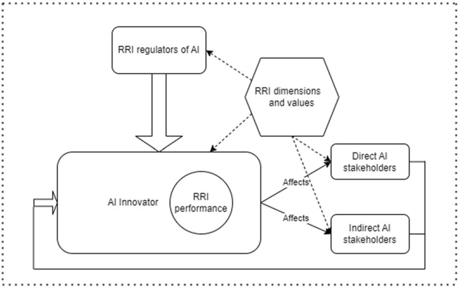
- It proposes a multi-stakeholder Responsible Research and Innovation framework involving the AI innovator, regulators, and direct/indirect stakeholders, with feedback loops and the dimensions anticipation, inclusiveness, reflexivity, and responsiveness; the framework aligns with values including safety, privacy, sustainability, quality of life, and gender equality, with transparency as an overarching value.
- The paper notes that ethical guidelines alone may not alter developers’ decision-making, citing McNamara et al. (2018), who found no statistically significant difference in participants’ ethical decision-making responses whether or not they saw a code of ethics.
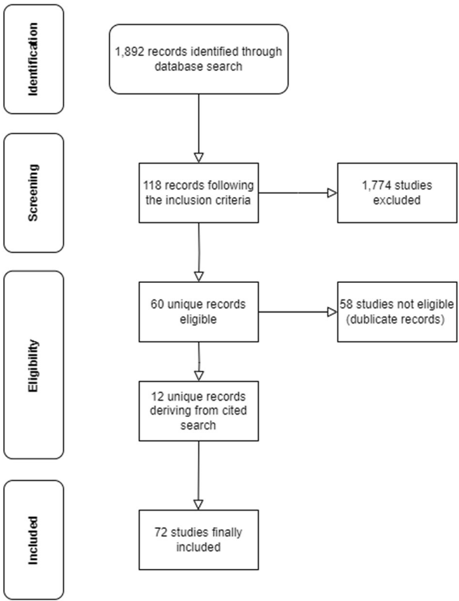
- The literature search began with 1892 records, retained 118 after criteria, removed 58 duplicates, and after a cited/snowball search resulted in a final pool of 72 articles.
Methods
- A focused literature review was conducted, described as a concise examination of the most relevant literature rather than an exhaustive or bibliometric analysis.
- Searches used Scopus and Google Scholar with keyword combinations such as “ChatGPT AND responsible research and innovation,” “artificial intelligence AND responsible research and innovation,” “chatbot AND responsible research and innovation,” “ChatGPT AND perils,” “ChatGPT AND challenges,” and “ChatGPT AND implications.”
- Inclusion criteria were English-language literature published 2011–2023, full-text articles assessed for eligibility, and academic journal or conference papers; noninternational journals, preprints, and non-peer-reviewed papers were excluded. The final 72 articles were synthesized to map perils (RQ1) and propose a multi-stakeholder Responsible Research and Innovation framework (RQ2).
Limitations
- Stated limitations: Not stated in the paper.
- Limitations evident from the text: the review is not exhaustive and concentrates only on literature the authors judged most relevant; final selection was based on the authors’ opinion; it did not use bibliometric or quantitative citation/publication-trend analysis; and the proposed framework is conceptual and not empirically tested, with the authors calling for future empirical studies on Responsible Research and Innovation ecosystems and stakeholder engagement.
Model-written summary. Check it against the paper before relying on it.
Integrity signals
Registry
Cites
Statistics
Figures
Verification
Claims the paper makes
10 Valid · 2 Not valid · 51 Not checked · 29 Own results and interpretations
Every source the paper cites for this claim was checked and supports it.
In the paper
“ChatGPT in specific, has been found to corrupt rather than improve moral judgment (Krügel, et al., 2023).”
§ Navigating the perils of artificial intelligence: a focused review on ChatGPT and responsible research and innovation > Introduction
What the sources say
- Supportedcites Krügel, et al., 2023 matched to “ChatGPT’s inconsistent moral advice influences users’ judgment” (2023) source
The Abstract states the conclusion verbatim: 'Thus, ChatGPT corrupts rather than improves its users’ moral judgment,' based on an experiment with US residents advised on a trolley dilemma. The Discussion repeats it ('ChatGPT threatens to corrupt rather than promises to improve moral judgment'), grounding it in inconsistent advice, influence on judgment, and users' underestimation of that influence (Results, Figs. 2-3). The citing paraphrase matches the source's own framing, with no qualifier dropped. (LLM, conf=0.92)
plainstates a cause- Asserted: passes — The authors put it forward as true.
- Checkable: passes — It can be checked against evidence.
- Load-bearing: unclear — It is unclear whether the paper’s conclusions depend on it.
- Based: passes — The paper gives a reason why it holds.
- Supported
The cited sources support only part of this claim — read each source’s verdict below.
In the paper
“Such adverse consequences of advanced AI tools such as ChatGPT have triggered an ongoing debate about the need to establish a set of principles to effectively regulate and monitor AI development and use (Arrieta et al., 2020;Fjeld et al., 2020;Mikalef et al., 2022).”
§ Navigating the perils of artificial intelligence: a focused review on ChatGPT and responsible research and innovation > Findings
What the sources say
- Partly supportedcites Arrieta et al., 2020 matched to “Explainable Artificial Intelligence (XAI): Concepts, taxonomies, opportunities and challenges toward responsible AI” (2020) sourceExperimental — accuracy not yet measured
Section 6 (p. 36) says AI principles address potential threats to individuals and society and guide how AI is developed and used; section 6.2.2 (p. 40) discusses auditing and assessing negative impacts. The paper does not attribute the debate over those principles to adverse consequences of ChatGPT or similar tools, so that causal and tool-specific part is unsupported. (LLM, conf=0.86)
- Not checked yetcites Fjeld et al., 2020
- Partly supportedcites Mikalef et al., 2022 matched to “Thinking responsibly about responsible AI and ‘the dark side’ of AI” (2022) sourceExperimental — accuracy not yet measured
The Introduction (page unavailable) says adverse outcomes of AI use sparked an ongoing debate about principles for governing AI. Section 2 (page unavailable) gives the chatbot Tay as an example, but the passages do not identify ChatGPT or its consequences as a trigger for that debate. (LLM, conf=0.85)
plainstates a cause- Asserted: passes — The authors put it forward as true.
- Checkable: passes — It can be checked against evidence.
- Load-bearing: passes — The paper’s conclusions depend on it.
- Based: passes — The paper gives a reason why it holds.
- Partly supported
Every source the paper cites for this claim was checked and supports it.
In the paper
“Nonetheless, ethical guidelines do not necessarily alter the individual (developers') decision-making (Hagendorff, 2020).”
§ Navigating the perils of artificial intelligence: a focused review on ChatGPT and responsible research and innovation > Findings
What the sources say
- Supportedcites Hagendorff, 2020 matched to “The Ethics of AI Ethics: An Evaluation of Guidelines” (2020) source
Section 3.3 'Ethics in Practice' asks whether guidelines change individual decision-making and reports that the effectiveness of ethics codes is 'almost zero', quoting McNamara et al. 2018: 'No statistically significant difference in the responses for any vignette were found across individuals who did and did not see the code of ethics, either for students or for professionals.' The Conclusion (S.5) states the paper's own uptake of this: 'empirical experiments show that reading ethics guidelines has no significant influence on the decision-making of software developers.' The citing sentence is hedged ('do not necessarily alter'), weaker than what the source asserts, so it is supported; the underlying controlled study is McNamara et al. 2018, but Hagendorff reports and relies on the result as her own evidence rather than merely crediting it. (LLM, conf=0.90)
hedged- Asserted: passes — The authors put it forward as true.
- Checkable: passes — It can be checked against evidence.
- Load-bearing: passes — The paper’s conclusions depend on it.
- Based: passes — The paper gives a reason why it holds.
- Supported
The cited sources support only part of this claim — read each source’s verdict below.
In the paper
“Advanced AI tools like ChatGPT are also poised to significantly impact the healthcare sector (Ali et al., 2023;Patel et al., 2023;Sallam, 2023).”
§ Navigating the perils of artificial intelligence: a focused review on ChatGPT and responsible research and innovation > Findings
What the sources say
- Partly supportedcites Ali et al., 2023 matched to “A systematic literature review of artificial intelligence in the healthcare sector: benefits, challenges, methodologies, and functionalities” (2023) sourceExperimental — accuracy not yet measured
The Research implications section (p. 15) describes cutting-edge AI solutions as a next generation of digital health tools being adopted in healthcare, supporting the broad prediction of substantial impact. The paper does not address ChatGPT specifically, so it does not support that example. (LLM, conf=0.82)
- Supportedcites Patel et al., 2023 matched to “ChatGPT: friend or foe?” (2023) source
The editorial’s health-care discussion describes potential clinical uses of ChatGPT, including automating discharge summaries and simplifying radiology reports, while warning that errors would require manual checks. Its conclusion calls ChatGPT a “game changer,” supporting the broad claim that it could significantly affect health care. Page numbers are not supplied in our copy. (LLM, conf=0.89)
- Supportedcites Sallam, 2023 matched to “ChatGPT Utility in Healthcare Education, Research, and Practice: Systematic Review on the Promising Perspectives and Valid Concerns” (2023) source
The Discussion (§4.3) says ChatGPT and other large language models have transformative potential in healthcare practice, including diagnostics, clinical workflows, and drug discovery. The Conclusions (§5) describe their potential in clinical decision-making and workflow optimization as substantial, while urging caution. No page numbers are provided in our copy. (LLM, conf=0.91)
plainstates a possible cause- Asserted: passes — The authors put it forward as true.
- Checkable: passes — It can be checked against evidence.
- Load-bearing: unclear — It is unclear whether the paper’s conclusions depend on it.
- Based: passes — The paper gives a reason why it holds.
- Partly supported
Every source the paper cites for this claim was checked and supports it.
In the paper
“Given the nascent stage of AI ethics, there is a need to devise frameworks for AI advancements to incorporate ethical considerations (Lo Piano, 2020).”
§ Navigating the perils of artificial intelligence: a focused review on ChatGPT and responsible research and innovation > Discussion and implications
What the sources say
- Supportedcites Lo Piano, 2020 matched to “Ethical principles in machine learning and artificial intelligence: cases from the field and possible ways forward” (2020) source
The Discussion and conclusions section states plainly that 'the field of AI ethics is just at its infancy and it is still to be conceptualised how AI developments that encompass ethical dimensions could be attained', which carries both halves of the paraphrase: the nascent stage and the resulting need to work out (devise) how ethical considerations get built into AI development. The same section's call to be open to negotiation across frictions between dimensions, and the paper's stated aim (Introduction) to 'discuss actions towards the inclusion of these dimensions in the future of AI ethics', reinforce the need-for-frameworks reading rather than contradict it. (LLM, conf=0.90)
plain- Asserted: passes — The authors put it forward as true.
- Checkable: passes — It can be checked against evidence.
- Load-bearing: passes — The paper’s conclusions depend on it.
- Based: passes — The paper gives a reason why it holds.
- Supported
13 more claims
Create a free account to see all 92 claims and to verify the 71 references still open.
- It may state two separate claims as one. 33
- Probably not a substantial claim. 52
Claims other papers make about this one
Each is checked against this paper’s own text: does it say what the citing paper says it does?
The check wasn’t confident either way, so it gives no verdict — never disputed.
In the citing paper
“Previous research on jailbreaking has primarily explored its implications in the context of catastrophic risks in the general domain—cases where models are manipulated to produce extreme content, such as violence, hate speech, or other harmful material25–27.”
From When helpfulness backfires: LLMs and the risk of false medical information due to sycophantic behavior (2025) · cites this paper as [25]
Experimental — accuracy not yet measured
Self-check
Percentages, sums and reported differences re-computed from the paper’s own numbers.
Each contradiction between two passages listed here was confirmed by an independent check.
Rated minor: it would not touch a result — a value no result rests on, a p-value that stays on the same side of the significance level, or a conflict that is clerical, resolved elsewhere in the paper, or outside its own findings.
In the paper
§ Navigating the perils of artificial intelligence: a focused review on ChatGPT and responsible research and innovation > Conclusion
“Stilgoe & Guston (2016)”
§ Navigating the perils of artificial intelligence: a focused review on ChatGPT and responsible research and innovation > References
“91. Stilgoe J, Guston D (2017) Responsible research and innovation.”
Citations
Cites
Arrieta, A. B., Díaz-Rodríguez, N., Del Ser, J., Bennetot, A., Tabik, S., Barbado, A., García, S., Gil-López, S., Molina, D., Benjamins, R., et al. (2019) · arXiv · doi:10.48550/arxiv.1910.10045 · Cited by 11,321
Barredo Arrieta, A., Díaz-Rodríguez, N., Del Ser, J., Bennetot, A., Tabik, S., Barbado, A., Garcia, S., Gil-Lopez, S., Molina, D., Benjamins, R., et al. (2020) · Information Fusion · doi:10.1016/j.inffus.2019.12.012 · Cited by 10,423
Mitchell, R. K., Agle, B. R., & Wood, D. J. (1997) · The Academy of Management Review · doi:10.2307/259247 · Cited by 5,039
Dwivedi, Y. K., Hughes, L., Ismagilova, E., Aarts, G., Coombs, C., Crick, T., Duan, Y., Dwivedi, R., Edwards, J., Eirug, A., et al. (2021) · International Journal of Information Management · doi:10.1016/j.ijinfomgt.2019.08.002 · Cited by 4,611
Dwivedi, Y. K., Kshetri, N., Hughes, L., Slade, E. L., Jeyaraj, A., Kar, A. K., Baabdullah, A. M., Koohang, A., Raghavan, V., Ahuja, M., et al. (2023) · International Journal of Information Management · doi:10.1016/j.ijinfomgt.2023.102642 · Cited by 4,584
Strategic Management: A Stakeholder Approach
Freeman, R. E. (2010) · Cambridge University Press eBooks · doi:10.1017/cbo9781139192675 · Cited by 4,494
Developing a framework for responsible innovation
Stilgoe, J., Owen, R., & Macnaghten, P. (2013) · Research Policy · doi:10.1016/j.respol.2013.05.008 · Cited by 3,184
Sallam, M. (2023) · Healthcare · doi:10.3390/healthcare11060887 · Cited by 3,126
Who Benefits from State and Local Economic Development Policies?
Bartik, T. J. (1991) · doi:10.17848/9780585223940 · Cited by 2,643
What if the devil is my guardian angel: ChatGPT as a case study of using chatbots in education
Tlili, A., Shehata, B., Adarkwah, M. A., Bozkurt, A., Hickey, D. T., Huang, R., & Agyemang, B. (2023) · Smart Learning Environments · doi:10.1186/s40561-023-00237-x · Cited by 2,003
The Ethics of AI Ethics: An Evaluation of Guidelines
Hagendorff, T. (2020) · Minds and Machines · doi:10.1007/s11023-020-09517-8 · Cited by 1,911
The Ethics of AI Ethics -- An Evaluation of Guidelines
Hagendorff, T. (2019) · arXiv · doi:10.48550/arxiv.1903.03425 · Cited by 1,907
Human-Centered Artificial Intelligence: Reliable, Safe & Trustworthy
Shneiderman, B. (2020) · International Journal of Human–Computer Interaction · doi:10.1080/10447318.2020.1741118 · Cited by 1,743
Consumers and artificial intelligence: An experiential perspective
Puntoni, S., Reczek, R. W., Giesler, M., & Botti, S. (2021) · Journal of Marketing · doi:10.1177/0022242920953847 · Cited by 1,547
ChatGPT is fun, but not an author
Thorp, H. H. (2023) · Science · doi:10.1126/science.adg7879 · Cited by 1,437
In AI we trust? Perceptions about automated decision-making by artificial intelligence
Araujo, T., Helberger, N., Kruikemeier, S., & de Vreese, C. H. (2020) · AI & SOCIETY · doi:10.1007/s00146-019-00931-w · Cited by 1,038
Fjeld, J., Achten, N., Hilligoss, H., Nagy, A., & Srikumar, M. (2020) · SSRN Electronic Journal · doi:10.2139/ssrn.3518482 · Cited by 998
ChatGPT listed as author on research papers: many scientists disapprove
Stokel-Walker, C. (2023) · Nature · doi:10.1038/d41586-023-00107-z · Cited by 868
Díaz-Rodríguez, N., Del Ser, J., Coeckelbergh, M., López de Prado, M., Herrera-Viedma, E., & Herrera, F. (2023) · Information Fusion · doi:10.1016/j.inffus.2023.101896 · Cited by 800
Zuiderwijk, A., Chen, Y.-C., & Salem, F. (2021) · Government Information Quarterly · doi:10.1016/j.giq.2021.101577 · Cited by 795
A Framework for Responsible Innovation
Owen, R., Stilgoe, J., Macnaghten, P., Gorman, M., Fisher, E., & Guston, D. (2013) · Responsible Innovation · doi:10.1002/9781118551424.ch2 · Cited by 730
Rulers of the world, unite! The challenges and opportunities of artificial intelligence
Kaplan, A., & Haenlein, M. (2020) · Business Horizons · doi:10.1016/j.bushor.2019.09.003 · Cited by 718
Four ethical priorities for neurotechnologies and AI
Yuste, R., Goering, S., Arcas, B. A. Y., Bi, G., Carmena, J. M., Carter, A., Fins, J. J., Friesen, P., Gallant, J., Huggins, J. E., et al. (2017) · Nature · doi:10.1038/551159a · Cited by 678
Future Progress in Artificial Intelligence: A Survey of Expert Opinion
Müller, V. C., & Bostrom, N. (2016) · Synthese Library · doi:10.1007/978-3-319-26485-1_33 · Cited by 655
Open artificial intelligence platforms in nursing education: Tools for academic progress or abuse?
O’Connor, S., & ChatGPT (2023) · Nurse Education in Practice · doi:10.1016/j.nepr.2022.103537 · Cited by 585
Ali, O., Abdelbaki, W., Shrestha, A., Elbasi, E., Alryalat, M. A. A., & Dwivedi, Y. K. (2023) · Journal of Innovation & Knowledge · doi:10.1016/j.jik.2023.100333 · Cited by 568
Definitions and Conceptual Dimensions of Responsible Research and Innovation: A Literature Review
Burget, M., Bardone, E., & Pedaste, M. (2017) · Science and Engineering Ethics · doi:10.1007/s11948-016-9782-1 · Cited by 481
The Ethics of ChatGPT-Exploring the Ethical Issues of an Emerging Technology
Stahl, B. C., & Eke, D. (2024) · International Journal of Information Management · doi:10.1016/j.ijinfomgt.2023.102700 · Cited by 476
Association for the Advancement of Artificial Intelligence
Crosby, M., & Petrick, R. P. A. (2014) · Cited by 461
Ethics in artificial intelligence: introduction to the special issue
Dignum, V. (2018) · Ethics and Information Technology · doi:10.1007/s10676-018-9450-z · Cited by 459
Ethics and discrimination in artificial intelligence-enabled recruitment practices
Chen, Z. (2023) · Humanities and Social Sciences Communications · doi:10.1057/s41599-023-02079-x · Cited by 450
Thinking responsibly about responsible AI and ‘the dark side’ of AI
Mikalef, P., Conboy, K., Lundström, J. E., & Popovič, A. (2022) · European Journal of Information Systems · doi:10.1080/0960085x.2022.2026621 · Cited by 435
A Layered Model for AI Governance
Gasser, U., & Almeida, V. A. F. (2017) · IEEE Internet Computing · doi:10.1109/mic.2017.4180835 · Cited by 431
Bozeman, B., Rimes, H., & Youtie, J. (2015) · Research Policy · doi:10.1016/j.respol.2014.06.008 · Cited by 423
Von Schomberg, R. (2011) · SSRN Electronic Journal · doi:10.2139/ssrn.2436399 · Cited by 403
Xie, X., Liu, X., & McNay, I. (2023) · Humanities and Social Sciences Communications · doi:10.1057/s41599-022-01483-z · Cited by 393
Incorporating Ethics into Artificial Intelligence
Etzioni, A., & Etzioni, O. (2017) · The Journal of Ethics · doi:10.1007/s10892-017-9252-2 · Cited by 388
The Impact of Different Environmental Conditions on Cognitive Function: A Focused Review
Taylor, L., Watkins, S. L., Marshall, H., Dascombe, B. J., & Foster, J. (2016) · Frontiers in Physiology · doi:10.3389/fphys.2015.00372 · Cited by 380
Competence in nursing practice: A controversial concept – A focused review of literature
Cowan, D. T., Norman, I., & Coopamah, V. P. (2005) · Nurse Education Today · doi:10.1016/j.nedt.2005.03.002 · Cited by 362
The EU Approach to Ethics Guidelines for Trustworthy Artificial Intelligence
Smuha, N. A. (2019) · Computer Law Review International · doi:10.9785/cri-2019-200402 · Cited by 356
ChatGPT and consumers: Benefits, Pitfalls and Future Research Agenda
Paul, J., Ueno, A., & Dennis, C. (2023) · International Journal of Consumer Studies · doi:10.1111/ijcs.12928 · Cited by 345
The Ethics of Artificial Intelligence
Bostrom, N., & Yudkowsky, E. (2018) · Artificial Intelligence Safety and Security · doi:10.1201/9781351251389-4 · Cited by 333
AI and Jobs: the role of demand
Bessen, J. (2018) · National Bureau of Economic Research · doi:10.3386/w24235 · Cited by 283
The Political Biases of ChatGPT
Rozado, D. (2023) · Social Sciences · doi:10.3390/socsci12030148 · Cited by 281
Health, T. L. D. (2023) · The Lancet Digital Health · doi:10.1016/s2589-7500(23)00023-7 · Cited by 257
Creepiness: Its antecedents and impact on loyalty when interacting with a chatbot
Rajaobelina, L., Prom Tep, S., Arcand, M., & Ricard, L. (2021) · Psychology & Marketing · doi:10.1002/mar.21548 · Cited by 252
Chatbots: Security, privacy, data protection, and social aspects
Hasal, M., Nowaková, J., Ahmed Saghair, K., Abdulla, H., Snášel, V., & Ogiela, L. (2021) · Concurrency and Computation: Practice and Experience · doi:10.1002/cpe.6426 · Cited by 249
Does ACM’s code of ethics change ethical decision making in software development?
McNamara, A., Smith, J., & Murphy-Hill, E. (2018) · Proceedings of the 2018 26th ACM Joint Meeting on European Software Engineering Conference and Symposium on the Foundations of Software Engineering · doi:10.1145/3236024.3264833 · Cited by 244
Artificial Intelligence in studies—use of ChatGPT and AI-based tools among students in Germany
von Garrel, J., & Mayer, J. (2023) · Humanities and Social Sciences Communications · doi:10.1057/s41599-023-02304-7 · Cited by 236
Lo Piano, S. (2020) · Humanities and Social Sciences Communications · doi:10.1057/s41599-020-0501-9 · Cited by 229
An unfinished journey? Reflections on a decade of responsible research and innovation
Owen, R., von Schomberg, R., & Macnaghten, P. (2021) · Journal of Responsible Innovation · doi:10.1080/23299460.2021.1948789 · Cited by 224
A systematic review of artificial intelligence impact assessments
Stahl, B. C., Antoniou, J., Bhalla, N., Brooks, L., Jansen, P., Lindqvist, B., Kirichenko, A., Marchal, S., Rodrigues, R., Santiago, N., et al. (2023) · Artificial Intelligence Review · doi:10.1007/s10462-023-10420-8 · Cited by 212
Rapamycin in the context of Pascal's Wager: generative pre-trained transformer perspective
Generative Pre-trained Transformer, C., & Zhavoronkov, A. (2022) · Oncoscience · doi:10.18632/oncoscience.571 · Cited by 203
Marketing with ChatGPT: Navigating the Ethical Terrain of GPT-Based Chatbot Technology
Rivas, P., & Zhao, L. (2023) · AI · doi:10.3390/ai4020019 · Cited by 191
Ethical Issues in Advanced Artificial Intelligence
Bostrom, N. (2020) · Machine Ethics and Robot Ethics · doi:10.4324/9781003074991-7 · Cited by 187
ChatGPT’s inconsistent moral advice influences users’ judgment
Krügel, S., Ostermaier, A., & Uhl, M. (2023) · Scientific Reports · doi:10.1038/s41598-023-31341-0 · Cited by 183
Niu, B., & Mvondo, G. F. N. (2024) · Journal of Retailing and Consumer Services · doi:10.1016/j.jretconser.2023.103562 · Cited by 178
Organisational institutionalisation of responsible innovation
Owen, R., Pansera, M., Macnaghten, P., & Randles, S. (2021) · Research Policy · doi:10.1016/j.respol.2020.104132 · Cited by 168
The Responsible Research and Innovation (RRI) Maturity Model: Linking Theory and Practice
Stahl, B., Obach, M., Yaghmaei, E., Ikonen, V., Chatfield, K., & Brem, A. (2017) · Sustainability · doi:10.3390/su9061036 · Cited by 166
Organisational responses to the ethical issues of artificial intelligence
Stahl, B. C., Antoniou, J., Ryan, M., Macnish, K., & Jiya, T. (2022) · AI & SOCIETY · doi:10.1007/s00146-021-01148-6 · Cited by 160
Student feedback systems in higher education: a focused literature review and environmental scan
Alderman, L., Towers, S., & Bannah, S. (2012) · Quality in Higher Education · doi:10.1080/13538322.2012.730714 · Cited by 152
Wing, J. M. (2021) · Communications of the ACM · doi:10.1145/3448248 · Cited by 148
Parviainen, J., & Rantala, J. (2022) · Medicine, Health Care and Philosophy · doi:10.1007/s11019-021-10049-w · Cited by 146
Global AI governance: barriers and pathways forward
Roberts, H., Hine, E., Taddeo, M., & Floridi, L. (2024) · International Affairs · doi:10.1093/ia/iiae073 · Cited by 143
Yigitcanlar, T., Li, R. Y. M., Beeramoole, P. B., & Paz, A. (2023) · Government Information Quarterly · doi:10.1016/j.giq.2023.101833 · Cited by 142
STAHL, B. C. (2022) · International Journal of Information Management · doi:10.1016/j.ijinfomgt.2021.102441 · Cited by 142
Is Chat Gpt biased against conservatives? An empirical study
McGee, R. W. (2023) · doi:10.2139/ssrn.4359405 · Cited by 141
Economic development and construction safety research: A bibliometrics approach
Luo, F., Li, R. Y. M., Crabbe, M. J. C., & Pu, R. (2021) · Safety Science · doi:10.1016/j.ssci.2021.105519 · Cited by 131
Gurzawska, A., Mäkinen, M., & Brey, P. A. E. (2017) · Sustainability · doi:10.3390/su9101759 · Cited by 128
Global AI governance: barriers and pathways forwardPreprint
Roberts, H., Hine, E., Taddeo, M., & Floridi, L. (2023) · Social Science Research Network · doi:10.2139/ssrn.4588040 · Cited by 128
Sustainable AI: An integrated model to guide public sector decision-making
Wilson, C., & van der Velden, M. (2022) · Technology in Society · doi:10.1016/j.techsoc.2022.101926 · Cited by 123
Values in responsible research and innovation: from entities to practices
Boenink, M., & Kudina, O. (2020) · Journal of Responsible Innovation · doi:10.1080/23299460.2020.1806451 · Cited by 118
Company Strategies for Responsible Research and Innovation (RRI): A Conceptual Model
Van de Poel, I., Asveld, L., Flipse, S., Klaassen, P., Scholten, V., & Yaghmaei, E. (2017) · Sustainability · doi:10.3390/su9112045 · Cited by 118
Developing a framework for responsible innovation*
Stilgoe, J., Owen, R., & Macnaghten, P. (2020) · The Ethics of Nanotechnology, Geoengineering and Clean Energy · doi:10.4324/9781003075028-22 · Cited by 110
Practices of Responsible Research and Innovation: A Review
Schuijff, M., & Dijkstra, A. M. (2019) · Science and Engineering Ethics · doi:10.1007/s11948-019-00167-3 · Cited by 96
Synthesizing an implementation framework for responsible research and innovation
Fraaije, A., & Flipse, S. M. (2019) · Journal of Responsible Innovation · doi:10.1080/23299460.2019.1676685 · Cited by 94
Weiss, A., & Spiel, K. (2021) · AI & Society · doi:10.1007/s00146-021-01209-w · Cited by 93
Baba, Y., & Walsh, J. P. (2010) · Research Policy · doi:10.1016/j.respol.2010.01.016 · Cited by 80
Guo, H., & Polák, P. (2021) · Studies in computational intelligence · doi:10.1007/978-3-030-62796-6_9 · Cited by 76
A European agency for artificial intelligence: Protecting fundamental rights and ethical values
Stahl, B. C., Rodrigues, R., Santiago, N., & Macnish, K. (2022) · Computer Law & Security Review · doi:10.1016/j.clsr.2022.105661 · Cited by 74
Shaban-Nejad, A., Michalowski, M., Brownstein, J., & Buckeridge, D. (2021) · IEEE Journal of Biomedical and Health Informatics · doi:10.1109/jbhi.2021.3088832 · Cited by 71
Ulnicane, I., Eke, D. O., Knight, W., Ogoh, G., & Stahl, B. C. (2021) · Interdisciplinary Science Reviews · doi:10.1080/03080188.2020.1840220 · Cited by 70
COVID-19, artificial intelligence, ethical challenges and policy implications
Anshari, M., Hamdan, M., Ahmad, N., Ali, E., & Haidi, H. (2023) · AI & SOCIETY · doi:10.1007/s00146-022-01471-6 · Cited by 67
Assessment of science and technologies: Advising for and with responsibility
Forsberg, E., Quaglio, G., O'Kane, H., Karapiperis, T., Woensel, L. V., & Arnaldi, S. (2015) · Technology in Society · doi:10.1016/j.techsoc.2014.12.004 · Cited by 67
Greening the Artificial Intelligence for a Sustainable Planet: An Editorial Commentary
Yiğitcanlar, T. (2021) · Sustainability · doi:10.3390/su132413508 · Cited by 66
Danieli, M., Ciulli, T., Mousavi, S. M., & Riccardi, G. (2021) · JMIR Formative Research · doi:10.2196/30053 · Cited by 64
Vilaza, G. N., & McCashin, D. (2021) · Frontiers in Digital Health · doi:10.3389/fdgth.2021.689736 · Cited by 60
Importance and limitations of AI ethics in contemporary society
Hauer, T. (2022) · Humanities and Social Sciences Communications · doi:10.1057/s41599-022-01300-7 · Cited by 53
Establishing the Rules for Building Trustworthy AI
Floridi, L. (2021) · Philosophical studies series · doi:10.1007/978-3-030-81907-1_4 · Cited by 53
Sigfrids, A., Nieminen, M., Leikas, J., & Pikkuaho, P. (2022) · Frontiers in Human Dynamics · doi:10.3389/fhumd.2022.858108 · Cited by 50
Ethical Aspects of the Impact of AI: the Status of Humans in the Era of Artificial Intelligence
Rakowski, R., Polak, P., & Kowalikova, P. (2021) · Society · doi:10.1007/s12115-021-00586-8 · Cited by 45
From Transparency to Justification: Toward Ex Ante Accountability for AIPreprint
Malgieri, G., & Pasquale, F. (2022) · SSRN Electronic Journal · doi:10.2139/ssrn.4099657 · Cited by 43
Vinge, V. (2008) · IEEE Spectrum · doi:10.1109/mspec.2008.4531467 · Cited by 42
Expert responsibility in AI development
Hedlund, M., & Persson, E. (2024) · AI & SOCIETY · doi:10.1007/s00146-022-01498-9 · Cited by 39
Governing Ethical AI Transformation: A Case Study of AuroraAI
Leikas, J., Johri, A., Latvanen, M., Wessberg, N., & Hahto, A. (2022) · Frontiers in Artificial Intelligence · doi:10.3389/frai.2022.836557 · Cited by 37
What rules? Framing the governance of artificial agency
Gahnberg, C. (2021) · Policy and Society · doi:10.1080/14494035.2021.1929729 · Cited by 35
Welcome to the Digital Era—the Impact of AI on Business and Society
Polak, P. (2021) · Society · doi:10.1007/s12115-021-00588-6 · Cited by 28
Rating AI systems for bias to promote trustable applications
Srivastava, B., & Rossi, F. (2019) · IBM Journal of Research and Development · doi:10.1147/jrd.2019.2935966 · Cited by 22
Wiarda, M., van de Kaa, G., Doorn, N., & Yaghmaei, E. (2022) · Science and Engineering Ethics · doi:10.1007/s11948-022-00415-z · Cited by 22
Gianni, R. (2016) · Wiley eBooks · doi:10.1002/9781119277354 · Cited by 22
Incidental Emotions and Hedonic Forecasting: The Role of (Un)certainty
Polyportis, A., Kokkinaki, F., Horváth, C., & Christopoulos, G. (2020) · Frontiers in Psychology · doi:10.3389/fpsyg.2020.536376 · Cited by 15
Self-citationResponsible research and innovation in practice: Driving both the ‘How’ and the ‘What’ to research
Chen, J., Nichele, E., Ellerby, Z., & Wagner, C. (2022) · Journal of Responsible Technology · doi:10.1016/j.jrt.2022.100042 · Cited by 10
RRI measurement and assessment
van de Poel, I. (2020) · Routledge eBooks · doi:10.4324/9780429298998-25 · Cited by 8
Research works printed but not linked: 11
- Adner R (2017) Ecosystem as structure: an actionable construct for strategy. J Manag 43(1):39-58
- Agboola AO (2015) Neoclassical economics and new institutional economics: An assessment of their methodological implication for property market analysis. Prop Manag 33(5):412-429
- Atkins S, Badrie I, van Otterloo S (2021) Applying ethical AI frameworks in practice: Evaluating conversational AI chatbot solutions. Comput Soc Res J 1:1-6
- European Commission (2013) Directorate-General for Research and Innovation. Options for strengthening responsible research and innovation: report of the Expert Group on the State of Art in Europe on Responsible Research and Innovation. Publications Office. Retrieved on 4/4/2023 from https://data.europa.eu/doi/10.2777/46253 · doi:10.2777/46253
- Luo X, Tong S, Fang Z, Qu Z (2019) Frontiers: machines vs. humans: the impact of artificial intelligence chatbot disclosure on customer purchases. Mark Sci 38(6):937-947
- Mijwil M, Aljanabi M (2023) Towards artificial intelligence-based cybersecurity: the practices and ChatGPT generated ways to combat cybercrime. Iraqi J Comput Sci Math 4(1):65-70
- Nielsen MV (2016) The concept of responsiveness in the governance of research and innovation. Sci Public Policy 43(6):831-839
- Perkins M (2023) Academic Integrity considerations of AI Large Language Models in the post-pandemic era: ChatGPT and beyond. J Univ Teach Learn Pract 20(2):07
- Polyportis A (2020) Incidental emotions and hedonic forecasting: the role of the certainty-uncertainty appraisal dimension. PhD thesis. Athens University of Economics and Business, Greece. Retrieved on 22/4/2023 from https://www. didaktorika.gr/eadd/handle/10442/47930
- Stilgoe J, Guston D (2017) Responsible research and innovation. In Felt U, Fouché R, Miller CA, Smith-Doerr L (eds) The handbook of science and technology studies. The MIT Press. pp. 853-880
- Strowel A (2023) ChatGPT and generative AI tools: theft of intellectual labor? IIC Int Rev Intellect Prop Compet Law 54(4):491-494
Cited by
Sun, Y., Sheng, D., Zhou, Z., & Wu, Y. (2024) · Humanities and Social Sciences Communications · doi:10.1057/s41599-024-03811-x · Cited by 327
Polyportis, A., & Pahos, N. (2025) · Behaviour & Information Technology · doi:10.1080/0144929x.2024.2317364 · Cited by 194
“Second, the emergence of responsible principles in chat-bot development and use (Polyportis and Pahos 2024; Weiss et al. 2023) underscores the signi fi cance of under-explored yet vital individual di ff erence core constructs, such as attitude (Dwivedi et al. 2019), as antecedents of students ’…”
Self-citationChen, S., Gao, M., Sasse, K., Hartvigsen, T., Anthony, B., Fan, L., Aerts, H., Gallifant, J., & Bitterman, D. S. (2025) · npj Digital Medicine · doi:10.1038/s41746-025-02008-z · Cited by 112
Andrade-Girón, D., Rodriguez, W. J. M., Sandivar-Rosas, J., Carreño-Cisneros, E., Ramírez, E. T. S., Zúñiga-Rojas, M. G., Ángeles-Morales, J., & Villarreal-Torres, H. (2024) · Iberoamerican Journal of Science Measurement and Communication · doi:10.47909/ijsmc.101 · Cited by 88
“In addition to the rise of generative AI tools such as ChatGPT (Gomez Cano et al., 2023; Polyportis & Pahos, 2024), consequently the significant impact on the science of education and society (Jaiswal & Arun, 2021; Crompton & Song, 2021; Kumar et al., 2023; Junco Luna, 2023), this panorama raises…”
BackgroundStrzelecki, A. (2024) · Learned Publishing · doi:10.1002/leap.1650 · Cited by 39
“Therefore, the creators of this tool have pointed out its susceptibility to inaccuracies and its occasional tendency to provide mis-leading information (Fang et al., 2024; Polyportis & Pahos, 2024).”
Metadata
- Authors
- Polyportis, A., & Pahos, N.
- Affiliations
- Delft University of Technology (NL)
- Corresponding author
- Polyportis, Athanasios
- Venue
- Humanities and Social Sciences Communications
- Published
- 2024-01-15
- Volume
- 11
- Issue
- 1
- ISSN
- 2055-1045 (ISSN-L)
- 2662-9992
- OpenAlex
- W4390875484
- Semantic Scholar
- 4cbb1415fcea2b0a62c7630822400b0608858422
- Cited by
- 64
- References
- 100
- Citations by year
- 2026: 20 · 2025: 23 · 2024: 21
- FWCI
- 26.65
- Type
- journal article
- Language
- en
- Open access
- gold
- doi.org
- Licence
- cc-by
- creativecommons.org/licenses/by/4.0 (tdm)
- creativecommons.org/licenses/by/4.0 (vor)
- Locations
- Humanities and Social Sciences Communications (publishedVersion, cc-by)
- RePEc: Research Papers in Economics (submittedVersion)
- DOAJ (DOAJ: Directory of Open Access Journals) (submittedVersion, cc-by-sa)
- Research Repository (Delft University of Technology) (submittedVersion, cc-by)
- Topics
- Physical Sciences › Computer Science › Artificial Intelligence › Ethics and Social Impacts of AI
- Physical Sciences › Computer Science › Artificial Intelligence › Artificial Intelligence Applications
- Social Sciences › Sociology and Political Science › Innovation, Technology, and Society
- Keywords
- ChatGPT, responsible research and innovation, AI ethics, multi-stakeholder framework, stakeholder theory, AI risks, unemployment, privacy concerns, algorithmic bias, misinformation, digital inequality, responsible AI deployment
About these checks
Registry, retraction, Cites and statistics results are computed, not judged, with one exception: a printed reference that no index lists is read once by a model before it counts as a citation error. Claims are extracted by a model and kept only when their quote appears verbatim in the text; each cited source is then checked, with a model’s help, for whether it says what the claim relies on. Those verdicts can be wrong — read the claim’s quote and the cited source before relying on one.
The claim verdicts this report counts are experimental: their accuracy is not yet measured.
A language model drew the claims from the paper on 2026-10-06, under version 3 of the claim definition (model deepseek-v4.1-flash, prompt extract-v3).
A second model labelled each claim on 2026-10-06 (model jev-1.13-20260917, definition revision gold-guideline-v0.2).
Cited sources are checked with a language model’s help (qwen3.8-omni-flash and gpt-6-sol).
Statistics and arithmetic are recomputed, not judged.
Confidence bands are shown only for fields calibrated on our annotated test set. None is calibrated yet, so no band is shown.
What counts as a claim ›How we measure confidence ›How we check this ›
Are you an author, or do you see a problem with this page? Request a review
Data sources
Bibliographic data: Semantic Scholar, OpenAlex, Crossref.
Contains information from the Semantic Scholar Academic Graph Datasets, made available under the ODC Attribution License (ODC-BY 1.0).
Semantic Scholar’s data is described in: Kinney, R., et al. (2023). The Semantic Scholar Open Data Platform. arXiv:2301.10140.
