

The DOI matches its Crossref record; 62 of the 62 references it cites were found in a registry or an index; 24 of the 67 sources its claims cite were checked for support.
Apolipoprotein E Receptors Mediate the Effects of β-Amyloid on Astrocyte Cultures
Open accessAbstract
We have previously shown that beta-amyloid (Abeta) induces astrocyte activation in vitro and that this reaction is attenuated by the addition of exogenous apolipoprotein E (apoE)-containing particles. However, the effects of Abeta on endogenous apoE and apoJ levels and the potential role of apoE receptors in astrocyte activation have not been addressed. Three activating stimuli (lipopolysaccharide, dibutyryl cAMP, and aged Abeta 1-42) were used to induce activation of rat astrocyte cultures, as assessed by changes in morphology and an increase in interleukin-1beta. However, only Abeta also induced approximately 50% reduction in the amount of released apoE and apoJ and an 8-fold increase in the levels of cell-associated apoE and apoJ. Experiments using two concentrations of receptor-associated protein, an inhibitor of apoE receptors with a differential affinity for the low density lipoprotein receptor (LDLR) and the LDLR-related protein (LRP), suggest that LRP mediates Abeta-induced astrocyte activation, whereas LDLR mediates the Abeta-induced changes in apoE levels. Receptor-associated protein had no effect on apoJ levels or on activation by either dibutyryl cAMP or lipopolysaccharide. These data suggest that apoE receptors translate the presence of extracellular Abeta into cellular responses, both initiating and modulating the inflammatory response induced by Abeta.
Overview
AI snapshot
Written from the paper’s full text.
TL;DR
Aged β-amyloid (Aβ 1-42) activates cultured rat astrocytes and, uniquely among the tested activators, alters endogenous apoE and apoJ levels. Receptor-associated protein (RAP) experiments suggest LRP mediates Aβ-induced astrocyte activation, whereas LDLR mediates Aβ-induced changes in apoE, with apoJ changes independent of RAP-inhibitable apoE receptors.
Key findings
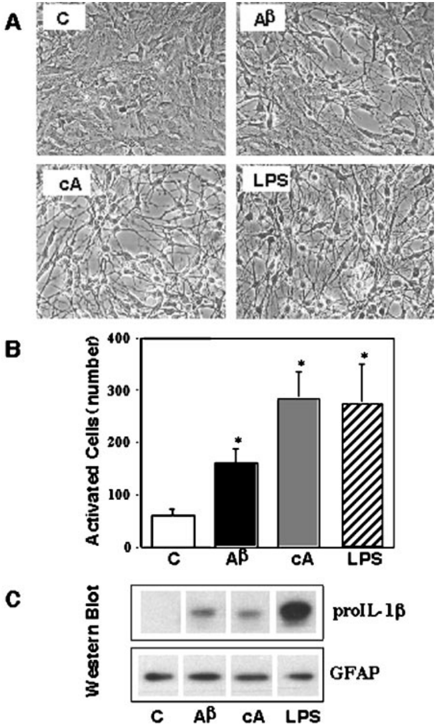
- Aβ 1-42 (10 µM), dibutyryl cAMP (1 mM), and LPS (10 µg/ml) all induced morphological activation and increased proIL-1β in rat astrocyte cultures; GFAP levels did not change.
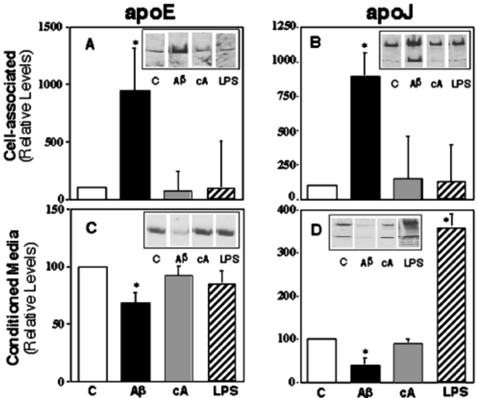
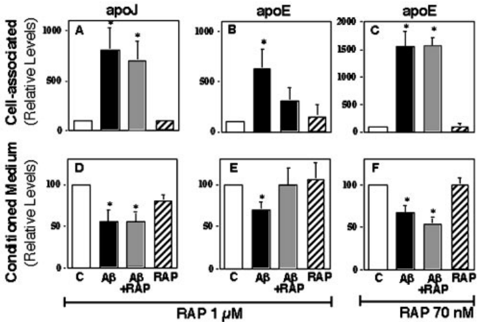
- Only Aβ altered endogenous apolipoproteins: cell-associated apoE and apoJ increased approximately 8-fold, while conditioned-medium apoE decreased by a mean of 35% and apoJ by 60% relative to control. The abstract describes an approximately 50% reduction in released apoE and apoJ.
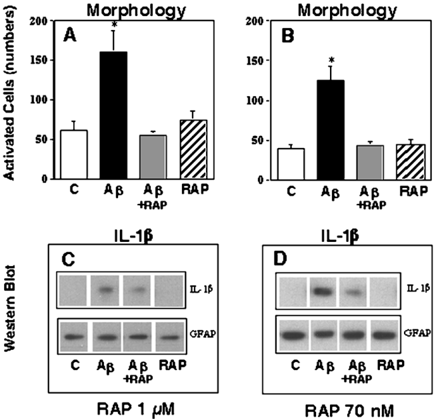
- RAP at 70 nM, which inhibits LRP but not LDLR, blocked Aβ-induced morphological activation and attenuated the Aβ-induced increase in proIL-1β, suggesting LRP mediates activation.
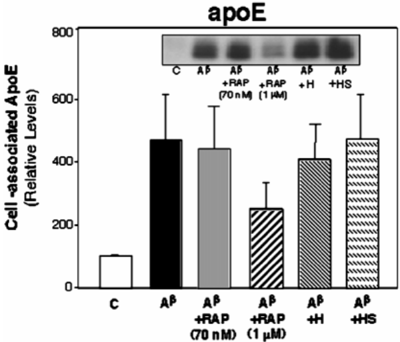
- RAP at 1 µM, which inhibits both LRP and LDLR, blocked the Aβ-induced increase in cell-associated apoE and the decrease in released apoE, but 70 nM RAP did not; this suggests LDLR mediates the apoE changes. RAP did not block Aβ-induced apoJ changes, and heparin or heparan sulfate did not block the Aβ-induced increase in cell-associated apoE.
Methods
- Primary astrocyte cultures were prepared from cerebral cortex of 1–2-day-old neonatal Harlan Sprague-Dawley rats; tertiary cultures were approximately 95–98% astrocytes with 2–5% microglial cells.
- Cells were treated with aged Aβ 1-42 (10 µM), dbcAMP (1 mM), LPS (10 µg/ml), or control buffer. RAP (1 µM or 70 nM) was added 1 h before Aβ; heparin (100 µg/ml) and heparan sulfate (1 µM) were also tested.
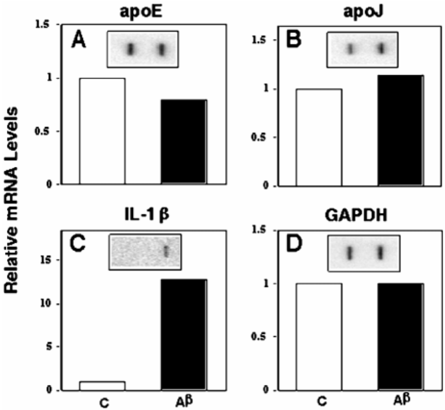
- Activation was assessed by morphology and Western blot for proIL-1β and GFAP. ApoE and apoJ protein levels in cell lysates and conditioned medium were measured by Western blot; apoE, apoJ, and IL-1β mRNA were measured by slot blot normalized to glyceraldehyde-3-phosphate dehydrogenase. Statistical significance was assessed by variance F tests and Student’s t test at p < 0.05.
Limitations
- The paper states that the data do not address whether the Aβ/LRP pathway uses the same downstream activation signaling events as LPS and dbcAMP.
- The paper states that the mechanism and function of Aβ-induced cell-associated apoJ accumulation are unclear, and that an unidentified apoJ receptor or other apoE receptors may be involved.
- The paper notes that microglia may play a similar role but focuses on astrocytes; the findings are from in vitro rat astrocyte cultures, so in vivo relevance is not established in this study.
Model-written summary. Check it against the paper before relying on it.
Integrity signals
Registry
Cites
Statistics
Figures
Verification
Claims the paper makes
33 Own result · 22 Own interpretation · 10 Partly supported · 10 No full text of the sources · 4 Supported · 3 Supported so far · 1 Couldn’t confirm · 1 Not checked yet · 1 Own method · 1 No basis given · accuracy not yet measured
The cited sources support only part of this claim — read each source’s verdict below.
In the paper
“In vitro, apoE and apoJ form stable complexes with A (11, 16 -20), alter the aggregation of various A peptides (21)(22)(23), and affect A neurotoxicity (24 -27).”
§ Apolipoprotein E Receptors Mediate the Effects of -Amyloid on Astrocyte Cultures* > Abstract
What the sources say
- Partly supportedcites [11] Strittmatter, 1993, Proc. Natl. Acad. Sci. U. S. A. sourceExperimental — accuracy not yet measured
The paper’s in vitro binding results (section labeled Materials and Methods; page not provided) show that ApoE remained bound to immobilized Aβ peptides even after washing with 5% SDS, supporting strong, stable binding. Our copy does not report that apoJ forms complexes with Aβ, so the apoJ portion is unsupported by this source. (LLM, conf=0.88)
- Supportedcites [16] Ghiso, 1993, Biochem. J. source
In Results and Discussion (page not supplied), the paper reports that both ApoJ and ApoE bound to immobilized Aβ peptide in binding experiments. ApoJ was recovered by acid elution, while ApoE remained bound until SDS treatment, supporting the claim that both form stable associations with Aβ in vitro. (LLM, conf=0.87)
- Not checked — no full text of the sourcecites [17] LaDu, 1994, J. Biol. Chem. source
- Not checked — no full text of the sourcecites [18] LaDu, 1995, J. Biol. Chem. source
- Partly supportedcites [19] Matsubara, 1995, J. Biol. Chem. sourceExperimental — accuracy not yet measured
The Results describe an apoJ–Aβ1-40 complex formed in vitro, and the Abstract says that apoE isoforms could not dissociate it at physiologic concentrations. The paper also reports apoE binding to Aβ, but does not establish that apoE–Aβ complexes are themselves stable. (LLM, conf=0.84)
- Not checked — no full text of the sourcecites [20] Aleshkov, 1997, Biochem. source
plaincorrelational- Asserted: passes — The authors put it forward as true.
- Checkable: passes — It can be checked against evidence.
- Load-bearing: passes — The paper’s conclusions depend on it.
- Based: passes — The paper gives a reason why it holds.
- Partly supported
The cited sources support only part of this claim — read each source’s verdict below.
In the paper
“In vitro, apoE and apoJ form stable complexes with A (11, 16 -20), alter the aggregation of various A peptides (21)(22)(23), and affect A neurotoxicity (24 -27).”
§ Apolipoprotein E Receptors Mediate the Effects of -Amyloid on Astrocyte Cultures* > Abstract
What the sources say
- Not checked — no full text of the sourcecites [24] Miyata, 1996, Nat. Genet. source
- Partly supportedcites [25] Jordán, 1998, J. Neurosci. sourceExperimental — accuracy not yet measured
The Discussion reports that apoE3 attenuated Aβ neurotoxicity in primary rat hippocampal neuron cultures, supporting the apoE part of the claim. Our copy does not report an effect of apoJ on Aβ neurotoxicity; apoJ appears in a reference about Aβ aggregation and oxidative stress, which does not establish the attributed neurotoxicity effect. (LLM, conf=0.88)
- Not checked — no full text of the sourcecites [26] Oda, 1995, Exp. Neurol. source
- Not checked — no full text of the sourcecites [27] Lambert, 1998, Proc. Natl. Acad. Sci. U. S. A. source
plaindirect- Asserted: passes — The authors put it forward as true.
- Checkable: passes — It can be checked against evidence.
- Load-bearing: passes — The paper’s conclusions depend on it.
- Based: passes — The paper gives a reason why it holds.
The cited sources support only part of this claim — read each source’s verdict below.
In the paper
“By immunostaining, these activated astrocytes express both the LDLR and LRP (data not shown), consistent with the previous observations summarized above that these are the two primary members of the LDLR family that are expressed by activated astrocytes (4 -7, 29 -31).”
§ Apolipoprotein E Receptors Mediate the Effects of -Amyloid on Astrocyte Cultures* > RAP Blocks A-induced Activation and Changes in apoE but
What the sources say
- Not checked — no full text of the sourcecites [4] Christie, 1996, J. Neuropath. Exp. Neurol. source
- Not checked — no full text of the sourcecites [5] Pitas, 1987, J. Biol. Chem. source
- Not checked — no full text of the sourcecites [6] Rebeck, 1993, Neuron source
- Could not verifycites [7] Kim, 1996, J. Biol. Chem. sourceExperimental — accuracy not yet measured
The Introduction says astrocytes secrete apoE, and the Discussion says LRP is expressed in brain. Neither passage addresses whether activated astrocytes express both LDLR and LRP; the paper’s receptor-expression experiments use in situ hybridization, not immunostaining of activated astrocytes. The citing sentence describes the immunostaining as its own unpublished result, so that observation cannot be verified from this source. (LLM, conf=0.76)
- Partly supportedcites [29] Bu, 1994, J. Biol. Chem. sourceExperimental — accuracy not yet measured
In the discussion of LRP expression (page unavailable), the paper reports detectable LRP mRNA in astrocytes. It does not show that activated astrocytes express both LRP and LDLR by immunostaining; its mention of LDLR concerns localization elsewhere in the central nervous system. (LLM, conf=0.86)
- Not checked — no full text of the sourcecites [30] Rebeck, 1995, Ann. Neurol. source
- Not checked — no full text of the sourcecites [31] Clatworthy, 1999, Neuroscience source
plain- Asserted: passes — The authors put it forward as true.
- Checkable: passes — It can be checked against evidence.
- Load-bearing: passes — The paper’s conclusions depend on it.
- Based: passes — The paper gives a reason why it holds.
The sources with a verdict support this claim; the rest weren’t checked yet, have no full text we could read, or their verdicts aren’t rated yet.
In the paper
“neural cells express a variety of apoE receptors in the low density lipoprotein receptor (LDLR) family (4 -7).”
§ Apolipoprotein E Receptors Mediate the Effects of -Amyloid on Astrocyte Cultures* > Abstract
What the sources say
- Not checked — no full text of the sourcecites [4] Christie, 1996, J. Neuropath. Exp. Neurol. source
- Not checked — no full text of the sourcecites [5] Pitas, 1987, J. Biol. Chem. source
- Not checked — no full text of the sourcecites [6] Rebeck, 1993, Neuron source
- Supportedcites [7] Kim, 1996, J. Biol. Chem. source
The introduction identifies the LDL and VLDL receptors as apoE receptors involved in uptake by brain cells. The Tissue-specific Expression section also detects apoER2, LDL receptor, and VLDL receptor transcripts in brain regions, supporting the statement that neural cells express multiple apoE receptors in the LDLR family. (LLM, conf=0.88)
plain- Asserted: passes — The authors put it forward as true.
- Checkable: passes — It can be checked against evidence.
- Load-bearing: passes — The paper’s conclusions depend on it.
- Based: passes — The paper gives a reason why it holds.
Every source the paper cites for this claim was checked and supports it.
In the paper
“Second, apoE3 enhances neurite outgrowth in vitro by a mechanism requiring LRP (32,33).”
§ Apolipoprotein E Receptors Mediate the Effects of -Amyloid on Astrocyte Cultures* > Abstract
What the sources say
- Supportedcites [32] Bellosta, 1995, J. Biol. Chem. source
The Results report that apoE3-expressing Neuro-2a cells showed enhanced neurite extension in the presence of β-VLDL, and that blocking the HSPG–LRP pathway prevented this enhancement. The Discussion likewise identifies that pathway as important for the effect. The paper specifies that a lipid source is necessary; it does not establish the downstream mechanism. (LLM, conf=0.90)
- Supportedcites [33] Sun, 1998, J. Neurosci. source
The Results report that apoE3 secreted by GFAP-apoE3 astrocytes promoted neurite outgrowth and that both an LRP-ligand antagonist and anti-LRP antibody blocked the effect. The Discussion explicitly states that LRP was required for apoE3’s stimulatory effect in these experiments. (LLM, conf=0.94)
plaindirect- Asserted: passes — The authors put it forward as true.
- Checkable: passes — It can be checked against evidence.
- Load-bearing: unclear — It is unclear whether the paper’s conclusions depend on it.
- Based: passes — The paper gives a reason why it holds.
- Supported
The cited sources support only part of this claim — read each source’s verdict below.
In the paper
“megalin, the only identified apoJ receptor, does not appear to be expressed by either glial cells or neurons (8,9).”
§ Apolipoprotein E Receptors Mediate the Effects of -Amyloid on Astrocyte Cultures* > DISCUSSION
What the sources say
- Not checked — no full text of the sourcecites [8] Kounnas, 1994, In Vivo
- Partly supportedcites [9] Zlokovic, 1996, Proc. Natl. Acad. Sci. U. S. A. sourceExperimental — accuracy not yet measured
The indexed study summary (page not given) identifies megalin as a receptor for apoJ and reports evidence for its role at the cerebral vascular endothelium and choroid epithelium. It does not establish that megalin is the only identified apoJ receptor or address its expression in glial cells or neurons. (LLM, conf=0.83)
hedged- Asserted: passes — The authors put it forward as true.
- Checkable: passes — It can be checked against evidence.
- Load-bearing: passes — The paper’s conclusions depend on it.
- Based: passes — The paper gives a reason why it holds.
The cited sources support only part of this claim — read each source’s verdict below.
In the paper
“This hypothesis is also consistent with our previous results demonstrating that exogenous apoE attenuates the activity of A in both astrocytes and neurons (25,38).”
§ Apolipoprotein E Receptors Mediate the Effects of -Amyloid on Astrocyte Cultures* > DISCUSSION
What the sources say
- Partly supportedcites [25] Jordán, 1998, J. Neurosci. sourceExperimental — accuracy not yet measured
The Discussion reports that added apoE3 attenuated Aβ toxicity in primary rat hippocampal neuron cultures, whereas apoE4 did not. Astrocytes served as a feeder layer, and the paper does not demonstrate attenuation of Aβ activity in astrocytes. The claim also omits the isoform-specific limitation. (LLM, conf=0.88)
- Not checked — no full text of the sourcecites [38] Hu, 1998, J. Neurochem. source
boosteddirect- Asserted: passes — The authors put it forward as true.
- Checkable: passes — It can be checked against evidence.
- Load-bearing: unclear — It is unclear whether the paper’s conclusions depend on it.
- Based: passes — The paper gives a reason why it holds.
- Partly supported
The cited sources that could be checked couldn’t confirm or dispute this claim.
In the paper
“apoJ is not a ligand for apoE receptors”
§ Apolipoprotein E Receptors Mediate the Effects of -Amyloid on Astrocyte Cultures* > DISCUSSION
What the sources say
- Not checked — no full text of the sourcecites [8] Kounnas, 1994, In Vivo
- Could not verifycites [9] Zlokovic, 1996, Proc. Natl. Acad. Sci. U. S. A. sourceExperimental — accuracy not yet measured
The study summary (pp. 4229–4234) identifies gp330/megalin as a receptor for apoJ and reports evidence for its role in apoJ transport. Neither that passage nor the additional passages retrieved for apoE receptors state whether apoJ is a ligand for apoE receptors, so the negative claim cannot be verified from our copy. (LLM, conf=0.72)
plain- Asserted: passes — The authors put it forward as true.
- Checkable: passes — It can be checked against evidence.
- Load-bearing: passes — The paper’s conclusions depend on it.
- Based: passes — The paper gives a reason why it holds.
A result the paper reports from its own data — it cites no other source for it, so there is none to check. The quote shows it is in the paper.
In the paper
“the levels of apoE and apoJ in conditioned medium from A-treated cells decreased by a mean of 35% (apoE) and 60% (apoJ) relative to control conditioned medium.”
§ Apolipoprotein E Receptors Mediate the Effects of -Amyloid on Astrocyte Cultures* > Effects of Astrocyte Activation on apoE and apoJ-
plaindirect- Asserted: passes — The authors put it forward as true.
- Checkable: passes — It can be checked against evidence.
- Load-bearing: passes — The paper’s conclusions depend on it.
- Based: passes — The paper gives a reason why it holds.
A result the paper reports from its own data — it cites no other source for it, so there is none to check. The quote shows it is in the paper.
In the paper
“Neither compound blocked the A-induced increase in cell-associated apoE”
§ Apolipoprotein E Receptors Mediate the Effects of -Amyloid on Astrocyte Cultures* > RAP Blocks A-induced Activation and Changes in apoE but
plain- Asserted: passes — The authors put it forward as true.
- Checkable: passes — It can be checked against evidence.
- Load-bearing: passes — The paper’s conclusions depend on it.
- Based: passes — The paper gives a reason why it holds.
- It may state two separate claims as one. 19
- Probably not a substantial claim. 14
- The quote only partly states this claim. 3
The sources with a verdict support this claim; the rest weren’t checked yet, have no full text we could read, or their verdicts aren’t rated yet.
In the paper
“As previously reported (37,41) these tertiary cultures are ϳ95-98% astrocytes, with only ϳ2-5% microglial cells.”
§ Apolipoprotein E Receptors Mediate the Effects of -Amyloid on Astrocyte Cultures* > EXPERIMENTAL PROCEDURES
What the sources say
- Not checked — no full text of the sourcecites [37] Hu, 1998, Brain Res. source
- Supportedcites [41] Hu, 1996, J. Biol. Chem. source
The Results section reports that tertiary neonatal rat cortical cultures contained approximately 98% astrocytes and that 2–3% of cells stained positive for the microglial marker OX-42. Both figures fall within the citing sentence’s approximate ranges; no page number is provided in our copy. (LLM, conf=0.94)
plain- Asserted: passes — The authors put it forward as true.
- Checkable: passes — It can be checked against evidence.
- Load-bearing: passes — The paper’s conclusions depend on it.
- Based: passes — The paper gives a reason why it holds.
It may state two separate claims as one.
The cited sources support only part of this claim — read each source’s verdict below.
In the paper
“In vitro, apoE and apoJ form stable complexes with A (11, 16 -20), alter the aggregation of various A peptides (21)(22)(23), and affect A neurotoxicity (24 -27).”
§ Apolipoprotein E Receptors Mediate the Effects of -Amyloid on Astrocyte Cultures* > Abstract
What the sources say
- Not checked — no full text of the sourcecites [21] Ma, 1994, Nature source
- Partly supportedcites [22] Sanan, 1994, J. Clin. Invest. sourceExperimental — accuracy not yet measured
The Discussion reports that apoE3 and apoE4 change the fibril morphology of two Aβ peptides in vitro, supporting the apoE portion of the claim. The paper does not report that apoJ alters Aβ aggregation; apoJ appears only in a reference to work on its complex with soluble Aβ. The indexed Discussion passage has no page number. (LLM, conf=0.88)
- Partly supportedcites [23] Evans, 1995, Proc. Natl. Acad. Sci. U. S. A. sourceExperimental — accuracy not yet measured
The Results (p. 3) show that apoE3 and apoE4 delayed in vitro nucleation of Aβ1–40. They also report no inhibition of Aβ1–42 under the conditions tested. Our copy does not report an effect of apoJ on Aβ aggregation, so it supports only the apoE portion of the claim. (LLM, conf=0.89)
plaindirect- Asserted: passes — The authors put it forward as true.
- Checkable: passes — It can be checked against evidence.
- Load-bearing: fails — The paper’s conclusions may not depend on it.
- Based: passes — The paper gives a reason why it holds.
Probably not a substantial claim. The paper’s conclusions may not depend on it.
The sources with a verdict support this claim; the rest weren’t checked yet, have no full text we could read, or their verdicts aren’t rated yet.
In the paper
“The binding affinity of RAP for LRP is 3.3 nM (46), whereas the K d of RAP for the LDLR is 250 nM (47)”
§ Apolipoprotein E Receptors Mediate the Effects of -Amyloid on Astrocyte Cultures* > RAP Blocks A-induced Activation and Changes in apoE but
What the sources say
- Not checked — no full text of the sourcecites [46] Iadonato, 1993, Biochem. J. source
- Supportedcites [47] Medh, 1995, J. Biol. Chem. source
The Abstract reports a dissociation constant of 250 nM for RAP binding to LDL receptors in a solid-phase assay. This source is citation (47), attached to the LDLR value; the 3.3 nM LRP value is attached to citation (46). (LLM, conf=0.94)
plain- Asserted: passes — The authors put it forward as true.
- Checkable: passes — It can be checked against evidence.
- Load-bearing: passes — The paper’s conclusions depend on it.
- Based: passes — The paper gives a reason why it holds.
It may state two separate claims as one.
The cited sources support only part of this claim — read each source’s verdict below.
In the paper
“Goretzki and Mueller (56) have shown that LRP tail interacts with a GTP-binding protein and that binding of at least two LRP ligands increases intracellular cAMP levels and the activity of cAMP-dependent protein kinase.”
§ Apolipoprotein E Receptors Mediate the Effects of -Amyloid on Astrocyte Cultures* > DISCUSSION
What the sources say
- Partly supportedcites [56] Goretzki, 1998, Biochem. J. sourceExperimental — accuracy not yet measured
The Discussion reports that two LRP ligands, lactoferrin and uPA, raise intracellular cAMP and stimulate cAMP-dependent protein kinase activity. It also describes a physical and functional association between LRP and a G-protein, but does not establish that the interaction occurs specifically at the LRP tail. (LLM, conf=0.88)
boosteddirect- Asserted: passes — The authors put it forward as true.
- Checkable: passes — It can be checked against evidence.
- Load-bearing: fails — The paper’s conclusions may not depend on it.
- Based: passes — The paper gives a reason why it holds.
Probably not a substantial claim. The paper’s conclusions may not depend on it. It may state two separate claims as one.
- Partly supported
The cited sources support only part of this claim — read each source’s verdict below.
In the paper
“The addition of exogenous apoE protects against A-induced toxicity in neuronal cell cultures, as well as A-induced activation of astrocyte cultures (24,25,38,52,53).”
§ Apolipoprotein E Receptors Mediate the Effects of -Amyloid on Astrocyte Cultures* > DISCUSSION
What the sources say
- Not checked — no full text of the sourcecites [24] Miyata, 1996, Nat. Genet. source
- Partly supportedcites [25] Jordán, 1998, J. Neurosci. sourceExperimental — accuracy not yet measured
The Results (‘ApoE4 is toxic to hippocampal pyramidal neurons’) and Discussion report that added apoE3, but not apoE4, protects rat hippocampal neuronal cultures from Aβ-induced toxicity. The paper uses astrocytes as a supporting feeder layer; it does not report whether apoE protects astrocyte cultures from Aβ-induced activation. (LLM, conf=0.87)
- Not checked — no full text of the sourcecites [38] Hu, 1998, J. Neurochem. source
- Not checked — no full text of the sourcecites [52] Whitson, 1994, Biochem. Biophys. Res. Commun. source
- Not checked — no full text of the sourcecites [53] Puttfarcken, 1996, J. Neurochem. source
plaindirect- Asserted: passes — The authors put it forward as true.
- Checkable: passes — It can be checked against evidence.
- Load-bearing: unclear — It is unclear whether the paper’s conclusions depend on it.
- Based: passes — The paper gives a reason why it holds.
It may state two separate claims as one.
Every source the paper cites for this claim was checked and supports it.
In the paper
“Herz and co-workers (55) have demonstrated that the C terminus of LRP binds to two cytosolic adapter proteins, FE65 and mammalian Disabled, an observation consistent with a signaling function for the cytosolic portion of the receptor.”
§ Apolipoprotein E Receptors Mediate the Effects of -Amyloid on Astrocyte Cultures* > DISCUSSION
What the sources say
- Supportedcites [55] Trommsdorff, 1998, J. Biol. Chem. source
The Abstract states that FE65 and mammalian Disabled bind the cytoplasmic tails of LRP. The Discussion further identifies binding to LRP tail sequences and describes the interaction as a possible basis for signaling, consistent with the citing sentence's qualified wording. (LLM, conf=0.94)
boostedcorrelational- Asserted: passes — The authors put it forward as true.
- Checkable: passes — It can be checked against evidence.
- Load-bearing: fails — The paper’s conclusions may not depend on it.
- Based: passes — The paper gives a reason why it holds.
Probably not a substantial claim. The paper’s conclusions may not depend on it.
- Supported
The cited sources support only part of this claim — read each source’s verdict below.
In the paper
“Unregulated glial activation could potentially compromise neuronal health via the sustained secretion of pro-inflammatory cytokines and oxidative stress molecules (57,58).”
§ Apolipoprotein E Receptors Mediate the Effects of -Amyloid on Astrocyte Cultures* > DISCUSSION
What the sources say
- Partly supportedcites [57] Smith, 1997, J. Neurosci. sourceExperimental — accuracy not yet measured
The Discussion (page unavailable) says activated microglia can produce nitric oxide and suggests that microglia may contribute to oxidative damage in Alzheimer’s disease. It does not address sustained secretion of pro-inflammatory cytokines or establish that unregulated glial activation is the cause of the neuronal damage described. (LLM, conf=0.86)
- Not checked — no full text of the sourcecites [58] Wallace, 1997, Exp. Neurol. source
hedgedconditional- Asserted: passes — The authors put it forward as true.
- Checkable: passes — It can be checked against evidence.
- Load-bearing: fails — The paper’s conclusions may not depend on it.
- Based: passes — The paper gives a reason why it holds.
Probably not a substantial claim. The paper’s conclusions may not depend on it.
- Partly supported
The cited sources support only part of this claim — read each source’s verdict below.
In the paper
“ApoE, apoJ, and most recently ␣ 2 -macroglobulin have been shown to form a complex with A that may facilitate clearance of the peptide (25-27, 50, 51).”
§ Apolipoprotein E Receptors Mediate the Effects of -Amyloid on Astrocyte Cultures* > DISCUSSION
What the sources say
- Partly supportedcites [25] Jordán, 1998, J. Neurosci. sourceExperimental — accuracy not yet measured
The paper reports an apoE3–Aβ complex in neuronal culture medium and, in the Discussion, proposes that binding may help clear Aβ. It does not establish the same clearance mechanism for apoJ or α2-macroglobulin; the apoJ complex appears only in a cited reference, and α2-macroglobulin is mentioned as a receptor name. (LLM, conf=0.87)
- Not checked — no full text of the sourcecites [26] Oda, 1995, Exp. Neurol. source
- Not checked — no full text of the sourcecites [27] Lambert, 1998, Proc. Natl. Acad. Sci. U. S. A. source
- Not checked — no full text of the sourcecites [50] Beffert, 1998, J. Neurochem. source
- Supportedcites [51] Narita, 1997, J. Neurochem. source
The citation group supports a sentence about several Aβ-binding proteins; this paper directly supports the α2-macroglobulin part. Its Abstract reports stable complexes between Aβ and activated α2-macroglobulin, and its Discussion says those complexes can undergo LRP-mediated endocytotic clearance in vitro. The paper presents clearance as a possible mechanism, consistent with the claim’s 'may facilitate' wording. (LLM, conf=0.93)
hedgedconditional- Asserted: passes — The authors put it forward as true.
- Checkable: passes — It can be checked against evidence.
- Load-bearing: fails — The paper’s conclusions may not depend on it.
- Based: passes — The paper gives a reason why it holds.
Probably not a substantial claim. The paper’s conclusions may not depend on it.
- Partly supported
Every source the paper cites for this claim was checked and supports it.
In the paper
“For example, a recent report linked two members of the LDLR receptor family, the very LDLR and ER2, to signal transduction pathways in the central nervous system (54).”
§ Apolipoprotein E Receptors Mediate the Effects of -Amyloid on Astrocyte Cultures* > DISCUSSION
What the sources say
- Supportedcites [54] Trommsdorff, 1999, Cell source
The Abstract identifies VLDLR and ApoER2 as essential components of the Reelin signaling pathway in the brain. The Discussion likewise describes them as components of a neuronal migration pathway, supporting the cited sentence’s link between these two LDL receptor family members and central nervous system signaling. (LLM, conf=0.94)
plaincorrelational- Asserted: passes — The authors put it forward as true.
- Checkable: passes — It can be checked against evidence.
- Load-bearing: fails — The paper’s conclusions may not depend on it.
- Based: passes — The paper gives a reason why it holds.
Probably not a substantial claim. The paper’s conclusions may not depend on it.
- Supported
Every source the paper cites for this claim was checked and supports it.
In the paper
“For example, apoE3 but not apoE4 protects against A-induced neurotoxicity of rat hippocampal neurons, a process inhibited by 1 M RAP (25).”
§ Apolipoprotein E Receptors Mediate the Effects of -Amyloid on Astrocyte Cultures* > DISCUSSION
What the sources say
- Supportedcites [25] Jordán, 1998, J. Neurosci. source
The Discussion states that apoE3, but not apoE4, attenuated Aβ-induced neurotoxicity in primary rat hippocampal neuron cultures. The RAP results section reports that treatment with 1 M RAP abolished apoE3’s protective effect. (LLM, conf=0.94)
plaindirect- Asserted: passes — The authors put it forward as true.
- Checkable: passes — It can be checked against evidence.
- Load-bearing: fails — The paper’s conclusions may not depend on it.
- Based: passes — The paper gives a reason why it holds.
Probably not a substantial claim. The paper’s conclusions may not depend on it. It may state two separate claims as one.
- Supported
A result the paper reports from its own data — it cites no other source for it, so there is none to check. The quote shows it is in the paper.
In the paper
“Treatment of cells with 1 M RAP did not inhibit dbcAMP-or LPS-induced activation (data not shown)”
§ Apolipoprotein E Receptors Mediate the Effects of -Amyloid on Astrocyte Cultures* > RAP Blocks A-induced Activation and Changes in apoE but
plain- Asserted: passes — The authors put it forward as true.
- Checkable: passes — It can be checked against evidence.
- Load-bearing: passes — The paper’s conclusions depend on it.
- Based: passes — The paper gives a reason why it holds.
The quote only partly states this claim.
A result the paper reports from its own data — it cites no other source for it, so there is none to check. The quote shows it is in the paper.
In the paper
“In contrast, 1 M RAP blocked both the increase in cell-associated apoE (Fig. 5B) and the decrease in apoE in the conditioned medium (Fig. 5E).”
§ Apolipoprotein E Receptors Mediate the Effects of -Amyloid on Astrocyte Cultures* > RAP Blocks A-induced Activation and Changes in apoE but
plaindirect- Asserted: passes — The authors put it forward as true.
- Checkable: passes — It can be checked against evidence.
- Load-bearing: passes — The paper’s conclusions depend on it.
- Based: passes — The paper gives a reason why it holds.
The quote only partly states this claim.
A result the paper reports from its own data — it cites no other source for it, so there is none to check. The quote shows it is in the paper.
In the paper
“and attenuated the A-induced increase in proIL-1 levels (Fig. 4, C and D).”
§ Apolipoprotein E Receptors Mediate the Effects of -Amyloid on Astrocyte Cultures* > RAP Blocks A-induced Activation and Changes in apoE but
plaindirect- Asserted: passes — The authors put it forward as true.
- Checkable: passes — It can be checked against evidence.
- Load-bearing: passes — The paper’s conclusions depend on it.
- Based: passes — The paper gives a reason why it holds.
It may state two separate claims as one.
A result the paper reports from its own data — it cites no other source for it, so there is none to check. The quote shows it is in the paper.
In the paper
“cells treated with A, dbcAMP, or LPS exhibited an increase in proIL-1 levels compared with PBS-treated cells.”
- Also stated in: § RESULTS · boosted
“These data demonstrate that cultured rat astrocytes can be activated by A, dbcAMP, and LPS.”
§ Apolipoprotein E Receptors Mediate the Effects of -Amyloid on Astrocyte Cultures* > RESULTS
boosteddirect- Asserted: passes — The authors put it forward as true.
- Checkable: passes — It can be checked against evidence.
- Load-bearing: passes — The paper’s conclusions depend on it.
- Based: passes — The paper gives a reason why it holds.
It may state two separate claims as one.
- Also stated in: § RESULTS · boosted
A result the paper reports from its own data — it cites no other source for it, so there is none to check. The quote shows it is in the paper.
In the paper
“Neither dbcAMP nor LPS altered the levels of cellassociated apoE and apoJ (Fig. 2, A and B) or the levels of apoE in the conditioned medium (Fig. 2C).”
§ Apolipoprotein E Receptors Mediate the Effects of -Amyloid on Astrocyte Cultures* > Effects of Astrocyte Activation on apoE and apoJ-
plain- Asserted: passes — The authors put it forward as true.
- Checkable: passes — It can be checked against evidence.
- Load-bearing: unclear — It is unclear whether the paper’s conclusions depend on it.
- Based: passes — The paper gives a reason why it holds.
It may state two separate claims as one.
A result the paper reports from its own data — it cites no other source for it, so there is none to check. The quote shows it is in the paper.
In the paper
“We found that both concentrations of RAP blocked A-induced morphological activation (Fig. 4, A and B)”
§ Apolipoprotein E Receptors Mediate the Effects of -Amyloid on Astrocyte Cultures* > RAP Blocks A-induced Activation and Changes in apoE but
plaindirect- Asserted: passes — The authors put it forward as true.
- Checkable: passes — It can be checked against evidence.
- Load-bearing: passes — The paper’s conclusions depend on it.
- Based: passes — The paper gives a reason why it holds.
It may state two separate claims as one.
A conclusion the paper draws from its own results — it cites no other source for it, so there is none to check. The quote shows it is in the paper.
In the paper
“These data suggest that apoE receptors translate the presence of extracellular A into cellular responses, both initiating and modulating the inflammatory response induced by A.”
§ Apolipoprotein E Receptors Mediate the Effects of -Amyloid on Astrocyte Cultures* > Abstract
hedgeddirect- Asserted: passes — The authors put it forward as true.
- Checkable: passes — It can be checked against evidence.
- Load-bearing: passes — The paper’s conclusions depend on it.
- Based: passes — The paper gives a reason why it holds.
It may state two separate claims as one.
In the paper
“We have previously reported (3) that rat astrocytes secrete high density lipoprotein-like lipoprotein particles with apoE and apoJ as the primary protein components.”
§ Apolipoprotein E Receptors Mediate the Effects of -Amyloid on Astrocyte Cultures* > Abstract
What the sources say
- Not checked — no full text of the sourcecites [3] LaDu, 1998, J. Neurochem. source
plain- Asserted: passes — The authors put it forward as true.
- Checkable: passes — It can be checked against evidence.
- Load-bearing: fails — The paper’s conclusions may not depend on it.
- Based: passes — The paper gives a reason why it holds.
Probably not a substantial claim. The paper’s conclusions may not depend on it.
What the paper did — it cites no source for this, so there is none to check. The quote shows it is in the paper.
In the paper
“The bovine serum albumin-only control had no effect on the activation state of the cells in either the presence or the absence of A (data not shown).”
§ Apolipoprotein E Receptors Mediate the Effects of -Amyloid on Astrocyte Cultures* > EXPERIMENTAL PROCEDURES
plain- Asserted: passes — The authors put it forward as true.
- Checkable: passes — It can be checked against evidence.
- Load-bearing: fails — The paper’s conclusions may not depend on it.
- Based: passes — The paper gives a reason why it holds.
Probably not a substantial claim. The paper’s conclusions may not depend on it.
A claim is checked only against the cited paper’s full text, never its abstract, and none is available for its sources.
In the paper
“A 1-42 aged according to this protocol is a mixture of fibrils and soluble globular aggregates, and is active to astrocytes (37,38) and toxic to neurons (26,27).”
§ Apolipoprotein E Receptors Mediate the Effects of -Amyloid on Astrocyte Cultures* > EXPERIMENTAL PROCEDURES
What the sources say
- Not checked — no full text of the sourcecites [37] Hu, 1998, Brain Res. source
- Not checked — no full text of the sourcecites [38] Hu, 1998, J. Neurochem. source
- Not checked — no full text of the sourcecites [26] Oda, 1995, Exp. Neurol. source
- Not checked — no full text of the sourcecites [27] Lambert, 1998, Proc. Natl. Acad. Sci. U. S. A. source
plaindirect- Asserted: passes — The authors put it forward as true.
- Checkable: passes — It can be checked against evidence.
- Load-bearing: passes — The paper’s conclusions depend on it.
- Based: passes — The paper gives a reason why it holds.
It may state two separate claims as one.
- Rests on an assumption: The effects of the aged Aβ1-42 preparation on astrocytes are attributable to Aβ and not to other components or contaminants in the preparation.
A claim is checked only against the cited paper’s full text, never its abstract, and none is available for its sources.
In the paper
“genetic evidence suggests that polymorphisms in either LRP or ␣ 2 -macroglobulin increase the risk of late onset familial AD (35,36).”
§ Apolipoprotein E Receptors Mediate the Effects of -Amyloid on Astrocyte Cultures* > Abstract
What the sources say
hedgeddirect- Asserted: passes — The authors put it forward as true.
- Checkable: passes — It can be checked against evidence.
- Load-bearing: fails — The paper’s conclusions may not depend on it.
- Based: passes — The paper gives a reason why it holds.
Probably not a substantial claim. The paper’s conclusions may not depend on it.
In the paper
“LRP has been shown to mediate the endocytosis of a secreted form of amyloid precursor protein (34).”
§ Apolipoprotein E Receptors Mediate the Effects of -Amyloid on Astrocyte Cultures* > Abstract
What the sources say
- Not checked — no full text of the sourcecites [34] Kounnas, 1995, Cell source
plaindirect- Asserted: passes — The authors put it forward as true.
- Checkable: passes — It can be checked against evidence.
- Load-bearing: passes — The paper’s conclusions depend on it.
- Based: passes — The paper gives a reason why it holds.
Probably not a substantial claim.
A conclusion the paper draws from its own results — it cites no other source for it, so there is none to check. The quote shows it is in the paper.
In the paper
“A-induced changes in cultured astrocytes appear to involve both a novel mechanism of action and a unique set of responses.”
§ Apolipoprotein E Receptors Mediate the Effects of -Amyloid on Astrocyte Cultures* > DISCUSSION
hedgedconditional- Asserted: passes — The authors put it forward as true.
- Checkable: passes — It can be checked against evidence.
- Load-bearing: passes — The paper’s conclusions depend on it.
- Based: passes — The paper gives a reason why it holds.
It may state two separate claims as one.
In the paper
“Glia, in particular astrocytes, are the primary cell type in the central nervous system that synthesize apoE, whereas apoJ is expressed by glia and neurons (reviewed in Ref. 2).”
§ Apolipoprotein E Receptors Mediate the Effects of -Amyloid on Astrocyte Cultures* > Abstract
What the sources say
- Not checked — no full text of the sourcecites [2] LaDu, 2000, Ann. N. Y. Acad. Sci. source
plain- Asserted: passes — The authors put it forward as true.
- Checkable: passes — It can be checked against evidence.
- Load-bearing: fails — The paper’s conclusions may not depend on it.
- Based: passes — The paper gives a reason why it holds.
Probably not a substantial claim. The paper’s conclusions may not depend on it. It may state two separate claims as one.
A conclusion the paper draws from its own results — it cites no other source for it, so there is none to check. The quote shows it is in the paper.
In the paper
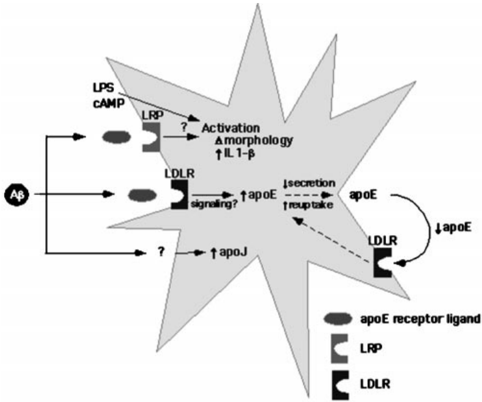
“These data suggest that both LRP and the LDLR can translate the presence of extracellular A into cellular responses (Fig. 7).”
§ Apolipoprotein E Receptors Mediate the Effects of -Amyloid on Astrocyte Cultures* > DISCUSSION
hedgeddirect- Asserted: passes — The authors put it forward as true.
- Checkable: passes — It can be checked against evidence.
- Load-bearing: passes — The paper’s conclusions depend on it.
- Based: passes — The paper gives a reason why it holds.
It may state two separate claims as one.
A conclusion the paper draws from its own results — it cites no other source for it, so there is none to check. The quote shows it is in the paper.
In the paper
“The secretion of apoE into the extracellular space appears to reduce the functional activity of the A peptide, possibly via the formation of an apoE⅐A complex that is avidly cleared by apoE receptors, resulting in an overall increase in cell-associated apoE.”
§ Apolipoprotein E Receptors Mediate the Effects of -Amyloid on Astrocyte Cultures* > DISCUSSION
hedgedconditional- Asserted: passes — The authors put it forward as true.
- Checkable: passes — It can be checked against evidence.
- Load-bearing: passes — The paper’s conclusions depend on it.
- Based: passes — The paper gives a reason why it holds.
It may state two separate claims as one.
A conclusion the paper draws from its own results — it cites no other source for it, so there is none to check. The quote shows it is in the paper.
In the paper
“This suggests that the actual amount of apoE increases, possibly via an A-activated signaling mechanism linked to the LDLR.”
§ Apolipoprotein E Receptors Mediate the Effects of -Amyloid on Astrocyte Cultures* > DISCUSSION
hedgedconditional- Asserted: passes — The authors put it forward as true.
- Checkable: passes — It can be checked against evidence.
- Load-bearing: passes — The paper’s conclusions depend on it.
- Based: passes — The paper gives a reason why it holds.
It may state two separate claims as one.
None of the sources cited for this claim have been checked yet.
In the paper
“recent evidence suggests that apoE receptors may have a signal transduction capacity as well.”
§ Apolipoprotein E Receptors Mediate the Effects of -Amyloid on Astrocyte Cultures* > DISCUSSION
hedgedconditional- Asserted: passes — The authors put it forward as true.
- Checkable: passes — It can be checked against evidence.
- Load-bearing: passes — The paper’s conclusions depend on it.
- Based: passes — The paper gives a reason why it holds.
Probably not a substantial claim.
A conclusion the paper draws from its own results — it cites no other source for it, so there is none to check. The quote shows it is in the paper.
In the paper
“This suggests that the LDLR may be linked to an intracellular pathway that signals an increase in apoE translation and/or a decrease in degradation (steady-state apoE mRNA levels do not change).”
§ Apolipoprotein E Receptors Mediate the Effects of -Amyloid on Astrocyte Cultures* > DISCUSSION
hedgedcorrelational- Asserted: passes — The authors put it forward as true.
- Checkable: passes — It can be checked against evidence.
- Load-bearing: passes — The paper’s conclusions depend on it.
- Based: passes — The paper gives a reason why it holds.
It may state two separate claims as one.
A conclusion the paper draws from its own results — it cites no other source for it, so there is none to check. The quote shows it is in the paper.
In the paper
“The LDLR mediates the A-induced increase in cell-associated apoE and the decrease in apoE in the conditioned medium.”
§ Apolipoprotein E Receptors Mediate the Effects of -Amyloid on Astrocyte Cultures* > DISCUSSION
plaindirect- Asserted: passes — The authors put it forward as true.
- Checkable: passes — It can be checked against evidence.
- Load-bearing: passes — The paper’s conclusions depend on it.
- Based: passes — The paper gives a reason why it holds.
It may state two separate claims as one.
The paper states this without a source or data behind it here, so there is nothing to check it against. The quote shows it is in the paper.
In the paper
“Several reports suggest that apoE receptors may be involved in modifying the activity of A in neural cells.”
§ Apolipoprotein E Receptors Mediate the Effects of -Amyloid on Astrocyte Cultures* > DISCUSSION
hedgedconditional- Asserted: passes — The authors put it forward as true.
- Checkable: passes — It can be checked against evidence.
- Load-bearing: passes — The paper’s conclusions depend on it.
- Based: passes — The paper gives a reason why it holds.
Probably not a substantial claim.
A conclusion the paper draws from its own results — it cites no other source for it, so there is none to check. The quote shows it is in the paper.
In the paper
“LRP mediates A-induced changes in astrocyte morphology and increased expression of IL-1.”
§ Apolipoprotein E Receptors Mediate the Effects of -Amyloid on Astrocyte Cultures* > DISCUSSION
plaindirect- Asserted: passes — The authors put it forward as true.
- Checkable: passes — It can be checked against evidence.
- Load-bearing: passes — The paper’s conclusions depend on it.
- Based: passes — The paper gives a reason why it holds.
It may state two separate claims as one.
The paper relies on this without support.
The effects of the aged Aβ1-42 preparation on astrocytes are attributable to Aβ and not to other components or contaminants in the preparation.
“A 1-42 aged according to this protocol is a mixture of fibrils and soluble globular aggregates, and is active to astrocytes (37,38) and toxic to neurons (26,27).”
The paper relies on this without support.
RAP specifically inhibits apoE receptors (LRP/LDLR) without affecting other pathways, so RAP-sensitive effects can be attributed to apoE receptors.
“RAP blocks A-induced astrocyte activation.”
“The A-stimulated changes in apoJ persist in the presence of 1 M RAP and the changes in apoE persist in the presence of 70 nM RAP, both treatments that block morphological activation.”
The paper relies on this without support.
Cultured rat cortical astrocytes respond to Aβ in a way that models relevant astrocyte responses in vivo.
“A-induced changes in cultured astrocytes appear to involve both a novel mechanism of action and a unique set of responses.”
Claims other papers make about this one
Each is checked against this paper’s own text: does it say what the citing paper says it does?
The source backs part of the claim, not all of it — or backs it for a different population, condition or comparison.
In the citing paper
“RAP, at a concentration that has been proven to inhibit ligand interaction of all LDLr family members (40), was unable to inhibit fluo-A-(1-42) uptake and transport (Fig. 2D).”
From Internalization of β-Amyloid Peptide by Primary Neurons in the Absence of Apolipoprotein E (2007) · cites this paper as [40]
Experimental — accuracy not yet measured
Self-check
Percentages, sums and reported differences re-computed from the paper’s own numbers.
Each contradiction between two passages listed here was confirmed by an independent check.
Rated minor: it would not touch a result — a value no result rests on, a p-value that stays on the same side of the significance level, or a conflict that is clerical, resolved elsewhere in the paper, or outside its own findings.
In the paper
§ Apolipoprotein E Receptors Mediate the Effects of -Amyloid on Astrocyte Cultures* > DISCUSSION
“We show a ϳ50% decrease in apoE in the conditioned media and an ϳ8fold increase in cell-associated apoE.”
§ Apolipoprotein E Receptors Mediate the Effects of -Amyloid on Astrocyte Cultures* > Effects of Astrocyte Activation on apoE and apoJ-
“the levels of apoE and apoJ in conditioned medium from A-treated cells decreased by a mean of 35% (apoE) and 60% (apoJ) relative to control conditioned medium.”
Rated minor: it would not touch a result — a value no result rests on, a p-value that stays on the same side of the significance level, or a conflict that is clerical, resolved elsewhere in the paper, or outside its own findings.
In the paper
§ Apolipoprotein E Receptors Mediate the Effects of -Amyloid on Astrocyte Cultures* > DISCUSSION
“In terms of novel responses, only A induced alterations in apoE and apoJ, changes that appear to be independent of activation.”
§ Apolipoprotein E Receptors Mediate the Effects of -Amyloid on Astrocyte Cultures* > Effects of Astrocyte Activation on apoE and apoJ-
“However, there was an increase in apoJ levels in conditioned medium from LPStreated cells (Fig. 2D).”
Citations
Cites
Strittmatter, W. J., Saunders, A. M., Schmechel, D., Pericak-Vance, M., Enghild, J., Salvesen, G. S., & Roses, A. D. (1993) · Proceedings of the National Academy of Sciences · doi:10.1073/pnas.90.5.1977 · Cited by 4,268
Diffusible, nonfibrillar ligands derived from Aβ 1–42 are potent central nervous system neurotoxins
Lambert, M. P., Barlow, A. K., Chromy, B. A., Edwards, C., Freed, R., Liosatos, M., Morgan, T. E., Rozovsky, I., Trommer, B., Viola, K. L., et al. (1998) · Proceedings of the National Academy of Sciences · doi:10.1073/pnas.95.11.6448 · Cited by 3,506
Trommsdorff, M., Gotthardt, M., Hiesberger, T., Shelton, J., Stockinger, W., Nimpf, J., Hammer, R. E., Richardson, J. A., & Herz, J. (1999) · Cell · doi:10.1016/s0092-8674(00)80782-5 · Cited by 1,261
Widespread Peroxynitrite-Mediated Damage in Alzheimer’s Disease
Smith, M. A., Richey Harris, P. L., Sayre, L. M., Beckman, J. S., & Perry, G. (1997) · The Journal of Neuroscience · doi:10.1523/jneurosci.17-08-02653.1997 · Cited by 1,239
Krieger, M., & Krieger, J. (1994) · Annual Review of Biochemistry · doi:10.1146/annurev.biochem.63.1.601 · Cited by 1,169
Namba, Y., Tomonaga, M., Kawasaki, H., Otomo, E., & Ikeda, K. (1991) · Brain Research · doi:10.1016/0006-8993(91)91092-f · Cited by 1,157
Apolipoprotein E in sporadic Alzheimer's disease: Allelic variation and receptor interactions
William Rebeck, G., Reiter, J. S., Strickland, D. K., & Hyman, B. T. (1993) · Neuron · doi:10.1016/0896-6273(93)90070-8 · Cited by 1,107
MICROGLIA AS MEDIATORS OF INFLAMMATORY AND DEGENERATIVE DISEASES
González-Scarano, F., & Baltuch, G. (1999) · Annual Review of Neuroscience · doi:10.1146/annurev.neuro.22.1.219 · Cited by 984
Ma, J., Yee, A., Brewer, H. B., Das, S., & Potter, H. (1994) · Nature · doi:10.1038/372092a0 · Cited by 871
Miyata, M., & Smith, J. D. (1996) · Nature Genetics · doi:10.1038/ng0996-55 · Cited by 735
Research works printed but not linked: 1
- Kounnas, 1994, In Vivo, 8, 343
Cited by
Sorted by citations
The role of apolipoprotein E in Alzheimer's disease
Kim, J., Basak, J. M., & Holtzman, D. M. (2009) · Neuron · doi:10.1016/j.neuron.2009.06.026 · Cited by 1,661
Allaman, I., Gavillet, M., Bélanger, M., Laroche, T., Viertl, D., Lashuel, H. A., & Magistretti, P. J. (2010) · Journal of Neuroscience · doi:10.1523/jneurosci.5098-09.2010 · Cited by 291
Kanekiyo, T., & Bu, G. (2014) · Frontiers in Aging Neuroscience · doi:10.3389/fnagi.2014.00093 · Cited by 281
Self-citationCholesterol homeostasis in neurons and glial cells
Vance, J. E., Hayashi, H., & Karten, B. (2005) · Seminars in Cell and Developmental Biology · doi:10.1016/j.semcdb.2005.01.005 · Cited by 225
Differential effects of oligomeric and fibrillar amyloid-β1–42 on astrocyte-mediated inflammation
White, J. A., Manelli, A. M., Holmberg, K. H., Eldik, L. J. V., & LaDu, M. J. (2005) · Neurobiology of Disease · doi:10.1016/j.nbd.2004.12.013 · Cited by 223
Self-citation
Metadata
- Authors
- LaDu, M. J., Shah, J. A., Reardon, C. A., Getz, G. S., Bu, G., Hu, J., Guo, L., & Van Eldik, L. J.
- Affiliations
- Northwestern University (US)
- University of Chicago (US)
- Washington University in St. Louis (US)
- Venue
- Journal of Biological Chemistry
- Publisher
- Elsevier BV
- Published
- 2000-10
- Volume
- 275
- Issue
- 43
- Pages
- 33974-33980
- ISSN
- 0021-9258 (ISSN-L)
- OpenAlex
- W1967940232
- Semantic Scholar
- ba7ae1f96517b574b777f839597b4dc65e6860de
- Cited by
- 103
- References
- 61
- Citations by year
- 2025: 1 · 2024: 6 · 2023: 2 · 2021: 3 · 2018: 1 · 2017: 4 · 2016: 5 · 2014: 4 · 2013: 2 · 2012: 9
- FWCI
- 1.75
- Type
- journal article
- Language
- en
- Open access
- hybrid
- doi.org
- Licence
- Locations
- Journal of Biological Chemistry (publishedVersion, cc-by)
- PubMed (publishedVersion)
- Rare & Special e-Zone (The Hong Kong University of Science and Technology) (submittedVersion)
- Funders
- Brain Research Foundation
- American Health Assistance Foundation
- National Institutes of Health (AG13939)
- National Institute on Aging (P01AG015501, AG13939, AG16776)
- National Eye Institute (F31EY021714)
- Topics
- Life Sciences › Neuroscience › Cellular and Molecular Neuroscience › Alzheimer's disease research and treatments
- Life Sciences › Neuroscience › Neurology › Neuroinflammation and Neurodegeneration Mechanisms
- Life Sciences › Neuroscience › Cellular and Molecular Neuroscience › Neuroscience and Neuropharmacology Research
- Keywords
- apolipoprotein E receptor, amyloid-beta, astrocyte activation, clusterin, LDL receptor, receptor-associated protein, IL-1β, lipopolysaccharide, dibutyryl cyclic AMP, neuroinflammation, Alzheimer's disease
- MeSH terms
- Animals, Apolipoproteins E, Astrocytes, Cells, Cultured, Glycoproteins, Interleukin-1, Receptors, Immunologic, Receptors, LDL, Amyloid beta-Peptides, Rats, Sprague-Dawley, Receptors, Lipoprotein, Molecular Chaperones, Low Density Lipoprotein Receptor-Related Protein-1, Clusterin, Rats
About these checks
Registry, retraction, Cites and statistics results are computed, not judged, with one exception: a printed reference that no index lists is read once by a model before it counts as a citation error. Claims are extracted by a model and kept only when their quote appears verbatim in the text; each cited source is then checked, with a model’s help, for whether it says what the claim relies on. Those verdicts can be wrong — read the claim’s quote and the cited source before relying on one.
A language model drew the claims from the paper on 2026-11-09, under version 3 of the claim definition (model deepseek-v4.1-flash, prompt extract-v3).
A second model labelled each claim on 2026-11-09 (model jev-1.13-20260917, definition revision gold-guideline-v0.2).
Cited sources are checked with a language model’s help (gpt-6-sol).
Statistics and arithmetic are recomputed, not judged.
Confidence bands are shown only for fields calibrated on our annotated test set. None is calibrated yet, so no band is shown.
What counts as a claim ›How we measure confidence ›How we check this ›
Are you an author, or do you see a problem with this page? Request a review
