

Ribosomal RNA in Alzheimer Disease Is Oxidized by Bound Redox-active Iron
Open accessThe DOI matches its Crossref record; 52 of the 52 references it cites were found in a registry or an index.
Abstract
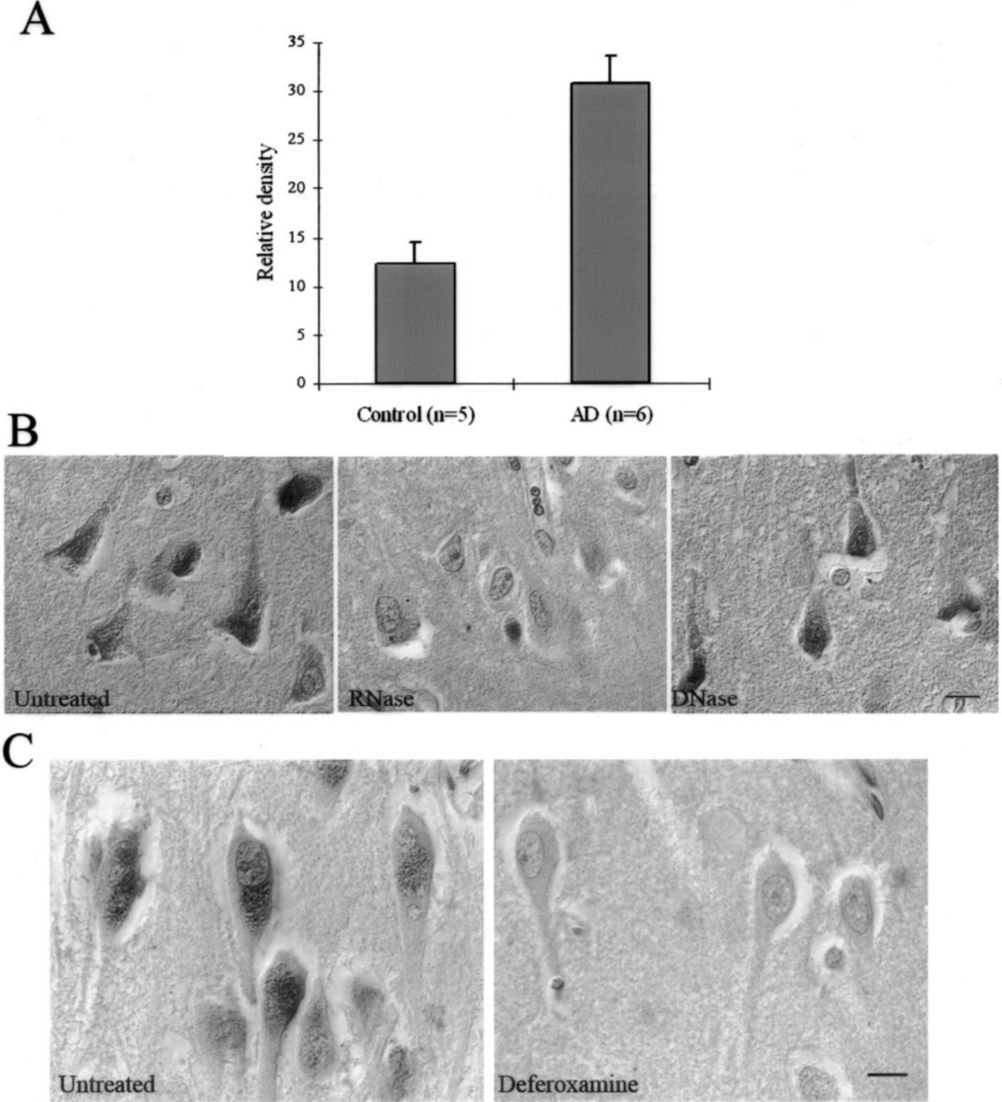
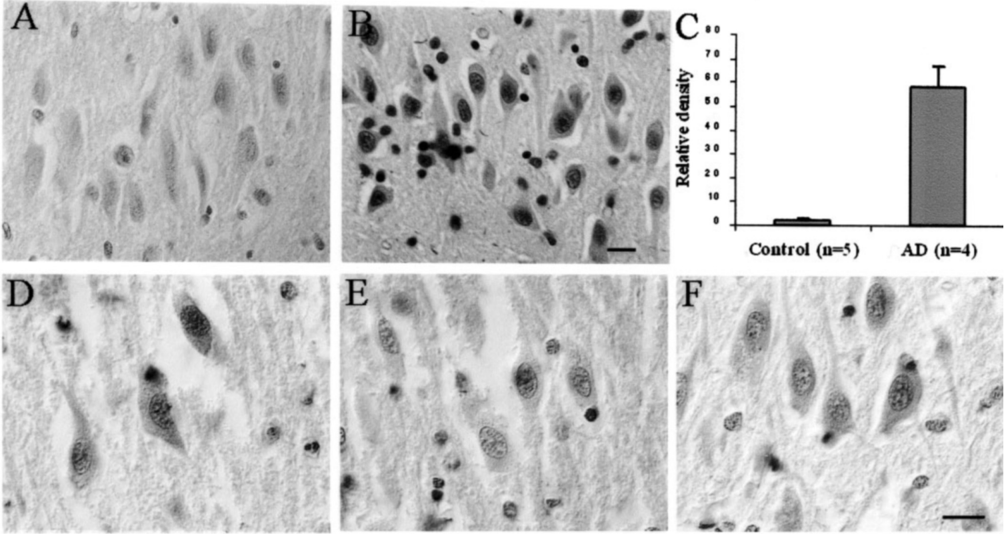
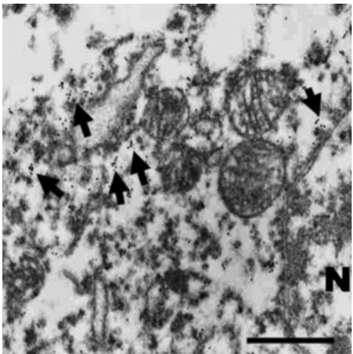
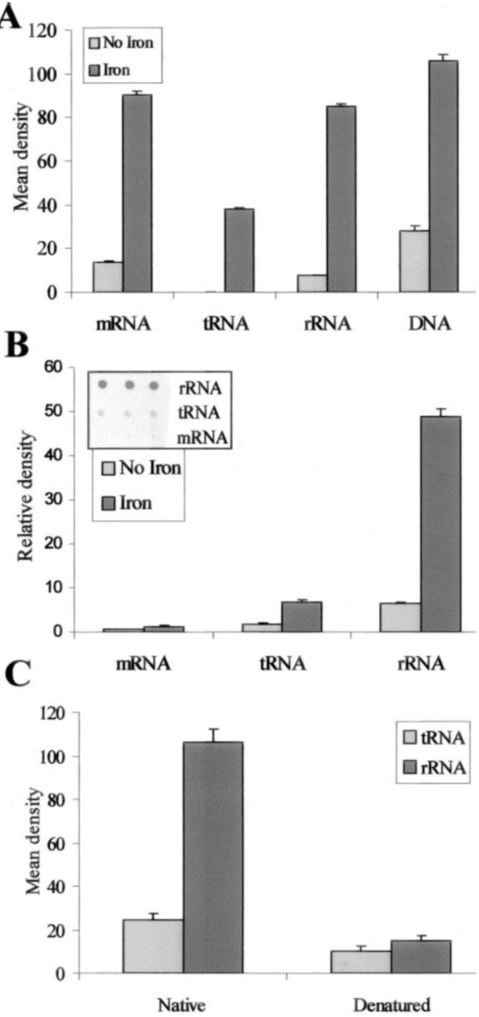
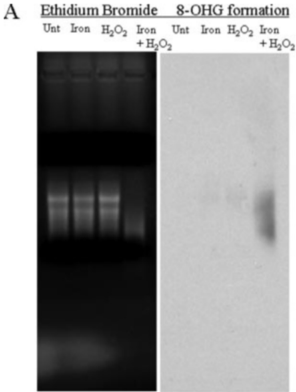
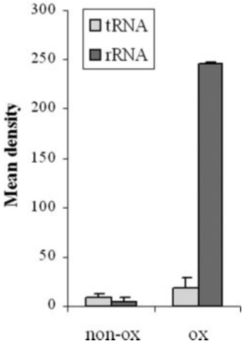
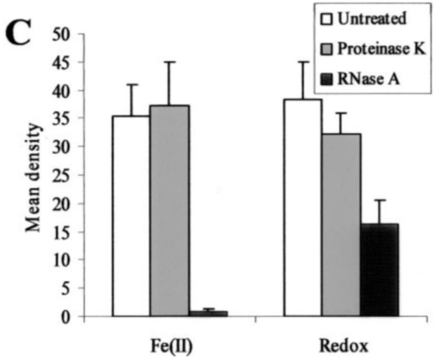
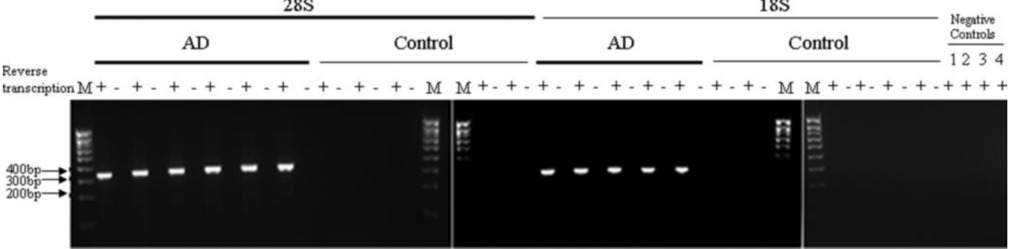
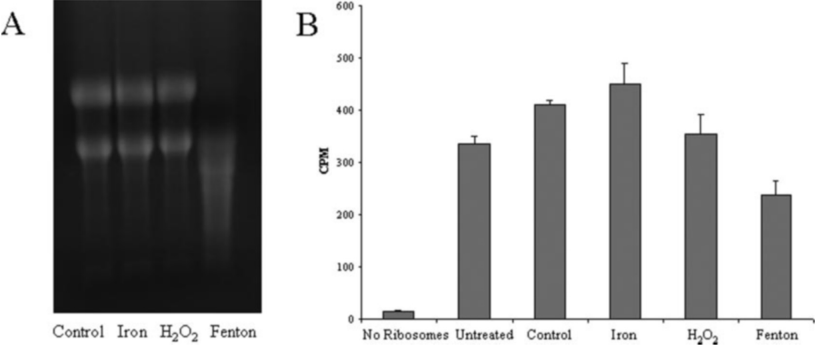
Oxidative modification of cytoplasmic RNA in vulnerable neurons is an important, well documented feature of the pathophysiology of Alzheimer disease. Here we report that RNA-bound iron plays a pivotal role for RNA oxidation in vulnerable neurons in Alzheimer disease brain. The cytoplasm of hippocampal neurons showed significantly higher redox activity and iron(II) staining than age-matched controls. Notably, both were susceptible to RNase, suggesting a physical association of iron(II) with RNA. Ultrastructural analysis further suggested an endoplasmic reticulum association. Both rRNA and mRNA showed twice the iron binding as tRNA. rRNA, extremely abundant in neurons, was considered to provide the greatest number of iron binding sites among cytoplasmic RNA species. Interestingly, the difference of iron binding capacity disappeared after denaturation of RNA, suggesting that the higher order structure may contribute to the greater iron binding of rRNA. Reflecting the difference of iron binding capacity, oxidation of rRNA by the Fenton reaction formed 13 times more 8-hydroxyguanosine than tRNA. Consistent with in situ findings, ribosomes purified from Alzheimer hippocampus contained significantly higher levels of RNase-sensitive iron(II) and redox activity than control. Furthermore, only Alzheimer rRNA contains 8-hydroxyguanosine in reverse transcriptase-PCR. Addressing the biological significance of ribosome oxidation by redox-active iron, in vitro translation with oxidized ribosomes from rabbit reticulocyte showed a significant reduction of protein synthesis. In conclusion these results suggest that rRNA provides a binding site for redox-active iron and serves as a redox center within the cytoplasm of vulnerable neurons in Alzheimer disease in advance of the appearance of morphological change indicating neurodegeneration.
Overview
The claims and statistics of this paper haven’t been checked yet.
Free: it reads the open-access text and checks the first 5 claims that cite a source we can check. Create a free account to check every claim.
Integrity signals
Registry
Cites
Statistics
Figures
Verification
Claims the paper makes
The claims and statistics of this paper haven’t been checked yet.
Free: it reads the open-access text and checks the first 5 claims that cite a source we can check. Create a free account to check every claim.
Claims other papers make about this one
Each is checked against this paper’s own text: does it say what the citing paper says it does?
The source backs part of the claim, not all of it — or backs it for a different population, condition or comparison.
In the citing paper
“oxidative damage to mRNA, tRNA and rRNA occurs in AD”
From Altered Machinery of Protein Synthesis in Alzheimer's: From the Nucleolus to the Ribosome (2016) · cites this paper as [48]
Experimental — accuracy not yet measuredThe cited source says what the claim attributes to it.
In the citing paper
“such damage may produce ribosomal dysfunction and altered protein synthesis 26, 27, 48, 75, 76, 90, 91.”
From Altered Machinery of Protein Synthesis in Alzheimer's: From the Nucleolus to the Ribosome (2016) · cites this paper as [48]
Self-check
Percentages, sums and reported differences re-computed from the paper’s own numbers.
The self-check needs the paper’s full text.
Citations
Cites
The Complete Atomic Structure of the Large Ribosomal Subunit at 2.4 Å Resolution
Ban, N., Nissen, P., Hansen, J., Moore, P. B., & Steitz, T. A. (2000) · Science · doi:10.1126/science.289.5481.905 · Cited by 3,327
Diagnosis of Alzheimer's Disease
Khachaturian, Z. S. (1985) · Archives of Neurology · doi:10.1001/archneur.1985.04060100083029 · Cited by 2,499
Gautier, J. (1993) · Trends in Biochemical Sciences · doi:10.1016/0968-0004(93)90025-i · Cited by 2,165
Copper, iron and zinc in Alzheimer's disease senile plaques
Lovell, M. A., Robertson, J. D., Teesdale, W. J., Campbell, J. L., & Markesbery, W. R. (1998) · Journal of the Neurological Sciences · doi:10.1016/s0022-510x(98)00092-6 · Cited by 2,120
Oxidative Damage Is the Earliest Event in Alzheimer Disease
Nunomura, A., Perry, G., Aliev, G., Hirai, K., Takeda, A., Balraj, E. K., Jones, P. K., Ghanbari, H., Wataya, T., Shimohama, S., et al. (2001) · Journal of Neuropathology & Experimental Neurology · doi:10.1093/jnen/60.8.759 · Cited by 1,885
Self-citationMitochondrial abnormalities in Alzheimer's disease
Hirai, K., Aliev, G., Nunomura, A., Fujioka, H., Russell, R. L., Atwood, C. S., Johnson, A. B., Kress, Y., Vinters, H. V., Tabaton, M., et al. (2001) · The Journal of Neuroscience · doi:10.1523/jneurosci.21-09-03017.2001 · Cited by 1,367
Self-citationIron accumulation in Alzheimer disease is a source of redox-generated free radicals
Smith, M. A., Harris, P. L. R., Sayre, L. M., & Perry, G. (1997) · Proceedings of the National Academy of Sciences · doi:10.1073/pnas.94.18.9866 · Cited by 1,355
Self-citationHuang, X., Atwood, C. S., Hartshorn, M. A., Multhaup, G., Goldstein, L. E., Scarpa, R. C., Cuajungco, M. P., Gray, D. N., Lim, J., Moir, R. D., et al. (1999) · Biochemistry · doi:10.1021/bi990438f · Cited by 1,107
Cutler, R. G., Kelly, J., Storie, K., Pedersen, W. A., Tammara, A., Hatanpaa, K., Troncoso, J. C., & Mattson, M. P. (2004) · Proceedings of the National Academy of Sciences · doi:10.1073/pnas.0305799101 · Cited by 1,008
Praticò, D., Uryu, K., Leight, S., Trojanoswki, J. Q., & Lee, V. M.-Y. (2001) · The Journal of Neuroscience · doi:10.1523/jneurosci.21-12-04183.2001 · Cited by 777
Research works printed but not linked: 3
- Smith, M. A., Kutty, R. K., Richey, P. L., Yan, S. D., Stern, D., Chader, G. J., Wiggert, B., Petersen, R. B., and Perry, G. (1994) Am. J. Pathol. 145, 42-47
- Morris, C. M., Kerwin, J. M., and Edwardson, J. A. (1994) Neurodegeneration 3, 267-275
- Quintana, C., Lancin, M., Marhic, C., Perez, M., Martin-Benito, J., Avila, J., and Carrascosa, J. L. (2000) Cell. Mol. Biol. 46, 807-820
Cited by
Items 201–282 of 282
Proapoptotic Requirement of Ribosomal Protein L11 in Ribosomal Stress-Challenged Cortical Neurons
Słomnicki, Ł. P., Hallgren, J., Vashishta, A., Smith, S. C., Ellis, S. R., & Hetman, M. (2016) · Molecular Neurobiology · doi:10.1007/s12035-016-0336-y · Cited by 14
Iron Regulatory Protein 2 is Involved in Brain Copper Homeostasis
Mueller, C., Magaki, S., Schrag, M., Ghosh, M. C., & Kirsch, W. M. (2009) · Journal of Alzheimer s Disease · doi:10.3233/jad-2009-1136 · Cited by 17
“In contrast, brain tissue and neuronal iron levels are increased in AD [37, 40–48], although some studies were unable to replicate this observation [38,49,50].”
The role of DNA and RNA guanosine oxidation in cardiovascular diseases
Li, Y., & Wang, X. (2024) · Pharmacological Research · doi:10.1016/j.phrs.2024.107187 · Cited by 15
Targeting Mitochondrial Metal Dyshomeostasis for the Treatment of Neurodegeneration
Liddell, J. R. (2015) · Neurodegenerative Disease Management · doi:10.2217/nmt.15.19 · Cited by 14
“Iron is elevated in human AD brain [161-163], whereas copper levels are decreased [164], specifically in the soluble phase [165].”
BackgroundKos, M. Z., Duan, J., Sanders, A. R., Blondell, L., Drigalenko, E. I., Carless, M. A., Gejman, P. V., Göring, H. H. H., MGS, Gejman, P. V., et al. (2018) · Translational Psychiatry · doi:10.1038/s41398-018-0325-1 · Cited by 14
Oxidative Stress and Alzheimer’s Disease
Wu, Y., Xu, Q., & Song, W. (2014) · Springer eBooks · doi:10.1007/978-3-642-30018-9_197 · Cited by 16
The role of ribosomal DNA methylation in embryonic development, aging and diseases
Yang, F., Guo, X., Bào, Y., & Li, R. (2024) · Epigenetics & Chromatin · doi:10.1186/s13072-024-00548-4 · Cited by 15
“Decreased rRNA levels and reduced ribosomal activity have been linked to the pathological progression of Alzheimer’s disease (AD) [61–63].”
BackgroundSierant, M., Kulik, K., Sochacka, E., Szewczyk, R., Sobczak, M., & Nawrot, B. (2017) · ChemBioChem · doi:10.1002/cbic.201700692 · Cited by 14
Altered APP Carboxyl-Terminal Processing Under Ferrous Iron Treatment in PC12 Cells
Kim, C. H., & Yoo, Y. (2013) · Korean Journal of Physiology and Pharmacology · doi:10.4196/kjpp.2013.17.3.189 · Cited by 12
“High concentrations of reactive iron increase oxidative-stress induced neuronal vulnerability, and iron accumulation increases the toxicity in the brain [8,9].”
BackgroundNoblitt, S. D., Huehls, A. M., & Morris, D. L. (2006) · Journal of Inorganic Biochemistry · doi:10.1016/j.jinorgbio.2006.11.014 · Cited by 12
Biyani, M. (2012) · InTech eBooks · doi:10.5772/2955 · Cited by 12
Novel Redox-Sensing Modules: Accessory Protein- and Nucleic Acid-Mediated Signaling
Siedenburg, G., Groves, M. R., & Lucana, D. O. D. O. (2011) · Antioxidants and Redox Signaling · doi:10.1089/ars.2011.4290 · Cited by 15
Barthelson, K., Pederson, S., Newman, M., & Lardelli, M. T. (2021) · Journal of Alzheimer s Disease · doi:10.3233/jad-201383 · Cited by 14
Faria, T. C., Maldonado, H. L., Santos, L. C., Delabio, R., Payão, S. L. M., Turecki, G., Mechawar, N., Santana, D. A., Gigek, C. O., Lemos, B., et al. (2020) · Molecular Neurobiology · doi:10.1007/s12035-020-01902-9 · Cited by 11
Self-citationEffects of Hydrogen Peroxide Stress on the Nucleolar Redox Environment and Pre-rRNA Maturation
Sapio, R. T., Burns, C. J., & Pestov, D. G. (2021) · Frontiers in Molecular Biosciences · doi:10.3389/fmolb.2021.678488 · Cited by 12
“, 2018), found to increase in human pathologies such as Alzheimer’s disease (Honda et al., 2005; Ding et al., 2006), and shown to affect ribosome functionality (Willi et al.”
BackgroundInsights from Drosophila on Aβ- and tau-induced mitochondrial dysfunction: mechanisms and tools
Varte, V., Munkelwitz, J. W., & Rincón-Limas, D. E. (2023) · Frontiers in Neuroscience · doi:10.3389/fnins.2023.1184080 · Cited by 11
“Similarly, the levels of oxidized rRNA or mRNAs are significantly elevated in AD cases (Shan et al., 2003; Ding et al., 2005; Honda et al., 2005).”
BackgroundFerroptosis and Alzheimer’s disease: a new insight into neurodegeneration
Quan, Y., Liu, H., Zhang, M., Li, M., He, B., Wang, K., Huang, X., Zhou, S., Han, Z., & Fan, H. (2026) · Frontiers in Immunology · doi:10.3389/fimmu.2026.1701767 · Cited by 17
“…that initiates the Fenton reaction, catalyzing massive reactive oxygen species (ROS) generation; this in turn triggers the accumulation of lipid peroxidation products (e.g., 4-hydroxynonenal), protein oxidative damage (including promotion of A b 1 – 42 aggregation), and DNA strand breaks (12).”
An Overview on Potential Neuroprotective Compounds for Management of Alzheimer’s Disease
SHEIKH, I. A., Ali, R., Dar, T. A., & Kamal, M. A. (2013) · CNS & Neurological Disorders - Drug Targets · doi:10.2174/1871527311211080010 · Cited by 9
“[67] Honda, K.”
BackgroundWang, T., Yang, X., Men, J., Zhou, J., & Zhang, H. (2019) · Luminescence · doi:10.1002/bio.3715 · Cited by 9
Advances in our Understanding of Neurodegeneration
Jellinger, K. A. (2007) · Elsevier eBooks · doi:10.1016/b978-044452809-4/50142-3 · Cited by 15
RNA damage and its implications in genome stability
Olatunji, M., & Liu, Y. (2025) · DNA repair · doi:10.1016/j.dnarep.2025.103821 · Cited by 11
Therapeutic potential of oxidative stress reduction in Alzheimer's disease
Moreira, P. I., Zhu, X., Lee, H., Nunomura, A., Smith, M. A., & Perry, G. L. (2005) · Future Neurology · doi:10.2217/14796708.1.1.1 · Cited by 8
Self-citationStepanichev, M. Y., Nedogreeva, O. A., & Gulyaeva, N. V. (2017) · Alzheimer s Dementia & Cognitive Neurology · doi:10.15761/adcn.1000110 · Cited by 8
“In addition to rRNA, up to 50% of mRNA is subjected to oxidative damage in AD brain [72] and ribosomes purified from Alzheimer hippocampus contained significantly higher levels of RNasesensitive iron(II) and redox activity than control [73].”
BackgroundOxidative Stress and Neurodegeneration: An Inevitable Consequence of Aging? Implications for Therapy
Rodrigues, R., Bonda, D., Perry, G. L., Castellani, R. J., Casadesús, G., Lee, H., Lee, H. P., Wang, X., Zhu, X., Petersen, R. B., et al. (2010) · Springer eBooks · doi:10.1007/978-90-481-8553-5_10 · Cited by 8
“and produce the highly reactive hydroxyl radical (•OH) from hydrogen peroxide [ 7 , 8]. Similarly, the amyloid-β peptide found in senile plaques induces formation of hydrogen peroxide.”
BackgroundSelf-citationMironova, A. A., Barykina, N. V., & Zatsepina, O. V. (2014) · Cell and Tissue Biology · doi:10.1134/s1990519x14060054 · Cited by 7
“A high level of rRNA oxidation may result from its association with Fe2+ ions promoting production of hydroxyl radicals OH· from H2O2 (Fenton’s reaction) (Honda et al., 2005; Liu et al., 2012).”
BackgroundSwitchable DNA‐Based Peroxidases Controlled by a Chaotropic Ion**
Hoog, T. G., Pawlak, M. R., Aufdembrink, L. M., Bachan, B. R., Galles, M. B., Bense, N. B., Adamala, K. P., & Engelhart, A. E. (2022) · ChemBioChem · doi:10.1002/cbic.202200090 · Cited by 7
Oliveira, G. L. D. S., de Oliveira, F. R. D. A. M., & de Freitas, R. M. (2014) · LA Referencia (Red Federada de Repositorios Institucionales de Publicaciones Científicas) · doi:10.5897/ajpp2013.3963 · Cited by 8
“In the oxidation of the genetic material (DNA/RNA), the hydroxyl deoxyguanosine 8-(8-OHdG) and 8hydroxyguanosine (8-OHG) are the main markers, which are the products of oxidation of guanine (Mecocci et al., 1994; Nunomura et al., 1999; Shan et al., 2003; Ding et al., 2005; Honda et al., 2005).”
BackgroundBiomarkers of Oxidative Stress in Blood
Alzaïd, F., Patel, V. B., & Preedy, V. R. (2015) · Biomarkers in disease · doi:10.1007/978-94-007-7696-8_41 · Cited by 6
“It is currently known that ribosomal and messenger RNA can be oxidized, and RNA-bound iron is also oxidized by the Fenton reaction (Honda et al. 2005).”
BackgroundSanders, O. D., Rajagopal, L., Barton, C. C., Rajagopal, J. A., López, O., Lopez, K., & Malik, F. S. (2022) · Mitochondrion · doi:10.1016/j.mito.2022.10.005 · Cited by 7
Environmental Shaping of Ribosomal RNA Nucleotide Composition
Rudi, K. (2008) · Microbial Ecology · doi:10.1007/s00248-008-9446-z · Cited by 6
“The biological importance of RNA damage has recently been elucidated through the discovery of RNA repair mechanisms [1], and the association between rRNA stability in mitochondria and Alzheimer’s disease [ 5 ].”
BackgroundMethemoglobinemia—A biomarker and a link to ferric iron accumulation in Alzheimer’s disease
Mohorović, L., Lavezzi, A. M., Štifter, S., Perry, G. L., Malatestinić, D., Mičović, V., Materljan, E., Haller, H., & Petrović, O. (2014) · Advances in Bioscience and Biotechnology · doi:10.4236/abb.2014.51003 · Cited by 7
“From this originates the hypothesis that mitochondria, as a source of hydrogen peroxide, an intermediate, once in the cytoplasm, will be converted into highly reactive hydroxyl radicals through the Fenton reaction in the presence of metal ion, causing damage to the cytoplasm [17,18].”
BackgroundSelf-citationFolding and Catalysis Near Life’s Origin: Support for Fe2+ as a Dominant Divalent Cation
Okafor, C. D., Bowman, J. C., Hud, N. V., Glass, J. B., & Williams, L. D. (2018) · Nucleic acids and molecular biology · doi:10.1007/978-3-319-93584-3_8 · Cited by 7
“associated with Fe; rRNA, and mRNA show twice as much iron binding as tRNA (Honda et al. 2005).”
BackgroundInfluentialMontacié, C., Riondet, C., Wei, L. S., Darrière, T., Weiss, A., Pontvianne, F., Escande, M., de Bures, A., Jobet, E., Barbarossa, A., et al. (2023) · Journal of Experimental Botany · doi:10.1093/jxb/erad180 · Cited by 7
Sharma, A. K., Finney, L. A., Vogt, S., Vatamaniuk, O. K., & Kim, S. (2023) · Frontiers in Physiology · doi:10.3389/fphys.2023.1258540 · Cited by 5
“The imbalance of metal ions in neuronal cells and the brain can cause neurodegenerative disorders like Alzheimer’s disease and Parkinson’s disease (Bush, 2000; Honda et al., 2005; Muhoberac and Vidal, 2013).”
BackgroundWang, H., Hong, X., Li, S., & Wang, Y. (2017) · Journal of Molecular Neuroscience · doi:10.1007/s12031-017-0975-0 · Cited by 6
“More specifically, it has been proposed that deleterious oxidation of RNA molecules, as well as a gross disturbance of the ribosome complex, which may represent an important target for oxidative damage in AD, may impede protein synthesis (Ding et al. 2005; Honda et al. 2005; Langstrom et al. 1989).”
BackgroundLo, Y. L., & Cheng, S. (2022) · Nutritional neurosciences · doi:10.1007/978-981-19-7327-7_7 · Cited by 5
Lowered Nudix type 5 expression leads to cellular senescence in IMR-90 fibroblast cells
Zhang, L., Song, X.-N., Dai, D., Zhou, X. ‐., Gan, W., Takagi, Y., Hayakawa, H., Sekiguchi, M., & Cai, J. (2013) · Free Radical Research · doi:10.3109/10715762.2013.795221 · Cited by 5
Bongiorni, S., Catalani, E., Arisi, I., Lazzarini, F., Quondam, S. D., Brunetti, K., Cervia, D., & Prantera, G. (2024) · Biomolecules · doi:10.3390/biom14070855 · Cited by 6
“This role of Lisosan G is conceivably related to the reduction in oxidative stress that has been indicated as responsible for nucleolar stress [90].”
BackgroundThe Different Molecular Targets and Its Significant Role in Alzheimer’s Disease: A Review
Perumal, P., & Pichaivel, M. (2024) · Asian Journal of Medicine and Biomedicine · doi:10.37231/ajmb.2024.8.1.650 · Cited by 3
Barthelson, K., Protzman, R. A., Snel, M. F., Hemsley, K. M., & Lardelli, M. T. (2025) · Biochimica et Biophysica Acta (BBA) - Molecular Basis of Disease · doi:10.1016/j.bbadis.2024.167651 · Cited by 8
Yu, X., Li, Y., Zou, Y., Zheng, Y., He, Z., Liu, Z., Xie, W., & Wu, H. (2018) · Journal of Cellular Biochemistry · doi:10.1002/jcb.28222 · Cited by 4
Prospects for Antioxidant Therapy in Mild Cognitive Impairment and Alzheimer's Disease
Nunomura, A., Perry, G. L., & Smith, M. A. (2007) · Elsevier eBooks · doi:10.1016/b978-044452809-4/50161-7 · Cited by 5
Self-citationThe Pathology of Alzheimer Disease Elicits an In Vivo Immunological Response
Bonda, D., Webber, K. M., Siedlak, S. L., Perry, G. L., Friedland, R. P., & Smith, M. A. (2007) · American Journal of Immunology · doi:10.3844/ajisp.2007.10.14 · Cited by 4
Self-citationOrganelle abnormalities in Alzheimer's disease
Gao, J., Vicuna, L., & Wang, X. (2025) · Organelle · doi:10.61747/0ifp.202503005 · Cited by 4
Grillet, L., Hsieh, E., & Schmidt, W. (2023) · The Plant Genome · doi:10.1002/tpg2.20411 · Cited by 3
“In humans, elevated Fe levels are associated with degenerative diseases such as Alzheimer (Honda et al., 2005).”
Backgrounddas Neves, R. P., Chagoyen, M., Martinez-Lorente, A., Iñiguez, C., Calatrava, A. M., Calabuig, J., & Iborra, F. J. (2023) · Antioxidants · doi:10.3390/antiox12061274 · Cited by 7
“Carbonylated proteins accumulate at the nucleolus, implying that the nucleolus must contain iron, and ribosomal RNA is indeed bound to redox-active iron [37].”
BackgroundJaruga, P., Kant, M., & Dizdaroğlu, M. (2024) · ACS Omega · doi:10.1021/acsomega.4c09310 · Cited by 2
Detection of oxidative stress in neurodegenerative diseases
Avramouli, A., Theocharopoulou, G., & Vlamos, P. (2015) · IEEE International Symposium on Signal Processing and Information Technology (ISSPIT) · doi:10.1109/isspit.2015.7394366 · Cited by 2
Chaudary, S., Rieger, S. B., Redl, H. R., & Dungel, P. (2021) · Reference series in biomedical engineering · doi:10.1007/978-3-319-54586-8_4 · Cited by 2
Expanding epitranscriptomics to non-enzymatic RNA modifications
Nishikawa, K., David, Y., & Knörlein, A. (2025) · Trends in Chemistry · doi:10.1016/j.trechm.2025.08.005 · Cited by 4
Antioxidant Therapies in the Prevention and Treatment of Alzheimer Disease
Nunomura, A., Zhu, X., Moreira, P. I., Perry, G. L., & Smith, M. A. (2005) · Oxidative stress and disease · doi:10.1201/9781420026559.ch7 · Cited by 2
Self-citationChapter 14 Regulation of protein synthesis in yeast by oxidative stress
Shenton, D., Mascarenhas, C., & Grant, C. M. (2008) · The British Mycological Society symposium series · doi:10.1016/s0275-0287(08)80056-2 · Cited by 1
Genetic and Environmental Factors in Neurodegenerative Diseases
Coppedè, F., & Migliore, L. (2007) · Elsevier eBooks · doi:10.1016/b978-044452809-4/50144-7 · Cited by 2
Contribution of Nucleic Acids in the Pathogenesis of Alzheimer’s Disease
Farooqui, A. A. (2017) · Elsevier eBooks · doi:10.1016/b978-0-12-809937-7.00004-5 · Cited by 1
Chaudary, S., Rieger, S. B., Redl, H. R., & Dungel, P. (2017) · Springer eBooks · doi:10.1007/978-3-319-21056-8_4-2 · Cited by 1
Biomarkers of Oxidative Stress in Blood
Alzaïd, F., Patel, V. B., & Preedy, V. R. (2014) · Springer eBooks · doi:10.1007/978-94-007-7740-8_41-1 · Cited by 1
Saller, R., Römer-Lüthi, C., Brignoli, R., & Meier, R. F. (2007) · Schweizerische Zeitschrift für Ganzheitsmedizin / Swiss Journal of Integrative Medicine · doi:10.1159/000283647 · Cited by 1
Probing RNA Structure and Ligand Binding Sites on RNA by Fenton Cleavage
Heidrich, C. G., & Berens, C. (2014) · Wiley eBooks · doi:10.1002/9783527647064.ch15 · Cited by 1
Alzheimer Disease: Oxidative Stress and Compensatory Responses
Moreira, P. I., Nunomura, A., Zhu, X., Lee, H., Aliev, G., Smith, M. A., & Perry, G. L. (2009) · Contemporary clinical neuroscience · doi:10.1007/978-1-60327-342-8_7 · Cited by 1
“Recently, we reported that rRNA provides a binding site for redox-active iron and serves as a redox center within the cytoplasm of vulnerable neurons in AD in advance of the appearance of morphological change indicating neurodegeneration [ 4 ].”
BackgroundSelf-citationRole of Environmental and Inflammatory Toxicity in Neuronal Cell Death
Somayajulu‐Nitu, M., Domazet-Damjanov, D., Matei, A., Schwartzenberger, E., Cohen, J. S., & Pandey, S. (2008) · The Open Toxicology Journal · doi:10.2174/1874340400802010026 · Cited by 2
“RNA bound iron plays a role in RNA oxidation in the neurons of AD [182].”
Khalil, S. (2011) · Spectrum Research Repository (Concordia University) · Cited by 1
Guerreiro, C. C. (2013) · Portuguese National Funding Agency for Science, Research and Technology (RCAAP Project by FCT)
Genetic Determinants of Cognitive Function and Age-Related Brain Changes
Schuur, M. (2010) · RePub (Erasmus University Rotterdam) · Cited by 1
Antioxidants, diet, polyphenols and dementia
Sahni, J. K., Letenneur, L., Dao, L. H., & Ramassamy, C. (2011) · Elsevier eBooks · doi:10.1533/9780857092922.3.392
The regulation of RNA Polymerase I-mediated transcription in forebrain neurons.
Smith, S. C. (2012) · ThinkIR: The University of Louisville's Institutional Repository (University of Louisville) · doi:10.18297/etd/1350
Ribosomal Genes Activity in Aged Down Syndrome Subjects
Gonçalves, A. (2011) · The Open Geriatric Medicine Journal · doi:10.2174/1874827901104010001
“Keywords: Down´s syndrome, Trisomy 21, Ageing, Ribosomal Genes Expression, rRNA.”
Wu, J., & Wu, J. (2008) · ProQuest Demo Repository
Effects of Curcumin on Oxidative Stress in Animal Models and Patients with Alzheimer Disease
Farooqui, A. A. (2016) · Springer eBooks · doi:10.1007/978-3-319-15889-1_6 · Cited by 2
Animal Models of Metallic Dementia
Rodella, L. F. (2010) · Neuromethods · doi:10.1007/978-1-60761-898-0_34
Youdim, M. B. H., Weinreb, O., Mandel, S. A., & Amit, T. (2009) · Oxidative stress and disease · doi:10.1201/9781420073522.ch26 · Cited by 1
Nucleolar Contributions to DNA-Damage Response and Genomic (In)Stability in the Nervous System
Hetman, M. (2016) · Elsevier eBooks · doi:10.1016/b978-0-12-803309-8.00030-6
Antioxidant Activity of Wine Polyphenols for Alzheimer Prevention
Cantos‐Villar, E., Zafrilla, P., & Mulero, J. (2011)
Chaudary, S., Rieger, S. B., Redl, H. R., & Dungel, P. (2017) · Springer eBooks · doi:10.1007/978-3-319-21056-8_4-1
Niehaus, C. (2021) · Elsevier eBooks · doi:10.1016/b978-0-323-85679-9.00029-5
Perry, G. L. (2010) · Faculty Opinions – Post-Publication Peer Review of the Biomedical Literature · doi:10.3410/f.5008958.4940056
Self-citationFlowthrough of 239PU and 55FE during RNA extraction
Manglass, L. M., Vogel, C. M., Wintenberg, M., Blenner, M., & Martinez, N. E. (2023) · Journal of Radiological Protection · doi:10.1088/1361-6498/acb15d
“Additionally, binding sites on RNA for Mg related to RNA folding can also be used by Fe [13, 14].”
Grillet, L., & Schmidt, W. (2023) · Research Square · doi:10.21203/rs.3.rs-2459577/v1
Le protéasome et le fer : rôles et/ou régulations dans le nucléole d’Arabidopsis thaliana
Montacié, C. (2019) · theses.fr (ABES) · doi:10.70675/19513209z9ae3z4903z9d88z0d9e3ee4a286 · Cited by 3
Failure to release from the ER translocon induces 60S ribosome degradationPreprint
Levine, Z. G., Khandwala, S., Zhang, C. J., Hickey, K. L., Joung, J., Hu, J., Chen, Y. H., Luo, J., Hansen, A. S., Harper, J. W., et al. (2026) · bioRxiv (Cold Spring Harbor Laboratory) · doi:10.64898/2026.09.26.754687
Oulton, M. J., Kasheke, G. D. S., Meaney, K. A., Arseneault, R. A., Pushparaj, A. P., Dickinson, J. E., Hughes, C. S., & Robertson, G. S. (2026) · European Journal of Pharmacology · doi:10.1016/j.ejphar.2026.179427
Dhaliwal, J. (2013) · Spectrum Research Repository (Concordia University) · Cited by 1
Metadata
- Authors
- Honda, K., Smith, M. A., Zhu, X., Baus, D., Merrick, W. C., Tartakoff, A. M., Hattier, T., Harris, P. L., Siedlak, S. L., Fujioka, H., Liu, Q., Moreira, P. I., Miller, F. P., Nunomura, A., Shimohama, S., & Perry, G.
- Affiliations
- Case Western Reserve University (US)
- Centro de Neurociências e Biologia Celular (PT)
- Asahikawa Medical University (JP)
- Kyoto University (JP)
- Corresponding author
- Perry, George
- ORCID
- Venue
- Journal of Biological Chemistry
- Publisher
- Elsevier BV
- Published
- 2005-06
- Volume
- 280
- Issue
- 22
- Pages
- 20978-20986
- ISSN
- 0021-9258 (ISSN-L)
- OpenAlex
- W2108926627
- Cited by
- 280
- References
- 52
- Citations by year
- 2026: 3 · 2025: 4 · 2024: 6 · 2023: 14 · 2022: 12 · 2021: 11 · 2020: 8 · 2019: 10 · 2018: 8 · 2017: 15 · 2016: 9 · 2015: 12 · 2014: 7 · 2013: 17 · 2012: 12
- FWCI
- 14.78
- Type
- journal article
- Language
- en
- Open access
- hybrid
- doi.org
- Licence
- cc-by
- www.elsevier.com/tdm/userlicense/1.0/ (tdm)
- creativecommons.org/licenses/by/4.0/ (vor, 5600 d)
- Locations
- Journal of Biological Chemistry (publishedVersion, cc-by)
- PubMed (publishedVersion)
- Funders
- Alzheimer's Association
- National Institutes of Health
- National Institute of General Medical Sciences (GM26796, R01GM026796)
- National Institute of Neurological Disorders and Stroke (NS 38648, R01NS038648)
- Topics
- Life Sciences › Neuroscience › Cellular and Molecular Neuroscience › Alzheimer's disease research and treatments
- Life Sciences › Biochemistry, Genetics and Molecular Biology › Molecular Biology › Redox biology and oxidative stress
- Health Sciences › Nursing › Nutrition and Dietetics › Trace Elements in Health
- Keywords
- Alzheimer's disease, redox-active iron, 8-hydroxyguanosine, Fenton reaction, hippocampal neurons, endoplasmic reticulum, RNA secondary structure, protein synthesis inhibition, neurodegeneration
- MeSH terms
- Alzheimer Disease, Animals, Binding Sites, Brain, Cattle, Cytoplasm, Guanosine, Hippocampus, Humans, Hydrogen Peroxide, Image Processing, Computer-Assisted, Iron, Microscopy, Electron, Neurons, Oxidation-Reduction, Oxygen, Ribonucleases, Ribosomes, RNA, RNA, Ribosomal, RNA, Transfer, Protein Biosynthesis, Blotting, Northern, Reverse Transcriptase Polymerase Chain Reaction, Amino Acid Motifs, Immunoprecipitation
About these checks
Registry, retraction, Cites and statistics results are computed, not judged, with one exception: a printed reference that no index lists is read once by a model before it counts as a citation error. Claims are extracted by a model and kept only when their quote appears verbatim in the text; each cited source is then checked, with a model’s help, for whether it says what the claim relies on. Those verdicts can be wrong — read the claim’s quote and the cited source before relying on one.
Statistics and arithmetic are recomputed, not judged.
Confidence bands are shown only for fields calibrated on our annotated test set. None is calibrated yet, so no band is shown.
What counts as a claim ›How we measure confidence ›How we check this ›
Are you an author, or do you see a problem with this page? Request a review
Data sources
Bibliographic data: Semantic Scholar, OpenAlex, Crossref.
Contains information from the Semantic Scholar Academic Graph Datasets, made available under the ODC Attribution License (ODC-BY 1.0).
Semantic Scholar’s data is described in: Kinney, R., et al. (2023). The Semantic Scholar Open Data Platform. arXiv:2301.10140.
