

Ribosomal RNA in Alzheimer Disease Is Oxidized by Bound Redox-active Iron
Open accessThe DOI matches its Crossref record; 52 of the 52 references it cites were found in a registry or an index.
Abstract
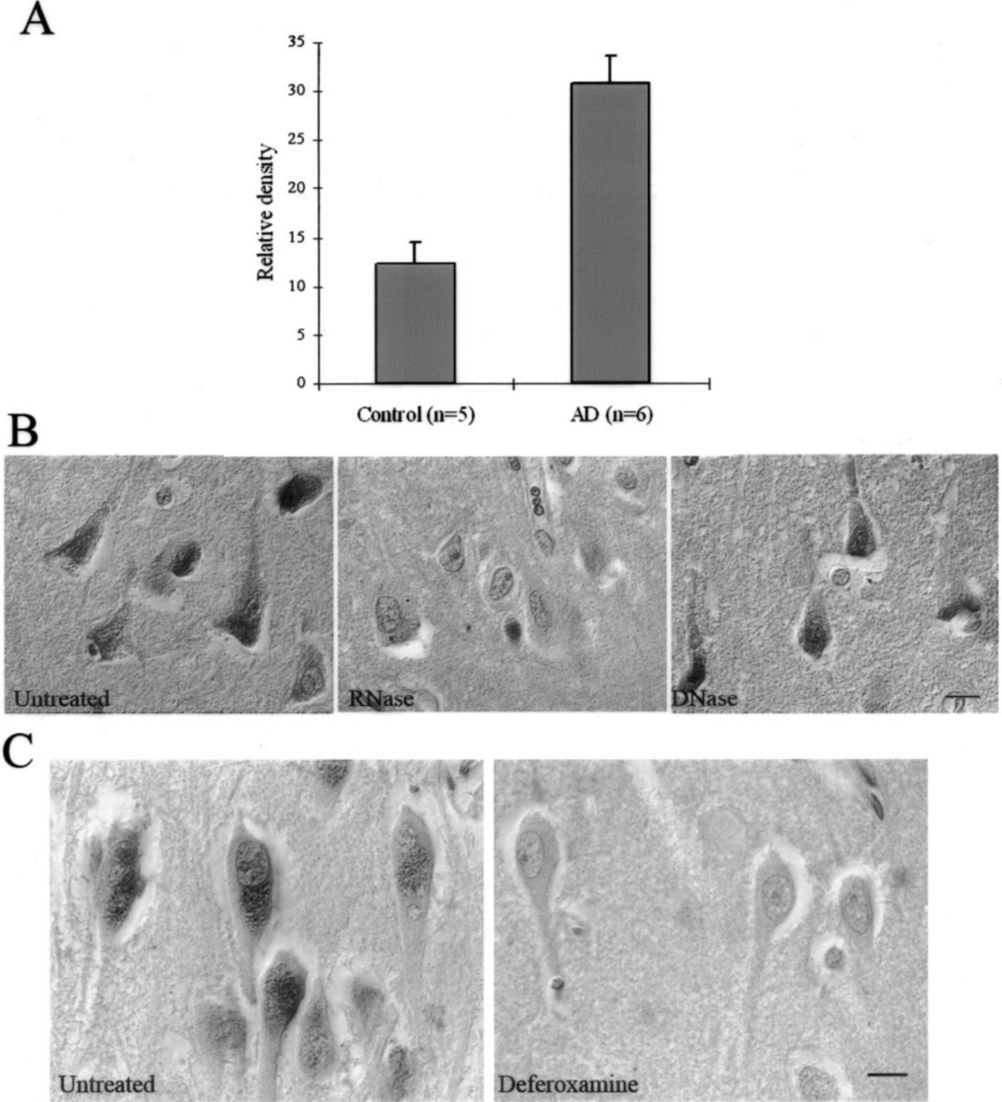
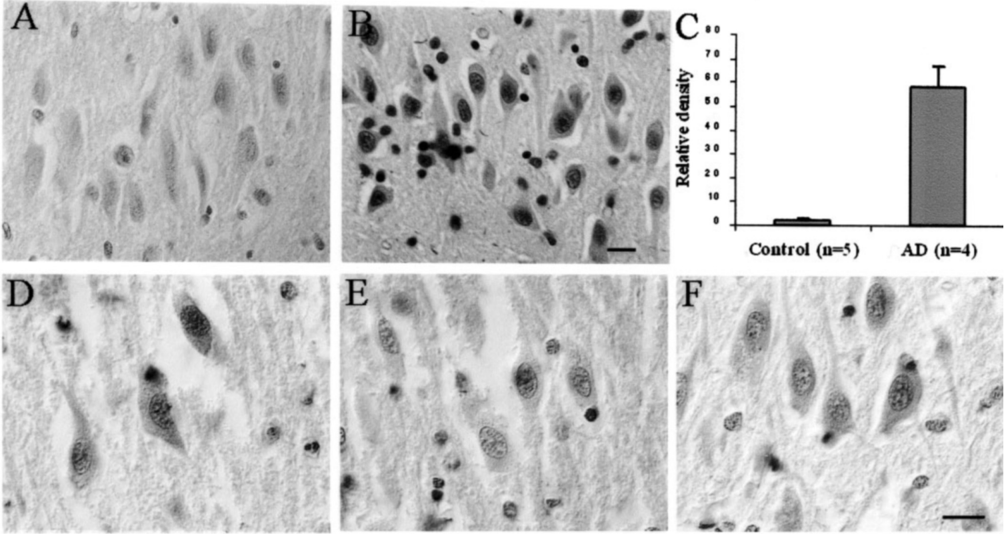
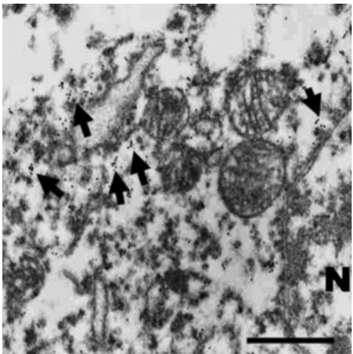
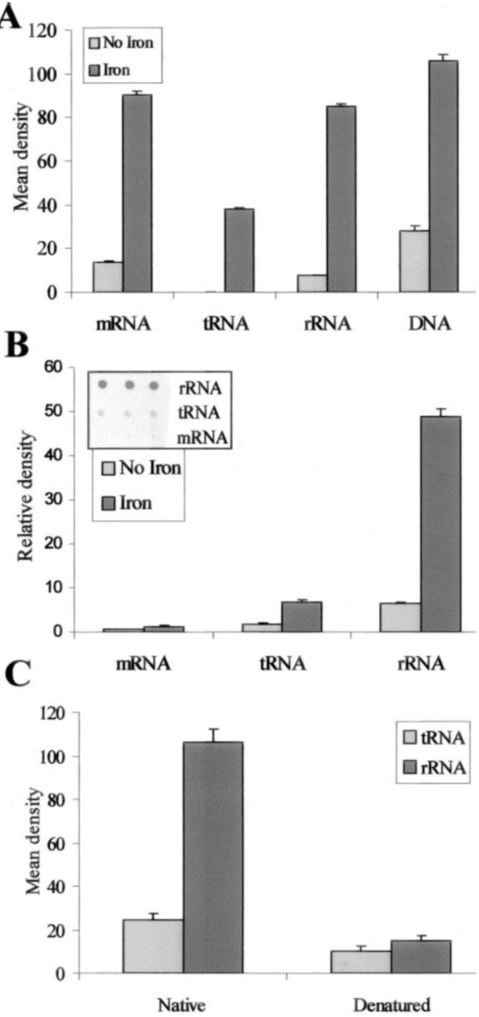
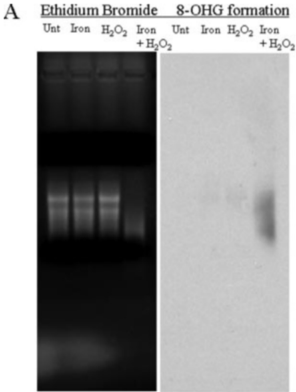
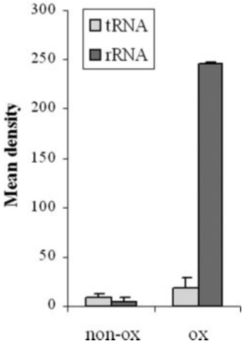
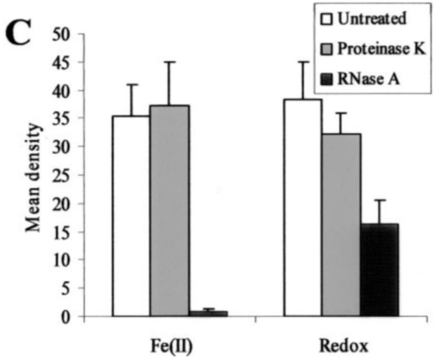
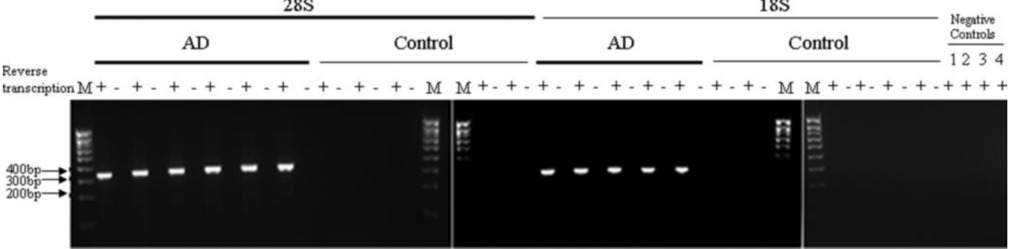
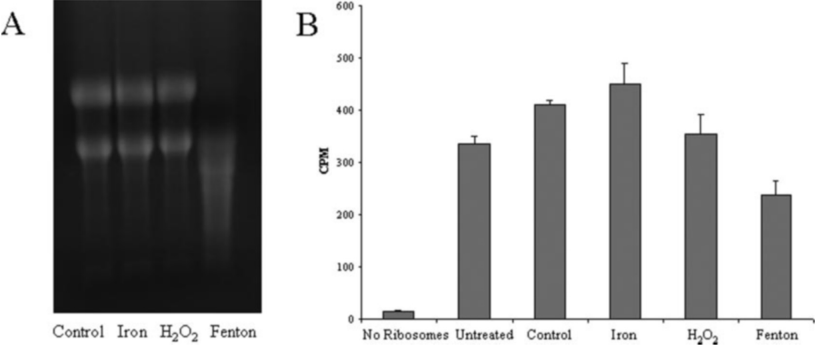
Oxidative modification of cytoplasmic RNA in vulnerable neurons is an important, well documented feature of the pathophysiology of Alzheimer disease. Here we report that RNA-bound iron plays a pivotal role for RNA oxidation in vulnerable neurons in Alzheimer disease brain. The cytoplasm of hippocampal neurons showed significantly higher redox activity and iron(II) staining than age-matched controls. Notably, both were susceptible to RNase, suggesting a physical association of iron(II) with RNA. Ultrastructural analysis further suggested an endoplasmic reticulum association. Both rRNA and mRNA showed twice the iron binding as tRNA. rRNA, extremely abundant in neurons, was considered to provide the greatest number of iron binding sites among cytoplasmic RNA species. Interestingly, the difference of iron binding capacity disappeared after denaturation of RNA, suggesting that the higher order structure may contribute to the greater iron binding of rRNA. Reflecting the difference of iron binding capacity, oxidation of rRNA by the Fenton reaction formed 13 times more 8-hydroxyguanosine than tRNA. Consistent with in situ findings, ribosomes purified from Alzheimer hippocampus contained significantly higher levels of RNase-sensitive iron(II) and redox activity than control. Furthermore, only Alzheimer rRNA contains 8-hydroxyguanosine in reverse transcriptase-PCR. Addressing the biological significance of ribosome oxidation by redox-active iron, in vitro translation with oxidized ribosomes from rabbit reticulocyte showed a significant reduction of protein synthesis. In conclusion these results suggest that rRNA provides a binding site for redox-active iron and serves as a redox center within the cytoplasm of vulnerable neurons in Alzheimer disease in advance of the appearance of morphological change indicating neurodegeneration.
Overview
The claims and statistics of this paper haven’t been checked yet.
Free: it reads the open-access text and checks the first 5 claims that cite a source we can check. Create a free account to check every claim.
Integrity signals
Registry
Cites
Statistics
Figures
Verification
Claims the paper makes
The claims and statistics of this paper haven’t been checked yet.
Free: it reads the open-access text and checks the first 5 claims that cite a source we can check. Create a free account to check every claim.
Claims other papers make about this one
Each is checked against this paper’s own text: does it say what the citing paper says it does?
The source backs part of the claim, not all of it — or backs it for a different population, condition or comparison.
In the citing paper
“oxidative damage to mRNA, tRNA and rRNA occurs in AD”
From Altered Machinery of Protein Synthesis in Alzheimer's: From the Nucleolus to the Ribosome (2016) · cites this paper as [48]
Experimental — accuracy not yet measuredThe cited source says what the claim attributes to it.
In the citing paper
“such damage may produce ribosomal dysfunction and altered protein synthesis 26, 27, 48, 75, 76, 90, 91.”
From Altered Machinery of Protein Synthesis in Alzheimer's: From the Nucleolus to the Ribosome (2016) · cites this paper as [48]
Self-check
Percentages, sums and reported differences re-computed from the paper’s own numbers.
The self-check needs the paper’s full text.
Citations
Cites
The Complete Atomic Structure of the Large Ribosomal Subunit at 2.4 Å Resolution
Ban, N., Nissen, P., Hansen, J., Moore, P. B., & Steitz, T. A. (2000) · Science · doi:10.1126/science.289.5481.905 · Cited by 3,327
Diagnosis of Alzheimer's Disease
Khachaturian, Z. S. (1985) · Archives of Neurology · doi:10.1001/archneur.1985.04060100083029 · Cited by 2,499
Gautier, J. (1993) · Trends in Biochemical Sciences · doi:10.1016/0968-0004(93)90025-i · Cited by 2,165
Copper, iron and zinc in Alzheimer's disease senile plaques
Lovell, M. A., Robertson, J. D., Teesdale, W. J., Campbell, J. L., & Markesbery, W. R. (1998) · Journal of the Neurological Sciences · doi:10.1016/s0022-510x(98)00092-6 · Cited by 2,120
Oxidative Damage Is the Earliest Event in Alzheimer Disease
Nunomura, A., Perry, G., Aliev, G., Hirai, K., Takeda, A., Balraj, E. K., Jones, P. K., Ghanbari, H., Wataya, T., Shimohama, S., et al. (2001) · Journal of Neuropathology & Experimental Neurology · doi:10.1093/jnen/60.8.759 · Cited by 1,885
Self-citationMitochondrial abnormalities in Alzheimer's disease
Hirai, K., Aliev, G., Nunomura, A., Fujioka, H., Russell, R. L., Atwood, C. S., Johnson, A. B., Kress, Y., Vinters, H. V., Tabaton, M., et al. (2001) · The Journal of Neuroscience · doi:10.1523/jneurosci.21-09-03017.2001 · Cited by 1,367
Self-citationIron accumulation in Alzheimer disease is a source of redox-generated free radicals
Smith, M. A., Harris, P. L. R., Sayre, L. M., & Perry, G. (1997) · Proceedings of the National Academy of Sciences · doi:10.1073/pnas.94.18.9866 · Cited by 1,355
Self-citationHuang, X., Atwood, C. S., Hartshorn, M. A., Multhaup, G., Goldstein, L. E., Scarpa, R. C., Cuajungco, M. P., Gray, D. N., Lim, J., Moir, R. D., et al. (1999) · Biochemistry · doi:10.1021/bi990438f · Cited by 1,107
Cutler, R. G., Kelly, J., Storie, K., Pedersen, W. A., Tammara, A., Hatanpaa, K., Troncoso, J. C., & Mattson, M. P. (2004) · Proceedings of the National Academy of Sciences · doi:10.1073/pnas.0305799101 · Cited by 1,008
Praticò, D., Uryu, K., Leight, S., Trojanoswki, J. Q., & Lee, V. M.-Y. (2001) · The Journal of Neuroscience · doi:10.1523/jneurosci.21-12-04183.2001 · Cited by 777
Research works printed but not linked: 3
- Smith, M. A., Kutty, R. K., Richey, P. L., Yan, S. D., Stern, D., Chader, G. J., Wiggert, B., Petersen, R. B., and Perry, G. (1994) Am. J. Pathol. 145, 42-47
- Morris, C. M., Kerwin, J. M., and Edwardson, J. A. (1994) Neurodegeneration 3, 267-275
- Quintana, C., Lancin, M., Marhic, C., Perez, M., Martin-Benito, J., Avila, J., and Carrascosa, J. L. (2000) Cell. Mol. Biol. 46, 807-820
Cited by
Oxidative stress and mitochondrial dysfunction in Alzheimer’s disease
Wang, X., Wang, W., Li, L., Perry, G., Lee, H.-G., & Zhu, X. (2014) · Biochimica et Biophysica Acta (BBA) - Molecular Basis of Disease · doi:10.1016/j.bbadis.2013.10.015 · Cited by 1,357
“Signi fi cant higher levels of oxidized rRNA or mRNAs were also documented in AD [43 – 45].”
Self-citationOxidative Stress and Neurotoxicity
Sayre, L. M., Perry, G., & Smith, M. A. (2008) · Chemical Research in Toxicology · doi:10.1021/tx700210j · Cited by 867
Self-citationWang, W.-X., Rajeev, B. W., Stromberg, A. J., Ren, N., Tang, G., Huang, Q., Rigoutsos, I., & Nelson, P. T. (2008) · The Journal of Neuroscience · doi:10.1523/jneurosci.5065-07.2008 · Cited by 701
“Because a pharmacological regulation of BACE1 endopeptidase activity at its active site has proved a challenge (Beher and Graham, 2005; Hull et al., 2006; Ohno, 2006), each of these regulatory mechanisms represent an alternative potential “handle” for altering BACE1 expression pharmacologically.”
BackgroundMitochondrial dysfunction is a trigger of Alzheimer's disease pathophysiology
Moreira, P. I., Carvalho, C., Zhu, X., Smith, M. A., & Perry, G. (2010) · Biochimica et Biophysica Acta (BBA) - Molecular Basis of Disease · doi:10.1016/j.bbadis.2009.10.006 · Cited by 734
“Indeed, there are strong indications that oxidative stress occurs prior to the onset of symptoms in AD and oxidative damage is found not only in the vulnerable regions of the brain affected in disease [5–7] but also peripherally [8–11].”
BackgroundSelf-citationDuce, J. A., Tsatsanis, A., Cater, M. A., James, S. A., Robb, E., Wikhe, K., Leong, S. L., Perez, K., Johanssen, T., Greenough, M. A., et al. (2010) · Cell · doi:10.1016/j.cell.2010.08.014 · Cited by 676
“, 2000), adjacent to neocortical neurons filled with prooxidant Fe (Bartzokis et al., 1994a, 1994b; Bartzokis and Tishler, 2000; Honda et al., 2005).”
Metadata
- Authors
- Honda, K., Smith, M. A., Zhu, X., Baus, D., Merrick, W. C., Tartakoff, A. M., Hattier, T., Harris, P. L., Siedlak, S. L., Fujioka, H., Liu, Q., Moreira, P. I., Miller, F. P., Nunomura, A., Shimohama, S., & Perry, G.
- Affiliations
- Case Western Reserve University (US)
- Centro de Neurociências e Biologia Celular (PT)
- Asahikawa Medical University (JP)
- Kyoto University (JP)
- Corresponding author
- Perry, George
- ORCID
- Venue
- Journal of Biological Chemistry
- Publisher
- Elsevier BV
- Published
- 2005-06
- Volume
- 280
- Issue
- 22
- Pages
- 20978-20986
- ISSN
- 0021-9258 (ISSN-L)
- OpenAlex
- W2108926627
- Cited by
- 280
- References
- 52
- Citations by year
- 2026: 3 · 2025: 4 · 2024: 6 · 2023: 14 · 2022: 12 · 2021: 11 · 2020: 8 · 2019: 10 · 2018: 8 · 2017: 15 · 2016: 9 · 2015: 12 · 2014: 7 · 2013: 17 · 2012: 12
- FWCI
- 14.78
- Type
- journal article
- Language
- en
- Open access
- hybrid
- doi.org
- Licence
- cc-by
- www.elsevier.com/tdm/userlicense/1.0/ (tdm)
- creativecommons.org/licenses/by/4.0/ (vor, 5600 d)
- Locations
- Journal of Biological Chemistry (publishedVersion, cc-by)
- PubMed (publishedVersion)
- Funders
- Alzheimer's Association
- National Institutes of Health
- National Institute of General Medical Sciences (GM26796, R01GM026796)
- National Institute of Neurological Disorders and Stroke (NS 38648, R01NS038648)
- Topics
- Life Sciences › Neuroscience › Cellular and Molecular Neuroscience › Alzheimer's disease research and treatments
- Life Sciences › Biochemistry, Genetics and Molecular Biology › Molecular Biology › Redox biology and oxidative stress
- Health Sciences › Nursing › Nutrition and Dietetics › Trace Elements in Health
- Keywords
- Alzheimer's disease, redox-active iron, 8-hydroxyguanosine, Fenton reaction, hippocampal neurons, endoplasmic reticulum, RNA secondary structure, protein synthesis inhibition, neurodegeneration
- MeSH terms
- Alzheimer Disease, Animals, Binding Sites, Brain, Cattle, Cytoplasm, Guanosine, Hippocampus, Humans, Hydrogen Peroxide, Image Processing, Computer-Assisted, Iron, Microscopy, Electron, Neurons, Oxidation-Reduction, Oxygen, Ribonucleases, Ribosomes, RNA, RNA, Ribosomal, RNA, Transfer, Protein Biosynthesis, Blotting, Northern, Reverse Transcriptase Polymerase Chain Reaction, Amino Acid Motifs, Immunoprecipitation
About these checks
Registry, retraction, Cites and statistics results are computed, not judged, with one exception: a printed reference that no index lists is read once by a model before it counts as a citation error. Claims are extracted by a model and kept only when their quote appears verbatim in the text; each cited source is then checked, with a model’s help, for whether it says what the claim relies on. Those verdicts can be wrong — read the claim’s quote and the cited source before relying on one.
Statistics and arithmetic are recomputed, not judged.
Confidence bands are shown only for fields calibrated on our annotated test set. None is calibrated yet, so no band is shown.
What counts as a claim ›How we measure confidence ›How we check this ›
Are you an author, or do you see a problem with this page? Request a review
Data sources
Bibliographic data: Semantic Scholar, OpenAlex, Crossref.
Contains information from the Semantic Scholar Academic Graph Datasets, made available under the ODC Attribution License (ODC-BY 1.0).
Semantic Scholar’s data is described in: Kinney, R., et al. (2023). The Semantic Scholar Open Data Platform. arXiv:2301.10140.
