

Ribosomal RNA in Alzheimer Disease Is Oxidized by Bound Redox-active Iron
Open accessThe DOI matches its Crossref record; 52 of the 52 references it cites were found in a registry or an index.
Abstract
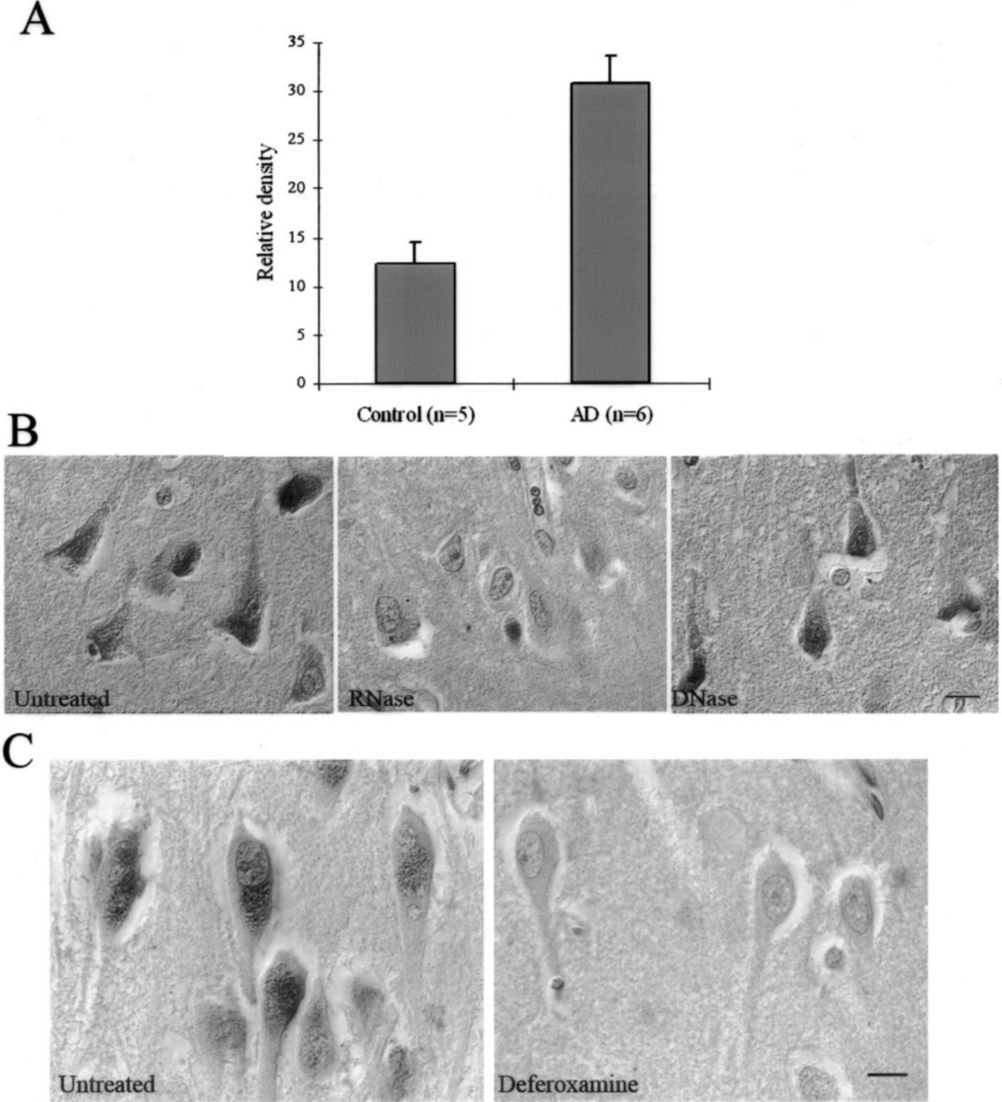
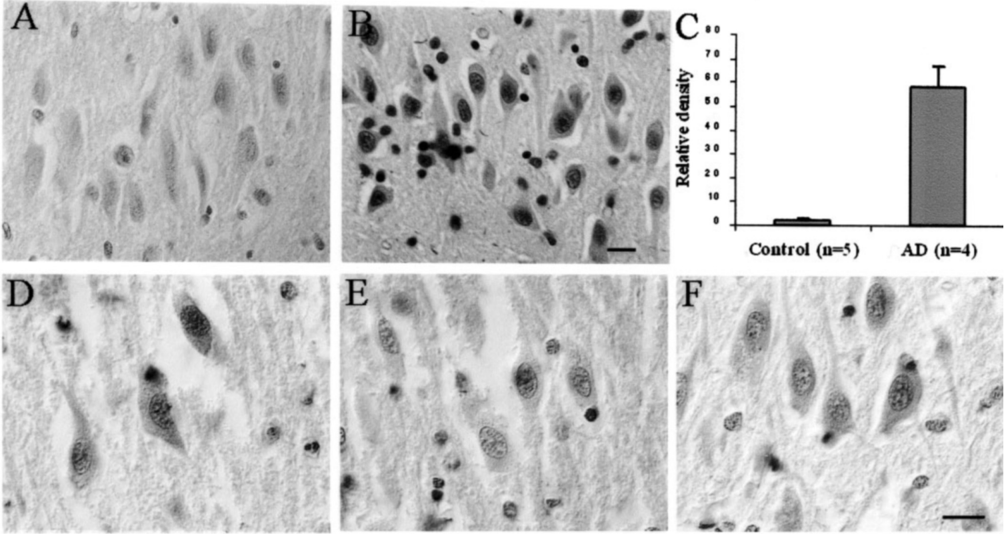
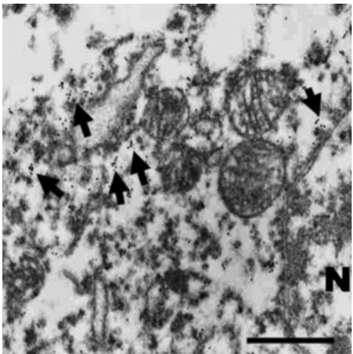
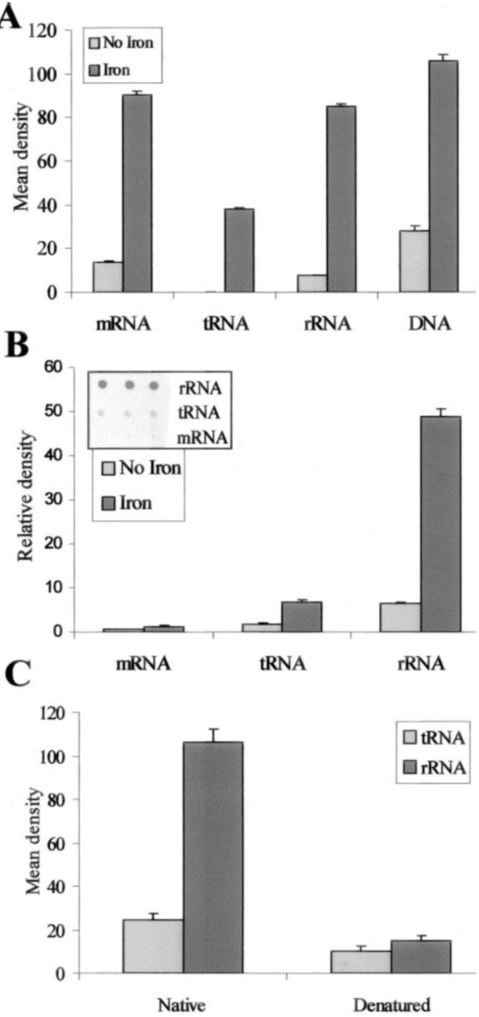
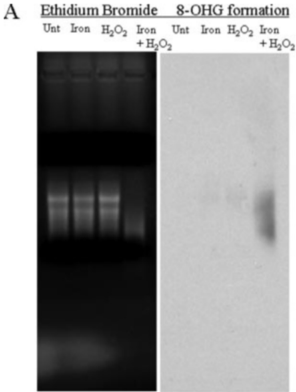
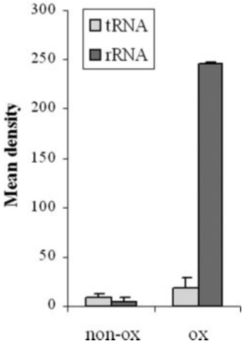
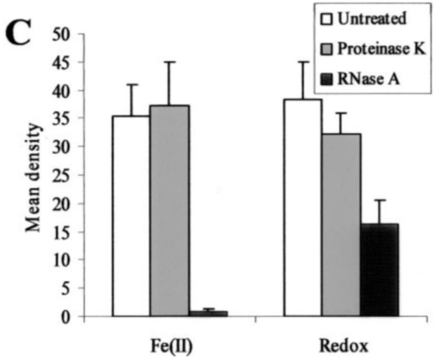
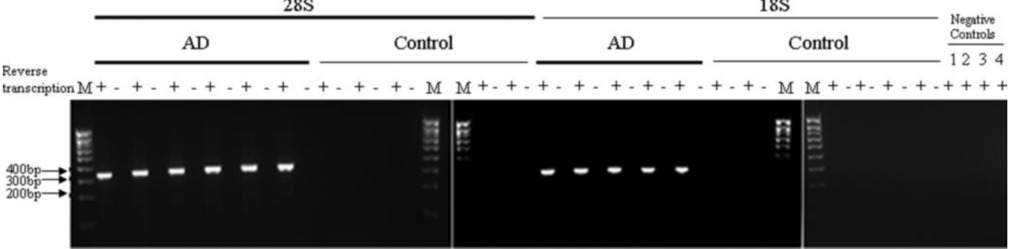
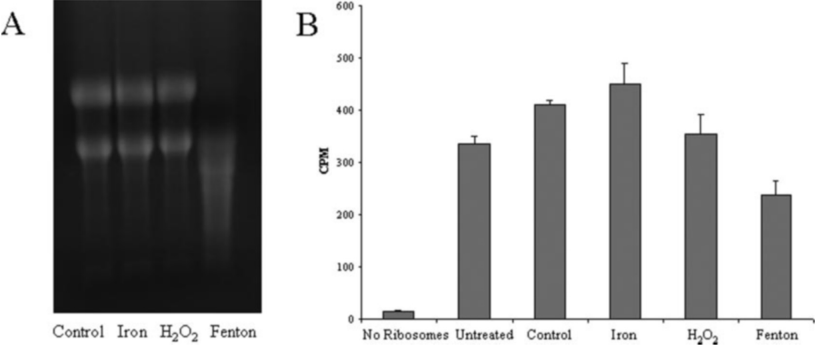
Oxidative modification of cytoplasmic RNA in vulnerable neurons is an important, well documented feature of the pathophysiology of Alzheimer disease. Here we report that RNA-bound iron plays a pivotal role for RNA oxidation in vulnerable neurons in Alzheimer disease brain. The cytoplasm of hippocampal neurons showed significantly higher redox activity and iron(II) staining than age-matched controls. Notably, both were susceptible to RNase, suggesting a physical association of iron(II) with RNA. Ultrastructural analysis further suggested an endoplasmic reticulum association. Both rRNA and mRNA showed twice the iron binding as tRNA. rRNA, extremely abundant in neurons, was considered to provide the greatest number of iron binding sites among cytoplasmic RNA species. Interestingly, the difference of iron binding capacity disappeared after denaturation of RNA, suggesting that the higher order structure may contribute to the greater iron binding of rRNA. Reflecting the difference of iron binding capacity, oxidation of rRNA by the Fenton reaction formed 13 times more 8-hydroxyguanosine than tRNA. Consistent with in situ findings, ribosomes purified from Alzheimer hippocampus contained significantly higher levels of RNase-sensitive iron(II) and redox activity than control. Furthermore, only Alzheimer rRNA contains 8-hydroxyguanosine in reverse transcriptase-PCR. Addressing the biological significance of ribosome oxidation by redox-active iron, in vitro translation with oxidized ribosomes from rabbit reticulocyte showed a significant reduction of protein synthesis. In conclusion these results suggest that rRNA provides a binding site for redox-active iron and serves as a redox center within the cytoplasm of vulnerable neurons in Alzheimer disease in advance of the appearance of morphological change indicating neurodegeneration.
Overview
The claims and statistics of this paper haven’t been checked yet.
Free: it reads the open-access text and checks the first 5 claims that cite a source we can check. Create a free account to check every claim.
Integrity signals
Registry
Cites
Statistics
Figures
Verification
Claims the paper makes
The claims and statistics of this paper haven’t been checked yet.
Free: it reads the open-access text and checks the first 5 claims that cite a source we can check. Create a free account to check every claim.
Claims other papers make about this one
Each is checked against this paper’s own text: does it say what the citing paper says it does?
The source backs part of the claim, not all of it — or backs it for a different population, condition or comparison.
In the citing paper
“oxidative damage to mRNA, tRNA and rRNA occurs in AD”
From Altered Machinery of Protein Synthesis in Alzheimer's: From the Nucleolus to the Ribosome (2016) · cites this paper as [48]
Experimental — accuracy not yet measuredThe cited source says what the claim attributes to it.
In the citing paper
“such damage may produce ribosomal dysfunction and altered protein synthesis 26, 27, 48, 75, 76, 90, 91.”
From Altered Machinery of Protein Synthesis in Alzheimer's: From the Nucleolus to the Ribosome (2016) · cites this paper as [48]
Self-check
Percentages, sums and reported differences re-computed from the paper’s own numbers.
The self-check needs the paper’s full text.
Citations
Cites
The Complete Atomic Structure of the Large Ribosomal Subunit at 2.4 Å Resolution
Ban, N., Nissen, P., Hansen, J., Moore, P. B., & Steitz, T. A. (2000) · Science · doi:10.1126/science.289.5481.905 · Cited by 3,327
Diagnosis of Alzheimer's Disease
Khachaturian, Z. S. (1985) · Archives of Neurology · doi:10.1001/archneur.1985.04060100083029 · Cited by 2,499
Gautier, J. (1993) · Trends in Biochemical Sciences · doi:10.1016/0968-0004(93)90025-i · Cited by 2,165
Copper, iron and zinc in Alzheimer's disease senile plaques
Lovell, M. A., Robertson, J. D., Teesdale, W. J., Campbell, J. L., & Markesbery, W. R. (1998) · Journal of the Neurological Sciences · doi:10.1016/s0022-510x(98)00092-6 · Cited by 2,120
Oxidative Damage Is the Earliest Event in Alzheimer Disease
Nunomura, A., Perry, G., Aliev, G., Hirai, K., Takeda, A., Balraj, E. K., Jones, P. K., Ghanbari, H., Wataya, T., Shimohama, S., et al. (2001) · Journal of Neuropathology & Experimental Neurology · doi:10.1093/jnen/60.8.759 · Cited by 1,885
Self-citationMitochondrial abnormalities in Alzheimer's disease
Hirai, K., Aliev, G., Nunomura, A., Fujioka, H., Russell, R. L., Atwood, C. S., Johnson, A. B., Kress, Y., Vinters, H. V., Tabaton, M., et al. (2001) · The Journal of Neuroscience · doi:10.1523/jneurosci.21-09-03017.2001 · Cited by 1,367
Self-citationIron accumulation in Alzheimer disease is a source of redox-generated free radicals
Smith, M. A., Harris, P. L. R., Sayre, L. M., & Perry, G. (1997) · Proceedings of the National Academy of Sciences · doi:10.1073/pnas.94.18.9866 · Cited by 1,355
Self-citationHuang, X., Atwood, C. S., Hartshorn, M. A., Multhaup, G., Goldstein, L. E., Scarpa, R. C., Cuajungco, M. P., Gray, D. N., Lim, J., Moir, R. D., et al. (1999) · Biochemistry · doi:10.1021/bi990438f · Cited by 1,107
Cutler, R. G., Kelly, J., Storie, K., Pedersen, W. A., Tammara, A., Hatanpaa, K., Troncoso, J. C., & Mattson, M. P. (2004) · Proceedings of the National Academy of Sciences · doi:10.1073/pnas.0305799101 · Cited by 1,008
Praticò, D., Uryu, K., Leight, S., Trojanoswki, J. Q., & Lee, V. M.-Y. (2001) · The Journal of Neuroscience · doi:10.1523/jneurosci.21-12-04183.2001 · Cited by 777
Cu(II) Potentiation of Alzheimer Aβ Neurotoxicity
Huang, X., Cuajungco, M. P., Atwood, C. S., Hartshorn, M. A., Tyndall, J. D. A., Hanson, G. R., Stokes, K. C., Leopold, M., Multhaup, G., Goldstein, L. E., et al. (1999) · Journal of Biological Chemistry · doi:10.1074/jbc.274.52.37111 · Cited by 762
RNA Oxidation Is a Prominent Feature of Vulnerable Neurons in Alzheimer’s Disease
Nunomura, A., Perry, G., Pappolla, M. A., Wade, R., Hirai, K., Chiba, S., & Smith, M. A. (1999) · The Journal of Neuroscience · doi:10.1523/jneurosci.19-06-01959.1999 · Cited by 722
Self-citationAtwood, C. S., Scarpa, R. C., Huang, X., Moir, R. D., Jones, W. D., Fairlie, D. P., Tanzi, R. E., & Bush, A. I. (2000) · Journal of Neurochemistry · doi:10.1046/j.1471-4159.2000.0751219.x · Cited by 641
Castegna, A., Aksenov, M., Aksenova, M., Thongboonkerd, V., Klein, J. B., Pierce, W. M., Booze, R., Markesbery, W. R., & Butterfield, D. A. (2002) · Free Radical Biology and Medicine · doi:10.1016/s0891-5849(02)00914-0 · Cited by 581
Dong, J., Atwood, C. S., Anderson, V. E., Siedlak, S. L., Smith, M. A., Perry, G., & Carey, P. R. (2003) · Biochemistry · doi:10.1021/bi0272151 · Cited by 562
Self-citationRogers, J. T., Randall, J. D., Cahill, C. M., Eder, P. S., Huang, X., Gunshin, H., Leiter, L., McPhee, J., Sarang, S. S., Utsuki, T., et al. (2002) · Journal of Biological Chemistry · doi:10.1074/jbc.m207435200 · Cited by 551
Sayre, L. M., Perry, G., Harris, P. L. R., Liu, Y., Schubert, K. A., & Smith, M. A. (2000) · Journal of Neurochemistry · doi:10.1046/j.1471-4159.2000.0740270.x · Cited by 540
Self-citationDeibel, M. A., Ehmann, W. D., & Markesbery, W. R. (1996) · Journal of the Neurological Sciences · doi:10.1016/s0022-510x(96)00203-1 · Cited by 540
Increased Nuclear DNA Oxidation in the Brain in Alzheimer's Disease
Gabbita, S. P., Lovell, M. A., & Markesbery, W. R. (1998) · Journal of Neurochemistry · doi:10.1046/j.1471-4159.1998.71052034.x · Cited by 478
A histochemical study of iron, transferrin, and ferritin in Alzheimer's diseased brains
Connor, J. R., Menzies, S. L., St. Martin, S. M., & Mufson, E. J. (1992) · Journal of Neuroscience Research · doi:10.1002/jnr.490310111 · Cited by 467
Heme oxygenase-1 is associated with the neurofibrillary pathology of Alzheimer's disease.
Smith, M. A., Kutty, R. K., Richey, P. L., Yan, S. D., Stern, D., Chader, G. J., Wiggert, B. O., Petersen, R. B., & Perry, G. L. (1994) · PubMed Central · Cited by 463
Self-citationMetal ions in the structure and function of RNA
Pyle, A. (2002) · JBIC Journal of Biological Inorganic Chemistry · doi:10.1007/s00775-002-0387-6 · Cited by 376
Redox-active iron mediates amyloid-β toxicity
Rottkamp, C. A., Raina, A. K., Zhu, X., Gaier, E., Bush, A. I., Atwood, C. S., Chevion, M., Perry, G., & Smith, M. A. (2001) · Free Radical Biology and Medicine · doi:10.1016/s0891-5849(00)00494-9 · Cited by 375
Self-citationConnor, J. R., Snyder, B. S., Beard, J. L., Fine, R. E., & Mufson, E. J. (1992) · Journal of Neuroscience Research · doi:10.1002/jnr.490310214 · Cited by 374
Expression of heme oxygenase‐1 in the senescent and alzheimer‐diseased brain
Schipper, H. M., Cissé, S., & Stopa, E. G. (1995) · Annals of Neurology · doi:10.1002/ana.410370609 · Cited by 356
Henle, E. S., Han, Z., Tang, N., Rai, P., Luo, Y., & Linn, S. (1999) · Journal of Biological Chemistry · doi:10.1074/jbc.274.2.962 · Cited by 348
Bayer, T. A., Schäfer, S., Simons, A., Kemmling, A., Kamer, T., Tepests, R., Eckert, A., Schüssel, K., Eikenberg, O., Sturchler-Pierrat, C., et al. (2003) · Proceedings of the National Academy of Sciences · doi:10.1073/pnas.2332818100 · Cited by 327
Lloyd, D. R., & Phillips, D. H. (1999) · Mutation Research - Fundamental and Molecular Mechanisms of Mutagenesis · doi:10.1016/s0027-5107(99)00005-6 · Cited by 309
Metal-binding sites in the major groove of a large ribozyme domain
Cate, J. H., & Doudna, J. A. (1996) · Structure · doi:10.1016/s0969-2126(96)00129-3 · Cited by 221
The Identification and Characterization of Oxidized RNAs in Alzheimer's Disease
Shan, X., Tashiro, H., & Lin, C.-L. G. (2003) · The Journal of Neuroscience · doi:10.1523/jneurosci.23-12-04913.2003 · Cited by 185
Alzheimer's Disease Brain: Alterations in RNA Levels and in a Ribonuclease-Inhibitor Complex
Sajdel-Sulkowska, E. M., & Marotta, C. A. (1984) · Science · doi:10.1126/science.6206567 · Cited by 181
Oxidative Damage to DNA Constituents by Iron-mediated Fenton Reactions
Henle, E. S., Luo, Y., Gassmann, W., & Linn, S. (1996) · Journal of Biological Chemistry · doi:10.1074/jbc.271.35.21177 · Cited by 175
Oxidative Damage to DNA Constituents by Iron-mediated Fenton Reactions
Luo, Y., Henle, E. S., & Linn, S. (1996) · Journal of Biological Chemistry · doi:10.1074/jbc.271.35.21167 · Cited by 159
Metabolic, Metallic, and Mitotic Sources of Oxidative Stress in Alzheimer Disease
Smith, M. A., Nunomura, A., Zhu, X., Takeda, A., & Perry, G. (2000) · Antioxidants & Redox Signaling · doi:10.1089/15230860050192198 · Cited by 151
Self-citationLovell, M. A., & Markesbery, W. R. (2001) · Archives of Neurology · doi:10.1001/archneur.58.3.392 · Cited by 150
Stabilization of RNA tertiary structure by monovalent cations
Shiman, R., & Draper, D. E. (2000) · Journal of Molecular Biology · doi:10.1006/jmbi.2000.4031 · Cited by 150
Luo, Y., Han, Z., Chin, S. M., & Linn, S. (1994) · Proceedings of the National Academy of Sciences · doi:10.1073/pnas.91.26.12438 · Cited by 143
Neuronal RNA oxidation is a prominent feature of familial Alzheimer's disease
Nunomura, A., Chiba, S., Lippa, C. F., Cras, P. P., Kalaria, R. N., Takeda, A., Honda, K., Smith, M. A., & Perry, G. L. (2004) · Neurobiology of Disease · doi:10.1016/j.nbd.2004.06.003 · Cited by 136
Self-citationAlzheimer's disease-associated reduction of polysomal mRNA translation
Langstrom, N. S., Anderson, J. P., Lindroos, H., Winbland, B., & Wallace, W. (1989) · Molecular Brain Research · doi:10.1016/0169-328x(89)90060-0 · Cited by 119
[9] Assays for eukaryotic protein synthesis
Merrick, W. C. (1979) · Methods in enzymology on CD-ROM/Methods in enzymology · doi:10.1016/s0076-6879(79)60011-3 · Cited by 114
Self-citationAlterations in protein synthetic capability of nerve cells in Alzheimer's disease.
Mann, D. M., Neary, D., Yates, P. O., Lincoln, J., Snowden, J. S., & Stanworth, P. (1981) · Journal of Neurology, Neurosurgery & Psychiatry · doi:10.1136/jnnp.44.2.97 · Cited by 94
Non-haem iron histochemistry of the normal and Alzheimer's disease hippocampus.
Morris, C. M., Kerwin, J. M., & Ja, E. (1994) · PubMed · Cited by 61
Quintana, C., Lancin, M., Marhic, C., Pérez, M., Martín‐Benito, J., Ávila, J., & Carrascosa, J. L. (2000) · PubMed · Cited by 50
Proteasome inhibition increases DNA and RNA oxidation in astrocyte and neuron cultures
Ding, Q., Dimayuga, E., Markesbery, W. R., & Keller, J. N. (2004) · Journal of Neurochemistry · doi:10.1111/j.1471-4159.2004.02802.x · Cited by 49
Visualizing metal-ion-binding sites in group I introns by iron(II)-mediated Fenton reactions
Berens, C., Streicher, B., Schroeder, R., & Hillen, W. (1998) · Chemistry & Biology · doi:10.1016/s1074-5521(98)90061-8 · Cited by 46
Identification Characterization of Metal Ion Binding Sites in RNA
Gonzalez, R. L., & Tinoco, I. (2002) · Methods in Enzymology · doi:10.1016/s0076-6879(02)38231-4 · Cited by 44
Metal ion probing of rRNAs: Evidence for evolutionarily conserved divalent cation binding pockets
POLACEK, N., & BARTA, A. (1998) · RNA · doi:10.1017/s1355838298980347 · Cited by 43
5- and 6-Glycosylation of Transferrin in Patients with Alzheimer's Disease
van Rensburg, S. J., Berman, P., Potocnik, F. C. V., Macgregor, P. M., Hon, D., & de Villiers, N. (2004) · Metabolic Brain Disease · doi:10.1023/b:mebr.0000027420.50736.62 · Cited by 36
A strategy for immunohistochemical signal enhancement by end-product amplification.
Chen, B. X., Szabolcs, M. J., Matsushima, A. Y., & Erlanger, B. F. (1996) · Journal of Histochemistry & Cytochemistry · doi:10.1177/44.8.8756754 · Cited by 25
Increased phosphorylation of elongation factor 2 in Alzheimer's disease.
Johnson, G., Gotlib, J., Haroutunian, V., Bierer, L., Nairn, A., Merril, C., & Wallace, W. (1992) · Brain Research. Molecular Brain Research · doi:10.1016/0169-328x(92)90124-t · Cited by 23
[58] Preparation of protein synthesis elongation factors from rabbit reticulocytes
Kemper, W. M., & Merrick, W. C. (1979) · Methods in enzymology on CD-ROM/Methods in enzymology · doi:10.1016/s0076-6879(79)60060-5 · Cited by 22
Self-citationColwell, B. A., & Morris, D. L. (2003) · Journal of Inorganic Biochemistry · doi:10.1016/s0162-0134(02)00626-8 · Cited by 16
Research works printed but not linked: 3
- Smith, M. A., Kutty, R. K., Richey, P. L., Yan, S. D., Stern, D., Chader, G. J., Wiggert, B., Petersen, R. B., and Perry, G. (1994) Am. J. Pathol. 145, 42-47
- Morris, C. M., Kerwin, J. M., and Edwardson, J. A. (1994) Neurodegeneration 3, 267-275
- Quintana, C., Lancin, M., Marhic, C., Perez, M., Martin-Benito, J., Avila, J., and Carrascosa, J. L. (2000) Cell. Mol. Biol. 46, 807-820
Cited by
Oxidative stress and mitochondrial dysfunction in Alzheimer’s disease
Wang, X., Wang, W., Li, L., Perry, G., Lee, H.-G., & Zhu, X. (2014) · Biochimica et Biophysica Acta (BBA) - Molecular Basis of Disease · doi:10.1016/j.bbadis.2013.10.015 · Cited by 1,357
“Signi fi cant higher levels of oxidized rRNA or mRNAs were also documented in AD [43 – 45].”
Self-citationOxidative Stress and Neurotoxicity
Sayre, L. M., Perry, G., & Smith, M. A. (2008) · Chemical Research in Toxicology · doi:10.1021/tx700210j · Cited by 867
Self-citationWang, W.-X., Rajeev, B. W., Stromberg, A. J., Ren, N., Tang, G., Huang, Q., Rigoutsos, I., & Nelson, P. T. (2008) · The Journal of Neuroscience · doi:10.1523/jneurosci.5065-07.2008 · Cited by 701
“Because a pharmacological regulation of BACE1 endopeptidase activity at its active site has proved a challenge (Beher and Graham, 2005; Hull et al., 2006; Ohno, 2006), each of these regulatory mechanisms represent an alternative potential “handle” for altering BACE1 expression pharmacologically.”
BackgroundMitochondrial dysfunction is a trigger of Alzheimer's disease pathophysiology
Moreira, P. I., Carvalho, C., Zhu, X., Smith, M. A., & Perry, G. (2010) · Biochimica et Biophysica Acta (BBA) - Molecular Basis of Disease · doi:10.1016/j.bbadis.2009.10.006 · Cited by 734
“Indeed, there are strong indications that oxidative stress occurs prior to the onset of symptoms in AD and oxidative damage is found not only in the vulnerable regions of the brain affected in disease [5–7] but also peripherally [8–11].”
BackgroundSelf-citationDuce, J. A., Tsatsanis, A., Cater, M. A., James, S. A., Robb, E., Wikhe, K., Leong, S. L., Perez, K., Johanssen, T., Greenough, M. A., et al. (2010) · Cell · doi:10.1016/j.cell.2010.08.014 · Cited by 676
“, 2000), adjacent to neocortical neurons filled with prooxidant Fe (Bartzokis et al., 1994a, 1994b; Bartzokis and Tishler, 2000; Honda et al., 2005).”
Metadata
- Authors
- Honda, K., Smith, M. A., Zhu, X., Baus, D., Merrick, W. C., Tartakoff, A. M., Hattier, T., Harris, P. L., Siedlak, S. L., Fujioka, H., Liu, Q., Moreira, P. I., Miller, F. P., Nunomura, A., Shimohama, S., & Perry, G.
- Affiliations
- Case Western Reserve University (US)
- Centro de Neurociências e Biologia Celular (PT)
- Asahikawa Medical University (JP)
- Kyoto University (JP)
- Corresponding author
- Perry, George
- ORCID
- Venue
- Journal of Biological Chemistry
- Publisher
- Elsevier BV
- Published
- 2005-06
- Volume
- 280
- Issue
- 22
- Pages
- 20978-20986
- ISSN
- 0021-9258 (ISSN-L)
- OpenAlex
- W2108926627
- Cited by
- 280
- References
- 52
- Citations by year
- 2026: 3 · 2025: 4 · 2024: 6 · 2023: 14 · 2022: 12 · 2021: 11 · 2020: 8 · 2019: 10 · 2018: 8 · 2017: 15 · 2016: 9 · 2015: 12 · 2014: 7 · 2013: 17 · 2012: 12
- FWCI
- 14.78
- Type
- journal article
- Language
- en
- Open access
- hybrid
- doi.org
- Licence
- cc-by
- www.elsevier.com/tdm/userlicense/1.0/ (tdm)
- creativecommons.org/licenses/by/4.0/ (vor, 5600 d)
- Locations
- Journal of Biological Chemistry (publishedVersion, cc-by)
- PubMed (publishedVersion)
- Funders
- Alzheimer's Association
- National Institutes of Health
- National Institute of General Medical Sciences (GM26796, R01GM026796)
- National Institute of Neurological Disorders and Stroke (NS 38648, R01NS038648)
- Topics
- Life Sciences › Neuroscience › Cellular and Molecular Neuroscience › Alzheimer's disease research and treatments
- Life Sciences › Biochemistry, Genetics and Molecular Biology › Molecular Biology › Redox biology and oxidative stress
- Health Sciences › Nursing › Nutrition and Dietetics › Trace Elements in Health
- Keywords
- Alzheimer's disease, redox-active iron, 8-hydroxyguanosine, Fenton reaction, hippocampal neurons, endoplasmic reticulum, RNA secondary structure, protein synthesis inhibition, neurodegeneration
- MeSH terms
- Alzheimer Disease, Animals, Binding Sites, Brain, Cattle, Cytoplasm, Guanosine, Hippocampus, Humans, Hydrogen Peroxide, Image Processing, Computer-Assisted, Iron, Microscopy, Electron, Neurons, Oxidation-Reduction, Oxygen, Ribonucleases, Ribosomes, RNA, RNA, Ribosomal, RNA, Transfer, Protein Biosynthesis, Blotting, Northern, Reverse Transcriptase Polymerase Chain Reaction, Amino Acid Motifs, Immunoprecipitation
About these checks
Registry, retraction, Cites and statistics results are computed, not judged, with one exception: a printed reference that no index lists is read once by a model before it counts as a citation error. Claims are extracted by a model and kept only when their quote appears verbatim in the text; each cited source is then checked, with a model’s help, for whether it says what the claim relies on. Those verdicts can be wrong — read the claim’s quote and the cited source before relying on one.
Statistics and arithmetic are recomputed, not judged.
Confidence bands are shown only for fields calibrated on our annotated test set. None is calibrated yet, so no band is shown.
What counts as a claim ›How we measure confidence ›How we check this ›
Are you an author, or do you see a problem with this page? Request a review
Data sources
Bibliographic data: Semantic Scholar, OpenAlex, Crossref.
Contains information from the Semantic Scholar Academic Graph Datasets, made available under the ODC Attribution License (ODC-BY 1.0).
Semantic Scholar’s data is described in: Kinney, R., et al. (2023). The Semantic Scholar Open Data Platform. arXiv:2301.10140.
