

Third wave cognitive behavioural therapies for people with multiple sclerosis: a scoping review
Open accessThe DOI matches its Crossref record; 124 of the 124 references it cites were found in a registry or an index.
Abstract
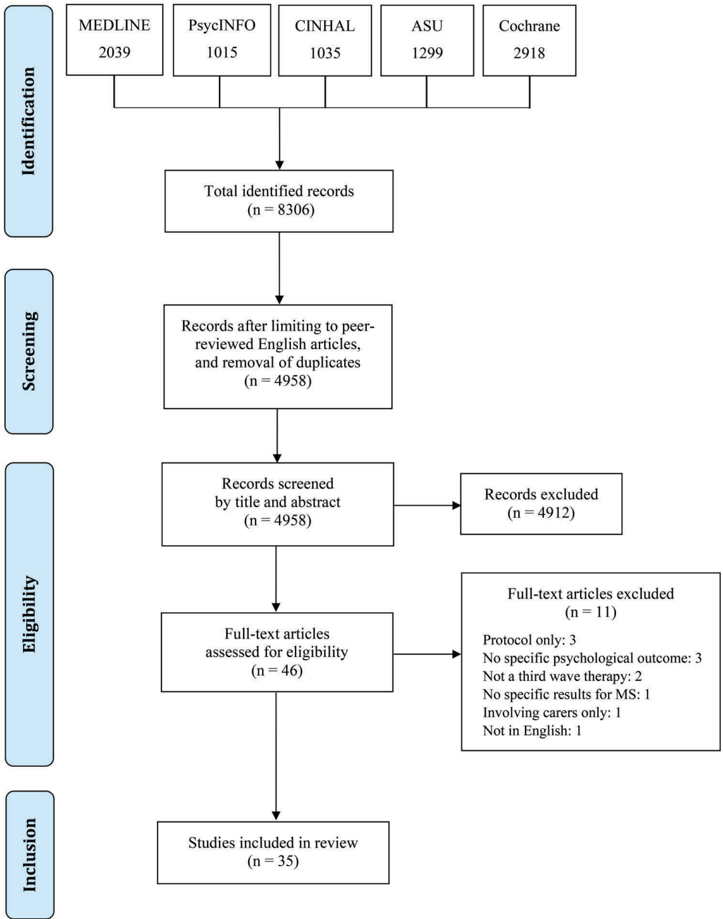
PURPOSE: Multiple sclerosis (MS) is a chronic condition linked to a wide range of psychological difficulties. While traditional cognitive behavioural therapy has been studied extensively with people with MS, much less is known about more recent "third wave" approaches. METHODS: A scoping review was carried out by performing a systematic search across MEDLINE Complete, PsycINFO, CINAHL, Academic Search Ultimate, and Cochrane Library up to January 2022. RESULTS: From an initial return of 8306 citations, 35 studies were included, 20 of which were randomised controlled trials (RCTs). These showed that four third wave approaches have been investigated with people with MS to date: acceptance and commitment therapy (ACT), dialectical behaviour therapy (DBT), mindfulness-based stress reduction (MBSR), and mindfulness-based cognitive therapy (MBCT). MBSR and MBCT may be helpful to address a range of psychological difficulties up to three months post-intervention. However, MS-specific adaptations may be required, and more evidence is needed on longer-term effectiveness. Limited evidence is also available for DBT and ACT, but additional research is warranted before any recommendation can be made. CONCLUSIONS: As third wave approaches keep being refined, further more rigorous investigations are needed to implement them to the benefit of people with MS. Implications for RehabilitationMultiple sclerosis is linked to a wide range of psychological difficulties in adults.Little is currently known on third wave psychotherapies for people with MS.Mindfulness-based stress reduction and mindfulness-based cognitive therapy may be helpful to address a wide range of difficulties in MS.Specific adaptations may be needed to deliver suitable therapies to people with MS.Additional research is warranted to build on preliminary findings for DBT and ACT.
Overview
The claims and statistics of this paper haven’t been checked yet.
Free: it reads the open-access text and checks the first 5 claims that cite a source we can check. Create a free account to check every claim.
Integrity signals
Registry
Cites
Statistics
Figures



Verification
Claims the paper makes
The claims and statistics of this paper haven’t been checked yet.
Free: it reads the open-access text and checks the first 5 claims that cite a source we can check. Create a free account to check every claim.
Claims other papers make about this one
Each is checked against this paper’s own text: does it say what the citing paper says it does?
The cited source says what the claim attributes to it.
In the citing paper
“evidence-based psychological interventions which have shown promising results in other similar conditions such as multiple sclerosis and Parkinson’s disease [21–23].”
Self-check
Percentages, sums and reported differences re-computed from the paper’s own numbers.
The self-check needs the paper’s full text.
Citations
Cites
Scoping studies: towards a methodological framework
Arksey, H., & O'Malley, L. (2005) · International Journal of Social Research Methodology · doi:10.1080/1364557032000119616 · Cited by 36,742
Diagnostic criteria for multiple sclerosis: 2010 revisions to the McDonald criteria
Polman, C. H., Reingold, S. C., Banwell, B., Clanet, M., Cohen, J. A., Filippi, M., Fujihara, K., Havrdova, E., Hutchinson, M., Kappos, L., et al. (2011) · Annals of Neurology · doi:10.1002/ana.22366 · Cited by 9,802
Mindfulness-based interventions in context: Past, present, and future
Kabat-Zinn, J. (2003) · Clinical Psychology: Science and Practice · doi:10.1093/clipsy.bpg016 · Cited by 8,615
(2008) · Medical Entomology and Zoology · Cited by 7,477
Guidance for conducting systematic scoping reviews
Peters, M. D. J., Godfrey, C. M., Khalil, H., McInerney, P., Parker, D., & Soares, C. B. (2015) · International Journal of Evidence-Based Healthcare · doi:10.1097/xeb.0000000000000050 · Cited by 7,472
Prevention of relapse/recurrence in major depression by mindfulness-based cognitive therapy.
Teasdale, J. D., Segal, Z. V., Williams, J. M. G., Ridgeway, V. A., Soulsby, J. M., & Lau, M. A. (2000) · Journal of Consulting and Clinical Psychology · doi:10.1037/0022-006x.68.4.615 · Cited by 3,236
Defining the clinical course of multiple sclerosis: The 2013 revisions
Lublin, F. D., Reingold, S. C., Cohen, J. A., Cutter, G. R., Sørensen, P. S., Thompson, A. J., Wolinsky, J. S., Balcer, L. J., Banwell, B., Barkhof, F., et al. (2014) · Neurology · doi:10.1212/wnl.0000000000000560 · Cited by 3,177
A scoping review of scoping reviews: advancing the approach and enhancing the consistency
Pham, M. T., Rajić, A., Greig, J. D., Sargeant, J. M., Papadopoulos, A., & McEwen, S. A. (2014) · Research Synthesis Methods · doi:10.1002/jrsm.1123 · Cited by 3,078
Hayes, S. C. (2004) · Behavior Therapy · doi:10.1016/s0005-7894(04)80013-3 · Cited by 2,493
Cognitive-behavioral treatment of chronically parasuicidal borderline patients
Linehan, M. M. (1991) · Archives of General Psychiatry · doi:10.1001/archpsyc.1991.01810360024003 · Cited by 2,203
(2011) · Cited by 2,032
Cognitive Therapy of Depression
Fischer, H. K. (1980) · Psychosomatics · doi:10.1016/s0033-3182(80)73639-3 · Cited by 1,612
Updated methodological guidance for the conduct of scoping reviews
Peters, M. D. J., Marnie, C., Tricco, A. C., Pollock, D., Munn, Z., Alexander, L., McInerney, P., Godfrey, C. M., & Khalil, H. (2021) · JBI Evidence Implementation · doi:10.1097/xeb.0000000000000277 · Cited by 1,461
Introducing compassion-focused therapy
Gilbert, P. (2009) · Advances in Psychiatric Treatment · doi:10.1192/apt.bp.107.005264 · Cited by 1,435
Diagnosis and Treatment of Multiple Sclerosis: A Review
McGinley, M. P., Goldschmidt, C. H., & Rae-Grant, A. D. (2021) · JAMA · doi:10.1001/jama.2020.26858 · Cited by 1,205
Diagnosis of multiple sclerosis: progress and challenges
Brownlee, W. J., Hardy, T. A., Fazekas, F., & Miller, D. H. (2017) · The Lancet · doi:10.1016/s0140-6736(16)30959-x · Cited by 913
Depression in multiple sclerosis: a review
Siegert, R. J. (2005) · Journal of Neurology, Neurosurgery & Psychiatry · doi:10.1136/jnnp.2004.054635 · Cited by 718
The third wave of cognitive behavioral therapy and the rise of process-based care
Hayes, S. C., & Hofmann, S. G. (2017) · World Psychiatry · doi:10.1002/wps.20442 · Cited by 613
Chwastiak, L., Ehde, D. M., Gibbons, L. E., Sullivan, M., Bowen, J. D., & Kraft, G. H. (2002) · American Journal of Psychiatry · doi:10.1176/appi.ajp.159.11.1862 · Cited by 555
The link between multiple sclerosis and depression
Feinstein, A., Magalhaes, S., Richard, J.-F., Audet, B., & Moore, C. (2014) · Nature Reviews Neurology · doi:10.1038/nrneurol.2014.139 · Cited by 523
The incidence and prevalence of psychiatric disorders in multiple sclerosis: A systematic review
Marrie, R. A., Reingold, S., Cohen, J., Stuve, O., Trojano, M., Sorensen, P. S., Cutter, G., & Reider, N. (2015) · Multiple Sclerosis Journal · doi:10.1177/1352458514564487 · Cited by 519
MS quality of life, depression, and fatigue improve after mindfulness training: A randomized trial
Grossman, P., Kappos, L., Gensicke, H., D'Souza, M., Mohr, D. C., Penner, I. K., & Steiner, C. (2010) · Neurology · doi:10.1212/wnl.0b013e3181f4d80d · Cited by 419
Studying the Organisation and Delivery of Health Services: Research Methods
Goodwin, N. (2002) · Health & Social Care in the Community · doi:10.1046/j.1365-2524.2002.03832.x · Cited by 382
Multiple Sclerosis: Pathogenesis and Treatment
Loma, I., & Heyman, R. (2011) · Current Neuropharmacology · doi:10.2174/157015911796557911 · Cited by 350
Multiple sclerosis—a quiet revolution
Ransohoff, R. M., Hafler, D. A., & Lucchinetti, C. F. (2015) · Nature Reviews Neurology · doi:10.1038/nrneurol.2015.14 · Cited by 338
A review of psychological correlates of adjustment in patients with multiple sclerosis
Dennison, L., Moss-Morris, R., & Chalder, T. (2009) · Clinical Psychology Review · doi:10.1016/j.cpr.2008.12.001 · Cited by 330
Prevalence and concurrence of anxiety, depression and fatigue over time in multiple sclerosis
Wood, B., van der Mei, I., Ponsonby, A.-L., Pittas, F., Quinn, S., Dwyer, T., Lucas, R., & Taylor, B. (2013) · Multiple Sclerosis Journal · doi:10.1177/1352458512450351 · Cited by 294
Weiner, H. L. (2008) · Journal of Neurology · doi:10.1007/s00415-008-1002-8 · Cited by 255
Mindfulness‐based stress reduction: A literature review and clinician’s guide
Praissman, S. (2008) · Journal of the American Academy of Nurse Practitioners · doi:10.1111/j.1745-7599.2008.00306.x · Cited by 250
Mohr, D. C., Likosky, W., Bertagnolli, A., Goodkin, D. E., Van Der Wende, J., Dwyer, P., & Dick, L. P. (2000) · Journal of Consulting and Clinical Psychology · doi:10.1037/0022-006x.68.2.356 · Cited by 240
Fiest, K. M., Walker, J. R., Bernstein, C. N., Graff, L. A., Zarychanski, R., Abou-Setta, A. M., Patten, S. B., Sareen, J., Bolton, J. M., Marriott, J. J., et al. (2016) · Multiple Sclerosis and Related Disorders · doi:10.1016/j.msard.2015.10.004 · Cited by 198
Mindfulness based interventions in multiple sclerosis–a systematic review
Simpson, R., Booth, J., Lawrence, M., Byrne, S., Mair, F., & Mercer, S. (2014) · BMC Neurology · doi:10.1186/1471-2377-14-15 · Cited by 195 · cited 1×
“Fatigue Pain Resilience [94] MBSR Secondary qualitative analysis of Simpson et al. (2017) I: 23 RRMS N/A Good level of acceptability for people with MS.”
MethodJones, K. H., Ford, D. V., Jones, P. A., John, A., Middleton, R. M., Lockhart-Jones, H., Osborne, L. A., & Noble, J. G. (2012) · PLoS ONE · doi:10.1371/journal.pone.0041910 · Cited by 190
Psychological stress and the subsequent appearance of new brain MRI lesions in MS
Mohr, D. C., Goodkin, D. E., Bacchetti, P., Boudewyn, A. C., Huang, L., Marrietta, P., Cheuk, W., & Dee, B. (2000) · Neurology · doi:10.1212/wnl.55.1.55 · Cited by 190
Hind, D., Cotter, J., Thake, A., Bradburn, M., Cooper, C., Isaac, C., & House, A. (2014) · BMC Psychiatry · doi:10.1186/1471-244x-14-5 · Cited by 180
McCabe, M. P., & McKern, S. (2002) · Journal of Clinical Psychology in Medical Settings · doi:10.1023/a:1020734901150 · Cited by 166
Mindfulness of movement as a coping strategy in multiple sclerosis
Mills, N., & Allen, J. (2000) · General Hospital Psychiatry · doi:10.1016/s0163-8343(00)00100-6 · Cited by 164
Psychological aspects of multiple sclerosis
Sá, M. J. (2008) · Clinical Neurology and Neurosurgery · doi:10.1016/j.clineuro.2007.10.001 · Cited by 155
Mindfulness-based stress reduction for people with chronic diseases
Merkes, M. (2010) · Australian Journal of Primary Health · doi:10.1071/py09063 · Cited by 153
Paller, K. A., Creery, J. D., Florczak, S. M., Weintraub, S., Mesulam, M.-M., Reber, P. J., Kiragu, J., Rooks, J., Safron, A., Morhardt, D., et al. (2015) · American Journal of Alzheimer's Disease & Other Dementias® · doi:10.1177/1533317514545377 · Cited by 150
van den Akker, L. E., Beckerman, H., Collette, E. H., Eijssen, I. C. J. M., Dekker, J., & de Groot, V. (2016) · Journal of Psychosomatic Research · doi:10.1016/j.jpsychores.2016.09.002 · Cited by 143
Multiple sclerosis: a practical overview for clinicians
Rejdak, K., Jackson, S., & Giovannoni, G. (2010) · British Medical Bulletin · doi:10.1093/bmb/ldq017 · Cited by 139
Planche, V., Gibelin, M., Cregut, D., Pereira, B., & Clavelou, P. (2016) · European Journal of Neurology · doi:10.1111/ene.12715 · Cited by 138
Distress improves after mindfulness training for progressive MS: a pilot randomised trial
Bogosian, A., Chadwick, P., Windgassen, S., Norton, S., McCrone, P., Mosweu, I., Silber, E., & Moss-Morris, R. (2015) · Multiple Sclerosis Journal · doi:10.1177/1352458515576261 · Cited by 135
A randomized trial of stress management for the prevention of new brain lesions in MS
Mohr, D. C., Lovera, J., Brown, T., Cohen, B., Neylan, T., Henry, R., Siddique, J., Jin, L., Daikh, D., & Pelletier, D. (2012) · Neurology · doi:10.1212/wnl.0b013e3182616ff9 · Cited by 135
Cognitive–behavioral therapy: what benefits can it offer people with multiple sclerosis?
Dennison, L., & Moss-Morris, R. (2010) · Expert Review of Neurotherapeutics · doi:10.1586/ern.10.111 · Cited by 124
Psychosocial adjustment to multiple sclerosis: exploration of identity redefinition
Irvine, H., Davidson, C., Hoy, K., & Lowe-Strong, A. (2009) · Disability and Rehabilitation · doi:10.1080/09638280802243286 · Cited by 121
Nordin, L., & Rorsman, I. (2012) · Journal of Rehabilitation Medicine · doi:10.2340/16501977-0898 · Cited by 106
MOHR, D. C., CLASSEN, C., & BARRERA, M. (2004) · Psychological Medicine · doi:10.1017/s0033291703001235 · Cited by 100
Simpson, R., Mair, F. S., & Mercer, S. W. (2017) · BMC Neurology · doi:10.1186/s12883-017-0880-8 · Cited by 95 · cited 1×
“Fatigue Pain Resilience [94] MBSR Secondary qualitative analysis of Simpson et al. (2017) I: 23 RRMS N/A Good level of acceptability for people with MS. PPMS Optimisation needed for some components to avoid causing discomfort (e.g., mindful movement).”
MethodAustin, J., Drossaert, C. H. C., Schroevers, M. J., Sanderman, R., Kirby, J. N., & Bohlmeijer, E. T. (2021) · Psychology & Health · doi:10.1080/08870446.2019.1699090 · Cited by 88
Hoang, H., Laursen, B., Stenager, E. N., & Stenager, E. (2016) · Multiple Sclerosis Journal · doi:10.1177/1352458515588973 · Cited by 86
Ulrichsen, K. M., Kaufmann, T., Dørum, E. S., Kolskår, K. K., Richard, G., Alnæs, D., Arneberg, T. J., Westlye, L. T., & Nordvik, J. E. (2016) · Frontiers in Psychology · doi:10.3389/fpsyg.2016.00912 · Cited by 86
Siddiqui, M. K., Khurana, I. S., Budhia, S., Hettle, R., Harty, G. T., & Wong, S. L. (2017) · Current Medical Research and Opinion · doi:10.1080/03007995.2017.1407303 · Cited by 85
Life issues in multiple sclerosis
Simmons, R. D. (2010) · Nature Reviews Neurology · doi:10.1038/nrneurol.2010.143 · Cited by 83
Multiple sclerosis relapses and depression
Moore, P., Hirst, C., Harding, K. E., Clarkson, H., Pickersgill, T. P., & Robertson, N. P. (2012) · Journal of Psychosomatic Research · doi:10.1016/j.jpsychores.2012.08.004 · Cited by 80
Kolahkaj, B., & Zargar, F. (2015) · Nursing and Midwifery Studies · doi:10.17795/nmsjournal29655 · Cited by 77
Online meditation training for people with multiple sclerosis: a randomized controlled trial
Cavalera, C., Rovaris, M., Mendozzi, L., Pugnetti, L., Garegnani, M., Castelnuovo, G., Molinari, E., & Pagnini, F. (2019) · Multiple Sclerosis Journal · doi:10.1177/1352458518761187 · Cited by 74
Zarotti, N., Eccles, F. J. R., Foley, J. A., Paget, A., Gunn, S., Leroi, I., & Simpson, J. (2021) · Psychology and Psychotherapy Theory Research and Practice · doi:10.1111/papt.12321 · Cited by 73
Self-citationLincoln, N. B., Yuill, F., Holmes, J., Drummond, A. E., Constantinescu, C. S., Armstrong, S., & Phillips, C. (2011) · Multiple Sclerosis Journal · doi:10.1177/1352458511408753 · Cited by 73
Pilot evaluation of a resilience training program for people with multiple sclerosis
Pakenham, K. I., Mawdsley, M., Brown, F. L., & Burton, N. W. (2018) · Rehabilitation Psychology · doi:10.1037/rep0000167 · Cited by 71
Predictors of Subjective Well-being among Individuals with Multiple Sclerosis
Ryan, K. A., Rapport, L. J., Sherman, T. E., Hanks, R. A., Lisak, R. P., & Khan, O. (2007) · The Clinical Neuropsychologist · doi:10.1080/13854040600582460 · Cited by 68
Zarotti, N., Povah, C., & Simpson, J. (2020) · Personality and Individual Differences · doi:10.1016/j.paid.2019.109795 · Cited by 67
Self-citationPsychosocial interventions in people with multiple sclerosis: A review
Malcomson, K. S., Dunwoody, L., & Lowe-Strong, A. (2007) · Journal of Neurology · doi:10.1007/s00415-006-0349-y · Cited by 65
Mindfulness and emotion regulation in older and young adults
Prakash, R. S., Whitmoyer, P., Aldao, A., & Schirda, B. (2017) · Aging & Mental Health · doi:10.1080/13607863.2015.1100158 · Cited by 65
Phillips, L. H., Henry, J. D., Nouzova, E., Cooper, C., Radlak, B., & Summers, F. (2014) · Journal of Clinical and Experimental Neuropsychology · doi:10.1080/13803395.2014.946891 · Cited by 64
Blankespoor, R. J., Schellekens, M. P. J., Vos, S. H., Speckens, A. E. M., & de Jong, B. A. (2017) · Mindfulness · doi:10.1007/s12671-017-0701-6 · Cited by 64
Berk, L., Warmenhoven, F., van Os, J., & van Boxtel, M. (2018) · Frontiers in Psychology · doi:10.3389/fpsyg.2018.00982 · Cited by 63
Hocaloski, S., Elliott, S., Brotto, L. A., Breckon, E., & McBride, K. (2016) · Sexuality and Disability · doi:10.1007/s11195-016-9426-z · Cited by 61
Optimising mindfulness-based stress reduction for people with multiple sclerosis
Simpson, R., Byrne, S., Wood, K., Mair, F. S., & Mercer, S. W. (2018) · Chronic Illness · doi:10.1177/1742395317715504 · Cited by 59 · cited 1×
“Fatigue Pain Resilience [94] MBSR Secondary qualitative analysis of Simpson et al. (2017) I: 23 RRMS N/A Good level of acceptability for people with MS. PPMS Optimisation needed for some components to avoid causing discomfort (e.g., mindful movement).”
MethodPsychological Interventions for People with Huntington’s Disease: A Call to Arms
Zarotti, N., Dale, M., Eccles, F., & Simpson, J. (2020) · Journal of Huntington's Disease · doi:10.3233/jhd-200418 · Cited by 59
Self-citationHoogerwerf, A., Bol, Y., Lobbestael, J., Hupperts, R., & Heugten, C. (2017) · Journal of Rehabilitation Medicine · doi:10.2340/16501977-2237 · Cited by 58
Ahola Kohut, S., Stinson, J., Davies-Chalmers, C., Ruskin, D., & van Wyk, M. (2017) · The Journal of Alternative and Complementary Medicine · doi:10.1089/acm.2016.0316 · Cited by 57
Crescentini, C., Matiz, A., Cimenti, M., Pascoli, E., Eleopra, R., & Fabbro, F. (2018) · International Journal of MS Care · doi:10.7224/1537-2073.2016-093 · Cited by 56
The Evaluation of a Compassion-Focused Therapy Group for Couples Experiencing a Dementia Diagnosis
Collins, R. N., Gilligan, L. J., & Poz, R. (2018) · Clinical Gerontologist · doi:10.1080/07317115.2017.1397830 · Cited by 56
Nejati, S., Rajezi Esfahani, S., Rahmani, S., Afrookhteh, G., & Hoveida, S. (2016) · Journal of Caring Sciences · doi:10.15171/jcs.2016.034 · Cited by 55
Cognitive behavioral therapies and multiple sclerosis fatigue: A review of literature
Chalah, M. A., & Ayache, S. S. (2018) · Journal of Clinical Neuroscience · doi:10.1016/j.jocn.2018.03.024 · Cited by 55
Sheppard, S. C., Forsyth, J. P., Hickling, E. J., & Bianchi, J. (2010) · International Journal of MS Care · doi:10.7224/1537-2073-12.4.200 · Cited by 53
Giovannetti, A. M., Quintas, R., Tramacere, I., Giordano, A., Confalonieri, P., Messmer Uccelli, M., Solari, A., & Pakenham, K. I. (2020) · PLOS ONE · doi:10.1371/journal.pone.0231380 · Cited by 53
Fernie, B. A., Kollmann, J., & Brown, R. G. (2015) · Journal of Psychosomatic Research · doi:10.1016/j.jpsychores.2015.02.012 · Cited by 51
Carletto, S., Tesio, V., Borghi, M., Francone, D., Scavelli, F., Bertino, G., Malucchi, S., Bertolotto, A., Oliva, F., Torta, R., et al. (2017) · Frontiers in Psychology · doi:10.3389/fpsyg.2017.02083 · Cited by 49
Pouyanfard, S., Mohammadpour, M., ParviziFard, A. A., & Sadeghi, K. (2020) · Trends in Psychiatry and Psychotherapy · doi:10.1590/2237-6089-2018-0105 · Cited by 49
The role of rehabilitation psychology in stroke care described through case examples
Perna, R. B., & Harik, L. M. (2020) · Neurorehabilitation · doi:10.3233/nre-192970 · Cited by 45
Senders, A., Hanes, D., Bourdette, D., Carson, K., Marshall, L. M., & Shinto, L. (2019) · Multiple Sclerosis Journal · doi:10.1177/1352458518786650 · Cited by 41
Carvalho, S. A., Skvarc, D., Barbosa, R., Tavares, T., Santos, D., & Trindade, I. A. (2022) · Clinical Psychology & Psychotherapy · doi:10.1002/cpp.2643 · Cited by 40
Giovannetti, A. M., Solari, A., & Pakenham, K. I. (2022) · Disability and Rehabilitation · doi:10.1080/09638288.2021.1960441 · Cited by 38
Alimohammadi, N., Pahlavanzadeh, S., & Abbasi, S. (2017) · Iranian Journal of Nursing and Midwifery Research · doi:10.4103/1735-9066.212987 · Cited by 38
Psychiatric disturbances in radiologically isolated syndrome
Labiano-Fontcuberta, A., Aladro, Y., Martínez-Ginés, M. L., Ayuso, L., Mitchell, A. J., Puertas‐Martín, V., García, M. C., Higueras, Y., & Benito‐León, J. (2015) · Journal of Psychiatric Research · doi:10.1016/j.jpsychires.2015.05.008 · Cited by 36
Psychological interventions for people with motor neuron disease: a scoping review
Zarotti, N., Mayberry, E., Ovaska-Stafford, N., Eccles, F., & Simpson, J. (2021) · Amyotrophic Lateral Sclerosis and Frontotemporal Degeneration · doi:10.1080/21678421.2020.1788094 · Cited by 36
Self-citationBrands, I. M. H., Bol, Y., Stapert, S. Z., Köhler, S., & Heugten, C. M. V. (2017) · Clinical Rehabilitation · doi:10.1177/0269215517718367 · Cited by 35
A Systematic Review of Stress-Management Interventions for Multiple Sclerosis Patients
Reynard, A. K., Sullivan, A. B., & Rae-Grant, A. (2014) · International Journal of MS Care · doi:10.7224/1537-2073.2013-034 · Cited by 34
Experiences of Mindfulness-Based Cognitive Therapy for Premanifest Huntington’s Disease
Eccles, F. J. R., Craufurd, D., Smith, A. M. S., Davies, R., Glenny, K., Homberger, M., Rose, L., Theed, R., Peeren, S., Rogers, D., et al. (2021) · Journal of Huntington s Disease · doi:10.3233/jhd-210471 · Cited by 33
Self-citationMindfulness in Motion for People with Multiple Sclerosis: A Feasibility Study.
Gilbertson, R. M., & Klatt, M. D. (2017) · International Journal of MS Care · doi:10.7224/1537-2073.2015-095 · Cited by 32
Bogosian, A., Morgan, M., & Moss-Morris, R. E. (2019) · BMJ Open · doi:10.1136/bmjopen-2018-026421 · Cited by 32
Mood and coping in clinically isolated syndrome and multiple sclerosis
Bianchi, V., De Giglio, L., Prosperini, L., Mancinelli, C., De Angelis, F., Barletta, V., & Pozzilli, C. (2014) · Acta Neurologica Scandinavica · doi:10.1111/ane.12194 · Cited by 29
REVIEW OF INTERVENTION STUDIES ON DEPRESSION IN PERSONS WITH MULTIPLE SCLEROSIS
Walker, I., & Gonzalez, E. W. (2007) · Issues in Mental Health Nursing · doi:10.1080/01612840701344480 · Cited by 29
MMPI profiles in multiple sclerosis.
Canter, A. H. (1951) · Journal of Consulting Psychology · doi:10.1037/h0057864 · Cited by 28
Cavalera, C., Pagnini, F., Rovaris, M., Mendozzi, L., Pugnetti, L., Garegnani, M., & Molinari, E. (2016) · Trials · doi:10.1186/s13063-015-1136-9 · Cited by 28
Zarotti, N., Coates, E., McGeachan, A., Williams, I., Beever, D., Hackney, G., Norman, P., Stavroulakis, T., White, D., White, S., et al. (2019) · British Journal of Health Psychology · doi:10.1111/bjhp.12388 · Cited by 28
Self-citationSimpson, J., Zarotti, N., Varey, S., Anestis, E., Holland, C., Murray, C. D., & Eccles, F. J. R. (2021) · Chronic Illness · doi:10.1177/17423953211043101 · Cited by 28
Self-citationCarletto, S., Borghi, M., Francone, D., Scavelli, F., Bertino, G., Cavallo, M., Malucchi, S., Bertolotto, A., Oliva, F., & Ostacoli, L. (2016) · BMC Neurology · doi:10.1186/s12883-016-0528-0 · Cited by 27 · cited 1×
“However, the results from RCTs including larger samples painted a different picture, reporting either smaller effects (Carletto et al., 2016) or no betweengroup differences at all [103,109].”
ResultProctor, B. J., Moghaddam, N. G., Evangelou, N., & das Nair, R. (2018) · Journal of Contextual Behavioral Science · doi:10.1016/j.jcbs.2018.07.006 · Cited by 26
Schirda, B., Duraney, E., Lee, H. K., Manglani, H. R., Andridge, R. R., Plate, A., Nicholas, J. A., & Prakash, R. S. (2020) · Rehabilitation Psychology · doi:10.1037/rep0000324 · Cited by 26
Zarotti, N., Simpson, J., & Fletcher, I. J. (2017) · Chronic Illness · doi:10.1177/1742395317733793 · Cited by 24
Self-citationDunne, J., Chih, H. J., Begley, A., Daly, A., Gerlach, R., Schütze, R., Castell, E., Byrne, J., & Black, L. J. (2021) · Multiple Sclerosis and Related Disorders · doi:10.1016/j.msard.2020.102728 · Cited by 23
Sauder, T., Hansen, S., Bauswein, C., Müller, R., Jaruszowic, S., Keune, J., Schenk, T., Oschmann, P., & Keune, P. M. (2021) · BMC Neurology · doi:10.1186/s12883-021-02390-7 · Cited by 22
Agland, S., Lydon, A., Shaw, S., Lea, R. A., Mortimer-Jones, S., & Lechner-Scott, J. (2018) · Multiple Sclerosis Journal - Experimental Translational and Clinical · doi:10.1177/2055217318813179 · Cited by 21
Psychosocial Adjustment to Multiple Sclerosis
Sullivan, C. L., Wilken, J. A., Rabin, B. M., Demorest, M. E., & Bever, C. T. (2004) · International Journal of MS Care · doi:10.7224/1537-2073-6.3.98 · Cited by 20
A mindfulness group intervention in newly diagnosed persons with multiple sclerosis: A pilot study
Morrow, S. A., Riccio, P. M., Vording, N., Rosehart, H., Casserly, C. S., & MacDougall, A. G. (2021) · Multiple Sclerosis and Related Disorders · doi:10.1016/j.msard.2021.103016 · Cited by 20
Kolahkaj, B., Zargar, F., & Majdinasab, N. (2019) · Journal of Caring Sciences · doi:10.15171/jcs.2019.030 · Cited by 18
Improving Sleep among Adults with Multiple Sclerosis using Mindfulness plus Sleep Education
Lorenz, R. A., Auerbach, S. L., Nisbet, P., Sessanna, L., Alanazi, N., Lach, H. W., Newland, P., Fisher, N. M., Pandey, K. S., Thomas, F. P., et al. (2020) · Western Journal of Nursing Research · doi:10.1177/0193945920947409 · Cited by 17
Pilot Study of Videos to Deliver Mindfulness-Based Art Therapy for Adults With Multiple Sclerosis
Newland, P., Miller, R., Bettencourt, B. A., & Hendricks‐Ferguson, V. L. (2020) · Journal of Neuroscience Nursing · doi:10.1097/jnn.0000000000000547 · Cited by 15
The patient's journey: multiple sclerosis
Langgartner, M., Langgartner, I., & Drlicek, M. (2005) · BMJ · doi:10.1136/bmj.330.7496.885 · Cited by 14
Harrison, A. M., McCracken, L. M., Jones, K., Norton, S., & Moss-Morris, R. (2017) · Disability and Rehabilitation · doi:10.1080/09638288.2016.1209580 · Cited by 14
Spitzer, E., & Pakenham, K. I. (2018) · Clinical Psychologist · doi:10.1111/cp.12108 · Cited by 14
De la Torre, G. G., Mato, I., Doval, S., Espinosa, R., Moya, M., Cantero, R., Gonzalez, M., Gonzalez, C., Garcia, M. A., Hermans, G., et al. (2022) · Applied Neuropsychology: Adult · doi:10.1080/23279095.2020.1732388 · Cited by 14
Sessanna, L., Nisbet, P., Alanazi, N., Lorissaint, D., Auerbach, S. L., Chang, Y., & Lorenz, R. A. (2020) · Clinical Nursing Research · doi:10.1177/1054773820958125 · Cited by 13
Campbell, M., & Pakenham, K. I. (2021) · Applied Research in Quality of Life · doi:10.1007/s11482-021-09944-4 · Cited by 13
Sesel, A.-L., Sharpe, L., Beadnall, H. N., Barnett, M. H., Szabo, M., & Naismith, S. L. (2021) · Journal of Medical Internet Research · doi:10.2196/19309 · Cited by 12
Lotfifar, B., Ghadampour, E., & Bagheri, N. (2021) · Multiple Sclerosis and Related Disorders · doi:10.1016/j.msard.2021.102914 · Cited by 11
Meek, C., Moghaddam, N. G., Evangelou, N., Oates, L. L., Topcu, G., Allen, C. M., & das Nair, R. (2021) · Journal of Contextual Behavioral Science · doi:10.1016/j.jcbs.2021.07.001 · Cited by 11
Blair, M., Ferreria, G., Gill, S., King, R. S., Hanna, J., Deluca, D., Ekblad, A. G., Bowman, D., Rau, J. C., Smolewska, K., et al. (2017) · International Journal of Group Psychotherapy · doi:10.1080/00207284.2016.1260457 · Cited by 10
Ahani, L., Chorami, M., Sharifi, T., Ghazanfari, A., & Adibi, I. (2021) · Preventive Care In Nursing and Midwifery Journal · doi:10.52547/pcnm.11.4.35 · Cited by 7
Asqari, S., & Donyavi, R. (2017) · Journal of Nursing and Midwifery Sciences · doi:10.4103/jnms.jnms_7_17 · Cited by 5
Research works printed but not linked: 10
- Goldenberg MM. Multiple sclerosis review. P T. 2012;37(3): 175-184.
- Hamel DL, Deloire M, Ruet A, et al. Deciphering depres- sive mood in relapsing-remitting and progressive multiple sclerosis and its consequence on quality of life. PLoS One. 2015;10:1-12.
- Abbasi SM, Alimohammadi NP, Pahlavanzadeh SM. Effectiveness of cognitive behavioral therapy on the qual- ity of sleep in women with multiple sclerosis: a random- ized controlled trial study. Int J Commun Based Nurs Midwifery. 2016;4:320-328. 0
- Hunot V, Moore THM, Caldwell DM, et al. "Third wave" cognitive and behavioural therapies versus other psychological therapies for depression. Cochrane Database Syst Rev. 2013;(10):CD008704. 0
- Sepehri S, Zandnia F, Rad M, et al. Effectiveness of group dialectical behavior therapy (DBT) in reducing depressive symptoms in women with multiple sclerosis in Iran. JEBP. 2017;2:120-125.
- Alisaleh E, Shahrbanoo G. Effectiveness of mindfulness- based stress reduction (MBSR) in stress and fatigue in patients with multiple sclerosis (MS). Int J Med Res Heal Sci. 2016;5:486-491.
- Karimi M, Bagajan KQ, Naghsh Z, et al. Comparison of the effectiveness of acceptance and commitment therapy and cognitive behavior therapy on fatigue in multiple sclerosis (Ms) patients. Sci J Kurdistan Univ Med Sci. 2021;26: 117-131.
- Potter KJ, Golijana-Moghaddam N, Evangelou N, et al. Self-help acceptance and commitment therapy for carers of people with multiple sclerosis: a feasibility randomised controlled trial. J Clin Psychol Med Settings. 2021;28: 279-294. Available from: 10.1002/central/CN-02100632/full · doi:10.1002/central/cn-02100632/full
- Hayes SC. Get out of your mind and into your life: the new acceptance and commitment therapy. California: New Harbinger Publications; 2005.
- Linehan MM. Dialectical behavior Therapy Skills Training Manual. Guilford Press; 2015. Available from: https://www. guilford.com/books/DBT-Skills-Training-Manual/Marsha- Linehan/9781462516995
Cited by
Cognitive Impairment in Multiple Sclerosis: An Update on Assessment and Management
Portaccio, E., & Amato, M. P. (2022) · NeuroSci · doi:10.3390/neurosci3040048 · Cited by 96
“Among non-pharmacological strategies, psychological interventions such as mindfulness-based approaches, have shown to be effective in improving cognitive functioning in MS [73,74].”
BackgroundAn Overview of Research on Acceptance and Commitment Therapy
Levin, M. E., Krafft, J., & Twohig, M. P. (2024) · Psychiatric Clinics of North America · doi:10.1016/j.psc.2024.02.007 · Cited by 49
Tworek, G., Thompson, N. R., Kane, A., & Sullivan, A. B. (2023) · Multiple Sclerosis and Related Disorders · doi:10.1016/j.msard.2023.104591 · Cited by 26
Dale, M., Wood, A., Zarotti, N., Eccles, F. J. R., Gunn, S., Kiani, R., Mobley, A., Robertson, N., & Simpson, J. (2022) · Journal of Personalized Medicine · doi:10.3390/jpm12081222 · Cited by 29
Self-citationStigma and health outcomes in multiple sclerosis: a systematic review
Powell, B., Mills, R. J., Tennant, A., Young, C. A., & Langdon, D. W. (2024) · BMC Neurology · doi:10.1186/s12883-024-03853-3 · Cited by 24
“There is also a growing evidence base for third-wave cognitive-behavioural approaches for MS such as mindfulness-based interventions [42, 43].”
Background
Metadata
- Authors
- Zarotti, N., Eccles, F., Broyd, A., Longinotti, C., Mobley, A., & Simpson, J.
- Affiliations
- Lancaster University (GB)
- University College London Hospitals NHS Foundation Trust (GB)
- Worcestershire Health and Care NHS Trust (GB)
- Corresponding author
- Simpson, Jane
- Venue
- Disability and Rehabilitation
- Publisher
- Informa UK Limited
- Published
- 2022-05-06
- Volume
- 45
- Issue
- 10
- Pages
- 1720-1735
- ISSN
- 0963-8288 (ISSN-L)
- 1464-5165
- OpenAlex
- W4229003899
- Cited by
- 40
- References
- 124
- Citations by year
- 2026: 5 · 2025: 6 · 2024: 10 · 2023: 13 · 2022: 6
- FWCI
- 1.46
- Type
- journal article
- Language
- en
- Open access
- hybrid
- doi.org
- Licence
- Locations
- Disability and Rehabilitation (publishedVersion, cc-by-nc-nd)
- PubMed (publishedVersion)
- UEA Digital Repository (University of East Anglia) (acceptedVersion)
- Lancaster EPrints (Lancaster University) (submittedVersion)
- Funders
- British Psychological Society
- Topics
- Social Sciences › Psychology › Clinical Psychology › Mindfulness and Compassion Interventions
- Health Sciences › Medicine › Clinical Neurology › Multiple Sclerosis Research Studies
- Health Sciences › Medicine › Oncology › Cancer survivorship and care
- Keywords
- multiple sclerosis, third-wave psychotherapy, acceptance and commitment therapy, dialectical behavior therapy, mindfulness-based stress reduction, mindfulness-based cognitive therapy, psychological difficulties, psychological intervention, treatment effectiveness
- MeSH terms
- Adult, Humans, Cognitive Behavioral Therapy, Mindfulness
About these checks
Registry, retraction, Cites and statistics results are computed, not judged, with one exception: a printed reference that no index lists is read once by a model before it counts as a citation error. Claims are extracted by a model and kept only when their quote appears verbatim in the text; each cited source is then checked, with a model’s help, for whether it says what the claim relies on. Those verdicts can be wrong — read the claim’s quote and the cited source before relying on one.
Statistics and arithmetic are recomputed, not judged.
Confidence bands are shown only for fields calibrated on our annotated test set. None is calibrated yet, so no band is shown.
What counts as a claim ›How we measure confidence ›How we check this ›
Are you an author, or do you see a problem with this page? Request a review
Data sources
Bibliographic data: Semantic Scholar, OpenAlex, Crossref.
Contains information from the Semantic Scholar Academic Graph Datasets, made available under the ODC Attribution License (ODC-BY 1.0).
Semantic Scholar’s data is described in: Kinney, R., et al. (2023). The Semantic Scholar Open Data Platform. arXiv:2301.10140.
