

Deep learning for electroencephalogram (EEG) classification tasks: a review
Open accessThe DOI matches its Crossref record; 123 of the 123 references it cites were found in a registry or an index.
Abstract
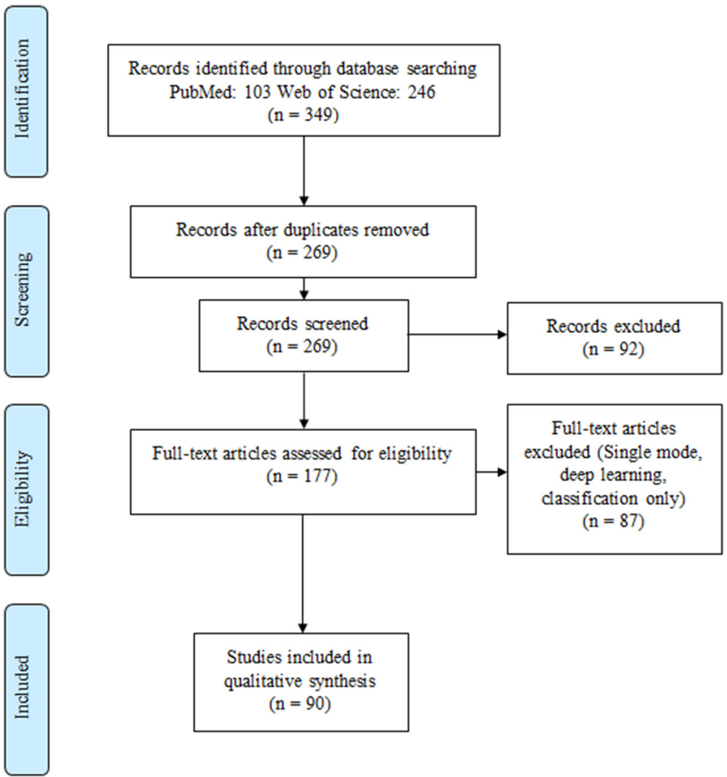
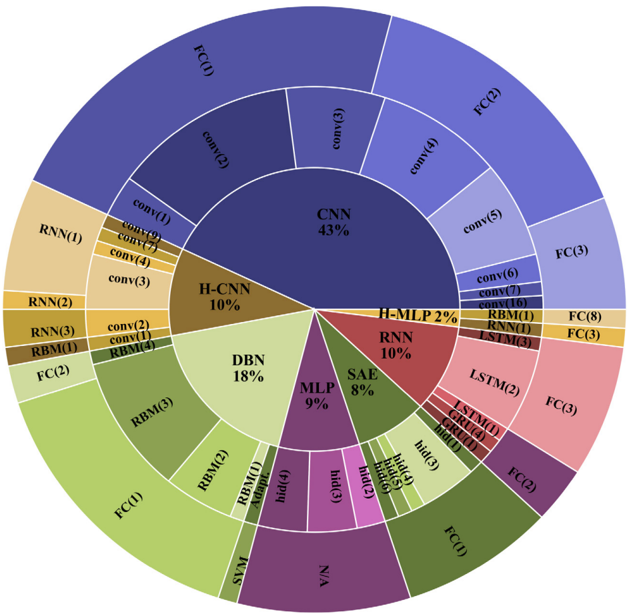
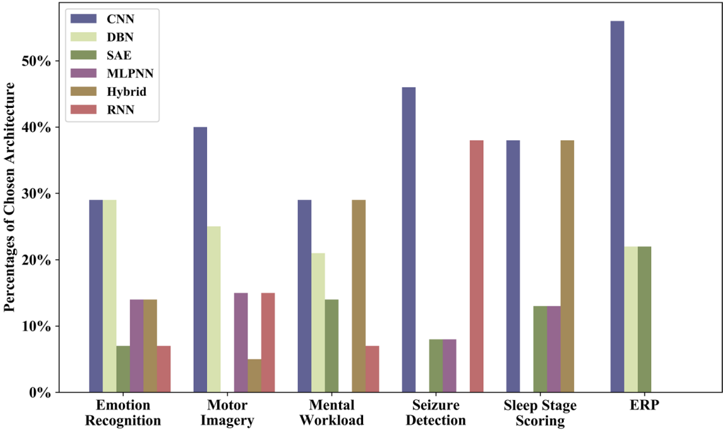
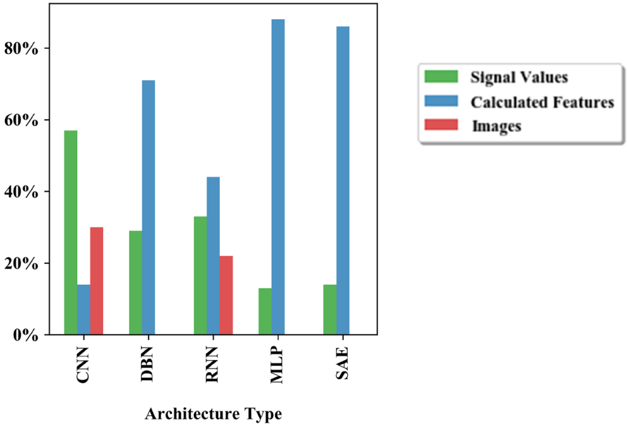
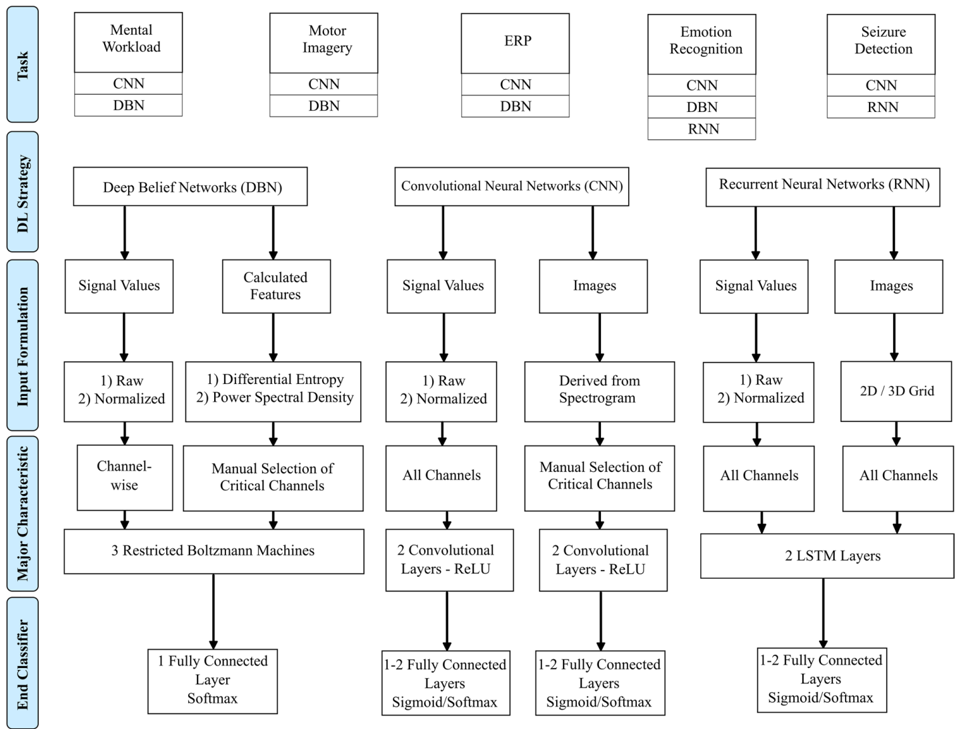
OBJECTIVE: Electroencephalography (EEG) analysis has been an important tool in neuroscience with applications in neuroscience, neural engineering (e.g. Brain-computer interfaces, BCI's), and even commercial applications. Many of the analytical tools used in EEG studies have used machine learning to uncover relevant information for neural classification and neuroimaging. Recently, the availability of large EEG data sets and advances in machine learning have both led to the deployment of deep learning architectures, especially in the analysis of EEG signals and in understanding the information it may contain for brain functionality. The robust automatic classification of these signals is an important step towards making the use of EEG more practical in many applications and less reliant on trained professionals. Towards this goal, a systematic review of the literature on deep learning applications to EEG classification was performed to address the following critical questions: (1) Which EEG classification tasks have been explored with deep learning? (2) What input formulations have been used for training the deep networks? (3) Are there specific deep learning network structures suitable for specific types of tasks? APPROACH: A systematic literature review of EEG classification using deep learning was performed on Web of Science and PubMed databases, resulting in 90 identified studies. Those studies were analyzed based on type of task, EEG preprocessing methods, input type, and deep learning architecture. MAIN RESULTS: For EEG classification tasks, convolutional neural networks, recurrent neural networks, deep belief networks outperform stacked auto-encoders and multi-layer perceptron neural networks in classification accuracy. The tasks that used deep learning fell into five general groups: emotion recognition, motor imagery, mental workload, seizure detection, event related potential detection, and sleep scoring. For each type of task, we describe the specific input formulation, major characteristics, and end classifier recommendations found through this review. SIGNIFICANCE: This review summarizes the current practices and performance outcomes in the use of deep learning for EEG classification. Practical suggestions on the selection of many hyperparameters are provided in the hope that they will promote or guide the deployment of deep learning to EEG datasets in future research.
Overview
The claims and statistics of this paper haven’t been checked yet.
Free: it reads the open-access text and checks the first 5 claims that cite a source we can check. Create a free account to check every claim.
Integrity signals
Registry
Cites
Statistics
Figures
Verification
Claims the paper makes
The claims and statistics of this paper haven’t been checked yet.
Free: it reads the open-access text and checks the first 5 claims that cite a source we can check. Create a free account to check every claim.
Claims other papers make about this one
Each is checked against this paper’s own text: does it say what the citing paper says it does?
The source backs part of the claim, not all of it — or backs it for a different population, condition or comparison.
In the citing paper
“The difficulty of EEG signal processing is to extract high-dimensional features from non-stationary time series with low signal-to-noise ratio [18].”
From IENet: a robust convolutional neural network for EEG based brain-computer interfaces (2022) · cites this paper as [18]
Experimental — accuracy not yet measuredThe source backs part of the claim, not all of it — or backs it for a different population, condition or comparison.
In the citing paper
“Convolutional neural networks (CNN), a leading deep learning structure for data on Euclidean space, outperform the above machine learning algorithms in classification accuracy (Craik et al., 2019).”
From Spatial–temporal graph convolutional network for Alzheimer classification based on brain functional connectivity imaging of electroencephalogram (2022) · cites this paper as Craik et al., 2019
Experimental — accuracy not yet measuredThe cited source says what the claim attributes to it.
In the citing paper
“As for the structures of deep leaning models, convolutional neural networks (CNNs) are the most prevalent architectures in EEG classification tasks [18].”
From IENet: a robust convolutional neural network for EEG based brain-computer interfaces (2022) · cites this paper as [18]
Self-check
Percentages, sums and reported differences re-computed from the paper’s own numbers.
The self-check needs the paper’s full text.
Citations
Cites
Hochreiter, S., & Schmidhuber, J. (1997) · Neural Computation · doi:10.1162/neco.1997.9.8.1735 · Cited by 102,318 · cited 1×
“LSTM is a popular extension of the standard RNN module [83].”
BackgroundLeCun, Y., Bengio, Y., & Hinton, G. (2015) · Nature · doi:10.1038/nature14539 · Cited by 84,126
Preferred reporting items for systematic reviews and meta-analyses: The PRISMA statement
Moher, D., Liberati, A., Tetzlaff, J., & Altman, D. G. (2010) · International Journal of Surgery · doi:10.1016/j.ijsu.2010.02.007 · Cited by 12,156
(1982) · Trends in Neurosciences · doi:10.1016/0166-2236(82)90076-5 · Cited by 9,089
Speech recognition with deep recurrent neural networks
Graves, A., Mohamed, A.-R., & Hinton, G. (2013) · 2013 IEEE International Conference on Acoustics, Speech and Signal Processing · doi:10.1109/icassp.2013.6638947 · Cited by 8,893 · cited 1×
“Indeed, it significantly improved performance in a wide range of traditionally challenging domains, such as images [10], videos [11], speech [12], and text [13].”
BackgroundLearning long-term dependencies with gradient descent is difficult
Bengio, Y., Simard, P., & Frasconi, P. (1994) · IEEE Transactions on Neural Networks · doi:10.1109/72.279181 · Cited by 8,542 · cited 1×
“Neural networks did not immediately receive the high attention seen today in neural classification applications because of practical issues, such as very long computation time and problems with the vanishing/exploding gradients [8].”
BackgroundLarge-Scale Video Classification with Convolutional Neural Networks
Karpathy, A., Toderici, G., Shetty, S., Leung, T., Sukthankar, R., & Fei-Fei, L. (2014) · 2014 IEEE Conference on Computer Vision and Pattern Recognition · doi:10.1109/cvpr.2014.223 · Cited by 6,354 · cited 1×
“Indeed, it significantly improved performance in a wide range of traditionally challenging domains, such as images [10], videos [11], speech [12], and text [13].”
EEGNet: a compact convolutional neural network for EEG-based brain-computer interfaces
Lawhern, V. J., Solon, A. J., Waytowich, N. R., Gordon, S. M., Hung, C. P., & Lance, B. J. (2018) · Journal of Neural Engineering · doi:10.1088/1741-2552/aace8c · Cited by 5,115 · cited 1×
“1 FC 20 h 2 OUT [94] CNN ELU (conv) SV P300(1) N/A P300(1) P300(1) 3 conv Softmax (FC) All (64/56/22) 1–40 Hz P300(2) 1–40 Hz MI 4–40 Hz 15 93% 1 FC 0.”
EEGNet: A Compact Convolutional Network for EEG-based Brain-Computer Interfaces
Lawhern, V. J., Solon, A. J., Waytowich, N. R., Gordon, S. M., Hung, C. P., & Lance, B. J. (2016) · arXiv · doi:10.48550/arxiv.1611.08024 · Cited by 5,105 · cited 1×
“1 FC 20 h 2 OUT [94] CNN ELU (conv) SV P300(1) N/A P300(1) P300(1) 3 conv Softmax (FC) All (64/56/22) 1–40 Hz P300(2) 1–40 Hz MI 4–40 Hz 15 93% 1 FC 0.”
DEAP: A Database for Emotion Analysis ;Using Physiological Signals
Koelstra, S., Muhl, C., Soleymani, M., Lee, J.-S., Yazdani, A., Ebrahimi, T., Pun, T., Nijholt, A., & Patras, I. (2012) · IEEE Transactions on Affective Computing · doi:10.1109/t-affc.2011.15 · Cited by 5,093 · cited 3×
“The datasets that are used in more than one study within this review include an emotion recognition dataset ([56], various subsets used in ten studies), a mental workload dataset ([57], used in four studies), two motor imagery datasets from the same BCI competition ([58], one dataset used in six studies and the second…”
BackgroundMethod
Research works printed but not linked: 24
- He Y, 2018, J. Neural Eng., 15
- Karpathy A, 2014, Proc. IEEE Computer Society Conf. Computer Vision Pattern Recognition, 1725
- Sutskever I, 2011, Proc. of the 28th Int. Conf. on Machine Learning, 1017
- Zhao Y, 2014, 2014 Asian Conf. Computer Visison, 1
- Roy S, 2018, 40th Annu. Int. Conf. IEEE Eng. Med. Biol. Soc. (EMBC), 2756
- Teplan M, 2002, Meas. Sci., 2, 1
- Pfurtscheller G, 2001, 89, 1123
- Kuanar S, 2018 IEEE Int. Conf. on Acoustics, Speech and Signal Processing (ICASSP), 352
- Abbas W, 2018, 40th Annu. Int. Conf. IEEE Eng. Med. Biol. Soc. (EMBC), 219
- Wei X, 2018, 18, 111
- Xu H, 2016, 2016 IEEE 18th Int. Workshop Multimedia Signal Processing, 1
- Vareka L, 2017, Application of Stacked Autoencoders to P300 Experimental Data (Int. Conf. on Artificial Intelligence and Soft Computing)
- Yuen T C, 2009, Int. J. Integr. Eng., 1, 71
- Alhagry S, 2017, Emotion, 8, 8
- Yin Z, 2016, Chinese Control Conf. CCC, 2016, 3907
- Pereira A, 2018, Preprint
- Ang K K, 2019, J. Neural Eng., 16
- Liu J, 2015, Chinese Control Conf. CCC, 2015, 3518
- Ansari M L A, 2018, J. Neural Eng., 15
- Kobler R J, 2016, 2016 IEEE Int. Conf. Syst. Man, Cybernetics SMC 2016—Conf. Proc., 469
- An X, 2014, Int. Conf. on Intelligent Computing, 203
- Gao Y, 2015, 2015 IEEE Int. Conf. Multimedia Expo Workshops ICMEW 2015, 2, 1
- Bablani A, 2018, 2018 9th Int. Conf. Computing Communication Networking Technologies, 1
- Luo T, 2018, Bioinformatics, 19, 344
Cited by
Items 901–1,000 of 1,001
A Functional BCI Model by the P2731 Working Group: Transducer
Sahonero-Alvarez, G., Singh, A. K., Sayrafian, K., Bianchi, L., & Roman–Gonzalez, A. (2021) · Brain-Computer Interfaces · doi:10.1080/2326263x.2021.1968633 · Cited by 5
SpectroTemporalNet: Automated Sleep Stage Scoring with Stacked Generalization
Sanghavi, S., Vaid, P., Rathod, P., & Srivastava, K. (2021) · International Conference on Electronics and Sustainable Communication Systems (ICESC) · doi:10.1109/icesc51422.2021.9532640 · Cited by 6
“In [13], the authors give an in-depth comparison of various deep learning architectures as well as various input formulations.”
BackgroundEEG Data Analysis for Intellectual Developmental Disorder
Oda, K., & Norouzi, N. (2021) · IEEE International Conference on Bioinformatics and Biomedicine (BIBM) · doi:10.1109/bibm52615.2021.9669489 · Cited by 5
mazrooei, E., Azarnoosh, M., Ghoshuni, M., & khalilzadeh, M. (2021) · The Neuroscience Journal of Shefaye Khatam · doi:10.52547/shefa.10.1.1 · Cited by 5
Scalable deep learning for healthcare: methods and applications
Barillaro, L., Agapito, G., & Cannataro, M. (2022) · ACM International Conference on Bioinformatics, Computational Biology, and Health Informatics (ACM-BCB) · doi:10.1145/3535508.3545590 · Cited by 5
“Among these data, we can include ECG (electrocardiogram) and EEG (electroencephalography) as bio signals, and MRI (magnetic resonance imaging) or CT (computed tomography) as bioimages.”
InfluentialBehboodi, A., Lee, W. A., Bulea, T. C., & Damiano, D. L. (2022) · International Conference on Rehabilitation Robotics · doi:10.1109/icorr55369.2022.9896584 · Cited by 6
“The initial structure consisted of two hidden layers, with a dimension of 10 and ReLu activation function [15].”
BackgroundLee, Y., Lee, H. J., & Tae, K. S. (2023) · Technology and Health Care · doi:10.3233/thc-220363 · Cited by 5
A Systematic Literature Review on Emotion Recognition System In Malaysia
Yamin, M. N. M., Aziz, K. A., Siang, T. G., & Aziz, N. A. A. (2023) · Proceedings of International Conference on Artificial Life and Robotics · doi:10.5954/icarob.2023.gs3-4 · Cited by 6
“EEG is frequently used in neuroscience, neural engineering, and biomedical engineering to measure human brain signals through the electromagnetic behaviour of specific components [30,31,32].”
BackgroundA Study of Deep Learning Based Classification of Mandarin Vowels Using Spoken Speech EEG Signals
Cui, W., Wang, X., Li, M., Pun, S. H., & Chen, F. (2023) · IEEE International Conference on Signal Processing, Communications and Computing (ICSPCC) · doi:10.1109/icspcc59353.2023.10400255 · Cited by 5
“Deep learning methods enable algorithms to automatically extract useful features for classification, minimizing information loss during feature extraction [11].”
MethodA continuous pursuit dataset for online deep learning-based EEG brain-computer interface
Forenzo, D., Zhu, H., & He, B. (2024) · Scientific Data · doi:10.1038/s41597-024-04090-6 · Cited by 7
A proposed deep learning model for multichannel ECG noise reduction
Maurya, J. P., Manoria, M., & Joshi, S. (2025) · Discover Artificial Intelligence · doi:10.1007/s44163-025-00292-y · Cited by 4
MSNet: Multimodal Self-attention Network for Depression Detection via Fusion of Eye Tracking and EEG
Zhu, F., Wu, B., Huo, Y., Dang, R., Hu, B., & Wang, Q. (2025) · ACM Symposium on Eye Tracking Research and Applications (ETRA) · doi:10.1145/3715669.3723106 · Cited by 4
“However, for irregular domains like brain networks, CNNs face challenges in spatial convolution operations [Craik et al. 2019].”
He, C., Huang, W., Huang, Y., Wang, H., Wu, H. Y., Deng, S., & Liang, M. (2025) · IEEE Internet of Things Journal · doi:10.1109/jiot.2025.3585233 · Cited by 4
“Compared with ML models, deep learning (DL) models can automatically extract advanced robust features from raw data, providing superior solutions for improving detection accuracy [25], [68].”
Jan-Cordón, D. E., Rico, E., Birba, A., Ravelo, Y., Méndez, M. D. C. L., Travina, K., Padrón, I., de Vega, M., & Marrero, H. (2025) · Cognitive Computation · doi:10.1007/s12559-025-10529-8 · Cited by 5
FA-STTM: A hybrid Transformer-Mamba network for motor imagery EEG classification
Gao, M., Gao, C., Yao, Z., & Zhu, W. (2025) · Neurocomputing · doi:10.1016/j.neucom.2025.132481 · Cited by 6
Aldhaheri, T. A., Kulkarni, S. B., & Al-Zidi, N. M. (2026) · Discover Artificial Intelligence · doi:10.1007/s44163-025-00801-z · Cited by 4
“However, handcrafted features remain essential in neurolinguistic applications, as they provide interpretability and domain-specific insights that deep learning models may lack [34].”
Ren, Z., Du, X., Lin, Y., Tian, D., Ma, Y., & Wu, X. (2026) · Biomedical Signal Processing and Control · doi:10.1016/j.bspc.2026.109696 · Cited by 4
Chiossi, F., Imamaliyev, E., Bleichner, M. G., & Mayer, S. (2026) · CHI Conference on Human Factors in Computing Systems · doi:10.1145/3772318.3790523 · Cited by 6
“Trials were represented as ( 𝑁,𝐶,𝑇 ) tensors and passed directly to the CNN architectures, allowing models to learn hierarchical spatiotemporal features of anticipatory EEG activity without manual feature engineering [21, 65].”
Samuel, J., Murugan, T. K., Govindaraj, L., Balaji, M., Senthilkumar, V., & Sundararajan, S. (2026) · Scientific Reports · doi:10.1038/s41598-025-34024-0 · Cited by 4
Kuriyakose, D., & Gowsalya, M. (2026) · Frontiers in Computational Neuroscience · doi:10.3389/fncom.2026.1763727 · Cited by 7
“…solely on either spectral (e.g., frequency power) or temporal (e.g., signal variability) characteristics, thereby neglecting the rich interrelationships between domains such as spectral complexity, microstate transitions, or graph-theoretical dynamics (Fraschini et al., 2016; Craik et al., 2019).”
Luo, Y., Liu, X., & Yang, M. (2026) · Frontiers in Rehabilitation Sciences · doi:10.3389/fresc.2026.1666530 · Cited by 6
“With the deepening of research, BCI technology has progressed by enhancing signal-processing accuracy through deep-learning-based EEG decoding (42, 43), developing portable and user-friendly systems for daily rehabilitation (44, 45), and integrating multimodal feedback such as virtual-reality-or…”
Evaluating EEG-Based Seizure Classification Using Foundation and Classical Ensemble Models
Obaido, G., & Esenogho, E. (2026) · Applied Sciences · doi:10.3390/app16073120 · Cited by 6
Zhang, G., Wang, X., Winsler, K., & Luck, S. J. (2026) · Cortex · doi:10.1016/j.cortex.2026.05.005 · Cited by 6
Yang, T., & Kim, S.-P. (2020) · Conference proceedings/Conference proceedings - IEEE International Conference on Systems, Man, and Cybernetics · doi:10.1109/smc42975.2020.9283174 · Cited by 4
“Owing to recent development of deep neural network (DNN) models, numerous researches have leveraged DNNs to interpret EEG [14] or fMRI data [15] in a variety of In the present neuromarketing study, therefore, we aim to estimate consumers’ attitude during brand extension evaluation.”
BackgroundUsing Machine Learning to Determine Optimal Sleeping Schedules of Individual College Students
Azuara-Hernandez, O. Y., & Gillette, Z. (2022) · Lecture notes in computer science · doi:10.1007/978-3-031-17902-0_2 · Cited by 4
Wu, Z., Tang, X., Wu, J., Huang, J., Shen, J. F., & Hong, H. (2023) · Medical & Biological Engineering & Computing · doi:10.1007/s11517-023-02840-z · Cited by 5
Alzheimer's Disease Diagnosis Using Brain Signals and Artificial Neural Networks
khazaei, H., & Rad, E. M. (2023) · The Neuroscience Journal of Shefaye Khatam · doi:10.61186/shefa.11.3.68 · Cited by 4
Nogales, A., García-Tejedor, Á. J., Vara, J. S., & Ugalde-Canitrot, A. (2024) · Epilepsy & Behavior · doi:10.1016/j.yebeh.2024.109744 · Cited by 4
“In terms of review papers compiling deep learning techniques applied to EEGs, [11] and [12] can be high-lighted.”
A diagonal masking self-attention-based multi-scale network for motor imagery classification
Yang, K., Wang, J., Yang, L., Bian, L., Luo, Z., & Yang, C. (2024) · Journal of Neural Engineering · doi:10.1088/1741-2552/ad5405 · Cited by 6
“In order to avoid the tedious feature extraction process, some researchers have successfully applied deep learning methods to MI classification tasks [10].”
Encoding temporal information in deep convolution neural network
Singh, A. K., & Bianchi, L. (2024) · Frontiers in Neuroergonomics · doi:10.3389/fnrgo.2024.1287794 · Cited by 5
“The past few years have seen an increased number of deep learning applications in understanding and classifying EEG signals (Craik et al., 2019; Hossain et al., 2023).”
BackgroundBuriro, A. B., Buriro, A., Khuwaja, A. A., Memon, A. A., Siddiqui, N., Weddell, S. J., & Jones, R. D. (2025) · IEEE Access · doi:10.1109/access.2025.3541985 · Cited by 4
“DL has become increasingly prevalent in EEG classification in recent years, with ConvNets emerging as the leading architectures in EEG-based research [19], [20], primarily due to their significant achievements in audio and images.”
Zhao, Q., Cui, K., Zhang, L., Wu, Z., Jiang, H., Zhao, M., & Hu, B. (2025) · Journal of Neural Engineering · doi:10.1088/1741-2552/ade1f8 · Cited by 4
“The linear layer, as a fundamental neural network unit, is widely used [21].”
InfluentialGuggisberg, A. G., Siebner, H. R., Lundell, H., Madsen, M. A. J., Madsen, K. H., Wiggermann, V., Mégevand, P., Proix, T., Dalal, S. S., Grouiller, F., et al. (2025) · Clinical Neurophysiology · doi:10.1016/j.clinph.2025.2110942 · Cited by 5
Oliva, C., Changoluisa, V., Rodríguez, F. B., & Lago-Fernández, L. F. (2021) · Lecture notes in computer science · doi:10.1007/978-3-030-86380-7_37 · Cited by 7
A Combinational Deep Learning Approach to Visually Evoked EEG‐Based Image Classification
Kumari, N., Anwar, S., & Bhattacharjee, V. (2022) · Wiley eBooks · doi:10.1002/9781119821908.ch11 · Cited by 4
Subject Wise Motor Imagery Classification from EEG Data Using Transfer Learning
Khan, A. A., Ali, H. M., & Jahangir, M. T. (2022) · International Multi-Topic Conference · doi:10.1109/inmic56986.2022.9972989 · Cited by 4
“Similar, a most recent work has been done in [6] where they enhanced algorithms from classical machine learning to multilayer perceptrons.”
BackgroundA Review on Estimation of Workload from Electroencephalogram (EEG) Using Machine Learning
Sharma, M., & Kumar, E. (2022) · Communications in computer and information science · doi:10.1007/978-3-031-23724-9_24 · Cited by 5
Machida, K., Nambu, I., & Wada, Y. (2023) · Applied Sciences · doi:10.3390/app13063578 · Cited by 4
Alcoholic Addiction Detection Based on EEG Signals Using a Deep Convolutional Neural Network
Vartak, C., & Jolly, L. (2023) · Lecture notes in electrical engineering · doi:10.1007/978-981-19-8493-8_9 · Cited by 4
EEG Artifact Removal Strategies for BCI Applications: A Survey
Pardhu, T., & Deevi, N. (2023) · International Journal of Electrical Engineering and Computer Science · doi:10.37394/232027.2023.5.8 · Cited by 6
REEGNet: A resource efficient EEGNet for EEG trail classification in healthcare
Khushiyant, Mathur, V., Kumar, S., & Shokeen, V. (2024) · Intelligent Decision Technologies · doi:10.3233/idt-230715 · Cited by 8
Synchronous Mapping of Neural Current Source and Sulcus With Acoustoelectric Brain Imaging
Zhou, Y., Song, Y., Song, X., Xu, M., He, F., & Ming, D. (2024) · IEEE Transactions on Instrumentation and Measurement · doi:10.1109/tim.2024.3406801 · Cited by 5
“With ms-level temporal resolution and noninvasiveness, conventional electroencephalography (EEG) is widely utilized in clinical examination and neuroscience research [1], [2].”
BackgroundContinuous and discrete decoding of overt speech with scalp electroencephalography (EEG)
Craik, A., Dial, H. R., & Contreras-Vidal, J. L. (2024) · Journal of Neural Engineering · doi:10.1088/1741-2552/ad8d0a · Cited by 5
Self-citationDai, H., Li, W., Wang, Q., & Cheng, B. (2024) · IEEE Transactions on Biomedical Engineering · doi:10.1109/tbme.2024.3509533 · Cited by 4
“Since no deep learning meth-ods have been applied to predict FUS BBB opening outcomes using acoustic signals, we compared a CNN consisting of four convolutional layers and two fully connected layers, as well as a LSTM-based method comprising two LSTM layers and one fully connected layer [43].”
Who is WithMe? EEG features for attention in a visual task, with auditory and rhythmic support
Turkeš, R., Mortier, S., Winne, J. D., Botteldooren, D. B., Devos, P., Latré, S., & Verdonck, T. (2025) · Frontiers in Neuroscience · doi:10.3389/fnins.2024.1434444 · Cited by 4
Beyond averaging: A transformer approach to decoding event related brain potentials
Zelger, P., Arnold, M., Rossi, S., Seebacher, J., Muigg, F., Graf, S., & Rodríguez-Sánchez, A. (2025) · NeuroImage · doi:10.1016/j.neuroimage.2025.121049 · Cited by 5
Raza, I., Hussain, S. A., Jamal, M. H., & Ashraf, I. (2026) · International Journal of Human-Computer Interaction · doi:10.1080/10447318.2026.2703893 · Cited by 5
Li, M., Lin, F., & Xu, G. (2020) · International Journal of Neural Systems · doi:10.1142/s0129065720500094 · Cited by 4
Matsuda, N., Kinoshita, K., Okamura, A., Shirakawa, T., & Suzuki, I. (2021) · Toxicological Sciences · doi:10.1093/toxsci/kfab061 · Cited by 4
Learning Generalized Representations of EEG between Multiple Cognitive Attention Tasks
Ding, Y., Ang, N. W. J., Wai, A. A. P., & Guan, C. (2021) · Annual International Conference of the IEEE Engineering in Medicine and Biology Society (EMBC) · doi:10.1109/embc46164.2021.9629575 · Cited by 5
“Deep Learning methods have achieved superior accuracy over Machine Learning models when applied to classification tasks on EEG data [12] [13] [14].”
MethodHussain, S., Pirzada, N., Saba, E., Panhwar, M. A., & Ahmed, T. (2021) · International Journal of Advanced Computer Science and Applications · doi:10.14569/ijacsa.2021.0121160 · Cited by 4
“The EEG signals have unique characteristics, variability, and dimensionality [11] as they can provide information about the electrical activities of a human brain [12], [13], and also they have the great potential to predict whether a person is a healthy control or schizophrenic [14]– [16].”
Background2D-DOST for seizure identification from brain MRI during pregnancy using KRVFL
Nayak, G., Padhy, N., & Mishra, T. K. (2022) · Health and Technology · doi:10.1007/s12553-022-00669-4 · Cited by 4
Performance analysis of VEP signal discrimination using CNN and RNN algorithms
Cheker, Z., Chakkor, S., Oualkadi, A. E., Baghouri, M., Belfkih, R., Hangouche, A. J. E., & Laameche, J. (2022) · Neuroscience Informatics · doi:10.1016/j.neuri.2022.100087 · Cited by 4
Itoh, K., Konoike, N., Iwaoki, H., Igarashi, H., & Nakamura, K. (2022) · Neuroimage Reports · doi:10.1016/j.ynirp.2022.100116 · Cited by 5
Empirical Analysis of Deep Learning for Big Data and Its Applications using CNN
Arya, R., Khanduja, M., Rani, P. S., Pundhir, P., Tiwari, M., & Shelke, C. J. (2022) · International Conference on Advance Computing and Innovative Technologies in Engineering (ICACITE) · doi:10.1109/icacite53722.2022.9823927 · Cited by 7
Classification of Silent Speech in English and Bengali Languages Using Stacked Autoencoder
Ghosh, R., Sinha, N., & Phadikar, S. (2022) · SN Computer Science · doi:10.1007/s42979-022-01274-y · Cited by 4
“The classification of silent speech in the proposed work is challenging for two reasons: first, the features extracted from the EEG contain multiple dimensions; second, there are multiple classes to be classified in the proposed work [33].”
BackgroundManagement of post-stroke depression (PSD) by electroencephalography for effective rehabilitation
Yang, B., Huang, Y., Li, Z., & Hu, X. (2022) · Engineered Regeneration · doi:10.1016/j.engreg.2022.11.005 · Cited by 8
Moinuddin, K. A., Havugimana, F., Al-Fahad, R., Bidelman, G. M., & Yeasin, M. (2022) · Brain Sciences · doi:10.3390/brainsci13010075 · Cited by 5
“CNNs have been successful in modeling neural events and brain-behavior relationships from EEG measures [66].”
MethodGuo, Z., & Lin, L. (2023) · Journal of Intelligent & Fuzzy Systems · doi:10.3233/jifs-222656 · Cited by 5
“Common indicatorsofEEGsignalsincludewaveamplitude, frequency,event-relatedpotential,etc.[45].”
Omejc, N., Peskar, M., Miladinović, A., Kavcic, V., Džeroski, S., & Marušič, U. (2023) · Life · doi:10.3390/life13020391 · Cited by 4
Home Automation Monitoring and Controlling with BCI Comparative Analysis
Devi, M. K., Ramya, N., Parthasarathy, R., Nithya, K. S. Y., Dharshini, M. K., & Kalpana, R. A. (2022) · 2022 1st International Conference on Computational Science and Technology (ICCST) · doi:10.1109/iccst55948.2022.10040271 · Cited by 4
“Brain waves have been investigated and divided into five basic frequency bands [6].”
BackgroundMotor Imagery EEG Recognition Based on Weight-Sharing CNN-LSTM Network
Liu, Y., Zhao, B., Zhang, S., & Xiao, W. (2022) · Chinese Control and Decision Conference (CCDC) · doi:10.1109/ccdc55256.2022.10033571 · Cited by 4
“In addition to the traditional feature power spectral density (PSD)[10], the input features of the deep learning network also include the angle-amplitude transformation (AAT) [11] and two-dimensional gray-scale image conversion based on isometric azimuth projection [4]which are newly proposed [6] can get better result…”
BackgroundBayesian Time-Series Classifier for Decoding Simple Visual Stimuli from Intracranial Neural Activity
Ziaei, N., Saadatifard, R., Yousefi, A., Nazari, B., Cash, S. S., & Paulk, A. C. (2023) · Lecture notes in computer science · doi:10.1007/978-3-031-43075-6_20 · Cited by 5
“While deep learning frameworks such as Convolutional Neural Networks [9] and Recurrent Neural Networks [25] have been applied to the decoding and classification of EEG signals to identify stimuli [5], these methods might not be as applicable to invasive neural recordings like iEEG.”
BackgroundMethodNajafabadi, A. J., & Bagh, K. (2023) · IEEE Signal Processing in Medicine and Biology Symposium · doi:10.1109/spmb59478.2023.10372750 · Cited by 5
“…to extract useful information, some use mathematical tools [8], and some use machine based strategies, with the most promising being machine learning using Principal Component Analysis, Genetic Algorithm, Support Vector Machine, Linear Discriminant Analysis [9], and deep learning [10][11][12].”
MethodSun, H., Li, C., & Zhang, H. (2024) · IEEE Access · doi:10.1109/access.2024.3368384 · Cited by 4
“Although Craik et al. found that processing EEG into images does not improve the classification accuracy in some cases, this goes against the intuition that the more effort applied to the preprocessing stages, the more accurate the classification will be [26].”
MethodApplication of Reinforcement and Deep Learning Techniques in Brain–Machine Interfaces
Manjunatha, H., & Esfahani, E. T. (2020) · Springer eBooks · doi:10.1007/978-3-030-38740-2_1 · Cited by 5
Comparison of Motor Imagery EEG Classification using Feedforward and Convolutional Neural Network
Majoros, T., & Oniga, S. (2021) · IEEE EUROCON - International Conference on Computer as a Tool (EUROCON) · doi:10.1109/eurocon52738.2021.9535592 · Cited by 4
Stoev, H. (2020) · Arrow - TU Dublin (Technological University Dublin) · doi:10.21427/sv9j-t268 · Cited by 4
Wolff, A., Chen, L., Tumati, S., Golesorkhi, M., Gómez‐Pilar, J., Hu, J., Jiang, S., Mao, Y. Q., Longtin, A., & Northoff, G. (2020) · bioRxiv (Cold Spring Harbor Laboratory) · doi:10.1101/2020.12.09.417774 · Cited by 4
“A type of recurrent neural network (RNN), the LSTM has been used for inputs of sequences (Alhagry et al., 2017), especially applied to EEG timeseries data (Alexander et al., 2018; Roy et al., 2019), which is why it was chosen here.”
MethodWang, Y., Wang, S., Cai, W., Ford, G., Cui, Y., Zhang, Y., Du, C., Fan, C., Li, D., Zhou, H., et al. (2025) · bioRxiv (Cold Spring Harbor Laboratory) · doi:10.64898/2025.11.30.691403 · Cited by 5
“…fMRI remains strongest for spatial detail, whereas EEG and MEG excel at temporal dynamics; FM-based alignment (e.g., CLIP) and generative priors (diffusion) compensate for each modality’s weaknesses and can be adapted with minimal architectural changes across recording types [101, 26, 123, 93].”
InfluentialDecoding declarative memory process for predicting memory retrieval based on source localization
Kalafatovich, J., Lee, M., & Lee, S. (2022) · PLoS ONE · doi:10.1371/journal.pone.0274101 · Cited by 3
Jang, H., Park, J. S., Jun, S. C., & Ahn, S. (2023) · Biomedical Engineering Letters · doi:10.1007/s13534-023-00309-4 · Cited by 4
“Deep-learning methods are significantly different from conventional methods that rely on machine learning and have received considerable attention in studies related to BCIs [23].”
Reconstructing brain functional networks through identifiability and deep learning
Zanin, M., Aktürk, T., Yıldırım, E., Yerlikaya, D., Yener, G., & Güntekin, B. (2024) · Network Neuroscience · doi:10.1162/netn_a_00353 · Cited by 3
“Many works can be found in the literature, using deep learning as models to perform classifications (Al-Saegh et al., 2021; Craik et al., 2019).”
BackgroundSCRAPE: Side-Channel Attack to Reveal Alphanumeric Passwords from EEG Signals
Sarma, A., & Thamilarasu, G. (2024) · International Conference on Cyber-Enabled Distributed Computing and Knowledge Discovery (CyberC) · doi:10.1109/cyberc62439.2024.00033 · Cited by 4
Machine Learning Approach for Music Familiarity Classification with Single-Channel EEG
Kim, N., Borthakur, D., & Saikia, M. J. (2024) · Annual International Conference of the IEEE Engineering in Medicine and Biology Society (EMBC) · doi:10.1109/embc53108.2024.10782402 · Cited by 3
“In another analysis, we employed a deep learning algorithm using Convolutional Neural Network (CNN) and spectrogram [21]–[23].”
Ahmadieh, H., Ghassemi, F., & Moradi, M. H. (2025) · Brain Topography · doi:10.1007/s10548-024-01080-0 · Cited by 4
“Transfer learning involves training a very deep network on a large database, and then adapting this trained network to insufficient data for the desired application (Acharya et al. 2018; Byra et al. 2018; Craik et al. 2019; Khan et al. 2019; Shin et al. 2016).”
Quinn, C., Craik, A., Tessmer, R., Henry, M. L., & Dial, H. R. (2025) · Neuroimage Reports · doi:10.1016/j.ynirp.2025.100242 · Cited by 4
“Much of past research into EEG analysis with deep learning has been focused on CNNs (Lawhern et al., 2018; Craik et al., 2019; Roy et al., 2019) for the benefits of spatial pattern detection, reduction in trainable parameters as compared to other deep learning models, and modifications that help to…”
Self-citationDeep learning models as learners for EEG-based functional brain networks*
Yang, Y., & Li, Y. (2025) · Journal of Neural Engineering · doi:10.1088/1741-2552/adba8c · Cited by 3
“Apart from FBN methods, deep learning (DL) models have been extensively applied in EEG-based brain research [13–15], owing to their superior ability to extract information automatically and achieve state-of-the-art performance.”
Dynamic reconstruction of electroencephalogram data using RBF neural networks
Wang, X., Du, C., Ke, X., Zhang, J., Zheng, Z., Yue, Y., & Yu, M. (2025) · Frontiers in Neuroscience · doi:10.3389/fnins.2025.1557763 · Cited by 3
“Electroencephalography (EEG) stands as a non-invasive, economical, and practical neuroscience research tool (Craik et al., 2019) that captures high-temporal-resolution brain activity by recording postsynaptic potentials of cortical pyramidal neurons (Smailovic and Jelic, 2019).”
Valentim, C. A., Mariuci, G., & David, S. A. (2025) · International Journal of Dynamics and Control · doi:10.1007/s40435-025-01642-5 · Cited by 4
“…need of developing tools that can harness such information has pro-pelled the scientific community to explore data science [49], recovering and perfecting concepts long ago left aside [50] and profoundly impacting all fields of research, particularly in health [51–54] and clinical oncology [55, 56].”
Kwon, J., & Min, B. (2025) · Frontiers in Human Neuroscience · doi:10.3389/fnhum.2025.1545726 · Cited by 4
An attention-based multiple band interaction network for motor imagery EEG decoding
Dang, W., Zhang, K., Li, H., Lv, D., Guo, W., & Gao, Z. (2025) · Applied Soft Computing · doi:10.1016/j.asoc.2025.113750 · Cited by 5
How much information is needed to predict outcomes after cardiac arrest?
Elmer, J., Chen, J., Turner, A., Shook, B., DiFiore, S., Callaway, C. W., Clermont, G., & Dubrawski, A. W. (2025) · Resuscitation · doi:10.1016/j.resuscitation.2025.110775 · Cited by 3
Multi-Channel Fusion Deep Wavelet Spectrum Network for Epileptic Signal Classification
Sun, J., Cao, Z., & Zhao, J. (2025) · IEEE Journal of Biomedical and Health Informatics · doi:10.1109/jbhi.2025.3610433 · Cited by 6
“Electroencephalogram (EEG) signals are widely used in epilepsy diagnosis due to their high temporal resolution, non-invasive nature, and cost-effectiveness [5], [6].”
Kim, D., Lee, Y. L., Shin, S., Kim, K. M., Kim, D., & Choi, S. (2025) · IEEE Access · doi:10.1109/access.2025.3626160 · Cited by 4
“Toaddress this challenge, recent efforts have focused on developing noise-robust models using deep learning [12], [13], [14].”
Kim, H., & Kim, J. (2025) · Bioengineering · doi:10.3390/bioengineering12111220 · Cited by 4
“The resulting features are further processed by a 3-block TCN with kernel sizes [3,5,7], dilation factors [1,2,4], 64 filters per convolution layer, and dropout 0.2 to learn long-range temporal patterns.”
InfluentialA machine learning-based EEG signal analysis framework to enhance emotional state detection
Sobhani, M., Srestha, S. D., Shomoy, M. M. H., Reza, A. W., & Siddique, N. (2025) · Cognitive Neurodynamics · doi:10.1007/s11571-025-10367-2 · Cited by 4
“As a result, significant prepro - cessing is frequently necessary to eliminate artifacts (Liu 2019), mainly when EEG data is recorded simultaneously.”
Basit, A., Nawaz, M., & Shafique, M. (2025) · International Joint Conference on Neural Networks (IJCNN) · doi:10.1109/ijcnn64981.2025.11228729 · Cited by 4
“Traditional classifiers such as Support Vector Machines (SVM) and Random Forest (RF) have demonstrated effectiveness in EEG classification [28], but recent advances favor deep learning approaches like Long Short-Term Memory (LSTM) and Convolutional Neural Networks (CNN) [22], [29].”
Advances in multimodal artificial intelligence models for epilepsy research
Xie, X., Chen, P., Liu, H., Wang, D., Wang, Y., Xue, R., Xu, M., Wang, S., Duan, Y., Zhou, M., et al. (2025) · Epilepsy & Behavior · doi:10.1016/j.yebeh.2025.110811 · Cited by 5
Avital, N., Gelkop, T., Brenner, D., & Malka, D. (2025) · AI · doi:10.3390/ai6120312 · Cited by 3
“Recurrent neural networks [29], particularly long short-term memory [30] models, have been widely applied to EEG analysis because of their ability to capture long-range temporal dependencies.”
Ocaranza, C. R. P., Yun, B., & Autor, E. D. P. O. (2025) · Sensors · doi:10.3390/s25237262 · Cited by 4
“…hindered by a fundamental equipment gap: while most research utilizes medical-grade EEG systems with 32–256 channels with controlled laboratory conditions, consumer applications are in need of affordable devices with limited channels (8–14) and environmental noise in uncontrolled deployment [3,4].”
Miao, M., Tan, Q., Zhang, K., Sheng, Z., Hu, J., & Xu, B. (2026) · International Journal of Neural Systems · doi:10.1142/s0129065726500048 · Cited by 4
Materials and Systems for Closed-Loop Optical Actuation with Integrated Sensing Pathways
Joo, J., Kim, W., Kim, D. H., Lee, G., Yoo, J., & Won, S. M. (2025) · ACS Applied Optical Materials · doi:10.1021/acsaom.5c00540 · Cited by 3
Hodžić, I., Doelkahar, B. S., Horn, J., & van Rootselaar, A. (2025) · Resuscitation · doi:10.1016/j.resuscitation.2025.110943 · Cited by 3
A Systematic Review of Consumer-Grade EEG Applications in Directional Game Control via Motor Imagery
Xie, W., Wang, Y. M., Dou, S. S. Q. P., & Qu, X. (2026) · Communications in computer and information science · doi:10.1007/978-3-032-12764-8_9 · Cited by 3
Hu, Z., Kui, H., Jiang, Z., Wang, C., & Liu, X. (2026) · Computers and Electronics in Agriculture · doi:10.1016/j.compag.2026.111422 · Cited by 3
EEG emotion recognition based on SA-cWGAN and graph contrast learning
Zhao, Q., Zhang, H., Liu, X., Zhu, K., & Wang, H. (2026) · Measurement Digitalization · doi:10.1016/j.meadig.2026.100022 · Cited by 3
Aslan, S. G., & Yılmaz, B. (2026) · Biomedical Signal Processing and Control · doi:10.1016/j.bspc.2026.109966 · Cited by 3
Multi-View Manifold-Adaptive Kernel Regression for Speech Classification From EEG Signals
Xie, H., Cui, Q., Wu, C., Peng, Y. K., & Kong, W. (2026) · IEEE Signal Processing Letters · doi:10.1109/lsp.2026.3668169 · Cited by 3
“To this end, researchers have explored extracting diverse features such as temporal patterns [5], power spectral density [6], and statistical or spatial covariance representations [7] for EEG decoding task.”
He, D., Jiang, B., Feng, K., Zhang, L., Liu, L., Li, Y., Zhao, Y., & Yan, H. (2026) · Biomedical Signal Processing and Control · doi:10.1016/j.bspc.2026.111735 · Cited by 3
Metadata
- Authors
- Craik, A., He, Y., & Contreras-Vidal, J. L.
- Affiliations
- University of Houston (US)
- Corresponding author
- Craik, Alexander
- Venue
- Journal of Neural Engineering
- Publisher
- IOP Publishing
- Published
- 2019-04-09
- Volume
- 16
- Issue
- 3
- Pages
- 031001
- ISSN
- 1741-2552 (ISSN-L)
- 1741-2560
- OpenAlex
- W2915893085
- Cited by
- 1,758
- References
- 122
- Citations by year
- 2026: 308 · 2025: 287 · 2024: 273 · 2023: 290 · 2022: 246 · 2021: 213 · 2020: 116 · 2019: 23
- FWCI
- 18.93
- Type
- journal article
- Language
- en
- Open access
- hybrid
- doi.org
- Licence
- cc-by
- iopscience.iop.org/info/page/text-and-data-mining (tdm)
- creativecommons.org/licenses/by/3.0/ (vor)
- Locations
- Journal of Neural Engineering (publishedVersion, cc-by)
- PubMed (publishedVersion)
- Funders
- Center for Advanced Computing and Data Science
- Topics
- Life Sciences › Neuroscience › Cognitive Neuroscience › EEG and Brain-Computer Interfaces
- Physical Sciences › Computer Science › Artificial Intelligence › Emotion and Mood Recognition
- Health Sciences › Medicine › Cardiology and Cardiovascular Medicine › ECG Monitoring and Analysis
- Keywords
- EEG, EEG classification, deep learning, convolutional neural networks, recurrent neural networks, deep belief network, stacked autoencoder, motor imagery, emotion recognition, mental workload, seizure detection, sleep stage classification, EEG preprocessing
- MeSH terms
- Deep Learning, Animals, Brain, Electroencephalography, Humans, Psychomotor Performance, Neural Networks, Computer, Brain-Computer Interfaces
About these checks
Registry, retraction, Cites and statistics results are computed, not judged, with one exception: a printed reference that no index lists is read once by a model before it counts as a citation error. Claims are extracted by a model and kept only when their quote appears verbatim in the text; each cited source is then checked, with a model’s help, for whether it says what the claim relies on. Those verdicts can be wrong — read the claim’s quote and the cited source before relying on one.
Statistics and arithmetic are recomputed, not judged.
Confidence bands are shown only for fields calibrated on our annotated test set. None is calibrated yet, so no band is shown.
What counts as a claim ›How we measure confidence ›How we check this ›
Are you an author, or do you see a problem with this page? Request a review
Data sources
Bibliographic data: Semantic Scholar, OpenAlex, Crossref.
Contains information from the Semantic Scholar Academic Graph Datasets, made available under the ODC Attribution License (ODC-BY 1.0).
Semantic Scholar’s data is described in: Kinney, R., et al. (2023). The Semantic Scholar Open Data Platform. arXiv:2301.10140.
