

Deep learning for electroencephalogram (EEG) classification tasks: a review
Open accessThe DOI matches its Crossref record; 123 of the 123 references it cites were found in a registry or an index.
Abstract
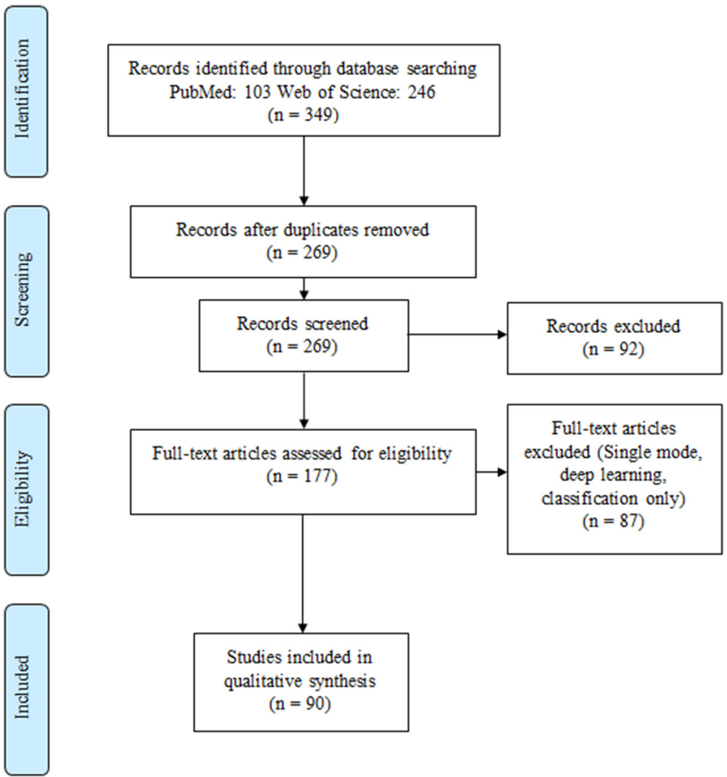
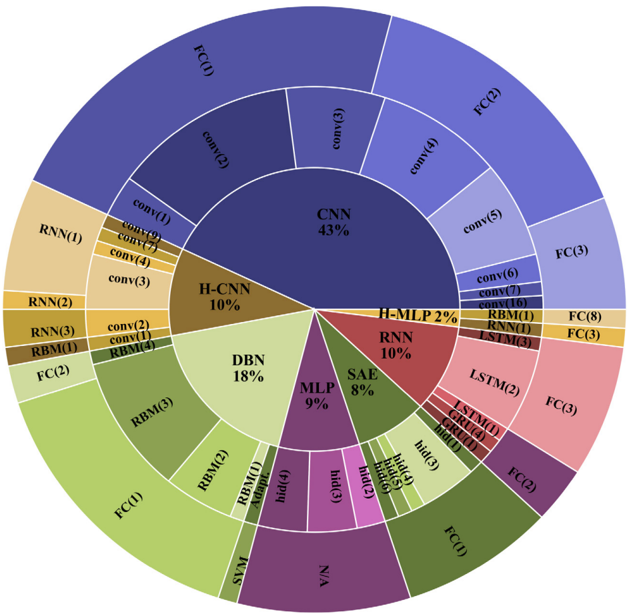
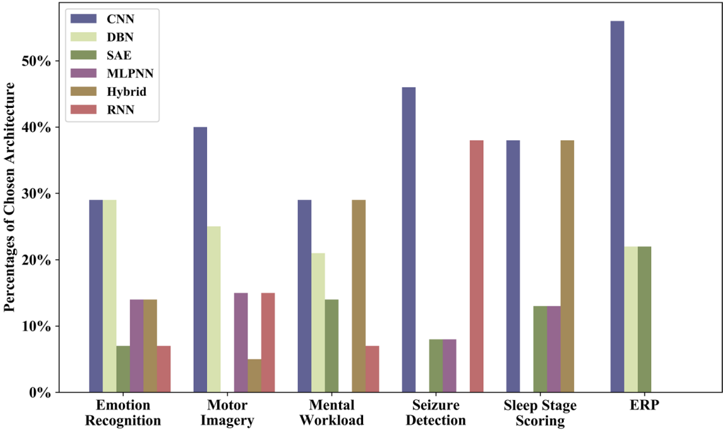
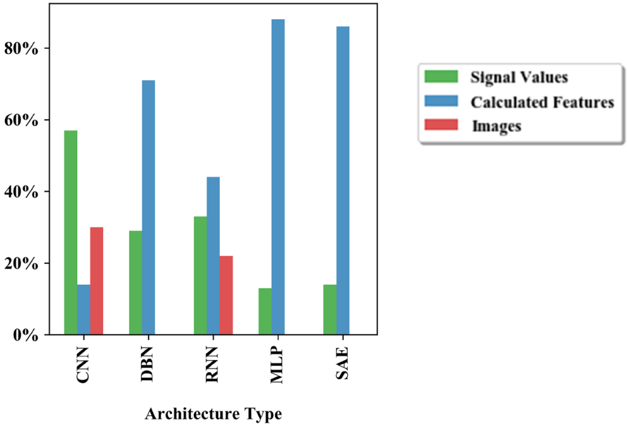
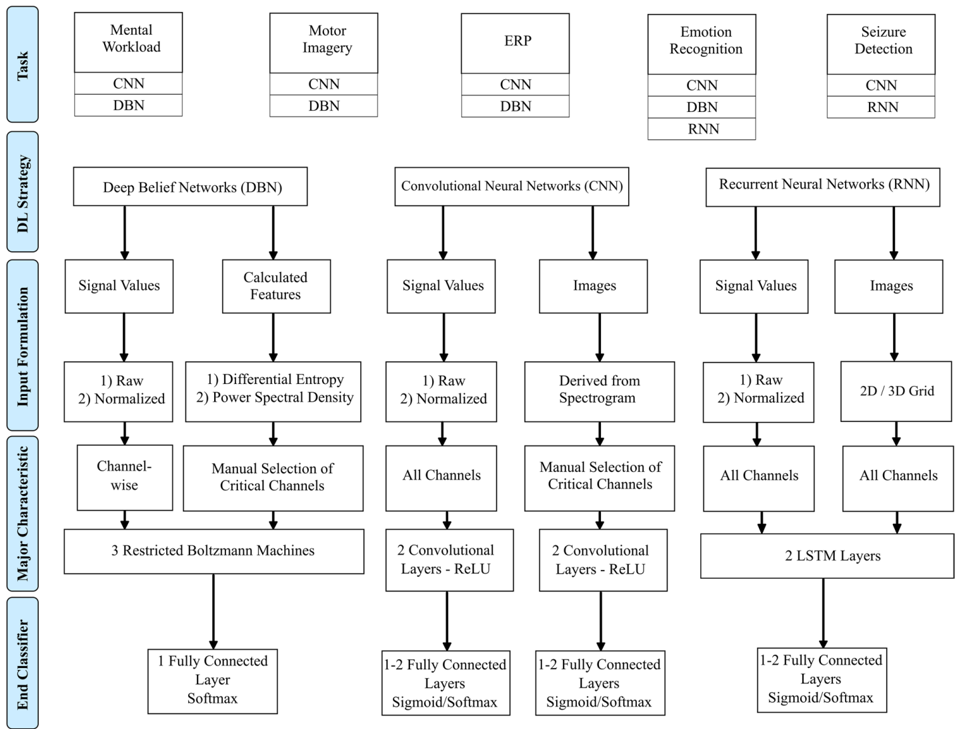
OBJECTIVE: Electroencephalography (EEG) analysis has been an important tool in neuroscience with applications in neuroscience, neural engineering (e.g. Brain-computer interfaces, BCI's), and even commercial applications. Many of the analytical tools used in EEG studies have used machine learning to uncover relevant information for neural classification and neuroimaging. Recently, the availability of large EEG data sets and advances in machine learning have both led to the deployment of deep learning architectures, especially in the analysis of EEG signals and in understanding the information it may contain for brain functionality. The robust automatic classification of these signals is an important step towards making the use of EEG more practical in many applications and less reliant on trained professionals. Towards this goal, a systematic review of the literature on deep learning applications to EEG classification was performed to address the following critical questions: (1) Which EEG classification tasks have been explored with deep learning? (2) What input formulations have been used for training the deep networks? (3) Are there specific deep learning network structures suitable for specific types of tasks? APPROACH: A systematic literature review of EEG classification using deep learning was performed on Web of Science and PubMed databases, resulting in 90 identified studies. Those studies were analyzed based on type of task, EEG preprocessing methods, input type, and deep learning architecture. MAIN RESULTS: For EEG classification tasks, convolutional neural networks, recurrent neural networks, deep belief networks outperform stacked auto-encoders and multi-layer perceptron neural networks in classification accuracy. The tasks that used deep learning fell into five general groups: emotion recognition, motor imagery, mental workload, seizure detection, event related potential detection, and sleep scoring. For each type of task, we describe the specific input formulation, major characteristics, and end classifier recommendations found through this review. SIGNIFICANCE: This review summarizes the current practices and performance outcomes in the use of deep learning for EEG classification. Practical suggestions on the selection of many hyperparameters are provided in the hope that they will promote or guide the deployment of deep learning to EEG datasets in future research.
Overview
The claims and statistics of this paper haven’t been checked yet.
Free: it reads the open-access text and checks the first 5 claims that cite a source we can check. Create a free account to check every claim.
Integrity signals
Registry
Cites
Statistics
Figures
Verification
Claims the paper makes
The claims and statistics of this paper haven’t been checked yet.
Free: it reads the open-access text and checks the first 5 claims that cite a source we can check. Create a free account to check every claim.
Claims other papers make about this one
Each is checked against this paper’s own text: does it say what the citing paper says it does?
The source backs part of the claim, not all of it — or backs it for a different population, condition or comparison.
In the citing paper
“The difficulty of EEG signal processing is to extract high-dimensional features from non-stationary time series with low signal-to-noise ratio [18].”
From IENet: a robust convolutional neural network for EEG based brain-computer interfaces (2022) · cites this paper as [18]
Experimental — accuracy not yet measuredThe source backs part of the claim, not all of it — or backs it for a different population, condition or comparison.
In the citing paper
“Convolutional neural networks (CNN), a leading deep learning structure for data on Euclidean space, outperform the above machine learning algorithms in classification accuracy (Craik et al., 2019).”
From Spatial–temporal graph convolutional network for Alzheimer classification based on brain functional connectivity imaging of electroencephalogram (2022) · cites this paper as Craik et al., 2019
Experimental — accuracy not yet measuredThe cited source says what the claim attributes to it.
In the citing paper
“As for the structures of deep leaning models, convolutional neural networks (CNNs) are the most prevalent architectures in EEG classification tasks [18].”
From IENet: a robust convolutional neural network for EEG based brain-computer interfaces (2022) · cites this paper as [18]
Self-check
Percentages, sums and reported differences re-computed from the paper’s own numbers.
The self-check needs the paper’s full text.
Citations
Cites
Hochreiter, S., & Schmidhuber, J. (1997) · Neural Computation · doi:10.1162/neco.1997.9.8.1735 · Cited by 102,318 · cited 1×
“LSTM is a popular extension of the standard RNN module [83].”
BackgroundLeCun, Y., Bengio, Y., & Hinton, G. (2015) · Nature · doi:10.1038/nature14539 · Cited by 84,126
Preferred reporting items for systematic reviews and meta-analyses: The PRISMA statement
Moher, D., Liberati, A., Tetzlaff, J., & Altman, D. G. (2010) · International Journal of Surgery · doi:10.1016/j.ijsu.2010.02.007 · Cited by 12,156
(1982) · Trends in Neurosciences · doi:10.1016/0166-2236(82)90076-5 · Cited by 9,089
Speech recognition with deep recurrent neural networks
Graves, A., Mohamed, A.-R., & Hinton, G. (2013) · 2013 IEEE International Conference on Acoustics, Speech and Signal Processing · doi:10.1109/icassp.2013.6638947 · Cited by 8,893 · cited 1×
“Indeed, it significantly improved performance in a wide range of traditionally challenging domains, such as images [10], videos [11], speech [12], and text [13].”
BackgroundLearning long-term dependencies with gradient descent is difficult
Bengio, Y., Simard, P., & Frasconi, P. (1994) · IEEE Transactions on Neural Networks · doi:10.1109/72.279181 · Cited by 8,542 · cited 1×
“Neural networks did not immediately receive the high attention seen today in neural classification applications because of practical issues, such as very long computation time and problems with the vanishing/exploding gradients [8].”
BackgroundLarge-Scale Video Classification with Convolutional Neural Networks
Karpathy, A., Toderici, G., Shetty, S., Leung, T., Sukthankar, R., & Fei-Fei, L. (2014) · 2014 IEEE Conference on Computer Vision and Pattern Recognition · doi:10.1109/cvpr.2014.223 · Cited by 6,354 · cited 1×
“Indeed, it significantly improved performance in a wide range of traditionally challenging domains, such as images [10], videos [11], speech [12], and text [13].”
EEGNet: a compact convolutional neural network for EEG-based brain-computer interfaces
Lawhern, V. J., Solon, A. J., Waytowich, N. R., Gordon, S. M., Hung, C. P., & Lance, B. J. (2018) · Journal of Neural Engineering · doi:10.1088/1741-2552/aace8c · Cited by 5,115 · cited 1×
“1 FC 20 h 2 OUT [94] CNN ELU (conv) SV P300(1) N/A P300(1) P300(1) 3 conv Softmax (FC) All (64/56/22) 1–40 Hz P300(2) 1–40 Hz MI 4–40 Hz 15 93% 1 FC 0.”
EEGNet: A Compact Convolutional Network for EEG-based Brain-Computer Interfaces
Lawhern, V. J., Solon, A. J., Waytowich, N. R., Gordon, S. M., Hung, C. P., & Lance, B. J. (2016) · arXiv · doi:10.48550/arxiv.1611.08024 · Cited by 5,105 · cited 1×
“1 FC 20 h 2 OUT [94] CNN ELU (conv) SV P300(1) N/A P300(1) P300(1) 3 conv Softmax (FC) All (64/56/22) 1–40 Hz P300(2) 1–40 Hz MI 4–40 Hz 15 93% 1 FC 0.”
DEAP: A Database for Emotion Analysis ;Using Physiological Signals
Koelstra, S., Muhl, C., Soleymani, M., Lee, J.-S., Yazdani, A., Ebrahimi, T., Pun, T., Nijholt, A., & Patras, I. (2012) · IEEE Transactions on Affective Computing · doi:10.1109/t-affc.2011.15 · Cited by 5,093 · cited 3×
“The datasets that are used in more than one study within this review include an emotion recognition dataset ([56], various subsets used in ten studies), a mental workload dataset ([57], used in four studies), two motor imagery datasets from the same BCI competition ([58], one dataset used in six studies and the second…”
BackgroundMethod
Research works printed but not linked: 24
- He Y, 2018, J. Neural Eng., 15
- Karpathy A, 2014, Proc. IEEE Computer Society Conf. Computer Vision Pattern Recognition, 1725
- Sutskever I, 2011, Proc. of the 28th Int. Conf. on Machine Learning, 1017
- Zhao Y, 2014, 2014 Asian Conf. Computer Visison, 1
- Roy S, 2018, 40th Annu. Int. Conf. IEEE Eng. Med. Biol. Soc. (EMBC), 2756
- Teplan M, 2002, Meas. Sci., 2, 1
- Pfurtscheller G, 2001, 89, 1123
- Kuanar S, 2018 IEEE Int. Conf. on Acoustics, Speech and Signal Processing (ICASSP), 352
- Abbas W, 2018, 40th Annu. Int. Conf. IEEE Eng. Med. Biol. Soc. (EMBC), 219
- Wei X, 2018, 18, 111
- Xu H, 2016, 2016 IEEE 18th Int. Workshop Multimedia Signal Processing, 1
- Vareka L, 2017, Application of Stacked Autoencoders to P300 Experimental Data (Int. Conf. on Artificial Intelligence and Soft Computing)
- Yuen T C, 2009, Int. J. Integr. Eng., 1, 71
- Alhagry S, 2017, Emotion, 8, 8
- Yin Z, 2016, Chinese Control Conf. CCC, 2016, 3907
- Pereira A, 2018, Preprint
- Ang K K, 2019, J. Neural Eng., 16
- Liu J, 2015, Chinese Control Conf. CCC, 2015, 3518
- Ansari M L A, 2018, J. Neural Eng., 15
- Kobler R J, 2016, 2016 IEEE Int. Conf. Syst. Man, Cybernetics SMC 2016—Conf. Proc., 469
- An X, 2014, Int. Conf. on Intelligent Computing, 203
- Gao Y, 2015, 2015 IEEE Int. Conf. Multimedia Expo Workshops ICMEW 2015, 2, 1
- Bablani A, 2018, 2018 9th Int. Conf. Computing Communication Networking Technologies, 1
- Luo T, 2018, Bioinformatics, 19, 344
Cited by
Items 301–400 of 1,001
Lee, M., Park, H.-Y., Park, W., Kim, K.-T., Kim, Y., & Jeong, J.-H. (2024) · IEEE Transactions on Neural Systems and Rehabilitation Engineering · doi:10.1109/tnsre.2024.3395133 · Cited by 33
“Restrictions apply. output layer [42].”
Machine Learning Applications in the Neuro ICU: A Solution to Big Data Mayhem?
Chaudhry, F., Hunt, R., Hariharan, P., Anand, S. K., Sanjay, S., Kjoller, E. E., Bartlett, C. M., Johnson, K. W., Levy, P. D., Noushmehr, H., et al. (2020) · Frontiers in Neurology · doi:10.3389/fneur.2020.554633 · Cited by 32
Signal processing techniques applied to impedance cardiography ICG signals – a review
Chabchoub, S., Mansouri, S., & Salah, R. B. (2022) · Journal of Medical Engineering & Technology · doi:10.1080/03091902.2022.2026508 · Cited by 32
“DL algorithms have recently achieved excellent performance in classification of different types of physiological signals like Electrocardiography (ECG) [132 – 135] and Electroencephalography (EEG) [81,136,137].”
MethodPham, S., Keijzer, H. M., Ruijter, B. J., Seeber, A. A., Scholten, E., Drost, G., van den Bergh, W. M., Kornips, F. H. M., Foudraine, N. A., Beishuizen, A., et al. (2022) · Neurocritical Care · doi:10.1007/s12028-022-01449-8 · Cited by 39
“Other deep learning networks are optimized toward continuous temporal data [33, 34] and may further increase predictive values.”
BackgroundRNeuMark: A Riemannian EEG Analysis Framework for Neuromarketing
Georgiadis, K., Kalaganis, F. P., Oikonomou, V. P., Nikolopoulos, S., Laskaris, N., & Kompatsiaris, I. Y. (2022) · Brain Informatics · doi:10.1186/s40708-022-00171-7 · Cited by 34
“Another potential extension of this study could be the conjunction of the introduced Riemannian aspects with the general theory of deep neural networks [55, 56] aiming to create a decoding scheme that yields even higher classification scores.”
BackgroundGour, N., Hassan, T., Owais, M., Ganapathi, I. I., Khanna, P., Seghier, M. L., & Werghi, N. (2023) · Brain Informatics · doi:10.1186/s40708-023-00201-y · Cited by 35
“The EEG signals have a low signal-to-noise ratio, low spatial resolution, and high inter-subject variability [12].”
BackgroundShen, M., Wen, P. P., Song, B., & Li, Y. (2023) · Biomedical Signal Processing and Control · doi:10.1016/j.bspc.2023.105815 · Cited by 32
Effective Detection of Epileptic Seizures through EEG Signals Using Deep Learning Approaches
Mekruksavanich, S., & Jitpattanakul, A. (2023) · Machine Learning and Knowledge Extraction · doi:10.3390/make5040094 · Cited by 38
Deep learning-based self-induced emotion recognition using EEG
Ji, Y., & Dong, S.-Y. (2022) · Frontiers in Neuroscience · doi:10.3389/fnins.2022.985709 · Cited by 32
“Deep learning methods outperform traditional ML methods in several fields of research (Craik et al., 2019; Roy et al., 2019), but deep learning techniques have not been fully utilized in the classification of self-induced emotion.”
MethodCai, M., & Zeng, Y. (2024) · Biomedical Signal Processing and Control · doi:10.1016/j.bspc.2024.106131 · Cited by 33
EEGMamba: An EEG foundation model with Mamba
Wang, J., Zhao, S., Luo, Z., Zhou, Y., Li, S., & Pan, G. (2025) · Neural Networks · doi:10.1016/j.neunet.2025.107816 · Cited by 70
Meng, X., Qiu, S., Wan, S., Cheng, K., & Cui, L. (2021) · Pattern Recognition Letters · doi:10.1016/j.patrec.2021.03.023 · Cited by 33
Bagherzadeh, S., Maghooli, K., Shalbaf, A., & Maghsoudi, A. (2023) · Basic and Clinical Neuroscience Journal · doi:10.32598/bcn.2021.3133.1 · Cited by 42
“Recently, this method has been utilized to process EEG signals for non-emotion (Faust et al., 2018; Zhang et al., 2019; Craik et al., 2019) and emotion studies (Yang et al., 2018).”
MethodEffect of time windows in LSTM networks for EEG-based BCIs
Martín‐Chinea, K., Ortega‐Rodríguez, J., Gómez‐González, J. F., Pereda, E., Toledo, J., & Acosta, L. (2022) · Cognitive Neurodynamics · doi:10.1007/s11571-022-09832-z · Cited by 32
“…not only cover routine or leisure aspects, but facilitate the lives of people who may have impaired motor function, (e.g. patients with amyotrophic lateral sclerosis (ALS) (Miao et al. 2020), spinal injuries, head trauma, rehabilitation, etc.) (Pfurtscheller et al. 1998; Craik et al. 2019).”
BackgroundExplainable automated seizure detection using attentive deep multi-view networks
Einizade, A., Nasiri, S., Mozafari, M., Sardouie, S. H., & Clifford, G. D. (2022) · Biomedical Signal Processing and Control · doi:10.1016/j.bspc.2022.104076 · Cited by 31
Delfan, N., Shahsavari, M., Hussain, S., Damaševičius, R., & Acharya, U. R. (2024) · International Journal of Imaging Systems and Technology · doi:10.1002/ima.23120 · Cited by 35
“Several studies have already proven deep learning’s remarkable potential in the predictive modeling of complex physiological processes such as EEG [20-22].”
BackgroundTaherisadr, M., Joneidi, M., & Rahnavard, N. (2019) · Machine learning for signal processing ... · doi:10.1109/mlsp.2019.8918754 · Cited by 32
“Recently, deep learning approaches, especially CNNs, have gained significant attention in the field of EEG signal analysis due to their remarkable performances [10, 11].”
BackgroundEmploying Machine Learning and Deep Learning Models for Mental Illness Detection
Zhang, Y., Wang, Z., Ding, Z., Tian, Y., Dai, J., Shen, X., Liu, Y., & Cao, Y. (2025) · Computation · doi:10.3390/computation13080186 · Cited by 34
Babu, N., Satija, U., Mathew, J., & Vinod, A. P. (2025) · Biomedical Signal Processing and Control · doi:10.1016/j.bspc.2025.107674 · Cited by 31
Dasar - Dasar Electroencephalography (EEG) bagi Riset Psikologi
Khakim, Z., & Kusrohmaniah, S. (2021) · Buletin Psikologi · doi:10.22146/buletinpsikologi.52328 · Cited by 39
Shang, B., Duan, F., Fu, R., Gao, J., Sik, H., Meng, X., & Chang, C. (2023) · Frontiers in Human Neuroscience · doi:10.3389/fnhum.2023.1033420 · Cited by 35
Assessment of Virtual Reality Motion Sickness Severity Based on EEG via LSTM/BiLSTM
Hua, C., Chai, L., Yan, Y., Liu, J., Wang, Q., Fu, R., & Zhou, Z. (2023) · IEEE Sensors Journal · doi:10.1109/jsen.2023.3309260 · Cited by 34
“There are two ways to apply deep neural networks into EEG: either employing them as feature extractors to extract the optimum features from the handcrafted EEG features, or learning features and recognizing patterns end-to-end from the original EEG signals to the targets [28], [29].”
BackgroundMethodAmiri, H. K., Zarei, M., & Daliri, M. R. (2024) · Engineering Applications of Artificial Intelligence · doi:10.1016/j.engappai.2024.108879 · Cited by 38
Ravindran, A. S., Mobiny, A., Cruz-Garza, J. G., Paek, A. Y., Kopteva, A. E., & Contreras-Vidal, J. L. (2019) · Journal of Neural Engineering · doi:10.1088/1741-2552/ab1876 · Cited by 31
“[30]), proliferated paths is a major trend seen in recent years in network design that has shown promise 151”
BackgroundMethodSelf-citationSeizeIT2: Wearable Dataset Of Patients With Focal Epilepsy
Bhagubai, M., Chatzichristos, C., Swinnen, L., Macea, J., Zhang, J., Lagae, L. G., Jansen, K., Schulze‐Bonhage, A., Sales, F., Mahler, B., et al. (2025) · Scientific Data · doi:10.1038/s41597-025-05580-x · Cited by 41
Subject adaptation convolutional neural network for EEG-based motor imagery classification
Liu, S., Zhang, J., Wang, A., Wu, H., Zhao, Q., & Long, J. (2022) · Journal of Neural Engineering · doi:10.1088/1741-2552/ac9c94 · Cited by 29
“Therefore, EEG signals can generally be represented by a two-dimensional matrix, which contains dynamic time series data that vary from different brain activities [6].”
Behboodi, A., Kline, J. E., Gravunder, A. J., Phillips, C. M., Parker, S. M., & Damiano, D. L. (2024) · Frontiers in Human Neuroscience · doi:10.3389/fnhum.2024.1346050 · Cited by 31
“Unlike LSTM, the MLP was trained with the Stochastic Gradient Descent (SGD) optimizer (Craik et al., 2019) and a learning rate of 1.”
MethodBansal, J., Gangwar, G., Aljaidi, M., Alkoradees, A. F., & Singh, G. (2025) · Brain Sciences · doi:10.3390/brainsci15010095 · Cited by 29
Takahashi, Y., Idei, H., Komatsu, M., Tani, J., Tomita, H., & Yamashita, Y. (2025) · npj Digital Medicine · doi:10.1038/s41746-025-01444-1 · Cited by 36
Zhang, Q., Du, Q., & Liu, G. (2021) · Journal of Neural Engineering · doi:10.1088/1741-2552/ac37cc · Cited by 33
Automated visual stimuli evoked multi-channel EEG signal classification using EEGCapsNet
Kumari, N., Anwar, S., & Bhattacharjee, V. (2021) · Pattern Recognition Letters · doi:10.1016/j.patrec.2021.11.019 · Cited by 30
Zhang, R., Liu, G., Wen, Y., & Zhou, W. (2023) · Journal of Neuroscience Methods · doi:10.1016/j.jneumeth.2023.109953 · Cited by 29
Ferrero, L., Soriano-Segura, P., Navarro, J., Jones, O., Ortíz, M., Iáñez, E., Azorín, J. M., & Contreras-Vidal, J. L. (2024) · Journal of NeuroEngineering and Rehabilitation · doi:10.1186/s12984-024-01342-9 · Cited by 30
“When it comes to the architecture of the deep learning model, studies that focused on MI as the mental strategy have preferred convolutional frameworks to capture spatial relationships among different brain areas [17, 21–23].”
BackgroundMethodInfluentialSelf-citationBagherzadeh, S., & Shalbaf, A. (2024) · Cognitive Neurodynamics · doi:10.1007/s11571-024-10121-0 · Cited by 31
“Among DL techniques, Convolutional neural network (CNN) is the other effective technique that has the advantage of generalization and flexibility to process EEG signals (Craik et al. 2019).”
Yadav, A., Hussain, R., Shukla, M., Jayaprakash, B., Kalia, R., Mary, S. P., Hsu, C., Mishra, M. K., Saleem, K., & El‐Meligy, M. (2025) · Scientific Reports · doi:10.1038/s41598-025-93765-0 · Cited by 30
“…to automatically discern hierarchical characteristics from unprocessed data, identify intricate temporal relationships, and discern subtle patterns in EEG signals offers the potential for more precise and resilient models in a range of EEG-based applications, including drowsiness detection 18 .”
Saadoon, Y. A., Khalil, M. A., & Battikh, D. (2025) · Applied Sciences · doi:10.3390/app15116279 · Cited by 28
“Craik et al. [20] presented an in-depth review of deep learning methods applied to EEG classification tasks.”
Yang, J., Yang, J., Zhao, F., & Zhang, W. (2021) · Physics in Medicine and Biology · doi:10.1088/1361-6560/ac0afc · Cited by 31
Decoding Different Reach-and-Grasp Movements Using Noninvasive Electroencephalogram
Xu, B., Zhang, D., Wang, Y., Deng, L., Wang, X., Wu, C., & Song, A. (2021) · Frontiers in Neuroscience · doi:10.3389/fnins.2021.684547 · Cited by 33
Deep learning for biosignal control: insights from basic to real-time methods with recommendations
Dillen, A., Steckelmacher, D., Efthymiadis, K., Langlois, K. P., Beir, A. D., Marušič, U., Vanderborght, B., Nowé, A., MEEUSEN, R. R., Ghaffari, F., et al. (2022) · Journal of Neural Engineering · doi:10.1088/1741-2552/ac4f9a · Cited by 30
“Some focus on DL for electroencephalogram (EEG) analysis (Thomas et al 2017, Craik et al 2019, Roy et al 2019, Merlin Praveena et al 2020), while others provide general overviews of machine learning (ML) methods used in the context of BCI (Ramadan and Vasilakos 2017, Rashid et al 2020).”
MethodToma, F.-M. (2022) · Expert Systems with Applications · doi:10.1016/j.eswa.2022.118722 · Cited by 31
Detection of alcoholic EEG signals based on whole brain connectivity and convolution neural networks
Shen, M., Wen, P. P., Song, B., & Li, Y. (2022) · Biomedical Signal Processing and Control · doi:10.1016/j.bspc.2022.104242 · Cited by 28
“Compared with traditional methods of alcoholism identification, EEG is low-cost, non-invasive, high accuracy of detection and less reliant on trained professionals in practical applications [10].”
MethodReview on BCI Virtual Rehabilitation and Remote Technology Based on EEG for Assistive Devices
Lazcano-Herrera, A. G., Fuentes-Aguilar, R. Q., Chaírez, I., Alonso-Valerdi, L. M., González-Mendoza, M., & Alfaro-Ponce, M. (2022) · Applied Sciences · doi:10.3390/app122312253 · Cited by 29
Priming cross-session motor imagery classification with a universal deep domain adaptation framework
Zhang, X., Miao, Z., Menon, C., Zheng, Y., Zhao, M., & Ming, D. (2023) · Neurocomputing · doi:10.1016/j.neucom.2023.126659 · Cited by 31
Arı, E., & Taçgın, E. (2024) · Biomedical Signal Processing and Control · doi:10.1016/j.bspc.2024.106081 · Cited by 29
Saeedinia, S. A., Jahed‐Motlagh, M. R., Tafakhori, A., & Kasabov, N. K. (2024) · Scientific Reports · doi:10.1038/s41598-024-60996-6 · Cited by 30
GRU-powered sleep stage classification with permutation-based EEG channel selection
Moctezuma, L. A., Suzuki, Y., Furuki, J., Molinas, M., & Abe, T. (2024) · Scientific Reports · doi:10.1038/s41598-024-68978-4 · Cited by 33
“These parameters have been shown to improve the performance of GRU models for the classification of EEG tasks 25,26,56 .”
A data augmentation scheme for geometric deep learning in personalized brain–computer interfaces.
Kalaganis, F. P., Laskaris, N. A., Chatzilari, E., Nikolopoulos, S., & Kompatsiaris, I. (2020) · IEEE Access · doi:10.1109/access.2020.3021580 · Cited by 26
“After radically changing the field of machine learning in many aspects of our digitalized modern world (like computer vision and speech recognition), by providing flexible and general-purposemodels, deep learning nowadays facilitates brain decoding practices undertaking jointly the signal processing and classification…”
BackgroundZhang, L., Xia, B., Wang, Y., Zhang, W., & Han, Y. (2023) · Electronics · doi:10.3390/electronics12234717 · Cited by 29
Nagarajan, A., Robinson, N., Ang, K. K., Chua, K. S. G., Chew, E., & Guan, C. (2024) · Journal of Neural Engineering · doi:10.1088/1741-2552/ad152f · Cited by 32
“Due to the recent progress of deep learning [69], several neural network based EEG-BCI classification models have been introduced and are repor-ted to be performing better than the machine learning counterparts [5].”
BackgroundDeep LSTM Recurrent Neural Network for Anxiety Classification from EEG in Adolescents with Autism
Penchina, B., Sundaresan, A., Cheong, S., & Martel, A. (2020) · Lecture notes in computer science · doi:10.1007/978-3-030-59277-6_21 · Cited by 28
Ge, X., Pan, Y., Wang, S., Qian, L., Yuan, J., Xu, J., Thakor, N. V., & Sun, Y. (2022) · IEEE Transactions on Human-Machine Systems · doi:10.1109/thms.2022.3225633 · Cited by 26
Real-time noise cancellation with deep learning
Porr, B., Daryanavard, S., Bohollo, L. M., Cowan, H., & Dahiya, R. (2022) · PLoS ONE · doi:10.1371/journal.pone.0277974 · Cited by 32
“Traditionally, deep learning is a classifier and has been used to detect EEG artefacts with high accuracy of up to 90% [36–38] but not to remove the artefacts from the EEG. Deep learning can also assist ICA-based algorithms [6,9] to identify principal components which contain the EMG noise [39].”
MethodAlimisis, V., Mouzakis, V., Gennis, G., Tsouvalas, E., & Sotiriadis, P. P. (2022) · International Conference on Smart Systems and Power Management (IC2SPM) · doi:10.1109/ic2spm56638.2022.9988883 · Cited by 29
“A typical example of monitoring is electroencephalogram (EEG) in which metal discs (electrodes) are attached to the scalp in order to measure electrical activity in the brain [4].”
BackgroundKeutayeva, A., & Abibullaev, B. (2023) · IEEE Access · doi:10.1109/access.2023.3320561 · Cited by 29
Li, H., Tang, J., Li, W., Dai, W., Liu, Y., & Zhou, Z. (2024) · IEEE Transactions on Neural Systems and Rehabilitation Engineering · doi:10.1109/tnsre.2024.3357863 · Cited by 27
“Over the past decades, conventional and deep learning classification methods have been used to process RSVP EEG signals, and Lotte et al. [11], [12] have summarized these methods.”
MethodCognitive State Classification Using Convolutional Neural Networks on Gamma-Band EEG Signals
Avital, N., Nahum, E., Levi, G. C., & Malka, D. (2024) · Applied Sciences · doi:10.3390/app14188380 · Cited by 26
Advancing Remote Healthcare Using Humanoid and Affective Systems
Tripathi, U., Rittvik Saran, J., Chamola, V., Jolfaei, A., & Chintanpalli, A. (2021) · IEEE Sensors Journal · doi:10.1109/jsen.2021.3049247 · Cited by 30
“This has made the application of 185 DNNs viable in emotion classification as well [10].”
MethodIncremental Benefits of Machine Learning—When Do We Need a Better Mousetrap?
Engelhard, M., Návar, A. M., & Pencina, M. J. (2021) · JAMA Cardiology · doi:10.1001/jamacardio.2021.0139 · Cited by 26
Agounad, S., Tarahi, O., Moufassih, M., Hamou, S., & Mazid, A. (2024) · Circuits Systems and Signal Processing · doi:10.1007/s00034-024-02936-3 · Cited by 34
Li, Y., Zeng, W., Dong, W., Han, D., Chen, L., Chen, H., Kang, Z., Gong, S.-Y., Yan, H., Siok, W. T., et al. (2025) · IEEE Transactions on Instrumentation and Measurement · doi:10.1109/tim.2025.3556900 · Cited by 47
“In the processing of single-channel EEG signals, machine learning (ML) has significantly advanced automation and precision in targeted downstream tasks [78].”
A Multi-Scale Activity Transition Network for Data Translation in EEG Signals Decoding
Lin, B., Deng, S., Gao, H., & Yin, J. (2020) · IEEE Transactions on Computational Biology and Bioinformatics · doi:10.1109/tcbb.2020.3024228 · Cited by 25
A Neurophysiological Approach for Measuring Presence in Immersive Virtual Environments
Dey, A., Phoon, J., Saha, S., Dobbins, C., & Billinghurst, M. (2020) · Proceedings - International Symposium on Mixed and Augmented Reality, ISMAR · doi:10.1109/ismar50242.2020.00072 · Cited by 28
“In the future, we would like to explore the collected data further and attempt to identify more features in the neurological and physiological data using deep learning [11].”
BackgroundAnalyzing Brain Waves of Table Tennis Players with Machine Learning for Stress Classification
Tsai, Y.-H., Wu, S.-K., Yu, S.-S., & Tsai, M.-H. (2022) · Applied Sciences · doi:10.3390/app12168052 · Cited by 28
Wang, W., Li, B., & Wang, H. (2022) · Neuroscience · doi:10.1016/j.neuroscience.2022.10.006 · Cited by 29
Wang, C., Xu, T., Yu, W., Li, T., Han, H., Zhang, M., & Ming, T. (2022) · International Journal of Psychophysiology · doi:10.1016/j.ijpsycho.2022.10.010 · Cited by 30
Saini, M., Satija, U., & Upadhayay, M. D. (2022) · IEEE Internet of Things Journal · doi:10.1109/jiot.2022.3232481 · Cited by 25
“To address the above mentioned challenges, recently, robust high-level features have been extracted from EEG signals using DL techniques-based mostly on convolutional neural networks (CNNs), for MAC [14].”
BackgroundMethodMachine Learning Methods in Real-World Studies of Cardiovascular Disease
Zhou, J., You, D., Bai, J., Chen, X., Wu, Y., Wang, Z., Tang, Y., Zhao, Y., & Feng, G. (2023) · Cardiovascular Innovations and Applications · doi:10.15212/cvia.2023.0011 · Cited by 29
Introduction to deep learning and diagnosis in medicine
Oğuz, A., & Ertuğrul, Ö. F. (2023) · Elsevier eBooks · doi:10.1016/b978-0-323-96129-5.00003-2 · Cited by 33
A multi-view CNN encoding for motor imagery EEG signals
Zhang, J., & Li, K. (2023) · Biomedical Signal Processing and Control · doi:10.1016/j.bspc.2023.105063 · Cited by 28
Deep transfer learning-based SSVEP frequency domain decoding method
Xiong, H., Song, J., Liu, J., & Han, Y. (2024) · Biomedical Signal Processing and Control · doi:10.1016/j.bspc.2023.105931 · Cited by 29
Eken, A., Nassehi, F., & Eroğul, O. (2024) · Reviews in the Neurosciences · doi:10.1515/revneuro-2023-0117 · Cited by 32
Cao, J., Li, G., Shen, J., & Dai, C. (2024) · Biomedical Signal Processing and Control · doi:10.1016/j.bspc.2024.106092 · Cited by 26
Zhang, K., Xu, G., Chen, L., Tian, P., Han, C., Zhang, S., & Duan, N. (2020) · Computational and Mathematical Methods in Medicine · doi:10.1155/2020/1683013 · Cited by 26
“Compared with traditional methods, the application of deep learning for EEG classification has successfully improved the performance [28].”
MethodAlShorman, O., Masadeh, M., Alzyoud, A., Heyat, M. B. B., Akhtar, F., & Rishipal (2020) · International Conference on e-Learning (econf) · doi:10.1109/econf51404.2020.9385468 · Cited by 28
“a high temporal resolution, non-invasiveness, and relatively low financial cost [16].”
BackgroundOnline Multimodal Inference of Mental Workload for Cognitive Human Machine Systems
Planke, L. J., Gardi, A., Sabatini, R., Kistan, T., & Ezer, N. (2021) · Computers · doi:10.3390/computers10060081 · Cited by 26
“, resting, low and high) with the use of ML models, such as Artificial Neural Networks (ANN) [47,48], Support Vector Machines (SVM) [38,49] or Linear Discriminant Analysis (LDA) [19,41] (or extended variants).”
MethodInfluentialVIMSNet: an effective network for visually induced motion sickness detection
Liu, R., Cui, S., Zhao, Y., Chen, X., Lin, Y., & Hwang, A. D. (2022) · Signal Image and Video Processing · doi:10.1007/s11760-022-02164-9 · Cited by 26
“FCN and ResNet are both CNN models which have been widely used as strong baselines for EEG applications [29,30].”
Janmohamed, M., Nhu, D., Kuhlmann, L., Gilligan, A. K., Tan, C. W., Perucca, P., O'Brien, T. J., & Kwan, P. (2022) · Brain Communications · doi:10.1093/braincomms/fcac218 · Cited by 25
“DL and ML in the EEG field covers a broad scope of research including epilepsy, sleep diagnostics and brain–computer interfacing.(11,12) Within clinical epilepsy itself, ML approaches have been investigated for seizure detection,(13,14) seizure prediction,(15) epileptiform detection,(16) epilepsy imaging, genetic mini…”
MethodPawuś, D., & Paszkiel, S. (2022) · Applied Sciences · doi:10.3390/app122010385 · Cited by 24
Transformed common spatial pattern for motor imagery-based brain-computer interfaces
Ma, Z., Wang, K., Xu, M., Yi, W., Xu, F., & Ming, D. (2023) · Frontiers in Neuroscience · doi:10.3389/fnins.2023.1116721 · Cited by 28
“Deep learning (Craik et al., 2019; Zhang et al., 2019) and Riemannian (Fang et al.”
Shuqfa, Z., Belkacem, A. N., & Lakas, A. (2023) · Sensors · doi:10.3390/s23115051 · Cited by 26
“Although there are various BCI technologies, electroencephalography (EEG) is the one used most widely by BCI researchers for reasons such as its high temporal resolution, portability, noninvasiveness, and affordability [8,9].”
BackgroundWang, W., Li, B., Wang, H., Wang, X., Qin, Y., Shi, X., & Liu, S. (2023) · Medical & Biological Engineering & Computing · doi:10.1007/s11517-023-02931-x · Cited by 27
“This makes the method a very suitable tool for classification and regression tasks [24].”
A Brute-Force CNN Model Selection for Accurate Classification of Sensorimotor Rhythms in BCIs
Abibullaev, B., Dolzhikova, I., & Zollanvari, A. (2020) · IEEE Access · doi:10.1109/access.2020.2997681 · Cited by 25
“Further research attempted to identify the best feature extraction, and deep learning-based classification pipeline for the SMR based BCIs [11], [18], [34].”
BackgroundClassification of Time Realizations Using Machine Learning Recognition of Recurrence Plots
Kirichenko, L., Zinchenko, P., & Радівілова, Т. (2020) · Advances in intelligent systems and computing · doi:10.1007/978-3-030-54215-3_44 · Cited by 26
Shen, M., Zou, B., Li, X., Zheng, Y., Li, L., & Zhang, L. (2021) · Biomedical Signal Processing and Control · doi:10.1016/j.bspc.2021.103023 · Cited by 25
Yadulla, A. R., Sajja, G. S., Addula, S. R., Maturi, M. H., Nadella, G. S., Cruz, E. D. L., Meduri, K., & Gonaygunta, H. (2025) · Psychology International · doi:10.3390/psycholint7030061 · Cited by 28
“Despite these advances, the reliance on supervised paradigms presents significant limitations, particularly in the complex domain of mental health (Craik et al., 2019; Vafaei & Hosseini, 2025).”
Deep learning and feature based medication classifications from EEG in a large clinical data set
Nahmias, D. O., Civillico, E. F., & Kontson, K. L. (2020) · Scientific Reports · doi:10.1038/s41598-020-70569-y · Cited by 26
“…provided by deep learning network based models such as a simple linear neural networks (LNN), a shallow convolutional neural networks (SCNN), a deep convolution neural networks (DCNN), and EEGNet may be advantageous and require less knowledge about the data set and signal to perform well 15 .”
MethodKim, S., Choo, S., Park, D., Park, H., Nam, C. S., Jung, J., & Lee, S. (2023) · International Journal of Human-Computer Studies · doi:10.1016/j.ijhcs.2023.103009 · Cited by 33
Multimodal motor imagery decoding method based on temporal spatial feature alignment and fusion
Zhang, Y., Qiu, S., & He, H. (2023) · Journal of Neural Engineering · doi:10.1088/1741-2552/acbfdf · Cited by 24
“Many DL-based methods have been proposed for decoding MI tasks [ 47] and have become a trend for single modality MI decoding [48].”
A spectral-ensemble deep random vector functional link network for passive brain–computer interface
Li, R., Gao, R., Suganthan, P. N., Cui, J., Sourina, O., & Wang, L. (2023) · Expert Systems with Applications · doi:10.1016/j.eswa.2023.120279 · Cited by 25
Valentim, C. A., Inacio, C. M. C., & David, S. A. (2021) · Fractal and Fractional · doi:10.3390/fractalfract5040225 · Cited by 24
Guo, M., Han, X., Liu, H., Zhu, J., Zhang, J., Bai, Y., & Ni, G. (2025) · Annals of the New York Academy of Sciences · doi:10.1111/nyas.15288 · Cited by 27
SVM-enhanced attention mechanisms for motor imagery EEG classification in brain-computer interfaces
Otarbay, Z., & Kyzyrkanov, A. E. (2025) · Frontiers in Neuroscience · doi:10.3389/fnins.2025.1622847 · Cited by 29
EEG Data Analysis for Stress Detection
Malviya, L., Mal, S., & Lalwani, P. (2021) · IEEE International Conference on Communication Systems and Network Technologies (CSNT) · doi:10.1109/csnt51715.2021.9509713 · Cited by 22
“Classification of relaxing and stress state using EEG dataset and by Deep Learning analysis of important tool in neuroscience with applications in neuroscience, neural engineering [11].”
MethodIndividualized diagnosis of preclinical Alzheimer’s Disease using deep neural networks
Park, J., Jang, S., Gwak, J., Kim, B. C., Lee, J. J., Choi, K. Y., Lee, K. H., Jun, S. C., Jang, G., & Ahn, S. (2022) · Expert Systems with Applications · doi:10.1016/j.eswa.2022.118511 · Cited by 23
Shahabi, M. S., & Shalbaf, A. (2022) · IEEE Transactions on Cognitive and Developmental Systems · doi:10.1109/tcds.2022.3207350 · Cited by 26
Farrahi, V., Muhammad, U., Rostami, M., & Oussalah, M. (2023) · International Journal of Medical Informatics · doi:10.1016/j.ijmedinf.2023.105004 · Cited by 21
Gao, H., Zhao, S., Li, H., Liu, L., Wang, H., Wang, Y., Luo, Z., Zhang, J., & Li, G. (2023) · IEEE Transactions on Instrumentation and Measurement · doi:10.1109/tim.2023.3280529 · Cited by 27
“With the development of deep learning, some researchers have replaced hand-extracted features and classifiers with convolutional neural networks (CNN), which are capable of decoding EEG end-to-end [24], [25], [26].”
BackgroundEEG-based emergency braking intention detection during simulated driving
Liang, X., Yu, Y., Liu, Y., Liu, K., Liu, Y., & Zhou, Z. (2023) · BioMedical Engineering OnLine · doi:10.1186/s12938-023-01129-4 · Cited by 24
“Encouraged by the great success of deep learning in the field of computer vision, deep learning-based approaches, especially CNNs, have gained widespread attention in EEG signal classification [13, 28].”
BackgroundIntegrating Simultaneous Motor Imagery and Spatial Attention for EEG-BCI Control
Forenzo, D., Liu, Y., Kim, J., Ding, Y., Yoon, T.-H., & He, B. (2023) · IEEE Transactions on Biomedical Engineering · doi:10.1109/tbme.2023.3298957 · Cited by 25
MBrain: A Multi-channel Self-Supervised Learning Framework for Brain Signals
Cai, D., Chen, J., Yang, Y., Liu, T., & Li, Y. (2023) · ACM SIGKDD Conference on Knowledge Discovery and Data Mining (KDD) · doi:10.1145/3580305.3599426 · Cited by 37
“According to the literature, most deep learningbased studies of brain signals focus on supervised learning [10, 34, 38, 48], which relies on a large number of clinical labels.”
Background
Metadata
- Authors
- Craik, A., He, Y., & Contreras-Vidal, J. L.
- Affiliations
- University of Houston (US)
- Corresponding author
- Craik, Alexander
- Venue
- Journal of Neural Engineering
- Publisher
- IOP Publishing
- Published
- 2019-04-09
- Volume
- 16
- Issue
- 3
- Pages
- 031001
- ISSN
- 1741-2552 (ISSN-L)
- 1741-2560
- OpenAlex
- W2915893085
- Cited by
- 1,758
- References
- 122
- Citations by year
- 2026: 308 · 2025: 287 · 2024: 273 · 2023: 290 · 2022: 246 · 2021: 213 · 2020: 116 · 2019: 23
- FWCI
- 18.93
- Type
- journal article
- Language
- en
- Open access
- hybrid
- doi.org
- Licence
- cc-by
- iopscience.iop.org/info/page/text-and-data-mining (tdm)
- creativecommons.org/licenses/by/3.0/ (vor)
- Locations
- Journal of Neural Engineering (publishedVersion, cc-by)
- PubMed (publishedVersion)
- Funders
- Center for Advanced Computing and Data Science
- Topics
- Life Sciences › Neuroscience › Cognitive Neuroscience › EEG and Brain-Computer Interfaces
- Physical Sciences › Computer Science › Artificial Intelligence › Emotion and Mood Recognition
- Health Sciences › Medicine › Cardiology and Cardiovascular Medicine › ECG Monitoring and Analysis
- Keywords
- EEG, EEG classification, deep learning, convolutional neural networks, recurrent neural networks, deep belief network, stacked autoencoder, motor imagery, emotion recognition, mental workload, seizure detection, sleep stage classification, EEG preprocessing
- MeSH terms
- Deep Learning, Animals, Brain, Electroencephalography, Humans, Psychomotor Performance, Neural Networks, Computer, Brain-Computer Interfaces
About these checks
Registry, retraction, Cites and statistics results are computed, not judged, with one exception: a printed reference that no index lists is read once by a model before it counts as a citation error. Claims are extracted by a model and kept only when their quote appears verbatim in the text; each cited source is then checked, with a model’s help, for whether it says what the claim relies on. Those verdicts can be wrong — read the claim’s quote and the cited source before relying on one.
Statistics and arithmetic are recomputed, not judged.
Confidence bands are shown only for fields calibrated on our annotated test set. None is calibrated yet, so no band is shown.
What counts as a claim ›How we measure confidence ›How we check this ›
Are you an author, or do you see a problem with this page? Request a review
Data sources
Bibliographic data: Semantic Scholar, OpenAlex, Crossref.
Contains information from the Semantic Scholar Academic Graph Datasets, made available under the ODC Attribution License (ODC-BY 1.0).
Semantic Scholar’s data is described in: Kinney, R., et al. (2023). The Semantic Scholar Open Data Platform. arXiv:2301.10140.
