

AlphaFold Protein Structure Database in 2024: providing structure coverage for over 214 million protein sequences
Open accessThe DOI matches its Crossref record; 29 of the 29 references it cites were found in a registry or an index; 18 of the 18 sources its claims cite were checked for support.
Abstract
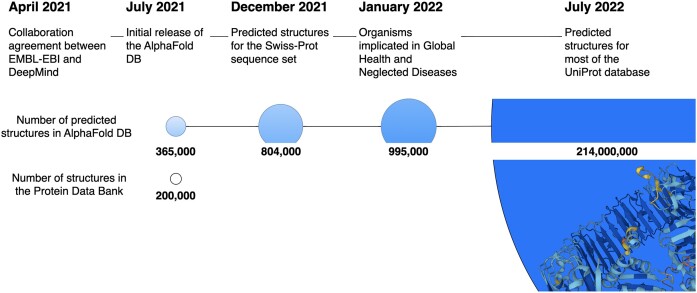
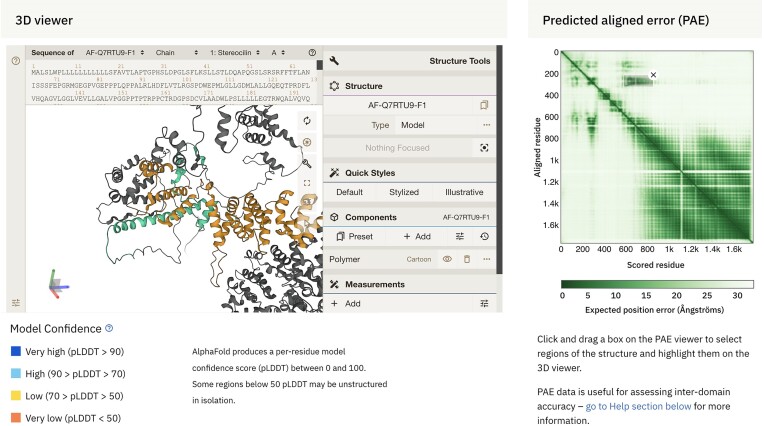
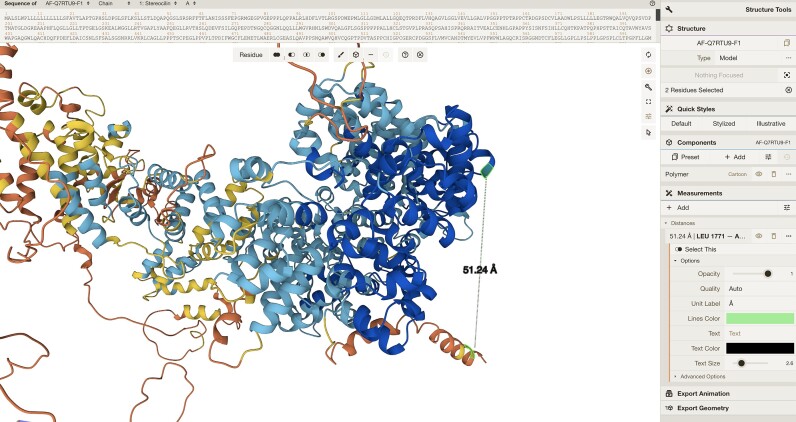
The AlphaFold Database Protein Structure Database (AlphaFold DB, https://alphafold.ebi.ac.uk) has significantly impacted structural biology by amassing over 214 million predicted protein structures, expanding from the initial 300k structures released in 2021. Enabled by the groundbreaking AlphaFold2 artificial intelligence (AI) system, the predictions archived in AlphaFold DB have been integrated into primary data resources such as PDB, UniProt, Ensembl, InterPro and MobiDB. Our manuscript details subsequent enhancements in data archiving, covering successive releases encompassing model organisms, global health proteomes, Swiss-Prot integration, and a host of curated protein datasets. We detail the data access mechanisms of AlphaFold DB, from direct file access via FTP to advanced queries using Google Cloud Public Datasets and the programmatic access endpoints of the database. We also discuss the improvements and services added since its initial release, including enhancements to the Predicted Aligned Error viewer, customisation options for the 3D viewer, and improvements in the search engine of AlphaFold DB.
Overview
CoChat Summary
TL;DR
AlphaFold DB has grown from ~300k to over 214 million predicted protein structures as of September 2023, with expanded access, search, and visualization features. This 2024 update describes data archiving, access mechanisms, integration with core resources, and new clustering/BLAST/PAE viewer capabilities.
Key findings
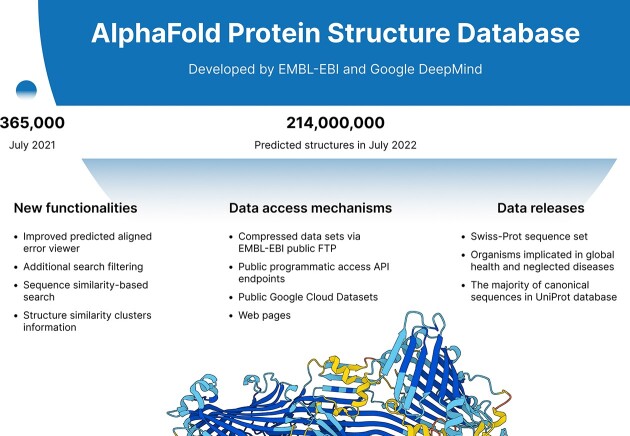
- AlphaFold DB expanded from approximately 300k structures in 2021 to over 214 million predicted protein structures as of September 2023; the initial July 2021 release housed over 360,000 structures for 20 model organism proteomes.
- Predictions are integrated into resources including PDB, UniProt, Ensembl, InterPro and MobiDB, and are accessible via FTP, Google Cloud Public Datasets (~23 TiB), API, and the website; PAE data is unavailable from EMBL-EBI public FTP.
- Structure similarity clustering used MMseqs2 to cluster 214 million UniProtKB sequences into 52 million clusters, then Foldseek secondary clustering yielded 18.8 million clusters, finalizing 2.30 million robust clusters each with at least a pair of structures.
- New features include BLAST sequence similarity search, improved search filters for reviewed/unreviewed and reference proteome status, enhanced PAE viewer–Mol* interactivity, and a November 2022 update fixing a numerical bug that affected ~4% of total structure predictions.
Methods
- Descriptive database update/report with no primary experimental design; data generation is carried out by Google DeepMind, with predictions stored in PDB, mmCIF (modelCIF), and binaryCIF formats plus JSON metadata and confidence metrics pLDDT and PAE.
- Archiving uses successive releases from UniProt reference proteomes (e.g., 2021_02, 2021_04), Swiss-Prot, WHO global health proteomes, and MANE select; as of September 2023, EMBL-EBI FTP hosts TAR files for proteomes of 48 organisms.
- Access and analysis infrastructure includes FTP, Google Cloud Public Datasets, an API keyed on UniProt accessions, Apache-Solr search, BLAST on Google Cloud Platform, and Foldseek/MMseqs2 clustering.
Limitations
- Stated: sequences are not covered if they are less than 16 amino acids; >2700 aa for Swiss-Prot/proteome sequences or >1280 aa for other UniProt sequences; contain non-standard amino acids; are not in the UniProt ‘one sequence per gene’ FASTA file; or are viral proteins; these limitations are under discussion.
- Stated: some sequences may be outdated compared to UniProt due to less frequent AlphaFold DB releases; PAE data is unavailable from EMBL-EBI public FTP; full Google Cloud dataset download requires a Google account and can take roughly 2.5 days at 1 Gbps.
- Evident from the text: all archived structures are predicted models rather than experimental structures, and users must interpret pLDDT/PAE cautiously (e.g., pLDDT <50 likely disordered, 50–70 lower confidence); the database also currently lacks isoform and multimeric predicted structures, which are listed as future work.
Model-written summary. Check it against the paper before relying on it.
Integrity signals
Registry
Cites
Statistics
Figures

Verification
Claims the paper makes
11 Valid · 1 Not valid · 0 Not checked · 28 Own results and interpretations
Every source the paper cites for this claim was checked and supports it.
In the paper
“The new generation of predicted protein structure models has demonstrated remarkable accuracy, which could mitigate the continually widening gap between known protein sequences and experimentally determined protein structures (7).”
§ AlphaFold Protein Structure Database in 2024: providing structure coverage for over 214 million protein sequences > Introduction
What the sources say
- Supportedcites [7] Varadi M., Bordin N., Orengo C., Velankar S. The opportunities and challenges posed by the new generation of deep learning-based protein structure predictors. Curr. Opin. Struct. Biol. 2023; 79: 102543. 36807079 PMC7618866 source
The Introduction says prediction models made a major advance in accuracy and can match or sometimes surpass experimentally determined structures. It also describes a growing gap between known protein sequences and determined structures; the section on new challenges says predicted structures have greatly increased coverage of protein sequence space. These passages support both the accuracy claim and the proposed potential to narrow that gap (page numbers unavailable). (LLM, conf=0.93)
boosted- Asserted: passes — The authors put it forward as true.
- Checkable: passes — It can be checked against evidence.
- Load-bearing: passes — The paper’s conclusions depend on it.
- Based: passes — The paper gives a reason why it holds.
- Supported
Every source the paper cites for this claim was checked and supports it.
In the paper
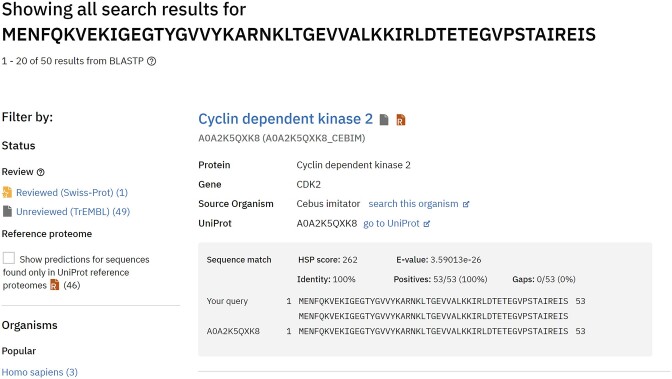
“In response to frequent requests from the user community since the AlphaFold DB launch, we have made significant strides to implement a sequence-based similarity search feature. We have incorporated the Basic Local Alignment Search Tool (BLAST) (21) into our Google Cloud Platform infrastructure to achieve this.”
§ AlphaFold Protein Structure Database in 2024: providing structure coverage for over 214 million protein sequences > Implementation > Data access
What the sources say
- Supportedcites [21] Camacho C., Coulouris G., Avagyan V., Ma N., Papadopoulos J., Bealer K., Madden T.L. BLAST+: architecture and applications. BMC Bioinf. 2009; 10: 421. PMC2803857 20003500 source
The Background identifies BLAST as a sequence similarity search program that matches a query sequence against a database. In the citing sentence, the citation identifies the tool incorporated; the AlphaFold DB implementation is the citing authors’ own report, not a claim attributed to this source. (LLM, conf=0.91)
plainstates a cause- Asserted: passes — The authors put it forward as true.
- Checkable: passes — It can be checked against evidence.
- Load-bearing: unclear — It is unclear whether the paper’s conclusions depend on it.
- Based: passes — The paper gives a reason why it holds.
- Supported
Every source the paper cites for this claim was checked and supports it.
In the paper
“The impact of the predicted structures is further enhanced by their seamless integration into several core data resources, including PDBe-KB (17), UniProt (6), Ensembl (16), InterPro (15), Genecards (24) and MobiDB (25), among others.”
§ AlphaFold Protein Structure Database in 2024: providing structure coverage for over 214 million protein sequences > Conclusions and outlook
What the sources say
- Supportedcites [17] consortium P.D.B.-K.B. PDBe-KB: collaboratively defining the biological context of structural data. Nucleic Acids Res. 2022; 50: D534– D542. 34755867 PMC8728252 source
Citation (17) is attached specifically to PDBe-KB, rather than to the other resources in the sentence. The Introduction identifies PDBe-KB as a resource that integrates structural and functional annotations, supporting its identification here. (LLM, conf=0.90)
- Supportedcites [6] U.P. Consortium UniProt: the Universal Protein Knowledgebase in 2023. Nucleic Acids Res. 2023; 51: D523– D531. 36408920 PMC9825514 source
The citation is attached to UniProt in a list of resources, and the cited paper is a description of UniProt. Its Data integration and Interactive visualisations in entry pages sections state that UniProt incorporates AlphaFold-predicted structures into protein entries alongside other data; the supplied passages do not give page numbers. (LLM, conf=0.93)
- Supportedcites [16] Cunningham F., Allen J.E., Allen J., Alvarez-Jarreta J., Amode M.R., Armean I.M., Austine-Orimoloye O., Azov A.G., Barnes I., Bennett R. et al. Ensembl 2022. Nucleic Acids Res. 2022; 50: D988– D995. 34791404 PMC8728283 source
The citation identifies Ensembl as one of the resources in the list. In “Developing a new website” (page not provided), the paper says Ensembl’s Entity Viewer provides access to protein information, including 3D structures from PDBe. (LLM, conf=0.86)
plainstates a cause- Asserted: passes — The authors put it forward as true.
- Checkable: passes — It can be checked against evidence.
- Load-bearing: unclear — It is unclear whether the paper’s conclusions depend on it.
- Based: passes — The paper gives a reason why it holds.
- Supported
Every source the paper cites for this claim was checked and supports it.
In the paper
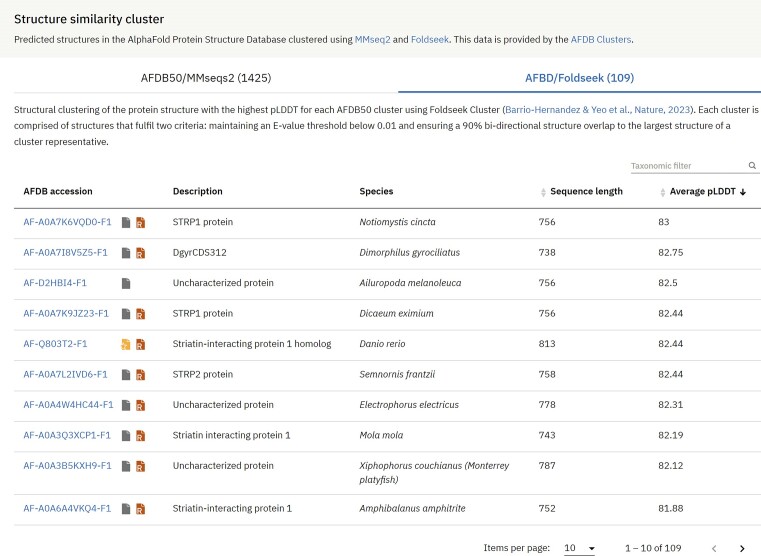
“Tackling this challenge, Steinegger et al. recently unveiled the Foldseek Cluster, a state-of-the-art structural-alignment-based clustering algorithm designed for vast datasets (22). They applied this novel method to the AlphaFold DB archive, making the derived structure similarity clusters available to the research community.”
§ AlphaFold Protein Structure Database in 2024: providing structure coverage for over 214 million protein sequences > Implementation > Data access
What the sources say
- Supportedcites [22] Barrio-Hernandez I., Yeo J., Jänes J., Mirdita M., Gilchrist C.L.M., Wein T., Varadi M., Velankar S., Beltrao P., Steinegger M. Clustering-predicted structures at the scale of the known protein universe. Nature. 2023; 622: 637– 645. 37704730 PMC10584675 source
The Abstract says the authors used Foldseek cluster to cluster the AlphaFold database. The Methods section (“Web server”) says they developed a server for users to explore the clusters, their members and related clusters, supporting the claim that the results were made available to researchers. (LLM, conf=0.93)
plainstates a cause- Asserted: passes — The authors put it forward as true.
- Checkable: passes — It can be checked against evidence.
- Load-bearing: passes — The paper’s conclusions depend on it.
- Based: passes — The paper gives a reason why it holds.
- Supported
- Probably not a substantial claim. 30
- It may state two separate claims as one. 15
- The quote only partly states this claim. 1
Claims other papers make about this one
Each is checked against this paper’s own text: does it say what the citing paper says it does?
The cited source says what the claim attributes to it.
In the citing paper
“houses over 200 million pre-run AF2 predictions”
From The power and pitfalls of AlphaFold2 for structure prediction beyond rigid globular proteins (2024) · cites this paper as [7]
Citations
Cites
Highly accurate protein structure prediction with AlphaFold
Jumper, J., Evans, R., Pritzel, A., Green, T., Figurnov, M., Ronneberger, O., Tunyasuvunakool, K., Bates, R., Žídek, A., Potapenko, A., et al. (2021) · Nature · doi:10.1038/s41586-021-03819-2 · Cited by 43,764
Self-citationBLAST+: architecture and applications
Camacho, C., Coulouris, G., Avagyan, V., Ma, N., Papadopoulos, J., Bealer, K., & Madden, T. L. (2009) · BMC Bioinformatics · doi:10.1186/1471-2105-10-421 · Cited by 22,074
UniProt: the Universal Protein Knowledgebase in 2023
The UniProt Consortium, Bateman, A., Martin, M.-J., Orchard, S., Magrane, M., Ahmad, S., Alpi, E., Bowler-Barnett, E. H., Britto, R., Bye-A-Jee, H., et al. (2023) · Nucleic Acids Research · doi:10.1093/nar/gkac1052 · Cited by 7,210
Evolutionary-scale prediction of atomic level protein structure with a language model
Lin, Z., Akin, H., Rao, R., Hie, B., Zhu, Z., Lu, W., Smetanin, N., Verkuil, R., Kabeli, O., Shmueli, Y., et al. (2022) · doi:10.1101/2022.07.20.500902 · Cited by 5,990 · cited 1×
“In the wake of the latest breakthroughs in prediction software, new databases such as the AlphaFold Protein Structure Database and the ESM Atlas ( 14 ) have emerged.”
MethodThe GeneCards suite: from gene data mining to disease genome sequence analyses
Stelzer, G., Rosen, N., Plaschkes, I., Zimmerman, S., Twik, M., Fishilevich, S., Stein, T. I., Nudel, R., Lieder, I., Mazor, Y., et al. (2016) · Current Protocols in Bioinformatics · doi:10.1002/cpbi.5 · Cited by 5,550 · cited 1×
“The impact of the predicted structures is further enhanced by their seamless integration into several core data resources, including PDBe-KB ( 17 ), UniProt ( 6 ), Ensembl ( 16 ), InterPro ( 15 ), Genecards ( 24 ) and MobiDB ( 25 ), among others.”
BackgroundAccurate prediction of protein structures and interactions using a 3-track network
Baek, M., DiMaio, F., Anishchenko, I., Dauparas, J., Ovchinnikov, S., Lee, G. R., Wang, J., Cong, Q., Kinch, L. N., Schaeffer, R. D., et al. (2021) · doi:10.1101/2021.06.14.448402 · Cited by 5,549
Paysan-Lafosse, T., Blum, M., Chuguransky, S., Grego, T., Pinto, B. L., Salazar, G. A., Bileschi, M. L., Bork, P., Bridge, A., Colwell, L., et al. (2023) · Nucleic Acids Research · doi:10.1093/nar/gkac993 · Cited by 2,399
Cunningham, F., Allen, J. E., Allen, J., Alvarez-Jarreta, J., Amode, M. R., Armean, I. M., Austine-Orimoloye, O., Azov, A. G., Barnes, I., Bennett, R., et al. (2022) · Nucleic Acids Research · doi:10.1093/nar/gkab1049 · Cited by 1,923
Mol* Viewer: modern web app for 3D visualization and analysis of large biomolecular structures
Sehnal, D., Bittrich, S., Deshpande, M., Svobodová, R., Berka, K., Bazgier, V., Velankar, S., Burley, S. K., Koča, J., & Rose, A. S. (2021) · Nucleic Acids Research · doi:10.1093/nar/gkab314 · Cited by 1,154 · cited 1×
“We improved the visualisation of non-consecutive regions and the interactivity between the PAE viewer and the 3D molecular graphics viewer, Mol* ( 23 ) (Figure 5 ).”
MethodSelf-citationMariani, V., Biasini, M., Barbato, A., & Schwede, T. (2013) · Bioinformatics · doi:10.1093/bioinformatics/btt473 · Cited by 1,138 · cited 1×
“AlphaFold yields a per-residue estimate of its confidence, known as pLDDT, ranging from 0 to 100, indicating the tool’s predicted score on the lDDT-C α metric ( 19 ).”
Method
Cited by
Items 1,701–1,800 of 2,174
Engineering and laboratory evolution of lactose-utilizing Pseudomonas putida strains
Saumaa, S., Ilmjärv, T., Popazova, I., Ets, L., Brauer, A., & Kivisaar, M. (2025) · Journal of Biotechnology · doi:10.1016/j.jbiotec.2025.07.015 · Cited by 2
Wira, J., Judd, M., Baldino, A., Bachvaroff, T. R., & Place, A. R. (2026) · Journal of Phycology · doi:10.1111/jpy.70152 · Cited by 1
“However, given that sequence and structural homology tools were insufficient to further elucidate the identity or function of the accessory domains (Figure 5), these regions represent novel folds or highly divergent adaptations specific to dinoflagellates (Blum et al., 2025; Varadi et al., 2024).”
Fouchécourt, S., Callebaut, I., & Monget, P. (2025) · SSRN Electronic Journal · doi:10.2139/ssrn.5339359
AI-powered medicinal chemistry and translational drug development
Kaicheng, U., Zhang, S. M., Yu, Z., Zhang, Z., Zhang, J., He, C., Liu, A., Chen, R., Wang, S., Yan, L., et al. (2026) · Chemical Society Reviews · doi:10.1039/d5cs01469g · Cited by 1
Morales, M., Marín, A. J., Cases, B., et al. (2026) · Toxins · doi:10.3390/toxins18040190
Willdigg, J. R., Patel, Y. S., Arquilevich, B. E., et al. (2024) · bioRxiv (Cold Spring Harbor Laboratory) · doi:10.1101/2024.01.17.576085
Division of labor in cargo and membrane recognition by SNX1-SNX5: Insights from multiscale modeling
Duggisetty, S. C., Kumar, G., Baratam, K., & Srivastava, A. K. (2025) · Biophysical Journal · doi:10.1016/j.bpj.2025.11.004 · Cited by 1
Zhong, Y., Shi, J., Long, X., Liu, X., Chen, L., Peng, J., & Peng, Q. (2026) · Frontiers in Medicine · doi:10.3389/fmed.2026.1828021
“The three-dimensional structure of AKT1 was obtained from the AlphaFold Protein Structure Database (model ID: AF-P31749-F1-v6) (32), and the three-dimensional structure of WGS was downloaded from PubChem in SDF format (33).”
Yang, L., Cheng, C., Miao, W., 黄维义, Zhang, Q., Zhu, Y., Sun, J., Shao, J., & Luan, D. (2026) · Vascular Pharmacology · doi:10.1016/j.vph.2026.107613
Youssefi, S., Saleki, K., Kadam, P., Mazloomi, A., Mukherjee, A., Dekker, L. V., & Nateri, A. S. (2026) · The Journal of Pathology · doi:10.1002/path.70073 · Cited by 1
The Impact of Glycosylation on the Conformational Ensembles of β -, δ -, and γ Sarcoglycans
Fazelpour, E., Cook, G. A., & McCullagh, M. (2026) · doi:10.64898/2026.01.13.699269
“Guided by these homologs, the amino acid sequences of β -, δ -, and γ -sarcoglycans were extracted from UniProt 11 (see Table S1) and modeled as both monomers and a heterotrimer using AlphaFold 12,13 and homology modeling via the SWISS-MODEL server.”
Nguyen, K., Hsiao, C. C., Jin, Y., Wiemer, A. J., & Vinogradova, O. (2025) · The FASEB Journal · doi:10.1096/fj.202402975 · Cited by 2
“39,40 Our data support the prediction that the JM region is α - helical since secondary helical features would restrict local motion of residues T304 and G323 much like what we observe with our BTFMA chemical label.”
Jamin, S. P., Petit, F. G., Kervarrec, C., & Primig, M. (2025) · Molecular Reproduction and Development · doi:10.1002/mrd.70071
Transformers as a substrate for structural biology
Malik, A. J., Portelli, S., & Ascher, D. B. (2026) · Current Opinion in Structural Biology · doi:10.1016/j.sbi.2025.103218 · Cited by 2
UdonPred: Untangling Protein Intrinsic Disorder PredictionPreprint
Schlensok, J., Wagemann, D., Senoner, T., Haak, M., & Rost, B. (2026) · bioRxiv (Cold Spring Harbor Laboratory) · doi:10.64898/2026.01.26.701679 · Cited by 2
Exertier, C., Antonelli, L., Liuzzi, A., Ruffa, M., Brufani, V., Colotti, G., Fiorillo, A., & Ilari, A. (2026) · ACS Omega · doi:10.1021/acsomega.6c05158
Accelerating Drug Discovery with HyperLab: An Easy-to-Use AI-Driven PlatformPreprint
HyperLab team, & Lim, J. (2025) · bioRxiv (Cold Spring Harbor Laboratory) · doi:10.1101/2025.08.31.672525 · Cited by 2
Torres‐Arroyo, A., Mendoza-Hernández, D. A., López‐Salgueiro, R., López-Hernández, E., Leal, A. M. A., Méndez, S. T., López-Durán, A., Carrasco-Navarro, U., Fernandez, F. R., & Reyes‐Vivas, H. (2026) · Food and Chemical Toxicology · doi:10.1016/j.fct.2026.116109
Vogt, I., Bourdeaux, F., Kurkina, T., et al. (2026) · Talanta · doi:10.1016/j.talanta.2026.130063
Hanlon, E., Brown, K. L., Michel, H. M., et al. (2026) · JID Innovations · doi:10.1016/j.xjidi.2026.100507
Boyle, E. P., Aruscavage, P. J., Consalvo, C. D., et al. (2026) · RNA · doi:10.1261/rna.080917.125
Secondary structure distances reveal a new dimension of protein evolutionPreprint
Bastida, A., Morales, A. M. M. O., & Egea‐Cortines, M. (2026) · bioRxiv (Cold Spring Harbor Laboratory) · doi:10.64898/2026.04.29.721599
Sheng, L., Li, Y., Deng, J., Cao, Y., Chen, Y., Cai, Y., Sun, J., & Sheng, J. (2026) · International Journal of Biological Macromolecules · doi:10.1016/j.ijbiomac.2026.151497
Adhikari, B., Gordon, D. M., & Verchot, J. (2026) · International Journal of Molecular Sciences · doi:10.3390/ijms27073094
“The EMBL-EBI AlphaFold Protein Structure Database was used to compare structural conservation among BiPs (https://alphafold.ebi.ac.uk/; accessed on 15 August 2025) [71–73].”
Adoni, K. R., Tataridas-Pallas, N., Zhang, T., Deshmukh, F., Johncock, M. L. L. Y., Shutt, O., Bakalakos, A., Syrris, P., Perry, E. S., Labbadia, J. P., et al. (2026) · bioRxiv (Cold Spring Harbor Laboratory) · doi:10.64898/2026.01.15.699703
Chen, Y., Che, T., Cheng, X., Yang, X., Song, X., Li, J., Fu, Y., Zhang, W., Lv, S., Yang, T., et al. (2026) · Nature Communications · doi:10.1038/s41467-026-73409-1
“The reference models, PDB 6AEI (mTRPC5) and AF-P48995-F1 (predicted structure of hTRPC1) 40,51,52 , were initially fi tted into the EM density map as rigid bodies using Chimera 53 .”
Schwarz, J., & Rosenthal, K. (2026) · Royal Society of Chemistry eBooks · doi:10.1039/9781837677436-00460
LinfCul1 interaction with LinfSkp1 affects different cellular processes in Leishmania infantum
Gomes, E., de Correia, C. R. S. T. B., Torres, C., et al. (2025) · Molecular and Biochemical Parasitology · doi:10.1016/j.molbiopara.2025.111712
Zhu, C., Zhou, Y., Ni, M., Huang, Z., Wang, Z., Zhu, J., & Li, W. (2026) · bioRxiv (Cold Spring Harbor Laboratory) · doi:10.64898/2026.09.03.749045
Xu, X., Ren, J., & Li, J. (2025) · Journal of Biological Chemistry · doi:10.1016/j.jbc.2025.110346
Humanized anti-CD11d monoclonal antibodies suitable for basic research and therapeutic applications
Blythe, E. N., Barreira, C., Fink, C., Brown, A. M., Weaver, L. C., & Dekaban, G. A. (2024) · Antibody Therapeutics · doi:10.1093/abt/tbae031
TDP-43 self-assembly is regulated by its disordered NLS-regionPreprint
Hutten, S., Pekbilir, E., Bourgeois, B. M. R., Ping, X., Rickert, C., Kuhr, N. S., Knabe, N., Mosna, S., Madl, T., Stelzl, L. S., et al. (2026) · bioRxiv (Cold Spring Harbor Laboratory) · doi:10.64898/2026.06.06.730435 · Cited by 1
Jensen, M. J., Mráčková, M., Nonboe, A. W., et al. (2026) · PLoS ONE · doi:10.1371/journal.pone.0358119
The Lrs14‐Like AbfR1 Homolog From Metallosphaera sedula Is a Nucleoid‐Organizing Protein
Kock, V. D., Willaert, R., Gansemans, Y., et al. (2025) · MicrobiologyOpen · doi:10.1002/mbo3.70059
Modha, N., Panday, S. K., & Alexov, E. (2026) · Biophysical Journal · doi:10.1016/j.bpj.2026.07.023 · Cited by 1
Yang, W., Cong, S., Schwarz, J., Schulze, T., Ullrich, S., Falkenstein, K., Ott, D., Eixmann, P., Trentino, A., Thien, A., et al. (2024) · bioRxiv (Cold Spring Harbor Laboratory) · doi:10.1101/2024.06.14.598964
苏冰梅, 蔡燕燕, Zhao, Y., et al. (2026) · Bioorganic Chemistry · doi:10.1016/j.bioorg.2026.109988
Exploring the Interactome of the Queuine Salvage Protein DUF2419 in Entamoeba histolytica
Ye, J., Trebicz‐Geffen, M., & Ankri, S. (2024) · Cells · doi:10.3390/cells13221900
Bi-level diversity optimisation for representative protein panel selectionPreprint
Ou, Z., James, K., Charnock, S. J., et al. (2026) · bioRxiv (Cold Spring Harbor Laboratory) · doi:10.64898/2026.04.17.719243
“Predicted structures for the retained sequences were retrieved from AlphaFoldDB [25], and sequences without available models were removed to ensure consistency between sequence-and structure-based analyses.”
Liu, Z., Xu, X., Chen, D., Zhang, L., Pan, Y., Liu, D., 沈敏敏, Chen, F., & Chen, M. (2026) · Naunyn-Schmiedeberg s Archives of Pharmacology · doi:10.1007/s00210-026-05518-z
Human cytochrome P450 27A1—a variety of reactions, applications, and potentials for drug targeting
Reddish, M. J., Papa, J. E., & Brown, A. (2026) · Drug Metabolism and Disposition · doi:10.1016/j.dmd.2026.100337
Bispo, A. G., de Souza, F. G., Epifane-de-Assunção, M. C., Sena-dos-Santos, C., Matos, G. B., Moura, D. D., Eufraseo, G. L., Silva, C. S., de Araújo, G. S., Ribeiro‐dos‐Santos, Â., et al. (2025) · medRxiv · doi:10.1101/2025.11.10.25339914
Synthesis of Novel Fluorinated Febrifugine Analogs and Evaluation of Their Antifungal Activity
Alkhathami, F., Karamanis, P., Kluza, K., Knox, A. J. S., Evans, P., & Rubini, M. R. (2026) · ChemMedChem · doi:10.1002/cmdc.202500961
Wang, H.-H., Ju, Y., Liu, Y., Jiang, M., Yao, H., Zhao, S., Cui, G., Yin, T., Wang, Z., Du, G., et al. (2026) · Journal of Proteome Research · doi:10.1021/acs.jproteome.6c00236
Zhai, Z., & Zhang, Y. ‐. P. (2025) · Bioscience Biotechnology and Biochemistry · doi:10.1093/bbb/zbaf092
Macrocyclic Peptide Tools for Huntingtin-bound HAP40Preprint
Wolf, E., Fanti, R. C. D. O., Ikenoue, T., Leung, R., Chandrasekaran, R., Alteen, M. G., Keith, B. A., Ackloo, S. Z., Edwards, A. M., Wilson, D., et al. (2026) · bioRxiv (Cold Spring Harbor Laboratory) · doi:10.64898/2026.06.02.729325
Liu, Y., Wu, Y., Li, J., Liu, T., Yuan, C., Xu, Y., Ou, H., Zhou, S., Qi, D., Liao, H., et al. (2026) · Drug Resistance Updates · doi:10.1016/j.drup.2026.101475
Sequence-dominant protein therapeutics: mechanistic foundations for efficient biologics development
Niazi, S. K. (2026) · Frontiers in Drug Discovery · doi:10.3389/fddsv.2026.1781560
Teixeira, A. A. R., Zhu, H., Kothiwal, D., Cao, R., & Mills, A. A. (2026) · Nucleic Acids Research · doi:10.64898/2026.07.30.741735
“1 The current release analyzes the canonical UniProt sequence for each target; alternative isoforms are not rendered as separate reports.”
Goyzueta-Mamani, L. D., Barazorda-Ccahuana, H. L., Ng, M. G., et al. (2026) · bioRxiv (Cold Spring Harbor Laboratory) · doi:10.64898/2026.06.09.731156
“Because no experimentally resolved structures directly corresponding to the selected T. cruzi Q4DMY6 and L. donovani A0A3Q8IJR5 sequences were available, initial three-dimensional models were obtained from the AlphaFold Protein Structure Database [37].”
Structural basis for independent pore function of Vpb4 from Bacillus thuringiensis
Wirawan, R., Jamieson, W. D., Baird, H., et al. (2026) · Nature Communications · doi:10.1038/s41467-026-74567-y
Protein Language Model Identifies Disordered, Conserved Motifs Implicated in Phase SeparationPreprint
Zhang, Y., Zheng, J., & Zhang, B. (2025) · eLife · doi:10.7554/elife.105309.2 · Cited by 1
Cocchiararo, I., & Castets, P. (2025) · Journal of Neuromuscular Diseases · doi:10.1177/22143602251314767 · Cited by 1
“Sequence analysis and Alpha Fold 57,58 predict that VMA21 is a transmembrane protein with both N-and C-terminal regions exposed to the cytosol 83 (Figure 1B).”
Xin, S., Li, G., Zhao, L., Su, J., Li, R., Qin, W., Zhang, Z., Wang, C., Zhu, Y., Feng, L., et al. (2026) · Functional & Integrative Genomics · doi:10.1007/s10142-025-01807-7
“Each compound was docked individually to the BCAT1 protein structure predicted by AlphaFold2 using AutoDock software to calculate their respective bind - ing energies (Supplementary Table 1).”
Lin, Y., Lai, Y.-H., Pang, J.-Y., Lin, Y., Chang, T., Fang, I., Wang, R.-H., Chang, C., Chiang, I., Wu, S., et al. (2026) · Advanced Healthcare Materials · doi:10.1002/adhm.202505913
“Figure 2A illustrates the predicted 3D structure of SQSTM1 (AF-Q1305) generated by AlphaFold Server [53, 54].”
Supervised Protein Structure Classification Using Topological Persistence With DeltaFold
Nardin‐Gennequin, J., Ciuperca, G., Brochier‐Armanet, C., & Malbos, P. (2026) · Proteins Structure Function and Bioinformatics · doi:10.1002/prot.70163
Wan, L., Xie, B., Shuda, M., O'Malley, M. E., Camacho, C. J., Delgoffe, G. M., Chang, Y., & Moore, P. S. (2026) · Molecular Therapy · doi:10.1016/j.ymthe.2026.06.027
“11 and 12, respectively) showed PR suppression values similar to full-length RdRp. AlphaFold 3.0 29,30 alone) was performed to determine whether structural differences could explain the immune presentation range.”
InfluentialVassileva, J. (2026) · International Conference on Revolutionary Artificial Intelligence and Future Applications (Rev-AI) · doi:10.1109/rev-ai70456.2026.11622089
“AlphaFold marked a step change in protein structure prediction [4], and the AlphaFold Protein Structure Database now provides coverage for over 214 million protein sequences [5].”
PWO proteins are associated with PRC2 since their emergence in vascular plants
(2026) · doi:10.1111/nph.71172 · Cited by 1
Durán-Armenta, L. F., Mészáros, A., Pueyo, J. M., Janvier, S., Lázár, T., Maes, D., Loris, R., & Tompa, P. (2025) · Protein Expression and Purification · doi:10.1016/j.pep.2025.106861 · Cited by 1
Mohan, D. S., Khor, B., Murugaiyah, V., et al. (2025) · Journal of Computer-Aided Molecular Design · doi:10.1007/s10822-025-00740-y
Salsabila, S. D., Bae, S., & Kim, J. (2026) · International Journal of Biological Macromolecules · doi:10.1016/j.ijbiomac.2026.151839
Singh, A., Pandit, S., Pant, P., Singh, T. P., Sharma, S., & Sharma, P. K. (2026) · ACS Omega · doi:10.1021/acsomega.5c11260
Sarma, D., & Khanikor, B. (2026) · Journal of Natural Pesticide Research · doi:10.1016/j.napere.2026.100226
Tracing the origins of crmA megasynthase through lichen genomes
Nickles, G., Vaiana, A., Park, S. C., Broz, K., Estes, H. P., Llewellyn, T., Drott, M. T., Keller, N. P., & Singh, G. (2026) · Current Biology · doi:10.1016/j.cub.2026.05.036
“80 The sequences were submitted to the InterProScan (v5) 49 web server to determine coordinates for structural alignment (Sup Repository).”
A genetic screen reveals a key role for Reg1 in 2-deoxyglucose sensing and yeast AMPK inhibition
(2025) · doi:10.1371/journal.pgen.1011896
“Structural predictions [94] do not inform on a potential structure, since Reg1 is predicted to be mostly disordered [95,96], which is a common trait for PP1 regulatory proteins [83].”
Kálmán, Z. E., Lázár, T., Dobson, L., & Pancsa, R. (2025) · bioRxiv · doi:10.3390/biom15121641 · Cited by 1
Zhou, S., Zhang, H. H., Li, X., et al. (2025) · Frontiers in Genetics · doi:10.3389/fgene.2025.1588709
Specialty grand challenges in theoretical modeling, structure prediction and design
Exertier, C., & Ilari, A. (2025) · Frontiers in Chemical Biology · doi:10.3389/fchbi.2025.1635423
Kanojia, A., Bhaduri, A., Nayak, S., et al. (2025) · Journal of Biosciences · doi:10.1007/s12038-025-00520-8
Wu, C., Zhang, F., Jia, P., Zeng, M., & Li, M. (2025) · Lecture notes in computer science · doi:10.1007/978-981-95-0698-9_15
Zhang, H., Huang, J., Li, Y., Chen, X., Xu, Z., Cai, S., Chai, Z., Wang, H., & Wei, Y. (2026) · Interdisciplinary Sciences Computational Life Sciences · doi:10.1007/s12539-025-00812-5
Chow, C. F. W., Scheremetjew, M., Moon, H., et al. (2025) · Nucleic Acids Research · doi:10.1093/nar/gkaf408
“[ 24 ].”
Klíma, M., Šilhán, J., Pavlik, P., Hercík, K., & Bouřa, E. (2026) · Nucleic Acids Research · doi:10.1093/nar/gkag340
Dolot, R., Sirerant, M., Mikołajczyk, A., et al. (2025) · SSRN Electronic Journal · doi:10.2139/ssrn.5273447
Thirty years of plant farnesylation research: Few substrates, many gaps, and a clear path forward
Daszkowska‐Golec, A., Sundaresan, A. P., & Distefano, M. D. (2026) · Journal of Plant Physiology · doi:10.1016/j.jplph.2026.154887
Serine Recombinase PinR Inverts Cryptic Prophage DNA to Block Adsorption of Phages
Kirigo, J., Huelgas-Méndez, D., Benedik, M. J., García-Contreras, R., & Wood, T. K. (2025) · doi:10.1101/2025.03.28.646004 · Cited by 1
“Exploring structural insights using AlphaFold (39), we found PinR has all the structural features of a small serine recombinase (40), including a DNA binding site, arm region, and catalytic domain ( Fig.”
Miotti, N., Bono, F., Golzi, G., et al. (2026) · bioRxiv (Cold Spring Harbor Laboratory) · doi:10.64898/2026.05.21.726790
“The PDB (Burley et al., 2018), BFVD (Kim et al., 2024) and AlphaFold Protein Structure (Varadi et al., 2023) databases were searched with the most likely model fold as query using FoldSeek (van Kempen et al., 2023).”
A Rare Variant in TRIOBP Linked to Occupational Noise Exposure in Meniere DiseasePreprint
Cruz‐Granados, P., Bortoletto, G. B., Zhang, Y., et al. (2025) · medRxiv · doi:10.1101/2025.07.23.25332035
Dai, C., Lou, S., Fan, X., Li, P., Xu, X., & Chen, X. (2025) · Biochemical and Biophysical Research Communications · doi:10.1016/j.bbrc.2025.152885 · Cited by 1
Padon, S. D. M., & Lozano, A. J. (2026) · Frontiers in Tropical Diseases · doi:10.3389/fitd.2026.1923721
A structural code for assembly specificity in GID/CTLH-type E3 ligases
Hassend, P. M. V. G., & Schindelin, H. (2026) · eLife · doi:10.7554/elife.110152.3
Primary insights into structure and structururally determined features of C2 domain of Bcr
Kravchuk, I. V., Gurianov, D. S., Antonenko, S. V., & Телегеев, Г. Д. (2025) · Biopolymers and Cell · doi:10.7124/bc.000b0f
Rajagopalan, S., Chiu, J., Lu, J., Mastorakos, G. M., Majumder, S., Nolan, K., Adams, E. J., Sun, P. D., Hogg, P. J., & Long, E. O. (2026) · eLife · doi:10.7554/elife.111018.1
The chaperone Jjj2 regulates nucleoporin condensation in budding yeastPreprint
Agote‐Arán, A., Gallardo, P., Mancini, R., et al. (2026) · bioRxiv (Cold Spring Harbor Laboratory) · doi:10.64898/2026.07.22.740058
The impact of YabG mutations on C. difficile spore germination and processing of spore substratesPreprint
Osborne, M. S., Brehm, J. N., Olivença, C., Cochran, A. M., Serrano, M., Henriques, A. O., & Sorg, J. A. (2024) · bioRxiv (Cold Spring Harbor Laboratory) · doi:10.1101/2024.06.10.598338
“Using an AlphaFold2 prediction of the preproSleC protein structure, we noticed that the three arginine residues at which YabG processes are in a disordered region (Figure 3B) (Varadi et al. , 2024, Jumper et al. , 2021).”
MethodMultiple Super-Secondary Structures in Leucine-Rich Repeats with Dual Characteristics
Matsushima, N., Batkhishig, D., & Enkhbayar, P. (2026) · BioChem · doi:10.3390/biochem6030015
“We then characterized the structural features of CC/SDS22-like LRR motifs using solved structures and AlphaFold models [33,34], and investigated their potential biological functions through domain analysis.”
Nonsynonymous Substitution Detected In Heat Stress-Associated HSPA8 gene in Artlı Sheep
Mercan, L., Bülbül, C. E., Bilgi, F., et al. (2025) · Akademik Ziraat Dergisi · doi:10.29278/azd.1793271
Jin, S. B., Park, J., Lee, S. D., Han, J. H., Myung, S., Park, K. C., & Yun, J. (2026) · International Journal of Molecular Sciences · doi:10.3390/ijms27135761
“The AlphaFold2 [36] predicted structure of FAM210A (UniProt: Q96ND0; AF-Q96ND0-F1; AlphaFold DB model version v6) was downloaded from the AlphaFold Protein Structure Database [37]; the same region was additionally re-predicted with AlphaFold3 [38] for comparison (Figure S6).”
Nielipinska, D., Orlikowska, M., Nielipinski, M., Sekula, B., Błażewska, K. M., Gendaszewska‐Darmach, E., & Pietrzyk‐Brzezinska, A. J. (2026) · Protein Science · doi:10.1002/pro.70581
Mindin-mediated αM-integrin endocytosis activates STAT3 to maintain keratinocyte stemness
Dam, B., Ajnabi, J., Saha, T., Shrivastava, A., Badarinath, K., Hegde, A., Dutta, A., Jasoria, S., Kataria, S., Singh, A., et al. (2026) · Cell Communication and Signaling · doi:10.1186/s12964-026-02970-5
Pannu, J. S., Green, K., & Vedanayagam, J. (2026) · bioRxiv (Cold Spring Harbor Laboratory) · doi:10.64898/2026.09.11.750891
Yadala, R., Câmara, A. S., Yalagapati, S. P., Vaculíková, J., Králová, B., Jaroschinsky, P., Meitzel, T., Ariyoshi, M., Fukagawa, T., Potěšil, D., et al. (2026) · Nucleic Acids Research · doi:10.1093/nar/gkag605 · Cited by 3
“We used AlphaFold3 in all structural predictions of the current work [ 35–37 ].”
Li, J., Tao, Q., & Chen, N. (2025) · Journal of the Science of Food and Agriculture · doi:10.1002/jsfa.70244
Gopikrishnan, M., & George Priya Doss, C. (2026) · Biotechnology and Applied Biochemistry · doi:10.1002/bab.70180 · Cited by 1
“The 3D structures of VIM-1 (Accession ID: Q4F6N3) and NDM-1 (Accession ID: A0A0N7G842) were retrieved from the AlphaFold Protein Structure Database Varadi et al. [ 22 ].”
MDCompress: better, faster compression of molecular dynamics simulation trajectories
Kokot, M., Roy, A., Wheeler, T. J., & Deorowicz, S. (2025) · doi:10.64898/2025.12.19.695527
Yuan, Z., & Zhang, D. (2026) · Springer eBooks · doi:10.1007/978-981-95-7033-1_7
Metadata
- Authors
- Varadi, M., Bertoni, D., Magana, P., Paramval, U., Pidruchna, I., Radhakrishnan, M., Tsenkov, M., Nair, S., Mirdita, M., Yeo, J., Kovalevskiy, O., Tunyasuvunakool, K., Laydon, A., Žídek, A., Tomlinson, H., Hariharan, D., Abrahamson, J., Green, T., Jumper, J., Birney, E., Steinegger, M., Hassabis, D., & Velankar, S.
- Affiliations
- European Molecular Biology Laboratory, European Bioinformatics Institute , Hinxton, UK
- European Bioinformatics Institute (GB)
- Seoul National University (KR)
- Google DeepMind (United Kingdom) (GB)
- Corresponding author
- Hassabis, Demis
- Velankar, Sameer
- ORCID
- Venue
- Nucleic Acids Research
- Publisher
- Oxford University Press (OUP)
- Published
- 2023-11-02
- Volume
- 52
- Issue
- D1
- Pages
- D368-D375
- ISSN
- 0305-1048 (ISSN-L)
- 1362-4962
- PMC
- PMC10767828
- OpenAlex
- W4388464011
- Cited by
- 2,052
- References
- 29
- Citations by year
- 2026: 724 · 2025: 1015 · 2024: 307 · 2023: 5
- FWCI
- 181.98
- Type
- journal article
- Language
- en
- Open access
- gold
- doi.org
- Licence
- Locations
- Nucleic Acids Research (publishedVersion, cc-by)
- PubMed Central (publishedVersion, cc-by)
- PubMed (publishedVersion)
- Seoul National University Open Repository (Seoul National University) (submittedVersion)
- Funders
- Google DeepMind
- National Research Foundation of Korea (2019R1A6A1A10073437, 2020M3A9G7103933, 2021R1C1C102065, 2021M3A9I4021220, RS-2023-00250470)
- Samsung DS Research Fund
- Seoul National University
- Topics
- Life Sciences › Biochemistry, Genetics and Molecular Biology › Molecular Biology › Protein Structure and Dynamics
- Life Sciences › Biochemistry, Genetics and Molecular Biology › Structural Biology › Enzyme Structure and Function
- Life Sciences › Biochemistry, Genetics and Molecular Biology › Molecular Biology › Machine Learning in Bioinformatics
- Keywords
- predicted protein structures, AlphaFold2, protein structure prediction, protein sequence coverage, data archiving, database access, search engines
- MeSH terms
- Amino Acid Sequence, Artificial Intelligence, Proteins, Protein Structure, Secondary, Proteome, Databases, Protein, Search Engine
About these checks
Registry, retraction, Cites and statistics results are computed, not judged, with one exception: a printed reference that no index lists is read once by a model before it counts as a citation error. Claims are extracted by a model and kept only when their quote appears verbatim in the text; each cited source is then checked, with a model’s help, for whether it says what the claim relies on. Those verdicts can be wrong — read the claim’s quote and the cited source before relying on one.
The claim verdicts this report counts are experimental: their accuracy is not yet measured.
A language model drew the claims from the paper on 2026-10-10, under version 3 of the claim definition (model deepseek-v4.1-flash, prompt extract-v3).
A second model labelled each claim on 2026-10-10 (model jev-1.13-20260917, definition revision gold-guideline-v0.2).
Cited sources are checked with a language model’s help (gpt-6-sol).
Statistics and arithmetic are recomputed, not judged.
Confidence bands are shown only for fields calibrated on our annotated test set. None is calibrated yet, so no band is shown.
What counts as a claim ›How we measure confidence ›How we check this ›
Are you an author, or do you see a problem with this page? Request a review
Data sources
Bibliographic data: Semantic Scholar, OpenAlex, Crossref.
Contains information from the Semantic Scholar Academic Graph Datasets, made available under the ODC Attribution License (ODC-BY 1.0).
Semantic Scholar’s data is described in: Kinney, R., et al. (2023). The Semantic Scholar Open Data Platform. arXiv:2301.10140.
