

AlphaFold Protein Structure Database in 2024: providing structure coverage for over 214 million protein sequences
Open accessThe DOI matches its Crossref record; 29 of the 29 references it cites were found in a registry or an index; 18 of the 18 sources its claims cite were checked for support.
Abstract
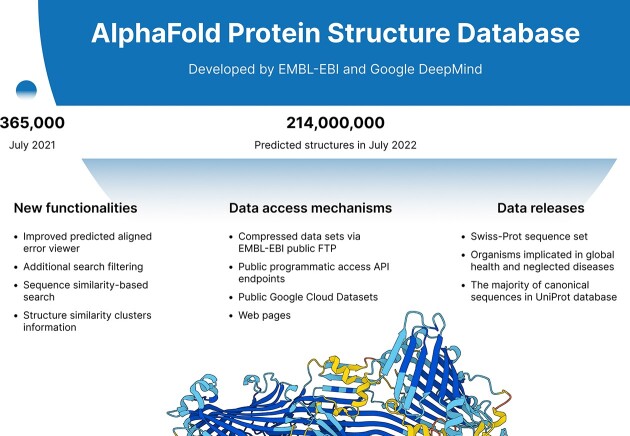
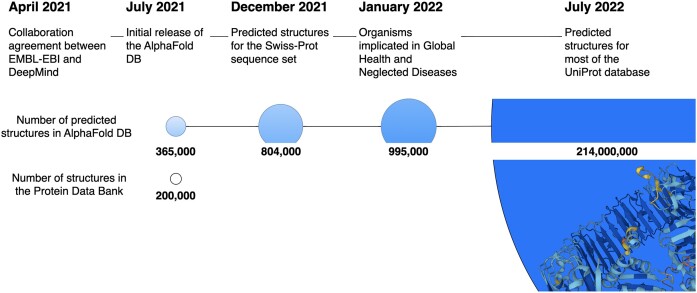
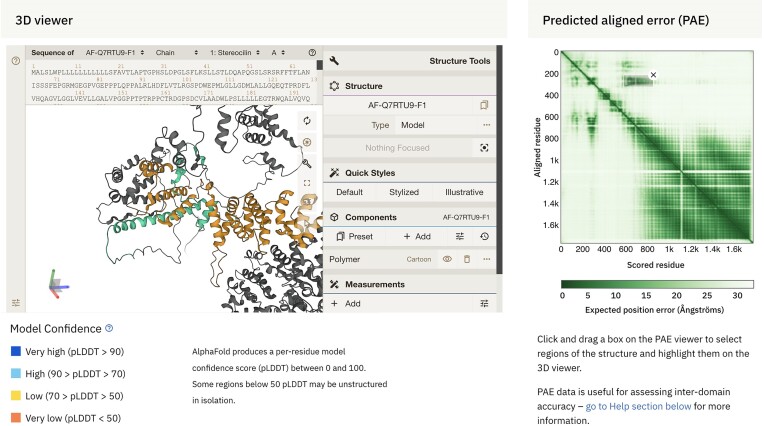
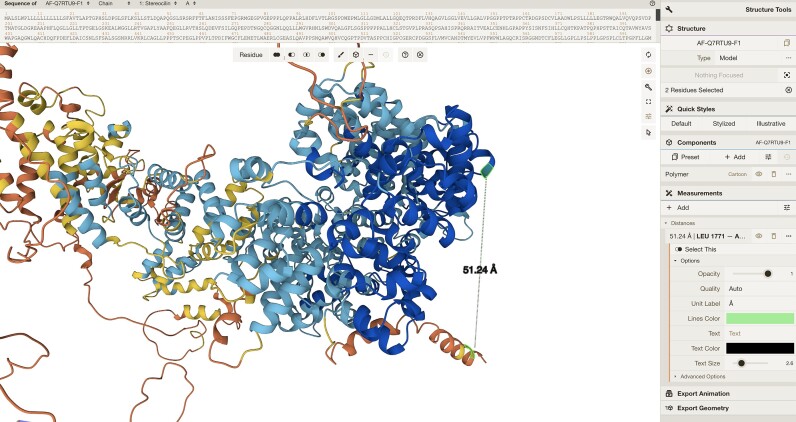
The AlphaFold Database Protein Structure Database (AlphaFold DB, https://alphafold.ebi.ac.uk) has significantly impacted structural biology by amassing over 214 million predicted protein structures, expanding from the initial 300k structures released in 2021. Enabled by the groundbreaking AlphaFold2 artificial intelligence (AI) system, the predictions archived in AlphaFold DB have been integrated into primary data resources such as PDB, UniProt, Ensembl, InterPro and MobiDB. Our manuscript details subsequent enhancements in data archiving, covering successive releases encompassing model organisms, global health proteomes, Swiss-Prot integration, and a host of curated protein datasets. We detail the data access mechanisms of AlphaFold DB, from direct file access via FTP to advanced queries using Google Cloud Public Datasets and the programmatic access endpoints of the database. We also discuss the improvements and services added since its initial release, including enhancements to the Predicted Aligned Error viewer, customisation options for the 3D viewer, and improvements in the search engine of AlphaFold DB.
Overview
CoChat Summary
TL;DR
AlphaFold DB has grown from ~300k to over 214 million predicted protein structures as of September 2023, with expanded access, search, and visualization features. This 2024 update describes data archiving, access mechanisms, integration with core resources, and new clustering/BLAST/PAE viewer capabilities.
Key findings
- AlphaFold DB expanded from approximately 300k structures in 2021 to over 214 million predicted protein structures as of September 2023; the initial July 2021 release housed over 360,000 structures for 20 model organism proteomes.
- Predictions are integrated into resources including PDB, UniProt, Ensembl, InterPro and MobiDB, and are accessible via FTP, Google Cloud Public Datasets (~23 TiB), API, and the website; PAE data is unavailable from EMBL-EBI public FTP.
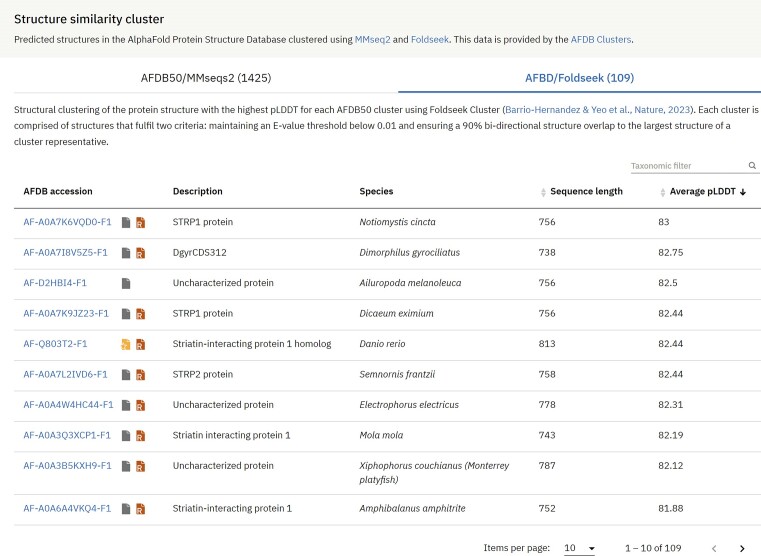
- Structure similarity clustering used MMseqs2 to cluster 214 million UniProtKB sequences into 52 million clusters, then Foldseek secondary clustering yielded 18.8 million clusters, finalizing 2.30 million robust clusters each with at least a pair of structures.
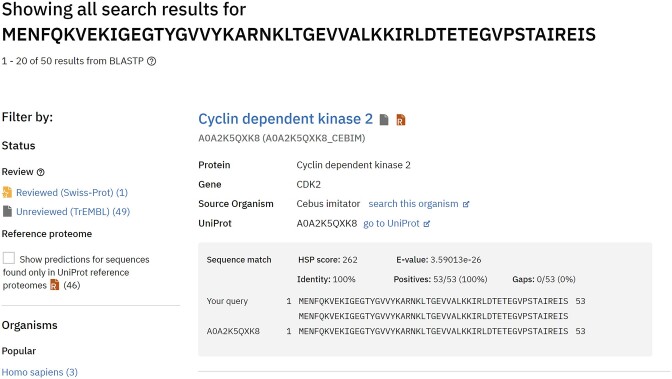
- New features include BLAST sequence similarity search, improved search filters for reviewed/unreviewed and reference proteome status, enhanced PAE viewer–Mol* interactivity, and a November 2022 update fixing a numerical bug that affected ~4% of total structure predictions.
Methods
- Descriptive database update/report with no primary experimental design; data generation is carried out by Google DeepMind, with predictions stored in PDB, mmCIF (modelCIF), and binaryCIF formats plus JSON metadata and confidence metrics pLDDT and PAE.
- Archiving uses successive releases from UniProt reference proteomes (e.g., 2021_02, 2021_04), Swiss-Prot, WHO global health proteomes, and MANE select; as of September 2023, EMBL-EBI FTP hosts TAR files for proteomes of 48 organisms.
- Access and analysis infrastructure includes FTP, Google Cloud Public Datasets, an API keyed on UniProt accessions, Apache-Solr search, BLAST on Google Cloud Platform, and Foldseek/MMseqs2 clustering.
Limitations
- Stated: sequences are not covered if they are less than 16 amino acids; >2700 aa for Swiss-Prot/proteome sequences or >1280 aa for other UniProt sequences; contain non-standard amino acids; are not in the UniProt ‘one sequence per gene’ FASTA file; or are viral proteins; these limitations are under discussion.
- Stated: some sequences may be outdated compared to UniProt due to less frequent AlphaFold DB releases; PAE data is unavailable from EMBL-EBI public FTP; full Google Cloud dataset download requires a Google account and can take roughly 2.5 days at 1 Gbps.
- Evident from the text: all archived structures are predicted models rather than experimental structures, and users must interpret pLDDT/PAE cautiously (e.g., pLDDT <50 likely disordered, 50–70 lower confidence); the database also currently lacks isoform and multimeric predicted structures, which are listed as future work.
Model-written summary. Check it against the paper before relying on it.
Integrity signals
Registry
Cites
Statistics
Figures

Verification
Claims the paper makes
11 Valid · 1 Not valid · 0 Not checked · 28 Own results and interpretations
Every source the paper cites for this claim was checked and supports it.
In the paper
“The new generation of predicted protein structure models has demonstrated remarkable accuracy, which could mitigate the continually widening gap between known protein sequences and experimentally determined protein structures (7).”
§ AlphaFold Protein Structure Database in 2024: providing structure coverage for over 214 million protein sequences > Introduction
What the sources say
- Supportedcites [7] Varadi M., Bordin N., Orengo C., Velankar S. The opportunities and challenges posed by the new generation of deep learning-based protein structure predictors. Curr. Opin. Struct. Biol. 2023; 79: 102543. 36807079 PMC7618866 source
The Introduction says prediction models made a major advance in accuracy and can match or sometimes surpass experimentally determined structures. It also describes a growing gap between known protein sequences and determined structures; the section on new challenges says predicted structures have greatly increased coverage of protein sequence space. These passages support both the accuracy claim and the proposed potential to narrow that gap (page numbers unavailable). (LLM, conf=0.93)
boosted- Asserted: passes — The authors put it forward as true.
- Checkable: passes — It can be checked against evidence.
- Load-bearing: passes — The paper’s conclusions depend on it.
- Based: passes — The paper gives a reason why it holds.
- Supported
Every source the paper cites for this claim was checked and supports it.
In the paper
“In response to frequent requests from the user community since the AlphaFold DB launch, we have made significant strides to implement a sequence-based similarity search feature. We have incorporated the Basic Local Alignment Search Tool (BLAST) (21) into our Google Cloud Platform infrastructure to achieve this.”
§ AlphaFold Protein Structure Database in 2024: providing structure coverage for over 214 million protein sequences > Implementation > Data access
What the sources say
- Supportedcites [21] Camacho C., Coulouris G., Avagyan V., Ma N., Papadopoulos J., Bealer K., Madden T.L. BLAST+: architecture and applications. BMC Bioinf. 2009; 10: 421. PMC2803857 20003500 source
The Background identifies BLAST as a sequence similarity search program that matches a query sequence against a database. In the citing sentence, the citation identifies the tool incorporated; the AlphaFold DB implementation is the citing authors’ own report, not a claim attributed to this source. (LLM, conf=0.91)
plainstates a cause- Asserted: passes — The authors put it forward as true.
- Checkable: passes — It can be checked against evidence.
- Load-bearing: unclear — It is unclear whether the paper’s conclusions depend on it.
- Based: passes — The paper gives a reason why it holds.
- Supported
Every source the paper cites for this claim was checked and supports it.
In the paper
“The impact of the predicted structures is further enhanced by their seamless integration into several core data resources, including PDBe-KB (17), UniProt (6), Ensembl (16), InterPro (15), Genecards (24) and MobiDB (25), among others.”
§ AlphaFold Protein Structure Database in 2024: providing structure coverage for over 214 million protein sequences > Conclusions and outlook
What the sources say
- Supportedcites [17] consortium P.D.B.-K.B. PDBe-KB: collaboratively defining the biological context of structural data. Nucleic Acids Res. 2022; 50: D534– D542. 34755867 PMC8728252 source
Citation (17) is attached specifically to PDBe-KB, rather than to the other resources in the sentence. The Introduction identifies PDBe-KB as a resource that integrates structural and functional annotations, supporting its identification here. (LLM, conf=0.90)
- Supportedcites [6] U.P. Consortium UniProt: the Universal Protein Knowledgebase in 2023. Nucleic Acids Res. 2023; 51: D523– D531. 36408920 PMC9825514 source
The citation is attached to UniProt in a list of resources, and the cited paper is a description of UniProt. Its Data integration and Interactive visualisations in entry pages sections state that UniProt incorporates AlphaFold-predicted structures into protein entries alongside other data; the supplied passages do not give page numbers. (LLM, conf=0.93)
- Supportedcites [16] Cunningham F., Allen J.E., Allen J., Alvarez-Jarreta J., Amode M.R., Armean I.M., Austine-Orimoloye O., Azov A.G., Barnes I., Bennett R. et al. Ensembl 2022. Nucleic Acids Res. 2022; 50: D988– D995. 34791404 PMC8728283 source
The citation identifies Ensembl as one of the resources in the list. In “Developing a new website” (page not provided), the paper says Ensembl’s Entity Viewer provides access to protein information, including 3D structures from PDBe. (LLM, conf=0.86)
plainstates a cause- Asserted: passes — The authors put it forward as true.
- Checkable: passes — It can be checked against evidence.
- Load-bearing: unclear — It is unclear whether the paper’s conclusions depend on it.
- Based: passes — The paper gives a reason why it holds.
- Supported
Every source the paper cites for this claim was checked and supports it.
In the paper
“Tackling this challenge, Steinegger et al. recently unveiled the Foldseek Cluster, a state-of-the-art structural-alignment-based clustering algorithm designed for vast datasets (22). They applied this novel method to the AlphaFold DB archive, making the derived structure similarity clusters available to the research community.”
§ AlphaFold Protein Structure Database in 2024: providing structure coverage for over 214 million protein sequences > Implementation > Data access
What the sources say
- Supportedcites [22] Barrio-Hernandez I., Yeo J., Jänes J., Mirdita M., Gilchrist C.L.M., Wein T., Varadi M., Velankar S., Beltrao P., Steinegger M. Clustering-predicted structures at the scale of the known protein universe. Nature. 2023; 622: 637– 645. 37704730 PMC10584675 source
The Abstract says the authors used Foldseek cluster to cluster the AlphaFold database. The Methods section (“Web server”) says they developed a server for users to explore the clusters, their members and related clusters, supporting the claim that the results were made available to researchers. (LLM, conf=0.93)
plainstates a cause- Asserted: passes — The authors put it forward as true.
- Checkable: passes — It can be checked against evidence.
- Load-bearing: passes — The paper’s conclusions depend on it.
- Based: passes — The paper gives a reason why it holds.
- Supported
- Probably not a substantial claim. 30
- It may state two separate claims as one. 15
- The quote only partly states this claim. 1
Claims other papers make about this one
Each is checked against this paper’s own text: does it say what the citing paper says it does?
The cited source says what the claim attributes to it.
In the citing paper
“houses over 200 million pre-run AF2 predictions”
From The power and pitfalls of AlphaFold2 for structure prediction beyond rigid globular proteins (2024) · cites this paper as [7]
Citations
Cites
Highly accurate protein structure prediction with AlphaFold
Jumper, J., Evans, R., Pritzel, A., Green, T., Figurnov, M., Ronneberger, O., Tunyasuvunakool, K., Bates, R., Žídek, A., Potapenko, A., et al. (2021) · Nature · doi:10.1038/s41586-021-03819-2 · Cited by 43,764
Self-citationBLAST+: architecture and applications
Camacho, C., Coulouris, G., Avagyan, V., Ma, N., Papadopoulos, J., Bealer, K., & Madden, T. L. (2009) · BMC Bioinformatics · doi:10.1186/1471-2105-10-421 · Cited by 22,074
UniProt: the Universal Protein Knowledgebase in 2023
The UniProt Consortium, Bateman, A., Martin, M.-J., Orchard, S., Magrane, M., Ahmad, S., Alpi, E., Bowler-Barnett, E. H., Britto, R., Bye-A-Jee, H., et al. (2023) · Nucleic Acids Research · doi:10.1093/nar/gkac1052 · Cited by 7,210
Evolutionary-scale prediction of atomic level protein structure with a language model
Lin, Z., Akin, H., Rao, R., Hie, B., Zhu, Z., Lu, W., Smetanin, N., Verkuil, R., Kabeli, O., Shmueli, Y., et al. (2022) · doi:10.1101/2022.07.20.500902 · Cited by 5,990 · cited 1×
“In the wake of the latest breakthroughs in prediction software, new databases such as the AlphaFold Protein Structure Database and the ESM Atlas ( 14 ) have emerged.”
MethodThe GeneCards suite: from gene data mining to disease genome sequence analyses
Stelzer, G., Rosen, N., Plaschkes, I., Zimmerman, S., Twik, M., Fishilevich, S., Stein, T. I., Nudel, R., Lieder, I., Mazor, Y., et al. (2016) · Current Protocols in Bioinformatics · doi:10.1002/cpbi.5 · Cited by 5,550 · cited 1×
“The impact of the predicted structures is further enhanced by their seamless integration into several core data resources, including PDBe-KB ( 17 ), UniProt ( 6 ), Ensembl ( 16 ), InterPro ( 15 ), Genecards ( 24 ) and MobiDB ( 25 ), among others.”
BackgroundAccurate prediction of protein structures and interactions using a 3-track network
Baek, M., DiMaio, F., Anishchenko, I., Dauparas, J., Ovchinnikov, S., Lee, G. R., Wang, J., Cong, Q., Kinch, L. N., Schaeffer, R. D., et al. (2021) · doi:10.1101/2021.06.14.448402 · Cited by 5,549
Paysan-Lafosse, T., Blum, M., Chuguransky, S., Grego, T., Pinto, B. L., Salazar, G. A., Bileschi, M. L., Bork, P., Bridge, A., Colwell, L., et al. (2023) · Nucleic Acids Research · doi:10.1093/nar/gkac993 · Cited by 2,399
Cunningham, F., Allen, J. E., Allen, J., Alvarez-Jarreta, J., Amode, M. R., Armean, I. M., Austine-Orimoloye, O., Azov, A. G., Barnes, I., Bennett, R., et al. (2022) · Nucleic Acids Research · doi:10.1093/nar/gkab1049 · Cited by 1,923
Mol* Viewer: modern web app for 3D visualization and analysis of large biomolecular structures
Sehnal, D., Bittrich, S., Deshpande, M., Svobodová, R., Berka, K., Bazgier, V., Velankar, S., Burley, S. K., Koča, J., & Rose, A. S. (2021) · Nucleic Acids Research · doi:10.1093/nar/gkab314 · Cited by 1,154 · cited 1×
“We improved the visualisation of non-consecutive regions and the interactivity between the PAE viewer and the 3D molecular graphics viewer, Mol* ( 23 ) (Figure 5 ).”
MethodSelf-citationMariani, V., Biasini, M., Barbato, A., & Schwede, T. (2013) · Bioinformatics · doi:10.1093/bioinformatics/btt473 · Cited by 1,138 · cited 1×
“AlphaFold yields a per-residue estimate of its confidence, known as pLDDT, ranging from 0 to 100, indicating the tool’s predicted score on the lDDT-C α metric ( 19 ).”
Method
Cited by
Items 1,601–1,700 of 2,174
Dennler, O., Chenel, E., Coste, F., et al. (2025) · doi:10.1101/2025.03.28.645931
Gutierrez, O. J. A., Cristofano, S. D., Raniolo, S., & Limongelli, V. (2026) · bioRxiv (Cold Spring Harbor Laboratory) · doi:10.64898/2026.08.24.746716
Umar, U. (2025) · Research Square · doi:10.21203/rs.3.rs-8260320/v1
Relationship between perturbation specificity and functional dispensability in yeast phosphoproteome
Han, Y., & Xia, Y. (2026) · Biophysical Journal · doi:10.1016/j.bpj.2026.01.055
Dey, B., Suresh, C. M., Singh, S., Karmakar, T., Ingole, P. P., & Dutta, T. (2026) · Biochimie · doi:10.1016/j.biochi.2026.04.005
Aparana, K., Guruswaroop, C., M, K. K., J, D. N., & Krishnaveni, S. (2026) · In Silico Research in Biomedicine · doi:10.1016/j.insi.2026.100572
Du, X. H., Fan, H., Hu, Y., Huang, X., & Wei, F. (2026) · Science China Life Sciences · doi:10.1007/s11427-026-3340-3 · Cited by 1
Biological Features Underlying Factor-Specific Predictability of Cross-Species Regulatory OccupancyPreprint
Wang, Y., Liu, G., Wang, Y., & Zhang, Y. (2026) · bioRxiv (Cold Spring Harbor Laboratory) · doi:10.64898/2026.04.14.718438
Aburaide, S., Ahmed, S., Chamberlain, M., Deleon, Y., Elewa, A., Hookom, A., Juen, E., Katasi, D., Lee, B., Meyer, S., et al. (2025) · bioRxiv (Cold Spring Harbor Laboratory) · doi:10.1101/2025.04.23.650323
Peters, N., Kanngießer, S., Pajonk, O., Salazar Claros, R., Mogk, A., & Schuck, S. (2024) · doi:10.1101/2024.07.24.604893 · Cited by 2
A genetic screen reveals a key role for Reg1 in 2-deoxyglucose sensing and yeast AMPK inhibition
Ballin, A., Albanèse, V., Miled, S., Legros, V., Chevreux, G., Verraes, A., Friedrich, A., & Léon, S. (2025) · doi:10.1101/2025.06.23.660305
Structural insights into RNA phosphorylation by the RNase PNK module of the human rixosome complex
Gordon, J., Seely, S. M., Wang, H., et al. (2026) · Nucleic Acids Research · doi:10.1093/nar/gkag826
Nalkıran, İ., & Nalkıran, H. S. (2025) · Medicine Science | International Medical Journal · doi:10.5455/medscience.2025.02.039
“The models were downloaded in their latest available versions (3 February 2025) and used for molecular docking analysis [21,22].”
Peng, R., Huang, Z., & Niu, M. (2026) · Animal Frontiers · doi:10.1093/af/vfag029
Investigation of the Histone Deacetylase Inhibitor Potential of Phorbazole AnaloguesPreprint
Reierth, I. A. N., Guttormsen, Y., Andersen, J. H., et al. (2025) · SSRN Electronic Journal · doi:10.2139/ssrn.5208099
Genome Annotation: Perspective From Bacterial Genomes
Lim, S. J., & Young, M. (2024) · Elsevier eBooks · doi:10.1016/b978-0-323-95502-7.00256-6
Functional effects of EpCAM N-glycosylation in MDA-MB-468 breast cancer cells
Jenkinson, N. M., Oza, H. H., Yarema, K. J., & Glunde, K. (2026) · Scientific Reports · doi:10.1038/s41598-026-38920-x · Cited by 2
“…0.040, indicating a likely benign polymorphism (UniProt ID: P16422), previous studies have found this polymorphism to be associated with worse prognosis in several cancers, suggesting that the M115T single nucleotide polymorphism may have an impact on secondary protein structure 22–24, 37, 38, 48 .”
InfluentialLiu, X., Guo, X., Xue, L., Lu, Z., Wang, J., Liao, J., Liu, L., Chen, Y., Peng, Y., Han, Y., et al. (2025) · bioRxiv (Cold Spring Harbor Laboratory) · doi:10.64898/2025.12.10.692286
Zhang, J., Huang, A., Chen, S., et al. (2026) · Research Square · doi:10.21203/rs.3.rs-9518830/v1
Jafri, R. A., Raj, Y., & D’Souza, J. S. (2025) · Cell Biochemistry and Biophysics · doi:10.1007/s12013-025-01825-z · Cited by 2
“Protein sequences were analysed on Interpro [60] to identify domains and con fi rmed using Alphafold 3 [61] and structures were visualised using PyMol [62] software.”
Full-length structure of the anti-viral and pro-tumor DNA deaminase APOBEC3BPreprint
Abdella, R., Belica, C. A., Chen, Y., et al. (2026) · bioRxiv (Cold Spring Harbor Laboratory) · doi:10.64898/2026.06.18.733170
“39,40 ), and A3Gwt from recent work 41,42 .”
Choi, J.-T., Yu, S.-R., Oh, J., Jang, Y.-B., Lee, Y., Cha, H., Won, D., Kim, D., Yu, S., Yu, S., et al. (2026) · bioRxiv (Cold Spring Harbor Laboratory) · doi:10.64898/2026.05.15.725558 · Cited by 1
Wang, L., Wang, Y., Wang, X., Kang, W., Liu, Y., Xiang, J., Liu, R., Huang, Y., & Gao, M. Y. (2026) · Journal of Molecular Biology · doi:10.1016/j.jmb.2026.169986
“Quadrupling” the protein family space with global metagenomics
Aplakidou, E., Baltoumas, F. A., Chasapi, M. N., Lamari, E., Chasapi, I. N., Georgakopoulos‐Soares, I., Karatzas, E., Iliopoulos, I., Buluç, A., Finn, R. D., et al. (2026) · Nucleic Acids Research · doi:10.1093/nar/gkag938 · Cited by 1
“Focusing on protein families with > 100 members, 3D structures were predicted using AlphaFold2/ColabFold [ 22 , 27 ], following the workflow presented in Fig.”
Wang, T.-C., Qiao, G., Wang, G., & Li, Y. (2025) · Bioinformatics · doi:10.1093/bioinformatics/btaf608
“We used high-quality data from the AlphaFold v2 (Varadi et al. 2024) protein structure database to pretrain the protein structure encoder and surface encoder.”
JIP4 deficiency causes a lysosomal storage disease arising from impaired cystine effluxPreprint
Nassar, L. M., Shi, X., Roczniak-Ferguson, A., Shen, H., & Ferguson, S. M. (2025) · bioRxiv (Cold Spring Harbor Laboratory) · doi:10.1101/2025.06.06.657909 · Cited by 1
“5a, b)(Jeong et al., 2024; Jumper et al., 2021; Varadi et al., 2023).”
Semcesen, L. N., Taylor, L. S., Frajman, L. E., Friederich, M. W., Frey, A. M., Siira, S. J., Hock, D. H., Stait, T. L., Hopton, S., Kishita, Y., et al. (2026) · medRxiv · doi:10.64898/2026.01.08.26343555
Li, Y., Zhang, T., Chen, Y., Gong, X., Liu, C., Liu, Y., Xiao, W., & Liu, X. (2026) · Research Square · doi:10.21203/rs.3.rs-10672864/v1
AFFIPred : AlphaFold2 structure‐based Functional Impact Prediction of missense variations
Pir, M. S., & Timucin, E. (2025) · Protein Science · doi:10.1002/pro.70030
Jiang, Z., Wang, N., Chen, J., et al. (2025) · SSRN Electronic Journal · doi:10.2139/ssrn.5162800
The impact of glycosylation on the conformational ensembles of β-, δ-, and γ-sarcoglycans
Fazelpour, E., Cook, G. A., & McCullagh, M. (2026) · Biophysical Journal · doi:10.1016/j.bpj.2026.04.018
“Guided by these homologs, the amino acid sequences of β -, δ -, and γ -SGs were extracted from UniProt 19 (see Table S1) and modeled as both monomers and a heterotrimer using AlphaFold 20,21 and homology modeling via the SWISS-MODEL server.”
From Marine Peptides to Oncology: The Therapeutic Potential of Conotoxins in Cancer Treatment
Awais, S., Javed, M. A., Ali, R., Shahid, M., Shahid, M. A., Masaud, H., & Ali, N. (2026) · Chemistry & Biodiversity · doi:10.1002/cbdv.71607
“The AI-driven structure predictiontools,especiallyAlphaFold,enabledsignificantgrowth of protein structure availability by providing over 200 million entries within the AlphaFold DataBase [142, 143].”
Zheng, Q., Zhang, C., Zhang, J., Hao, H., Wu, X., Cai, H., Shen, R., Zheng, Q., Cai, X., & Liu, M. (2026) · hLife · doi:10.1016/j.hlife.2026.02.003
Pan, J., Jin, H., Bibi, M., Liu, T., Dumont, E. E., & Khan, M. T. (2026) · Journal of Chemistry · doi:10.1155/joch/1908800
Coordinated regulation of the metaboproteome by Hsp90 chaperones controls metabolic plasticity
Perez, R. F., Mochi, G., Burkacki, J. K., Zoccoli-Rodriguez, V., Arcadi, L. D., Backe, S. J., Wilmore, J. R., & Woodford, M. R. (2026) · iScience · doi:10.1016/j.isci.2026.116105
Rare Missense Variants in MYO7A and OTOP2 Genes in a South Korean Meniere Disease CohortPreprint
Pham, M. T., Cruz‐Granados, P., Jang, S. H., Gee, H. Y., Jung, J., Choi, J. Y., Kim, S. H., & Lopez-Escamez, J. A. (2025) · medRxiv · doi:10.1101/2025.06.16.25329383
IFNIKB: a type I interferon database for antitumour immunity studies
Ma, F., Li, K., Yu, Y., Zhang, L., Zhang, L., Li, B., & Zhang, L. (2026) · Database · doi:10.1093/database/baag053
He, Y., Xu, H., Tan, S., Long, J., Lei, H., Ling Zhi, X. I. A. O., Qi, X., Deng, M., Xiong, X., You, J., et al. (2025) · Journal of Enzyme Inhibition and Medicinal Chemistry · doi:10.1080/14756366.2025.2501041
“the crystal structure of β-GUs (PDB code: 3K4D) was obtained from Protein Data Bank. since no experimental crystal structure of α-GUs is available, the structure was obtained from alpha fold 2 (https://alphafold.ebi.ac.uk/entry/P07265) 20,21 .”
InfluentialBelkhodja, H., Argoub, K., REMIL, A., Belkhadem, F., Bouhadi, D., & Goutni, M. E. A. E. (2026) · Thalassas An International Journal of Marine Sciences · doi:10.1007/s41208-026-01192-3
“In this study, 36 human proteins were selected to evalu - the potential antidiabetic effect of the myofibrillar pro - tein (myosin heavy chain) from M. merluccius (Jumper et al. 2021 ; Varadi et al. 2023).”
(2025) · doi:10.1101/2025.10.09.681302 · Cited by 1
Morales, C., Arriagada, V., Bonilla, E., Prina, B., Godoy, E., Molina-Chavez, B., Osorio, A., Gutiérrez, E., Roa, V., Gómez, L. A., et al. (2026) · Frontiers in Bioinformatics · doi:10.3389/fbinf.2026.1899416
Drug resistance through ribosome splitting and rRNA disordering in mycobacteriaPreprint
Majumdar, S., Kashyap, A., Koripella, R. K., Sharma, M. R., Hurst-Hess, K. R., Manjari, S. R., Banavali, N. K., Ghosh, P., & Agrawal, R. K. (2024) · bioRxiv (Cold Spring Harbor Laboratory) · doi:10.1101/2024.06.13.598844
“The Msm HflX predicted structure was available in the Alphafold Protein Structure database 41,42 .”
(2026) · doi:10.1038/s41598-024-84792-4
“The 3D structures of the selected TLRs were retrieved from the AlphaFold Protein Structure Database 76 with corresponding UniProt IDs.”
Pham, M. T., Bernal-Robledano, A., Escalera‐Balsera, A., Schoisswohl, S., Cruz‐Granados, P., Robles-Bolívar, P., Mazurek, B., Kikidis, D., Cima, R. F. F., Cederroth, C. R., et al. (2025) · medRxiv · doi:10.1101/2025.11.04.25339446
Omelchenko, O., Gutiérrez, A. V., Díaz, M., Lewis, E., Gaya, M. S., Webber, M. A., & Gilmour, M. W. (2026) · Microbial Genomics · doi:10.1099/mgen.0.001611 · Cited by 2
“Predicted protein structures were obtained from the AlphaFold Protein Structure Database [54–56], while experimentally determined structures were retrieved from the Protein Data Bank (PDB) [57].”
Sousa, J. D. S., Palmeira, L. S., Barbosa, F. S., Mercado, H. M. P., Melo, T. S., Azevedo, V., Goés‐Neto, A., Xavier, J. S., & Andrade, B. S. (2026) · Journal of Molecular Graphics and Modelling · doi:10.1016/j.jmgm.2026.109398 · Cited by 1
Naruse, Y., Fujii, M., Nagai, K., et al. (2026) · Neuro-Oncology Advances · doi:10.1093/noajnl/vdag101
Infectious potential and circulation of SARS-CoV-2 in wild rats
Beissat, K., Lattard, V., Picard-Meyer, E., Fafournoux, A., Soro, S. D., Servat, A., Vincent-Hubert, F., Boué, F., Chatron, N., Monchâtre-Leroy, E., et al. (2024) · doi:10.1101/2024.12.19.629569 · Cited by 4
CLASPP: A unified model for predicting post-translational modifications
Gravel, N., Zhou, Z., Fang, R., Downes, A., Soleymani, S., & Kannan, N. (2026) · PLoS Computational Biology · doi:10.1371/journal.pcbi.1014616
Zhang, J., Huang, A., Chen, S., Cai, C., & Zhu, D. (2026) · Food Analytical Methods · doi:10.1007/s12161-026-03260-z
“Representative three-dimensional structures were obtained from experimentally resolved structures available in the RCSB PDB and/or predicted models from AlphaFold DB (Varadi et al. 2024; wwPDB Consortium et al. 2019) and visualized using UCSF ChimeraX (Meng et al. 2023).”
Hara, M., Okamoto, N., Kitai, Y., Watanabe, Y., Matsumoto, N., Fukui, K., Takase, R., Hayashi, Y., Fujita, A., Yanagi, K., et al. (2026) · Clinical Genetics · doi:10.1111/cge.70229
A snapshot of the Physcomitrella N-terminome reveals N-terminal methylation of organellar proteins
Hoernstein, S. N. W., Schlosser, A., Fiedler, K., van Gessel, N., Igloi, G. L., Lang, D., & Reski, R. (2024) · doi:10.1101/2024.06.11.598444 · Cited by 5
Predictions from deep learning propose substantial protein–carbohydrate interplay
Canner, S. W., Schnaar, R. L., & Gray, J. J. (2026) · Proceedings of the National Academy of Sciences · doi:10.1073/pnas.2523342123 · Cited by 4
Wang, Z., Chang, X., Fu, T., Xu, D., Ma, Y., Zhang, H., Xia, H., Zhang, X., & Hou, Y. (2026) · Journal of Hazardous Materials · doi:10.1016/j.jhazmat.2026.143449
Structure and molecular function of the BCL7 proteins
Martin, F., & Bergamin, E. (2026) · Biochemical Society Transactions · doi:10.1042/bst20250117
“AlphaFold modeling [13–15] indicate that this conserved segment consists of an α -helix spanning the first 30 residues, followed by two antiparallel β -strands within the next 20 residues (Figure 2A).”
Drug repurposing of liver cancer based on multimodal neural network and virtual screening
Huang, X., Jia, X., Zhou, Y., Chang, Z., & Zhang, X. (2026) · Anti-Cancer Drugs · doi:10.1097/cad.0000000000001827
Matei, I., Busuioc, A., Aricov, L., et al. (2026) · Gels · doi:10.3390/gels12080740
“…that this product is in fact a mixture of ~35% α -zein, β -zein (accession number P06673) and γ -zein (accession number Q548E9), the corresponding PDB structures of all three zein isoforms, representing single-chain models, were downloaded from the AlphaFold Protein Structure Database [60,61].”
de Souza, D. P., May, M. B., Carrion, J., Alva, V., Bisson, A., & Davis, J. H. (2026) · bioRxiv (Cold Spring Harbor Laboratory) · doi:10.64898/2026.02.22.707292 · Cited by 1
Puerta-González, A., Soto-Ospina, A., Montoya, Y., Bustamante, J., & Peláez, L. M. S. (2026) · Journal of Genetic Engineering and Biotechnology · doi:10.1016/j.jgeb.2026.100692
“19 Additionally, the BLAST pdbaa database, which contains protein sequences derived from three-dimensional structures stored in the PDB, was used.”
A bacterial-killing type IV secretion system as a hidden antifungal device
Lin, L., Zhang, Z., Fang, H., Yang, Y., Li, X.-Y., Chen, H., Tao, M., Dong, Y., Wang, B., Shen, D., et al. (2026) · Science Advances · doi:10.1126/sciadv.aeg3743
Cheng, J., Xie, X., Li, K., Yu, X., Sui, J., Lin, Q., Yang, Y., Li, C., & Zhao, C. (2026) · Biomass and Bioenergy · doi:10.1016/j.biombioe.2026.109231
From Niche to Regime: Rethinking Openness in the Age of Artificial Intelligence
Deimann, M., & Lukács, B. (2026) · Journal of Interactive Media in Education · doi:10.5334/jime.1050 · Cited by 2
Zhang, F., Yuan, A., Jiang, S. B., Gou, H., Chu, M., Zhang, H., & An, Y. (2026) · Plant Physiology and Biochemistry · doi:10.1016/j.plaphy.2026.111236
Alimoradi, E., Nejati, P., Bahadori, S., et al. (2026) · Human Gene · doi:10.1016/j.humgen.2026.201561
Proteínas de novo: del diseño a la funcionalización
Rodríguez-Meza, O., Costas, M., & Fernández‐Velasco, D. A. (2025) · Educación Química · doi:10.22201/fq.18708404e.2025.3.90539
Banerjee, S., Banerjee, A., Ray, S., et al. (2025) · bioRxiv (Cold Spring Harbor Laboratory) · doi:10.1101/2025.09.16.676212
Fernandez, A. T., Fernández, A., Méndez-Líter, J. A., Prieto, A., Barriuso, J., & Osorio, F. G. (2026) · bioRxiv (Cold Spring Harbor Laboratory) · doi:10.64898/2026.05.20.726739 · Cited by 1
Achudhan, A. B., & Saleena, L. M. (2025) · Computational Biology and Chemistry · doi:10.1016/j.compbiolchem.2025.108525
Frazier, T. M., Pereira, E., Aesöy, R., et al. (2026) · European Journal of Medicinal Chemistry Reports · doi:10.1016/j.ejmcr.2026.100371
Laviad‐Shitrit, S., Kon, H., Bychenko-Banyas, D., et al. (2025) · Microbiology Spectrum · doi:10.1128/spectrum.00224-25
FoldMatch: A toolkit for macromolecular embedding and large-scale similarity search and clusteringPreprint
Segura, J., Sánchez-García, R., Bittrich, S., Rose, Y., Burley, S. K., & Duarte, J. M. (2026) · SSRN Electronic Journal · doi:10.2139/ssrn.7442655 · Cited by 1
Screening of amphipathic helices identifies features linked to inner nuclear membrane properties
Lee, S., Roux, A. L., Goudge, M. C., Mors, M., Vanni, S., Roca‐Cusachs, P., & Bahmanyar, S. (2026) · Nature Communications · doi:10.1038/s41467-026-75561-0 · Cited by 2
“S3) 52,53 .”
Systematic structural and functional analysis of metal-binding sites in native proteomesPreprint
Quast, J.-P., Pagotto, A., Separovich, R. J., Dünnebacke, M., Gillet, L. C. J., Luo, X., Zueger, E., Magnusson, G., Correia, M. S. P., Ciofalo, C., et al. (2025) · bioRxiv (Cold Spring Harbor Laboratory) · doi:10.1101/2025.11.10.687516
Pélissier, T., Jarry, L., Olivier, M., Dajoux, G., Pouch-Pélissier, M.-N., Courtois, C., Descombin, J., Picault, N., Moissiard, G., & Mathieu, O. (2024) · doi:10.1101/2024.09.27.615353 · Cited by 4
Structure–function analysis of the bacterial ClpE–ClpP AAA+ protease
Rosa, M. D., Maag, L., Flemming, D., Sinning, I., Carroni, M., & Mogk, A. (2026) · Journal of Biological Chemistry · doi:10.1016/j.jbc.2026.111403
“The initial monomeric atomic model of Ef ClpE was predicted using AlphaFold 3 (59, 60), both as monomer, dimers, or trimers.”
FAD: a comprehensive database merging information about food allergens
Mokhtari, W., Khemili-Talbi, S., Kwasigroch, J. M., et al. (2026) · Database · doi:10.1093/database/baag028
“…need to search in one of the allergen databases mentioned above, as well as in the Protein Data Bank [ 15 ] or the AlphaFold Structure Database [ 16 ] for structural information, the Immune Epitope Database (IEDB) for epitopes [ 17 ], UniPro-tKB [ 18 ] for complementary annotations, and…”
Integrated virtual and wet-lab screening to identify ligands of a SLC benchmark, SLC25A20.
Console, L., Filice, S., Tonazzi, A., et al. (2026) · ACM International Conference on Bioinformatics, Computational Biology, and Health Informatics (ACM-BCB) · doi:10.1145/3807503.3819355
Glycosylation of Tetraspanin CD151 Defines the Invasive Phenotype of Human Breast Cancer Cells
Ohkawa, Y., Yin, Y., Nakano, M., Kanto, N., Ohno, S., Yamaguchi, Y., & Taniguchi, N. (2025) · The FASEB Journal · doi:10.1096/fj.202500093r
Joint optimisation of amino acid and coding sequence for de novo designed proteinsPreprint
Ali, A. A. M., Delhibabu, R., & Nelson, E. J. R. (2026) · Research Square · doi:10.21203/rs.3.rs-10942775/v1
Protein Design and Synthetic Biology
Wipat, A., & Hallinan, J. S. (2026) · Springer eBooks · doi:10.1007/978-3-032-11023-7_5
Arylsulfatase L is a Golgi chondroitin sulfatase regulating skeletal development
Maddaluno, M., Leonibus, C. D., Prete, E. D., Salierno, F. G., Intartaglia, D., Carrella, D., Conte, I., Volpi, N., & Settembre, C. (2026) · Journal of Biological Chemistry · doi:10.1016/j.jbc.2026.113111
Tholo, N., Markey, G., Harrigan, R., Pandey, P., Prasad, B., Barai, R. S., Gibson, D. S., & Shukla, P. (2026) · Briefings in Bioinformatics · doi:10.1093/bib/bbag260
“…advances in structural deep learning, including AlphaFold-derived structural resources and related modelling approaches such as RoseTTAFold, have expanded opportunities for structure-informed epitope analysis [ 84, 177], particularly where experimentally resolved protein structures are unavailable.”
The Rieske type [2Fe-2 S] cluster of a cytosolic oxygenase from Aspergillus fumigatus
Knauer, L., Unik, S., Pierik, A. J., et al. (2026) · Interactions · doi:10.1007/s10751-026-02717-1
“In order to identify the position of the amino acids coordinating the Rieske cluster and the mononuclear iron center within the Afox protein in absence of structural data, we have used structure prediction via the Alphafold Colab version [ 16 , 17].”
Zhu, W., Zhu, Z., Tang, H., Khashaveh, A., Teng, D., Zou, R., Ren, J., Zhang, Y., Xu, Z., Huang, J., et al. (2026) · Journal of Agricultural and Food Chemistry · doi:10.1021/acs.jafc.5c15400
Wells, A., Newaz, K., Morones, J., Cheng, J., & Milenković, T. (2026) · Bioinformatics · doi:10.1093/bioinformatics/btag020 · Cited by 1
“Prior to the release of the AlphaFold database, � 200 000 experimentally determined 3D structures were reported in PDB—just a fraction of the billions of known protein sequences (Varadi et al. 2024).”
Gardijan, L., Malešević, M., Dinić, M., Pavić, A., Plačkić, N., Jovanovic, G., & Kojić, M. (2025) · Molecules · doi:10.3390/molecules30153134 · Cited by 3
“To investigate the structural features underlying the bioactivity of LBU, we utilized the AlphaFold Protein Structure Database [28] to retrieve a high-confidence predicted structure of the peptide.”
Antibacterial and antibiofilm activity of nanoparticles in Klebsiella quasipneumoniae
Devi, A., Kaundal, R., Gupta, N., Kumar, D., Singh, R. P., & Kaur, T. (2025) · RSC Advances · doi:10.1039/d5ra04828a
A structural grammar of truncation across the human homodimer landscapePreprint
Karagöl, T., & Karagöl, A. (2026) · bioRxiv (Cold Spring Harbor Laboratory) · doi:10.64898/2026.05.06.723091
Das, S., Das, P. K., Saha, A., Ghosh, S., Tamang, A., Thakur, S., & Saha, D. (2026) · Ecotoxicology and Environmental Safety · doi:10.1016/j.ecoenv.2026.120749
Das, R., Nadar, K., Arora, R., & Bajpai, U. (2024) · bioRxiv (Cold Spring Harbor Laboratory) · doi:10.1101/2024.02.15.580446
Applications of Isotopes in Forensic Science
Filer, C. N. (2025) · Journal of Labelled Compounds and Radiopharmaceuticals · doi:10.1002/jlcr.4141
Li, A., Wang, Y., Lv, X., et al. (2025) · Molecular Catalysis · doi:10.1016/j.mcat.2025.115446
Türkyılmaz, A., Sağer, S. G., Teralı, K., Kart, P. Ö., Kamaşak, T., Ayaz, A., Çebi, A. H., & Cansu, A. (2024) · Clinical Genetics · doi:10.1111/cge.14669 · Cited by 1
Zhang, H., Zheng, G., Xu, Z., Huang, Z., Zhou, Z., Wang, H., & Wei, Y. (2025) · IEEE International Conference on Bioinformatics and Biomedicine (BIBM) · doi:10.1109/bibm66473.2025.11356763
“On one hand, breakthroughs in protein structure prediction technologies, typified by AlphaFold2[8], have made it possible to provide high-precision 3D structure predictions for almost the entire human proteome.”
Novel structure motif for the selective inhibition of TET1 protein based on perimidines
Kejík, Z., Kaplánek, R., Abramenko, N., Vellieux, F. M. D., Veselá, K., Babula, P., Masařík, M., Ulrich, J., Kučnirová, K., Hajduch, J., et al. (2025) · Journal of Molecular Structure · doi:10.1016/j.molstruc.2025.143720
Timouma, S., Hanak, A., Balarezo-Cisneros, L. N., Donaldson, I. J., Valle, F., & Delneri, D. (2026) · FEMS Yeast Research · doi:10.1093/femsyr/foag008 · Cited by 1
“Function of genes unique to S. batistae were then predicted us-ing Alphafold (Jumper et al. 2021 , Varadi et al. 2024 ) structure prediction and subsequently used as an input for DeepFRI function prediction (Gligorijevi´c et al. 2021 ).”
Yoon, H., Han, R., Kim, J.-W., & Lee, Y. (2026) · Briefings in Bioinformatics · doi:10.1093/bib/bbag421
“AlphaFold DB [ 47] provides predicted 3D structures for nearly all cataloged proteins in the UniProt knowledgebase [ 48], covering over 200 million entries [ 49], and includes confidence metrics such as per-residue pLDDT and Predicted Aligned Error (PAE).”
Lyytikäinen, A., Shamshirgaran, Y., Hjerpe, H., Cajander, S., Borgström, E. W., Gharaghani, S., Erikson, E., Vonlanthen, S., Marits, P., Hammarsten, O., et al. (2026) · Journal of Human Immunity · doi:10.70962/jhi.20250171
Fernández-Pato, A., Gulyaeva, A. A., Kuzub, N., Sinha, T., Brushett, S., Spreckels, J. E., Gois, M. F. B., Goumagias, A., Ruiz-Moreno, A. J., Camargo, A. P., et al. (2026) · bioRxiv (Cold Spring Harbor Laboratory) · doi:10.64898/2026.03.05.709809 · Cited by 1
Metadata
- Authors
- Varadi, M., Bertoni, D., Magana, P., Paramval, U., Pidruchna, I., Radhakrishnan, M., Tsenkov, M., Nair, S., Mirdita, M., Yeo, J., Kovalevskiy, O., Tunyasuvunakool, K., Laydon, A., Žídek, A., Tomlinson, H., Hariharan, D., Abrahamson, J., Green, T., Jumper, J., Birney, E., Steinegger, M., Hassabis, D., & Velankar, S.
- Affiliations
- European Molecular Biology Laboratory, European Bioinformatics Institute , Hinxton, UK
- European Bioinformatics Institute (GB)
- Seoul National University (KR)
- Google DeepMind (United Kingdom) (GB)
- Corresponding author
- Hassabis, Demis
- Velankar, Sameer
- ORCID
- Venue
- Nucleic Acids Research
- Publisher
- Oxford University Press (OUP)
- Published
- 2023-11-02
- Volume
- 52
- Issue
- D1
- Pages
- D368-D375
- ISSN
- 0305-1048 (ISSN-L)
- 1362-4962
- PMC
- PMC10767828
- OpenAlex
- W4388464011
- Cited by
- 2,052
- References
- 29
- Citations by year
- 2026: 724 · 2025: 1015 · 2024: 307 · 2023: 5
- FWCI
- 181.98
- Type
- journal article
- Language
- en
- Open access
- gold
- doi.org
- Licence
- Locations
- Nucleic Acids Research (publishedVersion, cc-by)
- PubMed Central (publishedVersion, cc-by)
- PubMed (publishedVersion)
- Seoul National University Open Repository (Seoul National University) (submittedVersion)
- Funders
- Google DeepMind
- National Research Foundation of Korea (2019R1A6A1A10073437, 2020M3A9G7103933, 2021R1C1C102065, 2021M3A9I4021220, RS-2023-00250470)
- Samsung DS Research Fund
- Seoul National University
- Topics
- Life Sciences › Biochemistry, Genetics and Molecular Biology › Molecular Biology › Protein Structure and Dynamics
- Life Sciences › Biochemistry, Genetics and Molecular Biology › Structural Biology › Enzyme Structure and Function
- Life Sciences › Biochemistry, Genetics and Molecular Biology › Molecular Biology › Machine Learning in Bioinformatics
- Keywords
- predicted protein structures, AlphaFold2, protein structure prediction, protein sequence coverage, data archiving, database access, search engines
- MeSH terms
- Amino Acid Sequence, Artificial Intelligence, Proteins, Protein Structure, Secondary, Proteome, Databases, Protein, Search Engine
About these checks
Registry, retraction, Cites and statistics results are computed, not judged, with one exception: a printed reference that no index lists is read once by a model before it counts as a citation error. Claims are extracted by a model and kept only when their quote appears verbatim in the text; each cited source is then checked, with a model’s help, for whether it says what the claim relies on. Those verdicts can be wrong — read the claim’s quote and the cited source before relying on one.
The claim verdicts this report counts are experimental: their accuracy is not yet measured.
A language model drew the claims from the paper on 2026-10-10, under version 3 of the claim definition (model deepseek-v4.1-flash, prompt extract-v3).
A second model labelled each claim on 2026-10-10 (model jev-1.13-20260917, definition revision gold-guideline-v0.2).
Cited sources are checked with a language model’s help (gpt-6-sol).
Statistics and arithmetic are recomputed, not judged.
Confidence bands are shown only for fields calibrated on our annotated test set. None is calibrated yet, so no band is shown.
What counts as a claim ›How we measure confidence ›How we check this ›
Are you an author, or do you see a problem with this page? Request a review
Data sources
Bibliographic data: Semantic Scholar, OpenAlex, Crossref.
Contains information from the Semantic Scholar Academic Graph Datasets, made available under the ODC Attribution License (ODC-BY 1.0).
Semantic Scholar’s data is described in: Kinney, R., et al. (2023). The Semantic Scholar Open Data Platform. arXiv:2301.10140.
