

AlphaFold Protein Structure Database in 2024: providing structure coverage for over 214 million protein sequences
Open accessThe DOI matches its Crossref record; 29 of the 29 references it cites were found in a registry or an index; 18 of the 18 sources its claims cite were checked for support.
Abstract
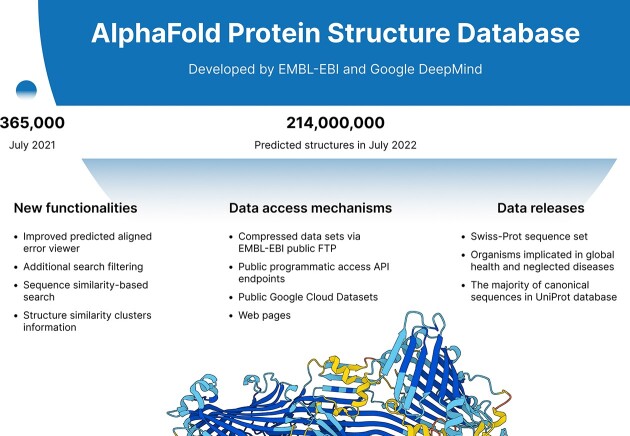
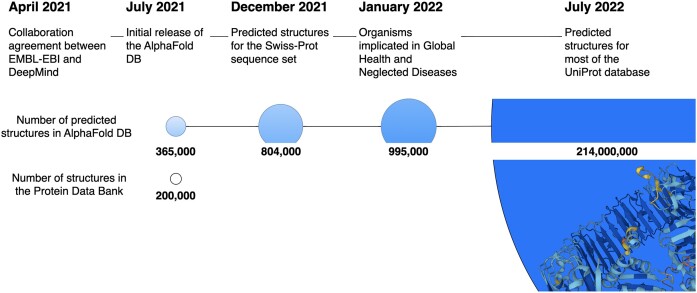
The AlphaFold Database Protein Structure Database (AlphaFold DB, https://alphafold.ebi.ac.uk) has significantly impacted structural biology by amassing over 214 million predicted protein structures, expanding from the initial 300k structures released in 2021. Enabled by the groundbreaking AlphaFold2 artificial intelligence (AI) system, the predictions archived in AlphaFold DB have been integrated into primary data resources such as PDB, UniProt, Ensembl, InterPro and MobiDB. Our manuscript details subsequent enhancements in data archiving, covering successive releases encompassing model organisms, global health proteomes, Swiss-Prot integration, and a host of curated protein datasets. We detail the data access mechanisms of AlphaFold DB, from direct file access via FTP to advanced queries using Google Cloud Public Datasets and the programmatic access endpoints of the database. We also discuss the improvements and services added since its initial release, including enhancements to the Predicted Aligned Error viewer, customisation options for the 3D viewer, and improvements in the search engine of AlphaFold DB.
Overview
CoChat Summary
TL;DR
AlphaFold DB has grown from ~300k to over 214 million predicted protein structures as of September 2023, with expanded access, search, and visualization features. This 2024 update describes data archiving, access mechanisms, integration with core resources, and new clustering/BLAST/PAE viewer capabilities.
Key findings
- AlphaFold DB expanded from approximately 300k structures in 2021 to over 214 million predicted protein structures as of September 2023; the initial July 2021 release housed over 360,000 structures for 20 model organism proteomes.
- Predictions are integrated into resources including PDB, UniProt, Ensembl, InterPro and MobiDB, and are accessible via FTP, Google Cloud Public Datasets (~23 TiB), API, and the website; PAE data is unavailable from EMBL-EBI public FTP.
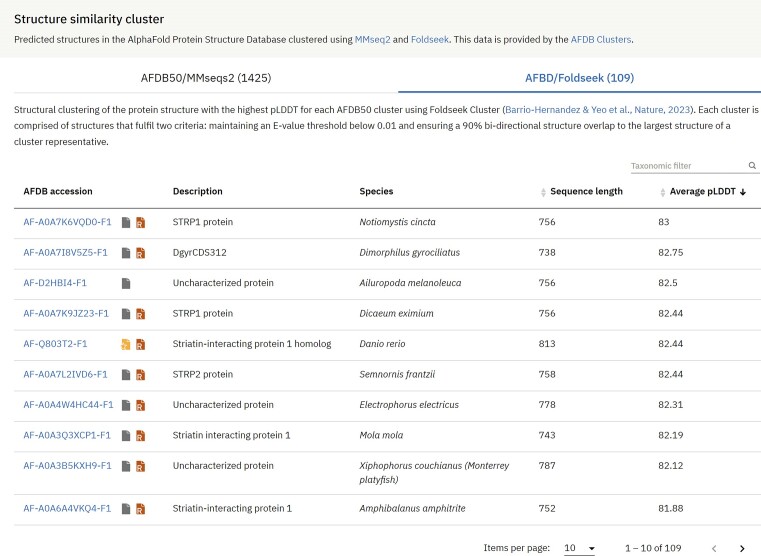
- Structure similarity clustering used MMseqs2 to cluster 214 million UniProtKB sequences into 52 million clusters, then Foldseek secondary clustering yielded 18.8 million clusters, finalizing 2.30 million robust clusters each with at least a pair of structures.
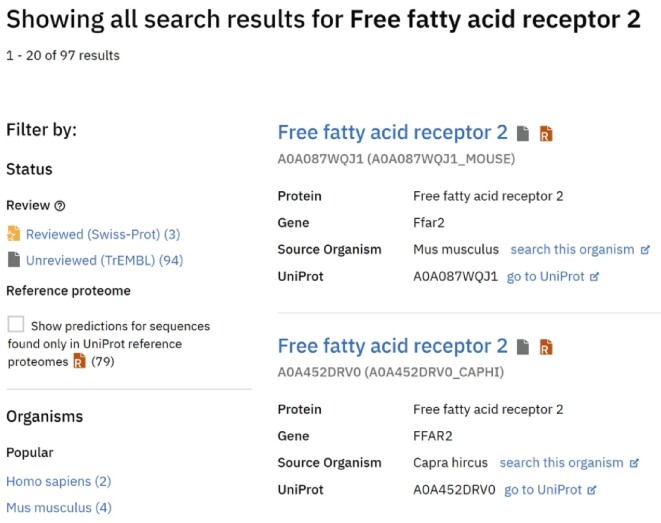
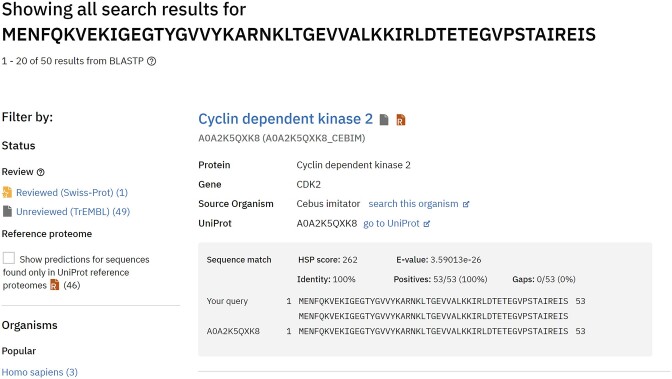
- New features include BLAST sequence similarity search, improved search filters for reviewed/unreviewed and reference proteome status, enhanced PAE viewer–Mol* interactivity, and a November 2022 update fixing a numerical bug that affected ~4% of total structure predictions.
Methods
- Descriptive database update/report with no primary experimental design; data generation is carried out by Google DeepMind, with predictions stored in PDB, mmCIF (modelCIF), and binaryCIF formats plus JSON metadata and confidence metrics pLDDT and PAE.
- Archiving uses successive releases from UniProt reference proteomes (e.g., 2021_02, 2021_04), Swiss-Prot, WHO global health proteomes, and MANE select; as of September 2023, EMBL-EBI FTP hosts TAR files for proteomes of 48 organisms.
- Access and analysis infrastructure includes FTP, Google Cloud Public Datasets, an API keyed on UniProt accessions, Apache-Solr search, BLAST on Google Cloud Platform, and Foldseek/MMseqs2 clustering.
Limitations
- Stated: sequences are not covered if they are less than 16 amino acids; >2700 aa for Swiss-Prot/proteome sequences or >1280 aa for other UniProt sequences; contain non-standard amino acids; are not in the UniProt ‘one sequence per gene’ FASTA file; or are viral proteins; these limitations are under discussion.
- Stated: some sequences may be outdated compared to UniProt due to less frequent AlphaFold DB releases; PAE data is unavailable from EMBL-EBI public FTP; full Google Cloud dataset download requires a Google account and can take roughly 2.5 days at 1 Gbps.
- Evident from the text: all archived structures are predicted models rather than experimental structures, and users must interpret pLDDT/PAE cautiously (e.g., pLDDT <50 likely disordered, 50–70 lower confidence); the database also currently lacks isoform and multimeric predicted structures, which are listed as future work.
Model-written summary. Check it against the paper before relying on it.
Integrity signals
Registry
Cites
Statistics
Figures
Verification
Claims the paper makes
11 Valid · 1 Not valid · 0 Not checked · 28 Own results and interpretations
Every source the paper cites for this claim was checked and supports it.
In the paper
“The new generation of predicted protein structure models has demonstrated remarkable accuracy, which could mitigate the continually widening gap between known protein sequences and experimentally determined protein structures (7).”
§ AlphaFold Protein Structure Database in 2024: providing structure coverage for over 214 million protein sequences > Introduction
What the sources say
- Supportedcites [7] Varadi M., Bordin N., Orengo C., Velankar S. The opportunities and challenges posed by the new generation of deep learning-based protein structure predictors. Curr. Opin. Struct. Biol. 2023; 79: 102543. 36807079 PMC7618866 source
The Introduction says prediction models made a major advance in accuracy and can match or sometimes surpass experimentally determined structures. It also describes a growing gap between known protein sequences and determined structures; the section on new challenges says predicted structures have greatly increased coverage of protein sequence space. These passages support both the accuracy claim and the proposed potential to narrow that gap (page numbers unavailable). (LLM, conf=0.93)
boosted- Asserted: passes — The authors put it forward as true.
- Checkable: passes — It can be checked against evidence.
- Load-bearing: passes — The paper’s conclusions depend on it.
- Based: passes — The paper gives a reason why it holds.
- Supported
Every source the paper cites for this claim was checked and supports it.
In the paper
“In response to frequent requests from the user community since the AlphaFold DB launch, we have made significant strides to implement a sequence-based similarity search feature. We have incorporated the Basic Local Alignment Search Tool (BLAST) (21) into our Google Cloud Platform infrastructure to achieve this.”
§ AlphaFold Protein Structure Database in 2024: providing structure coverage for over 214 million protein sequences > Implementation > Data access
What the sources say
- Supportedcites [21] Camacho C., Coulouris G., Avagyan V., Ma N., Papadopoulos J., Bealer K., Madden T.L. BLAST+: architecture and applications. BMC Bioinf. 2009; 10: 421. PMC2803857 20003500 source
The Background identifies BLAST as a sequence similarity search program that matches a query sequence against a database. In the citing sentence, the citation identifies the tool incorporated; the AlphaFold DB implementation is the citing authors’ own report, not a claim attributed to this source. (LLM, conf=0.91)
plainstates a cause- Asserted: passes — The authors put it forward as true.
- Checkable: passes — It can be checked against evidence.
- Load-bearing: unclear — It is unclear whether the paper’s conclusions depend on it.
- Based: passes — The paper gives a reason why it holds.
- Supported
Every source the paper cites for this claim was checked and supports it.
In the paper
“The impact of the predicted structures is further enhanced by their seamless integration into several core data resources, including PDBe-KB (17), UniProt (6), Ensembl (16), InterPro (15), Genecards (24) and MobiDB (25), among others.”
§ AlphaFold Protein Structure Database in 2024: providing structure coverage for over 214 million protein sequences > Conclusions and outlook
What the sources say
- Supportedcites [17] consortium P.D.B.-K.B. PDBe-KB: collaboratively defining the biological context of structural data. Nucleic Acids Res. 2022; 50: D534– D542. 34755867 PMC8728252 source
Citation (17) is attached specifically to PDBe-KB, rather than to the other resources in the sentence. The Introduction identifies PDBe-KB as a resource that integrates structural and functional annotations, supporting its identification here. (LLM, conf=0.90)
- Supportedcites [6] U.P. Consortium UniProt: the Universal Protein Knowledgebase in 2023. Nucleic Acids Res. 2023; 51: D523– D531. 36408920 PMC9825514 source
The citation is attached to UniProt in a list of resources, and the cited paper is a description of UniProt. Its Data integration and Interactive visualisations in entry pages sections state that UniProt incorporates AlphaFold-predicted structures into protein entries alongside other data; the supplied passages do not give page numbers. (LLM, conf=0.93)
- Supportedcites [16] Cunningham F., Allen J.E., Allen J., Alvarez-Jarreta J., Amode M.R., Armean I.M., Austine-Orimoloye O., Azov A.G., Barnes I., Bennett R. et al. Ensembl 2022. Nucleic Acids Res. 2022; 50: D988– D995. 34791404 PMC8728283 source
The citation identifies Ensembl as one of the resources in the list. In “Developing a new website” (page not provided), the paper says Ensembl’s Entity Viewer provides access to protein information, including 3D structures from PDBe. (LLM, conf=0.86)
plainstates a cause- Asserted: passes — The authors put it forward as true.
- Checkable: passes — It can be checked against evidence.
- Load-bearing: unclear — It is unclear whether the paper’s conclusions depend on it.
- Based: passes — The paper gives a reason why it holds.
- Supported
Every source the paper cites for this claim was checked and supports it.
In the paper
“Tackling this challenge, Steinegger et al. recently unveiled the Foldseek Cluster, a state-of-the-art structural-alignment-based clustering algorithm designed for vast datasets (22). They applied this novel method to the AlphaFold DB archive, making the derived structure similarity clusters available to the research community.”
§ AlphaFold Protein Structure Database in 2024: providing structure coverage for over 214 million protein sequences > Implementation > Data access
What the sources say
- Supportedcites [22] Barrio-Hernandez I., Yeo J., Jänes J., Mirdita M., Gilchrist C.L.M., Wein T., Varadi M., Velankar S., Beltrao P., Steinegger M. Clustering-predicted structures at the scale of the known protein universe. Nature. 2023; 622: 637– 645. 37704730 PMC10584675 source
The Abstract says the authors used Foldseek cluster to cluster the AlphaFold database. The Methods section (“Web server”) says they developed a server for users to explore the clusters, their members and related clusters, supporting the claim that the results were made available to researchers. (LLM, conf=0.93)
plainstates a cause- Asserted: passes — The authors put it forward as true.
- Checkable: passes — It can be checked against evidence.
- Load-bearing: passes — The paper’s conclusions depend on it.
- Based: passes — The paper gives a reason why it holds.
- Supported
- Probably not a substantial claim. 30
- It may state two separate claims as one. 15
- The quote only partly states this claim. 1
Claims other papers make about this one
Each is checked against this paper’s own text: does it say what the citing paper says it does?
The cited source says what the claim attributes to it.
In the citing paper
“houses over 200 million pre-run AF2 predictions”
From The power and pitfalls of AlphaFold2 for structure prediction beyond rigid globular proteins (2024) · cites this paper as [7]
Citations
Cites
Highly accurate protein structure prediction with AlphaFold
Jumper, J., Evans, R., Pritzel, A., Green, T., Figurnov, M., Ronneberger, O., Tunyasuvunakool, K., Bates, R., Žídek, A., Potapenko, A., et al. (2021) · Nature · doi:10.1038/s41586-021-03819-2 · Cited by 43,764
Self-citationBLAST+: architecture and applications
Camacho, C., Coulouris, G., Avagyan, V., Ma, N., Papadopoulos, J., Bealer, K., & Madden, T. L. (2009) · BMC Bioinformatics · doi:10.1186/1471-2105-10-421 · Cited by 22,074
UniProt: the Universal Protein Knowledgebase in 2023
The UniProt Consortium, Bateman, A., Martin, M.-J., Orchard, S., Magrane, M., Ahmad, S., Alpi, E., Bowler-Barnett, E. H., Britto, R., Bye-A-Jee, H., et al. (2023) · Nucleic Acids Research · doi:10.1093/nar/gkac1052 · Cited by 7,210
Evolutionary-scale prediction of atomic level protein structure with a language model
Lin, Z., Akin, H., Rao, R., Hie, B., Zhu, Z., Lu, W., Smetanin, N., Verkuil, R., Kabeli, O., Shmueli, Y., et al. (2022) · doi:10.1101/2022.07.20.500902 · Cited by 5,990 · cited 1×
“In the wake of the latest breakthroughs in prediction software, new databases such as the AlphaFold Protein Structure Database and the ESM Atlas ( 14 ) have emerged.”
MethodThe GeneCards suite: from gene data mining to disease genome sequence analyses
Stelzer, G., Rosen, N., Plaschkes, I., Zimmerman, S., Twik, M., Fishilevich, S., Stein, T. I., Nudel, R., Lieder, I., Mazor, Y., et al. (2016) · Current Protocols in Bioinformatics · doi:10.1002/cpbi.5 · Cited by 5,550 · cited 1×
“The impact of the predicted structures is further enhanced by their seamless integration into several core data resources, including PDBe-KB ( 17 ), UniProt ( 6 ), Ensembl ( 16 ), InterPro ( 15 ), Genecards ( 24 ) and MobiDB ( 25 ), among others.”
BackgroundAccurate prediction of protein structures and interactions using a 3-track network
Baek, M., DiMaio, F., Anishchenko, I., Dauparas, J., Ovchinnikov, S., Lee, G. R., Wang, J., Cong, Q., Kinch, L. N., Schaeffer, R. D., et al. (2021) · doi:10.1101/2021.06.14.448402 · Cited by 5,549
Paysan-Lafosse, T., Blum, M., Chuguransky, S., Grego, T., Pinto, B. L., Salazar, G. A., Bileschi, M. L., Bork, P., Bridge, A., Colwell, L., et al. (2023) · Nucleic Acids Research · doi:10.1093/nar/gkac993 · Cited by 2,399
Cunningham, F., Allen, J. E., Allen, J., Alvarez-Jarreta, J., Amode, M. R., Armean, I. M., Austine-Orimoloye, O., Azov, A. G., Barnes, I., Bennett, R., et al. (2022) · Nucleic Acids Research · doi:10.1093/nar/gkab1049 · Cited by 1,923
Mol* Viewer: modern web app for 3D visualization and analysis of large biomolecular structures
Sehnal, D., Bittrich, S., Deshpande, M., Svobodová, R., Berka, K., Bazgier, V., Velankar, S., Burley, S. K., Koča, J., & Rose, A. S. (2021) · Nucleic Acids Research · doi:10.1093/nar/gkab314 · Cited by 1,154 · cited 1×
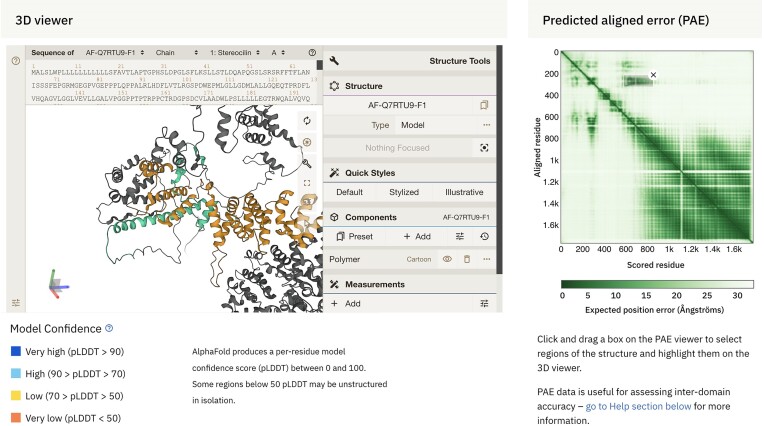
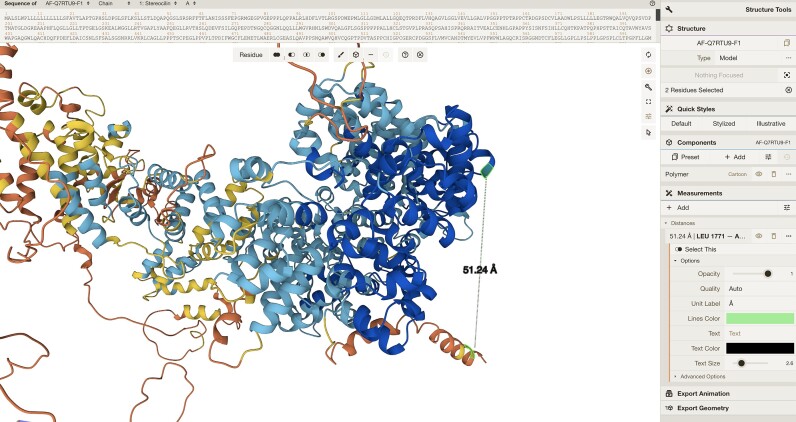
“We improved the visualisation of non-consecutive regions and the interactivity between the PAE viewer and the 3D molecular graphics viewer, Mol* ( 23 ) (Figure 5 ).”
MethodSelf-citationMariani, V., Biasini, M., Barbato, A., & Schwede, T. (2013) · Bioinformatics · doi:10.1093/bioinformatics/btt473 · Cited by 1,138 · cited 1×
“AlphaFold yields a per-residue estimate of its confidence, known as pLDDT, ranging from 0 to 100, indicating the tool’s predicted score on the lDDT-C α metric ( 19 ).”
Method
Cited by
Items 2,001–2,100 of 2,174
DNA binding and bridging by human CtIP in the healthy and diseased statesPreprint
Balaji, S. L., de Bragança, S., Balaguer, F. D. A., et al. (2023) · bioRxiv (Cold Spring Harbor Laboratory) · doi:10.1101/2023.12.14.571649
SRS2 is required for MUS81-dependent CO formation in zmm mutants
Petiot, V., Chéron, F., White, C. I., & Ines, O. D. (2025) · PLoS Genetics · doi:10.1371/journal.pgen.1011637
Ruiz-Gutierrez, N., Dupas, J., Auquier, E., Barbarin-Bocahu, I., Gaudon, C., Saveanu, C., Graille, M., & Hir, H. L. (2025) · bioRxiv (Cold Spring Harbor Laboratory) · doi:10.1101/2024.12.18.629111
ActSeek: Fast and accurate search algorithm of active sites in Alphafold database
Castillo, S., & Ollila, O. H. S. (2025) · doi:10.1101/2025.02.11.637678
Evolutionary trajectory and development landscape of digital life
ZHANG, B.-W., Jiang, Y., ZHENG, S.-Y., Wang, Z., Lei, M. A., Kai-Yun, M. A. O., Xiong, Y., & Da-Ming, C. H. E. N. (2026) · Shengming kexue · doi:10.3724/cbls.2026034 · Cited by 1
Li, H., Gui, P., Li, X., Lin, Y., Ma, Z., Yu, H., & Ma, F. (2025) · Yeast · doi:10.1002/yea.70002
“Structural predictions for K. phaffii Yps1, Yps2, Yps3, and Yps7 generated by AlphaFold are illustrated in Supporting Information S1: Figure 16 (Jumper et al. 2021; Varadi et al. 2023).”
From prediction to discovery: AI as an observatory of physical organization in protein space
Zheng, Y., Zhang, Z., Wang, Y., Kang, W., Ren, W., & Tang, Q.-Y. (2026) · AI for Science · doi:10.1088/3050-287x/ae78ea
“This distinction is especially important at database scale: AFDB provides structural coverage for over 200 million protein sequences [33], far exceeding the rate at which experimentally determined structures accumulate in the PDB [34].”
Assessing Fluoroacetate Defluorination Potential across Diverse Enzymes Using Quantum Chemistry
Madushanka, A., Jayathilake, C., Premathilaka, N., Fernando, E. Y., & Kraka, E. (2026) · The Journal of Physical Chemistry B · doi:10.1021/acs.jpcb.6c02887
Urdiain‐Arraiza, J., & Desguin, B. (2025) · International Journal of Biological Macromolecules · doi:10.1016/j.ijbiomac.2025.148171
Kaur, L., Dhiman, R., Kaur, S., Gupta, L., Kaur, R. P., & Singh, H. (2025) · Elsevier eBooks · doi:10.1016/b978-0-323-95502-7.00170-6
(2026) · doi:10.1007/s11030-026-11586-3
“The 3D model of the SFRP1 protein (AF-Q8N474-F1-v6) was downloaded by visiting the AlphaFold Protein Structure Database (https://alphafold.com/) [14].”
Qian, D., Mu, Y., Liu, H., Yang, Z., Hu, J., Zeng, X., Liu, K., He, C., Liu, X., Zhu, L., et al. (2026) · Phytotherapy Research · doi:10.1002/ptr.70272
Fernández-Cano, K. B., Viader-Salvadó, J. M., & Guerrero‐Olazarán, M. (2026) · PeerJ · doi:10.7717/peerj.21479
“Molecular models of the Hsp12 and 0208 proteins were retrieved from the AlphaFold Protein Structure Database ( Varadi et al., 2024 ) and visualized with UCSF Chimera software ( Pettersen et al., 2004 ).”
Uncovering functional insights into human pathogenic variants in CDK19 using Drosophila models
Grewal, K. S., Tam, C., Liao, J. Z., & Verheyen, E. M. (2025) · Human Molecular Genetics · doi:10.1093/hmg/ddaf174 · Cited by 1
“To produce a predictive protein model for CDK19, AlphaFold Protein Structure database was used (16,17).”
RG motifs promote piRNA-mediated gene silencing in C. elegans
Wallis, D. C., & Phillips, C. M. (2025) · doi:10.1101/2025.05.12.653514 · Cited by 3
Protein Structure Classification in the Era of AlphaFold2
Waman, V., Dawson, N. L., Das, S., Lees, J., & Orengo, C. A. (2024) · Elsevier eBooks · doi:10.1016/b978-0-323-95502-7.00047-6
Dooda, M. K., Potapova, A., Piepoli, S., Vinogradov, E. V., Yildiz, F. H., & Troutman, J. M. (2026) · mBio · doi:10.1128/mbio.01096-26
A novel RNA-binding activity of ECD contributes to U5 snRNP stability and pre-mRNA splicing
Raza, M., Rajan, A. R., Kalluchi, A., Mohapatra, B., Saleem, I., Kennedy, B. B., Bhakat, K. K., Band, H., Rowley, M. J., & Band, V. (2026) · Nucleic Acids Research · doi:10.1093/nar/gkag732 · Cited by 4
“PDB files of predicted 3D structures of human ECD (AF-O95905-F1-v4) and Drosophila Ecd (AF-Q9W032-F1-v4) proteins were obtained from the AlphaFold protein structure database [ 25 ].”
VPS35L-related Ritscher-Schinzel syndrome: Expanding genotype–phenotype correlations
Carelli, I., Rondot, F., Luca, M., Reynolds, G., Massuras, S., Gregorio, E. D., Marinoni, R., Papagni, G., D’Alfonso, S., Colavito, D., et al. (2026) · European Journal of Medical Genetics · doi:10.1016/j.ejmg.2026.105085
Farinha, A., Soo, M. W., Minasov, G., et al. (2026) · bioRxiv (Cold Spring Harbor Laboratory) · doi:10.64898/2026.04.03.716176
“As no protein in the PDB passed these criteria, we used Foldseek to search the AlphaFold Protein Structure Database [41].”
Opposing roles of pseudokinases NRBP1 and NRBP2 in regulating L1 retrotransposition
Yang, W., Cong, S., Li, R., Schwarz, J., Schulze, T., Gevelhoff, R. A., Chen, X., Ullrich, S., Falkenstein, K., Ott, D., et al. (2025) · Nature Communications · doi:10.1038/s41467-025-61626-z · Cited by 1
“6 and 7a, b) 57 – 59 .”
Decoding the full chemical catalytic cycle of class I PHA synthase: A QM/MM metadynamics perspective
Kim, Y., Lee, H., Lee, H., et al. (2026) · International Journal of Biological Macromolecules · doi:10.1016/j.ijbiomac.2026.150087
Bouzroud, S., Ayni, O., Benjelloun, J., et al. (2026) · Stresses · doi:10.3390/stresses6020036
“The 3D structures of SlWOX proteins were predicted using the AlphaFold Protein Structure Database [73] (AlphaFold Monomer v2.”
Hanai, Y., Hilario, P. L. L., Shiraishi, Y., Yoshida, N., Murakami, S., Shimizu, Y., Kano, N., Kojima, M., Murai, K., Kawai, T., et al. (2025) · Nucleic Acids Research · doi:10.1093/nar/gkaf1050
Re‐evaluation of PTEN as an ADP ‐ribosylated tankyrase binding partner
Bosetti, C., Galera‐Prat, A., Schmidt, A., Pääkkönen, J., Manninen, A., & Lehtiö, L. (2025) · FEBS Journal · doi:10.1111/febs.70035 · Cited by 1
Dang, T. D., Pham, V. H., Nguyen, N. T. T., Nguyen, P. X., & Trinh, D. M. (2026) · bioRxiv (Cold Spring Harbor Laboratory) · doi:10.64898/2026.08.01.742237
Medvedev, K. E., Schaeffer, R. D., & Grishin, N. V. (2025) · doi:10.1101/2025.07.03.663025 · Cited by 1
Control of Golgi- V-ATPase through Sac1-dependent co-regulation of PI(4)P and cholesterol
Zhou, X., van der Stoel, M. M., Kaptan, S., Li, H., Li, S., Hölttä, M., Vihinen, H., Jokitalo, E., Thiele, C., Pietiläinen, O., et al. (2024) · doi:10.1101/2024.11.04.621832 · Cited by 6
TET dioxygenases localize at splicing speckles and promote RNA splicing
Hastert, F. D., Weber, J., Bauer, C., Zhadan, A., Singh, D. N. D., Dix, T. C., Arnold, R., Bessonov, S., Soller, M., Leonhardt, H., et al. (2025) · doi:10.1101/2025.03.07.641893
Deep Learning for Protein Structure Prediction: From AlphaFold to the Next Frontier
Shiwach, E., & Kumar, S. (2026) · Applied Science and Biotechnology Journal for Advanced Research · doi:10.31033/abjar/5.3.2026.122
Shi, R., Yang, M., Liu, Y., Gao, H., & Lin, Z. (2026) · The EMBO Journal · doi:10.1038/s44318-026-00767-3 · Cited by 2
Canalejo, F. J., & Nogales, J. (2025) · bioRxiv (Cold Spring Harbor Laboratory) · doi:10.64898/2025.12.09.693157
“I using AlphaFold (43,44).”
Mechanistic insights into dual-active liver and blood-stage antiplasmodials
(2025) · doi:10.1128/mbio.02423-25
Turner, M., Nguyen, S., Clark, D., et al. (2026) · Pharmaceutical Sciences and Drug Design · doi:10.51847/xlxyb7tutj
metagRoot: A comprehensive database of protein families associated with plant root microbiomes
Chasapi, M. N., Chasapi, I. N., Aplakidou, E., et al. (2025) · doi:10.1101/2025.05.22.653656
EZHIP boosts neuronal-like synaptic gene programs and depresses polyamine metabolismPreprint
Hasheminasabgorji, E., Chen, H., Gatesman, T. A., et al. (2025) · bioRxiv (Cold Spring Harbor Laboratory) · doi:10.1101/2025.05.08.652913
Wang, S., Li, Y., Shi, Y., Xu, B., & Huang, M. (2026) · Fermentation · doi:10.3390/fermentation12090402
Computational analysis of CCN1 as a druggable target predicts interactions with bioactive compounds
Francis, R. B., Kerek, R., & Rima, M. (2026) · Scientific Reports · doi:10.1038/s41598-025-34139-4
“We began by predicting the 3D structure of CCN1 using AlphaFold 3 20,21 .”
Teixeira, T. D. O., da Silva, R. C. C., Alves, M. C. S., Silva, R. D. A., Echeverria, J. E. S., & Simionatto, S. (2026) · Journal of Computer-Aided Molecular Design · doi:10.1007/s10822-026-00905-3
Son, H., & Yi, G.-S. (2025) · Briefings in Bioinformatics · doi:10.1093/bib/bbaf719
“Mapping the residues with the highest self-attention scores onto the receptor apo structure [39] revealed a physically contiguous pathway of high-importance residues connecting the orthosteric binding site to the distal G-protein coupling site (Fig.”
Kadam, V., Bhargav, P., & Mukherjee, A. (2026) · Journal of Chemical Sciences · doi:10.1007/s12039-025-02459-7
“Given advances in structure prediction, particularly AlphaFold2, 44 and the large-scale availability of predicted structures via the AlphaFold protein structure database, 45 it is now feasible to retrieve high-confidence structural models for individual proteins in most inter-acting pairs.”
Chen, H., Zhang, B., Liu, K., Zheng, Z., Zhu, J., Li, Z., Liu, Y., Mu, J., & Wei, T. (2024) · Research Square · doi:10.21203/rs.3.rs-5450034/v1
Erharman, A., Okutan, K., Eryilmaz, E., & Aydın, B. (2025) · Network Modeling Analysis in Health Informatics and Bioinformatics · doi:10.1007/s13721-025-00688-x · Cited by 1
Dwibedy, S. K., Padhy, I., & Mohapatra, S. S. (2025) · Journal of Antimicrobial Chemotherapy · doi:10.1093/jac/dkaf503
Uversky, V. N., Popelka, H., & Klionsky, D. J. (2026) · Membranes · doi:10.3390/membranes16070234 · Cited by 2
Wang, X., ZHANG, Y., Zhai, J., et al. (2026) · bioRxiv (Cold Spring Harbor Laboratory) · doi:10.64898/2026.04.14.718308
Kurashima, B. M. S., Carvalho, L. M. L., Piergiorge, R. M., da Costa, S. S., dos Santos, S. R., Gonçalves, A. P., Castro, M. A. A., Cammarata-Scalisi, F., MOREIRA, M. D. C., Silva, E. V. D. L., et al. (2026) · Research Square · doi:10.21203/rs.3.rs-8846661/v1
AQP4 Extended Region Binds to α-Syntrophin with a Novel Binding Motif
Jacobo, E. P., Martinez, M. J., Barile, B., Memeo, A., Nicchia, G. P., & Brozik, J. A. (2026) · The Journal of Physical Chemistry B · doi:10.1021/acs.jpcb.6c04328 · Cited by 1
Shah, A., Yadav, A., George, M., Dhangar, S., Rajendran, A., Shanmukhaiah, C., Sharma, S., Idicula‐Thomas, S., & Vundinti, B. R. (2026) · European Journal of Human Genetics · doi:10.1038/s41431-026-02233-4
(2025) · doi:10.1016/j.jbc.2025.110701
Chacon-Millan, P., Delicato, A., Mahmood, A., Tirozzi, A., Monfregola, J., Duroure, K., Serafini, M., Kroll, F., El-Hage, O., Salah, S., et al. (2026) · The American Journal of Human Genetics · doi:10.1016/j.ajhg.2026.01.008
Li, Z., Zhang, T., Li, X., Huang, J., Xie, Z., Gao, F., Cai, H., Sun, M., Dai, M., & Liao, M. (2025) · bioRxiv (Cold Spring Harbor Laboratory) · doi:10.1101/2025.10.14.682327
Ce, C., Yang, L., Wang, M., et al. (2026) · Pharmacological Research · doi:10.1016/j.phrs.2026.108302
Discovery and optimization of a synthetic small protein domain targeting antibodies
Dias, A. M. G. C., Matos, M. J. B., Soares, C. O., Natal, C. M., Pina, A. S., & Roque, A. C. A. (2025) · Frontiers in Bioengineering and Biotechnology · doi:10.3389/fbioe.2025.1678111
Efficient protein structure generation with sparse denoising models
Jendrusch, M., & Korbel, J. O. (2025) · doi:10.1101/2025.01.31.635780 · Cited by 10
Confirmatory insights into ELMOD3 -associated autosomal dominant non-syndromic hearing lossPreprint
Yun, Y., Park, M., Jeong, S., et al. (2025) · medRxiv · doi:10.1101/2025.02.11.25321773
Pan, X., Munan, S., Zuckerman, A. L., Pon, A., Violante, S. N., Cross, J. R., Shah, H., & Cracan, V. (2025) · bioRxiv (Cold Spring Harbor Laboratory) · doi:10.1101/2025.06.02.657195
Modality-chain reasoning enables multimodal protein modelling and designPreprint
Liu, C., Chao, L., Ji, S., Wang, H., Zhou, G., Zheng, J. X., Hong, D., Guo, Y., Jiang, T., Gao, Z., et al. (2025) · bioRxiv (Cold Spring Harbor Laboratory) · doi:10.1101/2025.07.21.665832 · Cited by 2
“In the second stage, this model was further trained on a multimodal dataset comprising 9.45 million protein structures from the AlphaFold Database 15 and 279,921 experimentally resolved chains from PDB-REDO 16 with refined X-ray structures from the Protein Data Bank 17 .”
InfluentialPutman, T., Abdel-Hamid, A. M., Galbraith, E., Schimmel, P., Kim, H., Yasuma, T., Alhawsawi, M. A. B., Boateng, K. A., Holmes, J. R., Duersteler, M., et al. (2026) · Applied and Environmental Microbiology · doi:10.1128/aem.00972-26
Hammerstad, M., Steinvik, E., & Hersleth, H.-P. (2025) · doi:10.1101/2025.07.06.663066 · Cited by 1
Phase Separation Contributes to Pathogenicity for Nonsense Mediated Decay-Escaping Variant AllelesPreprint
Xu, J., Schmidt, J., Campbell, A., Bozkurt‐Yozgatli, T., Egab, I., Mestroni, L., Taylor, M., Posey, J. E., Gibbs, R. A., Boerwinkle, E., et al. (2025) · medRxiv · doi:10.64898/2025.12.01.25341387
MDCompress: better, faster compression of molecular dynamics simulation trajectories
(2026) · doi:10.1093/bioinformatics/btag176
“The AlphaFold Protein Structure Database (Varadi et al. 2024) contains approximately 214 million predicted structures at the time of this writing, and the ESM Metagenomic Atlas (Lin et al. 2023) catalogs around 772 million.”
Functional (Re)Annotation of Mycobacteroides Abscessus Proteome Using Ai-Based Structural FeaturesPreprint
Gnanasekar, P., Gambhir, S., Kinatukara, P., & Bhardwaj, A. (2025) · SSRN Electronic Journal · doi:10.2139/ssrn.5162980
Liaqat, A., Dastgir, K., Sajjad, M., Rehman, H. M., & Akhtar, M. (2026) · PLoS ONE · doi:10.1371/journal.pone.0356788 · Cited by 1
“It is a powerful structural biology tool for predicting a highly accurate 3D structure from a primary protein sequence using a machine learning method [45].”
Koh, A. (2026) · Access Microbiology · doi:10.1099/acmi.0.001000.v4
“Protein structural analysis: the predicted structures of YybE (AF- P37499- F1-v4) and GltC (AF- P20668- F1-v4) were retrieved from the AlphaFold protein structure database [41, 42].”
Lv, Z., Wang, F., & Wang, Y. (2026) · The Innovation Life · doi:10.59717/j.xinn-life.2026.100235
Raghuram, A. (2026) · Research Square · doi:10.21203/rs.3.rs-8999467/v1
Arshad, K., & Kanwal, N. (2024) · Research Square · doi:10.21203/rs.3.rs-4574215/v1
A Systematic Evaluation of Protein Phase Separation Predictors Across Diverse Protein LandscapesPreprint
Gilroy, K. E., & Barr, J. (2026) · bioRxiv (Cold Spring Harbor Laboratory) · doi:10.64898/2026.01.20.700394
A nirK–cbb3 genomic region links SAR11 to nitrogen loss in the northern Benguela Upwelling System
Morris, R. M., Mattes, T. E., Bubphamanee, K., et al. (2026) · Microbial Genomics · doi:10.1099/mgen.0.001620
“AlphaFold hits were restricted to the highest quality matches with average pLDDT metric confidence scores >90 in UniProt reference proteomes [30, 31].”
Reconstructing hidden GPCR conformations and ligand binding modes through integrative DEER modeling
Belyaeva, J., & Elgeti, M. (2026) · Structure · doi:10.1016/j.str.2026.09.003
Roe, S. K., Zheng, B., Gulati, S., Ram, S., & Massari, P. (2026) · Vaccines · doi:10.3390/vaccines14090798
“The predicted structure of each antigen was modeled using Alpha Fold [42,43] and PyMol [45] (Figure 1B–”
Zhai, S., Pinto, D. R. J., Mendoza, N. L., Adewole, A., Heufner, B., Merg, A. D., Corrales, T. P., Yan, J. Q., & Eguiluz, R. C. A. (2026) · bioRxiv (Cold Spring Harbor Laboratory) · doi:10.64898/2026.06.21.733527
NMNAT2 Functional Landscape and Localization in Programmed Axon Degeneration
Nicol, A., Hopkins, E., Hui, F., Brancale, A., & Williams, P. A. (2026) · The Neuroscientist · doi:10.1177/10738584261476959
Grau, A. L., Pierron, R. J. G., Doerr, C., Laloue, H., Goddard, M., & Chong, J. (2025) · Physiological and Molecular Plant Pathology · doi:10.1016/j.pmpp.2025.102659
Li, S., Salek, M. S., Chowdhury, M., & Wang, Y. (2026) · Physical Review Research · doi:10.1103/wb1b-ntpc
“Similarly, AlphaFold has simplified the design and discovery of new proteins and drugs [8, 9].”
Bartrop, L., Beauchemin-Lauzon, E., Grenier, F., et al. (2025) · bioRxiv (Cold Spring Harbor Laboratory) · doi:10.1101/2025.10.01.679039
Oneto, L., Ridella, S., Minisi, S., Coraddu, A., & Anguita, D. (2026) · Neurocomputing · doi:10.1016/j.neucom.2026.132826
LocAlign: Local Protein Structural Alignment with Geometric Deep LearningPreprint
Ravid, H., Tubiana, J., & Wolfson, H. J. (2026) · bioRxiv (Cold Spring Harbor Laboratory) · doi:10.64898/2026.01.24.701262
“We queried the kinase domain of Bcr-Abl (1iep:A) using the imatinib binding pocket as motif, against the AlphaFold-predicted human proteome [Varadi et al., 2024] ( 23 586 templates, including fragments of long proteins).”
Rajagopalan, S., Chiu, J., Chaurasia, P., Lu, J., Mastorakos, G. M., Majumder, S., Nolan, K., Petersen, J., Adams, E. J., Sun, P. D., et al. (2026) · eLife · doi:10.64898/2026.02.18.706601
PInteract: Detecting Aromatic-Involving Motifs in Proteins and Protein-Nucleic Acid ComplexesPreprint
Li, D., Pucci, F., & Rooman, M. J. (2025) · bioRxiv (Cold Spring Harbor Laboratory) · doi:10.1101/2025.07.23.666328
“To further evaluate whether these observed preferences of α and β angles are preserved in computationally predicted structures, we applied PInter-act to selected subsets of the AlphaFold Protein Structure Database (Al-phaFoldDB) [42], as described in Supplementary Section S3.”
Predicting Enzyme pH Optima from Structure Using Equivariant Graph Neural Networks
SinhaRoy, R., Clauss, C., Ivanikov, I., & Kuenze, G. (2026) · Journal of Chemical Information and Modeling · doi:10.1021/acs.jcim.6c01482 · Cited by 1
“First, proteins are represented as atom-level graphs featuring hybrid edge descriptors that integrate covalent bonding, ring membership, and distance-based interactions to retain both chemical integrity and spatial neighborhood information.”
Ali, M., Maheswaran, B., Sahu, D., Malhotra, N., & Mapa, K. (2025) · doi:10.1101/2025.04.04.647180
Gupta, R. V., Nagraik, R., Kumari, N., Kumar, R., & Jha, N. K. (2026) · Letters in Drug Design & Discovery · doi:10.1016/j.lddd.2026.100612
Fateh, S. T., Fateh, S. T., & Ziai, S. A. (2026) · iScience · doi:10.1016/j.isci.2026.117066
Moen, K. E., & Moreno, S. N. J. (2026) · mBio · doi:10.1128/mbio.03124-25
“Using AlphaFold predicted models (42, 43), we visualized the spatial orientation of TgPDIA3 catalytic motifs and found that both face inward toward each other (Fig.”
UBL3 UBL domain exhibits distinct helix-centered dynamic control among ubiquitin-like proteinsPreprint
Matsuda, K., Moriya, Y., Xu, L., et al. (2026) · bioRxiv (Cold Spring Harbor Laboratory) · doi:10.64898/2026.04.06.716645
Kumar, K. A., Rajesh, N., Dcunha, L., Bisht, J., Jasmine, R., Mishra, D., Kundil, V. T., Jayanandan, A., & Francis, D. (2026) · Journal of Molecular Graphics and Modelling · doi:10.1016/j.jmgm.2026.109443
Satapathy, S., Shen, Y., Proctor, E., Sormanni, P., Vendruscolo, M., & Wilson, M. R. (2025) · bioRxiv (Cold Spring Harbor Laboratory) · doi:10.1101/2025.03.16.643389
Predicting RNA-RNA Interactions in Three-Dimensional Structures
Emrizal, R., & Firdaus‐Raih, M. (2025) · Elsevier eBooks · doi:10.1016/b978-0-323-95502-7.00277-3
Mutant KRAS Suppresses DNA Sensing by Remodeling Membrane Tension to Clear Extracellular Tumor DNA
Cao, D., Zhou, W., Li, Z., Lu, S., Hou, Z., Yu, L., Guan, Y., Wang, G., Liu, Y., Huang, Z., et al. (2026) · Cancer Research · doi:10.1158/0008-5472.can-25-4447
Expression and immunological role of FUNDC2 in pan-cancer
Qiu, X., Wang, S., Li, C., & Wang, Y. (2025) · PLoS ONE · doi:10.1371/journal.pone.0319343 · Cited by 1
Himanshu, Chauhan, M., Kulharia, M., & Kumar, A. (2026) · Biochimica et Biophysica Acta (BBA) - Proteins and Proteomics · doi:10.1016/j.bbapap.2026.141166
Unlocking hidden enzymatic chemistry in natural product biosynthesis
Harris, M., Paul, A., & Kalkreuter, E. (2026) · Natural Product Reports · doi:10.1039/d6np00034g
Metadata
- Authors
- Varadi, M., Bertoni, D., Magana, P., Paramval, U., Pidruchna, I., Radhakrishnan, M., Tsenkov, M., Nair, S., Mirdita, M., Yeo, J., Kovalevskiy, O., Tunyasuvunakool, K., Laydon, A., Žídek, A., Tomlinson, H., Hariharan, D., Abrahamson, J., Green, T., Jumper, J., Birney, E., Steinegger, M., Hassabis, D., & Velankar, S.
- Affiliations
- European Molecular Biology Laboratory, European Bioinformatics Institute , Hinxton, UK
- European Bioinformatics Institute (GB)
- Seoul National University (KR)
- Google DeepMind (United Kingdom) (GB)
- Corresponding author
- Hassabis, Demis
- Velankar, Sameer
- ORCID
- Venue
- Nucleic Acids Research
- Publisher
- Oxford University Press (OUP)
- Published
- 2023-11-02
- Volume
- 52
- Issue
- D1
- Pages
- D368-D375
- ISSN
- 0305-1048 (ISSN-L)
- 1362-4962
- PMC
- PMC10767828
- OpenAlex
- W4388464011
- Cited by
- 2,052
- References
- 29
- Citations by year
- 2026: 724 · 2025: 1015 · 2024: 307 · 2023: 5
- FWCI
- 181.98
- Type
- journal article
- Language
- en
- Open access
- gold
- doi.org
- Licence
- Locations
- Nucleic Acids Research (publishedVersion, cc-by)
- PubMed Central (publishedVersion, cc-by)
- PubMed (publishedVersion)
- Seoul National University Open Repository (Seoul National University) (submittedVersion)
- Funders
- Google DeepMind
- National Research Foundation of Korea (2019R1A6A1A10073437, 2020M3A9G7103933, 2021R1C1C102065, 2021M3A9I4021220, RS-2023-00250470)
- Samsung DS Research Fund
- Seoul National University
- Topics
- Life Sciences › Biochemistry, Genetics and Molecular Biology › Molecular Biology › Protein Structure and Dynamics
- Life Sciences › Biochemistry, Genetics and Molecular Biology › Structural Biology › Enzyme Structure and Function
- Life Sciences › Biochemistry, Genetics and Molecular Biology › Molecular Biology › Machine Learning in Bioinformatics
- Keywords
- predicted protein structures, AlphaFold2, protein structure prediction, protein sequence coverage, data archiving, database access, search engines
- MeSH terms
- Amino Acid Sequence, Artificial Intelligence, Proteins, Protein Structure, Secondary, Proteome, Databases, Protein, Search Engine
About these checks
Registry, retraction, Cites and statistics results are computed, not judged, with one exception: a printed reference that no index lists is read once by a model before it counts as a citation error. Claims are extracted by a model and kept only when their quote appears verbatim in the text; each cited source is then checked, with a model’s help, for whether it says what the claim relies on. Those verdicts can be wrong — read the claim’s quote and the cited source before relying on one.
The claim verdicts this report counts are experimental: their accuracy is not yet measured.
A language model drew the claims from the paper on 2026-10-10, under version 3 of the claim definition (model deepseek-v4.1-flash, prompt extract-v3).
A second model labelled each claim on 2026-10-10 (model jev-1.13-20260917, definition revision gold-guideline-v0.2).
Cited sources are checked with a language model’s help (gpt-6-sol).
Statistics and arithmetic are recomputed, not judged.
Confidence bands are shown only for fields calibrated on our annotated test set. None is calibrated yet, so no band is shown.
What counts as a claim ›How we measure confidence ›How we check this ›
Are you an author, or do you see a problem with this page? Request a review
Data sources
Bibliographic data: Semantic Scholar, OpenAlex, Crossref.
Contains information from the Semantic Scholar Academic Graph Datasets, made available under the ODC Attribution License (ODC-BY 1.0).
Semantic Scholar’s data is described in: Kinney, R., et al. (2023). The Semantic Scholar Open Data Platform. arXiv:2301.10140.
